

US Sanctions Iran for Shipping Oil to Syria
◢ The US slapped fresh sanctions on Iran Tuesday, accusing it of creating a complex web of Russian cut-out companies and Syrian intermediaries to ship oil to Damascus, which in turn bankrolled Hezbollah and Hamas. The US considers both Hezbollah, a powerful Lebanese militia, and Hamas, the Palestinian Islamist group that controls the Gaza Strip, to be terrorist organizations.
The US slapped fresh sanctions on Iran Tuesday, accusing it of creating a complex web of Russian cut-out companies and Syrian intermediaries to ship oil to Damascus, which in turn bankrolled Hezbollah and Hamas.
The US considers both Hezbollah, a powerful Lebanese militia, and Hamas, the Palestinian Islamist group that controls the Gaza Strip, to be terrorist organizations.
The US Treasury said in a statement that Tehran, "working with Russian companies, provides millions of barrels of oil to the Syrian government" of President Bashar al-Assad.
"The Assad regime, in turn, facilitates the movement of hundreds of millions of US dollars to the Islamic Revolutionary Guard Corps-Qods Force for onward transfer to Hamas and Hezbollah," it said.
The new sanctions also target a Syrian national, Mohamed Alchwicki and his Russia-based company, Global Vision Group. He is accused of playing a central role both in the transfer of oil to Syria and the funneling of money to the militant groups.
The US said his company had illegally received transfers of funds from the Iranian Central Bank via a set of complex transactions.
Intermediary firms involved in the plot to obscure the real destinations of the oil and the money included a subsidiary of the Russian Ministry of Energy, according to the statement.
Secretary of State Mike Pompeo warned on Twitter that there were "grave consequences for anyone shipping oil to Syria, or trying to evade US sanctions on the Islamic Republic's terrorist activities."
He added that Iran's supreme leader Ayatollah Ali Khamenei "should decide if spending the Iranian people's money on the Iranian people is more important than investing schemes to fund Assad, Hezbollah, Hamas and other terrorists."
Photo Credit: Wikicommons
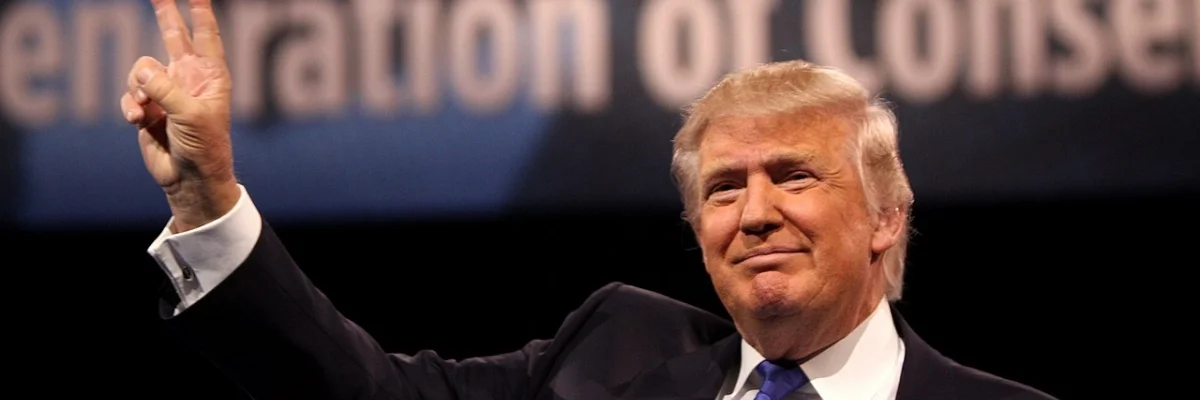
Trump Says Open to New Iran Deal, Confirms Sanctions Return
◢ US President Donald Trump said Monday he remains open to forging a new nuclear deal with Iran, as he confirmed Washington will go ahead with reimposing sanctions against Tehran. Despite pleas from other parties to the agreement, Trump pulled the US out of the deal in May, claiming the Iranian regime was cheating on its commitments and funding "malign" activities around the region.
US President Donald Trump said Monday he remains open to forging a new nuclear deal with Iran, as he confirmed Washington will go ahead with reimposing sanctions against Tehran.
Despite pleas from other parties to the agreement, Trump pulled the US out of the deal in May, claiming the Iranian regime was cheating on its commitments and funding "malign" activities around the region.
"I remain open to reaching a more comprehensive deal that addresses the full range of the regime's malign activities, including its ballistic missile program and its support for terrorism," Trump said in a statement.
A first phase of US sanctions against Iran goes into effect overnight, targeting Iran's access to US banknotes and key industries including cars and carpets.
The second phase, which takes effect November 5 and will block Iran's oil sales, is due to cause more damage, though several countries including China, India and Turkey have indicated they are not willing to entirely cut their Iranian energy purchases.
Trump called the multilateral Iran accord a "horrible, one-sided deal."
It "failed to achieve the fundamental objective of blocking all paths to an Iranian nuclear bomb, and it threw a lifeline of cash to a murderous dictatorship that has continued to spread bloodshed, violence and chaos," he said.
After months of fierce rhetoric, Trump surprised observers last week when he offered to meet with Iranian President Hassan Rouhani without preconditions.
But Iranian Foreign Minister Mohammad Javad Zarif suggested it was hard to imagine negotiating with the man who tore up an agreement on which Iran and world powers had spent the "longest hours in negotiating history."
Trump warned that businesses and individuals that continue to work with Tehran risk "severe" consequences.
"We urge all nations to take such steps to make clear that the Iranian regime faces a choice: either change its threatening, destabilizing behavior and reintegrate with the global economy, or continue down a path of economic isolation," he said.
Photo Credit: Wikicommons
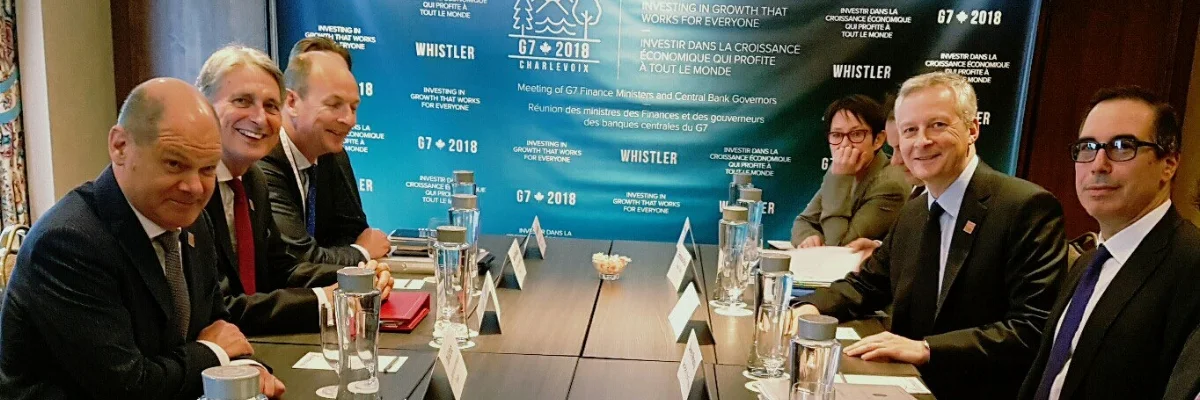
US Rejects European Call for Iran Sanctions Waiver
◢ Washington will not budge on its decision to impose fresh sanctions on corporations operating in Iran, despite a European request for exemption, the Financial Times reported Monday. "International companies active in Iran face the threat of US sanctions within weeks after Washington rebuffed a high-level European plea to exempt crucial industries to help keep a landmark nuclear deal with Tehran alive," the paper reported.
Washington will not budge on its decision to impose fresh sanctions on corporations operating in Iran, despite a European request for exemption, the Financial Times reported Monday.
"International companies active in Iran face the threat of US sanctions within weeks after Washington rebuffed a high-level European plea to exempt crucial industries to help keep a landmark nuclear deal with Tehran alive," the paper reported.
France, Britain, Germany and the European Union had on June 6 sent US President Donald Trump's administration a joint official request for their companies to be exempt from the fresh US sanctions on Iran.
The plea had come as European leaders scrambled to save the hard-fought deal signed between Iran and world powers in 2015 under which Tehran agreed to limit its nuclear capacities in exchange for relief from crippling economic sanctions.
Trump announced he was abandoning the deal in May—paving the way for new sanctions on the Islamic republic and punitive measures for those who trade with it.
In a formal letter, US Secretary of State Mike Pompeo and Treasury Secretary Steve Mnuchin refused to grant the European powers the waiver they had asked for, the Financial Times reported Monday, citing diplomats.
French Economy Minister Bruno Le Maire had already said the United States would not grant Europe its request.
"I wrote in the springtime to Steve Mnuchin... to ask him for an exemption for European companies legally working in Iran," Le Maire said according to an interview with French newspaper Le Figaro that was published Friday.
Failing an outright exemption, Le Maire had also asked for more time before the sanctions regime was due to kick in.
"We have just received the answer, and it's negative," he said.
Washington's refusal came as Trump called Europe a foe in trade and renewed accusations that the EU was taking advantage of the United States.
Analysts say European firms which have rushed to invest in Iran after the lifting of sanctions over the past three years have the most to lose from the renewed sanctions.
Photo Credit: Bruno Le Maire Twitter
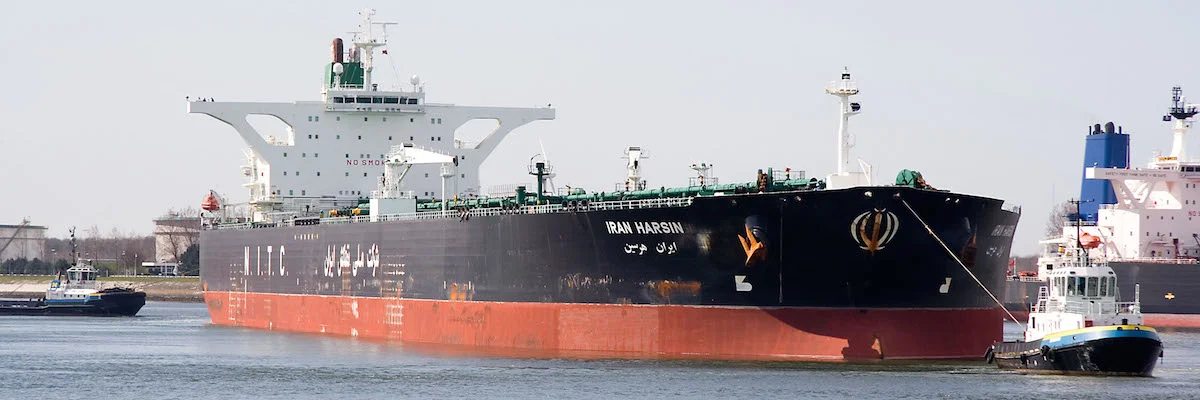
US Demands World Halt Iranian Oil Imports By Nov 4
◢ The United States warned Tuesday that countries around the world must stop buying Iranian oil before November 4 or face a renewed round of American economic sanctions. A senior State Department official warned foreign capitals "we're not granting waivers" and described tightening the noose on Tehran as "one of our top national security priorities."
The United States warned Tuesday that countries around the world must stop buying Iranian oil before November 4 or face a renewed round of American economic sanctions
A senior State Department official warned foreign capitals "we're not granting waivers" and described tightening the noose on Tehran as "one of our top national security priorities."
Last month US President Donald Trump withdrew the United States from the Iran nuclear deal, re-imposing US sanctions that had been suspended in return for controls on Tehran's nuclear program.
Now, Washington is stepping up pressure on other countries to follow suit, including European allies who begged him to stay in the accord and major Iranian customers like India, Japan and China.
European powers in particular have been attempting to negotiate exemptions for their firms, but the official confirmed that Trump intends to stick to his 180-day deadline, expiring November 4.
"I would be hesitant to say zero waivers ever," he said, but added that the official position is: "No, we're not granting waivers."
The senior US official, briefing reporters on condition of anonymity, admitted that this would be unpopular.
"I don't think the Japanese answer was particularly different than other oil importing countries," the official said, adding that he plans to visit China and India soon to discuss the matter.
"This is a challenge for them, this is not something that any country that imports oil from Iran ... wants to do voluntarily because, you know, we're asking them to make a policy change.
"China, India? Yes, certainly their companies will be subject to the same sanctions that everybody else is," he said. "We will certainly be requesting that their oil imports go to zero."
Photo Credit: Wikicommons
China Warns US Against Causing 'Damage' to Trade in Huawei Probe
◢ China warned the United States on Thursday against harming trade after a report that US authorities had opened an investigation into suspected violations of Iran sanctions by China's Huawei Technologies. A US Justice Department probe would come on the back of subpoenas issued to the company by the US Commerce and Treasury Departments.
China warned the United States on Thursday against harming trade after a report that US authorities had opened an investigation into suspected violations of Iran sanctions by China's Huawei Technologies.
A US Justice Department probe would come on the back of subpoenas issued to the company by the US Commerce and Treasury Departments over sanctions-related issues, according to the Wall Street Journal.
Huawei—one of the world's largest telecommunications equipment and services providers—has been under tough scrutiny in the United States, where government national security officials say that its alleged close links to the Chinese government make it a security risk.
Its US business has been tightly constrained by worries it could undermine US competitors and that its cellphones and networking equipment, used widely in other countries, could provide Beijing with avenues for espionage.
The Journal report gave no details about the investigation. The New York Times has reported that the company has been subpoenaed by the Commerce and Treasury Departments over alleged violations of Iran and North Korea sanctions.
Huawei would not comment on the Journal report. "Huawei complies with all applicable laws and regulations where it operates, including the applicable export control and sanction laws and regulations of the UN, US and EU," spokesman Charles Zinkowski said in a statement.
Chinese foreign ministry spokeswoman Hua Chunying said she had seen the report.
"We hope that the US doesn't take any further steps to damage confidence in the American business environment," Hua said at a regular press briefing.
Hua added that China hopes "the US doesn't do things that damage its domestic economy and the normal, transparent, mutually beneficial development of international trade."
Signaling the rising unease in the United States towards Huawei and fellow Chinese telecoms group ZTE Corp, last month the Federal Communications Commission proposed a new rule that would restrict small telecoms carriers from purchasing "equipment or services from companies that pose a national security threat."
Major US telecoms companies have already steered clear of the two Chinese firms, sometimes on the strong suggestions of US officials.
The cases come as the United States and China are gearing up for a potential trade war, with the high-tech sector among the concerns for both sides.
Photo Credit: Wikicommons