
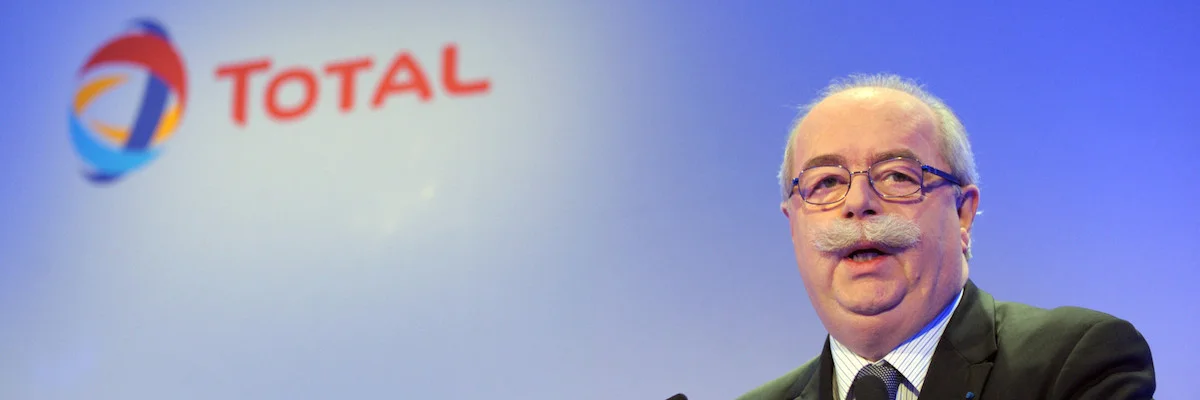
French Oil Giant Total Found Guilty of Corruption in 1997 Iran Gas Deal
◢ A French court on Friday fined oil giant Total EUR 500,000 for corruption after finding it guilty of paying bribes while bidding for a huge gas contract in Iran in 1997. The French company was accused of paying USD 30 million in bribes to middlemen, in return for help in securing the lucrative South Pars gas concession. In 2013 the company paid USD 398 million in the US to settle a similar case before it went to trial.
A French court on Friday fined oil giant Total EUR 500,000 for corruption after finding it guilty of paying bribes while bidding for a huge gas contract in Iran in 1997.
The French company was accused of paying USD 30 million in bribes in return for help in securing the rights to the South Pars natural gas field in the Persian Gulf, the world's largest.
The Paris criminal court found it guilty of "corruption of a foreign public agent" for payments made to former president Akbar Hashemi Rafsanjani's son Mehdi Hashemi, a senior energy official at the time, among others.
But it dismissed prosecutors' call for it to seize EUR 250 million in Total assets—investigators' estimate of the value of the proceeds of the corruption.
The fine represents a fraction of the EUR 398 million that Total paid in the US in 2013 to settle similar charges arising out of the joint French-US investigation.
It also represents a drop in the ocean of Total's net profits in 2017 of USD 8.6 billion.
'Business Development'
By admitting responsibility in the US, Total avoided the embarrassment of a trial for violations of the Foreign Corrupt Practices Act (FCPA), which seeks to stop bribery in foreign countries by companies with a significant US presence.
The company cited its deal with US authorities in refusing to answer questions about its Iran dealings at its Paris trial.
The French part of the probe, which was launched back in 2006, initially covered both the 1997 South Pars deal, worth USD 2 billion, and the 1995 concession for the Sirri A and E oil fields.
Total was accused of paying a total of $60 million in bribes between 1995 and 2004 to obtain the concessions.
The US Justice Department said that Total attempted to pass off the payments as "business development expenses.”
The company argued that its behavior was "completely legal under French law.”
In the end the multinational was tried only over the USD 30 million it paid in connection with the South Pars field after 2000, when a new French law on "corruption of foreign public officials" came into effect.
Total's late CEO Christophe de Margerie, who was head of Middle East exploration at the time of the payments, was also being investigated before his sudden death in a plane crash in Moscow in 2014.
In a statement Friday, Total's current CEO Patrick Pouyanne said anyone who knew de Margerie "knows that he would never be involved in any type of corruption.”
A Iranian businessman Bijan Dadfar and an oil industry consultant, Abbas Yazdi, were also named as suspects in the case.
Dadfar has died since the probe began while Yazdi, who is also believed to be dead, was sentenced to four years imprisonment in the absence of any death certificate.
The ruling comes four months after Total announced that it was pulling out of the South Pars project for fear of being caught out by US sanctions after US President Donald Trump pulled out of an international nuclear deal with Tehran.
Photo Credit: Total
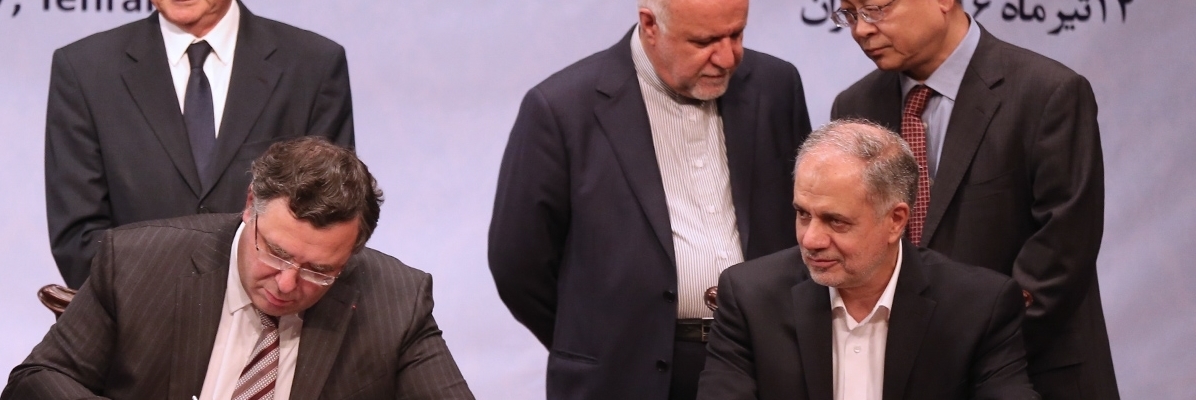
France's Total Has Officially Left Iran: Oil Minister
◢ French energy giant Total has officially quit its multi-billion-dollar gas project in Iran, Oil Minister Bijan Namdar Zanganeh said on Monday, following the reimposition of US sanctions. "Total has officially left the agreement for the development of phase 11 of South Pars (gas field)," he told parliament's news agency ICANA, adding that it had been more than two months since the French firm announced it would leave.
French energy giant Total has officially quit its multi-billion-dollar gas project in Iran, Oil Minister Bijan Namdar Zanganeh said on Monday, following the reimposition of US sanctions.
"Total has officially left the agreement for the development of phase 11 of South Pars (gas field)," he told parliament's news agency ICANA, adding that it had been more than two months since the French firm announced it would leave.
Zanganeh also appeared before parliament to underline the dire state of Iran's oil and gas facilities, which he said were "worn out" and in need of renovation that Iran could not afford.
The United States said in May that it was abandoning the 2015 nuclear deal and reimposing sanctions on Iran in two phases in August and November, with the second targeting the country's vital oil and gas sector.
The other parties to the nuclear deal—Britain, France, Germany, China and Russia—have vowed to stay in the accord but their companies risk huge penalties if they keep doing business in Iran.
Total had already said it would be impossible to remain in Iran unless it received a specific waiver from Washington, which was not granted.
The French firm signed up in July 2017 for the USD 4.8 billion project to develop the field off Iran's southern coast, as the lead partner alongside the China National Petroleum Corporation (CNPC) and Iran's Petropars.
It was due to bring state-of-the-art technology to create the pressure needed to tap the gas field, which Iran could then replicate for surrounding fields where pressure has been declining.
Total was due to make an initial USD 1 billion investment, but the company said in May that it had spent less than 40 million euros on the project to date, as uncertainty over US actions mounted.
The company would have been highly vulnerable to US penalties for remaining in Iran.
It has USD 10 billion of capital employed in its US assets, and US banks are involved in 90 percent of its financing operations, Total said in May.
Technology Needed
Zanganeh said the process to find a replacement for Total was underway.
But it is unlikely that CNPC or Iran's own firms can take over the project, said Homayoun Falakshahi, an energy analyst for Wood Mackenzie in London.
"The technology Total was hoping to implement would have been world-first, using electricity to compress the gas," he told AFP.
"The other complication is that it needs huge platforms. Iran can build 5,000- to 7,000-tonne platforms. This would have been 20,000 tonnes," he added.
CNPC was suspended from the project once before, in 2011, for failing to make progress.
The urgent need for investment to upgrade Iran's dilapidated energy infrastructure was a key motivator behind its decision to join the 2015 nuclear deal.
Zanganeh appeared in parliament on Monday to answer questions on safety concerns following a number of recent fires at refineries.
"A big part of the oil industry has been worn out and the necessary renovation has not taken place," he told parliament, according to the official IRNA news agency.
He said there were 10 cases per day of tubes perforating in Iran's southern facilities, and that some refineries were up to 80 years old, "whereas the useful life of an industrial unit is 30 years".
"We have no resources for renovating them," he added.
But some conservatives in Iran oppose foreign involvement in the strategic energy sector, and have frustrated plans to develop attractive investment contracts.
As a result, the Total deal was the only major investment project finalized after the nuclear deal came into force.
The only other deal was a smaller project with Russia's Zarubezhneft, worth EUR 600 million, to develop two oil fields in western Iran.
Photo Credit: IRNA
European Losers in New Iranian Sanctions Game
◢ US President Donald Trump's decision to pull the United States out of the 2015 nuclear accord with Iran and reimpose a raft of sanctions will hit European businesses working in Iran. Here is an overview of how firms stand to be affected when the sanctions kick in Monday.
US President Donald Trump's decision to pull the United States out of the 2015 nuclear accord with Iran and reimpose a raft of sanctions will hit European businesses working in Iran. Here is an overview of how firms stand to be affected when the sanctions kick in Monday:
Auto
French automakers Renault and PSA have taken different approaches publicly. PSA, behind the Peugeot, Citroen and Opel brands, said in June it was preparing to suspend activities in the Islamic republic, its chief foreign market by volume, noting those units account for "less than one percent of sales."
The group, which is Europe's second biggest carmaker, last year sold more than 445,000 vehicles in Iran, making the country one of its biggest markets outside France.
Renault says it intends to keep up activities in Iran albeit scaling them back. On July 16, the automaker announced a 10.3 percent drop in sales in Iran to 61,354 units.
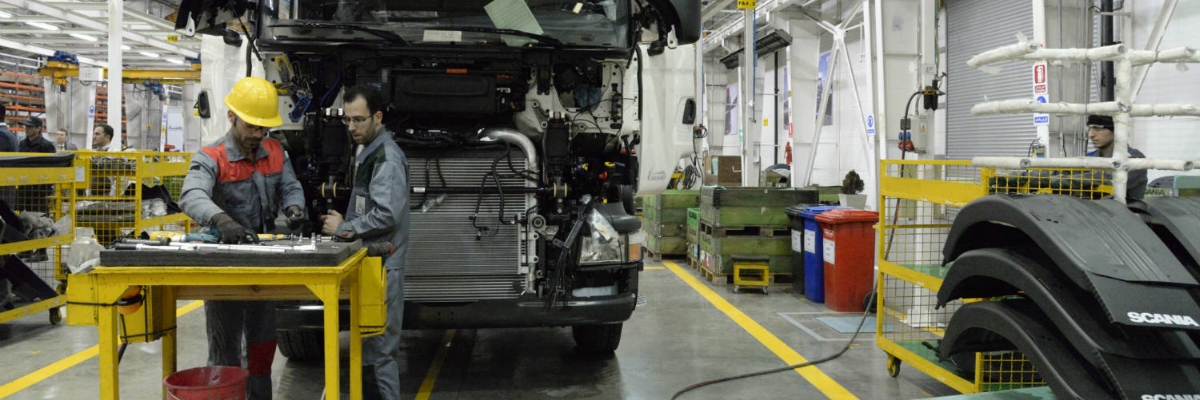
Germany's Daimler was teaming up with two Iranian firms to assemble Mercedes-Benz trucks.
Volkswagen also said last year it would seek to resume sales in Iran for the first time in 17 years, yet the scale of its US activities could force the jettisoning of those plans.
German firms' business with Iran was a modest USD 2.6 billion of 2016 exports rising to 3.0 billion last year. Italy is Iran's main European trading partner -- but Germany is still the bloc's biggest exporter to Tehran.
Aviation
Aviation saw beefy contracts drawn up following the nuclear accord as Iran targets modernization of an aging fleet.
Airbus booked deals for 100 jets although to date only three have been delivered after having US licenses bestowed upon them -- a necessity given some parts are US-made.
The potential loss of business in Iran would not weigh overly heavily on Airbus as overall orders on its books at the end of June stood at 7,168 planes. Franco-Italian planemaker ATR was fretting on the fate of 20 planes earmarked for Iranian delivery -- though Iran Air said Saturday five ATR-72600 aircraft would arrive Sunday, creeping under the deadline to add to eight already delivered.
Oil
French energy giant Total has moved away from a contract to develop an offshore gas field at South Pars in what would have been the first project of its kind since the 2015 nuclear deal.
Because Total's investment in the field had barely just begun, the company is avoiding incurring significant losses on a $5 billion project which Iran says Chinese group CNPC will now take up.
After a 30 percent jump in 2016 in exports of Italian-made goods to Iran, Italian exports grew 12.5 percent last year to 1.7 billion euros, according to official data.
But energy giant Eni has held back on returning to Iran, preferring to wait on the impact of the latest sanctions.
Britain's BP, which started life as the Anglo-Persian Oil Company, has no presence in Iran. Although Anglo-Dutch giant Royal Dutch Shell signed a deal in 2016 to explore possible investments it does not currently have any operations on the ground.
Railways and Shipbuilding
Italy stands to lose out in these sectors with national railway operator Ferrovie dello Stato Italiano having signed a deal to build a high-speed line linking Qom to Arak in northern Iran.
Shipmaker Fincantieri, engineering firm Maire Tecnimont and gas boiler maker Immergas has also signed a string of deals with Iran which now are also threatened.
Tourism
British Airways and German carrier Lufthansa face having to stop only recently resumed direct flights to Tehran or face losing Transatlantic business.
The dilemma applies to French hotel chain AccorHotels, which opened an establishment in Iran in 2015, as well as to Emirati group Rotana Hotels, which has designs on its own Iranian operation.
Spain's Melia Hotels International chain, which signed a 2016 deal to run a five star hotel in Iran, the Gran Melia Ghoo, says the establishment is under construction and that discussion of its future is "premature."
Industry
Siemens returned to Iran in 2016 seeking to sell gas turbines and generators for electricity stations and has won a contract to sell compressors for a natural gas processor.
"The mega contracts hoped for when sanctions were lifted were never realized," KPMG advisor Kaveh Taghizadeh was recently quoted as saying in Stern magazine.
"Siemens will continue to ensure it remains in strict compliance with relevant international export control restrictions and all other applicable laws and regulations, including US secondary sanctions," Siemens spokesman Yashar Azad told AFP.
He added Siemens "will take appropriate actions to align its business with the changing multilateral framework regarding Iran." French industrial gas group Air Liquide says it will "cease all commercial activity" in the country although a spokesperson says the firm has "no investments" there.
Pharmaceuticals
Pharmaceutical giant Sanofi, in Iran for over a decade, remains operating "in full compliance with international regulations", a spokesman said, while adding "it is still too early to comment on the potential impact" of sanctions.
Banks
Germany's big banks, Deutsche Bank and Commerzbank, stayed clear of Iran after the US fined them hugely in 2015 for violating previous sanctions. Regional banks Helaba and DZ Bank pulled out of Iran after the US announced it was reimposing sanctions.
Photo Credit: Scania
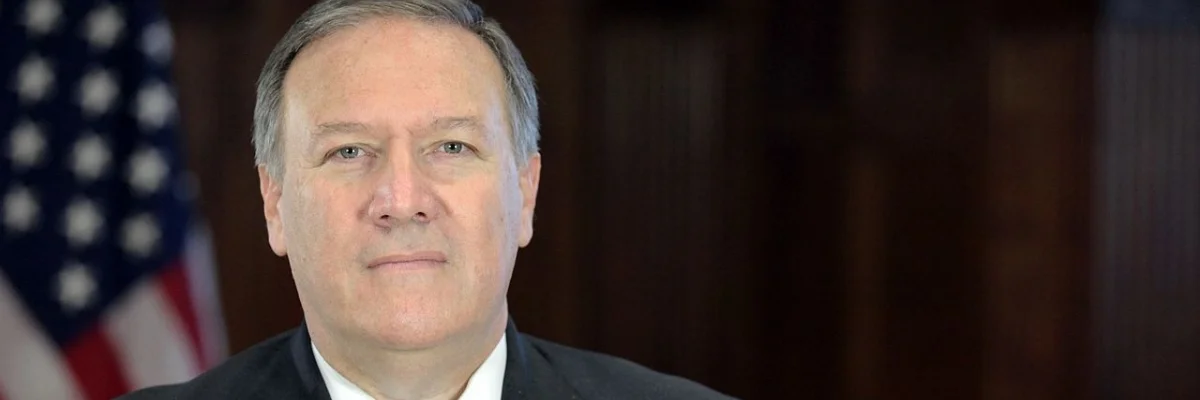
Pompeo Urges EU to Get Tough on Iran
◢ US Secretary of State Mike Pompeo urged European powers to get behind American measures to cut Iran off from world energy markets Thursday, during talks in Brussels. While debate at the nearby NATO summit was marked by President Donald Trump's attacks on Germany's close energy ties with Russia, his top diplomat had another target.
US Secretary of State Mike Pompeo urged European powers to get behind American measures to cut Iran off from world energy markets Thursday, during talks in Brussels.
While debate at the nearby NATO summit was marked by President Donald Trump's attacks on Germany's close energy ties with Russia, his top diplomat had another target.
Pompeo peeled off from Trump's summit entourage and joined US Energy Secretary Rick Perry and EU foreign policy chief Federica Mogherini at the EU-US energy council.
Pompeo made no statement going into the talks, but his Twitter account showed what was on his mind.
"Iran continues to send weapons across the Middle East, in blatant violation of UN Security Council resolutions," he wrote.
"Iran's regime wants to start trouble wherever it can. It's our responsibility to stop it."
Then, just before the talks started, he added: "We ask our allies and partners to join our economic pressure campaign against Iran's regime.
"We must cut off all funding the regime uses to fund terrorism and proxy wars," he warned.
"There's no telling when Iran may try to foment terrorism, violence and instability in one of our countries next."
Alongside the tweet he posted a map of Europe purporting to show the locations of 11 "terror attacks" US officials believe Iran or its proxy Hezbollah have carried out since 1979.
Washington dismayed Europe in May when Trump pulled out of the 2015 accord under which Iran agreed to controls on its nuclear program in exchange for sanctions relief.
US sanctions have now "snapped back" into place and US officials have begun to hope that the economic pressure is fuelling domestic discontent against the Tehran regime.
European companies are reluctant to resume trade with Iran at the risk of being hit by US secondary sanctions, but the main EU capitals want to protect the accord.
They are thus resisting a US threat to impose sanctions on any entity trading in Iranian oil or dealing with the Iranian central bank after a November 4 deadline.
Photo Credit: Wikicommons
Most French Firms 'Won't Be Able to Stay' in Iran: Minister
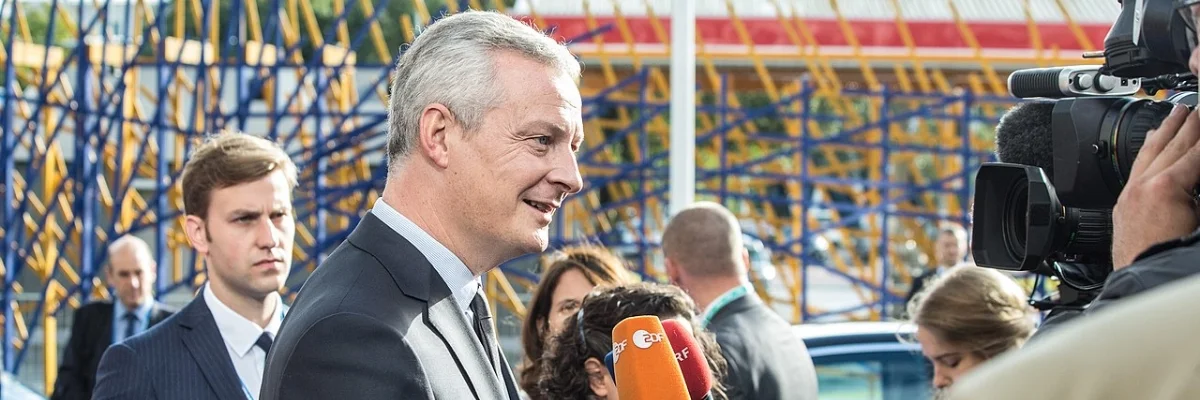
◢ Most French companies hoping to keep doing business in Iran after the US imposes new sanctions on the country will find it impossible to do so, Finance Minister Bruno Le Maire said Tuesday. These companies "won't be able to stay because they need to be paid for the products they deliver to or build in Iran, and they cannot be paid because there is no sovereign and autonomous European financial institution" capable of shielding them," Le Maire told BFM television.
Most French companies hoping to keep doing business in Iran after the US imposes new sanctions on the country will find it impossible to do so, Finance Minister Bruno Le Maire said Tuesday.
These companies "won't be able to stay because they need to be paid for the products they deliver to or build in Iran, and they cannot be paid because there is no sovereign and autonomous European financial institution" capable of shielding them, Le Maire told BFM television.
The new sanctions announced by US President Donald Trump in May after he pulled out of a 2015 nuclear deal with Tehran would punish any foreign firm operating in Iran which also does business with the US or in dollars.
"Our priority is to build independent, sovereign European financial institutions which would allow financing channels between French, Italian, German, Spanish and any other countries on the planet," Le Maire said.
"It's up to us Europeans to choose freely and with sovereign power who we want to do business with," he added. "The United States should not be the planet's economic policeman."
Le Maire and his EU counterparts have been trying to secure exemptions for their firms, many of which rushed back into Iran after the landmark accord curtailing Tehran's nuclear program.
But French oil group Total and carmaker PSA have already indicated they are unlikely to stay in the country, while Renault has said it will remain despite the sanctions—though it does not sell its cars in the US.
Analysts have warned it would be nearly impossible to protect multinationals from the reach of the "extraterritorial" US measures, given the exposure of large banks to the US financial system and dollar transactions.
The first round of the new sanctions, targeting Iran's auto and civil aviation sectors, are scheduled to go into effect on August 6.
Photo Credit: Wikicommons
Total Says Chances of Iran Sanctions Waiver 'Very Slim'
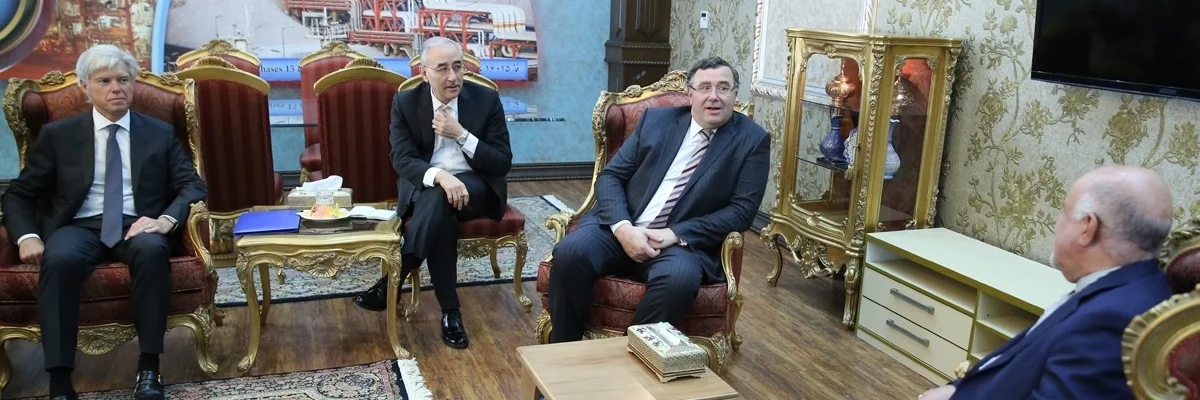
◢ French oil major Total said Friday the probability of winning an exemption from US sanctions against Iran to continue a major gas field project was very faint. On Friday, Total's chairman Patrick Pouyanné told shareholders that the prospect of a sanctions exemption was dim.
French oil major Total said Friday the probability of winning an exemption from US sanctions against Iran to continue a major gas field project was very faint.
The energy giant had already warned that, unless Washington granted it a waiver, it would pull out of the South Pars 11 project which it started in July 2017, two years after Western powers signed a nuclear deal with Tehran prompting the return of many businesses to Iran.
But earlier this month, President Donald Trump announced his withdrawal from the deal, and told companies that they face sanctions if they do business with Iran.
Iran's oil minister on Wednesday gave Total 60 days to win a sanctions waiver from Washington before it would lose its stake in the multi-billion-dollar project.
But on Friday, Total's chairman Patrick Pouyanné told shareholders that the prospect of a sanctions exemption was dim.
"The probability of us getting an exemption is very slim", he said.
Total said earlier this month that it has USD 10 billion of capital employed in its US assets, and US banks are involved in 90 percent of its financing operations, making Total highly vulnerable if targeted by any US actions.
By contrast, Total said it had spent less than EUR 40 million (USD 47 million) on the Iranian project, which it runs with its local partners CNPC and Petropars and which is dedicated to the supply of domestic gas inside Iran.
A withdrawal from the Iran project would not affect Total's current overall production targets as the group had since opened up other growth opportunities, it said.
Meanwhile, Tehran said that Chinese state-owned oil company CNPC will replace Total on the gas project if the French company pulls out.
Photo Credit: IRNA
Iran Sets Sanctions Waiver Deadline for Oil Giant Total
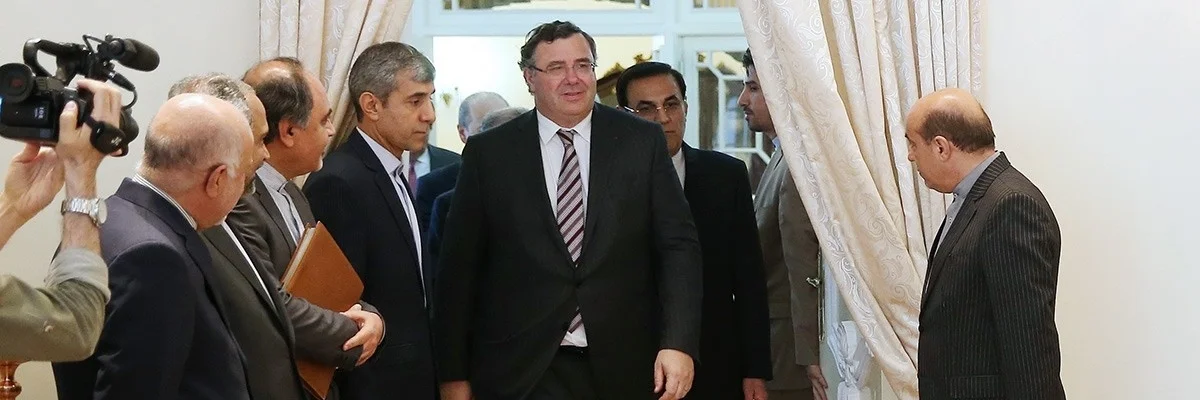
◢ Iran's oil minister on Wednesday gave French energy giant Total 60 days to win a sanctions waiver from Washington or it would lose its stake in a multi-billion-dollar gas project. "Total has 60 days to negotiate with the US government," said Bijan Zanganeh, according to the oil ministry's Shana news agency.
Iran's oil minister on Wednesday gave French energy giant Total 60 days to win a sanctions waiver from Washington or it would lose its stake in a multi-billion-dollar gas project.
"Total has 60 days to negotiate with the US government," said Bijan Zanganeh, according to the oil ministry's Shana news agency.
"The French government too can have negotiations with the US government during these 60 days for Total to stay in Iran."
Total was the only western firm to finalize an investment deal in Iran's energy sector following the 2015 nuclear deal, from which Washington withdrew earlier this month.
It signed the agreement last July to become the lead partner in a USD 4.8 billion project to develop the South Pars 11 gas field, alongside the China National Petroleum Corporation (CNPC) and Iran's Petropars.
But after Washington quit the deal and pledged to fully reimpose sanctions by November, Total has said it will be impossible to continue unless it gets a specific waiver from Washington.
If the French firm fails to win an exemption, CNPC "will replace Total in this project," Zanganeh said.
The oil minister did not explain why the French firm only had 60 days, with US sanctions on foreign energy companies in Iran not due to kick in until November 4.
Even before Washington pulled out of the nuclear deal, Iran had struggled to attract investment into its oil and gas sector.
The only other deal was a $742 million (600 million euro) deal with Russian state-owned firm Zarubezhneft to boost production at two oil fields in the western province of Ilam.
Hardliners in Iran had opposed foreign investment in the energy sector despite the government saying billions were needed to realise its potential.
"Iran failed to attract much energy investment, even when conditions were at their most favorable," wrote the US Center on Global Energy Policy in a recent briefing note.
"The country was far too slow in unveiling its new Iran Petroleum Contract, and when it did, potential investors complained that the terms were unattractive."
Photo Credit: IRNA
Iran's Zarif Says EU Efforts to Save Nuke Deal 'Not Sufficient'
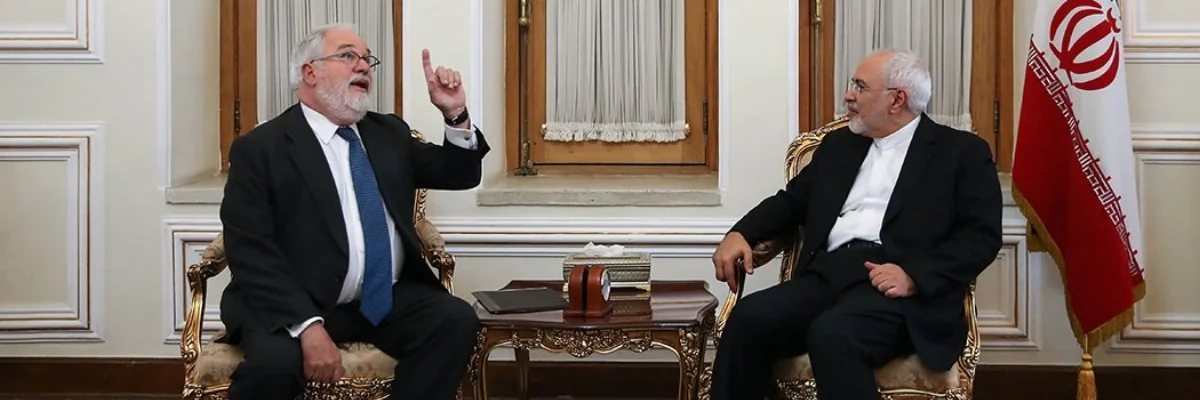
◢ Iran's Foreign Minister Mohammad Javad Zarif said Sunday that European efforts to save the nuclear deal after the exit of the United States were not sufficient. "The cascade of decisions by EU companies to end their activities in Iran makes things much more complicated," Zarif told reporters.
Iran's Foreign Minister Mohammad Javad Zarif said Sunday that European efforts to save the nuclear deal after the exit of the United States were not sufficient.
"The cascade of decisions by EU companies to end their activities in Iran makes things much more complicated," Zarif told reporters.
He spoke after meeting with EU energy commissioner Miguel Arias Canete, who has been on a two-day visit to Tehran—the first by a Western official since Washington announced its withdrawal from the 2015 nuclear deal earlier this month.
"With the exit of the United States from the nuclear deal, the expectations of the Iranian public towards the European Union have increased... and the EU's political support for the nuclear agreement is not sufficient," Zarif added in comments carried by state broadcaster IRIB.
Several foreign firms have already halted their Iranian operations while they wait to see how talks within the EU will play out.
French oil major Total said last week it would abandon its $4.8-billion investment project in Iran unless it was granted a waiver from Washington.
Another French energy giant, Engie, said Saturday it would cease engineering work in Iran before November, when US sanctions are due to be reimposed.
"The European Union must take concrete supplementary steps to increase its investments in Iran. The commitments of the EU to apply the nuclear deal are not compatible with the announcement of probable withdrawal by major European companies," Zarif said.
Canete said he recognised that time was short and that clear measures were needed from Europe to protect investments and oil purchases.
Iran has threatened to resume industrial uranium enrichment "without limit"
if its interests are not protected.
Photo Credit: Fars
Iran Wary as EU Presents Measures to Save Nuclear Deal
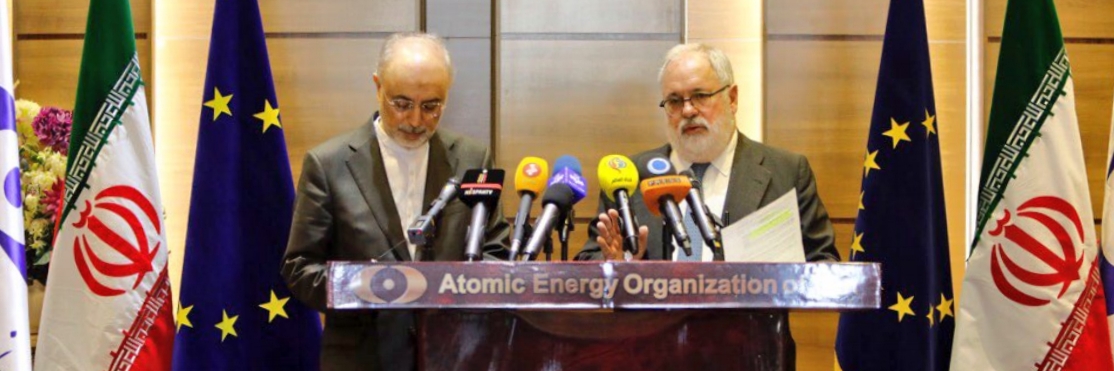
◢ Iran said Saturday it would wait to see whether Europe produces tangible results in overcoming US sanctions before deciding whether to stay in the nuclear deal, as a top EU official visited Tehran to present plans to maintain trade ties. "The ball is in the court of the EU. They have presented different proposals, we will see if they materialize," Iran's Atomic Energy Organization head Ali Akbar Salehi told reporters.
Iran said Saturday it would wait to see whether Europe produces tangible results in overcoming US sanctions before deciding whether to stay in the nuclear deal, as a top EU official visited Tehran to present plans to maintain trade ties.
"The ball is in the court of the EU. They have presented different proposals, we will see if they materialize," Iran's Atomic Energy Organization head Ali Akbar Salehi told reporters.
He was speaking after a meeting with EU Energy Commissioner Miguel Arias Canete, the first high-level Western official to visit Iran since the US withdrew from the 2015 nuclear deal earlier this month.
Canete called the nuclear deal "fundamental for peace in the region" as he outlined EU plans to continue oil and gas purchases and protect European companies, despite renewed US sanctions on Iran that are set to be phased in over the next six months.
"For sure there are clear difficulties with the sanctions," Canete said at a press conference alongside Salehi.
"We will have to ask for waivers, for carve-outs for the companies that make investments."
Salehi acknowledged Europe's efforts but said: "We want tangible results, otherwise we take our own decisions. I personally don't want to see such decisions being taken."
EU Firms Eye Exit
Iran has threatened to resume industrial uranium enrichment "without limit" unless its interests are preserved.
Salehi said the Iranian people had lost trust in the nuclear agreement, and if trade benefits were not protected "they will lose more confidence... and we will be forced to leave."
European leaders have outlined measures to protect EU firms from US sanctions.
But several of their companies—including France's Total and Holland's Maersk -- have already said it will be impossible to stay in Iran once US sanctions are reimposed unless they receive explicit exemptions from Washington.
Canete was due to meet Iran's Environment Minister Isa Kalantari and Oil Minister Bijan Namdar Zanganeh later on Saturday, and Foreign Minister Mohammad Javad Zarif on Sunday.
Iran's trade with the European Union is around 20 billion euros, evenly split between imports and exports.
The vast majority of EU purchases from Iran—90 percent—are oil purchases, going primarily to Spain, France, Italy, Greece, the Netherlands and Germany.
Iran, which has the world's fourth-biggest oil reserves, produces some 3.8 million barrels of oil per day, 70 percent of which goes to China and other Asian countries, and 20 percent to Europe.
It also has the second-biggest gas reserves in the world, but limited infrastructure means little is exported.
Russia and China—the other parties to the nuclear deal—have also vowed to maintain trade with Iran and are less vulnerable to economic pressure from Washington.
Photo Credit: EU MAC
Iran Says China Group Ready to Replace Total on Gas Deal
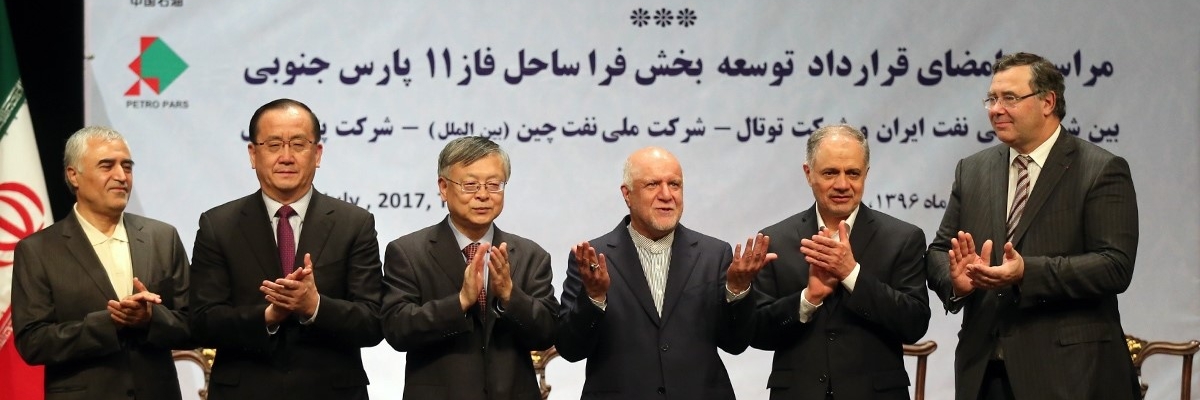
◢ Chinese state-owned oil company CNPC will replace Total on a major gas field project in Iran if the French energy giant pulls out over renewed US sanctions against Tehran, Iran's oil minister has said. Total started the USD 4.8-billion South Pars 11 project in July 2017, two years after Western powers signed a nuclear deal with Tehran prompting the return of many businesses to Iran.
Chinese state-owned oil company CNPC will replace Total on a major gas field project in Iran if the French energy giant pulls out over renewed US sanctions against Tehran, Iran's oil minister has said.
"Total has said that if it doesn't get an exemption from the United States to continue its work, it will begin to pull out of the deal," Bijan Namdar Zanganeh was quoted as saying by his ministry's Shana news service.
"If that happens, the Chinese firm CNPC will replace Total."
Total started the USD 4.8-billion South Pars 11 project in July 2017, two years after Western powers signed a nuclear deal with Tehran prompting the return of many businesses to Iran.
But earlier this month, US President Donald Trump announced his withdrawal from the deal, and warned companies that they face sanctions if they do business with Iran.
The French group said Wednesday it has USD 10 billion of capital employed in its US assets, and US banks are involved in 90 percent of its financing operations, making Total highly vulnerable if targeted by any US actions.
By contrast, Total said it had spent less than EUR 40 million euros on the Iranian project, which it runs with its partner Petrochina and which is dedicated to the supply of domestic gas inside Iran.
Zanganeh said on Wednesday that were CNPC, which was part of the Total deal, unable to carry out the work in South Pars due to US sanctions it would fall to Iran's Petropars.
Iran possesses the second-largest gas reserves on the planet, after Russia, and the fourth largest oil supplies.
Photo Credit: IRNA
France's Total To Seek Waiver If US Revives Iran Sanctions: CEO
◢ French energy giant Total will push ahead with a $4.8 billion deal to develop an Iranian gas field and will seek a waiver if Washington re-imposes sanctions, the firm's CEO has said. If Washington does walk away from the deal, Pouyanne said, Total will argue that as the project was "awarded prior to that decision during the period of time that we could sign."
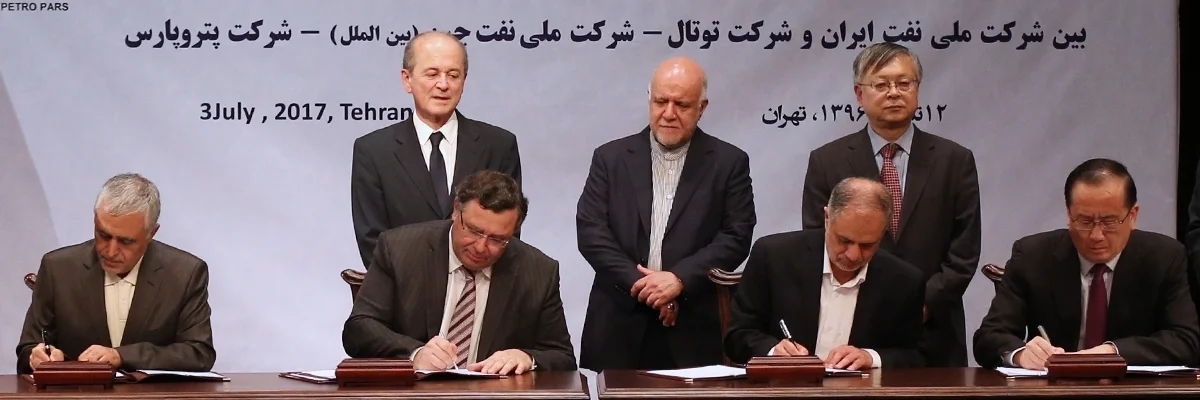
French energy giant Total will push ahead with a $4.8 billion deal to develop an Iranian gas field and will seek a waiver if Washington re-imposes sanctions, the firm's CEO has said.
US President Donald Trump has threatened to withdraw from a 2015 deal curtailing Iran's nuclear program in exchange for sanctions relief, unless it is "improved" by May 12.
"If the US decides to put back the sanctions, we have to look at what the consequences are," Total chief Patrick Pouyanne said in an interview with Abu Dhabi daily The National published Monday.
"Then we will see, either Donald Trump decides to maintain the waivers and we will move on with the project, (or) we will ask for a waiver from the US authorities."
Defying pressure from Washington, Total signed a deal with Iran in July to head up an international consortium to develop Iran's vast South Pars offshore gas field, alongside China National Petroleum Corporation (CNPC) and Iran's Petropars.
In January, Trump demanded changes to what he has called a "terrible" nuclear deal or the United States would withdraw. European parties to the agreement are desperate to save it and have been scrambling to find ways to persuade Trump not to rip it up.
If Washington does walk away from the deal, Pouyanne said, Total will argue that as the project was "awarded prior to that decision during the period of time that we could sign."
That could allow the firm to benefit from a clause allowing the gas agreement to stand.
Photo Credit: IRNA