
Iran Warns U.S. Against Seizing Oil Tanker Headed to Greece
◢ Iran warned the U.S. against apprehending a supertanker carrying the Middle East country’s oil and said it couldn’t be clear on the ship’s ultimate destination, leaving the fate of the vessel uncertain as it sailed into the Mediterranean Sea from Gibraltar, where it had been detained.
By Arsalan Shahla, Verity Ratcliffe and Brian Wingfield
Iran warned the U.S. against apprehending a supertanker carrying the Middle East country’s oil and said it couldn’t be clear on the ship’s ultimate destination, leaving the fate of the vessel uncertain as it sailed into the Mediterranean Sea from Gibraltar, where it had been detained.
The tanker, formerly called the Grace 1 and re-named the Adrian Darya 1, was signaling Kalamata, Greece—at least for now—with an arrival date of Aug. 26, according to tanker-tracking data compiled by Bloomberg at 5:25 p.m. London time. It had previously been showing an arrival date of Aug. 25.
The vessel left Gibraltar Sunday night after being detained there since early July, when British forces seized it on suspicion of carrying oil to Syria in violation of European sanctions. The U.S., which has sanctions against Iran, is seeking to prevent anyone from doing business with the ship.
U.S. sanctions mean Iran cannot be “very transparent” about the destination of the tanker, Iranian Foreign Minister Javad Zarif said at a press conference in Helsinki. He said the U.S. is trying to “bully others from purchasing our oil” and that he hopes the release of the vessel will de-escalate tensions in the Persian Gulf.
A spokesman for the U.S. National Security Council didn’t immediately respond to a request for comment.
The incident is one of several in recent months that have strained relations between Iran and the West, following the U.S. reinstatement of sanctions on the Islamic Republic last year. Iran has maintained that the ship’s original detention on July 4 was unlawful. The Persian Gulf state continues to hold a U.K.-flagged tanker, the Stena Impero. Aggression in the region has threatened shipping in recent months in the Strait of Hormuz, the world’s most critical waterway for oil supplies.
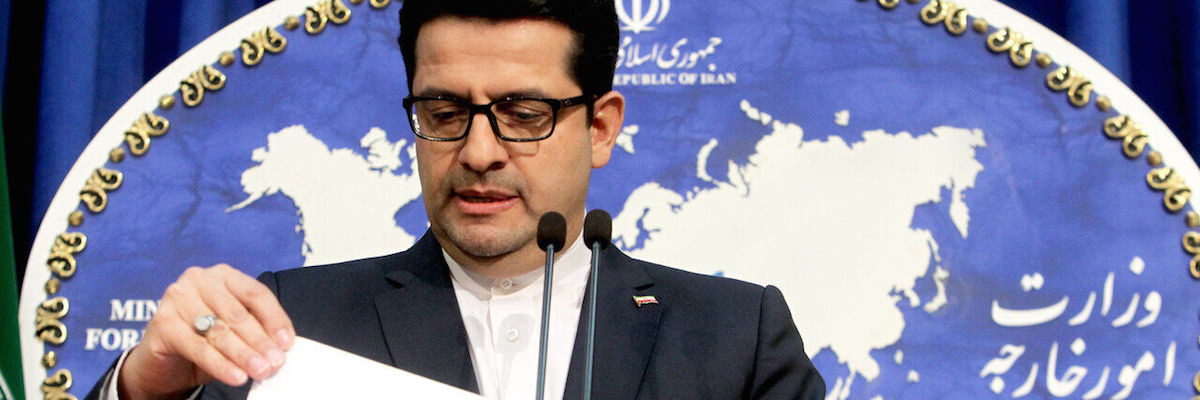
“The U.S. surely can’t seize the Iranian tanker and, if it does, it would pose a threat to international maritime security,” Iran’s Foreign Ministry spokesman Abbas Mousavi said. Iran warned the U.S. via “diplomatic channels,” including Switzerland, against interfering with the tanker, in international waters, Mousavi said at a news conference in Tehran. Swiss diplomats serve as interlocutors between the U.S. and Iran.
Destination Unclear
It’s not known where the Iranian vessel is ultimately headed. Greek authorities haven’t received formal notification that the vessel intends to head to a port in the country, according to a spokesman for Greece’s coast guard. Kalamata’s port usually serves pleasure craft like sailboats and cruise ships, data compiled by Bloomberg show.
The waters off Kalamata could be a possible location for ship-to-ship cargo transfers, according to two vessel brokers without specific information about the tanker’s plans. A ship’s destination is entered manually into its Automatic Identification System and is picked up by vessel-tracking. The destinations can be altered multiple times on the same journey.
Gibraltar rejected an attempt by the U.S. to block the Iranian supertanker, saying that EU regulations don’t allow it to seek a court order to detain the vessel.
U.S. Complaint
A complaint unsealed in Washington stated that “Oil Tanker ‘Grace 1,’ all petroleum aboard it and $995,000 are subject to forfeiture,” according to a Justice Department statement. The statement alleges a “scheme to unlawfully access the U.S. financial system to support illicit shipments” of oil from Iran to Syria in violation of U.S. sanctions, money laundering and terrorism statutes.
Gibraltar last week released the vessel, after the government said Iran had provided assurances that the ship would not sail to a destination sanctioned by the EU. In response, the U.S. said it was gravely disappointed with Britain, and it warned that ports, banks and anyone else who does business with the vessel or its crew might be subject to sanctions, according to two administration officials.
Photo: IRNA
Iranian Tanker Departs Gibraltar After Failed U.S. Bid to Detain It
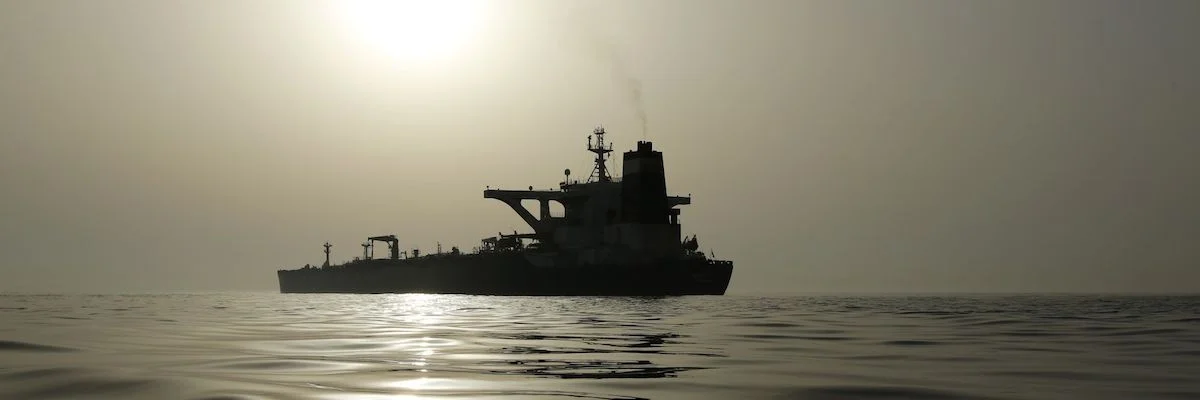
◢ The Government of Gibraltar says European Union regulations don’t allow it to seek a court order to seize a tanker which the U.S. accuses of breaching its sanctions by exporting Iranian oil. Grace 1, now renamed Adrian Darya, changed its intended destination on Monday to the Greek port of Kalamata and has now departed Gibraltar.
By Charles Penty and Verity Ratcliffe
The Government of Gibraltar says European Union regulations don’t allow it to seek a court order to seize a tanker which the U.S. accuses of breaching its sanctions by exporting Iranian oil.
The U.S. issued a warrant to seize the supertanker, which has been detained by the U.K. and Gibraltar since the beginning of July, on suspicion of hauling Iranian oil to Syria in violation of European sanctions, on Friday.
“The Central Authority’s inability to seek the Orders requested is a result of the operation of European Union law and the differences in the sanctions regimes applicable to Iran in the E.U. and the U.S.,” the Gibraltar government said in the statement. “The E.U. sanctions regime against Iran—which is applicable in Gibraltar—is much narrower than that applicable in the U.S.”
A complaint unsealed in Washington stated that “Oil Tanker ‘Grace 1,’ all petroleum aboard it and $995,000 are subject to forfeiture,” according to a Justice Department statement. The statement alleges a “scheme to unlawfully access the U.S. financial system to support illicit shipments” of oil from Iran to Syria in violation of U.S. sanctions, money laundering and terrorism statutes.
The tanker bore the name Grace 1 and a Panamanian flag when it was detained on July 4. It has since been re-flagged to Iran and its name changed to Adrian Darya 1.
Iran’s navy is ready to escort the supertanker if necessary, the semi-official Mehr news agency reported, citing a naval commander. “We have no intention of sending a flotilla to Gibraltar, but we are ready to do so to escort the Grace 1 back to Iran’s territorial waters,” the head of the army’s naval division, Admiral Hossein Khanzadi, said on Sunday at a global maritime event in Tehran.
The vessel, which is currently anchored off the coast of Gibraltar, is at the center of a diplomatic spat between the U.K. and the Trump administration. The U.S. has threatened to impose sanctions on anyone dealing with the ship and expressed disappointment with Britain after a court in Gibraltar ruled the ship was free to sail on Thursday.
Ports, banks and anyone else who does business with the ship or its crew might be subject to penalties, two U.S. administration officials said. Iran’s foreign minister said on Twitter that the ship’s detention was unlawful.
While the cargo was originally bound for Syria, Iran has provided assurance that this is no longer the case, according to the Gibraltar government. “The evidence is clear and the facts speak louder than the self-serving political statements we are hearing today,” according to the statement issued on Friday, which didn’t specify the comments it was referring to.
Missed Opportunity
The court’s decision Thursday to release the Grace 1 was a missed opportunity and the Trump administration hopes that the U.K. government and authorities in Gibraltar will reconsider, according to the U.S. officials, who asked not to be identified discussing private deliberations. They said the court order rewards Iranian terrorism and Tehran will interpret the action as appeasement.
The American officials said the U.K. should think of the tanker issue in terms of the broader relationship with the U.S., particularly as U.K. Prime Minister Boris Johnson’s government presses forward with departing the European Union and seeks a free-trade agreement with the U.S. While the people wouldn’t say the release threatens prospects for that deal, they added that the U.K. should ask if it wants to do business with the U.S. or Iran.
Diplomatic Row
The seizure of the tanker has heightened tension between Iran and the West, in a relation already under strain since the U.S. reimposed sanctions last year. A series of vessel attacks and seizures have threatened shipping in the Strait of Hormuz, the world’s most critical chokepoint for oil shipments.
Following the Grace 1’s detention, Iran seized a British-flagged vessel, the Stena Impero, which it continues to hold. The decision to release the tanker is unrelated to developments with the ship now known as Adrian Darya 1 and state officials must determine its fate, Alireza Tangsiri, head of the Islamic Revolutionary Guard Corps’ naval division, said on Sunday, according to Mehr.
The U.K. Foreign and Commonwealth Office cautioned that there was no connection between Gibraltar’s enforcement of sanctions and Iran’s activities at the mouth of the Persian Gulf.
“There is no comparison or linkage between Iran’s unacceptable and illegal seizure of, and attacks on, commercial shipping vessels in the Strait of Hormuz and the enforcement of EU Syria sanctions by the Government of Gibraltar,” it said in an emailed statement Thursday. “Freedom of navigation for commercial shipping must be respected and international law upheld.”
Heading for Greece
Adrian Darya changed its intended destination on Monday to the Greek port of Kalamata, from its previous indication of the Mediterranean Sea, according to vessel-tracking data compiled by Bloomberg.
It remains to be seen what will happen to the vessel now. The U.S. said it was gravely disappointed with Britain after Gibraltar’s release of the tanker, and it warned that ports, banks and anyone else who does business with the vessel or its crew might be subject to sanctions, according to two administration officials.
The waters off Kalamata could be a possible location for ship-to-ship cargo transfers, according to two vessel brokers without specific information about the tanker’s plans. Tanker crews enter destinations into ship logs that get picked up by vessel-tracking satellites. The destinations can be altered multiple times on the same journey.
The vessel’s status was “under way using engine” with speed of 6.7 knots as of 11:59 a.m. on Monday in Singapore, according to ship-tracking data. It has an estimated time of arrival at Kalamata of Aug. 25.
Photo: Bloomberg
Iran Denies Giving Gibraltar Assurances for Release of Tanker
◢ Iranian officials on Friday denied that any assurances were given to Gibraltar to release an Iranian tanker now sailing on into the Mediterranean, calling it a "victory" for Tehran. "Iran has given no assurances over the Grace 1 not going to Syria to secure its release," the state broadcaster's youth website quoted foreign ministry spokesman Abbas Mousavi as saying Friday.
By Amir Havasi
Iranian officials on Friday denied that any assurances were given to Gibraltar to release an Iranian tanker now sailing on into the Mediterranean, calling it a "victory" for Tehran.
The ship's seizure, with the help of British Royal Marines, had triggered a sharp deterioration in relations between Tehran and London and what Britain saw as the tit-for-tat detention by Iran of the British-flagged tanker Stena Impero.
Gibraltar's Supreme Court ordered the tanker released on Thursday after the British overseas territory said it had received written assurances from Iran that the Grace 1 would not head to any country subject to European Union sanctions.
The ship had been detained on suspicion that its cargo was destined for the Banias oil refinery in Syria in breach of an EU embargo.
But Iran denied it had provided any assurances to secure the ship's release, saying Gibraltar was only seeking to "save face.”
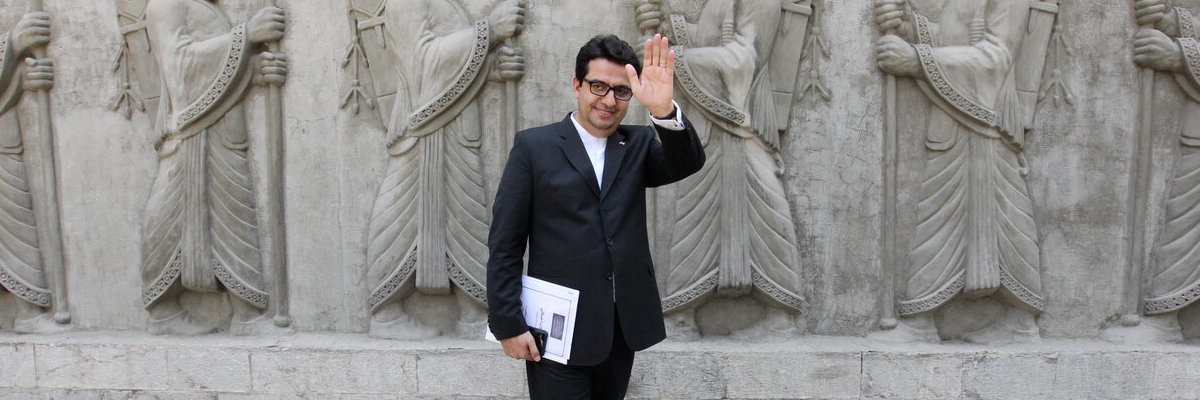
"Iran has given no assurances over the Grace 1 not going to Syria to secure its release," the state broadcaster's youth website quoted foreign ministry spokesman Abbas Mousavi as saying Friday.
"The tanker's destination was not Syria ... and even if it was, it did not concern anyone else."
Government spokesman Ali Rabiei hailed a victory for Iran that he said had been achieved without making any concessions.
"Our illegally seized oil tanker is set free. This victory without giving any collateral is the result of #powerful_diplomacy and strong will to fight for a nation's rights," Rabiei said in a tweet.
Tanker to Fly Iran Flag
The Grace 1 will be renamed and switch to the Iranian flag for its onward journey into the Mediterranean, senior Iranian shipping official Jalil Eslami said.
"At the owner's request, the Grace 1 will depart for the Mediterranean after being reflagged under the Islamic Republic of Iran's flag and renamed as Adrian Darya for the voyage," Eslami told state television.
The ship was originally Panama-flagged and is carrying two million barrels of Iranian oil, he added.
Hours before the court's ruling, the administration of US President Donald Trump, which has waged a campaign of "maximum pressure" against Iran, launched a last-minute legal move demanding that the Gibraltar authorities extend the vessel's detention.
Iranian Foreign Minister Mohammad Javad Zarif tweeted that the US attempt at "piracy" had failed, saying it showed the Trump administration's "contempt for the law".
Tehran and Washington have been at loggerheads since Trump withdrew from a landmark 2015 nuclear deal between major powers and Iran last year and reimposed crippling unilateral sanctions.
Following the Grace 1's release, Britain renewed its demand that Iran release the British-flagged tanker it seized in the Strait of Hormuz on July 19.
Tehran charged that the Stena Impero was in violation of "international maritime rules" but the move was widely seen as retaliation for the detention of the Grace 1.
The July 4 seizure of the tanker Grace 1 in the British overseas territory of Gibraltar with a cargo of Iranian oil had triggered a sharp deterioration in relations between Tehran and London and the detention by Iran of a British-flagged ship.
Photo: IRNA
Gibraltar Court Agrees to Release Detained Oil Tanker
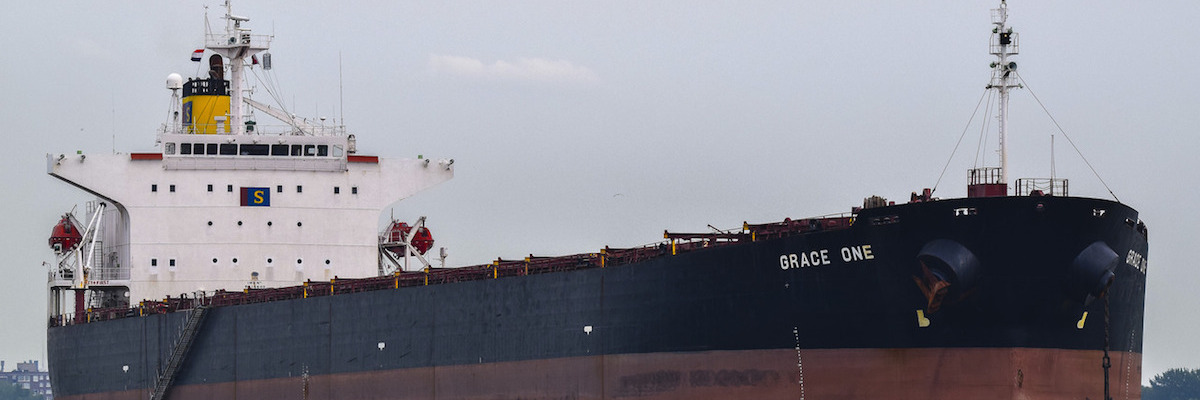
◢ A Gibraltar court agreed to release the supertanker Grace 1, which had been held since last month on suspicion of hauling Iranian crude oil to Syria in violation of European sanctions. The U.S. was seeking to seize the vessel, though it didn’t put in a legal request to do so, according to the judge in the case.
By Jonathan Browning and Alex Longley
The U.S. is gravely disappointed with the U.K. after a Gibraltar court allowed the release of an Iranian tanker suspected of hauling oil to Syria, and threatened sanctions against ports, banks and anyone else who does business with the ship or its crew, two administration officials said.
The court’s decision Thursday to release the Grace 1 was a missed opportunity and the Trump administration hopes that the U.K. government and authorities in Gibraltar will reconsider, according to the officials, who asked not to be identified discussing private deliberations. They said the court order rewards Iranian terrorism and Tehran will interpret the action as appeasement.
The Grace 1 had been held in Gibraltar after British forces seized it last month on suspicion that it was hauling Iranian crude oil to Syria. The U.S. Department of Justice is seeking to block the vessel’s release, but the Gibraltar Supreme Court on Thursday said American authorities hadn’t filed the appropriate legal application.
The two administration officials said the Grace 1 should now be considered a pariah. Anyone that does business with the ship, its crew or its owners, or provides financial transactions or port services to the vessel could be liable for evading U.S. sanctions, the officials said.
They argued that the U.K. should think of the tanker issue in terms of the broader relationship with the U.S., particularly as Prime Minister Boris Johnson’s government presses forward with departing the European Union and seeks a free-trade agreement with the U.S. While the people wouldn’t say the release threatens prospects for that deal, they added that the U.K. should ask if it wants to do business with the U.S. or Iran.
Iran said the ship wouldn’t sail to a sanctioned destination and is now rushing to return it to international waters before the U.S. finds a way to prolong its six-week detention.
“In light of the assurances we have received, there are no longer any reasonable grounds for the continued legal detention of the Grace 1 in order to ensure compliance” with European sanctions, the Gibraltar government said in an emailed statement.
The decision now essentially sets up a race between Iran and the U.S. over the ship’s fate. The vessel is bound for a port in the Mediterranean, Iran’s Mehr news agency said, citing Jalil Eslami, deputy for maritime affairs of the Iranian ports and maritime organization. Tanker-tracking data compiled by Bloomberg show that the vessel hadn’t moved as of 5:30 p.m. New York time.
Diplomatic Row
The seizure of the tanker set off a diplomatic row, underscoring tense relations between Iran and the West that have only worsened since the U.S. reimposed sanctions on the Persian Gulf state last year. Tensions have been high in the region in recent months amid a series of vessel attacks and seizures, which have threatened shipping in the Strait of Hormuz, the world’s most critical chokepoint for oil shipments.
Following the detention of the ship on July 4, Iran seized a British-flagged vessel, the Stena Impero, which it continues to hold.
Gibraltar’s decision to release the Grace 1 “is a satisfactory result for the U.K.,” Cara Hatton, an analyst at Falanx Assynt Ltd., a geopolitical risk consulting firm, said in an emailed statement. It “fully justifies Britain’s initial seizure of the ship, and increases the likelihood that Iran will now release the Stena Impero without giving the impression that the countries are engaged in a tanker swap.”
The U.K. Foreign and Commonwealth Office cautioned that there was no connection between Gibraltar’s enforcement of sanctions and Iran’s activities at the mouth of the Persian Gulf.
“There is no comparison or linkage between Iran’s unacceptable and illegal seizure of, and attacks on, commercial shipping vessels in the Strait of Hormuz and the enforcement of EU Syria sanctions by the Government of Gibraltar,” it said in an emailed statement. “Freedom of navigation for commercial shipping must be respected and international law upheld.”
The two U.S. officials rejected that idea, saying that the U.K. was trying to deescalate the situation with Iran and remove any distractions it faces to focus on Brexit.
The Gibraltar government said in its statement that it held several meetings with Iranian representatives this month and last to negotiate the tanker’s fate, and on Tuesday, the Islamic Republic agreed that the ship’s final destination wouldn’t be subject to European Union sanctions.
Iran agreed to re-flag and insure the vessel, which was carrying about $140 million in crude oil to the Baniyas refinery in Syria. It will now travel under the Iranian flag.
Four crew members from the Grace 1—the captain, chief officer and two second mates—have been released, according to the Gibraltar government. The vessel’s captain has no intention of going back aboard the ship, said his lawyer, John Wilkinson. “He wants to go home to India,” he said. Most of the 28 crew are on board, he said.
Photo: Fleet Mon

British Forces Seize Oil Supertanker for Busting Syria Sanctions
◢ British special forces seized a supertanker off Gibraltar suspected of carrying Iranian oil to Syria in violation of European and U.S. sanctions against the war-torn country. Gibraltar didn’t say where the crude came from, but shipping tracking data compiled by Bloomberg suggest the vessel loaded at Iran’s Kharg Island oil terminal in mid-April.
By Verity Ratcliffe, Julian Lee, and Javier Blas
British special forces seized a supertanker off Gibraltar suspected of carrying Iranian oil to Syria in violation of European and U.S. sanctions against the war-torn country.
Grace 1, which can hold 2 million barrels of crude, is now anchored near Gibraltar, a British overseas territory in southern Spain that controls the strait between the Mediterranean Sea and the Atlantic Ocean. The vessel is registered in Panama.
The seizure, announced by Gibraltar’s government, could inflame tensions between Iran and the European Union just as the U.K., France and Germany try to keep the Islamic Republic from walking away from the nuclear deal. The U.S. quit the pact a year ago, prompting Iran to significantly increase uranium enrichment in response.
While Syrians will feel the immediate impact of halting the crucial oil shipment to the country, the arrested vessel shows the difficulty Iran faces in finding outlets for its crude as President Donald Trump’s administration ramps up sanctions.
“We have detained the vessel and its cargo,” said Fabian Picardo, Gibraltar’s chief minister. “This action arose from information giving the Gibraltar government reasonable grounds to believe that the vessel, Grace 1, was acting in breach of European Union sanctions against Syria.”
Suez Ban
Gibraltar didn’t say where the crude came from, but shipping tracking data compiled by Bloomberg suggest the vessel loaded at Iran’s Kharg Island oil terminal in mid-April. After anchoring off the United Arab Emirates for several weeks, the ship began a journey around the southern tip of Africa, passing Cape Town in early June, rather than taking the more direct route through the Suez Canal.
That route from Iran to Syria is about 23,300 kilometers (14,500 miles), compared with just 6,600 kilometers via the Red Sea and Suez Canal. A ship the size of the Grace 1, known as a Very Large Crude Carrier, or VLCC, can’t pass through the canal fully loaded. The shorter route would require it to discharge half its cargo, load it on to a smaller ship or send the oil through the Sumed Pipeline, and pick it up again in the Mediterranean.
Iran can’t pump oil through the pipeline, which spans Egypt from the Red Sea to the Mediterranean, because the link is owned by companies from Egypt, Saudi Arabia, the United Arab Emirates, Kuwait and Qatar. The pipeline’s owners have not permitted the transit of Iranian crude since August 2012.
Iran has regularly supplied Syria with crude since the country descended into civil war in 2011. Iran backs the government headed by President Bashar Al-Assad, which has been sanctioned for most of this decade due to its bloody crackdown on the country’s civilians.
Syria receives Iranian crude despite the embargo. It imported at least 32,000 barrels a day in 2018 and 66,000 in 2017, according to tanker tracking data compiled by Bloomberg. It has imported similar volumes so far this year.
Gibraltar said Grace 1 was destined for the Baniyas refinery, which is owned by the Syrian government and is subject to both U.S. and E.U. sanctions. Three of the facility’s underwater oil pipelines were allegedly sabotaged with mines in June, according to Syrian TV, potentially complicating the unloading of cargoes there.
Photo: Wikicommons
Oil Squeeze on Iran Aids Putin's Power Play in the Middle East
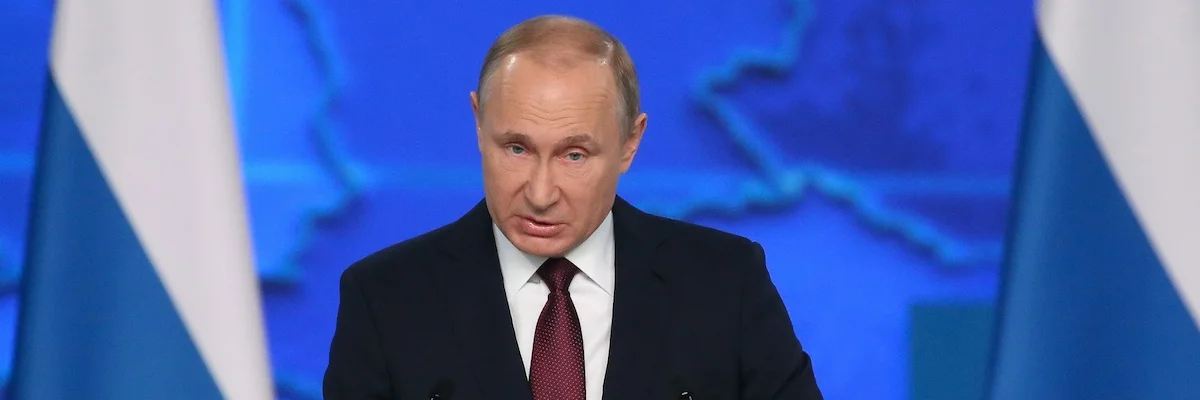
◢ If President Donald Trump succeeds in cutting Iran’s oil exports to almost nothing, one of the main beneficiaries is likely to be Russia. The economic blow to Iran will ease the Kremlin’s efforts to rein in Iranian influence in Syria, bolstering President Vladimir Putin’s efforts to project Russian power across the Middle East.
If President Donald Trump succeeds in cutting Iran’s oil exports to almost nothing, one of the main beneficiaries is likely to be Russia.
The economic blow to Iran will ease the Kremlin’s efforts to rein in Iranian influence in Syria, bolstering President Vladimir Putin’s efforts to project Russian power across the Middle East. Tehran and Moscow were one-time collaborators in the region, but they’ve found themselves increasingly at odds as Syria’s eight-year-old civil war winds down.
In recent months, the two main power brokers in Syria have engaged in deadly clashes, with Russian and Iranian forces and their proxies firing at one another, according to a Russian official and media reports. The relationship between the two countries is tense, three people close to the Russian government confirmed, speaking on condition of anonymity to discuss confidential matters.
Countering Iran will become easier after Trump removed waivers that allowed it to sell oil to countries including China, India and Turkey because the country “will be a lot more squeezed,” said Yury Barmin, a Middle East expert at the Moscow Policy Group research organization.
Sentiment Sours
Since Trump re-imposed sanctions last year, Iranians have been burned by a lack of solidarity from their one-time partners. Tabnak, a conservative news site founded by a former Revolutionary Guards commander, complained in a recent commentary that Moscow hasn’t shown any “serious determination” to stand with Tehran.
Iran’s ejection from international oil market also benefits Russia financially: it’ll be free to resume pumping at full capacity when output curbs agreed with OPEC expire in June, said Dmitry Marincheko, oil and gas director at Fitch Ratings. That will earn it about an extra $6 billion a year, at current prices.
As relations with Iran soured, Russia invested in unprecedented cooperation with its chief rival, Saudi Arabia, inking a joint agreement with OPEC on limiting oil production. That succeeded in stabilizing prices.
Although Moscow and Riyadh have backed opposing sides in Syria, Putin has been trying to persuade other Arab nations to drop their hostility to Syrian President Bashar al-Assad and reintegrate the nation into the Arab League. A smaller Iranian footprint in Syria makes that more palatable to Sunni Gulf states that see Shiite Iran as their primary rival, said Barmin of Moscow Policy Group.
Armed Clashes
Russian troops have been seeking to gradually push the Iranian-backed Lebanese Shiite militia, Hezbollah, out of Syria, and pro-Iranian and pro-Russian detachments have exchanged fire increasingly since late last year, with three armed incidents reported in April alone.
That included one on April 19 in the eastern province of Deir Ezzor in which two Iranian Revolutionary Guards were killed and four Russian military police wounded, according to Turkey’s Anadolu Agency. Far more deadly clashes occurred in January between rival branches of the Syrian military backed respectively by Iran and Russia, Russian newspaper Novaya Gazeta reported.
The conflict is partly over which side mans checkpoints and benefits from it financially, said Rami Abdurahman, director of the U.K.-based Syrian Observatory for Human Rights, which monitors the war through activists on the ground. But it also reflects a much broader standoff, said Nikolay Kozhanov, a Middle East expert at the European University at St. Petersburg, who served as a Russian diplomat in Tehran from 2006-2009.
Different Goals
“Although Russia and Iran are both interested in ensuring the survival of Assad, they have completely different strategic goals and priorities,” Kozhanov said.
Iran sees Syria as a key front in its battle to carve out a dominant regional role and threaten Israel. That runs afoul of Russia’s aim of using its footprint in Syria to advance Putin’s global ambitions while keeping ties to all major players in the region, including Israel, said Kozhanov. Russia has allowed repeated Israeli air raids on Iranian-backed targets in Syria, according to the ex-Russian envoy.
Russian Deputy Foreign Minister Sergei Ryabkov in January denied that Iran was an ally of Russia and said his country was committed to ensuring the “very strong security of the state of Israel.”
Financial Interests
Economically as well, Russia and Iran are competitors in Syria, London-based research group Chatham House said in a March report.
In early 2017, Syria and Iran signed a memorandum of understanding on a phosphate mining concession near the ancient site of Palmyra. But six months later, Syria signed rights over the same mine to a Russian company owned by a Putin ally, Chatham House said.
The U.S. designation of the Islamic Revolutionary Guards Corps, a branch of the Iranian army, as a terrorist organization in mid-April makes it more difficult for Iran to ship oil, and allows Russia to challenge its role as the main supplier of fuel to the Syrian government, said Barmin.
Disagreements could sharpen over which foreign forces should stay in Syria, said Diako Hosseini, director of the world studies program at the Center for Strategic Studies in Tehran, which is affiliated with the Iranian presidential office.
While the two sides continue to cooperate in efforts to engineer a political post-war settlement, there are concerns the tensions could spiral out of control.
In one possible worst-case scenario for Syria, the Russian-Iranian partnership collapses completely and military groups loyal to each side engage in a fight, said Andrei Kortunov, director general of the Russian International Affairs Council, a Kremlin-founded think tank.
“The once-implicit competition between Moscow and Tehran for influence in Damascus would then become explicit,” he said.
Photo Credit: Bloomberg
EU Backs Iran Trading System But Warns on Syria, Missiles
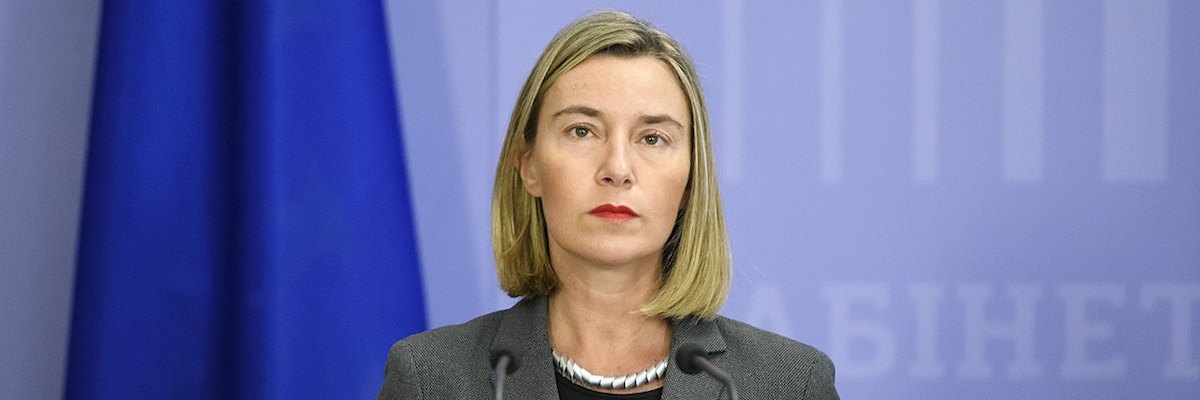
◢ The EU warned Tehran over its ballistic missile program and interference in the Syria conflict Monday, while welcoming a new mechanism to trade with Iran while bypassing US sanctions. In a long-awaited statement on Iran that has been the subject of more than a week of wrangling in Brussels, the EU restated its commitment to saving the 2015 nuclear deal with Iran and took aim at Washington for abandoning the pact and reimposing sanctions.
The EU warned Tehran over its ballistic missile program and interference in the Syria conflict Monday, while welcoming a new mechanism to trade with Iran while bypassing US sanctions.
In a long-awaited statement on Iran that has been the subject of more than a week of wrangling in Brussels, the EU restated its commitment to saving the 2015 nuclear deal with Iran and took aim at Washington for abandoning the pact and reimposing sanctions.
The bloc hailed the creation last week by France, Britain and Germany of a system to allow firms to trade with Iran without falling foul of US sanctions as vital to supporting legitimate business and said the "resolve to complete this work is unwavering".
But with numerous European powers growing increasingly concerned about Tehran's missile programme, meddling in several Middle East conflicts and recent attempted attacks on opposition figures living in the EU, the bloc urged Iran to mend its ways.
The statement criticized Iran's "provision of military, financial and political support to non-state actors in countries such as Syria and Lebanon.”
"The (EU) Council has serious concerns regarding Iran's military involvement and continuous presence of Iranian forces in Syria," the statement said.
Iran is a key supporter of Syrian President Bashar al-Assad and the statement urged Tehran to use its leverage to get Damascus behind UN-led efforts to end the civil war, which has claimed more than 360,000 lives since it began in 2011.
While defending the nuclear deal—which limited Tehran's atomic ambitions in return for sanctions relief—Europe has sought to keep up pressure with sanctions, most recently listing Iranian intelligence services over plots to assassinate regime opponents on Dutch, Danish and French soil.
Continuing Iranian missile tests have also alarmed the EU—not to mention countries in the Middle East—and Monday's statement called on Tehran to stop such activities.
"Iran continues to undertake efforts to increase the range and precision of its missiles, together with increasing the number of tests and operational launches. These activities deepen mistrust and contribute to regional instability," the statement said.
Brussels hopes the new Iran trading mechanism—registered last week in Paris under the name INSTEX—will keep Tehran in the nuclear deal by preserving some of the economic benefits it received.
Iran gave INSTEX a cautious welcome but US officials have dismissed the idea that the new entity would have any impact on efforts to exert economic pressure on Tehran.
Before INSTEX can go live, Iran has to set up a similar entity of its own so the two sides can clear trading on a barter basis without transferring money. It is not clear how long this will take.
Photo Credit: Wikicommons
Syria and Iran Sign 'Strategic' Economic Agreement
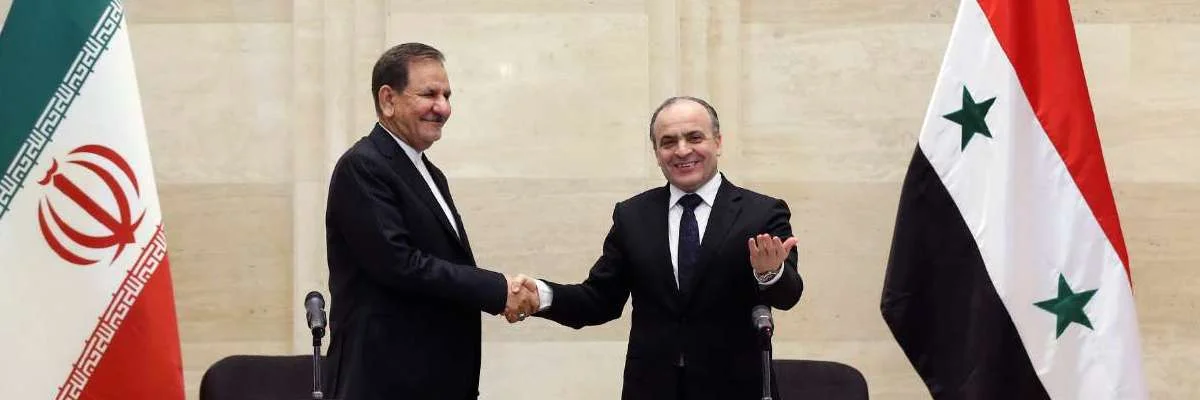
◢ Syria and Iran signed 11 agreements and memoranda of understanding late Monday, including a "long-term strategic economic cooperation" deal aimed at strengthening cooperation between Damascus and one of its key allies in the civil war that has torn the country apart. The agreements covered a range of fields including economy, culture, education, infrastructure, investment and housing, the official Sana news agency reported.
Syria and Iran signed 11 agreements and memoranda of understanding late Monday, including a "long-term strategic economic cooperation" deal aimed at strengthening cooperation between Damascus and one of its key allies in the civil war that has torn the country apart.
The agreements covered a range of fields including economy, culture, education, infrastructure, investment and housing, the official Sana news agency reported.
They were signed during a visit to Damascus by Iran's First Vice President Eshaq Jahangiri.
Syrian Prime Minister Imad Khamis said it was "a message to the world on the reality of Syrian-Iranian cooperation", citing "legal and administrative facilities" to benefit Iranian companies wishing to invest in Syria and contribute "effectively to reconstruction".
The agreements included two memos of understanding between the railway authorities of the two countries as well as between their respective investment promotion authorities.
In relation to infrastructure, there was also rehabilitation of the ports of Tartus and Latakia as well as construction of a 540 megawatt energy plant, according to Khamis.
In addition there were "dozens of projects in the oil sector and agriculture", he added.
The civil war has taken an enormous toll on the Syrian economy and infrastructure, with the cost of war-related destruction estimated by the UN at about USD 400 billion.
Iran will stand "alongside Syria during the next phase that will be marked by reconstruction", Jahangiri promised.
Iran and Syria had already signed a military cooperation agreement in August while Tehran has supported Damascus economically during the conflict through oil deliveries and several lines of credit.
The new agreements come against the backdrop of fresh US sanctions against Iran, while Syrian President Bashar al-Assad's regime and several Syrian businesspeople and companies are already on US and European blacklists.
They also come as Israel has repeatedly pledged to keep arch-foe Iran from entrenching itself militarily in Syria, where the war has already claimed more than 360,000 lives and displaced several million people.
Photo Credit: IRNA
Pompeo Vows to Expel 'Every Last Iranian Boot' from Syria
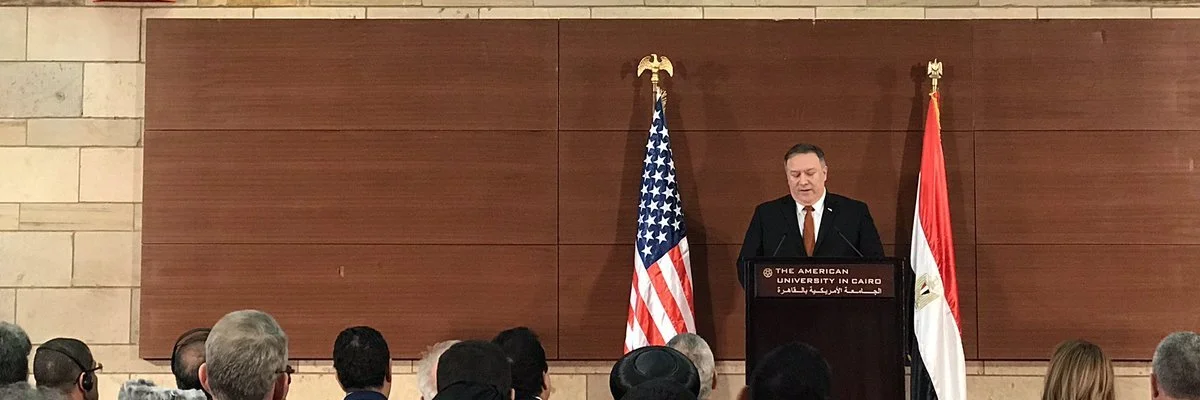
◢ US Secretary of State Mike Pompeo vowed Thursday the United States and its allies would chase all Iranian troops from Syria, and urged Middle East nations to forge a common stand against Tehran. "It's time for old rivalries to end, for the sake of the greater good of the region," said Pompeo at a keynote address in Cairo.
US Secretary of State Mike Pompeo vowed Thursday the United States and its allies would chase all Iranian troops from Syria, and urged Middle East nations to forge a common stand against Tehran.
"It's time for old rivalries to end, for the sake of the greater good of the region," said Pompeo at a keynote address in Cairo.
America "will use diplomacy and work with our partners to expel every last Iranian boot" from Syria and bolster efforts "to bring peace and stability to the long-suffering Syrian people," he added.
The top US diplomat was in Egypt on the latest leg of a whistle-stop regional tour aimed at shoring up Washington's Middle East policy following President Donald Trump's shock decision to withdraw 2,000 US troops from Syria.
Pompeo stressed the pullout would go ahead, despite comments in recent weeks appearing to walk back Trump's decision, but that the US would remain engaged.
The "decision to withdraw our troops has been made. We will do that. We will withdraw our forces, our uniformed forces, from Syria and continue America's crushing campaign," Pompeo told reporters at a joint press conference with his Egyptian counterpart Sameh Shukry.
He also met earlier with Egyptian President Abdel Fattah al-Sisi, after arriving in Cairo late Wednesday on his longest trip since taking office last year which has already taken him to Jordan, Baghdad and the Iraqi Kurdish regional capital Arbil.
'New beginning'
In his address entitled "A Force for Good: America Reinvigorated in the Middle East" at the American University in Cairo, Pompeo also took aim at former president Barack Obama without naming him.
Trump's predecessor had "grossly underestimated the tenacity and viciousness of radical Islamism," Pompeo said.
And parroting Obama's words in his landmark 2009 speech in Cairo, Pompeo vowed that now was really "a new beginning" in ties between the US and the Middle East.
Pompeo's tour is aimed at urging regional allies to continue to confront the "significant threats" posed by Iran and jihadists.
Even though Islamic State group jihadists have been largely eradicated from Iraq, after capturing a vast swathe of territory in 2014, some still control a few pockets in war-torn Syria.
Pompeo will also visit Gulf countries including Bahrain, the United Arab Emirates, Qatar, Kuwait, Oman and Saudi Arabia.
As he arrived in Egypt, the State Department described the country as a “steadfast partner in the anti-terror fight, and a courageous voice in denouncing the radical Islamist ideology that fuels it".
But there are rising concerns that US policy is getting bogged down. A long-promised Trump plan for a peace deal between Israelis and Palestinians has so far failed to materialise.
And many of the Trump administration's decisions have stoked confusion and angered many regional allies.
'Middle East even messier'
"By most accounts, Trump's Middle East policy has made a messy Middle East even messier," Aaron David Miller, a former US diplomat and now an analyst at the Wilson Center, said on Twitter.
"A risk averse president who makes new policy by tweet or phone call surrounded by risk-ready advisers who run cleanup, don't respect deliberation and have objectives that aren't clear or attainable equals US policy (or lack of it) in Syria."
Turkey and the United States are now at loggerheads over the future of Syrian Kurdish forces, considered by Ankara as "terrorists", after the troop pullout.
Turkish officials had a tense meeting this week with Trump's national security adviser John Bolton in Ankara aimed at coordinating the pullout process after Bolton set conditions that appeared to postpone it indefinitely.
The terms included total defeat of IS—still active in some Syrian regions—and ensuring that Kurdish fighters who fought alongside the Americans against the jihadists will be protected.
On Thursday, Turkey renewed its threat to launch an offensive against Kurds.
"If the (pullout) is put off with ridiculous excuses like Turks are massacring Kurds, which do not reflect the reality, we will implement this decision," Turkish Foreign Minister Mevlut Cavusoglu told NTV television.
Photo Credit: Nadeen Shaker

US Sanctions Iran for Shipping Oil to Syria
◢ The US slapped fresh sanctions on Iran Tuesday, accusing it of creating a complex web of Russian cut-out companies and Syrian intermediaries to ship oil to Damascus, which in turn bankrolled Hezbollah and Hamas. The US considers both Hezbollah, a powerful Lebanese militia, and Hamas, the Palestinian Islamist group that controls the Gaza Strip, to be terrorist organizations.
The US slapped fresh sanctions on Iran Tuesday, accusing it of creating a complex web of Russian cut-out companies and Syrian intermediaries to ship oil to Damascus, which in turn bankrolled Hezbollah and Hamas.
The US considers both Hezbollah, a powerful Lebanese militia, and Hamas, the Palestinian Islamist group that controls the Gaza Strip, to be terrorist organizations.
The US Treasury said in a statement that Tehran, "working with Russian companies, provides millions of barrels of oil to the Syrian government" of President Bashar al-Assad.
"The Assad regime, in turn, facilitates the movement of hundreds of millions of US dollars to the Islamic Revolutionary Guard Corps-Qods Force for onward transfer to Hamas and Hezbollah," it said.
The new sanctions also target a Syrian national, Mohamed Alchwicki and his Russia-based company, Global Vision Group. He is accused of playing a central role both in the transfer of oil to Syria and the funneling of money to the militant groups.
The US said his company had illegally received transfers of funds from the Iranian Central Bank via a set of complex transactions.
Intermediary firms involved in the plot to obscure the real destinations of the oil and the money included a subsidiary of the Russian Ministry of Energy, according to the statement.
Secretary of State Mike Pompeo warned on Twitter that there were "grave consequences for anyone shipping oil to Syria, or trying to evade US sanctions on the Islamic Republic's terrorist activities."
He added that Iran's supreme leader Ayatollah Ali Khamenei "should decide if spending the Iranian people's money on the Iranian people is more important than investing schemes to fund Assad, Hezbollah, Hamas and other terrorists."
Photo Credit: Wikicommons
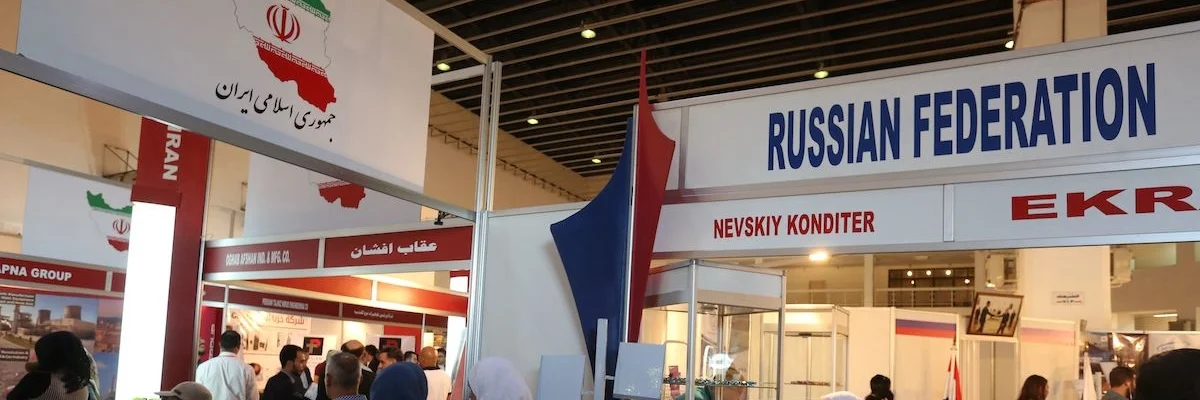
Eyeing Reconstruction, Russia, Iran Take Centre Stage at Syria Expo
◢ Companies from dozens of countries are showing their wares at the Damascus International Fair this week, but those from two in particular are getting special treatment—Russia and Iran. Firms from the top two wartime allies of Syria's government are set up in an entirely separate building, hinting at the preferred status they hope to enjoy as the country tries to transition into reconstruction.
Companies from dozens of countries are showing their wares at the Damascus International Fair this week, but those from two in particular are getting special treatment—Russia and Iran.
Firms from the top two wartime allies of Syria's government are set up in an entirely separate building, hinting at the preferred status they hope to enjoy as the country tries to transition into reconstruction.
Packed pavilions feature Iranian cars and carpets, Russian wires and cables—and translators ready to help Syrian businessmen connect with potential foreign partners.
A flatscreen television in the Russian wing plays a sleek advertisement for Libena Agro Build, a metalworking company that produces farming equipment and grain silos.
“Foreign companies are scrambling and competing to invest in Syria, but Russia's got preference," says its regional representative, Lebanese-Russian national Leba Shehadeh.
"We were the ones defending Syria politically and militarily, so we expect the lion's share of the economy and of the reconstruction phase."
He flips through a pamphlet of irrigation products, metal recycling services, moulds, and more.
"Syria needs all this equipment," Shehadeh tells AFP, saying Libena Agro was aiming for large-scale deals with Damascus.
"We're here so that, together, we can draw the plan for rebuilding this country."
Seven years since war first broke out, President Bashar al-Assad has managed to recapture around two-thirds of Syria, with help from both Tehran and Moscow.
Iranian "military advisers" and Tehran-backed militias have supported troops on the ground, and Russian warplanes have battered rebel targets from the sky for the past three years.
’Attractive for Investment'
But fighting has left Syria in ruins, with the United Nations saying
destruction has cost the country close to USD 400 billion.
Assad has pledged to make reconstruction his top priority, saying Syria's "allies" would be the only ones allowed to take part.
Even during war, Russian companies have invested in Syria's oil, gas and mining sectors and won contracts to build flour mills and water-pumping stations.
Syrian state companies have also issued tenders open exclusively to Iranian companies, according to the economic magazine Syria Report.
Just last month, Tehran and Damascus reached a deal for Iran to rehabilitate Syria's defense industry.
And on Friday, at the fair's opening, the Russian and Syrian ministries of industry inked a memorandum of understanding on future cooperation.
The Russian ministry had organized a delegation of investors to attend the fair, including representatives of Romax, a firm that produces storage silos and is involved in transportation and shipping.
“The Syrian market is attractive for investment," says its representative at the fair, Aron Levashov.
"We're finding a window, a gate for Russia towards the Mediterranean sea, and from there to Europe and Africa," he tells AFP, speaking in Russian through an interpreter.
He says Russia's "familiarity with the situation on the ground, the markets, the depth and scope of destruction" gave it a better understanding of Syria's economic needs.
"Russia proved herself with a show of force in the air, and it's continuing its political support. We should take advantage of the space afforded to us to crystalize our economic role," Levashov tells AFP.
'Like Brothers'
Companies from 25 countries, as well as officials from another 23 are taking part in the fair, Syrian state media said.
Around 50 Russian firms are being represented, and Iran has made an equally strong showing.
Mohammad Reza Khanzad, who runs the Iranian pavilion at the expo, says the wing "includes 50 Iranian companies, among them 32 firms specialising in reconstruction"—compared with 31 firms in total last year.
"The rest are in various industries like car production, homeware, programming, reconstruction materials, handmade carpets and agriculture," he says.
At a nearby table, Iranian businessman Mehdi Qawwam, 38, is smoothly pitching his construction firm Maskan Omran to three Syrian entrepreneurs in Farsi through a translator.
"After Syria's war, the market will need companies specialized in construction and will benefit from Iranians to rebuild an even stronger market," he says.
Dressed in a grey suit, Qawwam concludes his sit-down and tucks newly acquired business cards into his suitcase.
"We reached some preliminary agreements to facilitate the entry of Iranian goods exclusive to our company into Syria, and in the coming phases we'll have meetings in Tehran or Damascus to confirm those deals," he says.
Strolling through the expo, he waves to friends and rivals alike.
"Syria is one of the few countries that accepts our products in the wake of the US sanctions" reimposed by Washington last month, he says.
"These sanctions must not affect us, because the relationship between our two countries is like one between brothers."
Photo Credit: EPA
Conflict Hinders Iran Efforts to Counter Dust Storms
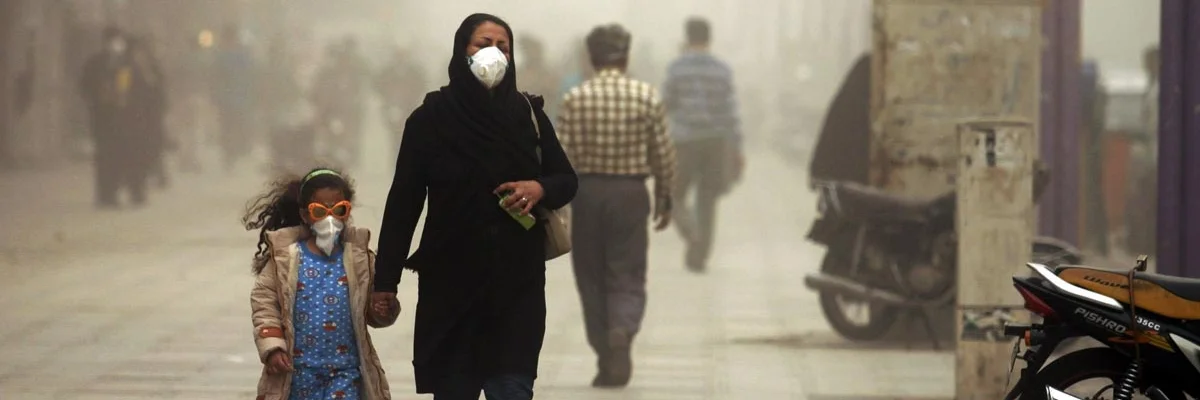
◢ Iran's efforts to counter worsening dust storms have been hampered by conflict in the region, the deputy head of the environment department said on Saturday. "We signed agreements with the Iraqi and Syrian governments in 2010 and 2011 to help them counter the source of dust storms," Masoud Tajrishi told a news conference in Tehran.
Iran's efforts to counter worsening dust storms have been hampered by conflict in the region, the deputy head of the environment department said on Saturday.
"We signed agreements with the Iraqi and Syrian governments in 2010 and 2011 to help them counter the source of dust storms," Masoud Tajrishi told a news conference in Tehran.
"But with the events that have happened in those two countries, the environment has lost all priority, and it is still not a priority for them," he added.
Some 30 million hectares (74 million acres) of Iran suffer devastating dust storms every year, many blowing in from Iraq, Saudi Arabia and Syria.
Hundreds are hospitalized with respiratory problems and border towns have some of the worst air pollution in the world.
The outbreak of civil war in Syria in 2011 and the subsequent spread of the Islamic State group into Iraq were a major setback for efforts to work against dust storms.
Tajrishi said a new mapping system was being implemented to track the origins and paths of the storms so they could be better understood and countered.
But he added: "Iran is situated within a belt of deserts, and with the decrease in rains due to climate change, dust storms are here to stay for quite some time," Tajrishi said.
Photo Credit: IRNA
Photo Credit: IRNA
Tehran Dismisses Pompeo's 'Unfounded' Accusations
◢ Iran on Monday dismissed "unfounded" accusations by new US Secretary of State Mike Pompeo over its "ambition to dominate the Middle East." Pompeo lashed out at Tehran on Sunday during a rapid tour of Middle East allies ahead of a crucial White House decision on whether to quit a landmark 2015 nuclear deal with Iran.
Iran on Monday dismissed "unfounded" accusations by new US Secretary of State Mike Pompeo over its "ambition to dominate the Middle East."
Pompeo lashed out at Tehran on Sunday during a rapid tour of Middle East allies ahead of a crucial White House decision on whether to quit a landmark 2015 nuclear deal with Iran.
Speaking during a visit to Iran's arch-rival and key US ally Saudi Arabia just days after he took office, Pompeo accused Tehran of destabilising the Middle East through its support for Syria's President Bashar al-Assad and for rebels in Yemen.
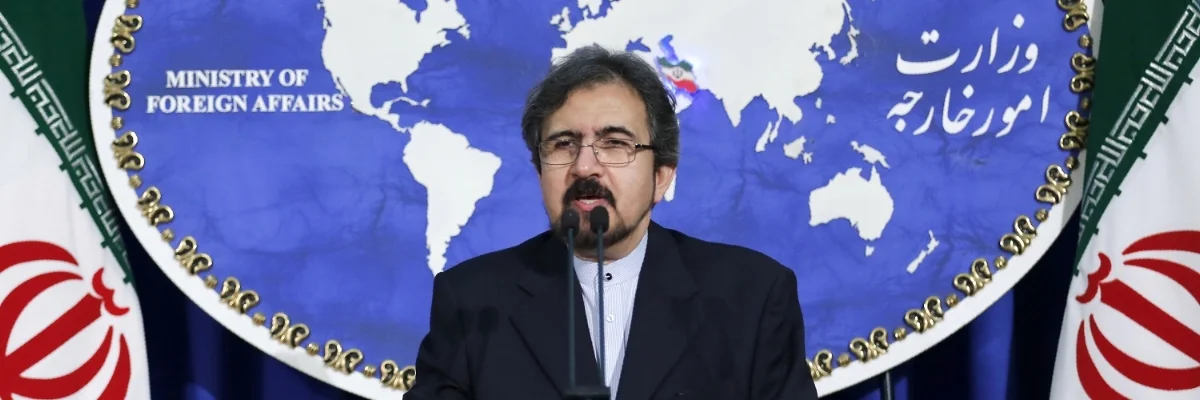
"The US secretary of state's remarks on the presence and role of the Islamic Republic of Iran in certain countries in the region are a repetition of absurd and unfounded accusations," Iran's foreign ministry spokesman Bahram Ghassemi said in a statement Monday.
Iran's presence in Syria and Iraq is in response to requests from the two countries' governments and is part of "the fight against terrorism in the region", he said.
"This assistance will continue as long as (these) governments need help in this fight," he said. Ghassemi also reiterated previous government statements denying Saudi and US accusations that Iran is supplying weapons to Yemen's Huthi rebels, backed politically by Tehran.
Such charges are "a false problem, created solely for the purpose of diverting the attention of international public opinion from the atrocities committed by Saudi Arabia in its daily attacks" in Yemen, he said.
Shiite-dominated Iran and Sunni heavyweight Saudi Arabia, which cut diplomatic ties in January 2016, are engaged in a region-wide struggle for influence and back rival sides in Lebanon, Syria and Yemen.
Tehran has deployed "military advisors" and thousands of Iranian and Afghan "volunteer" fighters to Syria and Iraq.
Saudi Arabia launched a military coalition in 2015 to battle Huthi rebels in Yemen who had seized the capital Sanaa the previous year.
The United Nations and rights groups have slammed the Saudi-led campaign for causing civilian casualties and sparking a humanitarian crisis.
Photo Credit: Mehr