
Iran Hosts Second Indian Minister in a Week
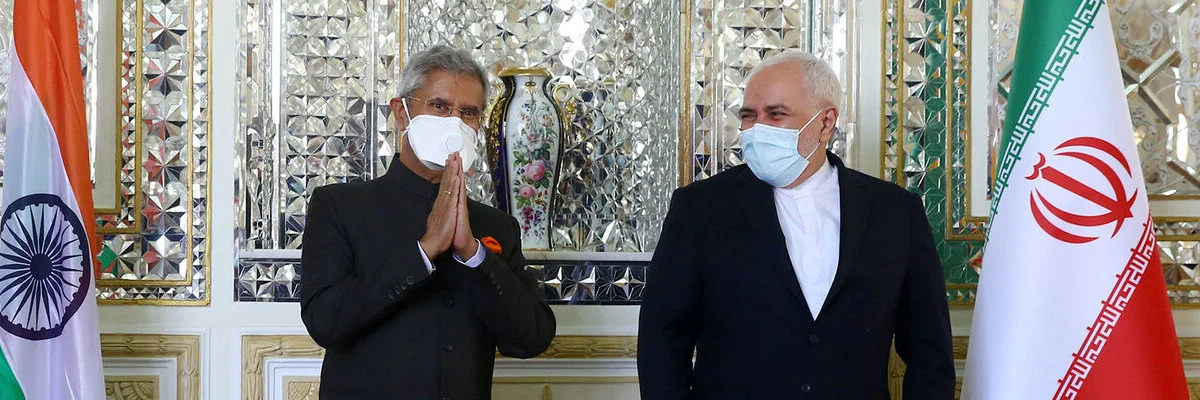
India's Foreign Minister Subrahmanyam Jaishankar held talks Tuesday in Tehran, becoming the second senior Indian minister to visit Iran this week.
India's Foreign Minister Subrahmanyam Jaishankar held talks Tuesday in Tehran, becoming the second senior Indian minister to visit Iran this week.
"A productive meeting with FM @JZarif during a stopover in Tehran," he tweeted, after a meeting with his Iranian counterpart Mohammad Javad Zarif.
Jaishankar said they "discussed strengthening our bilateral cooperation and reviewed regional developments.”
Zarif, also on Twitter, wrote: "Our active engagement with our neighborhood is our top priority."
On Sunday, Indian Defence Minister Rajnath Singh Amir Hatami also held talks in Tehran.
During Jaishankar's last visit in December, before the outbreak of the coronavirus epidemic which has hit both countries hard, Tehran and Delhi said they had agreed to speed up the development of the Iranian port of Chabahar on the Indian Ocean.
Work has been stalled, despite waivers to sanctions that the United States has reimposed on Iran after withdrawing from a landmark 2015 nuclear deal.
"Indian policy is aimed at maintaining a balance in the complex Persian Gulf and the larger West Asia region," Manoj Joshi, a defence and foreign policy expert at New Delhi based think-tank Observer Research Foundation, told AFP.
"New Delhi has always wanted to have good relations with all the countries like Saudi Arabia, Iran and Israel... These visits need to been seen in that context."
Joshi said India also wanted to balance Chinese influence in the region.
"Iran is also important in the sense that China has been dominating the region, and New Delhi doesn't want to give a free run to Beijing," he said.
Iran is the closest major source of resources for India.
Photo: IRNA
Iran and India Agree to Speed up Major Port Project
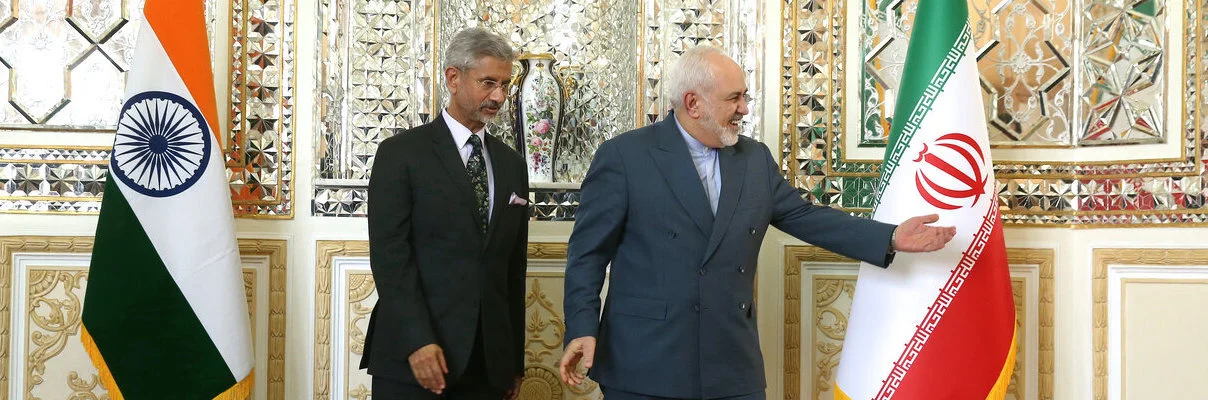
◢ Tehran and Delhi have agreed to accelerate the development of an important Iranian port, India's foreign minister said during a visit to the sanctions-hit Islamic republic on Monday. Chabahar port—being jointly developed by India, Iran and Afghanistan—is on the Indian Ocean about 100 kilometres (62 miles) west of the Pakistan border.
Tehran and Delhi have agreed to accelerate the development of an important Iranian port, India's foreign minister said during a visit to the sanctions-hit Islamic republic on Monday.
Chabahar port—being jointly developed by India, Iran and Afghanistan—is on the Indian Ocean about 100 kilometres (62 miles) west of the Pakistan border.
But development has stalled, despite waivers to sanctions that the United States began reimposing last year after withdrawing from a landmark 2015 nuclear deal with Iran.
"Just concluded a very productive #IndiaIran Joint Commission Meeting," Indian Foreign Minister Subrahmanyam Jaishankar tweeted.
"Reviewed the entire gamut of our cooperation. Agreed on accelerating our Chabahar project," he added as he wound up a two-day visit to the Iranian capital.
Washington withdrew from the nuclear accord and reimposed sanctions on Tehran as part of a campaign of "maximum pressure" aimed at reducing its arch-enemy's regional role and missile programme.
The rare exemptions from the sanctions are due mainly to the pivotal role of the port, and a planned railway line, in breaking landlocked Afghanistan's dependence on Pakistan for trade.
Iran's President Hassan Rouhani said Monday in a joint news conference with Jaishankar that the project would boost trade in the region.
"Completing the Chabahar-Zahedan railway and connecting it to Iran's national railway can elevate the position of Chabahar port, revolutionise regional commerce and help transport goods on a cheaper and shorter route," he said.
Rouhani said maintaining regional security was an important topic for Iran and India.
"In the current situation where America stands against nations with unilateral sanctions, we have to try to continue bilateral cooperation.
"This situation certainly will not last, and America will be forced to stop its maximum pressure against Iran sooner or later," he said, without elaborating.
India stopped buying Iranian oil after the US abolished waivers for some countries in May, in a move meant to wipe out the Islamic republic's main source of revenue.
Despite tensions in their relationship, Iran and India have sought to move forward and develop partnerships.
Photo: IRNA