
Iran Holds Naval Exercise Near Sensitive Strait of Hormuz
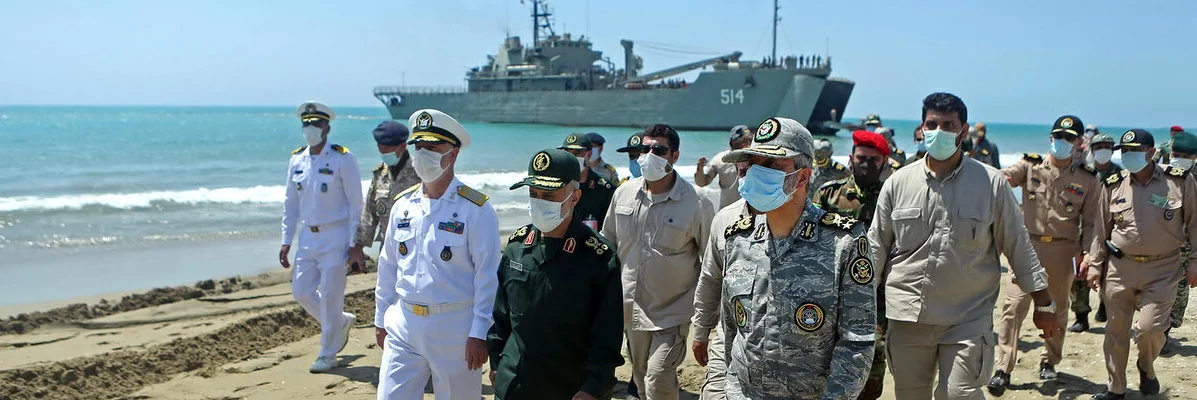
The Iranian navy began a three-day exercise in the Sea of Oman near the strategic Strait of Hormuz on Thursday, deploying an array of warships, drones, and missiles.
The Iranian navy began a three-day exercise in the Sea of Oman near the strategic Strait of Hormuz on Thursday, deploying an array of warships, drones, and missiles.
One of the exercise's objectives is to devise "tactical offensive and defensive strategies for safeguarding the country's territorial waters and shipping lanes," the military said on its website.
The navy will test-fire surface-to-surface and shore-to-sea cruise missiles and torpedoes, and rocket-launching systems fitted on warships, submarines, aircraft and drones, it added.
Dubbed "Zolfaghar 99", the exercise will be held over two million square kilometres (772,000 square miles) of sea stretching from the northern part of the Indian Ocean to the eastern end of the Strait of Hormuz, the sensitive shipping lane from the Persian Gulf through which a fifth of world oil output passes.
The exercise's spokesman, Commodore Shahram Irani, said that foreign aircraft, especially US drones, had been warned to steer clear of the area.
"We saw focused activities by American UAVs (unmanned aerial vehicles) to gather information" on the exercise, he told the armed forces' website, adding that the US aircraft had since left the area.
In July, Iran's ideological force, the Islamic Revolutionary Guard Corps, blasted a mock-up of a US aircraft carrier with missiles during an exercise near the Strait of Hormuz.
The US Navy condemned those maneuvers as "irresponsible and reckless", and an attempt "to intimidate and coerce".
Tensions between Iran and the United States have soared since President Donald Trump withdrew from a landmark nuclear agreement with Tehran in 2018 and unilaterally reimposed crippling economic sanctions.
Their animosity deepened after a US drone strike killed top Iranian general Qasem Soleimani outside Baghdad airport in January, prompting Iran to retaliate with missile strikes against bases used by the US military in neighboring Iraq.
Photo: IRNA
Taken to Brink by Trump, GCC States Are Backpedaling on Iran
◢ Spooked by the prospect of a catastrophic war with Iran and its proxy militias across the region, Arab monarchies are in the midst of a strategic rethink regarding the Persian Gulf. The U.A.E., whose economic model relies in large part on its international links, quickly realized it had most to lose from a military escalation.
By Zainab Fattah
An expanded soccer tournament, a direct flight, clandestine meetings and a pledge to release prisoners of war; diplomacy is breaking out as Gulf Arab nations back away from a Donald Trump-inspired confrontation with Iran. And the signs are everywhere.
Last week, Saudi Arabia, the United Arab Emirates and Bahrain played their first games of the 2019 Arabian Gulf Cup in Qatar after a last-minute decision to take part—an apparent breakthrough in a 30-month feud that saw them halt trade and flights over Qatar’s links with Iran and support for Islamist groups.
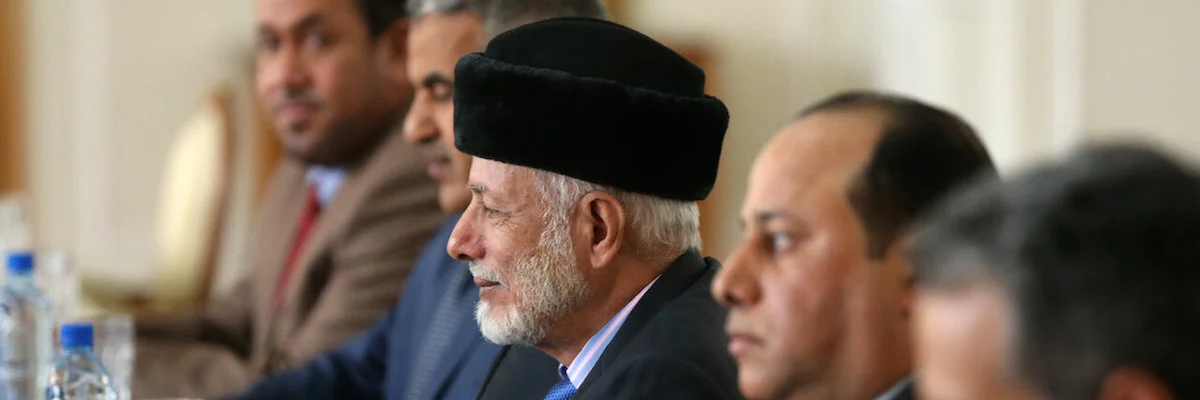
Meanwhile, the Saudi-led coalition that’s fought Iranian-backed Houthi rebels in Yemen since 2015 began releasing jailed Houthis, as efforts to end the conflict gather momentum. Oman is quietly hosting high-level meetings, according to people familiar with the matter, and even Iranian President Hassan Rouhani has hinted at direct channels with the U.A.E.
Spooked by the prospect of a catastrophic war with Iran and its proxy militias across the region, Gulf monarchies are in the midst of a strategic rethink. The U.A.E., whose economic model relies in large part on its international links, quickly realized it had most to lose from a military escalation. It had removed most of its troops from Yemen by the end of a turbulent summer that saw oil tankers targeted and a U.S. drone downed in the Gulf without significant American response.
While the humanitarian catastrophe unleashed by the Yemen war trained an unwelcome spotlight on Saudi Arabia, it took a brazen strike on Saudi oil installations—which knocked out half the country’s crude production—to ram home the risks and prove that Trump was not about to ride to his allies’ rescue.
“The attacks shattered any illusion of this magical U.S. security umbrella,” said David Roberts, an assistant professor at King’s College London who studies the Gulf. “It burst the bubble and showed that Iran had the willingness to both do something astonishing like the attack on Aramco facilities and the capability to carry it out.”
Iran denies U.S. and Saudi assertions it carried out the Sept. 14 strikes, pointing to Houthi claims of responsibility. But people familiar with investigations into the attacks say they were almost certainly launched from southwestern Iran -- an explosive escalation in Tehran’s pushback against an economic offensive unleashed by Trump and enthusiastically backed by the Saudis.
The Trump administration withdrew last year from the 2015 deal meant to prevent Iran from developing a nuclear bomb, and reimposed sanctions that have crippled its oil exports. But the “maximum pressure” policy is designed to coax Tehran into more concessions not to drag the U.S. into a new Middle East war just as it draws down troops in Syria.
Rolling back Shiite Muslim Iran’s power remains a priority for the Sunni Gulf Arab leadership. There’s an increasing recognition, however, that no one stands to gain from a military escalation in the world’s top oil-exporting region.
Saudi Arabia’s Center for International Communication didn’t respond to an email seeking comment. The U.A.E. declined to comment. But in a Nov. 10 speech, Minister of State for Foreign Affairs Anwar Gargash said he saw “a path to a deal with Iran that all parties might soon” be ready to embark on if Tehran demonstrated commitment.
War to ‘Cold Peace’
In search of a breakthrough, Pakistani Prime Minister Imran Khan, a former cricketer elected with the backing of a powerful army that provides extensive support for the Saudi military, shuttled between Tehran and Riyadh in October. He met Iran’s supreme leader, Ayatollah Ali Khamenei and Rouhani, as well as Saudi Arabia’s King Salman and Crown Prince Mohammad bin Salman, describing talks as “encouraging.”
Khan said he traveled at the request of Trump and Saudi Minister of State for Foreign Affairs Adel Al-Jubeir said the diplomacy wasn’t prompted by the kingdom. But deepening unease in the Persian Gulf catalyzed the effort.
Turning these overtures into lasting peace between countries that have grown further apart since the 1979 Iranian revolution remains far off.
The Gulf states resent Iran’s deep reach into Arab nations. While ongoing protests in Iraq and Lebanon suggest Iran has reached the limit of its regional influence, they are unlikely to reverse political and military advances decades in the making.
“Cold peace is possible but we are certainly far from a grand bargain,” said Afshin Molavi, senior fellow at the Foreign Policy Institute at Johns Hopkins. “For that, both Riyadh and Abu Dhabi would have to accept a role for Iran in Arab countries such as Iraq, Syria, Lebanon and Yemen.”
As they explore ways forward, Gulf states are moving at different speeds.
The U.A.E. broke with the U.S. and Saudi Arabia by not naming Iran as the culprit behind attacks in May and June on oil tankers as they sailed toward the Strait of Hormuz, the world’s foremost oil shipping chokepoint.
It sent coast guard officials to Iran for the first time in six years and Rouhani hinted at other meetings with senior U.A.E. officials. “We’re moving toward improved relations,” he said Oct. 14. Saudi Arabia is catching up.
Chokepoint
Washington built a multilateral naval operation to protect shipping in the Persian Gulf after the attacks and sent more troops to Saudi Arabia. Both actions resulted in a “down tick” in Iranian actions,” U.S. Defense Secretary Mark Esper said Nov. 13. “The Iranians should not mistake our restraint for weakness.”
Where the U.S. holds back, however, others are crowding in. Besides his role in saving Bashar al-Assad’s regime, Russian President Vladimir Putin has forged a partnership with Iran, created an oil alliance with Saudi Arabia and built ties with Egypt’s Abdel-Fattah El-Sisi, who was warned by the U.S. last month against plans to purchase Russian jets.
Putin traveled to Saudi Arabia and the U.A.E. in October after visits by the Saudi king and the U.A.E.’s de-facto leader Mohammad bin Zayed to Moscow. The two Gulf countries and Russia have signed deals valued at billions of dollars.
For Iran’s Rouhani, the case for regional engagement is obvious.
“Don’t you know that Iran is going to stay here and we will remain neighbors throughout history?” he has said, referring to Iran’s Arab neighbors. “Trump will only be around for a few years and will go back to whatever it was he was doing.”
Photo: IRNA
Britain, France, Germany to Hold Iran Talks
◢ Britain, France and Germany will hold talks Friday on how to preserve the beleaguered Iran nuclear deal and protect shipping in the Persian Gulf. Ahead of the meeting, British foreign minister Dominic Raab said they would aim to "build on the momentum of the positive G7 talks on Iran.”
By Damon Wake
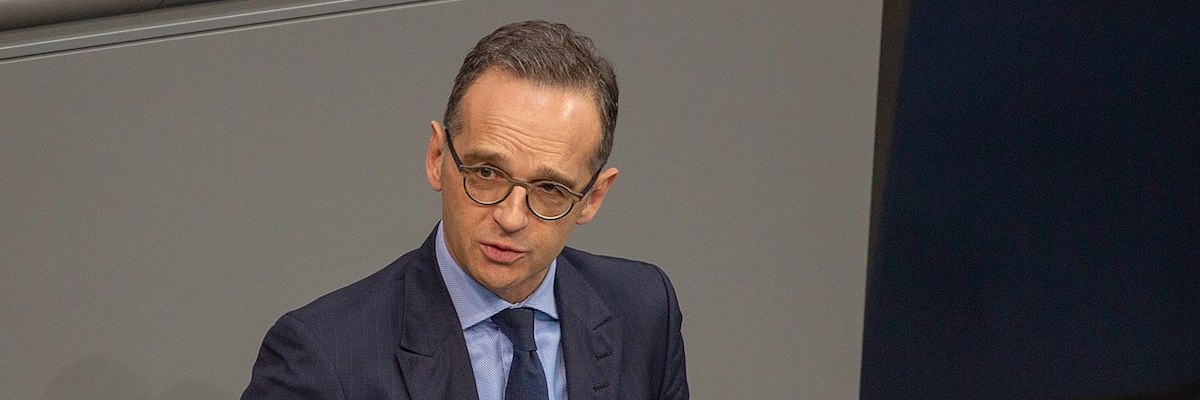
Britain, France and Germany will hold talks Friday on how to preserve the beleaguered Iran nuclear deal and protect shipping in the Persian Gulf.
Tensions have spiked recently in the strategic shipping lane where Iran has seized Western tankers as Tehran and Washington have locked horns over the 2015 deal.
US President Donald Trump last year unilaterally pulled out of the accord that handed Iran relief from sanctions in return for curbs on its atomic programme.
The move alarmed European powers, which see the deal as the best way to stop Iran acquiring nuclear weapons, and infuriated the Islamic republic.
The foreign ministers of Britain, France and Germany -- the three European parties to the deal -- will be joined by EU diplomatic chief Federica Mogherini for talks on the sidelines of an EU meeting in Helsinki
All have repeatedly said they are committed to saving the deal, but efforts to shield Iran's economy from the reimposition of US sanctions have so far borne little fruit.
The G7 summit last weekend brought a glimmer of hope as Trump indicated willingness to talk to Iran and Mogherini said the EU would support such a move -- provided the current deal was preserved.
'Build on Momentum'
Ahead of the meeting, British foreign minister Dominic Raab said they would aim to "build on the momentum of the positive G7 talks on Iran.”
As well as mooting the summit with his Iranian counterpart Hassan Rouhani, Trump also appeared open to a French suggestion that Iran be given a line of credit to help stabilise its economy.
"The nuclear deal is the only deal on the table that prevents Iran from getting a nuclear weapon and we will continue working together to encourage Iran to uphold the agreement in full," Raab said.
"We also need the broadest international support possible to tackle the threats to international shipping in the Strait of Hormuz."
Britain, along with Australia and Bahrain, has joined Washington's Operation Sentinel mission to protect commercial shipping on the crucial oil trade routes through the Gulf, in particular at the Strait of Hormuz.
Other European countries have been cool on the idea, fearing greater naval presence in the region could risk escalating an already febrile situation still further.
The idea has been floated of a European observation mission in the Strait of Hormuz, a strategic choke point at the mouth of the Gulf, but a number of EU countries have voiced reservations.
Mogherini on Thursday gave a cautious welcome to the idea of US-Iran talks but stressed that "first and foremost what is existing needs to be preserved" -- including the 2015 deal.
In response to the US pulling out of the deal and reimposing sanctions, Tehran has breached certain limits on its nuclear production imposed by the accord, but the EU insists Iran has so far not taken any irreversible steps.
Photo: Wikicommons
US Defense Chief Urges Iran to Hold Talks with US
◢ US Defense Secretary Mark Esper urged Iran Wednesday to enter discussions with the United States in order to ease tensions in the Persian Gulf region. "We are not seeking conflict with Iran. We want to engage with them diplomatically," Esper said in his first formal press conference after being confirmed last month.
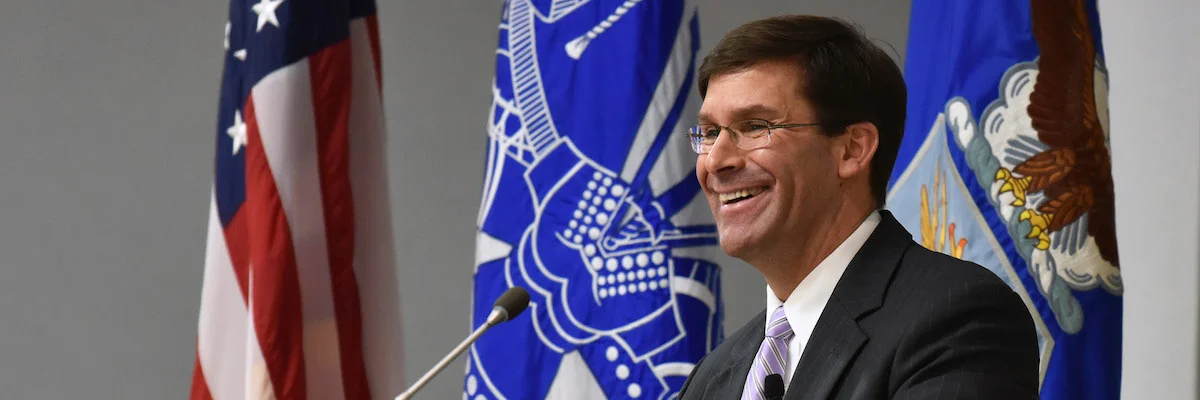
US Defense Secretary Mark Esper urged Iran Wednesday to enter discussions with the United States in order to ease tensions in the Persian Gulf region.
"We are not seeking conflict with Iran. We want to engage with them diplomatically," Esper said in his first formal press conference after being confirmed last month.
"The president said once again he is willing to meet with Iran's leaders," he said.
"We hope that the Iranians would agree to meet and talk and help us resolve these issues."
At the G7 meeting in Biarritz, France on Monday, Trump, whose government has aggressively sought to pressure Tehran, showed openness to French President Emmanuel Macron's proposal of a summit with his Iranian counterpart Hassan Rouhani.
"If the circumstances were correct, I would certainly agree to that," Trump said at a joint press conference with Macron.
That could be the ice-breaker needed to end more than two years of heightened hostilities between the two countries.
Breaking with his predecessor Barack Obama, Trump enacted a policy of "maximum pressure" on Tehran over its disputed nuclear program and last year unilaterally withdrew from the landmark 2015 international deal that placed limits on Tehran's nuclear activities.
Tensions over that move have gradually risen, with Iran seizing tankers in the Gulf in recent months and Britain detaining an Iranian tanker off of Gibraltar.
In the wake of that, the US launched its "Operation Sentinel," a naval operation to protect commercial shipping in the Gulf.
"I am pleased to report that Operation Sentinel is up and running, with the UK, Australia and Bahrain joining us in this effort," Esper said.
He said other countries would likely soon join, and that the operation had helped calm the region.
"Between our presence and the presence of our allies and partners in the region, I think so far, further bad, provocative behavior has been deterred," Esper said.
"We want to talk to Iran, and talk about a diplomatic path forward," he said, adding: "I'm not sure I'm ready to call the crisis over yet. So far, so good."
Photo: Wikicommons
Iranian Tanker Departs Gibraltar After Failed U.S. Bid to Detain It
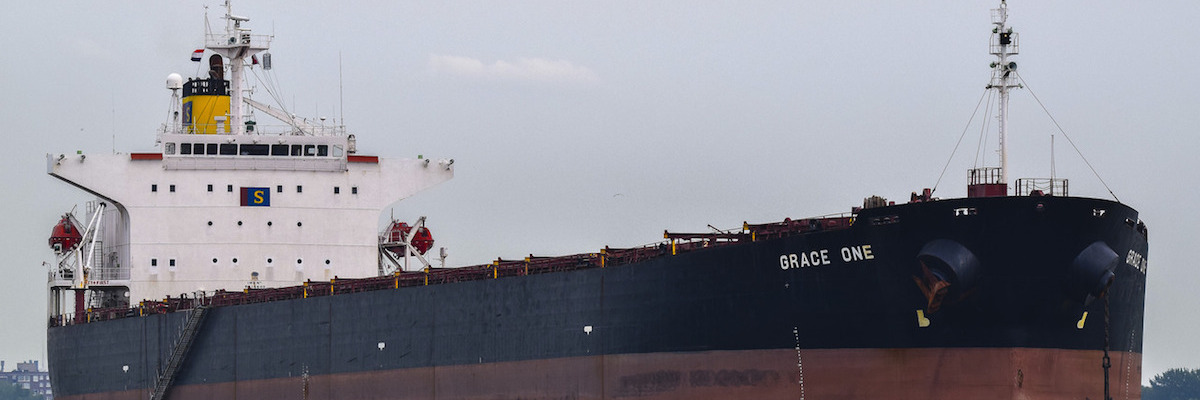
◢ The Government of Gibraltar says European Union regulations don’t allow it to seek a court order to seize a tanker which the U.S. accuses of breaching its sanctions by exporting Iranian oil. Grace 1, now renamed Adrian Darya, changed its intended destination on Monday to the Greek port of Kalamata and has now departed Gibraltar.
By Charles Penty and Verity Ratcliffe
The Government of Gibraltar says European Union regulations don’t allow it to seek a court order to seize a tanker which the U.S. accuses of breaching its sanctions by exporting Iranian oil.
The U.S. issued a warrant to seize the supertanker, which has been detained by the U.K. and Gibraltar since the beginning of July, on suspicion of hauling Iranian oil to Syria in violation of European sanctions, on Friday.
“The Central Authority’s inability to seek the Orders requested is a result of the operation of European Union law and the differences in the sanctions regimes applicable to Iran in the E.U. and the U.S.,” the Gibraltar government said in the statement. “The E.U. sanctions regime against Iran—which is applicable in Gibraltar—is much narrower than that applicable in the U.S.”
A complaint unsealed in Washington stated that “Oil Tanker ‘Grace 1,’ all petroleum aboard it and $995,000 are subject to forfeiture,” according to a Justice Department statement. The statement alleges a “scheme to unlawfully access the U.S. financial system to support illicit shipments” of oil from Iran to Syria in violation of U.S. sanctions, money laundering and terrorism statutes.
The tanker bore the name Grace 1 and a Panamanian flag when it was detained on July 4. It has since been re-flagged to Iran and its name changed to Adrian Darya 1.
Iran’s navy is ready to escort the supertanker if necessary, the semi-official Mehr news agency reported, citing a naval commander. “We have no intention of sending a flotilla to Gibraltar, but we are ready to do so to escort the Grace 1 back to Iran’s territorial waters,” the head of the army’s naval division, Admiral Hossein Khanzadi, said on Sunday at a global maritime event in Tehran.
The vessel, which is currently anchored off the coast of Gibraltar, is at the center of a diplomatic spat between the U.K. and the Trump administration. The U.S. has threatened to impose sanctions on anyone dealing with the ship and expressed disappointment with Britain after a court in Gibraltar ruled the ship was free to sail on Thursday.
Ports, banks and anyone else who does business with the ship or its crew might be subject to penalties, two U.S. administration officials said. Iran’s foreign minister said on Twitter that the ship’s detention was unlawful.
While the cargo was originally bound for Syria, Iran has provided assurance that this is no longer the case, according to the Gibraltar government. “The evidence is clear and the facts speak louder than the self-serving political statements we are hearing today,” according to the statement issued on Friday, which didn’t specify the comments it was referring to.
Missed Opportunity
The court’s decision Thursday to release the Grace 1 was a missed opportunity and the Trump administration hopes that the U.K. government and authorities in Gibraltar will reconsider, according to the U.S. officials, who asked not to be identified discussing private deliberations. They said the court order rewards Iranian terrorism and Tehran will interpret the action as appeasement.
The American officials said the U.K. should think of the tanker issue in terms of the broader relationship with the U.S., particularly as U.K. Prime Minister Boris Johnson’s government presses forward with departing the European Union and seeks a free-trade agreement with the U.S. While the people wouldn’t say the release threatens prospects for that deal, they added that the U.K. should ask if it wants to do business with the U.S. or Iran.
Diplomatic Row
The seizure of the tanker has heightened tension between Iran and the West, in a relation already under strain since the U.S. reimposed sanctions last year. A series of vessel attacks and seizures have threatened shipping in the Strait of Hormuz, the world’s most critical chokepoint for oil shipments.
Following the Grace 1’s detention, Iran seized a British-flagged vessel, the Stena Impero, which it continues to hold. The decision to release the tanker is unrelated to developments with the ship now known as Adrian Darya 1 and state officials must determine its fate, Alireza Tangsiri, head of the Islamic Revolutionary Guard Corps’ naval division, said on Sunday, according to Mehr.
The U.K. Foreign and Commonwealth Office cautioned that there was no connection between Gibraltar’s enforcement of sanctions and Iran’s activities at the mouth of the Persian Gulf.
“There is no comparison or linkage between Iran’s unacceptable and illegal seizure of, and attacks on, commercial shipping vessels in the Strait of Hormuz and the enforcement of EU Syria sanctions by the Government of Gibraltar,” it said in an emailed statement Thursday. “Freedom of navigation for commercial shipping must be respected and international law upheld.”
Heading for Greece
Adrian Darya changed its intended destination on Monday to the Greek port of Kalamata, from its previous indication of the Mediterranean Sea, according to vessel-tracking data compiled by Bloomberg.
It remains to be seen what will happen to the vessel now. The U.S. said it was gravely disappointed with Britain after Gibraltar’s release of the tanker, and it warned that ports, banks and anyone else who does business with the vessel or its crew might be subject to sanctions, according to two administration officials.
The waters off Kalamata could be a possible location for ship-to-ship cargo transfers, according to two vessel brokers without specific information about the tanker’s plans. Tanker crews enter destinations into ship logs that get picked up by vessel-tracking satellites. The destinations can be altered multiple times on the same journey.
The vessel’s status was “under way using engine” with speed of 6.7 knots as of 11:59 a.m. on Monday in Singapore, according to ship-tracking data. It has an estimated time of arrival at Kalamata of Aug. 25.
Photo: Bloomberg
Gibraltar Court Agrees to Release Detained Oil Tanker
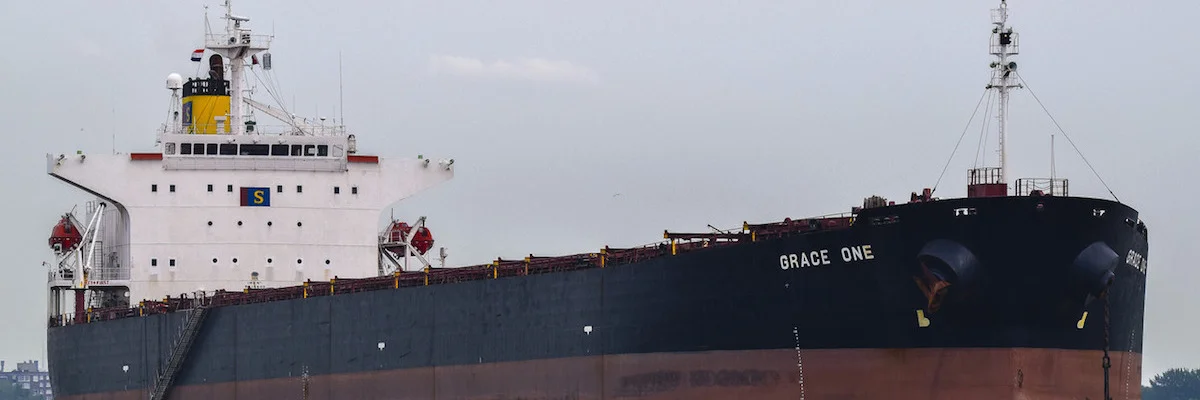
◢ A Gibraltar court agreed to release the supertanker Grace 1, which had been held since last month on suspicion of hauling Iranian crude oil to Syria in violation of European sanctions. The U.S. was seeking to seize the vessel, though it didn’t put in a legal request to do so, according to the judge in the case.
By Jonathan Browning and Alex Longley
The U.S. is gravely disappointed with the U.K. after a Gibraltar court allowed the release of an Iranian tanker suspected of hauling oil to Syria, and threatened sanctions against ports, banks and anyone else who does business with the ship or its crew, two administration officials said.
The court’s decision Thursday to release the Grace 1 was a missed opportunity and the Trump administration hopes that the U.K. government and authorities in Gibraltar will reconsider, according to the officials, who asked not to be identified discussing private deliberations. They said the court order rewards Iranian terrorism and Tehran will interpret the action as appeasement.
The Grace 1 had been held in Gibraltar after British forces seized it last month on suspicion that it was hauling Iranian crude oil to Syria. The U.S. Department of Justice is seeking to block the vessel’s release, but the Gibraltar Supreme Court on Thursday said American authorities hadn’t filed the appropriate legal application.
The two administration officials said the Grace 1 should now be considered a pariah. Anyone that does business with the ship, its crew or its owners, or provides financial transactions or port services to the vessel could be liable for evading U.S. sanctions, the officials said.
They argued that the U.K. should think of the tanker issue in terms of the broader relationship with the U.S., particularly as Prime Minister Boris Johnson’s government presses forward with departing the European Union and seeks a free-trade agreement with the U.S. While the people wouldn’t say the release threatens prospects for that deal, they added that the U.K. should ask if it wants to do business with the U.S. or Iran.
Iran said the ship wouldn’t sail to a sanctioned destination and is now rushing to return it to international waters before the U.S. finds a way to prolong its six-week detention.
“In light of the assurances we have received, there are no longer any reasonable grounds for the continued legal detention of the Grace 1 in order to ensure compliance” with European sanctions, the Gibraltar government said in an emailed statement.
The decision now essentially sets up a race between Iran and the U.S. over the ship’s fate. The vessel is bound for a port in the Mediterranean, Iran’s Mehr news agency said, citing Jalil Eslami, deputy for maritime affairs of the Iranian ports and maritime organization. Tanker-tracking data compiled by Bloomberg show that the vessel hadn’t moved as of 5:30 p.m. New York time.
Diplomatic Row
The seizure of the tanker set off a diplomatic row, underscoring tense relations between Iran and the West that have only worsened since the U.S. reimposed sanctions on the Persian Gulf state last year. Tensions have been high in the region in recent months amid a series of vessel attacks and seizures, which have threatened shipping in the Strait of Hormuz, the world’s most critical chokepoint for oil shipments.
Following the detention of the ship on July 4, Iran seized a British-flagged vessel, the Stena Impero, which it continues to hold.
Gibraltar’s decision to release the Grace 1 “is a satisfactory result for the U.K.,” Cara Hatton, an analyst at Falanx Assynt Ltd., a geopolitical risk consulting firm, said in an emailed statement. It “fully justifies Britain’s initial seizure of the ship, and increases the likelihood that Iran will now release the Stena Impero without giving the impression that the countries are engaged in a tanker swap.”
The U.K. Foreign and Commonwealth Office cautioned that there was no connection between Gibraltar’s enforcement of sanctions and Iran’s activities at the mouth of the Persian Gulf.
“There is no comparison or linkage between Iran’s unacceptable and illegal seizure of, and attacks on, commercial shipping vessels in the Strait of Hormuz and the enforcement of EU Syria sanctions by the Government of Gibraltar,” it said in an emailed statement. “Freedom of navigation for commercial shipping must be respected and international law upheld.”
The two U.S. officials rejected that idea, saying that the U.K. was trying to deescalate the situation with Iran and remove any distractions it faces to focus on Brexit.
The Gibraltar government said in its statement that it held several meetings with Iranian representatives this month and last to negotiate the tanker’s fate, and on Tuesday, the Islamic Republic agreed that the ship’s final destination wouldn’t be subject to European Union sanctions.
Iran agreed to re-flag and insure the vessel, which was carrying about $140 million in crude oil to the Baniyas refinery in Syria. It will now travel under the Iranian flag.
Four crew members from the Grace 1—the captain, chief officer and two second mates—have been released, according to the Gibraltar government. The vessel’s captain has no intention of going back aboard the ship, said his lawyer, John Wilkinson. “He wants to go home to India,” he said. Most of the 28 crew are on board, he said.
Photo: Fleet Mon
Iran Says It Expects Tanker Held by U.K. to Be Released Soon
◢ Iran expects an oil tanker seized by the U.K. in the Strait of Gibraltar in July will be released soon, the semi-official Fars News agency reported Tuesday. “Official and unofficial documents have been exchanged to resolve the matter and we hope the problem will be dealt with in the very near future,” said Jalil Eslami, deputy for maritime affairs at Iran’s Ports and Maritime Organization.
By Arsalan Shahla
Iran expects an oil tanker seized by the U.K. in the Strait of Gibraltar in July will be released soon, the semi-official Fars News agency reported Tuesday, a move that could help to ease concerns about the safety of shipping routes in the Middle East.
“Official and unofficial documents have been exchanged to resolve the matter and we hope the problem will be dealt with in the very near future,” Fars cited Jalil Eslami, deputy for maritime affairs at Iran’s Ports and Maritime Organization, as saying. The future of a U.K.-flagged tanker that Iran seized later in the Persian Gulf depends on “the necessary judicial processes,” Eslami added.
Iran’s Grace 1 tanker was seized by the Royal Navy on suspicion it was sending crude oil to Syria in violation of European Union sanctions. Tehran denied breaking sanctions and two weeks later impounded the U.K.-flagged Stena Impero near the Strait of Hormuz, the world’s most important chokepoint for oil.
Gibraltar’s Supreme Court is scheduled to hold its next hearing on the vessel on Thursday, according to the official Gibraltar news service in Spain. The current detention order for the ship expires late on Saturday, local media reported. A spokesperson for the U.K. Foreign Office said that the “ongoing investigation” into the Grace 1 was a matter for Gibraltar authorities.
The tanker seizures and other suspected Iranian operations against shipping in the Persian Gulf region have inflamed a crisis between Iran and the West triggered by the Trump administration’s decision to quit the multiparty nuclear deal with Iran a year ago and renew crippling economic sanctions. Iran has responded by abandoning some restrictions on uranium enrichment imposed by the 2015 accord.
The frictions on the seas have led the U.S. and U.K. to mount a joint mission to protect commercial shipping lanes in the Middle East. Reports of Israeli involvement in that mission have drawn fire from Tehran, and on Tuesday, the commander of Iran’s Revolutionary Guards Corp’s naval forces warned against “any illegal presence in the Persian Gulf and Strait of Hormuz, especially Israel’s.”
“We in the Iranian Revolutionary Guards Corps are in charge of providing security for the Strait of Hormuz and the Persian Gulf, and there is no need for strangers,” Rear Admiral Alireza Tangsiri said, according to the semi-official Iranian Students’ News Agency.
Last week, Israel’s Ynet website reported that Israel is providing intelligence and other, unspecified assistance to U.S.-led efforts to protect Persian Gulf shipping routes. It cited Foreign Minister Israel Katz’s remarks to parliament’s foreign affairs and defense committee.
Israel considers Iran to be its most formidable enemy, due to its nuclear work, ballistic missile program and support for anti-Israel militant groups in the Middle East. Iranian officials have also referred multiple times to Israel’s annihilation. Prime Minister Benjamin Netanyahu lobbied hard against the nuclear deal, and pressed President Donald Trump to abandon it.
Israel has been striking Iranian targets in Syria over the past few years in an effort to limit the Islamic Republic’s presence in its immediate neighborhood, and according to recent reports, has expanded those operations to hit Iranian-backed militias in Iraq.
Photo: Fleet Mon
US Says Has Asked Germany to 'Help Secure' Strait of Hormuz
◢ The United States has asked Germany to join an international naval mission to help secure the strategic Strait of Hormuz, the US embassy in Berlin said on Tuesday. "We've formally asked Germany to join France and the UK to help secure the Strait of Hormuz and combat Iranian aggression," said a statement by embassy spokeswoman Tamara Sternberg-Greller.
The United States has asked Germany to join an international naval mission to help secure the strategic Strait of Hormuz, the US embassy in Berlin said on Tuesday, as tensions mount between Washington and Iran.
The request comes after Britain last week ordered its navy to escort UK-flagged ships in the world's busiest oil shipping lane in response to Iranian soldiers seizing a tanker in the flashpoint entrance to the Gulf.
"We've formally asked Germany to join France and the UK to help secure the Strait of Hormuz and combat Iranian aggression," said a statement by embassy spokeswoman Tamara Sternberg-Greller.
"Members of the German government have been clear that freedom of navigation should be protected... Our question is, protected by whom?"
Long-simmering tensions have spiked between Tehran and Washington since US President Donald Trump unilaterally withdrew from the Iran nuclear deal last year and reimposed biting sanctions on the Islamic republic.
The US and Gulf powerhouse Saudi Arabia have since accused Iran of being behind multiple mysterious attacks on tankers in the Gulf in June, which Iran denies.
Iran also shot down an unmanned US aircraft in June, after which Trump announced that he had called off retaliatory air strikes at the last minute because the resulting death toll would have been too high.
Since then a series of incidents involving oil tankers have heightened tensions.
The US request to NATO ally Germany is highly controversial in the country, where many politicians fear any naval mission, especially one led by the United States, could heighten the risk of conflict and drag European powers into a war.
Berlin has been clear it rejects Trump's strategy of "maximum pressure" on Iran.
Britain detained an Iranian tanker off its overseas territory of Gibraltar in early July on allegations it was breaching EU sanctions on Syria.
In what many read as a tit-for-tat move, Iran's Revolutionary Guards two weeks later impounded a British-flagged tanker in the Strait of Hormuz.
Britain said last week it was planning a European-led protection force there, but has since suggested such a mission should involve the United States.
Photo: Wikicommons
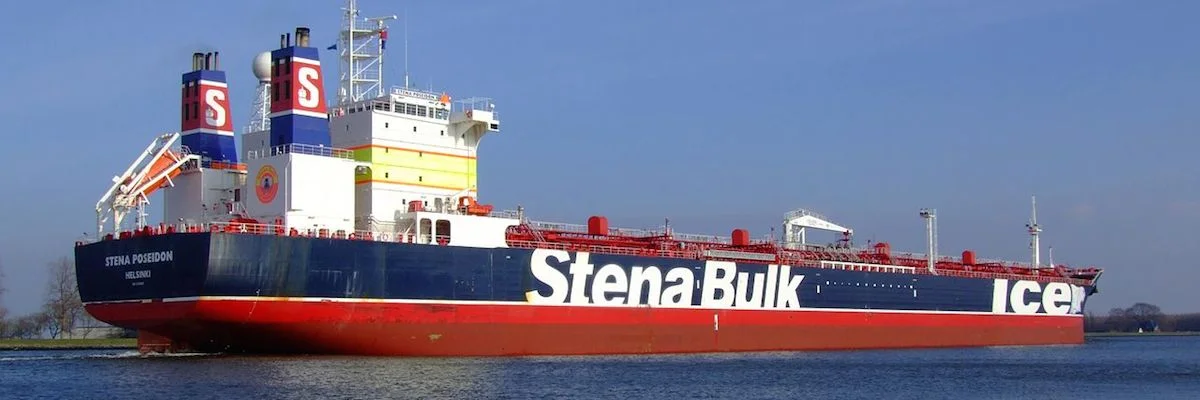
Swedish Owner of Tanker Seized by Iran Says Crew 'Safe'
◢ The Swedish company that owns the UK-flagged oil tanker seized by Iran said Wednesday it had finally been able to contact its crew being held on board and they declared themselves "safe.” Stena Bulk said in a statement that the ship's captain "advised that everyone was safe with good cooperation with the Iranian personnel onboard.”
The Swedish company that owns the UK-flagged oil tanker seized by Iran said Wednesday it had finally been able to contact its crew being held on board and they declared themselves "safe.”
Stena Bulk said in a statement that the ship's captain "advised that everyone was safe with good cooperation with the Iranian personnel onboard".
Iran's Islamic Revolutionary Guard Corps seized control of the Stena Impero tanker last Friday as it was navigating through an international passage in the middle of the Strait of Hormuz, a narrow chokepoint at the entrance of the Gulf.
The ship has since been held off shore near Iran's southern port of Bandar Abbas.
Iranian officials have given varying reasons for its seizure and continued detention.
Some, such as Foreign Minister Mohammad Javad Zarif, said it was for breaching maritime regulations.
It has also been variously claimed that its transponder was turned off, it was going the wrong way along a shipping channel or had collided with an unidentified fishing vessel.
Others, such as parliamentary speaker Ali Larijani, said it was a tit-for-tat move responding to British commandos seizing an Iranian oil tanker on July 4 as it passed through Gibraltar's waters, under suspicion it was breaking EU sanctions on oil deliveries to Syria.
Iran has hinted it was open to a tanker swap, releasing the Stena Impero in exchange for its tanker, Grace 1, being allowed on its way.
Stena Bulk has been trying for days to have its representatives visit the Stena Impero and see the 23 detained crew members—who hail from India, Russia, Latvia and the Philippines—to verify their wellbeing and press for their release.
On Tuesday it insisted in a statement that the vessel was "in compliance with maritime regulations" when it was seized, with transponders functioning and using the right shipping traffic passage. "We can confirm that we are not aware of, and nor is there any evidence of a collision involving the Stena Impero," it said.
Seeking 'Progress' from Iran
While its representatives have not been able to physically see the crew, Stena Bulk said in its statement Wednesday that it had had "direct communication" with the ship's captain since late Tuesday.
The CEO of Stena Bulk, Erik Hanell, said the company appreciated the ability to speak to the crew remotely and expressed hope "that this is a first sign that we will soon see more positive progress from the Iranian authorities.”
Britain has slammed the seizure of the Stena Impero as "state piracy" that threatened freedom of navigation in the Strait of Hormuz.
It has called for a European naval mission to be set up in the Gulf, separate from US patrols, to ensure the safety of shipping there. France has expressed willingness to take part in an "observer" mission, with efforts being made to de-escalate the situation.
Photo: Wikicommons
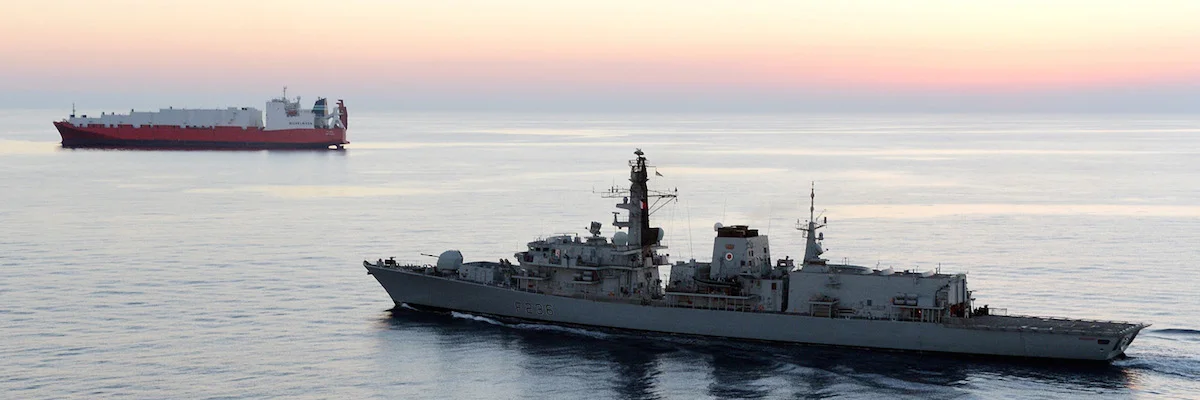
Europeans Plan Naval Mission to Protect Ships in Persian Gulf
◢ European governments will assemble a naval mission to provide safe passage for ships through the Persian Gulf, after Iran seized a British oil tanker in the region last week, an act that U.K. Foreign Secretary Jeremy Hunt described as “state piracy.” Hunt announced a “European-led maritime protection mission to support safe passage of crew and cargo” in a statement to Britain’s Parliament in London on Monday.
By Alex Morales and Robert Hutton
European governments will assemble a naval mission to provide safe passage for ships through the Persian Gulf, after Iran seized a British oil tanker in the region last week, an act that U.K. Foreign Secretary Jeremy Hunt described as “state piracy.”
Hunt announced a “European-led maritime protection mission to support safe passage of crew and cargo” in a statement to Britain’s Parliament in London on Monday.
The U.K. demanded the immediate release of the Stena Impero, and summoned Iran’s charge d’affaires in London, Mohsen Omidzamani, following the incident in one of the world’s critical shipping chokepoints. The government threatened Iran with “serious consequences” and advised U.K. vessels to avoid the area, and to inform the government if they planned to travel there.
“Let us be clear, under international law Iran had no right to obstruct the ship’s passage, let alone board her,” Hunt told the House of Commons. “It was therefore an act of state piracy.”
The Foreign Secretary said the U.K. didn’t want to escalate tensions with Iran, which have been rising after the U.S. pulled out of the international nuclear deal and imposed new sanctions. Hunt said Britain won’t be taking part in the Trump administration’s “maximum pressure” policy, because the London government remains committed to the 2015 multi-nation pact to limit Iran’s nuclear program.
“If Iran continues on this dangerous path, they must accept the price will be a larger Western military presence in the waters along their coastline,” Hunt said. “Not because we wish to increase tensions but simply because freedom of navigation is a principle Britain and its allies will always defend.”
Tensions have flared in the Strait of Hormuz in recent weeks as Iran lashes out against U.S. sanctions that are crippling its oil exports and after the seizure of one of its tankers near Gibraltar. The Strait accounts for about a third of the world’s seaborne oil flows.
With Theresa May set to leave office on Wednesday, the latest clash with Iran presents a diplomatic headache for her successor, either Boris Johnson, the front-runner, or Hunt, his rival.
U.S. Central Command has announced a “multinational maritime effort” called Operation Sentinel to “increase surveillance of and security in key waterways in the Middle East to ensure freedom of navigation in light of recent events in the Arabian Gulf region.”
Iran’s Revolutionary Guards said on Saturday that the British ship entered the strait from the wrong direction, wasn’t paying heed to maritime regulations and could potentially have collided with other vessels. State television said the ship will be held until judicial assessments are complete.
On Sunday, the Iranian flag was seen flying over the bridge of the tanker in the Bandar Abbas port, according to images aired by state-run Press TV.
Iran has also suggested its actions are in retaliation for Britain’s seizure of the Grace 1 tanker off Gibraltar. A court in Gibraltar ordered the continued detention of the vessel for another 30 days, after it was held on suspicion of taking oil to Syria. Iran denies that was the destination.
In recent weeks the U.K. Navy has escorted some tankers out of the region, while the U.S. said it downed an Iranian drone just days ago. The latest incident cooled hopes that the U.S. and Iran would soothe tensions by entering into negotiations.
Photo: Royal Navy

Trump Says U.S. Warship Downed Iran Drone Near Strait of Hormuz
◢ President Donald Trump said the U.S. “immediately destroyed” an Iranian drone that approached the USS Boxer near the Strait of Hormuz, the latest sign of escalating military tensions around the critical oil chokepoint. The drone was a threat to the ship and its crew, Trump said at the White House on Thursday.
By Jennifer Jacobs and Josh Wingrove
President Donald Trump said the U.S. “immediately destroyed” an Iranian drone that approached the USS Boxer near the Strait of Hormuz, the latest sign of escalating military tensions around the critical oil chokepoint.
The drone was a threat to the ship and its crew, Trump said at the White House on Thursday. The president said he’s calling “on other nations to protect their ships as they go through the Strait.” The Boxer is an amphibious assault ship.
“The Boxer took defensive action against an Iranian drone which had closed into a very, very near distance—approximately 1,000 yards, ignoring multiple calls to stand down and was threatening the safety of the ship and the ship’s crew,” Trump said.
Oil futures in New York clawed back a bit of the day’s 2.6% loss, climbing 34 cents a barrel after the announcement.
Pentagon spokesman Jonathan Hoffman said in a statement that at 10 a.m. local time the Boxer “was in international waters conducting a planned inbound transit of the Strait of Hormuz” when a drone “closed within a threatening range” and “the ship took defensive action.”
The confrontation comes as tensions between Washington and Tehran remain high over a spate of attacks on cargo ships, the downing of an American drone and the British seizure of a tanker carrying Iranian oil.
Earlier in the day, the U.S. condemned Iranian naval activity in the Persian Gulf and demanded that the Islamic Republic release a small tanker and its crew that its forces seized this week. A State Department official who asked not to be identified discussing the issue cited the Islamic Revolutionary Guard Corps’ “continued harassment” of vessels in and around the Strait.
Iranian Foreign Minister Mohammad Javad Zarif said in an interview with Bloomberg News on Wednesday that said his country is capable of shutting the Strait of Hormuz, but doesn’t want to.
“We certainly have the ability to do it, but we certainly don’t want to do it because the Strait of Hormuz and the Persian Gulf are our lifeline,” Zarif said in New York. “It has to be secured. We play a big role in securing it, but it has to be secure for everybody.”
About one-third of the world’s seaborne crude and fuels passed through the Strait of Hormuz last year, highlighting its key role in global oil markets. In May and June, six tankers were attacked in the region. While Iran has been blamed for attacks on merchant shipping, it has denied responsibility.
“It’s dangerous because it is very crowded,” Zarif said, adding that the last time the area was this crowded, the U.S. shot down an Iranian commercial airliner with 290 passengers in 1988. “We feel the danger and that is why we want to avoid a dangerous escalation, but we cannot give up defending our country.”
Photo: Wikicommons
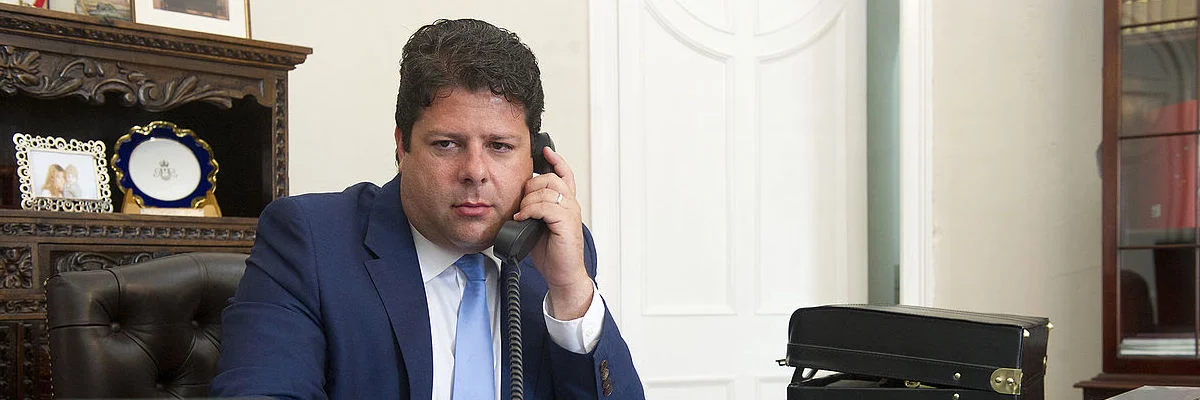
Gibraltar, Iran Officials Hold Talks on Seized Oil Tanker
◢ Gibraltar's Chief Minister Fabian Picardo said Thursday he had a "constructive and positive" meeting with Iranian officials in London aimed at defusing tensions around an oil tanker carrying Iranian oil being held in the British territory's waters. Picardo's government said the meeting took to discuss the continued detention of the Grace One tanker "and to seek to de-escalate all aspects of the issues arising.”
Gibraltar's Chief Minister Fabian Picardo said Thursday he had a "constructive and positive" meeting with Iranian officials in London aimed at defusing tensions around an oil tanker carrying Iranian oil being held in the British territory's waters.
In a statement, Picardo's government said the meeting took place on Wednesday and to discuss the continued detention of the Grace One tanker "and to seek to de-escalate all aspects of the issues arising.”
It did not identify which Iranian officials participated.
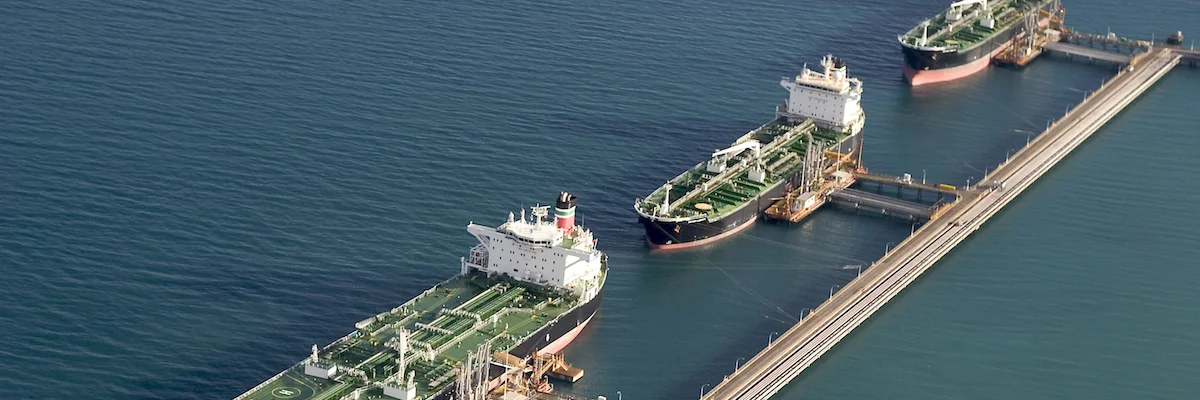
The Grace One supertanker, carrying 2.1 million barrels of oil, was intercepted by British Royal Marines and Gibraltar's police as it transited through waters claimed by Gibraltar, which is located on Spain's southern tip.
US officials believed the tanker was destined for Syria to deliver oil, in violation of separate sets of EU and US sanctions.
Iran has reacted with fury at what it termed "piracy" and warned it would not let the interception go unanswered.
Last week, a British warship in the Gulf warned off armed Iranian boats that tried to stop a UK supertanker. London has since announced the deployment of two more warships to the Gulf region for the coming months.
Increased Concern in the Gulf
British Foreign Secretary Jeremy Hunt last weekend said he held talks with his Iranian counterpart Mohammad Javad Zarif about the Grace One that he also termed "constructive". He tweeted that he promised he would "facilitate" the release of the tanker "if we received guarantees that it would not be going to Syria".
An order by Gibraltar's supreme court authorising the detention of the Grace One tanker lapses after Friday, though it can be renewed for up to three months.
Iran on Thursday announced it had seized a foreign tanker in international waters in the Strait of Hormuz at the entrance to the Gulf, claiming it was involved in "fuel smuggling". Video it released showed the vessel to be the MT Riah, a Panama-flagged ship whose ownership has not been established.
The US military, which maintains a naval base in the Gulf and regularly patrols the area, said it will work "aggressively" with allies to ensure safe civilian shipping in the region.
Bahrain said Thursday it will host a conference on "maritime and air navigation security" and "find ways to deter the Iranian threat and ensure freedom of navigation in this strategic region", the Gulf kingdom's BNA state news agency said.
The Strait of Hormuz is the conduit for nearly a third of the world's crude oil.
Bahrain, which hosts the US Fifth Fleet, said it would co-host the conference with the US and Poland. It did not specify a date for the meeting.
Photo: Wikicommons
Britain Says Iran Tried to 'Impede' UK Tanker in Persian Gulf
◢ Britain said on Thursday that Iranian military vessels tried to "impede the passage" of a UK oil tanker but were warned off by a British warship in a dramatic escalation of tensions with Tehran in the Gulf. "Contrary to international law, three Iranian vessels attempted to impede the passage of a commercial vessel, British Heritage, through the Strait of Hormuz," the UK defence ministry said in a statement.
By Dmitry Zaks
Britain said on Thursday that Iranian military vessels tried to "impede the passage" of a UK oil tanker but were warned off by a British warship in a dramatic escalation of tensions with Tehran in the Persian Gulf.
The incident in the narrow but busy Strait of Hormuz occurred on Wednesday after President Donald Trump ratched up his own administration's pressure even further by warning that sanctions against the Islamic Republic would be "increased substantially" soon.
CNN initially reported that Iranian boats attempted to seize the British tanker but were driven off by a Royal Navy frigate.
The UK defense ministry said only that the Iranian boats tried to "impede" a commercial vessel called British Heritage, which is owned by British energy giant BP.
"Contrary to international law, three Iranian vessels attempted to impede the passage of a commercial vessel, British Heritage, through the Strait of Hormuz," the UK defense ministry said in a statement.
"HMS Montrose was forced to position herself between the Iranian vessels and British Heritage and issue verbal warnings to the Iranian vessels, which then turned away."
It also urged "the Iranian authorities to de-escalate the situation in the region".
Iran's Revolutionary Guards—a vast and powerful security organization that the United States blames for staging several tanker attacks since May—denied trying to seize or impede the UK tanker.
"There has been no confrontation in the last 24 hours with any foreign vessels, including British ones," the Revolutionary Guards said in a statement.
'Path of Diplomacy Open'
The episode adds further fuel to a volatile mix of brinkmanship and saber rattling in a region already unsettled by the Trump administration's nuclear standoff with the Islamic Republic.
Iranian President Hassan Rouhani on Wednesday warned Britain of unspecified "consequences" over last week's detention of one of its oil tankers off Gibraltar.
Officials in Gibraltar—a British overseas territory on Spain's southern tip—said the cargo was believed to be destined for Syria.
Damascus is subject to EU sanctions while the US has its own sets of trade restrictions on Iranian oil.
Iran condemned the detention as an "illegal interception."
Britain has denied suggestions from Gibraltar officials that it was acting on the orders of the United States.
Iran has been ramping up uranium enrichment in response to the Trump administration's decision last year to pull out of a landmark nuclear agreement world powers signed after a decades of talks with Tehran in 2015.
It surpassed one limit set in that deal one month ago and breached a second one on Monday.
French President Emmanuel Macron's diplomatic adviser Emmanuel Bonne met with Rouhani on Wednesday in an attempt to mediate some sort of reprieve in the escalating standoff.
Rouhani told Bonne that Tehran had "completely kept the path of diplomacy and talks open," according to a statement issued by the Iranian presidency after the talks.
He called on other parties to the nuclear deal to "completely implement their commitments" to keep it alive.
Full Compliance 'Without Delay'
Britain and other European nations have been trying to save the agreement by setting up their own independent trade mechanism that evades US sanction on Tehran.
But Iran's decision to push ahead with enrichment to ever higher levels is putting the European strategy under strain.
European parties of the agreement issued a tough joint statement on Tuesday saying Iran must reverse its activities and return to full compliance "without delay.”
Photo: BP
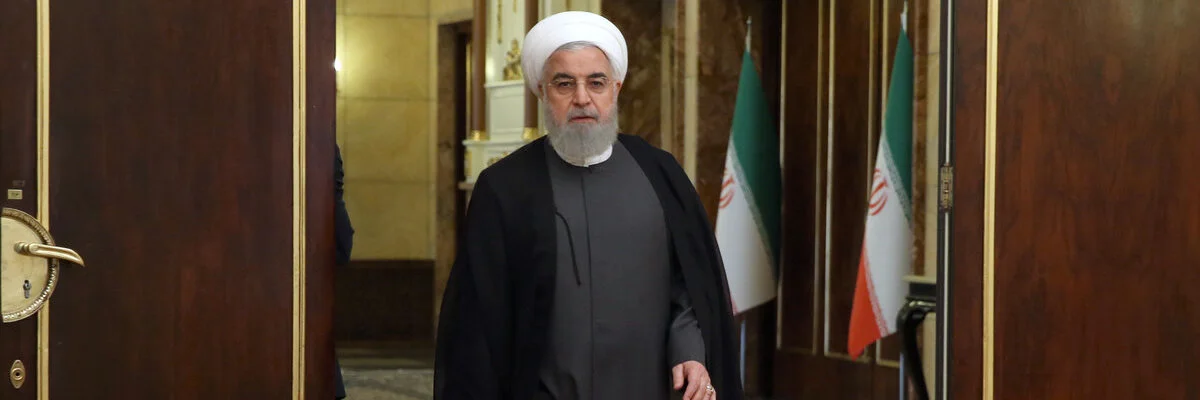
Iran 'Never Seeks War' with US, says Rouhani
◢ Iran "never seeks war" with the United States, President Hassan Rouhani said as he sought to rein in soaring tensions Wednesday between the two countries. "Iran has no interest to increase tension in the region and it never seeks war with any country, including (the) US," the president said, quoted by state news agency IRNA.
By Marc Jourdier
Iran "never seeks war" with the United States, President Hassan Rouhani said as he sought to rein in soaring tensions Wednesday between the two countries.
"Iran has no interest to increase tension in the region and it never seeks war with any country, including (the) US," the president said, quoted by state news agency IRNA.
Rouhani was speaking by phone to his French counterpart Emmanuel Macron, as Tehran and Washington engaged in an escalating war of words following Iran shooting down a US drone last week.
"We have always been committed to regional peace and stability and will make efforts in this respect," the Iranian president told Macron.
US President Donald Trump said he pulled back from retaliatory strikes on Iran at the last minute, rejecting Tehran's claim that the aircraft was in its airspace.
But pressure mounted this week with Trump announcing sanctions on Iran's supreme leader and top officials.
The new measures are the latest against Tehran since Trump pulled out of a landmark nuclear accord between Iran and world powers.
Rouhani blamed the United States for regional tensions and said if Washington had stuck to the deal "we would have witnessed positive developments in the region".
Iran announced in May it would suspend two of its pledges under the 2015 deal, giving the agreement's remaining supporters two months to help it circumvent US sanctions.
On Tuesday Tehran's top security official, Ali Shamkhani, said Iran would "forcefully" reduce further commitments from July 7.
This was so "countries who interpreted Iran's 'patience' with weakness and inaction realise that Iran's answer to the American drone's violation of its airspace will be no different than its reaction to devious political efforts to limit Iranian people's absolute rights," he said, quoted by Fars news agency.
Tehran's compliance had been based on European promises to support Iran's economy—which have failed to bear fruit—Rouhani told Macron.
Iran previously announced it would stop observing restrictions on its stocks of enriched uranium and heavy water agreed under the deal.
'Obliteration'
Tehran accuses Washington of waging economic warfare through its crippling sanctions regime, which on Monday saw Iran's supreme leader Ayatollah Ali Khamenei blacklisted.
The Trump administration says it is open to talks with Tehran, an offer flatly rejected by Rouhani after the US said it would also sanction his top diplomat.
"At the same time as you call for negotiations you seek to sanction the foreign minister? It's obvious that you're lying," Rouhani said Tuesday, raising fears of conflict despite both sides saying they are not looking for war.
Washington's national security advisor, John Bolton, on Tuesday accused Iran of being behind "a long series of unprovoked and unjustifiable attacks."
The US has blamed Tehran for attacks earlier this month on tankers close to the strategic Strait of Hormuz, through which most Gulf oil exports pass.
Iran has vehemently denied involvement, despite it previously threatening to close the vital waterway.
Trump said Tuesday he is not seeking conflict, while warning Iran against hitting US interests.
“Any attack by Iran on anything American will be met with great and overwhelming force. In some areas, overwhelming will mean obliteration," he tweeted.
Iran and the US broke off diplomatic relations in 1980 over the hostage crisis at the US embassy in Tehran following Iran's Islamic revolution.
Trump's comments came after a flurry of diplomatic activity, which saw the UN Security Council issue a unanimous call Monday for dialogue to address the bilateral standoff.
With no sign of calm on Tuesday, China urged "calm and restraint.”
Photo: IRNA
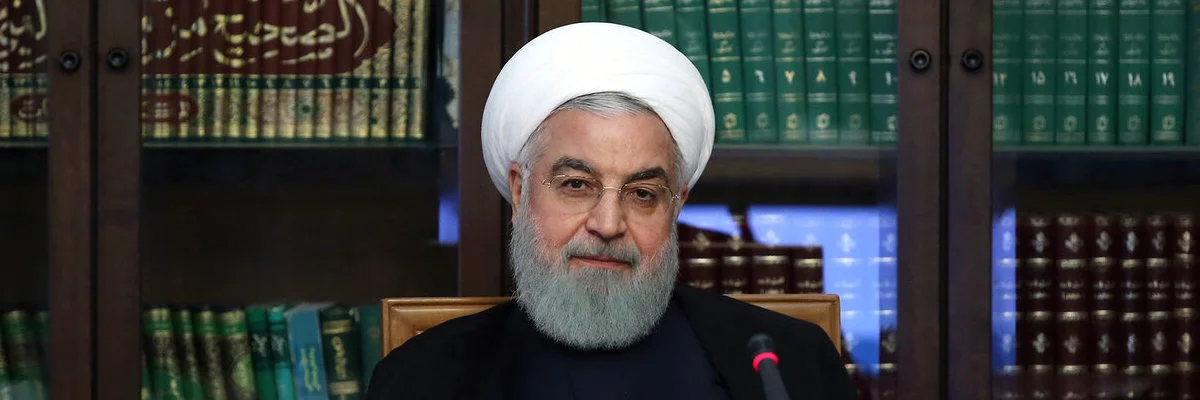
Trump Vows New Iran Sanctions, Tehran Warns US Against Attack
◢ US President Donald Trump on Saturday pledged to hit Iran with "major" new sanctions as Tehran warned Washington that any attack would see its interests across the Middle East go up in flames. The war of words heated up after Trump had pulled back from military action against Iran in response to its downing of a US reconnaissance drone.
By Inčs Bel Aiba and Amir Havasi
US President Donald Trump on Saturday pledged to hit Iran with "major" new sanctions as Tehran warned Washington that any attack would see its interests across the Middle East go up in flames.
The war of words heated up after Trump had pulled back from military action against Iran in response to its downing of a US reconnaissance drone.
That incident, which came after a series of attacks on tankers in the congested shipping lanes out of the Gulf that the US has blamed on Iran, exacerbated already tense relations between the two countries.
Iran has denied responsibility for those attacks. Trump, who spent Saturday huddling with his advisors at Camp David, initially told reporters that he was keen to be Iran's "best friend"—if the country agreed to renounce nuclear weapons.
"When they agree to that, they're going to have a wealthy country. They're going to be so happy, and I'm going to be their best friend," he told reporters.
Iran has denied seeking a nuclear weapon and says its program is for civilian purposes.
A multinational accord reached by Tehran and world powers in 2015 sought to curb Iran's nuclear ambitions in exchange for sanctions relief. But Trump left that agreement more than a year ago and has imposed a robust slate of punitive economic sanctions designed to choke off Iranian oil sales and cripple its economy—one he now plans to expand.
"We are putting major additional Sanctions on Iran on Monday," tweeted Trump, who has also deployed additional troops to the Middle East.
"I look forward to the day that Sanctions come off Iran, and they become a productive and prosperous nation again - The sooner the better!"
Added Secretary of State Mike Pompeo: "When the Iranian regime decides to forgo violence and meet our diplomacy with diplomacy, it knows how to reach us. Until then, our diplomatic isolation and economic pressure campaign against the regime will intensify."
But lest anyone think he was entirely ruling out military action, Trump tweeted Saturday evening that "I never called the strike against Iran 'BACK,' as people are incorrectly reporting, I just stopped it from going forward at this time!"
'Powder Keg'
A top Iranian military official warned Washington against any strikes.
"Firing one bullet towards Iran will set fire to the interests of America and its allies" in the region, armed forces general staff spokesman Brigadier General Abolfazl Shekarchi told the Tasnim news agency.
"If the enemy—especially America and its allies in the region—make the military mistake of shooting the powder keg on which America's interests lie, the region will be set on fire," Shekarchi warned.
Following his comments, Iran said it had executed a man, a contractor for the defense ministry's aerospace organization, who had been convicted of spying for the United States.
'Trampling' International Law
After the downing Thursday of the Global Hawk surveillance aircraft, Trump said the United States had been "cocked & loaded" to strike Iran.
But at the last minute, he said he pulled back as the response would not have been "proportionate."
The US president subsequently said he did not want war with Iran, but if it came to pass, there would be "obliteration like you've never seen before," according to excerpts of an interview with NBC conducted on Friday.
Tehran insists that the drone violated its airspace—something Washington denies—but a commander of the elite Revolutionary Guards, Brigadier General Amir Ali Hajizadeh, told state news agency IRNA that the violation could have been an accident.
"Nonetheless, this was an act of trampling international aviation laws by a spy aircraft," Hajizadeh added.
The Pentagon released a map of the drone's flight path, indicating it avoided Iranian waters, but Iranian Foreign Minister Mohammad Javad Zarif on Saturday published maps showing the aircraft inside Iranian territory.
"There can be no doubt about where the vessel was when it was brought down," he wrote on Twitter.
After the drone was downed, Trump secretly authorized US Cyber Command to carry out a retaliatory cyber attack on Iran, The Washington Post reported Saturday.
It crippled computers used to control rocket and missile launches, according to the Post, while Yahoo News said a spying group responsible for tracking ships in the Gulf was targeted.
Iran's foreign ministry said it had summoned the charge d'affaires of the United Arab Emirates, from where the US drone launched, to protest its decision to "put its installations at the disposal of foreign forces for aggression."
The US Federal Aviation Administration has barred American civilian aircraft from the area "until further notice," and several major non-US airlines were altering flight paths to avoid the sensitive Strait of Hormuz.
Photo: IRNA
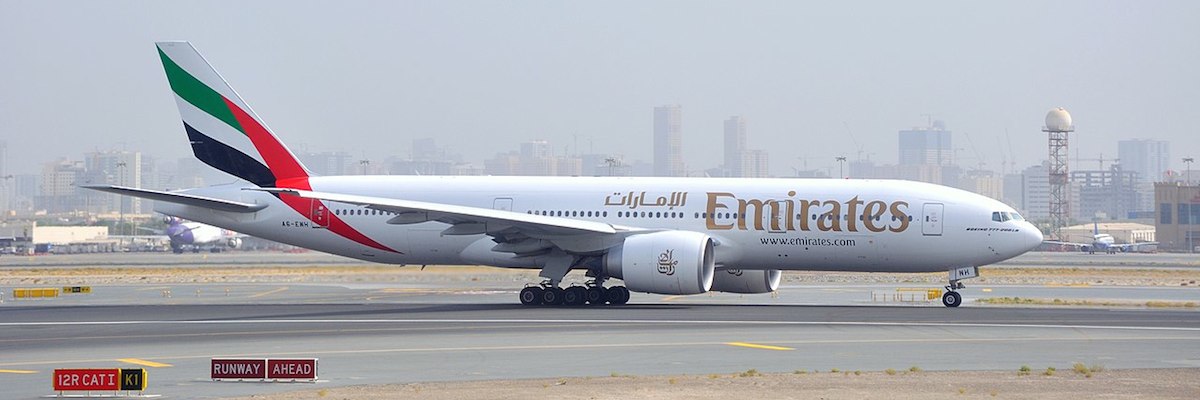
Airlines Halt Hormuz Flights Amid US-Iran Crisis
◢ Some of the world's leading carriers including British Airways, Qantas and Singapore Airlines on Friday suspended flights over the Strait of Hormuz, as Iran-US tensions flare over the downing of a drone. The suspensions came after the Federal Aviation Administration issued a notice, "prohibiting US-registered aircraft from operating over the Persian Gulf and Gulf of Oman.”
By Jitendra Joshi
Some of the world's leading carriers including British Airways, Qantas and Singapore Airlines on Friday suspended flights over the Strait of Hormuz, as Iran-US tensions flare over the downing of a drone.
The suspensions will affect many thousands of passengers and came after the Federal Aviation Administration in the United States issued a Notice to Airmen (NOTAM), "prohibiting US-registered aircraft from operating over the Persian Gulf and Gulf of Oman".
The NOTAM was in response to "heightened military activities and increased political tensions that might place commercial flights at risk", an FAA statement said, as Tehran and Washington engaged in a war of words over Thursday's missile strike on the drone.
The FAA's notice applies only to US-registered airlines, and United Airlines said it was suspending its Newark-Mumbai service in response. But European and Asian operators were taking no chances.
"Our safety and security team are constantly liaising with authorities—including the likes of the FAA -- around the world as part of their comprehensive risk assessment into every route we operate," a BA spokeswoman said.
Germany's Lufthansa and Dutch airline KLM followed suit in bypassing the Hormuz area, although Air France said it was already flying further south. Dubai-based Emirates said it had rerouted flights to avoid "areas of possible conflict.”
Iran's downing of the drone—which Washington insists was above international waters but Iran says was within its airspace—has seen tensions between the two countries spike further after a series of attacks on tanker ships blamed by the US on Tehran.
The Global Hawk surveillance aircraft can attain a maximum altitude of 60,000 feet (18.3 kilometres), nearly double the typical cruising height of a passenger plane.
KLM said: "The incident with the drone is reason not to fly over the Strait of Hormuz for the time being. This is a precautionary measure."
Pakistan Problem
The Netherlands is still reeling from the downing of Malaysia Airlines flight MH17 in 2014, which was hit a missile over eastern Ukraine's Donetsk region where pro-Russian separatist rebels are battling Ukraine government forces.
All 298 people on board were killed, 196 of them Dutch. International investigators on Wednesday charged three Russians and a Ukrainian with murder over the shooting down of the plane, which was
traveling between Amsterdam and Kuala Lumpur. The incident forced airlines on the busy Europe-Asia route to divert flights away from Ukraine airspace.
Responding to the latest tensions over Iran, Malaysia Airlines said it "is closely monitoring the situation and is guided by various assessments including security reports and NOTAMs by respective airspace control authorities".
Australia's flag carrier Qantas said it too was avoiding the Strait of Hormuz and Gulf of Oman "until further notice", while Singapore Airlines warned passengers that its flight times to Europe would likely take longer now. Europe-Asia flights have already faced disruption since February, when
Pakistan restricted large swathes of airspace near India due to cross-border air strikes which came close to all-out war between the nuclear-armed rivals.
"This (Pakistan's action) has also pushed much of the transiting traffic south, nearer to the area now prohibited to US carriers," the flight-tracking website Flightradar24 said in a blog.
Alex Macheras, an independent aviation analyst in London, said the Hormuz diversions were another image problem for Iran after the "mass exodus" of European airlines, which had to abandon their Tehran routes following the restoration of US sanctions.
Pointing back to the Ukraine downing, Pakistan's closure and other incidents, he told AFP that "more and more passengers have been affected by geopolitics", and that many travelers were avoiding stopovers in the Middle East altogether.
Photo: Wikicommons

Trump Ordered Military Strike Against Iran, Then Called It Off
◢ The U.S. called off military strikes against Iran on Thursday night that were approved by President Donald Trump, according to an administration official, abandoning a move that would have dramatically escalated tensions that are already running high between the two countries. The attack, ordered after Iranian forces shot down a U.S. Navy drone over the Strait of Hormuz, would have involved airstrikes and was close to being carried out when it was stopped.
By Tony Capaccio and John Harney
The U.S. called off military strikes against Iran on Thursday night that were approved by President Donald Trump, according to an administration official, abandoning a move that would have dramatically escalated tensions that are already running high between the two countries.
The attack, ordered after Iranian forces shot down a U.S. Navy drone over the Strait of Hormuz, would have involved airstrikes and was close to being carried out when it was stopped, said the official, who was granted anonymity to discuss a national security matter. The official would not discuss whether the plan might be revived.
Airstrikes would raise the specter of a far broader conflict in the volatile region, which supplies one-third of the world’s oil.
It was not immediately known what prompted the decision to hold off. But the move and its reversal underscore the wavering approach the president has shown at times regarding military force. He has repeatedly and fiercely lashed out at Iran and North Korea, but then cooled his rhetoric when hostilities threatened to erupt into open conflict. On two occasions since he took office, he has ordered military strikes on Syria.
Brent oil pared its biggest weekly gain in four months on the shifting developments. Futures erased gains in London on Friday, but are still up 4% for the week.
Iran’s Deputy Foreign Minister for Political Affairs Seyed Abbas Araghchi said the country had "indisputable" evidence the U.S. drone had violated Iranian air space, adding some wreckage was recovered from the country’s territorial waters. "The Islamic Republic of Iran would not hesitate for a moment to decisively defend its territory against any aggression," Araghchi said in a statement released by the Ministry of Foreign Affairs on Friday.
Earlier Thursday, as the attack was being planned, Trump downplayed Iran’s strike on the U.S. Navy drone in the Persian Gulf that escalated regional tensions and fueled a surge in oil prices, suggesting a “loose and stupid” individual may have been responsible for the strike.
“I would imagine it was a general or somebody who made a mistake by shooting that drone down,” Trump said during an Oval Office meeting Thursday with Canadian Prime Minister Justin Trudeau. “I find it hard to believe it was intentional. It could have been somebody who was loose and stupid.”
The operation was first reported by the New York Times, which said that Trump had pulled back as warplanes were in the air. The U.S. official disputed that part of the Times account.
The White House declined to comment on the reports and an official at the State Department didn’t immediately respond to a request for comment.
The president is in an increasingly difficult position on Iran. His administration has blamed the Islamic Republic for a series of attacks in the Gulf region since mid-May, including one last week on two oil tankers, but with little consequence for Tehran. He’s shown a desire to project American power, yet during the 2016 election he promised to extricate the U.S. from foreign conflicts, an issue that’s sure to come up as his re-election campaign begins.
The U.S. has directed additional forces to the Middle East in recent weeks, but the numbers—about 2,000 troops in total—have been modest and haven’t come with clear indications of where they would be sent or what their mission would be. In some cases, forces already planned for deployment to the region had their arrival accelerated, while troops scheduled to depart saw their tours extended.
A military assault by the U.S. could have immediate and far-reaching consequences. With proxy forces or allies in countries including Lebanon, Syria, Iraq and Yemen, among others, retaliation from Iran could come in many forms, targeting not just U.S. interests but Israel as well and raising the risk of disruptions to oil flows out of the wider Persian Gulf region.
The last time the U.S. launched a significant military effort against Iran was Operation Praying Mantis in 1988. In that operation, U.S. Navy ships sank two Iranian ships and destroyed two Iranian surveillance platforms.
The move came after the USS Samuel B. Roberts was damaged by a mine in the Persian Gulf.
Later that year, a U.S. Navy cruiser shot down an Iranian commercial aircraft on a scheduled flight in Iranian airspace, killing nearly 300 people. The U.S. expressed regret for the loss of life and said it mistakenly targeted the plane. Iran said it was a deliberate and illegal act.
During his time in office, Trump has ratcheted up economic sanctions on Iran as part of his “maximum pressure” campaign against the Islamic Republic. Yet he has also said he doesn’t want a war with Tehran and that he is hoping Iran will reach out to negotiate.
As tensions climbed on Thursday following the drone strike, regional analysts and lawmakers from both parties warned that the likelihood of a bigger confrontation could be looming, whether intentional or not.
“The president may not intend to go to war here but we’re worried that he and the administration may bumble into a war,” Senate Minority Leader Chuck Schumer, a New York Democrat, told reporters Thursday after a briefing at the White House.
The top Republicans in the Senate and House both called separately for Trump to take a “measured” response to the Iranian actions.
Saudi Vice Minister of Defense Khalid bin Salman said he met with Brian Hook, the U.S. special representative to Iran, to “explore the latest efforts to counter hostile Iranian acts and continuous escalation that threaten the region’s security and stability.” In a series of posts on Twitter, the minister affirmed Saudi Arabia’s support for the U.S. “maximum pressure campaign on Iran.”
The U.S. said the Global Hawk drone was flying in international airspace about 34 kilometers (20 miles) away from Iranian territory when it was shot down.
“This was an unprovoked attack on a U.S. surveillance asset in international airspace,” said Navy Captain Bill Urban, a spokesman for U.S. Central Command.
Photo: Wikicommons
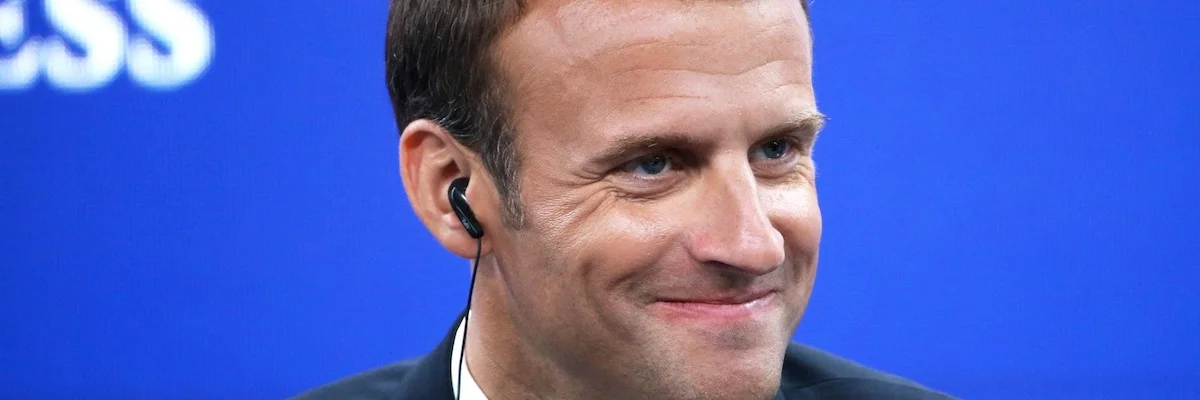
Macron Sends Senior Diplomat to Iran to Defuse US Tensions
◢ President Emmanuel Macron sent his top diplomatic adviser to Iran this week as part of European efforts to defuse tensions between Tehran and Washington, the French presidency said Thursday. The adviser, Emmanuel Bonne, held "high-level meetings" Wednesday in Tehran,” with the aim of contributing to the deescalation of tensions in the region,” Macron's office said.
President Emmanuel Macron sent his top diplomatic adviser to Iran this week as part of European efforts to defuse tensions between Tehran and Washington, the French presidency said Thursday.
The adviser, Emmanuel Bonne, held "high-level meetings" Wednesday in Tehran, "with the aim of contributing to the deescalation of tensions in the region,” Macron's office said.
The presidency refused to say whom Bonne met, adding only that he left Tehran on Wednesday evening.
The strains between Washington and Tehran increased Thursday with Iran's announcement that it had shot down a US "spy drone" that violated Iranian airspace near the Strait of Hormuz.
The United States has yet to respond.
The incident marks the latest escalation in tensions following last week's attacks on two oil tankers in the Strait of Hormuz, which the United States blamed on Iran.
Tehran has denied any involvement.
Tensions between the longtime foes, who have had no relations since the hostage crisis that followed the 1979 Islamic revolution, have increased sharply since US President Donald Trump last year abandoned a landmark 2015 nuclear agreement with Iran and reimposed sanctions.
Macron, who is traveling to a G20 summit in the Japanese city of Osaka on June 28-29, will "have contact with the main players" in the standoff, his office said.
Before that he will pay an official visit to Japan on June 26-27, during which he will hold talks with Prime Minister Shinzo Abe, who recently travelled to Iran to try mediate in the crisis.
Abe met with Iran's supreme leader, Ayatollah Ali Khamenei, who categorically refused to hold talks with Trump.
The EU is under pressure from Tehran to try salvage the 2015 deal, with Iran threatening to breach its nuclear enrichment limits.
On Tuesday, Macron urged Tehran to be "patient and responsible.”
Photo: Wikicommons
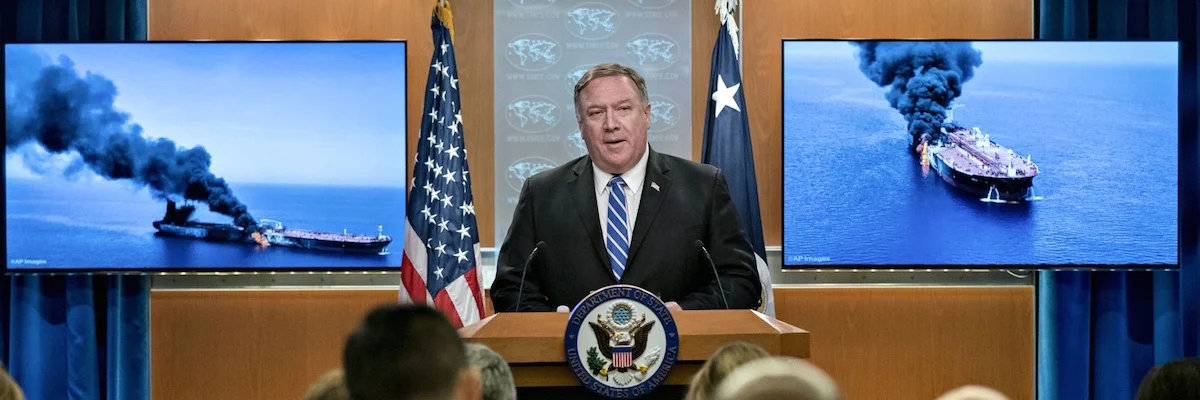
Pompeo Vows That U.S. Will Protect Shipping in Persian Gulf
◢ There’s “no doubt” Iran was responsible for attacks on two oil tankers leaving the Persian Gulf last week, and the U.S. will guarantee safe commercial navigation going forward with its partners, Secretary of State Michael Pompeo said. “The United States is going make sure that we take all the actions necessary, diplomatic and otherwise, that achieve that outcome,” Pompeo said on Sunday.
By Mark Niquette and Shawn Donnan
There’s “no doubt” Iran was responsible for attacks on two oil tankers leaving the Persian Gulf last week, and the U.S. will guarantee safe commercial navigation going forward with its partners, Secretary of State Michael Pompeo said.
“The United States is going make sure that we take all the actions necessary, diplomatic and otherwise, that achieve that outcome,” Pompeo said on “Fox News Sunday,” one of two scheduled appearances on the political talk shows.
Pompeo spoke days after he and President Donald Trump accused Iran of being behind attacks that crippled the tankers in the Strait of Hormuz, which abuts Iran and is a strategic choke point for crude oil coming out of the Persian Gulf.
Asked how certain the U.S. is about Iran’s responsibility, Pompeo said, “it’s unmistakable what happened here” and there’s “high confidence” Iran was behind other attacks throughout the world during the past 40 days as well.
The U.S. has released video of what it says was an Iranian boat approaching one of the tankers at night to remove an unexploded limpet mine and other evidence that it says point to Iran’s responsibility for the attacks.
“Iran did do it and you know they did it,” Trump said Friday during a phone interview with Fox News.
‘Economic Terrorism’
Iran has denied any wrongdoing. The country’s foreign minister, Javad Zarif, on Friday suggested in a series of tweets that Iran’s enemies may have been behind the attacks, accusing the Trump administration of “economic terrorism’’ and blaming it for the “renewed tension in our region.”
There’s no question Iran was behind the attacks, and it was a “Class A screw-up,” Democratic Representative Adam Schiff of California, chairman of the House Intelligence Committee, said Sunday on CBS’s “Face the Nation.” But the problem is the U.S. is struggling to persuade its allies to join in a response, he said.
“It shows just how isolated the United States has become,’’ Schiff said.
Pompeo said on CBS he is making calls to allies and “the world needs to unite against this threat.’’ He suggested that Iran is attacking international waterways to “drive up the price of crude oil around the world so that the world will cry uncle.”
The incidents highlight the potential risks of the Trump administration’s aggressive approach toward Iran. They’ve raised fears that months of building tensions over Trump’s decision to abandon a multilateral nuclear deal and restore U.S. sanctions might trigger a military conflict between the U.S. and Iran.
Retaliatory Strike
Republican Senator Tom Cotton of Arkansas advocated an attack, saying on CBS that “these unprovoked attacks on commercial shipping warrant a retaliatory military strike.’’ Schiff noted that Trump has said he doesn’t want war with Iran, but that his advisers “seem to be taking actions to undercut that ambition to stay out of warfare.’’
Schiff said Trump’s pressure campaign on Iran after withdrawing from the nuclear accord was “dangerously naïve” and that the attacks on shipping were “eminently foreseeable.”
House Speaker Nancy Pelosi, in an interview conducted Thursday that aired on CNN’s “Fareed Zakaria GPS” on Sunday, said “we have absolutely no appetite for going to war, or to be provocative to create situations that might evoke responses, where mistakes could be made.”
Pompeo blamed Iran for escalating the tensions. He declined to discuss what options the administration is considering in response, but said Trump has been clear that the Islamic Republic will not acquire a nuclear weapon.
Photo: Bloomberg
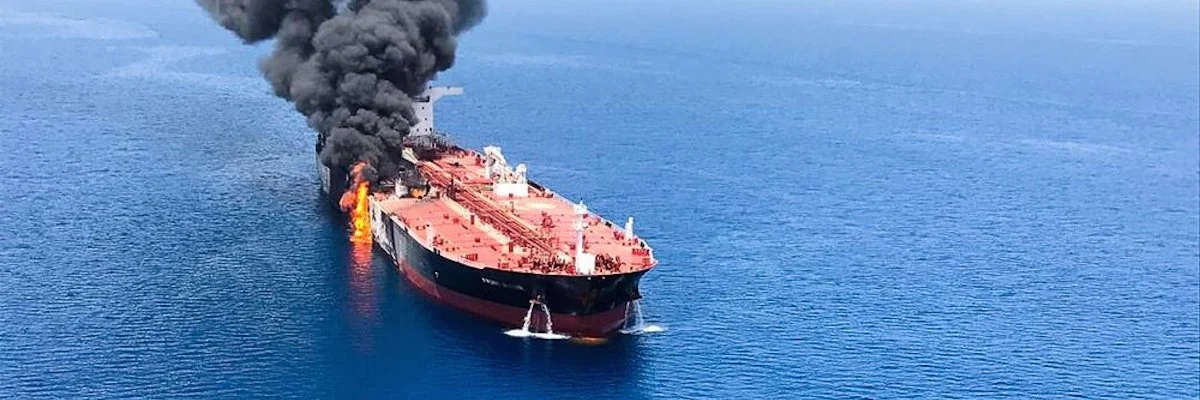
Attacks on Oil Tankers Near Hormuz Fan Fears of Conflict
◢ Two oil tankers were damaged on Thursday in a suspected attack near the entrance to the Persian Gulf, stoking fears that high-stakes diplomatic efforts won’t avert a military confrontation between the U.S. and Iran. Oil prices surged. The incidents, including an attack on a Japanese-operated vessel, were the second in a month to hit ships near the Strait of Hormuz chokepoint, through which about 40% of the world’s seaborne oil travels.
By Verity Ratcliffe, Anthony DiPaola and Bruce Stanley
Two oil tankers were damaged on Thursday in a suspected attack near the entrance to the Persian Gulf, stoking fears that high-stakes diplomatic efforts won’t avert a military confrontation between the U.S. and Iran. Oil prices surged.
The incidents, including an attack on a Japanese-operated vessel, were the second in a month to hit ships near the Strait of Hormuz chokepoint, through which about 40% of the world’s seaborne oil travels. They come as Japanese Prime Minister Shinzo Abe, a rare ally of both Donald Trump and Iranian leaders, visits Tehran in an effort to ease tensions.
“Even in the absence of ironclad evidence, the U.S. and its allies will point the finger at Iran,” said Fawaz A. Gerges, professor of Middle Eastern politics at the London School of Economics. “These incidents are a bad omen because they point to a calculated escalation that tells us both sides are hunkering down.”
The prospects of a conflict have spiked since the Trump administration tightened its sanctions on Iranian oil exports in early May. Trump abandoned a year ago the 2015 deal that was meant to prevent Iran from developing a nuclear bomb and reimposed sanctions in a bid to force the Islamic Republic to rein in its military program and proxy militias.
Facing economic catastrophe, Iran has threatened to retreat from the accord itself unless European parties throw it an lifeline. Its supreme leader, Ali Khamenei, told Abe on Thursday that his country would not repeat the “bitter experience” of talks with the U.S.
High-Stakes Diplomacy
The Bahrain-based Fifth Fleet said it received two separate distress signals at 6:12 a.m. and about 7:00 a.m. local time. “U.S. Navy ships are in the area and are rendering assistance,” Commander Josh Frey, a spokesman, said. He couldn’t confirm reports that one of the vessels was struck by a torpedo. Iran said it has rescued 44 sailors.
The manager of one tanker, the Norwegian-owned Front Altair, said it was sailing in international waters when it was damaged by an explosion, whose cause “is as yet unknown.” The Norway Maritime Authority said there were three detonations on board. The ship had loaded a cargo of naphtha in Abu Dhabi and was bound for Taiwan, a company official said.
A distress call over VHF radio from the Front Altair said the ship was “under attack and on fire," said Donald MacLeod, a navigation officer on a vessel about 45 miles away on the Oman Sea. "They had to abandon ship."
Kokuka Sangyo, the Japanese operator of the other ship, said it was attacked twice, three hours apart, forcing the crew to evacuate. The tanker was carrying 25,000 tons of methanol from Saudi Arabia to Asia.
Brent oil crude soared as much as 4.5% and was trading at $62.07 a barrel at 10:42 a.m. in London. Stocks in Saudi Arabia and Dubai were down more than 1%.
The incidents come a day after Iran-backed rebels in Yemen fired a missile at a Saudi airport, wounding 26 people. The projectile crashed into the arrivals hall, damaging ceilings and windows and causing a fire, though the airport was able to keep functioning with only two flights cancelled. Houthi rebels last month hit oil infrastructure hundreds of kilometers inside Saudi Arabia, forcing it to temporarily close an oil pipeline.
Iran distanced itself from any attack.
“Iran is concerned by the suspicious events around commercial tankers related to Japan,” Foreign Ministry spokesman Abbas Mousavi, was quoted as saying on Fars news agency. “We see this as going against efforts from within the region and beyond to reduce tensions.”
Oil tankers last became a target in the Persian Gulf and Arabian Sea during the so-called "Tanker War" in the 1980s—a sideshow of the Iran-Iraq conflict. Between 1981 and 1988, a total of 451 ships suffered some sort of attack in the region from Iraqi or Iranian forces, according to a report from the U.S. Naval Institute.
Photo: ISNA