
Iran Floods Kill at Least Three
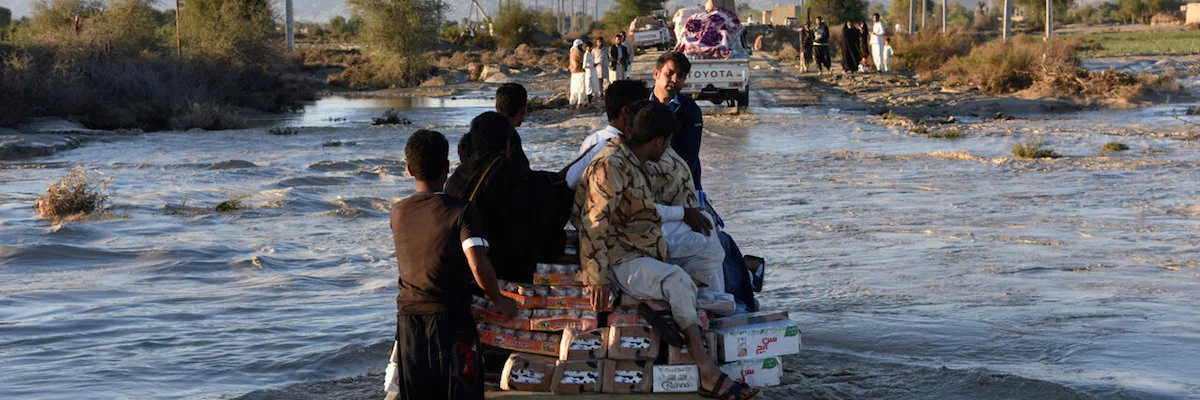
◢ Flooding in southern Iran has killed at least three people and left hundreds of villages cut off following days of heavy rainfall, official media reported on Tuesday. "More than 20,000 people in villages of Sistan-Baluchistan province have lost their homes because of flooding or are surrounded by water," Deputy Health Minister Alireza Raisi said.
Flooding in southern Iran has killed at least three people and left hundreds of villages cut off following days of heavy rainfall, official media reported on Tuesday.
“So far three people have been confirmed dead and one has been reported missing," Press TV, the English-language service of state television, reported on its website.
Rescue teams used boats and helicopters to provide relief after floodwaters cut off road access to urban areas of Hormozgan, Kerman and Sistan-Baluchistan provinces, state news agency IRNA said.
They have so far been unable to reach the town of Qasr-e Qand and 40 surrounding villages in Sistan-Baluchistan, said governor Rahimbaksh Pakandish, cited by IRNA.
Five hundred villages were affected and thousands of homes destroyed or damaged in the southeastern province, IRNA reported, adding that 285 families were given emergency shelter in Red Crescent tents.
"More than 20,000 people in villages of Sistan-Baluchistan province have lost their homes because of flooding or are surrounded by water," Deputy Health Minister Alireza Raisi was quoted as saying.
The Revolutionary Guards distributed 1,000 food packages to those affected, said IRNA.
In Kerman province, roads were severed and 40 villages suffered damage, while in Hormozgan province 61 people were rescued.
The amount of rain that fell in the southwestern province of Hormozgan since Friday was "unprecedented", the semi-official ISNA news agency reported.
Floodwaters had surrounded more than 50 villages in the Gulf province.
"Unprecedented floods are ravaging #Iran's Sistan & Baluchistan province, with significant human & material costs," Foreign Minister Mohammad Javad Zarif tweeted on Monday night.
The flood disaster is the worst in Iran since at least 70 people were killed across 20 provinces in April.
Photo: IRNA
Pakistan PM Imran Khan Makes First Visit to Iran
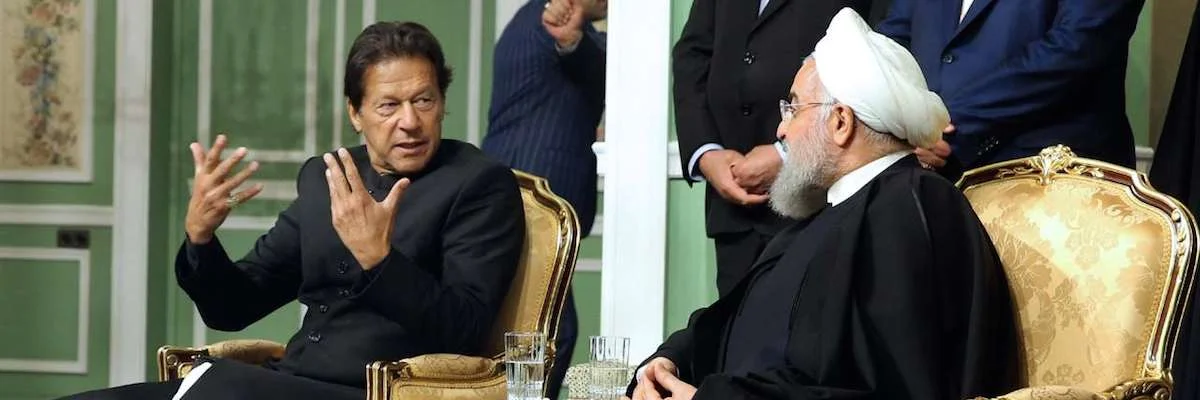
◢ Pakistani Prime Minister Imran Khan began his first official visit to Iran on Sunday for talks set to focus on
strengthening ties and countering terrorism. The state-run IRNA news agency said Khan's trip was expected to help "develop ties between the two countries, especially those related to regional cooperation in fighting terrorism and safeguarding borders.”
Pakistani Prime Minister Imran Khan began his first official visit to Iran on Sunday for talks set to focus on
strengthening ties and countering terrorism, state media reported.
Khan began his two-day visit with a stop in the northeastern holy city of Mashhad, Iran's second largest and home to the shrine of Imam Reza who is revered by Shiite muslims, state television said in a live broadcast.
After visiting the shrine, Khan was to fly to Tehran where on Monday he is expected to hold talks with President Hassan Rouhani and other top officials.
The state-run IRNA news agency said Khan's trip was expected to help "develop ties between the two countries, especially those related to regional cooperation in fighting terrorism and safeguarding borders.”
Iran and Pakistan share a long border that runs nears the volatile southeastern province of Sistan-Baluchistan which has witnessed over the years numerous attacks on Iran's security forces.
In March, Rouhani demanded Pakistan act "decisively against anti-Iranian terrorists", following a February attack that killed 27 members of the elite Revolutionary Guards in Sistan-Baluchistan.
Iran has said a Pakistani suicide bomber was behind the attack, which was claimed by the Sunni jihadist group, Jaish al-Adl (Army of Justice), which Tehran says operates mostly out of bases in Pakistan.
Khan's visit to Iran, the first since he took office last year, also comes days after gunmen killed 14 members of Pakistan's security forces in the Balochistan province.
On Saturday Pakistani Foreign Minister Shah Mehmood Qureshi said Islamabad had evidence the "terrorist outfits" that carried out the attack have "training and logistic camps inside Iranian areas bordering Pakistan".
Balochistan, which borders Afghanistan and Iran, is Pakistan's poorest province and the largest by landmass, with Islamist as well as ethnic Baloch separatists active there.
Photo: AFP
Iran Looks to Remote Port to Beat US Sanctions
◢ With the web of US sanctions tightening, Iran faces a host of challenges as it looks to an isolated port in the country's far southeast to maintain the flow of goods. The port in Chabahar, only about 100 kilometers (62 miles) from the Pakistan border and located on the Indian Ocean, is Iran's largest outside the Gulf.
With the web of US sanctions tightening, Iran faces a host of challenges as it looks to an isolated port in the country's far southeast to maintain the flow of goods.
The port in Chabahar, only about 100 kilometers (62 miles) from the Pakistan border and located on the Indian Ocean, is Iran's largest outside the Gulf.
It is also the only Iranian port with exemptions from unilateral economic sanctions reimposed by the United States in 2018.
That is due mainly to the pivotal role of the port, and a planned railway line, in breaking landlocked Afghanistan's dependence on Pakistan for trade with the world, especially India.
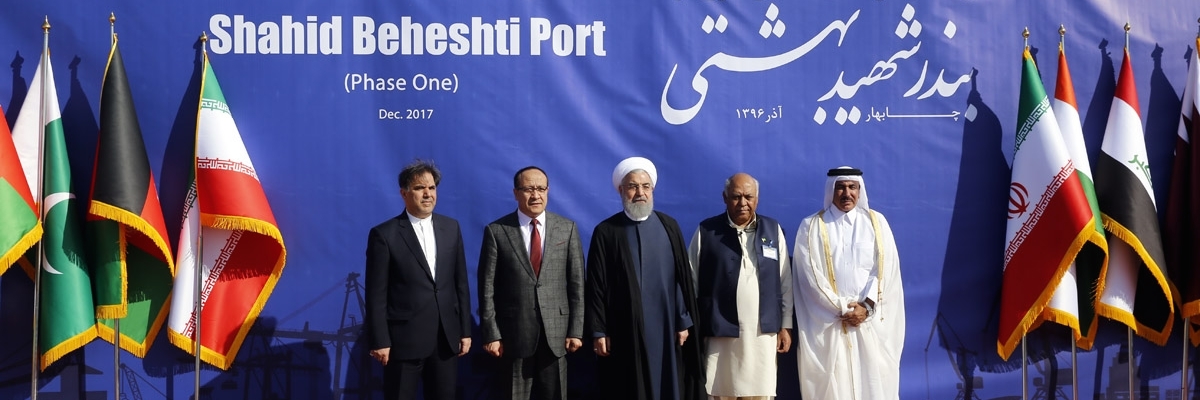
Afghan trade as well as plans for a trading route by rail between central Asia and the Indian Ocean called the North-South Corridor are the main reasons the Islamic republic has invested one billion dollars in Chabahar's Shahid Beheshti port, official sources say.
"We will keep on developing this port... our rail network, road network and airport are all being developed, so that we can implement the North-South Corridor," Roads and Urban Development Minister Mohammad Eslami told AFP while visiting Chabahar for a development conference.
‘Traffic will Pick Up'
More than 200 hectares (almost 500 acres) of land have been reclaimed from the sea for the project and over 17.5 million cubic meters (618 million cubic feet) dredged, creating a 16.5-meter (54-foot) draught.
But more than a year since the new installations became operational in December 2017, business has yet to pick up.
The ships that officials say have docked in the past year have only loaded and unloaded 2.1 million tonnes of cargo, a far cry from the port's annual capacity of 8.5 million tonnes.
Only 20 ships have docked at the new section of the port and most of its three kilometers of waterfront remains unutilized, with new machinery and neatly lined-up cranes standing idle.
But authorities remain upbeat about the prospects for growth.
Hossein Shahdadi of the provincial ports and maritime authority said that in the first 11 months of the past Iranian year, which started on March 21, 2018, "there has been a 56 percent increase in cargo handled at the port compared with the previous year.”
"We've also had a 25 percent rise in the number of ships calling at the port" on the Gulf of Oman, he said.
Arun Kumar Gupta, managing director of India Ports Global Limited which has a 10-year concession at the new port, played down the startup issues.
"Any port will have a gestation period, there will be lulls but we are very sure that traffic will pick up," Gupta told AFP.
'Born with Sanctions'
The Indian company began work in December and has so far handled only an average of 60,000 tonnes of cargo per month.
But Gupta is counting on the port's proximity to India and Afghanistan to attract business.
Chabahar's location, however, carries its own risks as it lies in the volatile Sistan Baluchistan province where militant jihadists operate.
In December, a suicide attack on the local police headquarters killed two policemen.
During an investment conference in February, security was tight with many roads cut off and hundreds of armed security personnel deployed to protect delegates.
Apart from security concerns, US sanctions banning financial transactions with Iran make it ever harder to pay or receive payments.
Some like Afsaneh Rabiani, who runs a freight forwarding company, see Chabahar as an opportunity for "those willing to take the risk".
“I've been researching Chabahar for the past year and a half, and the infrastructure is now in place to do serious work here," she said.
As for the sanctions, Iran's roads minister said the challenge was nothing new.
"We were born with sanctions. Ever since the (1979 Islamic) revolution, we have been under sanctions and we are working on how to counter them," Eslami said, as he oversaw the unloading of a first shipment of Afghan goods lined up to be re-exported from Chabahar.
Photo Credit: IRNA
Iran Demands Pakistan Acts 'Decisively Against Terrorists'
◢ Iran's President Hassan Rouhani has demanded Pakistan act "decisively against anti-Iranian terrorists" in a phone call with the country's premier, Tehran said, a month after a bloody attack on security forces. Iran says a Pakistani suicide bomber was behind the February 13 attack that killed 27 Revolutionary Guards in its volatile southeastern province of Sistan-Baluchistan.
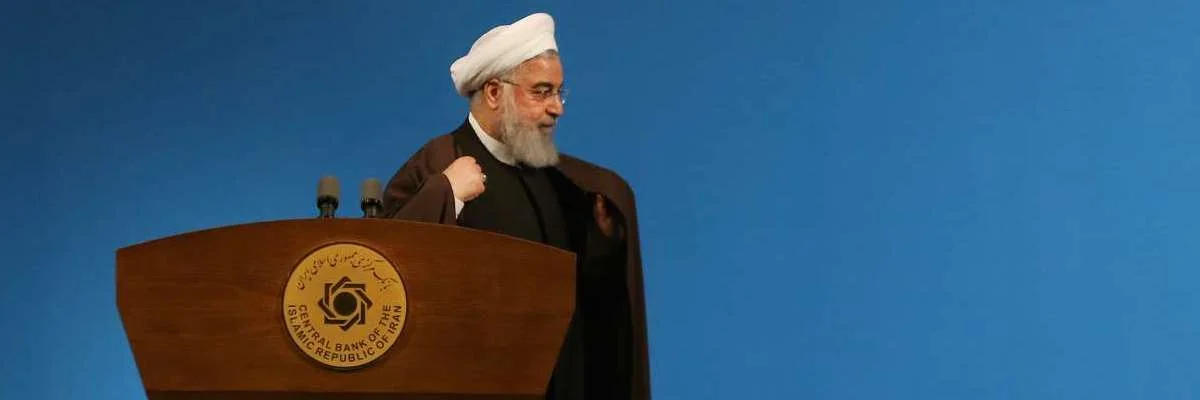
Iran's President Hassan Rouhani has demanded Pakistan act "decisively against anti-Iranian terrorists" in a phone call with the country's premier, Tehran said, a month after a bloody attack on security forces.
Iran says a Pakistani suicide bomber was behind the February 13 attack that killed 27 Revolutionary Guards in its volatile southeastern province of Sistan-Baluchistan.
A Sunni jihadist group, Jaish al-Adl (Army of Justice), which Tehran says operates mostly out of bases in neighboring Pakistan, claimed responsibility for the blast.
Iran has accused Pakistan's army and intelligence agency of sheltering the jihadists and summoned the country's ambassador in the wake of the attack.
Rouhani in the phone conversation Saturday evening with Pakistani Prime Minister Imran Khan called to maintain good ties and pointed the finger of blame at Tehran's traditional regional and international foes.
"We shouldn't allow decades of friendship and brotherhood between the two countries be affected by terrorist groups that we both know from where they are being armed and financed," Rouhani said, according to a government statement.
The Iranian president was alluding to the United States and Israel, as well as Saudi Arabia and the United Arab Emirates, which it accuses of aiding jihadist groups responsible for attacks from Pakistani soil.
February's bombing was the latest of numerous attacks on Iran's security forces and officials in Sistan-Baluchistan, where the minority Sunni Baluchis accuse the authorities of discrimination.
Photo Credit: IRNA
Iran Arrests 3 'Terrorists' over Suicide Bomb Attack
◢ Iran's elite Revolutionary Guards said Monday it has arrested three "terrorists" involved in last week's deadly suicide bomb attack on security forces in a region bordering Pakistan. "Safe houses in (the cities of) Saravan and Khash were identified and eliminated, and the terrorists based in them were arrested," the force said on its official Sepah news agency.
Iran's elite Revolutionary Guards said Monday it has arrested three "terrorists" involved in last week's deadly suicide bomb attack on security forces in a region bordering Pakistan.
"Safe houses in (the cities of) Saravan and Khash were identified and eliminated, and the terrorists based in them were arrested," the force said on its official Sepah news agency.
"Three of the terrorists were arrested and 150 kilograms (330 pounds) of explosives and 600 kilograms of explosive materials as well as weapons and ammunition were confiscated," it said.
The Guards said the three arrested had "produced, guided and supported" the vehicle used in Wednesday's suicide bombing.
The attack killed 27 members of Iran's Revolutionary Guards traveling on a bus in the volatile southeastern province of Sistan-Baluchistan, which straddles the border with Pakistan.
It was claimed by the jihadist outfit Jaish al-Adl (Army of Justice).
Iran has provided Pakistani officials with "information on the terrorist groups' hidden and semi-hidden training centers", army chief-of-staff Mohammad Bagheri told Tasnim news agency.
In a phone call with Pakistani army commanders, Bagheri asked them to "either confront the groups or allow (Iranian) forces to enter."
Islamabad launched an operation against the "terrorists" in its Balochistan border province on Sunday, he said.
Guards commander Major General Mohammad Ali Jafari has accused Pakistan's army and intelligence agency of sheltering the jihadists.
The foreign ministry said Iran "cannot tolerate" Pakistan's inability to stop cross-border attacks on Iran and said Tehran's frustration had been communicated to Islamabad.
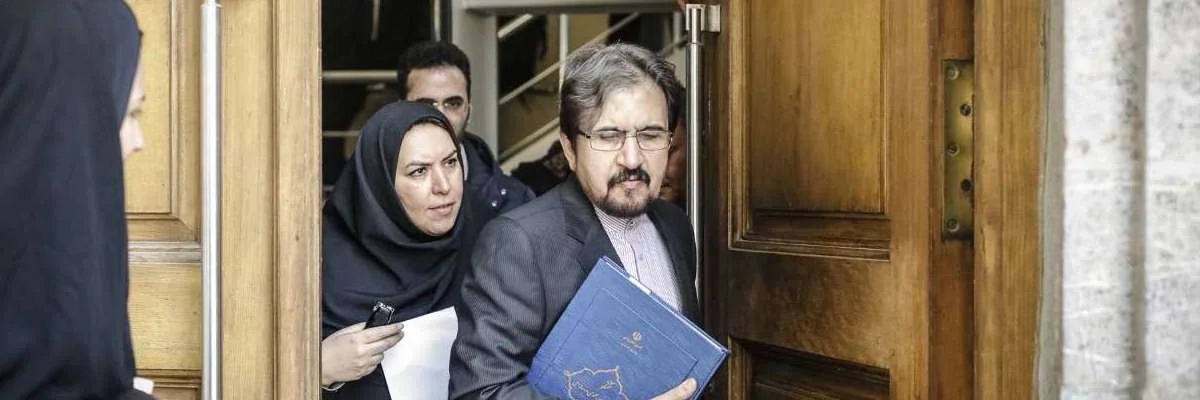
"We hope the Pakistani government can and wants to prevent such things from happening again," spokesman Bahram Ghasemi told reporters on Monday.
The ministry has summoned the Pakistani ambassador in Tehran and urged Islamabad to "seriously confront... the terrorist groups active on its border" with Iran.
Photo Credit: IRNA
Iranians Cry 'Revenge' at Funeral of Terrorism Victims
◢ Tens of thousands of Iranians called for "revenge" Saturday at the funeral of 27 Revolutionary Guards killed in a suicide attack perpetrated by jihadists that Tehran accuses Pakistan of supporting. "The Islamic Republic of Iran will no longer observe the previous reservations and will directly act to counter such acts," Jafari told mourners gathered at the city of Isfahan's Bozorgmehr Square.
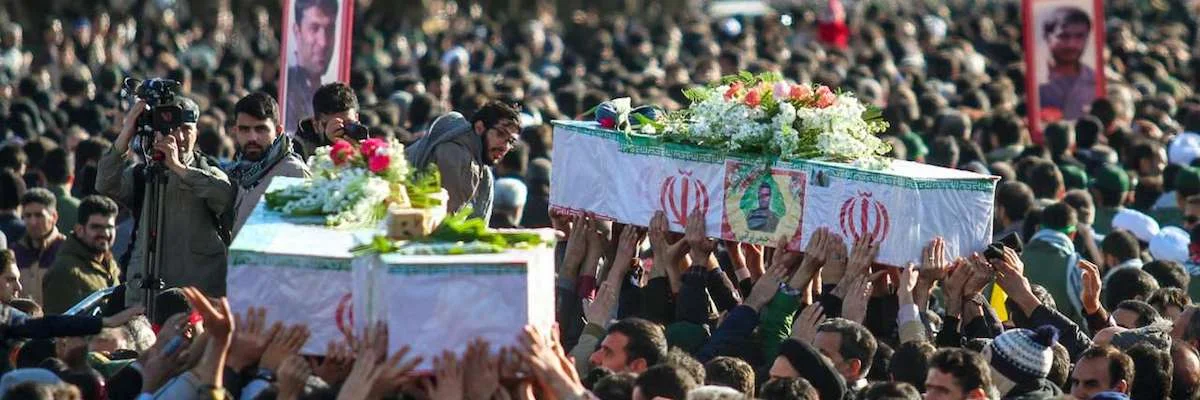
Tens of thousands of Iranians called for "revenge" Saturday at the funeral of 27 Revolutionary Guards killed in a suicide attack perpetrated by jihadists that Tehran accuses Pakistan of supporting.
"The government of Pakistan must pay the price of harboring these terrorist groups and this price will undoubtedly be very high," said Major General Mohammad Ali Jafari, referring to jihadist outfit Jaish al-Adl ("Army of Justice").
"The Islamic Republic of Iran will no longer observe the previous reservations and will directly act to counter such acts," Jafari told mourners gathered at the city of Isfahan's Bozorgmehr Square.
The comments by Jafari, commander of Iran's elite Revolutionary Guards, came a day ahead of a planned two-day visit to Pakistan by Mohammed bin Salman, the crown prince of Iran's regional arch-rival Saudi Arabia.
Jafari blamed Pakistan's army and Inter-Services Intelligence agency, saying that "sheltering and silence" amounts to supporting the perpetrators.
As he left the podium, people shouted "Commander of Sepah (Farsi for Revolutionary Guards)—Revenge! Revenge!""
The Wednesday bombing targeted a busload of Revolutionary Guards in the volatile southeastern province of Sistan-Baluchistan, which straddles the border with Pakistan.
Jaish al-Adl was formed in 2012 as a successor to the Sunni extremist group Jundallah (Soldiers of God), which waged a deadly insurgency for a decade before it was severely weakened by the capture and execution of its leader Abdolmalek Rigi in 2010.
Jafari also blasted "the traitorous governments of Saudi Arabia and (the) Emirates" and said Iran will no longer tolerate their "hidden support for anti-Islam thugs and Takfiri groups".
He called on President Hassan Rouhani and the country's Supreme National Security Council to give the guards more freedom to carry out "retaliatory operations," but did not elaborate.
Iran's supreme leader Ayatollah Ali Khamenei has linked the perpetrators of Wednesday's attack to "the spying agencies of some regional and trans-regional countries".
'We will never submit'
Black flags attached to lamp-posts adorned Isfahan as the city prepared for the funeral and two days of mourning.
When the bodies of the troops arrived on the back of Toyota vans—the guards' signature vehicles—their comrades, women in black veils and young men in jeans were there to greet them.
Tens of thousands chanted "Down with America!" and "We will never submit!"
Iran's flag could be seen at half-mast in Bozorgmehr Square's southeastern side, and the crowd chanted "Allahu Akbar" each time the speaker read the names of the dead.
The troops killed in the bombing belonged to the Guards' 14th Imam Hussein Division, which is based in Isfahan province, according to Tasnim news agency.
Aged from 21 to 52, each will be buried in his hometown after the funeral.
A housekeeper originally from Khuzestan province, where a deadly attack killed 24 last year, told AFP of the thirst for revenge.
"We demand that the blood of these troops be avenged," said Tayebbeh Rezaee, 34. "They cannot weaken the Islamic Republic in any way—not war, not economic attacks. So they have to stoop to such acts."
Restive Sistan
Sistan-Baluchistan has long been a flashpoint, where Pakistan-based Baluchi separatists and jihadists carry out cross-border raids.
A Revolutionary Guard was killed and five wounded in a February 2 attack claimed by Jaish al-Adl on a base of the Basij militia in the town of Nikshahr, some way from the border.
One of the wounded—Khodarahm Heidari, who was critically injured in that attack—died on Saturday, semi-official news agency ISNA reported.
On January 29 three members of an Iranian bomb squad sent to the scene of an explosion in the provincial capital Zahedan were wounded when a second device blew up as they were trying to defuse it, police said at the time.
And in early December two people were killed and around 40 others wounded in the port city of Chabahar, also in Sistan-Baluchistan, in an attack which Iran's Foreign Minister Mohammad Javad Zarif blamed on "foreign-backed terrorists"—a reference to Sunni Muslim extremists.
In October, Jaish al-Adl claimed responsibility for abducting 12 Iranian security personnel near the border with Pakistan.
Photo Credit: IRNA

Iran Vows Revenge on 'Mercenaries' Behind Suicide Attack
◢ President Hassan Rouhani vowed revenge Thursday against the "mercenary group" behind a suicide bombing which killed 27 people in southeastern Iran and accused the US and Israel of supporting "terrorism.” Rouhani was speaking at Tehran's Mehrabad Airport before leaving for the Russian resort of Sochi for a summit with his Russian and Turkish counterparts Vladimir Putin and Recep Tayyip Erdogan on the future of war-battered Syria.
President Hassan Rouhani vowed revenge Thursday against the "mercenary group" behind a suicide bombing which killed 27 people in southeastern Iran and accused the US and Israel of supporting "terrorism.”
"We will certainly make this mercenary group pay for the blood of our martyrs," the official IRNA news agency quoted the Iranian president as saying in response to Wednesday's attack.
"The main root of terrorism in the region is America and Zionists, and some oil-producing countries in the region also financially support the terrorists," he added.
Rouhani was speaking at Tehran's Mehrabad Airport before leaving for the Russian resort of Sochi for a summit with his Russian and Turkish counterparts Vladimir Putin and Recep Tayyip Erdogan on the future of war-battered Syria.
Wednesday's attack, which targeted a busload of Revolutionary Guards in the volatile southeastern province of Sistan-Baluchistan, was one of the deadliest on Iranian security forces in years.
The bomber struck as the troops were returning from a patrol mission on the border with Pakistan, where Baluchi separatist and jihadist groups have rear bases, the Guards said.
Sistan-Baluchistan is home to a large ethnic Baluchi community, who straddle the border and who, unlike most Iranians, who are Shiite Muslims, are mainly Sunni.
Warning to Neighbors
Rouhani called on Iran's neighbors to assume their "legal responsibilities" and not allow "terrorists" to use their soil to prepare attacks.
"If this continues and they cannot stop the terrorists, it is clear—based on international law—that we have certain rights and will act upon them in due time," he said, without elaborating.
The attack came on the same day as the United States gathered some 60 countries in Poland for a conference on the Middle East and Iran which they hoped would increase pressure on Tehran.
Iran quickly linked the attack to the Warsaw conference, where supporters of the formerly armed opposition People's Mujahedeen plan a second day of protests on Thursday.
Dubbing the meeting the "WarsawCircus", Foreign Minister Mohammad Javad Zarif said it was "no coincidence that Iran is hit by terror on the very day" that the talks began in the Polish capital.
"Especially when cohorts of same terrorists cheer it from Warsaw streets & support it with twitter bots? US seems to always make the same wrong choices, but expect different results," Zarif wrote on Twitter.
Wednesday's bombing was claimed by the jihadist Jaish al-Adl (Army of Justice), which is blacklisted as a terrorist group by Iran, the SITE Intelligence Group reported.
The group was formed in 2012 as a successor to Sunni extremist group Jundallah (Soldiers of God), which waged a deadly insurgency against Iranian targets over the previous decade.
Sistan-Baluchistan has been hit by previous deadly attacks in recent months.
On January 29, three members of an Iranian bomb squad sent to the scene of an explosion in provincial capital Zahedan were wounded when a second device blew up as they were trying to defuse it.
And in early December, two people were killed and around 40 wounded in an attack in the strategic port city of Chabahar, on the province's Arabian Sea coast, which Zarif blamed on "foreign-backed terrorists".
In October, Jaish al-Adl claimed responsibility for abducting 12 Iranian security personnel near the border, five of whom were later released and flown home after Pakistani intervention.
Zarif visited Islamabad twice in a month for briefings on the progress of the efforts to secure the captured unit's release.
Photo Credit: IRNA
Suicide Attack on Bus Kills 27 Iran Revolutionary Guards
◢ A suicide car bombing on a Revolutionary Guards bus in southeastern Iran killed 27 troops on Wednesday, in one of the deadliest attacks on the elite forces in years. The assault came as the troops were returning from a border patrol mission, the Guards said in a statement.
A suicide car bombing on a Revolutionary Guards bus in southeastern Iran killed 27 troops on Wednesday, in one of the deadliest attacks on the elite forces in years.
The assault came as the troops were returning from a border patrol mission, the Guards said in a statement.
"In this terrorist attack 27 of Islam's brave warriors were killed and 13 were wounded," the statement read, accusing "world domination and Zionist intelligence agencies" of supporting the attackers.
Earlier the official IRNA news agency said "the suicide attack on an Islamic Revolutionary Guards Corps personnel bus happened on the Khash-Zahedan road."
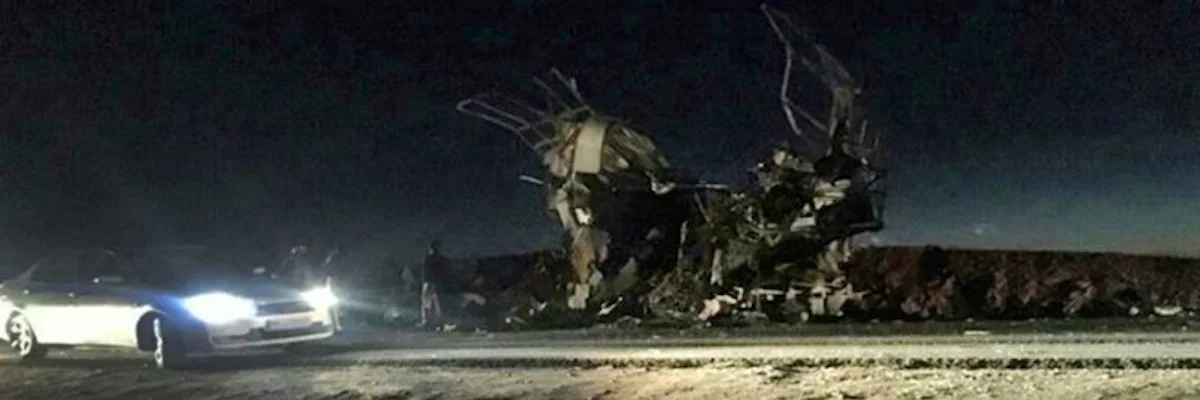
A picture released by the semi-official Fars news agency showed a hulk of twisted metal lying by the side of a road, unrecognizable as a bus.
The attack happened when "a car filled with explosives blew up besides a bus," the Guards said.
"Mercenaries of intelligence agencies of world arrogance and domination," carried out the attack to counteract "the victory of the 40th anniversary of the Islamic revolution," they added.
Iran has been celebrating the 40th anniversary of the return to Tehran of Ayatollah Ruhollah Khomeini in 1979 after more than 14 years in exile and the overthrow of the pro-Western shah. His arrival triggered the start of the Islamic Revolution and led to the creation of the Islamic Republic.
Wednesday's attack took place in the volatile southeastern province of Sistan-Baluchistan which has a large, mainly Sunni Muslim ethnic Baluchi community straddling the border with Pakistan.
The SITE Intelligence Group reported that the attack was claimed by Jaish al-Adl, a jihadist group formed in 2012 as a successor to the Sunni extremist group Jundallah (Soldiers of God), which waged a deadly insurgency against Iranian targets over the past decade
The Jaish al-Adl—blacklisted as a "terrorist group" in Iran—"announced its responsibility in a brief Persian message on February 13, 2019," SITE reported.
The attack came on the same day as the United States gathered some 60 countries in Poland for a conference on the Middle East and Iran which they hoped would increase pressure on Tehran.
'US Obsession
Dubbing the meeting in Poland the "WarsawCircus", Iranian Foreign Minister Mohammad Javad Zarif said it was "no coincidence that Iran is hit by terror on the very day" that the talks began in the Polish capital.
"Especially when cohorts of same terrorists cheer it from Warsaw streets & support it with twitter bots? US seems to always make the same wrong choices, but expect different results," Zarif wrote on Twitter
He earlier blasted the two-day conference as "dead on arrival.”
"It is another attempt by the United States to pursue an obsession with Iran that is not well-founded," Zarif told a Tehran news conference.
Sistan-Baluchistan has been the scene of other attacks.
On January 29 three members of an Iranian bomb squad sent to the scene of an explosion in its capital Zahedan were wounded when a second device blew up as they were trying to defuse it, police said at the time
And in early December last year two people were killed and around 40 others wounded in the port city of Chabahar, also in Sistan-Baluchistan, in an attack which Zarif at the time blamed on "foreign-backed terrorists"—a reference to Sunni Muslim extremists.
Another of the bloodiest attacks in recent times to have hit Iran happened in September when assailants killed 24 people at a military parade in the southwestern city of Ahvaz.
In October, Jaish al-Adl claimed responsibility for abducting 12 Iranian security personnel near the border with Pakistan
And in July at least 10 members of the Revolutionary Guards were killed when insurgents attacked one of their bases along the border with Iraq.
Photo Credit: Fars News Agency
Suicide Bomber Kills Two in Southeast Iran
◢ A suicide bomber killed at least two people and wounded many more outside police headquarters in the port city of Chabahar in restive southeastern Iran on Thursday, according to a revised official toll. Chabahar lies in Sistan-Baluchistan province which has long been a flashpoint, with Pakistan-based Baluchi separatists and Sunni Muslim extremists carrying out cross-border attacks targeting the Shiite authorities.
A suicide bomber killed at least two people and wounded many more outside police headquarters in the port city of Chabahar in restive southeastern Iran on Thursday, according to a revised official toll.
Chabahar lies in Sistan-Baluchistan province which has long been a flashpoint, with Pakistan-based Baluchi separatists and Sunni Muslim extremists carrying out cross-border attacks targeting the Shiite authorities.
"This terrorist act led to the martyrdom of two members of the police force," the province's deputy governor in charge of security, Mohammad Hadi Marashi, told state television.
Chabahar city governor Rahmdel Bameri said earlier that four people were
killed and many more wounded when the bomber blew up a car, but later revised
the death toll to two.
"The explosion was very strong and broke the glass of many buildings close by," Bameri told state television.
Many nearby shop owners and civilian passers-by, including women and children, were severely wounded, he added.
Chabahar lies some 100 kilometres (60 miles) west of the Pakistan border and is home to a large, mainly Sunni Muslim ethnic Baluchi community which straddles the two countries.
The number of assailants was not immediately clear.
"The terrorists tried to enter Chabahar police headquarters but they were prevented by the guards and they detonated the car bomb," Marashi said without elaborating on how many assailants took part.
Chabahar has a deep-water port on the Gulf of Oman and with Indian assistance Iran has been developing it as a major energy and freight hub between Central Asia and India, bypassing Pakistan.
Photo Credit: Tasnim