
Japan's Abe Discusses Iran, North Korea in Call with Trump
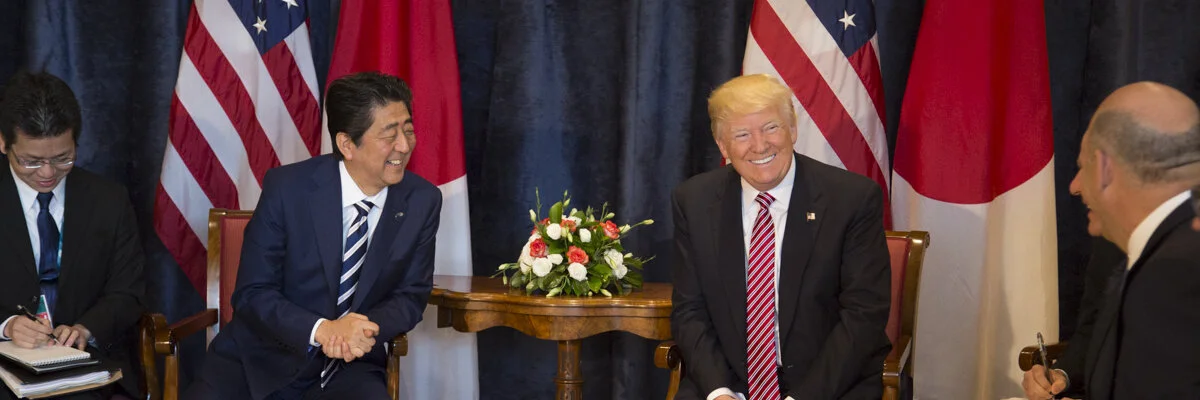
◢ Japanese Prime Minister Shinzo Abe on Saturday discussed events in Iran and North Korea with US President Donald Trump in a lengthy phone call, the Kyodo news agency reported. The phone conversation, which Abe told reporters took place at Trump's request, came on the same day that Iranian President Hassan Rouhani wrapped up his two-day visit to Japan.
Japanese Prime Minister Shinzo Abe on Saturday discussed events in Iran and North Korea with US President Donald Trump in a lengthy phone call, the Kyodo news agency reported.
The phone conversation, which Abe told reporters took place at Trump's request, came on the same day that Iranian President Hassan Rouhani wrapped up his two-day visit to Japan.
Rouhani's trip came after deadly protests over fuel price hikes in Iran, where the economy has been hit by US sanctions over Tehran's nuclear programme.
Japan is a key US ally that also maintains close diplomatic and economic ties with Iran, and Abe has tried to build bridges between the two rivals.
Abe did not refer to Iran when he met with reporters just before midnight Saturday, but a Japanese government source told Kyodo that Abe did talk to Trump about his discussions with Rouhani.
The Abe-Trump phone call lasted about 75 minutes, according to Kyodo.
Abe told reporters that he and the US leader talked about what Kyodo described as a "coordinated response" towards North Korea.
Pyongyang has shown frustration at the lack of sanctions relief after three summits with Trump.
Earlier this month it promised a "Christmas gift" if the US did not come up with concessions by the end of the year after it placed a moratorium on long-range missile tests.
Photo: IRNA
Iran's Rouhani, Japan PM Meet Amid Tension With US
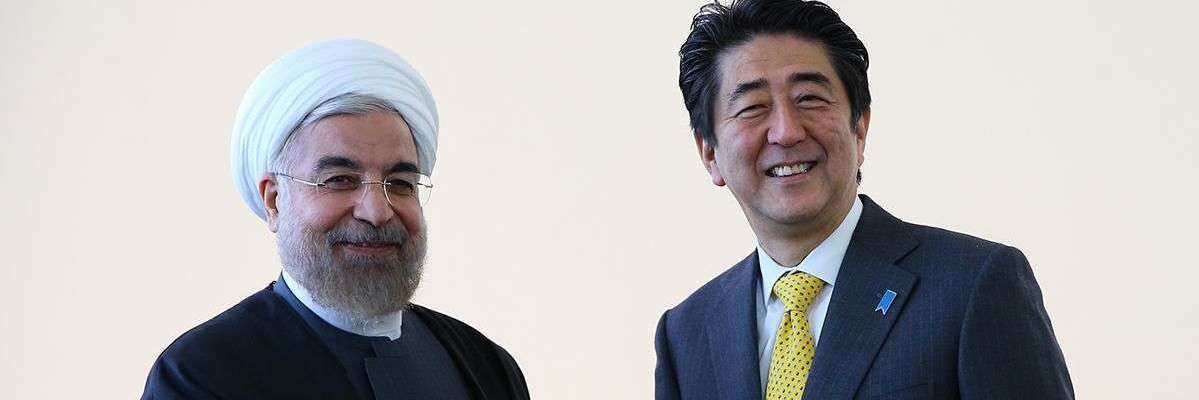
◢ President Hassan Rouhani became the first Iranian head of state to visit Japan for two decades on Friday, as Tokyo seeks to mediate between Tehran and Washington amid spiraling nuclear tensions. The two men inspected a guard of honor at Abe's central Tokyo office before summit talks and a dinner scheduled to last into Friday evening.
President Hassan Rouhani became the first Iranian head of state to visit Japan for two decades on Friday, as Tokyo seeks to mediate between Tehran and Washington amid spiraling nuclear tensions.
The two men inspected a guard of honor at Abe's central Tokyo office before summit talks and a dinner scheduled to last into Friday evening. They are not scheduled to brief reporters after the talks.
The trip comes after deadly protests last month over petroleum price hikes in Iran, as Washington-imposed sanctions over its nuclear program hit the Iranian economy.
The United States re-imposed crippling sanctions on Iran in 2018 after withdrawing from an international deal aimed at tackling the Islamic Republic's nuclear program.
Iranian government spokesman Ali Rabiei has played down the mediation aspect of the trip, saying the visit to Tokyo had "nothing to do with issues such as negotiations with America".
However, he acknowledged that "our Japanese friends usually convey messages or initiatives, which we welcome... and seriously examine.”
As a key US ally that also maintains close diplomatic and economic ties with Iran, Prime Minister Shinzo Abe has tried to build bridges between the two rival powers.
Last week, Abe said he would strive "as much as possible to ease tensions" in the Middle East, noting Japan's alliance with Washington and "favorable relations" with Tehran.
Abe travelled to Tehran in June to try to ease tension between the United States and Iran in the Gulf.
Japan was formerly a major buyer of Iranian crude but stopped purchases to comply with the US sanctions.
The prime minister is expected to explain to Rouhani Tokyo's plans to send two Self Defense Forces ships to the Gulf of Oman to protect shipping there.
"At the Japan-Iran summit today we will explain Japan's policy. This kind of policy is aimed at securing Japanese vessels' safety," said government spokesman Yoshihide Suga, adding that 90 percent of Japan's crude oil imports come from the region.
'Serious Impact'
Rouhani comes to Japan from Kuala Lumpur where he called on Muslim countries at a summit to band together to fight US "economic terrorism".
Osamu Miyata, head of Center for Contemporary Islamic Studies in Japan (CCISJ), told AFP that Abe would find it difficult to steer a path between US President Donald Trump and Rouhani.
The US sanctions "are having a serious impact on every aspect of Iran—people's daily life, the country's finances, and inflation in imported goods", Hitoshi Suzuki, a Middle East scholar at the Institute of Developing Economies (IDE-JETRO), told AFP.
"It would be difficult to have tangible achievements from the Rouhani-Abe meeting this time, but in the long-term, Japan can warn the US that the current sanctions are having a serious negative impact," added Suzuki.
"This could prompt Iranian domestic politics to move in the opposite direction hoped for by the US—for example, hawks leading Iran to resume nuclear development, or the emergence of an anti-democratic Iran," he said.
Photo: IRNA
Iran's Rouhani 'Finalizing' First Visit to Japan
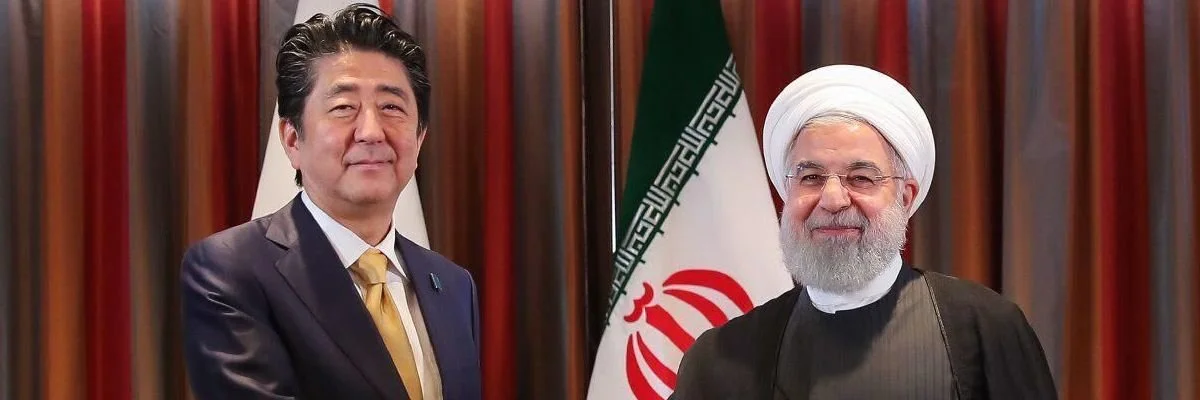
◢ Iran's President Hassan Rouhani is finalizing with Japan a visit to Tokyo, officials in Tehran said Monday, in what will be the first such trip in two decades. The trip would likely take place around December 20, after Rouhani visits Malaysia for a Muslim leaders summit in Kuala Lumpur, Japanese and Iranian media reported.
Iran's President Hassan Rouhani is finalizing with Japan a visit to Tokyo, officials in Tehran said Monday, in what will be the first such trip in two decades.
The trip would likely take place around December 20, after Rouhani visits Malaysia for a Muslim leaders summit in Kuala Lumpur, Japanese and Iranian media reported.
"This trip (to Japan) is being finalized," Iranian foreign ministry spokesman Abbas Mousavi told a press conference in Tehran.
Iranian government spokesman Ali Rabiei said discussions would focus on "expanding economic relations" between the two countries.
"Mr Rouhani's trip to Japan has nothing to do with issues such as negotiations with America," Rabiei said.
"However, our Japanese friends usually convey messages or initiatives, which we welcome... and seriously examine," he added, stressing the bilateral focus of the visit.
Rouhani would be the first Iranian president to visit Japan since 2000.
He is expected to meet Prime Minister Shinzo Abe, who travelled to Tehran in June to try to ease tension between the United States and Iran in the Gulf.
"After Mr Abe's trip to Iran it was natural for the president of the Islamic Republic of Iran to have a trip to Japan," Mousavi said.
Talks between the two leaders would focus on "issues and developments in our region, the East Asia region," and the landmark 2015 Iran nuclear deal, Mousavi added.
On December 9, Abe said he was weighing inviting Rouhani for a state visit.
Noting Japan's alliance with the United States and Tokyo's "favorable relations" with Tehran, Abe said he would make efforts "as much as possible to help ease tensions" in the Middle East.
Japan was formerly a major buyer of Iranian crude but stopped purchases to comply with US sanctions imposed after the United States unilaterally quit the nuclear deal in May 2018.
Photo: IRNA
Japan PM Abe to Meet Iran's Rouhani in New York
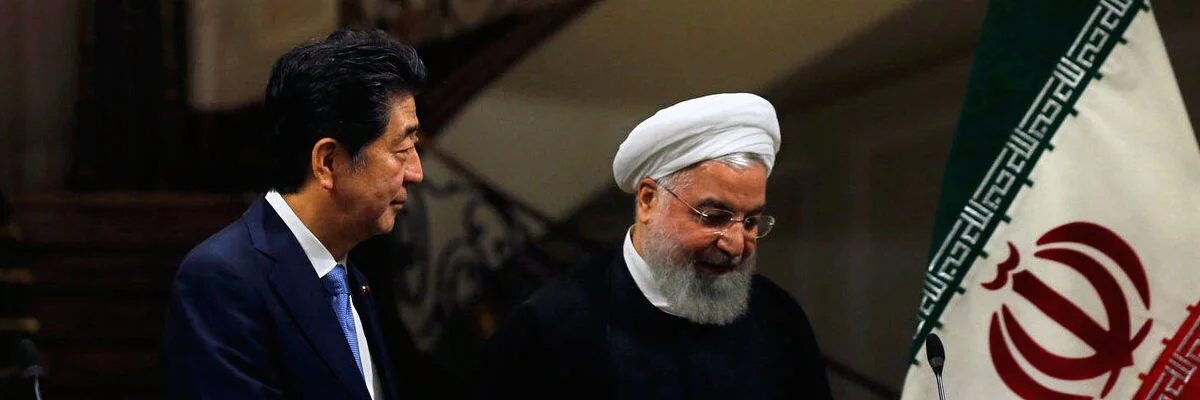
◢ Japan’s Prime Minister Shinzo Abe plans to meet Iranian President Hassan Rouhani in New York next month as Tokyo continues to seek a leading role in attempts to defuse rising tension in the Middle East. Japan's foreign ministry said Wednesday the meeting was arranged during Iranian Foreign Minister Mohammad Javad Zarif's visit to Tokyo.
Japan's Prime Minister Shinzo Abe plans to meet Iranian President Hassan Rouhani in New York next month as Tokyo continues to seek a leading role in attempts to defuse rising tension in the Middle East.
Japan's foreign ministry said Wednesday the meeting was arranged during Iranian Foreign Minister Mohammad Javad Zarif's visit to Tokyo on Tuesday, and would take place on the sidelines of the UN General Assembly.
Japan has long been a major importer of Iranian oil and was one of eight countries given a waiver by Washington on buying directly from Tehran.
Sanctions were imposed after the US President Donald Trump abandoned the Iranian nuclear agreement struck by his predecessor Barack Obama.
Other signatories—including major European nations—disagreed with Trump's action.
"I have received clear words from Supreme Leader Khamenei that he does not wish to build, possess and to use nuclear weapons," Abe told Zarif during Tuesday's meeting.
“Japan wishes to continue diplomatic efforts toward stabilizing the situation," Abe said.
Abe travelled to Iran in June and met Supreme Leader Ayatollah Ali Khamenei as well as Rouhani in a bid to ease tension between Tehran and Washington.
Zarif made an unannounced appearance at the G7 in France, with the global elite group hoping the surprise visit would help ease friction between Iran and the US.
US President Donald Trump did not meet Zarif, but said he would be willing to hold talks with Rouhani in the near future.
Rouhani said a meeting could only take place if the US first scrapped the sanctions.
Photo: IRNA
Attacks on Oil Tankers Near Hormuz Fan Fears of Conflict
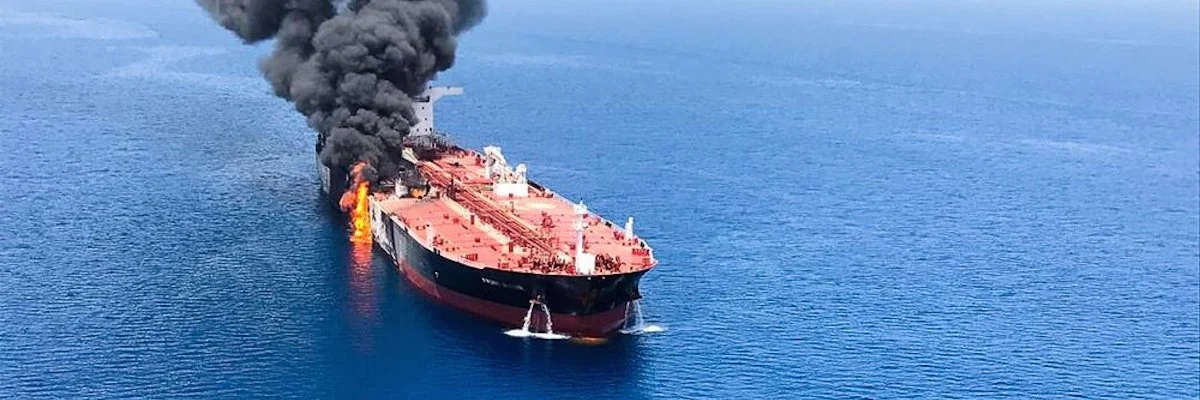
◢ Two oil tankers were damaged on Thursday in a suspected attack near the entrance to the Persian Gulf, stoking fears that high-stakes diplomatic efforts won’t avert a military confrontation between the U.S. and Iran. Oil prices surged. The incidents, including an attack on a Japanese-operated vessel, were the second in a month to hit ships near the Strait of Hormuz chokepoint, through which about 40% of the world’s seaborne oil travels.
By Verity Ratcliffe, Anthony DiPaola and Bruce Stanley
Two oil tankers were damaged on Thursday in a suspected attack near the entrance to the Persian Gulf, stoking fears that high-stakes diplomatic efforts won’t avert a military confrontation between the U.S. and Iran. Oil prices surged.
The incidents, including an attack on a Japanese-operated vessel, were the second in a month to hit ships near the Strait of Hormuz chokepoint, through which about 40% of the world’s seaborne oil travels. They come as Japanese Prime Minister Shinzo Abe, a rare ally of both Donald Trump and Iranian leaders, visits Tehran in an effort to ease tensions.
“Even in the absence of ironclad evidence, the U.S. and its allies will point the finger at Iran,” said Fawaz A. Gerges, professor of Middle Eastern politics at the London School of Economics. “These incidents are a bad omen because they point to a calculated escalation that tells us both sides are hunkering down.”
The prospects of a conflict have spiked since the Trump administration tightened its sanctions on Iranian oil exports in early May. Trump abandoned a year ago the 2015 deal that was meant to prevent Iran from developing a nuclear bomb and reimposed sanctions in a bid to force the Islamic Republic to rein in its military program and proxy militias.
Facing economic catastrophe, Iran has threatened to retreat from the accord itself unless European parties throw it an lifeline. Its supreme leader, Ali Khamenei, told Abe on Thursday that his country would not repeat the “bitter experience” of talks with the U.S.
High-Stakes Diplomacy
The Bahrain-based Fifth Fleet said it received two separate distress signals at 6:12 a.m. and about 7:00 a.m. local time. “U.S. Navy ships are in the area and are rendering assistance,” Commander Josh Frey, a spokesman, said. He couldn’t confirm reports that one of the vessels was struck by a torpedo. Iran said it has rescued 44 sailors.
The manager of one tanker, the Norwegian-owned Front Altair, said it was sailing in international waters when it was damaged by an explosion, whose cause “is as yet unknown.” The Norway Maritime Authority said there were three detonations on board. The ship had loaded a cargo of naphtha in Abu Dhabi and was bound for Taiwan, a company official said.
A distress call over VHF radio from the Front Altair said the ship was “under attack and on fire," said Donald MacLeod, a navigation officer on a vessel about 45 miles away on the Oman Sea. "They had to abandon ship."
Kokuka Sangyo, the Japanese operator of the other ship, said it was attacked twice, three hours apart, forcing the crew to evacuate. The tanker was carrying 25,000 tons of methanol from Saudi Arabia to Asia.
Brent oil crude soared as much as 4.5% and was trading at $62.07 a barrel at 10:42 a.m. in London. Stocks in Saudi Arabia and Dubai were down more than 1%.
The incidents come a day after Iran-backed rebels in Yemen fired a missile at a Saudi airport, wounding 26 people. The projectile crashed into the arrivals hall, damaging ceilings and windows and causing a fire, though the airport was able to keep functioning with only two flights cancelled. Houthi rebels last month hit oil infrastructure hundreds of kilometers inside Saudi Arabia, forcing it to temporarily close an oil pipeline.
Iran distanced itself from any attack.
“Iran is concerned by the suspicious events around commercial tankers related to Japan,” Foreign Ministry spokesman Abbas Mousavi, was quoted as saying on Fars news agency. “We see this as going against efforts from within the region and beyond to reduce tensions.”
Oil tankers last became a target in the Persian Gulf and Arabian Sea during the so-called "Tanker War" in the 1980s—a sideshow of the Iran-Iraq conflict. Between 1981 and 1988, a total of 451 ships suffered some sort of attack in the region from Iraqi or Iranian forces, according to a report from the U.S. Naval Institute.
Photo: ISNA
Iran Tells Japan's Abe It Doesn't Intend to Have Nuclear Arms
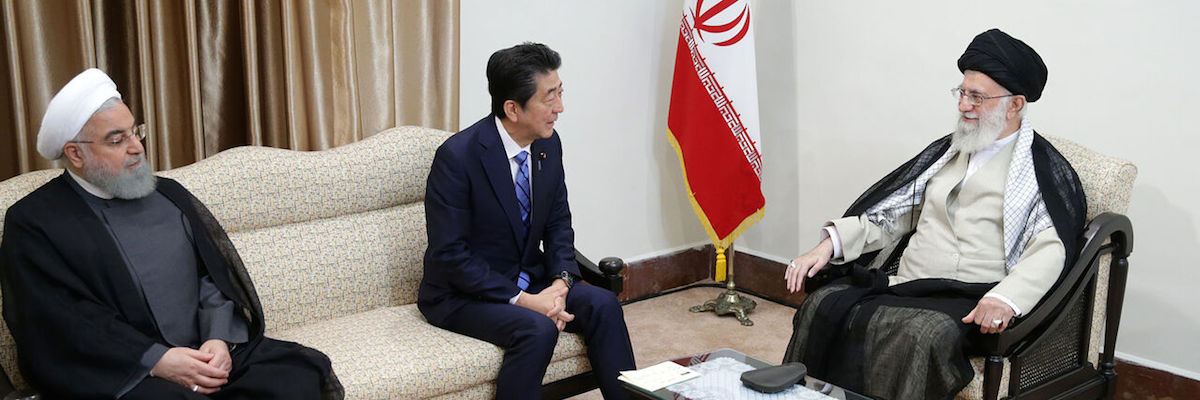
◢ Iranian Supreme Leader Ayatollah Ali Khamenei told visiting Shinzo Abe that his country doesn’t intend to produce, possess or use nuclear weapons, the Japanese leader said after a trip aimed at easing tensions between the U.S. and Iran. Abe, making the first visit of a sitting Japanese prime minister to Iran in 41 years, held talks with Khamenei on Thursday.
By Isabel Reynolds
Iranian Supreme Leader Ayatollah Ali Khamenei told visiting Shinzo Abe that his country doesn’t intend to produce, possess or use nuclear weapons, the Japanese leader said after a trip aimed at easing tensions between the U.S. and Iran.
Abe, making the first visit of a sitting Japanese prime minister to Iran in 41 years, held talks with Khamenei on Thursday. Abe said he conveyed to Khamenei what he thought were the views of U.S. President Donald Trump, who sanctioned the visit when he met Abe for a summit in May.
“Ayatollah Khamenei said that he would not produce, possess or use nuclear weapons, that he had no such intention, and it was something that should not be done,” Abe told reporters, adding the Iranian leader spoke of his belief in peace.
Expectations were low for the visit bringing a major breakthrough in the tensions between Iran and the U.S. that threaten to spill into armed conflict. But with strong personal ties to Trump and Japan having maintained good relations with Iran for decades, Abe was seen as being able to open a line of communication between Washington and Tehran that could ease some friction.
Standing Firm
The visit came as the U.S. shows little sign of backing off on sanctions it reimposed after abandoning a 2015 accord meant to prevent Iran from developing a nuclear bomb. Tensions have spiked in the Gulf since the U.S. halted sanctions waivers early last month that had allowed some major importers, including Japan, to continue buying Iranian oil.
A missile attack on a Saudi Arabian airport by Tehran-backed Yemeni rebels ratcheted up tensions in the Gulf just as Abe’s efforts got underway. The region has been churning since Washington piled more sanctions on Iran in May and unleashed a show of military force, sending an aircraft carrier to the region. Those moves drew a threat from Iran to retreat from the nuclear deal.
While Abe was in Iran, Japan received a reminder of the dangers in the region. Economy Minister Hiroshige Seko said the ministry held an emergency meeting Thursday over a tanker attack in Sea of Oman, according to a tweet from Japan’s Ministry of Economy, Trade and Industry. The attack involved two ships that carried Japan-related goods, it said.
Photo: IRNA
In Tehran, Japan's Abe Urges Iran to Play 'Constructive Role'
◢ Japanese Prime Minister Shinzo Abe urged Tehran to play a "constructive role" for Middle East peace Wednesday during a rare diplomatic mission to the Islamic republic aimed at defusing US-Iran tensions. Iran has been locked in a bitter standoff with the United States since US President Donald Trump withdrew from a landmark 2015 nuclear deal in May last year.
By Amir Havasi
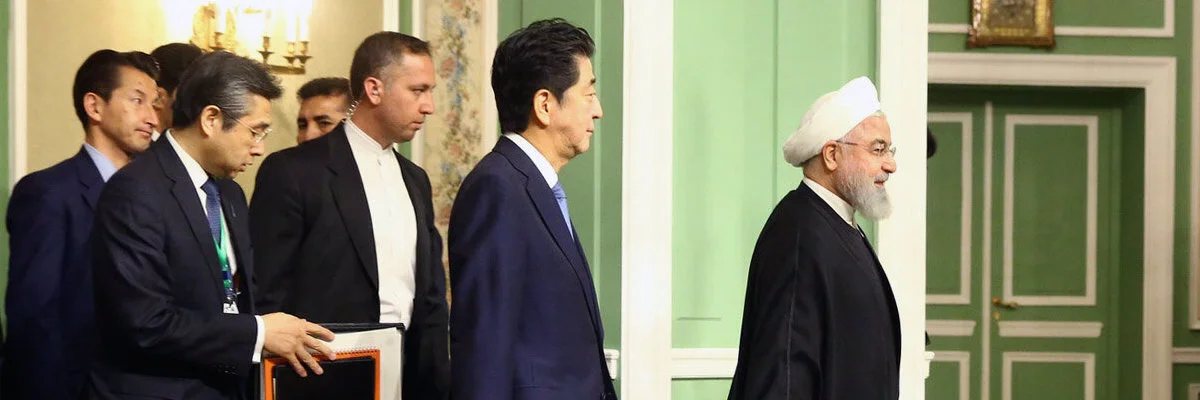
Japanese Prime Minister Shinzo Abe urged Tehran to play a "constructive role" for Middle East peace Wednesday during a rare diplomatic mission to the Islamic republic aimed at defusing US-Iran tensions.
Iran has been locked in a bitter standoff with the United States since US President Donald Trump withdrew from a landmark 2015 nuclear deal in May last year.
Washington has since reimposed crippling unilateral sanctions—which have forced Tokyo to halt its once-substantial purchases of Iranian oil—and launched a military buildup in the Gulf.
"It is essential that Iran plays a constructive role in building solid peace and stability in the Middle East," Abe told a joint news conference in Tehran with Iran's President Hassan Rouhani.
"Today, tension is rising in the Middle East. Some experts point out that the conflict might be triggered accidentally," said Abe.
An armed clash "must be avoided by all means", the premier stressed.
He added that Japan "wishes to play an utmost role in its capacity to ease the tension. This is the one single thought that brought me to Iran."
Addressing the same news conference, Rouhani said he expected a "very positive change" in the Middle East and the world if the United States stops its economic pressure on Iran through sanctions.
"If there are some tensions, (their) roots stem from America's economic war against Iran. Whenever it stops we will witness a very positive change in the region and the world," Rouhani said.
"We will not initiate a conflict in the region, even against the US, but if a war starts against us we will then give a crushing response," the Iranian president added.
Lower the Temperature
Abe began his visit to Iran on Wednesday, the first by a Japanese prime minister in 41 years, with the stated aim of defusing tensions between Tehran and Washington.
Japan stopped importing Iranian crude oil in May to comply with US sanctions against the Islamic republic.
The Asian powerhouse has an interest in keeping the Middle East stable in order to ensure the flow of cheap hydrocarbons to fuel its economy.
Rouhani said he saw "Japan's interest in continuing to buy oil from Iran and fixing financial issues" as a "guarantee" for the ongoing development of bilateral ties.
The spokesman for Japan's foreign ministry, Takeshi Osuga, later said that, on the questions of Iranian oil sales to Japan, "our understanding is that this was the wish of the Iranian side."
But he added: "Oil purchase (from Iran) is the decision of private companies. I cannot predict their decision."
The Iranian president also underlined a convergence of views with his visitor on the issue of nuclear weapons, which he said "both of us are against.”
Abe, for his part, expressed his "deep respect to the fact that the supreme leader Ayatollah Khamenei reiterates the fatwa which says 'nuclear weapons and other weapons of mass destruction are against Islam.’”
The Japanese premier is expected to meet Khamenei on Thursday morning.
Abe discussed "the situation in Iran" in a telephone call with Trump on Tuesday, a Japanese government spokesman said.
The Japanese prime minister won Trump's blessing for the mediation mission when the US president visited Tokyo last month.
“We believe it is extremely important that, at the leadership level, we call on Iran as a major regional power to ease tension, to adhere to the nuclear agreement and to play a constructive role for the region's stability," Japanese Chief Cabinet Secretary Yoshihide Suga said.
Substantial Obstacles
Iranian newspapers were divided along conservative-reformist lines in their assessment of Abe's visit.
The reformist Sazandegi daily ran a front-page cartoon of Abe in full samurai armour, a rolled piece of paper in one hand and a shield on the other.
In an accompanying article headlined "A samurai in Tehran," the paper said everyone was waiting to see "Tehran's reaction to Japan's initiative to raise its international standing by mediating as both Washington's ally and Iran's friend."
The ultraconservative Javan daily warned that "Iran and Japan minus America" could be a winning formula for Abe, but "Japan as America's intermediary in Iran" would fail given the deep mistrust of the US.
Other Iranian commentators said Abe could pass messages between the two sides.
"Mr Abe's visit comes right after meeting Mr Trump in Japan, so the Americans are interested in using this channel," Ebrahim Rahimpour, a former deputy foreign minister, told Iran's Shargh daily.
But while Tokyo has longstanding trade ties with Tehran and a strategic alliance with Washington, experts say Abe has little leverage with either side and mediation will be an uphill struggle.
The trip by the Japanese premier "faces substantial obstacles and is unlikely to bear fruit," said Tobias Harris, an analyst at Teneo consultancy group.
"While Japan has good relationships with countries on both sides, these relationships do not necessarily translate into influence."
Photo: IRNA
With Trump's Blessing, Japan's Abe Looks to Mend Ties With Iran
◢ Japanese Prime Minister Shinzo Abe, a rare friend of both President Donald Trump and Iran’s leaders, left for Tehran with the daunting task of bridging a divide that could plunge the Middle East into renewed chaos. Abe, who spoke to Trump by telephone just ahead of his trip, told reporters that he plans to have a frank exchange of views with Iran’s leader in Japan’s bid to play a role in the stability of the Middle East.
By Golnar Motevalli and Isabel Reynolds
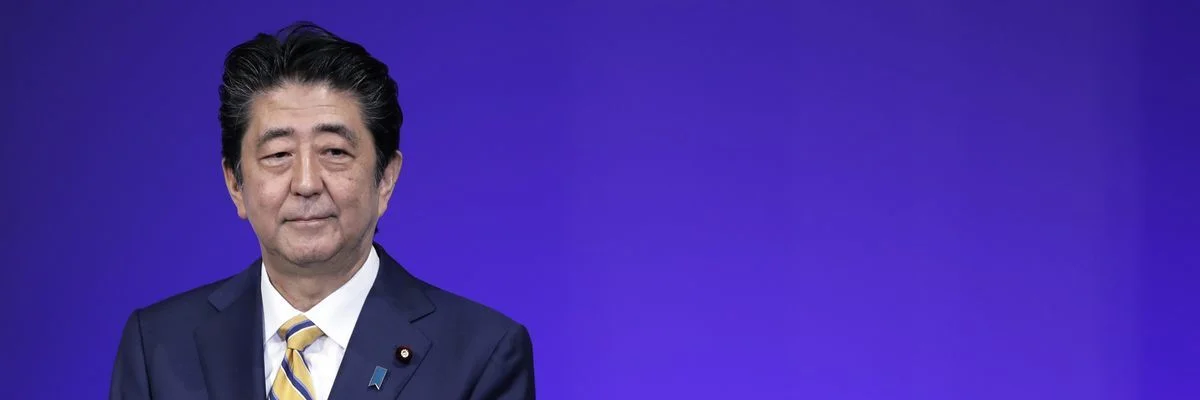
Japanese Prime Minister Shinzo Abe, a rare friend of both President Donald Trump and Iran’s leaders, left for Tehran with the daunting task of bridging a divide that could plunge the Middle East into renewed chaos.
Abe’s visit from Wednesday through Friday comes as the U.S. has given scant indication it’s ready to ease sanctions it reimposed after abandoning a 2015 accord meant to prevent Iran from developing a nuclear bomb. Tehran has said it can’t sit down with the Trump team while the U.S. is waging “economic war” on it.
With the two sides so far apart, any step that reduces mistrust and hostility would be a welcome achievement for Abe, seen more as a stable hand running the world’s third-largest economy than a globe-trotting peace negotiator. Trump sanctioned the trip, which would be the first by a sitting Japanese prime minister to Iran in 41 years and includes talks with Supreme Leader Ayatollah Ali Khamenei and President Hassan Rouhani.
“What Abe can do depends on what Trump has given Abe,” said Kazuo Takahashi, professor of International Politics at the Open University of Japan, who specializes in Japanese policy towards Iran. “If he is going as a messenger boy, he is shaming himself in front of the world’s public opinion. I don’t think he’d take such a political risk without some ideas of inducement for the Iranians offered by the Americans.”
Little Leverage
Abe, who spoke to Trump by telephone just ahead of his trip, told reporters at the airport before boarding his plane to Tehran Wednesday that he plans to have a frank exchange of views with Iran’s leader in Japan’s bid to play a role in the stability of the Middle East.
The trip comes as the Trump administration appears ready to step up its pressure, weighing sanctions against the Iranian financial body set up as a go-between for humanitarian trade with Europe. Such a move is likely to sever the economic and humanitarian lifeline that France, Germany and the U.K. have sought to create for Tehran. While Japan has maintained good ties with Iran for decades and called for Tehran to abide by the nuclear deal, its pro-U.S. stance could mean Abe’s offerings are received with caution.
Along with the Abe visit, diplomacy to salvage the Iran nuclear deal kicked into high gear this week with German Foreign Minister Heiko Maas landing in Iran’s capital Monday and the Vienna-based International Atomic Energy Agency set to assess the state of the agreement supposed to rein in Iranian nuclear work in return for sanctions relief.
Iran has increased the rate at which it enriched uranium, although the amount stockpiled is still short of the 300 kilograms (661 pounds) allowed under the deal, IAEA Director General Yukiya Amano told reporters.
Mohammad Javad Zarif, Iran’s foreign minister, told Maas the only way to reduce tension is ending America’s economic attack on Iran. The comments come after Tehran already set the bar almost impossibly high for Abe.
On Saturday, the country’s Supreme National Security Council said a successful visit means bringing a proposal for the U.S. to rejoin the nuclear deal, lifting its sanctions and paying for damages inflicted on Iran’s economy.
“I don’t think he will be able to re-start talks between the U.S. and Iran, or get the U.S. to soften its line on sanctions or Iran to accept some of the U.S. demands. It won’t be anything like that,” an energy expert with ties to the Abe government said.
“He will go and listen to the requests of the Iranian leadership and convey U.S. thinking to Khamenei and Rouhani, which will keep the dialogue going about the nuclear agreement,” said the expert, who declined to be named because of the sensitivity of the visit.
Economic Incentives
For Japan, there is an economic incentive to prevent tensions in the Gulf from spiraling out of control. It relies heavily on Middle Eastern energy, and before the 1979 Islamic Revolution, the bulk of those supplies came from Iran.
But as U.S.-Iran relations deteriorated over the years, Japan significantly reduced crude imports from Iran in favor of supplies from its Gulf rivals Saudi Arabia, the United Arab Emirates and Kuwait — all allies of Washington.
With Saudi Arabia saying last month there were attacks on its oil tankers and Iran threatening to disrupt traffic in the Persian Gulf should Washington succeed in wiping out its oil sales, maintaining stability is of paramount importance to Japan.
Family Affair
The Japanese public isn’t expecting much of the visit, an opinion poll released Tuesday from public broadcaster NHK showed, reducing the political risks for Abe. The visit does increase his global exposure ahead of an upper house election planned for July and Japan hosting the Group of 20 leaders summit in late June.
His father, former Foreign Minister Shintaro Abe, also tried his hand -- unsuccessfully -- at defusing Middle East tensions with a visit to Iran in 1983. He met then-President Khamenei, who would eventually be promoted to the clerical hierarchy and the mantle of the Supreme Leader.
“Politically, we never had a huge issue with the Iranian government, neither pre- nor post the revolutionary period in Iran. Our economic ties have been stranded, I would say, because of pressure from Washington,” said Koichiro Tanaka, president of the Japanese Institute of Middle East Economies in Tokyo.
Photo: Bloomberg
Man on a Mediation Mission: Japan's Abe Heads to Iran
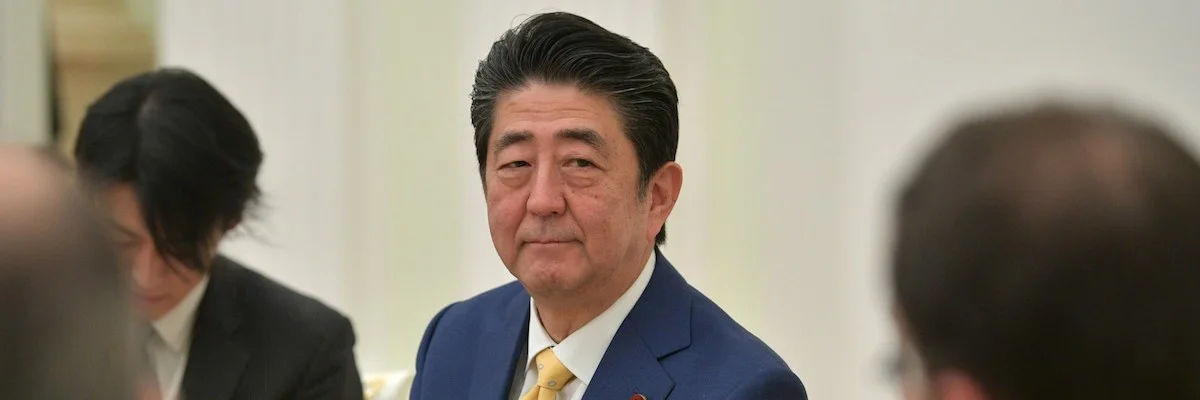
◢ Japan's Prime Minister Shinzo Abe heads to Iran this week on a rare diplomatic mission, hoping to ease tensions between the Islamic Republic and Tokyo's key ally Washington. Japanese government officials say Abe will not present Tehran with a list of demands, or deliver a message from Washington, and instead want to position Japan as a neutral intermediary.
By Sarah Hussein
Japan's Prime Minister Shinzo Abe heads to Iran this week on a rare diplomatic mission, hoping to ease tensions between the Islamic Republic and Tokyo's key ally Washington.
Tehran is locked in a bitter standoff with the US after president Donald Trump withdrew from a landmark nuclear deal last year.
Washington has now reimposed sanctions and shifted troops to the region, putting military and economic pressure on Iran, including by forcing US allies like Japan to stop purchasing Iranian oil.
Japanese government officials say Abe will not present Tehran with a list of demands, or deliver a message from Washington, and instead want to position Japan as a neutral intermediary.
That could prove useful, said Michael Bosack, special adviser for government relations at the Yokosuka Council on Asia-Pacific Studies.
"Japan carries none of the historical or religious baggage of other potential mediators... (and) has demonstrated its willingness to go its own way on Middle East policy," he told AFP.
"These factors better position Abe for engagement with Ayatollah Khamenei and mean that Japanese-proposed options could allow hardliners in Iran to entertain proposed off-ramps, without the potential fallout that could come from accepting 'Western' solutions."
Abe will meet President Hassan Rouhani and the country's Supreme Leader Ayatollah Ali Khamenei on the June 12-14 trip—the first time a Japanese prime minister has visited Iran since 1978, a year before the country's revolution.
Against that backdrop, Japan is hoping to lower the temperature, officials say, with Abe winning Trump's blessing for the mediation trip when the US leader visited Tokyo last month.
"We believe it is extremely important that, at the leadership level, we call on Iran as a major regional power to ease tension, to adhere to the nuclear agreement and to play a constructive role for the region's stability," Chief Cabinet Secretary Yoshihide Suga said ahead of the trip.
Intermediary
Iranian commentators said Abe could ferry messages between the two sides.
"Mr. Abe's visit comes right after meeting Mr. Trump in Japan, therefore the Americans are interested to use this channel," Ebrahim Rahimpour, a former deputy foreign minister, told Iran's Shargh daily ahead of the trip.
Iran will "announce our rights and stances and the other side can announce the messages that could be the US president's message," he said.
But while Japan has long-standing ties with Tehran and warm relations with Washington, experts say Abe has little leverage with either side and mediation will be an uphill struggle.
The trip by the Japanese PM "faces substantial obstacles and is unlikely to bear fruit," said Tobias Harris, an analyst at Teneo consultancy group, in a note on the visit.
"While Japan has good relationships with countries on both sides, these relationships do not necessarily translate into influence," he added.
'Shuttle diplomacy'?
Japan is not just the messenger—its own interests are also at stake: before US sanctions were reimposed, Tokyo imported around five percent of its oil from Iran and it would suffer from rising crude prices.
The trip also offers Abe a rare role as international statesman, particularly given Tokyo's disappointing recent diplomatic track record.
Efforts this year to resolve a long-running standoff with Russia over a string of disputed islands have run aground.
And Japan has also found itself out of the loop on perhaps the most pressing diplomatic challenge in its backyard: North Korea.
Abe "needs a diplomatic stunt as he faces an impasse on Russia and North Korea," said Tetsuro Kato, political science professor at Tokyo's Waseda University.
But analysts cautioned that expectations would stay low for now.
"Japan has never played an active role in Middle Eastern problems," Kato told AFP. "I don't expect much in the way of results."
Bosack said it would be "unrealistic" to expect quick outcomes from the visit.
"Right now, the focus is mitigating military conflict, which means Abe can employ shuttle diplomacy to keep communication going," he said.
“That shuttle diplomacy alone may be enough to de-escalate tensions."
Photo: Wikicommons
Japan PM to Meet Iran's Khamenei to Mediate With US
◢ Japanese Prime Minister Shinzo Abe will meet Iran's supreme leader Ayatollah Ali Khamenei later this month with Tokyo hoping to mediate between Washington and Tehran, a report said Sunday. As tensions intensify between Iran and Japan's key ally the United States, Abe has reportedly proposed serving as a go-between and is said to be weighing up a state visit to Iran.
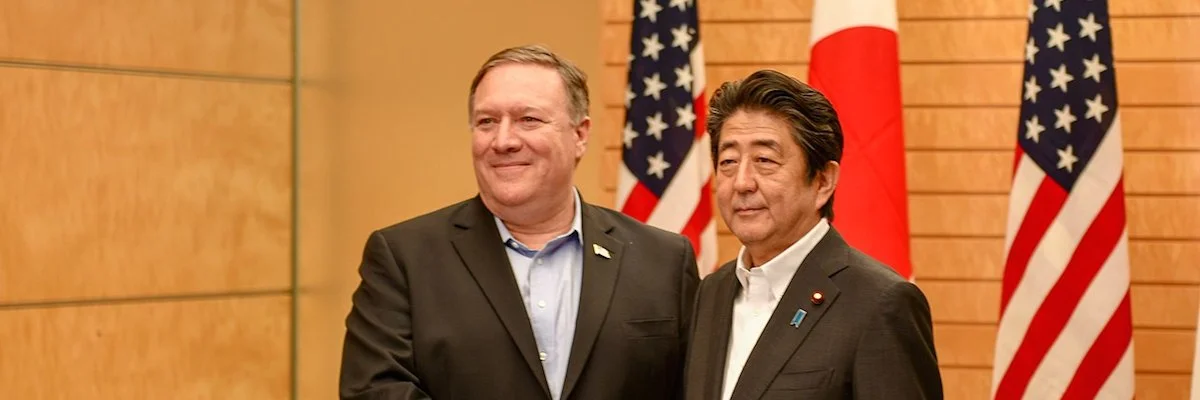
Japanese Prime Minister Shinzo Abe will meet Iran's supreme leader Ayatollah Ali Khamenei later this month with Tokyo hoping to mediate between Washington and Tehran, a report said Sunday.
As tensions intensify between Iran and Japan's key ally the United States, Abe has reportedly proposed serving as a go-between and is said to be weighing up a state visit to Iran.
According to the Mainichi Shimbun report, Abe's planned meeting with influential Khamenei will be the first such talks between a Japanese premier and Tehran's supreme leader.
US President Donald Trump said last week he remained open to talks with Tehran during his state visit to Tokyo, appearing to have given the green light to Abe's plan.
Abe will also meet Iran's president Hassan Rouhani before meeting Khamenei during his tour to Iran from June 12 to 14, the newspaper said, citing unnamed government sources.
Before Trump flew to Japan, the United States had announced it was sending 1,500 extra troops to the region, adding to the aircraft carrier group and nuclear-capable bomber planes already dispatched.
Trump himself threatened "the official end" of the country if Tehran ever attacked US interests.
But last Monday in Tokyo, Trump offered assurances that he can live with the Islamic Republic's government, whose toppling has long been a dream for Washington hardliners.
"We're not looking for regime change," Trump said, explaining that he only cared about Iran not achieving nuclear power status.
"I do believe that Iran would like to talk, and if they'd like to talk, we'd like to talk also," Trump added, striking a relatively dovish tone on Iran.
Khamenei has likened negotiations with the Trump administration to "poison" since "they don't stand by anything", referring to Washington's withdrawal from the landmark 2015 nuclear deal signed by Tehran and world powers.
Japan and Iran have kept a good relationship as resource-poor Japan relies heavily on imports of oil from the Middle East, though crude from Iran accounted for just 5.3 percent of the country's total imports last year.
Photo: Wikicommons
Trump Says He's Not Looking to Topple Iranian Leadership
◢ U.S. President Donald Trump said he isn’t pursuing regime change in Iran but aims to keep it from developing nuclear weapons, in an apparent effort to tamp down tensions that have led to fears of war. Iran “has a chance to be a great country with the same leadership,’’ Trump said at a joint press conference in Tokyo on Monday alongside Japanese Prime Minister Shinzo Abe.
By Ladane Nasseri and Zainab Fattah
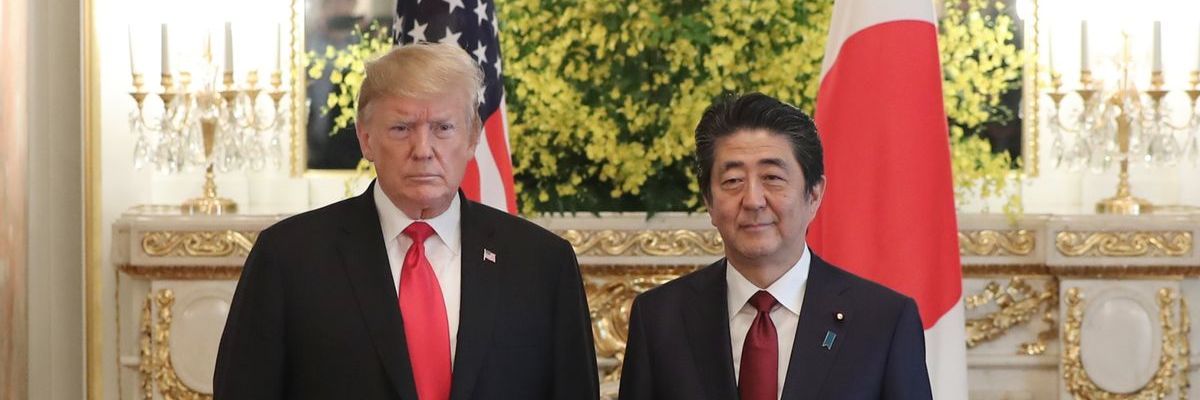
U.S. President Donald Trump said he isn’t pursuing regime change in Iran but aims to keep it from developing nuclear weapons, in an apparent effort to tamp down tensions that have led to fears of war.
Iran “has a chance to be a great country with the same leadership,’’ Trump said at a joint press conference in Tokyo on Monday alongside Japanese Prime Minister Shinzo Abe. “We are not looking for regime change. I just want to make that clear.’’
Iranian officials have said that the raft of U.S. sanctions against their country, which was tightened last month, is aimed at fueling popular dissent in an effort to topple the leadership.
“I’m not looking to hurt Iran at all. I’m looking to have Iran say no nuclear weapons,” Trump said. “No nuclear weapons for Iran and I think we will make a deal.’’
Trump’s remarks come amid fears that rising tensions between the U.S. and Iran could lead to miscalculations that would precipitate an armed conflict engulfing the Middle East. Frictions escalated this month after the U.S. said Tehran was planning an offensive against American interests in the region, then made a show of military force in the Gulf.
Iran has responded to the American moves by threatening to abandon aspects of the 2015 multipower nuclear deal that remains in force despite Trump’s withdrawal a year ago.
“The crux of the message by President Trump is that he doesn’t really want war with Iran, what he is trying to do is de-escalate the calls for war, ” said Fawaz A. Gerges, professor of Middle Eastern politics at the London School of Economics. His message “to the Islamic Republic is that his latest moves are all about deterrence and not war.’’
The Trump administration has made confronting Iran the cornerstone of its Middle East policy, and last year it exited the 2015 international accord that reined in Iran’s nuclear ambitions in exchange for sanctions relief. Trump has said he wants Iran back to the negotiating table for a grand deal that would curb its regional influence and ballistic missile program. His rhetoric this month has ranged from offers for Iran to "call me" to threats to "end" the nation if it seeks to picks a fight.
Trump’s conciliatory comments about the Iranian regime probably won’t comfort Gulf allies that view Iran’s leadership with deep suspicion over its regional activities, said Abdulkhaleq Abdulla, a political analyst in the United Arab Emirates. These include Saudi Arabia and the U.A.E.
“But Trump changes his mind within 24 hours,’’ Abdulla said. “Today, he can say this about Iran but I wouldn’t be surprised to see him going to war with Iran tomorrow.’’
Photo: Bloomberg
The World Agrees With Trump on One Thing When It Comes to Iran
◢ Blunt, ignorant and confused are some of the criticisms voiced by allies on U.S. policy toward Iran. But none sees the Trump administration preparing for war. Governments worldwide are alarmed at the tension between Washington and Tehran, concerned about the risk of escalation or military miscalculation and frustrated at a lack of communication about U.S. goals.
By Alan Crawford, Ilya Arkhipov and Gregory Viscusi
Blunt, ignorant and confused are some of the criticisms voiced by allies on U.S. policy toward Iran. But none sees the Trump administration preparing for war.
Governments worldwide are alarmed at the tension between Washington and Tehran, concerned about the risk of escalation or military miscalculation and frustrated at a lack of communication about U.S. goals. What keeps the anxiety in check from Berlin to Moscow to Ankara is President Donald Trump’s oft-stated aversion to starting fresh wars.
Many allies share U.S. concerns about Iran’s meddling in places like Iraq, Syria and Yemen, and the prospect of it one day acquiring nuclear weapons. But Washington faces opposition—at times the exasperation has spilled into public view—for ripping up the 2015 nuclear accord with Tehran, for its heavy sanctions on the regime and for a ratcheting up of military activity in the Gulf.
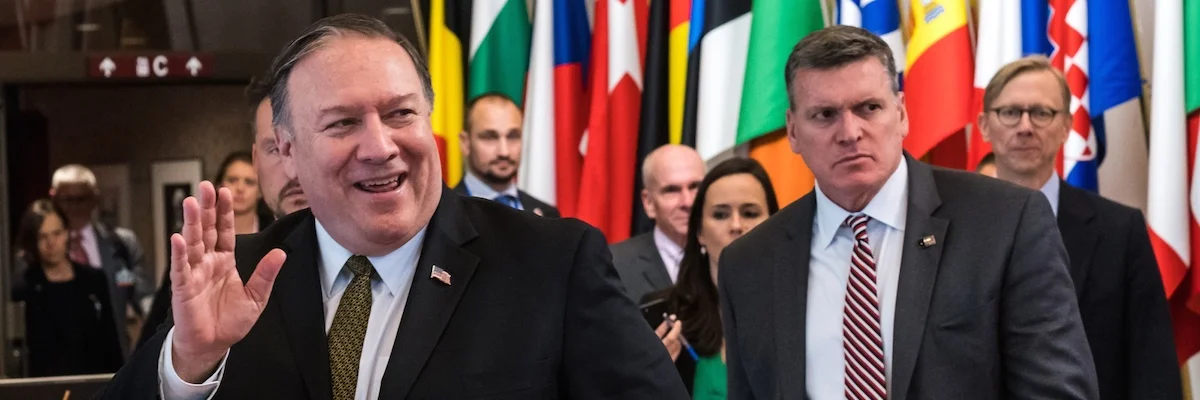
Secretary of State Michael Pompeo’s trip to Brussels last week yielded little support for the U.S. position, with Europe doubling down on its commitment to the deal that Trump abandoned last year.
Pompeo also got nothing new on Iran from President Vladimir Putin during a subsequent visit to the Russian Black Sea resort of Sochi, according to a senior Russian official with knowledge of the discussions. Distrust between Moscow and Washington is so great that no separate deal is possible on Iran, said another person close to the Kremlin.
Still, Russia is counting on Trump to rein in both the hawks in the U.S. administration and regional allies, led by Israel.
“We’ve studied Trump’s approach and tactics pretty well over the past two and a half years; he’s not a military man, he doesn’t like to fight,” said Fyodor Lukyanov, head of the Council on Foreign and Defense Policy, which advises the Kremlin. “He likes to make a show of strength and use economic levers. His idea is that sanctions will force Tehran in the end to negotiate.”
In Berlin, officials view Trump as the main force to halt the spiral toward conflict, primarily due to his well-known resistance to foreign interventions, said a senior lawmaker from Chancellor Angela Merkel’s coalition.
Indeed, a U.S. official said late last week that Trump isn’t seeking conflict—though he’d consider using the military if needed. And the president, when asked about war with Iran, said "I hope not." On Sunday, Trump tweeted that if Iran wanted to fight it would be "the official end of Iran. Never threaten the United States again!"
Trump has spoken frequently of his desire to reduce what the U.S. spends on security support for others, be it NATO or troops in places like South Korea. He’s said for too long other countries have taken advantage of the U.S., without boosting their own military capacity. The U.S. has been a significant presence globally since World War II, and is seen as a buffer against China as a rising global power. A particular red line for Trump appears to be boots on the ground in a fresh conflict.
Still, the overall U.S. strategy on Iran causes concern. One French government official said Trump and senior aides such as National Security Adviser John Bolton are wrong to think that tightening the screws on Iran’s economy would convince its leaders to bend.
Germany, too, has no choice but to maintain a certain level of cooperation with Iran, the lawmaker in Berlin said. Europe is pressing ahead with a trade clearinghouse, known as INSTEX, to circumvent around U.S. sanctions and is eager to settle its first transaction with Iran, another official said.
At the same time, there’s frustration in Germany at the opacity of Washington’s motives.
That’s also a complaint from U.S. allies elsewhere. Each day brings only more confusion, one Asian government official said. An official familiar with Turkey’s thinking said the actions of those within the U.S. administration do however appear coordinated.
“Usually the Americans and Trump are very clear—you could say almost brutal,” said Jacques Maire, a former diplomat who’s a member of parliament for President Emmanuel Macron’s LREM party. “This time, I have to say I’m not always clear what is the end game, what is the goal.”
Iranian Foreign Minister Mohammad Zarif undertook his own Asian tour to seek renewed commitments to deliver the economic benefits that were supposed to derive from the 2015 nuclear deal. He went to New Delhi, Tokyo and Beijing, where he won a pledge from China on Friday to support Iran’s efforts to safeguard its interests.
Japan is worried that Iran, a country with which it has had good ties for decades, will be forced out of the nuclear deal by hawks in the Trump administration. But Tokyo also has no intention of breaking away from the path set by its longtime ally Washington.
“Iran is asking the Japanese to do anything and everything that they can to persuade the United States to be a little more rational, but I don’t know whether Prime Minister Shinzo Abe can really convince Trump,” said Kazuo Takahashi, emeritus professor of international politics at Open University in Japan.
In the Middle East, key U.S. ally Israel is keeping its head down. Prime Minister Benjamin Netanyahu has ordered cabinet ministers to avoid making public statements on the possibility of a U.S.-Iran war, according to three Israeli officials familiar with the matter.
Israel views Trump’s goal as getting an improved nuclear deal that covers Iran’s ballistic-missile development and sponsorship of regional militias such as Hezbollah. That said, if Iran miscalculates and strikes U.S. bases or other interests, triggering retaliation, Israel wouldn’t worry, the officials said. They don’t regard Iran as having the capability to strike Israel.
It’s Iran that is encouraging “false narratives” of war, said Firas Maksad, director of the Arabia Foundation, a Washington think tank that’s close to the Saudi Arabian government.
Saudi Arabia and the U.A.E. have an interest in Washington and Tehran reaching a new understanding, he said. Trump, “while averse to another Middle Eastern war not unlike his predecessor, understands the need for a deal with Iran that goes beyond an arms control agreement to include other aspects of destabilizing behavior,” he said.
“All involved understand that the path to such an understanding will have to go through a difficult period of brinkmanship.”
Minister of State for Foreign Affairs Adel Al-Jubeir told reporters on Sunday that Saudi Arabia does not want war with Iran "in any way, but at the same time we won’t allow Iran to continue its hostile policies toward the kingdom."
A senior European diplomat said that while governments don’t see conflict as likely, that doesn’t mean they aren’t nervous. Leaving the nuclear deal was a mistake that increases risks on multiple fronts, the diplomat said.
It’s a broad concern that’s surfaced elsewhere over the gamut of Trump’s policy beyond Washington, from Venezuela to North Korea, trade tariffs, China’s Huawei and now Iran.
Turkey, for example, “is very much worried over Trump’s roller-coaster global foreign policy,” said Muhittin Ataman, director of foreign policy studies at the Ankara-based SETA think tank. It “injects more uncertainty rather than predictability to challenging problems around the world.”
Photo: Bloomberg