
Iran's Industry and Roads Ministers Resign
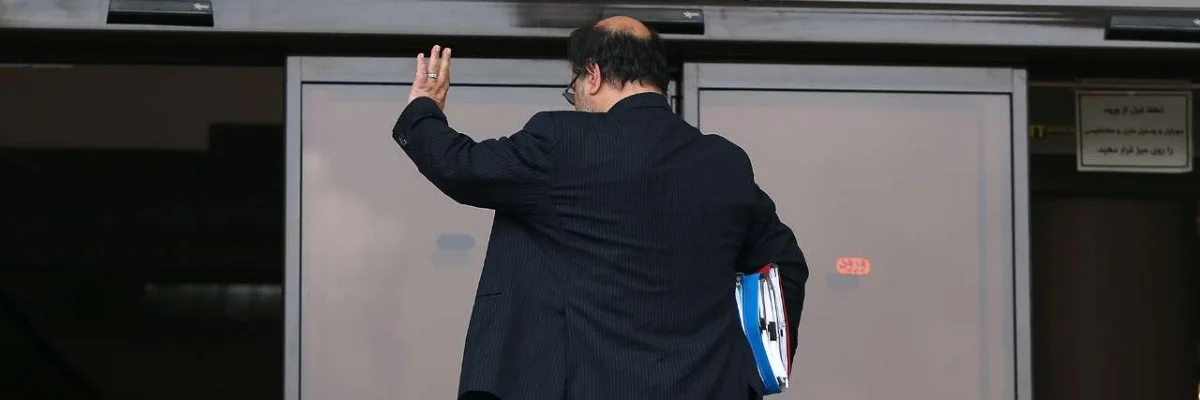
◢ Iran's President Hassan Rouhani has accepted the resignation of the embattled ministers of industry and roads, a statement on the presidential website said Saturday. The president thanked industry minister Mohammad Shariatmadari and roads minister Abbas Akhoundi's "selfless service" and "sincere efforts" during their tenures and appointed two acting ministers.
Iran's President Hassan Rouhani has accepted the resignation of the embattled ministers of industry and roads, a statement on the presidential website said Saturday.
The president thanked industry minister Mohammad Shariatmadari and roads minister Abbas Akhoundi's "selfless service" and "sincere efforts" during their tenures and appointed two acting ministers.
Reza Rahmani, current deputy industries minister, will take over for Shariatmadari and the current governor of Mazandaran, Mohammad Eslami, will become acting roads minister effective immediately, the website said.
The two ministers reportedly handed in their resignations over a month ago as lawmakers were preparing impeachment proceedings against them.
Rumours of Shariatmadari's resignation first surfaced mid-September but were quickly denied by the ministry.
Akhoundi published his resignation letter dated September 1 on Saturday, pointing to a "difference of opinion" as the main cause.
Rouhani's labour and economy ministers were sacked by the parliament in August over their handling of an economic crisis, partly triggered by the withdrawal of the United States from the 2015 nuclear deal and reimpoisition of sanctions.
Rouhani himself was summoned to the parliament to answer questions from lawmakers on August 28, a first in his five years in power, and only the second time for a sitting president.
Lawmakers were also ready to impeach education minister Mohammad Bathaei but called it off on September 2 due to the upcoming school year.
Photo Credit: IRNA

Iran's Currency Crisis Triggers Corruption Crackdown
◢ With its currency plummeting ahead of the reimposition of US sanctions, Iran has responded with dozens of arrests and claims of an enemy conspiracy, but also signs of a push to confront corruption. The Iranian rial has lost almost two-thirds of its value since the start of the year, and 20 percent in just two days since the weekend, hitting a record-low of 119,000 to the dollar.
With its currency plummeting ahead of the reimposition of US sanctions, Iran has responded with dozens of arrests and claims of an enemy conspiracy, but also signs of a push to confront corruption.
The Iranian rial has lost almost two-thirds of its value since the start of the year, and 20 percent in just two days since the weekend, hitting a record-low of 119,000 to the dollar.
Many lay the blame on the imminent reimposition of US sanctions on August 6 following US President Donald Trump's decision to pull out of the historic nuclear accord, with Iranians rushing to store their savings in dollars.
The central bank issued a statement on Monday that trod a familiar line, blaming "the enemies' conspiracies" for the rial's sudden decline.
This may not be purely paranoid fantasy. The US and its Gulf Arab allies are engaged in a "maximum pressure campaign" against the Iranian government, and there have been rumours that the United Arab Emirates has been curbing the physical supply of dollars to Iran, helping drive up prices.
But others say outside pressure is only effective because Iran's economy is so corrupt and poorly managed.
Belatedly, the authorities appear to be waking up to the crisis. This weekend, the judiciary announced 60 people had been arrested for fraud and trying to undermine the banking system, with more to come.
Spokesman Gholam Hossein Mohseni-Ejeie said several had direct ties to the government, allowing them, for example, to illegally import luxury cars, and could face the death penalty on Iran's infamous charge of "corruption on Earth".
New Transparency
The arrests follow mounting anger against profiteers who use political connections to access dollars at artificially low rates, and then use them to import goods on the cheap, or simply sell them on the black market for a huge profit.
In a radical departure from usual government practice, in June the young telecoms minister Mohammad Javad Azari Jahromi exposed a group of mobile phone importers who were gaming the system.
They had been granted USD 250 million at the cheap rate to import phones, he said, "but less than one third was used for the purpose," implying the rest was stashed away or sold.
The 36-year-old minister's move proved wildly popular on social media, but saw a backlash from some of his cabinet colleagues such as Industry Minister Mohammad Shariatmadari, who said doing something similar in his ministry would amount to "a war against the private sector."
Still, the episode showed a new willingness among Iranian officials to "be transparent and introduce accountability into the system," said Esfandyar Batmanghelidj, founder of the Europe-Iran Forum, a business network.
"Hopefully, more officials will understand that this is what the public is looking for."
'Full-Fledged Crisis'
The other priority is fixing the chaotic policies that have facilitated profiteering in the first place, particularly the disastrous decision in April to set a single, fixed rate for the dollar at IRR 42,000.
To enforce the decision, the authorities shut down currency trading shops and made it illegal to sell dollars above the official rate, which only fueled a boom in the black market.
The government was forced to climb down in June, saying only importers of essential items such as medicines would use the cheap rate, while others would negotiate a higher price.
President Hassan Rouhani sacked the central bank chief last week, and his replacement, Abdolnassar Hemati, has promised new currency policies "in the coming days".
But trapped in fire-fighting mode and under fire from both conservatives and reformists over the deteriorating economic situation, Rouhani has done little to address deeper problems.
"We're in a full-fledged crisis and that's taking all the attention. No one is talking about bank reform and investment and job creation," said economic journalist Maziar Motamedi of Tehran's Financial Tribune.
Fearing a public panic, the government continues to insist that everything is under control, but has so far offered only vague promises that it will allocate more money to job creation and funnel more infrastructure projects to the private sector.
"Just saying positive stuff is not helping. People have a hard time believing them," Motamedi said.
"Everyone knows the structural problems are there but the government is tackling crises as they happen rather than preventing them."
Photo Credit: Wikicommons
Iran Urges Foreign Firms to Resist US Sanction 'Threats'
◢ Tehran on Saturday urged foreign firms working in Iran to resist US "threats" of sanctions, adding it was in talks with French car makers about staying on in the country. "All (foreign) companies working in Iran should not be intimidated by US threats and should continue their activities in Iran," Industry Minister Mohammad Shariatmadari told a news conference in Tehran.
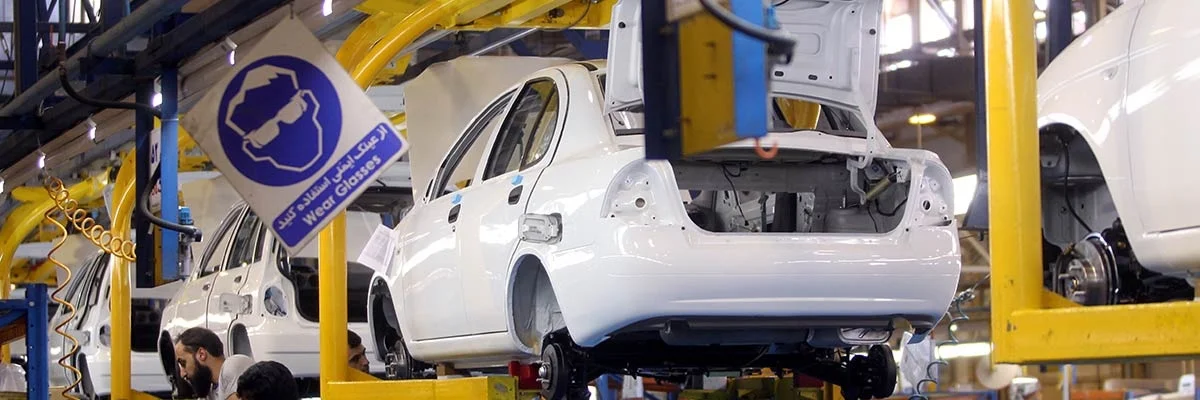
Tehran on Saturday urged foreign firms working in Iran to resist US "threats" of sanctions, adding it was in talks with French car makers about staying on in the country.
"All (foreign) companies working in Iran should not be intimidated by US threats and should continue their activities in Iran," Industry Minister Mohammad Shariatmadari told a news conference in Tehran.
"All those who do not do this, we will replace them. There are others who
will invest in Iran," he said.
When asked specifically about the case of French vehicle manufacturers PSA—maker of Peugeot, Citroen and DS—and Renault, Shariatmadari said: "Until now, they have not told us that they are not continuing" their business in Iran.
"They are continuing their cooperation. So far, we are talking (with these groups) and there is nothing new," he said.
US President Donald Trump announced on May 8 that Washington was withdrawing from the 2015 Iran nuclear deal, effectively starting a countdown for the reimposition of sanctions lifted under the accord.
Sanctions on the automobile sector are set to be reinstated on August 6.
PSA, through its automotive equipment subsidiary Faurecia, and Renault, through its alliance with Japanese manufacturer Nissan, could take a heavy hit from the reimposed penalties.
Between the two, Renault and PSA sell nearly half of all new cars registered in Iran.
With the deadline looming, the two French groups have adopted different communication strategies.
In early June, PSA announced it had "begun the process of suspending the activities of its joint ventures (in Iran) in order to comply with US law by August 6, 2018."
The majority of the company's French employees in Iran have already left the country.
Renault, on the other hand, has ambiguously said it would not abandon its activities in Iran, but would "sharply reduce operations" in the country without endangering the company's "interests."
Photo Credit: IRNA