
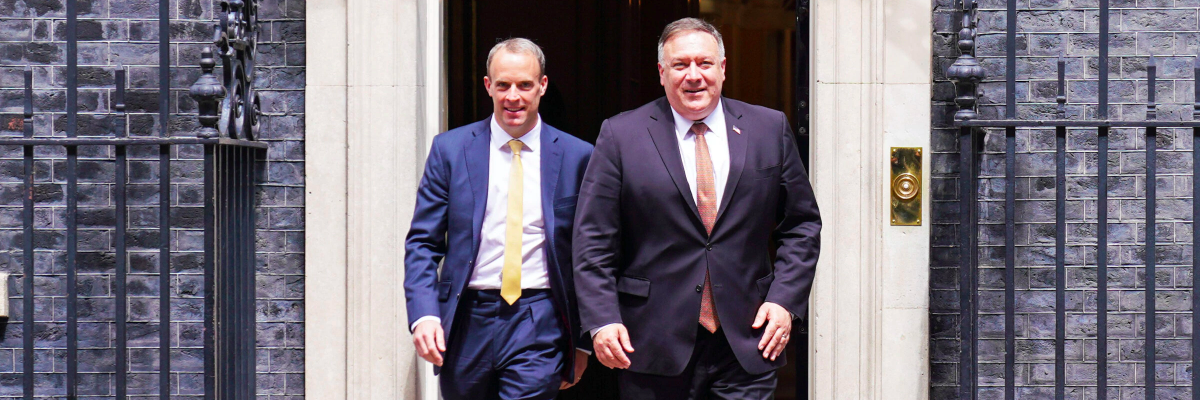
Pompeo Insists US to Enforce 'UN' Sanctions On Iran
Secretary of State Mike Pompeo insisted Wednesday the United States will enforce new "UN" sanctions on Iran starting next week, despite overwhelming consensus that Washington is out of bounds.
Secretary of State Mike Pompeo insisted Wednesday the United States will enforce new "UN" sanctions on Iran starting next week, despite overwhelming consensus that Washington is out of bounds.
"The United States will do what it always does. It will do its share as part of its responsibilities to enable peace, this time in the Middle East," Pompeo told a joint news conference with British Foreign Secretary Dominic Raab.
"We'll do all the things we need to do to make sure that those sanctions are enforced," he said.
Pompeo last month headed to the United Nations to announce the "snapback" of sanctions under a 2015 Security Council resolution after failing to extend an embargo on conventional arms sales to Iran.
The resolution allows any participant in a nuclear accord with Iran negotiated under former president Barack Obama to reimpose sanctions, which would take effect one month afterward.
President Donald Trump pulled out of the accord, which he has repeatedly denounced, but Pompeo argues that the United States remains a "participant" as it was listed in the 2015 resolution.
The sanctions are authorized by a "valid UN Security Council resolution," Pompeo said.
Trump has already enforced sweeping unilateral US sanctions on Iran, inflicting a heavy toll in a bid to curb the clerical state's regional influence.
The United Nations has clearly said that it cannot proceed with the reimposition of UN sanctions, with 13 of the Security Council's 15 nations objecting to the US move.
European allies of the United States say that they support extending the arms embargo but want to preserve a diplomatic solution on the nuclear issue, which they see as more important.
Playing down differences, Raab said of the nuclear accord: "We have always welcomed US and indeed any other efforts to broaden it."
"The means by which we get there, there may be shades of difference but we have handled them... constructively," he said.
The issue has come to a head less than two months before Trump seeks another term against Democrat Joe Biden, a supporter of the accord that curbed Iran's nuclear program.
Photo: IRNA
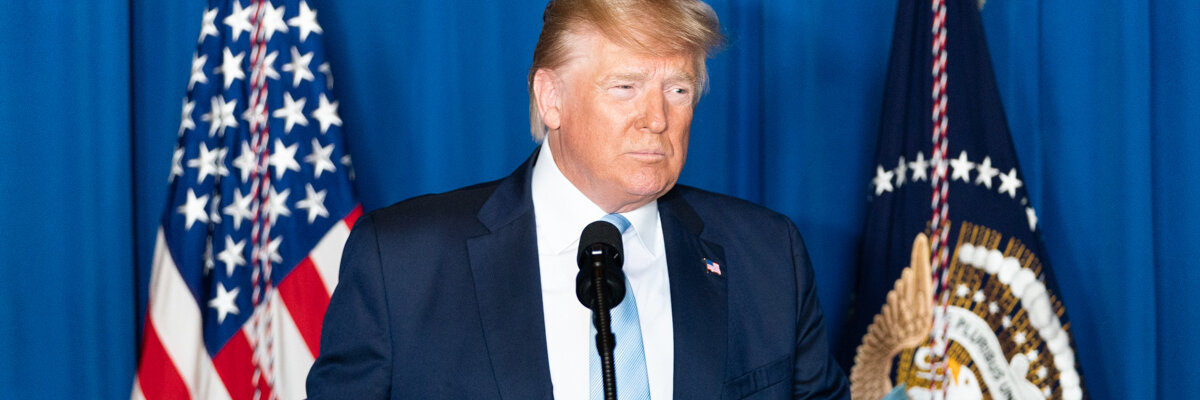
Trump Vows 'Snapback' to Force Return of UN Iran Sanctions
US President Donald Trump vowed Saturday to use a controversial technique to unilaterally reinstate UN sanctions on Tehran, a move with huge repercussions for the Iran nuclear deal.
By Sebastian Smith with David Vujanovic
US President Donald Trump vowed Saturday to use a controversial technique to unilaterally reinstate UN sanctions on Tehran, a move with huge repercussions for the Iran nuclear deal.
His declaration came a day after the UN Security Council overwhelmingly rejected a US resolution to extend an Iranian arms embargo.
"We'll be doing a snapback," Trump said during a news conference at his New Jersey golf club. "You'll be watching it next week."
The president was referring to the contested argument that the US remains a "participant" in the 2015 Iran nuclear deal—despite Trump's withdrawal from it—and therefore can force a return to sanctions if it sees Iran as being in violation of its terms.
Iranian President Hassan Rouhani said the US had failed to kill off what he called the "half alive" deal with major powers that gave Iran relief from sanctions in exchange for curbs on its nuclear program.
"The United States failed in this conspiracy with humiliation," said Rouhani.
"This day will go down in the history of our Iran and in the history of fighting global arrogance."
Only two of the Council's 15 members voted in favor of the US resolution seeking to extend the embargo, highlighting the division between Washington and its European allies since Trump withdrew from the nuclear accord in 2018.
The Europeans on the Council all abstained, and Iran mocked the Trump administration for winning the support of just one other country, the Dominican Republic.
"In the 75 years of United Nations history, America has never been so isolated," foreign ministry spokesman Abbas Mousavi tweeted.
People on the streets of Tehran had mixed reactions.
"This is an American political game. One day they give a resolution to the Security Council, the next they say they have taken" Iranian fuel, said a worker at the city's Grand Bazaar who gave his name only as Ahmadi.
A drugstore employee named Abdoli told AFP she was happy Iran won, but added that it "should interact with the United States and establish relations.
Crisis
European allies have been skeptical on whether Washington can force sanctions, with experts saying a "snapback" threatens to plunge the Council into one of its worst-ever diplomatic crises.
Trump also said Saturday he would "probably not" take part in a summit proposed by Russian President Vladimir Putin on addressing the situation.
"I think we'll wait until after the election," he said, with the US set to hold its presidential poll in November.
Putin had appealed to China, France, Britain, the US, Germany and Iran to convene an emergency video summit to avoid an escalation of tensions in the Gulf.
US Secretary of State Mike Pompeo, on a visit to Poland on Saturday, made it clear the United States would press on.
"It is unfortunate that the French and the United Kingdom... didn't support what the Gulf states have demanded, what the Israelis have demanded... I regret that deeply," Pompeo told reporters.
"The United States is determined to make sure that the Iranians and this regime, this theocratic regime does not have the capacity to inflict even more harm on the world."
Israeli Prime Minister Benjamin Netanyahu denounced a "scandalous" UN vote.
"Iranian terrorism and aggression threaten the peace of the region and the entire world. Instead of opposing weapons sales, the Security Council is encouraging them," he said.
Threatened
The embargo on conventional arms is due to expire on October 18 under the terms of a resolution that blessed the Iran nuclear deal, officially known as the Joint Comprehensive Plan of Action.
Since Trump pulled out of the JCPOA and slapped unilateral sanctions on Iran, Tehran has taken small but escalatory steps away from compliance with the accord as it presses for sanctions relief.
European allies of the United States—who, along with Russia and China, signed the deal with Iran—have voiced support for extending the 13-year-long conventional arms embargo, saying an expiry threatens stability in the Middle East.
However, their priority is to preserve the JCPOA.
The US text at the Security Council on Friday, seen by AFP, effectively called for an indefinite extension of the embargo on Iran, which diplomats said would threaten the nuclear deal.
Iran says it has the right to self-defense and that a continuation of the ban would mean an end to the agreement.
Apart from 11 abstentions, Russia and China opposed the resolution.
"The result shows again that unilateralism enjoys no support, and bullying will fail," China's UN mission tweeted.
Photo: Wikicommons
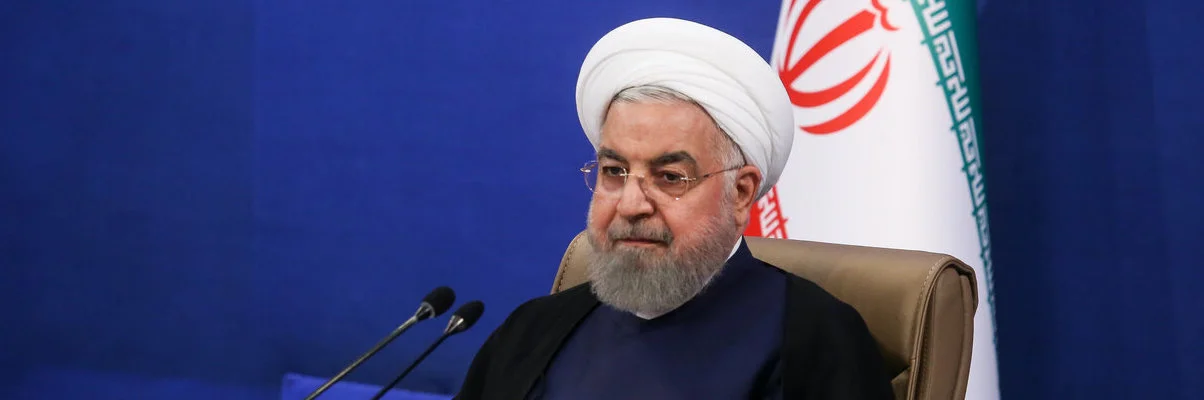
Iran's Rouhani Hopeful US Arms Embargo Push Will Fail
Iran's President Hassan Rouhani expressed "great hopes" Wednesday that a US bid to extend an arms embargo on his country will fail, warning of consequences if the UN Security Council backs it.
By Amir Havasi
Iran's President Hassan Rouhani expressed "great hopes" Wednesday that a US bid to extend an arms embargo on his country will fail, warning of consequences if the UN Security Council backs it.
Rouhani's remarks came after Iran's ambassador to the United Nations said the US would have to redraft its proposed resolution on the issue after being "rebuffed" by Security Council members.
"We have great hopes that America will fail," Rouhani told a televised meeting of his cabinet.
The ban on selling weapons to Iran is set to be progressively eased from October under the terms of Resolution 2231, which blessed the Iran nuclear deal that world powers agreed in July 2015.
But a UN embargo on materials and technology that Iran could use for its ballistic missile program is to remain in place until 2023.
The European Union has said it will continue to enforce its own embargo against Iran after the lifting of the first UN restrictions.
Under the accord officially known as the Joint Comprehensive Plan of Action, Iran committed to limiting its nuclear program in exchange for sanctions relief.
The JCPOA has been on life-support since the US under President Donald Trump withdrew from it and reimposed unilateral sanctions in 2018.
Iran has since taken small but escalatory steps away from compliance with the agreement as it presses for the sanctions relief it was promised.
'Blatant Violation'
"We have great hopes that America will realize its failure and see its isolation," the Iranian president said.
"But our stance in any case is clear. If such a resolution comes to pass... it means a blatant violation of the JCPOA," he added, warning the "consequences will rest with the perpetrators of this act".
Iran's envoy to the UN, Majid Takht Ravanchi, said on Wednesday that the US "was forced to retreat" from its draft resolution after being "rebuffed by UNSC members" and had to propose a fresh version.
"The new draft is similar—in its NATURE and GOAL—to the previous. Confident that the Council will—again—reject this move."
Foreign Minister Mohammad Javad Zarif said earlier the new draft was a "five-page resolution reduced to five sentences", and added that by presenting it as new, the US was disrespecting Security Council members.
The original US text, seen by AFP in New York, effectively called for an indefinite extension of the arms embargo on Iran and used hawkish rhetoric.
'Unholy Mess'
A new US-drafted resolution also seen by AFP was slimmed down from that one, but it still calls for an indefinite extension.
With most European countries in the 15-member Council expected to abstain, the new text is unlikely to get the nine votes it needs to pass.
If it does, China and Russia intend to veto the resolution.
Richard Gowan, a New York-based UN expert at the International Crisis Group, said the US had "mishandled the diplomatic choreography over this resolution.”
"They wanted to push their hardline draft and then make a show of compromising on a shorter text, which they hoped Estonia or Tunisia would introduce," he said.
"But the Estonians and Tunisians, like most other Council members, seem to have decided that they want as little to do with this unholy mess as possible.
"After talks on Monday, both turned down the opportunity to table the compromise text," he told AFP in New York.
"So now the US has had to do that itself. But the goal, which is to move towards snapback, remains the same."
European allies of the US—Britain, Germany and France, who along with Russia and China, are parties to the JCPOA—have voiced support for extending the conventional arms embargo but their priority is to preserve the nuclear deal.
Washington has threatened to use a contested argument that it remains a "participant" in the JCPOA—despite its withdrawal—and if UN sanctions are not extended, it can force their return if it sees Iran as being in violation of the accord's terms.
Photo: IRNA
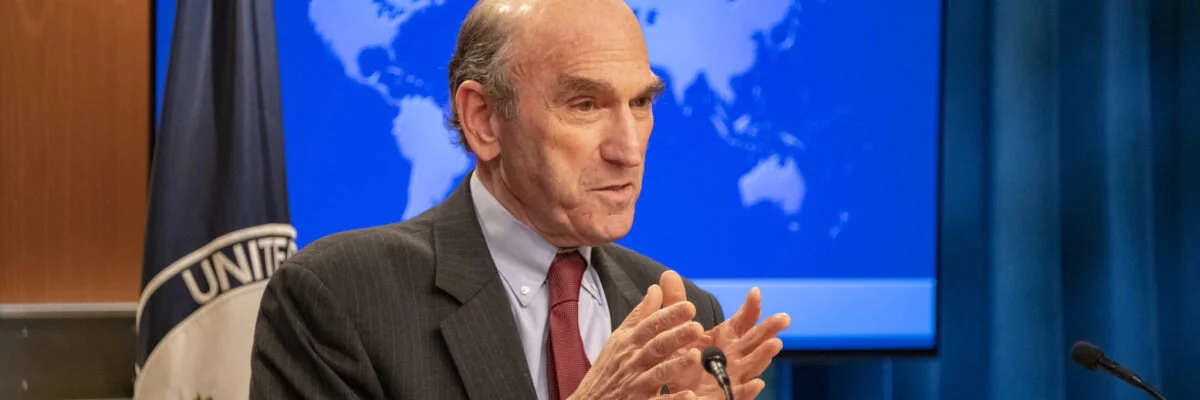
Iran Policy in Holding Pattern Before Elections
The sudden departure of Brian Hook leaves the Trump administration scrambling to snatch some victory after two years of “maximum pressure” on Iran.
By Robbie Gramer and Jack Detsch
Brian Hook’s abrupt departure as the Trump administration’s top Iran envoy leaves an uncertain future for the White House’s biggest Middle East policy, two years after President Donald Trump abandoned the Iran nuclear pact and proclaimed he could secure a “new and lasting deal.”
Hook’s replacement, Elliott Abrams, will simultaneously continue as the administration’s envoy for Venezuela, making him responsible for two defining Trump foreign-policy initiatives—neither of which has yielded the kind of high-profile victory the White House once hoped for.
The big question now is who wins this November’s U.S. presidential election. Iran has been rocked by mysterious explosions for weeks and may privately suspect U.S. involvement, but it is wary about rocking the boat before seeing if Trump wins reelection. But there’s also little chance for any last-minute outreach to Iran to secure a new and improved deal before the vote.
“The administration is sunk in a deep rut of its own devising, with no pathway to negotiations,” said Barbara Leaf, a former U.S. ambassador to the United Arab Emirates during the Obama and Trump administrations. “And needless to say, Tehran will not pick up the phone if Washington rings before November 3rd.”
Abrams, the longtime foreign-policy hawk taking over from Hook, would also bring potential baggage to the new role. He is perhaps best known for pleading guilty for lying to Congress over the Iran-Contra scandal during the Ronald Reagan administration. Some former officials think Abrams might use the remaining months before the election to tighten the screws on Iran, whether through an increase in the mysterious attacks inside the coronavirus-racked country or by further deepening U.S. relations with Israel.
“I think Abrams is much smarter than Hook. He may be more effective,” one former U.S. official said. “They don’t have time to get things done, but they do have time to make trouble.”
Iran’s challenge will be to lie low until it knows whom it will be dealing with next year.
“I think the Iranians are concerned about Trump because of how unpredictable he’s been, and I think they see the U.S. as implicated in the explosions,” said Ariane Tabatabai, a Middle East fellow at the German Marshall Fund of the United States who specializes in Iran. “But they’re careful not to talk too much about it because of the fact that then they’d have to do something and they don’t want to rock the boat.”
If Trump does win, some administration officials expect that Iran might finally come to the table to discuss a new nuclear accord, due to the unsustainable pressure from loads of U.S. economic sanctions that have pushed Iran’s economy to the brink.
“When it comes to Iran, the election is a big part of their calculation,” one U.S. official said. “If Trump ends up winning the election, I think you’re going to end up seeing some movement on these things.”
“We still believe the only way the current Iranian government has ever come to the table is pressure,” the official added.
Hook shepherded the so-called “maximum pressure” campaign on Iran for two years, overseeing a substantial expansion of U.S. sanctions that put the administration squarely at odds with European allies who have tried to keep afloat the Iran nuclear deal, formally called the Joint Comprehensive Plan of Action (JCPOA).
Hook, considered a moderate Republican, became an influential behind-the-scenes fixture first under former Secretary of State Rex Tillerson and later as point man on Iran. He long argued, including in a Q&A with Foreign Policy, that the onus was on Tehran to come to the table for new talks after the Trump administration pulled out of the deal in 2018.
Instead of agreeing to talk, Iran shook off the deal’s constraints on uranium enrichment and nuclear development, potentially shortening its breakout time to acquire nuclear capability. Former administration officials pointed to Iran’s stepped-up activity, a series of attacks on oil tankers in the Persian Gulf, and the downing of an American drone as evidence that Hook was increasingly the spokesperson for a failed strategy.
“I don’t think the [White House] will admit the strategy was a failure,” a former senior Trump administration official told Foreign Policy. “But Iran is breaking the JCPOA limits on enrichment and storage, so it will be super difficult to say it is working.”
News of Hook’s departure comes as the Trump administration faces likely defeat on his major diplomatic initiative at the U.N. Security Council next week: a U.N. resolution to extend a conventional arms embargo on Tehran. China and Russia, veto-wielding members of the Security Council, are unlikely to back the resolution, several diplomatic sources said. Hook will stay in his role to see through the U.N. fight, a State Department official told Foreign Policy.
Some former officials see Trump’s Iran policy as a way to try to fence in Joe Biden should he win. The former vice president has expressed a willingness for the United States to return to compliance with the 2015 Iran nuclear deal. By extending the arms embargo and triggering snapback sanctions, the United States could potentially shatter the legal framework underpinning the deal, experts suggested.
“At this stage, the Trump administration’s Iran policy is all about preparing for Trump’s loss and trying to pin down a future President Biden in his options with Iran,” said Jarrett Blanc, the former State Department coordinator for Iran nuclear implementation during the Obama administration and now a senior fellow at the Carnegie Endowment for International Peace. “I think they’re likely to fail at that effort.”
Photo: Wikicommons
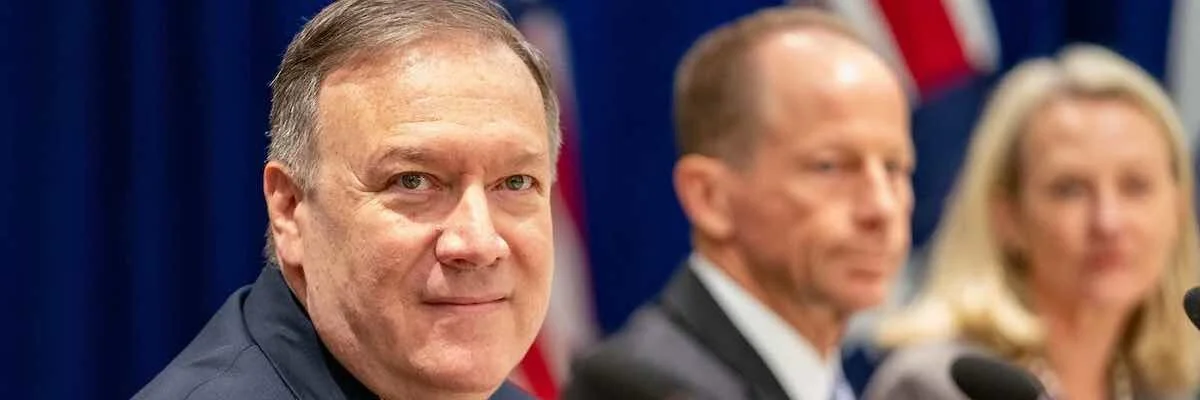
Pompeo Warns of UN Sanctions if Iran Arms Ban Ends
Secretary of State Mike Pompeo on Thursday gave his clearest indication yet that the United States would seek to force UN sanctions on Iran if an arms embargo lapses.
Secretary of State Mike Pompeo on Thursday gave his clearest indication yet that the United States would seek to force UN sanctions on Iran if an arms embargo lapses.
Russia and China, two of the Permanent Five nations that enjoy veto power on the Security Council, want the UN embargo on selling conventional weapons to Iran to end on October 18 as laid out under a 2015 resolution.
Pompeo told the Senate Foreign Relations Committee that the United States would introduce a resolution to extend the embargo "in the near future" which "we hope will be met with approval from other members of the P5."
"In the event it's not, we're going to take the action necessary to ensure that this arms embargo does not expire," he said.
The United States has previously said it has the authority to "snap back" UN economic sanctions that were lifted as part of a nuclear deal with Iran.
"We have the capacity to execute snapback and we're going to use it in a way that protects and defends America," Pompeo told the committee.
The 2015 resolution had blessed a denuclearization deal with Iran negotiated by former president Barack Obama from which President Donald Trump pulled out in 2018.
Trump has since repeatedly denounced the accord, but Pompeo argues that the United States remains a "participant" in the accord -- with the right to snap back UN sanctions for violations -- as it was listed in the 2015 resolution.
Even US allies are skeptical about the legal argument and warn that such a move could damage the Security Council as an institution.
France and Britain, the other nations in the P5, support extending the arms embargo but say the greater priority is maintaining a diplomatic solution to stop Iran's nuclear program.
The embargo issue could come to a head days before the US presidential election. Trump's rival Joe Biden backs the Iran agreement.
After leaving the accord, Trump unilaterally imposed US sanctions aimed at strangling Iran's economy and reducing its regional influence.
The Trump administration has demanded that all nations stop buying Iran's oil, its biggest export.
Pompeo on Thursday announced a further expansion of sanctions enforcement, saying the United States would punish anyone who transfers 22 specific metals including forms of aluminum and steel that could be used in Iran's weapons programs.
Photo: State Department
World Rebukes U.S. Over Iran
With Trump’s re-election prospects up in the air, a heated UN meeting on Iran shows the fading fear Russia, China, and America's European allies of confronting the administration over its destructive policies.
By Colum Lynch and Robbie Gramer
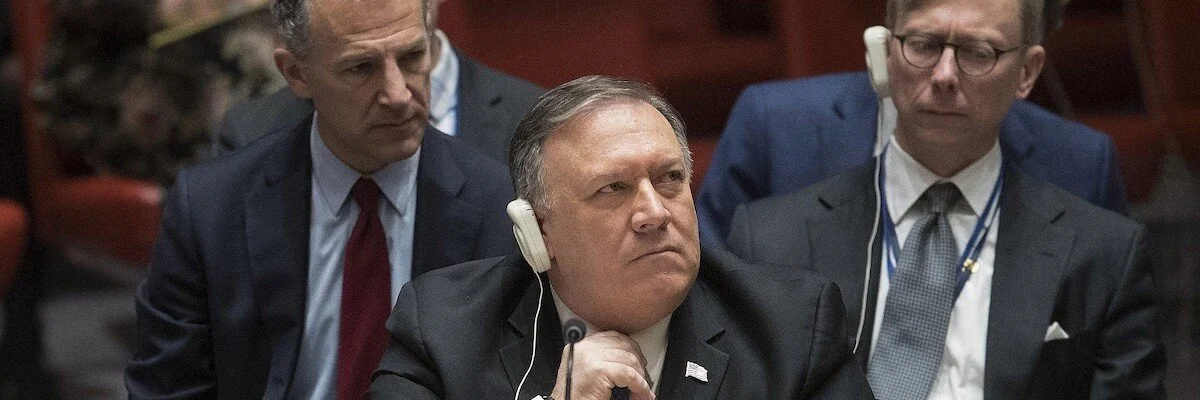
Secretary of State Mike Pompeo sought to reassert America’s waning influence on the world stage, challenging the U.N. Security Council on Tuesday to extend a U.N. arms embargo that is due to expire in October. Instead, America’s top diplomat received a scolding from friends and foes alike in the 15-nation council, which roundly criticized Washington for withdrawing from the Iran nuclear deal two years ago without a clear plan to limit Tehran’s nuclear activities.
On a day when the European Union pointedly excluded the United States from a “safe list” of countries permitted to travel to the 27-member bloc, the council’s chilly reception of Pompeo added to a portrait of an increasingly isolated United States and underscored how little deference other countries pay the Trump administration as it faces a grim reelection contest. The U.N. debate came amid a sharpening blowback in Washington to revelations that the Trump administration failed to act on months of intelligence warnings that Russia offered Taliban fighters bounties to kill U.S. and coalition troops in Afghanistan.
The dispute centered on the fate of the nearly moribund 2015 Iran nuclear deal, which capped Iran’s ability to develop a nuclear weapon but which the United States abandoned in May 2018. European parties to the deal, like Iran, want to keep it alive; the Trump administration wants to kill it before the election, lest any future Democratic administration bring it back to life.
The latest battleground is one provision of that deal, the planned expiry in October of a U.N. arms embargo on Iran—one of the sweeteners of the nuclear deal. U.S. allies, including the security council’s five European states, share Washington’s concern about Iran’s arms trade, though Europe’s own arms embargo is set to continue until 2023 regardless. But they worry that extending the U.N. arms embargo, in clear violation of the pact signed in 2015, would drive Tehran to kick out nuclear inspectors and set the stage for an even quicker development of its nuclear program.
“The [Iran nuclear pact], which is the result of compromise, can of course be seen as an instrument that can be improved,” France’s U.N. ambassador, Nicolas de Rivière, told the council. “There is as yet no serious alternative to prevent Iran from acquiring nuclear weapons, and its disappearance would improve neither the regional situation nor the security of our populations.”
Since President Donald Trump pulled the United States out of the deal, Iran has violated key tenets of the accord by increasing its stockpiles of nuclear fuel and resuming its enrichment of uranium, according to assessments from the International Atomic Energy Agency.
At the opening of Tuesday’s virtual session, Rosemary DiCarlo, a former U.S. State Department official who serves as U.N. undersecretary-general for political affairs, praised the nuclear pact as a “significant achievement of multilateral diplomacy and dialogue” and expressed “regret” over the U.S. decision to withdraw, noting that Iran was in compliance with the pact before Trump’s abrupt decision to pull the plug.
But she also expressed regret that since July 2019 Iran has violated key provisions of the nuclear pact, surpassing limits on the size of its stockpiles of heavy water and low-enriched uranium and engaging in prohibited nuclear research and development activities.
DiCarlo also flagged Iran’s role in missile and drone attacks against Saudi Arabia, as well as arms shipments to proxies in Yemen that appear to run afoul of the provisions of the key U.N. Security Council resolution that endorsed the nuclear deal.
Iranian Foreign Minister Mohammad Javad Zarif dismissed claims that Iranian-made weapons were being transferred to Yemen and elsewhere in violation of U.N. sanctions.
But the draft has little support among major powers at the U.N., reflecting Washington’s isolation on its Iran policy.
“The international community in general and the U.N. Security Council in particular are facing an important decision,” Zarif told the council. “Do we maintain respect of the rule of law, or do we return to the law of the jungle by surrendering to the whims of an outlaw bully?”
The Trump administration this month circulated a draft resolution to extend the arms embargo on Iran, but veto-wielding China and Russia signaled they would not support the U.S. plan. European powers also reacted coolly to the resolution and are expected to introduce their own stopgap proposal to extend parts of the arms embargo for up to six months. It is unclear if the United States would support their plan.
The Trump administration has charged Tehran with playing a destabilizing role in the Middle East through its support of proxy terrorist groups in the region. Pompeo said that if the United Nations did not extend the arms embargo, it would pave the way for Iran to procure advanced military hardware from Russia and China that would undercut regional stability and potentially threaten capitals in Europe and even South Asia—reiterating misleading claims he made last week about the operational range of high-end Russian and Chinese fighters.
“If you fail to act, Iran will be free to purchase Russian-made fighter jets that can strike up to a 3,000-kilometer radius, putting cities like Riyadh, New Delhi, Rome, and Warsaw in Iranian crosshairs,” Pompeo told the council during Tuesday’s virtual meeting.
“Don’t just take it from the United States; listen to countries in the region. From Israel to the Gulf, countries in the Middle East—who are most exposed to Iran’s predations—are speaking with one voice: Extend the arms embargo,” he said.
Photo: State Department
Saudi, US Push For Extension of Iran Arms Embargo
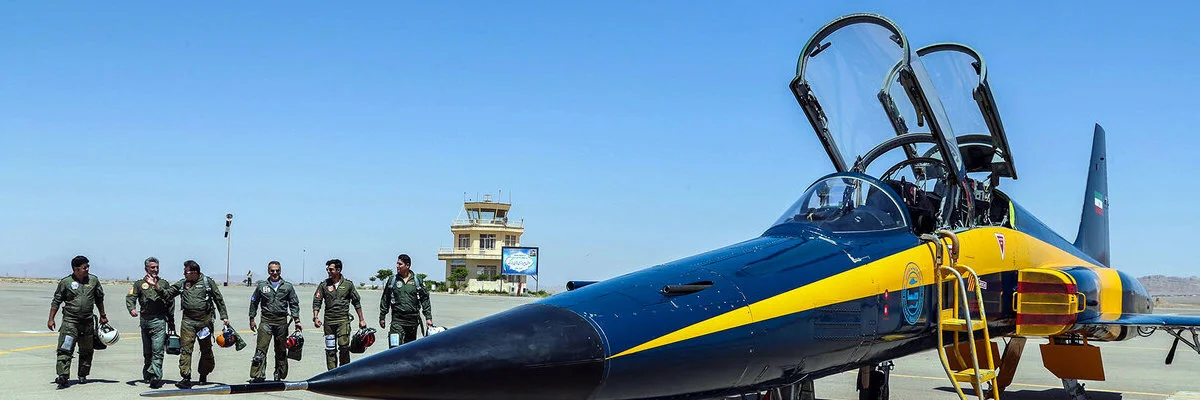
US and Saudi officials on Monday called for extending a UN arms embargo on Iran, warning of major implications for regional security, accusing Tehran of arming Yemeni rebels.
US and Saudi officials on Monday called for extending a UN arms embargo on Iran, warning of major implications for regional security, accusing Tehran of arming Yemeni rebels.
The embargo, put in place as part of a nuclear accord signed with Tehran in 2015, is set to expire in October but Washington is working to extend the ban as tensions with its arch-rival remain high.
Lifting the ban would "embolden" Tehran and could trigger a regional arms race, US Special Representative for Iran Brian Hook told reporters in Riyadh.
"This is not an outcome that the UN Security Council can accept," Hook said at a joint news conference with Adel al-Jubeir, the Saudi minister of state for foreign affairs.
At the conference venue, Saudi officials displayed remnants of intercepted missiles and drones they said were supplied by Iran to Yemen's Huthi rebels.
Iran denies arming the rebels.
The Huthis have recently targeted Saudi cities, including the capital Riyadh, with a series of missile and drone strikes.
"Iran seeks to provide weapons to terrorist organizations. What will happen if the embargo is lifted?" Jubeir said.
"Iran will become more... aggressive," he added.
Earlier this month, a UN report said cruise missiles and drones used in attacks last year on Saudi oil facilities were "of Iranian origin".
The attacks on Saudi state oil giant Aramco's facilities caused extensive damage and briefly interrupted production of half of the country's oil output.
Russia, China Vetoes at UN
Hook said later in Bahrain that if the arms embargo expired, Iran would be able to acquire advanced arms and pose a greater threat to Gulf security and international shipping.
“It will trigger an arms race in one region that needs it the least," Hook said on his second leg of the Gulf tour to garner support for extending the arms embargo on Iran.
Allowing the UN arms embargo to expire would be a betrayal of the security council's responsibility of maintaining international peace and security, he said.
The US official also said that the embargo has constrained Iran's ability to freely move weapons to its proxies.
Bahrain Foreign Minister Abdullatif al-Zayyani expressed his country's total support for extending the arms embargo on Iran, accusing Tehran of continuing to supply arms to militias in Yemen, Lebanon and Iraq.
US Secretary of State Mike Pompeo warned last week of a return of UN sanctions on Iran if the Security Council fails to extend an embargo.
France, Britain and Germany, which all still support the nuclear deal, have also said they supported extending the embargo.
No date has been scheduled for a vote on the resolution and it is unlikely to pass, as veto-wielding China and Russia have already spoken out against extending the embargo.
Iran agreed with major world powers in 2015 to freeze its nuclear program in return for the lifting of punishing international sanctions.
But in 2018, US President Donald Trump pulled the United States out of the agreement and reimposed sanctions, prompting Iran to roll back its own commitments.
Photo: IRNA
Trump Administration Unveils Security Council Resolution Extending Iran Arms Embargo
A long-awaited U.N. Security Council draft resolution extending an arms embargo on Iran has little support among major powers at the U.N., reflecting Washington’s isolation on its Iran policy.
By Colum Lynch and Robbie Gramer
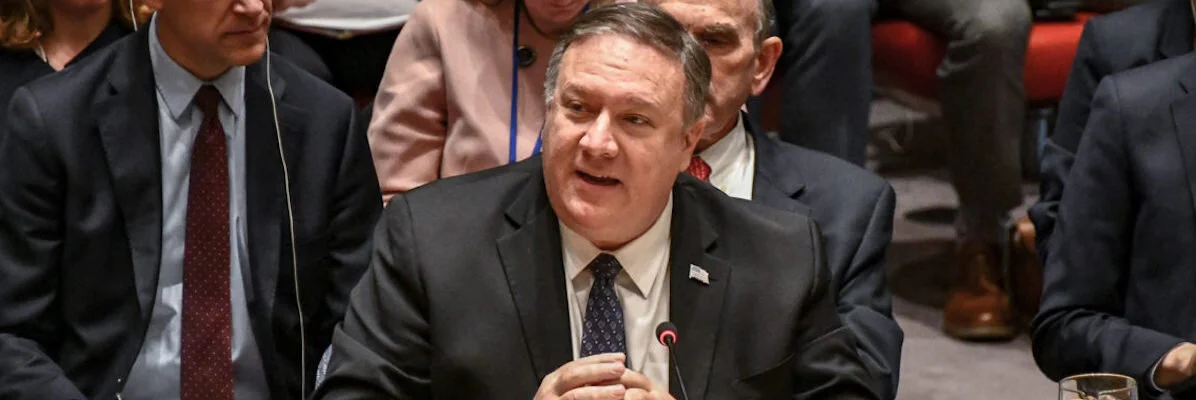
The administration of U.S. President Donald Trump introduced a long-awaited U.N. Security Council (UNSC) draft resolution extending an arms embargo on Iran that is due to expire in October, setting the stage for a great-power clash and likely veto in the U.N.’s principal security body, according to a copy of the draft obtained by Foreign Policy.
The U.S. draft resolution would oblige nations, including the United States, to take active measures to prevent Iran from supplying, selling, or transferring arms to other countries, unless the Security Council committee overseeing U.N. sanctions approves such transfers. The measure would also require all U.N. member states to inspect cargo transiting through their territory to check for illicit arms imports or exports from Iran, and grant them authority to seize and destroy such weapons.
It would also impose an asset freeze and travel ban on individuals responsible for violating the arms embargo, and authorize states to “seize, inspect, freeze (impound), confiscate, and dispose of any vessel in their ports.” In an effort to ratchet up pressure on Iran, the resolution would request that U.N. Secretary General António Guterres report any attacks by armed groups that threaten regional stability or interference in the freedom of navigation in the region. The resolution would also establish a special council committee to monitor compliance with the sanctions and appoint a panel of eight experts to investigate and compile information on potential violations of the embargo.
If passed, the resolution would fall under Chapter VII of the U.N. charter, making it legally binding and enforceable. But the U.S. measure, according to several U.N. Security Council diplomats, stands little chance of being adopted by the 15-nation council. One council diplomat said that the U.S. initiative might not even receive the minimum threshold of nine votes it needs in the council that would force a veto from one of the permanent Security Council members. “This is not something that they are trying to get through the council,” said the diplomat.
Some council diplomats and other nonproliferation experts see the U.S. move as a way to score political points at home, not to do anything about Iran’s destabilizing activities in the region.
“The skeptic in me says that the objective of this exercise is to go through the arms embargo resolution, and when it fails, to use that as an excuse to get a snapback of the embargo, and if and when that fails too, to use as a political talking point in the election campaign,” said Mark Fitzpatrick, a former State Department nonproliferation official now at the International Institute for Strategic Studies. Since China and Russia are almost certain to ignore any U.N. arms embargo forced by U.S. maneuvers, the practical impact on Iran’s ability to cause mischief will be minimal, he said.
“It’s not actually about stopping any arms from China and Russia, it’s about winning a political argument,” he said.
The draft also condemns a string of alleged armed attacks by Iran against the United States, Iraq, and Saudi Arabia, including the September 2019 drone and missile attack against two Saudi oil installations and a Dec. 27 strike allegedly by an Iranian-backed militia against an Iraqi military base in Kirkuk province, Iraq, which resulted in the death of a U.S. citizen and injured several U.S. and Iraqi personnel.
The 2015 Joint Comprehensive Plan of Action (JCPOA) envisioned the expiration of a sweeping U.N. arms embargo on Iran after five years if Tehran complied with its obligation to scale back its nuclear activities and subject its program to expanded international monitoring by the International Atomic Energy Agency. Iran had largely complied with its obligations until Trump withdrew the United States from the agreement in May 2018 and reintroduced a series of U.S. sanctions against the country.
Since then, Tehran has violated key tenets of the JCPOA, including enriching uranium to purity levels higher than what is allowed in the deal and increasing the stockpiles of enriched uranium, according to assessments from the International Atomic Energy Agency.
China and Russia, which wield veto power over Security Council decisions, have signaled their unwillingness to approve the resolution. Other signatories of the Iran deal—Britain, France, and Germany—have all supported retaining arms embargoes on Iran, but they also came out against the Trump administration’s threat to reimpose sanctions, highlighting the sharp disagreements between Washington and its closest European allies over Iran.
“We firmly believe that any unilateral attempt to trigger UN sanctions snapback would have serious adverse consequences in the UNSC,” the foreign ministers of Britain, France, and Germany said in a statement on June 19. “We would not support such a decision which would be incompatible with our current efforts to preserve the JCPoA.”
The foreign ministers also cautioned that lifting the U.N. conventional arms embargo “would have major implications for regional security and stability” but stressed that even without a U.N. arms embargo, the European Union has its own ban on sending conventional weapons and missile technology to Iran through 2023. Senior U.S. officials have said that Russia and China would be poised to sell conventional arms to Iran if the U.N. embargo expires.
A State Department spokesperson told Foreign Policy that “failing to extend the arms embargo will risk even greater violence in the Middle East.”
The spokesperson added that the U.S. is “hopeful” that the draft resolution will be supported by the Security Council, stating that China and Russia have upheld similar restrictions in the past. “Given that Iran’s activity continues to pose a threat to international peace and security, we do not see any reason why [the] Security Council consensus on this issue should have changed,” the spokesperson said.
The Trump administration’s push to reimpose sanctions opened a unique legal debate over the United States’ current standing with the JCPOA. The Trump administration has argued that it is still legally a party to the deal the president disavowed, allowing it to trigger the snapback of sanctions. This argument has angered top diplomats from other countries that were signatories to the deal, who said the United States couldn’t have it both ways.
Brian Hook, the Trump administration’s top Iran envoy, said in an interview with Foreign Policy last month that the president remains open to “sitting down” with Tehran for talks on a new deal. He said that the United States would still maintain its expanding sanctions regime on Iran in the meantime.
“We’re in no hurry. We have a good policy in place. The regime needs to decide when it wants to come to the table,” he said.
Photo: State Department
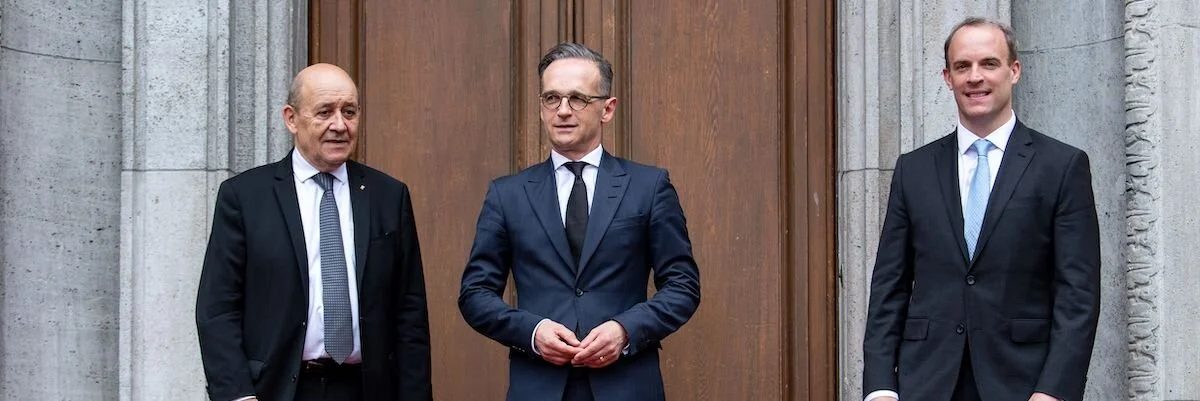
Britain, France, Germany Will Not Back U.N. Iran Sanctions Snapback
The foreign ministers of Britain, France and Germany said Friday they opposed lifting a UN arms embargo on Iran this year, but opposed sanctions “snapback,” after the UN's nuclear watchdog passed a resolution critical of Tehran.
The foreign ministers of Britain, France and Germany said Friday they opposed lifting a UN arms embargo on Iran this year, after the UN's nuclear watchdog passed a resolution critical of Tehran.
"We believe that the planned lifting of the UN conventional arms embargo established by Resolution 2231 next October would have major implications for regional security and stability," the ministers said in a joint statement.
The statement by the three key European powers on Iran will be a blow to Tehran, which had urged a lifting of the embargo despite US pressure for it to remain in place.
The ban on selling weapons—such as battle tanks, combat aircraft, warships and missiles or missile systems—to Iran had been set to be progressively eased from October.
Iranian President Hassan Rouhani earlier this month urged UN Security Council members to oppose a US "conspiracy" to extend the arms embargo.
The three powers said they plan to address the arms embargo issue "in close coordination" with UN Security Council permanent members Russia and China.
The board of governors at the International Atomic Energy Agency (IAEA) had passed a resolution Friday urging Tehran to provide inspectors with access to two sites to clarify whether undeclared nuclear activity took place there in the early 2000s.
It was the first such resolution since 2012 and came against a background of tension over the Iranian nuclear program, with Iran's position causing increasing exasperation in Europe.
"Since 2019, Iran has taken nuclear measures contrary to its commitments" under the 2015 deal on its nuclear program with world powers, the ministers' statement said.
It added that Iran "has denied the access requested by the agency for many months" to the sites.
But the powers insisted they remained committed to the 2015 nuclear deal, which analysts believe has been greatly undermined by the withdrawal of the United States in 2018.
They said sanctions should not be reimposed and that they opposed the "maximum" pressure policy against Iran of the administration of US President Donald Trump.
"We firmly believe that any unilateral attempt to trigger UN sanctions snapback would have serious adverse consequences" in the UN Security Council.
"We remain committed... (to the nuclear deal) and, in order to preserve it, urge Iran to reverse all measures inconsistent with the agreement and return to full compliance without delay," said the statement.
Photo: Shutterstock
Iran Challenges Nuclear Watchdog Report Over Cooperation
Iran insists it is ready to resolve any issues with the UN nuclear watchdog, expressing "disappointment" in a note circulated Thursday over the IAEA's latest report complaining of blocked access.
Iran insists it is ready to resolve any issues with the UN nuclear watchdog, expressing "disappointment" in a note circulated Thursday over the IAEA's latest report complaining of blocked access.
The International Atomic Energy Agency (IAEA) said in a report seen by AFP last Friday that Iran has for months blocked inspections at two sites where nuclear activity may have occurred in the past.
The Vienna-based agency noted "with serious concern that, for over four months, Iran has denied access to the agency... to two locations.”
In a note to the IAEA dated June 8, Iran said it had held meetings with agency representatives in Tehran on April 29 and May 16 to discuss the access issues, followed by written correspondence and a fresh proposal to meet with IAEA representatives.
In the note circulated by Tehran's mission to the UN in Vienna on Thursday, Iran insisted it "continued its constructive engagement with the agency during the past two months, with a view to reach a common understanding... which would pave the way for the resolution of concerned issues."
Iran argues that the requests for access are based on "fabricated information", accusing the United States and Israel of trying to "exert pressure on the agency.”
Israel has claimed that its intelligence services have new information on Iran's alleged previous nuclear weapons program.
The IAEA has said previously that its access requests were based on "concrete information" that had been validated.
In its note, Iran expressed "deep regret and disappointment" at the IAEA's latest report.
The report is expected to be discussed at a meeting of the agency's board of governors starting next Monday.
In a separate report, also to be discussed during the board meeting, the IAEA warned that Iran's enriched uranium stockpile is now almost eight times the limit set in the nuclear deal the country signed with world powers in 2015.
Iran has been progressively breaking restrictions laid down in the 2015 deal in retaliation for US withdrawal from the accord in 2018 and its subsequent re-imposition of sanctions.
Photo: IRNA
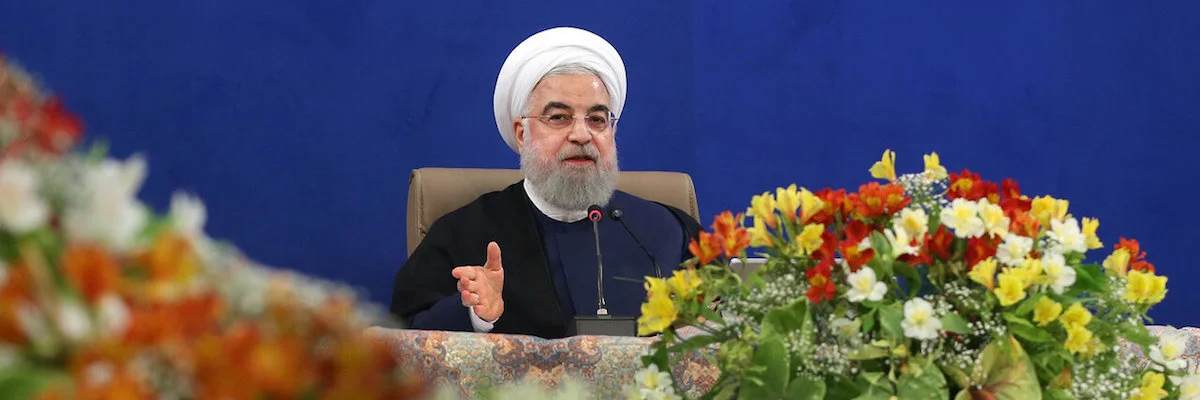
Iran Urges Powers to Oppose US Arms Embargo Bid
Iran's President Hassan Rouhani on Wednesday urged UN Security Council members, especially veto-wielding China and Russia, to oppose a US "conspiracy" to extend an arms embargo on Iran.
Iran's President Hassan Rouhani on Wednesday urged UN Security Council members, especially veto-wielding China and Russia, to oppose a US "conspiracy" to extend an arms embargo on Iran.
"We will reach a point... when, based on Resolution 2231, all arms embargoes on Iran will be lifted," said Rouhani
"The Americans are already angry and upset... and are preparing a resolution and want to bring it to the Security Council," he told a televised cabinet meeting.
The ban on selling weapons to Iran is set to be progressively eased from October in accordance with UN Security Council Resolution 2231.
The weapons include battle tanks, combat aircraft, warships and missiles or missile systems, according to the resolution.
But a UN embargo on materials, goods, equipment and technology that Iran could use for its ballistic missile program will remain in place until October 2023.
The European Union has said it will continue to enforce its own arms embargo against Iran after the lifting of the first UN embargo.
Resolution 2231 blessed the landmark international agreement reached in 2015 that placed limits on Iran's nuclear program.
US President Donald Trump withdrew from the accord—known formally as the Joint Comprehensive Plan of Action (JCPOA)—in 2018 and began reimposing sanctions on Iran.
The United Nations Security Council includes among its 15 members five veto-wielding permanent members—Britain, China, France, Russia and the United States.
Rouhani appealed to those other than the United States to oppose its bid to extend the arms embargo.
"We expect the four permanent members to stand against this conspiracy, for global interests, global stability," he said.
"We especially expect (this from) our two friendly countries, Russia and China."
Washington said last week it had shared a draft resolution with Russia to extend the ban, with Moscow and Beijing having already voiced opposition to he measure.
"Russia and China need to join a global consensus on Iran's conduct," said Kelly Craft, the US ambassador to the UN.
“This is an absolute imperative that we exercise all our options to make certain that this UN arms embargo is extended."
Even though Trump has left the nuclear accord, his administration has argued that the US remains a participant under Resolution 2231 and can trigger UN sanctions for Iran's non-compliance with the 2015 deal.
Yet according to the EU's top diplomat Josep Borrell, the US "cannot claim they are still part of the JCPOA to deal with this issue" after leaving it.
Iran, which has gradually scaled back its commitments to the accord in response to the renewed US sanctions, has dismissed the US argument as without any legal standing and warned that extending the embargo would mean the death of the nuclear accord.
Photo: IRNA
Despite U.S. Sanctions, Iran Expands Its Nuclear Stockpile
Two years after Trump withdrew from the Iran nuclear deal, Tehran has cut in half the time it would need to produce enough weapons-grade fuel for a nuclear bomb.
By Colum Lynch
Two years after President Donald Trump announced the U.S withdrawal from the Iran nuclear deal, Tehran has resumed its enrichment of uranium, restarted research and development on advanced centrifuges, and expanded its stockpile of nuclear fuel, cutting in half the time it would need to produce enough weapons-grade fuel to build a nuclear bomb.
“Iran is manifestly closer to being able to produce a nuclear weapon than they were two years ago,” said Richard Nephew, who participated in negotiations on the landmark nuclear deal in 2015.
While there is no evidence Tehran is preparing a dash for a nuclear weapon, the Iranian advances raise questions about the success of the White House’s so-called “maximum pressure” campaign, which is aimed at forcing Iran through the imposition of ever more stringent sanctions to accept greater constraints on its political and military support for regional militias and the development of its ballistic missile program.
The effort—which has severely damaged Iran’s economy—has yet to temper Iran’s nuclear ambitions, instead prompting Tehran to resume nuclear activities prohibited by the nuclear pact, which is formally known as the Joint Comprehensive Plan of Action, or JCPOA. It has also eroded Washington’s credibility even among many of its traditional allies and placed increasing strains on America’s diplomatic partnerships.
This month, the U.S. State Department publicly unveiled a diplomatic effort to secure a tangible result from its pressure campaign in the run-up to the U.S. presidential election—an agreement by the U.N. Security Council to extend a conventional arms embargo that is scheduled to expire on Oct. 18, just weeks before the election. Back in February, the United States privately circulated elements of a draft Security Council resolution extending the arms embargo to Britain, France, and Germany, hoping to rally support for the initiative.
The United States received a chilly response from the Europeans, who argued that the resolution was all but certain to be vetoed by China and Russia, which plan to sell arms to Iran once the embargo expires. The Europeans say they share Washington’s concerns about Iran’s ballistic missile programs and its support for proxies, including Hezbollah and other militias spread across the Middle East. But they fault Washington with undermining a landmark nuclear pact that enjoyed broad international support and which they believed had succeeded in constraining Tehran’s nuclear program, until the United States ditched it.
Last week, Brian Hook, the U.S. special envoy for Iran, warned that if the council failed to agree to extend the embargo, Washington could deliver a potentially lethal blow to the nuclear agreement by triggering a provision that would allow any of the initial seven signatories to reimpose—or snap back—all Iran sanctions, including the conventional arms embargo, that were in force before the nuclear pact was concluded. Iran has warned that if the sanctions are reimposed, it will likely pull out of the nuclear pact, end international inspections of its nuclear energy program, and withdraw from the Nuclear Nonproliferation Treaty.
Such a move by Washington would raise complex political, diplomatic, and legal questions about whether the United States, which withdrew its participation in the nuclear deal on May 8, 2018, has the legal right or the moral authority to trigger the snapback provision. Under the terms of U.N. Security Council Resolution 2231, which endorsed the nuclear deal, any participant in the nuclear pact has the right to single-handedly snap back the previous sanctions. Trump administration officials contend that while the United States is no longer a participant in the nuclear deal, it still retains all the rights of a participant under the resolution, which has never been overturned. And they intend to exercise that right if they don’t get their way.
“There is no qualification in 2231 where ‘participant’ is defined in a way to require participation in the JCPOA. And if the drafters wanted to make the qualification, they could have, but they did not,” Hook told reporters on April 30. “This is the plain reading of the text.”
“The arms embargo must be renewed, and we will exercise all diplomatic options to accomplish that,” Hook said. “We have a policy goal of renewing the arms embargo, and that’s where our focus is. We’re hopeful that we’ll succeed.”
John Bellinger III, who served as the principal legal advisor to the National Security Council and the State Department during the George W. Bush administration, said the United States can make a credible legal case for reimposing sanctions but that the outcome could prove self-defeating.
“The U.S. has the right to trigger snapback, but they may ultimately not be effective in achieving what they want to achieve,” he said, warning that states may be disinclined to observe such sanctions. “There is a real risk it could backfire if the other countries are unwilling to go along. If you try to lead but no one will follow, you have not been successful, and the U.S. will have fractured the Security Council.”
“I suspect, at the end of the day, the Security Council will be forced on a purely legal basis to conclude we have the right to submit the resolution [triggering snapback],” Nephew said. “The debate will split the council as a point of fact because you will have the French, Brits, and Germans screaming that we are not doing this in good faith and the Russians and the Chinese will lose their minds on this.” The practical outcome of this approach, he said, is that the Chinese and Russians will cry foul and declare the action illegitimate. “I have no doubt they will sell arms and will do so immediately. Those tanks that [U.S. Secretary of State Mike] Pompeo is so concerned about could be put on the next boat.”
European officials have fumed in private over the latest U.S. threat, which they suspect is designed to kill off the nuclear pact. They view Washington’s legalistic approach as inconsistent and hypocritical, noting that the very resolution being invoked by the United States to reimpose sanctions also calls on states to support the implementation of the nuclear pact. One senior European official also pointed out that a key provision in the U.N. Charter, Article 25, states that “the Members of the United Nations agree to accept and carry out the decisions of the Security Council in accordance with the present Charter”—a provision that the United States has ignored.
The U.S. strategy is “legally and politically obscene,” a U.N.-based diplomat privately toldthe International Crisis Group.
Russia has said publicly what some of its European partners are saying privately.
“Their reasoning is ludicrous, of course,” Mikhail Ulyanov, Russia’s ambassador to the U.N. in Vienna, said in an interview with the Russian newspaper Kommersant published on April 28. “It is common knowledge that Washington officially announced its withdrawal from the nuclear deal on May 8, 2018.”
“Theoretically, an attempt of this sort is possible, but it will make the U.S. appear in an extremely unattractive light,” he added. “I don’t think that the U.N. Security Council members would be ready to support the U.S. bid to remain a JCPOA participant. It is clear to everybody that this is preposterous. … The attempt to implement this plan will cause a lot of harm and lead to stormy debates in the U.N. Security Council.”
Democratic lawmakers who supported the JCPOA chided the administration for withdrawing from it in the first place and then later trying to use the deal to advance its goals. “They’re trying to have it both ways,” one Democratic congressional aide said.
Nevertheless, a bipartisan majority in Congress—including some of Trump’s most stalwart critics on the left—supports extending the Iran arms embargo. Hundreds of House lawmakers from both sides signed on to a letter to Pompeo last month urging an extension of the ban. “[W]e are concerned that the ban’s expiration will lead to more states buying and selling weapons to and from Iran. … This could have disastrous consequences for U.S. national security and our regional allies,” read the letter, which was organized by Reps. Eliot Engel and Michael McCaul, the chairman and the top Republican on the House Foreign Affairs Committee, respectively.
“It’s now just several months out where China, Russia, other countries from around the world can all sell significant conventional weapons systems to the Iranians in October of this year,” Pompeo told reporters in a briefing last week. “This isn’t far off. This isn’t some fantasy by conservatives. This is a reality.”
The 2015 Iran nuclear pact—the culmination of more than a decade of diplomatic efforts to contain Iran’s nuclear program—offered Tehran an end to crippling economic sanctions in exchange for limiting its nuclear activities and undertaking a set of verifiable commitments to assure the world it was not building nuclear weapons. It was signed by representatives of Britain, China, the European Union, Iran, France, Germany, Russia, and the United States.
Trump derided the nuclear pact—a signature foreign-policy achievement for President Barack Obama—as a flawed agreement that gave Iran access to billions of dollars that have since been used to fund Iranian-backed militias and to advance a ballistic missile program that could improve Iran’s ability in the future to deliver a nuclear payload. On May 8, 2018, Trump formally withdrew from the agreement and began a process of imposing a range of U.S. sanctions on Iran.
Despite European government efforts to circumvent those sanctions, European businesses have largely observed the U.S. measures, fearing their companies could be penalized and denied access to U.S. consumer financial markets.
Iran has insisted for years that it has never had any desire to build nuclear weapons, but U.S. and other intelligence agencies have long contended that Tehran had been secretly developing nuclear weapons for years. The International Atomic Energy Agency (IAEA) concluded that it had been working on a nuclear weapon design until at least 2009. But the IAEA also claimed that Iran had stopped its design work and was in compliance with its obligations under the nuclear pact until the United States reneged on the deal.
A year after the United States withdrew from the pact, Tehran began a process of violating its own commitments under the pact, announcing on May 8, 2019, that it would no longer be bound by limits on the size of its stockpiles of enriched uranium. Iran subsequently stepped up activities at the Natanz and Fordow enrichment facilities, increasing stores of a more purified grade of uranium that could bring it close to producing weapons-grade fuel. Iran also restarted prohibited research and development work on advanced centrifuges, which would enable the country to purify its uranium at a greater speed.
Under the terms of the nuclear pact, Iran is permitted to stockpile up to 300 kilograms of low-enriched uranium, far short of the estimated 1,050 kilograms required to produce enough weapons-grade fuel for a single bomb. But in March, the IAEA reported that Iran had produced 1,021 kilograms of low-enriched uranium, making it all but certain it has enough raw uranium to build a bomb. If Iran decided to pursue a nuclear weapon, according to Nephew, the larger stockpile would cut down its so-called breakout time—the time it would take to convert the low-enriched uranium into weapons-grade fuel—from 12 months to about six months.
But some arms control experts cautioned that Iran would still need to overcome considerable technical hurdles to weaponize and deploy a nuclear weapon. They suspect that Iran’s violations have been carefully calibrated to apply pressure on the other signatories of the nuclear pact to ease sanctions on Iran.
The Iranians’ “actions and statements indicate they are not racing to build a nuclear weapon or amass material for a nuclear weapon,” said Daryl Kimball, the executive director of the Arms Control Association. “They are retaliating in a measured way to the U.S. reimposition of sanctions, and they have threatened to go further if the situation continues indefinitely.”
In January, after Iran rejected any constraints on its enrichment of uranium, the foreign ministers of Britain, France, and Germany called out Iran for violating the terms of the nuclear pact and jointly triggered a so-called dispute settlement mechanism to press Tehran to come back into compliance or face the prospect of the Europeans declaring it in breach of its obligations—an action that would lead to the reimposition of sanctions. But the Europeans also faulted the United States for withdrawing from the nuclear accord and expressed their hopes that the initiative would compel Iran to reverse course.
German Foreign Minister Heiko Maas said at the time that the Europeans “could no longer leave the growing Iranian violations of the nuclear agreement unanswered.”
“Our goal is clear,” he said. “We want to preserve the accord and come to a diplomatic solution within the agreement.”
Richard Gowan, the U.N. director at the International Crisis Group, said Washington’s threat to trigger the snapback may be designed to “scare the Europeans into backing alternative ways to keep the arms embargo alive.”
Gowan said European diplomats had suspected that the United States might try to convince Britain to break with its European partners, declare Tehran in breach of its obligations, and trigger the snapback provision. “The fact the U.S. is making the case that it can still do snapback itself implies that the British option may not be available.”
“I am not sure there is a compromise available,” he added, noting that the Europeans may be paying as much attention as Trump to the U.S. election calendar. “The higher the chances of [Joe] Biden victory in November, the less likely the E3 [the three European signatories to the nuclear pact] will be to buy a U.S. snapback drive.”
Photo: IRNA
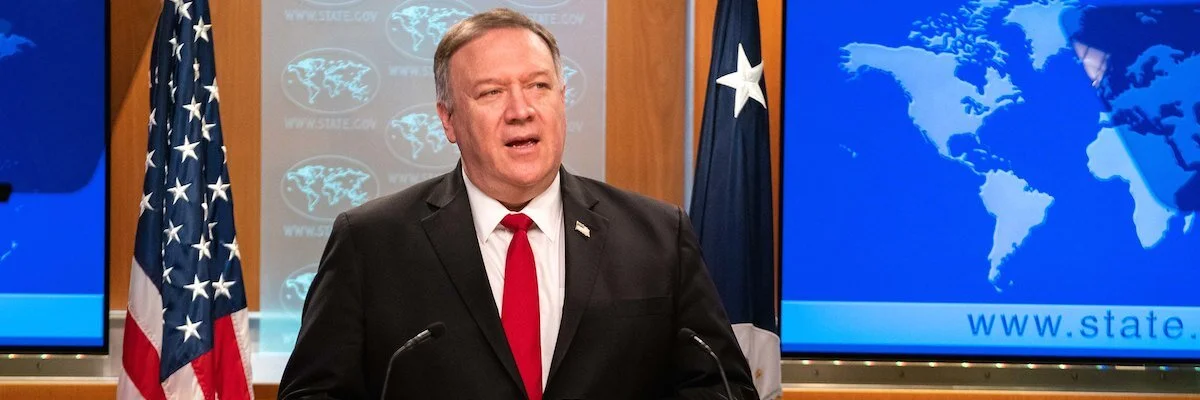
Pompeo Says US to Seek All Ways to Extend Iran Arms Embargo
US Secretary of State Mike Pompeo vowed Wednesday to use all means available to extend a UN arms embargo on Iran, including working through a nuclear accord that President Donald Trump has trashed.
US Secretary of State Mike Pompeo vowed Wednesday to use all means available to extend a UN arms embargo on Iran, including working through a nuclear accord that President Donald Trump has trashed.
A ban on selling conventional weapons to Iran ends in October under a 2015 Security Council resolution that blessed the denuclearization accord negotiated by former president Barack Obama.
"We're not going to let that happen," Pompeo told a news conference.
"In the event we can't get anyone else to act, the United States is evaluating every possibility about how we might do that."
Pompeo said he would ask the UN Security Council to prolong the ban.
But China and particularly Russia, which stand to win major new arms contracts with Iran, are certain to oppose an extension. They only agreed to the five-year ban in 2015 as a compromise reached with the Obama administration.
There is one way to avoid a veto by China or Russia -- a participant in the nuclear deal can trigger a return of sanctions by declaring Iran to be in violation.
Pompeo said that the United States will seek action from Britain, France and Germany—which remain part of the nuclear accord.
But the US allies are critical of the US approach, saying that Europe still has a ban on arms exports to Iran and that the nuclear issue is more important.
Pompeo confirmed that the United States was ready to argue that it is itself a participant because it is listed as one in the resolution from 2015, even though Trump has repeatedly said that Washington has bolted the "worst deal ever" after he took over.
"There's nothing magic about this," Pompeo said.
"It's unambiguous, and the rights that accrue to participants of the UN Security Council resolution are fully available to all those participants," he said.
"We're going to make sure that come October of this year, the Iranians aren't able to buy conventional weapons that they would be, given what president Obama and vice president Biden have delivered to the world in that terrible deal."
Joe Biden is the presumptive Democratic presidential nominee expected to face Trump in November elections, days after the scheduled expiration of the arms embargo.
UN inspectors said Iran complied with the nuclear deal and drastically reduced its program as it sought promised sanctions relief.
But Trump, who is close to Iran's rivals Saudi Arabia and Israel, said the goal should be to reduce the clerical regime's regional activities and slapped sweeping sanctions.
Photo: GPA
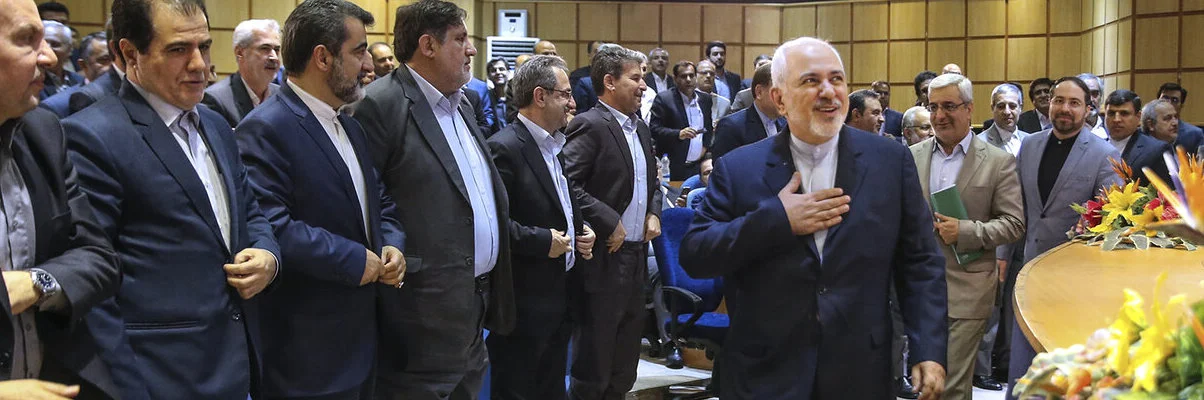
Iran’s Uranium Enrichment Has U.S. Weighing Sanctions ‘Snapback’
◢ Iran’s decision to ramp up uranium enrichment is prompting debate over whether the U.S. should—or even can—invoke a threat that negotiators built into the 2015 nuclear agreement but hoped would never be used: a “snapback” of international sanctions.
By David Wainer and Daniel Flatley
Iran’s decision to ramp up uranium enrichment is prompting debate over whether the U.S. should—or even can—invoke a threat that negotiators built into the 2015 nuclear agreement but hoped would never be used: a “snapback” of international sanctions.
Although President Donald Trump withdrew from the accord last year, the administration is being pressured by some American hard-liners to invoke a mechanism that ultimately would trigger a return to United Nations Security Council sanctions beyond those the U.S. is already imposing unilaterally.
Such a move, if successful, would shred what’s left of European-led efforts to keep the multinational accord alive, and analysts and diplomats say it would be galling coming from the nation that was first to quit the deal.
“Do I think there’s an argument to be made for snapping back? Sure,” said Richard Nephew, who was the lead sanctions expert for the Obama administration team that negotiated the 2015 accord. “Do I think the rest of the council agrees? No. It’s not clear people would stay in their chairs during discussions if we invoked this.”
Nephew, now a senior research scholar at Columbia University, said the snapback was designed to give the U.S. unilateral privileges to restore sanctions through the Security Council. At the time, the provision was a major part of Secretary of State John Kerry’s pitch for Congress to acquiesce to the deal. It’s also something that an “America First” president like Trump would like.
Under the snapback clause, any of the signatories to the Iran accord can cite Iran for violating the accord in a complaint to a dispute resolution committee. The matter eventually could be brought before the Security Council, which could vote on a resolution to keep the previous sanctions from going back into force. But the U.S. could get its way by exercising its veto on the council.
It’s no easy fix: The process could take two months or longer. And in today’s circumstances, other participants in the deal would be likely to argue that the U.S. is no longer allowed to invoke the mechanism.
To get around a dispute over whether the U.S. has standing to initiate the snapback mechanism, American officials are leaning on France and the U.K. to consider exercising it. The Europeans are signaling they’re not at that point yet, but they are using the American threats to put pressure on Iran to restrain itself, according to Western diplomats at the UN.
A senior European diplomat whose country still supports the accord said any decision to implement the snapback wouldn’t be automatic but predicted that support for it will grow unless Iran’s government changes its behavior.
A trio of hard-line U.S. senators say the White House doesn’t need to wait for the Europeans to start the process.
“Your administration has refrained from invoking the snapback mechanism in United Nations Security Council resolution (UNSCR) 2231, which if invoked would restore international restrictions against Iranian uranium enrichment, plutonium-related heavy water work, and ballistic missile development,” Republican Senators Ted Cruz, Marco Rubio and Tom Cotton said in a letter to Trump.
The UN resolution defines “the United States as a participant for the purpose of invoking the mechanism,” they said. “We urge you to do so."
Using Pressure
Even without the snapback provision, the U.S. has instituted punishing sanctions targeting Iran’s oil exports and its broader economy. European nations have been trying to salvage the deal by offering barter provisions that would sidestep the U.S. banking system—with little success so far—even as they warn Iran against continuing to violate the deal’s limits on uranium enrichment.
In a briefing last month, Majid Takht-Ravanchi, Iran’s ambassador to the UN, told reporters that his country wants to remain in the accord but that Europe needs to deliver stronger economic incentives, and quickly.
Against that backdrop, tensions between the U.S. and Iran have surged. The Trump administration has blamed Iran in recent weeks for sabotaging oil tankers near the the Strait of Hormuz and for downing an American drone over international waters. Tehran denies it was behind the tanker attacks and says the drone was shot down over its territory.
Resisting the U.S.
A meeting in Vienna on Wednesday foreshadowed just how explosive any efforts for a snapback would be. The U.S. sought a special meeting of nuclear inspectors to increase pressure against Iran. Instead, the Americans drew pushback from Russia, China and Europe, all of whom blame the Trump administration for the crisis.
France, Germany and the U.K. issued a joint statement on the eve of the meeting saying that while they were concerned by Iran’s violations, it’s the job of the remaining participants in the deal, known as the Joint Comprehensive Plan of Action, to address disputes.
“The EU deeply regrets the U.S. withdrawal and calls on all countries to refrain from taking any actions that impede the implementation of the JCPOA commitments,” it said.
Trump, who has a long history of pushing allies and adversaries toward the edge of conflict, will have to decide if it’s time to test the snapback provision.
"It is certainly a topic of significant ongoing conversation within the administration," Cruz of Texas said in an interview. "We should invoke those sanctions.”
Photo: IRNA
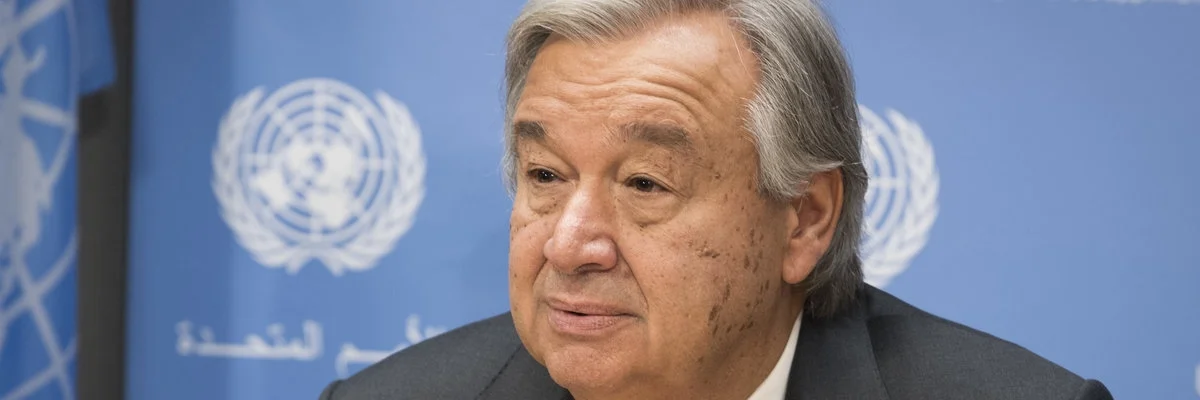
UN Reports More Suspected Iranian Missiles Found in Yemen
◢ More suspected Iranian-made weapons have been found in Yemen, the UN says in a report that will be discussed Wednesday by the Security Council. The Gulf monarchies and United States accuse Iran of supporting Houthi rebels in Yemen—and see this as justification for the military campaign they have been waging in Yemen since 2015.
More suspected Iranian-made weapons have been found in Yemen, the UN says in a report that will be discussed Wednesday by the Security Council.
The Gulf monarchies and United States accuse Iran of supporting Houthi rebels in Yemen—and see this as justification for the military campaign they have been waging in Yemen since 2015.
Iran supports the rebels politically but denies supplying them with arms.
The report from UN Secretary General Antonio Guterres' office says his staff examined two container launch units for anti-tank guided missiles recovered by the Saudi-led coalition in Yemen.
"The Secretariat found that they had characteristics of Iranian manufacture," the report said.
"The Secretariat also examined a partly disassembled surface-to-air missile seized by the Saudi-led coalition and observed that its features appeared to be consistent with those of an Iranian missile," it added.
A probe into the origin of the weapons continues, it said.
US Secretary of State Mike Pompeo was expected to attend Wednesday's meeting on Iran, scheduled to start at 1500 GMT.
Guterres' report mainly addresses Iran's obligations under the 2015 nuclear deal it struck with six major powers. The United States pulled out of the accord in May and has reimposed sanctions on Iran.
The report concludes that Iran continues to abide by the nuclear accord, under which it won sanctions relief in exchange for limiting its nuclear program.
The UN has said in the past that Yemen's Houthi rebels have fired Iranian-made missiles at Saudi Arabia. But it said it could not be certain that these weapons were in fact supplied by Iran in what would be a violation of UN resolutions.
Photo Credit: UN
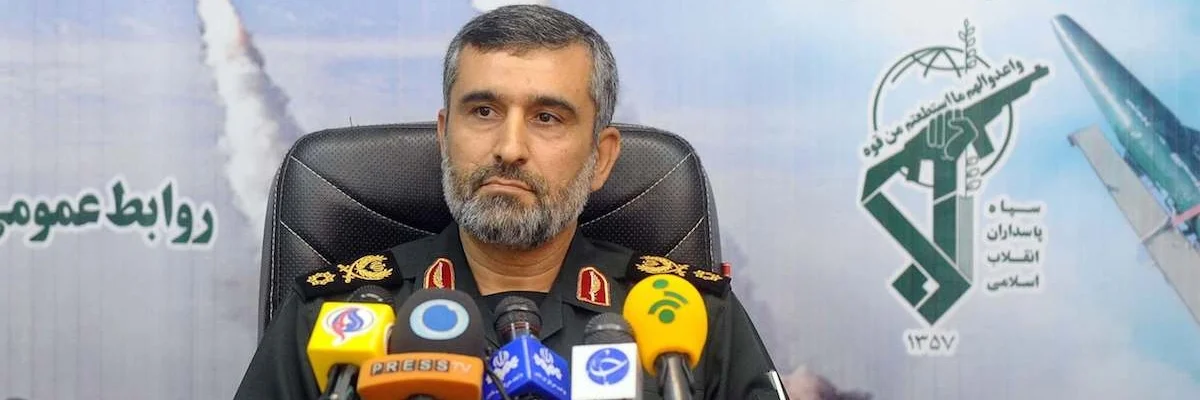
Iran Confirms Recent Missile Test Amid Western Criticism
◢ Iran confirmed on Tuesday that it had carried out a recent test of a medium-range ballistic missile after Western powers sharply criticized a December 1 launch. “We are continuing our missile tests and this recent one was a significant test," the Fars news agency reported, citing Revolutionary Guards aerospace commander Brigadier General Amirali Hajizadeh.
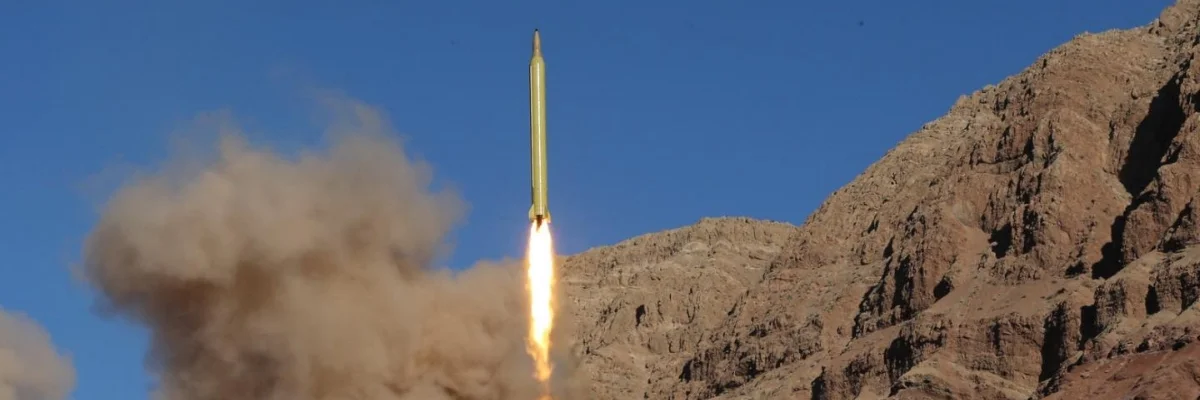
Iran confirmed on Tuesday that it had carried out a recent test of a medium-range ballistic missile after Western powers sharply criticized a December 1 launch.
“We are continuing our missile tests and this recent one was a significant test," the Fars news agency reported, citing Revolutionary Guards aerospace commander Brigadier General Amirali Hajizadeh.
"The US reaction showed that it was a big thing for them and that it upset them," the conservative news agency said, adding that Iran carried out between 40 and 50 missile tests a year.
Iran has pressed on with its ballistic missile program after reining in much of its nuclear program under a landmark 2015 deal with major powers.
A UN Security Council resolution adopted after the agreement calls on Iran to refrain from testing missiles capable of carrying a nuclear weapon, but does not specifically bar Tehran from missile launches.
The UN Security Council convened at the request of Britain and France on December 4 to discuss the latest test which both governments described as "provocative" and "inconsistent" with Resolution 2231.
Britain said that the types of missiles fired had capabilities that "go way beyond legitimate defensive needs".
Iran has developed several types of ballistic missiles with a range of up to 3,000 kilometers (1,875 miles)—sufficient to reach Israel and Western bases across the region.
In its report, Fars did not specify the date of the latest test or say which types of missile were fired.
Washington, which quit the nuclear deal in May, described the test as an outright "violation" of Resolution 2231 and called on the Security Council to condemn it.
But veto-wielding Moscow has defended Tehran's right to carry out the missile tests, and the December 4 meeting ended with no joint statement or any plan for follow-up action.
The council is due to meet again on December 19 for a regular review of the resolution's implementation.
Iran has received regular certifications of compliance with the provisions of the nuclear deal from the UN atomic watchdog.
Western criticism has focused instead on Tehran's missile program and its military interventions in the region.
Photo Credit: ISNA
France, Britain Seek UN Security Council Meeting on Iran Missile Test
◢ France and Britain on Monday requested a closed-door meeting of the UN Security Council after charging that Iran test-fired a medium-range missile at the weekend, diplomats said. The meeting is expected to be held Tuesday. The United States said the missile launch on Saturday was a violation of a UN resolution that endorsed the 2015 Iran nuclear deal, from which Washington has withdrawn.
France and Britain on Monday requested a closed-door meeting of the UN Security Council after charging that Iran test-fired a medium-range missile at the weekend, diplomats said.
The meeting is expected to be held Tuesday.
The United States said the missile launch on Saturday was a violation of a UN resolution that endorsed the 2015 Iran nuclear deal, from which Washington has withdrawn.
That resolution calls on Iran to refrain from testing missiles capable of carrying a nuclear weapon.
France said it was concerned by the test-firing with the foreign ministry describing it as "provocative and destabilizing" and "does not conform" with UN resolution 2231 on the Iran deal.
British Foreign Secretary Jeremy Hunt called the missile test "provocative, threatening and inconsistent" with the resolution and said Britain was determined "that it should cease."
Iran has long maintained that its missile program is defensive in nature and not aimed at ensuring the delivery of a nuclear weapon, a stance supported by Russia at the Security Council.
Washington's Iran envoy Brian Hook urged the European Union to slap sanctions that target Tehran's missile program as US Secretary of State Mike Pompeo traveled to Brussels for talks with European partners.
The United States decided in May to withdraw from the 2015 nuclear deal and reimpose sanctions on Iran, to the dismay of its Europeans allies.
The nuclear deal provides for a lifting of sanctions against Iran in return for curbs on its nuclear activities.
The remaining five signatories to the nuclear deal—Britain, China, France, Germany and Russia—have backed an EU effort to set up a special payment system in a bid to maintain trade and business ties with Iran.
Photo Commons: Tasnim

US to Lead Security Council Talks on Iran in Late September: Haley
◢ US President Donald Trump plans to lead a meeting of heads of state of the United Nations Security Council meeting on Iran in late September, his envoy Nikki Haley announced Tuesday. With the United States now holding the presidency of the Security Council, Haley said the aim is to further pressure on Tehran over its alleged violations of council resolutions.
US President Donald Trump plans to lead a meeting of heads of state of the United Nations Security Council meeting on Iran in late September, his envoy Nikki Haley announced Tuesday.
With the United States now holding the presidency of the Security Council, Haley said the aim is to further pressure on Tehran over its alleged violations of council resolutions.
"President (Donald) Trump is very adamant that we have to start making sure that Iran is falling in line with international order," Haley told reporters.
"If you continue to look at the spread Iran has had in supporting terrorism, if you continue to look at the ballistic missile testing that they are doing, if you continue to look at the sales of weapons we see with the Huthis in Yemen—these are all violations of security council resolutions,"
she said.
"These are all threats to the region, and these are all things that the international community needs to talk about."
During a rare public meeting on Tuesday to discuss the proposed U.S. agenda for the council, Russia’s Deputy U.N. Ambassador Dmitry Polyanskiy said the Iran meeting should focus on the implementation of a 2015 resolution on Iran.
“We very much hope that there will be views voiced in connection with the U.S. withdrawal” from a 2015 international nuclear deal, Polyanskiy told the council.
Photo Credit: Wikicommons

US Presses UN Security Council to Sanction Iran
◢ The United States urged fellow UN Security Council members Wednesday to punish Iran for "malign behavior" in the Middle East, at a meeting on implementation of the 2015 nuclear deal with Tehran. It was the first meeting of the Security Council since US President Donald Trump announced on May 8 that the United States was withdrawing from the nuclear agreement with Tehran.
The United States urged fellow UN Security Council members Wednesday to punish Iran for "malign behavior" in the Middle East, at a meeting on implementation of the 2015 nuclear deal with Tehran.
"When confronted with a country that continually violates this council's resolutions, it is imperative that we pursue meaningful consequences," said Jonathan Cohen, the US deputy ambassador to the United Nations.
"That is why we urge members of this Council to join us in the imposition of sanctions that target Iran's malign behavior in the region," he stressed.
It was the first meeting of the Security Council since US President Donald Trump announced on May 8 that the United States was withdrawing from the nuclear agreement with Tehran.
On May 24, the International Atomic Energy Agency (IAEA) concluded for the eleventh time Tehran had met its commitments.
In his remarks, Cohen once again accused Iran of supplying missiles to the Huthi rebels in Yemen in violation of an international arms embargo.
In a recent report, the United Nations said that missile components fired at Saudi Arabia had been manufactured in Iran, but that UN officials were unable to determine if they had been delivered before or after the July 2016 imposition of an arms embargo on Yemen.
"Dismantling a nuclear deal that is working would certainly not put us in a better position to discuss other issues," said EU ambassador to the UN Joao Vale de Almeida, referring to Tehran's ballistic activities and its influence in the Middle East.
"The collapse of this major achievement would mark a serious step backwards for the region, for the non-proliferation regime but also for our security for all, which would potentially have serious consequences," said French ambassador Francois Delattre.
Photo Credit: Wikicommons