
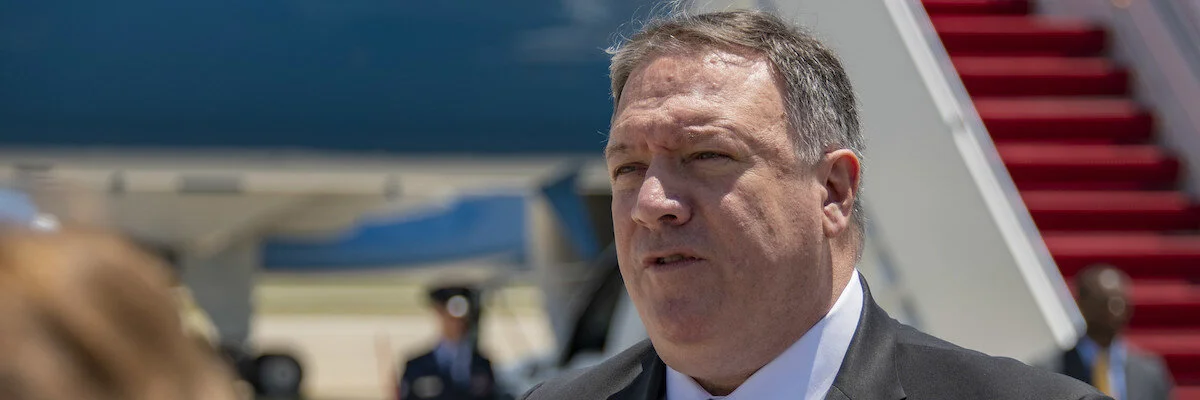
Pompeo Lands in Saudi for Talks Focused on Iran
◢ US Secretary of State Mike Pompeo landed in Riyadh Wednesday for talks with Saudi leaders focused on countering Tehran, his first visit since a top Iranian general's killing sent regional tensions soaring. The top US diplomat, whose visit follows his first trip to sub-Saharan Africa, will hold talks with King Salman and his son Crown Prince Mohammed bin Salman as well as Foreign Minister Faisal bin Farhan.
US Secretary of State Mike Pompeo landed in Riyadh Wednesday for talks with Saudi leaders focused on countering Tehran, his first visit since a top Iranian general's killing sent regional tensions soaring.
The top US diplomat, whose visit follows his first trip to sub-Saharan Africa, will hold talks with King Salman and his son Crown Prince Mohammed bin Salman as well as Foreign Minister Faisal bin Farhan, State Department officials said.
"We'll spend a lot of time talking about the security issues with the threat from the Islamic Republic of Iran in particular," Pompeo told reporters in the Ethiopian capital Addis Ababa before heading to Riyadh.
Pompeo said the United States was "prepared to talk anytime" to Iran but emphasised that the Iranian regime has "got to fundamentally change their behaviour".
"The pressure campaign continues. It's not just an economic pressure campaign, its diplomatic pressures, isolation through diplomacy as well," he said.
US President Donald Trump, who is closely allied with Saudi Arabia, in 2018 withdrew from a nuclear accord with Iran and imposed sweeping sanctions aimed at reducing Tehran's regional clout.
Pompeo's three-day visit to close ally Saudi Arabia comes in the wake of a US-ordered drone strike that killed Qasem Soleimani, Iran's most powerful general, as he visited Baghdad on January 3
Regional tensions rose following the killing and Iran responded with missile strikes on US forces in Iraq.
US officials blamed Iran for a September attack on Saudi oil installations, although Riyadh has since appeared keen to engage in cautious diplomacy to ease friction.
Pompeo faces a tough balancing act in Saudi Arabia as he said he would also discuss "human rights" during his visit.
The 2018 murder of Saudi journalist Jamal Khashoggi, which sparked global condemnation of the crown prince, has tested relations between the two allies.
After Riyadh, Pompeo will fly to Oman to meet the new sultan, Haitham bin Tariq, on Friday.
Pompeo will offer condolences over the death of his predecessor Qaboos, who was the Arab world's longest-serving leader and served as a go-between for Iran and the United States.
Photo: State Department
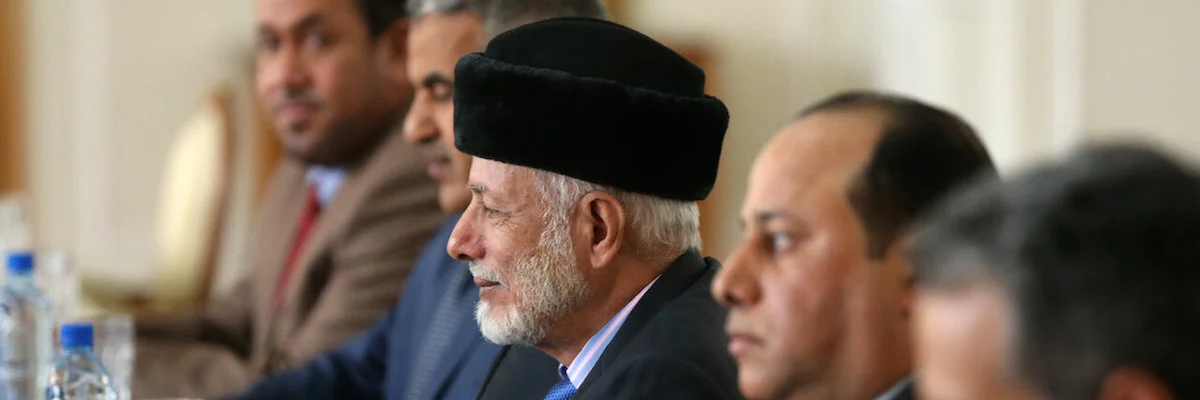
Taken to Brink by Trump, GCC States Are Backpedaling on Iran
◢ Spooked by the prospect of a catastrophic war with Iran and its proxy militias across the region, Arab monarchies are in the midst of a strategic rethink regarding the Persian Gulf. The U.A.E., whose economic model relies in large part on its international links, quickly realized it had most to lose from a military escalation.
By Zainab Fattah
An expanded soccer tournament, a direct flight, clandestine meetings and a pledge to release prisoners of war; diplomacy is breaking out as Gulf Arab nations back away from a Donald Trump-inspired confrontation with Iran. And the signs are everywhere.
Last week, Saudi Arabia, the United Arab Emirates and Bahrain played their first games of the 2019 Arabian Gulf Cup in Qatar after a last-minute decision to take part—an apparent breakthrough in a 30-month feud that saw them halt trade and flights over Qatar’s links with Iran and support for Islamist groups.
Meanwhile, the Saudi-led coalition that’s fought Iranian-backed Houthi rebels in Yemen since 2015 began releasing jailed Houthis, as efforts to end the conflict gather momentum. Oman is quietly hosting high-level meetings, according to people familiar with the matter, and even Iranian President Hassan Rouhani has hinted at direct channels with the U.A.E.
Spooked by the prospect of a catastrophic war with Iran and its proxy militias across the region, Gulf monarchies are in the midst of a strategic rethink. The U.A.E., whose economic model relies in large part on its international links, quickly realized it had most to lose from a military escalation. It had removed most of its troops from Yemen by the end of a turbulent summer that saw oil tankers targeted and a U.S. drone downed in the Gulf without significant American response.
While the humanitarian catastrophe unleashed by the Yemen war trained an unwelcome spotlight on Saudi Arabia, it took a brazen strike on Saudi oil installations—which knocked out half the country’s crude production—to ram home the risks and prove that Trump was not about to ride to his allies’ rescue.
“The attacks shattered any illusion of this magical U.S. security umbrella,” said David Roberts, an assistant professor at King’s College London who studies the Gulf. “It burst the bubble and showed that Iran had the willingness to both do something astonishing like the attack on Aramco facilities and the capability to carry it out.”
Iran denies U.S. and Saudi assertions it carried out the Sept. 14 strikes, pointing to Houthi claims of responsibility. But people familiar with investigations into the attacks say they were almost certainly launched from southwestern Iran -- an explosive escalation in Tehran’s pushback against an economic offensive unleashed by Trump and enthusiastically backed by the Saudis.
The Trump administration withdrew last year from the 2015 deal meant to prevent Iran from developing a nuclear bomb, and reimposed sanctions that have crippled its oil exports. But the “maximum pressure” policy is designed to coax Tehran into more concessions not to drag the U.S. into a new Middle East war just as it draws down troops in Syria.
Rolling back Shiite Muslim Iran’s power remains a priority for the Sunni Gulf Arab leadership. There’s an increasing recognition, however, that no one stands to gain from a military escalation in the world’s top oil-exporting region.
Saudi Arabia’s Center for International Communication didn’t respond to an email seeking comment. The U.A.E. declined to comment. But in a Nov. 10 speech, Minister of State for Foreign Affairs Anwar Gargash said he saw “a path to a deal with Iran that all parties might soon” be ready to embark on if Tehran demonstrated commitment.
War to ‘Cold Peace’
In search of a breakthrough, Pakistani Prime Minister Imran Khan, a former cricketer elected with the backing of a powerful army that provides extensive support for the Saudi military, shuttled between Tehran and Riyadh in October. He met Iran’s supreme leader, Ayatollah Ali Khamenei and Rouhani, as well as Saudi Arabia’s King Salman and Crown Prince Mohammad bin Salman, describing talks as “encouraging.”
Khan said he traveled at the request of Trump and Saudi Minister of State for Foreign Affairs Adel Al-Jubeir said the diplomacy wasn’t prompted by the kingdom. But deepening unease in the Persian Gulf catalyzed the effort.
Turning these overtures into lasting peace between countries that have grown further apart since the 1979 Iranian revolution remains far off.
The Gulf states resent Iran’s deep reach into Arab nations. While ongoing protests in Iraq and Lebanon suggest Iran has reached the limit of its regional influence, they are unlikely to reverse political and military advances decades in the making.
“Cold peace is possible but we are certainly far from a grand bargain,” said Afshin Molavi, senior fellow at the Foreign Policy Institute at Johns Hopkins. “For that, both Riyadh and Abu Dhabi would have to accept a role for Iran in Arab countries such as Iraq, Syria, Lebanon and Yemen.”
As they explore ways forward, Gulf states are moving at different speeds.
The U.A.E. broke with the U.S. and Saudi Arabia by not naming Iran as the culprit behind attacks in May and June on oil tankers as they sailed toward the Strait of Hormuz, the world’s foremost oil shipping chokepoint.
It sent coast guard officials to Iran for the first time in six years and Rouhani hinted at other meetings with senior U.A.E. officials. “We’re moving toward improved relations,” he said Oct. 14. Saudi Arabia is catching up.
Chokepoint
Washington built a multilateral naval operation to protect shipping in the Persian Gulf after the attacks and sent more troops to Saudi Arabia. Both actions resulted in a “down tick” in Iranian actions,” U.S. Defense Secretary Mark Esper said Nov. 13. “The Iranians should not mistake our restraint for weakness.”
Where the U.S. holds back, however, others are crowding in. Besides his role in saving Bashar al-Assad’s regime, Russian President Vladimir Putin has forged a partnership with Iran, created an oil alliance with Saudi Arabia and built ties with Egypt’s Abdel-Fattah El-Sisi, who was warned by the U.S. last month against plans to purchase Russian jets.
Putin traveled to Saudi Arabia and the U.A.E. in October after visits by the Saudi king and the U.A.E.’s de-facto leader Mohammad bin Zayed to Moscow. The two Gulf countries and Russia have signed deals valued at billions of dollars.
For Iran’s Rouhani, the case for regional engagement is obvious.
“Don’t you know that Iran is going to stay here and we will remain neighbors throughout history?” he has said, referring to Iran’s Arab neighbors. “Trump will only be around for a few years and will go back to whatever it was he was doing.”
Photo: IRNA
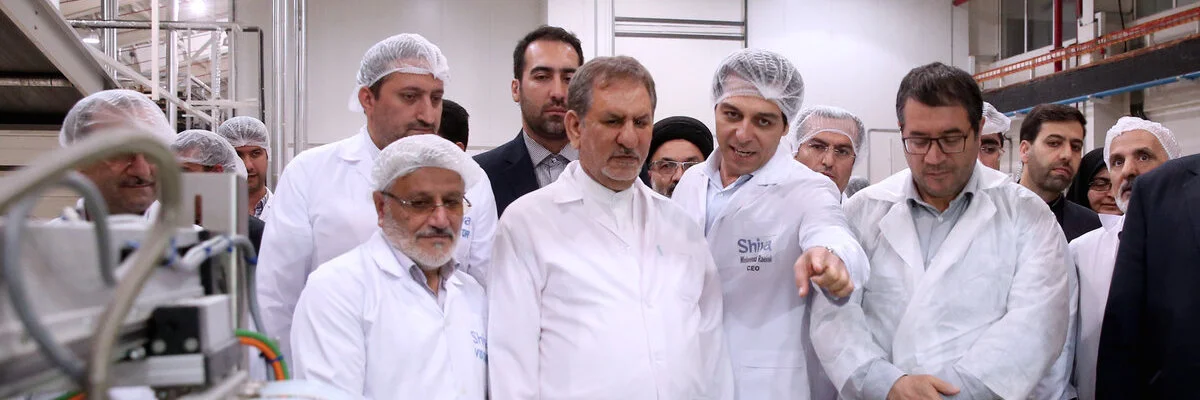
IMF Sharply Cuts Iran, Saudi Growth Forecasts
◢ The IMF has sharply downgraded growth projections for Saudi Arabia and Iran, the two largest Mideast economies, citing the impact of US sanctions, geopolitical tensions and low oil prices. Iran has "been or continues to be experiencing very severe macroeconomic distress," the IMF said, adding that growth in 2020 will be flat.
By Omar Hassan
The International Monetary Fund on Tuesday sharply downgraded growth projections for Saudi Arabia and Iran, the two largest Mideast economies, citing the impact of US sanctions, geopolitical tensions and low oil prices.
In its World Economic Outlook, the global lender cut forecasts for almost all countries in the Middle East and North Africa (MENA) as the region is buffeted by biting sanctions on Iran and nail-biting anxiety over last month's attacks on Saudi oil facilities.
The IMF said Iran's economy will contract by a massive 9.5 percent this year, its worst performance since 1984 when the Islamic republic was at war with neighboring Iraq.
The figure is 3.5 percentage points lower than the IMF's April projections, reflecting a rapid deterioration in Tehran's economy after the US implemented tighter sanctions on its oil exports, the nation's main source of income.
This is the second year in a row that Iran's economy is mired in recession, after it shrank by 4.8 percent in 2018.
Iran has "been or continues to be experiencing very severe macroeconomic distress," the IMF said, adding that growth in 2020 will be flat.
The forecast for Saudi Arabia, the region's largest economy, was also cut to just 0.2 percent for 2019, a substantial 1.6 percentage points lower than April's projections.
The outlook is the worst since 2017 when the kingdom's economy contracted by 0.7 percent.
But the IMF raised its Saudi growth forecast for next year to 2.2 percent, slightly above April's projections, on expectations that the non-oil sectors will strengthen following subsidy reforms.
The oil giant has substantially cut power and fuel subsidies as well as imposed fees on expatriate visas and a five-percent value added tax as part of a reform programme to decrease its dependence on oil.
Fitch Ratings in September downgraded Saudi Arabia's credit rating by one notch following the devastating attacks on key oil facilities that knocked out half its production -- a strike that has been blamed on Iran.
Gloomy Regional Outlook
The IMF also cut its forecast for MENA growth to a meagre 0.1 percent this year, 1.2 percentage points lower than April projections, reflecting weakening economies in a region rattled by conflict.
The cut to MENA growth is "largely due to the downward forecast revision for Iran and Saudi Arabia," it said.
"Civil strife in some other economies, including Libya, Syria, and Yemen, weigh on the region's outlook."
The global lender said that the price of oil and gas, the main source of income for the region, dropped 13 percent between April and October and that oil prices will continue to decline until 2023.
It said the September 14 attacks on Saudi oil facilities have stoked tension and uncertainty in the region, especially following tanker attacks in the strategic Strait of Hormuz through which 20 percent of oil trade passes.
Growth projections for the United Arab Emirates, the most diversified economy in the region, was cut sharply to 1.6 percent from 2.8 percent in April, due to weak oil growth in Abu Dhabi and a general slowdown in Dubai.
The IMF also cut forecasts for other hydrocarbon exporters Qatar, Kuwait and Oman but raised the outlook for Iraq, the region's second largest crude exporter, following a 0.6 percent contraction last year.
Photo: IRNA
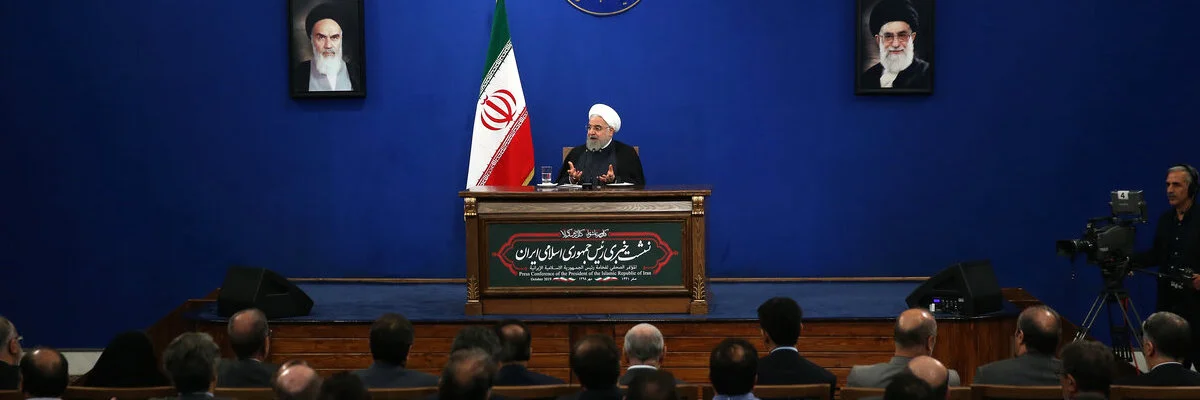
Iran’s Rouhani Vows Response to Oil Tanker Attack
◢ President Hassan Rouhani vowed Monday that Iran would respond to an attack on one of its oil tankers in the Red Sea. “This wasn’t a terrorist move, nor was it carried out by an individual. It was carried out by a government,” Rouhani said, adding that officials were also assessing rocket fragments.
By Golnar Motavelli and Arsalan Shahla
President Hassan Rouhani vowed Monday that Iran would respond to an attack on one of its oil tankers in the Red Sea, saying the evidence suggested it was the work of a government not a terrorist group.
Addressing reporters in his first news conference since the U.S. abandoned the 2015 nuclear deal last year, Rouhani said officials in Tehran had seen footage of the incident and it was likely that several rockets were aimed at the tanker. He stopped short of assigning blame, but the vessel was sailing near the Saudi port of Jeddah at the time of the attack.
“This wasn’t a terrorist move, nor was it carried out by an individual. It was carried out by a government,” Rouhani said, adding that officials were also assessing rocket fragments.
The Gulf has seen a surge in tit-for-tat attacks on oil facilities, drones and shipping traffic since Donald Trump’s administration tightened sanctions on Iran’s oil exports earlier this year. The measures are part of Trump’s “maximum pressure” policy aimed at forcing Iran to curb its ballistic missile program and support for proxy militia around the Middle East, but have been met with defiance by the Iranian government, which has, instead, rolled back its own compliance with the nuclear accord.
Although all sides have said they want to avoid war, repeated incidents pose a growing risk to supplies from the world’s most important oil-producing region.
The attack on the Sabiti tanker came weeks after a drone strike on a major Saudi oil facility which the kingdom blamed on Iran. Iranian officials have said they weren’t involved in the attack, which rattled global oil markets, and was claimed by Iranian-backed Houthi rebels in Yemen.
Photo: IRNA
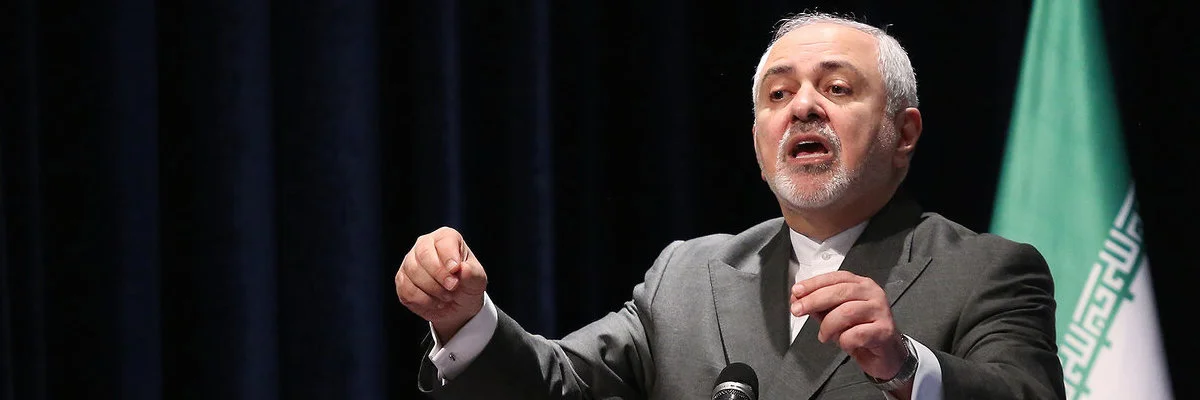
Iran FM Pitches Persian Gulf Security Plan to Neighbors
◢ Iran's Foreign Minister Mohammad Javad Zarif pitched the Islamic Republic's Persian Gulf security plan to neighboring nations on Thursday. Zarif said that the plan, named Hormuz Peace Endeavor, offered the chance of "expansive security" and cooperation between Iran, Saudi Arabia, Iraq, Oman, the United Arab Emirates, Kuwait, Qatar and Bahrain.
Iran's Foreign Minister Mohammad Javad Zarif pitched the Islamic Republic's Persian Gulf security plan to neighboring nations on Thursday, saying regional security cannot be provided by foreign powers.
Iranian President Hassan Rouhani announced the plan at the UN General Assembly last month, calling on Gulf nations including arch-rival Saudi Arabia to join it but without giving details.
In an article published on Thursday in Arabic by Kuwait's Al Rai daily, Zarif said that the plan, named Hormuz Peace Endeavor, offered the chance of "expansive security" and cooperation between Iran, Saudi Arabia, Iraq, Oman, the United Arab Emirates, Kuwait, Qatar and Bahrain.
Cooperation could include areas such as a regional non-aggression pact, combatting terrorism, cybersecurity, energy and freedom of navigation, Zarif said.
"In order to save the region from the edge of ruin, we feel the necessity of realising a new discourse more than ever," he wrote in the article, a translation of which was provided by his ministry.
"The fate of the people and nations of the Persian Gulf is entwined ... either everyone benefits from security in the region or everyone will be deprived of it," Zarif said.
Tensions have risen in the Gulf since last year when US President Donald Trump unilaterally abandoned a 2015 nuclear deal between major powers and Iran and began reimposing crippling sanctions.
They flared again this May when Iran began reducing its own commitments under the deal and the US deployed military assets to the region. Since then, ships have been attacked, drones downed and oil tankers seized.
In June, Trump called off air strikes against Iran at the last minute after the Islamic republic's forces shot down a US drone.
Last month, twin attacks on Saudi oil infrastructure, which knocked out half the kingdom's production, drew accusations of blame against Iran not only from the US but also from its European allies.
Tehran has denied any involvement in the attacks, which were claimed by Iran-backed rebels fighting a Saudi-led coalition in Yemen.
The US has since formed a coalition with its allies Australia, Bahrain, Britain, Saudi Arabia and the UAE to escort commercial shipping in the Gulf.
Tehran has warned that the planned US-led International Maritime Security Construct will only increase instability.
Photo: IRNA

Boris Johnson Says It’s Time to Make a New Nuclear Deal With Iran
◢ U.K. Prime Minister Boris Johnson said it’s time to strike a new nuclear deal with Iran, breaking ranks with European allies France and Germany. “Whatever your objections to the old nuclear deal with Iran, it’s time now to move forward and do a new deal,” Johnson told Sky News on Monday.
By Robert Hutton and Gregory Viscusi
U.K. Prime Minister Boris Johnson said it’s time to strike a new nuclear deal with Iran, breaking ranks with European allies France and Germany, which are still trying to preserve the 2015 agreement President Donald Trump withdrew from last year.
“Whatever your objections to the old nuclear deal with Iran, it’s time now to move forward and do a new deal,” Johnson told Sky News on Monday in New York, where he’s attending the United Nations General Assembly.
Johnson also suggested it’s “plainly” clear that Iran was responsible for attacks this month on key oil facilities in Saudi Arabia, pulling into line with the Trump administration’s assessment. “How do we respond to what the Iranians plainly did?” Johnson said. “What the U.K. is doing is trying to bring people together and de-escalate tensions.”
Iran has denied being involved in the attacks on two Saudi Aramco facilities, which were quickly claimed by Tehran-backed Houthi rebels in Yemen who have been fighting a Saudi-led coalition for four years.
After Trump quit the nuclear deal with Iran, the other nations participating in it -- the U.K., Germany, France, Russia and China -- vowed to stand by the accord. But they have failed so far to find a way to sidestep increasingly tough U.S. economic sanctions on the Islamic Republic, and Iran has begun to breach the agreement’s limits on its nuclear program.
Trump has vowed to seek a more stringent accord that would bar Iran permanently from the capability to develop nuclear weapons while also curbing its ballistic missile program and its support for groups, such as Hezbollah, that the U.S. considers terrorists.
Asked about Johnson’s comments, Trump told reporters, “I respect Boris a lot and I’m not at all surprised he was the first one to come out and see that.” He said Johnson is “a man who, No. 1, he’s a friend of mine, and No. 2, he’s very smart, very tough.”
Macron’s Stance
French President Emmanuel Macron said earlier Monday that “the oil attacks change the situation but France remains just as determined.”
He told reporters at the UN that he’s continuing to work on calming tension between Iran and the U.S. even as he inched closer to saying Iran may have been behind the attacks on the Saudi oil facilities.
“There are indications that a state actor may have been involved, given the sophistication,” Macron said, although he stopped short of saying who was responsible until Saudi Arabia completed its investigation.
Macron said he had a quick talk with Trump on Monday morning on the sidelines of a UN General Assembly meeting about climate, and will see him again Tuesday, though the White House hasn’t confirmed any meeting with the French president. Macron said he would meet Iranian President Hassan Rouhani later Monday, a session confirmed by Iranian officials.
“You know the work France has done the past months to make propositions to seek a de-escalation,” Macron said. “We need to get all the partners to sit around a table.” He said the subjects that needed to be discussed are maintaining 2015 accord, what happens after the accord expires, Iran’s ballistic missile program and its involvement in regional crises such as Syria and Yemen.
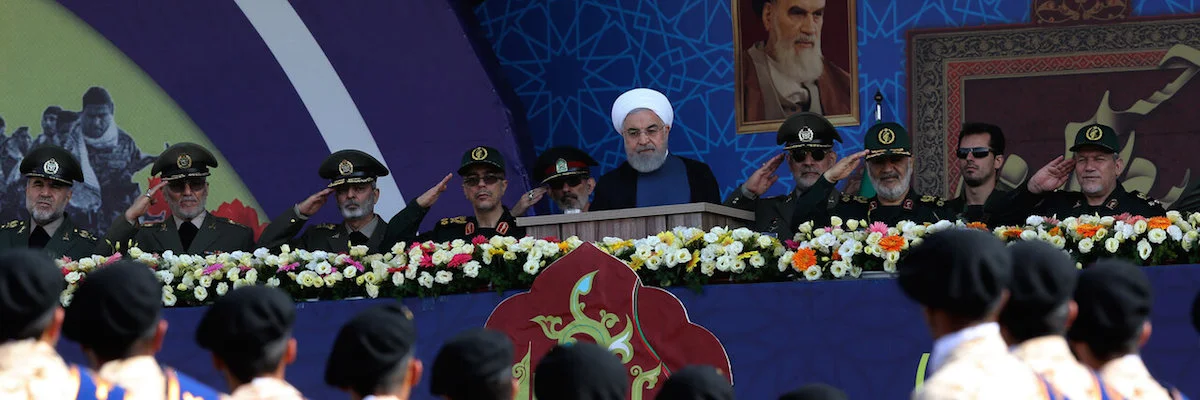
Iran Accuses Foreign Forces of Raising Persian Gulf 'Insecurity'
◢ President Hassan Rouhani on Sunday denounced the presence of foreign forces in the Persian Gulf and said Iran will present a peace plan, after its arch-foe Washington ordered reinforcements to the tense region. "Foreign forces can cause problems and insecurity for our people and for our region," Rouhani said before a military parade commemorating the Iran-Iraq war.
By Amir Havasi
President Hassan Rouhani on Sunday denounced the presence of foreign forces in the Persian Gulf and said Iran will present a peace plan, after its arch-foe Washington ordered reinforcements to the tense region.
"Foreign forces can cause problems and insecurity for our people and for our region," Rouhani said before a military parade commemorating the Iran-Iraq war.
Rouhani also said Iran would present a peace plan to the United Nations within days.
"In this sensitive and important historical moment, we announce to our neighbours that we extend the hand of friendship and brotherhood to them," he said.
Rouhani and top military brass saluted as row after row of soldiers marched past them in tight formation, followed by an array of homegrown military hardware.
The parade showcased tanks, armoured vehicles, drones and missiles—including the Khorramshahr, said to have a range of 2,000 kilometres (more than 1,200 miles).
Tensions between Iran and the US and its allies have threatened to boil over since May last year when President Donald Trump unilaterally withdrew from a 2015 nuclear deal and later began reimposing sanctions.
The tensions escalated in the wake of devastating September 14 attacks on Saudi oil installations that Washington and Riyadh have, to varying degrees, blamed on Tehran.
Following the attacks, which triggered a spike in global oil prices, Trump initially raised the possibility of a military response, saying the US was "locked and loaded".
Washington later expanded its long list of sanctions against Tehran, targeting its central bank, but Trump indicated he did not plan military action.
On Friday, Defence Secretary Mark Esper said the US was sending reinforcements to Saudi Arabia at "the kingdom's request", but noted they would be "defensive in nature".
'Stay Away'
Rouhani called on the foreign powers to "stay away" from the Gulf.
"If they're sincere, then they should not make our region the site of an arms race," he said.
"Your presence has always brought pain and misery... The farther you keep yourselves from our region and our nations, the more security there will be," he added.
"Our logic is the logic of a Persian Gulf whose security comes from within."
The annual military parade marks the start of the week commemorating Iran's 1980-1988 war with Iraq.
Among the new weaponry debuting at Sunday's parade was an upgraded warhead for the Khorramshahr ballistic missile, the Kaman 12 drone with a range of 1,000 kilometres and a mobile radar system capable of detecting landmines, local media reported.
Iran's Foreign Minister Mohammad Javad Zarif tweeted that Rouhani would announce details of the "Hormuz Peace Endeavour" at the UN General Assembly.
Rouhani is to travel to New York on Monday, a day before general debate kicks off at the UN gathering.
Tensions have flared in the Gulf since May, when Iran began reducing its commitments to the nuclear deal and the US said it was sending forces to waters near the Islamic republic in response to "indications of a credible threat".
The US deployed an aircraft carrier strike group and a bomber task force to the sensitive waterways, before sending B-52 bombers, an amphibious assault ship and a Patriot missile battery.
Following the deployments, commercial ships were mysteriously attacked, drones downed and oil tankers seized in Gulf waters.
'Act of War'
Trump in June authorised a military strike after Iran shot down a US drone, only to call off the retaliation at the last moment.
The crisis deepened with the September 14 attacks on Saudi energy giant Aramco's Abqaiq processing plant and Khurais oilfield which halved the kingdom's crude output.
Yemen's Iran-backed Huthi rebels claimed responsibility, but the US says attacks involved cruise missiles from Iran and amounted to "an act of war".
Saudi Arabia, which has been bogged down in a five-year war in Yemen, has warned of "appropriate measures" once the source of the strikes is confirmed by a UN investigation.
The UN has welcomed a Huthi plan for a cessation of hostilities announced Friday, but Saudi Arabia was sceptical.
After months of rising tensions, Iran's semi-official news agency ISNA said Sunday a Swedish-owned oil tanker detained two months ago by Iranian forces would be released "soon".
But "the case regarding its legal violations is still open with Iran's judicial authorities," it quoted the head of the local maritime organization as saying.
Photo: IRNA
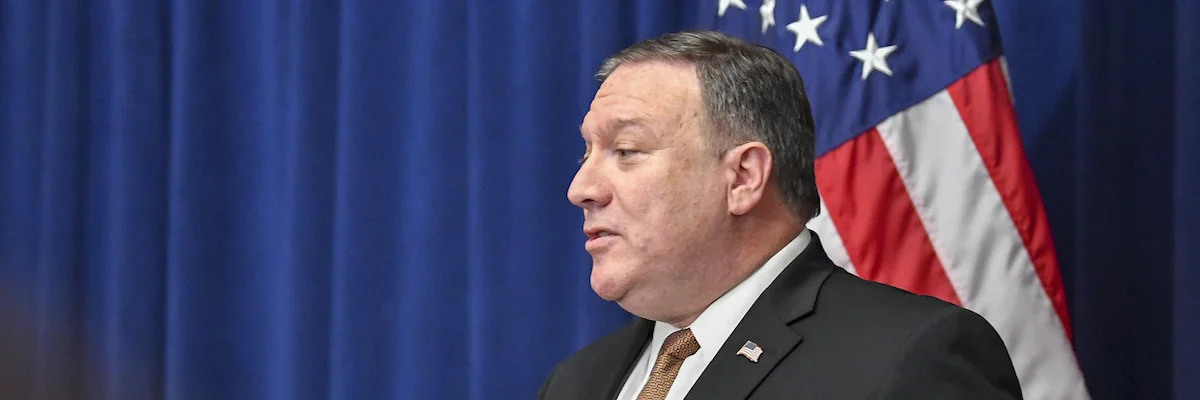
Pompeo Says U.S. Working on Diplomacy After Iran ‘War’ Act
◢ Secretary of State Michael Pompeo said the U.S. is “working diligently” toward a diplomatic resolution with Iran after accusing the Islamic Republic of attacks on Saudi Arabian oil fields, but that President Donald Trump is prepared to take other action if necessary.
By Mark Niquette
Secretary of State Michael Pompeo said the U.S. is “working diligently” toward a diplomatic resolution with Iran after accusing the Islamic Republic of attacks on Saudi Arabian oil fields, but that President Donald Trump is prepared to take other action if necessary.
“Make no mistake about it, if we’re unsuccessful in that and Iran continues to strike out in this way, I am confident that President Trump will make the decisions necessary to achieve our objectives,” Pompeo said on ABC’s “This Week” on Sunday, one of multiple TV appearances ahead of the United Nations General Assembly in New York this week.
State Secretary Mike Pompeo said Trump and the U.S. is working toward a diplomatic resolution with Iran, but also that the "Iranians are blood-thirsty and looking for war" in his TV rounds on Sunday
Top Pentagon officials on Friday said the U.S. will send a “moderate” number of troops to the Middle East and additional missile defense capabilities to Saudi Arabia in response to last weekend’s attack on oil facilities, which disrupted about 5% of global oil production.
Iranian Foreign Minister Mohammad Javad Zarif refused to rule out military conflict in the Middle East, saying in an interview Sunday on CBS’s “Face the Nation” that “I’m not confident that we can avoid a war.”
Asked whether he’s confident of avoiding a war, Pompeo said, “we’re working towards that.” In a interview airing on CBS, Pompeo said the U.S. will respond in a way that reflects what he called “an attack by Iran on the world” and a “state-on-state act of war.” He said the U.S. is looking for a diplomatic resolution, while “apparently the Iranians are blood-thirsty and looking for war.”
Pompeo said the U.S. maximum-pressure campaign, which includes sanctions on Iran’s central bank and sovereign-wealth fund, is working and that the Iranian economy will shrink by about 10% to 15% this year.
Treasury Secretary Steven Mnuchin, in an interview on NBC’s “Meet the Press,” said there’s still room for more sanctions.
“Although we’re pretty much maxed out on Iran, we will begin to sanction third-party entities where we see violations,” he said.
Republican Senator Lindsey Graham, chairman of the Judiciary Committee, said on Fox News’s “Sunday Morning Futures” that economic sanctions aren’t enough because Iranians “would eat grass if that’s what it took” and that military action is also needed. He suggested targeting Iran’s oil refineries and that Iran knows it would never win a war with the U.S.
“I don’t want a war with Iran, but I want them to stop, and the only way they’re going to stop is to pay a price,” Graham said. “And the price I want them to pay is to lose some of their military capability.”
Photo: State Department
Trump Announces Sanctions on Iran Central Bank for Saudi Attack
◢ The U.S. sanctioned Iran’s central bank and sovereign wealth fund on Friday, a move aimed as retaliation for last weekend’s attacks on key Saudi Arabian oil facilities. “These are the highest sanctions ever imposed,” President Donald Trump told reporters during a meeting.
By Saleha Mohsin and Josh Wingrove
The U.S. slapped terror-related sanctions on Iran’s central bank and sovereign wealth fund on Friday in retaliation for last weekend’s attack on Saudi Arabia, moves aimed at squelching any remaining trade the country conducts with Europe and Asia.
“These are the highest sanctions ever imposed,” President Donald Trump told reporters during a meeting with Australian Prime Minister Scott Morrison at the White House. “We’ve never done it at this level.”
Friday’s action sanctions the central bank under a George W. Bush-era executive order designed to disrupt terrorist groups’ financial networks, over what the administration says is the bank’s support for the Islamic Revolutionary Guard Corps. It’s a controversial step, as sanctioning the central bank may also limit the ability to import humanitarian goods into the country.
Proponents such as Mark Dubowitz of the Foundation for Defense of Democracies argue that by linking the central bank to terrorism, the move will scare away remaining market participants and subject companies to potentially devastating secondary sanctions. It may also create a chilling effect even if a Democrat beats Trump in 2020 and seeks to re-enter the Iran nuclear deal that Trump walked away from in 2018.
“It creates a wall of market deterrence,” Dubowitz said in an interview. “When you set aside the technical gobbledygook, what’s left is that if you do business with Iran, you are supporting terrorism.”
The Treasury Department issued a statement saying Iran’s sovereign wealth fund, the National Development Fund of Iran, was also a major source of foreign currency and funding for the IRGC. The move is aimed partly at tying up any NDF money kept in overseas bank accounts.
Trump said he’ll meet Friday with his national security advisers to discuss further responses to the attack on the Saudi oil facilities, which the U.S. has blamed on Iran. He’s under pressure from hawks among congressional Republicans to order a military attack on the Islamic Republic but has resisted, and has drawn comparisons to the Iraq War that he says he opposed.
Trump said a U.S. attack would be the “easiest thing,” adding, “and maybe it’s even a natural instinct.” But he said that he was showing U.S. strength by not immediately ordering a strike. He could take out 15 different targets in Iran if he wanted to, Trump said.
“I could do it right here, in front of you, and that would be it,” he said. “It shows far more strength to do it the way we’re doing it. I think restraint is a good thing.”
More than 80% of Iran’s economy is under U.S. sanctions already, the Trump administration has said, and the U.S. is looking to target sectors that continue to function, such as trade in manufactured goods and transportation equipment. The U.S. is already sanctioning significant sectors including oil, banks and steel, leaving smaller targets including certain exports and government officials.
The U.S. has previously targeted the country’s central bank, sanctioning one of its governors and another senior official in May 2018 for allegedly providing support for terrorist activity. Tensions have steadily risen between the U.S. and Iran since 2018, when Trump abandoned the 2015 accord negotiated by President Barack Obama to curb Tehran’s nuclear weapons program and began re-imposing sanctions relaxed under the deal.
Friday’s action may also complicate plans by European nations to launch a mechanism known as Instex that would serve as a financial go-between for humanitarian trade with Iran. Iran’s counterpart to Instex, the Special Trade and Finance Institute, is closely linked to the Iranian central bank.
The Trump administration argues that there are already carve-outs for humanitarian trade with Iran and Instex isn’t needed. Critics say the new rules will only make that trade more difficult, and regular Iranians will suffer.
“The end result of this shift in policy—whether out of criminal negligence or willful vindictiveness—is likely to be pain for the Iranian people in the form of more medicine shortages for drugs produced in the West and sharply rising prices for food,” Ryan Costello, the policy director at the National Iranian American Council, said in a statement.
Photo: IRNA
Pompeo Favors 'Peaceful Resolution' to Crisis After Saudi Attack
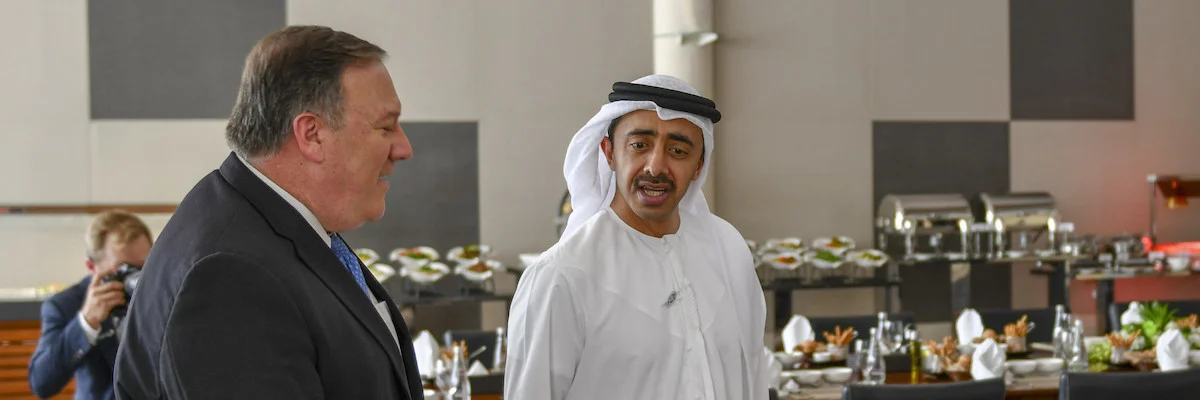
◢ US Secretary of State Mike Pompeo Thursday said he preferred a “peaceful resolution” to a crisis sparked by attacks on Saudi oil infrastructure, as Iran warned against “all-out war.” Pompeo has blamed Iran for the weekend assault on two facilities which wiped out half of Saudi oil production, dismissing its denials and condemning the “act of war.”
US Secretary of State Mike Pompeo Thursday said he preferred a “peaceful resolution” to a crisis sparked by attacks on Saudi oil infrastructure, as Iran warned against “all-out war.”
Pompeo has blamed Iran for the weekend assault on two facilities which wiped out half of Saudi oil production, dismissing its denials and condemning the “act of war.”
The rhetoric has raised the risk of an unpredictable escalation in the tinderbox region where Saudi Arabia and Iran are locked in a decades-old struggle for dominance.
Visiting the United Arab Emirates, Pompeo however said his country would prefer a “peaceful” solution to the crisis.
“We’d like a peaceful resolution,” he said.
“I hope the Islamic Republic of Iran sees it the same way,” he told reporters after talks with the leaders of the United Arab Emirates.
Iran’s Foreign Minister Mohammad Javad Zarif earlier warned any US or Saudi military strike on Iran could cause “all-out war.”
“We don’t want war, we don’t want to engage in a military confrontation,” he told CNN in an interview aire Thursday.
“But we won’t blink to defend our territory.”
Pompeo arrived in Abu Dhabi from the Saudi city of Jeddah, where late Wednesday he met Crown Prince Mohammed bin Salman, the kingdom’s de-facto ruler who has said the assault poses a “real test” of global will.
The two sides agreed “the Iranian regime must be held accountable for its continued aggressive, reckless, and threatening behaviour,” State Department spokeswoman Morgan Ortagus said.
The “unacceptable and unprecedented attack… not only threatened Saudi Arabian national security, but also endangered the lives of all the American citizens living and working in Saudi Arabia,” she added.
‘Glass Towers’
Saudi officials Wednesday unveiled what they said were fragments of 25 drones and cruise missiles fired Saturday at the facilities in the country’s east, engulfing them in flames.
“The attack was launched from the north and unquestionably sponsored by Iran,” defence ministry spokesman Turki al-Maliki said, but did not say whether Saudi officials believed Iran would ultimately be found to be the culprit.
Tehran-linked Huthi rebels in Saudi Arabia’s southern neighbor Yemen have claimed responsibility, but both Washington and Riyadh have ruled that out, saying it was beyond their capabilities.
French Foreign Minister Jean-Yves Le Drian also said the Huthi claim “lacks credibility”.
The Huthis have hit dozens of targets in Saudi Arabia, and their rapidly advancing arsenal has exposed the vulnerability of the kingdom despite its vast military spending.
Huthi military spokesman Brigadier Yahya Saree said Saturday’s assault on the two facilities was launched from three locations inside Yemen, using advanced drones with long-range capabilities.
He also threatened the United Arab Emirates, a key member of the Saudi-led coalition fighting the Huthis, saying it was ready to attack dozens of targets including the skyscraper-filled cities of Dubai and Abu Dhabi.
“If you want peace and security for your facilities, and towers made of glass that cannot withstand one drone, then leave Yemen alone,” he said.
‘List of Iran Targets’ ‘
US military planners weighing retaliation have reportedly forwarded a list of Iranian targets including the Abadan oil refinery, one of the world’s largest, or Khark Island, the country’s biggest oil export facility, the New York Times said.
Other potential targets include missile launch sites and other assets of the elite Islamic Revolutionary Guard Corps, and bases in the southwest where unusual activity suggests they had a role in the strikes.
“Any strikes against Iran would almost certainly be carried out by volleys of cruise missiles from Navy vessels. Strike aircraft would be aloft to carry out attacks if Iranian retaliated against the first wave,” the newspaper said.
Cinzia Bianco, a Middle East analyst at the European Council on Foreign Relations, said the incident could “trigger an out-of-control chain of escalatory events.”
“Inside Saudi Arabia, there is uncertainty over the most appropriate course of action,” she told AFP.
“However the dominant thinking there points to the US targeting critical infrastructure in Iran as to minimise or exclude any human cost.”
Late Wednesday, CBS News cited an unnamed US official as saying Iran’s supreme leader Ayatollah Ali Khamenei approved the attack, on condition it be carried out in a way to deny Iranian involvement.
US officials quoted said the most damning evidence against Iran was unreleased satellite photos showing Iran’s Revolutionary Guard Corps making preparations for the attack at its Ahvaz airbase.
But the commander of Iran’s Revolutionary Guards, Major General Hossein Salami, said Thursday his country was “so powerful that they are forced to falsely accuse us to be behind any incident”.
An international inquiry is under way, with the the United Nations saying Thursday experts had arrived in the kingdom and begun their mission “at the invitation of the Saudi authorities”.
Trump, who has already re-imposed sanctions that have crippled Iran’s economy, promised on Wednesday to “substantially increase” the measures, winning quick praise from Riyadh.
Zarif, himself under US sanctions since July 31, described the measures as “illegal” and “inhuman” and designed to hurt ordinary citizens.
Photo: State Department

Trump Seeks New Iran Sanctions as Pompeo Consults Saudi Arabia
◢ President Donald Trump said he wants tougher U.S. sanctions on Iran as his top diplomat arrived in Saudi Arabia to consult with leaders and build a case against Tehran following weekend attacks on the kingdom’s key oil facilities. “We’ll be adding some very significant sanctions,” Trump said Wednesday.
By Nick Wadhams, Glen Carey and Josh Wingrove
President Donald Trump said he wants tougher U.S. sanctions on Iran as his top diplomat arrived in Saudi Arabia to consult with leaders and build a case against Tehran following weekend attacks on the kingdom’s key oil facilities.
“We’ll be adding some very significant sanctions,” Trump said Wednesday in Los Angeles, adding that the administration will be announcing them over the next 48 hours.
Trump announced the plan to impose more sanctions earlier Wednesday by tweet, just hours before Secretary of State Michael Pompeo landed in Jeddah, Saudi Arabia. Pompeo told reporters that the U.S. believes with “high confidence” that Iran was behind the strikes on Saudi Aramco facilities, regardless of whether they originated in Iranian territory. The attack was initially claimed by Houthi rebels in Yemen.
“It’s not the case that you can subcontract out the devastation of 5% of the world’s oil supply,” Pompeo told reporters. He said his goal during the trip to Saudi Arabia and United Arab Emirates is to “build out a coalition to develop a plan to deter” Iran.
Trump on Wednesday signaled reluctance to engage in a military operation that could lead to a prolonged conflict.
“It’s very easy to attack,” he said, but added: “How did going into Iraq work out?”
But the president also warned that he has “plenty of time to do some dastardly things” to Iran in response to the strikes on the Aramco facilities.
‘Unquestionably’ Iran
Earlier in the day, Saudi Arabia’s defense ministry said the attacks were “unquestionably sponsored by Iran,” adding that an assessment of the parts of drones and missiles recovered indicate Iranian origin. The ministry displayed pieces of what it said was the weaponry involved.
“We were blessed that there were no Americans killed in this attack, but any time you have an act of war of this nature there’s always a risk that could happen,” Pompeo said in Jeddah.
Iran has denied involvement in the attacks, which were claimed by the Yemeni rebels allied with the Islamic Republic. Saudi defense officials, however, said the strikes came from the north, though they didn’t directly say they originated on Iranian territory, a nuance echoed by Pompeo.
West Texas Intermediate crude for October delivery declined 76 cents to $58.58 a barrel at 11:08 a.m. on the New York Mercantile Exchange.
Trump has been ramping up sanctions on the Islamic Republic since quitting the 2015 nuclear deal with Iran, including adding severe restrictions on the country’s oil sales. Additional U.S. economic sanctions could be a route to avoiding direct military conflict. While Trump initially said the U.S. is “locked and loaded” to respond to the Aramco attack, he has since signaled that he isn’t eager for another Middle East conflict.
Sanctions Targets
Iran’s economy has already been under severe pressure from existing sanctions, yet some analysts said there are still a number of potential targets for restrictions, including in the construction sector, additional companies on the Tehran stock exchange and foundations controlled by the regime or Iranian Revolutionary Guard Corps. But with the vast majority of Iran’s economy dependent on oil sales, additional sanctions may have little more than a marginal impact.
Soon after the strikes took place, Pompeo quickly blamed Tehran. The attacks crippled oil output from the world’s biggest exporter, but the international response has so far been more measured. The United Nations said it is sending a team of inspectors to investigate the incident.
Hardliners on U.S. policy toward Iran warned the president that a sanctions-only approach may embolden the regime, especially after a spate of tanker attacks in the Persian Gulf and the shooting down of an American drone over the region’s waters earlier this year.
“U.S. presidents who are unwilling to use all instruments of national power always default to sanctions,” said Mark Dubowitz, the chief executive of the Foundation for Defense of Democracies and a prime architect of U.S. sanctions against Iran. “While the administration can cause even more severe pain economically for the regime, Tehran will interpret this as a sign of American weakness, not strength.”
Trump rebuked an ally, Republican Senator Lindsey Graham of South Carolina, on Twitter on Tuesday after Graham suggested that Iran interpreted Trump’s reluctance to retaliate earlier this year for the downing of a U.S. drone as weakness.
The strikes on Saudi Arabia have diminished expectations that Trump and Iranian President Hassan Rouhani could meet on the sidelines of the UN General Assembly next week in New York.
U.S. defense officials have said they are preparing an assessment, which could be made public soon, on who was responsible for the attacks. U.S. experts are conducting an intense examination of evidence on the ground in Saudi Arabia and reviewing intelligence such as radar tracks from the region, according to the first official.
Photo: Wikicommons
Iran Warns U.S. on Retaliation as It Denies Role in Saudi Attack
◢ President Hassan Rouhani said Iran is not looking for a war in the Persian Gulf following weekend strikes on Saudi Arabia’s biggest oil installation, as the Islamic Republic sent a cable to Washington formally denying any role. Addressing a cabinet meeting, Rouhani said the assault was carried out by Yemeni Houthi rebels retaliating against Saudi Arabia’s military campaign in their country.
By Arsalan Shahla
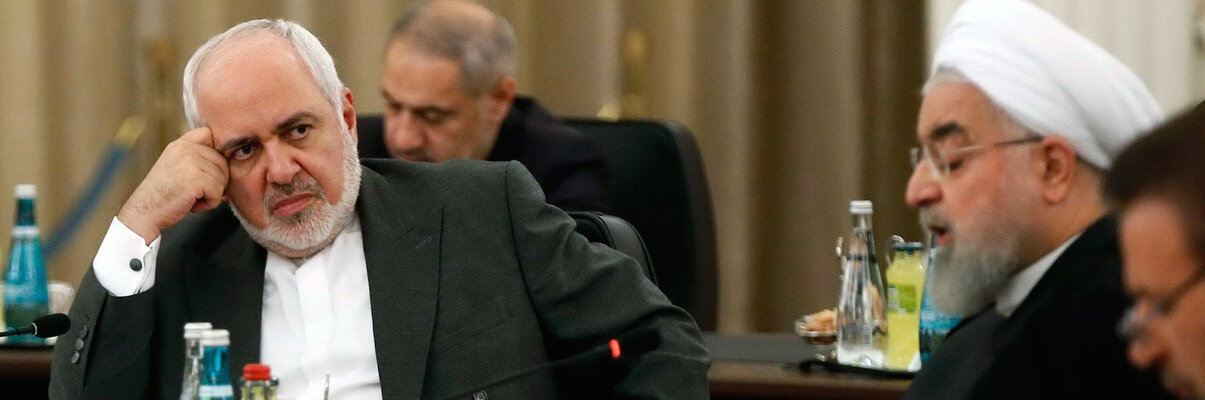
President Hassan Rouhani said Iran is not looking for a war in the Persian Gulf following weekend strikes on Saudi Arabia’s biggest oil installation, as the Islamic Republic sent a cable to Washington formally denying any role.
The attacks raised the specter of a broader war in the Persian Gulf as any military retaliation by the Saudis and their U.S. ally could draw in Iranian proxy groups around the region, and provoke a dramatic spike in oil prices at a vulnerable time for the world economy.
The Iranian appeals come hours before Saudi Arabia unveils what it says is evidence of Iran’s involvement in the attack, which shook crude markets and slashed output at OPEC’s largest producer. U.S. Secretary of State Michael Pompeo is also due to arrive in the kingdom on Wednesday.
Addressing a cabinet meeting, Rouhani said the assault was carried out by Yemeni Houthi rebels retaliating against Saudi Arabia’s military campaign in their country and should serve as a “warning and lesson,” according to state TV.
Iran backs the Houthis, one of several militias it supports around the region, from Lebanon to Iraq. In its note sent to the U.S. via the Swiss embassy, Iran also warned it would respond “swiftly” to any action against it. The Swiss mission has represented U.S. interests in Iran since the 1979 Islamic Revolution.
The U.S. has imposed swingeing sanctions on Iran’s economy -- especially its oil sales -- since exiting the landmark 2015 nuclear deal last year in an effort to curtail Tehran’s regional influence and military capabilities. Tightening U.S. sanctions have battered the Iranian currency, driving up prices and causing shortages. Iran is gradually scaling back its commitments under the deal and has said it will not reopen talks without sanctions relief.
The confrontation has sporadically convulsed the Gulf, with the strikes on oil tankers, an American drone and a key pipeline, pushing the region to the brink of open conflict. Saturday’s attack on the heart of the Saudi oil industry drove tensions to new heights.
While President Donald Trump hasn’t directly blamed Iran for the attacks, Pompeo has, and U.S. officials have said the location of the damage and weapons used suggest the attack was not launched from Yemen. The Houthi rebels have claimed responsibility and have carried out numerous strikes on Saudi territory during a four-year war with a military coalition led by the kingdom.
The U.S. and its Gulf allies “assumed the Iranians would take the maximum pressure without any significant reaction,” said David Roberts, an assistant professor at King’s College London who studies the Persian Gulf. “They’ve all been completely blindsided by the potent nature of the Iranian response.”
Even as Saudi oil behemoth Aramco fixes the damage at its Abqaiq facility, the possibility of further military conflict hangs over the oil market. Brent edged higher on Wednesday after tumbling Tuesday as Aramco said it had revived 41% of capacity at the crude-processing unit. It’s expected to return to pre-attack levels of about 4.9 million barrels by the end of September.
Trump —who said his country was “locked and loaded”—in the immediate aftermath of the attacks, has since dialed back his rhetoric, signaling that he expects Saudi leaders, who have bought billions of dollars of American military equipment, to lead and pay for any response.
The Pentagon is preparing a report on who was responsible and intends to make it public within 48 hours, a U.S. defense official said Tuesday. The official couldn’t confirm or deny a CBS News report that the U.S. has identified locations in southern Iran from which it believes more than 20 drones and cruise missiles were launched.
The prospect of a U.S. strike on Iran in retaliation for an attack that didn’t target Americans or even a country with which the U.S. has a defense treaty is proving divisive in Washington, with debate over whether Congressional approval would be needed.
“Trump is utterly loath to order military action near election time and the Saudis are aware ever more so of the growing vulnerability that they have,” Roberts said. “A meaningful diplomatic response is the most likely reaction from the U.S. and its allies.”
The violence has damped speculation, for now, that Trump might meet Rouhani at the annual United Nations General Assembly next week.
The president said on Tuesday that he doesn’t want to meet Rouhani in New York, as the Iranians weren’t “ready” for talks. Iranian Supreme Leader Ayatollah Ali Khamenei ruled out negotiations with Washington at “any level” while country’s economy remained under sanctions.
State-run Islamic Republic News Agency reported on Wednesday that Rouhani and Foreign Minister Mohammad Javad Zarif may cancel their visits to the UN if the U.S. doesn’t issue visas “in the next few hours” potentially closing another opening for potential dialogue.
Photo: IRNA
Iran Shows Trump That It’s Too Big to Be Crushed or Marginalized
◢ Earlier this year, President Donald Trump warned that “it’s going to be a bad problem for Iran if something happens.” Something big has happened with an attack on Saudi oil infrastructure, and yet it isn’t obvious how the U.S. can effectively retaliate against a country that is already under maximum economic sanctions.
By Marc Champion and Zainab Fattah
Earlier this year, President Donald Trump warned that “it’s going to be a bad problem for Iran if something happens.” Something big has happened with an attack on Saudi oil infrastructure, and yet the administration in Washington looks like the one with the problem.
After leading voices in the Trump administration laid the blame squarely on Iran, it isn’t obvious how the U.S. can effectively retaliate against a country that is already under maximum economic sanctions. Iran is too big for the U.S. to invade even if there were appetite among U.S. voters for another Gulf war, and has demonstrated its ability to strike back hard should the U.S. decide to escalate.
U.S. sanctions have cratered the Iranian economy. Yet administration hopes that this would lead to a popular backlash against the government in Tehran, forcing it to cave to American demands, have yet to bear fruit.
Instead, the regime has relied on responses honed over 40 years of international isolation, upping the ante to show that if the U.S. continues forcing Iranian oil exports to zero in an attempt to bankrupt its government, Iran has the power to halt the oil exports of U.S. ally Saudi Arabia, too.
“We are caught in this vicious circle,” said Ali Vaez, Iran Project Director at the Brussels-based International Crisis Group. “The U.S. has to realize that Iran is part of this region. Iran cannot be excised.”
Revolutionary Guard
Rather than retreat in the face of withering revenues, which was a part of the logic that informed U.S. withdrawal from the 2015 nuclear deal that had lifted sanctions, the elite Islamic Revolutionary Guard Corps is increasingly active in Iraq, Lebanon, Syria, Yemen and even Afghanistan.
For the Guard—which has long defined itself as the Middle East’s ultimate bulwark against U.S. military power—sanctions are almost seen as a call to arms.
“Saudi Arabia’s Backbone is Broken; The U.S. and al Saud are in Mourning!” crowed the front page headline in Monday’s edition of Kayhan newspaper, whose chief editor is directly appointed by Iran’s Supreme Leader Ayatollah Ali Khamenei.
A 2017 clip of Saudi Crown Prince Mohammad bin Salman saying “we won’t wait for the war to come to Saudi Arabia, we’ll take the war to Iran,” has been widely recirculated and mocked in recent days. “Well Bin Salman my brother, tell me how’s Aramco doing?” said one Twitter user’s caption for the clip, referring to Saudi Arabia’s leviathan oil company.
Regional Influence
That bravado is ultimately misplaced, because nothing Iran has done to date has brought the lifting of sanctions—the central problem for the country of 82 million as a whole—any closer, according to Michael Knights, senior fellow at the Washington Institute for Near East Policy. At the same time, Iran’s capacity to make its interests felt across the region has been on full display.
“We have a sequence of events since about May 12, where the Iranians have pushed on one red line and relationship after another,” said Knights. “From a military perspective it has really been superbly executed, from tanker attacks that didn’t spill a drop of oil into the Gulf, to these now, which were of the same quality that the U.S. would have displayed in the mid-90s, using the cruise missiles it had then.”
Each tactical success has further raised Iran’s prestige in the region, a higher priority for regime conservatives and the IRGC than restoring the economy, according to Knights.
That forward-leaning approach is part of a longer term game plan, as Iran seeks to benefit from a gradual U.S. withdrawal from the region that’s likely to continue regardless of who is elected president in 2020.
“The U.S. has been looking for years for a re-posturing in the Middle East that would entail a lighter commitment on their end,” said Cinzia Bianco, Arabian Peninsula research fellow at the European Council on Foreign Relations in Berlin, a think tank. “This is crucial to what happened with Aramco, because the IRGC is fully aware of this context and is trying to test its new limitations.”
Balance of Power
The attack could have a lasting impact on the balance of power in the region, because it cruelly exposed the scale of an ongoing change in the U.S.-Saudi relationship, according to Pierre Noel, senior fellow for economic and energy security at the International Institute for Security studies, in London. “The Saudis lost in 30 minutes the war they had been preparing for for 50 years,” Noel said in a briefing on Tuesday. “They lost 50 percent of their national oil output, to Iran, and without the U.S. being immediately able or willing to offer cover.”
That has rendered empty, or at least severely limited, the absolute U.S. security guarantee for Saudi Arabia and its oil fields that Saudi and other countries in the region have long assumed.
Much of what happens next will depend on how hard the U.S. and Saudi decide to push their case that Iran, rather than its Houthi proxies in Yemen, was responsible for Saturday’s bombing of Saudi Arabia’s oil infrastructure at Abqaiq. If the U.S. decides to force the issue and produce hard evidence in public, the pressure to be seen to retaliate will be high, according to Knights and others.
Iran has denied responsibility for the attack, which the Houthis have claimed for themselves. It won’t negotiate with the U.S. at any level, Khamenei said on Tuesday. That would appear to rule out a meeting of Trump and President Hassan Rouhani at the UN General Assembly in New York this month.
Missiles and Drones
The European signatories to the Iran nuclear deal that Trump abandoned unilaterally last year in a precursor to re-imposing sanctions are content to stay on the fence for now. The governments of France and Germany, both of which were instrumental in establishing a special purpose vehicle meant to aid Iran over U.S. opposition, condemned the attacks without laying blame.
Iran’s military, at least, appears to be calculating that Trump will prefer to leave the case inconclusive and stick with less risky, costly and unpopular alternatives to an act of war.
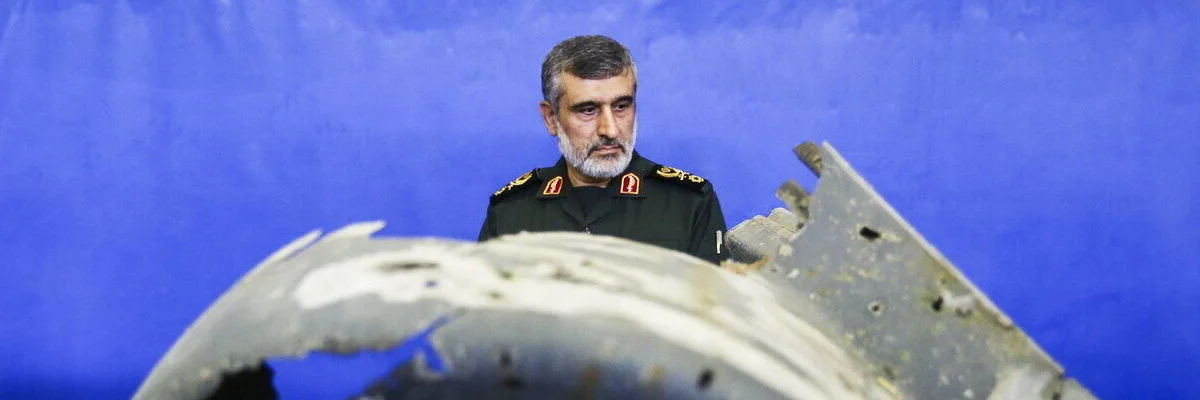
“It’s necessary for everyone to know that all U.S. bases and their vessels are within a 2,000 kilometer (1,240 mile) reach of our missiles,” the IRGC’s aerospace forces commander, Brig. Gen. Amirali Hajizadeh said in an interview with the Iranian news agency, Tasnim, on Sunday.
Iran has about 50 medium range ballistic missiles deployed and others in development, as well as about 130 drones, according to the International Institute for Strategic Studies in London. “Neither we nor the Americans have any intention of going to war,” the brigadier general said.
Photo: IRNA
Trump’s Suggestion of Iran Strike Raises Bipartisan Alarm
◢ Donald Trump risks a political backlash if he retaliates against Iran over a weekend strike on Saudi Arabian oil facilities after campaigning on promises to withdraw the U.S. from foreign wars. Speaking later to reporters in the Oval Office, Trump said: “It’s certainly looking that way at this moment,” and “we pretty much already know” who did it.
By Josh Wingrove and Daniel Flatley
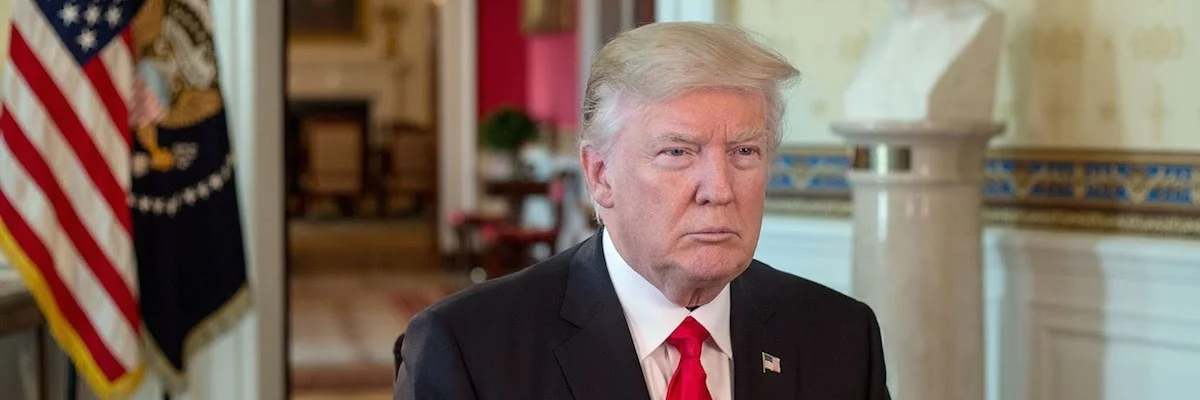
Donald Trump risks a political backlash if he retaliates against Iran over a weekend strike on Saudi Arabian oil facilities after campaigning on promises to withdraw the U.S. from foreign wars.
Trump tweeted Monday that the U.S. is “locked and loaded,” raising bipartisan alarm after the weekend attack that halved Saudi oil production. Speaking later to reporters in the Oval Office, Trump said: “It’s certainly looking that way at this moment,” and “we pretty much already know” who did it.
U.S. security officials met Monday morning. Secretary of State Mike Pompeo has blamed Iran, though Riyadh is stopping short of directly doing so. Iran denied involvement. Trump said diplomacy with Iran isn’t exhausted and that Pompeo will be heading to Saudi Arabia.
The prospect of a strike on Iran in retaliation for an attack that didn’t target Americans or even a country with which the U.S. has a defense treaty is proving divisive in Washington. Trump said the U.S. is prepared for any conflict, but that Saudi Arabia would need to play a significant part in any action.
Saudi Arabia’s popularity is at a nadir over the prolonged war it has fought in Yemen that has killed thousands of civilians and the murder of journalist Jamal Khashoggi in the kingdom’s Istanbul consulate earlier this year. Congress voted in April to cut off military support for Saudi Arabia over the Yemen war, legislation Trump vetoed.
Senator Lindsey Graham, a South Carolina Republican, said on Monday that Trump should consider attacking Iranian oil refineries, but Senator Mitt Romney, a Utah Republican, said direct U.S. intervention would be “a grave mistake.”
Before he was president, Trump expressed skepticism of U.S. military action on behalf of Saudi Arabia. “Saudi Arabia should fight their own wars, which they won’t, or pay us an absolute fortune to protect them and their great wealth-$ trillion!” he said in a 2014 tweet. But his tweet on Sunday indicated that he’s waiting for the kingdom to tell the U.S. what it wants to do.
Trump adopted the slogan “America First” during the 2016 campaign, and vowed to withdraw from foreign wars.
Defense Secretary Mark Esper said Monday that defense officials had briefed Trump about the situation on Monday, and that Esper spoke with Saudi Crown Prince Mohammad bin Salman and Iraqi Defense Minister Najah al-Shammari over the weekend.
“The United States military, with our interagency team, is working with our partners to address this unprecedented attack and defend the international rules-based order that is being undermined by Iran,” Esper tweeted.
Marc Short, the chief of staff to Vice President Mike Pence, earlier downplayed the prospect of U.S. military action.
“I think ‘locked and loaded’ means several things. One thing that it means is that America today under this president is far better prepared to handle these sort of events because we’re now a net exporter of oil,” Short said in an interview on Fox Business Network. “We know that Iran has been trying to instigate attacks against Saudi Arabia for some time.”
Senators’ Views
Chris Coons, a Democrat and member of the Senate Foreign Relations Committee, said Monday morning that military action against Iran may be warranted, depending on information gathered by U.S. intelligence services.
“My hope is that the president will consult with his generals, his diplomats, his advisers, will look hard at the intelligence,” Coons said in an interview on “Fox and Friends,” a show the president often watches. “Iran is one of the most dangerous state sponsors of terrorism. This may well be the thing that calls for military action against Iran if that’s what the intelligence supports.”
But Coons faced criticism from liberals for his remarks, and a Democratic colleague, Hawaii Senator Brian Schatz, said on Twitter: “There is no imminent threat and the U.S. military is not authorized to retaliate on behalf of another country.”
Most of the vetoes Trump has issued during his presidency were of bipartisan resolutions regarding Saudi Arabia, and every time Congress has failed to muster enough votes to override his veto.
Trump Vetoes
One of the measures sought to end U.S. assistance for Saudi Arabia’s war against Houthi rebels in Yemen, citing the humanitarian disaster caused by the conflict. Trump also vetoed three resolutions to curb U.S. arms sales to Saudi Arabia.
The rift between Trump and some Republicans began after the murder of Khashoggi, a U.S.-based columnist for the Washington Post. The Senate is still considering punishment for Saudi officials alleged to be involved in the killing, including a bipartisan measure to suspend arms sales to the kingdom and impose sanctions on those found responsible for the Khashoggi murder, potentially including Prince Mohammed.
James Carafano, a foreign policy analyst at the Heritage Institute, a conservative research group, said Iran needs to be held accountable for its behavior, but that the U.S. would be better off supporting a Saudi Arabian response, rather than launching its own.
“The Saudis need to have some backbone. This was not an attack on the U.S. forces or U.S. bases, this was an attack on Saudi Arabia,” Carafano said. “If you’re going to conduct a retaliatory strike, you have to make the case to the world that this is warranted and appropriate.”
Photo: White House
China Urges 'Restraint' from US, Iran After Saudi Oil Attack
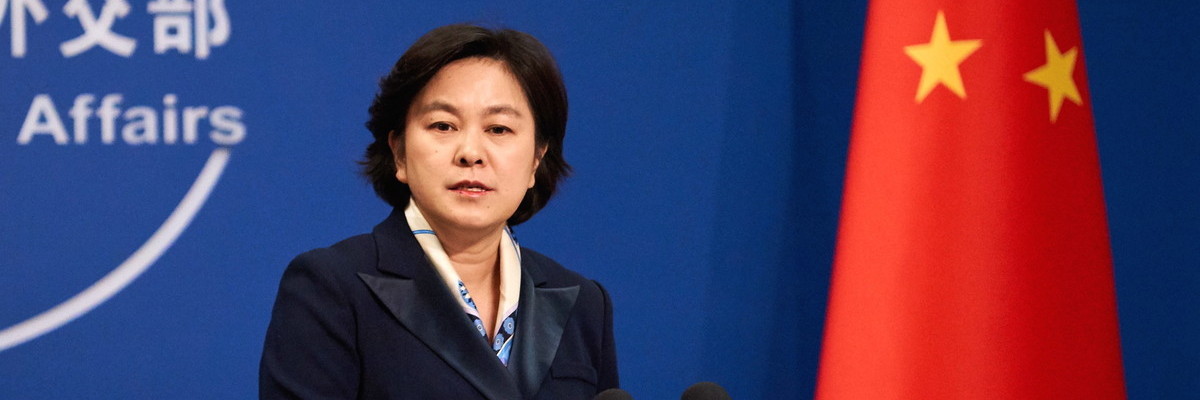
◢ China on Monday urged the United States and Iran to "exercise restraint" after a drone attack on Saudi oil infrastructure, which Washington has blamed on Tehran. Chinese foreign ministry spokeswoman Hua Chunying also said it was not responsible to accuse others "in the absence of a conclusive investigation or verdict.”
China on Monday urged the United States and Iran to "exercise restraint" after a drone attack on Saudi oil infrastructure, which Washington has blamed on Tehran.
Chinese foreign ministry spokeswoman Hua Chunying also said it was not responsible to accuse others "in the absence of a conclusive investigation or verdict.”
"The Chinese side's position is that we oppose all actions that enlarge or intensify conflict," she told reporters at a regular press briefing in Beijing.
"We hope that both sides can exercise restraint and jointly safeguard the peace and stability of the Middle East," she added.
The drone strikes on Saturday, claimed by Tehran-backed Huthi rebels in Yemen, hit two oil plants in Saudi Arabia and caused a record surge in oil prices, as output from the world's top exporter was slashed in half.
US Secretary of State Mike Pompeo has accused Tehran of launching the attack and said that the US would ensure "Iran is held accountable for its aggression."
On Sunday, President Donald Trump also hinted at a potential American military response to the attack by saying the US was "locked and loaded" to respond.
Iran, however, has dismissed accusations from the US, suggesting that Washington was seeking a pretext to retaliate against the Islamic Republic.
Photo: PRC MFA
Iran Refutes US Accusations Over Saudi Attacks
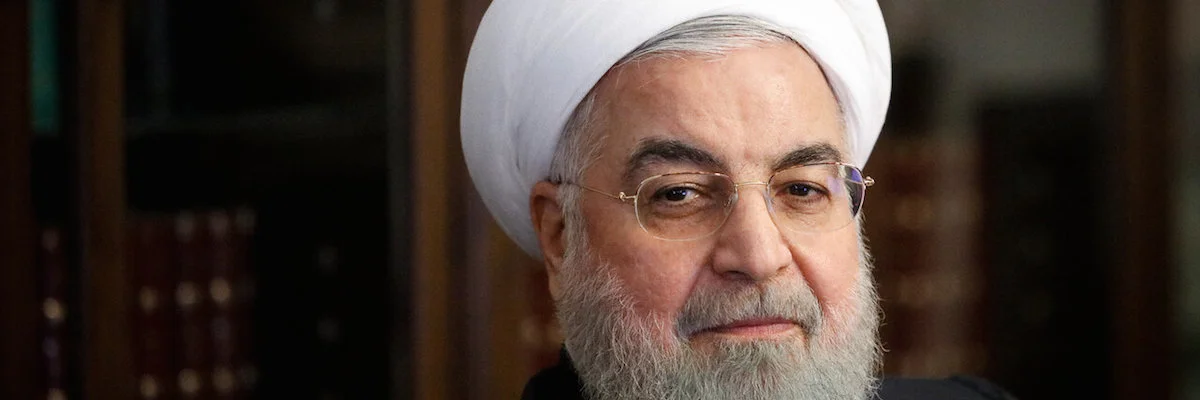
◢ Iran on Sunday dismissed US accusations it was behind drone attacks on Saudi oil installations, suggesting Washington was seeking a pretext to retaliate against the Islamic Republic. "Such fruitless and blind accusations and remarks are incomprehensible and meaningless," foreign ministry spokesman Abbas Mousavi was quoted as saying in a statement.
Iran on Sunday dismissed US accusations it was behind drone attacks on Saudi oil installations, suggesting Washington was seeking a pretext to retaliate against the Islamic Republic.
"Such fruitless and blind accusations and remarks are incomprehensible and meaningless," foreign ministry spokesman Abbas Mousavi was quoted as saying in a statement.
US Secretary of State Mike Pompeo condemned Iran after Saturday's attacks, which knocked out half of Saudi Arabia's oil production.
Yemen's Iran-aligned Huthi rebels claimed responsibility for the drone strikes, but Pompeo said "there is no evidence the attacks came from Yemen".
"The United States will work with our partners and allies to ensure that energy markets remain well supplied and Iran is held accountable for its aggression," the top US diplomat tweeted.
Mousavi said the US allegations over the pre-dawn strikes on Abqaiq and Khurais in Saudi Arabia's Eastern Province were meant to justify actions against Iran.
"Such remarks... are more like plotting by intelligence and secret organisations to damage the reputation of a country and create a framework for future actions," he said.
Tehran and Washington have been at loggerheads since May last year when President Donald Trump pulled out of a 2015 multilateral deal that promised Iran relief from sanctions in return for curbs on its nuclear programme.
Iran's President Hassan Rouhani accused Washington of diverting blame for the war in Yemen, where US ally Saudi Arabia leads a military coalition that has regularly carried out air strikes.
"Today, witness that innocents die every day in Yemen ... Americans, instead of blaming themselves—and confessing that their presence in the region is creating problems—blame the region's countries or Yemen's people," Rouhani said.
"If we want there to be real security in the region, the solution is that America's aggression cease," Iran's president added, before leaving for Ankara to attend a trilateral meeting on Syria with Turkey and Russia.
"We believe the region's issues can be solved through talks in Yemen, Yemeni-Yemeni negotiations -- they must decide for themselves. The bombardment of Yemeni people must stop," Rouhani said.
'Maximum Lying'
Since its withdrawal from the nuclear accord, the United States has slapped crippling sanctions on Iran as part of a campaign of "maximum pressure".
The Islamic Republic has responded by reducing its nuclear commitments.
"The Americans have taken the policy of 'maximum pressure' which has apparently turned into 'maximum lying' due to their failures," said Mousavi.
The arch-foes were on the cusp of confrontation in June when Iran downed a US drone and Trump ordered retaliatory strikes before cancelling them at the last minute.
In remarks published Sunday, the commander of the Islamic Revolutionary Guard Corps' aerospace arm said Iran's missiles could hit US bases and ships within a range of 2,000 kilometres (about 1,240 miles).
"Neither us nor the Americans want a war," Brigadier General Amirali Hajizadeh said, quoted by Tasnim news agency, which is considered close to the Guards.
"Of course, some forces facing each other in the field could do something, by which a war could start," the commander said.
"We have always prepared ourselves for a full-fledged war... everyone should know that all American bases and their vessels in a 2,000-kilometer range can be targeted by our missiles," he added.
Photo: IRNA
Pompeo Blames Iran for Drone Attack on Saudi Oil Industry
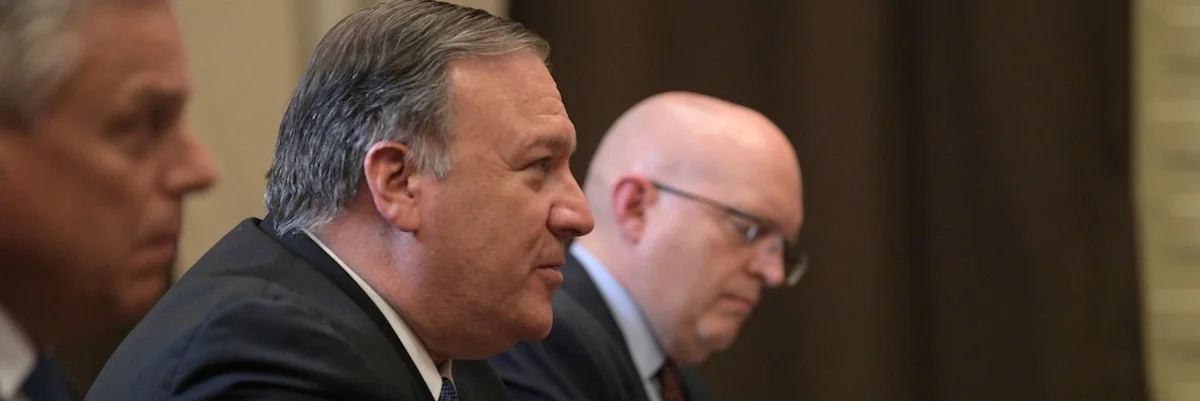
◢ U.S. Secretary of State Michael Pompeo blamed Iran for a series of brazen attacks on a massive Saudi Aramco oil facility, saying there was no evidence the drones originated in Yemen as Tehran-backed rebels there claimed. Iran denied responsibility for the raids Saturday, which forced Saudi Arabia to slash its daily oil output in half.
By Maria Jose Valero and Nadeem Hamid
U.S. Secretary of State Michael Pompeo blamed Iran for a series of brazen attacks on a massive Saudi Aramco oil facility, saying there was no evidence the drones originated in Yemen as Tehran-backed rebels there claimed.
Iran denied responsibility for the raids Saturday, which forced Saudi Arabia to slash its daily oil output in half.
Pompeo tweeted after the White House confirmed that President Donald Trump offered support for Saudi Arabia’s self-defense in a call on Saturday with Saudi Crown Prince Mohammed Bin Salman.
Iran launched an “unprecedented attack on the world’s energy supply,” Pompeo said on Twitter after at least one Republican lawmaker urged the U.S. to respond in kind with a strike on Iranian oil facilities. He gave no evidence to back up that allegation.
The Wall Street Journal reported that Saudi and U.S. officials are investigating the possibility that cruise missiles were launched from Iraq, which is much closer than Yemen, and is home to a host of Iran-backed Shiite missiles.
Pompeo said the U.S. will work with allies to ensure the energy market remains well supplied, echoing comments from the White House. He also called on all nations to “publicly and unequivocally condemn Iran’s attacks.”
Saudi Arabia, which is locked in multiple proxy wars with Iran in the Middle East trying to contain its widening influence, hasn’t blamed anyone for the assault on the oil facility. On Sunday, it was racing to restore oil production after state energy producer Saudi Aramco lost about 5.7 million barrels per day of output in the raids on the world’s biggest crude-processing facility and the kingdom’s second-biggest oil field.
The attack intensified the volatility in the Persian Gulf region, which has been destabilized by a showdown between the U.S. and Iran over the 2015 nuclear deal. Frictions have mounted in the Gulf ever since Trump quit the deal last year and began reimposing harsh sanctions on Iran to try to force it to renegotiate a deal that would more broadly limit its nuclear and military ambitions.
Iran has responded by rolling back some of its obligations under the accord, as the agreement allows parties to do when others pull away from their commitments. It’s also been accused of carrying out a number of attacks on oil tankers in the Gulf region, charges it has denied.
Iranian Foreign Ministry spokesman Abbas Mousavi rejected the latest U.S. allegations, saying such “blind and fruitless accusations and statements are unfathomable and meaningless.” Foreign Minister Mohammad Javad Zarif tweeted, “Having failed at ‘max pressure,’ @SecPompeo’s turning to ‘max deceit.’”
Iranian-backed Houthi rebels in Yemen claimed responsibility for the strikes. A Saudi-led coalition backed by the U.S. has been fighting for more than four years to try to vanquish the Houthis and restore Yemen’s President Abdrabbuh Mansour Hadi to power. But the Houthis have proven more tenacious than the Saudis expected, withstanding four years of withering air attacks and fighting off better-armed forces with a disciplined insurgency.
They’ve stepped up their drone and missile attacks on enemy forces and Saudi territory, and as the war has dragged on, thousands of civilians have died, millions have gone hungry, and al-Qaeda and Islamic State have mounted a resurgence.
The U.S. “strongly condemns today’s attack on critical energy infrastructure,” White House spokesman Judd Deere said in an emailed statement that was also posted on Twitter. The U.S. government “is monitoring the situation and remains committed to ensuring global oil markets are stable.”
France, which has been working with Iran to try to salvage its nuclear deal with world powers after the U.S. pulled out last year, condemned the attacks and expressed “total solidarity” with the kingdom.
“Such actions can’t but aggravate the tensions and the risk of conflict in the region,” the French Foreign Ministry said. “It’s imperative they stop,” it added, without assigning blamed.
Republican Senator Lindsey Graham, a confidant of Trump, earlier urged a decisive U.S. response against Iranian targets.
“It is now time for the U.S. to put on the table an attack on Iranian oil refineries if they continue their provocations or increase nuclear enrichment,” Graham of South Carolina said on Twitter. “Iran will not stop their misbehavior until the consequences become more real, like attacking their refineries.”
Photo: Kremlin.ru
Iran Says its Tanker Held in Saudi Arabia Released
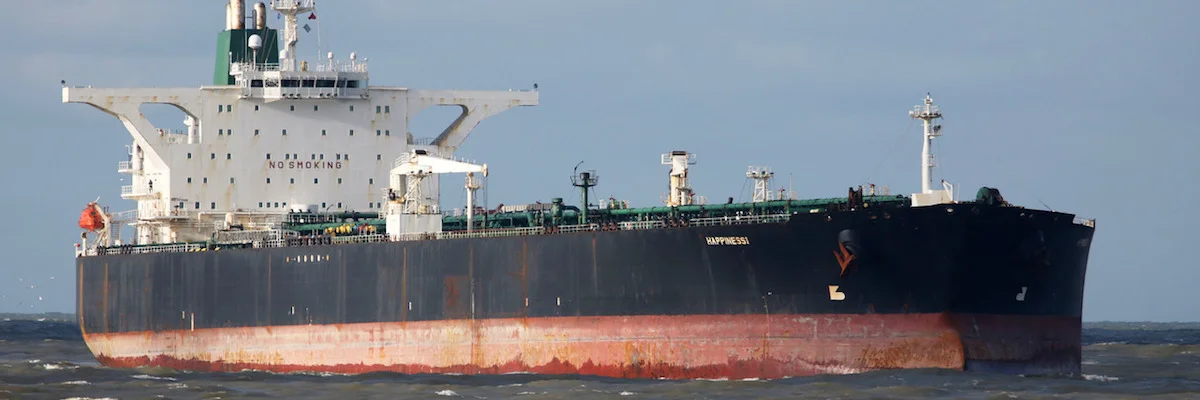
◢ An Iranian tanker held in Saudi Arabia since being forced to seek repairs at Jeddah port has been released and is returning to the Islamic republic, a minister said Sunday. The Happiness 1 tanker "has been released following negotiations and is now moving toward Persian Gulf waters," said transport minister Mohammad Eslami, quoted by state news agency IRNA.
An Iranian tanker held in Saudi Arabia since being forced to seek repairs at Jeddah port has been released and is returning to the Islamic republic, a minister said Sunday.
The Happiness 1 tanker "has been released following negotiations and is now moving toward Persian Gulf waters," said transport minister Mohammad Eslami, quoted by state news agency IRNA.
The ship had been forced to seek repairs in Saudi Arabia in early May after suffering "engine failure and loss of control", the Iranian oil ministry's SHANA news agency said at the time.
The rare docking came despite escalating tensions between staunch enemies Iran and Saudi Arabia.
"Yesterday, with follow-ups from the ports and maritime authority the issue
was resolved," Eslami said.
"The tanker is moving towards the Persian Gulf with the permission of the Jeddah port, towed by two Iranian tug boats."
Iran's national tanker company said in a statement that on top of "political and diplomatic negotiations" the tanker's release required "the payment of related costs" demanded by Saudi Arabia.
According to a July 2 report by Mehr News Agency, Iran paid "over $10 million to Jeddah port for repairs and maintenance" of the tanker.
Saudi Arabia severed diplomatic ties with Iran in 2016, after its missions in the country were attacked in demonstrations over the kingdom executing prominent Shiite cleric Nimr al-Nimr.
They still lack direct diplomatic channels, and Iran's foreign ministry spokesman Abbas Mousavi on Sunday thanked "Switzerland and Oman as well as related Saudi parties for offering services and facilities" to resolve the issue.
Photo: FleetMon
Attacks on Oil Tankers Near Hormuz Fan Fears of Conflict
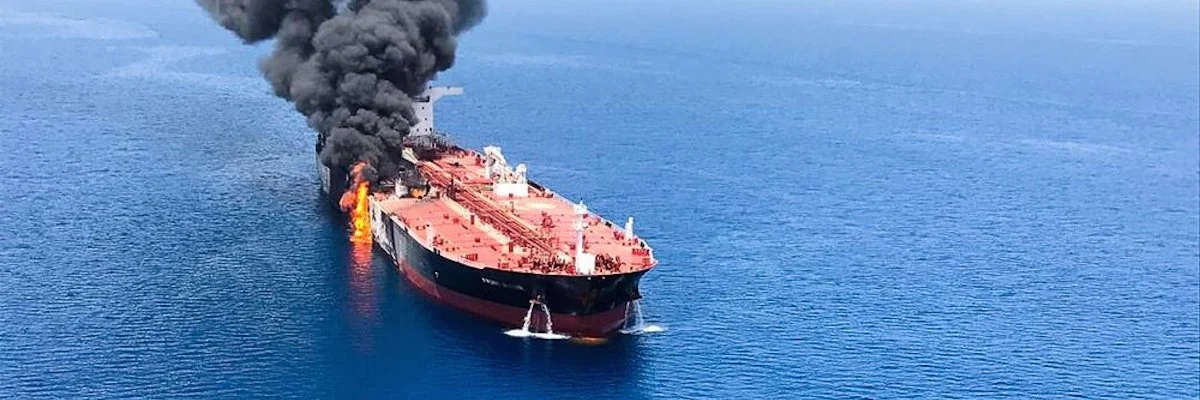
◢ Two oil tankers were damaged on Thursday in a suspected attack near the entrance to the Persian Gulf, stoking fears that high-stakes diplomatic efforts won’t avert a military confrontation between the U.S. and Iran. Oil prices surged. The incidents, including an attack on a Japanese-operated vessel, were the second in a month to hit ships near the Strait of Hormuz chokepoint, through which about 40% of the world’s seaborne oil travels.
By Verity Ratcliffe, Anthony DiPaola and Bruce Stanley
Two oil tankers were damaged on Thursday in a suspected attack near the entrance to the Persian Gulf, stoking fears that high-stakes diplomatic efforts won’t avert a military confrontation between the U.S. and Iran. Oil prices surged.
The incidents, including an attack on a Japanese-operated vessel, were the second in a month to hit ships near the Strait of Hormuz chokepoint, through which about 40% of the world’s seaborne oil travels. They come as Japanese Prime Minister Shinzo Abe, a rare ally of both Donald Trump and Iranian leaders, visits Tehran in an effort to ease tensions.
“Even in the absence of ironclad evidence, the U.S. and its allies will point the finger at Iran,” said Fawaz A. Gerges, professor of Middle Eastern politics at the London School of Economics. “These incidents are a bad omen because they point to a calculated escalation that tells us both sides are hunkering down.”
The prospects of a conflict have spiked since the Trump administration tightened its sanctions on Iranian oil exports in early May. Trump abandoned a year ago the 2015 deal that was meant to prevent Iran from developing a nuclear bomb and reimposed sanctions in a bid to force the Islamic Republic to rein in its military program and proxy militias.
Facing economic catastrophe, Iran has threatened to retreat from the accord itself unless European parties throw it an lifeline. Its supreme leader, Ali Khamenei, told Abe on Thursday that his country would not repeat the “bitter experience” of talks with the U.S.
High-Stakes Diplomacy
The Bahrain-based Fifth Fleet said it received two separate distress signals at 6:12 a.m. and about 7:00 a.m. local time. “U.S. Navy ships are in the area and are rendering assistance,” Commander Josh Frey, a spokesman, said. He couldn’t confirm reports that one of the vessels was struck by a torpedo. Iran said it has rescued 44 sailors.
The manager of one tanker, the Norwegian-owned Front Altair, said it was sailing in international waters when it was damaged by an explosion, whose cause “is as yet unknown.” The Norway Maritime Authority said there were three detonations on board. The ship had loaded a cargo of naphtha in Abu Dhabi and was bound for Taiwan, a company official said.
A distress call over VHF radio from the Front Altair said the ship was “under attack and on fire," said Donald MacLeod, a navigation officer on a vessel about 45 miles away on the Oman Sea. "They had to abandon ship."
Kokuka Sangyo, the Japanese operator of the other ship, said it was attacked twice, three hours apart, forcing the crew to evacuate. The tanker was carrying 25,000 tons of methanol from Saudi Arabia to Asia.
Brent oil crude soared as much as 4.5% and was trading at $62.07 a barrel at 10:42 a.m. in London. Stocks in Saudi Arabia and Dubai were down more than 1%.
The incidents come a day after Iran-backed rebels in Yemen fired a missile at a Saudi airport, wounding 26 people. The projectile crashed into the arrivals hall, damaging ceilings and windows and causing a fire, though the airport was able to keep functioning with only two flights cancelled. Houthi rebels last month hit oil infrastructure hundreds of kilometers inside Saudi Arabia, forcing it to temporarily close an oil pipeline.
Iran distanced itself from any attack.
“Iran is concerned by the suspicious events around commercial tankers related to Japan,” Foreign Ministry spokesman Abbas Mousavi, was quoted as saying on Fars news agency. “We see this as going against efforts from within the region and beyond to reduce tensions.”
Oil tankers last became a target in the Persian Gulf and Arabian Sea during the so-called "Tanker War" in the 1980s—a sideshow of the Iran-Iraq conflict. Between 1981 and 1988, a total of 451 ships suffered some sort of attack in the region from Iraqi or Iranian forces, according to a report from the U.S. Naval Institute.
Photo: ISNA
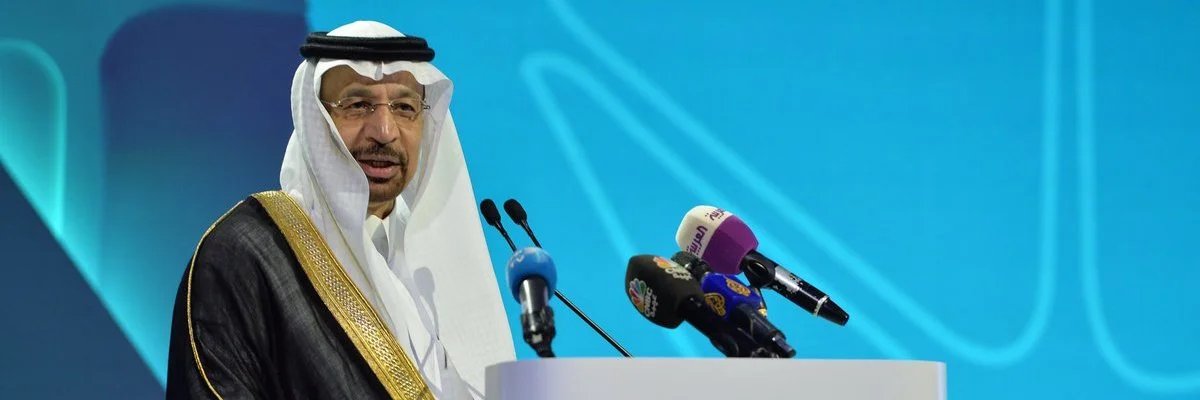
Saudis Take Iran's Oil-Market Share, Keeping OPEC Supply Steady
◢ Saudi Arabia ramped up oil production last month by the most this year, largely filling the gap created by tougher U.S. sanctions on its political rival, Iran. Iranian output plunged in May to the lowest since 1990 as the Trump administration threatened sanctions, according to a Bloomberg survey of officials, analysts and ship-tracking data.
By Grant Smith
Saudi Arabia ramped up oil production last month by the most this year, largely filling the gap created by tougher U.S. sanctions on its political rival, Iran.
Iranian output plunged in May to the lowest since 1990 as the Trump administration threatened penalties for anyone trading with the Islamic Republic, according to a Bloomberg survey of officials, analysts and ship-tracking data.
Nonetheless, the production boost by Riyadh, along with increases in fellow OPEC members Libya and Iraq, meant that overall output from the group remained unchanged in May from the previous month. OPEC pumps about 40% of the world’s oil supplies.
Iran’s production plunged by 230,000 barrels a day to 2.32 million a day, according to the Bloomberg survey. Saudi Arabia increased by 170,000 barrels a day to 9.96 million a day. Total supply from OPEC’s 14 members was unchanged at 30.26 million barrels a day.
President Donald Trump is tightening the squeeze on Iran’s oil exports amid a dispute that revolves around the country’s nuclear program, and has turned to America’s allies in Riyadh to keep global crude markets comfortably supplied. The survey indicates that Saudi Arabia, a long-standing antagonist of Iran, has been willing to oblige.
That sets the stage for a contentious meeting when the Organization of Petroleum Exporting Countries and its partners gather in the coming weeks to consider production levels for the second half of the year. Iran has warned that the 59-year-old cartel is at risk of collapse because of aggressive moves by some members.
Despite the boost, the Saudis are still significantly below the limit of 10.3 million barrels a day agreed at the start of the year with a global coalition of producers, which spans fellow OPEC members as well as nations outside the group including Russia and Kazakhstan.
Saudi Arabian Energy Minister Khalid Al-Falih has recommended that the alliance should keep the supply curbs in place for the rest of the year, as headwinds to global economic growth may reduce oil demand.
Oil prices slumped more than 11% in London last month as the trade dispute between the U.S. and China threatened to crimp growth in the world’s two biggest economies. Brent, the international benchmark, was trading around $62 a barrel on Monday.
While the Saudi production increase was still well inside the limits agreed with fellow producers, the same can’t be said of a boost by Iraq.
Baghdad raised output by 50,000 barrels a day last month to 4.63 million a day, meaning that it has now abandoned any of the restraint pledged under the OPEC agreement. As the Saudis have urged fellow OPEC members to abide by their individual targets, that could provide another source of friction when the producers get together.
Photo: Aramco