
Iran Enrichment Plan Not in Breach of Nuclear Deal: EU
◢ The EU said Tuesday that a "first assessment" indicated that Iran's announcement that it has launched a plan to boost uranium enrichment capacity did not breach its commitments under the beleaguered 2015 nuclear deal. Iran has notified the International Atomic Energy Agency that it plans to open a centre for producing new centrifuges, the Islamic Republic's nuclear chief Ali Akbar Salehi said Tuesday, drawing an angry response from arch-foe Israel.
The EU said Tuesday that a "first assessment" indicated that Iran's announcement that it has launched a plan to boost uranium enrichment capacity did not breach its commitments under the beleaguered 2015 nuclear deal.
Iran has notified the International Atomic Energy Agency that it plans to open a centre for producing new centrifuges, the Islamic Republic's nuclear chief Ali Akbar Salehi said Tuesday, drawing an angry response from arch-foe Israel.
The European Union, which is working to save the 2015 agreement with Iran after the US pulled out, warned the Iranian announcement would not help build confidence in the Iranian program, but said it did not constitute a breach of the deal.
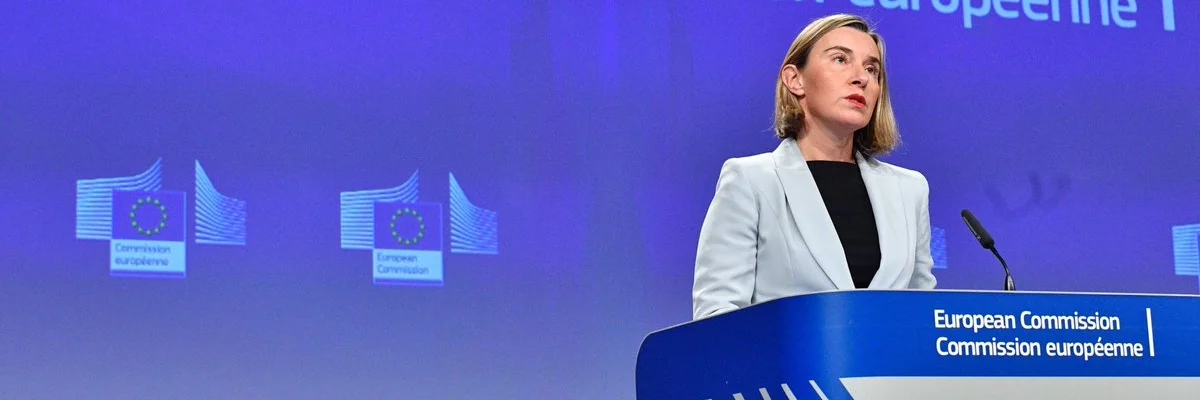
"Following a first assessment, the announced steps per se are not a violation of the JCPOA," Maja Kocijancic, spokeswoman for EU diplomatic chief Federica Mogherini, told AFP. The agreement is officially called the Joint Comprehensive Plan of Action (JCPOA).
"However, at this particularly critical juncture, they will not contribute to build confidence in the nature of the Iranian nuclear program."
Salehi stressed that his announcement was just the start of the production process and did not mean Iran was about to start assembling centrifuges.
Under the 2015 nuclear agreement that Iran signed with the US, China, Russia, Britain, France and Germany after years of difficult talks, Tehran can build and test parts for advanced centrifuges, but specific restrictions exist on what technology can be researched and in what quantity within the first decade of the deal.
European governments have been trying to salvage the nuclear deal since the United States last month withdrew and said it would reimpose sanctions on foreign companies working in the Islamic republic by November.
The remaining parties have vowed to stay in the accord but many of their companies have already started to wind down Iranian operations.
A European source told AFP that the Iranian enrichment announcement is being interpreted as a bid to step up the pressure on Brussels to deliver on these promises.
The EU is trying to come up with ways to persuade Iran to stick with the deal by protecting the economic benefits it gained when tough sanctions were lifted in return for it halting its nuclear program.
"As stated repeatedly, we expect Iran to stick to all its JCPOA commitments, to be monitored by the IAEA, as it has been doing so far and has been confirmed by the IAEA in 11 consecutive reports," Kocijancic told AFP.
"The IAEA is the only body in charge of the monitoring and verification of the implementation by Iran of its nuclear-related commitments under the JCPOA."
Photo Credit: EEAS
Iran Tells UN it Will Hike Uranium Enrichment Capacity
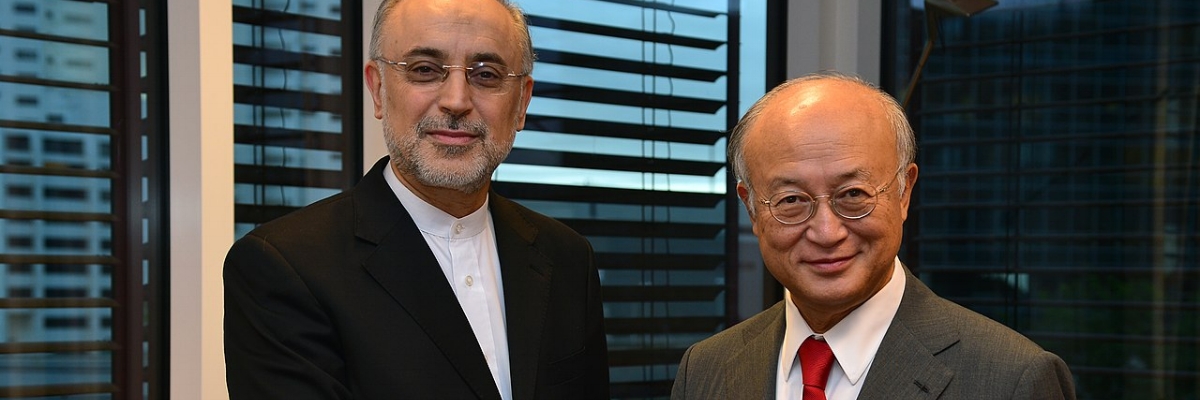
◢ Iran has notified the International Atomic Energy Agency that it has launched a plan to increase its uranium enrichment capacity, nuclear chief Ali Akbar Salehi said Tuesday. "A letter was submitted to the agency yesterday regarding the start of certain activities," said Salehi, a vice president and head of the Iranian Atomic Energy Organization.
Iran has notified the International Atomic Energy Agency that it has launched a plan to increase its uranium enrichment capacity, nuclear chief Ali Akbar Salehi said Tuesday.
"A letter was submitted to the agency yesterday regarding the start of certain activities," said Salehi, a vice president and head of the Atomic Energy Organization of Iran.
"If conditions allow, maybe tomorrow night at Natanz, we can announce the opening of the center for production of new centrifuges" for uranium enrichment, he said, quoted by conservative news agency Fars.
"What we are doing does not violate the (2015 nuclear) agreement," he said, adding that a letter was submitted to the IAEA "yesterday regarding the start of certain activities."
He specified that this was just the start of the production process and "does not mean that we will start assembling the centrifuges."
Under the 2015 agreement, Iran can build parts for the centrifuges as long as it does not put them into operation within the first decade.
Salehi also emphasized that these moves "do not mean the negotiations (with Europe) have failed."
European governments have been trying to salvage the agreement ever since the United States announced its withdrawal last month and said it would reimpose sanctions on foreign companies working in the Islamic republic by November.
he other parties—Britain, France, Germany, China and Russia—have vowed to stay in the accord but many of their companies have already started to wind down Iranian operations.
On Monday, Iran's supreme leader Ayatollah Ali Khamenei warned the Europeans that "Iran will never tolerate both suffering from sanctions and nuclear restrictions" and called for preparations to speed up uranium enrichment.
Iran insists its nuclear program is for civilian uses only, but opponents in the US, Israel and Saudi Arabia accuse it of seeking to build an atomic bomb.
Photo Credit: Wikicommons
Iran Wary as EU Presents Measures to Save Nuclear Deal
◢ Iran said Saturday it would wait to see whether Europe produces tangible results in overcoming US sanctions before deciding whether to stay in the nuclear deal, as a top EU official visited Tehran to present plans to maintain trade ties. "The ball is in the court of the EU. They have presented different proposals, we will see if they materialize," Iran's Atomic Energy Organization head Ali Akbar Salehi told reporters.
Iran said Saturday it would wait to see whether Europe produces tangible results in overcoming US sanctions before deciding whether to stay in the nuclear deal, as a top EU official visited Tehran to present plans to maintain trade ties.
"The ball is in the court of the EU. They have presented different proposals, we will see if they materialize," Iran's Atomic Energy Organization head Ali Akbar Salehi told reporters.
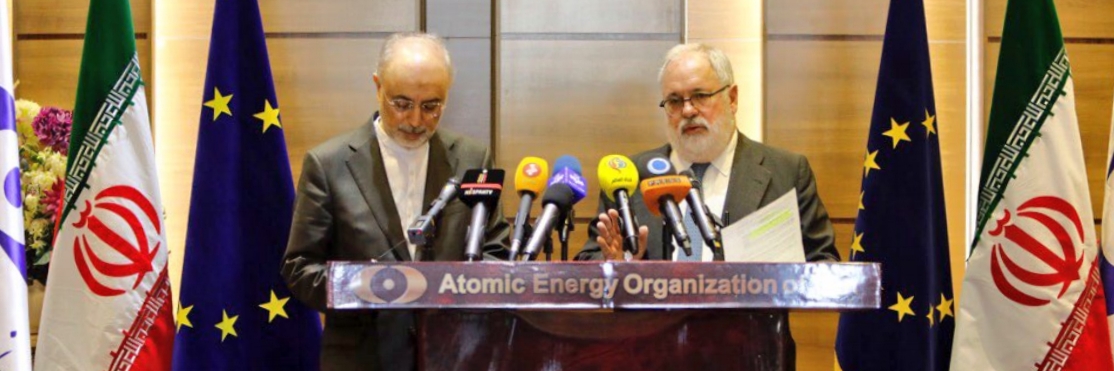
He was speaking after a meeting with EU Energy Commissioner Miguel Arias Canete, the first high-level Western official to visit Iran since the US withdrew from the 2015 nuclear deal earlier this month.
Canete called the nuclear deal "fundamental for peace in the region" as he outlined EU plans to continue oil and gas purchases and protect European companies, despite renewed US sanctions on Iran that are set to be phased in over the next six months.
"For sure there are clear difficulties with the sanctions," Canete said at a press conference alongside Salehi.
"We will have to ask for waivers, for carve-outs for the companies that make investments."
Salehi acknowledged Europe's efforts but said: "We want tangible results, otherwise we take our own decisions. I personally don't want to see such decisions being taken."
EU Firms Eye Exit
Iran has threatened to resume industrial uranium enrichment "without limit" unless its interests are preserved.
Salehi said the Iranian people had lost trust in the nuclear agreement, and if trade benefits were not protected "they will lose more confidence... and we will be forced to leave."
European leaders have outlined measures to protect EU firms from US sanctions.
But several of their companies—including France's Total and Holland's Maersk -- have already said it will be impossible to stay in Iran once US sanctions are reimposed unless they receive explicit exemptions from Washington.
Canete was due to meet Iran's Environment Minister Isa Kalantari and Oil Minister Bijan Namdar Zanganeh later on Saturday, and Foreign Minister Mohammad Javad Zarif on Sunday.
Iran's trade with the European Union is around 20 billion euros, evenly split between imports and exports.
The vast majority of EU purchases from Iran—90 percent—are oil purchases, going primarily to Spain, France, Italy, Greece, the Netherlands and Germany.
Iran, which has the world's fourth-biggest oil reserves, produces some 3.8 million barrels of oil per day, 70 percent of which goes to China and other Asian countries, and 20 percent to Europe.
It also has the second-biggest gas reserves in the world, but limited infrastructure means little is exported.
Russia and China—the other parties to the nuclear deal—have also vowed to maintain trade with Iran and are less vulnerable to economic pressure from Washington.
Photo Credit: EU MAC