
Novo Nordisk Sets Up Insulin Production Line in Iran
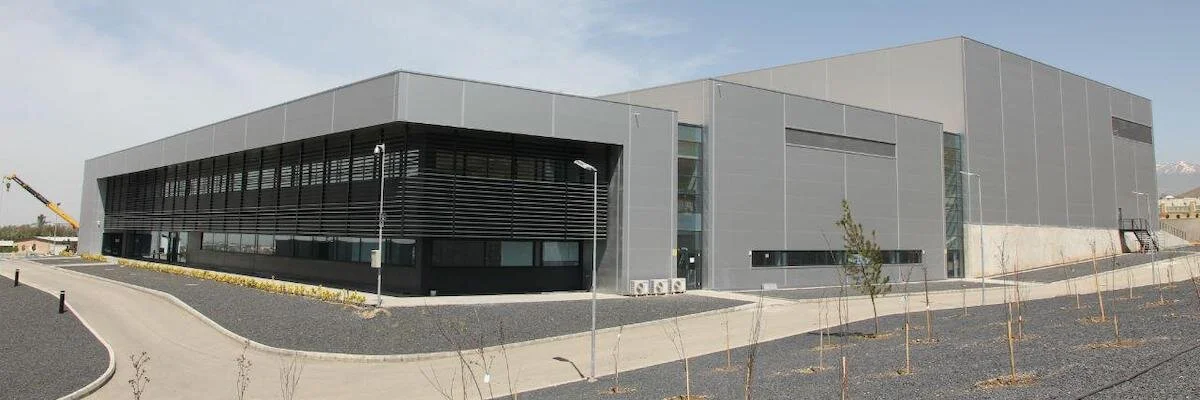
Iran's health minister said that the world's top insulin-maker, Novo Nordisk of Denmark, had unveiled on Monday a production line of the drug in Iran.
Iran's health minister said that the world's top insulin-maker, Novo Nordisk of Denmark, had unveiled on Monday a production line of the drug in Iran.
Saeed Namaki inaugurated the plant's production line, located in Alborz province, via video conference, the government website reported.
"Today we witness the inauguration of one of the most important projects since the (Islamic) revolution with the joint investment of Iran and Denmark," he said.
Namaki expressed hope that Iran could soon become a "drug distribution and production centre" for the Middle East.
The Danish pharmaceuticals giant has sold its products in Iran since 2005 through its subsidiary, Novo Nordisk Pars.
It signaled its intention to construct the 70 million euro ($83 million) facility in 2015 and said it would take five years to complete.
That announcement followed an agreement reached between Iran, Britain, China, France, Germany, Russia and the United States in the same year, promising Iran sanctions relief in exchange for restrictions on its nuclear program.
But the deal has been on life support since US President Donald Trump unilaterally withdrew from the accord and reimposed sanctions on Iran in 2018, dashing hopes for foreign investment in the country.
Drugs and medical equipment are technically exempt from the US sanctions, but purchases are frequently blocked by the unwillingness of banks to process purchases for fear of incurring large penalties in the United States.
According to the head of Iran's food and drug administration, Iranian diabetic patients require 800,000 insulin pens per month.
"Procuring insulin is significantly foreign currency-intensive and is made harder during the difficult time of sanctions," Mohammadreza Shanesaz told Mehr news agency.
Novo Nordisk has promised to save Iran 25 million euros in the first year and 45 million euros in the second after production starts, he added.
Photo: Jalkeh
Iran Reports Most New Virus Cases Since Outbreak Began
Iran announced 3,574 new coronavirus infections Thursday, the most in one day since the pandemic started, as authorities increase health warnings following a resurgence in recorded cases.
Iran announced 3,574 new coronavirus infections Thursday, the most in one day since the pandemic started, as authorities increase health warnings following a resurgence in recorded cases.
After hitting a near two-month low in early May, novel coronavirus infections have been on a rising trajectory in the Islamic republic, which is battling the Middle East's deadliest outbreak of the disease.
Thursday was the fourth straight day that the daily caseload had topped 3,000.
The previous high was 3,186, recorded on March 30, at the height of the initial outbreak.
The health ministry has been taking no chances and has stepped up a public health campaign in recent days.
"Not respecting social distancing and public and personal hygiene rules, along with undertaking unnecessary travel, can have irreparable consequences," warned an announcement running on repeat on the state television information channel.
Health ministry spokesman Kianoush Jahanpour said Thursday that 59 people had died of COVID-19 over the past 24 hours, taking Iran's overall official toll to 8,071.
Despite the uptick in new infections, the official number of daily deaths has remained below 100 in recent weeks.
A total of 164,270 people have tested positive for the virus since the first cases were announced in February.
There has been some scepticism at home and abroad about Iran's official figures, with concerns the real toll could be much higher.
‘Completely Careless'
Officials have appeared to suggest that the surge in new cases could be the result of wider testing rather than a second wave of infection.
Jahanpour said Thursday that Iran had now conducted more than a million tests.
The state TV channel has also been broadcasting an animated info-graphic, accompanied by dramatic music, saying that Iran was faring much better than other countries in the pandemic.
Although it has registered the most deaths from the virus in the Middle East, official figures put its toll far behind several other countries in Europe and beyond.
The Islamic republic's archfoe, the United States, which has reimposed crippling sanctions on Iran's economy, has reported the highest total number of cases and deaths worldwide from the disease.
President Hassan Rouhani has praised the Iranian government's performance in dealing with coronavirus as a source of "great pride", saying late last month that Iran was "among the countries that have succeeded".
But Health Minister Saeed Namaki, who is a doctor by profession, and other officials are using more tempered language.
On Tuesday, the minister lamented that people were ignoring social distancing rules.
"The fact that people have become completely careless regarding this disease" was of great concern, the ISNA news agency quoted him as saying.
'Not Taking Threat Seriously'
"Certain people and certain officials do not take (the threat of) coronavirus seriously", state TV cites Namaki as saying in its rolling health messages.
Since April, authorities have progressively lifted restrictions imposed to curb the outbreak.
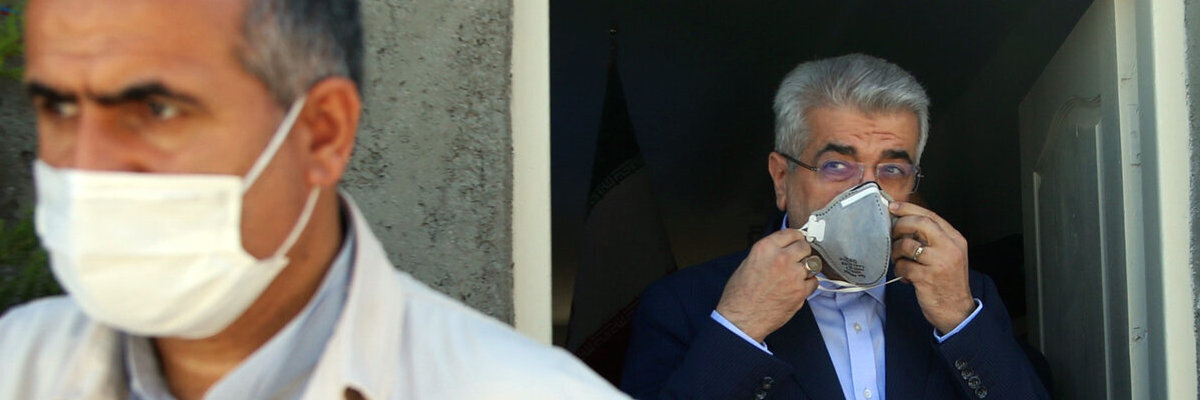
Iraj Harirchi, a deputy health minister who tested positive for the virus in late February, has "strongly" recommended the use of masks and urged Iranians to limit unnecessary travel.
According to state television, he expressed concern that the population seemed less convinced than before about the need to stay home and respect social distancing.
Meanwhile, life in Tehran, a city of some 10 million people, has almost returned to normal, with traffic jams and crowded streets, buses and metros, though wearing a mask is compulsory on public transport.
But nine of the country's 31 provinces are still under a "health alert", Jahanpour said Wednesday, while the southwestern province of Khuzestan remains classified as a "red zone"—the highest level of risk in the country.
People "either have total confidence in us or think the coronavirus has gone. The latter is not true at all," Namaki said.
Photo: IRNA
Iran Bemoans Ill-Discipline as Virus Cases Crest Again
Iranian health officials lamented that people were ignoring social distancing rules as it reported more than 3,000 new coronavirus infections in a second cresting wave.
Iran on Tuesday lamented that people were ignoring social distancing rules as it reported more than 3,000 new coronavirus infections in a second cresting wave.
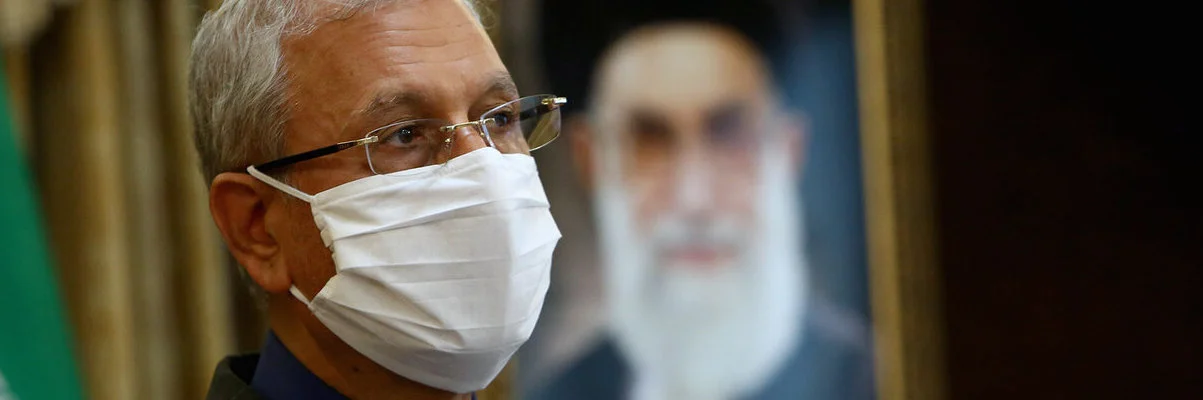
"The fact that people have become completely careless regarding this disease" was of great concern, said Health Minister Saeed Namaki.
"They either have total confidence in us or think the coronavirus has gone. The latter is not true at all," the ISNA news agency quoted him as saying.
His remarks came as health ministry spokesman Kianoush Jahanpour said 3,117 new cases were confirmed in Iran in the past 24 hours.
This had brought the overall caseload to 157,562, he added.
Infections have been on a rising trajectory in Iran since hitting a near two-month low on May 2.
They were at their highest on March 30 after hitting 3,186.
Jahanpour said the virus had claimed another 64 lives in the past day, raising the overall death toll to 7,942.
The latest caseload was close to the highest daily count for the Middle East's deadliest outbreak of COVID-19.
The government has largely lifted the restrictions it imposed to stem the outbreak that first emerged in mid-February.
Photo: IRNA
Iran virus death toll surges past 6,000
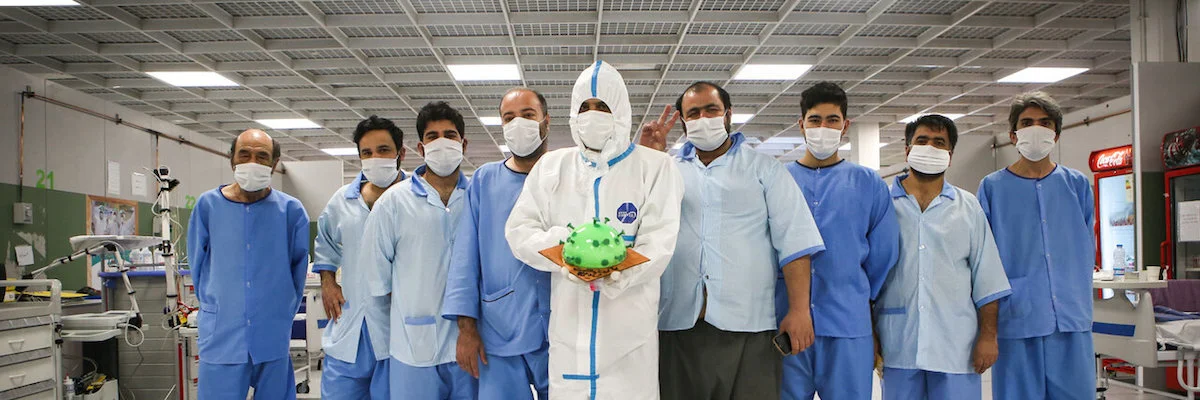
Iran's health ministry said on Thursday that 71 new deaths from the novel coronavirus took the country's overall toll past the 6,000 mark.
Iran's health ministry said on Thursday that 71 new deaths from the novel coronavirus took the country's overall toll past the 6,000 mark.
"The number of deaths from this disease effectively crossed 6,000 today," ministry spokesman Kianoush Jahanpour said in televised remarks.
"Considering that we lost 71 of our countrymen in the past 24 hours, a total of 6,028 of those infected with COVID-19 have passed away to date," he added.
He added that another 983 people tested positive for the virus during the same period, bringing the total to 94,640.
More than 75,100 of those infected had already been released from hospital after recovering.
Of those still being treated for the disease, 2,976 were in critical condition.
Doubts have been cast over Iran's coronavirus casualty figures by experts and officials both at home and abroad.
Health Minister Saeed Namaki criticised some Iranians for not taking the outbreak seriously.
"I have a complaint about some citizens; you are considering the situation to be too normal," Namaki said in televised remarks.
"It is true that we had very good results at the height of economic distress, that deaths dropped to double digits and hospitalisations reached minimum, but this does not mean the coronavirus is done with."
Namaki also warned that Iran must prepare itself for a "simultaneous heavy wave of COVID-19 and the flu" in the coming autumn and winter.
Iran has shut schools, universities, cinemas and stadiums among other public spaces since March to contain the spread of the virus.
But since April 11, it has allowed a phased reopening of its economy and lifted restrictions on intercity travel.
Mosques remain closed even as Muslims observe the fasting month of Ramadan.
According to Namaki, his ministry is devising health protocols to allow Friday and group prayers to recommence in cities that have been given the all clear.
Group prayers have been banned in the country as a high-risk activity since mid-March.
Photo: IRNA
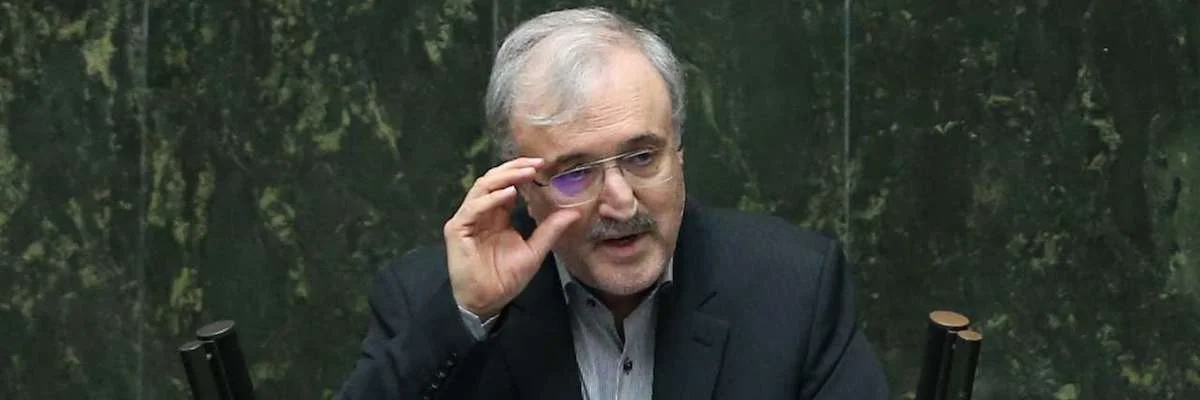
Iran Parliament Approves New Health Minister
◢ Iran's parliament Monday gave an overwhelming vote of confidence to President Hassan Rouhani's pick as health minister, after his predecessor resigned over budget cuts and criticism of the allocation of state funds. Saeed Namaki was voted into office with 229 votes out of a total 259. He had been appointed as caretaker by Rouhani after the former minister Hassan Ghazizadeh Hashemi resigned on December 3.
Iran's parliament Monday gave an overwhelming vote of confidence to President Hassan Rouhani's pick as health minister, after his predecessor resigned over budget cuts and criticism of the allocation of state funds.
Saeed Namaki was voted into office with 229 votes out of a total 259.
He had been appointed as caretaker by Rouhani after the former minister Hassan Ghazizadeh Hashemi resigned on December 3.
Hashemi's resignation letter points at "inconsistencies and not delivering on promises" by the government's planning and budget organization, semi-official news agency ISNA reported.
Namaki had previously served as deputy to Mohammad-Bagher Nobakht, the head of planning and budget organization.
The Rouhani administration and Hashemi had repeatedly been criticized for their allegedly costly plan to reform Iran's healthcare system.
But in his last speech as minister, Hashemi said the reform project had cost a fraction of what was spent on bailing out failed credit institutions.
"The total money spent... is 164 trillion rials. (Yet they) spent 350 trillion rials on corrupt credit institutions," he said, in a video of the speech posted on Iran's video-sharing service Aparat.
Several unauthorized credit institutions, which mushroomed during ex-president Mahmoud Ahmadinejad's era, collapsed in Rouhani's six years in office, with the central bank rushing to reimburse lost deposits.
The healthcare reform plan aimed to reduce medical costs for patients and ease Iranians' access to medical services.
Speaking in parliament, the new minister vowed to carry on with the reforms and said that "no previous commitments will be ignored".
Iran is struggling with a sharp economic downturn as its currency has sharply depreciated against the dollar. The recession has been fueled partly by the US withdrawal from a landmark 2015 nuclear deal last May and the reimposition of unilateral sanctions.
Photo Credit: IRNA