
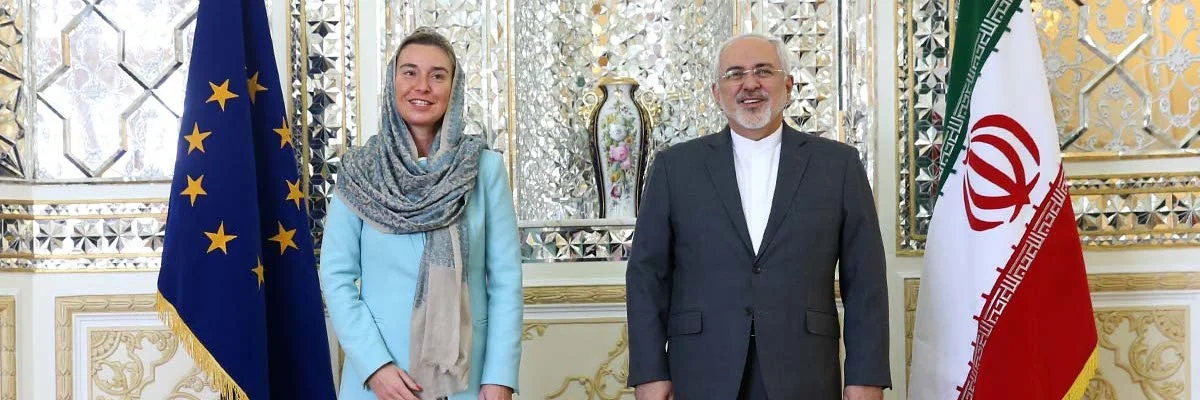
EU to Work With Top Iran Diplomat Despite US Sanctions
◢ The European Union said Thursday it regrets the US decision to impose sanctions against Iran’s foreign minister Mohammad Javad Zarif and vowed to continue working with him. “We regret this decision,” said Carlos Martin Ruiz De Gordejuela, a spokesman for EU diplomatic chief Federica Mogherini.
The European Union said Thursday it regrets the US decision to impose sanctions against Iran’s foreign minister Mohammad Javad Zarif and vowed to continue working with him.
The decision Wednesday was the latest blow by US President Donald Trump to the 2015 international deal to curb Iran’s nuclear program, which Brussels has been trying to salvage.
“We regret this decision,” said Carlos Martin Ruiz De Gordejuela, a spokesman for EU diplomatic chief Federica Mogherini.
“From our side, we will continue to work with Mr Zarif as Iran’s most senior diplomat and in view of the importance of maintaining diplomatic channels,” Martin said.
The US government announced Wednesday it was freezing any of Zarif’s assets that are in the United States or are controlled by US entities, adding it also will curtail his international travel.
Trump last year pulled out of a 2015 deal struck by his predecessor Barack Obama, EU powers, China and Russia aimed at curbing Iran’s nuclear program.
The EU has been trying to salvage the deal ever since.
Zarif has been at the heart of complex talks with foreign capitals over Iran’s nuclear power industry, which Tehran says is peaceful, but Washington and regional allies including Israel insist is cover for a secret weapons program.
But a senior Trump administration official said that Zarif’s diplomatic image—bolstered by his fluent English, self-effacing humor and background as a US-educated academic—was false.
Photo: IRNA
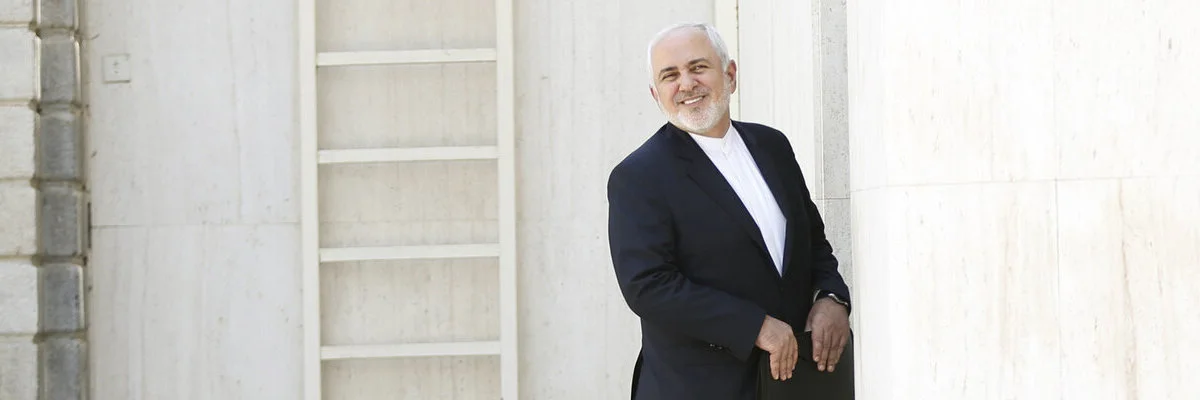
Iran Says Sanctions Show US 'Afraid' of Top Diplomat
◢ Iran’s President Hassan Rouhani on Thursday mocked a US decision to impose sanctions on his top diplomat Mohammad Javad Zarif, saying it showed Washington was "afraid" of him as tensions again flare between the arch-enemies. The US Treasury said the sanctions would freeze any of Zarif's assets in the United States or controlled by US entities, as well as squeeze his ability to function as a globe-trotting diplomat.
By Amir Havasi
Iran's President Hassan Rouhani on Thursday mocked a US decision to impose sanctions on his top diplomat Mohammad Javad Zarif, saying it showed Washington was "afraid" of him as tensions again flare between the arch-enemies.
The US Treasury said the sanctions would freeze any of Zarif's assets in the United States or controlled by US entities, as well as squeeze his ability to function as a globe-trotting diplomat.
"They are afraid of our foreign minister's interviews," Rouhani said in a televised speech, referring to a recent round of interviews Zarif gave to foreign media in New York.
"It is completely clear that the foundations of the White House have been shaken by the words and logic of an informed, devoted and diplomatic individual.
"They are doing childish things now," Rouhani said on a visit to the northwestern city of Tabriz.
"Our enemies are so helpless that they have lost the ability to act and think wisely."
Iran's powerful Revolutionary Guards called the designation "absurd" and thanked Zarif for his service.
"Americans have once again shown their anger at the Islamic Revolution's inspiring... discourse and made evident their enmity towards Iran's system and proud nation," said a statement on the Guards' official website.
The designation of Zarif under the same sanctions already applied to supreme leader Ayatollah Ali Khamenei is the latest in a series of US moves against Iran.
‘Maximum Pressure'
Zarif is expected to be able to continue to visit the United Nations in New York, albeit under tight restrictions.
"Zarif implements the reckless agenda of Iran's supreme leader, and is the regime's primary spokesperson around the world," Treasury Secretary Steven Mnuchin said in a statement.
"The United States is sending a clear message to the Iranian regime that its recent behaviour is completely unacceptable."
The arch-foes have been locked in a battle of nerves since President Donald Trump withdrew the US from a landmark 2015 deal placing limits on Iran's nuclear programme and began reimposing sanctions.
The situation has worsened since the Trump administration stepped up its campaign of "maximum pressure" against Iran this year, with drones downed and tankers mysteriously attacked in Gulf waters.
But in a mixed message to Tehran, Washington on Wednesday extended waivers for three Iranian civil nuclear projects, to avoid upsetting the other parties to the 2015 agreement -- Britain, China, France, Germany and Russia.
"This is a short 90-day extension," said White House national security adviser John Bolton, a champion of the hawkish policy towards Iran.
"We are watching those nuclear activities very closely, they remain under daily scrutiny," he told Fox Business.
Zarif has been at the heart of complex talks with foreign capitals over Iran's nuclear power industry, which Tehran says is peaceful, but Washington and regional allies including Israel insist is cover for a secret weapons programme.
Freedom of Speech
But a senior Trump administration official said Zarif's diplomatic image—bolstered by his fluent English, self-effacing humor and US academic background—was false.
"The key issue is that he has had this veneer... of being the sincere and reasonable interlocutor for the regime. Our point today is that he is no such thing," the official said on condition of anonymity.
"Today President Trump decided enough was enough," the official said, accusing Zarif of functioning as "propaganda minister, not foreign minister".
Zarif shot back, tweeting that the United States was trying to silence Iran on the international stage.
"The US' reason for designating me is that I am Iran's 'primary spokesperson around the world' Is the truth really that painful?" he wrote.
"We know that calling for dialog & peace is an existential threat to #B_Team," he added, referring to Bolton, Israeli Prime Minister Benjamin Netanyahu and others pushing a hard line on Iran.
Other Iranian officials echoed Zarif's comments.
"America is not only afraid of Iran's missiles but also of Iran talking," Abbas Ali Kadkhodayi, spokesman for Iran's law-vetting Guardian Council, said on Twitter.
Photo: IRNA

Transcript: Pompeo and Mnuchin Brief Reporters on Forthcoming Iran Sanctions
◢ Secretary of State Michael Pompeo and Secretary of the Treasury Steven Mnuchin on brief reporters via teleconference regarding Iran sanctions to be reimposed on Monday November 5. This transcript was published by the Office of the Spokesperson at the U.S. Department of State. The briefing took place on Friday November 2.
This transcript was published by the Office of the Spokesperson at the U.S. Department of State. The briefing took place on November 2, 2018.
MS NAUERT: Thank you, sir. Good morning, everyone, and welcome to today’s on-the-record call on the Iran snapback sanctions. We’re pleased to have with us Secretary of State Mike Pompeo and Secretary of the Treasury Steve Mnuchin. They will each have brief remarks at the top and then take several of your questions. We’ll start first with Secretary Pompeo.
Secretary, please, go ahead.
SECRETARY POMPEO: Thank you, Heather. Good morning, everyone, and thank you for joining the call. Earlier this year, President Trump withdrew from the fatally flawed nuclear deal and implemented a new campaign aimed at fundamentally altering the behavior of the Islamic Republic of Iran. This part of the campaign about which we’re speaking today is simple. It is aimed at depriving the regime of the revenues that it uses to spread death and destruction around the world. Our ultimate aim is to compel Iran to permanently abandon its well-documented outlaw activities and behave as a normal country.
Today, Secretary Mnuchin and I will discuss one of the many lines of effort to achieve these fundamental changes in the Iranian regime’s behavior as directed by the President. While important, these economic sanctions are just a part of the U.S. Government’s total effort to change the behavior of the Ayatollah Khomeini, Qasem Soleimani, and the Iranian regime.
On November 5th, the United States will reimpose sanctions that were lifted as part of the nuclear deal on Iran’s energy, ship building, shipping, and banking sectors. These sanctions hit at the core areas of Iran’s economy. They are necessary to spur changes we seek on the part of the regime.
In order to maximize the effect of the President’s pressure campaign, we have worked closely with other countries to cut off Iranian oil exports as much as possible. We expect to issue some temporary allotments to eight jurisdictions, but only because they have demonstrated significant reductions in their crude oil and cooperation on many other fronts and have made important moves towards getting to zero crude oil importation. These negotiations are still ongoing. Two of the jurisdictions will completely end imports as part of their agreements. The other six will import at greatly reduced levels.
Let me put this in context for you. The Obama administration issued SREs to 20 countries multiple times between 2012 and 2015. We will have issued, if our negotiations are completed, eight and have made it clear that they are temporary. Not only did we decide to grant many fewer exemptions, but we demanded much more serious concessions from these jurisdictions before agreeing to allow them to temporarily continue to import Iranian crude oil. These concessions are critical to ensure that we increase our maximum pressure campaign and accelerate towards zero.
Our laser-focused approach is succeeding in keeping prices stable with a benchmark Brent price right about where it was in May of 2018 when we withdrew from the JCPOA. Not only is this good for American consumers and the world economy, it also ensures that Iran is not able to increase its revenue from oil as its exports plummet. We will, we expect, have reduced Iranian crude oil exports by more than 1 million barrels even before these sanctions go into effect.
This massive reduction since May of last year is three to five times more than what many analysts were projecting when President Trump announced our withdrawal from the deal back in May. We exceeded our expectations for one simple reason: Maximum pressure means maximum pressure.
The State Department closed the Obama era condensate loophole which allowed countries to continue importing condensate from Iran even while sanctions were in place. This loophole allowed millions of dollars to continue to flow to the regime.
This administration is treating condensate the same as crude since the regime makes no distinction between the two when it decides to spend its oil revenue on unlawful ballistic missiles, terrorism, cyberattacks, and other destabilizing activities like the assassination plot Denmark disclosed this past week.
And starting today, Iran will have zero oil revenue to spend on any of these things. Let me say that again. Zero. One hundred percent of the revenue that Iran receives from the sale of crude oil will be held in foreign accounts and can be used by Iran only for humanitarian trade or bilateral trade in nonsanctioned goods and services.
These new sanctions will accelerate the highly successful effects of our sanctions that have already occurred. The maximum pressure we imposed has caused the rial to drop dramatically, Rouhani’s cabinet is in disarray, and the Iranian people are raising their voices even louder against a corrupt and hypocritical regime.
On that note, our actions today are targeted at the regime, not the people of Iran, who have suffered grievously under this regime. It’s why we have and will maintain many humanitarian exemptions to our sanctions including food, agriculture commodities, medicine, and medical devices.
I will now turn the call over to Secretary Mnuchin.
SECRETARY MNUCHIN: Thank you very much. Since the beginning of the Trump administration, the Treasury Department has been committed to putting a stop to Iran’s destabilizing activities across the world. We’ve engaged a massive economic pressure campaign against Iran, which remains the world’s largest state sponsor of terrorism. To date, we have issued 19 rounds of sanctions on Iran, designating 168 targets as part of our maximum pressure campaign. We have gone after the financial networks that the Iranian regime uses to fuel its terrorist proxies and Hizballah and Hamas, to fund the Houthis in Yemen, and to support the brutal Assad regime in Syria.
The 180-day wind-down period ends at 11:59 p.m. Eastern Standard Time on Sunday November 4th. As of Monday November 5th, the final round of snapback sanctions will be enforced on Iran’s energy, shipping, shipbuilding, and financial sectors. As part of this action on Monday, the Treasury Department will add more than 700 names to our list of blocked entities. This includes hundreds of targets previously granted sanctions relief under the JCPOA, as well as more than 300 new designations. This is substantially more than we ever have previously done. Sanctions lifted under the terms of Iran’s nuclear deal will be reimposed on individuals, entities, vessels, and aircraft that touch numerous segments of Iran’s economy. This will include Iran’s energy sector and financial sectors. We are sending a very clear message with our maximum pressure campaign that the U.S. intends to aggressively enforce our sanctions. Any financial institution, company, or individual who evades our sanctions risks losing access to the U.S. financial system and the ability to do business with the United States or U.S. companies. We are intent on ensuring that global funds stop flowing to the coffers of the Iranian regime.
I want to make a couple of comments on the SWIFT messaging systems since I’ve received lots of questions about this over the last few weeks. So I’d like to make four points. Number one, SWIFT is no different than any other entity. Number two, we have advised SWIFT the Treasury will aggressively use its authorities as necessary to continue intense economic pressure on the Iranian regime, and that SWIFT would be subject to U.S. sanctions if it provides financial messaging services to certain designated Iranian financial institutions. Number three, we have advised SWIFT that is must disconnect any Iranian financial institution that we designate as soon as technologically feasible to avoid sanctions exposure. Number four, just as was done before, humanitarian transactions to nondesignated entities will be allowed to use the SWIFT messaging system as they have done before, but banks must be very careful that these are not disguised transactions or they could be subject to certain sanctions. Thank you very much.
MS NAUERT: Thank you, sirs. Why don’t we go ahead, take our first question. We’ll go to Matt Lee with the Associated Press. Matt, go ahead.
QUESTION: Thank you, Heather. Both – either or both of you, on SWIFT, there are a lot of complaints among the President’s allies in Congress that this does not go far enough, and that without designating – without going after SWIFT harder for these messaging transactions, that it allows a serious loophole. I understand Secretary Mnuchin’s four points on it, but how will you address this criticism? Because it’s already coming even before this announcement today.
SECRETARY MNUCHIN: Okay, well let me – Secretary Mnuchin – let me make some comments. First of all, I think there’s been a lot of fueled misinformation as it relates to SWIFT and what we’re doing with SWIFT. So that’s why I want to be very clear. So one, okay, I think there was information that SWIFT would not be subject to sanctions. That’s not the case. SWIFT will be subject to sanctions. Number two, as I said, that – could be subject to sanctions, excuse me. Number two, it is our intent that they cut off designated entities as was done before. And again, I think there’s misinformation that they cut off everybody last time. Again, they did allow for certain entities to do humanitarian transactions consistent with what’s allowed under our sanctions. There are exceptions for humanitarian sanctions, but I want to very clear, people need to be careful that those are real humanitarian – those are real humanitarian transactions. So again, I would just say I – hopefully this will clarify the misinformation that’s out there.
MS NAUERT: Next question, we’ll go to Nick Wadhams from Bloomberg.
QUESTION: Hi. I had a question about the oil sanctions going into effect. Will those include – or will there be exceptions granted for nonhumanitarian transactions such as consumer goods, as were allowed last time, or will Iran only be allowed – or will Iran only be allowed to spend revenue that it gains through – on humanitarian items? And then second, if you’re giving eight waivers and two jurisdictions are already cutting imports to zero, what’s the point of giving them – those two jurisdictions waivers? Thanks.
SECRETARY POMPEO: Nick, this is Mike Pompeo. With respect to your first point, you’ll see the details on Monday. There are nonhumanitarian goods that we included in there, but they’re small. They’re ones that you would’ve already seen in the exemptions that were granted under the direction of the President. Second, some of these will take a few months to get to zero. So by November 5th they won’t be there. That’s the purpose of those exemptions, to give them a little bit longer to wind down. Weeks.
MS NAUERT: Pardon me?
SECRETARY POMPEO: Weeks longer to wind down.
MS NAUERT: Next question, Mike Warren from the Weekly Standard.
QUESTION: Hi, gentlemen, thank you. I want to follow-up on Matt’s questions about SWIFT. Secretary Mnuchin, you said that certain financial institutions in Iran will be cut off from SWIFT. Could you explain exactly which financial institutions, or maybe the financial institutions described in a Treasury FAQ, the Central Bank of Iran and other Iranian financial institutions described in section 104(c)(2) blah blah blah – could you be more specific about which institutions? And how can – how can the United States Government be confident in SWIFT’s ability to monitor transactions using SWIFT that they – I imagine there are numerous of these transactions going on daily. How can the United States Government be confident that those are not transactions that are funding the bad actions that the government says is – they are trying to stop?
SECRETARY MNUCHIN: So again, let me comment on the first issue, which – that the list of banks, which will be substantially longer than last time, will be coming out over the weekend. And as it relates to monitoring transactions, again, financial institutions have liability for any transactions that go through SWIFT or any other mechanisms. I’m being told the list will come out on Monday. And again, it’s our expectation that that will be implemented as soon as technologically feasible.
MS NAUERT: Okay, thank you. Next question goes to Elise Labott from CNN.
QUESTION: Thank you. The question is for both secretaries, but maybe from a different angle. Could you address the workaround that the Europeans are trying to institute to avoid U.S. banks, maybe using their own central banks or electronic transactions? For Secretary Mnuchin, how much revenue do you think this would give the Iranians, and how seriously are you taking that in terms of a financial component?
And then Secretary Pompeo, could you talk about once these sanctions go into effect and if the Europeans do try to institute this workaround, what the diplomatic implications for relations with European allies? Thank you.
SECRETARY MNUCHIN: I’ll comment on the Special Purpose Vehicle. I have no expectation that there will be any transactions that are significant that go through a Special Purpose Vehicle based upon what I’ve seen. But when the details come out of some Special Purpose Vehicle, if there are sanctions – if there are transactions that go through there that have the intent of evading our sanctions, we will aggressively pursue our remedies.
SECRETARY POMPEO: And let me take the second part of that. We’ve been working closely with the Europeans on this set of issues. We’re very confident that our sanctions will be incredibly effective. And frankly, I can prove that already. As I stated, the Iranian economy today is already feeling the effects of this. It’s already feeling the effects of this effort not because the sanctions have snapped back – that won’t occur until – on Monday – but because the world and Iran knew this was coming. And so European entities of any scale that are doing business with the United States of America have already ceased their conduct with Iran. There may be an exception to that, but there has been an enormous departure of European businesses.
So whatever it may be that the EU is proposing, the folks who have risk – financial risk, business risk, operation risk – have already made their decision about the effectiveness of the sanctions that will be reimposed this coming week.
MS NAUERT: Our next question goes to Michele Kelemen with NPR.
QUESTION: Yeah, hi, thank you. One quick question that – just technically, which of the eight countries are getting these waivers? And then secondly, for Secretary Pompeo, you said in one of your interviews this week that the U.S. wants to restore democracy in Iran. Is that one of the goals of this campaign? And if so, how do you make sure that these sanctions aren’t going to hurt average Iranians who, as you point out, are suffering under this corrupt regime?
SECRETARY POMPEO: Yes, thanks for the question. The President’s policy is very clear: We are looking to change the Iranian leadership’s behavior. I laid out the 12 things we’ve asked them to do; that is the goal not only of what we’re speaking about this morning – and please don’t lose sight, we’re talking about a set of sanctions that will be reimposed on Monday. The administration’s efforts to change Iranian behavior are far broader, far deeper, there are many other lines of effort. We’re simply focused on this line of effort today because of the significance of November 5th.
My comments about restoring democracy are completely consistent with what we have described before. We’re counting on the Iranian people to have the opportunity and we are working towards allowing the Iranian people to have the opportunity to have the government they want, a government that doesn’t take wealth from their country and spend it on malign activity around the world. I mean, this is a regime that is conducting a assassination campaign inside of Europe today, murdering not Iranian citizens in those countries, but folks who live, reside, and are citizens of those European countries. These are the behaviors we’re trying to change, and our every effort is aimed at giving the Iranian people the opportunity to have the government that they not only want but deserve.
MS NAUERT: Next question: Josh Rogin, Washington Post.
QUESTION: Thank you so much for your time. Thanks for your service. I’d like to ask you about the Atomic Energy Organization of Iran. My understanding is that you waived secondary sanctions on foreign firms that do business with that organization, mostly Russian and Chinese firms that are involved in the Arak and Fordow facilities. Why did you make that decision, and why are you letting Arak and Fordow continue? And are there plans to change that in the future? Thank you.
SECRETARY POMPEO: Thanks, thanks for the question. We are not allowing the continued work to develop nuclear weapons and nuclear weapons systems in Arak and Fordow. We will provide on Monday a complete explanation of what we’re going to do with the continued efforts to prevent those facilities from doing the things that put the world at risk through proliferation, and we’ll give you all the detail. It’s a long and complex answer, but we’re happy to provide it to you on Monday morning.
MS NAUERT: Final question to Arshad with Reuters, please.
QUESTION: Two things. One, exactly how many financial institutions are going to be redesignated, i.e. put back on the SDN list on Monday? Previously I believe the number was close to or slightly above 30. You said it would be substantially more. How many is it going to be?
Secondly, you pointedly said that you were granting the exceptions to eight jurisdictions. Is one of those jurisdictions the European Union, thereby covering a much larger group of countries, i.e. 28 EU member-states?
SECRETARY POMPEO: Steven, you want to go first?
SECRETARY MNUCHIN: I’ll answer the first part. So the bank list will come out on Monday. Again, it will be more than last time, and again, we may continue to add banks to that in the future. But the original list will come out on Monday and we’ll carefully monitor situations to add on more banks as needed.
SECRETARY POMPEO: The second part of your question, we will provide the list of the eight jurisdictions on Monday. The EU will not be receiving an SRE.
MS NAUERT: The final question, Carol Morello, Washington Post.
QUESTION: Hi, thanks for doing this. Say in the past, the Iranians have blended their oil with foreign oil to evade sanctions, and there have already been reports that they are turning off the ID tags on their tankers. So what in particular are you going to be doing to track their attempts to evade these sanctions?
SECRETARY POMPEO: Thanks for the question. Make no mistake about it, the Iranians will do everything they can to circumvent these sanctions – that’s unsurprising to me. They’ll turn off ships, they’ll try and do it through private vessels, they’ll try and find third parties that don’t interact with the United States to provide insurance mechanisms. The list of Iranian efforts to circumvent these sanctions is long. You should all recognize there’s a reason for that. These sanctions are far tougher than the sanctions that have ever been imposed on the Islamic Republic of Iran. That is why they are so desperate to find ways to circumvent it.
And I won’t speak to our efforts to counter those circumvention efforts. There are many, they are varied, and make no mistake: The United States is fully prepared to do all that we can to prevent Iran from circumventing not only the crude oil sanctions and the financial sanctions, but all of the designations and all of the other sanctions that are being reimposed this coming Monday and those that are already in place.
SECRETARY MNUCHIN: And I would just add to that that anybody that does facilitate those transactions will be subject to sanctions and will be added to the list.
MS NAUERT: Secretary Pompeo, Secretary Mnuchin, thank you so much for joining us. Everyone, thanks for joining the call. Have a great day. We’ll be putting out a transcript shortly.
SECRETARY POMPEO: Thank you all.
Photo Credit: Wikicommons
US Imposes Sanctions on Iranians for Hacking
◢ The United States imposed sanctions on Friday on 10 Iranians and an Iranian company for alleged hacking hundreds of universities in the US and abroad and the theft of "valuable intellectual property and data."
The United States imposed sanctions on Friday on 10 Iranians and an Iranian company for alleged hacking hundreds of universities in the US and abroad and the theft of "valuable intellectual property and data."
The Mabna Institute engaged in "the theft of personal identifiers and economic resources for private financial gain" and for the benefit of Iran's Islamic Revolutionary Guard Corps, the US Treasury Department said.
The two founders of the Mabna Institute are among the 10 people whose assets are subject to US seizure, it said. Nine of the 10 were indicted separately for conspiracy to commit computer intrusions and other charges.
Since 2013, the Mabna Institute carried out cyber intrusions into the computer systems of 144 US universities, the Treasury Department said, and 176 universities in 21 foreign countries.
"For many of these intrusions, the defendants acted at the behest of the Iranian government and, specifically, the Iranian Revolutionary Guard Corps, Deputy Attorney General Rod Rosenstein said in a statement.
"The Department of Justice will aggressively investigate and prosecute hostile actors who attempt to profit from America's ideas by infiltrating our computer systems and stealing intellectual property," Rosenstein added.
Geoffrey Berman, US Attorney for the Southern District of New York, said the Iranians conducted spearphishing attacks designed to steal passwords from email accounts in one of the "largest state-sponsored" hacking schemes ever uncovered.
The email accounts of more than 100,000 university professors worldwide were targeted, Berman said, and about 8,000 accounts were compromised. He said 31 terabytes—about 15 billion pages—of academic data and intellectual property were stolen.
This included "research, and other academic data and documents, including, among other things, academic journals, theses, dissertations, and electronic books," the Justice Department said.
"The defendants targeted data across all fields of research and academic disciplines, including science and technology, engineering, social sciences, medical, and other professional fields," it said.
David Bowdich, deputy director of the FBI, said the defendants are in Iran and "apprehending these individuals presents a challenge."
"(But) the long arm of the law reaches worldwide," he said. "You cannot hide behind a keyboard half way around the world and expect not to be held to account," Berman said.
One of the 10 Iranians subject to sanctions, Behzad Mesri, was already indicted in November 2017 in connection with the theft of scripts and plot summaries for HBO's "Game of Thrones," and for trying to extort $6 million in Bitcoin out of the network.
The Justice Department said that besides targeting university professors in the United States, the hackers also compromised accounts in Australia, Canada, China, Denmark, Finland, Germany, Ireland, Israel, Italy, Japan, Malaysia, Netherlands, Norway, Poland, Singapore, South Korea, Spain, Sweden, Switzerland, Turkey and the United Kingdom.
Rafatnejad, Mohammadi and the seven other Mabna Institute employees or contractors were charged with identity theft, conspiracy to commit computer intrusions and other crimes.
Photo Credit: Pxhere