
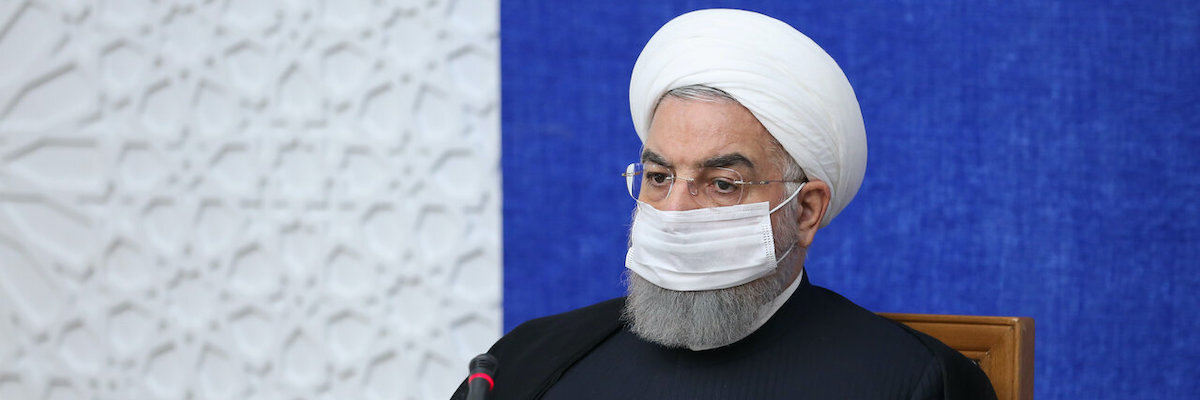
Iran's Rouhani Says New US Sanctions Cannot Break 'Resistance'
Iran's President Hassan Rouhani on Friday dismissed new US sanctions as unable to break the country's "resistance" and said Washington has already done all it can to pressure Tehran.
Iran's President Hassan Rouhani on Friday dismissed new US sanctions as unable to break the country's "resistance" and said Washington has already done all it can to pressure Tehran.
US President Donald Trump's administration imposed sweeping sanctions on Iran's banking sector on Thursday by designating 18 major Iranian banks to "stop illicit access to US dollars.”
"The Americans have so far done all they could against the great nation of Iran," Rouhani said, according to his official website.
"They cannot break the resistance of the Iranian nation with these inhumane" actions, he added.
According to Rouhani, the US administration is following "domestic aims" by such "political-propaganda attempts.”
The sanctions are part of Washington's policy of "maximum pressure" against Tehran aimed at reining in the Islamic republic, the arch-foe of US allies Saudi Arabia and Israel.
They were reimposed after Trump in 2018 unilaterally withdrew the US from a landmark accord with world powers and Iran, which limited the Islamic republic's nuclear programme in exchange for international sanctions relief.
The US claims that transactions involving humanitarian goods such as food and medicine are exempt and that sanctions are "directed at the regime."
Yet statements from experts and right groups point to the dire humanitarian consequences and the suffering sanctions impose on the Iranian people.
Rouhani said the sanctions are "attempts to create serious obstacles in fund transfers for medicine and food" and called them "cruel, terrorist and inhumane.”
He also called on the world's "human rights advocates" to condemn the move.
"All countries witness that America's attempts are completely against international laws and regulations, and in the time of the coronavirus are against human rights," Rouhani said.
Photo: IRNA
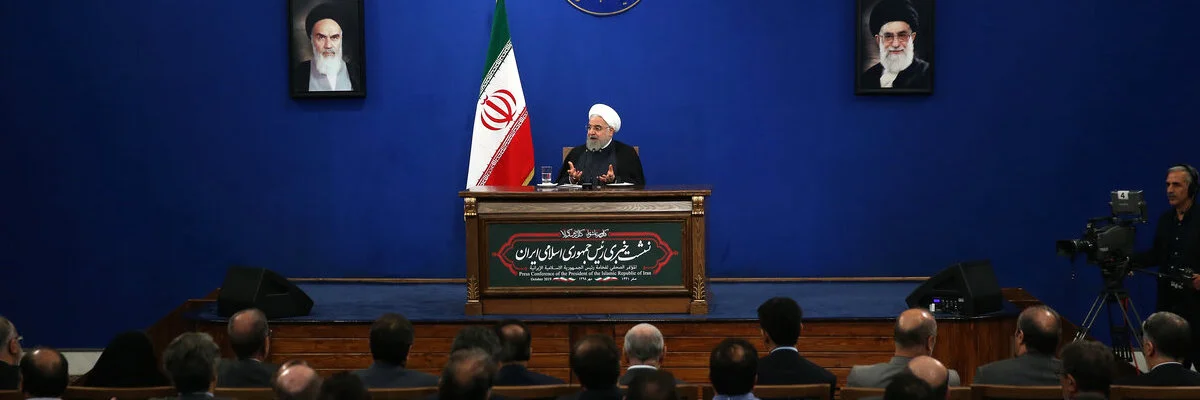
Iran’s Rouhani Vows Response to Oil Tanker Attack
◢ President Hassan Rouhani vowed Monday that Iran would respond to an attack on one of its oil tankers in the Red Sea. “This wasn’t a terrorist move, nor was it carried out by an individual. It was carried out by a government,” Rouhani said, adding that officials were also assessing rocket fragments.
By Golnar Motavelli and Arsalan Shahla
President Hassan Rouhani vowed Monday that Iran would respond to an attack on one of its oil tankers in the Red Sea, saying the evidence suggested it was the work of a government not a terrorist group.
Addressing reporters in his first news conference since the U.S. abandoned the 2015 nuclear deal last year, Rouhani said officials in Tehran had seen footage of the incident and it was likely that several rockets were aimed at the tanker. He stopped short of assigning blame, but the vessel was sailing near the Saudi port of Jeddah at the time of the attack.
“This wasn’t a terrorist move, nor was it carried out by an individual. It was carried out by a government,” Rouhani said, adding that officials were also assessing rocket fragments.
The Gulf has seen a surge in tit-for-tat attacks on oil facilities, drones and shipping traffic since Donald Trump’s administration tightened sanctions on Iran’s oil exports earlier this year. The measures are part of Trump’s “maximum pressure” policy aimed at forcing Iran to curb its ballistic missile program and support for proxy militia around the Middle East, but have been met with defiance by the Iranian government, which has, instead, rolled back its own compliance with the nuclear accord.
Although all sides have said they want to avoid war, repeated incidents pose a growing risk to supplies from the world’s most important oil-producing region.
The attack on the Sabiti tanker came weeks after a drone strike on a major Saudi oil facility which the kingdom blamed on Iran. Iranian officials have said they weren’t involved in the attack, which rattled global oil markets, and was claimed by Iranian-backed Houthi rebels in Yemen.
Photo: IRNA
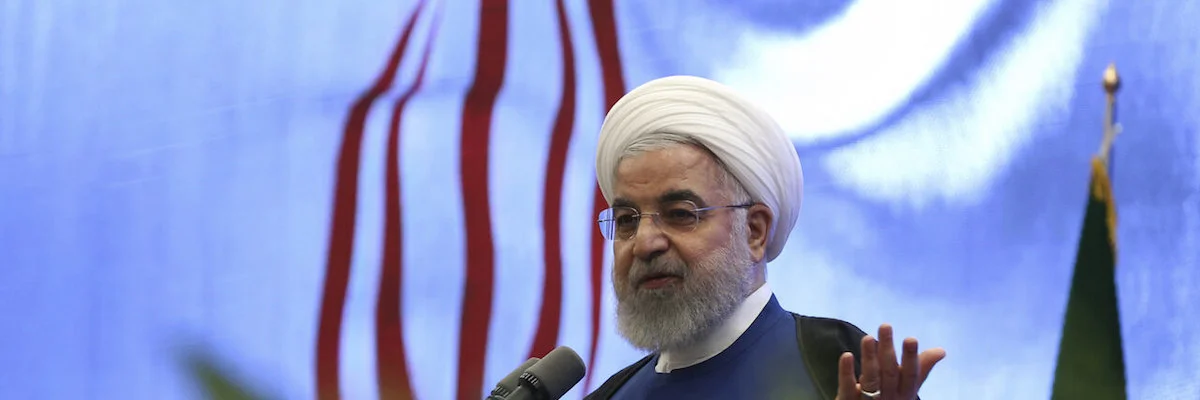
Iran President Makes Case for Talks as G7 Gambit Slammed
◢ Iran's President Hassan Rouhani came out strongly in favor of talks Monday as his top diplomat came under fire from ultra-conservative media for a surprise visit to a G7 summit. "I believe that for our country's national interests we must use any tool," Rouhani said in a speech aired live on state television.
By David Vujanovic
Iran's President Hassan Rouhani came out strongly in favor of talks Monday as his top diplomat came under fire from ultra-conservative media for a surprise visit to a G7 summit.
Foreign Minister Mohammad Javad Zarif flew in to the French seaside resort of Biarritz on Sunday for meetings on the sidelines of the G7 gathering.
"I believe that for our country's national interests we must use any tool," Rouhani said in a speech aired live on state television.
"And if I knew that I was going to have a meeting with someone that would (lead to) prosperity for my country and people's problems would be resolved, I would not hesitate.
"The main thing is our country's national interests," he said to a round of applause from those gathered at an event marking government achievements in rural areas.
Rouhani's remarks came as his government faced criticism over Zarif's visit to Biarritz at the invitation of French President Emmanuel Macron.
Macron has been leading diplomatic efforts to de-escalate tensions between Iran and its arch-enemy the United States.
Iran's economy has been battered by US sanctions imposed since last year when President Donald Trump unilaterally withdrew the United States from a landmark 2015 nuclear deal between the Islamic republic and world powers.
The ultra-conservative Kayhan newspaper strongly criticised Zarif's visit on Monday in an article that called the trip "improper".
Kayhan said the fact that the minister's visit was the second to France in a matter of days sent "a message of weakness and desperation".
"These improper measures are taken in the fantasy of an opening but it will definitely have no outcome other than more insolence and pressure," it added.
'Weakness and Desperation'
Supreme leader Ayatollah Ali Khamenei's representative in the Islamic Revolutionary Guards Corps also criticised engagement with Iran's foes.
Their "hostility and confrontation with the Islamic Revolution is endless and it cannot be resolved or reconciled through negotiation and dialogue," said Abdollah Haji-Sadeghi.
"We should not expect anything else but aggression, attacks, sedition and hostility" from the enemy, he was quoted as saying by the semi-official ISNA news agency.
The reformist Etemad newspaper, however, described Zarif's trip to France as "the most hopeful moment" for Iran in the 15 months since the US withdrew from the nuclear deal.
"Given Macron's attempts over the last two months, one can be hopeful that Trump's response to Macron's ideas has been the main reason for Zarif's... trip to Biarritz," it said.
The spike in tensions between Iran and the United States has threatened to spiral out of control in the past few weeks, with ships mysteriously attacked, drones downed and tankers seized.
Rouhani said his government was ready to use "both hands" of power and diplomacy.
"They may seize our ship somewhere... we will both negotiate... and we may seize their ship for legal reasons," he said, referring to an Iranian oil tanker seized off Gibraltar that has since been released and a British-flagged vessel still impounded by Iran in the Gulf.
"We can work with two hands... the hand of power and the hand of diplomacy," said the Iranian president.
"We must use both our power, our military and security power, economic and cultural power and our political power. We must negotiate. We must find solutions. We must reduce problems.
"Even if the probability of success... is 10 percent, we must endeavor and go ahead. We must not lose opportunities."
Photo: IRNA
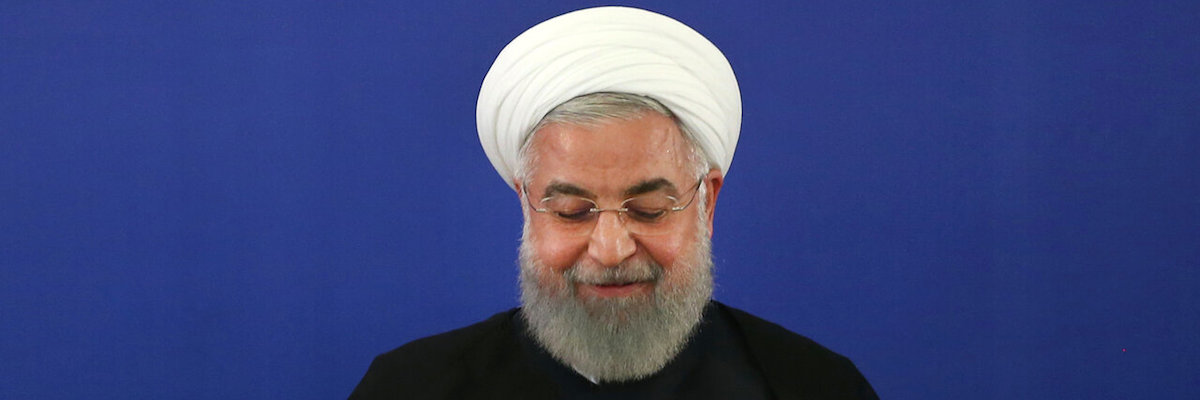
Iran 'Favors' Talks Despite Trump Snub
◢ President Hassan Rouhani said on Tuesday that Iran favors talks with the US if it lifts sanctions against the Islamic republic, despite his top diplomat turning down a meeting with US President Donald Trump. Rouhani said "peace with Iran is the mother of all peace" and "war with Iran is the mother of all wars" as he defended a landmark 2015 nuclear deal between Iran and world powers.
By David Vujanovic
President Hassan Rouhani said on Tuesday that Iran favors talks with the US if it lifts sanctions against the Islamic republic, despite his top diplomat turning down a meeting with US President Donald Trump.
Rouhani said "peace with Iran is the mother of all peace" and "war with Iran is the mother of all wars" as he defended a landmark 2015 nuclear deal between Iran and world powers.
"Iran favours talks and negotiations and, if the US really wants to talk, before anything else it should lift all sanctions," Rouhani said in remarks aired live on state television.
Tensions between Iran and the US have been rising since Trump unilaterally withdrew the US from the nuclear deal in May 2018 and began imposing sanctions on it as part of a "maximum pressure" campaign.
Rouhani, speaking after meeting with his top diplomat, Mohammad Javad Zarif, said Iran was ready for talks regardless of whether or not the US was party to the deal.
"Whether they want to come into the JCPOA or not, it's up to them," said Rouhani, referring to the accord known formally as the Joint Comprehensive Plan of Action.
"All sanctions should be lifted so that there will be no criminals facing us," he said, accusing the US of committing acts of "economic terrorism" for blocking food and medicine imports.
In response, the US ambassador on disarmament Robert Wood said: "Iran simply needs to make up its mind to decide what it wants to do".
"My president has said he is willing to sit down and have a discussion with Iran. We are not sure Iran wants to have that discussion," he said in answer to a question from AFP on the sidelines of a conference in Geneva.
However Rouhani described as "weird" the US approach of calling for negotiations and then slapping sanctions on Zarif.
"So how should we negotiate?" he said on Tuesday. "The person in charge of negotiations is the foreign minister. He must talk to you."
Trump has said publicly several times he is willing to hold talks with Iran even as he lambasts its leadership as corrupt, incompetent and a threat to regional security and US interests.
'Warmongers' Deceived Trump
Twelve months on from the US withdrawal, Iran responded by suspending some of its commitments under the nuclear deal.
The situation threatened to spiral out of control with ships attacked, drones downed and oil tankers seized.
At the height of the crisis, Trump called off air strikes against Iran at the last minute in June after its forces shot down a US drone.
Rouhani, with Zarif sitting beside him, defended the foreign minister who has faced criticism from hardliners over his role in the deal ultimately abandoned by the Americans.
"We had so many economic victories (in the wake of the deal) that it enraged some people," he said.
Rouhani said the US made a mistake when it thought "everything will be over" for Iran after "some planned a street riot" in December 2017.
At that time, Iran was rocked by days of deadly protests reportedly sparked by austerity measures.
"This caused Americans to be trapped. They thought Iran's system is weakened," he said.
"They said, 'One more push. Iran has reached a stage where if we give it another push, everything will be over'."
This push by "warmongers" deceived Trump and led to his decision to leave the JCPOA, he said.
'Oil for Oil'
Rouhani later spoke by phone with French President Emmanuel Macron and voiced support for further cooperation between Iran and Europe, according to the government's official website.
But "unfortunately, simultaneous with Iran and France's attempts to reduce tensions and create favorable conditions for peaceful coexistence in the region, we witness escalatory moves from the US," Rouhani told Macron.
In his earlier televised remarks, Rouhani urged the US to be ready to negotiate fairly
"Peace for peace and oil for oil," he said. "You cannot say that you won't allow our oil to be exported.
"It cannot be that the Strait of Hormuz is free for you and the Strait of Gibraltar is not free for us." Iran has also been locked in a high-seas standoff with US ally Britain since Royal Marines helped to seize a tanker carrying Iranian oil off the British overseas territory of Gibraltar on July 4.
Weeks later, Iran's Revolutionary Guards impounded a British-flagged tanker in the Strait of Hormuz—the conduit for much of the world's crude. Separately on Tuesday, Iran's military unveiled three precision-guided missiles, with Defense Minister Amir Hatami saying they showed the country was ready to defend itself in the face of US "viciousness and conspiracies.”
Photo: IRNA
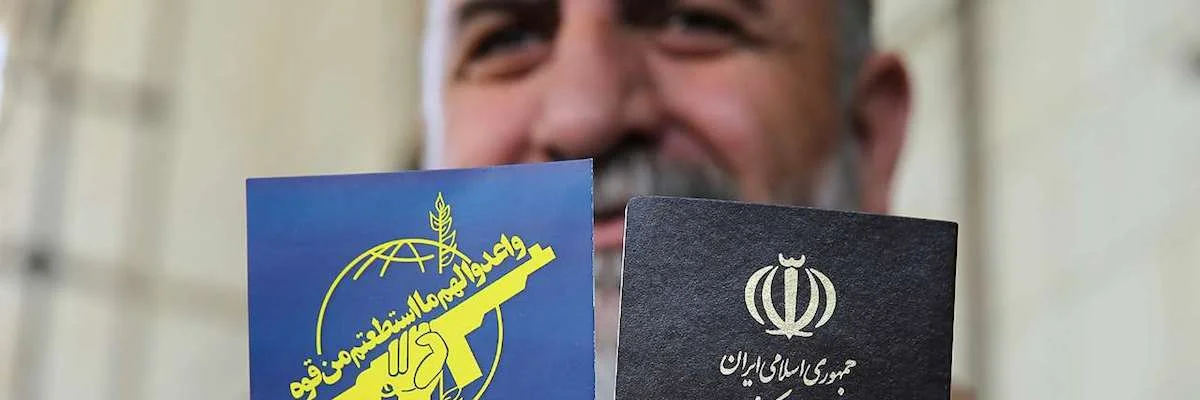
Iran President Says US 'Leader of World Terrorism'
◢ Iranian President Hassan Rouhani on Tuesday accused the United States of being the real "leader of world terrorism", hitting back after Washington blacklisted Iran's Revolutionary Guards as a terrorist organization. Tehran was quick to retaliate on Monday by declaring US troops "terrorists" following Washington's move, which was welcomed by Iran's regional arch-rivals Israel and Saudi Arabia.
Iranian President Hassan Rouhani on Tuesday accused the United States of being the real "leader of world terrorism", hitting back after Washington blacklisted Iran's Revolutionary Guards as a terrorist organization.
Tehran was quick to retaliate on Monday by declaring US troops "terrorists" following Washington's move, which was welcomed by Iran's regional arch-rivals Israel and Saudi Arabia.
It was the first time that Washington has branded part of a foreign government a terrorist group, meaning that anyone who deals with the Islamic Revolutionary Guard Corps could face prison in the United States.
"Who are you to label revolutionary institutions as terrorists?" an angry Rouhani demanded in a speech broadcast live by state television.
Rouhani hailed the Guards for fighting terrorism since their creation in 1979, and accused US forces of having always been involved with terrorist groups or acts of terrorism.
“You want to use terrorist groups as tools against the nations of the region... you are the leader of world terrorism.”
"Who is propagating and encouraging terrorism in today's world? Who wanted to use ISIS (the Islamic State group) as a tool?" Rouhani asked, saying that the US is "hiding" the leaders of the jihadist organization.
The Revolutionary Guards are the ideological arm of the country's military and deeply embedded in Iranian political and economic life.
Iran's supreme leader Ayatollah Ali Khamenei praised the Guards on their National Day, saying they were at the "forefront' of defending the country and its interests, according to his official website.
He lashed out at US officials, saying: "Their vice and deceit will return boomerang on them, leading the enemies of the Islamic Republic such as (US President Donald) Trump and those around him at the US ruling apparatus to go down the drain."
'Everything Imaginable'
To support his accusations, Rouhani cited the downing of Iran Air Flight 655 in July 1988 by missiles fired from the US naval ship the USS Vincennes.
"You have done everything imaginable. Which force was it that shot down our civil airliner in the waters of the Persian Gulf?" he said, adding that it was aimed at intimidating Iran.
"You wanted to tell the Iranian nation that we do not have any red lines, you wanted to say that we also kill children, you wanted to say that we also kill women," Rouhani said, concluding that the US was transmitting "a message of terrorism in the whole world."
The US move comes on top of Trump's decision last year to pull the United States out of an international deal with Iran that was meant to lift crippling economic sanctions in return for curbs on its nuclear program.
Washington had been encouraged to blacklist the Guards by Trump's allies Saudi Arabia and Israel, which both cheered the declaration.
"The US decision (follows) the kingdom's repeated demands to the international community to address the issue of Iranian-backed terrorism," the official Saudi Press Agency quoted a foreign ministry source as saying on Tuesday.
The source welcomed the US move as a "practical and serious step" in curbing what the kingdom describes as Iranian meddling in the region.
The US decision came hours before an Israeli election in which Prime Minister Benjamin Netanyahu faces a close race for re-election.
In a statement, Netanyahu thanked his "dear friend" Trump who he said had responded to a "request of mine.”
In a statement carried by the Iranian official news agency IRNA, the Supreme National Security Council declared the United States a "state sponsor of terrorism" and its forces in the region "terror groups.”
Quickly adapting to the decision, the semi-official Fars News Agency, close to ultra-conservatives, described the US casualties in the latest suicide bombing on a military convoy in Afghanistan as "terrorists."
In a report on the attack, Fars said Tuesday: "American army terrorists killed in Afghanistan."
NATO announced on Monday that a suicide car bomb on a convoy in Iran's eastern neighbor had killed three US troops and a military contractor and wounded three more.
Photo Credit: IRNA
Tehran Aims to Sue US Individuals Over Sanctions
◢ Tehran is preparing a lawsuit in Iran against US individuals involved with economic sanctions imposed by Washington, President Hassan Rouhani said Monday. Rouhani said the presidency's legal affairs office as well as the justice and foreign ministers have been tasked with "drawing up a lawsuit against all those within America involved with designing and executing these sanctions.”
Tehran is preparing a lawsuit in Iran against US individuals involved with economic sanctions imposed by Washington, President Hassan Rouhani said Monday.
Rouhani said the presidency's legal affairs office as well as the justice and foreign ministers have been tasked with "drawing up a lawsuit against all those within America involved with designing and executing these sanctions.”
The case would be lodged in a "competent court inside Iran," he said, quoted by state television.
Speaking after the last cabinet meeting of Iran's calendar year which ends on March 20, Rouhani condemned the sanctions as a "crime against humanity" that was hitting ordinary Iranians.
"The world should know that what America has done was not against the Iranian state, it was not against Iran's nuclear program, it was against the wellbeing of the Iranian people," he said.
Rouhani said the sanctions targeted "the normal life of the people... the food supply... the medical supply of the people.”
Last May, US President Donald Trump withdrew from the 2015 nuclear deal between Iran and world powers.
The renewal of American sanctions, which had been eased in exchange for curbs on Tehran's nuclear program, sent shockwaves through Iran's economy.
The IMF reported that the Iranian economy slumped into recession in 2018 and has forecast a 3.6 percent decline in GDP for 2019.
The sanctions have indirectly impacted medical and food supplies, and a steep decline in the value of the rial has pushed up prices of basic goods.
In October, the International Court of Justice (ICJ) ordered the United States to lift sanctions affecting imports of "humanitarian" goods to Iran.
The court said sanctions "may have a serious detrimental impact on the health and lives of individuals on the territory of Iran.”
Photo Credit: IRNA
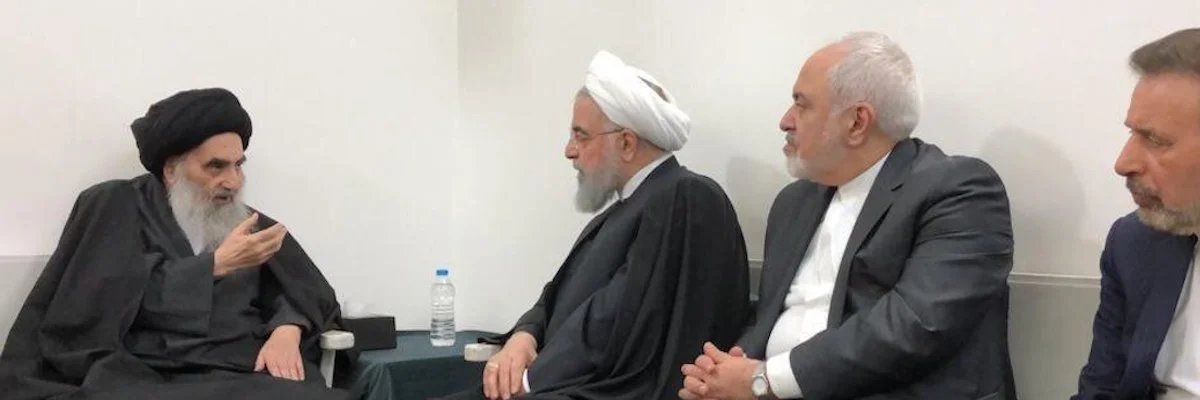
Iran's Rouhani Meets Iraq's Top Shiite Cleric
◢ Iran's Hassan Rouhani met Grand Ayatollah Ali Sistani in Iraq's Najaf on Wednesday, an AFP photographer reported, in the first encounter between an Iranian president and the country's chief Shiite cleric. Sistani famously called Iraqis to arms against the Islamic State group in 2014, giving rise to the Hashd al-Shaabi paramilitary alliance, which includes Iran-backed Shiite groups.
Iran's Hassan Rouhani met Grand Ayatollah Ali Sistani in Iraq's Najaf on Wednesday, an AFP photographer reported, in the first encounter between an Iranian president and the country's chief Shiite cleric.
Sistani famously called Iraqis to arms against the Islamic State group in 2014, giving rise to the Hashd al-Shaabi paramilitary alliance, which includes Iran-backed Shiite groups.
Those forces have since been placed under the command of regular Iraqi forces and several former fighters are now members of the Iraqi parliament.
Sistani rejects foreign influence in Iraq.
Iran and Iraq fought a devastating eight-year war in the 1980s but their relations shifted drastically with the American-led overthrow of Sunni Iraqi dictator Saddam Hussein in 2003.
Iran, which like its neighbor has a mainly Shiite population, is now one of oil-rich Iraq's main trading partners and has close ties to many of its political actors.
Shiite-majority Iraq is walking a fine line to maintain good relations with Iran and its other key ally, the United States, an arch-foe of Iran.
Both have played a major role in the battle against IS jihadists.
Sistani, a spiritual leader to most of Iraq's Shiites and some in Iran, heads the religious establishment of Najaf, a Shiite holy city in Iraq that rivals Iran's Qom.
In 2013, the octogenarian leader refused to meet then-president of Iran, Mahmoud Ahmadinejad.
Rouhani, who is on his first trip to Iraq since becoming president in 2013, hailed his country's "special" ties with its neighbor, saying they could not be prepared to relations "with an aggressor country like America.”
Photo Credit: IRNA
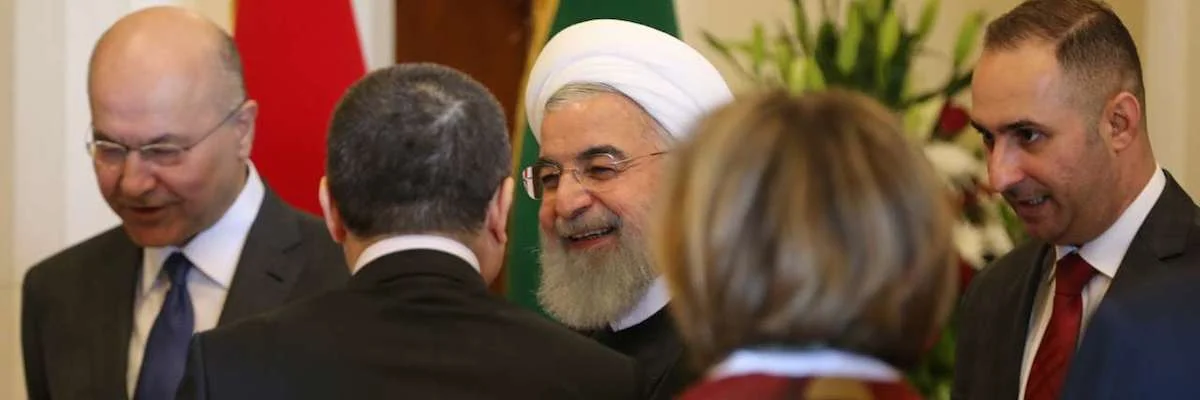
Iraq and Iran Build Economic Ties as a Sidelined U.S. Looks On
◢ In the contest for Iraq’s loyalty, geography is proving irresistible. Baghdad is being urged to take sides in the U.S.-Iran confrontation that’s escalated into one of the Middle East’s top flash-points. President Donald Trump is pushing Iraq to stop buying natural gas and electricity from its neighbor. President Hassan Rouhani wants it to purchase more to ease the pain imposed by American sanctions.
In the contest for Iraq’s loyalty, geography is proving irresistible. Baghdad is being urged to take sides in the U.S.-Iran confrontation that’s escalated into one of the Middle East’s top flash-points. President Donald Trump is pushing Iraq to stop buying natural gas and electricity from its neighbor. President Hassan Rouhani wants it to purchase more to ease the pain imposed by American sanctions.
So far, Rouhani’s winning. On a three-day state that ends Wednesday, he’s held a press conference alongside his Iraqi counterpart, addressed businessmen, visited important Muslim shrines and chatted with tribal leaders. In December, after a 16-year American military presence, Trump caused a diplomatic furor by arriving unannounced in the middle of the night at a U.S. base, speaking to troops and leaving without meeting top officials.
“The essential part of Rouhani’s message is addressed to the U.S.—Iran’s on the ground in a major way,” said Ihsan Al-Shammari, an Iraqi political analyst. Tehran “is bolstering its relations in a broad way to support its political position inside Iraq.”
Visas, Trade
The two countries signed transportation and trade agreements, including one for the construction of a railroad link between the Iranian city of Shalamcheh and Iraq’s oil-hub at Basra. From next month, the neighbors will drop visa charges for each other’s citizens, Iran’s state-run Press TV reported. And Rouhani said officials planned to boost bilateral trade to $20 billion from the current $12 billion.
Obstacles to banking between the two nations have also been cleared, Secretary of the Iran-Iraq Chamber of Commerce Hamid Hosseini told state-run Tasnim news agency. Respective central bank governors signed an accord last month to make payments for oil and gas trade through non-U.S. dollar bank accounts, using euros and Iraqi dinars to skirt U.S. sanctions.
Shiite Muslim Iran’s influence in Iraq has been deepening ever since the U.S. invasion of 2003 removed Sunni Muslim dictator, Saddam Hussein, and precipitated a shift in power to the country’s majority Shiites.
Iranian militias played a significant role in pushing Islamic State jihadists out of Iraqi territory—a victory made possible by U.S. air power. And undeterred by an undercurrent of Iraqi nationalism, the three Shiite front-runners for the post of prime minister in last year’s elections trumpeted their good relations with the Islamic Republic.
Vague Offers
“We were standing by the Iraqi nation when times were hard and at a time of peace and security, we are at their side too,” Rouhani said in comments on Monday, according to Iranian state media.
Secretary of State Mike Pompeo visited Iraq in January amid Arab doubts over the U.S. commitment to their region following Trump’s announcement that he wanted to pull troops from Syria. While those talks focused on security issues, Pompeo also spoke about reducing Iraq’s reliance on imported energy that mostly comes from Iran.
He didn’t get far, it seems. In a February interview in Moscow, Abdulkarim Hashim Mustafa, special adviser to Iraq’s prime minister, put the record straight. “These are American sanctions and we have the right to protect our national interests,” he said. “We tell them always: we are your friends but we are not part of your policies in the region.”
Sunni Allies
Trump has made isolating Iran’s economy and curbing its military potential the cornerstone of his Middle East policy, finding grateful allies in Israel and among Sunni Gulf states led by Saudi Arabia.
Iranian oil production is languishing as foreign investors steer clear of the world’s fourth-largest holder of crude. Pledges by U.S. officials to tighten curbs on Iran’s oil sales and the expiration of waivers for several of the nation’s customers in early May are set to further restrict its exports.
Dhafir Al-Ani, an Iraqi Sunni lawmaker, regretted that his nation was caught in the middle of the standoff. “The U.S. has the ability to punish countries helping Iran bypass sanctions,” he said. “I hope Iraq will not be the victim of the U.S.-Iran conflict.”
Photo Credit: IRNA
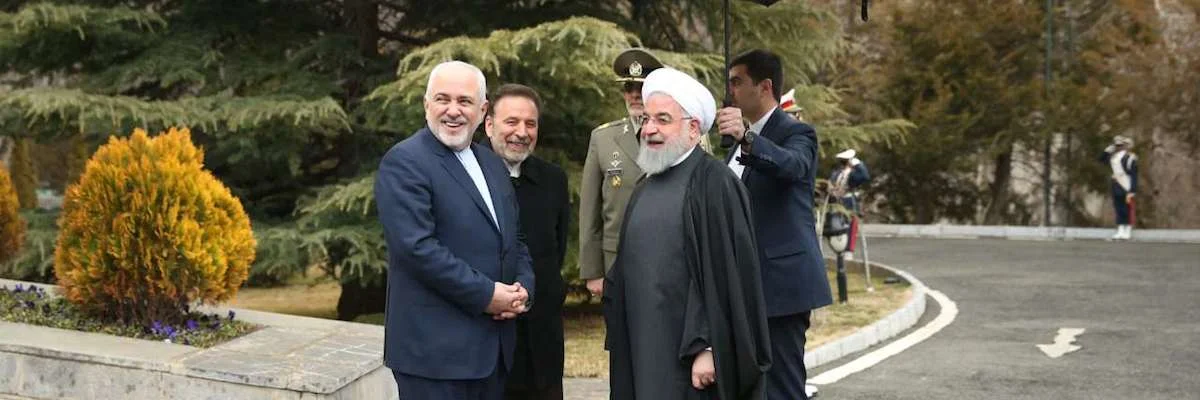
Iran President Rejects FM Zarif's Resignation
◢ Iranian President Hassan Rouhani rejected Foreign Minister Mohammad Javad Zarif's resignation on Wednesday, the government's official website said. "I believe your resignation is against the country's interests and do not approve it," Rouhani wrote in a letter to Zarif, the website said.
Iranian President Hassan Rouhani rejected Foreign Minister Mohammad Javad Zarif's resignation on Wednesday, the government's official website said.
"I believe your resignation is against the country's interests and do not approve it," Rouhani wrote in a letter to Zarif, the website said.
"I consider you, as put by the leader, to be 'trustworthy, brave and pious' and in the forefront of resistance against America's all-out pressure," he added. referring to Iran's supreme leader Ayatollah Ali Khamenei.
Zarif abruptly tendered his resignation on Instagram on Monday, seemingly over being left out of meetings with visiting Syrian President Bashar al-Assad earlier in the day, Iran's Entekhab news agency reported.
Assad, a major recipient of Iranian aid during his country's nearly eight-year civil war, met with both Khamenei and Rouhani on his rare foreign visit, but not with Zarif.
Rouhani praised Zarif's "relentless efforts and endeavours" in bearing the "heavy responsibility" of the foreign affairs portfolio.
He stressed that Zarif was the point-man in the conduct of Iran's foreign policy.
"As ordered several times, all bodies—including government or state bodies—must be in full coordination with this ministry with regards to foreign relations," the president said in his letter.
Entekhab said it tried to reach Zarif after Assad's visit and received the following message: "After the photos of today's meetings, Javad Zarif no longer has any credibility in the world as the foreign minister!"
Photo Credit:
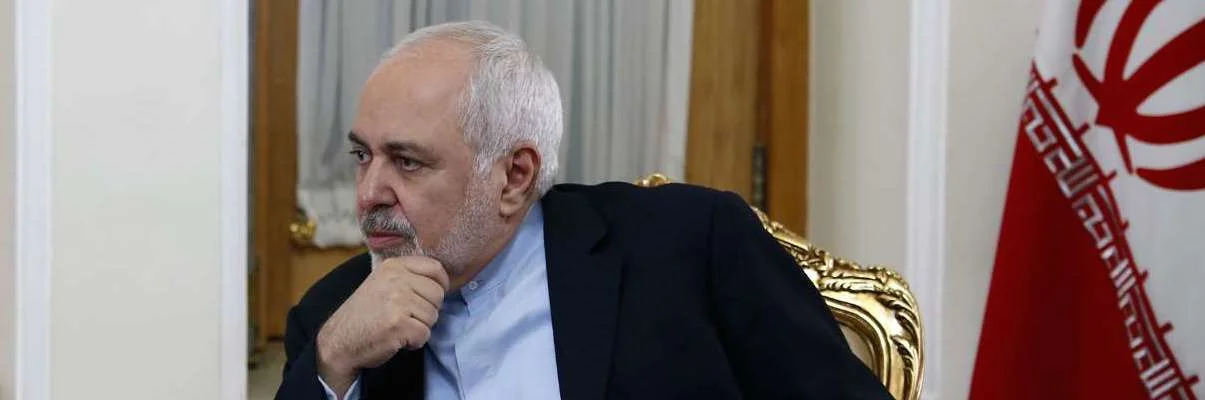
Zarif Suggests He Was Undermined as Iran MPs Demand He Stays On
◢ Iranian Foreign Minister Javad Zarif, who led his country’s nuclear negotiations with world powers, signaled that his surprise decision to resign was because he was undermined in his role. About 150 Iranian lawmakers, or a third of the chamber, signed a letter addressed to the president petitioning to keep Zarif in his role, state-run media reported.
Iranian Foreign Minister Javad Zarif, who led his country’s nuclear negotiations with world powers, signaled that his surprise decision to resign was because he was undermined in his role.
In his first public comments after Monday’s announcement, Zarif said he hoped the move would eventually allow the ministry “to return to its rightful place in foreign policy.” President Hassan Rouhani hasn’t yet accepted Zarif’s resignation.
About 150 Iranian lawmakers, or a third of the chamber, signed a letter addressed to the president petitioning to keep Zarif in his role, state-run media reported.
Zarif’s resignation and public comments highlight the struggle of moderate Iranian politicians to engage with the West in the face of hardline opposition at home and aggressive U.S. policies. President Donald Trump last year pulled the U.S. out of the landmark 2015 nuclear agreement that was supposed to herald an end to Iran’s international isolation.
The resignation coincided with a visit from Syria’s President Bashar Al Assad to Tehran, where he met with Supreme Leader Ayatollah Ali Khamenei as well as Rouhani. Pictures posted online suggested Zarif wasn’t present at the meetings.
The timing led analysts to speculate that Iran’s top diplomat was being sidelined on key foreign policy issues, such as the country’s role in propping up Assad’s government after nearly eight years of civil war in Syria.
Divisions have also been apparent on other matters such as the future of the nuclear program abandoned by the U.S. Rouhani’s government has said the country needs to abide by the accord despite U.S. sanctions. Hardline groups within the ruling establishment suggest Iran should free itself from the limitations imposed by the deal.
Deal Champion
A U.S.-educated career diplomat, Zarif led Iran’s negotiating team during lengthy talks with the U.S. and other world powers that culminated in the 2015 Joint Comprehensive Plan of Action, or “Iran deal," which lifted some sanctions against the Islamic Republic in exchange for commitments on its nuclear enrichment program. Trump pulled the U.S. out of the accord and reimposed sanctions, leaving Iran to try and salvage what it could of the agreement.
Brokering the deal made Zarif popular with reformists and moderates in Iran’s fractious political system, but he was also the subject of criticism from the Islamic Republic’s hard-liners, who are traditionally suspicious of any engagement with Washington and Europe. The U.S. withdrawal has emboldened the hard-liners and weakened Rouhani, who has been trying to come up with ways to retain some of the benefits of the agreement in negotiations with other signatories.
Photo Credit: IRNA
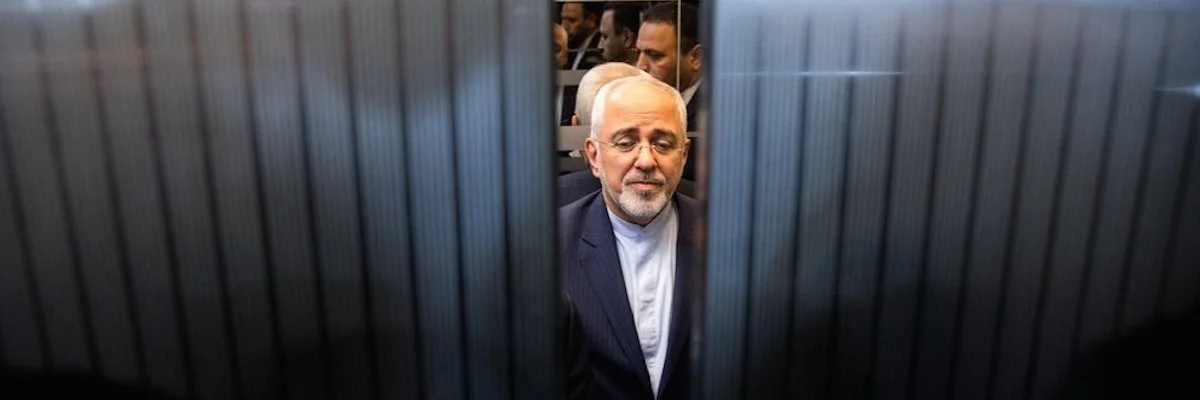
Iran Foreign Minister Zarif Announces Resignation on Instagram
◢ Iranian Foreign Minister Mohammad Javad Zarif, who was the lead negotiator in the 2015 nuclear deal, announced his resignation on Instagram on Monday, which can only take effect once President Hassan Rouhani accepts it. "I apologize for my inability to continue serving and for all the shortcomings during my term in office," Zarif said in a message posted on his verified Instagram account.
Iranian Foreign Minister Mohammad Javad Zarif, who was the lead negotiator in the 2015 nuclear deal, announced his resignation on Instagram on Monday, which can only take effect once President Hassan Rouhani accepts it.
"I apologize for my inability to continue serving and for all the shortcomings during my term in office," Zarif said in a message posted on his verified Instagram account.
Zarif thanked Iranians and "respected officials" for their support "in the last 67 months".
The resignation of Iran's top diplomat was confirmed by an informed source, however Rouhani's chief of staff strongly denied reports that the president had accepted Zarif's resignation in a tweet.
The resignations happened hours after a surprise visit by Syrian President Bashar Al-Assad to Tehran. However, according to the semi-official ISNA News Agency, Zarif was not present at any of Assad's meetings with Iran's supreme leader Ayatollah Ali Khamanei and Rouhani.
Prominent members of parliaments immediately called for Rouhani not to accept the resignation.
"Undoubtedly the Iranian people, government and state will not benefit from this resignation," said Mostafa Kavakebian, a reformist MP.
“A great majority of MPs demand that the president never accept this resignation," he said in a tweet.
The head of parliament's influential national security and foreign policy commission told ISNA how a planned trip to Geneva with Zarif on Monday afternoon had been cancelled at the last minute with no explanation.
Under Pressure
"I suddenly got a text message saying the trip has been cancelled," Heshmatollah Falahatpisheh told ISNA, adding that this was not the first time Zarif had resigned but "that he has done so publicly this time means that he wants the president to accept it this time."
Zarif, 59, has served as Rouhani's foreign minister since August 2013 and has been under constant pressure and criticism by hardliners who opposed his policy of détente with the west.
His standing within Iran's political establishment took a hit when the US withdrew from the nuclear deal in May 2018 and the deal's achievements became less and less clear as Iran's economy nosedived.
Zarif was blamed by ultra-conservatives for negotiating a bad deal that had not gained anything meaningful for Iran for all the concessions it had made in its nuclear program.
The faceoff between the minister and his critics only intensified as time passed, with Zarif saying his main worry throughout the nuclear talks had been from pressure from inside Iran.
"We were more worried by the daggers that were struck from behind than the negotiations," he told a local newspaper on February 2.
"The other side never managed to wear me down during the negotiations... but internal pressure wore me down both during and after the talks," he said.
The latest point of contention between Zarif and hardliners was the implementation of the Financial Action Task Force's requirements regarding money laundering in Iran.
The rift on the issue pitched the government and the parliament against supervisory councils.
On Sunday, ISNA reported that Zarif had warned the Expediency Council, an arbitration body tasked with solving such impasses, that it should "understand the consequences of its decision."
He was immediately attacked by the ultra-conservatives who deemed what Zarif had said as a threat.
Photo Credit: Hadi Zand, ISNA
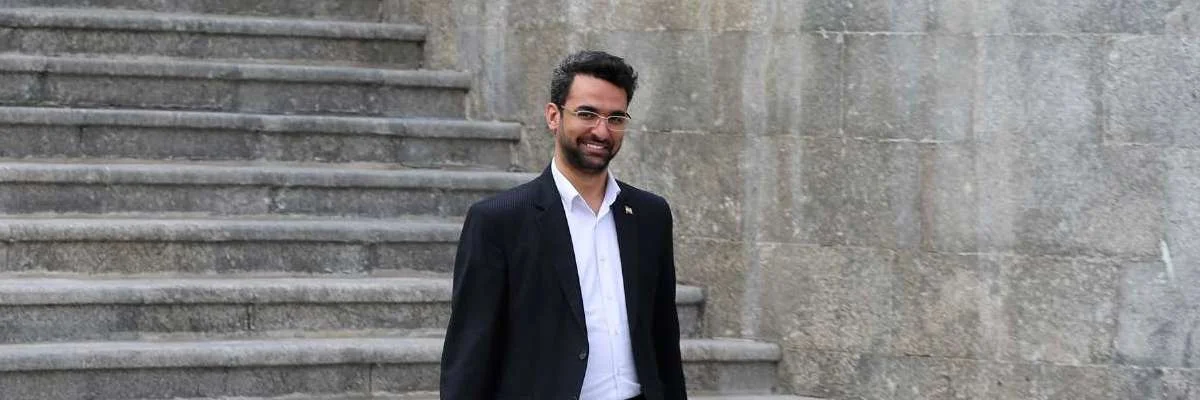
Iran President Defends Telecom Minister Against Judiciary
◢ Iran President Hassan Rouhani on Monday brushed off attacks against his telecom minister over charges of failing to create a "safe environment" in social media and leaving Iranian data vulnerable to espionage, state television reported. According to the judiciary, 2,000 people in the southwestern city of Ahvaz and the general prosecutor's office have lodged a complaint against the minister, Mohammad Javad Azari-Jahromi.
Iran President Hassan Rouhani on Monday brushed off attacks against his telecom minister over charges of failing to create a "safe environment" in social media and leaving Iranian data vulnerable to espionage, state television reported.
According to the judiciary, 2,000 people in the southwestern city of Ahvaz and the general prosecutor's office have lodged a complaint against the minister, Mohammad Javad Azari-Jahromi.
"Someone in the judiciary says they'll lodge a complaint against a young minister. Well, he is not at all intimidated and is doing his job," said Rouhani, without naming the minister.
“Ok, then, lodge a complaint! The young minister is working for the benefit of the people and pays no heed to pointless orders," he added defiantly.
A "lack of safe space" in social media has "drawn (young people) to Takfiri (jihadist) groups and eventually led to (last year's) terrorist incident at the armed forces parade," a cyberspace official at the prosecutor's office, Javad Javidnia, told semi-official news agency ISNA.
Back in September 2018 in the southwestern city of Ahvaz, in Khuzestan province bordering Iraq, gunmen killed at least 24 people as they opened fire on the military parade.
Javidnia said a complaint had also been lodged against the managers of Telegram and Instagram.
Iran has in the past blocked access to social media platforms such as Facebook, Twitter and YouTube, and the judiciary blocked the Telegram messaging app in May.
The judiciary has also accused Azari-Jahromi, at 37 the youngest member of Rouhani's cabinet, of leaving Iran's "big data" vulnerable to access by its enemies, which enables them to commit "internet espionage".
"Foreigners can analyze this data and use it to disrupt the country's security and stability," Javidnia told ISNA.
The judiciary has frequently clashed with the telecom minister.
In January, Azari-Jahromi opposed a mulled ban on the photo- and video-sharing application Instagram, saying it would only create new problems for the Islamic republic.
Despite restrictions, top Iranians officials like Rouhani and the minister himself use services such as Twitter, which are widely accessible via proxy servers.
Photo Credit: IRNA

Trial Opens for Iran President's Brother
◢ The trial of Iranian President Hassan Rouhani's brother, who was arrested two years ago on charges of financial violations, opened Tuesday in Tehran, the judiciary's news website Mizan Online reported. Hossein Fereydoun, a key adviser to Rouhani, was arrested in July 2017 following long-running corruption allegations, with the judiciary saying at the time that he was the subject of "multiple investigations.”
The trial of Iranian President Hassan Rouhani's brother, who was arrested two years ago on charges of financial violations, opened Tuesday in Tehran, the judiciary's news website Mizan Online reported.
Hossein Fereydoun, a key adviser to Rouhani, was arrested in July 2017 following long-running corruption allegations, with the judiciary saying at the time that he was the subject of "multiple investigations.”
At the first hearing on Tuesday Fereydoun and four associates were present in court with their lawyers for a session that lasted more than two hours, Mizan Online said.
During the hearing a representative of the state prosecutor read out the indictment, it said, without giving further details.
A new hearing will be held next week, Mizan Online said without giving an exact date.
Fereydoun and his brother do not share the same name because Rouhani changed his when he was younger.
A day after his arrest in 2017, Fereydoun was released on bail, reported by local media to be millions of dollars.
The head of the General Inspection Organisation, Naser Seraj, had accused Fereydoun of financial violations.
Seraj alleged Fereydoun had influenced the appointment of two bank directors, one of whom was accused by the Revolutionary Guards of involvement in a "large corruption scandal.”
Conservatives had demanded that Fereydoun be put on trial, accusing him of receiving zero-interest loans among other violations.
Photo Credit: Wikicommons
Rouhani Says Iran Ready to Accept Friendly US Ties if it 'Repents'
◢ Iranian President Hassan Rouhani said Wednesday his country would be ready to establish "friendly relations" with the United States if it apologized for past wrongs. "Our slogan is friendly relations with the whole world," he said. That would even include "America, if it repents... and apologizes for its previous interferences in Iran, and is prepared to accept the greatness and dignity of the nation of Iran and the great Islamic Revolution.”
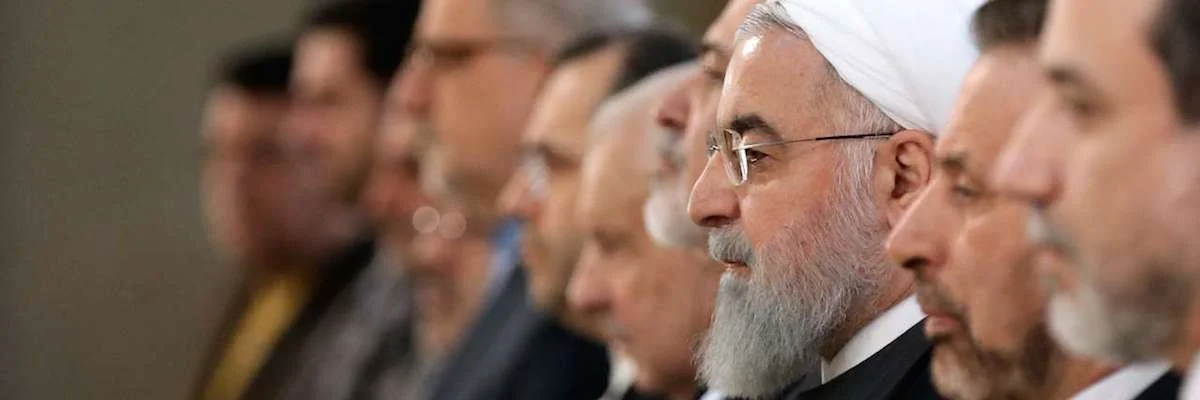
Iranian President Hassan Rouhani said Wednesday his country would be ready to establish "friendly relations" with the United States if it apologized for past wrongs.
"Our slogan is friendly relations with the whole world," he said.
That would even include "America, if it repents... and apologizes for its previous interferences in Iran, and is prepared to accept the greatness and dignity of the nation of Iran and the great Islamic Revolution," he said.
"We are still ready to accept America's... repentance despite the fact that for years it has done injustice to us," he told foreign diplomats in Tehran during a ceremony to mark the 40th anniversary of Iran's Islamic Revolution.
During the hostage crisis at Washington's US embassy in 1979, Iranian students had famously demanded that the US should repent in return for the release of diplomats.
The following year, the two countries cut diplomatic ties, and they have remained estranged ever since.
In a message marking Persian New Year in March 2009, then-US president Barack Obama reached out to the Islamic Republic, declaring: "we know that you are a great civilization, and your accomplishments have earned the respect of the United States and the world."
Iran's supreme leader Ayatollah Ali Khamenei responded the next day, saying "change and our attitude will change.”
In June the same year, Obama became the first serving American president to recognize that the US played a role in the 1953 coup that toppled Iran's elected government—but he stopped short of apologizing.
He also insisted that Iran had wronged the US, including over the hostage crisis.
The Obama administration was one of six world powers that signed a 2015 deal with Iran, easing sanctions in exchange for restrictions on Tehran's nuclear program.
But the detente was scuppered by Obama's successor Donald Trump, who in May last year unilaterally withdrew from the nuclear accord and re-imposed sanctions.
Rouhani last week accused the US of being an "oath-breaker", and his hardline opponents have repeatedly hammered the 2015 deal.
Photo Credit: IRNA
Iran's Rouhani Tells Critics: Blame 'Oath-Breaker' US
◢ Iran's President Hassan Rouhani slammed his critics on Wednesday, defending the political achievements of a landmark 2015 nuclear deal and calling the US an "oath-breaker". Hardliners have repeatedly hammered the 2015 nuclear deal with six world powers since the early stages of negotiations, calling it a fool's errand and a deception.
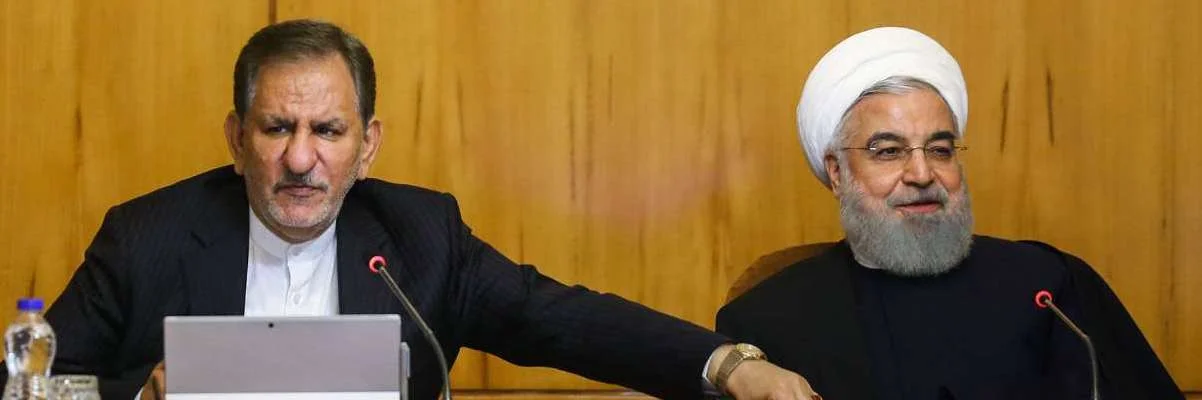
Iran's President Hassan Rouhani slammed his critics on Wednesday, defending the political achievements of a landmark 2015 nuclear deal and calling the US an "oath-breaker".
"One should not condemn the government or the great Islamic system instead of America—this is the greatest damage that can be done," he said on state TV.
Hardliners have repeatedly hammered the 2015 nuclear deal with six world powers since the early stages of negotiations, calling it a fool's errand and a deception.
They contend that Iran has gained nothing from the agreement despite complying with its restrictions on the Islamic republic's nuclear program, intensifying their criticism after Washington withdrew from the treaty last year.
Speaking during an annual ceremony of allegiance to the late founder of the Islamic republic, Ayatollah Ruhollah Khomeini, Rouhani said: "America has not been an oath-breaker only to us, but also to Europe, China, NAFTA and the Trans-Pacific Partnership (TPP)."
President Donald Trump withdrew Washington from the deal—technically called the Joint Comprehensive Plan of Action (JCPOA)—last May, reimposing punishing sanctions on the Islamic Republic.
Washington also withdrew from the TPP trade agreement in 2016, the Paris Agreement on climate change control the next year and forced Canada and Mexico to renegotiate and sign a new deal in 2018 replacing the North American Free Trade Agreement.
The other parties to the Iran nuclear deal—Britain, China, France, Germany and Russia along with the European Union—have insisted it remains in force and is working.
Rouhani took another jab at opponents who have criticized Iranian diplomats' lack of foresight over not predicting the US withdrawal.
"No agreement is based on whether the other party remains, but the main basis is the country's interests," he said.
He ended his speech by calling for "unity", saying Khomeini's main concern was not foreign forces but domestic "discord.”
Photo Credit: IRNA
Resisting New Technology is 'Outdated' Says Iran's Rouhani
◢ Iranian President Hassan Rouhani on Monday said resistance against new technologies is "outdated" as he once again criticized the judiciary's blocking of social media. "Resisting new technologies and modern developments is an outdated approach," Rouhani said in a speech broadcast by state television.
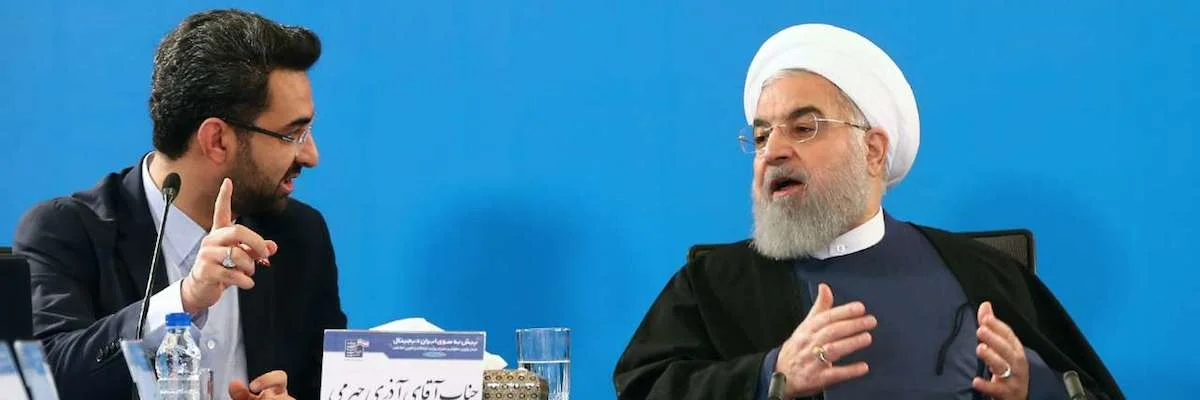
Iranian President Hassan Rouhani on Monday said resistance against new technologies is "outdated" as he once again criticized the judiciary's blocking of social media.
"Resisting new technologies and modern developments is an outdated approach," Rouhani said in a speech broadcast by state television.
"We can see that some still oppose new phenomena especially those related to communication and information," he added.
Iran in recent years has blocked access to many social media platforms such as Facebook, Twitter and YouTube and in May the judiciary blocked the Telegram messaging app.
In May Rouhani said the government does not approve of the judiciary's blockage of Telegram—the country's most popular social network with some 40 million users or around half the population.
In his speech Monday he said preventing Iranians from accessing social would amount to creating a forbidden fruit which they would crave more.
"Filtering is not the solution. We must raise the society's digital literacy so that they can use it (social media) without being harmed by it," Rouhani said.
"We don't have free media in Iran and only have state television and radio," he said.
"Everything is congested in the cyberspace ... everyone wants to say everything in this space since they don't have any other media," he added.
In January, Iranian media said the judiciary was mulling banning Instagram, the last major platform still freely available in the country.
Despite social media restrictions, Iranians including top officials such as Rouhani himself and Foreign Minister Mohammad Javad Zarif continue to use services such as Twitter, which are widely accessible via proxy servers.
Photo Credit: IRNA
Iran Presents Budget to Counter 'Cruel' US Sanctions
◢ President Hassan Rouhani on Tuesday unveiled Iran's first annual budget since the return of US sanctions, saying it had been adjusted to take account of Washington's "cruel" measures. The president announced a 20 percent increase in public sector wages in a sign of the economic challenges the Islamic republic has faced since the United States pulled out of the 2015 nuclear deal earlier this year.
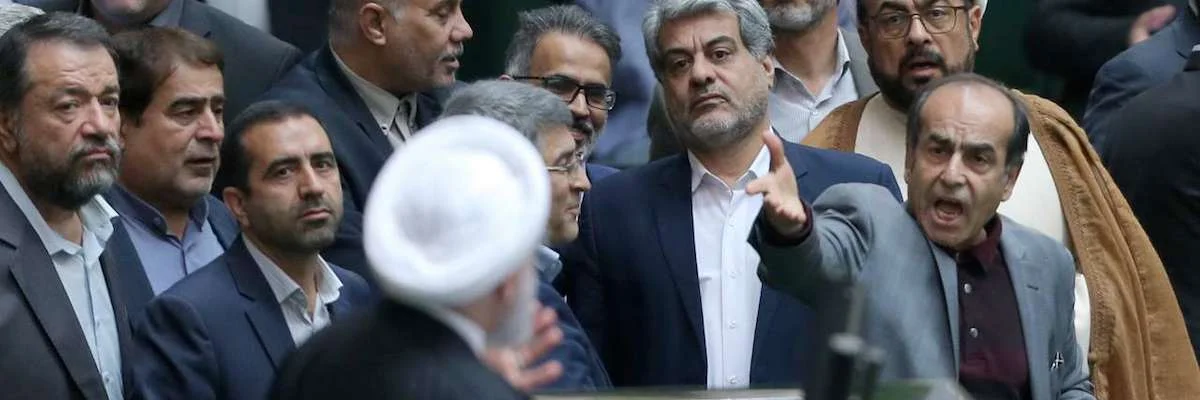
President Hassan Rouhani on Tuesday unveiled Iran's first annual budget since the return of US sanctions, saying it had been adjusted to take account of Washington's "cruel" measures.
The president announced a 20 percent increase in public sector wages in a sign of the economic challenges the Islamic republic has faced since the United States pulled out of the 2015 nuclear deal earlier this year.
The speech gave only a few general points of the budget—which will now be scrutinized and voted on by parliament—but acknowledged the pressure Iran was under.
"Last year we faced some problems," Rouhani told parliament in a televised speech, referring to the widespread protests that hit the country almost exactly a year ago, sparked by anger over economic and political conditions.
"Those events caused the Americans to change their position regarding the Islamic republic and the nuclear deal," he said.
"The real objective of the US in all of this conspiracy and sanction and pressure... is to bring the powerful Islamic republic of Iran to its knees," he said, vowing that the US "will definitely be defeated."
The renewed US sanctions include an embargo on Iran's crucial oil sector.
The new budget did not say how many barrels of oil Iran hopes to sell in the next financial year, which starts in late March, but analysts believe it will be considerably less than the approximately 2.5 million it sold per day prior to Trump's withdrawal.
The US granted waivers to eight key buyers of Iranian oil—including China, India and Turkey—though this has been a double-edged sword for Iran since it also helped push down the global price.
Forex 'Practically Zero'
Rouhani came to power in 2013 representing the more moderate side of Iran's ruling elite, hoping a compromise on the country's nuclear program would reduce tensions with the West and allow foreign investment to boost the stunted private sector.
The return of sanctions has ended that hope, and forced Rouhani more towards the self-sufficient "resistance economy" preferred by supreme leader Ayatollah Ali Khamenei.
Concern over the economy pushed many Iranians to secure their savings in dollars and gold, triggering a run on the Iranian rial, which has lost around half its value since Trump announced the pullout.
"At one point early this year our foreign exchange cash reserve was practically zero, forcing the government to take hard decisions to save the country," Rouhani told parliament.
The government has pressured exporters to return their dollars to Iran, and Rouhani said they would lose tax incentives if they failed to repatriate their cash.
The central bank has used the returning dollars to shore up the collapsing rial, which has recovered to around 110,000 per dollar on unofficial exchanges.
The rial's fall drove up prices across the board, with food and drink costs up 60 percent in the year to November according to the central bank.
The judiciary launched a fierce crackdown on currency speculators, dubbed "economic disruptors" that has seen dozens of traders put on trial and at least three businessmen executed.
The so-called "sultan of coins", Vahid Mazloomin, was hanged in October after being found guilty of amassing two tonnes of gold coins.
But sanctions and fraud are only part of the story in an economy with many long-standing problems.
Its banking sector is riddled with bad loans, while many key industries from oil and gas to construction are dominated by semi-state groups with opaque links to the government and military.
The budget was delayed several times in recent weeks, with reports that Khamenei had demanded unspecified changes to the final document.
Photo Credit: IRNA
Iran President's Son-in-Law Resigns After Nepotism Claims
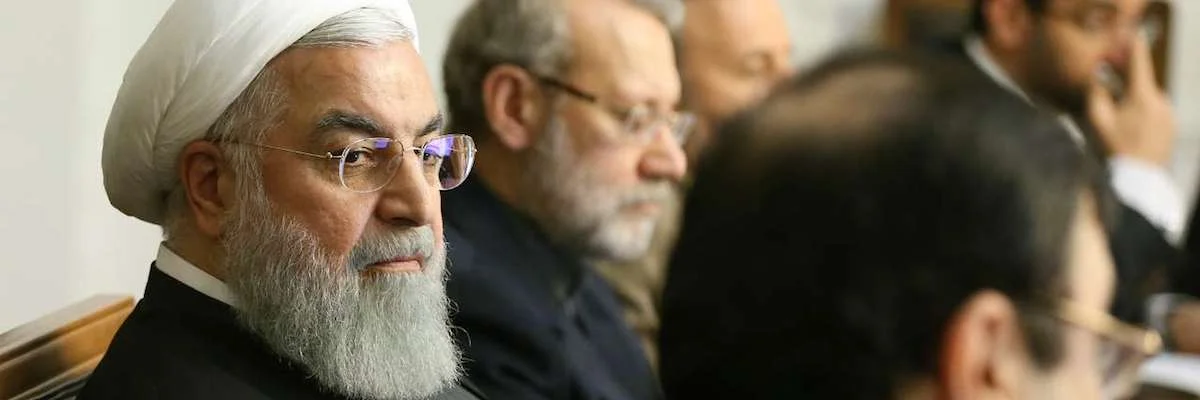
◢ Iran President Hassan Rouhani's son-in-law resigned on Monday just two days after his appointment as head of Iran's geological survey sparked accusations of nepotism. Kambiz Mehdizadeh, in his early thirties and reportedly married to Rouhani's daughter in a low-key wedding this August, was appointed to the senior position in the industries and mining ministry on Saturday.
Iran President Hassan Rouhani's son-in-law resigned on Monday just two days after his appointment as head of Iran's geological survey sparked accusations of nepotism, official news agency IRNA reported.
Kambiz Mehdizadeh, in his early thirties and reportedly married to Rouhani's daughter in a low-key wedding this August, was appointed to the senior position in the industries and mining ministry on Saturday.
The move sparked criticism on social media and from some lawmakers.
"I thank you for finding me worthy and inviting me to work alongside you in this ministry, but I ask to be relieved of my service so that I can continue my scientific and research activities," Mehdizadeh wrote in a resignation letter, according to IRNA.
Mehdizadeh is a PhD student in petroleum engineering, who has also served as an advisor to Iran's oil ministry, taekwondo federation and national youth organization, according to the conservative Tasnim news agency.
The minister who appointed him, Reza Rahmani, defended his choice just hours before the resignation, saying Mehdizadeh was "chosen based on his competence and being the president's son-in-law had nothing to do with it," according to IRNA.
Iranians on social media renewed criticism of nepotism that had spread last
year with the hashtag "#good-genes"—a reference to the son of a prominent
reformist politician who attributed his business success to inheriting "good
genes" from his parents.
Photo Credit: IRNA
Son-in-Law of Iran President Faces Nepotism Claims
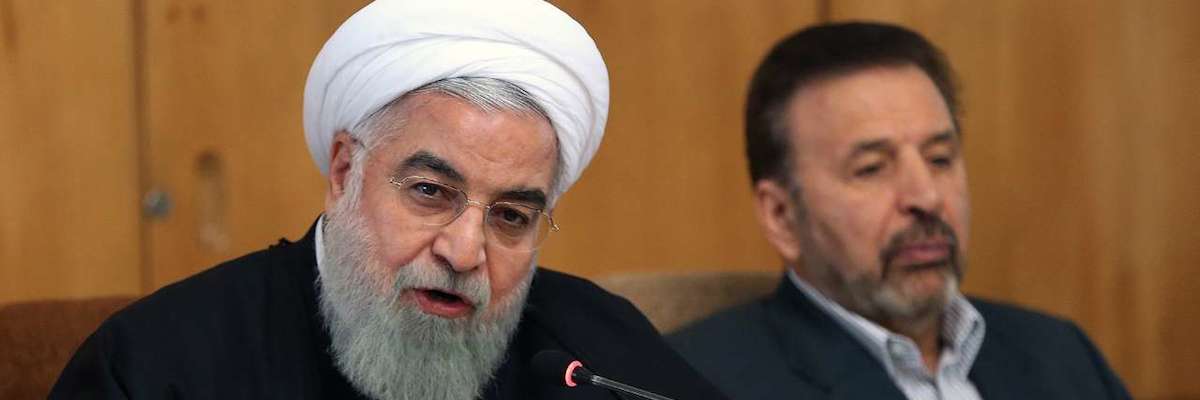
◢ The appointment of President Hassan Rouhani's son-in-law as head of Iran's geological survey has renewed accusations of nepotism and led on Sunday to the resignation of a senior official, according to conservative media. The appointment of Kambiz Mehdizadeh, in his early thirties and reportedly married to Rouhani's daughter in a low-key wedding this August, was widely criticized by Iranians on social media.
The appointment of President Hassan Rouhani's son-in-law as head of Iran's geological survey has renewed accusations of nepotism and led on Sunday to the resignation of a senior official, according to conservative media.
The appointment of Kambiz Mehdizadeh, in his early thirties and reportedly married to Rouhani's daughter in a low-key wedding this August, was widely criticized by Iranians on social media.
It also triggered the resignation of Jafar Sargheyni, head of the mining section in the industries ministry, who criticized "unprofessional appointments" without directly naming Mehdizadeh, the conservative Tasnim news agency reported.
Mehdizadeh is a PhD student in petroleum engineering, who has also served as an advisor to Iran's oil ministry, taekwando federation and national youth organisation, Tasnim said.
Iranians on social media renewed criticism of nepotism that had spread last year with the hashtag "#good-genes"—a reference to the son of a prominent reformist politician who attributed his business success to inheriting "good genes" from his parents.
"I had no idea even sons-in-law could inherit #good_genes!," wrote one Twitter user on Sunday in reference to Mehdizadeh's appointment.
Another online campaign this summer called on senior officials to come clean about the privileges their children enjoy, particularly those studying in the United States and other Western countries.
The "#Where_is_your_kid" campaign pressured several government figures to respond, including Foreign Minister Mohammad Javad Zarif who said his children had returned to Iran after studying abroad.
Photo Credit: IRNA
Iran Seeks Regional Front Against US 'Economic Terrorism'
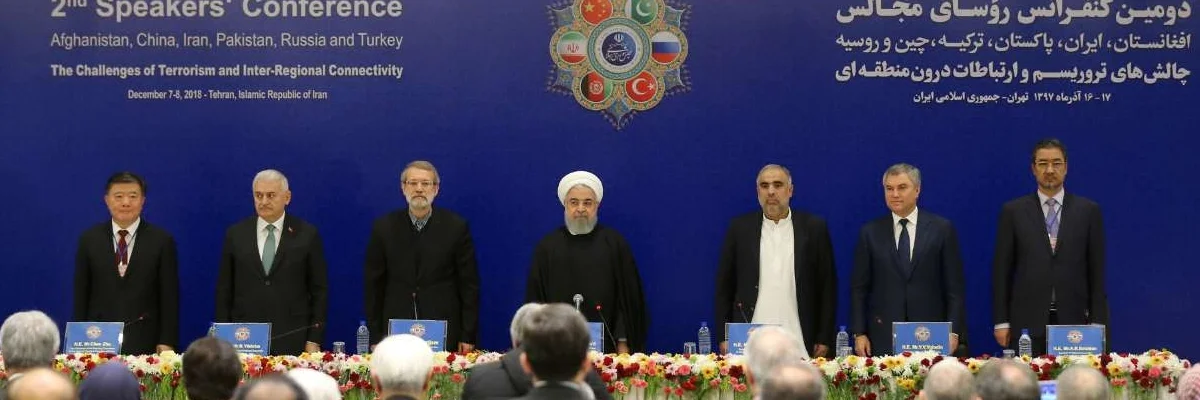
◢ Iran's President Hassan Rouhani said US sanctions were "economic terrorism", as he sought to foster a united front from visiting regional officials on Saturday. Addressing parliament speakers from Afghanistan, China, Pakistan, Russia and Turkey, Rouhani said they had all suffered economic pressure from the US.
Iran's President Hassan Rouhani said US sanctions were "economic terrorism", as he sought to foster a united front from visiting regional officials on Saturday.
Addressing parliament speakers from Afghanistan, China, Pakistan, Russia and Turkey, Rouhani said they had all suffered economic pressure from the US.
"We are facing an all-out assault which is not only threatening our independence and identity but also is bent on breaking our longstanding ties," he said.
Washington has reimposed an oil embargo and other damaging sanctions on Iran since withdrawing in May from a landmark 2015 nuclear deal between Tehran and major powers.
"America's unjust and illegal sanctions against the honorable nation of Iran have targeted our nation in a clear instance of terrorism," Rouhani said.
"Economic terrorism is designed to create panic in the economy of a country and fear in other countries in order to prevent investment."
The conference in Tehran was a second annual meeting of parliament speakers focused on terrorism and regional cooperation. The first was held last December in Islamabad.
Most participating countries have faced harsh sanctions and other economic pressure as part of the Trump administration's use of trade as a diplomatic weapon.
A brief truce in Trump's trade war with China was again in doubt this week after the arrest of Chinese telecom giant Huawei's chief financial officer, who was detained in Canada to face fraud charges in the US.
Washington has continued to pile fresh sanctions on Russia that began over its military intervention in Ukraine, while Turkey also faced penalties this year over the detention of an American pastor.
'We are all punished'
Trump has also cancelled hundreds of millions of dollars in aid to Pakistan, accusing it of failing to crack down on militancy.
"When they put pressure on China's trade, we are all harmed... By punishing Turkey, we are all punished. Any time they threaten Russia, we too consider our security to be endangered," Rouhani said.
"When they impose sanctions on Iran, they deprive all of us of the benefits of international trade, energy security and sustainable development. And in fact, they impose sanctions on everyone.
"We are here to say that we don't intend to tolerate such insolence."
Rouhani warned Europe—which has strongly objected to the US withdrawal from the nuclear deal—that much is at stake in its efforts to bypass US sanctions and maintain trade with Iran.
"They should know that by sanctioning Iran, they would harm our ability to fight drugs and terrorism," Rouhani said, referring to Iran's efforts to combat smuggling, particularly from Afghanistan.
The European Union is working on a payment system, known as the "special purpose vehicle", to keep money flowing into Iran, but has struggled to find a host since many countries fear repercussions from the Trump administration.
Photo Credit: IRNA