
Iran Launches Military Satellite Amid US Tensions
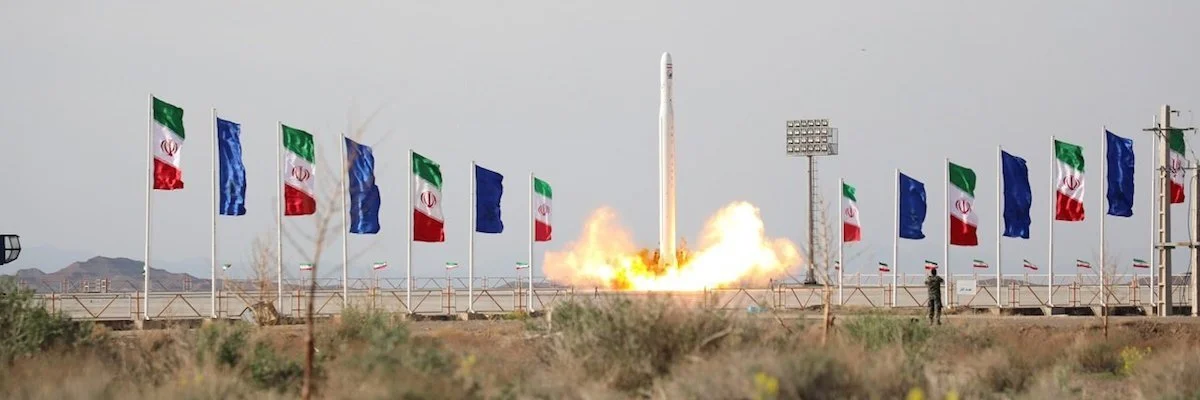
Iran's Revolutionary Guards announced they had successfully launched the country's first military satellite on Wednesday, at a time of fresh tensions with US forces in the Persian Gulf.
By Ahmad Parhizi
Iran said it put its first military satellite into orbit Wednesday, making it an emerging "world power", as the US issued new threats amid rising naval tensions in the Persian Gulf.
The Islamic Revolutionary Guard Corps hailed the launch as a milestone despite repeated US allegations that the space programme is a cover to develop ballistic missiles.
"Today, we are looking at the Earth from the sky, and it is the beginning of the formation of a world power," the Guards' commander Hossein Salami said, quoted by Fars news agency.
Tensions between the United States and Iran escalated again last week with Washington accusing its arch-foe of harassing its ships in the Persian Gulf.
US President Donald Trump took to Twitter on Wednesday to say he had "instructed the United States Navy to shoot down and destroy any and all Iranian gunboats if they harass our ships at sea".
Secretary of State Mike Pompeo charged that the satellite launch proved US charges that Iran's space programme was for military rather than commercial purposes.
"I think Iran needs to be held accountable for what they've done," Pompeo told reporters in Washington.
Iran maintains it has no intention of acquiring nuclear weapons, and says its aerospace activities are peaceful and comply with a UN Security Council resolution.
Sepahnews, the Revolutionary Guards' website, said the satellite dubbed the Nour—meaning "light" in Persian—had been launched from the Markazi desert, a vast expanse in Iran's central plateau.
The satellite "orbited the Earth at 425 kilometres (264 miles)" above sea level, said Sepahnews.
Iran's regional rival Israel said it "strongly condemns" what it called Iran's "attempt" to launch a military satellite.
It urged more international sanctions for what it called "a facade" for Iran's continued development of advanced missiles, including ones that could deliver a nuclear warhead.
David Norquist, the US deputy defence secretary, said the Iranian launch "went a very long way".
The range "means it has the ability once again to threaten their neighbours, our allies. And we want to make sure they can never threaten the United States," he told reporters.
'Great National Achievement'
Iranian state television aired footage from multiple angles of a rocket blasting off into a mostly clear blue sky.
The rocket bore the name Qassed, meaning "messenger", in what appears to be the first time Iran has used a launcher of this type.
Its fuselage also bore a Koranic inscription that read: "Glory be to God who made this available to us, otherwise we could not have done it."
There was no way to independently verify the details and timing of the reported launch.
Iran's Telecommunications Minister Mohammad Javad Azari Jahromi took to Twitter to congratulate the Guards' air force, adding he had visited the launch site three weeks ago.
"They were great," he said, describing the satellite as a "three-stage solid fuel" launcher.
Iran has repeatedly tried and failed to launch satellites in the past.
The most recent attempt was on February 9 when it said it launched but was unable to put into orbit the Zafar, which means "victory" in Persian.
High-Seas Encounter
Iran and the United States have appeared to be on the brink of an all-out confrontation twice in the past year.
Their long-standing acrimony was exacerbated in 2018 when Trump unilaterally withdrew from a multilateral deal that froze Iran's nuclear programme.
Tensions escalated again in January when the US killed Major General Qasem Soleimani, head of the Guards' foreign operations arm, in a drone strike in Iraq.
The Pentagon last week accused Iran of "dangerous and provocative" actions in the Persian Gulf.
It said 11 Guards boats "repeatedly crossed the bows and sterns" of US vessels in international waters.
Iran said the US gave a "Hollywood" account of the encounter and warned that any "miscalculation will receive a decisive response.”
The Islamic republic, battling one of the world's deadliest novel coronavirus outbreaks at the same time as dealing with crippling US sanctions, has accused Washington of "economic terrorism.”
Tehran says the punitive measures have denied it access to medical equipment needed to fight the virus.
Iran has declared that the disease has claimed the lives of nearly 5,400 people and infected almost 86,000 since the outbreak emerged on February 19, but observers believe the numbers to be significantly higher.
Pompeo said the satellite launch showed Iran was disingenuous when it requested a $5 billion emergency loan to battle the virus from the International Monetary Fund, where the United States holds an effective veto.
"I would hope that the Iranian regime will respond to the Iranian people's demands to prioritize resources—resources that the Iranian regime clearly has."
Photo: YJC
Top Iranian Commander Killed in U.S. Airstrike on Trump Orders
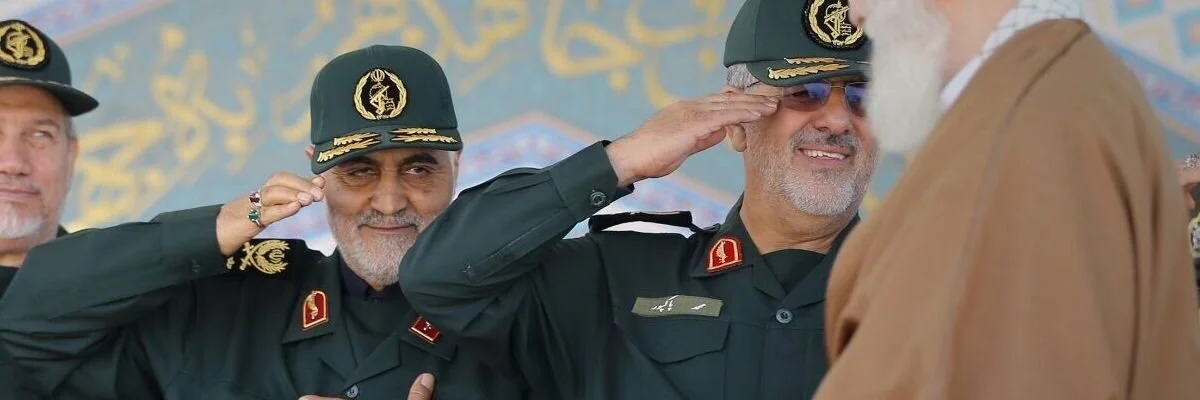
◢ A U.S. airstrike in Iraq ordered by President Donald Trump killed one of Iran’s most powerful generals, sending global markets tumbling on fears of a deepening conflict in the Middle East. Qassem Soleimani, who led proxy militias that extended Iran’s power across the region, was killed in a strike in Baghdad authorized by Trump.
By Jennifer Jacobs, Zaid Sabah and Nick Wadhams
A U.S. airstrike in Iraq ordered by President Donald Trump killed one of Iran’s most powerful generals, sending global markets tumbling on fears of a deepening conflict in the Middle East.
Qassem Soleimani, who led proxy militias that extended Iran’s power across the region, was killed in a strike in Baghdad authorized by Trump, the Defense Department said in a statement late Thursday night. Trump had no immediate comment, but tweeted the image of an American flag. Iran’s Supreme Leader threatened “severe retaliation.”
Oil futures in London and New York surged by more than 4%, gold extended gains, Treasuries advanced and stock futures slid, ending the bullish mood that had pushed the S&P 500 to a record high on Thursday.
“At the direction of the president, the U.S. military has taken decisive defensive action to protect U.S. personnel abroad by killing” Soleimani, the department said. “General Soleimani was actively developing plans to attack American diplomats and service members in Iraq and throughout the region.”
The death of Soleimani, who led the Revolutionary Guards’ Quds force, prompted oil to surge and U.S. stock futures to fall amid heightened fears that rising tensions between the U.S. and Iran may lead to an armed confrontation that could easily pull in other countries. The pressures, which have been building for months, have been complicated by widespread protests in Iraq and Iran.
Iran’s top leaders all condemned the attack and vowed to hit back. Supreme Leader Ayatollah Ali Khamenei vowed to avenge Soleimani’s killers, according to a statement. The state-run Tasnim news agency said the government declared three days of mourning.
“A severe retaliation awaits murderers who have the blood of Soleimani and that of other martyrs on their wicked hands from last night’s incident,” Khamenei said.
President Hassan Rouhani also said Iran “will take revenge,” while Foreign Minister Javad Zarif denounced the killing on Twitter as “an act of international terrorism” and said the U.S. “bears responsibility for all consequences of its rogue adventurism.”
“Nowhere will be safe for Americans from now on after Soleimani assassination,” Heshmatollah Falahatpisheh, a member of the Iranian parliament’s national security commission, was quoted as saying by ICANA, the legislative body’s official news service.
U.S. equity futures fell and Asian stocks reversed earlier gains as the news broke. Treasury futures climbed with the yen as investors sought safer haven assets. Futures on the S&P 500 dropped 0.8% as of 6:34 a.m. in London on Friday. Brent crude surged 2.9%.
Soleimani was hit in a U.S. drone strike near Baghdad International Airport, according to a U.S. official. Details remained unclear, but a person familiar with the developments said an Iraqi militia leader, Abu Mahdi al-Muhandis, was also killed.
The Iranian regime will be under “strong pressure” to strike back, said Paul Pillar, a former U.S. Central Intelligence Agency officer and a non-resident senior fellow at Georgetown University in Washington. “Many Iranians will regard this event the same way Americans would regard, say, the assassination of one of the best known and most admired U.S. military leaders. The potential for escalation has suddenly gone up.”
Iraqi forces enhanced security around the U.S. embassy in Baghdad after the airstrike, Iraq’s al-Sumaria news reported, citing a security official. Iran summoned the Swiss envoy in Tehran, who helps look after U.S. interests in the country, in response to the killing, according to foreign ministry spokesman Abbas Mousavi.
Soleimani, a veteran of the Iran-Iraq war, was a household name in Iran where he’s celebrated for helping to defeat Islamic State in Iraq and Syria and countering U.S. influence. He had been sanctioned by the U.S. since 2007 and last May Washington designated the Revolutionary Guards Corp in its entirety a foreign terrorist organization, the first time the label has been applied to an official state institution or a country’s security forces.
The assault in Baghdad marked the latest in a series of violent episodes that have strained already hostile relations between Iran and the U.S. that began last week when an American contractor was killed in a rocket attack on an Iraqi military base in Kirkuk. The death of the contractor led to a rare, direct American assault on an Iran-backed militia in Iraq. That, in turn, prompted an attack on the U.S. embassy in Baghdad.
Trump had tweeted a warning of dire consequences for Iranian aggression: “They will pay a very BIG PRICE! This is not a Warning, it is a Threat. Happy New Year!”
The killing of such a prominent member of the Iranian hierarchy was unexpected, and drew quick reactions from U.S. lawmakers and Democratic presidential candidates.
Congressional Reaction
Former Vice President Joe Biden, a Democratic presidential candidate, said in a statement that while “no American will mourn” Soleimani’s passing, Trump “just tossed a stick of dynamite into a tinderbox, and he owes the American people an explanation.” Senator Elizabeth Warren called the move “reckless,” while her colleague Bernie Sanders said it put the U.S. on a path to another endless war.
Republican Senator Marco Rubio of Florida said Iran was “entirely to blame for bringing about the dangerous moment now before us.” Lindsey Graham, a Republican senator from South Carolina, praised Trump’s move and said “the price of killing and injuring Americans has just gone up drastically.”
Outside the U.S. government and political arenas, the reaction also wavered between a sense of justification and apprehension over Soleimani’s killing.
‘Worst Nightmare’
Kamran Bokhari, founding director of the Center for Global Policy in Washington, warned that things “could get ugly.” Mark Dubowitz, the chief executive of the Washington-based Foundation for Defense of Democracies, said “the regime in Iran is now facing their worst nightmare: a U.S. president willing to escalate using all instruments of national power.”
Earlier Thursday, U.S. Defense Secretary Mark Esper told reporters at the Pentagon that the American military was moving from responding to Iranian-backed attacks to anticipating them.
“There are some indications out there that they may be planning additional attacks. That’s nothing new,” Esper said. “If that happens, then we will act and, by the way, if we get word of an attack of some kind of indication, we would take pre-emptive action as well to protect American forces, American lives. The game has changed.”
Photo: IRNA
US Urges UN to Extend Iran Arms Embargo, Travel Ban
◢ The US urged the United Nations Tuesday to extend an arms embargo on Tehran that is due to expire next year as part of the embattled Iran nuclear deal. Secretary of State Mike Pompeo told the UN Security Council that the clock was ticking on a resolution restricting weapons sales to Iran that is due to end in October 2020.
The US urged the United Nations Tuesday to extend an arms embargo on Tehran that is due to expire next year as part of the embattled Iran nuclear deal.
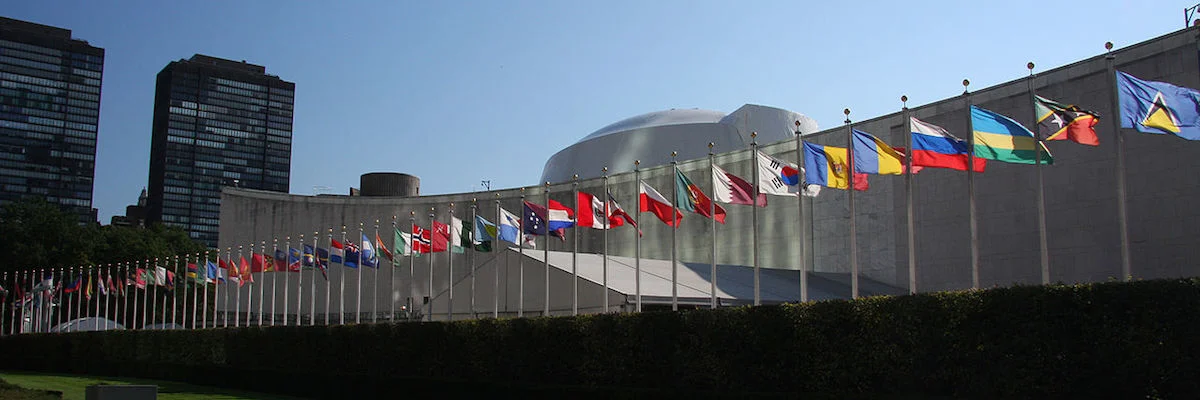
Secretary of State Mike Pompeo told the UN Security Council that the clock was ticking on a resolution restricting weapons sales to Iran that is due to end in October 2020.
Pompeo warned that the expiration of provisions in Security Council Resolution 2231 would also see a travel ban on a key Iranian commander lifted.
"Time is drawing short to continue this activity of restricting Iran's capacity to foment its terror regime," he said.
"The international community will have plenty of time to see how long it has until Iran is unshackled to create new turmoil, and figure out what it must do to prevent that from happening," Pompeo added.
The resolution was passed as part of the Joint Comprehensive Plan of Action, otherwise known as the Iran nuclear deal which the US, Russia, China, France, Germany and Britain agreed with Tehran in 2015.
The landmark deal was designed to curb Iran's nuclear programme in exchange for sanctions relief.
President Donald Trump unilaterally withdrew the US from the deal last year and reinstated economic sanctions, sending tensions between Washington and Tehran soaring.
When the resolution expires next year, travel restrictions on Qasem Soleimani, the commander of Iran's Quds Force, which operates abroad, and 23 other Iranians will be lifted.
"We believe that the UNSC has an important role to play to ensure that the arms embargo and the travel ban are continued," Brian Hook, the US Special Representative for Iran told reporters in New York ahead of Pompeo's remarks.
Trump's administration is currently pursuing a "maximum pressure" campaign designed to force the Islamic republic to limit its nuclear programme and military activities.
Iran has responded by suspending some of its commitments under the nuclear deal.
The situation has threatened to spiral out of control with ships attacked, drones downed and oil tankers seized.
Meanwhile, the US has been struggling to piece together an international coalition to protect cargo ships travelling through the Gulf.
Allies are concerned about being dragged into conflict with Iran while European countries are trying to keep the nuclear deal alive.
Photo: Wikicommons