
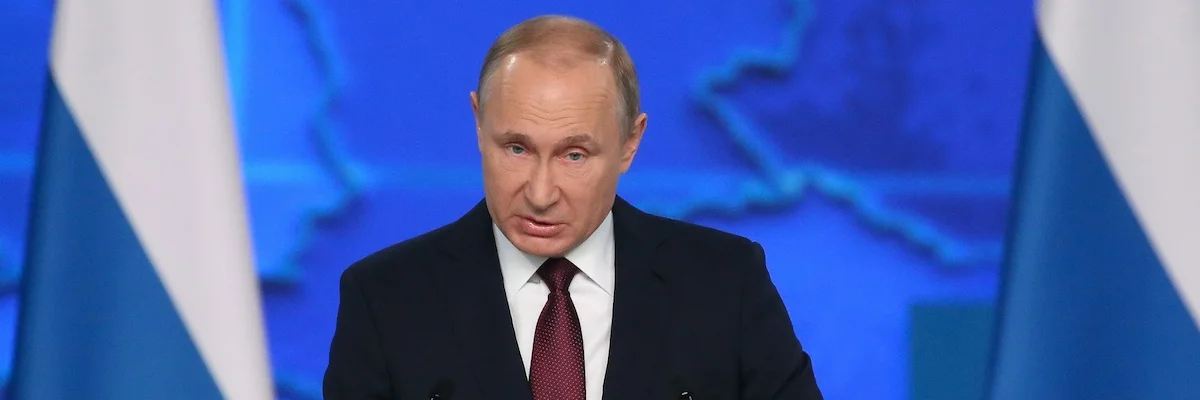
Oil Squeeze on Iran Aids Putin's Power Play in the Middle East
◢ If President Donald Trump succeeds in cutting Iran’s oil exports to almost nothing, one of the main beneficiaries is likely to be Russia. The economic blow to Iran will ease the Kremlin’s efforts to rein in Iranian influence in Syria, bolstering President Vladimir Putin’s efforts to project Russian power across the Middle East.
If President Donald Trump succeeds in cutting Iran’s oil exports to almost nothing, one of the main beneficiaries is likely to be Russia.
The economic blow to Iran will ease the Kremlin’s efforts to rein in Iranian influence in Syria, bolstering President Vladimir Putin’s efforts to project Russian power across the Middle East. Tehran and Moscow were one-time collaborators in the region, but they’ve found themselves increasingly at odds as Syria’s eight-year-old civil war winds down.
In recent months, the two main power brokers in Syria have engaged in deadly clashes, with Russian and Iranian forces and their proxies firing at one another, according to a Russian official and media reports. The relationship between the two countries is tense, three people close to the Russian government confirmed, speaking on condition of anonymity to discuss confidential matters.
Countering Iran will become easier after Trump removed waivers that allowed it to sell oil to countries including China, India and Turkey because the country “will be a lot more squeezed,” said Yury Barmin, a Middle East expert at the Moscow Policy Group research organization.
Sentiment Sours
Since Trump re-imposed sanctions last year, Iranians have been burned by a lack of solidarity from their one-time partners. Tabnak, a conservative news site founded by a former Revolutionary Guards commander, complained in a recent commentary that Moscow hasn’t shown any “serious determination” to stand with Tehran.
Iran’s ejection from international oil market also benefits Russia financially: it’ll be free to resume pumping at full capacity when output curbs agreed with OPEC expire in June, said Dmitry Marincheko, oil and gas director at Fitch Ratings. That will earn it about an extra $6 billion a year, at current prices.
As relations with Iran soured, Russia invested in unprecedented cooperation with its chief rival, Saudi Arabia, inking a joint agreement with OPEC on limiting oil production. That succeeded in stabilizing prices.
Although Moscow and Riyadh have backed opposing sides in Syria, Putin has been trying to persuade other Arab nations to drop their hostility to Syrian President Bashar al-Assad and reintegrate the nation into the Arab League. A smaller Iranian footprint in Syria makes that more palatable to Sunni Gulf states that see Shiite Iran as their primary rival, said Barmin of Moscow Policy Group.
Armed Clashes
Russian troops have been seeking to gradually push the Iranian-backed Lebanese Shiite militia, Hezbollah, out of Syria, and pro-Iranian and pro-Russian detachments have exchanged fire increasingly since late last year, with three armed incidents reported in April alone.
That included one on April 19 in the eastern province of Deir Ezzor in which two Iranian Revolutionary Guards were killed and four Russian military police wounded, according to Turkey’s Anadolu Agency. Far more deadly clashes occurred in January between rival branches of the Syrian military backed respectively by Iran and Russia, Russian newspaper Novaya Gazeta reported.
The conflict is partly over which side mans checkpoints and benefits from it financially, said Rami Abdurahman, director of the U.K.-based Syrian Observatory for Human Rights, which monitors the war through activists on the ground. But it also reflects a much broader standoff, said Nikolay Kozhanov, a Middle East expert at the European University at St. Petersburg, who served as a Russian diplomat in Tehran from 2006-2009.
Different Goals
“Although Russia and Iran are both interested in ensuring the survival of Assad, they have completely different strategic goals and priorities,” Kozhanov said.
Iran sees Syria as a key front in its battle to carve out a dominant regional role and threaten Israel. That runs afoul of Russia’s aim of using its footprint in Syria to advance Putin’s global ambitions while keeping ties to all major players in the region, including Israel, said Kozhanov. Russia has allowed repeated Israeli air raids on Iranian-backed targets in Syria, according to the ex-Russian envoy.
Russian Deputy Foreign Minister Sergei Ryabkov in January denied that Iran was an ally of Russia and said his country was committed to ensuring the “very strong security of the state of Israel.”
Financial Interests
Economically as well, Russia and Iran are competitors in Syria, London-based research group Chatham House said in a March report.
In early 2017, Syria and Iran signed a memorandum of understanding on a phosphate mining concession near the ancient site of Palmyra. But six months later, Syria signed rights over the same mine to a Russian company owned by a Putin ally, Chatham House said.
The U.S. designation of the Islamic Revolutionary Guards Corps, a branch of the Iranian army, as a terrorist organization in mid-April makes it more difficult for Iran to ship oil, and allows Russia to challenge its role as the main supplier of fuel to the Syrian government, said Barmin.
Disagreements could sharpen over which foreign forces should stay in Syria, said Diako Hosseini, director of the world studies program at the Center for Strategic Studies in Tehran, which is affiliated with the Iranian presidential office.
While the two sides continue to cooperate in efforts to engineer a political post-war settlement, there are concerns the tensions could spiral out of control.
In one possible worst-case scenario for Syria, the Russian-Iranian partnership collapses completely and military groups loyal to each side engage in a fight, said Andrei Kortunov, director general of the Russian International Affairs Council, a Kremlin-founded think tank.
“The once-implicit competition between Moscow and Tehran for influence in Damascus would then become explicit,” he said.
Photo Credit: Bloomberg
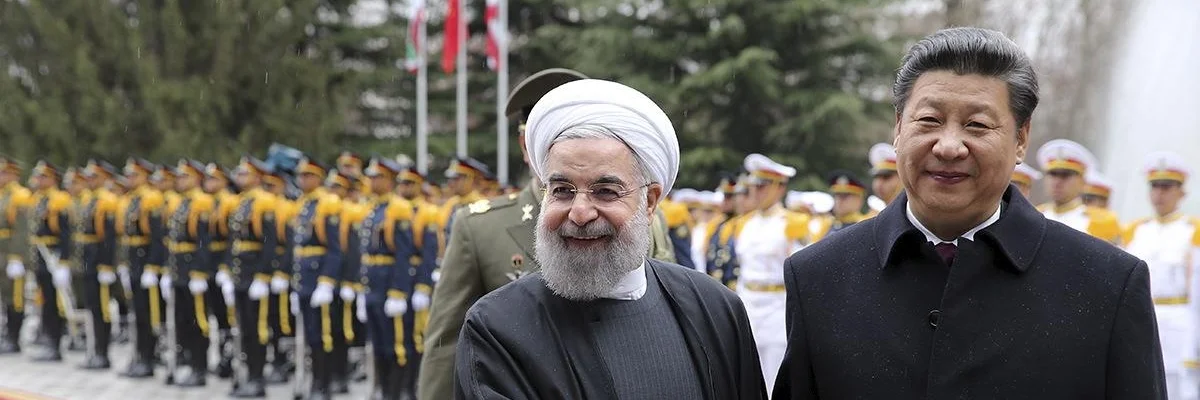
China Hosts Summit with Russia, Iran as Nuclear Deal Wobbles
◢ Iran, China and Russia may seek ways to salvage the nuclear deal ditched by Donald Trump when their leaders meet this weekend at a summit on the Chinese coast. The Shanghai Cooperation Organisation (SCO), a regional security bloc led by China and Russia, is set to hold its 18th annual gathering in the city of Qingdao on Saturday and Sunday.
Iran, China and Russia may seek ways to salvage the nuclear deal ditched by Donald Trump when their leaders meet this weekend at a summit on the Chinese coast.
The Shanghai Cooperation Organization (SCO), a regional security bloc led by China and Russia, is set to hold its 18th annual gathering in the city of Qingdao on Saturday and Sunday.
Iran's President Hassan Rouhani is attending this year—just the second time an Iranian leader has participated.
It comes after US President Trump controversially pulled Washington out of a 2015 international pact with Iran that placed limits on its nuclear program in return for easing economic sanctions.
China is Iran's top trade partner and one of the biggest buyers of its oil, but those who oppose the US abandonment of the deal risk huge fines for busting the tough American measures.
Rouhani is taking part because "Iran is currently evaluating the signatories of the nuclear deal to see to what extent they'll be able to effectively maintain it even after the US's withdrawal", said Gao Shangtao, an expert on Middle East relations at Beijing Foreign Affairs College.
"To put it bluntly, if Tehran feels assured that China and Russia can withstand the pressure of US sanctions and continue to do business with Iran, then Tehran will seek to retain the deal—otherwise, it's meaningless," he said.
Chinese businesses are expected to step up activities in Iran to fill the void left by the exit of US companies and the possible withdrawal of European rivals who fear punitive US measures.
Hua Liming, a former Chinese ambassador to Iran, told the Global Times newspaper on Tuesday: "Unlike the US, China will not break its promise and will ensure that China-Iran relations won't be affected."
Iran announced on Tuesday that it plans to boost uranium enrichment capacity with new centrifuges within the 2015 deal's limits, prompting Beijing to urge all parties to "continue to sustain and implement" the agreement.
'Bigger, Grander' SCO Ambitions
The SCO bloc includes four ex-Soviet Central Asian republics and two new members, Pakistan and India—whose President Mamnoon Hussain and Prime Minister Narendra Modi, respectively, will be present this weekend.
Iran is currently an observer member of the SCO, though it has long sought full membership.
"Iran needs more diplomatic support from the East—not only China, but also Central Asia -- in order to strengthen its position and better contend with the US," said Xu Tiebing, international relations professor at the Communication University of China.
But most Chinese analysts "are not too eager to see Iran accepted as a formal member state" due to its perceived political instability, he added.
Chinese President Xi Jinping will meet Rouhani on the sidelines of the summit, but the nuclear deal is not on the formal SCO agenda.
Major SCO topics will include improving trade ties—in part by pushing forward China's Belt and Road global infrastructure project—and strengthening cooperation on drug trafficking, cybersecurity and counter-terrorism.
Despite mistrust between China and Russia, "outside circumstances—specifically US foreign policy—have pushed them closer to each other", said Tugrul Keskin, director of the Center for Global Governance at Shanghai University.
Xu agreed, noting US policy under Trump has been the driver of the SCO's growing profile, becoming "a kind of glue" keeping together SCO member countries who have disparate and often conflicting agendas.
Russian President Vladimir Putin told Chinese state broadcaster CGTN that though the SCO began as a "low-profile organization" that sought merely to "solve border issues" between China, Russia and former Soviet countries, it is now evolving into a larger global force.
"Our objective was quite small, but as we worked together on these small issues, we found similarities between us," he said.
"We realized that together we could achieve something bigger, grander."
Photo Credit: IRNA
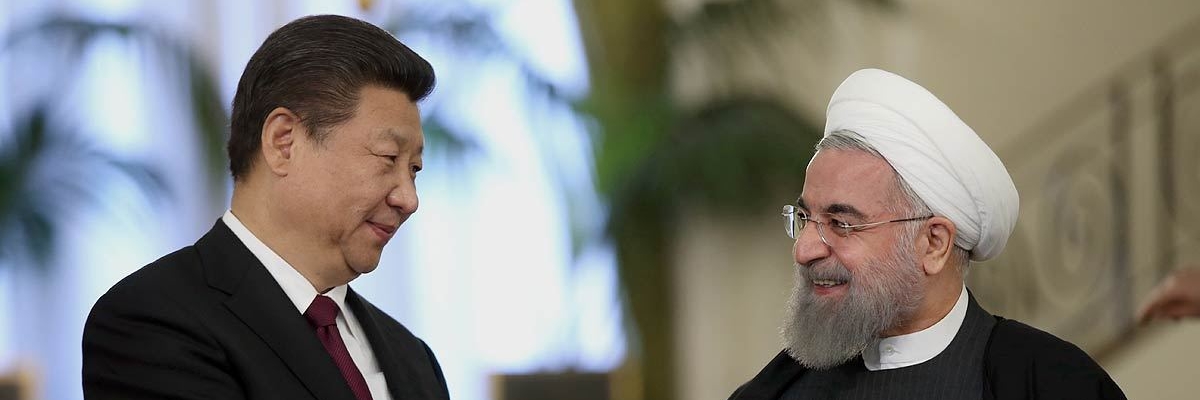
China to To Host Iran Leader Amid Nuclear Deal Upheaval
◢ Iran's president will attend a summit with his Chinese and Russian counterparts next month, officials in Beijing said Monday, as they try to salvage the nuclear deal thrown into upheaval by Donald Trump. China, Russia and European powers, all of which signed the 2015 Iran nuclear accord, are scrambling to save the pact following the US president's decision to quit the agreement and reinstate sanctions.
Iran's president will attend a summit with his Chinese and Russian counterparts next month, officials in Beijing said Monday, as they try to salvage the nuclear deal thrown into upheaval by Donald Trump.
China, Russia and European powers, all of which signed the 2015 Iran nuclear accord, are scrambling to save the pact following the US president's decision to quit the agreement and reinstate sanctions.
China's President Xi Jinping will meet Iran's Hassan Rouhani on the sidelines of the Shanghai Cooperation Organisation (SCO) meeting on June 9-10 in Qingdao, said Foreign Minister Wang Yi.
Russian President Vladimir Putin will also attend the summit, he added. Wang did not include the nuclear deal in a readout of the summit's formal agenda.
But Beijing, which is Iran's top trade partner and one of the biggest buyers of its oil, has signaled that it intends to keep working with the Islamic regime despite the US move.
Chinese businesses are expected to step up activities in Iran to fill the void left by the exit of US companies and the possible withdrawal of European rivals for fear of punitive measures enforced by the US.
Iran is currently an observer member of the SCO, though it has long sought full membership.
The regional bloc focusing on security and trade also includes four ex-Soviet Central Asian republics and two new members, Pakistan and India.
The summit will discuss a three-year action plan to "fight the three evil forces"—terrorism, separatism and extremism—and strengthen cooperation on tackling cybersecurity breaches and drug trafficking, Wang said.
China will also push for "reforms to the multilateral trading regime" connecting the markets of SCO members, which account for nearly 40 percent of the global population, he said.
China floated the idea of an SCO free trade area in 2016, according to state-run Xinhua agency, but Wang did not say whether it would be part of the agenda.
Photo Credit: IRNA
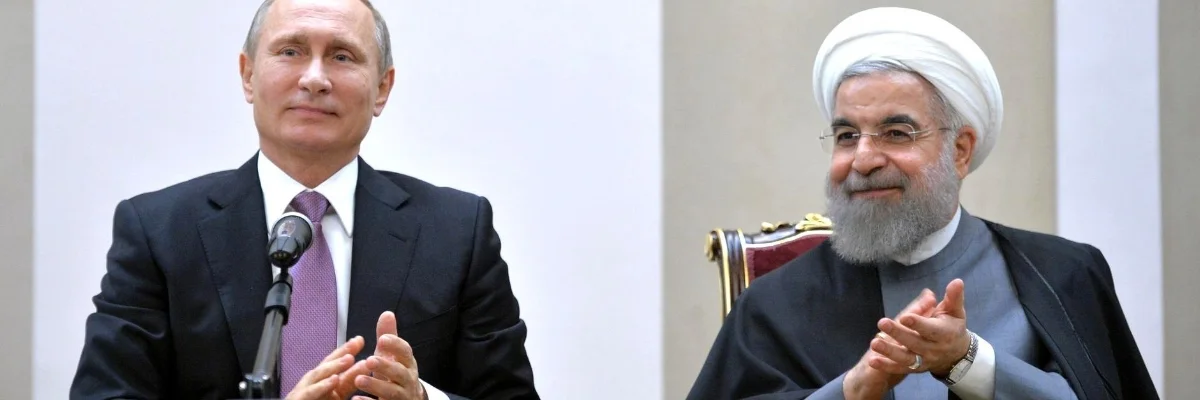
Russian Companies to Benefit from US Iran Withdrawal
◢ While Russia has condemned Washington for its withdrawal from the Iran nuclear deal, Moscow remains less exposed to the economic consequences of US sanctions than Europe and its companies could even benefit from the move. Russia and Iran sought to strengthen their business ties long before the 2015 agreement, despite international sanctions in place.
While Russia has condemned Washington for its withdrawal from the Iran nuclear deal, Moscow remains less exposed to the economic consequences of US sanctions than Europe and its companies could even benefit from the move.
"The deal and the lifting of sanctions in 2015 marked the return of European business to Iran. But it's unlikely they can keep doing business today, giving room to Russia," said independent political scientist Vladimir Sotnikov.
"Russia can now go ahead at full speed," he added. Russia and Iran once had difficult relations, but have seen ties improve since the end of the Cold War.
While Tehran was shunned by the international community in the 1990s, Moscow agreed to resume the construction of the Bushehr Iranian nuclear plant that Germany had abandoned.
Russia and Iran sought to strengthen their business ties long before the 2015 agreement, despite international sanctions in place.
"European companies are more exposed to the US market, they must comply not to get into trouble. The Russians are less (exposed) and have less to lose," said Igor Delanoe, an analyst at the Franco-Russian Observatory group.
He added that Russian companies continued to work in Iran "without any fuss" even when the sanctions were in place. "They are used to working within legal and economic constraints. The US has systematically forced Iran to turn more towards Russia and China."
The situation could revitalize Russian-Iranian economic ties that have been losing ground in recent years despite the involvement of Russian nuclear and oil giants in the Middle Eastern country.
According to Delanoe, bilateral trade amounted to $1.7 billion in 2017, down 20 percent from the previous year and well below the more than $3 billion in the late 2000s.
Moscow 'Is Not Scared'
On a visit to Tehran on Thursday, Russian deputy foreign minister Sergei Ryabkov said the two countries intended to continue "all round economic cooperation."
"We are not scared of sanctions," Ryabkov said.
This echoes statements from China, which has also said it wanted to continue normal business ties with Iran and is currently financing multi billion dollar infrastructure and electricity projects in the country.
"Russia wants to sell steel, transport infrastructure and other manufactured goods to Iran. The less competition from the US and the EU, the better," said Charlie Robertson, an analyst at Renaissance Capital.
Igor Delanoe said that Russia had a "real role to play" in Iran's energy and electricity sectors.
Another positive sign for the Russian economy is the rise in oil prices, which rose to their highest level since 2014 after the US withdrawal from the Iran deal.
Analysts at Russia's Alfa Bank said the current tensions should maintain oil prices at a high level, which they called a "great relief for the Russian market."
For the Russian state, whose finances remain highly dependent on natural resources, this is a significant source of income at a time when President
Vladimir Putin is beginning his fourth Kremlin term with promises of developing Russia's economy and reducing poverty.
Russian Prime Minister Dmitry Medvedev assessed the cost of Putin's long term goals at more than 100 billion euros.
Photo Credit: Kremlin
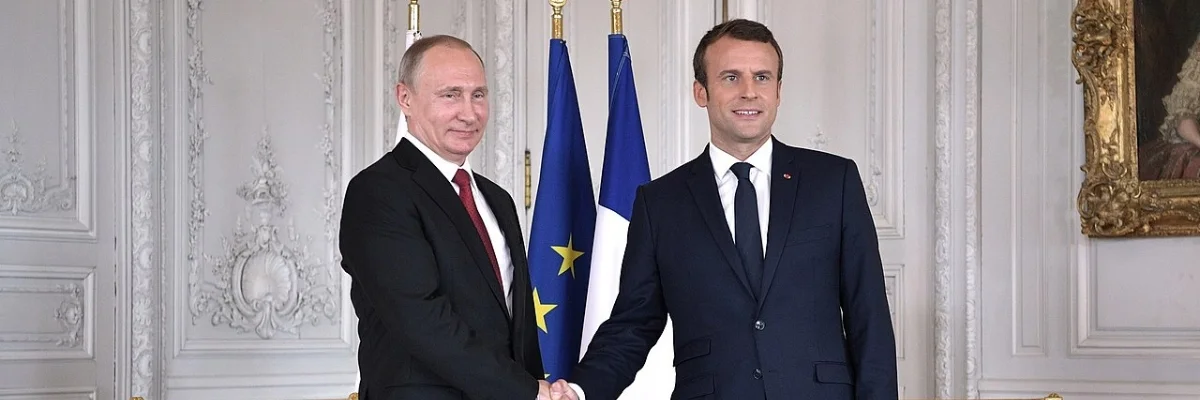
Putin, Macron Urge 'Strict' Observance of Iran Nuclear Accord: Kremlin
◢ Russian President Vladimir Putin and French leader Emmanuel Macron on Monday called for the "strict observance" of the current Iran nuclear accord, with US President Donald Trump still deciding whether to scrap the agreement. The statement was released after Macron called Putin to inform him of his talks with Trump in the United States.
Russian President Vladimir Putin and French leader Emmanuel Macron on Monday called for the "strict observance" of the current Iran nuclear accord, with US President Donald Trump still deciding whether to scrap the agreement.
"The Presidents of Russia and France spoke in favor of keeping the Plan and its strict observance," the Kremlin said, referring to the Joint Comprehensive Plan of Action.
The statement was released after Macron called Putin to inform him of his talks with Trump in the United States.
Trump faces a May 12 deadline to decide on the fate of the Iran nuclear accord and is demanding changes that European capitals believe would represent a legal breach.
On Sunday, US National Security Advisor John Bolton said the mercurial US president had not yet decided whether to scrap the accord.
Macron, who held talks with Trump last week, has positioned himself as an emissary for European officials seeking a compromise that would keep the deal intact.
Macron has earlier proposed an additional deal that extends Iran's nuclear restrictions.
Russia has said that there was "no alternative" to the agreement and that Iran's position was on the issue was paramount.
Iran's President Hassan Rouhani rejected any hopes of rewriting the nuclear deal.
Photo Credit: Wikicommons