
Iran to Seek Advanced Arms as UN Embargo Expires, Pentagon Says
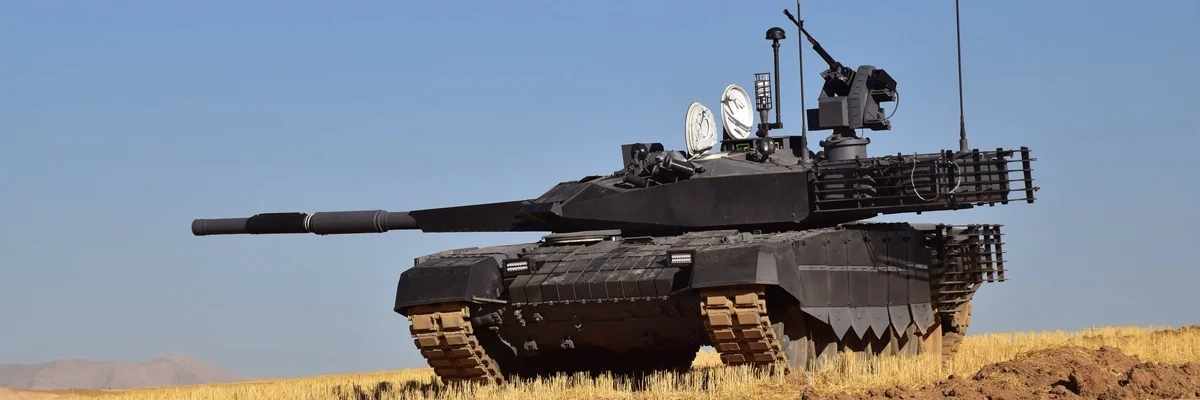
◢ Iran will seek to modernize its forces by purchasing advanced weapons systems once a United Nations arms embargo expires next year, the Pentagon is warning in a new report. Iran wants to purchase weapons “it has largely been unable to acquire for decades” when the embargo expires in October 2020.
By David Wainer and Tony Capaccio
Iran will seek to modernize its forces by purchasing advanced weapons systems once a United Nations arms embargo expires next year, the Pentagon is warning in a new report.
Iran wants to purchase weapons “it has largely been unable to acquire for decades” when the embargo expires in October 2020 in a compromise that’s part of the 2015 nuclear accord with world powers, according to an assessment released Tuesday by the Defense Intelligence Agency. Iran will be permitted to purchase weapons that it’s unable to produce domestically, such as advanced fighter aircraft and main battle tanks.
While U.S. President Donald Trump withdrew from the nuclear accord, his administration is pushing the international community to keep Iran from purchasing advanced weapons, arguing it will add to instability in the region. During a UN Security Council meeting in August, Secretary of State Michael Pompeo warned that the expiration of the embargo will unshackle Iran “to create new turmoil.”
“Because of the flawed Iran deal, the UN arms embargo on Iran will expire in one year,” Pompeo tweeted last month. “Countries like Russia and China will be able to sell Iran sophisticated weapons. The Iranian regime will be free to sell weapons to anyone. This will trigger a new arms race in the Middle East.”
Russian Weapons
Iran is already evaluating and discussing military hardware for purchase, primarily from Russia, but also to a lesser extent from China, the Pentagon report found. Iran’s potential acquisitions include Russian Su-30 fighters, Yak-130 trainers and T-90 tanks. Iran has also shown interest in acquiring the S-400 air defense system and Bastian coastal defense system from Russia, it said.
The report also highlights Iran’s growing use of unconventional tactics to deter large Western countries such as the U.S. Iran maintains an estimated inventory of more than 5,000 naval mines, which it can rapidly deploy in the Persian Gulf and Strait of Hormuz using high-speed small boats, it said.
It also warns that Iran’s forces are becoming “increasingly survivable, precise, and responsive.” It said the Islamic Republic’s capabilities, such as “swarms of small boats, large inventory of naval mines, and arsenal of antiship missiles” are a significant threat to maritime traffic in the Strait of Hormuz.
Kenneth Katzman, the primary Iran expert for the nonpartisan Congressional Research Service, said the report reinforces a “growing consensus in the expert community that Iran is close to accomplishing its core national security goals—the ability to project power in all corners of the region and thereby deter any regional or international actor from attacking Iran.”
Photo: IRNA
Iran Says Downed US Drone Recovered in its Territorial Waters
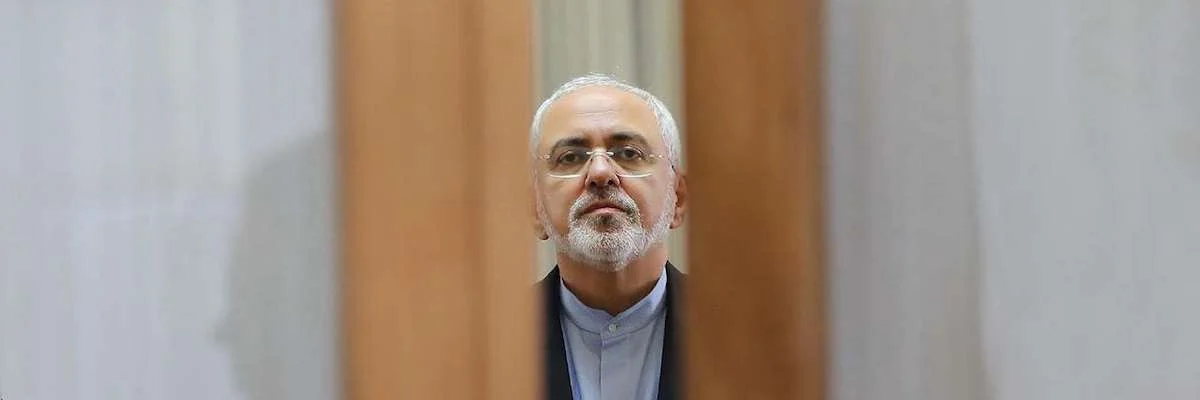
◢ Iran's Foreign Minister Mohammad Javad Zarif said Thursday a US surveillance drone "violated Iranian airspace" before being shot down earlier in the day, providing coordinates to back his claim. The drone "was targeted at 04:05 at the coordinates (25°59'43"N 57°02'25"E) near Kouh-e Mobarak. We've retrieved sections of the US military drone in OUR territorial waters where it was shot down."
By Sebastian Smith and Marc Jourdier
Iran said Thursday it had recovered parts of a US spy drone in its territorial waters, after downing the aircraft in a missile strike slammed by President Donald Trump as a "big mistake."
Under pressure to respond to the high-stakes incident in the strategic Strait of Hormuz, where a series of tanker attacks have sent tensions soaring with Iran, Trump initially struck a combative tone.
"Iran made a very big mistake!" he tweeted in response to news Iran had shot down the Global Hawk surveillance aircraft—which the Pentagon says was above international waters at the time.
"This country will not stand for it, that I can tell you," he repeated later at the White House.
But as the overnight incident whipped up fears of open conflict between the United States and its declared foe Iran—sending crude oil prices up more than six percent—Trump moved swiftly to dial tensions back down, suggesting the drone may have been shot in error.
"I find it hard to believe it was intentional, if you want to know the truth," Trump said. "I think that it could have been somebody who was loose and stupid that did it."
The president's mixed message left the world unsure what Washington's next move would be.
"You will find out," Trump said, when asked about possible retaliation.
In Tehran, however, the message came loud and clear.
Late Thursday Foreign Minister Mohammad Javad Zarif announced that parts of the drone had been recovered in Iranian territorial waters, as Tehran moved to bring the incident before the United Nations.
“We don't seek war, but will zealously defend our skies, land & waters," Zarif said.
Drone violating or victim?
The Pentagon denounced the strike as an "unprovoked attack" in international air space, claiming the navy drone was some 34 kilometers (21 miles) from Iran when destroyed by a surface-to-air missile.
But the Islamic Revolutionary Guard Corps said it brought the drone down as it was "violating Iranian air space" over the waters of Hormozgan province.
Zarif provided coordinates to back the claim.
"At 00:14 US drone took off from UAE in stealth mode & violated Iranian airspace," Zarif tweeted. "It was targeted at 04:05 at the coordinates (25°59'43"N 57°02'25"E) near Kouh-e Mobarak."
"We've retrieved sections of the US military drone in OUR territorial waters where it was shot down."
In a letter addressed to the UN Security Council and Secretary-General Antonio Guterres, Iran protested against a "dangerous and provocative act by the U.S. military forces against the territorial integrity of the Islamic Republic of Iran."
The drone downing came as Iran was already accused by Washington of carrying out explosions on oil tankers in the congested Hormuz area. Tehran denies being behind the attacks but has frequently threatened to block the sea lanes used by shipping to move much of the world's oil exports.
The commander of the US Naval Forces Central Command, Sean Kido, said that a mine allegedly used in one of the attacks matched Iranian weaponry and that incriminating fingerprints had also been collected.
Options 'running out?'
Trump has repeatedly said he does not favor war with Iran unless it is to stop the country getting a nuclear weapon—something Iranian leaders insist they are not pursuing.
But critics of the Trump administration say his policy of "maximum pressure"—including crippling economic sanctions, abandonment of a complex international deal to regulate Iran's nuclear activities, and deployment of extra sea, air and land forces to the region—make war ever more likely.
In Washington, talk of war has become part of the already heated atmosphere as Trump's reelection fight starts to gain traction.
A key Republican ally of Trump, Senator Lindsey Graham, said the president's "options are running out."
Asked if he believed the countries were nearing conflict, he replied: "I think anybody would believe that we're one step closer."
"They shot down an American asset well within international waters trying to assess the situation. What are you supposed to do?"
One of Trump's biggest opponents, the Democratic speaker of the House of Representatives, Nancy Pelosi, warned that "there's no appetite for wanting to go to war in our country."
Israeli Prime Minister Benjamin Netanayahu blasted "Iranian aggression" and said "Israel stands by the United States."
But Russian President Vladimir Putin, who has close relations with Iran's leadership, said that US military retaliation against Iran "would be a disaster for the region."
Diplomatic, Military Brinkmanship
Trump was elected in part on promises to end US involvement in wars in the Middle East, but the president has at the same time made clear his unquestioning support for Iran's big rivals in the region—Israel and Saudi Arabia.
Trump's arrival in the White House, alongside veteran Mideast hawks like his national security adviser John Bolton, has seen sharp deterioration in relations with Tehran.
Trump began last May by abandoning—and effectively wrecking—a 2015 international agreement on bringing Iran in from the diplomatic cold in exchange for verified controls on its nuclear industry.
That has prompted Iran to threaten it will stop observing restrictions agreed to under the deal on enrichment of uranium.
The threat has been seen as an effort to pressure European governments that want to save the nuclear deal to push back against Washington. The US State Department called that "extortion."
Photo: IRNA
U.S. Pulls Iraq Embassy Staff as Tensions Climb Higher Over Iran
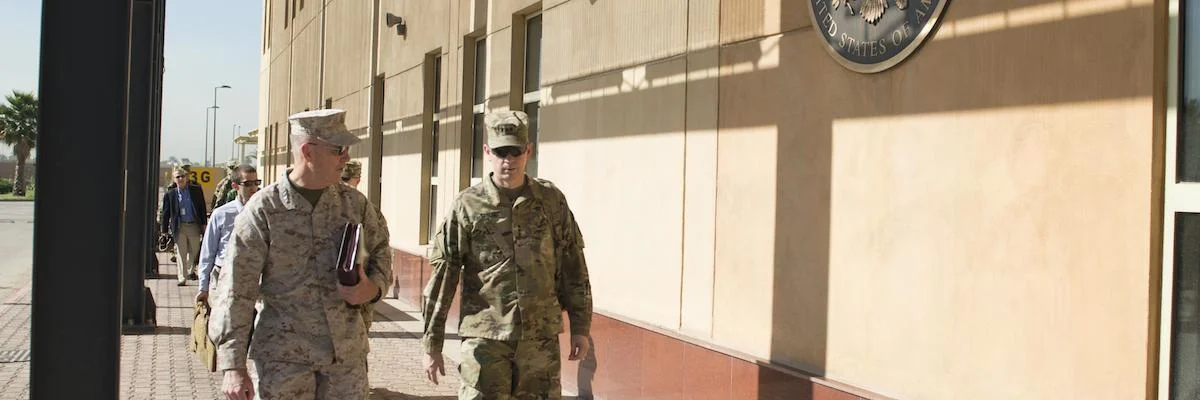
◢ The U.S. ordered its non-emergency government staff to leave Iraq amid increasing Middle East tensions that American officials are blaming on Iran, as fears rise that the region may be heading toward another conflict. Most employees at the U.S. embassy in Baghdad and the consulate in Erbil, in the majority Kurdish region, will leave due to an “increased threat stream,” according to an embassy statement Wednesday.
By Ladane Nasseri and Zainab Fattah
The U.S. ordered its non-emergency government staff to leave Iraq amid increasing Middle East tensions that American officials are blaming on Iran, as fears rise that the region may be heading toward another conflict.
Most employees at the U.S. embassy in Baghdad and the consulate in Erbil, in the majority Kurdish region, will leave due to an “increased threat stream,” according to an embassy statement Wednesday that didn’t give more details. The move comes after the Pentagon accelerated a carrier battle group’s transit to the region and deployed a Patriot anti-missile battery to bolster forces.
U.S. officials on Wednesday reiterated that the Trump administration isn’t seeking a war, but said it will seek to hold Iran “accountable” for its actions and those of its proxies. The officials, who asked not to be identified, said the decision to withdraw embassy staff was based on considerations of safety and not meant as political signaling.
Denying reports of “infighting” in his administration over Iran policy, President Donald Trump said in a tweet Wednesday that “I’m sure that Iran will want to talk soon.”
Yet critics of the Trump administration warned the U.S. isn’t sharing enough clear evidence of Iranian threats and say that without better intelligence, the latest buildup is reminiscent of the lead-in to the Iraq war in late 2002, which was based on faulty intelligence. Iranian officials have said that National Security Advisor John Bolton and other administration hawks are hyping the threat of war.
Separately, Saudi Arabia restarted its main cross-country oil pipeline after a drone attack by Iran-backed rebels based in neighboring Yemen. Saudi Arabia and the United Arab Emirates—both Iranian rivals—reported attacks on Monday on several vessels including Saudi oil tankers.
While it’s not yet clear who was behind the shipping attacks, the combination of events has raised the risk of conflict in a region that exports more than 16 million barrels of oil a day -- enough to supply all of Europe’s demand and more.
The U.A.E.’s minister of state for foreign affairs, Anwar Gargash, said the country is still investigating the attacks on the ships and said he’s “not going to jump the gun” on blaming any nation until the probe is completed. Addressing tensions in the region, Gargash said “we are very committed to deescalation.”
‘Suffer Greatly’
Trump has long said he wants to pull the U.S. out of Middle East conflicts, but this week he also warned that the Islamic Republic would “suffer greatly” if it provokes America.
Trump on Tuesday rejected a report that the Pentagon is updating scenarios for war with Iran, but then warned he’d send “a hell of a lot more” than 120,000 troops to the Middle East in the event of hostilities. Lawmakers on Capitol Hill are demanding briefings on the latest intelligence on Iran, with Secretary of State Michael Pompeo expected to meet with House members next week, according to an official.
Jack Reed, the top Democrat on the Senate Armed Services Committee, said a classified briefing is needed “as soon as possible.”
While the administration didn’t elaborate, it blamed Iran-backed Shiite militias after pulling staff from the consulate in Basra in southern Iraq in September and Pompeo used an unannounced May 7 visit to the country to denounce what he called an “escalating” threat from Tehran.
Yet unlike in other hot spots such as Venezuela and North Korea, where the U.S. managed to forge an international coalition to advance its goals, Trump is diplomatically isolated on Iran after unilaterally quitting the 2015 nuclear deal a year ago, a move that alienated allies including the U.K. and Germany.
Amid the tensions, oil prices rebounded on Wednesday as a government report showed shrinking supplies of U.S. gasoline, suggesting more demand ahead for crude suppliers.
The series of events has increased concerns of a military confrontation, whether deliberate or otherwise.
Pompeo canceled a trip to Germany last week in order to make the unannounced visit to Iraq’s capital, where he spoke with leaders about an “escalating” threat from Iran and possible “big energy deals” to help wean the Iraqi economy away from its neighbor. This week, Pompeo made scant progress in persuading EU counterparts to take a harder line toward Iran in an last-minute trip to Brussels to share what the U.S. says is fresh intelligence on the threat posed by Tehran.
“I made clear once again that we are worried in view of the developments and the tensions in the region,” German Foreign Minister Heiko Maas said after the meetings. “We don’t want a military escalation.” German officials on Wednesday said the country wasn’t aware of a “concrete threat” or change to the security situation in Iraq.
A spokesman for the U.S. Embassy in Baghdad said the departures announced Wednesday did not amount to an evacuation, but to an ordered exit of non-essential personnel. He declined to say how many employees would remain. The last such drawdown took place in 2014, when Islamic State swept through the north of the country toward the capital. It lasted several months.
Shiite Muslim Iran has played a prominent role in Iraq since the U.S.-led invasion of 2003 put Iraq’s majority Shiite community in power. Tehran supports several powerful Shiite militias in Iraq, including some that played a significant role in the successful fight against Islamic State.
Trump says Iran’s missile program and support for militant groups is destabilizing the Mideast region and he has made countering the Islamic Republic a primary focus of his foreign policy, encouraged by Iranian foes led by Saudi Arabia, the U.A.E. and Israel.
In recent weeks, the U.S. ratcheted up the pressure on ruling clerics by scrapping waivers that had allowed some countries to carry on importing Iranian crude, and designating the Islamic Revolutionary Guard Corps, Iran’s elite military unit, as a terrorist organization.
Iranian officials have warned of what they said is a disinformation campaign. Last month, Foreign Minister Javad Zarif said that the targeting of his nation could take a dangerous turn and trigger a wider crisis. He suggested hard-liners in Washington and Saudi Arabia may be “plotting an ‘accident’ anywhere in the region.”
The U.S. assessment of an increased Iranian threat was disowned on Tuesday by the British deputy commander of the international campaign to defeat Islamic State, Major General Christopher Ghika. “There’s been no increased threat from Iranian-backed forces in Iraq and Syria,” he said in a briefing for Pentagon reporters.
In an unusual airing of differences, U.S. Central Command then issued a statement rejecting Ghika’s comments as “running counter to the identified credible threats available to intelligence.”
Gargash, the U.A.E. minister of state, said that the current situation in the region means “we need to emphasize caution and we need to emphasize good judgment. It’s a very brittle, difficult situation.”
Photo: JCS
White House Sought Military Strike Against Iran
◢ The White House demanded that the military draft plans for strikes on Iran after attacks in Iraq last year, sparking concern at the Pentagon and State Department, The Wall Street Journal reported Sunday. The report said the move came after a mortar attack launched by an Iran-linked group on the Baghdad diplomatic quarters home to the US embassy in September. No one was hurt by the shells, which landed in an open lot.
The White House demanded that the military draft plans for strikes on Iran after attacks in Iraq last year, sparking concern at the Pentagon and State Department, The Wall Street Journal reported Sunday.
The report said the move came after a mortar attack launched by an Iran-linked group on the Baghdad diplomatic quarters home to the US embassy in September. No one was hurt by the shells, which landed in an open lot.
But the White House National Security Council (NSC) sought to develop a forceful American response to the low-scale attack, including options for a strike against the Islamic republic, the Journal reported.
It added that the NSC also requested options to respond with strikes in Iraq and Syria.
"It definitely rattled people," a former senior US administration official told the newspaper. "People were shocked. It was mind-boggling how cavalier they were about hitting Iran."
Although the Defense Department did develop proposals for a possible strike, the Journal said it was unclear whether they were shared with the White House.
In one NSC meeting, then deputy national security advisor Mira Ricardel called the attacks in Iraq an "act of war" and called for a decisive US response.
Pentagon officials stressed that it was not unusual for the Defense Department to draw up military plans for the White House.
"The Department of Defense is a planning organization and provides the president military options for a variety of threats," Colonel Rob Manning, a Pentagon spokesman, told AFP.
He said the Pentagon's activities include "routinely reviewing and updating plans and activities to deal with a host of threats, including those posed by Iran, to deter and, if necessary, to respond to aggression."
Asked about the report during his Middle East trip, US Secretary of State Mike Pompeo declined comment.
After the attack in Baghdad, the White House warned that "the United States will hold the regime in Tehran accountable for any attack that results in injury to our personnel or damage to United States government facilities."
“America will respond swiftly and decisively in defense of American lives," it added.
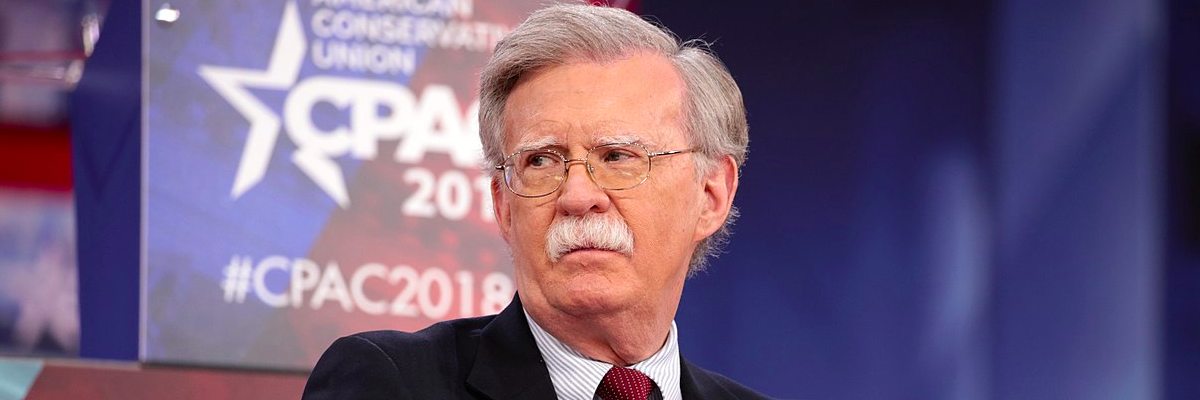
National Security Advisor John Bolton, a known Iran hawk, has pressed for regime change in the Islamic republic.
He penned a 2015 New York Times opinion piece prior to his current role titled "To stop Iran's bomb, bomb Iran."
Photo Credit: Wikicommons
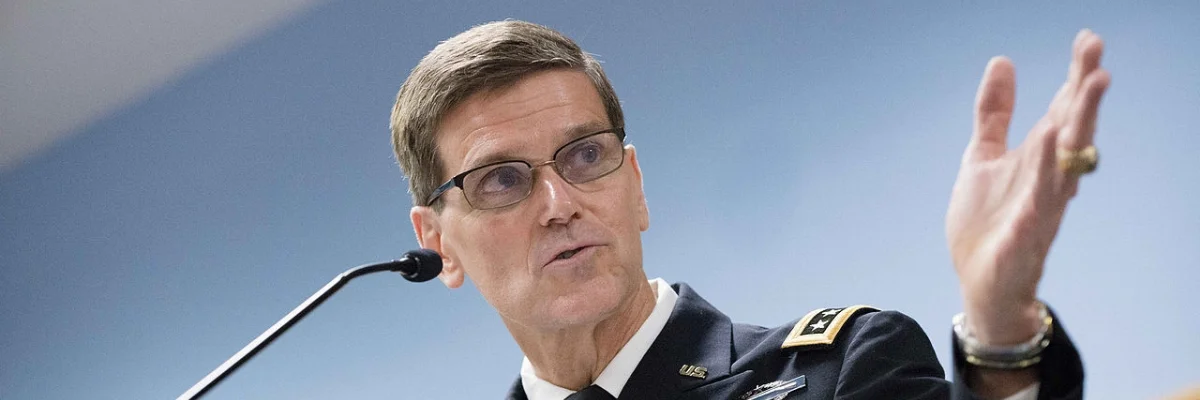
Pentagon Still Backs Iran Nuclear Deal: General
◢The Iranian nuclear deal is still in the best interests of the United States, a senior Pentagon official said Tuesday, going against President Donald Trump's claim that it's a "terrible" agreement. US Central Command chief General Joseph Votel told a Senate panel he shared the views of Defense Secretary Jim Mattis and Joe Dunford, the chairman of the
Joint Chiefs of Staff.
The Iranian nuclear deal is still in the best interests of the United States, a senior Pentagon official said Tuesday, going against President Donald Trump's claim that it's a "terrible" agreement.
US Central Command chief General Joseph Votel told a Senate panel he shared the views of Defense Secretary Jim Mattis and Joe Dunford, the chairman of the
Joint Chiefs of Staff.
"From my perspective, the JCPOA addresses one of the principal threats that we deal with from Iran," Votel said, using the deal's official acronym.
"So, if the JCPOA goes away, then we will have to have another way to deal with the nuclear weapons program."
Trump is threatening to scrap the international agreement unless tough new restrictions were placed on Iran before May 12.
He cited disagreements on the issue as a reason for his decision to fire on Tuesday his diplomatic chief Rex Tillerson and replace him with CIA Director Mike Pompeo, who is considered hawkish.
The president is concerned that parts of the deal start to expire from 2026 and that it fails to address Iran's missile program, its regional activities or its human rights abuses.
A US exit could kill the nuclear pact, which the Islamic republic has refused to re-negotiate.
Struck in 2015, it was signed by Iran with the five permanent members of the United Nations Security Council—Britain, China, France, Russia and the United States—plus Germany.
Under the agreement, Iran agreed to freeze its nuclear program in return for the lifting of punishing international sanctions.
While Iran has reaped massive economic benefits from the accord, notably by being able to resume oil exports, it is still constrained by US sanctions in other areas.
Photo Credit: Wikicommons