
Israel Warns Iran that its Missiles Can Travel 'Very Far'
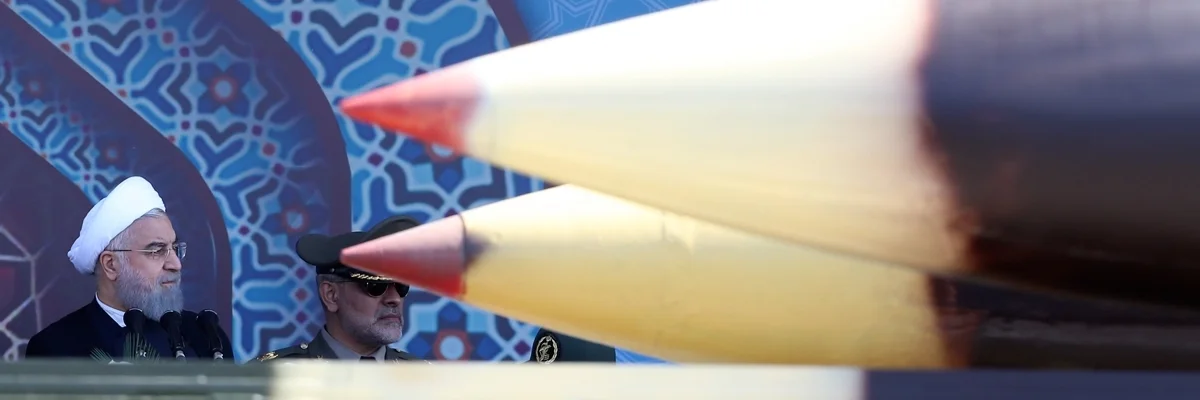
◢ Prime Minister Benjamin Netanyahu warned Iran Tuesday that Israeli missiles can travel "very far", on the eve of a conference in Poland about peace and security in the Middle East. Speaking during a visit to a naval base in the northern port of Haifa, Netanyahu said: "The missiles you see behind me can go very far, against any enemy, including Iran's proxies in our region"—an apparent reference to Lebanon's powerful Hezbollah movement.
Prime Minister Benjamin Netanyahu warned Iran Tuesday that Israeli missiles can travel "very far", on the eve of a conference in Poland about peace and security in the Middle East.
Speaking during a visit to a naval base in the northern port of Haifa, Netanyahu said: "The missiles you see behind me can go very far, against any enemy, including Iran's proxies in our region"—an apparent reference to Lebanon's powerful Hezbollah movement.
"We are constantly working according to our understanding and the need to prevent Iran and its proxies from entrenching on our northern border and in our region in general," Netanyahu added.
"We are doing everything necessary," said Netanyahu, as he inspected Israel's Iron Dome aerial defence system.
Netanyahu has repeatedly said Israel would not allow Iran and its ally Hezbollah to entrench themselves in neighboring Syria where they are backing the Damascus regime against rebels and jihadists.
Israel has carried out hundreds of air strikes in Syria in the past few years against Iranian and Hezbollah targets.
On Wednesday the Israeli prime minister is set to take part in an international conference in Warsaw co-organized by the United States and Poland.
US Secretary of State Mike Pompeo last month announced the two-day conference saying it would focus on the "destabilizing influence" of Iran in the Middle East.
But with few RSVPs coming, Poland and the US have toned down the agenda to focus on ways of promoting peace and security in the Middle East.
During the conference US President Donald Trump son-in-law and adviser Jared Kushner, who has been putting final touches on a "deal of the century" for peace between Israel and the Palestinians, will make a rare speaking appearance.
Kushner may offer hints of the US peace proposal but is not expected to unveil the full deal until after the April 9 election in Israel.
Photo Credit: IRNA
Netanyahu: Israel Would Hit Iran to Ensure its Own Survival
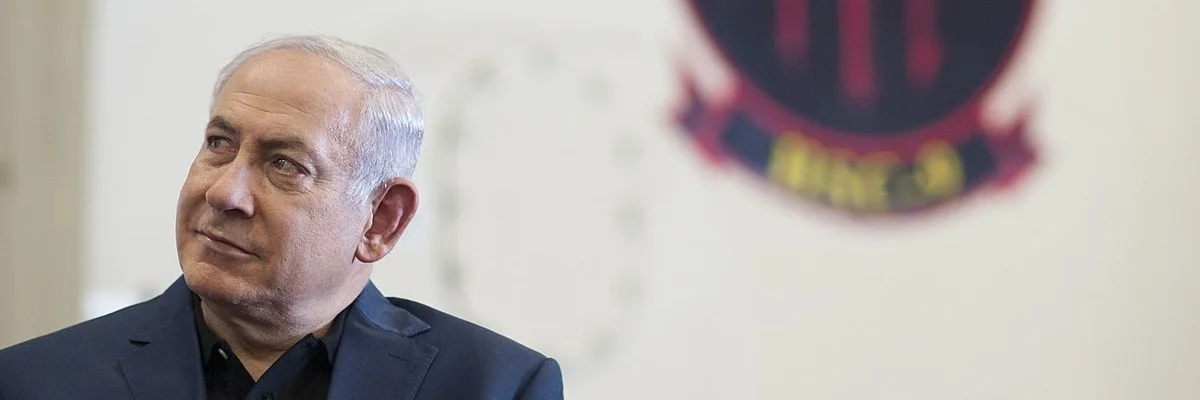
◢ Israeli Prime Minister Benjamin Netanyahu said Wednesday that Israel would be prepared to attack inside Iran if the Jewish state's survival was at stake. "Our red line is our survival," Netanyahu said at a meeting with foreign media where he was asked what his "red line" was for attacking Iranian territory, rather than its proxies in Syria and Lebanon.
Israeli Prime Minister Benjamin Netanyahu said Wednesday that Israel would be prepared to attack inside Iran if the Jewish state's survival was at stake.
"Our red line is our survival," Netanyahu said at a meeting with foreign media where he was asked what his "red line" was for attacking Iranian territory, rather than its proxies in Syria and Lebanon.
"We do what is necessary to protect the state of Israel against the Iranian regime that openly calls for the annihilation of the Jewish state."
"I'm not ruling out doing anything that we need to do to defend ourselves," added Netanyahu, who sees Iran as the most dangerous threat to Israel.
He said that Israel is the only country whose military is "directly engaging Iranian forces" with air strikes in neighboring Syria, where Iran supports the forces of President Bashar al-Assad.
Netanyahu said Wednesday that Iran's aggressive regional behavior, in contrast to Israel's fight against radical Islamic militants and its advanced technology, had brought once-hostile Arab states closer to the Jewish state.
"The Arab countries understand exactly that Israel is not their enemy, but their indispensable partner" against extremists, he said, speaking of "new relationship between Israel and the Arab world".
Israel has diplomatic relations with only two Arab countries—Egypt and Jordan—but has recently been pushing to broaden regional ties.
A rapprochement with Saudi Arabia in particular, a regional heavyweight and rival of Iran, would be a considerable breakthrough for Israel.
Netanyahu said that a balanced diplomatic response was needed to the murder of Saudi journalist Jamal Khashoggi in his country's consulate in Istanbul on October 2, which sparked a global outcry.
While he described the crime as "horrific, nothing short of that," he said that every country, especially those with formal relations with Saudi Arabia, must decide how to react.
"It's balanced by the importance of Saudi Arabia and the role it plays in the Middle East, because if Saudi Arabia were to be destabilized the world would be destabilized... and I think that has to be taken into account, there's a balance," he said.
Photo Credit: Wikicommons
Netanyahu Accuses Europe of 'Appeasing' Iran
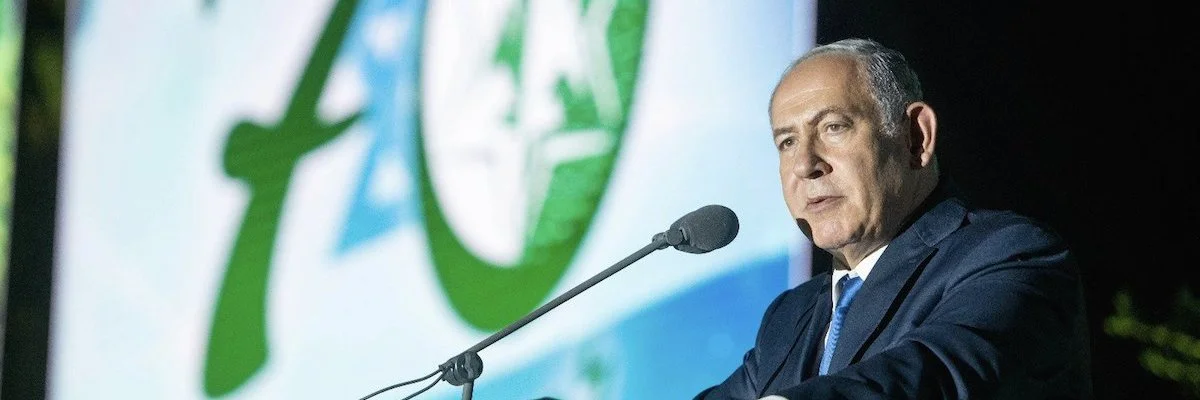
◢ Israeli Prime Minister Benjamin Netanyahu on Wednesday accused European leaders of "appeasing" Iran instead of confronting its militant activity. Netanyahu's remarks, made in a cabinet meeting, feed into his ongoing efforts to sway world leaders to join the United States in upping pressure on Israel's arch foe through sanctions.
Israeli Prime Minister Benjamin Netanyahu on Wednesday accused European leaders of "appeasing" Iran instead of confronting its militant activity.
Netanyahu's remarks, made in a cabinet meeting, feed into his ongoing efforts to sway world leaders to join the United States in upping pressure on Israel's arch foe through sanctions.
"The time has come for the world to unite in the fight against terrorist organizations. It is doing so to a certain extent against the Islamic State group, but it is not doing so against Iran," Netanyahu said.
He accused European leaders of "appeasing" and "reconciling" with Iran.
In May, US President Donald Trump withdrew from a nuclear deal between Iran and world powers, before re-imposing a first major round of unilateral sanctions on Tehran in August.
Netanyahu had consistently called for the landmark 2015 accord to be altered or scrapped, saying it was too limited in scope and time-frame, and did nothing to stop Iran financing militant activities in the region.
European powers are seeking to save the nuclear deal and have vowed to keep providing Iran with the economic benefits it received from the accord.
Germany, France and Britain—and other signatories Russia and China—argue that the agreement has worked as intended in keeping Iran from obtaining nuclear weapons for now.
"The appeasement of Iran abets the relentless assault on the values and security of the free societies, and the time has come for Western governments to join the strong and clear effort by the Trump administration against the terror regime in Tehran," Netanyahu said on Wednesday.
Washington has sought to build up multilateral pressure on Iran and has set a November 5 deadline for halting its oil exports.
Photo Credit: Wikicommons
Macron Walks Fine Line as Netanyahu Seeks Anti-Iran Front
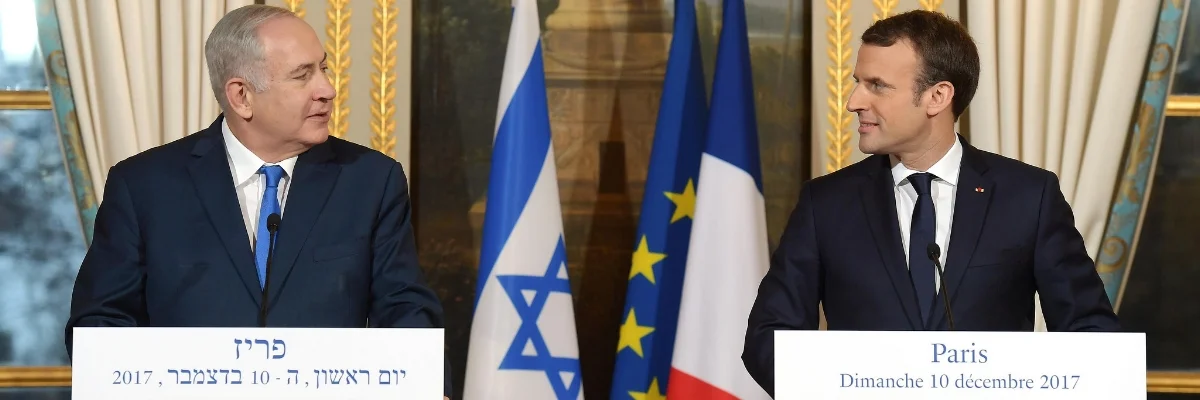
◢ French President Emmanuel Macron meets Israeli Prime Minister Benjamin Netanyahu on Tuesday on the second leg of his European trip amid deep differences over how to contain Iran's ambitions in the Middle East. It will be the third meeting of the two leaders in Paris since last July, and while they agree on the threats posed by Tehran's missile projects and foreign interventions, they differ strongly on the response.
French President Emmanuel Macron meets Israeli Prime Minister Benjamin Netanyahu on Tuesday on the second leg of his European trip amid deep differences over how to contain Iran's ambitions in the Middle East.
It will be the third meeting of the two leaders in Paris since last July, and while they agree on the threats posed by Tehran's missile projects and foreign interventions, they differ strongly on the response.
Netanyahu has pursued his strident attacks against Tehran during his visit to Europe, warning during a stop in Berlin on Monday that its activities risked fueling a new influx of migrants towards Germany.
Iran was intent on fueling "a religious war inside Syria and the consequences will be many, many more refugees and you know where exactly they will come," he told German Chancellor Angela Merkel.
Netanyahu has been emboldened by US President Donald Trump's decision to pull out of the 2015 accord curbing Iran's nuclear program—and the threat of harsh sanctions against European firms doing business in the country.
Yet Macron has led a staunch defense of the accord, whose other signatories—France, Britain, Germany, China, Russia and the EU—have maintained a common front so far.
"Benjamin Netanyahu's goal is to not find himself isolated along with Washington," said David Khalfa of the Institute for European Prospective and Security in Paris.
"At a minimum he's looking to force Europeans to reinforce the existing accord" via the US sanctions, but also the prospect of joint Saudi-US-Israel bloc setting the agenda in the Middle East, Khalfa said.
Macron has warned that letting the deal fall apart will only inflame tensions, especially if harsh sanctions smother the economic relief Iranians began to enjoy after it was signed in 2015.
He and Netanyahu are scheduled to hold a press conference after their talks and launch a season of cultural exchanges between their countries this year.
Balancing Act
But relations have been further strained by the killing of 123 Palestinian protesters in Gaza by Israeli forces since March, including at least 61 people on May 14 alone.
Macron denounced the "violence by Israel's armed forces" even as he noted the country's security concerns, a position deemed too simplistic by Israeli officials while also being derided by his leftwing critics in France.
French Prime Minister Edouard Philippe cancelled a planned trip to Israel last month.
Several pro-Palestinian groups are planning protests against Netanyahu in cities across the country, while three journalist unions have called his visit "intolerable".
The journalist unions denounced the killing of Palestinian journalists by Israeli forces, as well as women, children and people working for emergency services in Gaza.
Against this backdrop, talks on seeking an end to the Palestinian conflict have fallen to the wayside, not least after Trump broke with decades of protocol by recognizing Israel's claim of Jerusalem as its capital.
Last week, the European Union urged Israel to reconsider its decision to demolish a Palestinian Bedouin village in the occupied West Bank, saying it undermines "prospects for a lasting peace."
Macron has announced plans to visit both Israel and the Palestinian territories this year.
"Macron is taking a very pragmatic approach, separating the Israeli-Palestinian conflict from their bilateral cooperation," said Khalfa, noting in particular Macron's appreciation of Israel's push to become a "start-up nation."
Macron and Netanyahu are also planning to inaugurate a show highlighting Israel's technological innovations, "Israel@lights", at the Grand Palais museum in Paris.
Photo Credit: GPO/Avi Ohayon
Netanyahu Heads to Europe Seeking About-Face on Iran
◢ Israeli Prime Minister Benjamin Netanyahu embarks Monday on a three-day European tour in Germany set to be dominated by strategic differences on Iran, as leaders attempt to rescue the nuclear deal after US withdrawal.
Israeli Prime Minister Benjamin Netanyahu embarks Monday on a three-day European tour in Germany set to be dominated by strategic differences on Iran, as leaders attempt to rescue the nuclear deal after US withdrawal.
With partners in Berlin, Paris and London still reeling from President Donald Trump's decision last month to exit the hard-fought 2015 accord, Netanyahu is expected to seek European cooperation on a still-to-be-determined Plan B.
"The aim to prevent Iran from developing any kind of nuclear capacity was always the foundation of international policy on Iran," Israel's ambassador to Germany, Jeremy Issacharoff, told AFP ahead of the visit.
Issacharoff said that despite "differences of opinion" on how to achieve the aim of hemming in Iran on nuclear matters, "we share the same goal".
Germany, France and Britain are three of the signatories of the 2015 Joint Comprehensive Plan of Action (JCPOA) between world powers and Iran, aimed at keeping Tehran from acquiring nuclear weapons.
Netanyahu, who has railed against the deal which offers sanctions relief in exchange for strict limits on Iran's nuclear activities, will hold talks with Chancellor Angela Merkel in Berlin in the late afternoon, followed by a joint news conference.
He will continue on to Paris for meetings with French President Emmanuel Macron on Tuesday and British Prime Minister Theresa May on Wednesday.
'Not Perfect'
In the face of the US retreat, all three leaders strongly defend the agreement as the best way to head off a regional arms race and have vowed with Russia and China, the two other signatory countries, to keep it alive.
German Foreign Minister Heiko Maas huddled with his Chinese counterpart Wang Yi on Thursday and insisted that Berlin "wants to maintain the nuclear agreement and make sure Iran maintains it too."
At the same news conference, Wang launched an unvarnished attack on US reliability in global affairs under Trump.
"It is a truism of international law that international accords must be respected... (and) major countries must set an example, not do the opposite," he said.
Supporters also fear the reimposition of US sanctions could hit European firms that have done business with Iran since the accord was signed.
Merkel has acknowledged that while European powers see the JCPOA as the best guarantee against an Iran with nuclear weapons, it is "not perfect".
The Europeans have proposed hammering out a supplementary deal with Tehran covering its ballistic missile program as well as its interventions in countries such as Lebanon, Syria, Iraq and Yemen.
Western powers view Iran's meddling as destabilizing for the region while Israel sees it as a direct threat to its existence.
"I will discuss with them ways to block Iran's nuclear aspirations and Iran's expansion in the Middle East," Netanyahu said last week of his European meetings, noting the issues were "crucial to Israel's security".
Israel is considered the leading military power in the Middle East and believed to be the only country in the region to possess nuclear weapons.
Photo Credit: Kremlin.ru
Iran Envoy to UK Warns it May Scrap Nuclear Deal if US Withdraws
◢ Iran's ambassador to Britain said Tehran will consider walking away from the nuclear deal if the United States withdraws from the agreement, in an interview aired Wednesday. Hamid Baeidinejad, the country's top envoy in London, said Iran would "be ready to go back to the previous situation" if America pulls out of the 2015 pact, as threatened by US President Donald Trump.
Iran's ambassador to Britain said Tehran will consider walking away from the nuclear deal if the United States withdraws from the agreement, in an interview aired Wednesday.
Hamid Baeidinejad, the country's top envoy in London, said Iran would "be ready to go back to the previous situation" if America pulls out of the 2015 pact, as threatened by US President Donald Trump.
"When the United States is out of the deal, it means that there is no deal left," he told CNN's Christiane Amanpour.
"Because (an) important party of the treaty has abrogated and violated in clear terms the treaty."
Trump is reportedly poised to scrap the agreement, negotiated in 2015 between Tehran and six world powers, ahead of a May 12 deadline for Washington to renew its support for the deal.
The agreement imposes strict restrictions on Iran's nuclear program in return for the loosening of economic sanctions.
Baeidinejad said Tehran was exploring various responses to such a move from the US—including restarting nuclear activities.
"It could be enriching uranium, it could be redefining our cooperation with the agency and some other activities that are under consideration," he added.
"That is something very real, in fact very realistic." The ambassador denied Iran would restart any nuclear weapons production.
The country has always denied it sought a nuclear weapon, insisting its atomic program was for civilian purposes.
European leaders, including French President Emmanuel Macron, have been pressing Trump to strengthen rather than abandon the three-year-old deal that took more than a decade to reach.
Macron, who met Trump in Washington last week to try to convince him to not walk away, admitted Wednesday he still did not know what decision the US leader would take.
Trump has pilloried the agreement designed to curb Iran's nuclear program as "insane" and "ridiculous" and called for fresh measures to counter Iran's ballistic missile program and support for militant groups across the Middle East.
On Tuesday, Israeli Prime Minister Benjamin Netanyahu said he had new "proof" of an Iranian nuclear weapons plan that could be activated at any time.
Baeidinejad said international observers' final assessment ahead of the 2015 agreement contradicted Israel's claims.
Photo Credit: Mehr

Israel Claims 'Underline Importance' of Iran Nuclear Deal: UK
◢ Israeli Prime Minister Benjamin Netanyahu's presentation on Iran's nuclear program "underlines the importance" of the controls imposed on Tehran in the 2015 deal, British Foreign Secretary Boris Johnson said Tuesday.
Israeli Prime Minister Benjamin Netanyahu's presentation on Iran's nuclear program "underlines the importance" of the controls imposed on Tehran in the 2015 deal, British Foreign Secretary Boris Johnson said Tuesday.
"The Israeli prime minister's presentation on Iran's past research into nuclear weapons technology underlines the importance of keeping the Iran nuclear deal's constraints on Tehran's nuclear ambitions," Johnson said in a Foreign Office statement.
With US President Donald Trump weighing up whether to stay in the deal, Johnson insisted that the agreement was not "based on trust about Iran's intentions"—the core of Netanyahu's claims—"rather it is based on tough verification" by the International Atomic Energy Agency.
"The fact that Iran conducted sensitive research in secret until 2003 shows why we need the intrusive inspections allowed by the Iran nuclear deal today," added Johnson.
The 2015 deal negotiated between Iran and six world powers, including Britain, imposes nuclear inspections on Iran in return for the loosening of economic sanctions, but Trump is threatening to pull out.
Johnson insisted that the verification provisions in the deal "would make it harder for Iran to restart any such research."
"That is another good reason for keeping the deal while building on it in order to take account of the legitimate concerns of the US and our other allies," he added.
The Israeli premier has repeatedly called for the deal to be either altered or scrapped, but did not present evidence on Monday that Iran had actively worked to obtain an atomic weapon since the deal was struck.
Photo Credit: Wikicommons
Netanyahu's Iran Nuke Claims Fail to Convince Deal Proponents
◢ Israel began sharing an intelligence trove on Iran's alleged nuclear ambitions Tuesday, but Prime Minister Benjamin Netanyahu faced accusations his televised unveiling of it lacked evidence a 2015 accord had been violated. The presentation that included props, video and slides immediately led to accusations from some that the White House and Netanyahu coordinated it as Trump considers whether to pull out of the nuclear deal he has harshly criticized.
Israel began sharing an intelligence trove on Iran's alleged nuclear ambitions Tuesday, but Prime Minister Benjamin Netanyahu faced accusations his televised unveiling of it lacked evidence a 2015 accord had been violated.
The IAEA, the United Nations atomic watchdog, said it would evaluate any new relevant information, but cited its assessment from three years ago that it had no "credible indications" of an Iranian nuclear weapons pursuit after 2009.
Netanyahu's elaborate presentation live on television Monday night came ahead of a crucial decision by US President Donald Trump by May 12 on whether to withdraw from the nuclear agreement between world powers and Iran.
The Israeli premier said tens of thousands of documents recently recovered by intelligence operatives in Tehran proved his country's main enemy Iran had a secret nuclear weapons program it could put into action at any time.
But the presentation that included props, video and slides immediately led to accusations from some that the White House and Netanyahu coordinated it as Trump considers whether to pull out of the nuclear deal he has harshly criticized.
Some analysts and proponents of the nuclear agreement also said Netanyahu had presented previously known details and failed to produce evidence that showed Iran was not abiding by the accord.
"I have not seen from Prime Minister Netanyahu arguments for the moment on non-compliance, meaning violation by Iran of its nuclear commitments under the deal," European Union diplomatic chief Federica Mogherini said.
"And again, the deal was put in place exactly because there was no trust between the parties, otherwise we would not have required a nuclear deal to be put in place."
France's foreign ministry said Tuesday Netanyahu's claims reinforced the importance of the nuclear deal.
'Infamous Liar'
Iran lashed out at Netanyahu, with foreign ministry spokesman Bahram Ghasemi on Tuesday calling him an "infamous liar."
Iranian Foreign Minister Mohammad Javad Zarif said immediately after the presentation that Netanyahu was "the boy who cries wolf."
Trump however welcomed Netanyahu's presentation, as did his Secretary of State Mike Pompeo, who met with the Israeli leader on Sunday in Tel Aviv.
The White House caused some confusion with its statement on the Israeli trove, at first saying it showed Iran "has" a secret nuclear weapons program before later changing it to "had".
"These facts are consistent with what the United States has long known: Iran had a robust, clandestine nuclear weapons program that it has tried and failed to hide from the world and from its own people," the statement said.
"The Iranian regime has shown it will use destructive weapons against its neighbors and others. Iran must never have nuclear weapons."
Trump and his Middle East allies, particularly Israel, argue that the agreement approved by Barack Obama was too weak and needs to be replaced with a more permanent arrangement and supplemented by controls on Iran's missile program.
The Israeli premier has repeatedly called for the accord—which Iran signed with Britain, China, France, Germany, Russia and the United States—to either be altered or scrapped.
In Monday night's presentation, Netanyahu accused Iran of lying about its nuclear ambitions, saying Israel had recently obtained tens of thousands of files in a "great intelligence achievement."
Iran has always denied it sought a nuclear weapon, insisting its atomic program was for civilian purposes.
Netanyahu said the files had been moved to a secret compound in Tehran in 2017 that looked dilapidated from the outside.
'Half a Tonne'
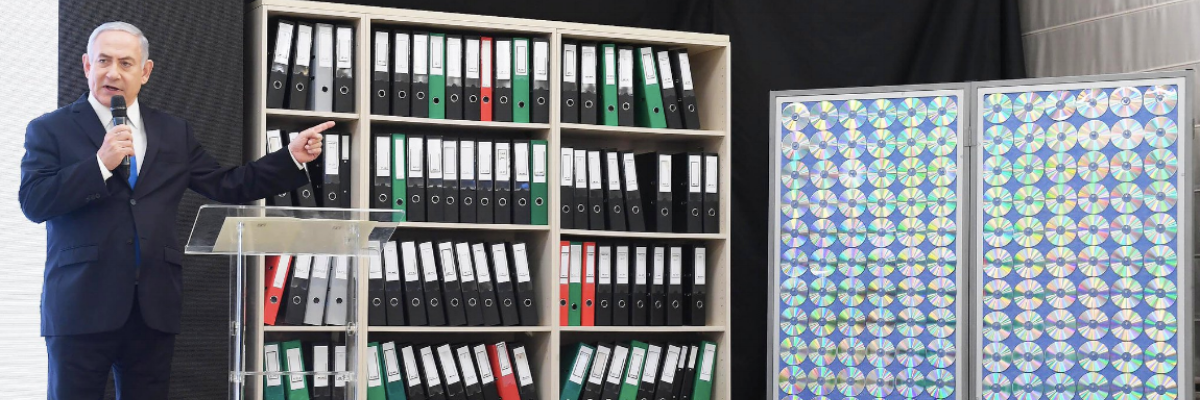
The material obtained weighed a half a tonne, he said, speaking in English in the staged presentation in front of a bookcase laden with binders he said held copies of original documents and cases of CDs.
He detailed an alleged program—"Project Amad"—that he said Iran was forced to shelve in 2003, but kept ready to put into action at any time while improving its "know-how".
He alleged the 2015 nuclear deal was "based on Iranian lies and Iranian deception."
"Even after the deal, Iran continued to preserve and expand its nuclear weapons know-how for future use," Netanyahu added.
Pompeo, until last week director of the CIA, called the intelligence trove authentic and said much of it was new to US experts.
But others argued it failed to show the nuclear accord was a "terrible deal," as Netanyahu called it, with some saying his presentation in fact furthered the case for the agreement.
"The information in the documents Netanyahu revealed is not new," Dan Shapiro, US ambassador to Israel under Obama, said on Twitter, echoing the reactions of many other proponents of the deal.
But he added that Netanyahu's presentation will be "useful to Trump when he announces he is leaving the deal by May 12. I believe he has already made that decision. This presentation, coordinated with his team, will be cited as evidence to justify it."
Photo Credit: Israeli PM
'No Credible Indications' of Iran Nuclear Weapons Program After 2009: IAEA
◢ The UN's nuclear watchdog reiterated Tuesday it had "no credible indications of activities in Iran relevant to the development of a nuclear explosive device after 2009", citing its assessments from 2015. The statement came a day after Israeli Prime Minister Benjamin Netanyahu unveiled what he said was new "proof" that Iran's nuclear weapons program could be reactivated at any time.
The UN's nuclear watchdog reiterated Tuesday it had "no credible indications of activities in Iran relevant to the development of a nuclear explosive device after 2009", citing its assessments from 2015.
A spokesman for the International Atomic Energy Agency (IAEA) said in a statement that its board of governors had "declared that its consideration of this issue was closed" after it was presented with a report in December 2015.
The statement came a day after Israeli Prime Minister Benjamin Netanyahu unveiled what he said was new "proof" that Iran's nuclear weapons program could be reactivated at any time.
Without referring to Netanyahu's claims directly, the IAEA spokesman said the agency "evaluates all safeguards-relevant information available to it".
"However, it is not the practice of the IAEA to publicly discuss issues related to any such information," he added.
Netanyahu said on Monday that he would share the material with other countries and with the IAEA.
In the statement the IAEA pointed to its previous findings relating to Iran's activities before 2009.
"Before the end of 2003, an organizational structure was in place in Iran suitable for the coordination of a range of activities relevant to the development of a nuclear explosive device," the statement says.
"Although some activities took place after 2003, they were not part of a coordinated effort," it said, adding that "these activities did not advance beyond feasibility and scientific studies, and the acquisition of certain relevant technical competences and capabilities."
Netanyahu's presentation came as US President Donald Trump considers whether to pull out of the 2015 atomic accord between Tehran and six world powers.
Under the JCPOA (Joint Comprehensive Plan of Action)—signed by Iran, the US, Britain, China, France, Germany and Russia—Tehran agreed to curbs on its nuclear program in exchange for the lifting of crippling economic sanctions.
The US could withdraw from the deal completely on May 12—the next deadline for waiving Iranian sanctions.
Photo Credit: Wikicommons

France says Iran Nuclear Deal Strengthened by Netanyahu Claims
◢ France said Tuesday that new claims about Iran's nuclear program presented by Israeli Prime Minister Benjamin Netanyahu reinforced the importance of a 2015 deal that imposes controls on the Islamic republic.
France said Tuesday that new claims about Iran's nuclear program presented by Israeli Prime Minister Benjamin Netanyahu reinforced the importance of a 2015 deal that imposes controls on the Islamic republic.
In an elaborate televised presentation on Monday, the hawkish Israeli leader claimed he had new "proof" via captured documents that Iran had developed a nuclear weapons plan which could be activated at any time.
The French foreign ministry said the details needed to be "studied and evaluated" but a spokesperson added that the evidence appeared to confirm what European powers had known for more than a decade and half.
"At first sight, they (the details) confirm that part of the Iranian nuclear program, as France and its partners stated during the first revelations in the summer of 2002, was not civilian," said the spokesperson in a statement received by AFP.
The 2015 nuclear deal negotiated between Iran and six world powers imposes nuclear inspections on Iran in return for the loosening of economic sanctions, but US President Donald Trump is threatening to pull out.
"The pertinence of the deal is reinforced by the details presented by Israel: all activity linked to the development of a nuclear weapon is permanently forbidden by the deal," said the foreign ministry spokesperson.
"The inspection regime put in place by the (UN nuclear watchdog) IAEA thanks to the deal is one of the most exhaustive and the most robust in the history of nuclear non-proliferation," the statement added.
French President Emmanuel Macron has urged Trump to stick with the nuclear accord, arguing that it presents the only viable option available to the international community.
Besides agreeing to snap inspections Iran also cut the number of centrifuges used for enriching uranium and reduced its stockpiles of the material.
The Israeli premier has repeatedly called for the deal—which Iran signed with Britain, China, France, Germany, Russia and the United States—to be either altered or scrapped.
Netanyahu did not present evidence on Monday that Iran had actively worked to obtain an atomic weapon since the 2015 agreement and the International Atomic Energy Agency (IAEA) considers the country to be complying. Trump is set to make announcement on May 12.
Photo Credit: Wikicommons
Netanyahu Says Has New 'Proof' of Iran Nuclear Weapons Program
◢ Israeli Prime Minister Benjamin Netanyahu said in a televised address Monday he had new "proof" of an Iranian nuclear weapons plan that could be activated at any time, as the US considers whether to pull out of the atomic accord with Tehran.
Israeli Prime Minister Benjamin Netanyahu said in a televised address Monday he had new "proof" of an Iranian nuclear weapons plan that could be activated at any time, as the US considers whether to pull out of the atomic accord with Tehran.
But while Netanyahu accused Israel's main enemy Iran of lying about its nuclear ambitions, he did not provide evidence that it had actively worked to obtain an atomic weapon since the 2015 agreement between Tehran and six world powers.
Iran has always denied it sought a nuclear weapon, insisting its atomic program was for civilian purposes.
Netanyahu made the comments in an elaborate presentation that included props, video and slides, broadcast live on television from Tel Aviv.
He said Israel had obtained tens of thousands of files "a few weeks ago in a great intelligence achievement," saying they had been moved to a secret compound in Tehran in 2017 that looked dilapidated from the outside.
The material obtained weighed a half a ton, he said. As he spoke, binders that he said held copies of original documents were on shelves behind him, as were cases containing CDs.
"Tonight we're going to reveal new and conclusive proof of the secret nuclear weapons program that Iran has been hiding for years from the international community in its secret atomic archive," Netanyahu said.
"We're going to show you Iran's secret nuclear files." He then laid out what he said was a years-old secret nuclear weapons program stored away and which could be put into action at any time. The details have been shared with the United States and will also be given to other countries and the International Atomic Energy Agency (IAEA), he said.
'Boy Who Cries Wolf'
After Netanyahu's statement was announced but before he spoke, Iranian Foreign Minister Mohammad Javad Zarif already dismissed it. "The boy who can't stop crying wolf is at it again," he wrote on Twitter.
"You can only fool some of the people so many times." Zarif then took to twitter again to lambast both Netanyahu and US President Donald Trump, who has a May 12 deadline to decide on whether or not to walk away from the nuclear deal.
Trump "is jumping on a rehash of old allegations already dealt with by the IAEA to 'nix' the (2015 nuclear) deal", Zarif tweeted.
"How convenient. Coordinated timing of alleged intelligence revelations by the boy who cries wolf just days before May 12," he added.
Trump has derided the nuclear deal with Iran as "insane" partly because its restrictions on Iran's nuclear activities begin expiring in 2025.
Most world powers however say the nuclear deal is working as intended for now and is the best way to keep Iran from acquiring the bomb.
French President Emmanuel Macron and Chancellor Angela Merkel of Germany left Washington last week after talks with Trump which failed to secure any promise to keep the deal alive.
'Dominate the Middle East'
The Israeli premier has repeatedly called for the accord—which Iran signed with Britain, France, China, Russia, the United States and Germany— to either be altered or scrapped.
He says the agreement does not prevent Tehran from eventually obtaining nuclear weapons and says the lifting of sanctions has increased Tehran's ability to finance proxy militants in the Middle East.
Netanyahu also wants to see curbs on Iran's missile program. On Monday, he said the nuclear deal was "based on Iranian lies and Iranian deception."
"Even after the deal, Iran continued to preserve and expand its nuclear weapons know-how for future use," Netanyahu said.
His presentation came after he met visiting US Secretary of State Mike Pompeo on Sunday and spoke with Trump by phone on Saturday. Pompeo reiterated during the visit that Trump will withdraw from the nuclear deal "if we can't fix it."
Trump and his Middle East allies argue the deal, approved by Barack Obama, was too weak and needs to be replaced with a more permanent arrangement and supplemented by controls on Iran's missile program.
Pompeo, a former CIA chief and congressman, also joined Netanyahu in lashing out at Iran on Sunday. "Iran's ambition to dominate the Middle East remains," Pompeo said.
Rob Malley, a former official in Obama's administration, said on Twitter that "for those who have followed the Iranian nuclear file, there is nothing new in (Netanyahu's) presentation".
"All it does is vindicate need for the nuclear deal. But the Israeli prime minister has an audience of one: Trump. And he's unfortunately unlikely to reach the same conclusion."
Israel is considered the Middle East's sole nuclear-armed nation, though it has never acknowledged the capability.
Photo Credit: Kremlin
Netanyahu to Speak on 'Significant Development' on Iran Nuclear Deal
◢ Prime Minister Benjamin Netanyahu will speak Monday on a "significant development" on the Iran nuclear deal, his office said, as the White House considers whether to pull out of the landmark accord that Israel opposes.
Prime Minister Benjamin Netanyahu will speak Monday on a "significant development" on the Iran nuclear deal, his office said, as the White House considers whether to pull out of the landmark accord that Israel opposes.
Netanyahu will give the statement at Israel's defence ministry in Tel Aviv at 8:00 pm (1700 GMT). It follows US Secretary of State Mike Pompeo's visit on Sunday and a telephone conversation between Netanyahu and US President Donald Trump on Saturday.
Trump is due to decide on May 12 whether to reimpose sanctions on Tehran, putting in peril the 2015 nuclear accord.
Pompeo has warned that the United States will withdraw from the agreement "if we can't fix it."
The Israeli premier has repeatedly called for the accord between world powers and his country's main enemy to either be altered or scrapped.
He alleges the agreement does not prevent Iran from eventually obtaining nuclear weapons and says the lifting of sanctions has increased Tehran's ability to finance proxy militants in the Middle East.
Most world powers however say the nuclear deal is working as intended for now and is the best way to keep Iran from acquiring the bomb.
Israel is also deeply concerned over Iran's presence in Syria, where it is backing President Bashar al-Assad's regime.
Netanyahu has pledged to stop Iran from entrenching itself militarily in the neighbouring country.
On Monday, a monitor said missile strikes on central Syria killed 26 pro-regime fighters, most of them Iranians, in a raid it said bore the hallmarks of an Israeli operation.
Israeli Intelligence Minister Yisrael Katz told army radio that he was "not aware" of the strikes.
The latest such attacks came amid heightened tensions after Damascus and Tehran accused Israel on April 9 of conducting deadly strikes against a military base in central Syria.
Pompeo joined Netanyahu in lashing out at Iran when the two met in Tel Aviv on Sunday. "Iran's ambition to dominate the Middle East remains," Pompeo said.
Photo Credit: Wikicommons
Netanyahu Turns Up Volume as Iran Deadline Nears
◢ Israeli Prime Minister Benjamin Netanyahu made a fresh call Monday for an overhaul of the Iran nuclear deal as US President Donald Trump's deadline for further Iranian concessions edged closer. Netanyahu said the 2015 agreement leaves Iran able to quickly reboot its nuclear program to enable military production.
Israeli Prime Minister Benjamin Netanyahu made a fresh call Monday for an overhaul of the Iran nuclear deal as US President Donald Trump's deadline for further Iranian concessions edged closer.
Trump has threatened to tear up the 2015 agreement that lifted sanctions on Iran in exchange for curbs to its nuclear activity, unless it curbs its ballistic missile program by May 12.
"Israel will not allow regimes that seek our annihilation to acquire nuclear weapons," Netanyahu told an audience of diplomats in a speech in Jerusalem.
"This is why this deal has to be either fully fixed or fully nixed," he said in English.
Iran says it is ready to relaunch its nuclear program—which the West suspects is designed to produce a bomb—if Trump kills the deal.
Netanyahu said the 2015 agreement leaves Iran able to quickly reboot its nuclear program to enable military production.
"It gives Iran a clear path to a nuclear arsenal," he said. "It allows, over a few years, unlimited enrichment of uranium, the core ingredient required to produce nuclear bombs."
The United States delivered much the same message Monday, at a meeting of the Nuclear Non-Proliferation Treaty (NPT) in Geneva.
Christopher Ford, US Assistant Secretary for International Security and Nonproliferation, said the Islamic republic's nuclear program remained "dangerously close to rapid weaponization."
Iran insists it never intended to build a nuclear weapon.
Photo Credit: Wikicommons