
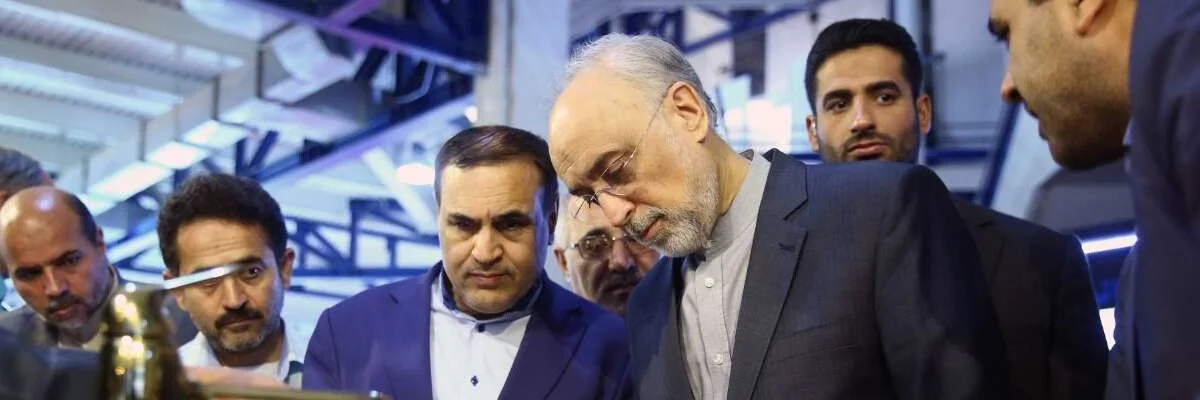
Iran Advances Research on Uranium Metal Production
Tehran told the UN nuclear watchdog Wednesday that it was advancing research on uranium metal production, in what would be a fresh breach of the limits in Iran's 2015 deal with world powers.
Tehran told the UN nuclear watchdog Wednesday that it was advancing research on uranium metal production, in what would be a fresh breach of the limits in Iran's 2015 deal with world powers.
The latest move, which adds to pressure on US President-Elect Joe Biden just days before his inauguration, concerns Iran's plans to conduct research on uranium metal production at a facility in the city of Isfahan.
The Vienna-based International Atomic Energy Agency (IAEA) said in a statement that "Iran informed the Agency in a letter on 13 January that modification and installation of the relevant equipment for the mentioned R&D activities have been already started'".
Iran says the research is aimed at providing advanced fuel for a research reactor in Tehran.
"Natural uranium will be used to produce uranium metal in the first stage," the Iranian ambassador to the UN in Vienna Kazem Gharib Abadi said in a tweet.
The topic is sensitive because uranium metal can be used as a component in nuclear weapons and the 2015 deal contained a 15-year ban on "producing or acquiring plutonium or uranium metals or their alloys".
After 10 years Iran would have been allowed to initiate research on producing uranium metal-based fuel "in small agreed quantities" but only if the other parties to the deal had given approval.
In 2018 US President Donald Trump dramatically withdrew from the deal and went on to re-impose crippling economic sanctions on Iran.
The following year Tehran announced it would start breaking the deal's limits on its nuclear activity.
The breaches have included exceeding the stockpile limit on enriched uranium, enriching beyond the permitted purity level, and using more advanced centrifuges than permitted under the deal.
Tensions have increased since the assassination in late November of Iranian nuclear physicist Mohsen Fakhrizadeh.
In the aftermath of the attack, blamed on Israel, hardliners in Tehran pledged a response and Iran's parliament passed a controversial law calling for expanded nuclear activity and for an end to IAEA inspections.
The law also demanded Iran's Atomic Energy Organization "operate a facility of metal uranium production" within five months.
Iran says all of its breaches of the 2015 deal's limits are reversible, but insists that the US has to come back to the deal and lift sanctions first.
Biden has signalled he is willing to rejoin the pact but faces a tight window of opportunity between his own inauguration and presidential elections in Iran in June.
Photo: IRNA
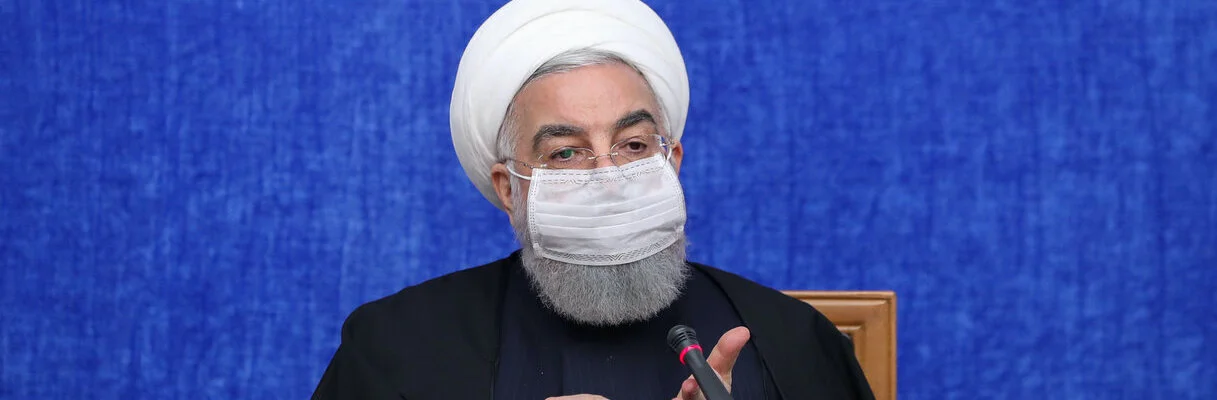
Iran Security Body Urges Unity on Nuclear Policy
Iran's top security body called Saturday for unity on the country's nuclear policy following a public row between the government and parliament over a controversial bill.
Iran's top security body called Saturday for unity on the country's nuclear policy following a public row between the government and parliament over a controversial bill.
The bill "for the lifting of sanctions and protection of the Iranian people's interests" was approved by the powerful Guardian Council on Wednesday and has to be signed by President Hassan Rouhani to become law.
Having drawn heated opposition from the government, the bill calls on the administration to end UN inspections of Iran's nuclear facilities and to "produce and store 120 kilogrammes (265 pounds) per year of uranium enriched to 20 percent.”
Both steps would run counter to commitments made by Tehran in a landmark deal with major powers in 2015 and would likely complicate efforts to get Washington back on board after outgoing US President Donald Trump abandoned it in 2018.
In a statement published by Iranian media on Saturday, the supreme national security council said that the bill "does not produce any specific issue for national interests.”
“In contrast, what is against national interests and a cause for concern is this ruckus which has damaged the position and status of the country's legal bodies," it said.
The body condemned "recent remarks and attitudes" which have "sacrificed national for partisan interests, have no benefit for the country and send the wrong message" to Iran's foes.
It called on authorities to focus on "reinforcing national unity" and vowed to prevent Iran's interests becoming "a plaything in the hands of politicians".
Passage of the bill, which was first drafted in early November, was speeded up following the assassination of Iran's top nuclear scientist Mohsen Fakhrizadeh.
He was killed on a major road outside Tehran last week in a bomb and gun attack that Iran has blamed on its arch foe Israel.
The security council statement came after Rouhani and parliament speaker Mohammad-Bagher Ghalibaf exchanged sharp remarks in a public dispute in recent days.
On Wednesday, the president called the bill "detrimental to the course of diplomatic activities."
Rouhani's government has signaled a readiness to engage with US President-elect Joe Biden after four tense years under Trump, who reimposed sanctions after withdrawing the United States from the nuclear agreement.
Photo: IRNA
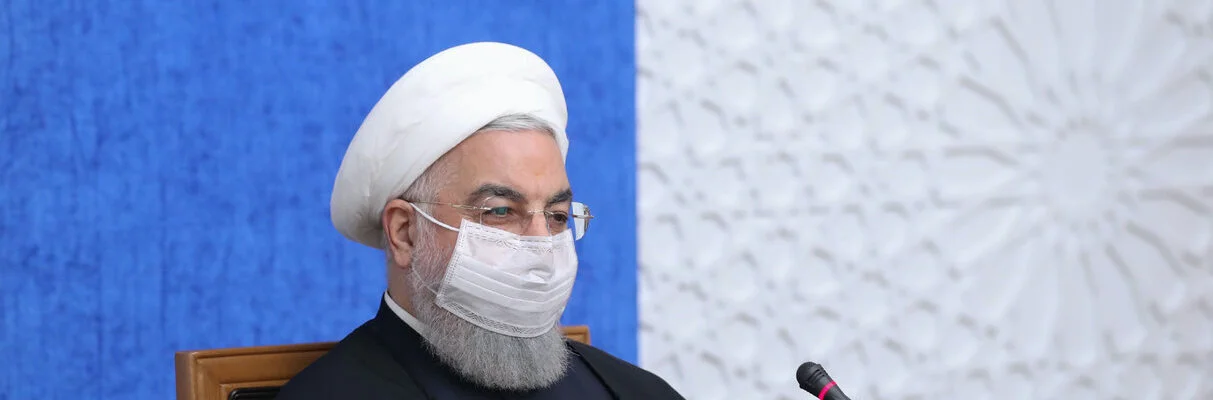
Iran Parliament's Bid to End Nuclear Inspections Hits Opposition
The Iranian parliament's backing on Tuesday of a plan to end nuclear inspections after the assassination of the country's top nuclear scientist has met immediate opposition from the government.
The Iranian parliament's backing on Tuesday of a plan to end nuclear inspections after the assassination of the country's top nuclear scientist has met immediate opposition from the government.
Deputies supported a draft bill "for the lifting of sanctions and protection of the Iranian people's interests", saying they wanted to achieve the objectives of "martyred" scientist Mohsen Fakhrizadeh.
Fakhrizadeh was assassinated on a major road outside Tehran on Friday in a bomb and gun attack that the Islamic republic has blamed on its arch foe Israel.
"The government has explicitly announced that it does not agree with (this) plan" which it considers "neither necessary nor useful", foreign ministry spokesman Saeed Khatibzadeh told a news conference Tuesday.
The draft bill calls on the government to end UN inspections of Iran's nuclear facilities and to "produce and store 120 kilogrammes per year of uranium enriched to 20 percent".
Such steps would run counter to commitments made by Iran as part of a landmark nuclear deal agreed with world powers in 2015.
The deal offers Iran relief from sanctions in exchange for curbs on its nuclear programme and UN-verified safeguards to prove it is not developing nuclear weapons.
The Islamic Republic has always denied it is seeking such weaponry.
Seemingly in response to Israel's characterisation of Fakhrizadeh as the father of a secret nuclear weapons programme, Khatibzadeh said that the scientist had been "one of the main assistants behind the scenes in discussions" that led to the 2015 accord.
State news agency IRNA on Tuesday released undated pictures of Fakhrizadeh being awarded a medal by Iran's President Hassan Rouhani for his "contribution" to the Vienna agreement.
The multilateral accord has been hanging by a thread since 2018, when President Donald Trump unilaterally withdrew the United States and reimposed sanctions that have battered Iran's economy.
Iran has retaliated by gradually rolling back most of its commitments under the nuclear deal.
In its latest report last month, the International Atomic Energy Agency (IAEA) said Iran had enriched uranium over the 3.67 percent limit set out in the 2015 accord.
The UN's nuclear watchdog said that Iran had not exceeded the threshold of 4.5 percent and that the country was still complying with its strict inspections regime.
Speaking to reporters on Tuesday, Iran's government spokesman Ali Rabiei emphasised that the only institution mandated to make decisions on the country's nuclear programme was the Supreme National Security Council.
He also noted that any decisions made by that body require approval by supreme leader Ayatollah Ali Khamenei.
In an interview with AFP on Monday, IAEA chief Rafael Grossi said Iran had nothing to gain from ending inspections of its nuclear facilities.
"We understand the distress but at the same time it is clear that no-one, starting with Iran, would have anything to win from a decrease, limitation or interruption of the work we do together with them," Grossi said.
Photo: IRNA
Iran Has Nothing to Gain From Halting Inspections: Grossi
Iran has nothing to gain from ending inspections of its nuclear facilities, the head of the UN's nuclear watchdog warned as tensions rise after a top Iranian nuclear scientist was assassinated.
By Jastinder Khera and Anne Beade
Iran has nothing to gain from ending inspections of its nuclear facilities, the head of the UN's nuclear watchdog warned as tensions rise after a top Iranian nuclear scientist was assassinated.
In an interview with AFP after a year in office, IAEA Director General Rafael Grossi issued the appeal in response to calls by Iranian MPs to end inspections following the killing.
"We understand the distress but at the same time it is clear that no-one, starting with Iran, would have anything to win from a decrease, limitation or interruption of the work we do together with them," Grossi said.
Grossi, 59, confirmed that so far the IAEA had not yet received any signal from Iranian authorities that anything would change regarding inspections in the wake of the killing of Mohsen Fakhrizadeh.
Iran's parliament on Sunday demanded a halt to those inspections, signalling another potential retreat from a key commitment in its 2015 nuclear deal with world powers.
This is not the first time that parliamentarians have expressed themselves in this way or in very similar ways," Grossi pointed out.
"We haven't received any indication of restriction or limitation of their cooperation with us," he said. "I do not see any reason to believe that this would be the case now."
Grossi emphasised that the IAEA's extensive inspections regime was "essential" if the outside world was to have assurances about the nature of Iran's nuclear programme.
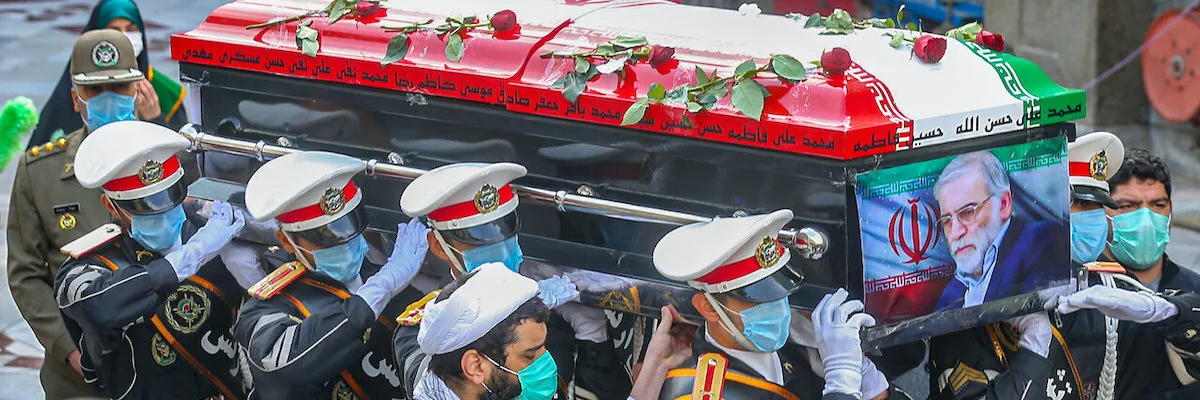
Fakhrizadeh was laid to rest on Monday, three days after he was assassinated on a major road outside Tehran.
"Let me say that we abhor violence of any type, we are an international organisation for peace and security," Grossi said.
The killing could put yet more strain on diplomatic efforts to salvage Iran's 2015 nuclear deal with world powers, which has been disintegrating ever since the Trump administration withdrew from it two years ago.
High-Stakes Gamble
Iran has been one of the thorniest issues Grossi has had to tackle over an eventful year since taking office in early December 2019.
"They have a very large nuclear programme that requires as you know one of the biggest, if not the biggest efforts in terms of inspection. Without that... the instability in the region would be far higher," Grossi said.
A high point during his leadership was his trip to Tehran in August which ended in an agreement allowing IAEA inspectors access to two sites where undeclared nuclear activity may have taken place in the 2000s.
That had followed months where Tehran had denied access to the locations.
"I was served with a denial of access to two sites barely 40 days into the job, something that had never happened before in the history of the IAEA," Grossi recalls.
He admitted that some member states and analysts had thought his gambit of flying to Iran for talks was a risk.
However, it paid off and won him plaudits in Vienna's diplomatic circles.
'Sense of Urgency'
However, when it comes to another controversial undeclared site, in the Turquzabad district of Tehran, Grossi said there were still unanswered questions over the presence of nuclear material.
"I do not want to dramatise but it is important that we get clarification," he said.
While not setting a deadline for Iran to provide the necessary information, Grossi said "a sense of urgency is clear on my side" and recalled that the site has been under discussion for almost two years now.
Grossi said his proudest achievement was that the agency managed to keep going throughout the coronavirus despite the challenges.
"I had to argue my way with foreign ministers, I had to hire private planes to send my inspectors - it wasn't easy."
Looking to the year ahead, Grossi said he hoped the Agency would be a "priority" for the incoming administration of President-elect Joe Biden.
Photo: IRNA
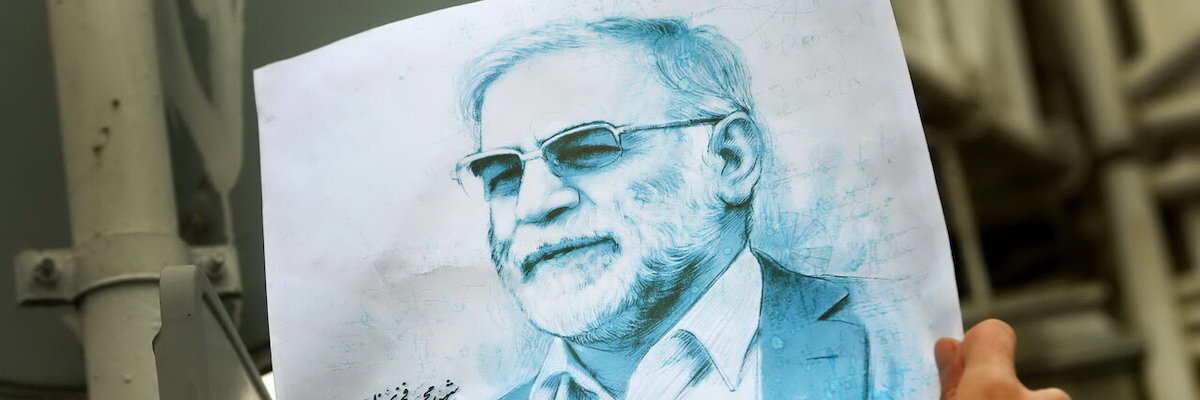
Iran Mulls Response as it Prepares to Bury Killed Nuclear Scientist
Debate raged in Iran on Sunday over how and when to respond to a top nuclear scientist's assassination, blamed on arch-foe Israel, as his body was honoured at Shiite shrines to prepare it for burial.
By Amir Havasi
Debate raged in Iran on Sunday over how and when to respond to a top nuclear scientist's assassination, blamed on arch-foe Israel, as his body was honoured at Shiite shrines to prepare it for burial.
Two days after Mohsen Fakhrizadeh died from wounds sustained in a firefight between his guards and unidentified gunmen near Tehran, parliament demanded a halt to international inspections of Iranian nuclear sites while a top official hinted Iran should leave the global non-proliferation treaty.
Iran's Supreme National Security Council usually handles decisions related to the country's nuclear programme, and parliamentary bills must be approved by the powerful Guardians Council.
President Hassan Rouhani has stressed the country will seek its revenge in "due time" and not be rushed into a "trap.”
Israel says Fakhrizadeh was the head of an Iranian military nuclear programme, the existence of which the Islamic republic has consistently denied, and Washington had sanctioned him in 2008 for activities linked to Iran's atomic activities.
The scientist's body was taken for a ceremony on Sunday at a major shrine in the holy city of Qom before being transported to the shrine of the Islamic republic's founder Imam Khomeini, according to Iranian media.Fakhrizadeh's funeral will be held Monday in the presence of senior military commanders and his family, the defence ministry said on its website, without specifying where.
Demands for 'Strong Reaction'
Israel has not officially commented on Fakhrizadeh's killing, less than two months before US President-elect Joe Biden is set to take office after four years of hawkish foreign policy under President Donald Trump. Trump withdrew the US from a multilateral nuclear agreement with Iran in 2018 and then reimposed and beefed up punishing sanctions as part of its "maximum pressure" campaign against Tehran.
Biden has signalled his administration may be prepared to rejoin the accord, but the nuclear scientist's assassination has revived opposition to the deal among Iranian conservatives.
The head of Iran's Expediency Council, a key advisory and arbitration body, said there was "no reason why (Iran) should not reconsider the Nuclear Proliferation Treaty".
Mohsen Rezaee said Tehran should also halt implementation of the additional protocol, a document prescribing intrusive inspections of Iran's nuclear facilitates.
Iran's supreme leader Ayatollah Ali Khamenei called Saturday for Fakhrizadeh's killers to be punished. Parliament speaker Mohammad-Bagher Ghalibaf called Sunday for "a strong reaction" that would "deter and take revenge" on those behind the killing of Fakhrizadeh, who was aged 59 according to Iranian media.
Call for Strikes
For Israeli newspaper Haaretz, Fakhrizadeh's killing was clearly tied to Biden's arrival in office.
"The timing of the assassination, even if it was determined by purely operational considerations, is a clear message to President-elect Joe Biden, intended to show Israel's criticism" of plans to revive the deal, it said.
The UAE, which in September normalised ties with Israel, condemned the killing and urged restraint.
The foreign ministry, quoted by the official Emirati news agency WAM, said Abu Dhabi "condemns the heinous assassination of Mohsen Fakhrizadeh, which could further fuel conflict in the region...
"The UAE calls upon all parties to exercise maximum degrees of self-restraint to avoid dragging the region into new levels of instability and threat to peace," it said.
Britain, a party to the nuclear accord, said Sunday it was "concerned" about possible escalation of tensions in the Middle East following the assassination, while Turkey called the killing an act of "terrorism" that "upsets peace in the region.”
In Iran, ultra-conservative Kayhan daily called for strikes on Israel if it were "proven" to be behind the assassination.
Kayhan called for the port city of Haifa to be targeted "in a way that would annihilate its infrastructure and leave a heavy human toll.”
Iran has responded to the US withdrawal from the 2015 deal by gradually abandoning most of its key nuclear commitments under the agreement.
'Revive Iran's Nuclear Industry
Rezaee called on Iran's atomic agency to take "minimum measures" such as "stopping the online broadcast of cameras, reducing or suspending inspectors and implementing restrictions in their access" to sites, ISNA news agency reported.
Iran's parliament said the "best response" to the assassination would be to "revive Iran's glorious nuclear industry.”
It called for International Atomic Energy Agency (IAEA) inspectors to be barred from the country's atomic sites, said the legislature's news agency ICANA.
Some MPs had earlier accused inspectors of acting as "spies" potentially responsible for Fakhrizadeh's death.
But the spokesman for Iran's atomic energy organisation, Behrouz Kamalvandi, told IRNA on Saturday that the issue of inspectors' access "must be decided on at high levels" of the Islamic republic's leadership.
Photo: IRNA