
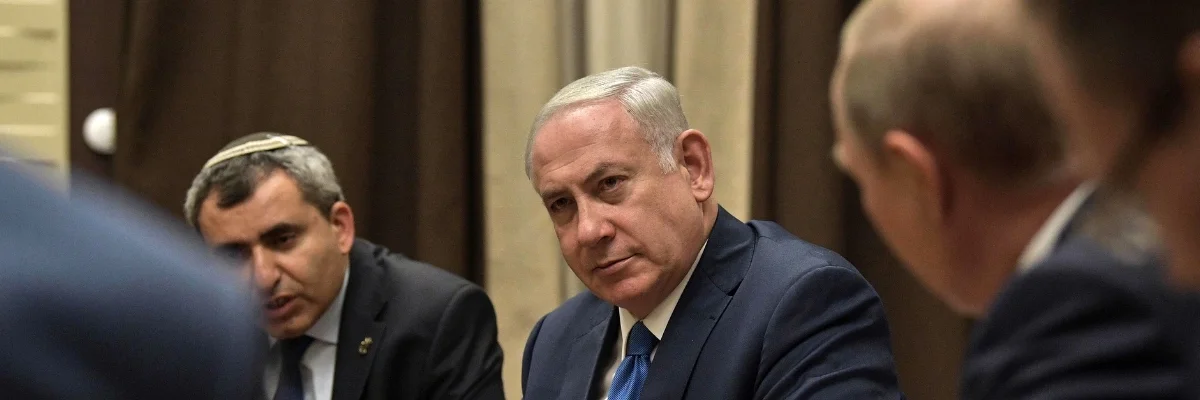
Netanyahu Heads to Europe Seeking About-Face on Iran
◢ Israeli Prime Minister Benjamin Netanyahu embarks Monday on a three-day European tour in Germany set to be dominated by strategic differences on Iran, as leaders attempt to rescue the nuclear deal after US withdrawal.
Israeli Prime Minister Benjamin Netanyahu embarks Monday on a three-day European tour in Germany set to be dominated by strategic differences on Iran, as leaders attempt to rescue the nuclear deal after US withdrawal.
With partners in Berlin, Paris and London still reeling from President Donald Trump's decision last month to exit the hard-fought 2015 accord, Netanyahu is expected to seek European cooperation on a still-to-be-determined Plan B.
"The aim to prevent Iran from developing any kind of nuclear capacity was always the foundation of international policy on Iran," Israel's ambassador to Germany, Jeremy Issacharoff, told AFP ahead of the visit.
Issacharoff said that despite "differences of opinion" on how to achieve the aim of hemming in Iran on nuclear matters, "we share the same goal".
Germany, France and Britain are three of the signatories of the 2015 Joint Comprehensive Plan of Action (JCPOA) between world powers and Iran, aimed at keeping Tehran from acquiring nuclear weapons.
Netanyahu, who has railed against the deal which offers sanctions relief in exchange for strict limits on Iran's nuclear activities, will hold talks with Chancellor Angela Merkel in Berlin in the late afternoon, followed by a joint news conference.
He will continue on to Paris for meetings with French President Emmanuel Macron on Tuesday and British Prime Minister Theresa May on Wednesday.
'Not Perfect'
In the face of the US retreat, all three leaders strongly defend the agreement as the best way to head off a regional arms race and have vowed with Russia and China, the two other signatory countries, to keep it alive.
German Foreign Minister Heiko Maas huddled with his Chinese counterpart Wang Yi on Thursday and insisted that Berlin "wants to maintain the nuclear agreement and make sure Iran maintains it too."
At the same news conference, Wang launched an unvarnished attack on US reliability in global affairs under Trump.
"It is a truism of international law that international accords must be respected... (and) major countries must set an example, not do the opposite," he said.
Supporters also fear the reimposition of US sanctions could hit European firms that have done business with Iran since the accord was signed.
Merkel has acknowledged that while European powers see the JCPOA as the best guarantee against an Iran with nuclear weapons, it is "not perfect".
The Europeans have proposed hammering out a supplementary deal with Tehran covering its ballistic missile program as well as its interventions in countries such as Lebanon, Syria, Iraq and Yemen.
Western powers view Iran's meddling as destabilizing for the region while Israel sees it as a direct threat to its existence.
"I will discuss with them ways to block Iran's nuclear aspirations and Iran's expansion in the Middle East," Netanyahu said last week of his European meetings, noting the issues were "crucial to Israel's security".
Israel is considered the leading military power in the Middle East and believed to be the only country in the region to possess nuclear weapons.
Photo Credit: Kremlin.ru
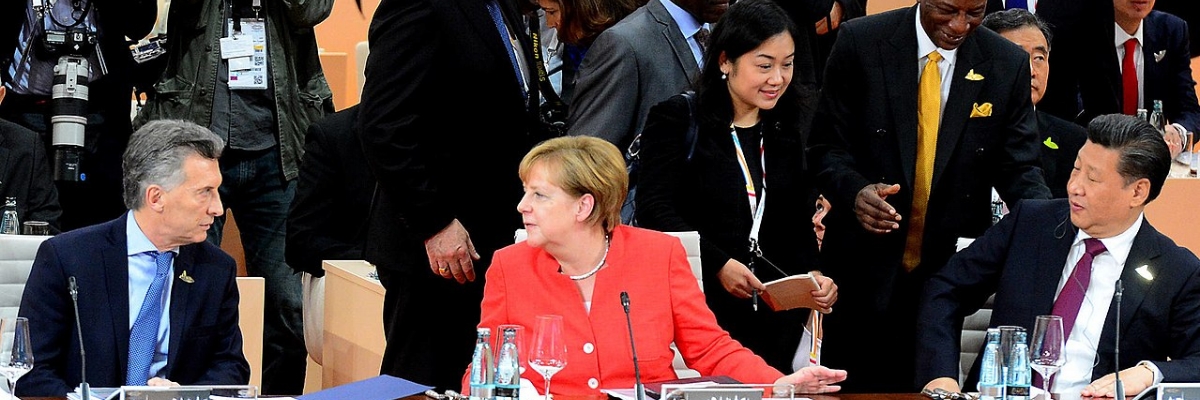
Merkel, Chinese Premier Defend Iran Deal, Free Trade
◢ German Chancellor Angela Merkel and Chinese Premier Li Keqiang defended the Iran nuclear deal on Thursday, with Li hinting that terminating the pact would complicate negotiations with North Korea. Merkel and Li showed a united front on Iran and free trade—two issues that have seen high-profile interventions by US President Donald Trump—during their meeting at the opulent Great Hall of the People in Beijing.
German Chancellor Angela Merkel and Chinese Premier Li Keqiang defended the Iran nuclear deal on Thursday, with Li hinting that terminating the pact would complicate negotiations with North Korea.
Merkel and Li showed a united front on Iran and free trade—two issues that have seen high-profile interventions by US President Donald Trump—during their meeting at the opulent Great Hall of the People in Beijing.
Li warned that ending the agreement with Tehran "will not just impact Iran, but also have a negative impact on (the ability) to solve other hot international issues through peaceful negotiations."
He did not mention North Korea by name, but analysts have warned that Trump's withdrawal from the Iran deal dented Washington's negotiating credibility ahead of his scheduled meeting with North Korean leader Kim Jong Un next month.
The German leader also sounded the alarm about the economic impact on Europe of Trump's move to quit the Iran agreement.
Trump's decision to reimpose sanctions on Tehran, despite pleas from allies to maintain the deal, could hit European firms that have done business with Iran since the 2015 accord was signed.
If European companies pull out or shrink operations in Iran fearing US sanctions, it would "create an opportunity for businesses in other countries to step in and play a greater role", Merkel said.
Meanwhile, Li dismissed the idea that the Iran crisis paved the way for the internationalization of the Chinese currency, amid speculation that demand for yuan-denominated oil futures would increase.
"The internationalization of the yuan is a long-term process that is closely linked to the development of the Chinese economy," Li said.
On trade, Merkel welcomed China's moves to reduce automobile import tariffs and allow foreign carmakers to own a majority stake in joint ventures with
Chinese partners.
The Chancellor drove home Berlin's demand for Beijing to ease barriers on foreign investment, saying the two countries would sign a memorandum of understanding to offer mutual access to each others' markets for autonomous vehicles.
"China and Germany are on the path of promoting multilateralism and bolstering free trade," said Merkel, who was accompanied by an industry delegation of 18 German executives.
Li hinted that a China-EU investment agreement, which has been in the works for years, might be signed during a bilateral meeting in July in Beijing.
"China's doors (for investment) will be opened even more," Li said.
Merkel was expected to take up the case of Liu Xia, widow of Nobel peace laureate Liu Xiaobo, who remains under house arrest without charges nearly a year after her husband died of cancer in custody.
"We have found a dialogue mechanism where difficult questions can be raised," she said. Merkel will meet with President Xi Jinping later Thursday.
Photo Credit: Wikicommons

Iran Warns US It Would Regret Quitting Nuclear Deal
◢ Iranian President Hassan Rouhani warned that if the United States quits the nuclear deal then Washington will regret it "like never before", as British Foreign Secretary Boris Johnson scrambles to save the agreement during talks with the Trump administration Monday.
Iranian President Hassan Rouhani warned that if the United States quits the nuclear deal then Washington will regret it "like never before", as British Foreign Secretary Boris Johnson scrambles to save the agreement during talks with the Trump administration Monday.
US President Donald Trump has threatened to withdraw from the agreement when it comes up for renewal on May 12, demanding his country's European allies "fix the terrible flaws" or he will re-impose sanctions.
"If the United States leaves the nuclear agreement, you will soon see that they will regret it like never before in history," reformist Rouhani said in a televised speech in northwestern Iran.
"Trump must know that our people are united, the Zionist regime (Israel) must know that our people are united," Rouhani said.
"Today all (Iran's) political factions, whether they be from the right, the left, the conservatives, reformers and moderates are united," he added.
The nuclear deal was struck in 2015 between Iran and Britain, China, France, Germany, Russia and the United States, then led by Barack Obama.
Under the pact, sanctions were eased in return for a commitment not to pursue a nuclear bomb, but Iran says it is not reaping the rewards despite complying with the deal.
A senior Israeli official said Sunday that Trump had not informed Israel of whether it will withdraw from the agreement.
"In effect, I don't know what Trump will decide because he hasn't told me," the official said on condition of anonymity, making clear Israel had not yet been told of Trump's decision.
Trump has consistently complained about the agreement, citing perceived flaws including "sunset" provisions lifting some nuclear restrictions from 2025.
In an attempt to salvage the deal, French President Emmanuel Macron has recently pushed to extend its scope to address this issue, as well as the absence of any limits on Iran's conventional missile capabilities and Tehran's role in the region.
Britain's Johnson will on Monday begin a two-day visit to Washington, with the nuclear deal among issues on top of the agenda, the Foreign Office said.
He is due to meet US Vice President Mike Pence, National Security Advisor John Bolton and Congressional foreign policy leaders.
He said Britain—which remains committed to the agreement—the United States and Europe were "united in our effort to tackle the kind of Iranian behavior that makes the Middle East region less secure—its cyber activities, its support for groups like Hezbollah, and its dangerous missile program".
Iran's support for Syrian President Bashar al-Assad, via the Lebanese armed group Hezbollah in Syria's civil war, and its backing for Shiite Huthi rebels in Yemen have added to frictions between Tehran and Western powers.
'Honouring our Commitment'
Rouhani vehemently reiterated his country's opposition to curtailing its non-nuclear missile capabilities, in his speech on Sunday.
Tehran "will build as many missiles and weapons as needed" for its defense, he said.
"We are honoring our commitment, but we are telling the whole world we will not negotiate with anyone about our weapons and our defense."
Iran's president also said that while he is open to discussing the
country's regional role, he would not abandon what he described as its fight
"against terrorism."
"We want to talk to the world so that our region is safe" but "we will not allow you to create a new Daesh," he said, using an Arabic term for the Islamic State group.
While Rouhani did not elaborate on this point, Iran's ally the Syrian government has consistently referred to all armed opponents as "terrorists" and accused the West of facilitating terrorism.
Iran has always denied it sought a nuclear weapon, insisting its atomic program was for civilian purposes.
Rouhani did not specify how Iran would react if the US pulls out of the 2015 deal.
But he said he had given "the necessary orders", notably to Iran's Atomic Energy Organisation, in anticipation of Trump's decision.
As the May 12 US decision point nears, Iranian leaders have shuffled between placatory and hawkish comments, although the hardliners have taken a uncompromising stance.
On Thursday Ali Akbar Velayati, the foreign policy adviser to Iran's supreme leader Ayatollah Ali Khamenei, warned Tehran would quit the nuclear deal if the United States withdraws.
Photo Credit: Kremlin

Europe Backs Iran Deal as 'Best Way' to Counter Nuclear Threat
◢ The leaders of Britain, France and Germany have reiterated their commitment to the Iran nuclear deal "as the best way of neutralizing the threat of a nuclear-armed Iran", Downing Street said Sunday. Prime Minister Theresa May talked by phone with French President Emmanuel Macron and German Chancellor Angela Merkel on Saturday and Sunday.
The leaders of Britain, France and Germany have reiterated their commitment to the Iran nuclear deal "as the best way of neutralising the threat of a nuclear-armed Iran", Downing Street said Sunday.
Prime Minister Theresa May talked by phone with French President Emmanuel Macron and German Chancellor Angela Merkel on Saturday and Sunday when they agreed the current deal also left out some "important elements," it said.
"Our priority as an international community remained preventing Iran from developing a nuclear weapon," it said.
"They agreed that there were important elements that the deal does not cover but which we need to address—including ballistic missiles, what happens when the deal expires, and Iran's destabilizing regional activity.
"They committed to continue working closely together and with the US on how to tackle the range of challenges that Iran poses—including those issues that a new deal might cover."
Both Macron and Merkel held talks in Washington this week with US President Donald Trump, who has repeatedly threatened to quit the 2015 pact with Iran negotiated by his predecessor Barack Obama.
The pair tried to sell Trump on the idea of the deal being a stepping stone to a longer-term, broader agreement, pitching a "four pillars" solution.
The first column is Iran's nuclear program under the current accord. The others would target the country's nuclear activities after 2025 when so-called sunset clauses kick in, beef up global leverage against its regional influence and curtail its ballistic missile program.
US National Security Advisor John Bolton said Sunday that Trump had not yet decided whether or not to scrap the pact.
"He has made no decision on the nuclear deal, whether to stay in or get out," he told Fox News.
Photo Credit:
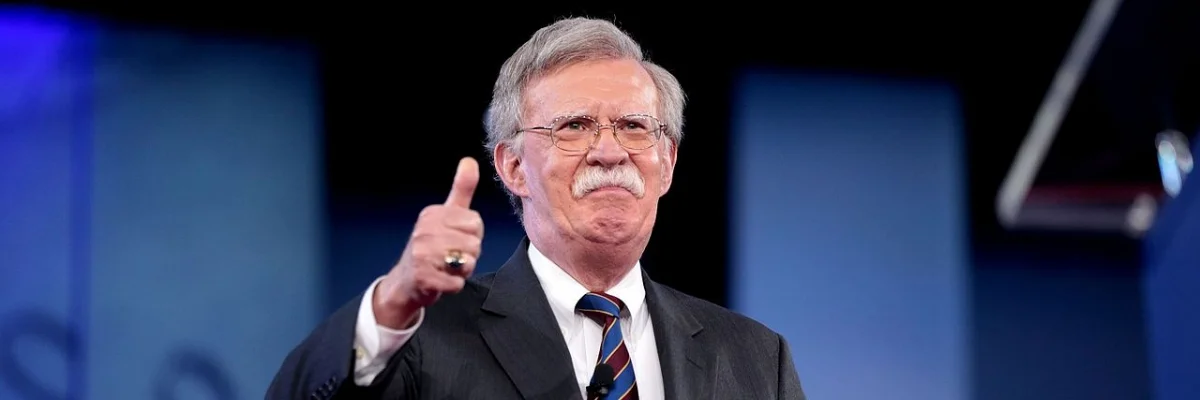
'No Decision' by Trump on Iran Nuclear Deal: Bolton
◢ US President Donald Trump has not decided whether or not to scrap the Iran nuclear deal, US National Security Advisor John Bolton said Sunday. Trump has called the existing accord "insane" and "ridiculous," in part because its restrictions start to expire in 2025.
US President Donald Trump has not decided whether or not to scrap the Iran nuclear deal, US National Security Advisor John Bolton said Sunday.
"He has made no decision on the nuclear deal, whether to stay in or get out," Bolton told Fox News Sunday.
"He is certainly considering the framework, the four pillars that President (Emmanuel) Macron laid out in their meeting last week," said Bolton, referring to efforts to supplement the Iran deal with additional measures to make it more palatable to Trump.
In 2015 the United States, along with other nations, struck a deal with Iran to end a 12-year standoff over that country's nuclear program, which was feared to be leading towards an atomic weapons capability.
Iran agreed to freeze its nuclear program in return for the lifting of punishing international sanctions, but Trump has criticized the deal as not going far enough.
Britain, France and Germany—the three European countries that signed the Iran nuclear deal—are working to head off Trump's threat to walk away from the accord and reimpose sanctions.
Trump has called the existing accord "insane" and "ridiculous," in part because its restrictions start to expire in 2025.
French President Emmanuel Macron has proposed an additional deal that extends Iran's nuclear restrictions while also curbing its ballistic missile program and support for militias in the Middle East.
Iran's President Hassan Rouhani rejected any hopes of rewriting the nuclear deal itself.
Photoe Credit: Wikicommons

Germany's Merkel Says Existing Iran Deal 'Not Sufficient' to Curb Iran Ambitions
◢ German Chancellor Angela Merkel, standing alongside President Donald Trump at the White House, said Friday that the existing international accord on Iran is not enough to curb the Islamic republic's regional ambitions.
AFP Correction: Headline corrected to remove reference to 'nuclear program' to better reflect original German speech.
German Chancellor Angela Merkel, standing alongside President Donald Trump at the White House, said Friday that the existing international accord on Iran is not enough to curb the Islamic republic's regional ambitions.
The so-called Joint Comprehensive Plan of Action, signed by Tehran and six world powers including Germany and the United States, is "a first step that has contributed to slowing down their activities in this particular respect," Merkel told reporters.
"But we also think from a German perspective that this is not sufficient in order to see to it that Iran's ambitions are curbed and contained."
"Europe and the United States ought to be in lock step on this," she said.
Photo Credit: Wikicommons

Merkel Heads for Tough Trump Talks on Trade, Iran Nuclear Deal
◢ German Chancellor Angela Merkel visits US President Donald Trump on Friday for a last-ditch European effort to prevent a transatlantic trade war and save the Iran nuclear deal. Merkel's working trip is expected to be far more business-like than this week's pomp-filled state visit by French President Emmanuel Macron, who has built a warm rapport with Trump despite stark policy differences.
German Chancellor Angela Merkel visits US President Donald Trump on Friday for a last-ditch European effort to prevent a transatlantic trade war and save the Iran nuclear deal.
Merkel's working trip is expected to be far more business-like than this week's pomp-filled state visit by French President Emmanuel Macron, who has built a warm rapport with Trump despite stark policy differences.
Trump's lavish welcome for Macron, with hugs and much back-slapping, contrasted sharply with a tense White House event in March last year in which Trump appeared to ignore Merkel's offer of a handshake.
Despite Merkel's more sober style, her objective will be the same as Macron's—to persuade Trump to back off his dual threats of punitive measures that could spark a transatlantic trade war and scrapping the Iran nuclear deal.
Trump last month announced tariffs of 25 percent on steel and 10 percent on aluminum, claiming foreign imports were harming US national security by undermining the domestic production needed for military readiness.
After an outcry from US allies, Trump granted a temporary exemption to key partners including the EU—but this expires on May 1.
On the eve of Merkel's Washington visit, Berlin's hopes were dim that the EU may be spared the sweeping customs duties, to which it has vowed to retaliate, potentially setting off spiraling counter-measures.
"From today's perspective, we must assume that the tariffs will come on May 1," said a German government source." And then we will see how we will handle it."
'Juggling Act'
The next looming deadline is May 12, the date by which Trump has threatened to tear up the landmark 2015 agreement to stop Iran from developing nuclear weapons in return for relief from international sanctions.
Trump has called the agreement, which Germany helped negotiate, "insane" and the "worst deal ever," demanding that its "disastrous flaws" be fixed.
The EU and other signatory powers have sought to convince Trump not to abandon the pact, warning that it was the best defense against a regional nuclear arms race.
Macron pitched the idea of seeking a separate pact to curb Iran's ballistic missile program and support for militias in the Middle East.
The German foreign ministry has insisted that "the biggest priority is maintaining the existing nuclear accord," while Merkel has also called Iran's ballistic missile programme a "cause for concern."
The talks won't be helped by the rocky relations between Germany's veteran leader and the billionaire and former reality TV star Trump.
'Difficult Partner'
Trump has repeatedly berated the EU's top economy for its huge trade surplus with the US and spending too little on NATO joint defense.
He has criticized Merkel for opening German borders since 2015 to a mass influx of mostly Muslim refugees, while she has watched with dismay Trump's decision to withdraw from the Paris climate accord.
Merkel routinely praises the a rules-based international order to tackle global problems from conflict and terrorism to environmental destruction, in stark contrast to Trump's "America First" stance.
"Angela Merkel is on her third US president in her long tenure as chancellor of Germany," said think-tank the German Marshall Fund of the United States.
"It is no secret that she sees the current resident of the White House as a 'difficult partner.' Her return to Washington this week, by all accounts, will be a juggling act."
Merkel—who developed close relationships with Trump's predecessors Barack Obama and George W. Bush—this week stressed that, despite the differences, she wants to preserve the bedrock strategic partnership.
"The transatlantic alliance, given the many non-democratic developments in this world," she said, "is a great treasure that I certainly want to cherish and nurture."
The Berliner Zeitung daily looked ahead to Merkel's tough diplomatic mission just after Macron's charm offensive, saying that "she can hardly follow Macron's best-buddy act, but she does need a strategy."
Photo Credit: Wikicommons
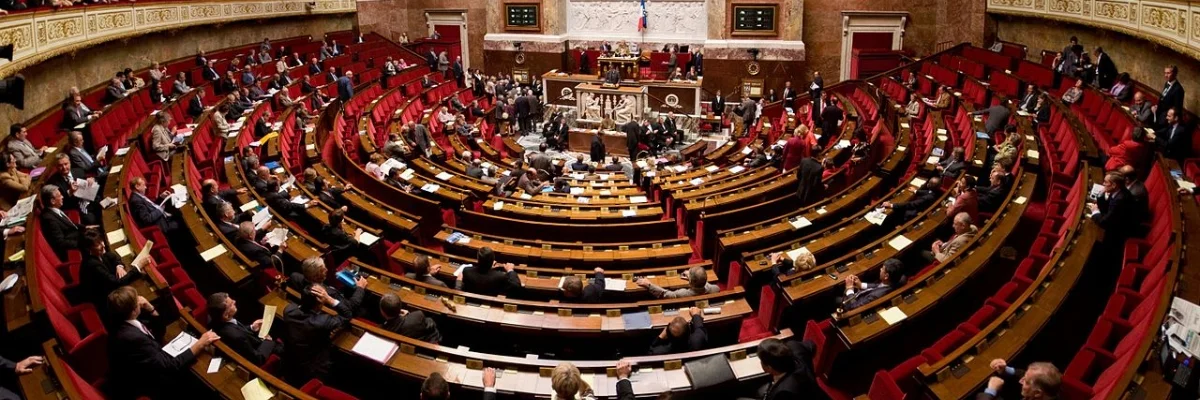
European MPs Urge US Not to Scrap Iran Nuclear Deal
◢ About 500 lawmakers from Germany, France and Britain on Thursday urged the US Congress to support the Iran nuclear deal which President Donald Trump has threatened to abandon. The MPs from the parliaments of the three European signatory countries said the landmark 2015 deal was a "major diplomatic breakthrough" that had halted the imminent threat of a nuclear-armed Iran.
About 500 lawmakers from Germany, France and Britain on Thursday urged the US Congress to support the Iran nuclear deal which President Donald Trump has threatened to abandon.
"It is the US's and Europe's interest to prevent nuclear proliferation in a volatile region and to maintain the transatlantic partnership as a reliable and credible driving force of world politics," the MPs wrote.
The MPs from the parliaments of the three European signatory countries said the landmark 2015 deal was a "major diplomatic breakthrough" that had halted the imminent threat of a nuclear-armed Iran.
"We were able to impose unprecedented scrutiny on the Iranian nuclear program, dismantle most of their nuclear enrichment facilities and drastically diminish the danger of a nuclear arms race," they wrote. "Not a drop of blood was spilt."
Scrapping the agreement would result "in another source of devastating conflict in the Middle East and beyond," they warned in an open letter published in several newspapers.
Trump has derided the deal as a capitulation to Tehran and has declared it no longer is in the US interest to maintain the sanctions relief his predecessor Barack Obama granted Iran in return for controls on its nuclear program.
He has demanded that US lawmakers and European allies fix "disastrous flaws" in the deal or face a US exit, possibly as early as next month.
The MPs warned that ending the deal would spell "lasting damage to our credibility as international partners in negotiation, and more generally, to diplomacy as a tool to achieve peace and ensure security."
French President Emmanuel Macron and German Chancellor Angela Merkel will both travel to Washington next week on separate official visits, in part to lobby Trump on the Iran issue.
Photo Credit: Wikicommons