
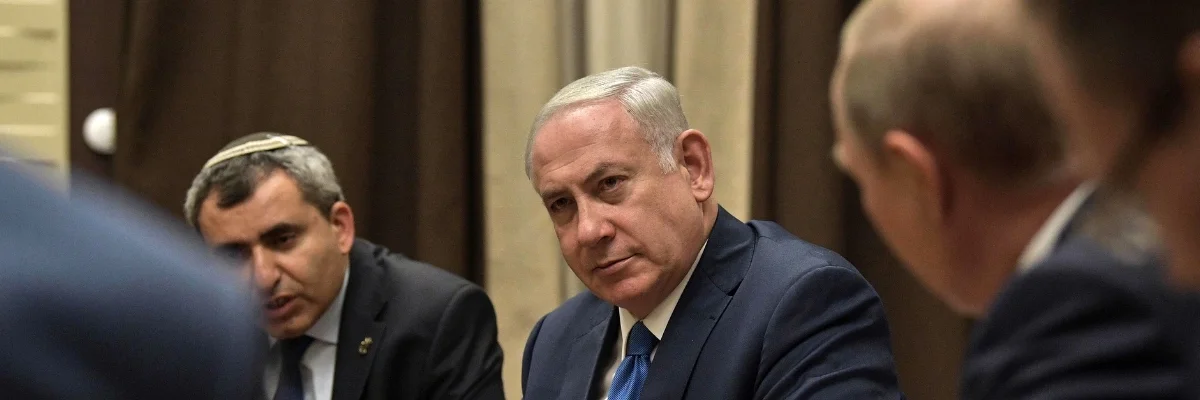
Netanyahu Heads to Europe Seeking About-Face on Iran
◢ Israeli Prime Minister Benjamin Netanyahu embarks Monday on a three-day European tour in Germany set to be dominated by strategic differences on Iran, as leaders attempt to rescue the nuclear deal after US withdrawal.
Israeli Prime Minister Benjamin Netanyahu embarks Monday on a three-day European tour in Germany set to be dominated by strategic differences on Iran, as leaders attempt to rescue the nuclear deal after US withdrawal.
With partners in Berlin, Paris and London still reeling from President Donald Trump's decision last month to exit the hard-fought 2015 accord, Netanyahu is expected to seek European cooperation on a still-to-be-determined Plan B.
"The aim to prevent Iran from developing any kind of nuclear capacity was always the foundation of international policy on Iran," Israel's ambassador to Germany, Jeremy Issacharoff, told AFP ahead of the visit.
Issacharoff said that despite "differences of opinion" on how to achieve the aim of hemming in Iran on nuclear matters, "we share the same goal".
Germany, France and Britain are three of the signatories of the 2015 Joint Comprehensive Plan of Action (JCPOA) between world powers and Iran, aimed at keeping Tehran from acquiring nuclear weapons.
Netanyahu, who has railed against the deal which offers sanctions relief in exchange for strict limits on Iran's nuclear activities, will hold talks with Chancellor Angela Merkel in Berlin in the late afternoon, followed by a joint news conference.
He will continue on to Paris for meetings with French President Emmanuel Macron on Tuesday and British Prime Minister Theresa May on Wednesday.
'Not Perfect'
In the face of the US retreat, all three leaders strongly defend the agreement as the best way to head off a regional arms race and have vowed with Russia and China, the two other signatory countries, to keep it alive.
German Foreign Minister Heiko Maas huddled with his Chinese counterpart Wang Yi on Thursday and insisted that Berlin "wants to maintain the nuclear agreement and make sure Iran maintains it too."
At the same news conference, Wang launched an unvarnished attack on US reliability in global affairs under Trump.
"It is a truism of international law that international accords must be respected... (and) major countries must set an example, not do the opposite," he said.
Supporters also fear the reimposition of US sanctions could hit European firms that have done business with Iran since the accord was signed.
Merkel has acknowledged that while European powers see the JCPOA as the best guarantee against an Iran with nuclear weapons, it is "not perfect".
The Europeans have proposed hammering out a supplementary deal with Tehran covering its ballistic missile program as well as its interventions in countries such as Lebanon, Syria, Iraq and Yemen.
Western powers view Iran's meddling as destabilizing for the region while Israel sees it as a direct threat to its existence.
"I will discuss with them ways to block Iran's nuclear aspirations and Iran's expansion in the Middle East," Netanyahu said last week of his European meetings, noting the issues were "crucial to Israel's security".
Israel is considered the leading military power in the Middle East and believed to be the only country in the region to possess nuclear weapons.
Photo Credit: Kremlin.ru

Europe Backs Iran Deal as 'Best Way' to Counter Nuclear Threat
◢ The leaders of Britain, France and Germany have reiterated their commitment to the Iran nuclear deal "as the best way of neutralizing the threat of a nuclear-armed Iran", Downing Street said Sunday. Prime Minister Theresa May talked by phone with French President Emmanuel Macron and German Chancellor Angela Merkel on Saturday and Sunday.
The leaders of Britain, France and Germany have reiterated their commitment to the Iran nuclear deal "as the best way of neutralising the threat of a nuclear-armed Iran", Downing Street said Sunday.
Prime Minister Theresa May talked by phone with French President Emmanuel Macron and German Chancellor Angela Merkel on Saturday and Sunday when they agreed the current deal also left out some "important elements," it said.
"Our priority as an international community remained preventing Iran from developing a nuclear weapon," it said.
"They agreed that there were important elements that the deal does not cover but which we need to address—including ballistic missiles, what happens when the deal expires, and Iran's destabilizing regional activity.
"They committed to continue working closely together and with the US on how to tackle the range of challenges that Iran poses—including those issues that a new deal might cover."
Both Macron and Merkel held talks in Washington this week with US President Donald Trump, who has repeatedly threatened to quit the 2015 pact with Iran negotiated by his predecessor Barack Obama.
The pair tried to sell Trump on the idea of the deal being a stepping stone to a longer-term, broader agreement, pitching a "four pillars" solution.
The first column is Iran's nuclear program under the current accord. The others would target the country's nuclear activities after 2025 when so-called sunset clauses kick in, beef up global leverage against its regional influence and curtail its ballistic missile program.
US National Security Advisor John Bolton said Sunday that Trump had not yet decided whether or not to scrap the pact.
"He has made no decision on the nuclear deal, whether to stay in or get out," he told Fox News.
Photo Credit:
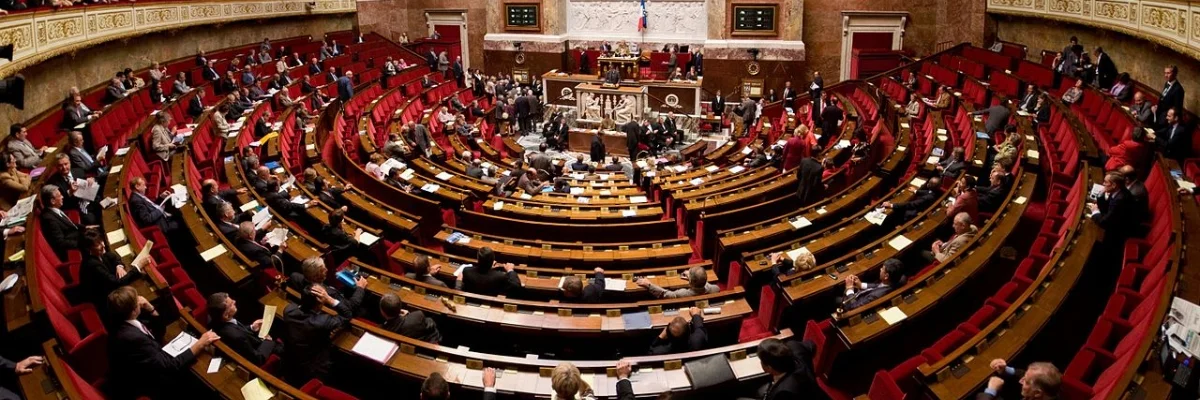
European MPs Urge US Not to Scrap Iran Nuclear Deal
◢ About 500 lawmakers from Germany, France and Britain on Thursday urged the US Congress to support the Iran nuclear deal which President Donald Trump has threatened to abandon. The MPs from the parliaments of the three European signatory countries said the landmark 2015 deal was a "major diplomatic breakthrough" that had halted the imminent threat of a nuclear-armed Iran.
About 500 lawmakers from Germany, France and Britain on Thursday urged the US Congress to support the Iran nuclear deal which President Donald Trump has threatened to abandon.
"It is the US's and Europe's interest to prevent nuclear proliferation in a volatile region and to maintain the transatlantic partnership as a reliable and credible driving force of world politics," the MPs wrote.
The MPs from the parliaments of the three European signatory countries said the landmark 2015 deal was a "major diplomatic breakthrough" that had halted the imminent threat of a nuclear-armed Iran.
"We were able to impose unprecedented scrutiny on the Iranian nuclear program, dismantle most of their nuclear enrichment facilities and drastically diminish the danger of a nuclear arms race," they wrote. "Not a drop of blood was spilt."
Scrapping the agreement would result "in another source of devastating conflict in the Middle East and beyond," they warned in an open letter published in several newspapers.
Trump has derided the deal as a capitulation to Tehran and has declared it no longer is in the US interest to maintain the sanctions relief his predecessor Barack Obama granted Iran in return for controls on its nuclear program.
He has demanded that US lawmakers and European allies fix "disastrous flaws" in the deal or face a US exit, possibly as early as next month.
The MPs warned that ending the deal would spell "lasting damage to our credibility as international partners in negotiation, and more generally, to diplomacy as a tool to achieve peace and ensure security."
French President Emmanuel Macron and German Chancellor Angela Merkel will both travel to Washington next week on separate official visits, in part to lobby Trump on the Iran issue.
Photo Credit: Wikicommons