
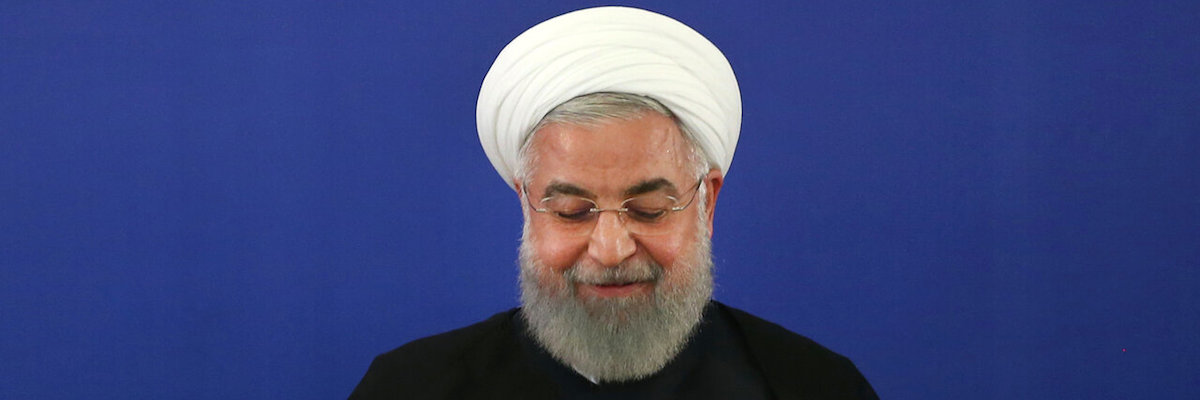
Iran 'Favors' Talks Despite Trump Snub
◢ President Hassan Rouhani said on Tuesday that Iran favors talks with the US if it lifts sanctions against the Islamic republic, despite his top diplomat turning down a meeting with US President Donald Trump. Rouhani said "peace with Iran is the mother of all peace" and "war with Iran is the mother of all wars" as he defended a landmark 2015 nuclear deal between Iran and world powers.
By David Vujanovic
President Hassan Rouhani said on Tuesday that Iran favors talks with the US if it lifts sanctions against the Islamic republic, despite his top diplomat turning down a meeting with US President Donald Trump.
Rouhani said "peace with Iran is the mother of all peace" and "war with Iran is the mother of all wars" as he defended a landmark 2015 nuclear deal between Iran and world powers.
"Iran favours talks and negotiations and, if the US really wants to talk, before anything else it should lift all sanctions," Rouhani said in remarks aired live on state television.
Tensions between Iran and the US have been rising since Trump unilaterally withdrew the US from the nuclear deal in May 2018 and began imposing sanctions on it as part of a "maximum pressure" campaign.
Rouhani, speaking after meeting with his top diplomat, Mohammad Javad Zarif, said Iran was ready for talks regardless of whether or not the US was party to the deal.
"Whether they want to come into the JCPOA or not, it's up to them," said Rouhani, referring to the accord known formally as the Joint Comprehensive Plan of Action.
"All sanctions should be lifted so that there will be no criminals facing us," he said, accusing the US of committing acts of "economic terrorism" for blocking food and medicine imports.
In response, the US ambassador on disarmament Robert Wood said: "Iran simply needs to make up its mind to decide what it wants to do".
"My president has said he is willing to sit down and have a discussion with Iran. We are not sure Iran wants to have that discussion," he said in answer to a question from AFP on the sidelines of a conference in Geneva.
However Rouhani described as "weird" the US approach of calling for negotiations and then slapping sanctions on Zarif.
"So how should we negotiate?" he said on Tuesday. "The person in charge of negotiations is the foreign minister. He must talk to you."
Trump has said publicly several times he is willing to hold talks with Iran even as he lambasts its leadership as corrupt, incompetent and a threat to regional security and US interests.
'Warmongers' Deceived Trump
Twelve months on from the US withdrawal, Iran responded by suspending some of its commitments under the nuclear deal.
The situation threatened to spiral out of control with ships attacked, drones downed and oil tankers seized.
At the height of the crisis, Trump called off air strikes against Iran at the last minute in June after its forces shot down a US drone.
Rouhani, with Zarif sitting beside him, defended the foreign minister who has faced criticism from hardliners over his role in the deal ultimately abandoned by the Americans.
"We had so many economic victories (in the wake of the deal) that it enraged some people," he said.
Rouhani said the US made a mistake when it thought "everything will be over" for Iran after "some planned a street riot" in December 2017.
At that time, Iran was rocked by days of deadly protests reportedly sparked by austerity measures.
"This caused Americans to be trapped. They thought Iran's system is weakened," he said.
"They said, 'One more push. Iran has reached a stage where if we give it another push, everything will be over'."
This push by "warmongers" deceived Trump and led to his decision to leave the JCPOA, he said.
'Oil for Oil'
Rouhani later spoke by phone with French President Emmanuel Macron and voiced support for further cooperation between Iran and Europe, according to the government's official website.
But "unfortunately, simultaneous with Iran and France's attempts to reduce tensions and create favorable conditions for peaceful coexistence in the region, we witness escalatory moves from the US," Rouhani told Macron.
In his earlier televised remarks, Rouhani urged the US to be ready to negotiate fairly
"Peace for peace and oil for oil," he said. "You cannot say that you won't allow our oil to be exported.
"It cannot be that the Strait of Hormuz is free for you and the Strait of Gibraltar is not free for us." Iran has also been locked in a high-seas standoff with US ally Britain since Royal Marines helped to seize a tanker carrying Iranian oil off the British overseas territory of Gibraltar on July 4.
Weeks later, Iran's Revolutionary Guards impounded a British-flagged tanker in the Strait of Hormuz—the conduit for much of the world's crude. Separately on Tuesday, Iran's military unveiled three precision-guided missiles, with Defense Minister Amir Hatami saying they showed the country was ready to defend itself in the face of US "viciousness and conspiracies.”
Photo: IRNA
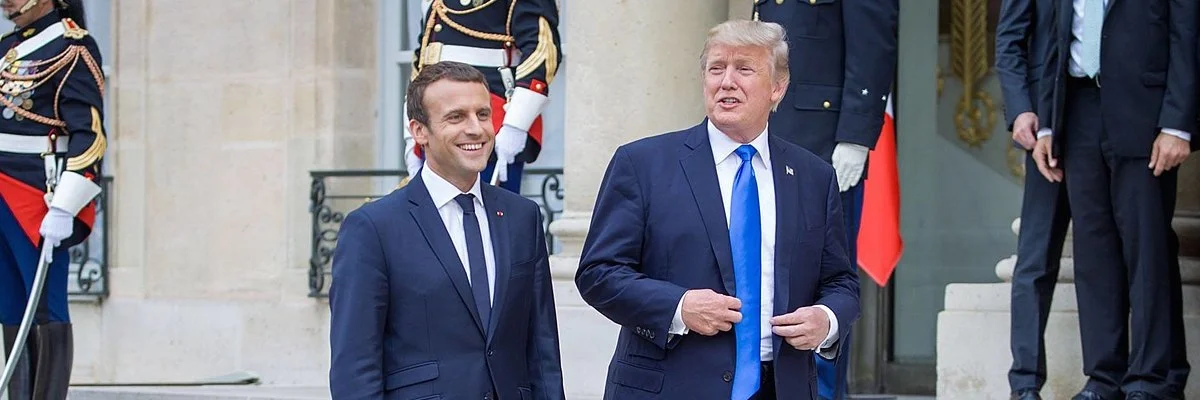
France's Macron to Discuss Iran Tensions with Trump at G20
◢ French President Emmanuel Macron on Monday said he would discuss the current flare-up of tensions between Iran and the United States with President Donald Trump at this week's G20 summit in Japan. The tensions with Iran are set to loom large over the G20 meeting in Osaka later this week after the United States accused Iran of sabotaging ships.
French President Emmanuel Macron on Monday said he would discuss the current flare-up of tensions between Iran and the United States with President Donald Trump at this week's G20 summit in Japan, saying a solution was needed through dialogue to ensure regional security.
The tensions with Iran are set to loom large over the G20 meeting in Osaka later this week after the United States accused Iran of sabotaging ships.
"We have to find a constructive solution with the aim of ensuring collective regional security," Macron told reporters, urging diplomacy rather than an escalation of tensions.
With the EU increasingly concerned over the risk of conflict, Macron pointed to a rare visit by his top diplomatic advisor Emmanuel Bonne to Tehran last week for talks.
"We have condemned very strongly all forms of escalation or aggression and what we will try to have is dialogue," he said.
Iran-US tensions have increased sharply since Trump last year abandoned a landmark 2015 nuclear agreement with Iran and reimposed sanctions, moves strongly opposed by Europe.
Last week Macron appealed to Iran to be "patient and responsible" after Tehran said it would soon surpass the uranium stockpile limit set under the nuclear accord.
Photo: Wikicommons
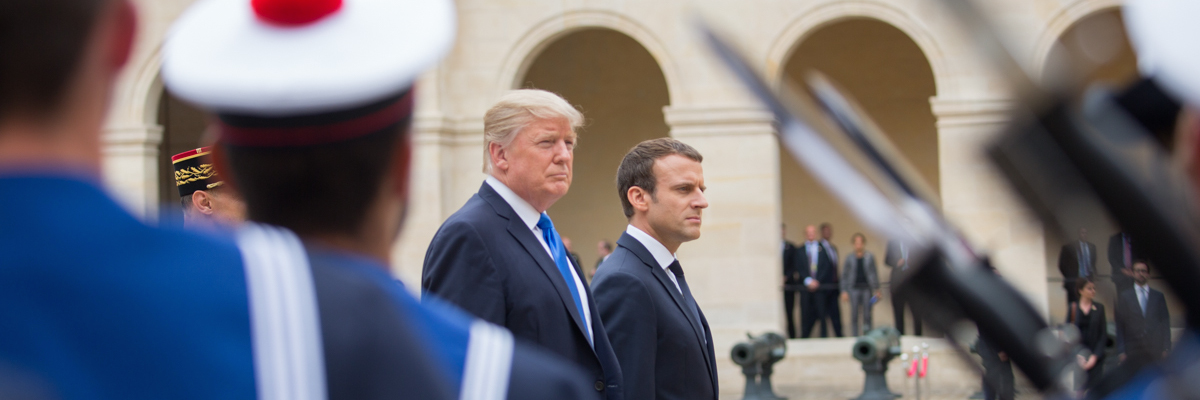
Trump and Macron Say They Have the Same Goals on Iran
◢ U.S. President Donald Trump and his counterpart in France, Emmanuel Macron, said Thursday that they share the goal of preventing Iran from developing nuclear weapons. “I don’t think the president wants to see nuclear weapons and neither do I,” Trump told reporters at a meeting with Macron in Caen, France.
By Alyza Sebenius and Margaret Talev
U.S. President Donald Trump and his counterpart in France, Emmanuel Macron, said Thursday that they share the goal of preventing Iran from developing nuclear weapons.
“I don’t think the president wants to see nuclear weapons and neither do I,” Trump told reporters at a meeting with Macron in Caen, France.
“We do share the same objectives on Iran,” Macron said, siding with Trump in calling for “a new negotiation” with Tehran.
“We want to be sure they don’t get nuclear weapon” and “we want to reduce their ballistic activity,” the French president said.
Macron has advocated for the 2015 Iran nuclear accord to be broadened to curb Iranian behavior Western countries consider hostile, including its development of ballistic missiles. But the French president tried and failed to persuade Trump not to back out of the nuclear deal negotiated by his predecessor Barack Obama.
Trump said earlier this week that there’s “always a chance” of the U.S. taking military action in Iran, though he’d prefer to engage verbally with Iranian President Hassan Rouhani.
“If they want to talk, that’s fine,” Trump said Thursday. “We’ll talk.”
Tensions have recently escalated between the U.S. and Iran after Trump blamed the Islamic Republic for recent violence in the Middle East and ordered 1,500 U.S. troops to the region last month. The small deployment indicated that Trump’s administration wants to avoid fueling fears of another war, though the president has repeatedly made clear the possibility isn’t entirely off the table.
Photo: Wikicommons
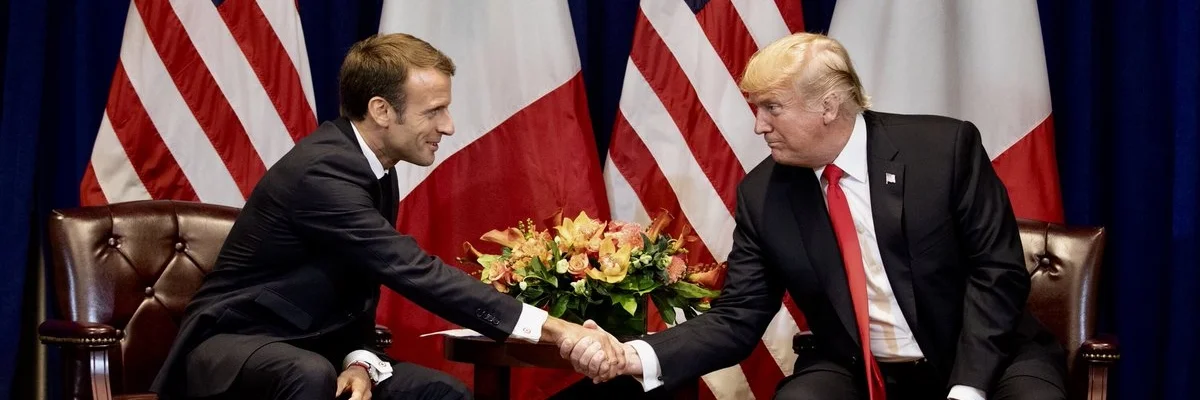
Macron Wants Iran to Sell Oil, Urges Dialogue
◢ French President Emmanuel Macron said Tuesday that Iran should be allowed to keep selling oil and urged dialogue as he rejected a US push to isolate the clerical regime. Speaking to reporters after addressing the United Nations General Assembly, Macron said that Iranian sales would bring down the price of oil—a professed concern of US President Donald Trump.
French President Emmanuel Macron said Tuesday that Iran should be allowed to keep selling oil and urged dialogue as he rejected a US push to isolate the clerical regime.
Speaking to reporters after addressing the United Nations General Assembly, Macron said that Iranian sales would bring down the price of oil—a professed concern of US President Donald Trump.
"It would be good for the price of oil for Iran to be able to sell it. It's good for peace and it's good for the shape of the international price of oil," Macron said.
France and other European powers are setting up a way to allow businesses to keep doing business in Iran in hopes of avoiding sanctions by the United States, which has withdrawn from the 2015 nuclear deal.
Addressing world leaders shortly after Trump, the French president credited the accord with curbing the nuclear program of Iran.
“What will bring a real solution to the situation in Iran and what has already stabilized it? The law of the strongest? Pressure from only one side? No!" Macron said in his address.
"We know that Iran was on a nuclear military path but what stopped it? The 2015 Vienna accord."
Trump has withdrawn from the seven-nation agreement negotiated under his successor Barack Obama, calling it a "disaster" and instead ramping up pressure on Iran including through renewed sanctions.
Supported by Israel and Saudi Arabia, Trump has sought to roll back Iranian influence around the Middle East, including in war-ravaged Syria.
But Macron said: "We should not aggravate regional tensions but rather through dialogue and multilateralism pursue a broader agenda that allows us to address all the concerns caused by Iranian policies—nuclear, ballistic, regional."
Photo Credit: White House
Macron to Meet Trump, Iran's Rouhani at UN in New York: French Presidency
◢ President Emmanuel Macron will separately meet his US and Iranian counterparts, Donald Trump and Hassan Rouhani, during the UN General Assembly in New York next week, the French presidency said Wednesday. Macron will meet Trump on Monday afternoon before having dinner with UN Secretary General Antonio Guterres. On Tuesday, the French President will address the assembly and hold talks with Rouhani, an Elysee Palace official said.
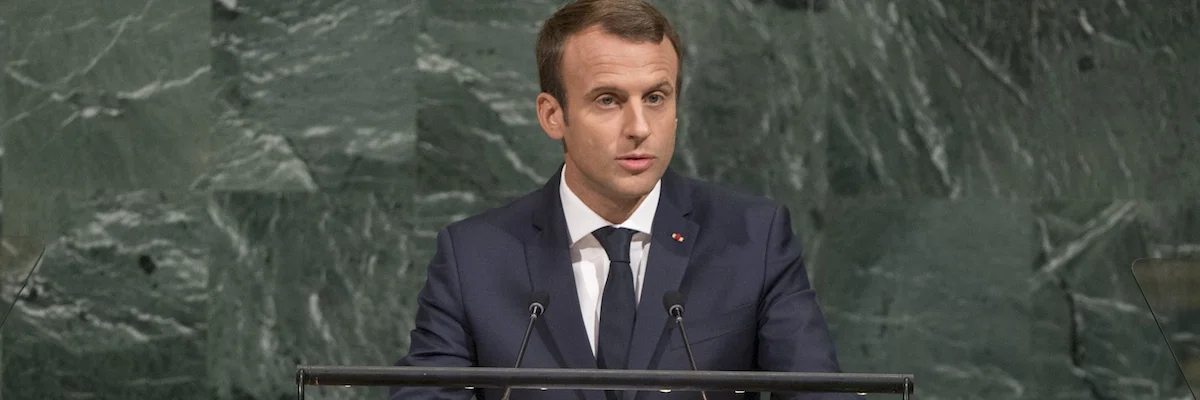
President Emmanuel Macron will separately meet his US and Iranian counterparts, Donald Trump and Hassan Rouhani, during the UN General Assembly in New York next week, the French presidency said Wednesday.
Macron will meet Trump on Monday afternoon before having dinner with UN Secretary General Antonio Guterres. On Tuesday, the French President will address the assembly and hold talks with Rouhani, an Elysee Palace official said.
The meetings come as Macron and other European leaders try to salvage a landmark 2015 accord to curb Tehran's nuclear program, which Trump pulled the US out of last May.
Trump has signaled that he might be willing to meet with Rouhani as well, after re-imposing sanctions against Iran last month.
A new round of even harsher sanctions is set to go into effect in November targeting Iran's vital oil sector.
The sanctions have hit Iran's economy hard since foreign companies can no longer operate in the country without running the risk of being targeted by US penalties.
The US accuses Iran of destabilizing the Middle East by pursuing missile development and its intervention in conflicts in neighboring countries including Syria and Yemen.
Iranian officials have repeatedly indicated they have no plans to hold talks with Trump when the general debate opens at the assembly on Tuesday.
Photo Credit: France ONU
Macron Walks Fine Line as Netanyahu Seeks Anti-Iran Front
◢ French President Emmanuel Macron meets Israeli Prime Minister Benjamin Netanyahu on Tuesday on the second leg of his European trip amid deep differences over how to contain Iran's ambitions in the Middle East. It will be the third meeting of the two leaders in Paris since last July, and while they agree on the threats posed by Tehran's missile projects and foreign interventions, they differ strongly on the response.
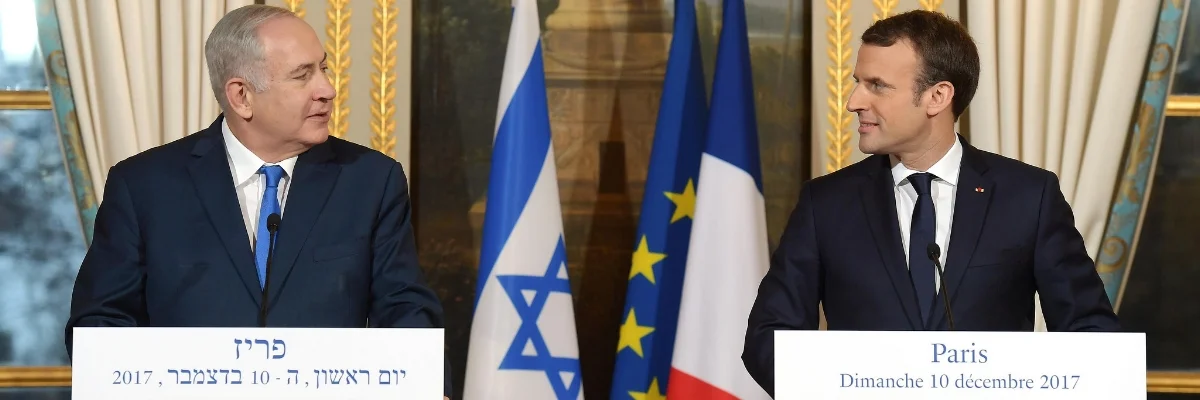
French President Emmanuel Macron meets Israeli Prime Minister Benjamin Netanyahu on Tuesday on the second leg of his European trip amid deep differences over how to contain Iran's ambitions in the Middle East.
It will be the third meeting of the two leaders in Paris since last July, and while they agree on the threats posed by Tehran's missile projects and foreign interventions, they differ strongly on the response.
Netanyahu has pursued his strident attacks against Tehran during his visit to Europe, warning during a stop in Berlin on Monday that its activities risked fueling a new influx of migrants towards Germany.
Iran was intent on fueling "a religious war inside Syria and the consequences will be many, many more refugees and you know where exactly they will come," he told German Chancellor Angela Merkel.
Netanyahu has been emboldened by US President Donald Trump's decision to pull out of the 2015 accord curbing Iran's nuclear program—and the threat of harsh sanctions against European firms doing business in the country.
Yet Macron has led a staunch defense of the accord, whose other signatories—France, Britain, Germany, China, Russia and the EU—have maintained a common front so far.
"Benjamin Netanyahu's goal is to not find himself isolated along with Washington," said David Khalfa of the Institute for European Prospective and Security in Paris.
"At a minimum he's looking to force Europeans to reinforce the existing accord" via the US sanctions, but also the prospect of joint Saudi-US-Israel bloc setting the agenda in the Middle East, Khalfa said.
Macron has warned that letting the deal fall apart will only inflame tensions, especially if harsh sanctions smother the economic relief Iranians began to enjoy after it was signed in 2015.
He and Netanyahu are scheduled to hold a press conference after their talks and launch a season of cultural exchanges between their countries this year.
Balancing Act
But relations have been further strained by the killing of 123 Palestinian protesters in Gaza by Israeli forces since March, including at least 61 people on May 14 alone.
Macron denounced the "violence by Israel's armed forces" even as he noted the country's security concerns, a position deemed too simplistic by Israeli officials while also being derided by his leftwing critics in France.
French Prime Minister Edouard Philippe cancelled a planned trip to Israel last month.
Several pro-Palestinian groups are planning protests against Netanyahu in cities across the country, while three journalist unions have called his visit "intolerable".
The journalist unions denounced the killing of Palestinian journalists by Israeli forces, as well as women, children and people working for emergency services in Gaza.
Against this backdrop, talks on seeking an end to the Palestinian conflict have fallen to the wayside, not least after Trump broke with decades of protocol by recognizing Israel's claim of Jerusalem as its capital.
Last week, the European Union urged Israel to reconsider its decision to demolish a Palestinian Bedouin village in the occupied West Bank, saying it undermines "prospects for a lasting peace."
Macron has announced plans to visit both Israel and the Palestinian territories this year.
"Macron is taking a very pragmatic approach, separating the Israeli-Palestinian conflict from their bilateral cooperation," said Khalfa, noting in particular Macron's appreciation of Israel's push to become a "start-up nation."
Macron and Netanyahu are also planning to inaugurate a show highlighting Israel's technological innovations, "Israel@lights", at the Grand Palais museum in Paris.
Photo Credit: GPO/Avi Ohayon
Netanyahu Heads to Europe Seeking About-Face on Iran
◢ Israeli Prime Minister Benjamin Netanyahu embarks Monday on a three-day European tour in Germany set to be dominated by strategic differences on Iran, as leaders attempt to rescue the nuclear deal after US withdrawal.
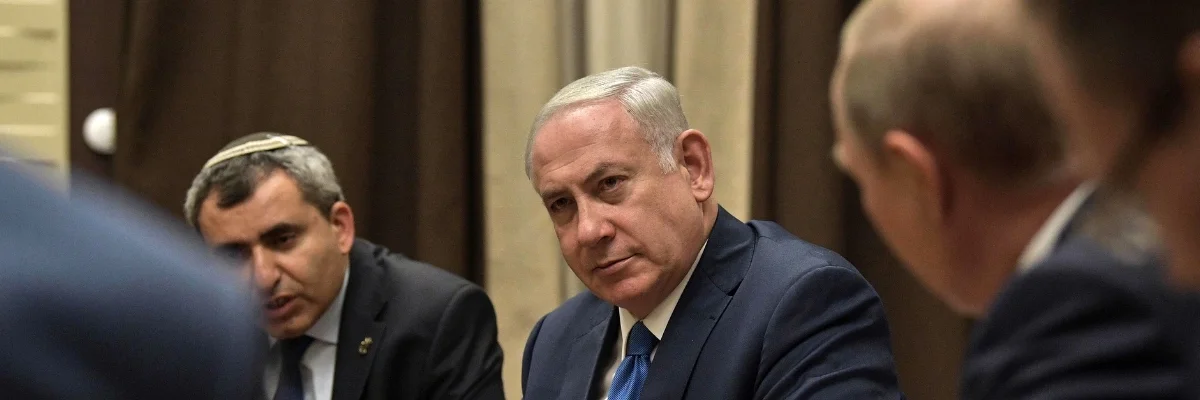
Israeli Prime Minister Benjamin Netanyahu embarks Monday on a three-day European tour in Germany set to be dominated by strategic differences on Iran, as leaders attempt to rescue the nuclear deal after US withdrawal.
With partners in Berlin, Paris and London still reeling from President Donald Trump's decision last month to exit the hard-fought 2015 accord, Netanyahu is expected to seek European cooperation on a still-to-be-determined Plan B.
"The aim to prevent Iran from developing any kind of nuclear capacity was always the foundation of international policy on Iran," Israel's ambassador to Germany, Jeremy Issacharoff, told AFP ahead of the visit.
Issacharoff said that despite "differences of opinion" on how to achieve the aim of hemming in Iran on nuclear matters, "we share the same goal".
Germany, France and Britain are three of the signatories of the 2015 Joint Comprehensive Plan of Action (JCPOA) between world powers and Iran, aimed at keeping Tehran from acquiring nuclear weapons.
Netanyahu, who has railed against the deal which offers sanctions relief in exchange for strict limits on Iran's nuclear activities, will hold talks with Chancellor Angela Merkel in Berlin in the late afternoon, followed by a joint news conference.
He will continue on to Paris for meetings with French President Emmanuel Macron on Tuesday and British Prime Minister Theresa May on Wednesday.
'Not Perfect'
In the face of the US retreat, all three leaders strongly defend the agreement as the best way to head off a regional arms race and have vowed with Russia and China, the two other signatory countries, to keep it alive.
German Foreign Minister Heiko Maas huddled with his Chinese counterpart Wang Yi on Thursday and insisted that Berlin "wants to maintain the nuclear agreement and make sure Iran maintains it too."
At the same news conference, Wang launched an unvarnished attack on US reliability in global affairs under Trump.
"It is a truism of international law that international accords must be respected... (and) major countries must set an example, not do the opposite," he said.
Supporters also fear the reimposition of US sanctions could hit European firms that have done business with Iran since the accord was signed.
Merkel has acknowledged that while European powers see the JCPOA as the best guarantee against an Iran with nuclear weapons, it is "not perfect".
The Europeans have proposed hammering out a supplementary deal with Tehran covering its ballistic missile program as well as its interventions in countries such as Lebanon, Syria, Iraq and Yemen.
Western powers view Iran's meddling as destabilizing for the region while Israel sees it as a direct threat to its existence.
"I will discuss with them ways to block Iran's nuclear aspirations and Iran's expansion in the Middle East," Netanyahu said last week of his European meetings, noting the issues were "crucial to Israel's security".
Israel is considered the leading military power in the Middle East and believed to be the only country in the region to possess nuclear weapons.
Photo Credit: Kremlin.ru

U.S. Trying to Move Forward After Quitting Iran Nuclear Deal
◢ After leaving the Iran nuclear deal, Washington wants to move forward by offering to build a "coalition" to counter the multiple "threats" posed by the Tehran regime—but Europeans intent on saving the 2015 accord may thwart that effort. US Secretary of State Mike Pompeo on Monday will unveil a new "diplomatic roadmap" for Iran.
After leaving the Iran nuclear deal, Washington wants to move forward by offering to build a "coalition" to counter the multiple "threats" posed by the Tehran regime—but Europeans intent on saving the 2015 accord may thwart that effort.
US Secretary of State Mike Pompeo on Monday will unveil a new "diplomatic roadmap" for Iran—how America plans to "address the totality of Iran's threats," according to the State Department's director of policy planning, Brian Hook.
Washington is looking to draft a "new security architecture and a better security framework, a better deal," Hook told reporters ahead of the speech, the first major policy address by Pompeo since he became America's top diplomat.
"The US will be working hard to put together a coalition," State Department spokeswoman Heather Nauert said, flagging Washington's bid for a multilateral approach after its unilateral withdrawal from the accord.
President Donald Trump has long trashed the deal with Iran—concluded under his predecessor Barack Obama, together with Britain, China, France, Germany and Russia—saying it did not do enough to curtail Tehran's nuclear ambitions.
The Republican leader also said it did not go far enough in restricting Iran's ballistic missile program, or its intervention in regional conflicts from Yemen to Iraq and Syria.
"We need a new—a framework that's going to address the totality of Iran's threats," Hook said.
So far, the guidelines of this new strategy are unclear.
The big unknown is whether European leaders, who were bitterly disappointed by Trump's decision to ditch the deal, would be willing to return to talks with his administration any time soon.
For now, the European Union is trying to persuade Iran to stay in the 2015 agreement, even without Washington's participation.
Punishment Strategy
The re-establishment of the US sanctions that were lifted after the Iran nuclear deal was signed will force European companies to choose between investing in Iran or trading with the United States.
In reality, there is no choice—European companies cannot afford to forsake the US market And with investment from Europe—which had been the main carrot dangled before the Iranians to right their struggling economy—now stymied, Tehran may have little incentive to hold up its end of the bargain.
The Europeans have tried to squeeze a little flexibility out of Washington to help out their firms, but to no avail.
"They tell us, 'We want the sanctions to hurt, there won't be any exemptions,'" said one European official.
Some in the US administration are calling for a "North Korea scenario," meaning the imposition of sanctions so severe that they force Iran back to the negotiating table.
By reimposing the sanctions, Washington aims to "bring economic pressure to bear on Iran," Hook said.
"It was economic pressure that brought the Iranians to the table a few years ago."
But Jake Sullivan, a former Obama administration official who is now a researcher at the Carnegie Endowment for International Peace, said "the idea that we are going to be able to reconstruct sanctions at the same level (as 2015) is a flawed concept."
"The more aggressive the US is in telling the Europeans basically, 'We have you under our thumbs,' the more the Europeans are going to say: 'We will find any means we possibly can to not let you do that to us,'" he said Friday.
Washington has meanwhile sought to downplay the differences with its allies.
"We agree with the Europeans on much, much more than we disagree on," said Hook, citing "a lot of progress" during talks with Paris, London and Berlin that aimed to find solutions to Trump's concerns. The US official also mentioned French President Emmanuel Macron's proposal of a "new deal," based on the 2015 accord, but offering a broader strategy on
Iran.
But those negotiations, and Macron's proposal, pre-dated the abrupt US withdrawal from the accord. Are they still on the table? And how could an accord be reached now if it was impossible 10 days ago?
"We are waiting to see more details," said a European official.
Another European official warned: "But if it is a question of building a coalition to push for regime change in Iran, the Europeans won't be on board."
For Sullivan, the next phase is one in which "the punishment is the strategy—squeezing Iran and keeping them in the penalty box for as long as possible, and as much as possible, with the hope of regime change, but if it's not regime change, (then) a weaker regime."
Photo Credit: Wikicommons
Macron, Rouhani to Seek 'Continued Implementation of Nuclear Deal'
◢ French President Emmanuel Macron and Iran's Hassan Rouhani agreed on Wednesday during a phone call to work toward "the continued implementation of the nuclear deal" despite the US decision to withdraw from the agreement, the French presidency said. Macron's office said France and Iran's foreign ministers would meet "without delay" for talks.
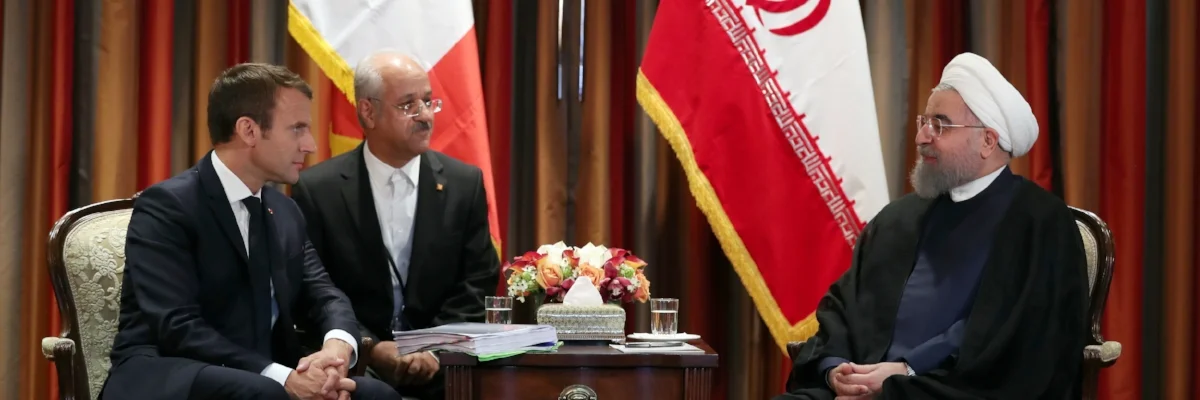
French President Emmanuel Macron and Iran's Hassan Rouhani agreed on Wednesday during a phone call to work toward "the continued implementation of the nuclear deal" despite the US decision to withdraw from the agreement, the French presidency said.
"The French and Iranian presidents agreed to pursue their joint efforts with all nations involved, with the aim of continued implementation of the nuclear deal and maintaining regional stability," Macron's office said in a statement.
US President Donald Trump announced Tuesday that he was pulling out of the landmark 2015 nuclear accord, calling it "defective at its core".
It was a stark diplomatic defeat for France, Germany and Britain, which had lobbied hard for Trump to stand by a deal whose terms they say Tehran has largely respected.
But during their call, Macron told Rouhani that France would also seek an expanded accord in a "mutually beneficial framework" covering Iran's ballistic missile development, its involvement in several crises roiling the Middle East, and the prospects for its nuclear program once the 2015 accord expires in 2025.
Macron's office said France and Iran's foreign ministers would meet "without delay" for talks.
Rouhani had previously warned that Iran could resume uranium enrichment "without limit", though he said he would discuss Iran's response with other parties to the deal before announcing a decision.
Iran has always denied seeking a nuclear weapon, insisting its atomic program was for civilian purposes.
Photo Credit: IRNA
Europeans Will 'Do Everything' to Protect Companies in Iran: French Presidency
◢ European officials will "do everything" possible to protect the interests of companies working in Iran, which may now be exposed to new US sanctions against the country, an official in the French presidency said Wednesday.
European officials will "do everything" possible to protect the interests of companies working in Iran, which may now be exposed to new US sanctions against the country, an official in the French presidency said Wednesday.
Following President Donald Trump's decision to pull out of the 2015 nuclear deal with Iran and reimpose sanctions, European governments are going "to do everything to protect the interests" of their companies, said the official, speaking on condition of anonymity.
French diplomats said Trump's decision, announced in a short address to the nation on Tuesday, was expected despite efforts by President Emmanuel Macron to sway the US leader.
"Of course this decision is a worry, there are tensions," a second official said.
"It will be difficult to maintain this agreement in these conditions but we will do everything to find a way to protect this multilateral framework."
At a press briefing, the diplomats countered criticism that Macron had been ineffective in lobbying Trump to respect the accord during a state visit to Washington at the end of April.
Despite both men boasting of their close relationship in public, Trump did not inform Macron of his choice beforehand, even during a phone call between the two men just hours before his announcement.
"It was our responsibility to do it (lobbying Trump to stay in the agreement)," the first French official said. "And we did it with full knowledge of the facts."
He added that Macron would continue to play a crucial role in trying to salvage the agreement—which the EU, Russia and China say they want to keep—and reduce tensions in the Middle East.
"He's the only leader who has the ability to talk to other leaders involved, even those that don't talk to each other," the official said.
"That's something, above all in this time of tensions, that is precious."
Photo Credit:

Iran Warns US It Would Regret Quitting Nuclear Deal
◢ Iranian President Hassan Rouhani warned that if the United States quits the nuclear deal then Washington will regret it "like never before", as British Foreign Secretary Boris Johnson scrambles to save the agreement during talks with the Trump administration Monday.
Iranian President Hassan Rouhani warned that if the United States quits the nuclear deal then Washington will regret it "like never before", as British Foreign Secretary Boris Johnson scrambles to save the agreement during talks with the Trump administration Monday.
US President Donald Trump has threatened to withdraw from the agreement when it comes up for renewal on May 12, demanding his country's European allies "fix the terrible flaws" or he will re-impose sanctions.
"If the United States leaves the nuclear agreement, you will soon see that they will regret it like never before in history," reformist Rouhani said in a televised speech in northwestern Iran.
"Trump must know that our people are united, the Zionist regime (Israel) must know that our people are united," Rouhani said.
"Today all (Iran's) political factions, whether they be from the right, the left, the conservatives, reformers and moderates are united," he added.
The nuclear deal was struck in 2015 between Iran and Britain, China, France, Germany, Russia and the United States, then led by Barack Obama.
Under the pact, sanctions were eased in return for a commitment not to pursue a nuclear bomb, but Iran says it is not reaping the rewards despite complying with the deal.
A senior Israeli official said Sunday that Trump had not informed Israel of whether it will withdraw from the agreement.
"In effect, I don't know what Trump will decide because he hasn't told me," the official said on condition of anonymity, making clear Israel had not yet been told of Trump's decision.
Trump has consistently complained about the agreement, citing perceived flaws including "sunset" provisions lifting some nuclear restrictions from 2025.
In an attempt to salvage the deal, French President Emmanuel Macron has recently pushed to extend its scope to address this issue, as well as the absence of any limits on Iran's conventional missile capabilities and Tehran's role in the region.
Britain's Johnson will on Monday begin a two-day visit to Washington, with the nuclear deal among issues on top of the agenda, the Foreign Office said.
He is due to meet US Vice President Mike Pence, National Security Advisor John Bolton and Congressional foreign policy leaders.
He said Britain—which remains committed to the agreement—the United States and Europe were "united in our effort to tackle the kind of Iranian behavior that makes the Middle East region less secure—its cyber activities, its support for groups like Hezbollah, and its dangerous missile program".
Iran's support for Syrian President Bashar al-Assad, via the Lebanese armed group Hezbollah in Syria's civil war, and its backing for Shiite Huthi rebels in Yemen have added to frictions between Tehran and Western powers.
'Honouring our Commitment'
Rouhani vehemently reiterated his country's opposition to curtailing its non-nuclear missile capabilities, in his speech on Sunday.
Tehran "will build as many missiles and weapons as needed" for its defense, he said.
"We are honoring our commitment, but we are telling the whole world we will not negotiate with anyone about our weapons and our defense."
Iran's president also said that while he is open to discussing the
country's regional role, he would not abandon what he described as its fight
"against terrorism."
"We want to talk to the world so that our region is safe" but "we will not allow you to create a new Daesh," he said, using an Arabic term for the Islamic State group.
While Rouhani did not elaborate on this point, Iran's ally the Syrian government has consistently referred to all armed opponents as "terrorists" and accused the West of facilitating terrorism.
Iran has always denied it sought a nuclear weapon, insisting its atomic program was for civilian purposes.
Rouhani did not specify how Iran would react if the US pulls out of the 2015 deal.
But he said he had given "the necessary orders", notably to Iran's Atomic Energy Organisation, in anticipation of Trump's decision.
As the May 12 US decision point nears, Iranian leaders have shuffled between placatory and hawkish comments, although the hardliners have taken a uncompromising stance.
On Thursday Ali Akbar Velayati, the foreign policy adviser to Iran's supreme leader Ayatollah Ali Khamenei, warned Tehran would quit the nuclear deal if the United States withdraws.
Photo Credit: Kremlin

France says Iran Nuclear Deal Strengthened by Netanyahu Claims
◢ France said Tuesday that new claims about Iran's nuclear program presented by Israeli Prime Minister Benjamin Netanyahu reinforced the importance of a 2015 deal that imposes controls on the Islamic republic.
France said Tuesday that new claims about Iran's nuclear program presented by Israeli Prime Minister Benjamin Netanyahu reinforced the importance of a 2015 deal that imposes controls on the Islamic republic.
In an elaborate televised presentation on Monday, the hawkish Israeli leader claimed he had new "proof" via captured documents that Iran had developed a nuclear weapons plan which could be activated at any time.
The French foreign ministry said the details needed to be "studied and evaluated" but a spokesperson added that the evidence appeared to confirm what European powers had known for more than a decade and half.
"At first sight, they (the details) confirm that part of the Iranian nuclear program, as France and its partners stated during the first revelations in the summer of 2002, was not civilian," said the spokesperson in a statement received by AFP.
The 2015 nuclear deal negotiated between Iran and six world powers imposes nuclear inspections on Iran in return for the loosening of economic sanctions, but US President Donald Trump is threatening to pull out.
"The pertinence of the deal is reinforced by the details presented by Israel: all activity linked to the development of a nuclear weapon is permanently forbidden by the deal," said the foreign ministry spokesperson.
"The inspection regime put in place by the (UN nuclear watchdog) IAEA thanks to the deal is one of the most exhaustive and the most robust in the history of nuclear non-proliferation," the statement added.
French President Emmanuel Macron has urged Trump to stick with the nuclear accord, arguing that it presents the only viable option available to the international community.
Besides agreeing to snap inspections Iran also cut the number of centrifuges used for enriching uranium and reduced its stockpiles of the material.
The Israeli premier has repeatedly called for the deal—which Iran signed with Britain, China, France, Germany, Russia and the United States—to be either altered or scrapped.
Netanyahu did not present evidence on Monday that Iran had actively worked to obtain an atomic weapon since the 2015 agreement and the International Atomic Energy Agency (IAEA) considers the country to be complying. Trump is set to make announcement on May 12.
Photo Credit: Wikicommons
Putin, Macron Urge 'Strict' Observance of Iran Nuclear Accord: Kremlin
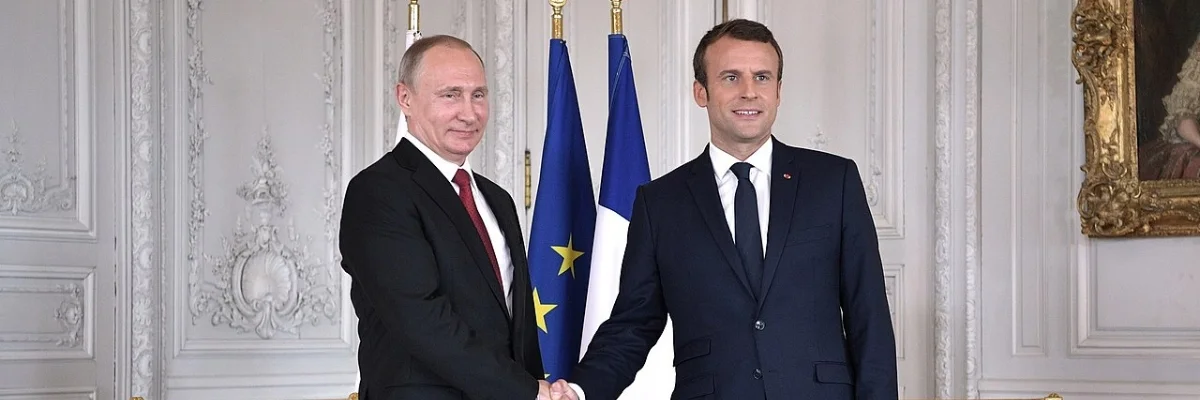
◢ Russian President Vladimir Putin and French leader Emmanuel Macron on Monday called for the "strict observance" of the current Iran nuclear accord, with US President Donald Trump still deciding whether to scrap the agreement. The statement was released after Macron called Putin to inform him of his talks with Trump in the United States.
Russian President Vladimir Putin and French leader Emmanuel Macron on Monday called for the "strict observance" of the current Iran nuclear accord, with US President Donald Trump still deciding whether to scrap the agreement.
"The Presidents of Russia and France spoke in favor of keeping the Plan and its strict observance," the Kremlin said, referring to the Joint Comprehensive Plan of Action.
The statement was released after Macron called Putin to inform him of his talks with Trump in the United States.
Trump faces a May 12 deadline to decide on the fate of the Iran nuclear accord and is demanding changes that European capitals believe would represent a legal breach.
On Sunday, US National Security Advisor John Bolton said the mercurial US president had not yet decided whether to scrap the accord.
Macron, who held talks with Trump last week, has positioned himself as an emissary for European officials seeking a compromise that would keep the deal intact.
Macron has earlier proposed an additional deal that extends Iran's nuclear restrictions.
Russia has said that there was "no alternative" to the agreement and that Iran's position was on the issue was paramount.
Iran's President Hassan Rouhani rejected any hopes of rewriting the nuclear deal.
Photo Credit: Wikicommons

Europe Backs Iran Deal as 'Best Way' to Counter Nuclear Threat
◢ The leaders of Britain, France and Germany have reiterated their commitment to the Iran nuclear deal "as the best way of neutralizing the threat of a nuclear-armed Iran", Downing Street said Sunday. Prime Minister Theresa May talked by phone with French President Emmanuel Macron and German Chancellor Angela Merkel on Saturday and Sunday.
The leaders of Britain, France and Germany have reiterated their commitment to the Iran nuclear deal "as the best way of neutralising the threat of a nuclear-armed Iran", Downing Street said Sunday.
Prime Minister Theresa May talked by phone with French President Emmanuel Macron and German Chancellor Angela Merkel on Saturday and Sunday when they agreed the current deal also left out some "important elements," it said.
"Our priority as an international community remained preventing Iran from developing a nuclear weapon," it said.
"They agreed that there were important elements that the deal does not cover but which we need to address—including ballistic missiles, what happens when the deal expires, and Iran's destabilizing regional activity.
"They committed to continue working closely together and with the US on how to tackle the range of challenges that Iran poses—including those issues that a new deal might cover."
Both Macron and Merkel held talks in Washington this week with US President Donald Trump, who has repeatedly threatened to quit the 2015 pact with Iran negotiated by his predecessor Barack Obama.
The pair tried to sell Trump on the idea of the deal being a stepping stone to a longer-term, broader agreement, pitching a "four pillars" solution.
The first column is Iran's nuclear program under the current accord. The others would target the country's nuclear activities after 2025 when so-called sunset clauses kick in, beef up global leverage against its regional influence and curtail its ballistic missile program.
US National Security Advisor John Bolton said Sunday that Trump had not yet decided whether or not to scrap the pact.
"He has made no decision on the nuclear deal, whether to stay in or get out," he told Fox News.
Photo Credit:
'No Decision' by Trump on Iran Nuclear Deal: Bolton
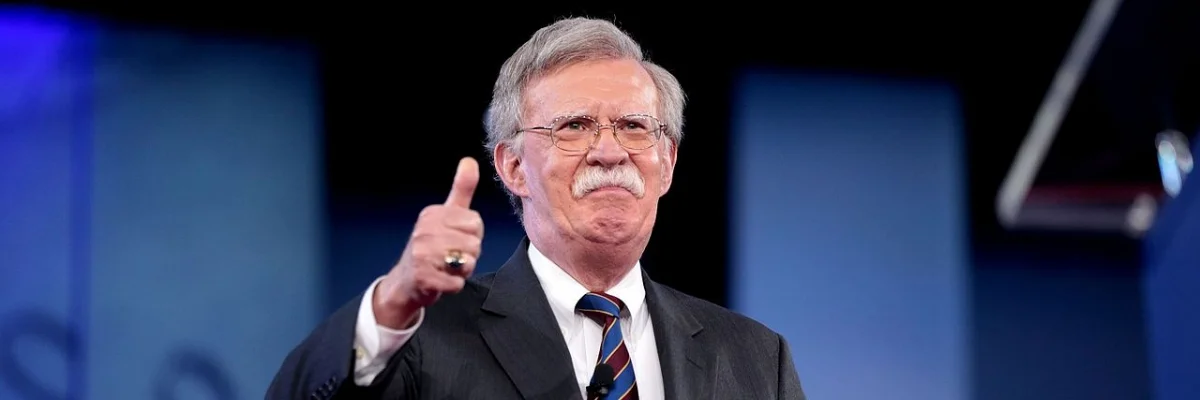
◢ US President Donald Trump has not decided whether or not to scrap the Iran nuclear deal, US National Security Advisor John Bolton said Sunday. Trump has called the existing accord "insane" and "ridiculous," in part because its restrictions start to expire in 2025.
US President Donald Trump has not decided whether or not to scrap the Iran nuclear deal, US National Security Advisor John Bolton said Sunday.
"He has made no decision on the nuclear deal, whether to stay in or get out," Bolton told Fox News Sunday.
"He is certainly considering the framework, the four pillars that President (Emmanuel) Macron laid out in their meeting last week," said Bolton, referring to efforts to supplement the Iran deal with additional measures to make it more palatable to Trump.
In 2015 the United States, along with other nations, struck a deal with Iran to end a 12-year standoff over that country's nuclear program, which was feared to be leading towards an atomic weapons capability.
Iran agreed to freeze its nuclear program in return for the lifting of punishing international sanctions, but Trump has criticized the deal as not going far enough.
Britain, France and Germany—the three European countries that signed the Iran nuclear deal—are working to head off Trump's threat to walk away from the accord and reimpose sanctions.
Trump has called the existing accord "insane" and "ridiculous," in part because its restrictions start to expire in 2025.
French President Emmanuel Macron has proposed an additional deal that extends Iran's nuclear restrictions while also curbing its ballistic missile program and support for militias in the Middle East.
Iran's President Hassan Rouhani rejected any hopes of rewriting the nuclear deal itself.
Photoe Credit: Wikicommons
France's Macron Pessimistic About Future of Iran Nuclear Pact
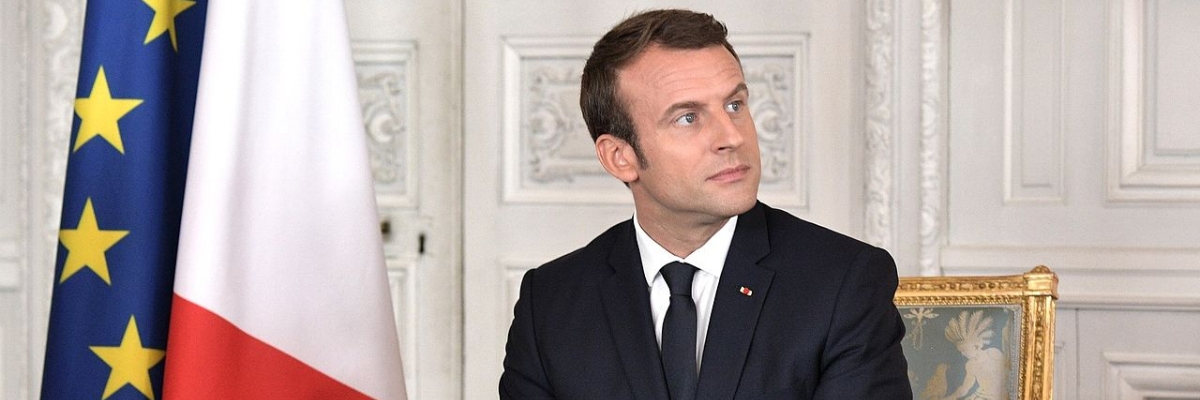
◢ Donald Trump may well pull out of the Iran nuclear deal for domestic political reasons, French President Emmanuel Macron said Wednesday, after he and his American counterpart held talks addressing the agreement's future. Macron told US media that while he did not know specifically what Trump will decide, he believes the US leader "will get rid of this deal on his own, for domestic reasons."
Donald Trump may well pull out of the Iran nuclear deal for domestic political reasons, French President Emmanuel Macron said Wednesday, after he and his American counterpart held talks addressing the agreement's future.
Near the end of his three-day state visit, Macron told US media that while he did not know specifically what Trump will decide, he believes the US leader "will get rid of this deal on his own, for domestic reasons."
Trump—a fierce opponent of the July 2015 agreement signed by Tehran and international powers—must declare by May 12 if he will essentially walk away from the existing deal when the renewal deadline arrives on May 12, or stay in.
Macron had come to Washington in part to plead for a more comprehensive "new agreement" that would address what he and Trump believe to be shortcomings of the existing accord.
Trump has branded the Iran deal "insane" and the "worst" in history.
"I have no inside information" on what decision Trump will make on the agreement, Macron told journalists.
But "I listen to what President Trump is saying and it seems to me that he is not very eager to defend it."
Macron recalled that Trump made killing the Iran nuclear accord a campaign pledge during his 2016 presidential run.
"The rational analysis of all his statements does not make me think that he will do everything to maintain" the agreement signed with Iran to prevent the Islamic republic from acquiring an atomic bomb.
Asked whether such a decision would signify a personal failure for him, Macron stressed that his role "is not to try to convince President Trump to walk away from his campaign commitments."
Instead he offered further defense of the deal, saying "I'm trying to prove that this agreement makes sense."
The proposal that Macron put forward to his US counterpart involves preserving the existing agreement on the first of "four pillars" of a future deal.
The others would address the period after 2025, when certain clauses concerning nuclear activities will sunset; Tehran's highly controversial ballistic missile program; and its "destabilizing" role in the region.
"For me it's progress, it avoids falling into the complete unknown if the US decision is a hard exit," said Macron, who confirmed that the proposal was a strategy coordinated with European partners and not a unilateral one.
Photo Credit: Wikicommons

Iran Deal 'Needs To Be Preserved': EU's Mogherini
◢ The EU's diplomatic chief insisted Wednesday that the current Iran nuclear deal was working and "needs to be preserved", after US President Donald Trump and French counterpart Emmanuel Macron called for a new agreement with Tehran.
The EU's diplomatic chief insisted Wednesday that the current Iran nuclear deal was working and "needs to be preserved", after US President Donald Trump and French counterpart Emmanuel Macron called for a new agreement with Tehran.
The landmark 2015 deal to curb Iran's nuclear program is hanging in the balance, with Trump threatening to walk away from the accord unless it is expanded to include Iran's ballistic missile program and regional activities by a May 12 deadline.
Trump slammed the deal as "insane" at the White House with Macron on Tuesday but said there was a "great shot" at a new accord, while Macron said he wanted to work for a new arrangement.
The EU's Federica Mogherini, who has staunchly defended the deal, said Wednesday that it was working and was "essential for European security" but appeared to leave the door open for some new arrangement.
"On what can happen in the future we'll see in the future, but there is one deal existing, it's working, it needs to be preserved," the former Italian foreign minister said as she arrived for a donor conference on Syria in Brussels.
Europe, led by Britain, France and Germany, has repeatedly tried to persuade Trump not to abandon the 2015 deal, which gave Iran massive sanctions relief and the guarantee of a civilian nuclear program in return for limiting enrichment that could produce weapons grade fuel.
German Chancellor Angela Merkel will renew those calls when she follows Macron to Washington on Friday.
Photo Credit: Wikicommons

Iran's Rouhani Questions 'Right' to Seek New Nuclear Deal
◢ Iran's President Hassan Rouhani on Wednesday questioned the legitimacy of demands for a fresh nuclear agreement with Tehran, after the leaders of the US and France called for a "new" deal.
Iran's President Hassan Rouhani on Wednesday questioned the legitimacy of demands for a fresh nuclear agreement with Tehran, after the leaders of the US and France called for a "new" deal.
"Together with a leader of a European country they say: 'We want to decide on an agreement reached by seven parties'. What for? With what right?" Rouhani said in a speech.
US President Donald Trump has fiercely criticized a three-year-old deal reached by world powers to curb Iran's nuclear program, and threatened to pull the US out of the agreement.
Trump is eyeing a broader pact that also limits Iran's ballistic missile program and support for armed groups across the Middle East.
European signatories to the 2015 deal have been scrambling to salvage it, with French President Emmanuel Macron saying Tuesday after talks with Trump that he wished "for now to work on a new deal with Iran".
Iran has repeatedly insisted it is sticking to the nuclear deal and will not negotiate over its missile program.
Rouhani took aim at Trump—a former real estate mogul and TV reality star—and accused him of lacking in experience.
"You are just a businessman... you have no experience in politics or law or international agreements," he said. "How can he pass judgements on international affairs?"
Rouhani insisted that by agreeing to the nuclear accord in 2015 Tehran "showed goodwill to the world".
"We wanted to prove to the world that Iran does not seek to acquire weapons
of mass destruction."
Photo Credit: IRNA
Trump, Macron Call for 'New' Nuclear Deal with Iran
◢ US President Donald Trump and French counterpart Emmanuel Macron called for a "new" deal with Iran Tuesday, looking beyond disagreements over a landmark nuclear accord that still hangs in the balance. Trump laid transatlantic divisions bare during a visit by the French president, pillorying a three-year old agreement designed to curb Iran's nuclear program.
US President Donald Trump and French counterpart Emmanuel Macron called for a "new" deal with Iran Tuesday, looking beyond disagreements over a landmark nuclear accord that still hangs in the balance.
Trump laid transatlantic divisions bare during a visit by the French president, pillorying a three-year old agreement designed to curb Iran's nuclear program.
The US leader described the deal as "insane" and "ridiculous," despite European pleas for him not to walk away.Instead, Trump eyed a broader "deal" that would also limit Iran's ballistic missile program and support for militant groups across the Middle East.
"I think we will have a great shot at doing a much bigger, maybe, deal," said Trump, stressing that any new accord would have to be built on "solid foundations."
"They should have made a deal that covered Yemen, that covered Syria," said Trump. "No matter where you go in the Middle East, you see the fingerprints of Iran behind problems."
Macron admitted after meeting Trump that he did not know whether the US president would walk away from the nuclear deal when a May 12 decision deadline comes up.
"I can say that we have had very frank discussions on that, just the two of us," Macron told a joint press conference with Trump at his side.
Putting on a brave face, he said he wished "for now to work on a new deal with Iran" of which the nuclear accord could be one part.
Neither Trump nor Macron indicated whether Iran would get something in return for concessions on its ballistic programs, activities in the Middle East or extending nuclear controls beyond 2025.
Trump—true to his background in reality TV—teased his looming decision.
"This is a deal with decayed foundations. It's a bad deal, it's a bad structure. It's falling down," the US leader said. "We're going to see what happens on the 12th."
Trump's European allies have repeatedly tried to persuade him not to abandon the 2015 deal, which gave Iran massive sanctions relief and the guarantee of a civilian nuclear program in return for limiting enrichment that could produce weapons grade fuel.
German Chancellor Angela Merkel will renew those calls when she visits Washington on Friday.
Iran, meanwhile, has warned it will ramp up enrichment if Trump walks away from the accord, prompting a blunt warning from the US leader.
"They're not going to be restarting anything. If they restart it, they're going to have big problems, bigger than they ever had before. And you can mark it down," he said.
Simmering Tensions
For months American and European officials have been working behind the scenes trying to find a compromise on Iran that allows the mercurial US president to claim a public victory, while keeping the deal intact.
More hawkish American officials accuse Europeans—particularly Germany—of putting business interests ahead of security, and of opposing a tougher stance against Iran to safeguard investments in the Islamic Republic.
That charge is sharply rejected by European officials, who are increasingly frustrated at spending time dealing with Trump's complaints rather than tackling Iran's behavior.
The disagreement threatens to plunge transatlantic relations to their lowest point since the Iraq War.
Trump's comments on Iran contrasts markedly with the exuberant welcome he gave the French leader.
Tuesday morning both men waxed lyrical about shared heroes of yore—from the Marquis de Lafayette to Alexis de Tocqueville—as they listened to strains of "La Marseillaise" and "The Star-Spangled Banner."
Later, the Trumps rolled out the red carpet for the Macrons once more at a lavish state dinner—of which the US first lady was said to have fine-tuned every last detail, from gold tableware to white floral centerpieces, for star guests including Apple CEO Tim Cook and media mogul Rupert Murdoch.
Melania Trump dazzled in a sequined Chanel dress of black Chantilly lace, while Brigitte Macron stepped out in a long-sleeved creamy white gown with gold lattice detailing by Louis Vuitton.
"May our friendship grow even deeper, may our kinship grow even stronger, and may our sacred liberty never die," Trump said in his toast to the Macrons.
In turn, the French leader spoke at length of "how deep, how strong, and how intense the relationship is between our two countries," and marveled at the unforeseen rapport he has forged with Trump.
"I got to know you, you got to know me. We both know that none of us easily changes our minds, but we will work together, and we have this ability to listen to one another," he said.
The key question is whether Macron can translate that privileged relationship into concrete results—as he also pushes for a permanent exemption for Europe from US steel and aluminum tariffs.
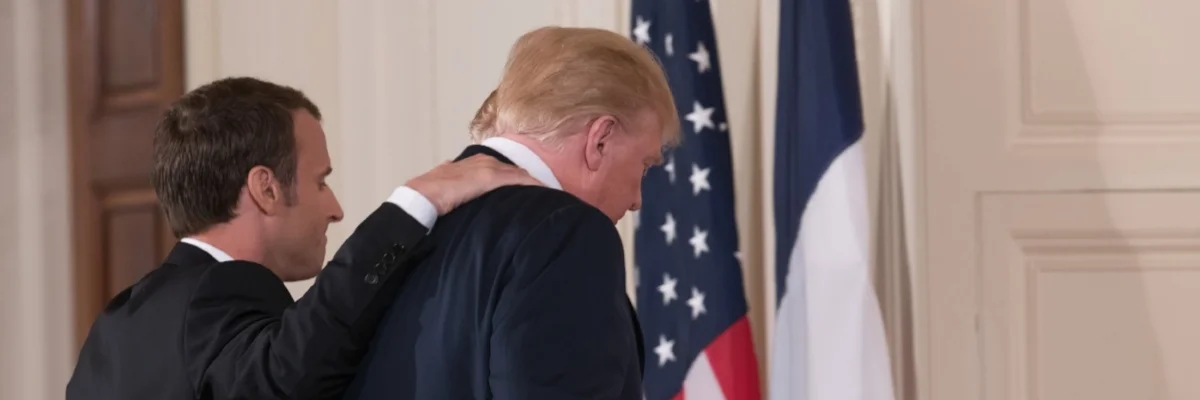
Earlier in the Oval Office, Trump offered a striking—and slightly awkward—sign of their much-vaunted intimacy. "We have a very special relationship, in fact I'll get that little piece of dandruff off," Trump said, swiping something off Macron's jacket. "We have to make him perfect—he is perfect."
Photo Credit: Jacques Witt/SIPA

Can Macron's White House Visit Save the Iran Deal?
◢ French President Emmanuel Macron seems to have developed some kind of rapport with his American counterpart Donald Trump. But will their apparent bond prove productive as European capitals struggle to save the Iran nuclear deal from Trump's impulsive wrath? The idea will be tested Monday when the young French leader begins a state visit in Washington.
French President Emmanuel Macron seems, as much as any world leader, to have developed some kind of rapport with his American counterpart Donald Trump.
But will their apparent bond prove productive as European capitals struggle to save the Iran nuclear deal from Trump's impulsive wrath?
The idea will be tested Monday when the young French leader begins a state visit in Washington, and European diplomats have a lot invested in what seems a tricky task.
There is not much time. Trump is due to decide by May 12 whether talks with Paris, Berlin and London on tougher anti-Iran measures have advanced far enough.
If he feels the "flaws" in the 2015 deal have not been adequately repaired, he may decide to withdraw his support, opening the way for renewed US sanctions that could torpedo the whole accord.
Europe would see this as a disaster, both in terms of the deal itself—a central plank in their non-proliferation strategy—and in terms of relations with Washington.
If anyone can talk down Trump, it might be Macron, who has better relations with the White House than his British and German counterparts Theresa May and Angela Merkel.
Paris was the first European ally to suggest tougher measures against Iran's ballistic missile programs to "supplement" the nuclear deal—but will that suffice?
Trump also wants to reform the agreement itself to end the so-called "sunset clauses" that would allow Iran to progressively restart parts of its nuclear program after 2025.
But the West cannot unilaterally reopen the text. Iran has said the deal is final and warned it is ready to relaunch its nuclear program—which the West alleges is designed to produce an atomic bomb—if it fails.
Iranian Foreign Minister Mohammad Javad Zarif told reporters in New York on Saturday that Iran is not seeking to acquire a nuclear bomb, but that its "probable" response to a US withdrawal would be to restart production of enriched uranium—a key bomb-making ingredient.
In addition, the agreement was the fruit of months of intense diplomacy between Britain, China, France, Germany, Russia and the United States—under
EU auspices.
Only Trump wants to rip it up. "It's a dialogue of the deaf," complained one European envoy. A US diplomat acknowledged that getting Trump to buy in will be the "trickiest" part of the
problem. British, French and German representatives have been in deep talks with the
US State Department's head of policy Brian Hook on what a supplemental deal
would look like.
'He Hates The Deal'
But the representatives complain privately that, despite progress with their American counterparts, they have no idea whether they are close to an agreement that the mercurial president would accept. To appease Trump, European capitals are working on a document that would amount to a political engagement to prevent Iran from returning to the nuclear path after the 2015 deal starts to expire.
The Europeans could even call such a statement a new "deal," if it convinces the US leader to stay within the terms of the original and "true" agreement.
Therein lies the rub. "He hates the deal," another European diplomat acknowledged.
All Hook can say is that once he comes to terms with his European partners, it will be up to Trump, in consultations with his hardline new NationalSecurity Advisor John Bolton, to decide.
"If we can reach an agreement, then that will be presented to the president by the secretary of state and the NSA, and then he will make a decision on whether he wants to remain in the deal or stop waiving sanctions," Hook said.
"We always have to prepare for any eventuality, and so we are engaged in contingency planning because it would not be responsible not to engage in it."
The appointment of Bolton, an avowed Iran hawk, fueled Europe's pessimism, as did the nomination of CIA director Mike Pompeo to become the next US secretary of state.
But Pompeo, who has always talked tough on Iran, played down the significance of the May 12 deadline in his Senate confirmation hearing. "I want to fix this deal. That's the objective," he told US lawmakers concerned that he might push for war.
"If there is no chance to fix it, I'll recommend to the president we do our level best to work with our allies to achieve a better outcome and better deal. Even after May 12th, even after May 12th, there's still much diplomatic work to be done."
No Plan 'B'
As the deadline looms, even some of the more hawkish Washington pundits—critics of the deal when it was signed—have begun to suggest that the return of US nuclear-related sanctions could be postponed until a new fixed date.
But if all the talk fails and Trump follows his clear inclination to tear up the "terrible deal," there appears to be no Plan B, at least from Europe. "Anyone who wants to blow up the Iran deal has first to tell us what he will do if Iran relaunches its uranium enrichment program," France's ambassador to the United States Gerard Araud tweeted in exasperation.
After Macron's visit, there is only one from Merkel, whose chemistry with the US leader appears more toxic than productive, and then the ball in Trump's hands.
Photo Credit: The White House