
Iran Breaches Limit on Enriched Uranium Under Nuclear Accord
◢ Iran said it had exceeded the cap on its stockpile of enriched uranium set under the 2015 nuclear deal, risking a confrontation with European nations which had urged it to stick to the accord. “As I was informed, Iran has crossed the 300-kilogram cap according to plans,” the Iranian Students’ News Agency cited Foreign Minister Mohammad Javad Zarif as saying.
By Nour Al Ali and Ladane Nasseri
Iran said it had exceeded limits set on its enriched-uranium stockpile, a move that risks the collapse of the 2015 nuclear accord and raises concerns that a standoff with the U.S. could lead to military action.
“As I was informed, Iran has crossed the 300-kilogram cap according to plan,” the Iranian Students’ News Agency cited Foreign Minister Mohammad Javad Zarif as saying. “We have clearly expressed what we are doing and will act upon it,” he said, saying the step was in line with Iran’s rights under the agreement after it was abrogated by the U.S.
The breach is likely to heighten tensions in the Persian Gulf that have spiked since the Trump administration exited the nuclear accord a year ago and reimposed crippling sanctions on Iran, prompting a warning that Tehran will ditch elements of the deal unless it’s given an economic lifeline by July 7. Attacks in the Strait of Hormuz, a vital waterway for oil shipments from the Middle East, and the Iranian downing of an American drone have raised concerns of another war in the region.
Foreign Ministry Spokesman Abbas Mousavi said earlier on Monday that if European nations working to salvage the nuclear deal “take more concrete steps, Iran’s action in cutting back on its commitments can be rolled back,” according ISNA.
The move was “carefully calibrated” by authorities and “isn’t in itself dangerous because it can be reversed,” said Sanam Vakil, senior research fellow at Chatham House Middle East and North Africa Program. “It’s the action and reaction and what comes next—it’s a step in what can be a slippery slope.”
International Atomic Energy Agency spokesman Fredrik Dahl confirmed that Iran’s stockpile of low-grade enriched uranium exceeded 300 kilograms (661 pounds).
Iran was expected to breach the cap on Thursday, though it had appeared to back off from its warning following efforts led by European nations to preserve the accord. Seven more European countries agreed on Friday to support the U.K., Germany and France in rolling out a trade mechanism, known as Instex, that aims to protect trade with Iran from U.S. sanctions. Diplomats said the first transactions using the vehicle had been processed.
European powers opposed President Donald Trump’s decision last year to quit the multinational accord intended to curb Iran’s nuclear development in exchange for easing sanctions. But they have been so far unsuccessful developing effective ways to maintain economic relations that avoid the U.S. banking system and the sanctions that Trump reimposed.
At the same time, they had called for Iran to continue adhering to the accord, knowing that any violation would put European leaders in a difficult position with regard to U.S. officials.
Tehran “has been escalatory in pushing Europe to challenge the Trump administration” and European nations are “struggling to find a band aid” to keep the agreement alive, Vakil said.
The spokesman for Prime Minister Theresa May said the cap announcement was “extremely concerning” but the U.K. was working to keep the deal in place. Still, Britain’s commitment to the accord “relies on Iran complying with the full terms of the deal,” James Slack told reporters.
The nuclear deal was designed to prevent Iran from breaking out and constructing a weapon within a year, as the U.S. and its allies feared. The Arms Control Association, a Washington nonprofit, estimates Iran would need about 1,050 kilograms (2,315 pounds) of uranium enriched to 3.67% to build one bomb. The material would then need to undergo further enrichment.
Trump says he wants to negotiate a better deal that would also restrict Iran’s missile program and support for armed proxies around the region. But Iran says it can’t negotiate by force and while its economy and—more recently—its leaders are targeted by the U.S.
Russia said on Monday that Iran’s move to breach the limit on enriched uranium wasn’t a surprise, blaming the U.S.’s policy of maximum pressure.
Deputy Foreign Minister Sergei Ryabkov said Iran is confronting “unprecedented and unthinkable” U.S. efforts to throttle its economy, state news service RIA Novosti reported. At the same time, the leading Russian diplomat urged Iran to show restraint, voicing alarm at signals from Tehran it might pull out of the Treaty on the Non-Proliferation of Nuclear Weapons.
Photo: IRNA
Germany, UK Warn Iran Over Uranium Plans as EU Urges Caution
◢ Germany and Britain on Monday warned Tehran not to breach uranium stockpile limits set by the 2015 nuclear deal, as the EU's diplomatic chief dismissed Iranian threats as "political dialectics.” Iran set a 10-day countdown on Monday to exceed the 300-kilogram limit set on its enriched uranium stocks, dealing another blow to the crumbling nuclear accord signed by Tehran and six international powers.
Germany and Britain on Monday warned Tehran not to breach uranium stockpile limits set by the 2015 nuclear deal, as the EU's diplomatic chief dismissed Iranian threats as "political dialectics".
Iran set a 10-day countdown on Monday to exceed the 300-kilogram limit set on its enriched uranium stocks, dealing another blow to the crumbling nuclear accord signed by Tehran and six international powers.
The EU has battled to save the agreement since US President Donald Trump withdrew and reimposed sanctions, but Iran said it would step back from exceeding the 300-kg limit on June 27 only if "other parties live up to their commitments.”
The move comes as Iran tries to step up pressure on the deal's other signatories—Germany, France, Britain, China and Russia—to help it sidestep US sanctions and in particular enable it to sell oil.
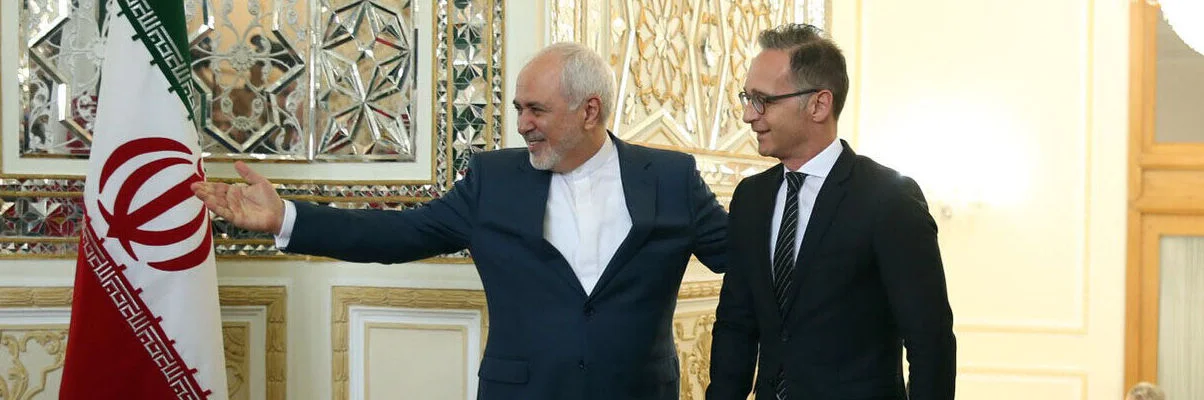
German Foreign Minister Heiko Maas rejected the Iranian ultimatum and insisted Tehran must stick to its commitments under the deal.
"We have already said in the past that we will not accept less for less. It is up to Iran to stick to its obligations," Maas said after talks with EU foreign ministers in Luxembourg.
"We will certainly not accept a unilateral reduction of obligations."
A spokesman for the British government echoed the call, saying the E3—the European signatories to the deal—has "consistently made clear that there can be no reduction in compliance".
"For now Iran remains within its nuclear commitments. We are coordinating with E3 partners on next steps," the spokesman added.
The European Union's diplomatic chief Federica Mogherini said the bloc would not act on the basis of Iranian rhetoric but wait for reports by the UN's nuclear watchdog, the International Atomic Energy Agency (IAEA).
"Our assessment on the implementation of the nuclear deal has never been, is not and will never be based on statements, but on the evaluation that the IAEA makes, the reports that the IAEA produces and that can be done at any time," Mogherini said after the talks.
"Announcements are relevant elements of political dialectics but our assessment on the implementation of the agreement is based on the factual, technically sound assessment and evaluation that the IAEA makes in its reports."
On May 8, President Hassan Rouhani said Iran would stop observing restrictions on its stocks of enriched uranium and heavy water agreed under the 2015 nuclear deal.
Rouhani said the move was in retaliation for the unilateral US withdrawal from the accord a year earlier, which saw Washington impose tough economic sanctions on Tehran.
Tensions between Tehran and Washington have escalated ever since, with the United States bolstering its military presence in the region and blacklisting Iran's Revolutionary Guards as a terrorist organization.
Photo: IRNA