
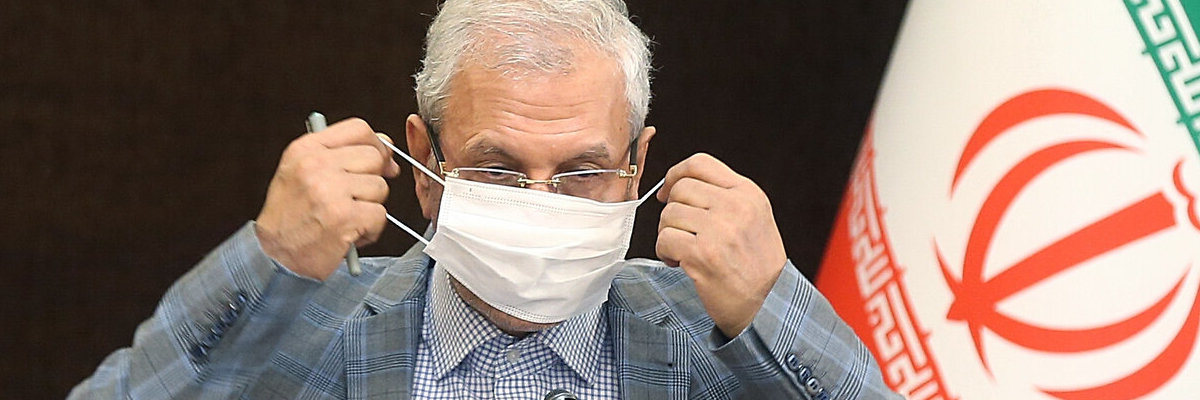
One in Five Iranians May Have Had Virus: Health Official
Nearly one in five Iranians may have been infected with the novel coronavirus since the country's outbreak started in February, a health official said Tuesday.
Nearly one in five Iranians may have been infected with the novel coronavirus since the country's outbreak started in February, a health official said Tuesday.
"According to results (of studies) about 15 million Iranians may have experienced being infected with this virus since the outbreak began," said Ehsan Mostafavi, a member of the task force set up to combat COVID-19.
This meant the virus was "much less lethal than we or the world had anticipated", the semi-official ISNA news agency quoted him as saying.
The figure represents 18.75 percent of the more than 80 million population of Iran, which on Tuesday announced another 74 deaths from the coronavirus.
But Mostafavi said the 15-million figure "must be viewed with caution" and that the studies it resulted from are "somehow similar to others done in the rest of the world".
Mostafavi said it was derived from serology tests to identify antibodies in patients who have recovered from the illness.
These differ from polymerise chain reaction (PCR) tests, which detect the presence of an antigen.
Iran says it has carried out more than one million PCR tests to "confirm" infections and report them so far.
Health ministry spokeswoman Sima Sadat Lari said 74 new coronavirus fatalities in the past 12 hours had raised the overall death toll to 8,425.
Cases of infection increased by 2,095 over the same period to total 175,927, she added.
Lari replaced Kianoush Jahanpour as the health ministry's spokesperson on Tuesday, according to a ministry statement.
Health Minister Saeed Namaki called on her to "avoid politicisation" of issues and to coordinate with him "before making any remarks on social media or to the press," it added.
Jahanpour had come under fire in April after saying China's reporting of its COVID-19 figures was a "bitter joke".
He was slammed on Twitter by the Chinese ambassador to Tehran, Chang Hua, and later retreated by praising Beijing for its support of Tehran during the pandemic.
Iran-China relations are usually warm as Beijing is one of Tehran's top trade partners, especially in oil.
Photo: IRNA
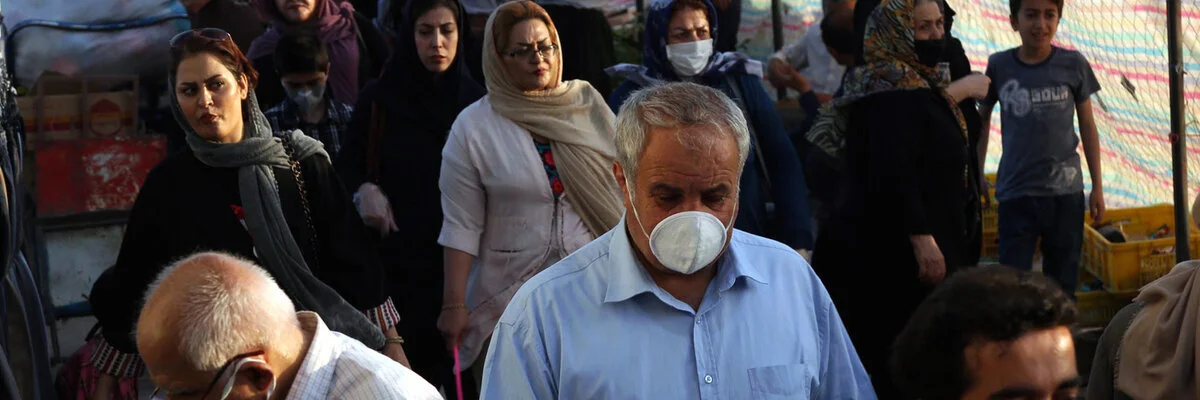
Iran Says Virus Uptick Primarily Due to Increased Testing
Iran's health ministry said Sunday a surge in new reported coronavirus infections was primarily due to increased testing rather than a worsening outbreak, although the easing of lockdown measures was also having an effect.
Iran's health ministry said Sunday a surge in new reported coronavirus infections was primarily due to increased testing rather than a worsening outbreak, although the easing of lockdown measures was also having an effect.
After hitting a near two-month low in early May and a lifting of tough movement restrictions, cases of the COVID-19 illness have been rising in Islamic republic which is battling the Middle East's deadliest outbreak of the disease.
"The main reason for rising numbers is that we started identifying (infected people) with no or light symptoms," said Mohammad-Mehdi Gouya, the health ministry's head epidemiologist.
He added that the gradual easing of lockdown measures had also contributed to higher infections "which has more or less happened all over the world," ISNA news agency reported.
Authorities have progressively lifted restrictions imposed to tackle the virus, and activity has almost returned to normal in most of the country's 31 provinces.
Ministry spokesman Kianoush Jahanpour said the situation had steadily improved with fewer hospitalisations, critical cases and deaths.
"It is only normal for infections to slightly grow after reopenings," he said in televised remarks Sunday.
He confirmed 2,364 new infections in the past 24 hours, bringing the total number to 171,789.
Yet 2,596 of total patients hospitalized were in "critical" condition on Sunday, with the number seemingly on a rising trajectory since Thursday, when Iran reported record high daily infections.
Jahanpour noted that 72 more people had died in the same period, raising the overall toll to 8,281.
There has been scepticism at home and abroad about Iran's official figures, with concerns the real toll could be much higher.
Rising infection figures since a low in early May and lax observance of social distancing have worried authorities, which have reiterated calls for strict adherence to health protocols.
Photo: IRNA
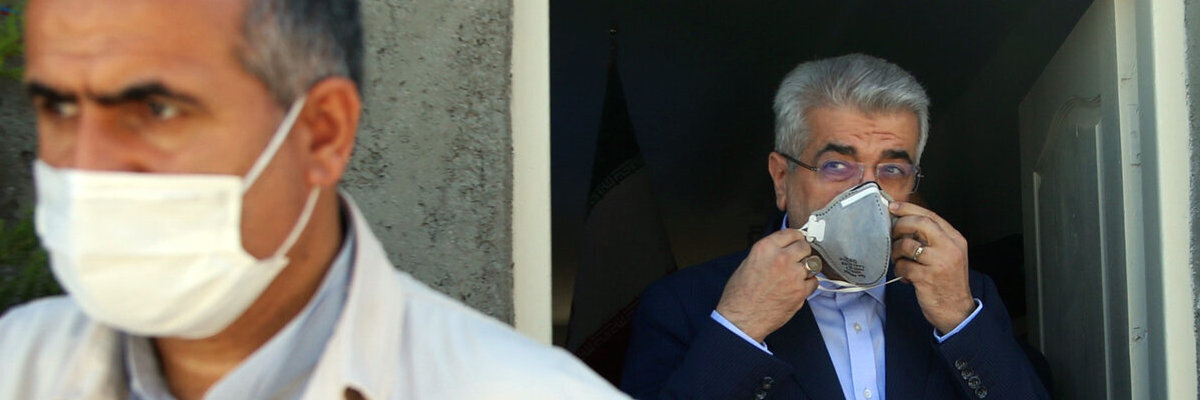
Iran Reports Most New Virus Cases Since Outbreak Began
Iran announced 3,574 new coronavirus infections Thursday, the most in one day since the pandemic started, as authorities increase health warnings following a resurgence in recorded cases.
Iran announced 3,574 new coronavirus infections Thursday, the most in one day since the pandemic started, as authorities increase health warnings following a resurgence in recorded cases.
After hitting a near two-month low in early May, novel coronavirus infections have been on a rising trajectory in the Islamic republic, which is battling the Middle East's deadliest outbreak of the disease.
Thursday was the fourth straight day that the daily caseload had topped 3,000.
The previous high was 3,186, recorded on March 30, at the height of the initial outbreak.
The health ministry has been taking no chances and has stepped up a public health campaign in recent days.
"Not respecting social distancing and public and personal hygiene rules, along with undertaking unnecessary travel, can have irreparable consequences," warned an announcement running on repeat on the state television information channel.
Health ministry spokesman Kianoush Jahanpour said Thursday that 59 people had died of COVID-19 over the past 24 hours, taking Iran's overall official toll to 8,071.
Despite the uptick in new infections, the official number of daily deaths has remained below 100 in recent weeks.
A total of 164,270 people have tested positive for the virus since the first cases were announced in February.
There has been some scepticism at home and abroad about Iran's official figures, with concerns the real toll could be much higher.
‘Completely Careless'
Officials have appeared to suggest that the surge in new cases could be the result of wider testing rather than a second wave of infection.
Jahanpour said Thursday that Iran had now conducted more than a million tests.
The state TV channel has also been broadcasting an animated info-graphic, accompanied by dramatic music, saying that Iran was faring much better than other countries in the pandemic.
Although it has registered the most deaths from the virus in the Middle East, official figures put its toll far behind several other countries in Europe and beyond.
The Islamic republic's archfoe, the United States, which has reimposed crippling sanctions on Iran's economy, has reported the highest total number of cases and deaths worldwide from the disease.
President Hassan Rouhani has praised the Iranian government's performance in dealing with coronavirus as a source of "great pride", saying late last month that Iran was "among the countries that have succeeded".
But Health Minister Saeed Namaki, who is a doctor by profession, and other officials are using more tempered language.
On Tuesday, the minister lamented that people were ignoring social distancing rules.
"The fact that people have become completely careless regarding this disease" was of great concern, the ISNA news agency quoted him as saying.
'Not Taking Threat Seriously'
"Certain people and certain officials do not take (the threat of) coronavirus seriously", state TV cites Namaki as saying in its rolling health messages.
Since April, authorities have progressively lifted restrictions imposed to curb the outbreak.
Iraj Harirchi, a deputy health minister who tested positive for the virus in late February, has "strongly" recommended the use of masks and urged Iranians to limit unnecessary travel.
According to state television, he expressed concern that the population seemed less convinced than before about the need to stay home and respect social distancing.
Meanwhile, life in Tehran, a city of some 10 million people, has almost returned to normal, with traffic jams and crowded streets, buses and metros, though wearing a mask is compulsory on public transport.
But nine of the country's 31 provinces are still under a "health alert", Jahanpour said Wednesday, while the southwestern province of Khuzestan remains classified as a "red zone"—the highest level of risk in the country.
People "either have total confidence in us or think the coronavirus has gone. The latter is not true at all," Namaki said.
Photo: IRNA
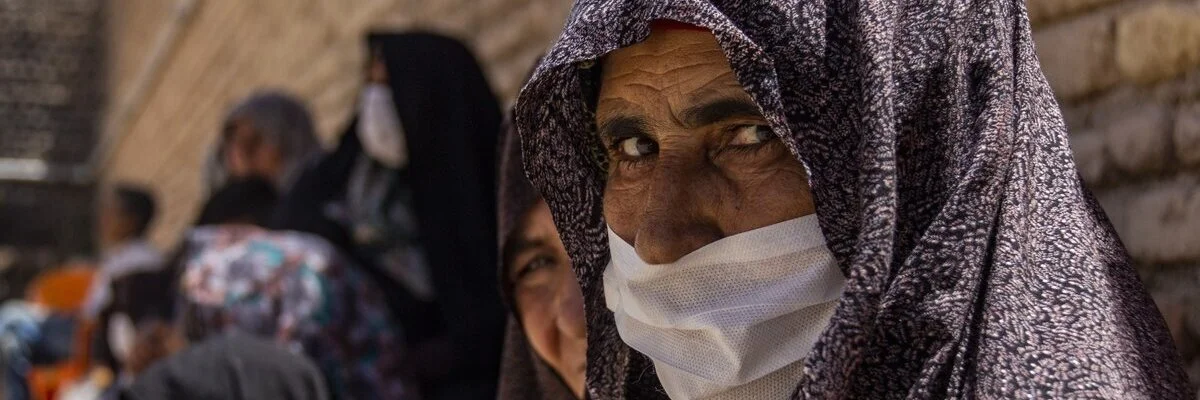
Virus on Rise Again in Iran With Over 3,000 Cases for Third Day
The spread of novel coronavirus has accelerated again this month in Iran which on Wednesday officially confirmed over 3,000 new cases for a third consecutive day.
The spread of novel coronavirus has accelerated again this month in Iran which on Wednesday officially confirmed over 3,000 new cases for a third consecutive day.
The country has recorded an additional 3,134 cases, health ministry spokesman Kianoush Jahanpour told state television, bringing the total number of infections to 160,696.
New cases were at their highest on March 30, hitting 3,186.
Another 70 people have died, Jahanpour added, taking the death toll to 8,012 since the outbreak was first declared in the country in February.
Infections have been on a rising trajectory in the Islamic republic since hitting a near two-month low on May 2, though the official number of daily deaths has remained below 100 in recent weeks.
Health Minister Saeed Namaki on Tuesday lamented that people were ignoring social distancing rules.
"The fact that people have become completely careless regarding this disease" was of great concern, he said.
"They either have total confidence in us or think the coronavirus has gone. The latter is not true at all," the ISNA news agency quoted him as saying.
Nine of the country's 31 provinces are still under a "health alert", Jahanpour said Wednesday, while the southwestern province of Khuzestan remains classified as a "red zone.”
Photo: IRNA
Iran Bemoans Ill-Discipline as Virus Cases Crest Again
Iranian health officials lamented that people were ignoring social distancing rules as it reported more than 3,000 new coronavirus infections in a second cresting wave.
Iran on Tuesday lamented that people were ignoring social distancing rules as it reported more than 3,000 new coronavirus infections in a second cresting wave.
"The fact that people have become completely careless regarding this disease" was of great concern, said Health Minister Saeed Namaki.
"They either have total confidence in us or think the coronavirus has gone. The latter is not true at all," the ISNA news agency quoted him as saying.
His remarks came as health ministry spokesman Kianoush Jahanpour said 3,117 new cases were confirmed in Iran in the past 24 hours.
This had brought the overall caseload to 157,562, he added.
Infections have been on a rising trajectory in Iran since hitting a near two-month low on May 2.
They were at their highest on March 30 after hitting 3,186.
Jahanpour said the virus had claimed another 64 lives in the past day, raising the overall death toll to 7,942.
The latest caseload was close to the highest daily count for the Middle East's deadliest outbreak of COVID-19.
The government has largely lifted the restrictions it imposed to stem the outbreak that first emerged in mid-February.
Photo: IRNA
Iran Advises Against Eid Travel as Virus Cases Mount
Iran called on its citizens on Thursday to avoid travel during the upcoming festival marking the end of Ramadan as it announced another surge in coronavirus infections.
Iran called on its citizens on Thursday to avoid travel during the upcoming festival marking the end of Ramadan as it announced another surge in coronavirus infections.
Iran has entered a fourth month in its battle to contain the virus.
"Our biggest concern" is to have "new peaks of the disease in the country by not respecting health regulations," said Health Minister Saeed Namaki.
"So I ask the dear Iranian people... not to travel during the Eid al-Fitr holiday. New trips mean new COVID-19 infections," he said, quoted by the semi-official news agency ISNA.
The Eid al-Fitr festival marking the end of the Muslim fasting month of Ramadan is expected to begin on Sunday in Iran.
Namaki's remarks came as his ministry announced 66 more deaths and another 2,392 cases of coronavirus infection across Iran, which has the Middle East's deadliest outbreak.
Ministry spokesman Kianoush Jahanpour said the latest figures took Iran's overall death toll to 7,249 and its caseload of infections to 129,341.
He said that of the new infections, 351 were in people who had been hospitalised and 2,041 who had been in close contact with patients.
Jahanpour added that there were no new deaths in 12 of Iran's 31 provinces, and that six provinces reported just one virus fatality.
The minister said people were failing to adhere to health protocols in Iran's hardest-hit provinces.
"In Khuzestan province, and in some of the provinces that have experienced new outbreaks of the disease, we found that they had not followed instructions," he said, referring to the government's social distancing protocols.
Iran reported its first cases of coronavirus on February 19—two deaths in the Shiite holy city of Qom.
The government of President Hassan Rouhani was criticized for being slow to react as the virus spread rapidly across the country.
It shut schools and places of worship and banned inter-city travel for the Persian New Year holidays in March, but since last month it has gradually eased restrictions aimed at halting the spread of the virus.
Photo: IRNA
Iran Says 'Curbing Virus' Even With Over 2,000 New Cases
Iran on Wednesday said it was close to "curbing" the new coronavirus outbreak even as it reported more than 2,000 fresh infections for the third day in a row.
Iran on Wednesday said it was close to "curbing" the new coronavirus outbreak even as it reported more than 2,000 fresh infections for the third day in a row.
"We have been progressing at every step in the past three months... in fighting this dangerous virus and are nearly on the verge of curbing this disease," said President Hassan Rouhani.
Iran would "even not have these problems" if health protocols "were more closely observed in some of the provinces that are currently in an unfavourable situation", he told a televised cabinet meeting.
At least 24 of Iran's 434 counties were "red"—the highest level on the country's color-coded risk scale, according to deputy health minister Alireza Raisi.
He said at a virus taskforce meeting broadcast on Tuesday that 218 counties were still deemed low-risk, which could drop to 183 since the virus had "started peaking" in some regions.
He added that most of the fatalities since Iran reported its first two deaths in February were above 70 years old, and that younger Iranians were in less danger.
Health ministry spokesman Kianoush Jahanpour said 2,346 new infections were confirmed across the country in the past 24 hours, raising the total to 126,949.
More than 98,800 of those hospitalised had recovered and were discharged, while 2,673 were in critical condition.
He also raised the death toll to 7,183 with 64 fatalities in the past day.
According to Jahanpour, there were no deaths over the same period in nearly a third of Iran's provinces, while eight others only had one.
Khuzestan province was still the worst-hit, and the rest of the country was in "relative stability", he added.
Iran's virus cases have been on a rising trajectory since May 2, when it reported its lowest new infections since March 10.
A taskforce official said Sunday that the rise was due to a surge in testing as Iran started "looking at those infected and not hospitalised".
"It is possible that the reported number of infections have gone up, but this in no way means more have been infected with COVID-19," said Ali Akbar Haghdoost.
Experts both at home and abroad have voiced skepticism about Iran's official figures, saying the real toll could be much higher.
Photo: IRNA
Iran Reports Over 2,100 New Virus Cases
Iran on Tuesday reported no new coronavirus deaths in nearly a third of its provinces for 24 hours but said there were more than another 2,100 cases of infection nationwide.
Iran on Tuesday reported no new coronavirus deaths in nearly a third of its provinces for 24 hours but said there were more than another 2,100 cases of infection nationwide.
The virus spread rapidly to all 31 of Iran's provinces soon after the country's first cases—two deaths in the holy city of Qom—were announced three months ago.
"Ten provinces have reported zero deaths in the past 24 hours and six others only one," said health ministry spokesman Kianoush Jahanpour.
The southwestern province of Khuzestan was still classified as "red"—the highest level on the country's color-coded risk scale, he said.
But the situation was "stable" in most other provinces, Jahanpour told a televised news conference.
Khuzestan was currently the only province still classified as red, he added.
The official had warned in previous days of a deteriorating situation in the provinces of Lorestan, North Khorasan, Kerman, Sistan and Baluchistan and Kermanshah.
On Tuesday, he said 62 fatalities in the past 24 hours had taken the overall death toll in the country's outbreak to 7,199.
Another 2,111 new infections were confirmed over the same period, he said, raising the total caseload to 124,603.
More than 97,170 of those hospitalized with the virus had recovered and been discharged, he added.
Experts both at home and abroad have voiced skepticism about Iran's official figures, saying the real toll could be much higher.
Photo: IRNA
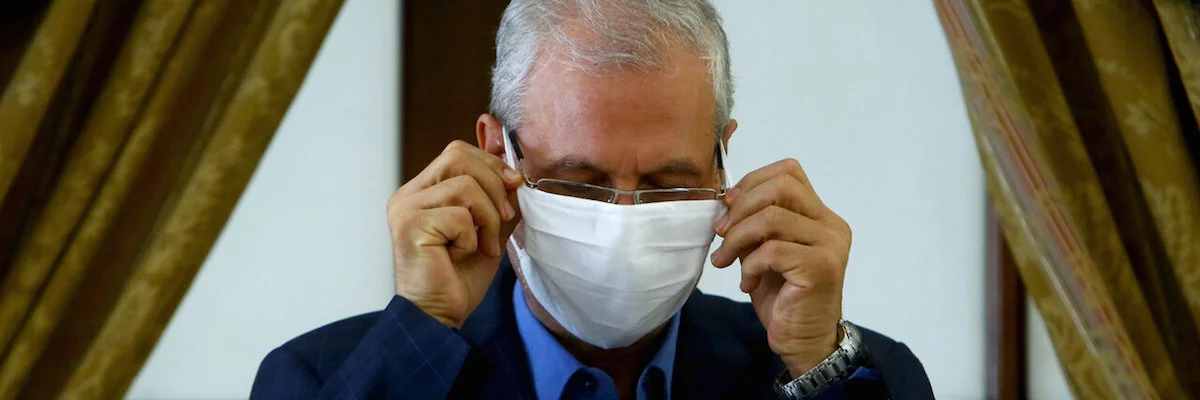
Iran Announces New Phase in Virus Fight Despite Nearly 2,300 New Cases
Iran on Monday said it was entering a new phase of trying to eliminate the novel coronavirus after bringing the Middle East's deadliest outbreak under control in many regions.
Iran on Monday said it was entering a new phase of trying to eliminate the novel coronavirus after bringing the Middle East's deadliest outbreak under control in many regions.
"Reports show we have passed the management and control phase and are now in the phase of curbing" the spread of COVID-19, government spokesman Ali Rabiei told a televised news conference.
But even as Rabiei gave the upbeat assessment in Iran's three-month struggle against the illness, the health ministry announced nearly 2,300 new infections—the highest official single-day number since April 5.
Rabiei defended the Iranian government's decision to reopen businesses in recent weeks.
"We can have fewer deaths, keep people's daily lives in motion and not cripple the economy even when the coronavirus exists," he said.
Iran, he said, now had 280 "white" counties—the lowest level on the country's color-coded risk scale—out of its 434.
Health ministry spokesman Kianoush Jahanpour said meanwhile that 2,294 new infections were confirmed in the past 24 hours, raising the total to 122,492.
Jahanpour added that 1,760 of the new cases were outpatients and people who had been in close contact with those infected.
More than 95,600 of those hospitalised with the virus had recovered and been discharged.
Rabiei said that put Iran "in third global place in recoveries after China and Switzerland" with "a recovery rate of almost 94 percent".
The health ministry raised the virus death toll to 7,057, with 69 fatalities in the past day.
Experts both at home and abroad have voiced scepticism about Iran's official figures, saying the real toll could be much higher.
Jahanpour said the situation was becoming critical in the provinces of Lorestan, North Khorasan, Kerman, Sistan and Baluchistan, and Kermanshah.
Khuzestan, which is still in the high-risk "red" category, accounted for about a quarter of the new cases detected in the past 24 hours, he added.
The southwestern province has become Iran's new coronavirus hotspot and is the only region so far where authorities have reimposed business lockdowns after a country-wide relaxation in April.
Photo: IRNA
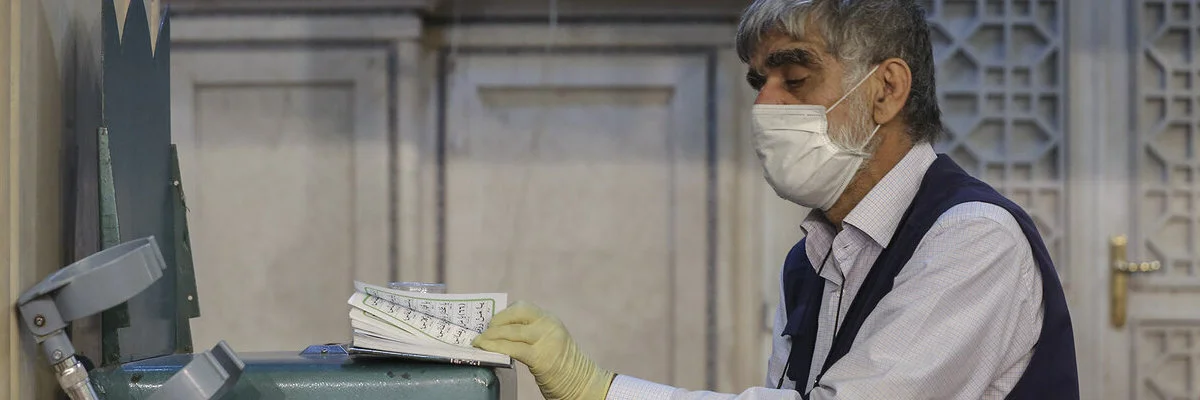
Iran Warns of Virus Cluster Spread, Says 71 More Dead
Iran warned of a possible coronavirus cluster hitting another province on Thursday as it announced 71 new deaths and more than 1,800 infections nationwide.
Iran warned of a possible coronavirus cluster hitting another province on Thursday as it announced 71 new deaths and more than 1,800 infections nationwide.
"We are in situation similar to previous days (in most provinces) save for Khuzestan, which is still in a critical condition, and it seems that North Khorasan may be critical as well," said health ministry spokesman Kianoush Jahanpour.
"If this trend continues, North Khorasan will require more serious measures, too," he added in televised remarks.
North Khorasan province lies in northeastern Iran on the border with Turkmenistan. Khuzestan province in the southwest borders Iraq.
The ministry had on Monday signalled a setback in its efforts to contain the virus in Khuzestan where authorities shut state bodies, banks and non-essential businesses again in around a third of its counties.
Iran stopped publishing provincial figures for the coronavirus last month.
Authorities in the southeastern province of Sistan and Baluchistan, which borders Pakistan and Afghanistan, have also warned of a fresh spike in infections.
"We had not seen such an increase in coronavirus infections since" late February, said Ghasem Miri, deputy head of provincial capital Zahedan's medical university.
The total number of people infected in the province had hit 909, of whom 821 had recovered and 59 died, Miri told ILNA news agency on Tuesday.
Miri said the jump was due to the failure of people to observe "social distancing and health protocols".
Iran has deemed more than 150 counties across the country as low-risk from the virus and has allowed them to reopen mosques.
Since April 11, it has allowed a phased reopening of its economy and lifted restrictions on intercity travel.
Iran's deputy health minister also announced on Thursday that athletes in 29 sports—including track and field, tennis and weightlifting—could resume training.
Iraj Harirchi also told ISNA news agency that a decision about Iran's top flight football league would be made on Saturday.
According to health ministry spokesman Jahanpour, the latest deaths brought the official toll to 6,854.
He said 1,808 new cases of COVID-19 infection had been detected, raising the total to 114,533.
Of those hospitalized, 90,539 had recovered and been discharged, while 2,758 were in critical condition.
Photo: IRNA
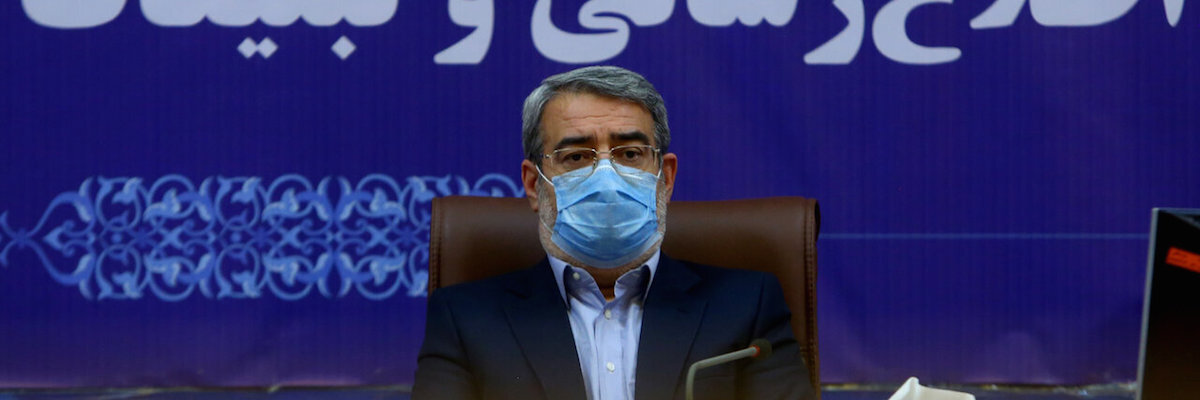
Iran Reports 45 New Virus Deaths
Iran on Monday warned of a setback in its efforts to contain the novel coronavirus unless health protocols are observed more closely, as it reported 45 new COVID-19 deaths.
Iran on Monday warned of a setback in its efforts to contain the novel coronavirus unless health protocols are observed more closely, as it reported 45 new COVID-19 deaths.
The southwestern province of Khuzestan has become the new focal point of Iran's COVID-19 outbreak with authorities reimposing strict measures to halt its spread.
"We have regressed in Khuzestan due to the increase in hospitalizations and not observing health protocols," Deputy Health Minister Alireza Raisi said in televised remarks.
"This can happen to any other province if we are not careful," he added, noting that tighter measures would be reimposed in other places too if needed.
Authorities have shut down state bodies, banks and non-essential businesses again in nine of Khuzestan's counties.
Iran's government spokesman Ali Rabiei said "less than 50 percent" of Khuzestan residents have observed health protocols.
"We've seen a rising trend of infection and death (in Khuzestan) which shows protocols and social distancing are not being observed," he said in a televised news conference.
The health ministry stopped publishing provincial figures for the coronavirus last month.
State television aired images on Monday showing many maskless residents of the capital out and about.
Some of those interviewed explained that they now felt the weather was too hot to wear masks, while others thought the heat could kill the virus.
The new fatalities brought to 6,685 the overall confirmed death toll in Iran, according to health ministry spokesman Kianoush Jahanpour.
He also said that 1,683 new COVID-19 cases were confirmed in the past 24 hours, raising the total to 109,286.
Out of those hospitalized, 87,422 have recovered so far while 2,703 were in critical condition.
Iranian police have shut 1,300 websites and arrested 320 people accused of spreading rumors about the virus, state news agency IRNA reported on Saturday.
They were accused of "disturbing public opinion", the news agency said.
Photo: IRNA
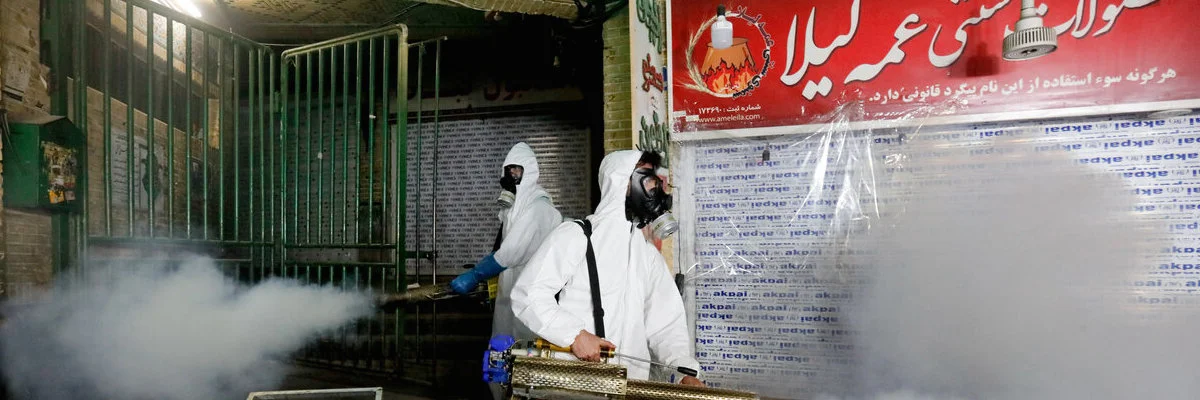
Iran Says Virus Outbreak 'Relatively Stable' Despite Uptick
Iran said on Thursday its coronavirus outbreak was "relatively stable" as it announced another 68 deaths as well as more than 1,000 infections for a fourth straight day.
Iran said on Thursday its coronavirus outbreak was "relatively stable" as it announced another 68 deaths as well as more than 1,000 infections for a fourth straight day.
The Islamic republic has battled to contain the Middle East's deadliest outbreak of the COVID-19 illness since reporting its first cases in mid-February.
On Saturday the government's official tally of daily infections hit 802—its lowest level since March 10.
Iran's count stayed below 1,000 again on Sunday, however its caseload has bounced back up above that mark on each day since then.
Health ministry spokesman Kianoush Jahanpour said the situation was "relatively stable" as he announced that the latest fatalities took the overall death toll to 6,486.
Jahanpour said there were 1,485 new cases of infection, putting the country's outbreak total at 103,135.
"More than 986 of these individuals had mild to moderate symptoms, or they were outpatients, or family members of infected patients," he said.
Of all those infected, he added, 82,744 people had recovered from the illness and been discharged from hospital.
Doubts have been raised about the tolls issued by Iran since it announced its first cases on February 19 -- two deaths in the Shiite holy city of Qom.
Photo: IRNA
Iran Warns of 'Rising Trend' as Virus Cases Top 100,000
Iran warned of a "rising trend" in its coronavirus outbreak on Wednesday as it said 1,680 new infections took its overall caseload beyond the 100,000 mark.
Iran warned of a "rising trend" in its coronavirus outbreak on Wednesday as it said 1,680 new infections took its overall caseload beyond the 100,000 mark.
The country has struggled to contain the Middle East's deadliest COVID-19 outbreak since announcing its first cases in mid-February.
Concerns were raised last month about the threat of a "second wave" of the virus in a report by parliament that criticised the government's slow response.
"We are witnessing a rising trend in the past three or four days, which is significant," health ministry spokesman Kianoush Jahanpour told a televised news conference.
The rise was "based on our behaviour, especially in the past two weeks, considering that a part of society has apparently had a change of attitude," he added.
The newly reported infections brought the country's overall number of confirmed cases to 101,650.
On Saturday, Iran's official tally of daily infections hit its lowest level since March 10, but cases have picked up again since then.
The health ministry's Jahanpour said the spike in cases could be due to an increase in movement across cities and unnecessary travel.
Iran has allowed a phased return to work to revitalise its economy since April 11 and reopened mosques in parts of the country deemed to be at low risk.
Jahanpour also reported 78 new COVID-19 fatalities in the past 24 hours for the country whose virus death toll has also been creeping up since Sunday.
This brought to 6,418 the total number of fatalities officially recorded in Iran since February 19, when it announced its first two deaths in the Shiite holy city of Qom.
Out of those hospitalised, 81,587 had recovered and were discharged while 2,735 were in critical condition.
Experts and officials both in Iran and abroad have cast doubts over the country's COVID-19 figures, saying the actual number of cases could be much higher than reported.
A report published by parliament in mid-April said the real death toll could be as much as 80 percent higher than what the government announced.
It said the officially announced figures were based only on "patients that are hospitalised with severe symptoms".
It also said a "second wave" of the virus may come next winter, possibly without a break due to containment measures taking too long.
Photo: IRNA
Iran Reopens Mosques, Records Almost 80,000 Hospital Recoveries
Iran on Monday reopened mosques in parts of the country deemed at low risk from coronavirus, as it said almost 80,000 people hospitalized with the illness had recovered and been released.
Iran on Monday reopened mosques in parts of the country deemed at low risk from coronavirus, as it said almost 80,000 people hospitalized with the illness had recovered and been released.
Health ministry spokesman Kianoush Jahanpour said 74 new fatalities brought to 6,277 the total number officially recorded in Iran since it reported its first cases in mid-February.
Iran on Sunday recorded 47 deaths, its lowest daily count in 55 days.
Another 1,223 cases of COVID-19 infections were recorded in the past 24 hours, Jahanpour said, raising the total to 98,647.
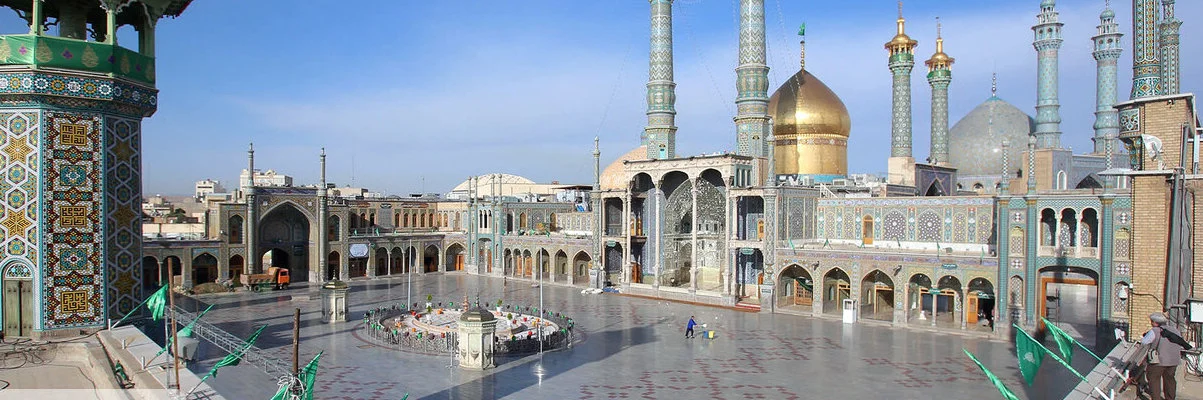
Mosques were Monday allowed to reopen to worshippers in 132, or around a third, of Iran's administrative divisions which are considered low-risk.
The country has started using a colour-coded system of "white", "yellow" and "red" for different areas to classify the virus risk.
Worshippers were obliged to enter mosques with masks and gloves and told they can only stay for half an hour during prayer times and must use their personal items, said the health ministry.
Mosques were told to refrain from offering them food and drinks, provide hand sanitisers and disinfect all surfaces, it said in a statement published by ISNA news agency.
According to Jahanpour, 79,397 of those hospitalised with the disease since Iran reported its first cases in mid-February have been discharged, while 2,676 are in critical condition.
He said Iran was among "top five countries in the world" with the highest number of recoveries, without elaborating.
Experts and officials both in Iran and abroad have cast doubts over the country's COVID-19 figures, saying the real number of cases could be much higher than reported.
President Hassan Rouhani said Iran had "succeeded in effectively preventing the spread of this virus in many" parts of the country.
Speaking at a televised videoconference meeting of the Non-Aligned Movement, Rouhani said Iran's response to the outbreak "has in instances been evaluated to be beyond international standards."
But the US "anti-human rights" sanctions against the Islamic republic had hampered its efforts to control the virus, he added, noting that they prevented companies from selling Iran its medical needs.
US President Donald Trump withdrew from a landmark nuclear deal and reimposed unilateral sanctions on Iran in 2018, targeting key oil and banking sectors.
Humanitarian goods, especially medicine and medical equipment, are technically exempt.
But international purchases of such supplies are forestalled by banks wary of conducting any business with Iran for fear of falling foul of the US sanctions.
Photo: IRNA
Iran to Reopen Many Mosques as 47 More Die of Virus
Iranian President Hassan Rouhani said mosques would reopen across large parts of the country Monday, as officials reported a drop in the number of deaths from the novel coronavirus.
Iranian President Hassan Rouhani said mosques would reopen across large parts of the country Monday, as officials reported a drop in the number of deaths from the novel coronavirus.
Health ministry spokesman Kianoush Jahanpour said 47 people died of the virus over the past 24 hours, the lowest daily count in 55 days.
He told a news conference he hoped "the trend will continue in the upcoming days".
His remarks came as President Hassan Rouhani said 132 counties, around one third of the country's administrative divisions, would "reopen their mosques as of tomorrow".
"Social distancing is more important than collective prayer," he said in a televised meeting of the country's virus taskforce.
The president argued that Islam considers safety obligatory, while praying in mosques is only "recommended".
Rouhani did not give the names of the counties affected by the measure or the number of mosques due to reopen on Monday.
The measure is not expected to be implemented in the capital, Tehran, or in the main Shiite holy cities of Mashhad which are among those most affected by the outbreak.
Mosques and some key Shiite shrines in Iran were closed in March amid the Middle East's deadliest COVID-19 outbreak.
The targeted counties are "low-risk", Rouhani said.
The virus taskforce was also mulling reopening schools by May 16 to allow for a month of classes before the summer break.
According to Jahanpour, the 47 new deaths brought to 6,203 the total number officially recorded in Iran since it reported its first cases in mid-February.
He added that 976 fresh infection cases were confirmed in the past 24 hours, bringing the total to 97,424.
Over 78,420 of those hospitalised have since been discharged, while 2,690 are still in critical condition.
Experts and officials both in Iran and abroad have cast doubts over the country's COVID-19 figures, saying the real number of cases could be much higher than reported.
Qods Day Cancelled
Rouhani claimed hospital visits over potential infections were "much lower" compared to recent weeks.
He said it is due to "83 percent of people on average observing health protocols" and thanked Iranians for their "cooperation".
The Islamic republic has tried to contain the spread of the virus by shutting universities, cinemas, stadiums and other public spaces since March.
But it has allowed a phased reopening of its economy since April 11, arguing that the sanctions-hit country cannot afford to remain shut down.
Only "high-risk" businesses like gyms and barbershops remain closed.
"We will continue the reopenings calmly and gradually," Rouhani said.
Yet he warned that Iran should prepare for "bad scenarios" too, saying "this situation may continue into the summer".
Iran's Revolutionary Guards on Sunday announced they were cancelling the annual day of protests against Israel known as Qods (Jerusalam) Day seemingly over the coronavirus pandemic.
Spokesman Ramezan Sharif, quoted by Fars news agency, said the move was in line with the cancellation across Iran of other ceremonies and the closing of holy places.
"Let's not worry about what the enemy might say," he added.
The day has been held every year since the 1979 Islamic Revolution to show support for the Palestinians and is usually marked on the last Friday of the holy fasting month of Ramadan, which falls on May 22 this year.
Photo: IRNA
Iran virus death toll surges past 6,000
Iran's health ministry said on Thursday that 71 new deaths from the novel coronavirus took the country's overall toll past the 6,000 mark.
Iran's health ministry said on Thursday that 71 new deaths from the novel coronavirus took the country's overall toll past the 6,000 mark.
"The number of deaths from this disease effectively crossed 6,000 today," ministry spokesman Kianoush Jahanpour said in televised remarks.
"Considering that we lost 71 of our countrymen in the past 24 hours, a total of 6,028 of those infected with COVID-19 have passed away to date," he added.
He added that another 983 people tested positive for the virus during the same period, bringing the total to 94,640.
More than 75,100 of those infected had already been released from hospital after recovering.
Of those still being treated for the disease, 2,976 were in critical condition.
Doubts have been cast over Iran's coronavirus casualty figures by experts and officials both at home and abroad.
Health Minister Saeed Namaki criticised some Iranians for not taking the outbreak seriously.
"I have a complaint about some citizens; you are considering the situation to be too normal," Namaki said in televised remarks.
"It is true that we had very good results at the height of economic distress, that deaths dropped to double digits and hospitalisations reached minimum, but this does not mean the coronavirus is done with."
Namaki also warned that Iran must prepare itself for a "simultaneous heavy wave of COVID-19 and the flu" in the coming autumn and winter.
Iran has shut schools, universities, cinemas and stadiums among other public spaces since March to contain the spread of the virus.
But since April 11, it has allowed a phased reopening of its economy and lifted restrictions on intercity travel.
Mosques remain closed even as Muslims observe the fasting month of Ramadan.
According to Namaki, his ministry is devising health protocols to allow Friday and group prayers to recommence in cities that have been given the all clear.
Group prayers have been banned in the country as a high-risk activity since mid-March.
Photo: IRNA
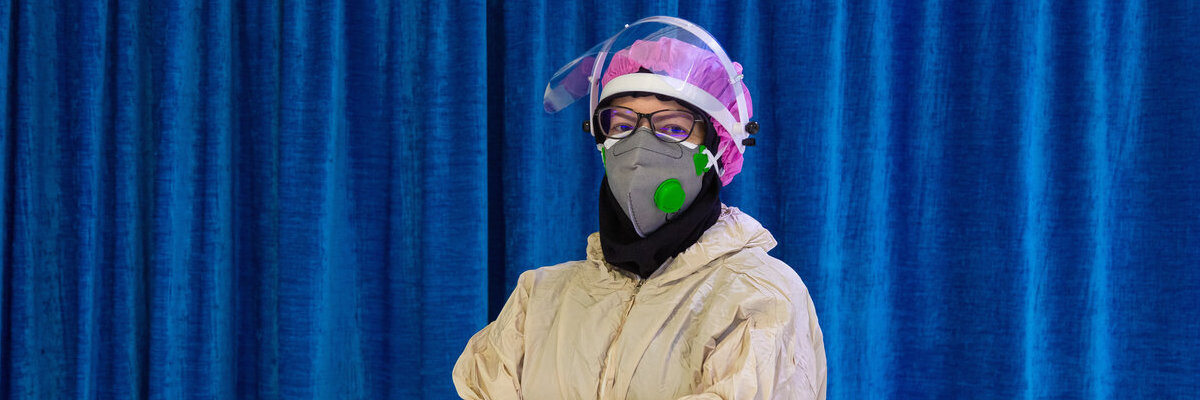
Iran Reports 94 Virus Deaths But Says Cases Going Down
Iran announced on Wednesday 94 new deaths from the novel coronavirus but said the cases of people infected in the country was on the way down.
Iran announced on Wednesday 94 new deaths from the novel coronavirus but said the cases of people infected in the country was on the way down.
Health ministry spokesman Kianoush Jahanpour said the fatalities detected in the past 24 hours took Iran's overall death toll to 5,391.
The number of people infected with the virus that causes the COVID-19 disease rose by 1,194, bringing the total to 85,996.
"The gradual downward trend in cases of infections has been maintained," Jahanpour told a televised news conference.
President Hassan Rouhani however called on people to remain vigilant.
"If we arrogantly think that the job is done and we have won, then this would be the biggest problem that could affect us," he said during a weekly meeting of his cabinet.
Iran has struggled to contain the virus outbreak since reporting its first cases on February 19 -- two deaths in the Shiite holy city of Qom.
The number of Iranians killed and sickened by the virus is widely thought to be much higher, however.
Despite that, Iran has allowed many businesses to reopen since April 11 after shutting most down in mid-March to prevent the spread of the disease.
Photo: IRNA
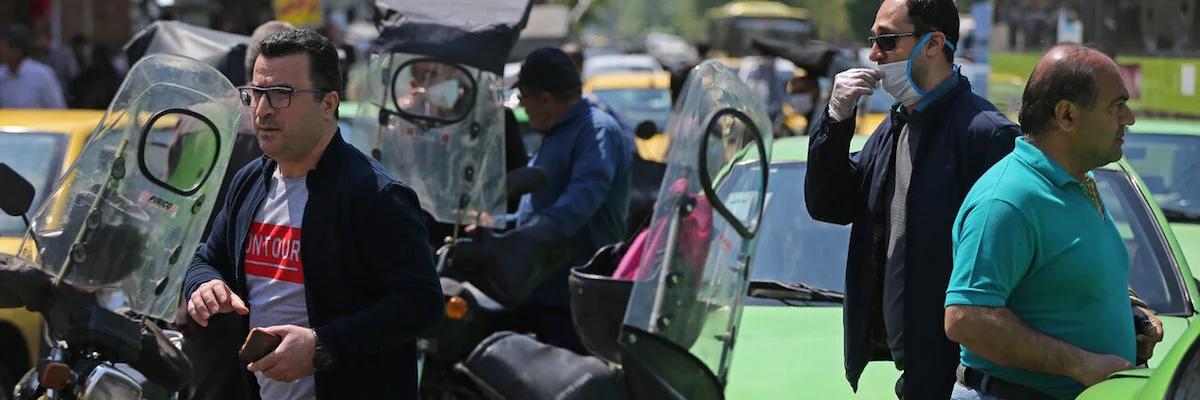
Iran Lets More Businesses Reopen as Virus Toll Rises
Iran on Monday reported 91 new deaths from the novel coronavirus, as the government allowed more economic activity to resume after a gradual reopening in the past 10 days.
Iran on Monday reported 91 new deaths from the novel coronavirus, as the government allowed more economic activity to resume after a gradual reopening in the past 10 days.
After nearly a week of declining fatalities, there has been a slight uptick in the past few days for the Islamic republic, one of the world's hardest hit.
Sanctions-hit Iran had shut down all non-essential economic activity in mid-March, weeks after its coronavirus outbreak first came to light.
But top officials argued the country's battered economy could not remain shuttered, and President Hassan Rouhani has allowed low-risk businesses to reopen since April 11.
Shops in passages and bazaars were the latest businesses permitted to resume trading as part of the reopening.
A clothier at Tehran's Grand Bazaar said his customers would expose themselves to the virus regardless as they had to go out to buy necessities anyway.
"Even if we stay closed, what's the use?" Mahmoud Fakhrzadegan, who has worked at the bazaar for 60 years, told AFP.
For 27-year-old Reza, standing masked in front of his small stall, the reopening was not a "100 percent correct" decision but shopkeepers had to make a living, as "no one else is going to help them".
Another shopkeeper put it in darker terms.
"What should we be afraid of? We were born once, and we're going to die sometime," said Ahmad, 67.
Nearly all retailers were open at north Tehran's Tajrish Bazaar, said an AFP correspondent who visited the sprawling complex on Monday.
Appeal for Vigilance
But health ministry spokesman Kianoush Jahanpour appealed for people to remain vigilant as he announced the latest tolls from the deadly virus.
"With some businesses reopening and movement increasing, observing health protocols and social distancing become more and more necessary," he said.
"It does not mean we should be less careful, but the exact opposite," he told a televised news conference.
Iran reported its first coronavirus cases on February 19—two deaths in the Shiite holy city of Qom.
Jahanpour said the latest COVID-19 fatalities brought the country's official number of dead to 5,209.
An additional 1,294 infections took the country's total number of COVID-19 cases to 83,505.
Of those admitted to hospital, 59,273 had recovered and were discharged, while 3,389 remained in critical condition.
There has been scepticism about Iran's declared coronavirus casualty figures from officials and experts both in the country and abroad.
Rouhani's government allowed "low-risk" shops in the capital to reopen on Saturday and other provinces last week.
Businesses such as restaurants, gyms and wedding halls are still closed due to the high risk of spreading the virus.
Iran has been under crippling US sanctions since President Donald Trump withdrew the United States from a landmark nuclear deal and reimposed them in 2018.
With sanctions targeting key oil and banking sectors, Tehran has struggled to keep its economy running while handing out cash to the poor.
"The government must fight the direct and indirect impacts of coronavirus like poverty, unemployment, and recession, with the fight becoming harder and more complicated due to sanctions," government spokesman Ali Rabiei told a news conference on Monday.
Photo: IRNA
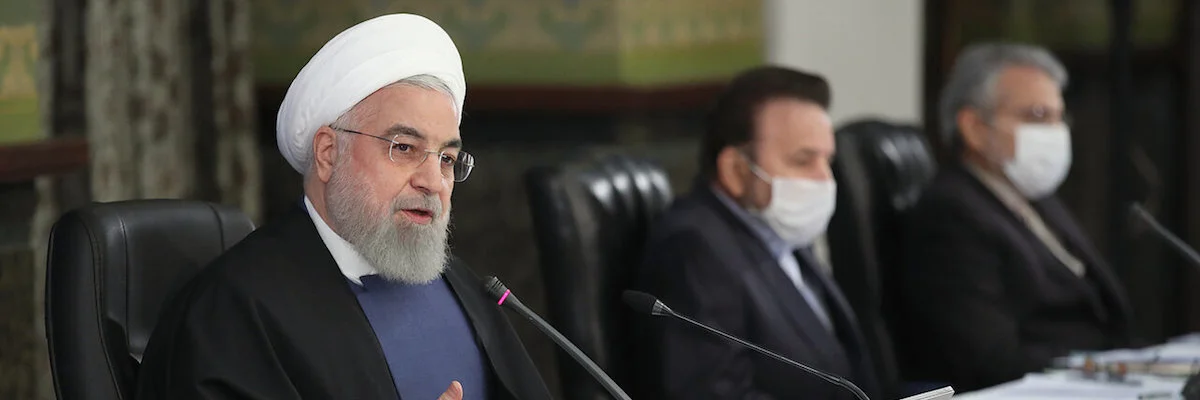
Iran Says Virus Deaths Below 100 for Second Day
Iran on Wednesday said new deaths from the novel coronavirus remained in double figures for the second day in a row, as the country gradually reopens its sanctions-hit economy.
Iran on Wednesday said new deaths from the novel coronavirus remained in double figures for the second day in a row, as the country gradually reopens its sanctions-hit economy.
Health ministry spokesman Kianoush Jahanpour said 94 deaths from the COVID-19 disease were recorded in the past 24 hours, bringing the overall toll to 4,777.
Another 1,512 people tested positive for the illness.
That took the total number of infections to 76,389, Jahanpour said, noting that 49,933 of those hospitalised had recovered and been discharged.
The government of President Hassan Rouhani has struggled to contain the outbreak that emerged two months ago.
It shut schools and universities, postponed major events and imposed a range of other restrictions, but it has stopped short of ordering lockdowns.
Iran allowed small businesses outside Tehran to reopen on Saturday and is set to extend the measure to the capital next week.
The move has faced criticism from health experts and even some authorities.
Rouhani and other top officials have argued that the economy must reopen amid diminishing oil and tax revenues coupled with US sanctions on the country.
"We have to fight both the disease and unemployment at the same time," Rouhani told a cabinet meeting on Wednesday.
The president announced the sale of a 10 percent stake in Social Security Organisation's investment arm, known by its Persian acronym SHASTA, on the stock market.
The Tehran Stock Exchange's website put the holding's market capitalisation at 688 trillion rials ($4.3 billion) for the offered eight billion shares.
SHASTA is Iran's biggest holding company with stakes in industries as diverse as construction and pharmaceuticals.
The offering is expected to raise a significant amount of cash for the government, without it giving up control to appoint managers and board members.
While Iran had forecast that its economy would contract by 7.2 percent in the year to March 21, the country's stock market has risen over 187 percent during the same period.
Since then, the Tehran Stock Exchange's main index, the TEDPIX, has climbed by another 20 percent despite the COVID-19 outbreak.
This is while Iran has faced rising inflation and a sharp decline in the value of its national currency.
Photo: IRNA
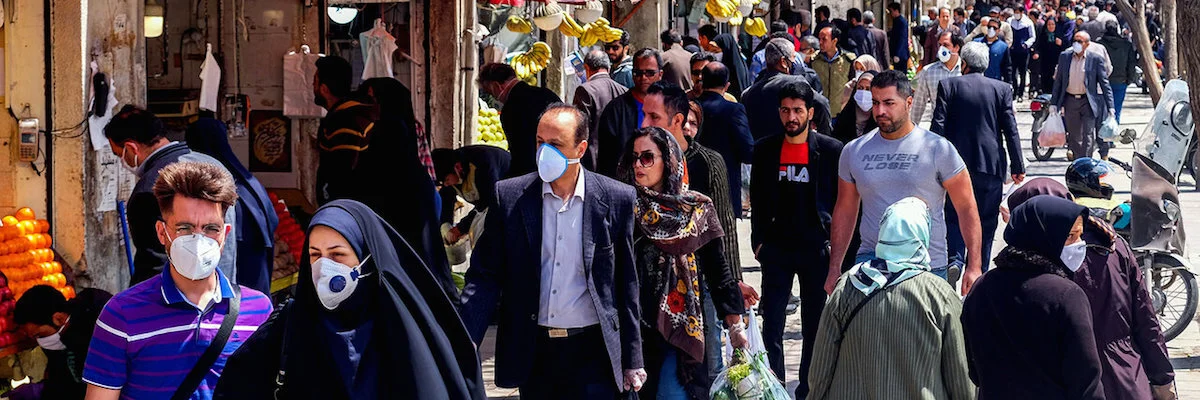
Iran Vows to Protect People From Virus Economic Impact
Iran vowed Monday to protect its people from the economic impact of the novel coronavirus as the official death toll in the Middle East's worst-hit country passed 4,500.
By Ahmad Parhizi
Iran vowed Monday to protect its people from the economic impact of the novel coronavirus as the official death toll in the Middle East's worst-hit country passed 4,500.
The government of President Hassan Rouhani has struggled to contain the outbreak since it announced the country's first COVID-19 cases nearly two months ago.
It shut schools and universities, postponed major events and imposed a range of other restrictions, but it has stopped short of ordering lockdowns.
The government stressed the importance of striking a balance between the measures aimed at curbing the spread of the virus and getting the economy back on track.
The objective was to protect "the health and lives of the population from the coronavirus and its economic and social consequences", said government spokesman Ali Rabiei.
"Intelligent (social) distancing has the same objective... we must ensure the health of society while preserving the social and economic life" of the country, said Rabiei.
"The priority will always be given to health policies," he told a televised news conference.
Rouhani announced last week that "low-risk" businesses would be allowed to reopen in order to protect Iran's sanctions-hit economy.
The move took effect on Saturday outside Tehran and it is set to be implemented in the capital a week later.
Uptick in Traffic
And while the restrictions remain in place in Tehran, there has been a noticable uptick in the flow of traffic in the city this working week.
On Monday, motorists drove past newly erected billboards paying tribute to doctors and nurses who have been on the front line of Iran's COVID-19 battle.
The president on Monday cautioned against neglecting the containment measures, however.
"The implementation of health protocols should continue in a strong and forceful manner," Rouhani said.
The health ministry on Monday announced another 111 coronavirus deaths and 1,617 new infections, bringing the official totals to 4,585 and 73,303, respectively.
But ministry spokesman Kianoush Jahanpour said the number of coronavirus infections was stabilising and that 45,983 patients had recovered.
"The trend of relatively stable and decreasing new cases of contamination, which has been observed in recent days, has also continued over the past 24 hours," said Jahanpour.
"People must always continue to avoid unnecessary travel," he said, in order to stop the spread of the virus that causes the COVID-19 disease.
Iran announced its first COVID-19 cases on February 19—the deaths of two people in the Shiite holy city of Qom.
But there has been speculation abroad that the real toll from the disease in the Islamic republic could be higher.
Photo: IRNA