
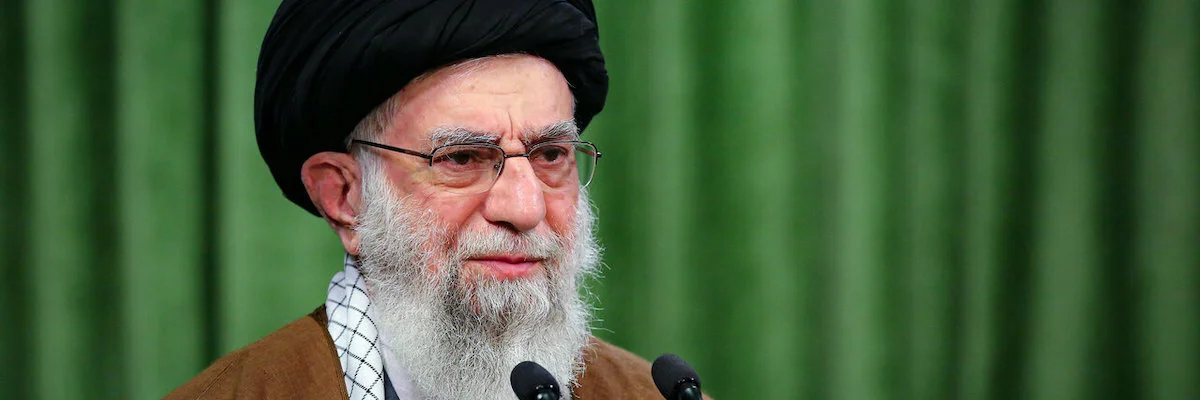
Khamenei Says Outcome of US Vote Will Not Affect Iran's Policies
The US presidential election will have "no effect" on Tehran's policies towards Washington, Iran's supreme leader said Tuesday.
The US presidential election will have "no effect" on Tehran's policies towards Washington, Iran's supreme leader said Tuesday.
"On the subject of the United States, we follow a sensible, calculated policy (which) cannot be affected by changes of personnel" in Washington, Ayatollah Ali Khamenei said in a televised speech marking the anniversary of the birth of the Prophet Mohammed.
"Today is election day in the United States. Things may happen but they do not concern us," he said. "Our policies are well defined and the coming and going of (presidents) will have no effect" on them.
American voters headed to the polls on Tuesday in a vote that coincides with the anniversary of the 1979 storming by radical students of the US embassy in Tehran.
The ensuing crisis lasted 444 days until 52 hostages were finally released, and has poisoned relations between the two countries to this day.
Iran and the US have come close to armed conflict twice since June 2019, following the Trump administration's withdrawal the previous year from a multilateral deal on the Iranian nuclear programme.
Trump has engaged in a policy of "maximum pressure" against Tehran, reimposing harsh sanctions that have plunged the Iranian economy into a severe recession.
Tehran has responded by rolling back its commitments under the 2015 accord.
Joe Biden, Trump's challenger, who is leading in polls, favours diplomacy with Iran and has backed the nuclear accord negotiated while he was vice president under Barack Obama.
Photo: IRNA
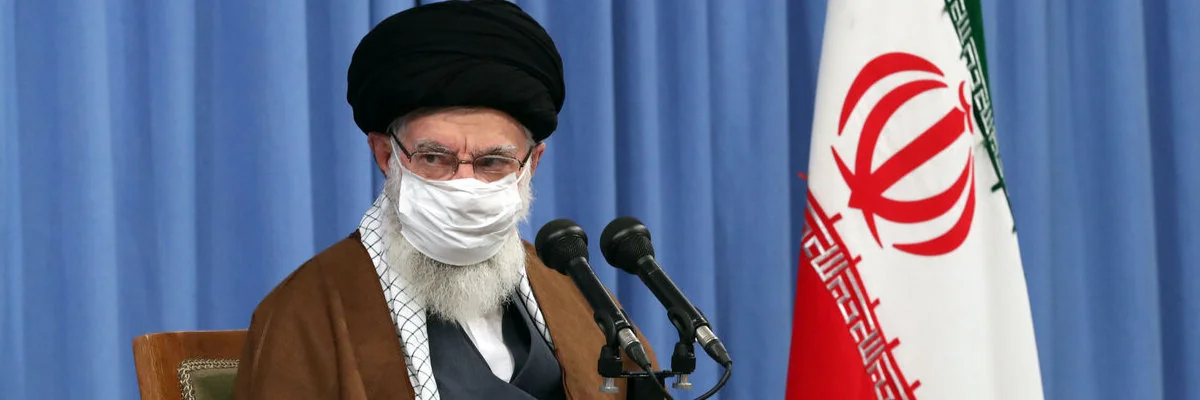
Iran's Khamenei Calls for Every Effort to Stop COVID-19 Spread
Iran's supreme leader Ayatollah Ali Khamenei on Saturday called for stiff action to stem rising cases of novel coronavirus, in a rare public meeting with the national committee battling the pandemic.
Iran's supreme leader Ayatollah Ali Khamenei on Saturday called for stiff action to stem rising cases of novel coronavirus, in a rare public meeting with the national committee battling the pandemic.
"We must do everything" to reduce the number of deaths, Khamenei said, adding that health officials "must ensure that infected people are identified and treated from the start" of their sickness.
Iran is struggling with recent records highs of daily deaths from COVID-19.
Khamenei has, since the start of the pandemic, largely participated in meetings remotely via video-conference.
But on Saturday he joined the weekly meeting of the coronavirus taskforce in person, hosted by President Hassan Rouhani, with members all masked and separated by large spaces.
Khamenei called for "the need to adopt severe penalties for those who commit major violations of health regulations" established by the health ministry in order to stop the pandemic.
The "basis and the priority in all decision-making is the health of the people," Khamenei said, noting that "an autumn resurgence of Covid-19 is occurring all over the world".
Iran said the total number of victims rose on Saturday to 32,320, with 562,705 cases recorded.
Photo: IRNA
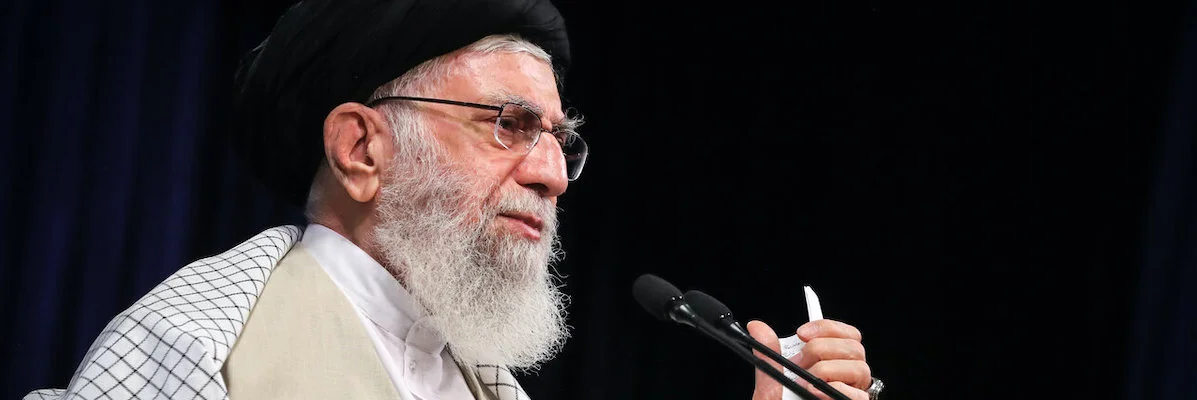
Iran's Khamanei Says Sanctions Failed, No Talks With Trump
Iran will not open talks with the United States that will only benefit Donald Trump, supreme leader Ayatollah Ali Khamenei said Friday, insisting the US president's sanctions policy had failed.
Iran will not open talks with the United States that will only benefit Donald Trump, supreme leader Ayatollah Ali Khamenei said Friday, insisting the US president's sanctions policy had failed.
Decades-old tensions between Tehran and Washington have soared in the past year or so, with the sworn enemies twice appearing to come to the brink of war.
The tensions have been building since 2018, when Trump withdrew the United States from a landmark nuclear accord and unilaterally reimposed crippling sanctions.
"There is no doubt that sanctions are a crime," Khamenei said in a televised speech.
"But the smart Iranian has made the best use of this attack, this animosity and benefited... by using sanctions as a means to increase national self-reliance."
Khamenei said Western "think-tanks admit that the maximum pressure (policy) of sanctions and US force has not succeeded".
The 2015 deal between Tehran and major powers promised relief from sanctions in return for limits on Iran's nuclear program..
After abandoning the accord, the United States reimposed sanctions on Iran's vital oil exports and its access to the international banking system, and pressured allies and rivals alike to fall in line.
Iran has responded by trying to boost its non-oil exports, particularly to neighboring countries.
"This has caused the country's economy to be naturally less reliant on oil," Khamenei said, casting the development in a positive light.
Khamenei condemned calls for Iran to open new talks with the United States, saying he would not agree to meetings that were aimed only at boosting Trump's re-election hopes.
The 81-year-old even called Trump an "old man", even though he is seven years older than the US president.
"This old man in charge, he apparently made some propaganda use out of his negotiations with North Korea. Now he wants to use (talks with Iran) for the (November 3 US presidential) election."
Khamenei said that in return for new talks, the US would demand: "Reduce your defensive capability, destroy your regional power and give up the vital nuclear industry."
"No logic dictates giving into the aggressor's demands," he said.
He also accused European partners to the nuclear deal of "having done nothing" to provide Iran with the economic benefits of the accord and said their payment system designed to bypass US sanctions was a "useless plaything."
The system, called INSTEX, is meant to function as a clearing house and allow European companies to deliver medical supplies to Iran without being exposed to sanctions.
European signatories said in March they had delivered medical goods to Iran in the first transaction under INSTEX, more than a year after the mechanism was announced.
Photo: IRNA
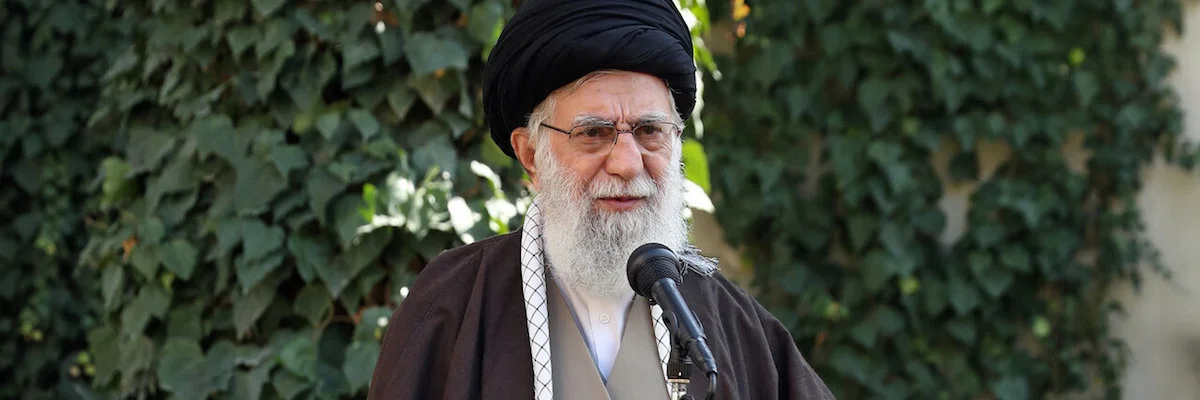
Iran's Khamenei Cancels Persian New Year Speech Due to Virus
◢ Iran's supreme leader has cancelled an annual speech marking the start of the Persian new year, his office announced Monday, as the country's death toll from novel coronavirus mounts. The speech given by the supreme leader in Mashhad each year usually sets out the country's key objectives for the 12 months to come.
Iran's supreme leader Ayatollah Ali Khamenei has cancelled an annual speech marking the start of the Persian new year, his office announced Monday, as the country's death toll from novel coronavirus mounts.
"The ceremony of the speech of the supreme leader, which takes place every year at the sacred mausoleum of Imam Reza... will not take place this year" and Khamenei will not travel to the city of Mashhad, the statement said.
With a death toll of 237 as of Monday, Iran is one of the worst hit countries, after China and Italy.
The speech given by the supreme leader in Mashhad each year usually sets out the country's key objectives for the 12 months to come.
The statement added that the decision to cancel this year was taken "due to the spread of the coronavirus and the strict advice of medical and health experts and officials to avoid gatherings and travel... to slow the spread of the illness".
Mashhad is a key Shiite holy city. It is also Khamenei's birthplace and the capital of the Khorasan Razavi province.
According to the most recent health ministry figures, 183 people have been infected by the virus in the province.
There are currently over 7,000 confirmed cases in Iran spread across all 31 of the country's provinces.
The Persian new year—to be celebrated this year on March 20—is often a time when people travel and visit family.
But in light of the spread of coronavirus, several provinces have issued orders to close hotels and other tourist accommodation to discourage people from travelling.
The government has been scrambling to contain the virus since it reported its first cases in mid-February, shutting down schools and universities as well as urging Iranians to stay at home.
Photo: IRNA
Khamenei Claims a Blow to U.S. Power in Rare Friday Sermon
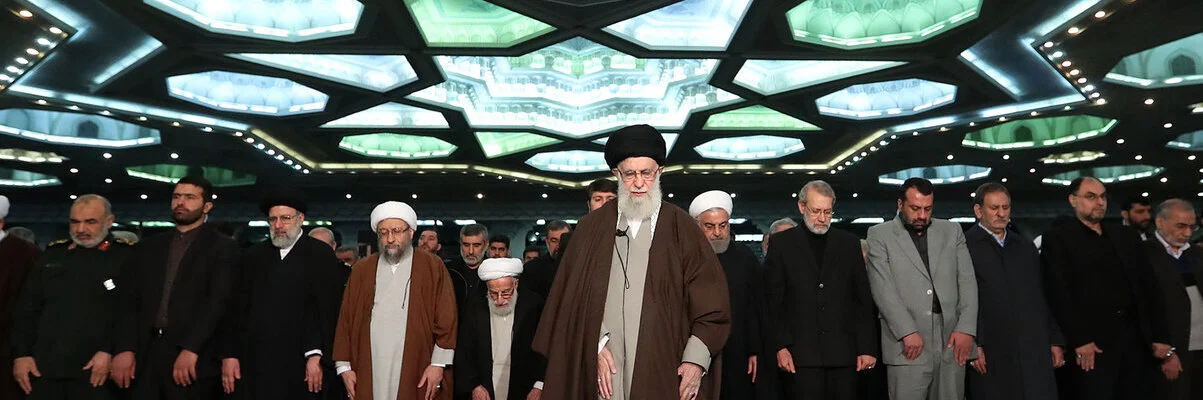
◢ Supreme Leader Ayatollah Ali Khamenei said Iran had delivered a “slap to the U.S.’s image as a superpower” in this month’s military confrontation, seeking to rally Iranians around an embattled establishment as he led Friday prayers in Tehran for the first time in eight years.
By Golnar Motevalli
Supreme Leader Ayatollah Ali Khamenei said Iran had delivered a “slap to the U.S.’s image as a superpower” in this month’s military confrontation, seeking to rally Iranians around an embattled establishment as he led Friday prayers in Tehran for the first time in eight years.
His speech came amid unprecedented international scrutiny over the Islamic Revolutionary Guard’s unintentional shooting down of a Ukrainian passenger plane just hours after Iran had fired missiles into Iraqi bases housing American troops without causing fatalities. That attack had been in retaliation for the killing of a top Iranian commander by the U.S.
“They’re hit by strikes in Syria, in Iraq, in Lebanon and in Afghanistan at the hands of the power of resistance, but this strike was greater than all of those, it was a strike on prestige,” Khamenei said of the Iranian action in Iraq. U.S. officials, including President Donald Trump, who claimed to be on the side of the Iranian people are “clowns,” he said.
Khamenei branded the U.S. “terrorists” for the Jan. 3 killing of General Qassem Soleimani, whom he credited with being the most effective force in defeating Islamic State.
Soleimani was a hero to many Iranians for his leadership of an elite unit of the Guard which orchestrated Iran’s military policy overseas, playing a major role in destroying the extremist group’s rule in Syria and Iraq. His killing brought the nation together in mourning but that sense of unity was shattered by the downing of the Ukraine International Airlines plane, which killed all 176 people on board. Most of the victims were Iranian citizens or dual nationals.
‘Bitter Incident’
Khamenei called the jet disaster an “extremely bitter incident” but said public opinion over the tragedy had been manipulated by U.K. and U.S.-based television channels. The top cleric directly instructed the Revolutionary Guard to carry out a full investigation and guarantee that there could never be a repeat.
Once Iranian officials finally accepted responsibility, after days of denials, protests against the government broke out in Tehran and other cities. Just weeks earlier, security forces had crushed some of the biggest and most sustained anti-regime demonstrations in more than a decade. Human rights groups say hundreds of people were killed in that crackdown.
While Iran’s leaders admitted culpability for the jet disaster they have also blamed the U.S. for creating the sense of crisis that preceded it. In the part of his sermon conducted in Arabic, Khamenei said the “real punishment” for the U.S. would be its forced ouster from the Middle East.
Under pressure from Democrats at home, Trump has offered various justifications for the decision to kill Soleimani, including intelligence that he said pointed to imminent attacks on U.S. embassies, as well as past American military deaths due to Iranian actions supervised by Soleimani in Iraq.
A report on Friday said that nearly a dozen U.S. troops were treated for concussion after Iran’s missile attacks in Iraq. The U.S. and Iran have since both signaled they want to back away from further military conflict, but with the two arch foes locked in a deepening confrontation over Iran’s nuclear program and American sanctions, tensions in the Gulf remain high.
On Tuesday the U.K., Germany and France angered Tehran by announcing they would activate a dispute resolution mechanism contained in the 2015 nuclear deal which Trump exited before reimposing sanctions. The European move nudged the accord closer to the brink of collapse.
Khamenei accused the European countries of working with the U.S. to try and force Iran “to its knees,” and said he had “never trusted them since day one.”
Photo: IRNA
Khamenei Condemns US, Warns Iran Will Confront Threats
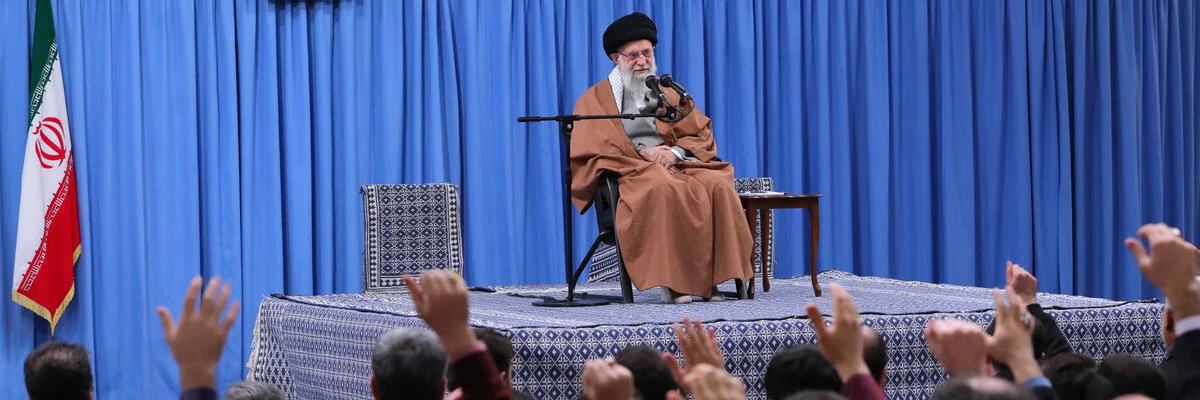
◢ Iran's supreme leader Wednesday strongly condemned deadly US strikes on Iraq and warned his country was ready to confront threats after US President Donald Trump issued one against the Islamic Republic. "I and the government and the nation of Iran strongly condemn this American crime," Ayatollah Ali Khamenei said in a speech broadcast on state television.
Iran's supreme leader Wednesday strongly condemned deadly US strikes on Iraq and warned his country was ready to confront threats after US President Donald Trump issued one against the Islamic Republic.
"I and the government and the nation of Iran strongly condemn this American crime," Ayatollah Ali Khamenei said in a speech broadcast on state television.
They were his first remarks since Sunday's deadly US strikes on the Hashed al-Shaabi paramilitary network in western Iraq.
The United States carried out the raids in retaliation for rocket fire that killed an American civilian contractor at a base in northern Iraq on Friday.
In a tweet on Tuesday, Trump accused Iran of "orchestrating" that day's storming of the US embassy in Baghdad by protesters angry at the American air strikes.
Trump said: "Iran will be held fully responsible for lives lost, or damage incurred, at any of our facilities. They will pay a very BIG PRICE! This is not a Warning, it is a Threat."
In response, Khamenei retweeted the post and said: "That guy has tweeted that we (the United States) see Iran responsible for the events in Baghdad and we will respond to Iran.
"First of all, you can't do a damn thing! This has nothing to do with Iran," the supreme leader in his televised address.
"Secondly, be logical... The people of this region hate America. Why don't Americans understand this?" he said.
"You Americans have committed crimes in Iraq, you have committed crimes in Afghanistan. You have killed people."
Khamenei said Iran was ready to respond to any threat.
"If the Islamic Republic decides to oppose or fight against a country, it will do this explicitly," he said.
"We are strongly committed to the interests of our country... We are strongly committed to the dignity of our nation. We are strongly committed to the progress and greatness of the nation of Iran.
"Should anyone threaten these, we will confront him without any hesitation and will strike our blow," Khamenei said.
"We will never... drag the country towards war. But if others want to impose anything on this country, we will stand against them with all our might."
US-Iran tensions have soared since Washington pulled out of a landmark nuclear agreement with Tehran in 2018 and reimposed crippling sanctions.
Photo: IRNA
Iran's Khamenei Rules Out Talks with US
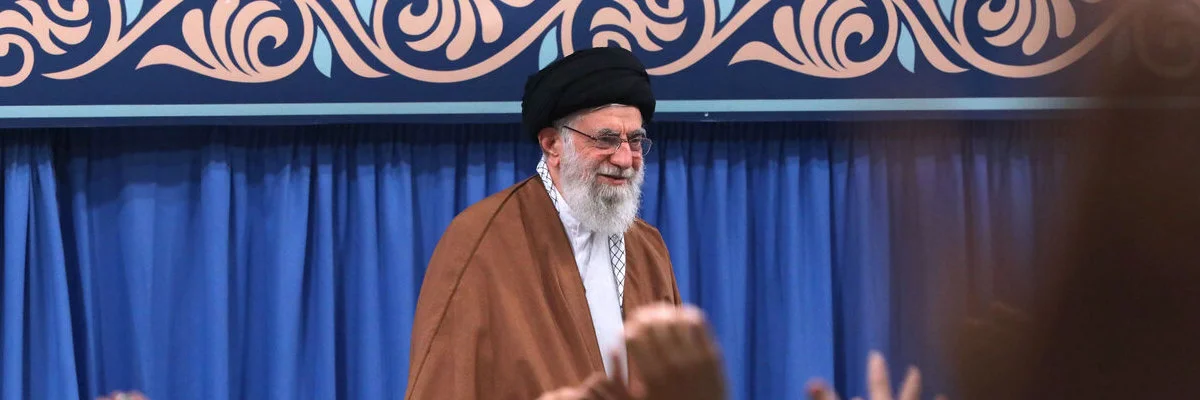
◢ Iran's supreme leader on Sunday again ruled out negotiations with Washington, a day before the 40th anniversary of the hostage crisis at the US embassy in Tehran. "Those who see negotiations with the US as the solution to every problem are certainly mistaken," Ayatollah Ali Khamenei said during a speech to mark the anniversary.
By Amir Havasi
Iran's supreme leader on Sunday again ruled out negotiations with Washington, a day before the 40th anniversary of the hostage crisis at the US embassy in Tehran.
"Those who see negotiations with the US as the solution to every problem are certainly mistaken," Ayatollah Ali Khamenei said during a speech to mark the anniversary, according to his official website.
"Nothing will come out of talking to the US, because they certainly and definitely won't make any concessions."
On November 4, 1979, less than nine months after the toppling of Iran's American-backed shah, students overran the embassy complex to demand the United States hand over the ousted ruler after he was admitted to a US hospital.
It took a full 444 days for the crisis to end with the release of 52 Americans, but the US broke off diplomatic relations with Iran in 1980 and ties have been frozen ever since.
Khamenei, however, said the Iran-US "disputes" did not start with the embassy takeover.
"It goes back to the 1953 coup, when the U.S. overthrew a national govt.—which had made the mistake of trusting the U.S.—and established its corrupt and puppet govt. in Iran," his Twitter account said in English.
That CIA-organised coup, supported by Britain, toppled the hugely popular prime minister Mohammad Mossadegh who was responsible for nationalising Iran's oil industry.
The coup reestablished the rule of country's last shah, Mohammad-Reza Pahlavi, who had fled the country in August 1953 after trying to dismiss Mossadegh.
Tensions have escalated again between Tehran and Washington since US President Donald Trump withdrew from the 2015 Iran nuclear deal last year and reimposed unilateral sanctions.
Khamenei pointed to North Korea's negotiations with the US as a sign of Washington's untrustworthiness, tweeting that "they took photos and praised each other, but the Americans did not lift sanctions even a bit.
"That's how they are in negotiations; they'll say we brought you to your knees and won't make any concessions at the end."
'American Demands'
Khamenei called French President Emmanuel Macron's efforts to set up talks between Iran and the US "naive".
He said Tehran had tested Washington by calling on it to lift sanctions and return to the nuclear deal, known as the Joint Comprehensive Plan of Action (JCPOA), which gave Iran sanctions relief in return for curbs on its nuclear programme.
Macron's efforts to initiate a phone call between US President Donald Trump and his Iranian counterpart Hassan Rouhani on the sidelines of the UN General Assembly in September ended in failure.
Rouhani stressed he would only hold talks with the US if sanctions were lifted first.
Khamenei said Macron had considered a meeting with Trump to be "the solution to all of Iran's problems," making the French president either "very naive" or the "accomplice" of the United States.
And "for the sake of testing and to clarify for everyone, I said despite the fact that America had made a mistake in leaving the JCPOA, if they lift all sanctions, they (the US) can take part in the JCPOA although I knew they would not accept, as they did not," he added.
Slamming the seemingly unending "American demands", Khamenei said that after telling Iran to not be "active in the region" and end its production of missiles, Washington will next "say give up religious laws and don't insist on the issue of the hijab."
Tehran has hit back three times with countermeasures since May in response to Washington's withdrawal from the nuclear deal by suspending parts of its compliance with the agreement's terms.
It has threatened to go even further if remaining parties to the deal —Britain, China, France, Germany and Russia—cannot help it circumvent US sanctions.
Photo: IRNA
Iran Leader Pardons 691 on Eid, But Lebanese Excluded
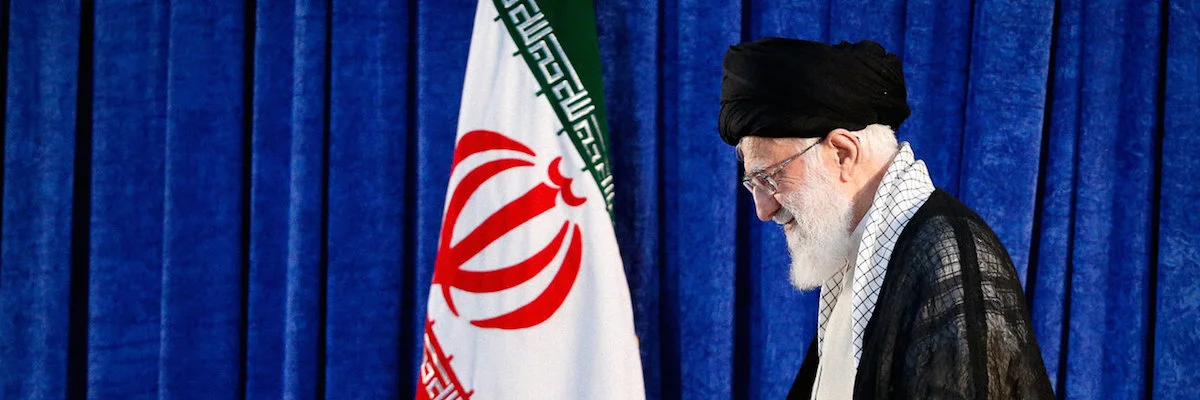
◢ Iran's supreme leader pardoned hundreds of prisoners on the occasion of the end of Ramadan, but a Lebanese national who Beirut expected to be released was not among them, authorities said Sunday. In total, the sentences of 691 prisoners were either commuted or deferred as decided by Ayatollah Ali Khamenei, as a gesture for the Eid al-Fitr holidays, said the judiciary's Mizan Online news website.
Iran's supreme leader pardoned hundreds of prisoners on the occasion of the end of Ramadan, but a Lebanese national who Beirut expected to be released was not among them, authorities said Sunday.
In total, the sentences of 691 prisoners were either commuted or deferred as decided by Ayatollah Ali Khamenei, as a gesture for the Eid al-Fitr holidays, said the judiciary's Mizan Online news website.
Last week, Lebanon said one of its nationals condemned in 2016 to 10 years' jail in Iran after being found guilty of spying for the United States would be on the pardon list.
The Lebanese foreign ministry, quoted by the country's official NNA news agency, said Nizar Zakka would be pardoned at the request of Beirut as a gesture for Eid.
But Zakka's name was not on the list, said Iran's judiciary spokesman Gholamhossein Esmaili.
"The individual was sentenced and the president of Lebanon had—in letters to judicial officials—requested a conditional pardon," he said, quoted by Mizan.
"This request has been in the judicial process and, in case any decision is taken by the judicial apparatus, information will be provided."
A resident of the United States in his 50s, Zakka was arrested in September 2015 during a visit to Iran, where he was convicted the following July.
At the time of his arrest, state television in Iran charged Zakka had "deep ties to military and intelligence services of the United States", Iran's arch-foe.
It broadcast photographs of a man in military uniform it said was of Zakka at an American base.
At the end of 2017, Iranian courts confirmed his 10-year sentence on appeal, as well as that of an American and two Iranian-Americans accused of "collaboration" with the United States.
Iran and the United States broke diplomatic ties in 1980, and their relations have deteriorated significantly since US President Donald Trump took office in January 2017.
Photo: IRNA
Trump Says ‘Always a Chance’ of War With Iran But Prefers Talks
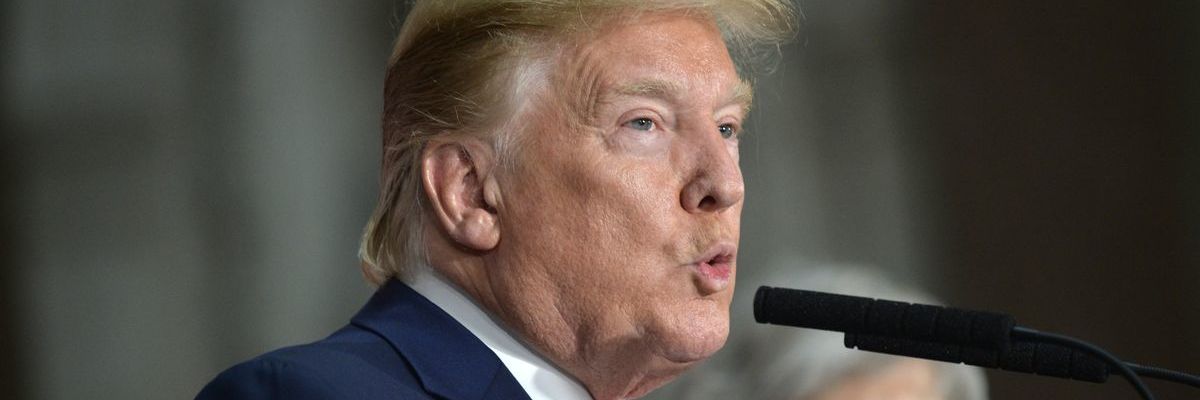
◢ President Donald Trump said there’s “always a chance” of the U.S. taking military action in Iran, though he’d prefer to engage verbally with Iranian President Hassan Rouhani. “There’s always a chance. Do I want to? No, I’d rather not, but there’s always a chance,” Trump said when asked about the prospect of conflict in an interview on ITV’s Good Morning Britain. “I’d much rather talk.”
By Alyza Sebenius
President Donald Trump said there’s “always a chance” of the U.S. taking military action in Iran, though he’d prefer to engage verbally with Iranian President Hassan Rouhani.
“There’s always a chance. Do I want to? No, I’d rather not, but there’s always a chance,” Trump said when asked about the prospect of conflict in an interview on ITV’s Good Morning Britain. “I’d much rather talk.”
The comments come amid heightened tension between the two countries, after Trump blamed the Islamic Republic for recent violence in the Middle East and ordered 1,500 U.S. troops to the region last month. The small deployment indicated that Trump’s administration wants to avoid fueling fears of another war, though the president made it clear it wasn’t off the table entirely.
Trump said “of course” he’d be willing to talk to Rouhani, pointing out that the Iranian president had himself said he wasn’t looking for conflict with the U.S. “The only thing is we can’t let them have nuclear weapons,” Trump said.
Pentagon officials believe Iran was behind recent attacks on oil tankers, a Saudi oil pipeline and the Green Zone diplomatic compound in Bagdhad, though the U.S. hasn’t published evidence for the claims.
The United Arab Emirates and other countries are investigating the attacks on the ships, Saudi Arabian Foreign Affairs Minister Adel Al-Jubeir said last month.
‘Stay Away’
“The Americans need to stay away,” Iranian Supreme Leader Ayatollah Ali Khamenei said Tuesday. “Where they’ve gone there’s been war, killings, sedition, and humiliation,” he said, adding: “If they get close, we know how to act, we know what needs to be done.”
Trump’s tougher stance toward Iran—the U.S. pulled out of the 2015 nuclear accord signed with global powers and reimposed sanctions—has strained relations with allies in Europe, including the U.K. At their press conference in London Tuesday, Prime Minister Theresa May said while the two governments agreed to work together to avoid escalation by Iran, they “differ on the means of achieving it.”
The nuclear accord capped Iran’s nuclear activities in return for sanctions relief. The agreement, the signatories said, would prevent Tehran from building the nuclear weapons that some Western powers and Israel feared were the end goal of its atomic program. Iran says its nuclear work is solely aimed at meeting civilian energy and medical needs.
May said the U.K., which is part of EU efforts to protect European trade with the Islamic Republic after the U.S. reimposed economic sanctions, still stands by the nuclear deal. Trump criticized the accord—and Iran—again in the ITV interview.
Iran was “extremely hostile when I first came into office,” he said. It was “terrorist nation number one in the world at that time, and probably maybe are today.”
Photo: Bloomberg
Iran Leader Urges Iraq to Demand US Withdraw Troops
◢ Iran's supreme leader Ayatollah Ali Khamenei has called on Iraq to demand US troops leave "as soon as possible", warning that Washington is plotting to remove the Iraqi government. The remarks came during a visit to Tehran on Saturday by Iraqi Prime Minister Adel Abdel Mahdi, whose country is under pressure from the United States to distance itself from Iran.
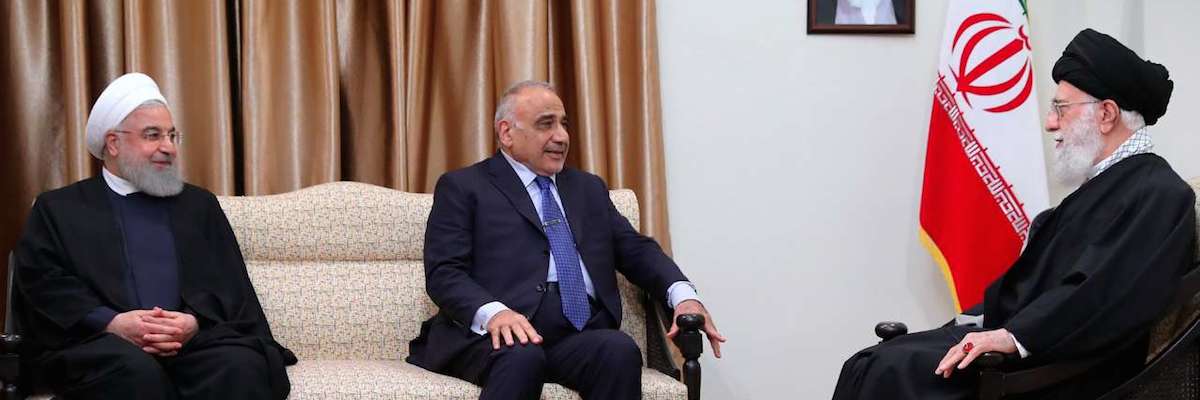
Iran's supreme leader Ayatollah Ali Khamenei has called on Iraq to demand US troops leave "as soon as possible", warning that Washington is plotting to remove the Iraqi government.
The remarks came during a visit to Tehran on Saturday by Iraqi Prime Minister Adel Abdel Mahdi, whose country is under pressure from the United States to distance itself from Iran.
"You should take actions to make sure the Americans withdraw their troops from Iraq as soon as possible because wherever they have had an enduring presence, forcing them out has become problematic," Khamenei told Abdel Mahdi.
"The current government and parliament in Iraq and the political figures are not what the US desires; they plot to remove them from the political scene of Iraq," he said, according to his official website.
Abdel Mahdi, on his first official trip to Iran, also met Saturday with President Hassan Rouhani, who visited Iraq last month.
Baghdad is under pressure from Washington to limit ties with its neighbor, particularly after the United States withdrew from the Iran nuclear deal last year and hit Tehran with sanctions.
Iran has close but complicated ties with Iraq, with significant influence among its Shiite political groups.
The two countries fought a bloody war from 1980 to 1988 and Tehran's influence in Baghdad grew after the 2003 US-led invasion of Iraq toppled the government of Saddam Hussein.
Iran was the first country to respond to Iraqi calls for help after Islamic State group jihadists captured Mosul in 2014 and threatened to overrun Baghdad and Kirkuk.
Tehran dispatched "military advisors" and equipment overnight along with the Revolutionary Guards elite Qods Force commander Qasem Soleimani to prevent IS jihadists from approaching its western borders.
Terrorism Blacklist
According to the Wall Street Journal, Washington is planning to designate the Revolutionary Guards as a terrorist organization, an unprecedented move that would escalate tensions between the two countries.
The newspaper, quoting unnamed officials, said President Donald Trump's administration would announce the long-mulled decision as soon as Monday.
But it said that the Pentagon and the CIA were concerned the move would increase risks for US troops without doing much more to damage the Iranian economy.
Iran's parliament has vowed to retaliate by passing an urgent bill putting American troops on a terrorism blacklist alongside the Islamic State group, the semi-official news agency ISNA reported.
“Even though we believe one should not play along with America's extreme acts, the reality is that we must retaliate," the head of Iran's influential national security and foreign policy commission, Heshmatollah Falahatpisheh, told ISNA.
A statement signed by a majority of MPs in support of the bill said any action against Iran's national security and its armed forces was "crossing a red line" and the US administration would "regret" its decision.
The Islamic Revolutionary Guards Corp was formed after the 1979 Islamic revolution with a mission to defend the new system.
Designating the Guards as a terrorist organization would "effectively be a service to terrorists," Falahatpisheh said, since they have "the biggest role in combatting terrorism" in the region.
Photo Credit: IRNA
Iran Supreme Leader Calls European Trade Mechanism 'Bitter Joke'
◢ Iran's Supreme Leader Ayatollah Ali Khamenei called a trade mechanism launched by European countries to bypass renewed US sanctions a "bitter joke" on Thursday, in a speech aired by state TV. "This financial channel they recently set up resembles a joke, a bitter joke," Khamenei told a thousands-strong congregation at a shrine in the northeastern city of Mashhad, where he speaks every year to mark Iranian new year.
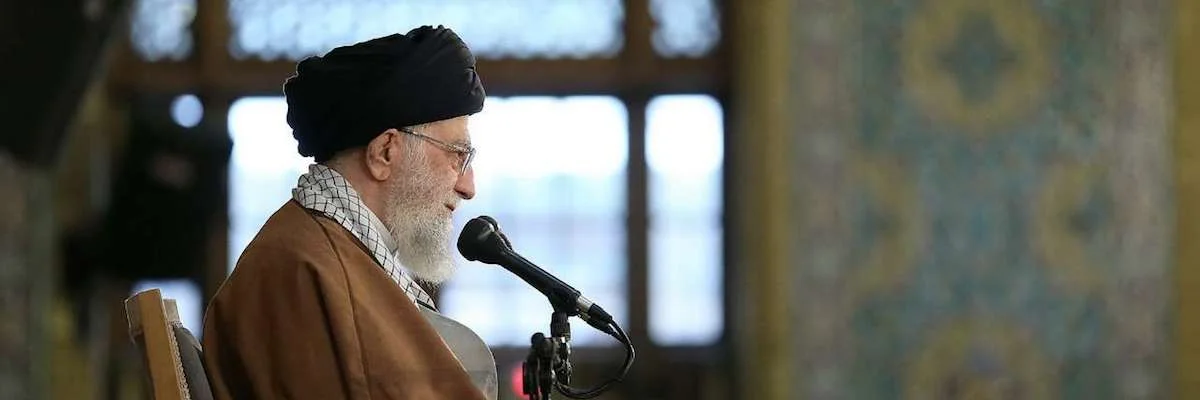
Iran's supreme leader Ayatollah Ali Khamenei on Thursday dismissed a trade mechanism launched by European countries to bypass renewed US sanctions as a "bitter joke" and said Europe could not be trusted.
"This financial channel they recently set up resembles a joke, a bitter joke," Khamenei told a thousands-strong congregation in a televised address at a shrine in the northeastern city of Mashhad, where he speaks every year to mark the Iranian New Year.
Britain, France and Germany launched the special payment system called INSTEX—Instrument in Support of Trade Exchanges—in late January after President Donald Trump abruptly quit the 2015 nuclear deal between Iran and world powers in May last year.
The three countries were the European signatories to the deal, also signed by the US, Russia and China, that curbed Tehran's nuclear ambitions in return for sanctions relief.
London, Paris and Berlin launched the device in the hope it will help save the deal by allowing Tehran to keep trading with European companies despite Washington reimposing sanctions.
"The difference between what they are obligated to do and what they are proposing is as far as the earth is from the sky," Khamenei said.
"We should completely forego (any hope) of help or cooperation from Westerners in strengthening our economy, we shouldn't wait for them," he said.
"Once again the Europeans have stabbed us in the back, they have betrayed us," Khamenei said, cursing Western politicians as "savages.”
"They wear suits, they put on ties and eau de cologne and carry Samsonite briefcases but they are savages," Khamenei said.
"What I am saying does not mean (Iran) should cut Western ties, not at all... there is no problem in having relations with them, but trusting them is a mistake, don't trust them," he said.
Iran on Tuesday registered a parallel structure to INSTEX called the Special Trade and Finance Institute or STFI, the semi-official ISNA news agency reported.
"With the registration of STFI, we expect that, in cooperation with INSTEX, it would facilitate trade between Iran and Europe and be influential in countering limitations caused by US sanctions," said Iran's central bank governor Abdolnaser Hemmati.
Earlier on Thursday, Khamenei called the economic difficulties of Iranians the most urgent problem facing the country.
"Specially in recent months the difficulties for people's livelihoods have increased," Khamenei said in a prerecorded message to mark the March 21 start of the New Year.
“The economy is the country's urgent problem, it's the country's (most) serious and primary problem," he said, pointing to the rial's devaluation, decline in purchasing power and falling production.
Photo Credit: IRNA
Iran Leader Calls Economy 'Urgent Problem'
◢ Iran's supreme Leader Ayatollah Ali Khamenei called the economic difficulties of Iranians the main and most urgent problem of the country in a message aired Thursday on state TV. Iran has faced increased economic hardship in the last 12 months which was aggravated after US President Donald Trump withdrew from the 2015 nuclear deal between Iran and world powers last May.
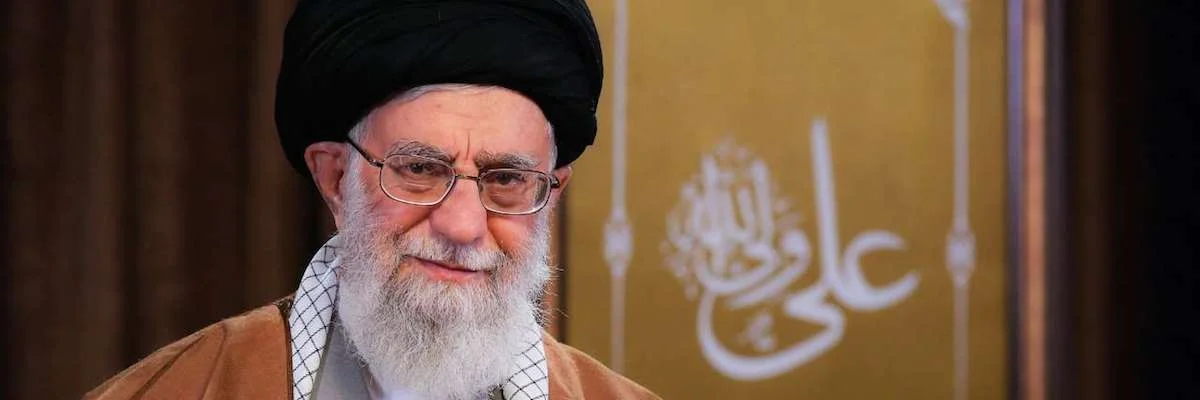
Iran's supreme Leader Ayatollah Ali Khamenei called the economic difficulties of Iranians the main and most urgent problem of the country in a message aired Thursday on state TV.
Iran has faced increased economic hardship in the last 12 months which was aggravated after US President Donald Trump withdrew from the 2015 nuclear deal between Iran and world powers last May.
The renewal of American sanctions, which had been eased in exchange for curbs on Tehran's nuclear program, sent shockwaves through Iran's economy.
"Specially in recent months the difficulties for people's livelihoods has increased," Khamenei said in a prerecorded message aired to mark the beginning of the new Iranian year (21 March 2019 till 20 March 2010).
"The economy is the country's urgent problem, it's the country's (most) serious and primary problem," he added, mentioning the devaluation of the national currency, the drop in purchasing power and the fall in production as symptoms of the issue.
Khamenei said increasing production was the key to saving the economy and declared "national production" the motto of the new year.
The IMF reported that the Iranian economy slumped into recession in 2018 and has forecast a 3.6 percent decline in GDP for 2019.
Iran's President Hassan Rouhani also focused on the US sanctions in his new year message broadcast on state TV immediately after Khamenei's.
"Some might ask till when will these sanctions and problems go on... these problems began with the oath-breakers and those who have recently reached power in Washington, but the (key to the) end is in our hands," he said sitting in front of a row of Iranian flags.
“The more we are united, and the more the enemy realizes that with these sanctions our nation becomes more cohesive, the sooner they will despair and regret (sanctioning Iran)," Rouhani said calling on all branches of government, as well as the armed forces and Iranians from all walks of life, to put aside differences and share the burden of economic "problems and disorder.”
Rouhani had heavily counted on the 2015 nuclear deal to help save the floundering economy.
But ever since the US withdrawal he has been under increasing criticism from his political opponents both for mismanagement of the economy as well as his perceived gullibility in trusting the US in the nuclear deal.
Photo Credit :IRNA
Iran Slams US as Huge Crowds Mark 40 Years Since Revolution
◢ Iran's president on Monday blasted a US "conspiracy" against the country as vast crowds marked 40 years since the Islamic revolution at a time of heightened tensions with Washington. "The presence of people today on the streets all over Islamic Iran... means that the enemy will never reach its evil objectives," President Hassan Rouhan.
Iran's president on Monday blasted a US "conspiracy" against the country as vast crowds marked 40 years since the Islamic revolution at a time of heightened tensions with Washington.
"The presence of people today on the streets all over Islamic Iran... means that the enemy will never reach its evil objectives," President Hassan Rouhanitold those thronging Tehran's Azadi (Freedom) square.
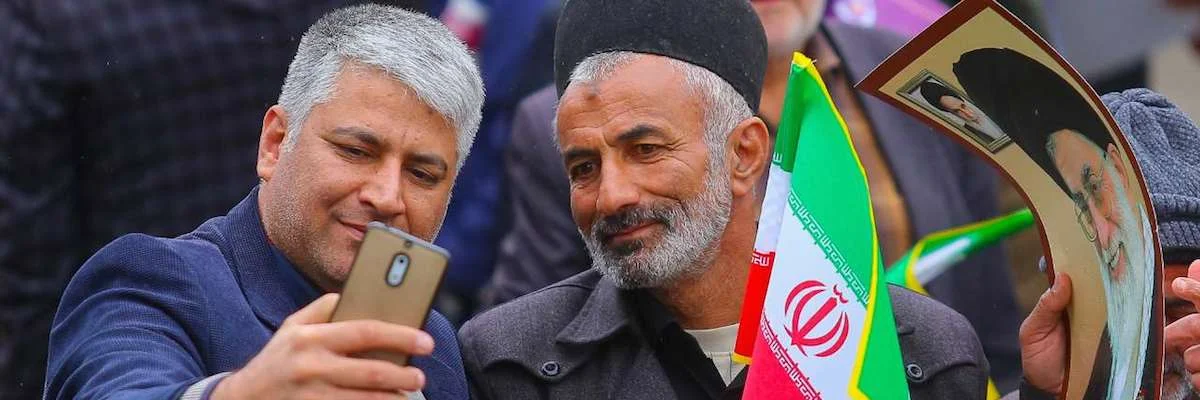
Chador-clad women, militia members in camouflage fatigues and ordinary citizens marched through the capital in freezing rain to mark the day in February 1979 that Ayatollah Ruhollah Khomeini ended millenia of royal rule.
Life-size replicas of Iranian-made cruise and ballistic missiles lined the route in a statement of defiance after Washington last year reimposed sanctions after pulling out of a deal on Tehran's nuclear program.
A pre-prepared resolution was read out that proclaimed "unquestioning obedience to the supreme leader Ayatollah Ali Khamenei" and called US President Donald Trump an "idiot".
The event Monday was the culmination of official celebrations called the "10 Day Dawn" that mark the period between February 1, 1979 and February 11 when Shiite cleric Khomeini retuned from exile and ousted the shah's last government.
The state has played up this year's anniversary as 40 is symbolic of maturity in the Islamic tradition and the age at which Prophet Mohammed received revelations from God.
But despite the official festivities today's Islamic republic faces acute economic challenges as it struggles with a mix of domestic hardships and US sanctions.
'Support the revolution'
State television offered blanket coverage of the commemorations, showing marchers in cities ranging from Abadan in southwestern Iran to Mashad in the northeast.
Banners held by marchers or hung along the streets bore slogans including "Death to America", "Death to Israel", "we will trample on America", "forty yeas of challenge, forty years of US defeats".
An anchor on state television warned of hostile foreign media trying to downplay the participation of Iranians in the march but expressed confidence that "they would be confounded by the unprecedented level of attendance".
Those who took to the streets were bullish despite the economic problems in the country, made worse by Washington's punitive measures.
Former public servant Saaghi insisted that it remained paramount for Iranians to stick by the revolution.
"We are here to support the revolution," the 57-year-old pensioner, who refused to give his first name, told AFP at the event in Tehran.
He compared the US sanctions and economic hardships to "riding a bicycle when someone puts a stick in the wheels" but pointed to advances in other fields as more than making up for them.
“At the revolution's 40 anniversary we are on top of scientific achievements like nanotechnology or accurate missiles," he said.
Extensive fireworks displays were held across Tehran on Sunday night.
Before the fireworks, supporters of the revolution shouted chants of "Allahu Akbar" (God is greatest) from rooftops, recalling the protests that swept Khomeini to power four decades earlier.
Current supreme leader Ayatollah Ali Khamenei is set to publish "a detailed statement explaining the 'second step' of the progress of the Islamic revolution", his official website said.
Photo Credit: IRNA
Tough Times for Iran's Political Parties as Revolution Turns 40
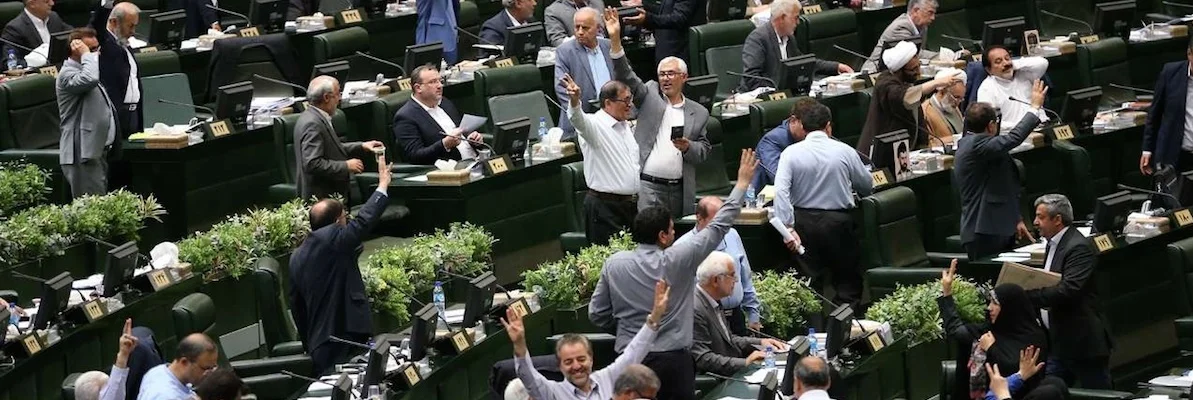
◢ Iran's main political parties are on rocky ground as the Islamic Republic marks its 40th birthday, with reformists in disarray and conservatives seeking a new identity. Even though key reformist leaders have been forcibly sidelined, Mohammad Ali Abtahi, a former reformist vice-president in the 1990s, still believes gradual change is the only option for his country.
Iran's main political parties are on rocky ground as the Islamic Republic marks its 40th birthday, with reformists in disarray and conservatives seeking a new identity.
Even though key reformist leaders have been forcibly sidelined, Mohammad Ali Abtahi, a former reformist vice-president in the 1990s, still believes gradual change is the only option for his country.
Since mass protests against alleged election-rigging in 2009, his former boss, ex-president Mohammad Khatami, is barred from appearing in the media, and presidential candidates Mir Hossein Mousavi and Mehdi Karroubi have been under house arrest for the last eight years.
There are also few signs of a new generation emerging to succeed them, not least because Iran's influential Guardian Council has the power to reject any election candidates it deems unqualified, Abtahi told AFP.
"The candidates that can pass the Guardian Council's vetting are low-level," he said. "You can't expect much from them."
The reformists instead pinned their hopes on President Hassan Rouhani, a political moderate who sought conciliation with the West through a landmark nuclear deal in 2015.
Yet their hopes have proven ill-founded. Since the United States unilaterally withdrew from that deal last year, Iran's economy has been in tailspin, adding to popular anger that burst onto the streets in violent protests across dozens of towns and cities a year ago.
’Game has changed'
"When the demonstrators shouted 'Reformists, conservatives: the game is over', they were not wrong," said conservative analyst and politician Amir Mohebbian. "The fact is the (political) game has changed."
"Until now, voters would go for the candidate they thought would do the least harm ... but now they have taken as much as they can stand. Now the people want someone who can actually solve their problems."
Mohebbian did not elaborate on potential candidates as jockeying for the next presidential elections, due to take place in 2021, has not yet started.
But the decision to back Rouhani has "bankrupted" the reformists, he claimed.
Journalist and activist Ahmad Zeidabadi, who has been arrested several times, goes further, saying the reformists' plans to try to change the very nature of the state "reached a dead end" some time ago because of the system's lack of "flexibility.”
The disarray among the reformist camp however does not mean the conservatives will benefit, said Mohebbian, who believes they first need to "redefine their relationship with the establishment."
For decades, the conservatives have been closely associated with the establishment, many of them holding key unelected positions.
But for them to survive the changing political environment, they "must move closer to the people" since the people "don't trust" them now, Mohebbian said.
And it is not just mainstream political factions who are demanding change. Ardent supporters of the revolution believe its original values—such as policies in favor of the poor—have been largely forgotten, pointing to widespread allegations of corruption to back their claims.
'Paradigm shift?'
Concern over corruption by successive governments has become a "powderkeg," believes Nader Talebzadeh, a film-maker who advised Ebrahim Raisi, the preferred candidate of ultraconservatives in the 2017 presidential election.
The whole issue of corruption "makes the Iranian people very angry," he added.
But for all the popular disillusionment, former vice-president Abtahi said Iranians are still "wise enough to know that regime change will destroy their future"—especially if it is coordinated by the United States.
"Maybe if the US had turned Iraq and Afghanistan into an economic heaven, a heaven of social freedoms... maybe things would be very different," he said with a wry smile.
The authorities have always boasted of high election turnouts as evidence of their legitimacy. In 2017, more than 73 percent of eligible voters took part in the presidential election.
Looking ahead, Mohebbian believes "the next five years or so are going to be important," pointing to the fact that Iran will need at some point to choose a successor to supreme leader Ayatollah Ali Khamenei, who turns 80 this year.
"This is the general period in which there could be changes in the country's leadership," Mohebbian said.
"The important issue is whether a shift at the top of the state will lead to a paradigm shift or not," he added.
“Will it lead to a change of things that we currently consider sacrosanct? Or will these elements be kept but the direction change, leaving only a shell of what was?"
Photo Credit: IRNA
Europe Not to be Trusted: Iran Leader
◢ Iran's supreme leader Ayatollah Ali Khamenei said Friday that Europe "cannot be trusted", a week after the EU launched a trade mechanism to bypass US sanctions on Tehran. “These days there's talk of the Europeans and their proposals. My advice is that they shouldn't be trusted, just like the Americans," he said at a meeting with air force officials, his website reported.
Iran's supreme leader Ayatollah Ali Khamenei said Friday that Europe "cannot be trusted", a week after the EU launched a trade mechanism to bypass US sanctions on Tehran.
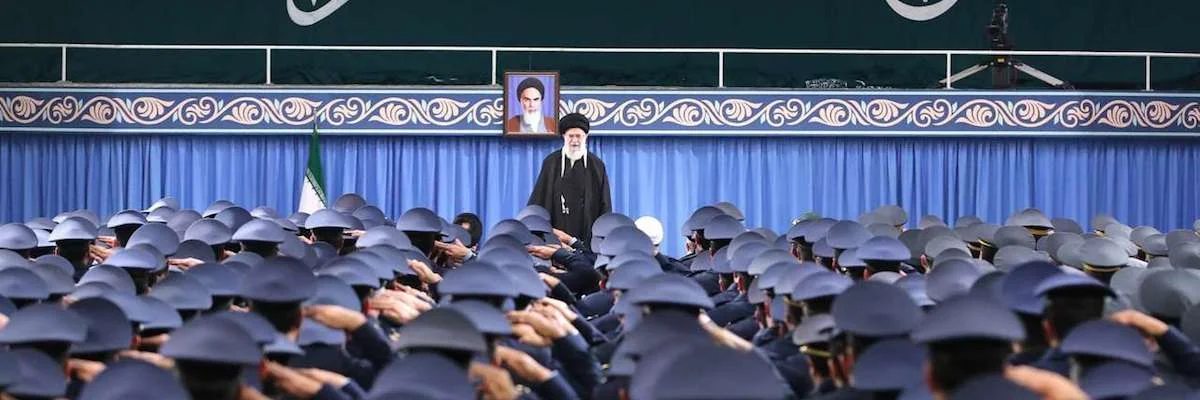
“These days there's talk of the Europeans and their proposals. My advice is that they shouldn't be trusted, just like the Americans," he said at a meeting with air force officials, his website reported.
"I'm not saying we shouldn't have relations with them. This is about trust," he added.
Britain, France and Germany last week launched a special payment mechanism called INSTEX to help save the 2015 nuclear deal between Iran and world powers.
It would allow Tehran to keep trading with EU companies in spite of US sanctions renewed after Washington quit the accord last year.
Tehran has cautiously welcomed INSTEX as a "first step", but US officials said the new entity would not have any impact on efforts to exert economic pressure on Iran.
Khamenei also accused Europe of hypocrisy over human rights, criticizing France's treatment of protesters in Paris.
"They (anti-riot police) attack protesters in Paris streets and blind them, then they have the audacity to make human rights requests of us," he said.
Turning to the United States, Khamenei said Iranians would chant "death to America" as long as Washington kept up its hostile policies, but the slogan was not directed at the American people.
"Death to America means death to (President Donald) Trump, (National Security Advisor) John Bolton and (Secretary of State Mike) Pompeo. It means death to America's rulers... we have nothing against the American people," he said.
Photo Credit: IRNA
Iran's Khamenei: Some US Officials are 'First-Class Idiots'
◢ Iran's supreme leader Ayatollah Ali Khamenei said some US officials are "first-class idiots" in a speech on Wednesday. "Some US officials pretend that they are mad. Of course I don't agree with that, but they are first-class idiots," he said in the speech in Tehran, quoted on his official Twitter feed.
Iran's supreme leader Ayatollah Ali Khamenei said some US officials are "first-class idiots" in a speech on Wednesday.
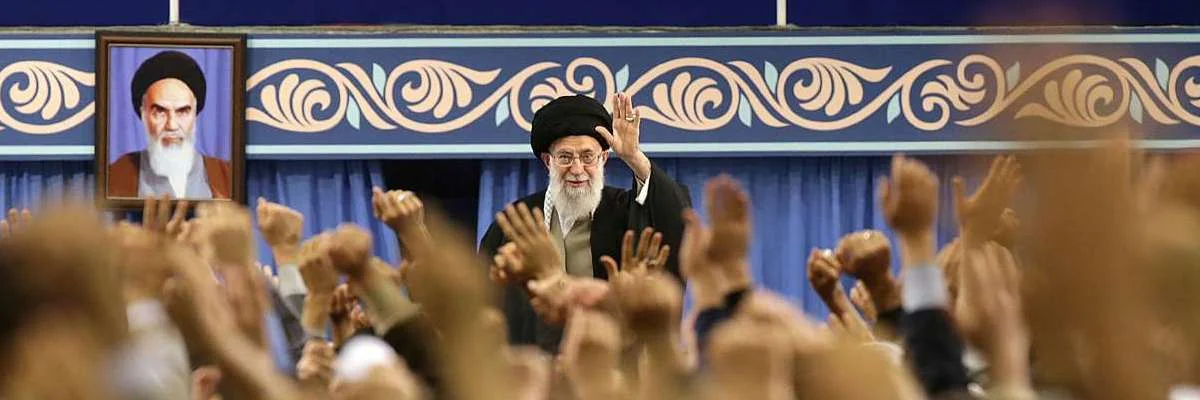
"Some US officials pretend that they are mad. Of course I don't agree with that, but they are first-class idiots," he said in the speech in Tehran, quoted on his official Twitter feed.
Khamenei was having a dig at US officials who had predicted there would be regime change in Iran by the end of 2018.
"A while ago, a US politician had said, among a gathering of terrorists and thugs, that he hopes to celebrate this Christmas in Tehran," Khamenei said, according to his Twitter feed.
"Christmas was a few days ago. This is how US calculations work."
It was not clear to which US official he was referring, but members of President Donald Trump's administration have called for regime change and predicted it would happen soon.
This has included National Security Advisor John Bolton—a long-time regime change advocate—who often speaks at gatherings of the exiled People's Mujahedeen of Iran (MEK) opposition group, considered a terrorist cult by Tehran's leaders.
"Before 2019 we here will celebrate in Tehran," Bolton told an MEK meeting in Paris in July 2017.
Photo Credit: IRNA
Trump Has 'Disgraced' US Prestige: Iran's Khamenei
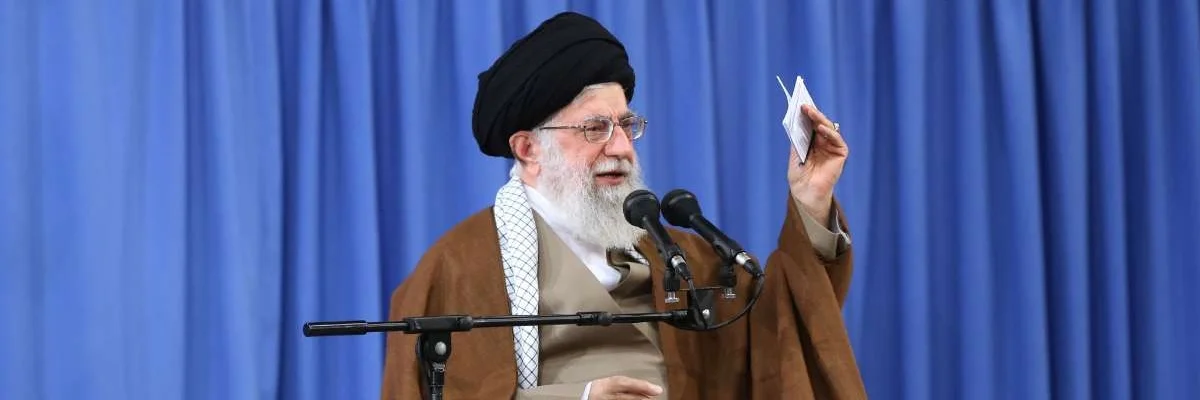
◢ Iran's supreme leader Ayatollah Ali Khamenei said Saturday that President Donald Trump has "disgraced" US prestige and would be the ultimate loser from renewing sanctions on the Islamic republic. A defiant Khamenei dismissed the renewed US sanctions—including an oil embargo—that take effect on Monday.
Iran's supreme leader Ayatollah Ali Khamenei said Saturday that President Donald Trump has "disgraced" US prestige and would be the ultimate loser from renewing sanctions on the Islamic republic.
"This new US president... has disgraced the remnant of America's prestige and that of liberal democracy. America's hard power, that is to say their economic and military power, is declining too," he said on his Persian Twitter account, quoting a speech in Tehran.
A defiant Khamenei dismissed the renewed US sanctions—including an oil embargo—that take effect on Monday.
"The challenge between the US and Iran has lasted for 40 years so far and the US has made various efforts against us: military, economic and media warfare," he said.
"There's a key fact here: in this 40-year challenge, the defeated is the US and the victorious is the Islamic republic."
Trump announced in May he was withdrawing from the 2015 nuclear deal and reimposing sanctions, sparking outrage among world powers who say Iran has been complying with commitments to restrict its atomic program.
Washington says it wants a new deal with Iran, curtailing its regional interventions and missile program—demands which have been flatly rejected by Tehran.
’Self-Sufficiency'
The renewed sanctions are designed "to paralyze (Iran's) economy and keep
it backward. However, it has resulted in encouraging a movement towards self-sufficiency in the country," Khamenei added.
“Our youth, across the country, support independence. Some may not be so religious but they are sensitive towards domination by foreigners."
On Friday, the US said it would add 700 individuals and entities to its Iran blacklist and push the SWIFT global banking network to cut off Tehran as Washington applies "maximum pressure" to cripple the country's economy.
Secretary of State Mike Pompeo said eight countries—believed to include India, Japan and possibly China—would be given waivers to continue importing Iranian oil in order to avoid upsetting the global crude market, but only on condition they slow their purchases.
The reimposition of sanctions "is aimed at depriving the regime of the revenues it uses to spread death and destruction around the world", Pompeo said.
"Our ultimate aim is to compel Iran to permanently abandon its well-documented outlaw activities and behave as a normal country."
Britain, France, Germany and the European Union strongly condemned the latest actions from Washington in a joint statement, and have vowed to preserve the nuclear deal, known formally as the Joint Comprehensive Plan of Action (JCPOA).
"The JCPOA is a key element of the global nuclear non-proliferation architecture and of multilateral diplomacy," they said.
"It is crucial for the security of Europe, the region, and the entire world. The JCPOA is working and delivering on its goal."
The US wants Iran to withdraw from war-ravaged Syria, where the Shiite clerical regime is a key ally of President Bashar al-Assad, and end longstanding support to regional militant movements Hezbollah and Hamas, as well as Yemen's Huthi rebels.
Iran's foreign ministry welcomed the show of support from Europe, saying "the continued life of the JCPOA depends on the success" of their efforts to safeguard trade.
The ministry, in a statement, said the US sanctions were a violation of the JCPOA, UN resolutions and "a neglect of humane, moral and ethical values.”
Photo Credit: IRNA
Iran Official Calls For 'Lobbying Anti-Trump Movements'
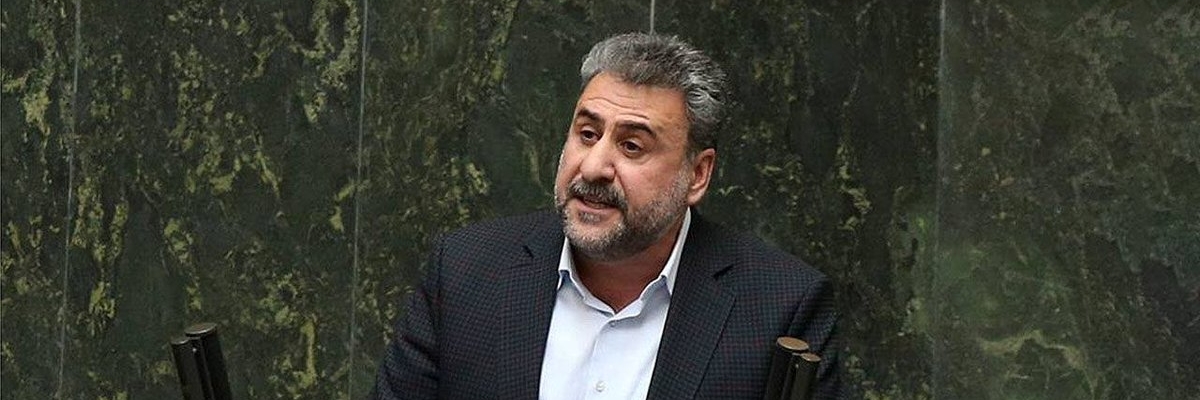
◢ One of Iran's top foreign policy officials has called for negotiations with "anti-Trump movements" in the US to dampen the impact of sanctions, local media reported Saturday. "America is not Trump," said Heshmatollah Falahat-Pisheh, a conservative lawmaker who heads parliament's influential national security and foreign policy commission, according to reformist newspaper Arman.
One of Iran's top foreign policy officials has called for negotiations with "anti-Trump movements" in the US to dampen the impact of sanctions, local media reported Saturday.
"America is not Trump," said Heshmatollah Falahat-Pisheh, a conservative lawmaker who heads parliament's influential national security and foreign policy commission, according to reformist newspaper Arman.
“There is a new diplomatic atmosphere for deescalation with America and it is fitting that Iran follows negotiation diplomacy and lobbying anti-Trump movements in America," he added.
He said this would help alleviate pressure caused by Washington's "extensive sanction-focused force.”
The US pulled out of the 2015 Iran nuclear deal in May and reimposed punishing sanctions on the country, hoping to pressure Tehran into what President Donald Trump calls a "better deal".
The US is due to complete the reimposition of sanctions on November 5, targeting Iran's oil sector and central bank.
Supreme leader Ayatollah Ali Khamenei has dismissed Trump's offers to talk as "a dangerous game.”
But Mehdi Motaharnia, a Tehran-based political analyst, described Falahat-Pisheh's proposal as "very meaningful" since it signifies a potential shift in conservatives' stance on talking with the US.
"This comes from a conservative whose party members called (Foreign Minister Mohammad) Javad Zarif a traitor for negotiating with the US," Motaharnia told reformist daily Hamdeli.
"But now we do not see such reactions when the head of national security and foreign policy commission proposes talks," he added.
Photo Credit:

Khamenei Vows 'Never' to Allow Iran to Bow
◢ Iran's supreme leader Ayatollah Ali Khamenei vowed Thursday "never" to allow the Islamic republic to bow to the demands of its enemies, at a time of increased tensions between Tehran and Washington. "To entertain the idea, as desired by the enemy, that the only solution is to hand ourselves over to the enemy, is the worst act of treason towards the Iranian nation, and that will not happen,"
Iran's supreme leader Ayatollah Ali Khamenei vowed Thursday "never" to allow the Islamic republic to bow to the demands of its enemies, at a time of increased tensions between Tehran and Washington.
"To entertain the idea, as desired by the enemy, that the only solution is to hand ourselves over to the enemy, is the worst act of treason towards the Iranian nation, and that will not happen," Khamenei said in an address to tens of thousands of members of the Basij, an Islamic volunteer militia, broadcast live on state television.
"With God's help, so long as I am alive and retain my capacities and with your help, I will never allow such a thing to happen," he said in the speech at Tehran's Azadi stadium.
For Iran's clerical establishment, enemy refers firstly to the United States which is dubbed the "Great Satan" and with which relations have been severed since the aftermath of its 1979 Islamic revolution.
Khamenei played down the impact of economic sanctions reimposed on Iran by the United States in August after Washington pulled out of the 2015 nuclear accord between Tehran and world powers.
"Our national economy can overcome the sanctions, and, with the help of God, we will overcome them, and this defeat will signal the defeat of America and a new slap for America from the Iranian nation," he said.
On Wednesday, Tehran hailed its "victory" after the International Court of Justice ruled that sanctions reimposed after President Donald Trump pulled out of a nuclear deal put Iranian lives at risk.
But the United States insisted it was already allowing humanitarian exemptions to sanctions and, accusing Iran of seeking a "propaganda" win, announced it was terminating a treaty on which the case was based.
Photo Credit:
Iran Supreme Leader Says Saudi, UAE 'Funded' Ahvaz Attackers
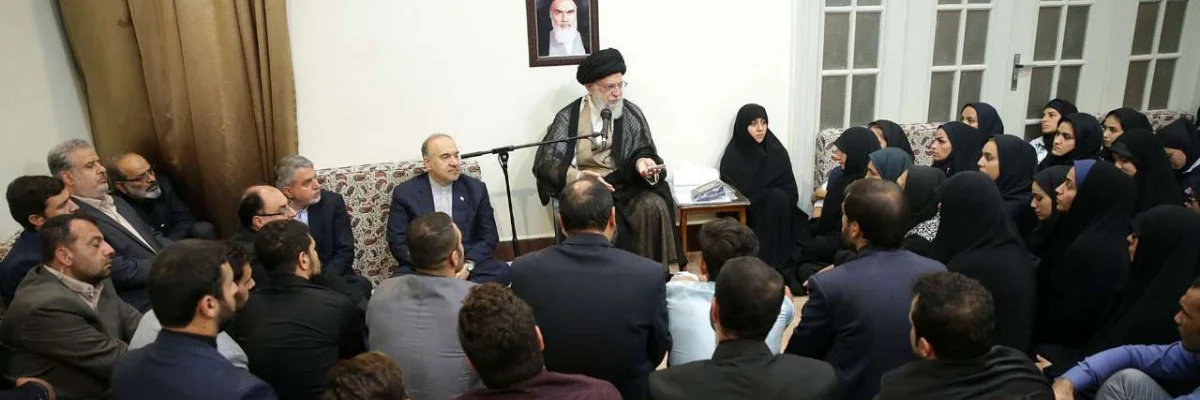
◢ Iran's supreme leader on Monday said the attackers who killed 24 people at a weekend military parade in the southwestern city of Ahvaz were funded by Saudi Arabia and the United Arab Emirates. "Based on reports, this cowardly act was the work of those very individuals who are rescued by the Americans whenever they are in trouble and who are funded by the Saudis and the (United) Arab Emirates," Ayatollah Ali Khamenei said, in remarks posted on his official website.
Iran's supreme leader on Monday said the attackers who killed 24 people at a weekend military parade in the southwestern city of Ahvaz were funded by Saudi Arabia and the United Arab Emirates.
"Based on reports, this cowardly act was the work of those very individuals who are rescued by the Americans whenever they are in trouble and who are funded by the Saudis and the (United) Arab Emirates," Ayatollah Ali Khamenei said, in remarks posted on his official website.
He did not give any further details on the identity of those behind what he called a "terrorist attack.”
In the immediate aftermath of the attack on Saturday, Iranian authorities said they suspected Arab separatist groups were behind the attack, none of whom is known to have a presence in Syria.
Khamenei, who was speaking to a group of Iranian athletes, said the attack "once again shows the Iranian nation faces many enemies on its proud path of progress and development".
"We will most certainly rigorously punish the perpetrators of this attack," he added.
Photo Credit: IRNA