
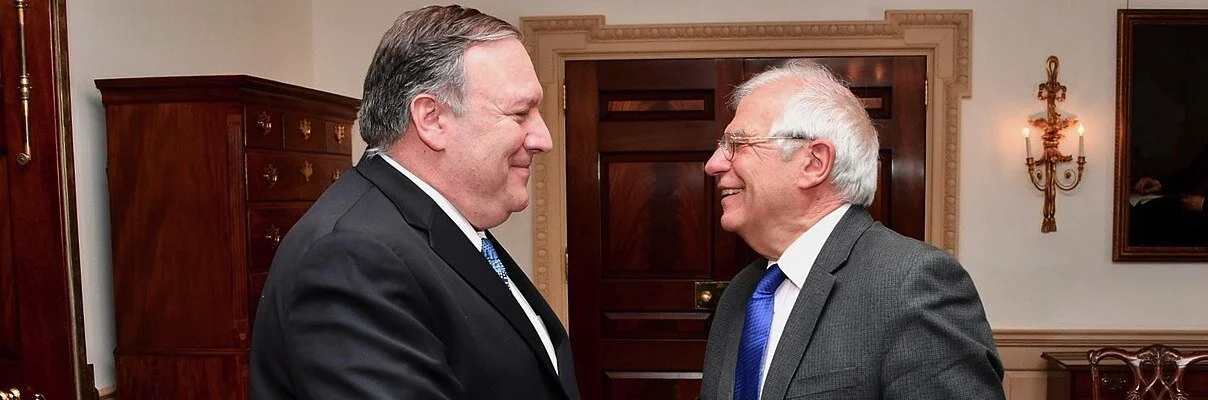
EU: US Ending Nuclear Waivers Means Harder to Check Iran
The European Union's foreign policy chief on Thursday condemned Washington's move to end sanction waivers for countries remaining in the Iran nuclear accord, warning it would make it harder to keep Tehran in check.
The European Union's foreign policy chief on Thursday condemned Washington's move to end sanction waivers for countries remaining in the Iran nuclear accord, warning it would make it harder to keep Tehran in check.
Donald Trump's administration announced Wednesday that it was ending the waivers because of a series of "escalatory actions" by Iran aimed at pressuring the United States, which pulled out of the accord in 2018.
But the EU's Josep Borrell highlighted the "enduring importance" of the deal, known as the Joint Comprehensive Plan of Action (JCPOA), because it was vital to ensuring that Iran's nuclear activities remain above board.
"The agreement remains the best and only way to ensure the peaceful nature of the Iranian nuclear program" Borrell told a United Nations Security Council meeting on Europe-UN relations.
"This is why I regret yesterday's decision by the US not to prolong the waivers for the JCPOA-related nuclear projects.
"This will make it more difficult for the international community to ensure the exclusively peaceful nature of Iran's nuclear program."
Iran has taken small steps away from its nuclear commitments in a bid to get Washington to remove sanctions as called for by the 2015 accord.
Trump quit the agreement negotiated under his predecessor Barack Obama, under which Iran had drastically curbed its nuclear activities.
But the Trump administration until now had issued waivers to allow companies, primarily from Russia, to keep carrying out the work of the agreement without risking legal ramifications in the world's largest economy.
Iran's UN ambassador said that with the end of waivers, US Secretary of State Mike Pompeo was pulling the "final plug" on the nuclear deal two years after Trump withdrew the US from it.
“Claiming US is STILL 'Participant' is not just preposterous; it's FALSE," the envoy Majid Takht Ravanchi tweeted.
The envoy was referring to Washington's claim that it remains a participant in the deal, despite renouncing it, and can push to extend an arms embargo on Iran due to begin expiring in October.
Photo: Wikicommons

EU Urges International Aid for Iran in Virus Fight
◢ The EU on Monday urged the international community to send humanitarian aid to Iran to help its coronavirus fight, arguing that such steps would not breach US sanctions. The bloc is preparing to send 20 million euros' worth of humanitarian aid to Iran, where new coronavirus has killed more than 1,800 people, making it one of the countries hit hardest by the pandemic.
The EU on Monday urged the international community to send humanitarian aid to Iran to help its coronavirus fight, arguing that such steps would not breach US sanctions.
The bloc is preparing to send 20 million euros' worth of humanitarian aid to Iran, where new coronavirus has killed more than 1,800 people, making it one of the countries hit hardest by the pandemic.
Josep Borrell, the EU's chief diplomat, said Brussels would support requests for help made by Iran and Venezuela—also heavily sanctioned—to the International Monetary Fund.
"We are going to support this request because these countries are in a very difficult situation mainly due to the US sanctions that prevent them from having income by selling their oil," Borrell said after talks with EU foreign ministers.
Tehran and Caracas are both under swingeing US sanctions aimed at starving their regimes of income, but Borrell said that shipments of food, medicine and medical equipment should not be affected.
"This has to be reaffirmed because many believe that if they participate in this kind of humanitarian trade they can be sanctioned," he said.
"This is not the case but it has to be reaffirmed in order for everybody to understand that they can participate in this kind of humanitarian help."
The EU and US have been at loggerheads over Iran since President Donald Trump abruptly withdrew from the Iranian nuclear deal in 2018 and reimposed sanctions.
European countries have battled to save the accord, arguing it is the best way to prevent Tehran acquiring the bomb.
US Secretary of State Mike Pompeo signaled on Twitter that Washington was unreceptive to the Islamic republic's first-ever request for a loan from the IMF, where America effectively holds a veto.
He accused the regime of funding "terror abroad" and accused the Iranian leadership of lying about the pandemic, after Tehran rejected a US offer of aid.
Photo: IRNA
Iran Nuclear Deal Commission to Meet in Vienna
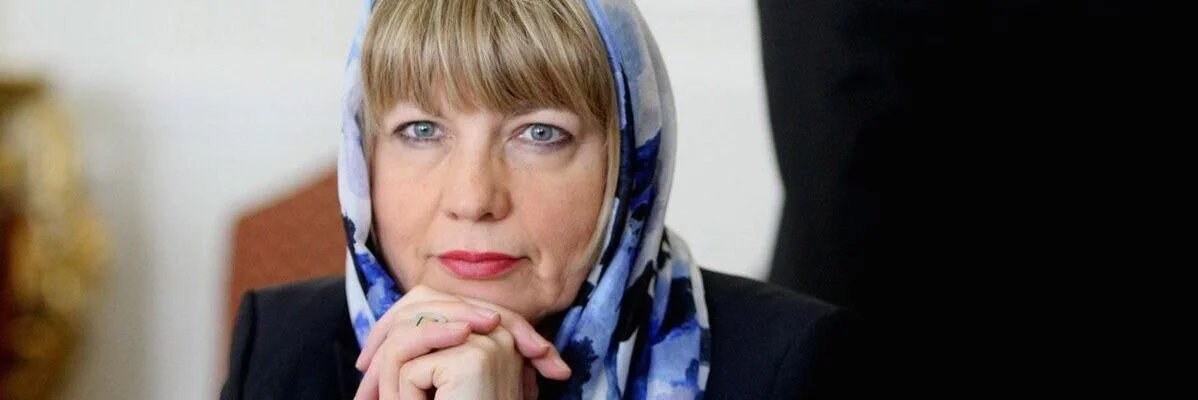
◢ The remaining parties to the Iran nuclear deal will meet in Vienna on Wednesday, the EU's diplomatic service announced, after Britain, France and Germany launched a dispute process over Iran's successive pullbacks. The meeting will be chaired by senior EU official Helga Schmid.
By Damon Wake
The remaining parties to the Iran nuclear deal will meet in Vienna on Wednesday, the EU's diplomatic service announced, after Britain, France and Germany launched a dispute process over Iran's successive pullbacks.
The office of EU diplomatic chief Josep Borrell—who is tasked with convening the commission under the dispute mechanism—said the get-together would be chaired on his behalf by senior official Helga Schmid.
The meeting comes as the European parties try to find a way to persuade Iran to come back into line with the deal after Tehran made a series of steps away in protest at the US pulling out and reimposing sanctions.
The 2015 agreement to curb Iran's nuclear program in return for sanctions relief has been slowly crumbling since US President Donald Trump unilaterally withdrew in 2018, describing the accord signed by his predecessor Barack Obama as a bad deal.
The EU has led efforts to try to save the deal, arguing that it is vital for international security, but after repeated warnings over Iran's moves, Germany, Britain and France triggered the dispute process on January 14.
In its last announcement, Tehran said it would no longer observe limits on the number of centrifuges used to enrich uranium. It was its fifth step away from the deal since Trump's pullout.
Borrell has said he believes all the countries still in the deal -- which also include Russia and China -- are determined to save the accord.
Iran Looking for Concessions
Western diplomats recognize it is highly unlikely Iran will heed calls to come back into full compliance without substantial concessions in return—such as an end to US sanctions or Europe taking measures to offset their economic impact.
Instead they hope to use the dispute process, which can be strung out for quite some time, to convince Iran not to take any more moves away from the deal, giving space for back-channel diplomacy aimed at bringing Washington and Tehran back into alignment.
At a major international security conference in Munich earlier this month, Iran's Foreign Minister Mohammad Javad Zarif said Tehran would be prepared to move back towards the deal if Europe provides "meaningful" economic benefits.
Crucially, Iran has said it will continue to cooperate with the Vienna-based International Atomic Energy Agency ( IAEA ) which carries out regular detailed inspections on the ground.
Europe has set up a special trading mechanism called INSTEX to try to enable legitimate humanitarian trade with Iran, but it has yet to complete any transactions and Tehran regards it as inadequate.
The renewed US sanctions have almost entirely isolated Iran from the international financial system, driven away oil buyers and plunged the country into a severe recession.
Photo: IRNA
Iran Could Reverse Nuclear Breaches if Europe Acts: Zarif
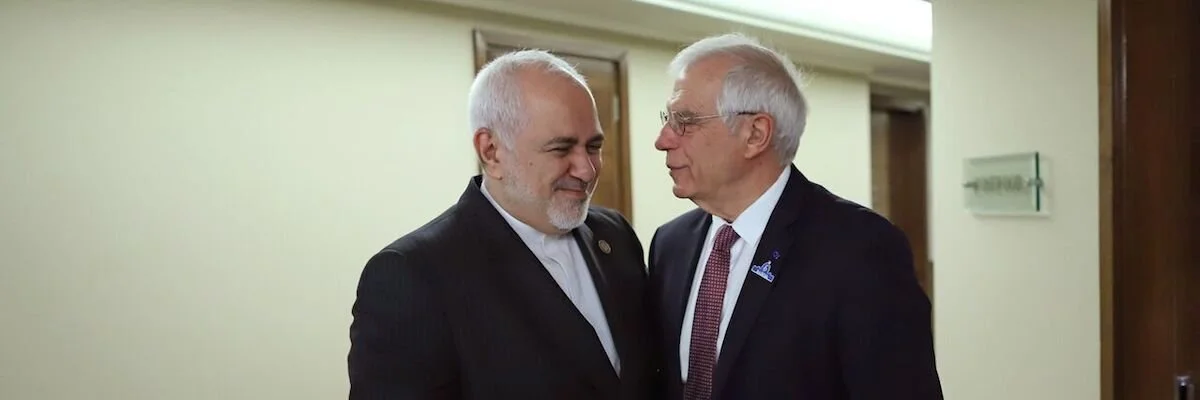
◢ Iran would be willing to move back towards the 2015 nuclear deal if Europe provides "meaningful" economic benefits, the country's foreign minister said last Friday. "We have said that we are prepared to slow down or reverse these measures commensurate with what Europe does," Mr Zarif told reporters at the Munich Security Conference.
Iran would be willing to move back towards the 2015 nuclear deal if Europe provides "meaningful" economic benefits, the country's foreign minister said last Friday .
The European parties to the Iran nuclear deal—Britain, France and Germany—have been battling to save it since US President Donald Trump withdrew from it and reimposed tough sanctions on Tehran.
Iran has responded to the US pullout with a series of steps back from its own commitments under the deal, including by increasing uranium enrichment.
But Foreign Minister Mohammad Javad Zarif said the Islamic republic could be willing to move back towards compliance—under certain circumstances.
"We have said that we are prepared to slow down or reverse these measures commensurate with what Europe does," Mr Zarif told reporters at the Munich Security Conference. "We will decide whether what Europe does is sufficient to slow down or to reverse some steps - we have not even ruled out reversing some of the steps that we have taken."
Europe has set up a special trading mechanism called Instex to try to enable legitimate humanitarian trade with Iran to offset some of the effects of US sanctions.
But it has yet to complete any transactions and the Iranian side does not think it is sufficient.
"We're not talking about charity. We're talking about Iranian rights and the rights of the Iranian people to receive the economic benefits," Mr Zarif said. "We have received irreversible harm or irreparable harm because of US sanctions, but nevertheless we will reverse the steps that we have taken provided that Europe takes steps that are meaningful."
The EU's top diplomat Josep Borrell met Zarif in Teheran earlier this month to try to lower tensions after Britain, France and Germany triggered a complaint mechanism under the deal to try to press Teheran to return to full implementation.
Washington accuses Tehran of seeking a nuclear weapon, which Iran has always denied.
The renewed US sanctions have almost entirely isolated Iran from the international financial system, driven away oil buyers and plunged the country into a severe recession.
Mr Borrell has also been in consultation with the other countries still in the deal—Russia and China—who like their European counterparts want to save the accord.
A meeting of the joint commission that oversees the deal is due to be held this month to consider the dispute mechanism.
Photo: IRNA
EU Top Diplomat Holds Talks in Iran 'To De-Escalate Tensions'
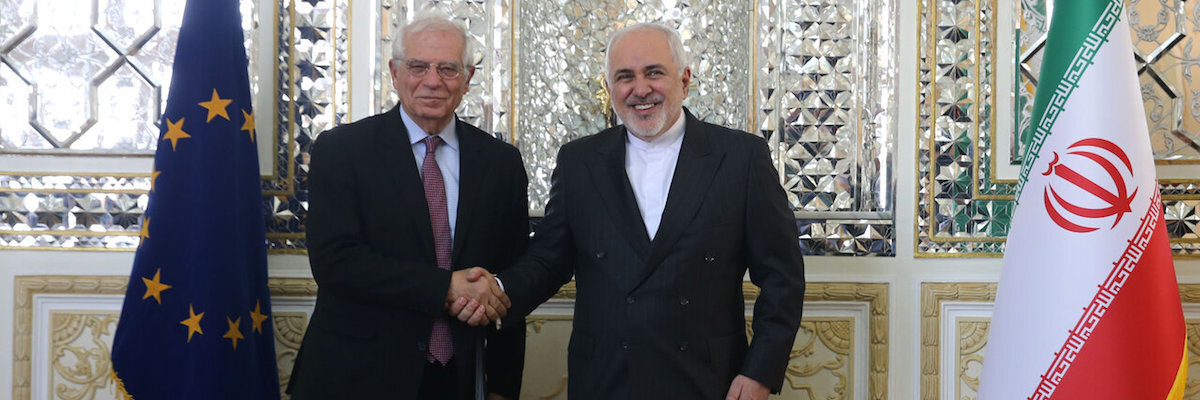
◢ Top EU diplomat Josep Borrell on Monday held talks in the Iranian capital on a mission aimed at lowering tensions over the Islamic republic's nuclear program. Borrell's mission aims "to de-escalate tensions and seek opportunities for political solutions to the current crisis," said the office of the EU's high representative for foreign affairs and security policy.
Top EU diplomat Josep Borrell on Monday held talks in the Iranian capital on a mission aimed at lowering tensions over the Islamic republic's nuclear program.
Borrell's trip, his first to Iran since taking office, follows a spike in tensions between arch foes Washington and Tehran after the January 3 assassination in Baghdad of a top Iranian general in a US drone strike.
Borrell's visit opened with a meeting with Foreign Minister Mohammad Javad Zarif.
According to a ministry statement, the two men discussed "the situation in the Persian Gulf and the need to reduce regional tensions" and the 2015 deal on Iran's nuclear program.
The deal between Tehran and a group of world powers has been crumbling since US President Donald Trump withdrew from it in 2018, and Washington has since stepped up sanctions and a campaign of "maximum pressure" against Iran.
Tehran has gradually stepped back from its own commitments under the deal, while military tensions with the US brought the two countries to the brink of full-blown confrontation last month.
Borrell's mission aims "to de-escalate tensions and seek opportunities for political solutions to the current crisis," said the office of the EU's high representative for foreign affairs and security policy.
The trip will allow Borrell "to convey the EU's strong commitment to preserve" the nuclear deal, known as the Joint Comprehensive Plan of Action, and to discuss cooperation between the EU and Iran, it said.
Zarif and Borrell also touched on Trump's controversial peace plan for the Israeli-Palestinian conflict and developments in Iraq, Syria and Yemen, the foreign ministry said.
The European diplomat later met President Hassan Rouhani and is set to meet parliament speaker Ali Larijani.
Iranian foreign ministry spokesman Abbas Mousavi told a news conference that Tehran hoped Borrell's visit would help the European Union "understand" its situation and prompt the bloc to "show goodwill by taking serious measures".
Accusations, Denials
Borrell said on January 24 that he had consulted the countries still in the deal—which also include Russia and China—and that all are determined to save the accord.
A joint commission that oversees the deal and comprises representatives of all the countries involved will meet in February, he said, without giving a precise date.
Washington accuses Tehran of seeking a nuclear weapon, which Iran has always denied.
The deal struck in Vienna between Iran and the five permanent members of the UN Security Council—Britain, China, France, the United States and Russia—plus Germany, offered Tehran a partial reprieve from crippling international sanctions.
In exchange, Iran agreed to drastically reduce its nuclear activities and to submit to a tailor-made inspection regime by the International Atomic Energy Agency (IAEA).
The US withdrawal from the deal and its reimposition of biting sanctions deprived Iran of anticipated economic benefits.
The renewed US sanctions have almost entirely isolated Iran from the international financial system, driven away oil buyers and plunged the country into a severe recession.
Since May 2019, Iran has progressively scaled back commitments under the agreement in response to the US sanctions and Europe's inability to circumvent them.
Iran is now producing uranium enriched beyond the 3.67 percent set by the agreement, and no longer adheres to the limit of 300 kilogrammes (660 pounds) imposed on its enriched uranium stocks.
It has also resumed research and development that was restricted under the deal.
Photo: IRNA
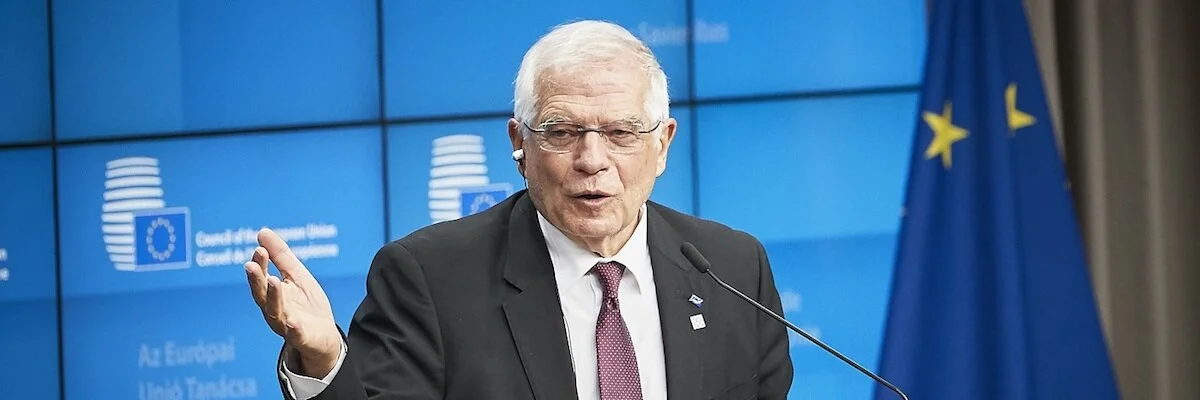
Top EU Diplomat to Visit Tehran Amid Nuclear Tensions
◢ Top EU diplomat Josep Borrell is Monday due to visit Iran, said officials in Tehran and Brussels, on his first trip there since taking office, aiming to reduce rising tensions over the Islamic Republic's nuclear program. Borrel is set to meet President Hassan Rouhani, Foreign Minister Javad Zarif and parliamentary speaker Ali Larijani on the two-day trip, his office said in a statement.
Top EU diplomat Josep Borrell is Monday due to visit Iran, said officials in Tehran and Brussels, on his first trip there since taking office, aiming to reduce rising tensions over the Islamic republic's nuclear program.
Borrel is set to meet President Hassan Rouhani, Foreign Minister Javad Zarif and parliamentary speaker Ali Larijani on the two-day trip, his office said in a statement.
The 2015 nuclear deal between Tehran and a group of world powers has been crumbling since US President Donald Trump withdrew from it in 2018, and Washington has since stepped up sanctions and a campaign of "maximum pressure" against Iran.
Tehran has gradually stepped back from its own commitments under the deal, while military tensions with the United States have brought the arch foes to the brink of full-blown confrontation in recent weeks.
Borrell's mission aims "to de-escalate tensions and seek opportunities for political solutions to the current crisis," said the office of the EU's high representative for foreign affairs and security policy.
The visit will allow Borrell "to convey the EU's strong commitment to preserve" the nuclear deal, known as the Joint Comprehensive Plan of Action, and to discuss cooperation between the EU and Iran, his office said.
Severe Recession
Washington accuses Tehran of seeking a nuclear weapon, which Iran has always denied.
The deal struck in Vienna between Iran and the five permanent members of the UN Security Council—Britain, China, France, the United States and Russia—plus Germany, offered Tehran a partial reprieve from crippling international sanctions.
In exchange, Iran agreed to drastically reduce its nuclear activities and to submit to a tailor-made inspection regime by the International Atomic Energy Agency (IAEA).
The US withdrawal from the deal and its reimposition of biting sanctions deprived Iran of anticipated economic benefits.
The renewed US sanctions have almost entirely isolated Iran from the international financial system, driven away oil buyers and plunged the country into a severe recession.
Since May 2019, Iran has progressively scaled back commitments under the agreement in response to the US sanctions and Europe's inability to circumvent them.
Iran is now producing uranium enriched beyond the 3.67 percent set by the agreement, and no longer adheres to the limit of 300 kilogrammes (660 pounds) imposed on its enriched uranium stocks.
It has also resumed research and development that was restricted under the deal.
‘Last Step'
On January 5, the Islamic republic announced the "last step" in its plan to roll back on its commitments, saying that it was no longer bound by limits on the number of centrifuges it could run to enrich uranium.
Iran accuses the European parties to the deal of not respecting their own commitments and of doing nothing to help circumvent the US sanctions.
Tehran has stressed, however, that the steps it has taken away from the deal can be reversed if Iran's interests are realised.
However, the European parties and experts question this pledge, saying research and development gains aren't reversible.
In an effort to bring Tehran back to full implementation of the deal, Paris, London and Berlin triggered a complaint mechanism in January.
The mechanism could lead to the reestablishment of all sanctions that were lifted by the UNSC, but, for now, the Europeans have been keen to get Iran back on board rather than reimpose sanctions.
Tehran has long said that if the Iran nuclear dossier were to be sent back to the UNSC, it would signal the definitive death of the 2015 deal.
Photo: EEAS
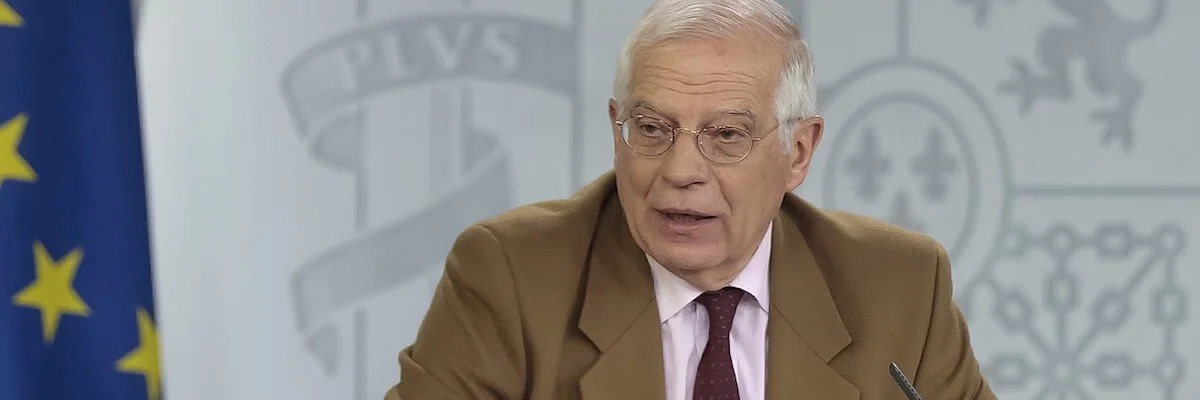
EU Calls Iran Nuclear Talks Next Month in Bid to Save Deal
◢ The Iran nuclear deal has been crumbling since President Donald Trump unilaterally withdrew and reimposed sanctions on Tehran, prompting the Islamic republic to announce a series of steps away from its commitments. "Notwithstanding differences on modalities, there is agreement that more time is needed due to the complexity of the issues involved. The timeline is therefore extended," the EU’s foreign policy chief said in a statement.
By Damon Wake
Brussels made a bid to buy more time to save the Iran nuclear deal Friday, calling a meeting for next month after Britain, France and Germany launched a dispute process.
The European capitals triggered the complaint mechanism last week after Tehran took a series of steps away from its commitments, in protest at the US pulling out of the accord in 2018.
This could have shortened the deal's lifespan but Josep Borrell, the EU's diplomatic chief, who is tasked with convening meetings under the dispute mechanism, has called new talks.
Borrell said he had consulted the countries still in the deal -- which also include Russia and China -- and that all are determined to save the accord.
The Iran nuclear deal has been crumbling since President Donald Trump unilaterally withdrew and reimposed sanctions on Tehran, prompting the Islamic republic to announce a series of steps away from its commitments.
"Notwithstanding differences on modalities, there is agreement that more time is needed due to the complexity of the issues involved. The timeline is therefore extended," Borrell said in a statement.
"All agreed to pursue expert-level discussions addressing the concerns regarding nuclear implementation, as well as the wider impacts of the withdrawal of the United States from the JCPOA and its re-imposition of sanctions."
JCPOA is an acronym for the deal's formal title, the Joint Comprehensive Plan of Action.
Borrell said the so-called joint commission that oversees the deal and comprises representatives of all the countries involved will meet in February, though he did not give a precise date.
It usually meets in Vienna, though it can also meet in New York or Geneva.
Room for Maneuver
Under the terms of the dispute mechanism, senior officials have 15 days from the January 14 triggering of the complaint mechanism to find a solution before deciding whether to escalate the issue to foreign ministers level.
By calling the meeting in February, Borrell has extended that initial timeline -- which was conceived to solve technical complaints rather than the slow political collapse of the accord.
European officials say a certain amount of creative ambiguity was deliberately written into the text to allow room for manoeuvre in a crisis, and it now looks likely the dispute process could be prolonged for quite some time.
When they triggered the mechanism, the Europeans urged Iran to come back into full compliance with its obligations under the 2015 accord, which gave Tehran relief from sanctions in return for curbs on its nuclear programme aimed at preventing it from developing atomic weapons.
But, privately, diplomats recognise it is highly unlikely Iran will do this without substantial concessions in return -- such as an end to US sanctions or Europe taking measures to offset their economic impact.
Instead they will be content if talks manage to convince Iran not to take any more steps away from the deal, giving space for back-channel diplomacy aimed at an agreement that gets both Washington and Tehran back in the game.
"We want to get round a table to work out what is the fix to get us into a stable place where things won't get worse," one diplomat said.
"It might be possible to get informal agreement on restraint."
Bomb 'Not Around the Corner'
After repeated warnings, Germany, Britain and France triggered the dispute process on January 14 after Iran announced it would no longer observe limits on the number of centrifuges—used to enrich uranium—in its fifth step back from the deal.
But crucially Iran has said it will continue to cooperate with the International Atomic Energy Agency (IAEA) which carries out regular detailed inspections on the ground.
A western diplomat said that, for the Europeans, it was "critical that is maintained".
"The IAEA still has full access, which gives us reassurance about the activities the Iranians are doing. Agency access, verification and monitoring give us confidence that we would know if the Iranian activities are changing in nature," the diplomat said.
For now the Europeans are looking to get Iran back on board rather than reimposing sanctions, and they are keenly aware that they could lose control of the dispute process if it moves to the next stage—notifying the UN Security Council.
If this happens, UN sanctions automatically "snap back" after 30 days unless the Security Council votes to stop them—and here the US would be able to wield its veto.
"They've broken the limits, we're watching. A bomb is not around the corner but we don't want to get to that," a diplomat said.
Photo: Wikicommons

EU Invites Iranian Foreign Minister to Brussels
◢ Iran's foreign minister has been invited to Brussels, the European Union said Sunday, January 5, urging a "de-escalation of tensions" in the Persian Gulf after a US air strike that killed top general Qassem Soleimani. The EU's foreign policy chief Josep Borrell made the offer to Mohammad Javad Zarif during a telephone call this weekend.
Iran's foreign minister has been invited to Brussels, the European Union said Sunday, January 5, urging a "de-escalation of tensions" in the Persian Gulf after a US air strike that killed top general Qassem Soleimani.
The EU's foreign policy chief Josep Borrell made the offer to Mohammad Javad Zarif during a telephone call this weekend, a press release said.
"Borrell invited the Iranian Foreign Minister to Brussels to continue their engagement on these matters," it said.
A regional political solution was the "only way forward," Borrell said, underlining "the importance of preserving" the 2015 Iran nuclear deal.
He confirmed "his resolve to continue to fully play his role as coordinator and keep the unity of the remaining participants in support of the agreement and its full implementation by all parties".
US-Iran tensions have escalated since 2018 when President Donald Trump unilaterally withdrew the United States from the landmark accord that gave Tehran relief from sanctions in return for curbs on its nuclear program.
Iran has hit back by reducing its nuclear commitments with a series of steps every 60 days, the most recent deadline passing Saturday.
Trump warned Saturday night that the US would hit Iran harder than ever before if it retaliates over the assassination of Qassem Soleimani, the commander of the Revolutionary Guards' Quds Force foreign operations.
He was killed in a US drone strike Friday near Baghdad international airport ordered by Trump, who accused the general of planning an imminent attack on American diplomats and troops in Iraq
Photo: IRNA
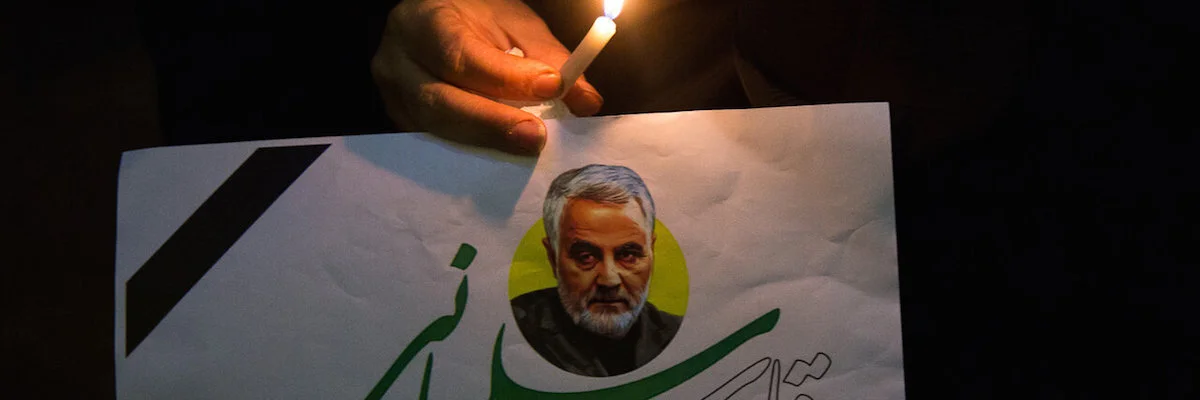
Pompeo: Europe Not 'Helpful' as Could be over Soleimani Killing
◢ US Secretary of State Mike Pompeo said Friday that Washington's European allies had not been "as helpful" as he hoped over the US killing of Iranian military commander Qassem Soleimani in Iraq. Following the assassination, EU foreign affairs chief Josep Borrell called on all involved actors "to exercise maximum restraint and show responsibility in this crucial moment."
US Secretary of State Mike Pompeo said Friday that Washington's European allies had not been "as helpful" as he hoped over the US killing of Iranian military commander Qassem Soleimani in Iraq.
Pompeo called officials worldwide to discuss the attack, which was praised by US President Donald Trump's Republicans and close ally Israel, but elsewhere met with sharp warnings it could inflame regional tensions.
"I spent the last day and a half, two days, talking to partners in the region, sharing with them what we were doing, why we were doing it, seeking their assistance. They've all been fantastic," Pompeo said in an interview with Fox News.
"And then talking to our partners in other places that haven't been quite as good. Frankly, the Europeans haven't been as helpful as I wish that they could be," he said.
US officials said Soleimani, who had been blacklisted by the US, was killed when a drone hit his vehicle near Baghdad's international airport.
Following the assassination, EU foreign affairs chief Josep Borrell called on all involved actors "to exercise maximum restraint and show responsibility in this crucial moment."
Meanwhile French President Emmanuel Macron urged those involved to act with "restraint" while British Foreign Secretary Dominic Raab said de-escalation would be key.
"The Brits, the French, the Germans all need to understand that what we did, what the Americans did, saved lives in Europe as well," Pompeo said.
"This was a good thing for the entire world, and we are urging everyone in the world to get behind what the United States is trying to do to get the Islamic Republic of Iran to simply behave like a normal nation," he added.
Pompeo said earlier in the day that Soleimani was planning imminent action that threatened American citizens when he was killed in the strike.
Photo: IRNA
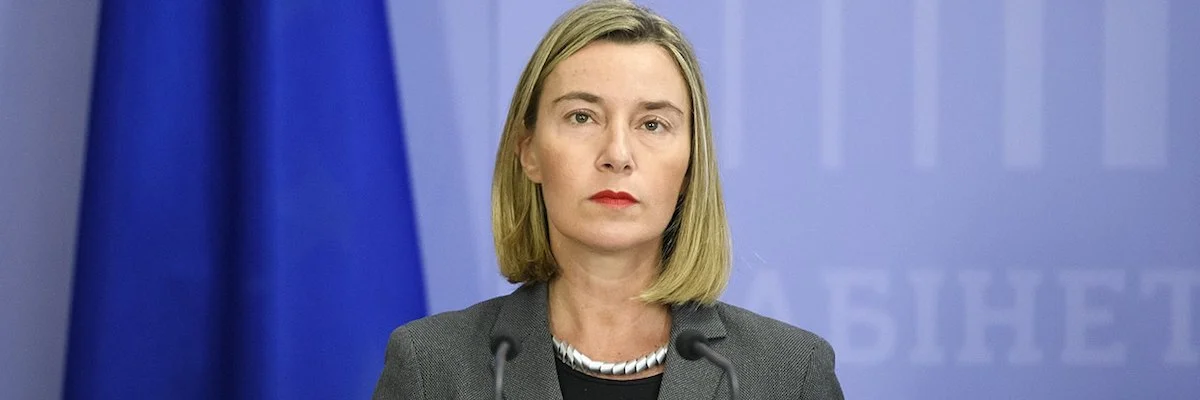
EU Holds Iran Nuclear Crisis talks as Tehran Issues Fresh Threats
◢ European foreign ministers held crisis talks Monday on saving the beleaguered Iran nuclear deal as Britain warned the "small window" for success was closing and Tehran issued fresh threats of restarting its atomic program. British Foreign Secretary Jeremy Hunt—who held phone talks with his US and Iranian counterparts at the weekend—insisted "the deal isn't dead yet.”
By Damon Wake
European foreign ministers held crisis talks Monday on saving the beleaguered Iran nuclear deal as Britain warned the "small window" for success was closing and Tehran issued fresh threats of restarting its atomic program.
Tensions in the Gulf have soared since last year, when the United States pulled out of the 2015 deal and reimposed sanctions on Iran, hammering its economy and prompting Tehran to break limits on uranium enrichment and stockpiling.
The European Union is desperately trying to prevent the deal unravelling completely, seeing it as the best way to stop Tehran acquiring atomic weapons, and the issue was top of the agenda as ministers from the bloc met in Brussels.
But Iran piled fresh pressure on Europe, demanding concrete measures to give it relief from US sanctions and threatening to return its nuclear programme to where it was before the curbs imposed by the 2015 deal.
British Foreign Secretary Jeremy Hunt—who held phone talks with his US and Iranian counterparts at the weekend—insisted "the deal isn't dead yet.”
"Iran is still a good year away from developing a nuclear weapon. We think there is still some closing but small window to keep the deal alive," Hunt told reporters.
Britain, France and Germany—the three European parties to the deal—on Sunday issued a joint statement calling for dialogue to resolve the crisis.
Iran has repeatedly warned it could leave the deal unless the remaining parties bypass US sanctions to deliver the promised economic benefits and on Monday threatened to take its nuclear programme back to its pre-deal status.
"If the Europeans and the Americans don't want to carry out their duties... we will decrease our commitments and... reverse the conditions to four years ago," Iranian atomic energy agency spokesman Behrouz Kamalvandi said, quoted by IRNA state news agency.
The US has vowed to pursue its "maximum pressure" campaign against Iran, but Spanish Foreign Minister Josep Borrell—lined up to be the next EU diplomatic chief—warned its strategy is only "strengthening the most radical" elements in the Islamic republic.
Current EU diplomatic chief Federica Mogherini said the steps taken by Iran so far—including enriching uranium above the 3.67 percent ceiling set by the deal—were reversible.
For now, none of the remaining parties have triggered the formal dispute mechanism, meaning that they did not regard Iran's breaches up to now as "significant non-compliance" under the terms of the deal, Mogherini said.
No 'Less for Less'
Europe hopes to use a special trading mechanism called INSTEX to enable businesses to deal with Iran without using the US dollar or financial system, thereby helping the Iranian economy while avoiding Washington's sanctions.
But the mechanism is complicated, no transactions have been finalised yet and it can for now only be used for humanitarian goods -- food and pharmaceuticals, for example -- though Mogherini said the shareholding countries were discussing extending it to Iran's crucial oil sector.
The sweeping nature of the US measures has scared many major European businesses out of Iran despite Brussels' insistence that American sanctions do not apply in Europe.
"Iran has taken bad decisions in response to the bad decision of the United States to pull out of the deal and reimpose sanctions, whose extraterritoriality strikes at the economic advantages the country got from the deal," French Foreign Minister Jacques-Yves Le Drian said as he arrived in Brussels.
The Iranian foreign ministry warned in a statement that its compliance with the deal was "rooted in the principle of reciprocity" and demanded Europe come up with "practical, effective and responsible decisions".
EU ministers insisted Iran must return to respecting its obligations under the deal in full, rejecting a suggestion by Iranian President Hassan Rouhani that both sides could reduce their commitments.
"This is a very, very serious situation. We must make it clear once again, in clear language, that there is only a chance if Iran commits itself unreservedly to what is contained in the treaty," Germany's junior foreign minister Michael Roth told reporters.
But the Iranian foreign ministry statement branded the European expectations "unrealistic", demanding a quid pro quo for undoing its recent breaches of the deal -- including exceeding a 300-kilo (660-pound) limit on enriched uranium stockpiles.
The joint commission overseeing the accord, made up of representatives from the countries still in the deal—the Europeans plus China, Russia and Iran—will meet "very soon" to discuss Tehran's breaches, Hunt said.
Photo: Wikicommons

Russia, Spain Slam US 'Ultimatums' on Iran
◢ The foreign ministers of Spain and Russia on Tuesday hit out at US sanctions policy against Iran and ultimatums they say are being imposed by Donald Trump's administration. President Trump in May abandoned a 2015 multi-nation deal with Iran aimed at reining in its nuclear program. The deal had been unanimously endorsed by a United Nations Security Council resolution, making it legally binding.
The foreign ministers of Spain and Russia on Tuesday hit out at US sanctions policy against Iran and ultimatums they say are being imposed by Donald Trump's administration.
President Trump in May abandoned a 2015 multi-nation deal with Iran aimed at reining in its nuclear program.
The deal had been unanimously endorsed by a United Nations Security Council resolution, making it legally binding.
On Monday, Washington reimposed its last tranche of sanctions—punitive measures targeting the Iranian oil and financial sectors.
The Trump administration nevertheless gave eight countries temporary waivers, allowing them to continue to buy oil from Iran—China, India, Turkey, Japan, South Korea, Taiwan, Italy and Greece.
But in general the US sanctions stipulate that to maintain access to the US market, countries and foreign companies must stop trading with Iran.
“Sanctions are absolutely illegitimate, they are are being imposed in flagrant violation of the UN Security Council's decision," Russian Foreign Minister Sergei Lavrov told reporters in Madrid.
"And the forms in which these measures are being declared and implemented cannot cause anything but deep disappointment.
"It is not acceptable in our age to pursue a policy based on ultimatums and unilateral demands."
Spanish Foreign Minister Josep Borrell concurred, saying he rejected "any kind of position that resembles an ultimatum from anyone and also from the United States.
"This notion of 'you're either with me or against me' is of another era."
Photo Credit: Wikicommons