
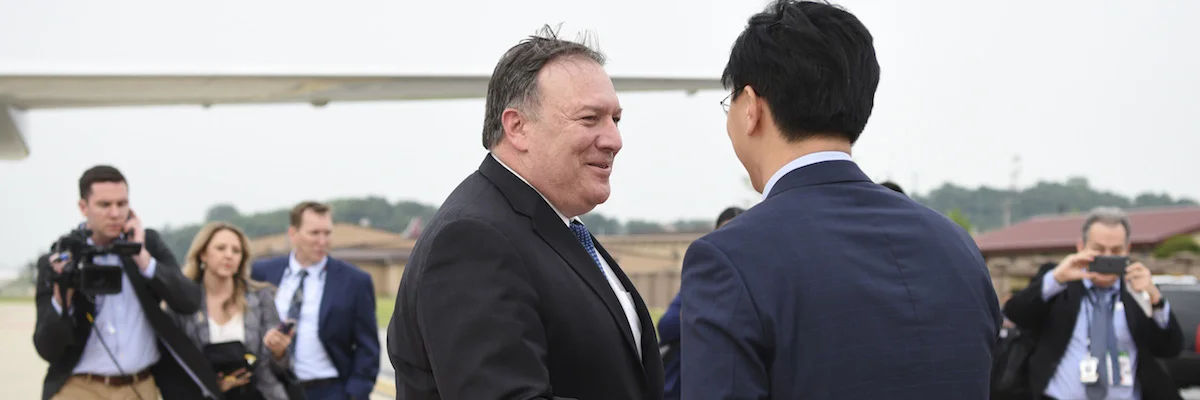
Exasperated Europeans Face Surprise Pompeo Visit on Iran
◢ As European Union governments scramble to save the Iran nuclear accord from U.S. efforts to scuttle it, the mood in diplomatic circles has blackened. Then suddenly, U.S. Secretary of State Michael Pompeo lands in Brussels with little warning. After a cool initial reception to the unscheduled drop-in, Pompeo began meetings with European counterparts to address Iran’s “threatening actions and statements.”
By Patrick Donahue, Gregory Viscusi and Tim Ross
As European Union governments scramble to save the Iran nuclear accord from U.S. efforts to scuttle it, the mood in diplomatic circles has blackened. Then suddenly, U.S. Secretary of State Michael Pompeo lands in Brussels with little warning.
The top U.S. diplomat parachuted in as 28 European Union foreign ministers gathered to discuss Iran. After a cool initial reception to the unscheduled drop-in, Pompeo began meetings with European counterparts to address Iran’s “threatening actions and statements.”
“I made clear once again that we are worried in view of the developments and the tensions in the region,” German Foreign Minister Heiko Maas told reporters. “We don’t want a military escalation.”
The hard-line approach adopted by President Donald Trump has left European allies irritated at the lack of strategy and powerless to sway a U.S. administration that’s failed to provide answers on where it all leads, according to diplomats in Berlin, Paris and London.
On their minds is the risk of a return to a nuclear threat in the Middle East, they said on condition of anonymity as talks proceed behind closed doors. The Europeans are in a bind, with limited options to protect the deal. Their attempt to circumvent U.S. sanctions has fallen flat as companies do not want to run foul of the U.S. and risk trade with such a key partner.
Exasperation
Ministers from the U.K., France and Germany, the three EU signatories to the Iran accord, were expected to sit down with Pompeo, but plans were ad-hoc given the last-minute nature of the visit. Early reaction was lukewarm at best.
“He’s always welcome obviously, but there are no precise plans for the moment,” European Union foreign-policy chief Federica Mogherini said earlier in the day. Later she said she’d convene with him after the EU meeting was finished.
Behind the shuttle diplomacy lies a sense that more than 15 years of heavy lifting that culminated in the nuclear deal is slipping away, according to senior European diplomats. And even if few expect an open conflict in the near term, the fear is that Trump’s unpredictable approach could have unintended consequences.
What Next?
A tit-for-tat could easily ensue from an altercation, such as a hit on U.S. forces by the Islamic Revolutionary Guard Corps, two diplomats speculated. The U.S. squeezed Iran further by designating the IRGC as a terrorist organization last month.
Saudi Arabia said Monday two of its oil tankers were attacked while sailing toward the Persian Gulf. While it did not directly accuse Iran, the incident adds to a febrile atmosphere in the world’s most important chokepoint for oil shipments as Trump dials up the pressure. Crude rose as much as 2%.
It’s the latest turn between the U.S. and erstwhile European allies grappling with Trump’s hectoring on trade, defense spending and Chinese technology. Chancellor Angela Merkel’s government, which has drawn special scrutiny from Trump, has been particularly ruffled by the president’s hardball tactics over a gas pipeline to Russia.
Iran’s warning last week that it had begun to gradually abandon parts of the 2015 nuclear accord capped Trump’s yearlong effort to derail the treaty. The so-called EU-3 responded with a pledge to keep the Iran deal on life support, primarily with an investment vehicle aimed at circumventing U.S. sanctions that are crippling the Iranian economy.
The U.S., meanwhile, has dispatched an aircraft carrier strike group and bomber force to the region, cementing its confrontational stance—and leaving Europeans with few options. And even as they reject a 60-day ultimatum presented by Iran, European leaders are laying blame with the White House.
“First of all, Iran hasn’t left the deal,” French President Emmanuel Macron told reporters Thursday at an EU summit in Sibiu, Romania. “Second of all, if they do, it’ll be the responsibility of the U.S.”
The brinkmanship has left Europeans baffled.
One diplomat said Trump’s legacy may be raising the nuclear threat from Iran as well as North Korea, rather than stopping it. Another quipped that short of Iranian President Hassan Rouhani boarding a flight to Washington and signing Pompeo’s 12 conditions, tantamount to total capitulation, nothing was on the table.
Trump himself has said he’s open to talks with Iran, suggesting the 12 demands from Pompeo are an opening negotiating salvo.
Pompeo has demanded that Iran abandon nuclear ambitions, scrap its missile program and end support for allied groups in places like Syria and Yemen. And while Europeans have made similar demands, they’re convinced open confrontation won’t yield any such results.
The treaty’s other signatories, Russia and China, may not offer Europe much help. While China’s purchase of Iranian oil could go a long way in preserving the deal, the government in Beijing won’t risk baiting Trump while they’re in deadlocked trade talks, according to two European diplomats.
Photo: DOD
Iran Denies Any Intention of Boosting Range of Missiles
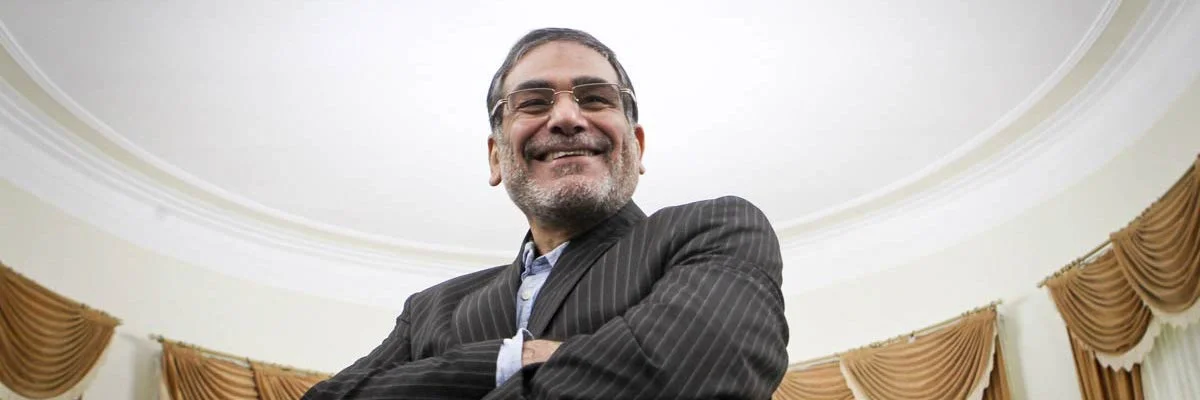
◢ Iran has "no intention of increasing the range" of its missiles, a senior defense official said Tuesday, amid threats of European as well as US sanctions over its ballistic program. Iran has voluntarily limited the range of its missiles to 2,000 kilometers (1,250 miles), sufficient to reach Israel and Western bases in the Middle East. But Washington and its allies have accused Tehran of pursuing enhanced missile capabilities that also threaten Europe.
Iran has "no intention of increasing the range" of its missiles, a senior defense official said Tuesday, amid threats of European as well as US sanctions over its ballistic program.
Iran has voluntarily limited the range of its missiles to 2,000 kilometers (1,250 miles), sufficient to reach Israel and Western bases in the Middle East.
But Washington and its allies have accused Tehran of pursuing enhanced missile capabilities that also threaten Europe.
"Iran has no technological or operational constraints to increasing the range of its military missiles," the secretary of the Supreme National Security Council, Admiral Ali Shamkhani, said.
"But while constantly striving to improve accuracy, solely based on its defense doctrine, (it) has no intention of increasing the range of (its) missiles," the official IRNA news agency quoted him as saying.
US President Donald Trump cited Iran's missile program as one of the reasons why he pulled Washington out of a landmark 2015 nuclear deal between Tehran and major powers last year.
European governments have stuck by the nuclear deal but some have demanded a supplementary agreement to tackle Iran's ballistic missile program and its interventions in regional conflicts.
Shamkhani's comments come after France warned on Friday that it was ready to impose new sanctions if talks on a supplementary deal fail to make progress.
"We have begun a difficult dialogue with Iran... and, unless progress is made, we are ready to apply sanctions, firmly, and they know it," Foreign Minister Jean-Yves Le Drian said.
Iran retorted that French arms sales in the Middle East were one of the real sources of instability in the region.
Space Program to Continue
Iran's space program has also come under Western criticism, with Washington charging that an abortive satellite launch earlier this month was cover for a bid for an intercontinental ballistic missile capability.
But Shamkhani, who was addressing the national conference on space technology in Tehran, said Iran could accept no limitations on its satellite launches.
"We will vigorously carry on with the development of our space program," IRNA quoted him as saying.
Iran tried unsuccessfully to put a satellite into orbit on January 15, and plans to make a second attempt soon.
US Secretary of State Mike Pompeo accused Iran of violating UN Security Resolution 2231 of 2015.
It calls on Iran "not to undertake any activity related to ballistic missiles designed to be capable of delivering nuclear weapons".
Iran has always denied seeking any nuclear weapons capability but has said repeatedly that it needs its missile program as a matter of national security.
In the 1980-1988 war launched by Saddam Hussein's Iraq, Iranian cities were devastated by Iraqi missiles in a bombing campaign dubbed the "war of the cities.”
Iranian officials say that Western sanctions have starved its air force of spare parts and replacement aircraft, severely limiting its operational capacity and forcing Iran to rely on its missile programme.
The council run by Shamkhani is in charge of drawing up Iranian military and security policy.
A former defense minister and adviser to supreme leader Ayatollah Ali Khamenei, he was appointed as its secretary by President Hassan Rouhani in 2013.
Photo Credit; IRNA

Iran Accuses France of 'Destabilizing' Region
◢ Iran has accused France of being a destabilizing force in the region after its foreign minister threatened new sanctions against Tehran over its missile program. "The Islamic republic has always called for the strengthening of peace and stability in the region," the Iranian foreign ministry said in a statement released overnight Friday.
Iran has accused France of being a destabilizing force in the region after its foreign minister threatened new sanctions against Tehran over its missile program.
"The Islamic republic has always called for the strengthening of peace and stability in the region," the Iranian foreign ministry said in a statement released overnight Friday.
As such Iran "considers the mass sales of sophisticated and offensive weapons by... France as a factor in destabilizing the balance of the region," the statement said.
It came after French Foreign Minister Jean-Yves Le Drian on Friday said Paris was ready to impose new sanctions on Tehran if talks on its missile program and its regional influence fail to make progress.
"We have begun a difficult dialogue with Iran... and unless progress is made we are ready to apply sanctions, firmly, and they know it," Le Drian said.
Le Drian also demanded that Iran change its behavior in the region, specifically regarding its military presence in Syria.
The Iranian foreign ministry responded saying "Iran's missile program is not negotiable" and warned that "any new sanction by European countries will lead to a review of our relations with them".
Iran reined in most of its nuclear program under a landmark 2015 deal with major powers—Britain, China, France, Germany, Russia and the United States—that lifted sanctions on the Iran.
But in May the United States withdrew from the deal and re-imposed sanctions on Tehran.
The EU has been trying to set up a special payment mechanism to maintain trade and business ties with Iran and circumvent the US sanctions.
Tehran has continued to develop its ballistic missile technology but says it has no intention of acquiring atomic weapons and that its missile development programs are purely defensive.
Photo Credit: IRNA
France, Britain Seek UN Security Council Meeting on Iran Missile Test
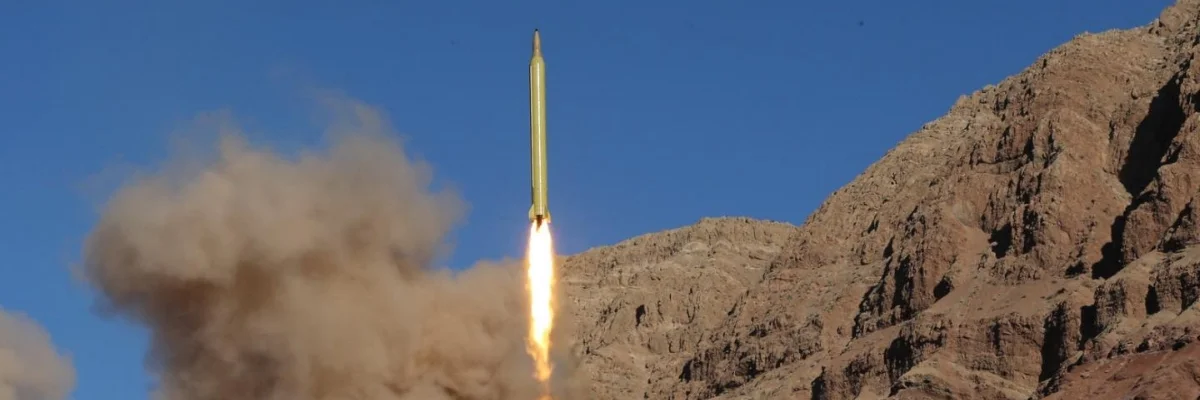
◢ France and Britain on Monday requested a closed-door meeting of the UN Security Council after charging that Iran test-fired a medium-range missile at the weekend, diplomats said. The meeting is expected to be held Tuesday. The United States said the missile launch on Saturday was a violation of a UN resolution that endorsed the 2015 Iran nuclear deal, from which Washington has withdrawn.
France and Britain on Monday requested a closed-door meeting of the UN Security Council after charging that Iran test-fired a medium-range missile at the weekend, diplomats said.
The meeting is expected to be held Tuesday.
The United States said the missile launch on Saturday was a violation of a UN resolution that endorsed the 2015 Iran nuclear deal, from which Washington has withdrawn.
That resolution calls on Iran to refrain from testing missiles capable of carrying a nuclear weapon.
France said it was concerned by the test-firing with the foreign ministry describing it as "provocative and destabilizing" and "does not conform" with UN resolution 2231 on the Iran deal.
British Foreign Secretary Jeremy Hunt called the missile test "provocative, threatening and inconsistent" with the resolution and said Britain was determined "that it should cease."
Iran has long maintained that its missile program is defensive in nature and not aimed at ensuring the delivery of a nuclear weapon, a stance supported by Russia at the Security Council.
Washington's Iran envoy Brian Hook urged the European Union to slap sanctions that target Tehran's missile program as US Secretary of State Mike Pompeo traveled to Brussels for talks with European partners.
The United States decided in May to withdraw from the 2015 nuclear deal and reimpose sanctions on Iran, to the dismay of its Europeans allies.
The nuclear deal provides for a lifting of sanctions against Iran in return for curbs on its nuclear activities.
The remaining five signatories to the nuclear deal—Britain, China, France, Germany and Russia—have backed an EU effort to set up a special payment system in a bid to maintain trade and business ties with Iran.
Photo Commons: Tasnim