

Iran Retaliates With Missile Strike on U.S.-Iraqi Bases
◢ Iran fired more than a dozen missiles at U.S.-Iraqi airbases, a direct attack on American forces in the region that risks further action from President Donald Trump after a U.S. air strike killed top Iranian general Qassem Soleimani last week. The Islamic Revolutionary Guard Corps claimed responsibility for the barrage.
By Glen Carey
Iran fired more than a dozen missiles at U.S.-Iraqi airbases, a direct attack on American forces in the region that risks further action from President Donald Trump after a U.S. air strike killed top Iranian general Qassem Soleimani last week.
The Islamic Revolutionary Guard Corps claimed responsibility for the barrage, which the Pentagon said was launched from Iran. Fifteen missiles were fired, 10 of which hit the Ayn al-Asad base in western Iraq and another facility in Erbil, according to two U.S. officials. Another struck the Taji air base near Baghdad while four fell out of the sky.
Stocks dropped and oil rose on news of the Iranian strike, though crude later pared its gains. The big concern is the extent of any U.S. casualties, because that is likely to influence the White House thinking on potential retaliation. For now no U.S. nor Iraqi casualties have been confirmed.
Some sort of response had been expected to the killing of Soleimani, who ran Iran’s proxy operations across the Middle East and was close to the country’s leaders. While Tehran does not want outright war with the U.S., there was growing pressure at home to react. The balancing act was to do so without tipping things into a conflict that no-one has appetite for.
Supreme Leader Ayatollah Ali Khamenei spoke on state television and described the attack as a “crushing response.” He called again for the U.S. presence in the region to end, a sign that Tehran’s ultimate goal remains to push the U.S. military out of Iraq. Foreign Minister Mohammad Javad Zarif said on Twitter the government “concluded proportionate measures in self-defense” after the Soleimani strike. “We do not seek escalation or war, but will defend ourselves against any aggression,” Zarif wrote.
In Tehran the mood on Wednesday was cautious, with ordinary people taking to Twitter to voice their fears of a war.
President Donald Trump tweeted “All is well!” and “So far, so good!” while adding that battle damage assessments continued. He added he’ll make a statement Wednesday morning. Tensions between Iran and the U.S. have soared under Trump, who walked away from the Iranian nuclear deal agreed by his predecessor. Since then, Iran has warned repeatedly the restraints on its nuclear program will be removed.
Trump was joined in the White House Situation Room after the attack by officials including Vice President Mike Pence, Secretary of State Michael Pompeo, Joint Chiefs Chairman Army General Mark Milley and National Security Adviser Robert O’Brien.
One White House official, who spoke on condition of anonymity, said the early thinking was the missile strike was a perfunctory move that would let Iran retaliate without incurring a potentially devastating U.S. counter-assault.
Iran’s attack sent futures on the S&P 500 Index down as much as 1.7% before paring losses. Gold initially advanced to the highest since 2013, though those gains were trimmed along with an advance in oil which at one point surged above $65 a barrel.
U.S. aviation regulators issued new restrictions barring civilian flights over Iraq, Iran, the Persian Gulf and the Gulf of Oman. Adding to the confusion, a Boeing Co. 737 passenger jet bound for Ukraine crashed shortly after takeoff in Iran, killing all 167 passengers and 9 crew on board, with Iran’s media reporting it was due to a technical problem.
“A missile attack from Iran against U.S. forces is a serious escalation,” said Michael Singh of the Washington Institute for Near East Policy and a former senior director for Middle East affairs under President George W. Bush. Such an attack “cannot be regarded as merely symbolic or face-saving regardless of its results,” he added.
Trump has shown restraint in previous attacks in the region blamed on Iran that didn’t kill any U.S. citizens. But Iran’s quick claim of responsibility for the strike and the targeting of U.S. military outposts make some sort of retaliation more likely.
“The next question is, does the U.S. react or overreact to this,” said Jarrett Blanc, a senior fellow at the Carnegie Endowment for International Peace and a former State Department coordinator for Iran nuclear implementation.
Iran is believed to have the region’s largest stockpile of short-range ballistic missiles, and a large number of American military and diplomatic facilities in the region were seen as potential targets for reprisals.
“As we evaluate the situation and our response, we will take all necessary measures to protect and defend U.S. personnel, partners, and allies in the region,” according to a Pentagon statement.
The Ayn al-Asad base is a key U.S. facility in the country. Pence visited it late last year and Trump was there in December 2018. A Facebook account belonging to the Iraqi prime minister’s office said 22 missiles entered Iraqi airspace early Wednesday, and 17 hit Ayn al-Asad. It said there were no casualties among the Iraqi forces.
The Islamic Revolutionary Guard Corps said that further responses will come. It called the attack the start of its “Martyr Soleimani” operation, in honor of a leader many Iranians considered a national hero for his exploits in conflicts from Syria to Yemen.
At his funeral on Tuesday, Hossein Salami, leader of Iran’s Revolutionary Guard, threatened to “set ablaze” places supported by the U.S., the Associated Press reported. The general’s burial was postponed after dozens of mourners died in a stampede.
Even so, Zarif’s comments cast some doubt on about whether more action is really in the works. Iran has for years operated a carefully-calibrated strategy of attacks, often via proxies, in the Middle East, that preserves its influence without drawing major retaliation. Crippled by economic sanctions, Iran can ill-afford an outright war.
Before the latest attack, Iran said it was assessing 13 scenarios for retaliation according to comments by Ali Shamkhani, head of Iran’s national security council, reported by the semi-official Fars news agency.
Iran “needed to do something quick,” said Kamran Bokhari, founding director of the Center for Global Policy in Washington. “This is a placeholder move and a low cost one.”
The U.S. had vowed a quick and overwhelming response to any Iranian attacks. Over the past week, the Pentagon deployed about 3,500 soldiers from the 82nd Airborne to Kuwait and another three Navy ships with about 2,200 Marines to the Persian Gulf region.
Iranian-only targets for the U.S. include Islamic Revolutionary Guard Corps navy vessels in the Persian Gulf, nuclear facilities, military bases, ports and oil installations, according to a Tuesday report by the Congressional Research Service. Another option: Iranian proxies.
U.S. officials say they were justified in targeting Soleimani, who was accused of having helped Iraqi insurgents target American troops with improvised explosive devices following the U.S. invasion in 2003.
Drone Strike
Tensions between the U.S. and Iran soared following a Dec. 27 rocket assault on an Iraqi base. It killed an American contractor and wounded several U.S. personnel. The U.S. put the blame on Kataib Hezbollah, an Iraqi militia closely associated with Iran.
On Dec. 29, the U.S. conducted air strikes on five bases in Iraq and Syria used by Kataib Hezbollah. Two days later, dozens of Iraqi militiamen and their supporters stormed the U.S. embassy complex in Baghdad. The U.S. responded with the drone strike on Soleimani.
Defense Secretary Mark Esper said Tuesday that attacks planned by Soleimani, who headed the Revolutionary Guard’s Quds Force, were “days away” when the U.S. struck.
Photo: AFP
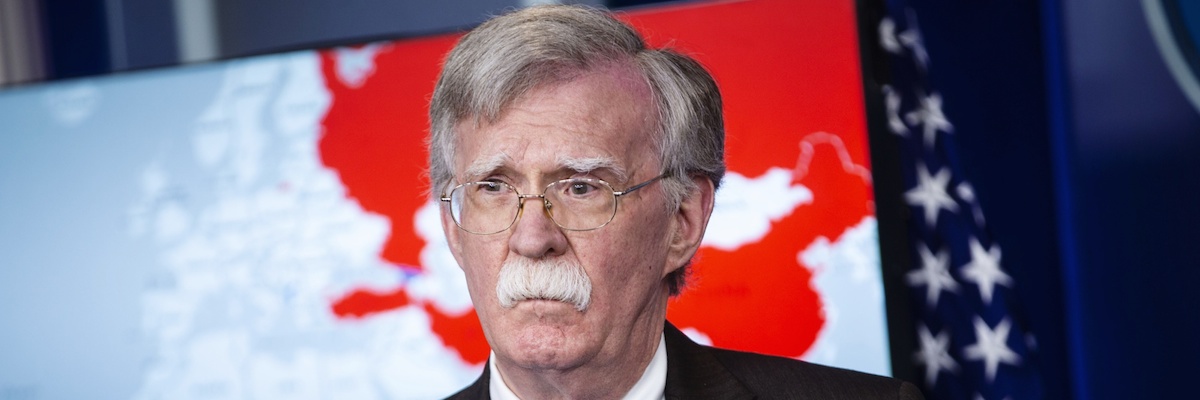
Fresh U.S. Divide on Iran Emerges Over Expiring Nuclear Waivers
◢ A fresh divide is emerging between some Trump administration officials and hard-line opponents of Iran in the Senate over how far to go in the White House’s “maximum pressure” campaign against the Islamic Republic. In a letter to President Donald Trump this week, a group of Republican senators demanded that Secretary of State Michael Pompeo stop letting Iran continue its limited civilian nuclear research program.
A fresh divide is emerging between some Trump administration officials and hard-line opponents of Iran in the Senate over how far to go in the White House’s “maximum pressure” campaign against the Islamic Republic.
In a letter to President Donald Trump this week, a group of Republican senators demanded that Secretary of State Michael Pompeo stop letting Iran continue its limited civilian nuclear research program.
At issue are three waivers the Trump administration granted after it withdrew from the 2015 nuclear deal last year. They allow Iran to work with nations that remain in the deal at three sites—Fordow, Bushehr and Arak—to ensure it doesn’t seek to enrich uranium to high levels. It’s part of an effort to limit the risk of nuclear weapons proliferation.
In their April 9 letter to Trump, six Republican senators including Ted Cruz of Texas, Tom Cotton of Arkansas and Marco Rubio of Florida argued that the administration shouldn’t extend the waivers when they expire in early May.
“There is extensive evidence Iran channeled its nuclear weapons program through civil nuclear projects after 2003,” the senators wrote in the letter seen by Bloomberg News. They urged the president to “finally end all U.S. implementation” of the 2015 deal, known as the Joint Comprehensive Plan of Action.
Bolton Versus Pompeo
The nuclear exceptions are up for renewal even as the administration must weigh extending waivers that allow a select group of governments to keep buying Iranian oil without facing sanctions.
Some within the administration, including National Security Advisor John Bolton, have argued those waivers also should be revoked. On the other side is Pompeo -- normally seen as among the toughest Trump aides on Iran -- whose State Department advisers have argued that the exceptions fit broader U.S. interests including keeping oil markets stable.
The fight over both sets of waivers has exposed a rare division between hard-line and harder-line opponents of Tehran. This week the Trump administration designated the Islamic Revolutionary Guard Corps, an elite branch of Iran’s military, as a foreign terrorist organization.
But that move didn’t quell growing irritation among some of Trump’s allies that the president has continued to let Iran get limited benefits from the Obama-era nuclear agreement.
With the 2020 U.S. presidential election approaching, advocates of an even tougher approach are pushing for a complete collapse of the deal that allies including the U.K., Germany and France have struggled to keep alive.
Cruz pressed Pompeo on the issue at a hearing of the Senate Foreign Relations Committee on Wednesday, telling him that extending the waivers “could further Iran acquiring nuclear weapons.”
“‘Maximum pressure’ should be ‘maximum pressure,”’ Cruz said.
Pompeo demurred, saying the decision hadn’t been made yet. He left open the possibility that the waivers could be extended.
“I’d love to talk to you in a classified setting about it—it’s complicated,” Pompeo said. On Cruz’s contention that t people in the State Department continue to resist Trump’s desire to kill the nuclear deal, Pompeo said, “We’ve got 90,000 employees, probably that many opinions.”
‘End All’
Two people familiar with the administration’s thinking, who asked not to be identified discussing private deliberations, said they expect the nuclear waivers to be renewed. One of the people said Republican senators are still weighing how hard to fight Trump and Pompeo on the matter, including whether to hold up administration nominees unless the waivers are scrapped.
A spokesman for Cruz wouldn’t rule out the possibility.
“The Trump administration should end all implementation of the deal, including the nuclear and oil waivers the State Department has been issuing, and Senator Cruz will use all options available to him to push the administration to do so,” Billy Gribbin said.
Views on extending the nuclear waivers vary among experts on Iran’s nuclear program. David Albright, president of the Institute for Science and International Security, argues that the waiver governing the Bushehr nuclear complex on the Persian Gulf should be extended because it allows Iran to buy uranium to power its reactor rather than enriching it on its own.
Weapons-Grade Uranium
But Albright says the Fordow waiver is more complicated because of information that came out after Israel exposed Iran’s nuclear archive last year. That data showed Iran had built Fordow, near the holy city of Qom, solely to make weapons-grade uranium, he said.
“The U.S. position should be that Fordow be shut down,” Albright said in an interview. “It was part of nuclear weapons program and it’s being preserved for a nuclear weapons program.”
Former Obama administration officials who helped craft the Iran deal said revoking the nuclear waivers would do the opposite of what the administration seeks by only adding to risk that Iran could build a nuclear weapon.
“It’s insane from a nonproliferation perspective,” said Jarrett Blanc, a senior fellow at the Carnegie Endowment for International Peace and a former State Department coordinator for Iran nuclear implementation. “Deciding to throw that away because you need the next drumbeat of antagonism toward Iran is nuts.”
Photo Credit: Bloomberg