

Japan Funds Development of Tuna Fisheries, Environmental Projects in Iran
Japan will fund UN initiatives to support fisheries in Chabahar, on Iran’s southeastern coast, and help foster sustainable livelihoods for locals who live near Lake Urmia in the country’s northwest.
Last month the Embassy of Japan in Tehran hosted a ceremony where two memorandums of understanding were signed new grants to support projects carried out by the United Nations Industrial Development Organization (UNIDO) and the United Nations Development Programme (UNDP) in Iran. The UN initiatives will support fisheries in Chabahar, on Iran’s southeastern coast, and help foster sustainable livelihoods for locals who live near Lake Urmia in the country’s northwest.
Attending the event were Kazutoshi Aikawa, the Ambassador of Japan; Maryam Javan Shahraki, UNIDO Representative in Iran; Claudio Providas, the UNDP Resident Representative in the Islamic Republic; Nabiollah Khoun-Mirzaei, Head of Iran Fisheries Organization; Ahmadreza Lahijanzadeh, Deputy for Marine and Wetlands at the Department of Environment; and representatives from Iran’s ministries of Agriculture and Foreign Affairs.
In his opening speech, the Japanese ambassador affirmed his country’s willingness to continue the expansion of its friendly relations with Iran.
“The government of Japan has decided to grant ¥676 million (about $6 million) to the Islamic Republic of Iran for the implementation of the two important projects,” Aikawa said.
The MoU signed with UNIDO will begin the third phase of the “Project for Promoting Inclusive and Sustainable Development of the Yellowfin Tuna Value Chain in Chabahar,” which started in 2017.
Javan Shahraki said that UNIDO and Japan have enjoyed a strong connection for decades and that their partnership encompasses all aspects of industrial development, from reducing poverty and promoting security in crisis-affected areas to trade, technology promotion and facilitating investment.
“Today we celebrate the signing ceremony of a Grant Aid ‘Project for Promoting Inclusive and Sustainable Development of the Yellowfin Tuna Value Chain’ in the strategic port of Chabahar in Sistan and Baluchestan Province,” Javan Shahraki said. “Building on earlier interventions to build the capacity of the tuna value chain in Chabahar, the new project will support the ability of local fishermen to access new markets while at the same time enhancing the sustainability of the fishery industry in Iran.”
Adding high-quality tuna to Iran’s list of regional and global exports is one of the main achievements of the UNIDO project in Chabahar, Javan Shahraki said. The project is also upgrading Chabahar Veterinary Laboratory and Iran Veterinary Lab with diagnostic kits and equipment; establishing sustainable links between private-sector companies in Iran and Japan; organizing study tours in Japan for Iranian fishermen, policymakers and laboratory experts; conducting workshops in Iran and Japan on marine cage culture, stock enhancement and after-catch management processes, on-site fishing and info-sharing for Iranian fishermen in Japan.
Javan Shahraki told Bourse & Bazaar that UNIDO has prioritised development activities in Iran, including strengthening the value chain of local and indigenous products.
“We are happy to have received Japan’s $3.5 million financial assistance for the project at hand,” Javan Shahraki said. “Chabahar’s yellowfin tuna has a competitive edge to it in the international markets compared with other tuna fish. Today marks the beginning of the third phase of our cooperation with Japan in this project. During the first phase, we studied the region’s ecology to see which species need to be focused on. Based on the research carried out by UNIDO as well as Japanese experts, Iran’s tuna fish was deemed one of extraordinary size, which in turn can generate a high value added. Yet, if harvest methods and ways of environment preservation are not improved, the fish could either fall prey to the danger of extinction or shrink in size. Right now, our tuna fish in Chabahar is three times as big as that of Japan.”
Using the government’s grant aid, UNIDO has trained local fishermen on best practices for harvesting and preserving yield quality during post-harvest procedures, and Chabahar’s quality control laboratories now have the equipment required for quality preservation.
Khoun-Mirzaei told Bourse and Bazaar that Iran has a huge capacity to produce tuna, but harvest and after-catch preservation methods are up to speed with the latest techniques used elsewhere in the world.
“This is why the collaboration between the UNIDO office in Tehran and the Japanese government is so significant, since it will upgrade our harvest knowledge, fishing equipment, quality-control methods and ecosystem preservation, and help our high-quality tuna find its way into international markets while enjoying higher value added,” Khoun-Mirzaei said.
Isa Golshahi, General Director of Iran Fisheries Organization’s Seafood Quality Improvement, Processing and Marketing Promotion Department, told Bourse and Bazaar that this project will ensure that generating higher values from the yellowfin tuna is more easily attainable.
“The fish indigenous to our waters has a high quality,” Golshahi said. “Through the cooperation with UNIDO and Japan, we can turn the tuna currently sold at prices lower than $2 per kilogram into products worth over $8 or in some cases $20 per kilogram.”
Japan Funds UNDP’s Lake Urmia Project
The second document signed during Wednesday’s ceremony marked the start of a new phase of collaboration between UNDP and the Japanese government on the “Project for Promoting Environmental Management and Sustainable Livelihoods in Lake Urmia and Other Wetlands.” Japan has provided a grant aid worth approximately US$3 million to continue work on Lake Urmia.
“The project has an environmental component but also has a focus on livelihoods,” Providas told Bourse & Bazaar. “To preserve the environment, you need to look at livelihoods as well. The important component is economic diversification and creating jobs. Can we improve water usage for farming but reduce the reliance of farming activities of around 250 villages around Lake Urmia on this endangered water body? This is what we are working on.”
Lahijanzadeh said that the Iranian government has so far spent around $1 billion on saving Lake Urmia and has been granted funds and technical assistance from Japan over several years.
“We hope to be able to transfer the knowledge and experience we have had with Japanese experts and UNDP assistance to Parishan Lake in Fars Province and Shadegan Wetlands in the southern Khuzestan Province as well,” Lahijanzadeh said.
In his speech, the Japanese ambassador said that in line with efforts to revive Lake Urmia and prevent it from drying up, the government of Japan has supported UNDP’s project for the lake’s restoration through sustainable agricultural practices and biodiversity conservation since 2014.
“In this new project, the knowledge and experiences gathered through all these years will be transferred to the remaining spots of the Lake Urmia basin, and it will also be disseminated to two other wetlands in Iran, which are facing similar problems,” Aikawa said.
Photo: IRNA
Japan's Abe Discusses Iran, North Korea in Call with Trump
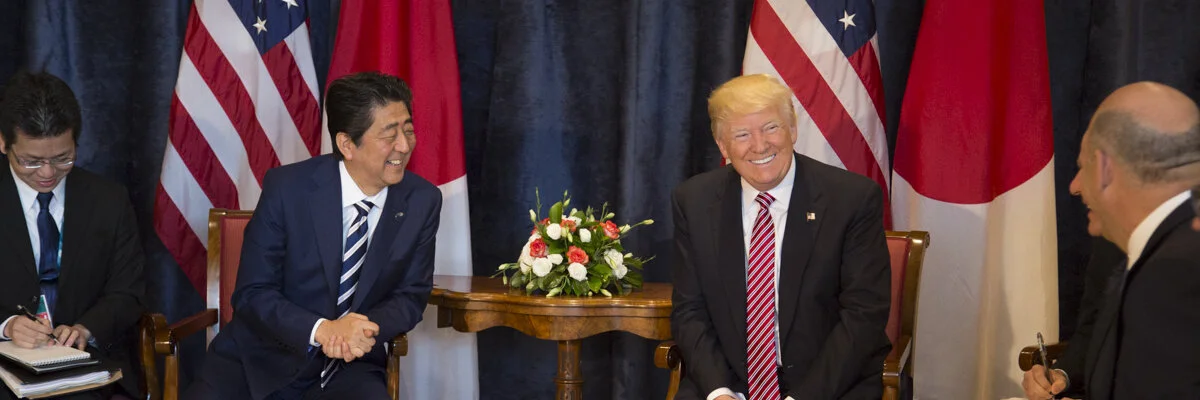
◢ Japanese Prime Minister Shinzo Abe on Saturday discussed events in Iran and North Korea with US President Donald Trump in a lengthy phone call, the Kyodo news agency reported. The phone conversation, which Abe told reporters took place at Trump's request, came on the same day that Iranian President Hassan Rouhani wrapped up his two-day visit to Japan.
Japanese Prime Minister Shinzo Abe on Saturday discussed events in Iran and North Korea with US President Donald Trump in a lengthy phone call, the Kyodo news agency reported.
The phone conversation, which Abe told reporters took place at Trump's request, came on the same day that Iranian President Hassan Rouhani wrapped up his two-day visit to Japan.
Rouhani's trip came after deadly protests over fuel price hikes in Iran, where the economy has been hit by US sanctions over Tehran's nuclear programme.
Japan is a key US ally that also maintains close diplomatic and economic ties with Iran, and Abe has tried to build bridges between the two rivals.
Abe did not refer to Iran when he met with reporters just before midnight Saturday, but a Japanese government source told Kyodo that Abe did talk to Trump about his discussions with Rouhani.
The Abe-Trump phone call lasted about 75 minutes, according to Kyodo.
Abe told reporters that he and the US leader talked about what Kyodo described as a "coordinated response" towards North Korea.
Pyongyang has shown frustration at the lack of sanctions relief after three summits with Trump.
Earlier this month it promised a "Christmas gift" if the US did not come up with concessions by the end of the year after it placed a moratorium on long-range missile tests.
Photo: IRNA
Iran's Rouhani, Japan PM Meet Amid Tension With US
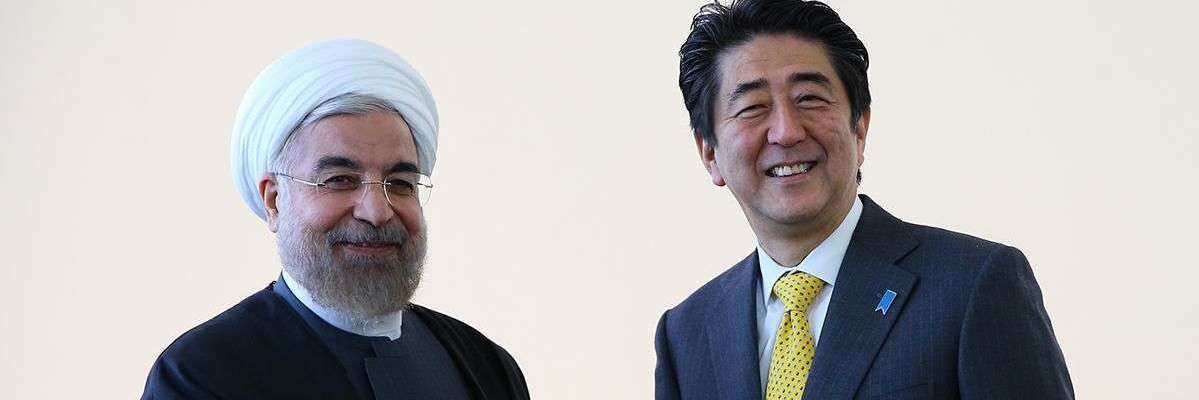
◢ President Hassan Rouhani became the first Iranian head of state to visit Japan for two decades on Friday, as Tokyo seeks to mediate between Tehran and Washington amid spiraling nuclear tensions. The two men inspected a guard of honor at Abe's central Tokyo office before summit talks and a dinner scheduled to last into Friday evening.
President Hassan Rouhani became the first Iranian head of state to visit Japan for two decades on Friday, as Tokyo seeks to mediate between Tehran and Washington amid spiraling nuclear tensions.
The two men inspected a guard of honor at Abe's central Tokyo office before summit talks and a dinner scheduled to last into Friday evening. They are not scheduled to brief reporters after the talks.
The trip comes after deadly protests last month over petroleum price hikes in Iran, as Washington-imposed sanctions over its nuclear program hit the Iranian economy.
The United States re-imposed crippling sanctions on Iran in 2018 after withdrawing from an international deal aimed at tackling the Islamic Republic's nuclear program.
Iranian government spokesman Ali Rabiei has played down the mediation aspect of the trip, saying the visit to Tokyo had "nothing to do with issues such as negotiations with America".
However, he acknowledged that "our Japanese friends usually convey messages or initiatives, which we welcome... and seriously examine.”
As a key US ally that also maintains close diplomatic and economic ties with Iran, Prime Minister Shinzo Abe has tried to build bridges between the two rival powers.
Last week, Abe said he would strive "as much as possible to ease tensions" in the Middle East, noting Japan's alliance with Washington and "favorable relations" with Tehran.
Abe travelled to Tehran in June to try to ease tension between the United States and Iran in the Gulf.
Japan was formerly a major buyer of Iranian crude but stopped purchases to comply with the US sanctions.
The prime minister is expected to explain to Rouhani Tokyo's plans to send two Self Defense Forces ships to the Gulf of Oman to protect shipping there.
"At the Japan-Iran summit today we will explain Japan's policy. This kind of policy is aimed at securing Japanese vessels' safety," said government spokesman Yoshihide Suga, adding that 90 percent of Japan's crude oil imports come from the region.
'Serious Impact'
Rouhani comes to Japan from Kuala Lumpur where he called on Muslim countries at a summit to band together to fight US "economic terrorism".
Osamu Miyata, head of Center for Contemporary Islamic Studies in Japan (CCISJ), told AFP that Abe would find it difficult to steer a path between US President Donald Trump and Rouhani.
The US sanctions "are having a serious impact on every aspect of Iran—people's daily life, the country's finances, and inflation in imported goods", Hitoshi Suzuki, a Middle East scholar at the Institute of Developing Economies (IDE-JETRO), told AFP.
"It would be difficult to have tangible achievements from the Rouhani-Abe meeting this time, but in the long-term, Japan can warn the US that the current sanctions are having a serious negative impact," added Suzuki.
"This could prompt Iranian domestic politics to move in the opposite direction hoped for by the US—for example, hawks leading Iran to resume nuclear development, or the emergence of an anti-democratic Iran," he said.
Photo: IRNA
Iran's Rouhani 'Finalizing' First Visit to Japan
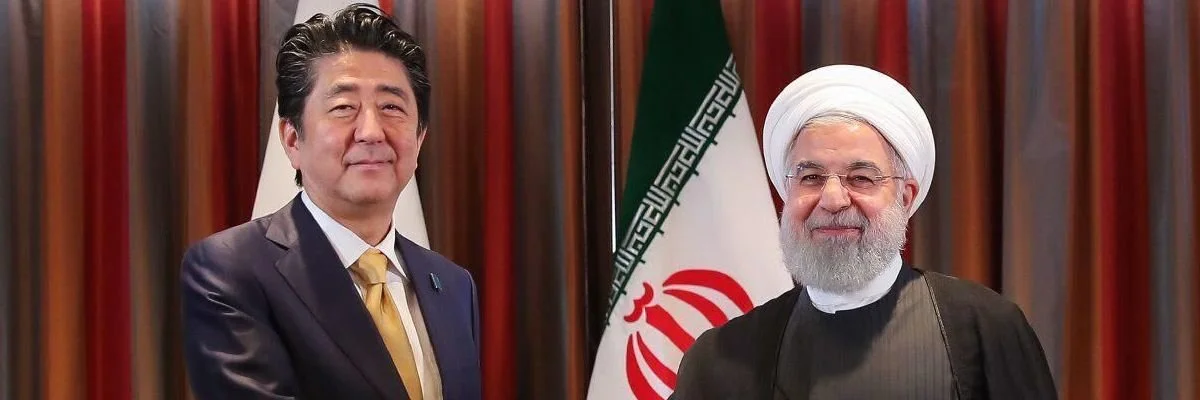
◢ Iran's President Hassan Rouhani is finalizing with Japan a visit to Tokyo, officials in Tehran said Monday, in what will be the first such trip in two decades. The trip would likely take place around December 20, after Rouhani visits Malaysia for a Muslim leaders summit in Kuala Lumpur, Japanese and Iranian media reported.
Iran's President Hassan Rouhani is finalizing with Japan a visit to Tokyo, officials in Tehran said Monday, in what will be the first such trip in two decades.
The trip would likely take place around December 20, after Rouhani visits Malaysia for a Muslim leaders summit in Kuala Lumpur, Japanese and Iranian media reported.
"This trip (to Japan) is being finalized," Iranian foreign ministry spokesman Abbas Mousavi told a press conference in Tehran.
Iranian government spokesman Ali Rabiei said discussions would focus on "expanding economic relations" between the two countries.
"Mr Rouhani's trip to Japan has nothing to do with issues such as negotiations with America," Rabiei said.
"However, our Japanese friends usually convey messages or initiatives, which we welcome... and seriously examine," he added, stressing the bilateral focus of the visit.
Rouhani would be the first Iranian president to visit Japan since 2000.
He is expected to meet Prime Minister Shinzo Abe, who travelled to Tehran in June to try to ease tension between the United States and Iran in the Gulf.
"After Mr Abe's trip to Iran it was natural for the president of the Islamic Republic of Iran to have a trip to Japan," Mousavi said.
Talks between the two leaders would focus on "issues and developments in our region, the East Asia region," and the landmark 2015 Iran nuclear deal, Mousavi added.
On December 9, Abe said he was weighing inviting Rouhani for a state visit.
Noting Japan's alliance with the United States and Tokyo's "favorable relations" with Tehran, Abe said he would make efforts "as much as possible to help ease tensions" in the Middle East.
Japan was formerly a major buyer of Iranian crude but stopped purchases to comply with US sanctions imposed after the United States unilaterally quit the nuclear deal in May 2018.
Photo: IRNA
Japan PM Abe to Meet Iran's Rouhani in New York
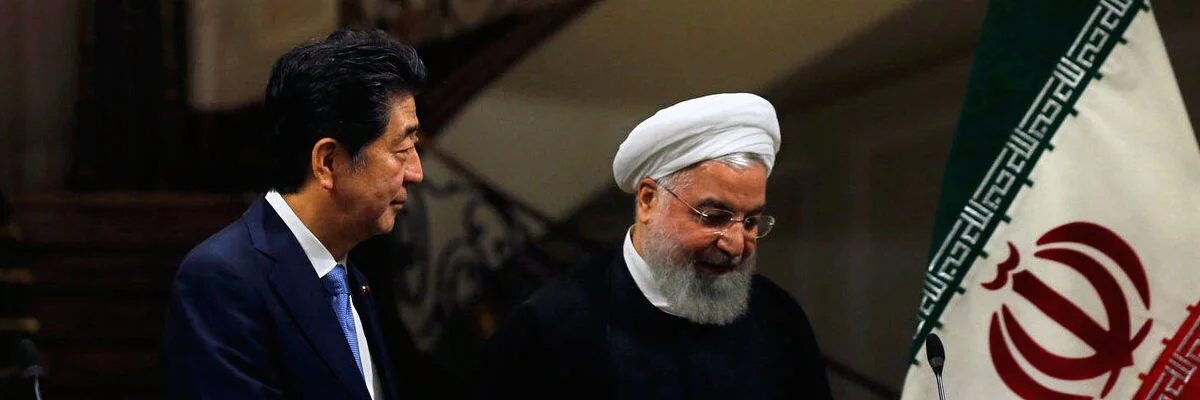
◢ Japan’s Prime Minister Shinzo Abe plans to meet Iranian President Hassan Rouhani in New York next month as Tokyo continues to seek a leading role in attempts to defuse rising tension in the Middle East. Japan's foreign ministry said Wednesday the meeting was arranged during Iranian Foreign Minister Mohammad Javad Zarif's visit to Tokyo.
Japan's Prime Minister Shinzo Abe plans to meet Iranian President Hassan Rouhani in New York next month as Tokyo continues to seek a leading role in attempts to defuse rising tension in the Middle East.
Japan's foreign ministry said Wednesday the meeting was arranged during Iranian Foreign Minister Mohammad Javad Zarif's visit to Tokyo on Tuesday, and would take place on the sidelines of the UN General Assembly.
Japan has long been a major importer of Iranian oil and was one of eight countries given a waiver by Washington on buying directly from Tehran.
Sanctions were imposed after the US President Donald Trump abandoned the Iranian nuclear agreement struck by his predecessor Barack Obama.
Other signatories—including major European nations—disagreed with Trump's action.
"I have received clear words from Supreme Leader Khamenei that he does not wish to build, possess and to use nuclear weapons," Abe told Zarif during Tuesday's meeting.
“Japan wishes to continue diplomatic efforts toward stabilizing the situation," Abe said.
Abe travelled to Iran in June and met Supreme Leader Ayatollah Ali Khamenei as well as Rouhani in a bid to ease tension between Tehran and Washington.
Zarif made an unannounced appearance at the G7 in France, with the global elite group hoping the surprise visit would help ease friction between Iran and the US.
US President Donald Trump did not meet Zarif, but said he would be willing to hold talks with Rouhani in the near future.
Rouhani said a meeting could only take place if the US first scrapped the sanctions.
Photo: IRNA
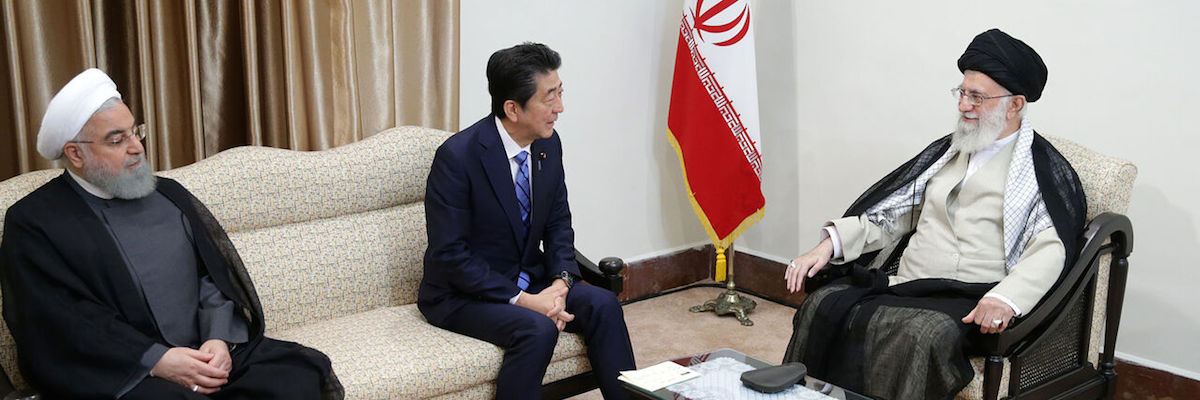
Iran Tells Japan's Abe It Doesn't Intend to Have Nuclear Arms
◢ Iranian Supreme Leader Ayatollah Ali Khamenei told visiting Shinzo Abe that his country doesn’t intend to produce, possess or use nuclear weapons, the Japanese leader said after a trip aimed at easing tensions between the U.S. and Iran. Abe, making the first visit of a sitting Japanese prime minister to Iran in 41 years, held talks with Khamenei on Thursday.
By Isabel Reynolds
Iranian Supreme Leader Ayatollah Ali Khamenei told visiting Shinzo Abe that his country doesn’t intend to produce, possess or use nuclear weapons, the Japanese leader said after a trip aimed at easing tensions between the U.S. and Iran.
Abe, making the first visit of a sitting Japanese prime minister to Iran in 41 years, held talks with Khamenei on Thursday. Abe said he conveyed to Khamenei what he thought were the views of U.S. President Donald Trump, who sanctioned the visit when he met Abe for a summit in May.
“Ayatollah Khamenei said that he would not produce, possess or use nuclear weapons, that he had no such intention, and it was something that should not be done,” Abe told reporters, adding the Iranian leader spoke of his belief in peace.
Expectations were low for the visit bringing a major breakthrough in the tensions between Iran and the U.S. that threaten to spill into armed conflict. But with strong personal ties to Trump and Japan having maintained good relations with Iran for decades, Abe was seen as being able to open a line of communication between Washington and Tehran that could ease some friction.
Standing Firm
The visit came as the U.S. shows little sign of backing off on sanctions it reimposed after abandoning a 2015 accord meant to prevent Iran from developing a nuclear bomb. Tensions have spiked in the Gulf since the U.S. halted sanctions waivers early last month that had allowed some major importers, including Japan, to continue buying Iranian oil.
A missile attack on a Saudi Arabian airport by Tehran-backed Yemeni rebels ratcheted up tensions in the Gulf just as Abe’s efforts got underway. The region has been churning since Washington piled more sanctions on Iran in May and unleashed a show of military force, sending an aircraft carrier to the region. Those moves drew a threat from Iran to retreat from the nuclear deal.
While Abe was in Iran, Japan received a reminder of the dangers in the region. Economy Minister Hiroshige Seko said the ministry held an emergency meeting Thursday over a tanker attack in Sea of Oman, according to a tweet from Japan’s Ministry of Economy, Trade and Industry. The attack involved two ships that carried Japan-related goods, it said.
Photo: IRNA
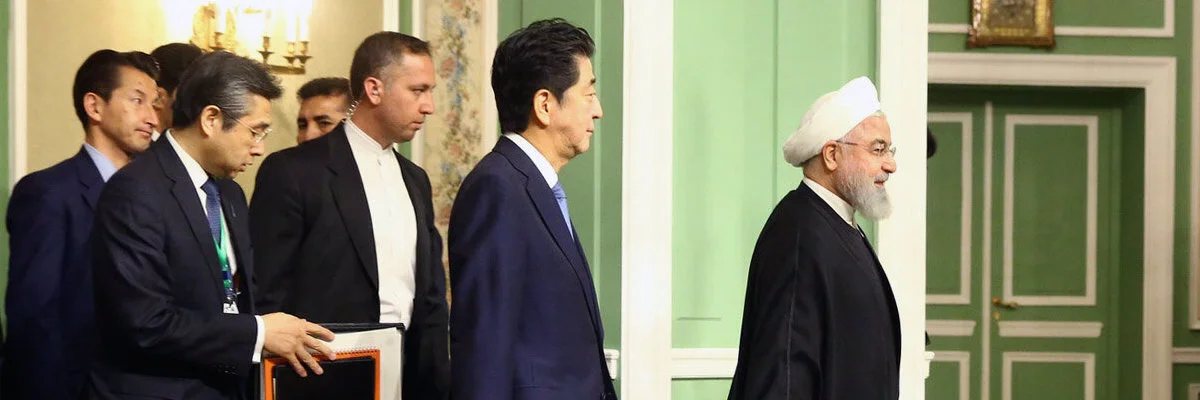
In Tehran, Japan's Abe Urges Iran to Play 'Constructive Role'
◢ Japanese Prime Minister Shinzo Abe urged Tehran to play a "constructive role" for Middle East peace Wednesday during a rare diplomatic mission to the Islamic republic aimed at defusing US-Iran tensions. Iran has been locked in a bitter standoff with the United States since US President Donald Trump withdrew from a landmark 2015 nuclear deal in May last year.
By Amir Havasi
Japanese Prime Minister Shinzo Abe urged Tehran to play a "constructive role" for Middle East peace Wednesday during a rare diplomatic mission to the Islamic republic aimed at defusing US-Iran tensions.
Iran has been locked in a bitter standoff with the United States since US President Donald Trump withdrew from a landmark 2015 nuclear deal in May last year.
Washington has since reimposed crippling unilateral sanctions—which have forced Tokyo to halt its once-substantial purchases of Iranian oil—and launched a military buildup in the Gulf.
"It is essential that Iran plays a constructive role in building solid peace and stability in the Middle East," Abe told a joint news conference in Tehran with Iran's President Hassan Rouhani.
"Today, tension is rising in the Middle East. Some experts point out that the conflict might be triggered accidentally," said Abe.
An armed clash "must be avoided by all means", the premier stressed.
He added that Japan "wishes to play an utmost role in its capacity to ease the tension. This is the one single thought that brought me to Iran."
Addressing the same news conference, Rouhani said he expected a "very positive change" in the Middle East and the world if the United States stops its economic pressure on Iran through sanctions.
"If there are some tensions, (their) roots stem from America's economic war against Iran. Whenever it stops we will witness a very positive change in the region and the world," Rouhani said.
"We will not initiate a conflict in the region, even against the US, but if a war starts against us we will then give a crushing response," the Iranian president added.
Lower the Temperature
Abe began his visit to Iran on Wednesday, the first by a Japanese prime minister in 41 years, with the stated aim of defusing tensions between Tehran and Washington.
Japan stopped importing Iranian crude oil in May to comply with US sanctions against the Islamic republic.
The Asian powerhouse has an interest in keeping the Middle East stable in order to ensure the flow of cheap hydrocarbons to fuel its economy.
Rouhani said he saw "Japan's interest in continuing to buy oil from Iran and fixing financial issues" as a "guarantee" for the ongoing development of bilateral ties.
The spokesman for Japan's foreign ministry, Takeshi Osuga, later said that, on the questions of Iranian oil sales to Japan, "our understanding is that this was the wish of the Iranian side."
But he added: "Oil purchase (from Iran) is the decision of private companies. I cannot predict their decision."
The Iranian president also underlined a convergence of views with his visitor on the issue of nuclear weapons, which he said "both of us are against.”
Abe, for his part, expressed his "deep respect to the fact that the supreme leader Ayatollah Khamenei reiterates the fatwa which says 'nuclear weapons and other weapons of mass destruction are against Islam.’”
The Japanese premier is expected to meet Khamenei on Thursday morning.
Abe discussed "the situation in Iran" in a telephone call with Trump on Tuesday, a Japanese government spokesman said.
The Japanese prime minister won Trump's blessing for the mediation mission when the US president visited Tokyo last month.
“We believe it is extremely important that, at the leadership level, we call on Iran as a major regional power to ease tension, to adhere to the nuclear agreement and to play a constructive role for the region's stability," Japanese Chief Cabinet Secretary Yoshihide Suga said.
Substantial Obstacles
Iranian newspapers were divided along conservative-reformist lines in their assessment of Abe's visit.
The reformist Sazandegi daily ran a front-page cartoon of Abe in full samurai armour, a rolled piece of paper in one hand and a shield on the other.
In an accompanying article headlined "A samurai in Tehran," the paper said everyone was waiting to see "Tehran's reaction to Japan's initiative to raise its international standing by mediating as both Washington's ally and Iran's friend."
The ultraconservative Javan daily warned that "Iran and Japan minus America" could be a winning formula for Abe, but "Japan as America's intermediary in Iran" would fail given the deep mistrust of the US.
Other Iranian commentators said Abe could pass messages between the two sides.
"Mr Abe's visit comes right after meeting Mr Trump in Japan, so the Americans are interested in using this channel," Ebrahim Rahimpour, a former deputy foreign minister, told Iran's Shargh daily.
But while Tokyo has longstanding trade ties with Tehran and a strategic alliance with Washington, experts say Abe has little leverage with either side and mediation will be an uphill struggle.
The trip by the Japanese premier "faces substantial obstacles and is unlikely to bear fruit," said Tobias Harris, an analyst at Teneo consultancy group.
"While Japan has good relationships with countries on both sides, these relationships do not necessarily translate into influence."
Photo: IRNA
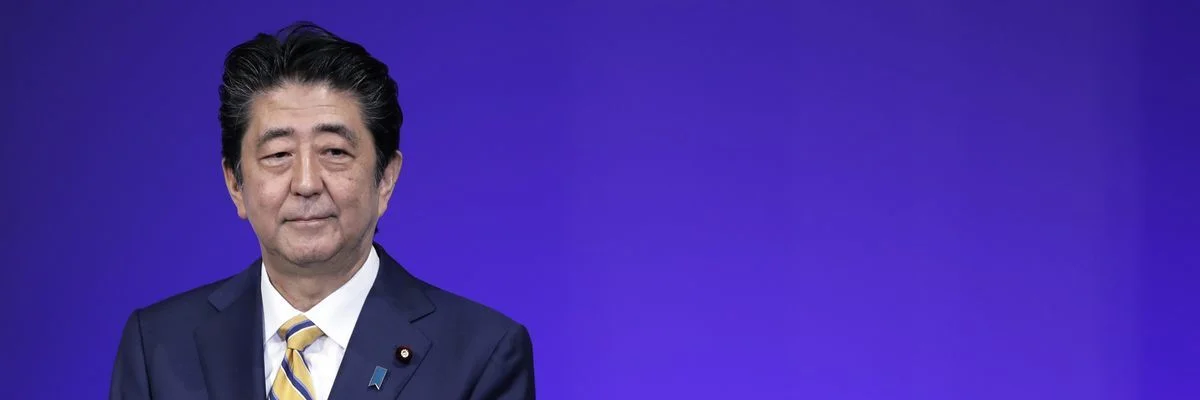
With Trump's Blessing, Japan's Abe Looks to Mend Ties With Iran
◢ Japanese Prime Minister Shinzo Abe, a rare friend of both President Donald Trump and Iran’s leaders, left for Tehran with the daunting task of bridging a divide that could plunge the Middle East into renewed chaos. Abe, who spoke to Trump by telephone just ahead of his trip, told reporters that he plans to have a frank exchange of views with Iran’s leader in Japan’s bid to play a role in the stability of the Middle East.
By Golnar Motevalli and Isabel Reynolds
Japanese Prime Minister Shinzo Abe, a rare friend of both President Donald Trump and Iran’s leaders, left for Tehran with the daunting task of bridging a divide that could plunge the Middle East into renewed chaos.
Abe’s visit from Wednesday through Friday comes as the U.S. has given scant indication it’s ready to ease sanctions it reimposed after abandoning a 2015 accord meant to prevent Iran from developing a nuclear bomb. Tehran has said it can’t sit down with the Trump team while the U.S. is waging “economic war” on it.
With the two sides so far apart, any step that reduces mistrust and hostility would be a welcome achievement for Abe, seen more as a stable hand running the world’s third-largest economy than a globe-trotting peace negotiator. Trump sanctioned the trip, which would be the first by a sitting Japanese prime minister to Iran in 41 years and includes talks with Supreme Leader Ayatollah Ali Khamenei and President Hassan Rouhani.
“What Abe can do depends on what Trump has given Abe,” said Kazuo Takahashi, professor of International Politics at the Open University of Japan, who specializes in Japanese policy towards Iran. “If he is going as a messenger boy, he is shaming himself in front of the world’s public opinion. I don’t think he’d take such a political risk without some ideas of inducement for the Iranians offered by the Americans.”
Little Leverage
Abe, who spoke to Trump by telephone just ahead of his trip, told reporters at the airport before boarding his plane to Tehran Wednesday that he plans to have a frank exchange of views with Iran’s leader in Japan’s bid to play a role in the stability of the Middle East.
The trip comes as the Trump administration appears ready to step up its pressure, weighing sanctions against the Iranian financial body set up as a go-between for humanitarian trade with Europe. Such a move is likely to sever the economic and humanitarian lifeline that France, Germany and the U.K. have sought to create for Tehran. While Japan has maintained good ties with Iran for decades and called for Tehran to abide by the nuclear deal, its pro-U.S. stance could mean Abe’s offerings are received with caution.
Along with the Abe visit, diplomacy to salvage the Iran nuclear deal kicked into high gear this week with German Foreign Minister Heiko Maas landing in Iran’s capital Monday and the Vienna-based International Atomic Energy Agency set to assess the state of the agreement supposed to rein in Iranian nuclear work in return for sanctions relief.
Iran has increased the rate at which it enriched uranium, although the amount stockpiled is still short of the 300 kilograms (661 pounds) allowed under the deal, IAEA Director General Yukiya Amano told reporters.
Mohammad Javad Zarif, Iran’s foreign minister, told Maas the only way to reduce tension is ending America’s economic attack on Iran. The comments come after Tehran already set the bar almost impossibly high for Abe.
On Saturday, the country’s Supreme National Security Council said a successful visit means bringing a proposal for the U.S. to rejoin the nuclear deal, lifting its sanctions and paying for damages inflicted on Iran’s economy.
“I don’t think he will be able to re-start talks between the U.S. and Iran, or get the U.S. to soften its line on sanctions or Iran to accept some of the U.S. demands. It won’t be anything like that,” an energy expert with ties to the Abe government said.
“He will go and listen to the requests of the Iranian leadership and convey U.S. thinking to Khamenei and Rouhani, which will keep the dialogue going about the nuclear agreement,” said the expert, who declined to be named because of the sensitivity of the visit.
Economic Incentives
For Japan, there is an economic incentive to prevent tensions in the Gulf from spiraling out of control. It relies heavily on Middle Eastern energy, and before the 1979 Islamic Revolution, the bulk of those supplies came from Iran.
But as U.S.-Iran relations deteriorated over the years, Japan significantly reduced crude imports from Iran in favor of supplies from its Gulf rivals Saudi Arabia, the United Arab Emirates and Kuwait — all allies of Washington.
With Saudi Arabia saying last month there were attacks on its oil tankers and Iran threatening to disrupt traffic in the Persian Gulf should Washington succeed in wiping out its oil sales, maintaining stability is of paramount importance to Japan.
Family Affair
The Japanese public isn’t expecting much of the visit, an opinion poll released Tuesday from public broadcaster NHK showed, reducing the political risks for Abe. The visit does increase his global exposure ahead of an upper house election planned for July and Japan hosting the Group of 20 leaders summit in late June.
His father, former Foreign Minister Shintaro Abe, also tried his hand -- unsuccessfully -- at defusing Middle East tensions with a visit to Iran in 1983. He met then-President Khamenei, who would eventually be promoted to the clerical hierarchy and the mantle of the Supreme Leader.
“Politically, we never had a huge issue with the Iranian government, neither pre- nor post the revolutionary period in Iran. Our economic ties have been stranded, I would say, because of pressure from Washington,” said Koichiro Tanaka, president of the Japanese Institute of Middle East Economies in Tokyo.
Photo: Bloomberg
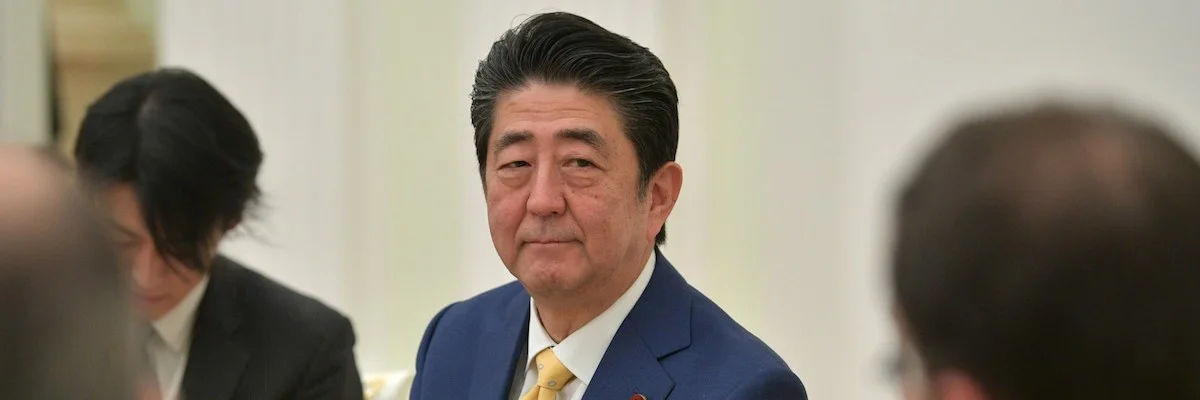
Man on a Mediation Mission: Japan's Abe Heads to Iran
◢ Japan's Prime Minister Shinzo Abe heads to Iran this week on a rare diplomatic mission, hoping to ease tensions between the Islamic Republic and Tokyo's key ally Washington. Japanese government officials say Abe will not present Tehran with a list of demands, or deliver a message from Washington, and instead want to position Japan as a neutral intermediary.
By Sarah Hussein
Japan's Prime Minister Shinzo Abe heads to Iran this week on a rare diplomatic mission, hoping to ease tensions between the Islamic Republic and Tokyo's key ally Washington.
Tehran is locked in a bitter standoff with the US after president Donald Trump withdrew from a landmark nuclear deal last year.
Washington has now reimposed sanctions and shifted troops to the region, putting military and economic pressure on Iran, including by forcing US allies like Japan to stop purchasing Iranian oil.
Japanese government officials say Abe will not present Tehran with a list of demands, or deliver a message from Washington, and instead want to position Japan as a neutral intermediary.
That could prove useful, said Michael Bosack, special adviser for government relations at the Yokosuka Council on Asia-Pacific Studies.
"Japan carries none of the historical or religious baggage of other potential mediators... (and) has demonstrated its willingness to go its own way on Middle East policy," he told AFP.
"These factors better position Abe for engagement with Ayatollah Khamenei and mean that Japanese-proposed options could allow hardliners in Iran to entertain proposed off-ramps, without the potential fallout that could come from accepting 'Western' solutions."
Abe will meet President Hassan Rouhani and the country's Supreme Leader Ayatollah Ali Khamenei on the June 12-14 trip—the first time a Japanese prime minister has visited Iran since 1978, a year before the country's revolution.
Against that backdrop, Japan is hoping to lower the temperature, officials say, with Abe winning Trump's blessing for the mediation trip when the US leader visited Tokyo last month.
"We believe it is extremely important that, at the leadership level, we call on Iran as a major regional power to ease tension, to adhere to the nuclear agreement and to play a constructive role for the region's stability," Chief Cabinet Secretary Yoshihide Suga said ahead of the trip.
Intermediary
Iranian commentators said Abe could ferry messages between the two sides.
"Mr. Abe's visit comes right after meeting Mr. Trump in Japan, therefore the Americans are interested to use this channel," Ebrahim Rahimpour, a former deputy foreign minister, told Iran's Shargh daily ahead of the trip.
Iran will "announce our rights and stances and the other side can announce the messages that could be the US president's message," he said.
But while Japan has long-standing ties with Tehran and warm relations with Washington, experts say Abe has little leverage with either side and mediation will be an uphill struggle.
The trip by the Japanese PM "faces substantial obstacles and is unlikely to bear fruit," said Tobias Harris, an analyst at Teneo consultancy group, in a note on the visit.
"While Japan has good relationships with countries on both sides, these relationships do not necessarily translate into influence," he added.
'Shuttle diplomacy'?
Japan is not just the messenger—its own interests are also at stake: before US sanctions were reimposed, Tokyo imported around five percent of its oil from Iran and it would suffer from rising crude prices.
The trip also offers Abe a rare role as international statesman, particularly given Tokyo's disappointing recent diplomatic track record.
Efforts this year to resolve a long-running standoff with Russia over a string of disputed islands have run aground.
And Japan has also found itself out of the loop on perhaps the most pressing diplomatic challenge in its backyard: North Korea.
Abe "needs a diplomatic stunt as he faces an impasse on Russia and North Korea," said Tetsuro Kato, political science professor at Tokyo's Waseda University.
But analysts cautioned that expectations would stay low for now.
"Japan has never played an active role in Middle Eastern problems," Kato told AFP. "I don't expect much in the way of results."
Bosack said it would be "unrealistic" to expect quick outcomes from the visit.
"Right now, the focus is mitigating military conflict, which means Abe can employ shuttle diplomacy to keep communication going," he said.
“That shuttle diplomacy alone may be enough to de-escalate tensions."
Photo: Wikicommons
Iran Accuses US of 'Unacceptable' Escalation in Tensions
◢ Iran accused the United States Thursday of an "unacceptable" escalation of tensions and said Tehran was showing "maximum restraint" despite Washington's withdrawal from a nuclear deal with world powers. Tensions were already high after President Donald Trump walked away a year ago from the accord, which eased international sanctions in return for curbs on Iran's nuclear program.
By Kyoko Hasegawa and Paul Handley
Iran accused the United States Thursday of an "unacceptable" escalation of tensions and said Tehran was showing "maximum restraint" despite Washington's withdrawal from a nuclear deal with world powers.
Tensions were already high after President Donald Trump walked away a year ago from the accord, which eased international sanctions in return for curbs on Iran's nuclear program.
But tensions have ratcheted up, with the US deploying an aircraft carrier group and B-52 bombers to the Gulf over alleged threats from Iran.
"The escalation by the United States is unacceptable," Iranian Foreign Minister Mohammad Javad Zarif said in Tokyo, where he is holding talks with Japanese officials.
"We exercise maximum restraint... in spite of the fact that the United States withdrew from JCPOA last May," Zarif said earlier, referring to the agreement on Tehran's nuclear program, which is known as the Joint Comprehensive Plan of Action.
He added that Tehran remains "committed" to the deal, and said continuing assessments showed Iran was in compliance with the multilateral agreement.
Later, Zarif told reporters there was "no possibility" of negotiations with the United States to reduce spiraling tensions, describing US pressure as an "act of suicide.”
Zarif's comments came after the US on Wednesday ordered non-emergency staff evacuated from its Baghdad embassy due to an alleged "imminent" threat from Iranian-linked Iraqi militias.
Two major pro-Iran armed groups in Iraq rejected suggestions the embassy personnel were at risk.
Nasr al-Shomari, a military commander for the Iran-backed Harakat al-Nujaba, told AFP the claim was "a pretext" by Washington to create "an uproar" in Iraq.
But the move added to growing fears that the long-time rivals could be on course for conflict despite both sides stressing they have no desire for war.
Trump, however, predicted Iran would "soon" want to negotiate. "I'm sure that Iran will want to talk soon," the president tweeted.
He also blasted media reports of White House turmoil over Iran, saying "there is no infighting whatsoever. Different opinions are expressed and I make a final and decisive decision."
Zarif late Thursday dismissed Trump's prediction of talks, telling reporters: "I don't know why President Trump is confident."
Opponents of Trump say hardliners led by national security advisor John Bolton, who has long advocated toppling the Iranian government, are pushing the country into war.
According to Iranian state media, Zarif is set to visit China on Friday for discussions on "regional and international issues" including the 2015 nuclear deal with global powers.
'Imminent Threat'
Despite international skepticism, the US government has been pointing to increasing threats from Iran, a long-time enemy and also a rival of US allies Israel and Saudi Arabia.
Senior State Department officials, speaking on condition of anonymity, said the threat came from Iraqi militia "commanded and controlled" by Tehran's Islamic Revolutionary Guard Corps.
"It is directly linked to Iran, multiple threat streams directly linked to Iran," said one official.
"This is an imminent threat to our personnel," said a second official.
Washington says it has received intelligence on possible attacks by Iranian or Iranian-backed forces, possibly targeting US bases in Iraq or Syria.
Iran's supreme leader, Ayatollah Ali Khamenei, on Tuesday insisted the showdown with the United States was a mere test of resolve.
"This face-off is not military because there is not going to be any war. Neither we nor them (the US) seek war," he said.
US Secretary of State Mike Pompeo echoed that sentiment, saying in Sochi, Russia: "We fundamentally do not seek a war with Iran."
World powers have rushed to urge calm and US allies continued to show skepticism over Washington's alarm bells.
But UK Foreign Secretary Jeremy Hunt said he had recently met with Pompeo and shared "the same assessment of the heightened threat posed by Iran".
"As always we work closely with the US," he tweeted.
Britain's defense ministry meanwhile said Wednesday that they have "long been clear about our concerns over Iran's destabilizing behavior in the region"—while still not confirming any new imminent danger.
Some observers speculate Tehran is seeking to retaliate over Washington's decision in April to put Iran's Revolutionary Guards on a terrorism blacklist—a move designed to stymie their activities across the Middle East.
But since the first US warning on May 5, the only incident has been a still-mysterious "attack" Monday on tankers anchored off Fujairah, an Emirati port located at the strategically crucial entrance to the Gulf.
One or more vessels incurred light hull damage, but what caused the damage and who was behind it remains unknown.
Photo: IRNA
US to Exempt China, India, Japan from Iran Oil Sanctions: Pompeo
◢ The United States will exempt China, India and Japan from oil sanctions on Iran, Secretary of State Mike Pompeo said Monday, while vowing to be "relentless" in pressuring Tehran. Hours after sweeping sanctions were reimposed following the US withdrawal from a denuclearization deal, Pompeo said eight countries would be at least temporarily exempt from the ban on buying Iranian oil due to special circumstances or so as not to disrupt energy markets.
The United States will exempt China, India and Japan from oil sanctions on Iran, Secretary of State Mike Pompeo said Monday, while vowing to be "relentless" in pressuring Tehran.
Hours after sweeping sanctions were reimposed following the US withdrawal from a denuclearization deal, Pompeo said eight countries would be at least temporarily exempt from the ban on buying Iranian oil due to special circumstances or so as not to disrupt energy markets.
The countries with the waivers will be China, India, Italy, Greece, Japan, South Korea, Taiwan and Turkey, Pompeo said.
“Our objective is to starve the Iranian regime of the funds it uses to fund violent activity throughout the Middle East and around the world. Our ultimate goal is to encourage them to abandon their revolutionary course," Pompeo told reporters.
A notable omission was Iraq. Had Iraq been granted a waiver, Iran might have been able to skirt sanctions by mixing its crude with its neighbor's output, analysts say.
President Donald Trump withdrew in May from the deal that his predecessor Barack Obama had reached with Iran, calling it a failure because it addressed only the clerical regime's nuclear program.
Pompeo reiterated demands for Iran to make a "180-degree turn" from its regional policies rooted in the 1979 Islamic revolution, such as support for the Lebanese militia Hezbollah.
“We hope a new agreement with Iran is possible, but until Iran makes changes in the 12 ways I listed in May, we will be relentless in exerting pressure on the regime," Pompeo said.
Pompeo said the eight countries exempted have "already demonstrated reduction of Iranian crude over the past six months and, indeed, two of those eight have already completely ended imports of Iranian crude and will not resume as long as the sanctions remain in place."
"We continue negotiations to get all of the nations to zero," he said.
Pompeo also said without specifying that the United States would exempt three non-proliferation projects underway in Iran from the sanctions.
European powers have strongly disagreed with Trump's decision, pointing out that Iran is abiding by the nuclear agreement, and have looked to create ways to allow its businesses to keep up commerce with the country.
Photo Credit: Deposit Photos
Iran Offers Discount Oil to Asia
◢ Iran is selling oil and gas at a discount to Asian customers as it prepares for the return of US sanctions, state news agency IRNA reported on Monday. The "informed source" in Iran's oil ministry did not give details of the discount, but sought to downplay the move as common industry practice. "Discount is part of the nature of the global markets being offered by all oil exporters," the source told IRNA.
Iran is selling oil and gas at a discount to Asian customers as it prepares for the return of US sanctions, state news agency IRNA reported on Monday.
The "informed source" in Iran's oil ministry did not give details of the discount, but sought to downplay the move as common industry practice.
"Discount is part of the nature of the global markets being offered by all oil exporters," the source told IRNA.
Bloomberg reported on Friday that the state-run National Iranian Oil Company was reducing official prices for September sales to Asia to their lowest level in 14 years, compared with Saudi crude.
The United States will seek to block Iran's international oil sales from November 5, when the second phase of sanctions are reimposed as part of Washington's withdrawal from the 2015 nuclear deal.
Several key buyers, including China and India, who account for roughly half of Iran's sales, have said they are not willing to make significant cuts to their energy purchases from Iran.
But analysts predict Iran could still see its oil sales drop by around 700,000 barrels per day from their current level of around 2.3 million.
Much will depend on the European Union, which has vowed to resist US sanctions on Iran, but whose companies and financial institutions are more vulnerable to US financial pressure than their Asian counterparts.
French energy giant Total has already said it is pulling out of its multi-billion-dollar investment project in the South Pars oil field in southern Iran as a result of the renewed sanctions.
Photo Credit: IRNA