
Iran Urges Muslim World to Fight Dollar 'Domination'
◢ The president of sanctions-hit Iran called Thursday for Muslim countries to cooperate in fighting US "economic terrorism" at the opening of a summit aimed at tackling the Islamic world's woes. The Muslim world needs to be saved "from the domination of the United States dollar, and the American financial regime", he added, calling for greater financial cooperation between Islamic countries.
By Sam Reeves
The president of sanctions-hit Iran called Thursday for Muslim countries to cooperate in fighting US "economic terrorism" at the opening of a summit aimed at tackling the Islamic world's woes.
Hundreds of delegates are attending the gathering in Malaysia—including heads of state and religious leaders—but the meeting has been snubbed by Saudi Arabia, home to Islam's holiest shrines.
The summit has also been criticized for undermining the Organisation of Islamic Conference (OIC), the Saudi-based global body representing Muslim nations and organizations.
Issues including the plight of Myanmar's Rohingya and China's mostly Muslim Uighur minority could be discussed, although, with massive Chinese infrastructure in many Islamic nations, criticism may be muted.
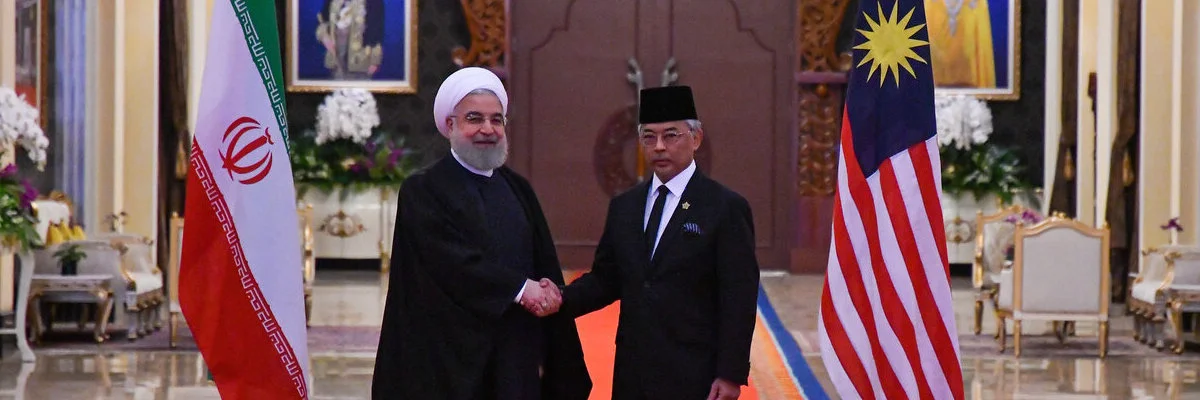
In opening remarks, Iran's President Hassan Rouhani slammed Washington's global clout.
"The American economic regime, and dollarization of national and global economies, have provided the United States with the possibility of advancing its hegemony under the threat of sanctions and economic terrorism," he said.
The Muslim world needs to be saved "from the domination of the United States dollar, and the American financial regime", he added, calling for greater financial cooperation between Islamic countries.
The United States re-imposed crippling sanctions on Iran in 2018 after withdrawing from an international deal aimed at tackling the Islamic Republic's nuclear program.
Iran's economy has since suffered a sharp economic downturn, with a plummeting currency sending inflation skyrocketing.
Speaking later alongside other leaders, Rouhani listed areas where Muslim nations could work together, from the banking sector to the tourism industries.
He proposed that Muslim countries' central banks could work together to introduce a unified cryptocurrency.
Muslim World 'in Crisis'
Turkish President Recep Tayyip Erdogan also suggested reducing dependence on the US dollar, calling on Muslim countries to "free bilateral trade from foreign exchange pressure".
"Instead of trade with foreign currencies, we would like to do foreign trade with our national currencies," he said.
"We are trying to develop alternative payment systems with countries like Russia and China and Brazil."
Turkey's lira plunged in value last year at a time of heightened tensions with the US, in one of the worst economic crises that Erdogan has faced in his long rule.
In his welcome address at the Kuala Lumpur event, Malaysian Prime Minister Mahathir Mohamad said that Muslim countries were "in a state of crisis, helpless and unworthy of this great religion which is meant to be good for mankind".
He also insisted summit organisers were "not discriminating (against) or isolating anyone" after the absence of Saudi Arabia triggered speculation the meeting was aimed at countering the kingdom's influence.
We have "invited almost all Muslim nations to participate in this summit, albeit at different levels", he said.
With Saudi rivals Iran, Qatar and Turkey in attendance, analysts had suggested the meeting could be aimed at forming a rival bloc to the OIC.
There were signs Riyadh was worried, with Pakistani Prime Minister Imran Khan withdrawing from the gathering—reportedly after Saudi pressure.
Mahathir dismissed such concerns in a phone call this week with Saudi Arabia's King Salman.
But the OIC, which has 57 members, launched a veiled attack Wednesday on the event, saying such gatherings would weaken Islam.
Photo: IRNA
US Accuses Iran of Bad Faith Over Sanctions Lawsuit
◢ The United States on Wednesday accused Iran of bad faith for challenging Washington's renewed nuclear-linked sanctions against it at the UN's top court. Iran has asked the International Court of Justice to order the United States to lift the sanctions, reimposed after US President Donald Trump pulled out of a multilateral 2015 accord.
The United States on Wednesday accused Iran of bad faith for challenging Washington's renewed nuclear-linked sanctions against it at the UN's top court.
Iran has asked the International Court of Justice to order the United States to lift the sanctions, reimposed after US President Donald Trump pulled out of a multilateral 2015 accord.
Iran brought the case at the court in The Hague under a 1955 friendship treaty that predates the country's Islamic Revolution.
Washington told the court it had no jurisdiction to rule on the case, which it said was a matter of national security.
"Iran is not invoking the treaty of amity in good faith in this proceeding," US State Department lawyer Jennifer Newstead said in her closing argument.
"Iran cannot be permitted to draw this court into a political and psychological campaign" against the United States, she added.
During four days of hearings, Iran said the sanctions reintroduced this month are causing economic suffering for its citizens.
The US lawyers retorted that economic mismanagement was at the root of Iran's woes.
A second wave of US measures is due to hit Iran in early November, targeting its vital oil exports.
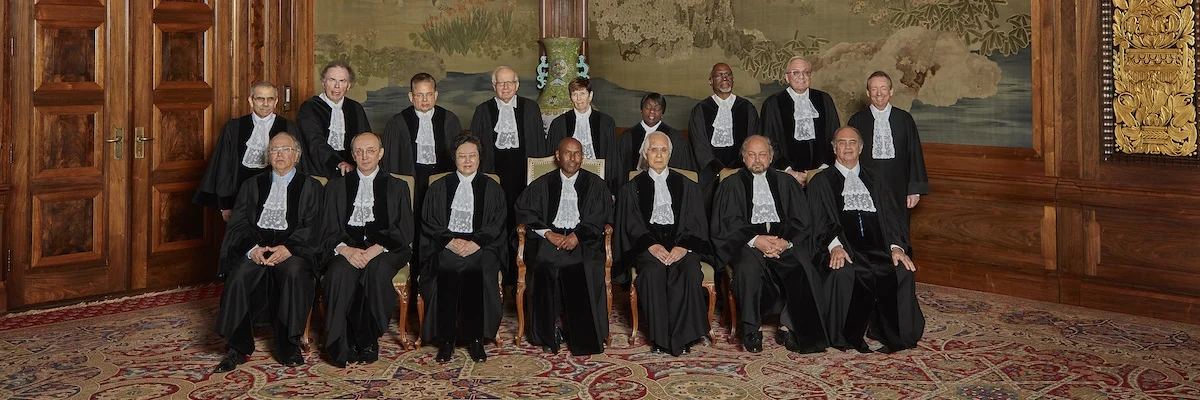
Closing the hearings, ICJ president Abdulqawi Yusuf said the court would issue a ruling "as soon as possible" but did not set a date.
"The judges are well aware of the political stakes," said Eric De Brabandere, professor of international dispute settlement at Leiden University in the Netherlands.
But "in principle the court will focus strictly on the legal aspects of the case", he told AFP.
Despite their 1955 Treaty of Amity and Economic Relations, Iran and the United States have not had diplomatic ties since 1980.
The ICJ was set up in 1946 to rule in disputes between countries.
The court is tasked with deciding only whether it has jurisdiction over Iran's request, De Brabandere said.
But he noted that "the political consequences of the decision are of course important," since either state would see a favorable outcome as "a huge victory."
Photo Credit: ICJ
Iran Economy a Mess Even Before Trump Verdict
◢ Renewed nuclear sanctions would certainly cause severe problems for Iran's economy, but much of the damage has already been done by the uncertainty created by the US and myriad home-grown problems. It was awkward timing for the annual International Oil Show in Tehran this week, which opened just two days before US President Donald Trump was due to make his decision on the Iran deal.
Renewed nuclear sanctions would certainly cause severe problems for Iran's economy, but much of the damage has already been done by the uncertainty created by the US and myriad home-grown problems.
It was awkward timing for the annual International Oil Show in Tehran this week, which opened just two days before US President Donald Trump was due to make his decision on whether to rip up the 2015 nuclear deal and reimpose sanctions on Iran.
"The atmosphere was grim," said a European consultant who attended the conference on Monday.
"There were fewer foreigners, the stands were smaller, it was depressing."
Organizers admitted that foreign guests were down by a third compared to last year, according to the Hamshahri newspaper.
The only major oil deal that Iran has landed since the nuclear deal was a USD 5 billion exploration agreement with France's Total and China's CNPC last year, but its future hangs in the balance as executives wait to see what Trump will do.
Foreign banks remain terrified of touching any transaction even cursorily linked to Iran, even after they have been encouraged by their respective governments to facilitate trade and investment.
"We went to the French ministry of economy and they gave us a list of all the banks that would agree to work with Iran. But when we called them, every single one said no," said French entrepreneur Amaury de la Serre when he opened a branch of the high-end Sushi Shop restaurant in Tehran last summer.
Investment Halted
Iran has piled up promises of investment with foreign firms, but many have held back on actually moving money into the country while they wait to see if US sanctions will return.
The World Bank says only $3.4 billion actually showed up in 2016—a far cry from the $50 billion Rouhani said he was targeting in the deal's first year.
The nuclear deal has been "a genuine disappointment", said Ardavan Amir-Aslani, an international lawyer with an office in Tehran who has written several books on the region.
"They're able to sell oil, OK, that's just enough to pay civil servants and maintain infrastructure, but it hasn't attracted even a fraction of the investment needed," he said.
"Our business has reduced to a trickle. All foreign investment has come to a halt. The meagre amounts promised have been put on hold."
Meanwhile, Iranians are scrambling for the lifeboats. One wealthy family said they had moved their entire fortune out of the country this week ahead of the Trump decision.
They had already lost millions thanks to the crashing Iranian rial which has lost a third or more of its value against the dollar this year.
The numbers are hard to verify but analysts and officials have said between USD 10 billion and USD 30 billion has left the country in recent months.
Home-Grown Problems
Iranian officials say all this amounts to a flagrant violation of article 29 of the nuclear deal, which committed the US to ensure "the normalization of trade and economic relations with Iran".
The US counters that it never promised to lift non-nuclear sanctions related to issues such as human rights and Iran's missile program, which were already complicating trade before Trump came to power.
And many of Iran's problems have nothing to do with Trump. Iran's private sector is starved of investment, its banking system is crippled by bad loans, and record levels of unemployment mean a third of under-30s are out of work.
President Hassan Rouhani has tried to foster transparency and investment, but protests in December and January revealed the depth of anger at his limited progress.
"Much of the blame for Iran's lacklustre performance belongs to Rouhani's economic team, which has proved no match for the economy's mounting problems," Djavad Salehi-Isfahani, an economics professor at Virginia Tech in the US who specializes in the Iranian economy, wrote in an article for Project Syndicate.
He said Rouhani's efforts to move Iran towards a market-friendly, world-facing economy were now at risk of coming "to a grinding halt", to be replaced by his conservative opponents' preference for a tightly-controlled, inwardly-focused "resistance economy".
"The conservatives are not willing to negotiate on the missile issue or acknowledge their presence in other Middle Eastern countries so even if Trump stays in, there will just be four more months of negotiations with the Europeans that will lead nowhere," said Amir-Aslani.
"Inflation is ramping up, job creation is declining. At the end of the day it's an economic debacle."
Photo Credit: Wikicommons