
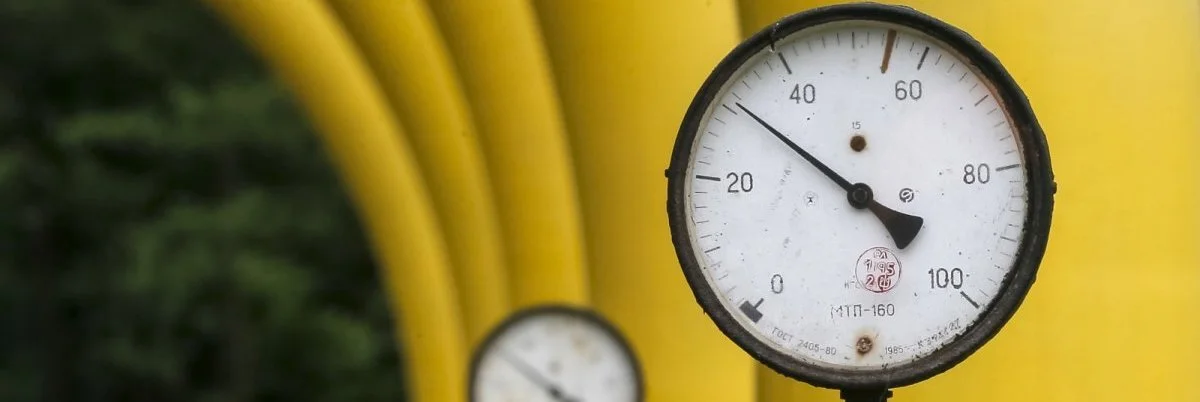
Iran Energy Minister in Baghdad Over Trade Dispute
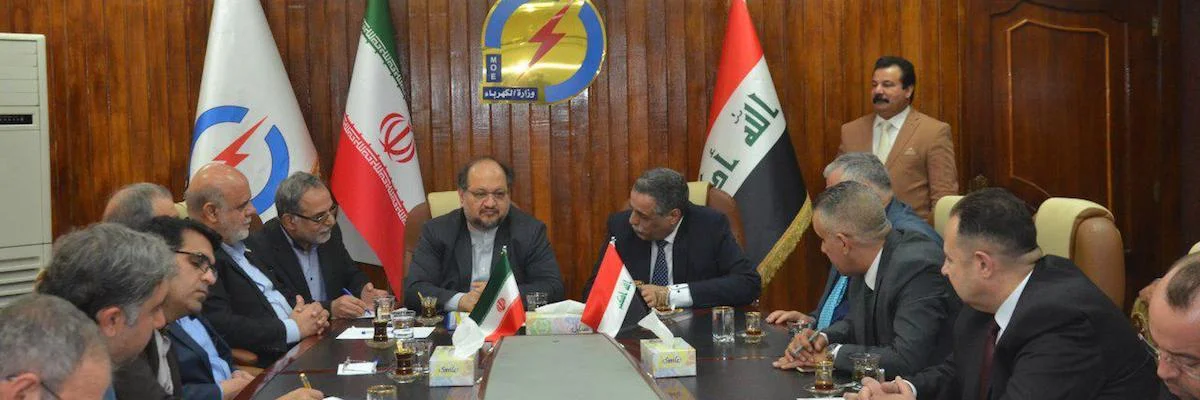
Iran's Energy Minister Reza Ardakanian met with officials in Baghdad on Tuesday amid a trade dispute that has seen electricity reduced for 40 million Iraqis already facing shortages for decades.
Iran's Energy Minister Reza Ardakanian met with officials in Baghdad on Tuesday amid a trade dispute that has seen electricity reduced for 40 million Iraqis already facing shortages for decades.
The National Iranian Gas Company (NIGC) said in a statement that the Iraqi electricity ministry owed it "more than six billion dollars in arrears.”
After years of complaints from Tehran and requests for more time from Baghdad, "Iran will reduce from five to three million cubic meters of its gas supply to Iraq" needed to run power plants, Iraqi electricity ministry spokesman Ahmed Moussa told state television.
Iraq buys gas and electricity from neighbouring Iran to supply about a third of its power sector, worn down by years of conflict and poor maintenance.
But it must navigate sanctions imposed on trade with Tehran by the United States, which blacklisted Iran's energy industry in 2018 but granted Baghdad a series of temporary waivers.
On Tuesday, Ardakanian met with Iraqi Electricity Minister Majid Hantoush, Prime Minister Mustafa al-Kadhimi and Iraq central bank governor Mustafa Ghaleb Mukhif.
Iran is meant to receive payments through public banking institutions to avoid US sanctions.
"The Iraqi Electricity Ministry owes more than $2 billion in arrears and $1 billion in contract violations, while $3 billion is blocked and inaccessible in the Trade Bank of Iraq," Iraq's main public bank, the NIGC statement said.
For decades, Iraqis have had to cope with power outages that can last up to 20 hours a day in some areas.
Virtually all households are connected to private generators, but the prices of those services have recently soared amid a severe economic crisis accompanied by currency devaluation.
Using its own fuel plus Iranian gas, Iraq can produce a total of around 16,000 megawatts of electricity.
That is far below demand, which hovers around 24,000 MW but can jump to 30,000 in summer, when temperatures reach a sizzling 50 degrees Celsius (122 Fahrenheit).
Photo: IRNA
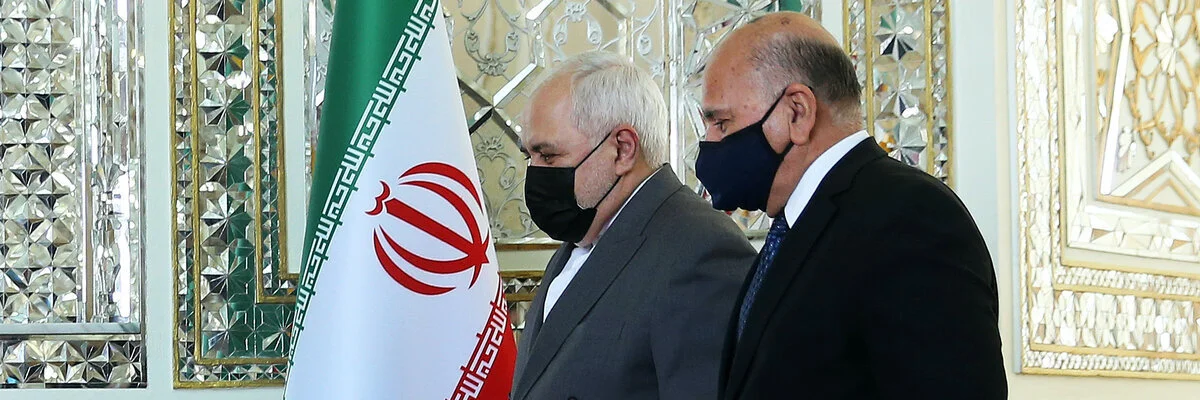
US Grants Iraq New 60-day Waiver To Import Iranian Gas
The US has granted Iraq a 60-day extension to a sanctions waiver allowing it to import Iranian gas for its crippled power grids.
The US has granted Iraq a 60-day extension to a sanctions waiver allowing it to import Iranian gas for its crippled power grids, an Iraqi official told AFP on Wednesday.
Baghdad relies on gas and electricity imports from its neighbour Tehran to supply about a third of its electricity sector, worn down by years of conflict and poor maintenance.
The US blacklisted Iran's energy industry in late 2018 but has since granted its ally Baghdad a series of temporary waivers to stave off country-wide blackouts.
In May, Washington granted Iraq a four-month extension as a gesture of good will towards Mustafa al-Kadhemi, who had just formed a cabinet seen as more US-friendly than its predecessor.
The US has pressured Iraq to use the waivers to become independent from Iranian energy, specifically by partnering with American firms, and had been frustrated by the slow progress under the previous premier Adel Abdel Mahdi.
While Kadhemi's cabinet has sought to fast-track such deals, it has been unable stem the near-daily rocket and IED attacks on Western military and diplomatic interests.
On his trip to Washington in August, Kadhemi scored agreements with various US firms for energy development across Iraq, including Chevron, Baker Hughes, Exxon and General Electric.
As OPEC's second-biggest producer, Iraq relies on crude exports to fund more than 90 percent of its state budget, but this year's price collapse has seriously undermined the government's fiscal position.
Photo: IRNA
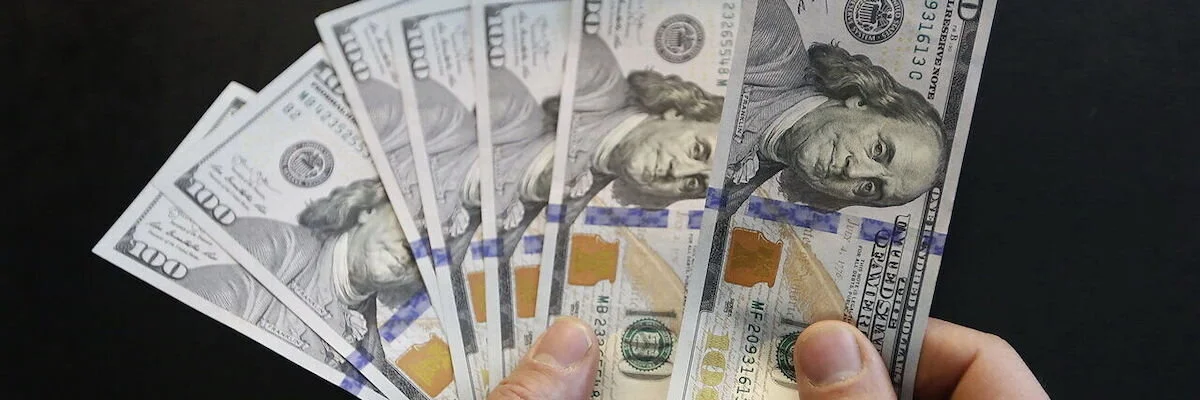
Not Cashing In: Virus Hits Iraq's Iran-US Money Trade
In Iraq's Kurdistan region and at the country's Muslim Shiite holy sites, money exchange between Iran and Iraq has been hard hit by lockdown restrictions to stop the spread of COVID-19, and by deep economic woes in both countries.
By Shwan Nawzad
In Iraq's Kurdistan region and at the country's Muslim Shiite holy sites, trading US dollars for rials from Iran was once big business.
But the money exchange trade has been hard hit by lockdown restrictions to stop the spread of COVID-19, and by deep economic woes in both countries.
Traders in Sulaimaniyah, the second city of Iraqi Kurdistan and close to the border with Iran, have seen dramatic changes.
In March, before restrictions to stem the pandemic which has killed more than 5,000 Iraqis and infected more than 130,000 others, one dollar traded for 150,000 Iranian rials.
Today, one dollar fetches 250,000 rials, money changer Amanaj Saleh told AFP.
Tehran and Washington may be at loggerheads—coming close to open war in Iraq at the beginning of the year -- but Iraqis have no problem keeping a mix of the rival banknotes in their wallets.
Betting on a rebound in the Iranian currency—and hoping the coronavirus crisis would pass quickly -- many Iraqis rushed to snap up rials on the cheap.
The dollar-rial trade seemed like a welcome alternative income during the financial turmoil, which has destroyed countless livelihoods.
A survey by the International Rescue Committee (IRC) aid organization has found 87 percent of people questioned said they could no longer work because of the disease.
Big Losses
Iraq is going through its worst economic crisis in its recent history, hit by a slump in oil prices that account for almost all public revenues.
Government austerity cuts are expected to be severe.
"Since the appearance of coronavirus and the economic crisis it has caused, people who can no longer work are investing in Iranian currency to make their capital work," said Saleh.
But the trader, a man with a small grey moustache sitting under a huge framed reproduction $100 bill, warned that not all had found profit in the gamble.
"Those who had bought Iranian rials at the exchange rate of 200,000 rials for one dollar, now resell them at the lower rate: 250,000 rials for a dollar," he said.
Many Iraqis use American dollars and their own dinars interchangeably, with the rates stable between the two currencies.
It is the big swings between dollars and Iran's rial that attract those hopeful of winning on the difference.
American sanctions have long stifled the Iranian economy, and the closure of official border crossings between Iran and Iraq has added to the woes.
Hazar Rahim, a laborer in Sulaimaniyah, found this out the hard way.
"A few days ago, I bought five billion Iranian rials," he told AFP. "I was betting on the market but I was taken by surprise. In a few hours, the rial dropped, and I'd lost 13,000 dollars."
Religious Tourism Frozen
Two of the most holy sites for Shiites, Karbala and Najaf, are both in southern Iraq. Millions of Shiite pilgrims, the majority from Iran, visit every year.
They bring Iranian rials to spend and trade. In past years, the visitors brought in up to five billion dollars -- crucial in a country where almost all tourism is to religious sites.
It also provided hundreds of thousands of jobs and accounted for around 2.5 percent of GDP, according to official figures.
But with travel restrictions in place because of the virus, the shops and restaurants once busy with visitors are closed.
Iranian arrivals had already slowed amid deep economic woes at home since the United States in 2018 withdrew from the Iranian nuclear agreement and reinstated punishing sanctions.
Coronavirus in Iran -- the worst in the region with more than 17,000 deaths and 310,000 infections -- has only worsened the situation of the country.
The crisis has reduced Iran's exports, causing devaluation and inflation.
According to the International Monetary Fund, Iran's GDP is expected to shrink six percent in 2020, after contracting 7.6 percent last year.
In Iraq, meanwhile, tougher times loom as well. The economy is expected to contract almost 10 percent this year.
But with few apparent alternatives, dozens of Iraqis keep coming to the money traders in the hope that times will change, the rial will rise, and they can cash in.
Photo: IRNA
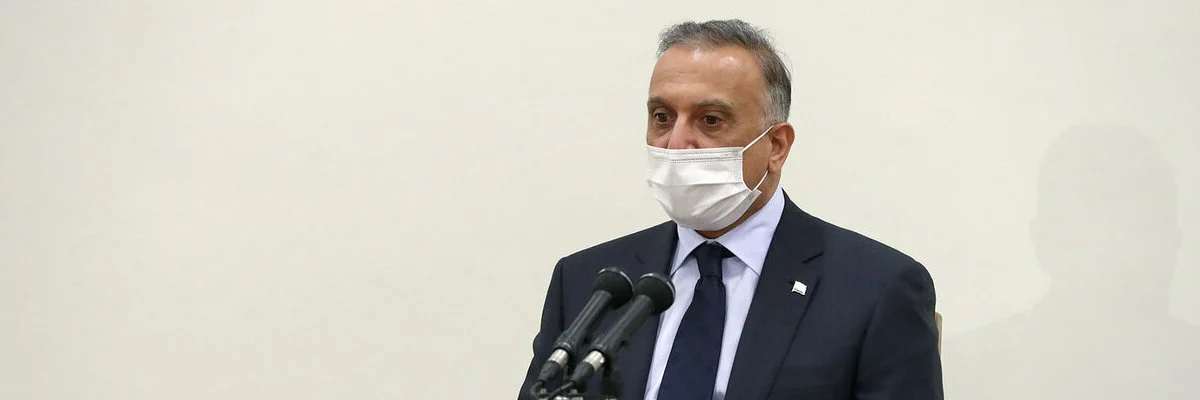
US Presence Cause of Insecurity: Khamenei Tells Visiting Iraq PM
Iran's supreme leader told Iraq's visiting premier on Tuesday that Tehran will not interfere in Baghdad's relations with Washington, but warned that the US presence next door to Iran was a cause of insecurity.
By Amir Havasi
Iran's supreme leader told Iraq's visiting premier on Tuesday that Tehran will not interfere in Baghdad's relations with Washington, but warned that the US presence next door to Iran was a cause of insecurity.
Prime Minister Mustafa al-Kadhemi of Iraq met Ayatollah Ali Khamenei in the Iranian capital during his first trip abroad since taking office.
"Iran will not interfere in Iraq's relations with America but expects Iraqi friends to know America and realize that their presence in any country causes corruption, ruin and destruction," the Iranian leader said, according to his official website.
"The Islamic republic expects... (the Iraqi) parliament's decision to expel the Americans to be adhered to since their presence is a cause of insecurity."
Khamenei pointed to the US killing of Iran's top general Qasem Soleimani in a January drone strike in Baghdad, after which parliament voted to expel US troops.
"They killed your guest in your house and blatantly confessed to it."
Iran "will never forget this and will certainly deal a reciprocal blow to the Americans", Khamenei said.
Iran retaliated for Soleimani's death days after by firing a volley of missiles at US troops stationed in Iraq, but US President Donald Trump opted against responding militarily.
While the attack on the western Iraqi base of Ain al-Asad left no US soldiers dead, dozens suffered brain trauma.
According to Khamenei, Iran was opposed to "whatever may weaken the Iraqi government" in contrast to the US, which he said did not want "an independent, strong Iraqi government elected by popular vote".
Tug-of-War
Kadhemi had been scheduled to visit Iran's regional rival Saudi Arabia as his first trip abroad, then quickly follow it up with a trip to Tehran, in a carefully calibrated balancing act.
The Saudi leg was postponed after King Salman was hospitalised on Monday.
Baghdad has often found itself caught in the tug-of-war between Riyadh, Tehran and Washington, which Kadhemi is also set to visit within weeks.
Kadhemi rose to the premiership in May after serving as head of Iraq's National Intelligence Service for nearly four years.
He formed close ties to Tehran, Washington and Riyadh during that time, prompting speculation he could serve as a rare mediator between the capitals.
His trip to Tehran comes after he received Iran's top diplomat Mohammad Javad Zarif in Baghdad on Sunday.
Relations between the two countries were not always close -- they fought a bloody war from 1980 to 1988.
Tehran's influence in Baghdad grew after the 2003 US-led invasion of Iraq toppled the government of Saddam Hussein.
Iran is now said to have significant leverage over many of Iraq's Shiite political groups.
$20 Billion Trade Goal
Iraq's delegation includes the ministers of foreign affairs, finance, health and planning, as well as Kadhemi's national security adviser, some of whom also met their Iranian counterparts.
Kadhemi also held talks with President Hassan Rouhani to discuss closer trade ties, fighting the novel coronavirus and efforts to ensure regional stability, state television said.
"The two governments' will is to expand bilateral trade ties to $20 billion," Rouhani said after their hour-long meeting.
Iraq is one of Iran's main markets for non-oil exports but trade has dipped as the COVID-19 pandemic forced temporary border closures.
Rouhani said Iran was ready to "stand with Iraq for the stability and security of Iraq and the region".
He hailed as "heroes" Soleimani and an Iraqi commander killed alongside him in the US drone strike near Baghdad airport.
"I deem it necessary to honor the two heroes of the fight against terrorism, martyrs General Qasem Soleimani and Abu Mahdi al-Muhandis," he said.
The Iranian president also pledged to help Baghdad fight coronavirus.
Iran says COVID-19 has claimed more than 14,600 lives and infected 278,800 in the country, while Iraq has reported close to 4,000 virus deaths and 97,000 cases.
Photo: IRNA
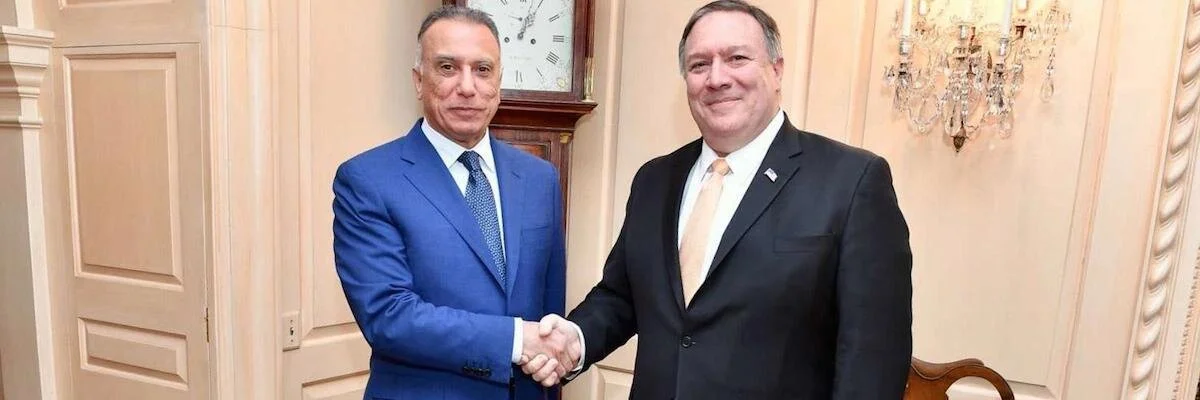
US Grants Iraq Brief 30-Day Waiver for Iranian Gas Imports
Washington on Sunday granted Iraq a 30-day extension to a waiver allowing it to import Iranian gas for its dilapidated power grids despite American sanctions, an Iraqi official said.
Washington on Sunday granted Iraq a 30-day extension to a waiver allowing it to import Iranian gas for its dilapidated power grids despite American sanctions, an Iraqi official said.
The extension comes as Baghdad faces a cocktail of crises, including collapsing oil prices and the novel coronavirus pandemic and political deadlock over government formation.
Iraq relies on gas and electricity imports from its neighbor Tehran to supply about a third of its power grid, crippled by years of conflict and poor maintenance.
The US blacklisted the Iranian energy sector in late 2018 and has granted Baghdad a series of waivers, usually for 45, 90 or 120 days.
Last month, Washington granted Iraq a 30-day extension—its shortest yet—and extended it again on Sunday.
"It is extended for another 30 days. There are no specific conditions," the Iraqi official told AFP.
Iraqi officials had expected the waiver would be extended long enough to allow new prime minister designate Mustafa Kadhimi to pull together a government.
The PM-designate is in talks with Iraq's political parties to form his first cabinet, and has until May 9 to submit it to parliament for a vote of confidence.
Kadhimi had a strong showing of support from across Iraq's political spectrum when he was nominated, but disputes over ministerial positions appear to have worn it down.
The US has pressured Iraq to use the waivers to become independent from Iranian energy, but progress has been slow.
OPEC's second-biggest producer relies on crude exports to fund more than 90 percent of its state budget, but the crash to prices under $30 per barrel has seriously undermined the government's fiscal position.
In a further blow, coronavirus has spread across the country, with more than 1,800 confirmed cases and 87 deaths announced by the health ministry.
Photo: Iraq PM

Iran-US Tensions Decrease in Iraq, For Now
Iraq’s premier-designate Mustafa Kadhimi, seen as a compromise figure, is preparing his cabinet. If his tenure fails, the US may cast Iraq's government as irreversibly "hostile and pro-Iran" and introduce new sanctions.
By Maya Gebeily
It has been weeks since Iran-backed factions in Iraq traded fire with US forces, but experts warn the rivals could be using the time to prepare for an escalation.
After the last Katyusha rockets slammed into American installations in Iraq in March, the United States began planning an unprecedented bombing campaign in Iraq and new Iran-aligned factions threatened to kill Western ambassadors.
"Even if we haven't seen rocket attacks, the Iranians are repositioning themselves for something else," said Phillip Smyth, who researches Shiite armed factions for the Washington Institute for Near East Policy.
"Meanwhile, US troops in Iraq are hunkered down and taking the threat more seriously," Smyth said.
Those troops, deployed as part of the coalition fighting the Islamic State group, have been hit by more than two dozen rocket attacks that have grown gradually deadlier.
Last month, the Pentagon began drafting plans for a major escalation against the Iran-backed factions—namely the hardline Kataeb Hezbollah—blamed for the rockets.
"Washington told us they'd simultaneously hit 122 targets in Iraq if more Americans died," a top Iraqi official said.
The scale of such bombing could have enormous consequences.
Coalition head General Pat White feared it could spin out of control, writing to US Central Command in March with "concerns" that targeted groups would respond, putting thousands of coalition troops in "significant" danger, according to a US military official who saw White's memo.
Non-US coalition members are "nervous" the bombing could kill civilians or push Baghdad to permanently oust foreign troops, diplomats from two coalition countries said.
The plan has been set aside for now as the US fights the spread of COVID-19, three Western diplomats said.
"But if there's another attack and it kills an American, then all of this comes back again," one told AFP.
Coalition 'No Longer Exists'
Washington and Tehran have already edged dangerously close to outright conflict after the US killed Iranian general Qasem Soleimani in Baghdad in January, prompting Iran to launch ballistic missiles at US troops in western Iraq.
Apparently fearing more strikes, the US deployed Patriot anti-missile batteries and C-RAM rocket defence systems to Iraq to protect its forces, a move which US officials acknowledged to AFP could be seen by Iran as provocative.
At the same time, it reduced the coalition's presence, pulling out of half the bases it once operated from in Iraq and withdrawing hundreds of trainers indefinitely as a precautionary measure against COVID-19.
As most non-US troops were trainers, that has left relatively more Americans in the remaining forces.
"The coalition as we knew it no longer exists," a Western diplomat from a coalition country told AFP.
A key lawmaker from Fatah, the bloc representing pro-Iran factions, cast doubt on Washington's intentions this week.
"The American side wasn't serious about withdrawing and handing over bases, and was actually re-deploying its troops for tactical reasons to protect its soldiers amid the spread of the coronavirus," said Mohammad Ghabban.
Kataeb Hezbollah has insisted the shifts should lead into a full and permanent withdrawal, raising the prospect of further rocket attacks.
"There will be no death for these forces if they keep withdrawing as part of a total departure from Iraq," the group said this month.
'Turn Up the Flame'
At the same time, apparently new factions have emerged.
In the last month, three previously unknown groups have called for rocket attacks, threatened the American and British ambassadors, and released rare drone footage of the US embassy in Baghdad and the western Ain al-Asad base, which hosts the most coalition troops.
Two top coalition officials said they suspect the groups were "the same old actors"—Kataeb Hezbollah and allies—who were "organising themselves slightly differently".
Smyth said it appeared Iran was restructuring its Iraqi allies and using front groups for plausible deniability.
"There's calm now, but they'll just turn up the flame once the situation improves for them," Smyth added.
In politics, too, the tug-of-war between Iran and the US over Iraq is at a critical juncture.
Premier-designate Mustafa Kadhimi, seen as a compromise figure, is preparing his cabinet and US officials are due to visit Baghdad in June for key talks.
"This was a roller-coaster relationship—it shouldn't be," said an Iraqi official with knowledge of the talks.
But if Kadhimi fails, a Western diplomat told AFP, the US may cast Iraq's government as irreversibly "hostile and pro-Iran" and introduce new sanctions.
Even the June talks could lead to more polarisation, said Renad Mansour, a researcher at Chatham House.
"The US want to push the Iraqi government to choose a side, which could be a risky move," he told AFP.
"It's almost making the Iraqi government decide: are you with us or against us?"
Photo: Wikicommons

US Grants Iraq Shortest Sanctions Waiver Yet for Iran Gas
◢ The United States on Thursday granted Iraq a 30-day waiver to keep importing Iranian gas despite American sanctions, two Iraqi officials told AFP, the shortest extension yet Baghdad relies on gas and electricity imports from its neighbor Tehran to supply about a third of its power grid, crippled by years of conflict and poor maintenance.
The United States on Thursday granted Iraq a 30-day waiver to keep importing Iranian gas despite American sanctions, two Iraqi officials told AFP, the shortest extension yet.
The US slapped tough sanctions on the Iranian energy sector in late 2018 and has granted Iraq a series of waivers, usually for 45, 90 or 120 days.
Baghdad relies on gas and electricity imports from its neighbor Tehran to supply about a third of its power grid, crippled by years of conflict and poor maintenance.
"This is the final extension," one source at the Iraqi president's office told AFP.
The source said Washington had been frustrated that Iran was meddling in the government formation process in Iraq.
Adnan Zurfi, who has had close ties with US officials since the American-led invasion of Iraq in 2003, was nominated on March 17 and has a month to pull together his cabinet.
"The US did not want to put Zurfi in a difficult position by not renewing the waiver," a second senior Iraqi official told AFP, confirming the 30-day extension.
The official said Baghdad had prepared a checklist at the beginning of the last 45-day waiver period of ways the country could decrease its reliance on Iranian oil.
"But we haven't been able to accomplish any of them because of the circumstances," the source said.
Iraq has been hit by a wave of crises in recent weeks, including the government formation stalemate, collapsing oil prices and the novel coronavirus pandemic.
OPEC's second-biggest producer relies on crude exports to fund more than 90 percent of its state budget, but the crash to a price of under $30 per barrel puts it in jeopardy.
The COVID-19 virus has also spread across the country, with nearly 350 confirmed cases and 29 deaths announced by the health ministry.
Photo: Wikicommons
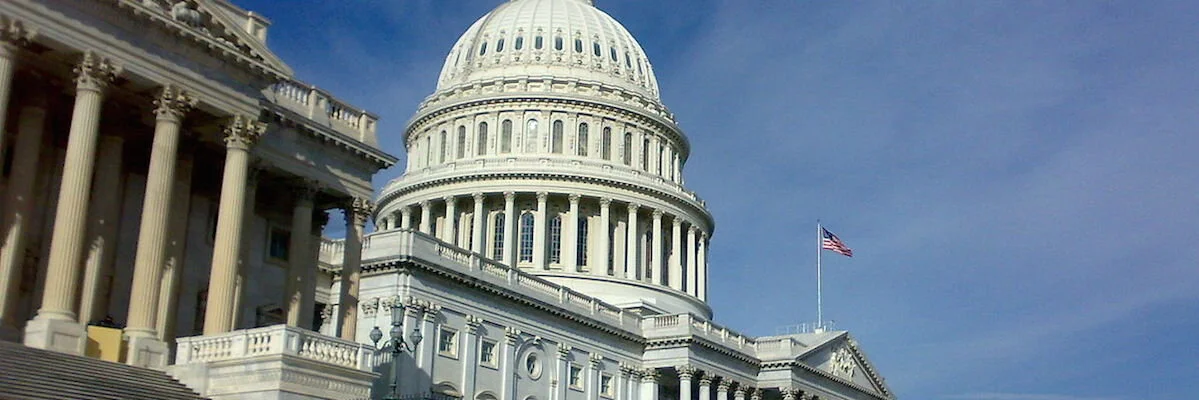
US Congress Passes Final Resolution to Restrain Trump on Iran
◢ The US Congress on Wednesday gave its final approval to a resolution to restrain President Donald Trump from attacking Iran after months of soaring tensions. The House of Representatives voted 227-186 to join the Senate in support of the resolution, which bars any military action against Iran without an explicit vote from Congress.
The US Congress on Wednesday gave its final approval to a resolution to restrain President Donald Trump from attacking Iran after months of soaring tensions.
The House of Representatives voted 227-186 to join the Senate in support of the resolution, which bars any military action against Iran without an explicit vote from Congress.
But the resolution is virtually certain to be vetoed by Trump, and the coalition of most Democrats and a handful of war-skeptic Republicans lacks the votes to override him.
The House voted moments after a rocket fired on a military base north of Baghdad killed an American soldier, a British soldier and a US contractor, in the deadliest attack on foreign forces in Iraq in several years.
A previous attack in December that killed a US contractor set off a chain of escalation after the United States blamed Iranian-aligned Iraqi Shiite militias.
On January 3, Trump ordered a drone strike that killed Iran's most powerful general, Qassem Soleimani, at the Baghdad airport.
Supporters of the resolution said they wanted to ensure that Congress has the unique power to declare war, as outlined in the US Constitution.
"There are a lot of countries in the world where one person makes the decision. They're called dictators," said Representative Steny Hoyer, the second highest-ranking Democrat in the House.
"Our Founding Fathers did not want dictators running America," he said.
The Soleimani strike angered Iraqi leaders, who called for the departure of US forces, with some questioning whether Shiite militias carried out the attack in a country that still has virulently anti-Western Islamic State fighters.
Photo: Wikicommons
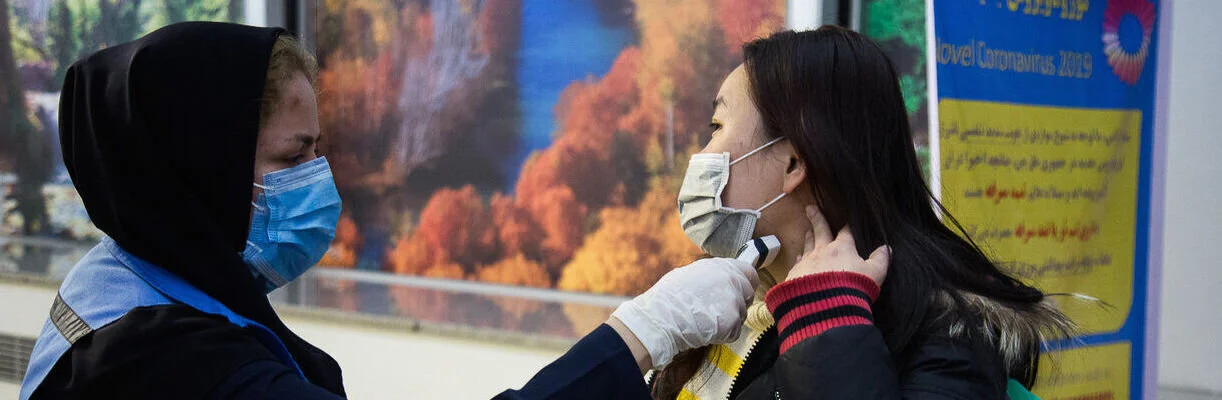
Three New Coronavirus Cases in Iran After Two Deaths
◢ Iran has confirmed three new coronavirus cases following the deaths of two elderly men, the health ministry told AFP on Thursday, as Iraq banned travel to and from its neighbor. The pair who died were elderly Iranian citizens and residents of the city of Qom. They were the first confirmed deaths from the COVID-19 virus in the Middle East.
Iran has confirmed three new coronavirus cases following the deaths of two elderly men, the health ministry told AFP on Thursday, as Iraq banned travel to and from its neighbor.
The pair who died were elderly Iranian citizens and residents of the city of Qom. They were the first confirmed deaths from the COVID-19 virus in the Middle East.
Health ministry spokesman Kianush Jahanpour said two of the new cases were also in Qom and the other was in Arak, south of the holy city.
"In total there were five cases... of which two have been fatal," he said.
Qom is a centre for Islamic studies and tourists, attracting scholars from Iran and beyond. However, a government official said the deceased men had not left Iran.
Following the announcement of the deaths, Iraq on Thursday clamped down on travel to and from the Islamic republic, with Iraq's health ministry announcing people in Iran were barred from entering the country "until further notice".
"Iranians are prohibited from entering (Iraq)," a senior official told AFP, adding that border crossings with Iran are now closed, with only returning Iraqis allowed to pass through.
These Iraqis will be examined and, if necessary, they will be placed "in quarantine for 14 days", the health ministry said.
Iraqi nationals are also not allowed to travel to Iran, according to the ministry.
The border closure followed a backlash against a Wednesday announcement of visa waivers for Iranian nationals wishing to travel to Iraq by the interior ministry.
Iraqis took to social media using the hashtag "close the border" and local officials called for a ban on the entry of goods and people through various border crossings with the Islamic republic.
Iraqi airports are already screening travellers for the virus and national carrier Iraqi Airways has suspended flights to Iran.
Each year, millions of Iranian pilgrims visit holy Shiite sites in Iraq, providing the Iraqi state with significant revenue.
Earlier Thursday, Iran's government spokesman Ali Rabiei said Tehran would set up a top-level body of government and defence officials to fight the virus' spread, according to state news agency IRNA.
"We, however, need global action (by authorities) and the cooperation of all citizens," Rabiei said on Twitter.
‘Hid the Truth'
The deaths in Iran were reported by local media on Wednesday, just hours after Tehran said there were two cases in the country.
On social media, several people accused the government of keeping silent to prevent panic ahead of Friday's parliamentary elections.
"Just four hours separated the announcement that two compatriots were infected... and their deaths," journalist Javad Heydarian tweeted.
"This signifies that the virus had been around for some days but they hid the truth."
Public confidence in government pronouncements has plummeted since the downing of a Ukrainian passenger plane on January 8 that killed 176 people.
The government initially denied responsibility, but later admitted the plane had been fired on due to "human error" and blamed a jittery missile operator.
The culture ministry has asked local media to only publish official information from government officials and denounced what it claimed was a proliferation of fake news on social media regarding the virus.
Since December, the novel coronavirus has killed 2,118 people in China—the epicenter of the epidemic—excluding Hong Kong and Macau.
Elsewhere in the world, the virus has killed 11 people and spread across some 25 countries.
Photo: IRNA
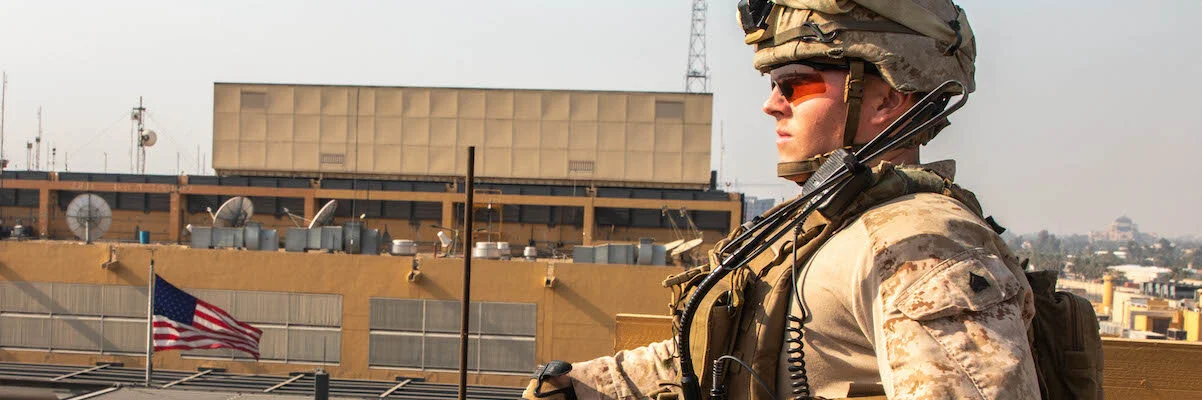
U.S. Embassy in Baghdad Hit in Katyusha Rocket Attack
◢ Five Katyusha rockets were fired at the fortified Green Zone in Baghdad Sunday night, targeting the U.S. embassy compound there, Iraq’s security forces reported. No injuries were reported but one of the rockets directly hit the embassy building itself.
Five Katyusha rockets were fired at the fortified Green Zone in Baghdad Sunday night, targeting the U.S. embassy compound there, Iraq’s security forces reported.
No injuries were reported but one of the rockets directly hit the embassy building itself.
Attacks against the Green Zone and the U.S. embassy in Baghdad by Iran-linked militia groups have increased in recent months, especially after the U.S. airstrike earlier this month that killed Iran’s top commander Qassem Soleimani and Abu Mahdi al-Muhandis, the head of Iran-backed militia Kataib Hezbollah.
Outgoing Prime Minister Adil Abd al-Mahdi condemned the attack, vowing to protect the diplomatic missions in the country.
“These acts may drag the country into a battlefield, especially at a time when we started to implement the decision to withdraw foreign troops from Iraq,” he said in a statement.
No group has claimed responsibility for the attack.
Photo: Centcom

Iraq President Warns Against Making Baghdad Pick Sides in US-Iran Tensions
◢ Iraq's president warned Wednesday against pushing the country to choose sides in escalating tensions between neighboring Iran and the US, both allies of Baghdad. Addressing world leaders at the World Economic forum in Davos, Switzerland, Barham Saleh said a recent parliamentary vote to oust foreign forces from Iraq should not be understood as a sign of "hostility.”
Iraq's president warned Wednesday against pushing the country to choose sides in escalating tensions between neighboring Iran and the US, both allies of Baghdad.
Addressing world leaders at the World Economic forum in Davos, Switzerland, Barham Saleh said a recent parliamentary vote to oust foreign forces from Iraq should not be understood as a sign of "hostility.”
Parliament held the vote two days after a US drone strike near Baghdad airport killed top Iranian general Qasem Soleimani and prompted retaliatory strikes from Tehran on an Iraqi base hosting American and other foreign troops.
The Iraqi president said the vote was "not a sign of ingratitude or hostility," but a response to a violation of his country's sovereignty.
"The escalating tensions between Iran, the Gulf states, and the United States over the past month have reminded us that our aspirations remain subject to political disputes beyond our control and to unwelcome foreign interference," Saleh said.
"It is not in our interest to choose to ally with one side at the expense of others, as long as both respect our sovereignty and independence."
He added that "no country should seek to dictate to Iraq" the nature of its relationships.
Saleh also hinted that the tensions could derail a rare chance for progress in Iraq after decades of conflict, most recently against the Islamic State group.
"If our neighbours and allies remain at odds, our sovereignty is not respected and our lands are used as a battlefield, then we cannot hope to achieve our own change agenda," he said.
He condemned acts of violence against the months-long protests movement rocking Baghdad and Iraq's Shiite-majority south, which has left hundreds dead since October.
Saleh had earlier met with US President Donald Trump on the sidelines of the world summit, hosting a brief press conference but brushing off questions on parliament's vote.
A source from his office told AFP the leaders had discussed the US drone strike on Baghdad as well as the withdrawal of forces from Iraq.
The source said Trump told Saleh that he "does not want to stay in Iraq" and would draw down forces in an "unprecedented way", but insisted that any withdrawal must be done in a way that is not insulting or disrespectful to Washington.
Saleh insisted that the US must not restrict Iraq's access to its oil revenues, which are held in an account at the Federal Reserve in New York.
He also stressed that it was crucial to Iraq that the US renew a waiver allowing Baghdad to buy Iranian much-needed gas despite Washington's sanctions on Tehran.
The exemption is set to expire in mid-February.
Photo: Wikicommons
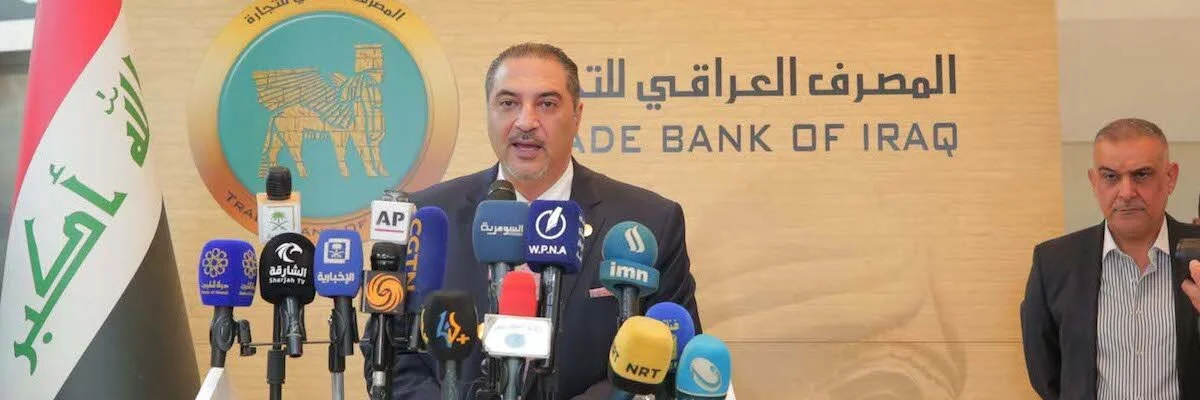
Iraq to 'Stop' Iran Gas Transfers if US Waiver Ends: Bank
◢ The bank through which Iraq pays for Iranian gas imports to power its grids said Tuesday it would stop processing payments if a crucial US sanctions exemption expires next month. "We'll stop. As simple as that," the head of Trade Bank of Iraq (TBI) Faisal al-Haimus told AFP.
The bank through which Iraq pays for Iranian gas imports to power its grids said Tuesday it would stop processing payments if a crucial US sanctions exemption expires next month.
"We'll stop. As simple as that," the head of Trade Bank of Iraq (TBI) Faisal al-Haimus told AFP.
That could be devastating for Iraq's crippled electricity sector, which has relied on Iran for about a third of its supply, and comes at a time of heightened US-Iran tensions.
Washington slapped tough sanctions on Iran's energy sector in 2018 but has granted Iraq a series of temporary waivers over the last 15 months to allow it to buy gas from Tehran.
Baghdad pays for the imports by depositing Iraqi dinars into an account at the state-owned TBI, which Iran is technically allowed to use to purchase non-sanctioned goods.
But if Iraq's waiver is not renewed next month, TBI would stop processing payments, Haimus said.
"If the waiver ended, of course TBI will not pay for any gas or deal with any Iranian entity over gas or electricity. Absolutely," he said.
"As a bank, the most important thing we have is that we are compliant (with international regulations). That's why people trust us," the chairman added.
Sanctions Threat
Any entity that deals with institutions or countries that are blacklisted by the US could be slapped with secondary sanctions, which restrict its access to US dollars.
The waiver protected Iraq from such sanctions, allowing it to continue importing about 1,400 MW of electricity and 28 million cubic metres (988 million cubic feet) of gas from Iran.
In the meantime, Iran and Iraq agreed on a payment scheme in line with US regulations: a TBI account in Iraqi dinars.
As of last year, Iraq had an outstanding bill of around $2 billion for previous gas and electricity purchases, according to Iranian Oil Minister Bijan Zangeneh.
Haimus declined to disclose how much had been paid into the account or how much was still owed, but told AFP that "disputes" meant Iran had not been able to actually access the money.
"A few payments were made according to this mechanism but the problem is that handling this money was not possible," he said.
Iraq fears being swept up in the spiralling tensions between Iran and the US, both of them allies to Baghdad.
Earlier this month, Iraq's parliament voted in favor of ousting foreign troops—including some 5,200 US forces—following a US drone strike near the Baghdad airport that killed top Iranian and Iraqi military officials.
Outraged by the vote, US President Donald Trump threatened to impose sanctions "like they've never seen before" on Iraq if US troops were forced out.
The US then informed Iraq that it was considering blocking Baghdad's access to a US-based account where Iraq keeps oil revenues that contribute 90 percent of the national budget.
Photo: TBI

Iran Retaliates With Missile Strike on U.S.-Iraqi Bases
◢ Iran fired more than a dozen missiles at U.S.-Iraqi airbases, a direct attack on American forces in the region that risks further action from President Donald Trump after a U.S. air strike killed top Iranian general Qassem Soleimani last week. The Islamic Revolutionary Guard Corps claimed responsibility for the barrage.
By Glen Carey
Iran fired more than a dozen missiles at U.S.-Iraqi airbases, a direct attack on American forces in the region that risks further action from President Donald Trump after a U.S. air strike killed top Iranian general Qassem Soleimani last week.
The Islamic Revolutionary Guard Corps claimed responsibility for the barrage, which the Pentagon said was launched from Iran. Fifteen missiles were fired, 10 of which hit the Ayn al-Asad base in western Iraq and another facility in Erbil, according to two U.S. officials. Another struck the Taji air base near Baghdad while four fell out of the sky.
Stocks dropped and oil rose on news of the Iranian strike, though crude later pared its gains. The big concern is the extent of any U.S. casualties, because that is likely to influence the White House thinking on potential retaliation. For now no U.S. nor Iraqi casualties have been confirmed.
Some sort of response had been expected to the killing of Soleimani, who ran Iran’s proxy operations across the Middle East and was close to the country’s leaders. While Tehran does not want outright war with the U.S., there was growing pressure at home to react. The balancing act was to do so without tipping things into a conflict that no-one has appetite for.
Supreme Leader Ayatollah Ali Khamenei spoke on state television and described the attack as a “crushing response.” He called again for the U.S. presence in the region to end, a sign that Tehran’s ultimate goal remains to push the U.S. military out of Iraq. Foreign Minister Mohammad Javad Zarif said on Twitter the government “concluded proportionate measures in self-defense” after the Soleimani strike. “We do not seek escalation or war, but will defend ourselves against any aggression,” Zarif wrote.
In Tehran the mood on Wednesday was cautious, with ordinary people taking to Twitter to voice their fears of a war.
President Donald Trump tweeted “All is well!” and “So far, so good!” while adding that battle damage assessments continued. He added he’ll make a statement Wednesday morning. Tensions between Iran and the U.S. have soared under Trump, who walked away from the Iranian nuclear deal agreed by his predecessor. Since then, Iran has warned repeatedly the restraints on its nuclear program will be removed.
Trump was joined in the White House Situation Room after the attack by officials including Vice President Mike Pence, Secretary of State Michael Pompeo, Joint Chiefs Chairman Army General Mark Milley and National Security Adviser Robert O’Brien.
One White House official, who spoke on condition of anonymity, said the early thinking was the missile strike was a perfunctory move that would let Iran retaliate without incurring a potentially devastating U.S. counter-assault.
Iran’s attack sent futures on the S&P 500 Index down as much as 1.7% before paring losses. Gold initially advanced to the highest since 2013, though those gains were trimmed along with an advance in oil which at one point surged above $65 a barrel.
U.S. aviation regulators issued new restrictions barring civilian flights over Iraq, Iran, the Persian Gulf and the Gulf of Oman. Adding to the confusion, a Boeing Co. 737 passenger jet bound for Ukraine crashed shortly after takeoff in Iran, killing all 167 passengers and 9 crew on board, with Iran’s media reporting it was due to a technical problem.
“A missile attack from Iran against U.S. forces is a serious escalation,” said Michael Singh of the Washington Institute for Near East Policy and a former senior director for Middle East affairs under President George W. Bush. Such an attack “cannot be regarded as merely symbolic or face-saving regardless of its results,” he added.
Trump has shown restraint in previous attacks in the region blamed on Iran that didn’t kill any U.S. citizens. But Iran’s quick claim of responsibility for the strike and the targeting of U.S. military outposts make some sort of retaliation more likely.
“The next question is, does the U.S. react or overreact to this,” said Jarrett Blanc, a senior fellow at the Carnegie Endowment for International Peace and a former State Department coordinator for Iran nuclear implementation.
Iran is believed to have the region’s largest stockpile of short-range ballistic missiles, and a large number of American military and diplomatic facilities in the region were seen as potential targets for reprisals.
“As we evaluate the situation and our response, we will take all necessary measures to protect and defend U.S. personnel, partners, and allies in the region,” according to a Pentagon statement.
The Ayn al-Asad base is a key U.S. facility in the country. Pence visited it late last year and Trump was there in December 2018. A Facebook account belonging to the Iraqi prime minister’s office said 22 missiles entered Iraqi airspace early Wednesday, and 17 hit Ayn al-Asad. It said there were no casualties among the Iraqi forces.
The Islamic Revolutionary Guard Corps said that further responses will come. It called the attack the start of its “Martyr Soleimani” operation, in honor of a leader many Iranians considered a national hero for his exploits in conflicts from Syria to Yemen.
At his funeral on Tuesday, Hossein Salami, leader of Iran’s Revolutionary Guard, threatened to “set ablaze” places supported by the U.S., the Associated Press reported. The general’s burial was postponed after dozens of mourners died in a stampede.
Even so, Zarif’s comments cast some doubt on about whether more action is really in the works. Iran has for years operated a carefully-calibrated strategy of attacks, often via proxies, in the Middle East, that preserves its influence without drawing major retaliation. Crippled by economic sanctions, Iran can ill-afford an outright war.
Before the latest attack, Iran said it was assessing 13 scenarios for retaliation according to comments by Ali Shamkhani, head of Iran’s national security council, reported by the semi-official Fars news agency.
Iran “needed to do something quick,” said Kamran Bokhari, founding director of the Center for Global Policy in Washington. “This is a placeholder move and a low cost one.”
The U.S. had vowed a quick and overwhelming response to any Iranian attacks. Over the past week, the Pentagon deployed about 3,500 soldiers from the 82nd Airborne to Kuwait and another three Navy ships with about 2,200 Marines to the Persian Gulf region.
Iranian-only targets for the U.S. include Islamic Revolutionary Guard Corps navy vessels in the Persian Gulf, nuclear facilities, military bases, ports and oil installations, according to a Tuesday report by the Congressional Research Service. Another option: Iranian proxies.
U.S. officials say they were justified in targeting Soleimani, who was accused of having helped Iraqi insurgents target American troops with improvised explosive devices following the U.S. invasion in 2003.
Drone Strike
Tensions between the U.S. and Iran soared following a Dec. 27 rocket assault on an Iraqi base. It killed an American contractor and wounded several U.S. personnel. The U.S. put the blame on Kataib Hezbollah, an Iraqi militia closely associated with Iran.
On Dec. 29, the U.S. conducted air strikes on five bases in Iraq and Syria used by Kataib Hezbollah. Two days later, dozens of Iraqi militiamen and their supporters stormed the U.S. embassy complex in Baghdad. The U.S. responded with the drone strike on Soleimani.
Defense Secretary Mark Esper said Tuesday that attacks planned by Soleimani, who headed the Revolutionary Guard’s Quds Force, were “days away” when the U.S. struck.
Photo: AFP
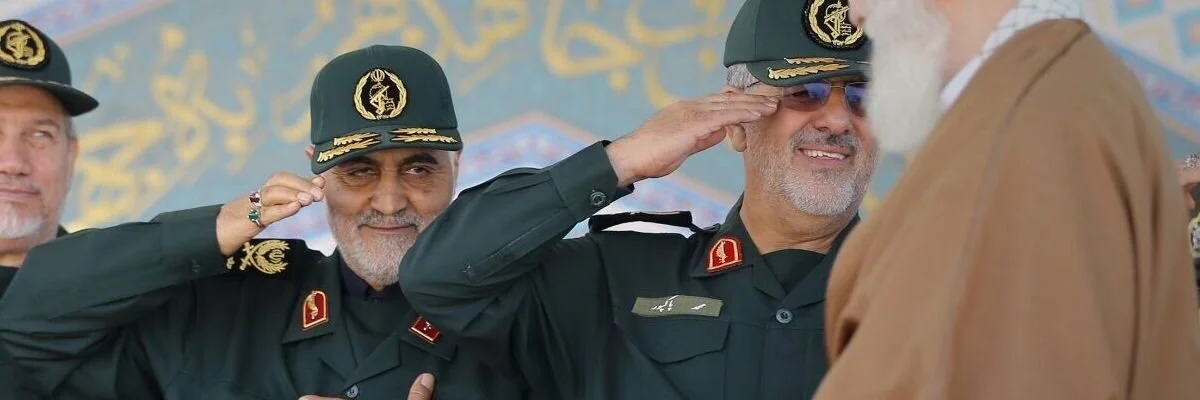
Top Iranian Commander Killed in U.S. Airstrike on Trump Orders
◢ A U.S. airstrike in Iraq ordered by President Donald Trump killed one of Iran’s most powerful generals, sending global markets tumbling on fears of a deepening conflict in the Middle East. Qassem Soleimani, who led proxy militias that extended Iran’s power across the region, was killed in a strike in Baghdad authorized by Trump.
By Jennifer Jacobs, Zaid Sabah and Nick Wadhams
A U.S. airstrike in Iraq ordered by President Donald Trump killed one of Iran’s most powerful generals, sending global markets tumbling on fears of a deepening conflict in the Middle East.
Qassem Soleimani, who led proxy militias that extended Iran’s power across the region, was killed in a strike in Baghdad authorized by Trump, the Defense Department said in a statement late Thursday night. Trump had no immediate comment, but tweeted the image of an American flag. Iran’s Supreme Leader threatened “severe retaliation.”
Oil futures in London and New York surged by more than 4%, gold extended gains, Treasuries advanced and stock futures slid, ending the bullish mood that had pushed the S&P 500 to a record high on Thursday.
“At the direction of the president, the U.S. military has taken decisive defensive action to protect U.S. personnel abroad by killing” Soleimani, the department said. “General Soleimani was actively developing plans to attack American diplomats and service members in Iraq and throughout the region.”
The death of Soleimani, who led the Revolutionary Guards’ Quds force, prompted oil to surge and U.S. stock futures to fall amid heightened fears that rising tensions between the U.S. and Iran may lead to an armed confrontation that could easily pull in other countries. The pressures, which have been building for months, have been complicated by widespread protests in Iraq and Iran.
Iran’s top leaders all condemned the attack and vowed to hit back. Supreme Leader Ayatollah Ali Khamenei vowed to avenge Soleimani’s killers, according to a statement. The state-run Tasnim news agency said the government declared three days of mourning.
“A severe retaliation awaits murderers who have the blood of Soleimani and that of other martyrs on their wicked hands from last night’s incident,” Khamenei said.
President Hassan Rouhani also said Iran “will take revenge,” while Foreign Minister Javad Zarif denounced the killing on Twitter as “an act of international terrorism” and said the U.S. “bears responsibility for all consequences of its rogue adventurism.”
“Nowhere will be safe for Americans from now on after Soleimani assassination,” Heshmatollah Falahatpisheh, a member of the Iranian parliament’s national security commission, was quoted as saying by ICANA, the legislative body’s official news service.
U.S. equity futures fell and Asian stocks reversed earlier gains as the news broke. Treasury futures climbed with the yen as investors sought safer haven assets. Futures on the S&P 500 dropped 0.8% as of 6:34 a.m. in London on Friday. Brent crude surged 2.9%.
Soleimani was hit in a U.S. drone strike near Baghdad International Airport, according to a U.S. official. Details remained unclear, but a person familiar with the developments said an Iraqi militia leader, Abu Mahdi al-Muhandis, was also killed.
The Iranian regime will be under “strong pressure” to strike back, said Paul Pillar, a former U.S. Central Intelligence Agency officer and a non-resident senior fellow at Georgetown University in Washington. “Many Iranians will regard this event the same way Americans would regard, say, the assassination of one of the best known and most admired U.S. military leaders. The potential for escalation has suddenly gone up.”
Iraqi forces enhanced security around the U.S. embassy in Baghdad after the airstrike, Iraq’s al-Sumaria news reported, citing a security official. Iran summoned the Swiss envoy in Tehran, who helps look after U.S. interests in the country, in response to the killing, according to foreign ministry spokesman Abbas Mousavi.
Soleimani, a veteran of the Iran-Iraq war, was a household name in Iran where he’s celebrated for helping to defeat Islamic State in Iraq and Syria and countering U.S. influence. He had been sanctioned by the U.S. since 2007 and last May Washington designated the Revolutionary Guards Corp in its entirety a foreign terrorist organization, the first time the label has been applied to an official state institution or a country’s security forces.
The assault in Baghdad marked the latest in a series of violent episodes that have strained already hostile relations between Iran and the U.S. that began last week when an American contractor was killed in a rocket attack on an Iraqi military base in Kirkuk. The death of the contractor led to a rare, direct American assault on an Iran-backed militia in Iraq. That, in turn, prompted an attack on the U.S. embassy in Baghdad.
Trump had tweeted a warning of dire consequences for Iranian aggression: “They will pay a very BIG PRICE! This is not a Warning, it is a Threat. Happy New Year!”
The killing of such a prominent member of the Iranian hierarchy was unexpected, and drew quick reactions from U.S. lawmakers and Democratic presidential candidates.
Congressional Reaction
Former Vice President Joe Biden, a Democratic presidential candidate, said in a statement that while “no American will mourn” Soleimani’s passing, Trump “just tossed a stick of dynamite into a tinderbox, and he owes the American people an explanation.” Senator Elizabeth Warren called the move “reckless,” while her colleague Bernie Sanders said it put the U.S. on a path to another endless war.
Republican Senator Marco Rubio of Florida said Iran was “entirely to blame for bringing about the dangerous moment now before us.” Lindsey Graham, a Republican senator from South Carolina, praised Trump’s move and said “the price of killing and injuring Americans has just gone up drastically.”
Outside the U.S. government and political arenas, the reaction also wavered between a sense of justification and apprehension over Soleimani’s killing.
‘Worst Nightmare’
Kamran Bokhari, founding director of the Center for Global Policy in Washington, warned that things “could get ugly.” Mark Dubowitz, the chief executive of the Washington-based Foundation for Defense of Democracies, said “the regime in Iran is now facing their worst nightmare: a U.S. president willing to escalate using all instruments of national power.”
Earlier Thursday, U.S. Defense Secretary Mark Esper told reporters at the Pentagon that the American military was moving from responding to Iranian-backed attacks to anticipating them.
“There are some indications out there that they may be planning additional attacks. That’s nothing new,” Esper said. “If that happens, then we will act and, by the way, if we get word of an attack of some kind of indication, we would take pre-emptive action as well to protect American forces, American lives. The game has changed.”
Photo: IRNA
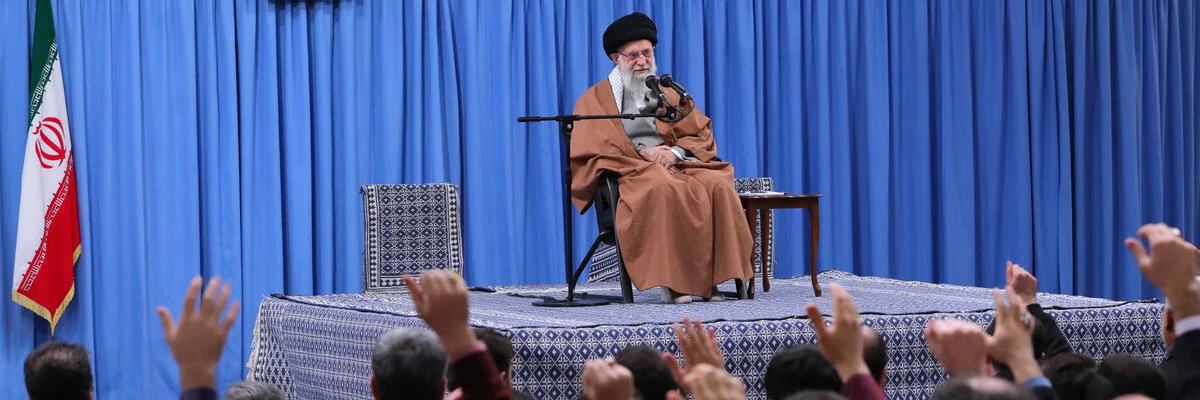
Khamenei Condemns US, Warns Iran Will Confront Threats
◢ Iran's supreme leader Wednesday strongly condemned deadly US strikes on Iraq and warned his country was ready to confront threats after US President Donald Trump issued one against the Islamic Republic. "I and the government and the nation of Iran strongly condemn this American crime," Ayatollah Ali Khamenei said in a speech broadcast on state television.
Iran's supreme leader Wednesday strongly condemned deadly US strikes on Iraq and warned his country was ready to confront threats after US President Donald Trump issued one against the Islamic Republic.
"I and the government and the nation of Iran strongly condemn this American crime," Ayatollah Ali Khamenei said in a speech broadcast on state television.
They were his first remarks since Sunday's deadly US strikes on the Hashed al-Shaabi paramilitary network in western Iraq.
The United States carried out the raids in retaliation for rocket fire that killed an American civilian contractor at a base in northern Iraq on Friday.
In a tweet on Tuesday, Trump accused Iran of "orchestrating" that day's storming of the US embassy in Baghdad by protesters angry at the American air strikes.
Trump said: "Iran will be held fully responsible for lives lost, or damage incurred, at any of our facilities. They will pay a very BIG PRICE! This is not a Warning, it is a Threat."
In response, Khamenei retweeted the post and said: "That guy has tweeted that we (the United States) see Iran responsible for the events in Baghdad and we will respond to Iran.
"First of all, you can't do a damn thing! This has nothing to do with Iran," the supreme leader in his televised address.
"Secondly, be logical... The people of this region hate America. Why don't Americans understand this?" he said.
"You Americans have committed crimes in Iraq, you have committed crimes in Afghanistan. You have killed people."
Khamenei said Iran was ready to respond to any threat.
"If the Islamic Republic decides to oppose or fight against a country, it will do this explicitly," he said.
"We are strongly committed to the interests of our country... We are strongly committed to the dignity of our nation. We are strongly committed to the progress and greatness of the nation of Iran.
"Should anyone threaten these, we will confront him without any hesitation and will strike our blow," Khamenei said.
"We will never... drag the country towards war. But if others want to impose anything on this country, we will stand against them with all our might."
US-Iran tensions have soared since Washington pulled out of a landmark nuclear agreement with Tehran in 2018 and reimposed crippling sanctions.
Photo: IRNA
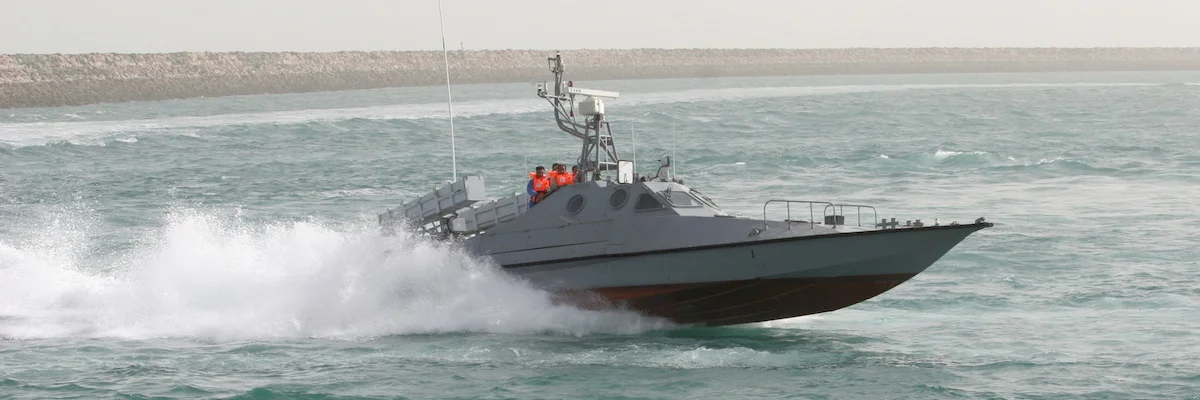
Iran Seizes Small Oil Tanker Suspected of Smuggling Fuel
◢ Iran’s Revolutionary Guards seized a foreign oil tanker in the Persian Gulf on July 31, compounding concerns about the safety of shipping in a region crucial to oil exports. The vessel—the third foreign ship seized by the guards in the Gulf since July 14—is suspected of smuggling a large volume of fuel, the Guards said on their Sepah News portal.
By Shaji Mathew and Arsalan Shahla
Iran’s Revolutionary Guards seized a foreign oil tanker in the Persian Gulf on July 31, compounding concerns about the safety of shipping in a region crucial to oil exports.
The vessel—the third foreign ship seized by the guards in the Gulf since July 14—is suspected of smuggling a large volume of fuel, the Guards said on their Sepah News portal, without giving any details about the flag or nationality of the ship or its operator.
The ship was carrying 700,000 liters (4,403 barrels) of smuggled fuel when it was seized near Farsi Island in the western part of the Gulf, off Iran’s southwestern coast, Sepah News reported. That’s about 400 miles (640 kilometers) from the Strait of Hormuz, which has been at the center of Iran’s standoff with the West in recent weeks. Iran’s state-run Press TV reported that the seized ship is an Iraqi tanker that was delivering the fuel to some Arab countries in the Persian Gulf.
The allegedly smuggled volume is a minuscule amount in oil terms: the largest supertankers are capable of hauling cargoes of 2 million barrels.
Even so, the impounding of the ship could escalate the tensions that have flared in the region’s waters as Iran resists U.S. sanctions that are crippling its all-important oil exports and hits back after one of its ships was seized July 4 near Gibraltar. Iran grabbed a British tanker, the Stena Impero, in Hormuz two weeks later and continues to hold it.
The passage at the mouth of the Persian Gulf accounts for about a third of the world’s seaborne oil flows. To reduce the risks of navigating the waterway, the Royal Navy has started to escort British ships, and a plan for a European naval mission is taking shape.
The U.S. has embarked on a parallel operation that the Europeans are wary of joining for fear of being identified with President Donald Trump’s “maximum pressure campaign” against Iran and its economy. In response to that campaign, Iran has abandoned restrictions on uranium enrichment, downed a U.S. drone and test-fired a ballistic missile. It’s also been accused of carrying out a number of attacks on tankers near Hormuz.
Cargo Confiscated
According to Sepah News, the ship seized last week had loaded fuel from other vessels before it was impounded. It was taken to Bushehr port on Iran’s southwest coast, and its cargo was confiscated and handed over to the National Oil Distribution Company of Iran. All seven foreign crew members were arrested.
The announcement of the ship’s capture coincides with a joint meeting between the Iranian and Qatari coast guards in Tehran aimed at improving and developing maritime cooperation between the Gulf neighbors, state-run Islamic Republic News Agency reported earlier Sunday. That gathering follows a rare meeting between the coast guards of Iran and the U.A.E. last week.
Photo: Tasnim
Iraq Sets Up 'Loophole' in US Sanctions to Buy Iranian Power
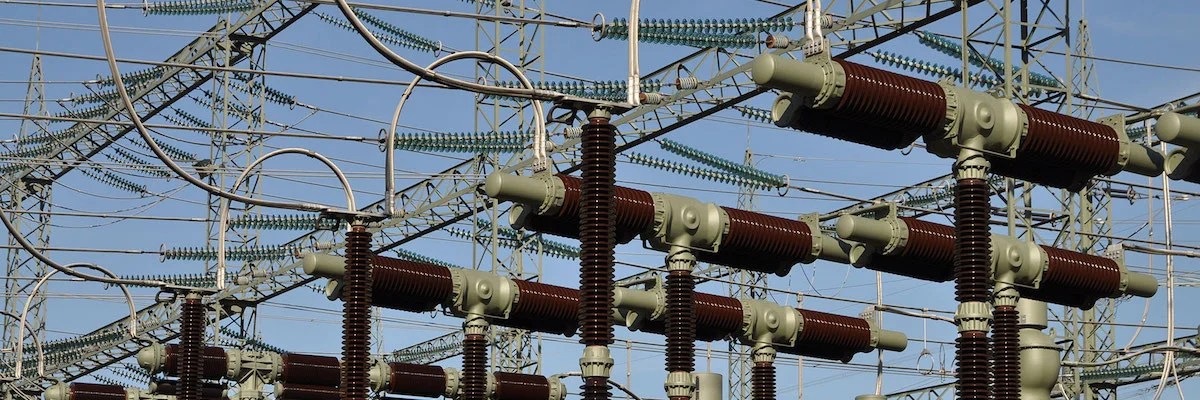
◢ Iraq is establishing a financial "loophole" to continue buying vital gas and electricity from Iran despite US sanctions, AFP has learned, mirroring a European mechanism that came into effect Friday. The "special purpose vehicle" (SPV) would allow Iraq to pay for imported Iranian energy in Iraqi dinars, which Iran could use to exclusively buy humanitarian goods, three senior Iraqi officials said.
By Maya Gebeily
Iraq is establishing a financial "loophole" to continue buying vital gas and electricity from Iran despite US sanctions, AFP has learned, mirroring a European mechanism that came into effect Friday.
The "special purpose vehicle" (SPV) would allow Iraq to pay for imported Iranian energy in Iraqi dinars, which Iran could use to exclusively buy humanitarian goods, three senior Iraqi officials said.
The workaround would allow Baghdad to keep the lights on and avoid shortage-driven protests without triggering US sanctions, as it treads an increasingly precarious tightrope between its two main allies Tehran and Washington.
One senior government official told AFP it was the product of months of talks between Iraqi, Iranian and US officials.
"The Iraqi government will continue to pay Iran for gas by depositing money into a special bank account inside Iraq, in Iraqi dinars," the official said.
"Iran will not be able to withdraw the money, but will be able to use it to purchase goods from outside Iraq."
Iraq has an outstanding bill of around $2 billion for previous gas and electricity purchases, according to Iranian Oil Minister Bijan Zangeneh.
A US official told AFP that Washington was aware of the mechanism's creation.
The US embassy in Baghdad declined to comment, while Iran's embassy did not respond to an AFP request.
Two additional high-level Iraqi officials confirmed Baghdad was establishing such an account with US knowledge, but could not say whether payments into the account had begun.
"How else is Iraq supposed to pay what it owes Iran? We have no other choice," the second official said.
‘Iran's ATM'
To offset its notorious power shortages, Iraq imports around 1,400 MW of electricity and 28 million cubic meters (988 million cubic feet) of gas for power stations from neighboring Iran, which together make up about a third of Iraq's power supply.
That reliance has angered the US, which slapped tough sanctions on Iran last year but has granted Iraq several temporary waivers to keep purchasing Iranian power until October.
The US insists Iraq wean itself off Iranian energy, but Baghdad has said that could take up to four years, during which it would need to keep purchasing at least Iranian gas.
To do so, the central banks of Iran and Iraq agreed in February to create a payment method that steers clear of US sanctions, Iran's state news agency IRNA said, without providing additional details.
That would mean not dealing in US dollars and purchasing only "humanitarian goods" allowed by the US -- like food and medicine.
"We would become Iran's ATM," another Iraqi official told AFP.
According to two of the senior Iraqi officials, Baghdad's SPV would likely be set up at the Trade Bank of Iraq.
The TBI has handled most of the Iraqi government's international transactions since its establishment in the aftermath of the US-led invasion in 2003.
A senior TBI source told AFP the bank had been involved in the negotiations but the account had not yet been created.
"The US Treasury has confidence in the TBI's processes. We are in discussions to reach an agreement, which would be fully within US exemptions," the source said.
'Like a Ledger'
It would effectively be a "loophole" around sanctions, said Ahmed Tabaqchali, senior fellow at the Sulaymaniyah-based Institute of Regional and International Studies.
"It's like a ledger. You record the money paid, and Iran has that much credit in Iraq," Tabaqchali told AFP.
The system would work much like INSTEX, a mechanism recently activated by Britain, Germany and France to trade legitimately with Iran without falling foul of US sanctions.
Still, the system is fraught with political, financial and practical complexities
Iraq's economy relies almost exclusively on oil revenues, paid in dollars, which leaves Baghdad extremely vulnerable to any punitive measures the US could take in response to a violation.
It also remains unclear what exactly Iran could purchase from Iraq as trade is heavily tilted in the other direction.
"Credit would develop in Iran's favour but how would it actually cash it?" said Tabaqchali.
Importing goods from outside Iraq would require a third party willing to take the political and financial risk of such a transaction, he told AFP.
And, ultimately, much of Iraq's transactions with Iran are cash purchases of commercial goods—something US authorities implementing sanctions are unable to monitor.
"Cash is untraceable," said Tabaqchali.
Photo: Wikicommons
US Grants Energy-Hungry Iraq New Iran Sanctions Waiver
◢ The United States has granted Iraq another 90-day waiver to continue with vital energy imports from neighboring Iran despite re-imposed sanctions, a government source said Saturday. The extension came after "long discussions" with Washington ahead of a looming deadline on a previous extension granted in December, the official, close to the negotiations, told AFP on condition of anonymity.
The United States has granted Iraq another 90-day waiver to continue with vital energy imports from neighboring Iran despite re-imposed sanctions, a government source said Saturday.
The extension came after "long discussions" with Washington ahead of a looming deadline on a previous extension granted in December, the official, close to the negotiations, told AFP on condition of anonymity.
The talks came amid spiking tensions between Iraq's two closest allies—the US and Iran—following a twin attack on tankers in the Gulf that US President Donald Trump has blamed on Tehran.
Iranian energy imports are vital to Iraq, one of the world's hottest countries, which faces chronic blackouts that often leave homes without power for up to 20 hours a day.
Summer temperatures in Baghdad are already topping seasonal averages, boosting electricity consumption and raising fears of a repeat of last summer's mass protests over power outages.
To compensate, Iraq pipes in up to 28 million cubic meters of Iranian gas a day for power generation and also directly imports up to 1,300 megawatts of Iranian electricity.
That dependence is uncomfortable for Washington, which sees Tehran as its top regional foe.
Trump reimposed crippling unilateral sanctions on Iran's energy and finance sectors in November following a decision to abandon a landmark 2015 nuclear deal between major powers and Tehran.
He gave Iraq an initial 45-day waiver to continue buying electricity and natural gas from Tehran, and in December Washington granted Baghdad an 90-day extension.
Photo: IRNA
Saudis Take Iran's Oil-Market Share, Keeping OPEC Supply Steady
◢ Saudi Arabia ramped up oil production last month by the most this year, largely filling the gap created by tougher U.S. sanctions on its political rival, Iran. Iranian output plunged in May to the lowest since 1990 as the Trump administration threatened sanctions, according to a Bloomberg survey of officials, analysts and ship-tracking data.
By Grant Smith
Saudi Arabia ramped up oil production last month by the most this year, largely filling the gap created by tougher U.S. sanctions on its political rival, Iran.
Iranian output plunged in May to the lowest since 1990 as the Trump administration threatened penalties for anyone trading with the Islamic Republic, according to a Bloomberg survey of officials, analysts and ship-tracking data.
Nonetheless, the production boost by Riyadh, along with increases in fellow OPEC members Libya and Iraq, meant that overall output from the group remained unchanged in May from the previous month. OPEC pumps about 40% of the world’s oil supplies.
Iran’s production plunged by 230,000 barrels a day to 2.32 million a day, according to the Bloomberg survey. Saudi Arabia increased by 170,000 barrels a day to 9.96 million a day. Total supply from OPEC’s 14 members was unchanged at 30.26 million barrels a day.
President Donald Trump is tightening the squeeze on Iran’s oil exports amid a dispute that revolves around the country’s nuclear program, and has turned to America’s allies in Riyadh to keep global crude markets comfortably supplied. The survey indicates that Saudi Arabia, a long-standing antagonist of Iran, has been willing to oblige.
That sets the stage for a contentious meeting when the Organization of Petroleum Exporting Countries and its partners gather in the coming weeks to consider production levels for the second half of the year. Iran has warned that the 59-year-old cartel is at risk of collapse because of aggressive moves by some members.
Despite the boost, the Saudis are still significantly below the limit of 10.3 million barrels a day agreed at the start of the year with a global coalition of producers, which spans fellow OPEC members as well as nations outside the group including Russia and Kazakhstan.
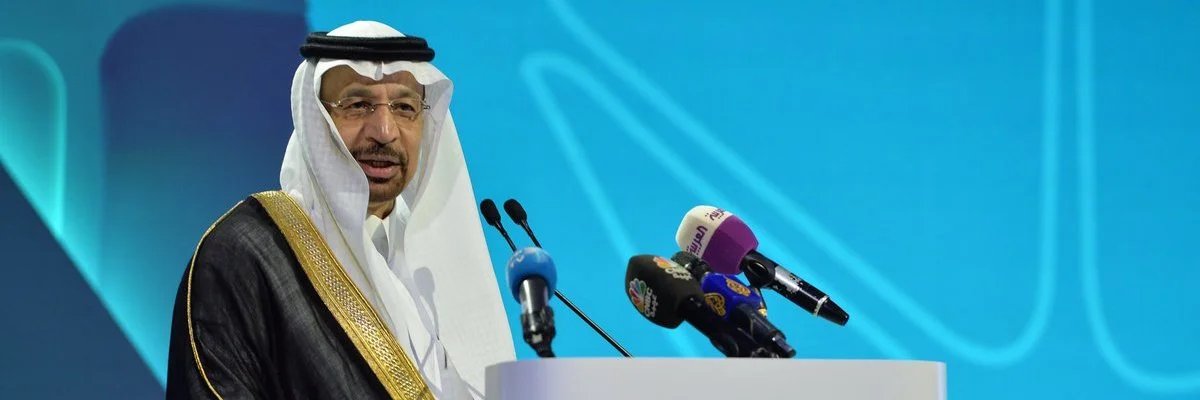
Saudi Arabian Energy Minister Khalid Al-Falih has recommended that the alliance should keep the supply curbs in place for the rest of the year, as headwinds to global economic growth may reduce oil demand.
Oil prices slumped more than 11% in London last month as the trade dispute between the U.S. and China threatened to crimp growth in the world’s two biggest economies. Brent, the international benchmark, was trading around $62 a barrel on Monday.
While the Saudi production increase was still well inside the limits agreed with fellow producers, the same can’t be said of a boost by Iraq.
Baghdad raised output by 50,000 barrels a day last month to 4.63 million a day, meaning that it has now abandoned any of the restraint pledged under the OPEC agreement. As the Saudis have urged fellow OPEC members to abide by their individual targets, that could provide another source of friction when the producers get together.
Photo: Aramco
Iran Starts Regional Shuttle Diplomacy Amid U.S. Tensions
◢ Iran’s top diplomats are touring neighboring countries, including three Arab Gulf monarchies, to try to shore up support after the U.S. announced plans to increase troop deployments in the region and sell weapons to some of the Islamic Republic’s top rivals. Foreign Minister Mohammad Javad Zarif arrived in the Iraqi capital, Baghdad, late Saturday for meetings about the frictions, the semi-official Iranian Students’ News Agency reported.
By Golnar Motevalli
Iran’s top diplomats are touring neighboring countries, including three Arab Gulf monarchies, to try to shore up support after the U.S. announced plans to increase troop deployments in the region and sell weapons to some of the Islamic Republic’s top rivals.
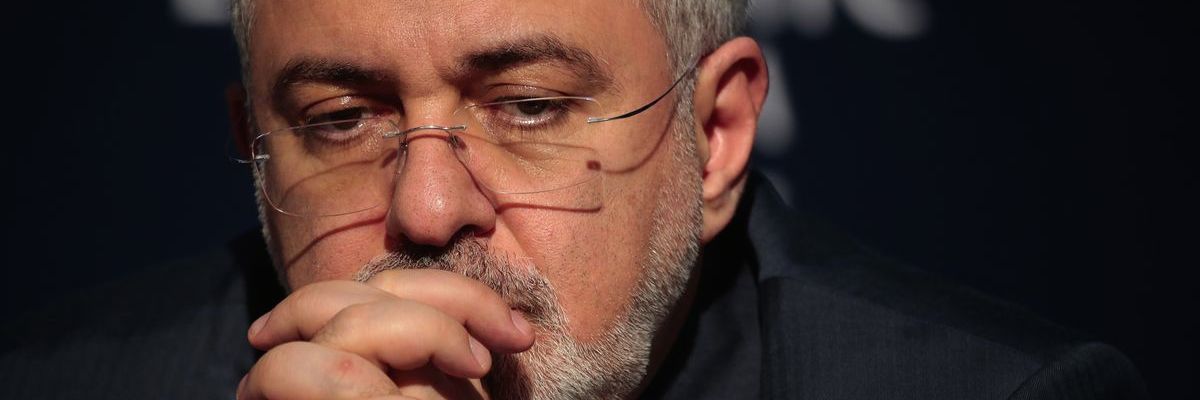
Foreign Minister Mohammad Javad Zarif arrived in the Iraqi capital, Baghdad, late Saturday for meetings about the frictions, the semi-official Iranian Students’ News Agency reported. On Sunday, his deputy, Abbas Araghchi, started a tour of Gulf Arab neighbors including Oman, Kuwait and Qatar, according to the state-run Islamic Republic News Agency.
In Baghdad, Zarif told reports Iran had proposed non-aggression pacts with all Gulf Arab neighbors, IRNA reported, in an apparent effort to limit any U.S.-led regional front against it.
Tehran’s regional diplomacy went into high gear as President Hassan Rouhani hinted that the Islamic Republic could hold a public referendum over the fate of the beleaguered 2015 nuclear deal that’s been crumbling since the U.S. quit it last year. Asked by a journalist whether he’d invoke a constitutional rule on a vote, Rouhani replied: “When this article should be used or whether it should’ve been used before is another matter.”
Drumbeat of Threats
Tensions between the two countries, already high over President Donald Trump’s withdrawal from the nuclear accord that Iran had adhered to, deteriorated dramatically in recent weeks after the White House vowed to force Iran’s vital oil exports down to zero and revoked a series of key sanctions waivers. Frictions escalated even more this month after the U.S. claimed, without citing evidence, that Tehran was planning an escalated campaign against American interests in the region.
The U.S. has made a show of military force in the region, including the announcement Friday that it will send 1,500 additional troops and fighter jets to the region. That same day, the Trump administration also invoked emergency authority to advance the sale of billions of dollars of weapons to countries including Saudi Arabia and the U.A.E., citing the need to deter Iran’s “malign” activities in the Middle East.
For the first time, U.S. officials also said publicly over the weekend that they think Iran is behind recent attacks on tankers in the Gulf and a pipeline in Saudi Arabia.
Iran’s Response
Iran has responded by announcing limited steps to resume nuclear activity restricted under the agreement. It also set a deadline to start its own gradual withdrawal from the deal unless Europe can guarantee the agreement can function.
Zarif left for Iraq immediately after returning from a visit with officials in Pakistan. Departing Islamabad last night, he called the planned U.S. troop buildup “extremely dangerous and a threat to international peace and security.”
In Baghdad, Zarif’s Iraqi counterpart, Mohamad Alhakim, said his country was ready to act as a mediator between Iran and the U.S. to help ease strains.
“We stand by Iran in its position and, God willing, will be an intermediate factor for both parties,” Alhakim said. “We are very hopeful that the region will not slide into a war.”
Photo: Bloomberg