
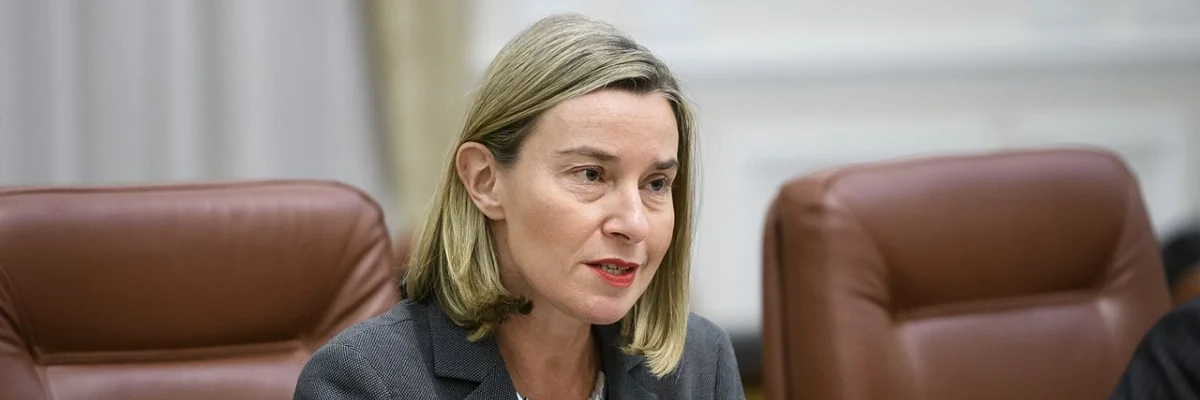
'No Alternative' to Iran Deal, EU's Mogherini Tells U.S.
◢ The EU's foreign policy chief said Monday there was "no alternative" to the Iran nuclear deal, after US Secretary of State Mike Pompeo vowed unprecedented sanctions against Tehran following Washington's withdrawal from the pact.
The EU's foreign policy chief warned Monday there was "no alternative" to the Iran nuclear deal, after US Secretary of State Mike Pompeo vowed unprecedented sanctions against Tehran following Washington's withdrawal from the pact.
Pompeo—a longtime Iran hawk and fierce opponent of the 2015 agreement earlier Monday outlined an aggressive series of "painful" measures designed to hurt Tehran, in his first key address since moving to the State Department from the CIA in April.
"Secretary Pompeo's speech has not demonstrated how walking away from the JCPOA (nuclear deal) has made or will make the region safer from the threat of nuclear proliferation or how it puts us in a better position to influence Iran's conduct in areas outside the scope of JCPOA," the European Union's foreign policy chief Federica Mogherini said in a statement.
She stressed "there is no alternative" to the Joint Comprehensive Plan of Action, as the deal is officially known.
US President Donald Trump sparked an international outcry earlier this month when he announced his country would pull out of the landmark accord struck in July 2015 between Tehran and major world powers.
His move came despite the fact that the UN's nuclear watchdog, in charge of monitoring Iran's compliance with the deal, has confirmed that Tehran has so far abided by the terms.
Trump wants Brussels and others to support his hardline strategy and push for a fresh agreement.
"Iran will never again have carte blanche to dominate the Middle East," Pompeo said Monday, outlining 12 tough conditions from Washington for any "new deal" with Tehran.
But Mogherini called on the US to keep its commitments as part of the agreement signed under Trump's predecessor Barack Obama.
"The JCPOA is the result of more than a decade of complex and delicate negotiations, based on dual track approach and therefore the best possible outcome, striking the right balance," Mogherini said.
"This deal belongs to the international community, having been endorsed by the United Nations Security Council. The international community expects all sides to keep the commitments they made more than two years ago," she added.
She reiterated that the International Atomic Energy Agency (IAEA) had confirmed already 10 times that Iran has implemented "all its nuclear related commitments" under the agreement.
The re-establishment of the US punitive measures will likely force European companies to choose between investing in Iran or trading with the United States.
The EU has been trying to persuade Iran to stay in the 2015 agreement, even without Washington's participation.
Photo Credit: Wikicommons
Trump Set to Announce Iran Sanctions Move That May Kill Nuclear Deal
◢ President Donald Trump will confirm on Tuesday whether he will make good on a threat to re-impose US sanctions on Tehran and thereby throw the entire Iran nuclear deal into question. Trump's announcement that a decision was imminent cut short a last-ditch European diplomatic drive to save the accord ahead of what had been a May 12 deadline.
President Donald Trump will confirm on Tuesday whether he will make good on a threat to re-impose US sanctions on Tehran and thereby throw the entire Iran nuclear deal into question.
Trump's announcement that a decision was imminent cut short a last-ditch European diplomatic drive to save the accord ahead of what had been a May 12 deadline.
Trump had until Saturday to decide whether to renew a waiver on one package of US sanctions targeting Iran's oil sector that had been lifted as part of Washington's commitment under the 2015 deal.
"I will be announcing my decision on the Iran Deal tomorrow from the White House at 2:00 pm (1800 GMT)," the president said in a tweet. The president may now also decide to announce the fate of the rest of Washington's nuclear-related sanctions, which are covered by different waivers, and effectively undermine the entire accord, reached between Tehran and six world powers.
European leaders and diplomats—including Britain's Foreign Secretary Boris Johnson, who was in Washington on Monday—have been pleading with the United States to retain the core of what Trump called the "flawed" accord.
Mixed Signals
And even if, as now seems inevitable, Trump pulls Washington out of the agreement, Britain, France, Germany, Russia and China may decide to stay in and to urge Tehran to maintain its own commitments.
But if Trump's decision raises the prospect of renewed US sanctions on European firms and banks doing business with Iran, the accord itself will be in peril—amid mixed signals from Tehran.
Some Iranian leaders have signaled they might seek to rapidly restore the enrichment capabilities they surrendered under the deal, and European capitals fear Tehran may resume the hunt for a bomb.
Tehran has long insisted it has no ambition to build nuclear weapons, but the signatories to the deal never believed them, and supporters of the accord have warned of a Middle East arms race if it fails.
And they are skeptical that Trump's administration has a back-up plan to restrain Iranian ambitions once he has made good on his campaign promise to tear up a deal endorsed by his predecessor Barack Obama.
Britain's Johnson, who was in Washington to lobby Secretary of State Mike Pompeo and Vice President Mike Pence, told Fox News: "Plan B does not seem to be, to me, particularly well-developed at this stage."
Given the multinational nature of the deal, nothing the so-called EU three—Britain, France and Germany—can do would allow them to rewrite it, but they have promised to work on a powerful supplemental agreement.
US diplomats have been working furiously with their partners in the three countries to make this a reality, with measures to limit Iran's ballistic missile program and regional subversion.
But so far, all signs point to Trump making good on his threat.
German Foreign Minister Heiko Maas warned the accord's collapse could spark "an escalation" in the region and stressed that Washington's European allies think the deal "makes the world a safer place."
His French counterpart Jean-Yves Le Drian, on a visit to Berlin, said the agreement is "the right way to stop Iran from getting access to nuclear weapons" and "will save us from nuclear proliferation."
Sunset Clauses
Under the landmark nuclear pact, Iran agreed to scale back nuclear enrichment and put its program under international supervision in return for international sanctions relief.
Trump has consistently complained about the agreement, reached under Obama, citing as its shortcomings certain clauses such as the "sunset" provisions lifting some nuclear restrictions on Tehran from 2025.
In an attempt to salvage the deal, French President Emmanuel Macron has pushed to extend its scope to address this issue, as well as Iran's missile capabilities and its role in the region.
Iran's support for Syrian President Bashar al-Assad, the Lebanese armed group Hezbollah in Syria's civil war and Shiite Houthi rebels in Yemen have added to tension between Tehran and Western powers.
Iran's President Hassan Rouhani on Sunday issued a strong warning to the United States not to quit the pact.
"If the United States leaves the nuclear agreement, you will soon see that they will regret it like never before in history," Rouhani said.
He also vehemently reiterated his country's opposition to curtailing its non-nuclear missile capabilities, insisting Tehran "will build as many missiles and weapons as needed."
Photo Credit: Wikicommons
Netanyahu's Iran Nuke Claims Fail to Convince Deal Proponents
◢ Israel began sharing an intelligence trove on Iran's alleged nuclear ambitions Tuesday, but Prime Minister Benjamin Netanyahu faced accusations his televised unveiling of it lacked evidence a 2015 accord had been violated. The presentation that included props, video and slides immediately led to accusations from some that the White House and Netanyahu coordinated it as Trump considers whether to pull out of the nuclear deal he has harshly criticized.
Israel began sharing an intelligence trove on Iran's alleged nuclear ambitions Tuesday, but Prime Minister Benjamin Netanyahu faced accusations his televised unveiling of it lacked evidence a 2015 accord had been violated.
The IAEA, the United Nations atomic watchdog, said it would evaluate any new relevant information, but cited its assessment from three years ago that it had no "credible indications" of an Iranian nuclear weapons pursuit after 2009.
Netanyahu's elaborate presentation live on television Monday night came ahead of a crucial decision by US President Donald Trump by May 12 on whether to withdraw from the nuclear agreement between world powers and Iran.
The Israeli premier said tens of thousands of documents recently recovered by intelligence operatives in Tehran proved his country's main enemy Iran had a secret nuclear weapons program it could put into action at any time.
But the presentation that included props, video and slides immediately led to accusations from some that the White House and Netanyahu coordinated it as Trump considers whether to pull out of the nuclear deal he has harshly criticized.
Some analysts and proponents of the nuclear agreement also said Netanyahu had presented previously known details and failed to produce evidence that showed Iran was not abiding by the accord.
"I have not seen from Prime Minister Netanyahu arguments for the moment on non-compliance, meaning violation by Iran of its nuclear commitments under the deal," European Union diplomatic chief Federica Mogherini said.
"And again, the deal was put in place exactly because there was no trust between the parties, otherwise we would not have required a nuclear deal to be put in place."
France's foreign ministry said Tuesday Netanyahu's claims reinforced the importance of the nuclear deal.
'Infamous Liar'
Iran lashed out at Netanyahu, with foreign ministry spokesman Bahram Ghasemi on Tuesday calling him an "infamous liar."
Iranian Foreign Minister Mohammad Javad Zarif said immediately after the presentation that Netanyahu was "the boy who cries wolf."
Trump however welcomed Netanyahu's presentation, as did his Secretary of State Mike Pompeo, who met with the Israeli leader on Sunday in Tel Aviv.
The White House caused some confusion with its statement on the Israeli trove, at first saying it showed Iran "has" a secret nuclear weapons program before later changing it to "had".
"These facts are consistent with what the United States has long known: Iran had a robust, clandestine nuclear weapons program that it has tried and failed to hide from the world and from its own people," the statement said.
"The Iranian regime has shown it will use destructive weapons against its neighbors and others. Iran must never have nuclear weapons."
Trump and his Middle East allies, particularly Israel, argue that the agreement approved by Barack Obama was too weak and needs to be replaced with a more permanent arrangement and supplemented by controls on Iran's missile program.
The Israeli premier has repeatedly called for the accord—which Iran signed with Britain, China, France, Germany, Russia and the United States—to either be altered or scrapped.
In Monday night's presentation, Netanyahu accused Iran of lying about its nuclear ambitions, saying Israel had recently obtained tens of thousands of files in a "great intelligence achievement."
Iran has always denied it sought a nuclear weapon, insisting its atomic program was for civilian purposes.
Netanyahu said the files had been moved to a secret compound in Tehran in 2017 that looked dilapidated from the outside.
'Half a Tonne'
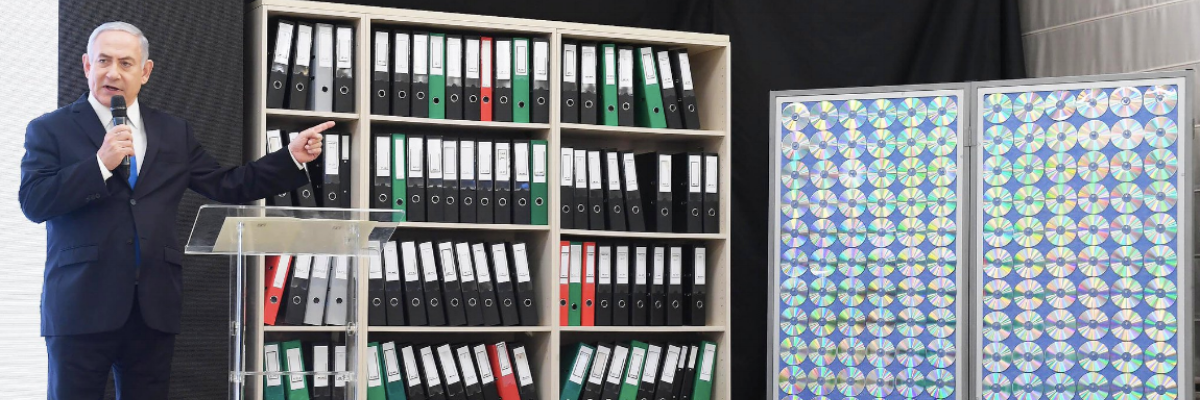
The material obtained weighed a half a tonne, he said, speaking in English in the staged presentation in front of a bookcase laden with binders he said held copies of original documents and cases of CDs.
He detailed an alleged program—"Project Amad"—that he said Iran was forced to shelve in 2003, but kept ready to put into action at any time while improving its "know-how".
He alleged the 2015 nuclear deal was "based on Iranian lies and Iranian deception."
"Even after the deal, Iran continued to preserve and expand its nuclear weapons know-how for future use," Netanyahu added.
Pompeo, until last week director of the CIA, called the intelligence trove authentic and said much of it was new to US experts.
But others argued it failed to show the nuclear accord was a "terrible deal," as Netanyahu called it, with some saying his presentation in fact furthered the case for the agreement.
"The information in the documents Netanyahu revealed is not new," Dan Shapiro, US ambassador to Israel under Obama, said on Twitter, echoing the reactions of many other proponents of the deal.
But he added that Netanyahu's presentation will be "useful to Trump when he announces he is leaving the deal by May 12. I believe he has already made that decision. This presentation, coordinated with his team, will be cited as evidence to justify it."
Photo Credit: Israeli PM
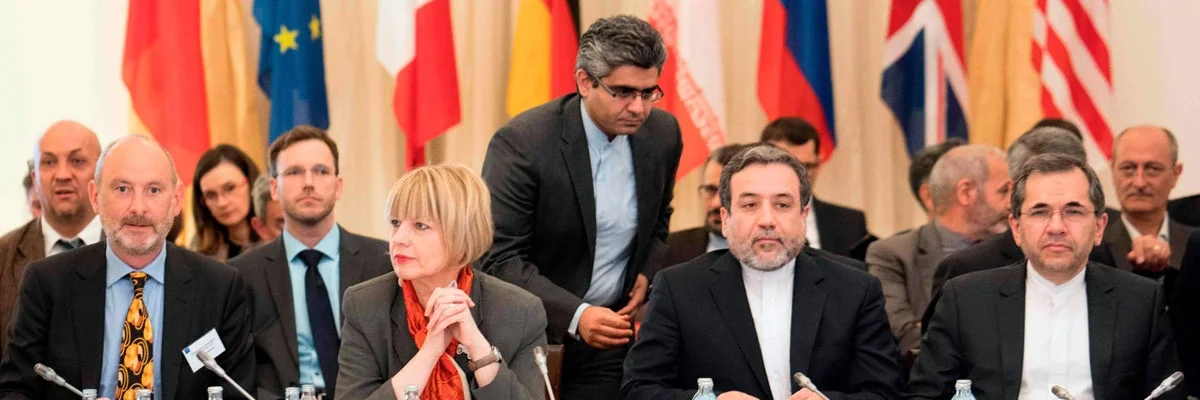
US Seeking 'Supplemental' Iran Deal With European Powers
◢ The US and European powers have had "very good" discussions towards agreeing a "supplemental" accord beyond the Iran nuclear deal by May 12, a senior US official said Friday. This would cover Iran's ballistic missile program, its regional activities, the expiration of parts of the nuclear deal in the mid-2020s and tighter UN inspections.
The US and European powers have had "very good" discussions towards agreeing a "supplemental" accord beyond the Iran nuclear deal by May 12, a senior US official said Friday.
President Donald Trump said in January that the 2015 deal between Iran and major powers must be "fixed" by May 12 or the United States will walk away. Senior State Department official Brian Hook said on Friday after talks in Berlin and Vienna that Trump wants to reach a "supplemental" deal with the European signatories to the agreement by then. This would cover Iran's ballistic missile program, its regional activities, the expiration of parts of the nuclear deal in the mid-2020s and tighter UN inspections, Hook said.
"We are taking things one week at a time, we are having very good discussions in London, Paris and Berlin," Hook, recently ousted Secretary of State Rex Tillerson's chief of strategy, told reporters.
"There is a lot we agree on and where we disagree we are working to bridge our differences," Hook said.
He declined to indicate what would happen if and when such an agreement is reached, saying: "We are not under instructions from the president to go beyond seeking an agreement with our European allies."
The 2015 accord between Iran and the US, Russia, China, France, Britain and Germany curtailed Iran's nuclear activities in exchange for sanctions relief.
Iran, which according to the UN atomic watchdog has been abiding by the deal since it came into force in January 2016, has ruled out any changes to the agreement.
The talks in Vienna on Friday, a regular review of the accord, involved Iran and the six other signatories. Trump's decision this week to replace Tillerson with Mike Pompeo as secretary of state has been widely seen as another bad omen for the agreement.
Tillerson and his erstwhile cabinet ally Defence Secretary Jim Mattis had urged Trump to listen to the Europeans to preserve the agreement. Pompeo, head of the Central Intelligence Agency, is seen as taking a harder line on Iran.
Photo Credit: Wikicommons
Pentagon Still Backs Iran Nuclear Deal: General
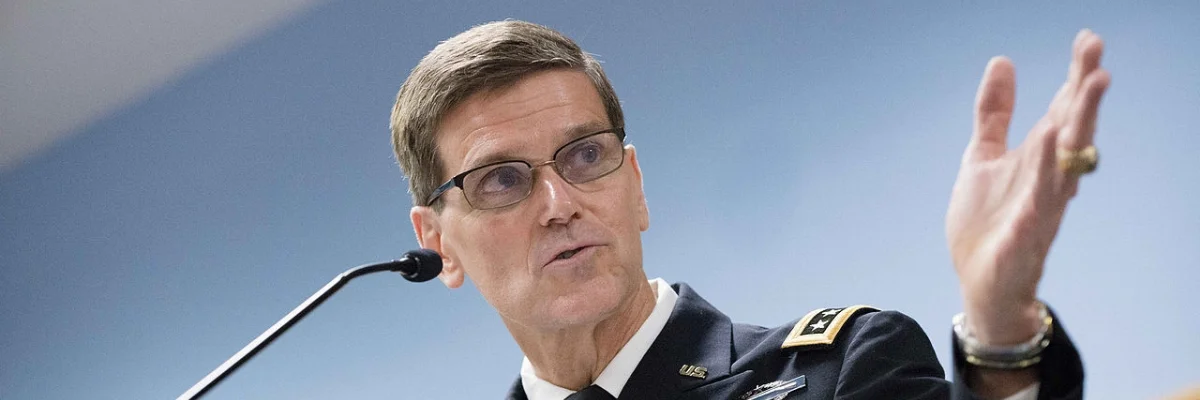
◢The Iranian nuclear deal is still in the best interests of the United States, a senior Pentagon official said Tuesday, going against President Donald Trump's claim that it's a "terrible" agreement. US Central Command chief General Joseph Votel told a Senate panel he shared the views of Defense Secretary Jim Mattis and Joe Dunford, the chairman of the
Joint Chiefs of Staff.
The Iranian nuclear deal is still in the best interests of the United States, a senior Pentagon official said Tuesday, going against President Donald Trump's claim that it's a "terrible" agreement.
US Central Command chief General Joseph Votel told a Senate panel he shared the views of Defense Secretary Jim Mattis and Joe Dunford, the chairman of the
Joint Chiefs of Staff.
"From my perspective, the JCPOA addresses one of the principal threats that we deal with from Iran," Votel said, using the deal's official acronym.
"So, if the JCPOA goes away, then we will have to have another way to deal with the nuclear weapons program."
Trump is threatening to scrap the international agreement unless tough new restrictions were placed on Iran before May 12.
He cited disagreements on the issue as a reason for his decision to fire on Tuesday his diplomatic chief Rex Tillerson and replace him with CIA Director Mike Pompeo, who is considered hawkish.
The president is concerned that parts of the deal start to expire from 2026 and that it fails to address Iran's missile program, its regional activities or its human rights abuses.
A US exit could kill the nuclear pact, which the Islamic republic has refused to re-negotiate.
Struck in 2015, it was signed by Iran with the five permanent members of the United Nations Security Council—Britain, China, France, Russia and the United States—plus Germany.
Under the agreement, Iran agreed to freeze its nuclear program in return for the lifting of punishing international sanctions.
While Iran has reaped massive economic benefits from the accord, notably by being able to resume oil exports, it is still constrained by US sanctions in other areas.
Photo Credit: Wikicommons
Tillerson Sacking Could Spell Doom for Iran Nuclear Deal
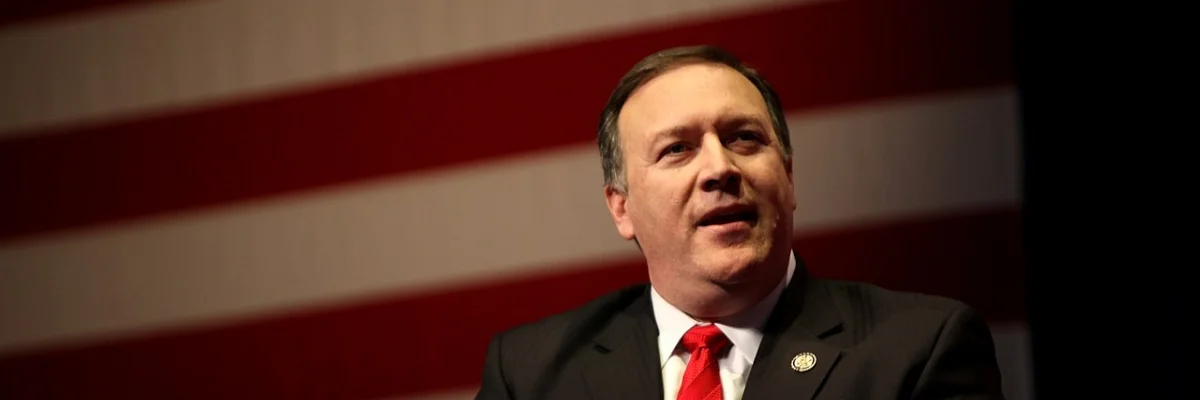
◢ President Donald Trump's sacking of Secretary of State Rex Tillerson could sound the death knell for the Iran nuclear deal and further strain US ties with key European allies. In explaining his decision to fire Tillerson, Trump said they had disagreed on many topics, but he specifically singled out one dispute: Whether or not to stay in the Iran pact.
President Donald Trump's sacking of Secretary of State Rex Tillerson could sound the death knell for the Iran nuclear deal and further strain US ties with key European allies.
In explaining his decision to fire Tillerson, Trump said they had disagreed on many topics, but he specifically singled out one dispute: Whether or not to stay in the Iran pact.
"When you look at the Iran deal. I thought it was terrible. He thought it was OK," Trump said. "I wanted to either break it or do something, he felt a little differently. So we were not really thinking the same."
On May 12, in exactly two months, the US leader is to pronounce on the fate of the Iran deal. If sacking Tillerson is any indicator of Trump's decision on the issue, it suggests the accord is in trouble.
If, as now appears likely, Trump indeed decides to drop out of the Joint Comprehensive Plan of Action (JCPOA), then the deal—and the hopes of a generation of European and US diplomats—will be dead.
"We're also working with allies and partners to block Iran's path to a nuclear weapon and confront its sponsorship of terror and bloodshed all around the world," Trump said later in a speech at Miramar Air Base in California.
"Everywhere we go in the Middle East it's Iran, Iran, Iran. Every problem is Iran. Well, we're dealing with it in a very serious fashion. One of the worst deals I've ever seen, was the Iran deal."
Under the JCPOA, adopted in October 18, Iran surrendered much of its nuclear infrastructure and opened the rest to international inspection in exchange for international sanctions relief.
The deal was signed between Tehran and six world powers: Britain, China, France, Germany, Russia and the United States.
First Instinct
The other signatories still regard the accord as a landmark victory in the battle to stop the spread of nuclear weapons. Iran denies it has sought such arms, but warns it could restart fuel enrichment quickly.
For his part, Trump campaigned condemning the accord as the "worst deal ever" and in office he has given ear to hawkish advisors who say it does not do enough to halt Iran's alleged quest for the bomb.
Tillerson and his cabinet ally Defense Secretary Jim Mattis have urged Trump to listen to his European allies and to preserve the deal intact, while seeking new measures to pressure Iran.
With Tillerson out of the picture -- and replaced by CIA director and Iran hawk Mike Pompeo -- Trump is all the more likely to follow his first instinct and blow up the entire accord.
For Thomas Countryman, who was assistant secretary of state for international security and nonproliferation from 2011 to 2017, the reshuffle could have catastrophic consequences for US national security.
Countryman argues that Tillerson "served as a Cabinet-level check on some of President Trump's worst impulses, such as wanting to 'break' the Iran nuclear agreement."
"Mr. Pompeo instead favors an aggressive Middle East policy that would undo
the diplomatic progress we made on nonproliferation and potentially embroil us
in a new conflict in that region."
Mark Dubowitz of the hawkish Foundation Foundation for Defense of
Democracies rarely agrees with Obama-era diplomats—but he does agree that
Pompeo's arrival is bad news for the deal.
"For those Europeans (and Americans) who think Trump is not serious about walking away on May 12th if there's no agreement to fix the Iran nuke deal, I give you Exhibit A: his soon-to-be Secretary of State Mike Pompeo," he tweeted.
For the moment, US diplomacy is carrying on as before.
Berlin Talks
State Department officials told AFP that Tillerson's chief of strategy Brian Hook will be in Berlin on Thursday to meet British, French and German officials about efforts to reform the deal.
This "fix" would expand the agreement to include restrictions on Iran's ballistic missile program and end the "sunset clauses" that allow Tehran to resume some enrichment within 10 years.
European leaders have expressed some sympathy for these ideas, if they would help bind Trump's America into a deal they regard as vital for their own national security and Middle East peace.
But they are looking at a possible "supplement" arrangement that would leave the core deal intact—and perhaps preserve Iranian support for it—while adding a separate annex to address Trump's concerns.
This in itself may not be possible, but even if it were, it might not go far enough for Trump and his new chief diplomat, Pompeo. At the weekend, respected Israeli journalist Barak Ravid of Channel 10 news reported that, last week, Trump promised Israeli Prime Minister Benjamin
Netanyahu that he would not accept a supplemental deal.
Israeli officials told Ravid that Trump opposes Europe's "cosmetic changes" and wants a "significant" rewriting of the Iran deal itself. This would almost certainly destroy the agreement.
Photo Credit: Wikicommons