

Japan Funds Development of Tuna Fisheries, Environmental Projects in Iran
Japan will fund UN initiatives to support fisheries in Chabahar, on Iran’s southeastern coast, and help foster sustainable livelihoods for locals who live near Lake Urmia in the country’s northwest.
Last month the Embassy of Japan in Tehran hosted a ceremony where two memorandums of understanding were signed new grants to support projects carried out by the United Nations Industrial Development Organization (UNIDO) and the United Nations Development Programme (UNDP) in Iran. The UN initiatives will support fisheries in Chabahar, on Iran’s southeastern coast, and help foster sustainable livelihoods for locals who live near Lake Urmia in the country’s northwest.
Attending the event were Kazutoshi Aikawa, the Ambassador of Japan; Maryam Javan Shahraki, UNIDO Representative in Iran; Claudio Providas, the UNDP Resident Representative in the Islamic Republic; Nabiollah Khoun-Mirzaei, Head of Iran Fisheries Organization; Ahmadreza Lahijanzadeh, Deputy for Marine and Wetlands at the Department of Environment; and representatives from Iran’s ministries of Agriculture and Foreign Affairs.
In his opening speech, the Japanese ambassador affirmed his country’s willingness to continue the expansion of its friendly relations with Iran.
“The government of Japan has decided to grant ¥676 million (about $6 million) to the Islamic Republic of Iran for the implementation of the two important projects,” Aikawa said.
The MoU signed with UNIDO will begin the third phase of the “Project for Promoting Inclusive and Sustainable Development of the Yellowfin Tuna Value Chain in Chabahar,” which started in 2017.
Javan Shahraki said that UNIDO and Japan have enjoyed a strong connection for decades and that their partnership encompasses all aspects of industrial development, from reducing poverty and promoting security in crisis-affected areas to trade, technology promotion and facilitating investment.
“Today we celebrate the signing ceremony of a Grant Aid ‘Project for Promoting Inclusive and Sustainable Development of the Yellowfin Tuna Value Chain’ in the strategic port of Chabahar in Sistan and Baluchestan Province,” Javan Shahraki said. “Building on earlier interventions to build the capacity of the tuna value chain in Chabahar, the new project will support the ability of local fishermen to access new markets while at the same time enhancing the sustainability of the fishery industry in Iran.”
Adding high-quality tuna to Iran’s list of regional and global exports is one of the main achievements of the UNIDO project in Chabahar, Javan Shahraki said. The project is also upgrading Chabahar Veterinary Laboratory and Iran Veterinary Lab with diagnostic kits and equipment; establishing sustainable links between private-sector companies in Iran and Japan; organizing study tours in Japan for Iranian fishermen, policymakers and laboratory experts; conducting workshops in Iran and Japan on marine cage culture, stock enhancement and after-catch management processes, on-site fishing and info-sharing for Iranian fishermen in Japan.
Javan Shahraki told Bourse & Bazaar that UNIDO has prioritised development activities in Iran, including strengthening the value chain of local and indigenous products.
“We are happy to have received Japan’s $3.5 million financial assistance for the project at hand,” Javan Shahraki said. “Chabahar’s yellowfin tuna has a competitive edge to it in the international markets compared with other tuna fish. Today marks the beginning of the third phase of our cooperation with Japan in this project. During the first phase, we studied the region’s ecology to see which species need to be focused on. Based on the research carried out by UNIDO as well as Japanese experts, Iran’s tuna fish was deemed one of extraordinary size, which in turn can generate a high value added. Yet, if harvest methods and ways of environment preservation are not improved, the fish could either fall prey to the danger of extinction or shrink in size. Right now, our tuna fish in Chabahar is three times as big as that of Japan.”
Using the government’s grant aid, UNIDO has trained local fishermen on best practices for harvesting and preserving yield quality during post-harvest procedures, and Chabahar’s quality control laboratories now have the equipment required for quality preservation.
Khoun-Mirzaei told Bourse and Bazaar that Iran has a huge capacity to produce tuna, but harvest and after-catch preservation methods are up to speed with the latest techniques used elsewhere in the world.
“This is why the collaboration between the UNIDO office in Tehran and the Japanese government is so significant, since it will upgrade our harvest knowledge, fishing equipment, quality-control methods and ecosystem preservation, and help our high-quality tuna find its way into international markets while enjoying higher value added,” Khoun-Mirzaei said.
Isa Golshahi, General Director of Iran Fisheries Organization’s Seafood Quality Improvement, Processing and Marketing Promotion Department, told Bourse and Bazaar that this project will ensure that generating higher values from the yellowfin tuna is more easily attainable.
“The fish indigenous to our waters has a high quality,” Golshahi said. “Through the cooperation with UNIDO and Japan, we can turn the tuna currently sold at prices lower than $2 per kilogram into products worth over $8 or in some cases $20 per kilogram.”
Japan Funds UNDP’s Lake Urmia Project
The second document signed during Wednesday’s ceremony marked the start of a new phase of collaboration between UNDP and the Japanese government on the “Project for Promoting Environmental Management and Sustainable Livelihoods in Lake Urmia and Other Wetlands.” Japan has provided a grant aid worth approximately US$3 million to continue work on Lake Urmia.
“The project has an environmental component but also has a focus on livelihoods,” Providas told Bourse & Bazaar. “To preserve the environment, you need to look at livelihoods as well. The important component is economic diversification and creating jobs. Can we improve water usage for farming but reduce the reliance of farming activities of around 250 villages around Lake Urmia on this endangered water body? This is what we are working on.”
Lahijanzadeh said that the Iranian government has so far spent around $1 billion on saving Lake Urmia and has been granted funds and technical assistance from Japan over several years.
“We hope to be able to transfer the knowledge and experience we have had with Japanese experts and UNDP assistance to Parishan Lake in Fars Province and Shadegan Wetlands in the southern Khuzestan Province as well,” Lahijanzadeh said.
In his speech, the Japanese ambassador said that in line with efforts to revive Lake Urmia and prevent it from drying up, the government of Japan has supported UNDP’s project for the lake’s restoration through sustainable agricultural practices and biodiversity conservation since 2014.
“In this new project, the knowledge and experiences gathered through all these years will be transferred to the remaining spots of the Lake Urmia basin, and it will also be disseminated to two other wetlands in Iran, which are facing similar problems,” Aikawa said.
Photo: IRNA
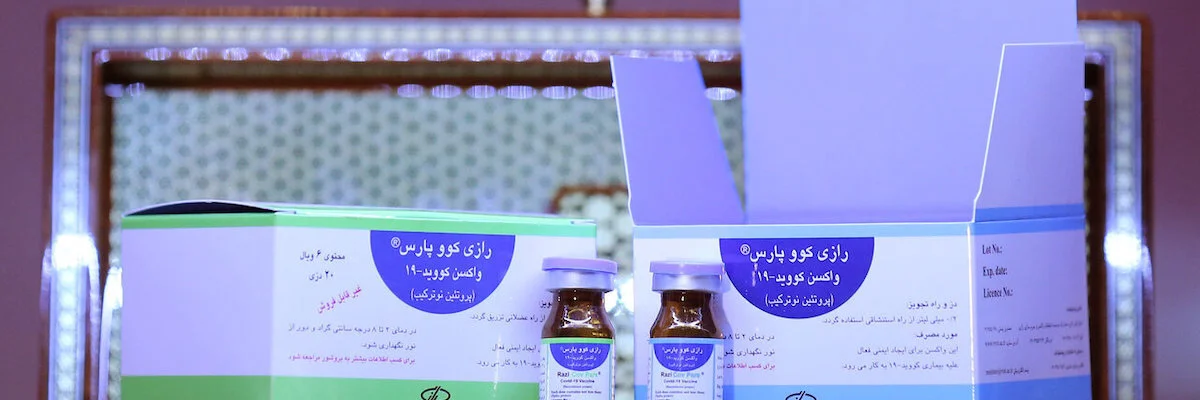
Iran Unveils Second Homegrown Virus Vaccine Project
Iran unveiled its second homegrown coronavirus vaccine project Monday, the day before the launch of a vaccination campaign to combat the Middle East's deadliest Covid-19 outbreak.
Iran unveiled its second homegrown coronavirus vaccine project Monday, the day before the launch of a vaccination campaign to combat the Middle East's deadliest COVID-19 outbreak.
“We will start human tests in the coming days, or in a week at the latest," Massoud Soleimani, a member of Iran's national vaccine committee, told journalists in Karaj near Tehran.
The vaccine, dubbed Razi Cov Pars, was developed at the Razi Vaccine and Serum Research Institute, which is linked to the agriculture ministry, Soleimani said.
At the start of Phase 1 of the clinical trials, "13 volunteers between the ages of 18 and 55" will receive a jab, he added.
The unveiling comes the day before the launch Tuesday of a campaign to vaccinate Iran's 80-million-plus population, starting with the Sputnik V jab, according to Health Minister Saeed Namaki.
The first doses of the Russian vaccine arrived on Thursday in Tehran, with two other shipments expected by February 18 and 28, according to Iranian authorities.
The Islamic republic has bought two million doses of Sputnik V, health ministry spokesman Kianoush Jahanpour told AFP on Saturday.
Namaki said last week that Iran would also receive 4.2 million doses of the vaccine developed by Anglo-Swedish firm AstraZeneca and Oxford University, purchased via the international vaccine mechanism COVAX.
The coronavirus has killed more than 58,500 people and infected 1.4 million in Iran, according to the health ministry.
Iran started clinical trials of its first locally developed vaccine in late December.
Photo: IRNA
UN Court Takes on Iran-US Sanctions Case
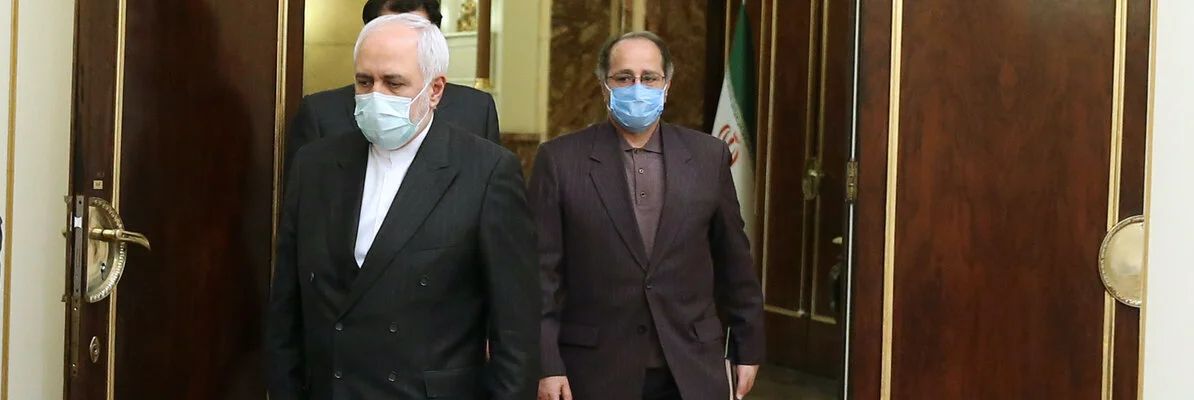
The UN's top court ruled on Wednesday that it can take on Iran's bid to overturn US nuclear sanctions reimposed by the administration of former US president Donald Trump.
By Danny Kemp
The UN's top court ruled on Wednesday that it can take on Iran's bid to overturn US nuclear sanctions reimposed by the administration of former US president Donald Trump.
Iran's foreign minister swiftly hailed the decision as a "victory" in the case launched three years ago at the International Court of Justice (ICJ) in The Hague.
Tehran alleges that Trump breached a 1955 friendship treaty between the two countries when he pulled out of a 2015 nuclear deal -- to the dismay of European allies -- and reactivated the sanctions.
Washington had said the Hague-based ICJ did not have jurisdiction and must throw out the case. It also argued the sanctions were necessary because Iran posed a "grave threat" to international security.
But judges at the court rejected all the US objections.
International Court of Justice President Abdulqawi Ahmed Yusuf said the tribunal "finds consequently that it has jurisdiction.... to entertain the application filed by the Islamic Republic of Iran".
A final ruling on sanctions by the ICJ—set up after World War II to rule in disputes between UN member states—could still be months or even years away.
The 2015 nuclear deal saw Tehran limit its nuclear powers and let in international inspectors, in return for an end to years of sanctions by the West.
After Trump pulled out, Iran invoked the 1955 "Treaty of Amity", which predates the 1979 Islamic revolution that overthrew the pro-US shah and severed ties with the United States.
Iran said the reimposition of sanctions caused "hardship and suffering" and was "ruining millions of lives".
Rouhani Rejects Changes
It is the second win for Iran in the case, after the ICJ ordered the US in 2018 to ease sanctions on humanitarian goods as an emergency measure while the overall lawsuit is dealt with.
In response, Washington formally ended the Treaty of Amity that same year.
"Another legal victory for Iran," foreign minister Mohammad Javad Zarif tweeted on Wednesday.
"Iran has always fully respected int'l law. High time for the US to live up to its int'l obligations," Zarif said.
The 2015 nuclear deal involving the five permanent members of the UN Security Council—Britain, China, France, Russia and the US, plus Germany—has hung by a thread since Trump pulled out.
Iranian President Hassan Rouhani earlier Wednesday ruled out changes to the nuclear accord and dismissed calls to broaden the terms of the deal and include regional countries.
US President Joe Biden has voiced support for returning to the deal but insisted that Tehran first resume full compliance by reversing measures it took to protest the sweeping sanctions imposed by his predecessor.
The Biden administration argues that Trump's actions badly backfired, with Iran both moving away from the nuclear deal and only intensifying its opposition to US interests.
Zarif on Monday asked the European Union to coordinate a synchronised return of both Washington and Tehran.
Photo: IRNA
Iran Expects First Batch of Russian Vaccine This Week
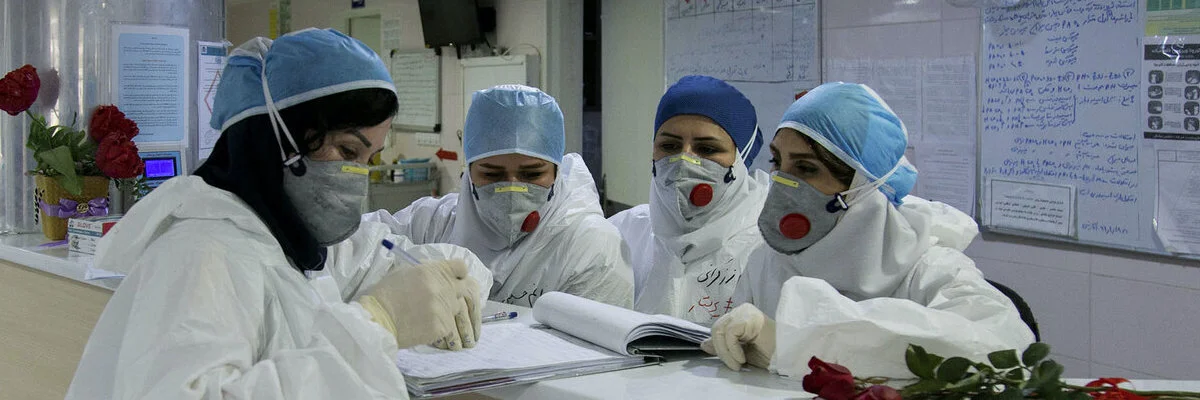
Iran's ambassador to Russia said Saturday that Tehran expects to receive the first batch of Moscow's Sputnik V coronavirus vaccine by February 4, state news agency IRNA reported.
Iran's ambassador to Russia said Saturday that Tehran expects to receive the first batch of Moscow's Sputnik V coronavirus vaccine by February 4, state news agency IRNA reported.
The news comes just days after Iran's Foreign Minister Mohammad Javad Zarif announced the vaccine had been approved by the Islamic Republic.
"A contract for the purchase and joint production was signed yesterday between Iran and Russia," envoy Kazem Jalali said, quoted by IRNA.
Two more batches are to be delivered by February 18 and 28, he added, without specifying quantities.
Iran's supreme leader Ayatollah Ali Khamenei earlier this month banned the use of vaccines made by the United States and Britain, calling them "completely untrustworthy".
Iran is fighting the Middle East's deadliest outbreak of COVID-19 with more than 57,800 dead out of over 1.4 million cases.
The country says arch enemy US has blocked its access to vaccines through Washington's tough sanctions regime.
While food and medicine are technically exempt, international banks tend to refuse transactions involving Iran.
Russia registered the jab—named after the Soviet-era satellite—in August last year, before the start of large-scale clinical trials, leaving some experts wary.
Sputnik V's developers have since said the vaccine is more than 90 percent effective and several countries outside of Russia have begun administering it, including Argentina.
Hungary has also said it has reached a deal to buy the vaccine, although it has not been approved by the European Union.
Iran started clinical trials of its own vaccine in late December.
Photo: IRNA
Russia Says Biden Must Lift Sanctions to Save Iran Nuclear Deal
Russia said Tuesday it was up to Washington to take the first steps if US President Joe Biden wants to salvage the landmark Iran nuclear deal.
By Jonathan Brown
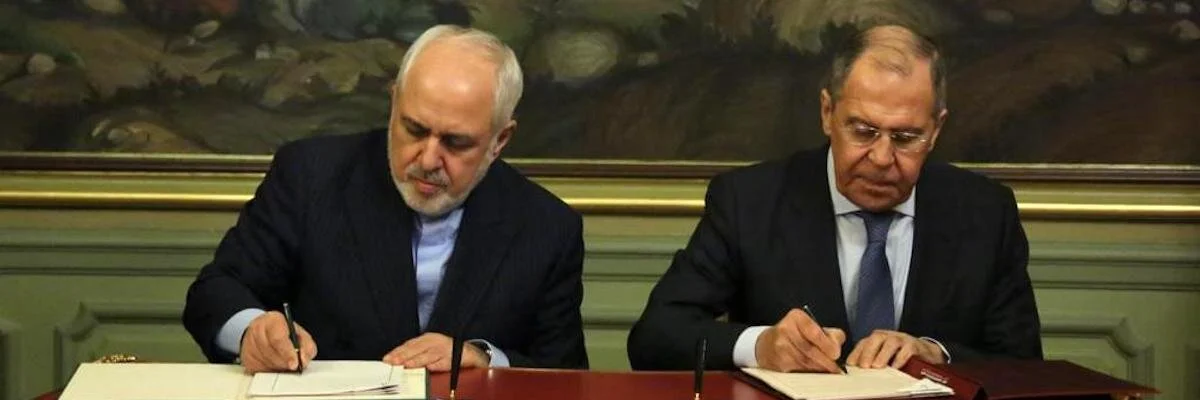
Russia said Tuesday it was up to Washington to take the first steps if US President Joe Biden wants to salvage the landmark Iran nuclear deal.
Foreign Minister Sergei Lavrov urged Washington to lift sanctions on Tehran and save the historic agreement during his first talks with his Iranian counterpart since Biden's election victory raised hopes for the fate of the deal.
Lavrov said that Russia and Iran "share the same position" on the preservation of the 2015 accord, urging the United States to lift sanctions as a condition for Iran's return to compliance
"This in turn will provide the preconditions for the implementation of all requirements of the nuclear deal by the Islamic Republic of Iran," he told journalists.
The talks in Moscow came days after Iranian Foreign Minister Mohammad Javad Zarif urged the United States to make the "fundamental choice" to end its sanctions regime and reverse the "failed policies" of the previous White House administration, which took a hawkish position on Tehran.
He cautioned that any efforts by Washington to extract additional concessions would ultimately end in failure.
"Iran wants the nuclear deal it made," Zarif wrote in an op-ed in the US foreign policy magazine Foreign Affairs last week.
He reiterated Iran's position while in the Russian capital Tuesday, saying that if Washington cancels its penalties on Tehran, then Iran will not restrict the work of inspectors and return to its obligations under the accord.
"We will resume their complete implementation," Zarif said. The agreement was largely left in tatters after former US president Donald Trump unilaterally withdrew and ordered officials to reimpose tough penalties against Tehran as part of his administration's "maximum pressure" policy. Known as the Joint Comprehensive Plan of Action (JCPOA), the deal was agreed between Iran, the United States, China, Russian, Britain, France and Germany in 2015.
'Businesslike and Pragmatic'
The deal offered sanctions relief in exchange for curbs on Tehran's nuclear ambitions and guarantees it would not seek an atomic bomb. Iran maintains it has only pursued a civilian nuclear energy programme.
Immediately following the talks in Moscow, the French presidency on Tuesday said Iran must comply with the accord in order to see a US return, in direct contradiction to Russia's stance.
"If they are serious about negotiations and want to obtain a new commitmentfrom all participants in the JCPOA, first they must refrain from further provocations and second they must respect what they are no longer respecting" in terms of commitments, an official said on condition of anonymity.
Later Tuesday, Zarif tweeted: "It was the US that broke the deal—for no reason. It must remedy its wrong; then Iran will respond." A new wave of US sanctions has hit hard Iran's vital oil sector and its international banking ties, plunging the economy into a recession. Biden's pick for secretary of state, Antony Blinken, said at a Senate confirmation hearing this month that Trump's policies had made Iran "more dangerous.”
While Blinken confirmed Biden's desire for Washington to return to the nuclear agreement, both the United States and Iran have said the other must return to full compliance before the accord is implemented again.
Since the US exit, Russia and European signatories had advocated efforts to save the accord and cautioned Iran against bolstering its nuclear enrichment. Russia's Deputy Foreign Minister Sergei Ryabkov in December called on Iran to take "maximum responsibility" after Tehran announced plans to install advanced centrifuges in the country's main nuclear enrichment plant.
The ministry earlier this month blamed Iran's departure from the nuclear deal on "systematic crude violations" by the United States. Moscow appears cautiously optimistic over the fate of the deal under the new White House administration after its arms negotiator Mikhail Ulyanov described Washington's position as "businesslike and pragmatic.”
But time is running out for signatories to restore the nuclear deal and bring all parties back on track.
Legislation passed by Iran's parliament in December requires Tehran to boost uranium enrichment and limit UN inspections if sanctions are not removed by February.
Photo: IRNA
Qatar Calls for GCC Talks with Iran
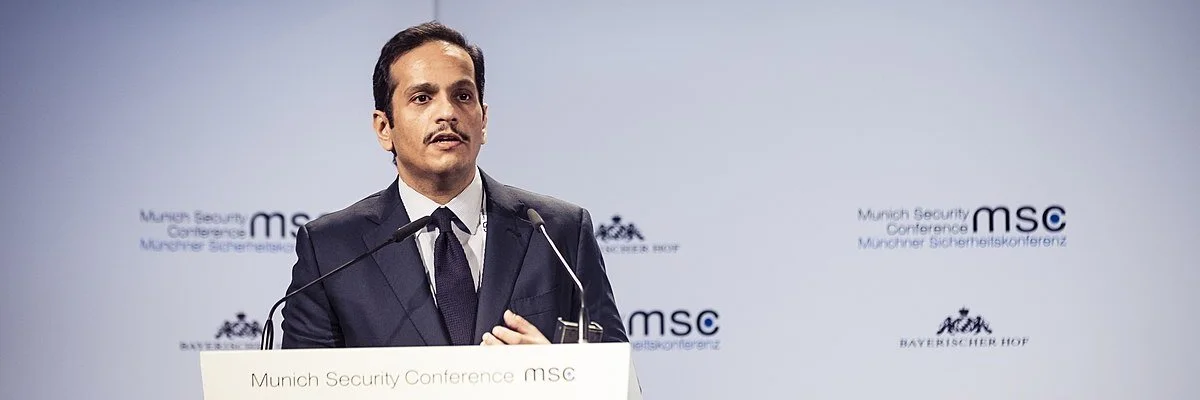
Qatar has called for countries of the Gulf Cooperation Council to hold talks with Iran, the foreign minister said in an interview aired Tuesday, after Doha reconciled with its neighbors following a rift.
Qatar has called for countries of the Gulf Cooperation Council (GCC) to hold talks with Iran, the foreign minister said in an interview aired Tuesday, after Doha reconciled with its neighbors following a rift.
Foreign Minister Sheikh Mohammed bin Abdulrahman Al-Thani, who has previously called for dialogue with Iran, told Bloomberg TV he was "hopeful that this would happen and we still believe this should happen.”
"This is also a desire that's shared by other Gulf Cooperation Council countries," he said.
It comes weeks after GCC hawks Saudi Arabia, Bahrain and the UAE re-established ties with Qatar after breaking them off in June 2017 partly over allegations that Qatar was too close to Iran. Doha denied the accusations.
Qatar and Iran share one of the world's largest gas fields and Doha maintains cordial relations with Tehran.
Doha is a close ally of Washington and has previously mediated between the US and Iran suggesting that Sheikh Mohammed's intervention could be timed as a signal to the incoming administration of President-elect Joe Biden. Biden is due to take office on Wednesday.
The current occupant of the White House, President Donald Trump, has pursued a policy of "maximum pressure" on Iran and pulled the United States out of a multilateral nuclear deal with it in 2018.
Tehran's arch-rival Riyadh, the dominant GCC power, has not publicly indicated any willingness to engage with Iran.
Instead Saudi Arabia insisted that this month's rapprochement with Qatar meant the Gulf family would be better able to combat "the threats posed by the Iranian regime's nuclear and ballistic missile programme".
"Qatar will facilitate negotiations, if asked by stakeholders, and will support whoever is chosen to do so," added Sheikh Mohammed.
Photo: Wikicommons
Iran Advances Research on Uranium Metal Production
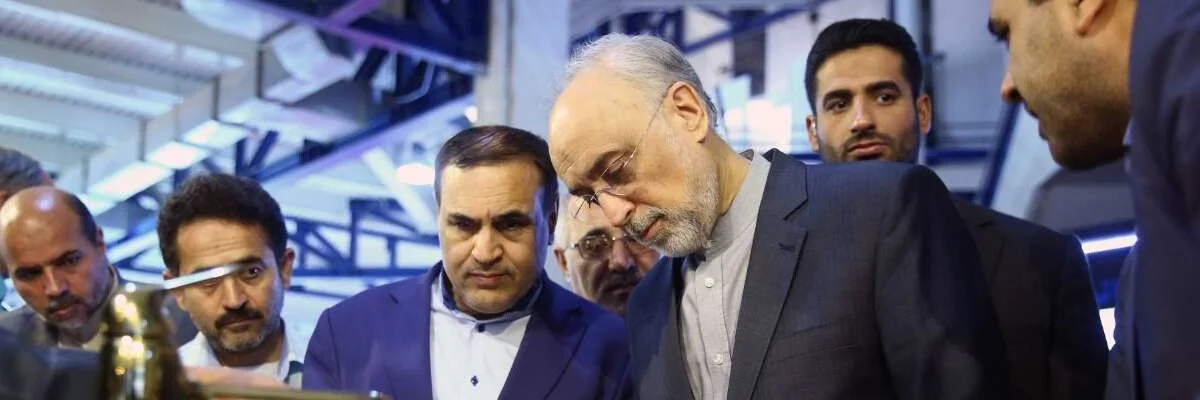
Tehran told the UN nuclear watchdog Wednesday that it was advancing research on uranium metal production, in what would be a fresh breach of the limits in Iran's 2015 deal with world powers.
Tehran told the UN nuclear watchdog Wednesday that it was advancing research on uranium metal production, in what would be a fresh breach of the limits in Iran's 2015 deal with world powers.
The latest move, which adds to pressure on US President-Elect Joe Biden just days before his inauguration, concerns Iran's plans to conduct research on uranium metal production at a facility in the city of Isfahan.
The Vienna-based International Atomic Energy Agency (IAEA) said in a statement that "Iran informed the Agency in a letter on 13 January that modification and installation of the relevant equipment for the mentioned R&D activities have been already started'".
Iran says the research is aimed at providing advanced fuel for a research reactor in Tehran.
"Natural uranium will be used to produce uranium metal in the first stage," the Iranian ambassador to the UN in Vienna Kazem Gharib Abadi said in a tweet.
The topic is sensitive because uranium metal can be used as a component in nuclear weapons and the 2015 deal contained a 15-year ban on "producing or acquiring plutonium or uranium metals or their alloys".
After 10 years Iran would have been allowed to initiate research on producing uranium metal-based fuel "in small agreed quantities" but only if the other parties to the deal had given approval.
In 2018 US President Donald Trump dramatically withdrew from the deal and went on to re-impose crippling economic sanctions on Iran.
The following year Tehran announced it would start breaking the deal's limits on its nuclear activity.
The breaches have included exceeding the stockpile limit on enriched uranium, enriching beyond the permitted purity level, and using more advanced centrifuges than permitted under the deal.
Tensions have increased since the assassination in late November of Iranian nuclear physicist Mohsen Fakhrizadeh.
In the aftermath of the attack, blamed on Israel, hardliners in Tehran pledged a response and Iran's parliament passed a controversial law calling for expanded nuclear activity and for an end to IAEA inspections.
The law also demanded Iran's Atomic Energy Organization "operate a facility of metal uranium production" within five months.
Iran says all of its breaches of the 2015 deal's limits are reversible, but insists that the US has to come back to the deal and lift sanctions first.
Biden has signalled he is willing to rejoin the pact but faces a tight window of opportunity between his own inauguration and presidential elections in Iran in June.
Photo: IRNA
Iran Wants 'Snapback' Erased From Nuclear Deal
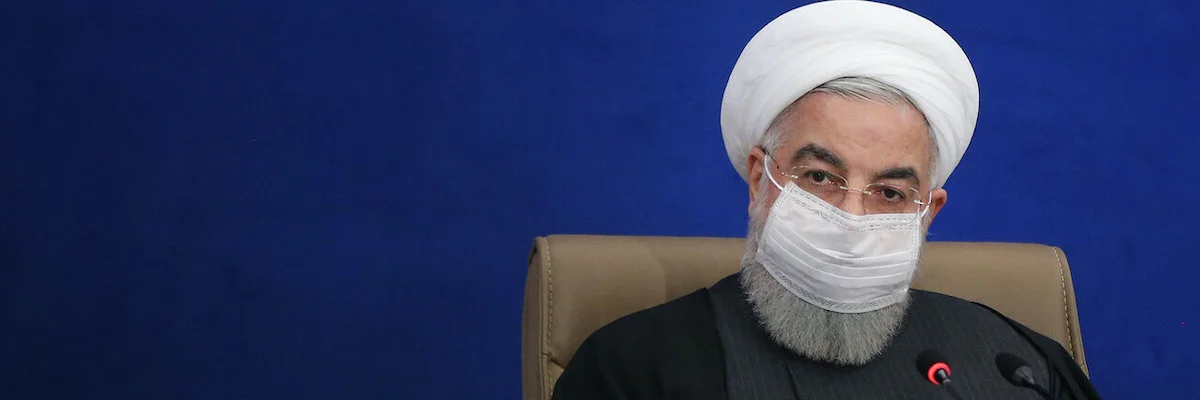
Iran wants to remove a clause from a 2015 nuclear deal that allows for UN sanctions against it to be reinstated, a senior official has said, hinting Tehran would be open to negotiations on the issue.
Iran wants to remove a clause from a 2015 nuclear deal that allows for UN sanctions against it to be reinstated, a senior official has said, hinting Tehran would be open to negotiations on the issue.
The agreement between the Islamic republic and six major powers had provided for the lifting of sanctions in exchange for stringent checks on Tehran's nuclear programme and guarantees that it could not seek to acquire a nuclear weapon.
The text also contains a "snapback" mechanism that could be triggered in case of "significant non-performance" of its commitments by Iran.
This would allow the United Nations Security Council to reimpose all the sanctions it had imposed between 2006 and 2015 over Tehran's nuclear activities.
The administration of United States President Donald Trump last year attempted to trigger the mechanism, but the move was rejected, as the US had unilaterally withdrawn from the nuclear deal in 2018.
"From the outset, (Iran's supreme leader Ali Khamenei) was against this snapback mechanism, which was designed against his wishes," said key Khamenei diplomatic advisor Ali Akbar Velayati in an interview published on Khamenei's website.
"In the coming negotiations, this mechanism will certainly need to be abandoned, because it's absurd."
The nuclear deal has come close to collapse since the withdrawal of the United States, which under Trump has adopted a hardline policy of "maximum pressure" against Iran, reimposing crushing US sanctions that have devastated the Iranian economy.
In response, Tehran has rolled back most of its key commitments under the accord, arguing that it is permitted to do so under the deal in light of US moves.
US President-elect Joe Biden, who takes office on January 20, says he wants to rejoin the pact.
But Khamenei insisted last week that "we are in no rush" to see the US rejoin the accord, demanding that the US first remove all the sanctions it had imposed or reinstated since 2018.
Tehran has ruled out a full overhaul of the deal, but says the US rejoining it must be the result of further negotiations.
Photo: IRNA
One Year After Plane Downed, Victims' Governments Demand Justice from Iran
Canada and other nations whose citizens died in Iran's downing of a Ukrainian jetliner one year ago on Friday called on Tehran to come clean about the tragedy and "deliver justice" for the victims' families.
Canada and other nations whose citizens died in Iran's downing of a Ukrainian jetliner one year ago on Friday called on Tehran to come clean about the tragedy and "deliver justice" for the victims' families.
"We urgently call on Iran to provide a complete and thorough explanation of the events and decisions that led to this appalling plane crash," the coordination and response group made up of Canada, Britain, Ukraine, Sweden and Afghanistan said in a statement.
They also said they "will hold Iran to account to deliver justice and make sure Iran makes full reparations to the families of the victims and affected countries."
In Toronto, in Canada's Ontario province, nearly 200 people gathered under cloudy skies Friday afternoon in front of the University of Toronto before holding a march in honor of the crash victims, according to an AFP photographer at the scene.
Many people carried signs depicting the victims' photos and names. Other people wore black face masks printed with the word "Justice."
Among the marchers was Hamid Niazi, who lost his wife, daughter and son in the crash.
"I am not sure how I can explain that, I am still in (a) state of denial and disbelief. I can't believe that that happened to my family," he told AFP.
"Sometimes I think I am having a nightmare, that this couldn't happen."
In Kiev, where the doomed plane was bound, wreaths of flowers were laid on the site of a future memorial dedicated to the victims. A giant screen showed photos of the passengers and crew members.
'Thorough, Transparent and Credible Investigation'
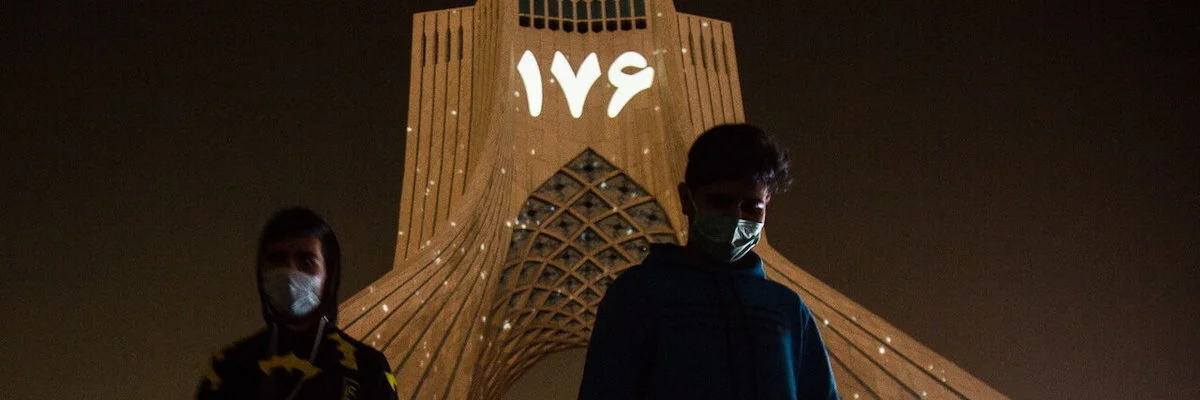
At the end of December, Iran offered to pay US$150,000 to each of the families of the victims of Ukraine International Airlines Flight 752, acknowledging that its forces had mistakenly shot it down on January 8, 2020, killing all 176 people on board, including 85 Canadian citizens and permanent residents.
On Thursday, Canadian Foreign Minister Francois-Philippe Champagne rejected the offer, saying: "The issue of compensation will not be set through unilateral statements by Iran but rather be subject to state-to-state negotiations."
In a separate statement on Friday, Canadian Prime Minister Justin Trudeau once again demanded from Iran a "thorough, transparent and credible investigation into the cause of this tragedy."
He also vowed "to hold Iran accountable, including by ensuring that Iran makes full reparations for the victims of PS752 and their grieving families, and to ensure that those responsible are brought to justice."
In mid-December, Canada's special counsel into the tragedy, former minister Ralph Goodale, issued a 70-page report arguing that Iran should not be "investigating itself" over the matter, emphasizing that many of the key details surrounding the crash remained unknown.
Trudeau, Champagne and several other members of the government spoke with victims' families on Thursday during a private virtual commemoration.
The prime minister also recently announced that January 8 would become known as Canada's National Day of Remembrance for Victims of Air Disasters.
Photo: IRNA
South Korean Delegation in Iran After Oil Tanker Seized
A South Korean delegation arrived in Iran on Thursday amid tensions following the seizure of a South Korean oil tanker and its crew by Iranian forces in sensitive Persian Gulf waters this week.
A South Korean delegation arrived in Iran on Thursday amid tensions following the seizure of a South Korean oil tanker and its crew by Iranian forces in sensitive Persian Gulf waters this week.
Iran's Revolutionary Guards said Monday it had seized the South Korean-flagged Hankuk Chemi for infringing maritime environmental laws.
The Guards said the vessel was carrying 7,200 tonnes of "oil chemical products" and that the detained crew were from South Korea, Indonesia, Vietnam and Myanmar.
The South Korean delegation, led by the director-general of the foreign ministry's Middle Eastern affairs department, boarded a plane early Thursday and was set to arrive in Tehran via Doha.
"I plan to meet my counterpart at the Iranian foreign ministry and will meet others through various routes if it will help efforts to resolve the issue of the ship's seizure," said Koh Kyung-sok, the chief delegate, before boarding the plane.
But the government spokesman in Tehran gave a different version of the reason for the visit.
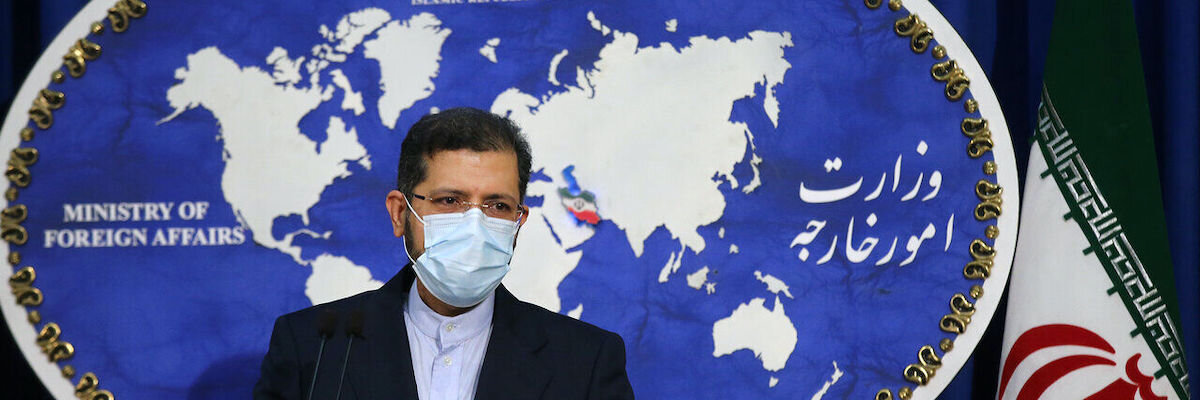
In a statement late Thursday Said Khatibzadeh said it was an advance delegation ahead of a visit Sunday by South Korean deputy foreign minister Choi Jong-Kun.
The visit by the South Korean delegation "had been agreed before the seizure" of the Hankuk Chemi oil tanker, "and its main goal is to discuss ways of accessing Iranian funds in Korea", Khatibzadeh said.
Iran's seizure of the tanker came after Tehran had urged Seoul to release billions of dollars of Iranian assets frozen in South Korea under US sanctions. Iran was a key oil supplier to resource-poor South Korea until Washington's rules blocked the purchases.
Seoul has said that South Korea's deputy foreign minister would discuss the frozen assets during his three-day visit to Iran, and the trip would go ahead despite the seizure.
According to Iranian government spokesman Ali Rabiei, Iran has "$7 billion of deposits in South Korea".
The money can neither be transferred nor earn interest, yet Iran is charged fees on it, he has said.
The Hankuk Chemi incident was the first seizure of a major vessel by the Iranian navy in more than a year
In July 2019, the Guards seized the British-flagged oil tanker Stena Impero in the sensitive Strait of Hormuz for allegedly ramming a fishing boat. They released it two months later.
At the time it was widely seen as a tit-for-tat move after authorities in the British overseas territory of Gibraltar detained an Iranian tanker and later released it over US objections.
Tehran denied the two cases were related.
The Guards seized at least six other ships in 2019 over alleged fuel smuggling.
Photo: IRNA
Iran Steps Up Nuclear Programme, Holds South Korean Tanker
Iran said Tuesday it had stepped up its uranium enrichment at a time of heightened tensions with the United States and after it seized a South Korean tanker in strategic Persian Gulf waters.
By Amir Havasi
Iran said Tuesday it had stepped up its uranium enrichment at a time of heightened tensions with the United States and after it seized a South Korean tanker in strategic Persian Gulf waters.
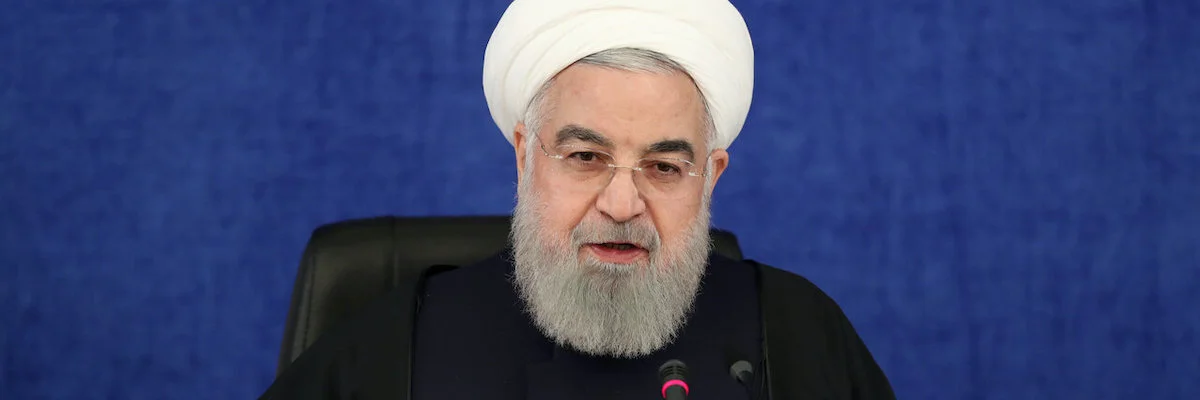
Tehran said it was now refining uranium to 20 percent purity—far above the level permitted under its 2015 agreement with world powers, but far below the 90 percent required for an atomic bomb—in a step Washington condemned as "nuclear extortion.”
The European Union noted Iran's step "with deep concern" and said it planned to "redouble our efforts to preserve the agreement and return to its full implementation by all parties.”
It was the most striking suspension yet of Tehran's commitments under its landmark deal with six nations, which has been fraying since US President Donald Trump withdrew from it in 2018 and reimposed crippling sanctions.
A war of words has flared again in the final weeks of Trump's presidency and as Iran and its allies have marked one year since a US drone strike in Baghdad killed Iran's most revered military commander, Qasem Soleimani.
Washington has meanwhile reversed an order to bring home its USS Nimitz aircraft carrier from the Persian Gulf, citing "threats" against Trump, after recently also flying B-52 bombers over the region.
Iran's Islamic Revolutionary Guard Corps has warned it is ready to respond to any attack.
'Not Hostage-Takers'
On Monday, the Guards seized the South Korean-flagged Hankuk Chemi and arrested its multinational crew of 20 near the Strait of Hormuz, a chokepoint through which a fifth of world oil output passes, alleging the tanker had polluted the area's waters.
South Korea has demanded the ship's release and deployed a destroyer to the area—though with no plans to engage in an offensive operation, an unnamed military official told Yonhap News Agency.
Seoul said it would send a government delegation to Iran to negotiate the release of the vessel and its crew. Iran's move came after Tehran had urged Seoul to release billions of dollars of Iranian assets frozen in South Korea as part of the US sanctions.
"We are not hostage-takers," said Iran's government spokesman Ali Rabiei. "It is the government of Korea that has taken over $7 billion of ours hostage on baseless grounds."
South Korea's vice foreign minister Choi Jong-kun plans to go ahead with a scheduled three-day trip to Tehran early next week, his office said.
Nuclear Tensions
Iran first announced Monday it had stepped up the uranium enrichment process at its underground Fordo site, in a move confirmed by UN nuclear watchdog the IAEA.
"We can produce about eight to nine kilograms of 20 percent enriched uranium so that we reach the 120 kilos the law requests from us," Ali Akbar Salehi, head of the Atomic Energy Organization of Iran, said on Tuesday.
Iran's conservative-dominated parliament voted for the step after the November killing of its top nuclear physicist Mohsen Fakhrizadeh, an assassination Iran blamed on Israel.
Israeli Prime Minister Benjamin Netanyahu has charged Iran's latest nuclear move proved it is seeking to build an atomic bomb—a claim Iran has always strongly denied—and pledged the Jewish state "will not allow" it to do so.
The US State Department labelled Iran's stepped-up enrichment "a clear attempt to increase its campaign of nuclear extortion, an attempt that will continue to fail.”
Trump's son-in-law and adviser Jared Kushner was in Saudi Arabia on Tuesday for a Persian Gulf regional summit, amid a broader US diplomatic strategy to build a regional united front against Iran.
As a Riyadh-led group sought to end a three-year rift with Qatar, Saudi Crown Prince Mohammed bin Salman spoke of a "desperate need" to unite and to "confront challenges... especially the threats posed by the Iranian regime's nuclear and ballistic missile programme and its plans for sabotage and destruction.”
Iranian President Hassan Rouhani's government has signalled it is ready to engage with US President-elect Joe Biden, who has likewise expressed a willingness to return to diplomacy.
Biden, who takes office on January 20, was vice president to Barack Obama, whose administration had finalised the 2015 nuclear deal and hailed it as a landmark achievement.
Iran's Foreign Minister Mohammad Javad Zarif said Tehran took the latest enrichment step "after years of non-compliance" by other parties and that "our measures are fully reversible upon full compliance by all.”
Russia's foreign ministry said in a statement it "paid tribute to the regular declarations by Iranian leaders of their willingness to return to full respect for the requirements of the agreement".
It added, however, that "additional efforts and costs will now be required to bring the Fordo site in line with the terms of the agreement."
Photo: IRNA
Iran Energy Minister in Baghdad Over Trade Dispute
Iran's Energy Minister Reza Ardakanian met with officials in Baghdad on Tuesday amid a trade dispute that has seen electricity reduced for 40 million Iraqis already facing shortages for decades.
Iran's Energy Minister Reza Ardakanian met with officials in Baghdad on Tuesday amid a trade dispute that has seen electricity reduced for 40 million Iraqis already facing shortages for decades.
The National Iranian Gas Company (NIGC) said in a statement that the Iraqi electricity ministry owed it "more than six billion dollars in arrears.”
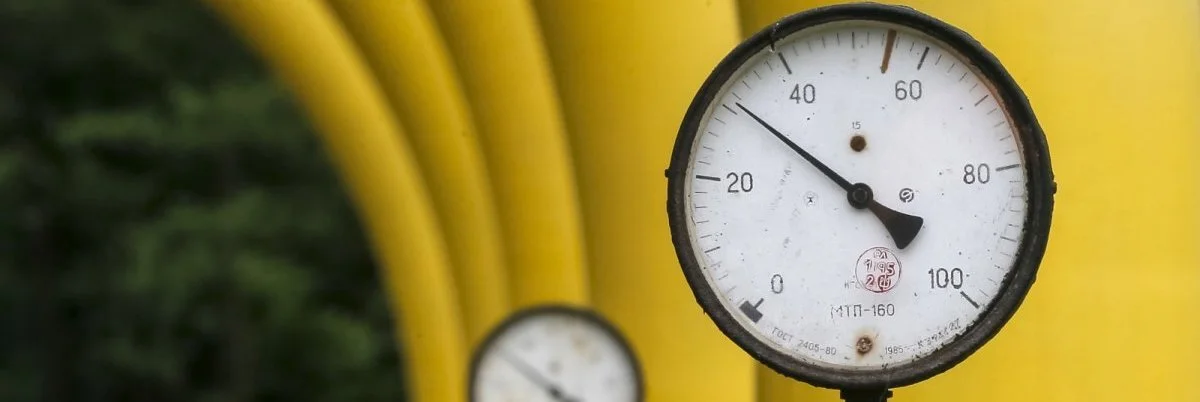
After years of complaints from Tehran and requests for more time from Baghdad, "Iran will reduce from five to three million cubic meters of its gas supply to Iraq" needed to run power plants, Iraqi electricity ministry spokesman Ahmed Moussa told state television.
Iraq buys gas and electricity from neighbouring Iran to supply about a third of its power sector, worn down by years of conflict and poor maintenance.
But it must navigate sanctions imposed on trade with Tehran by the United States, which blacklisted Iran's energy industry in 2018 but granted Baghdad a series of temporary waivers.
On Tuesday, Ardakanian met with Iraqi Electricity Minister Majid Hantoush, Prime Minister Mustafa al-Kadhimi and Iraq central bank governor Mustafa Ghaleb Mukhif.
Iran is meant to receive payments through public banking institutions to avoid US sanctions.
"The Iraqi Electricity Ministry owes more than $2 billion in arrears and $1 billion in contract violations, while $3 billion is blocked and inaccessible in the Trade Bank of Iraq," Iraq's main public bank, the NIGC statement said.
For decades, Iraqis have had to cope with power outages that can last up to 20 hours a day in some areas.
Virtually all households are connected to private generators, but the prices of those services have recently soared amid a severe economic crisis accompanied by currency devaluation.
Using its own fuel plus Iranian gas, Iraq can produce a total of around 16,000 megawatts of electricity.
That is far below demand, which hovers around 24,000 MW but can jump to 30,000 in summer, when temperatures reach a sizzling 50 degrees Celsius (122 Fahrenheit).
Photo: IRNA
Iran's Rouhani Expects US to Resume Commitments Under Nuclear Deal
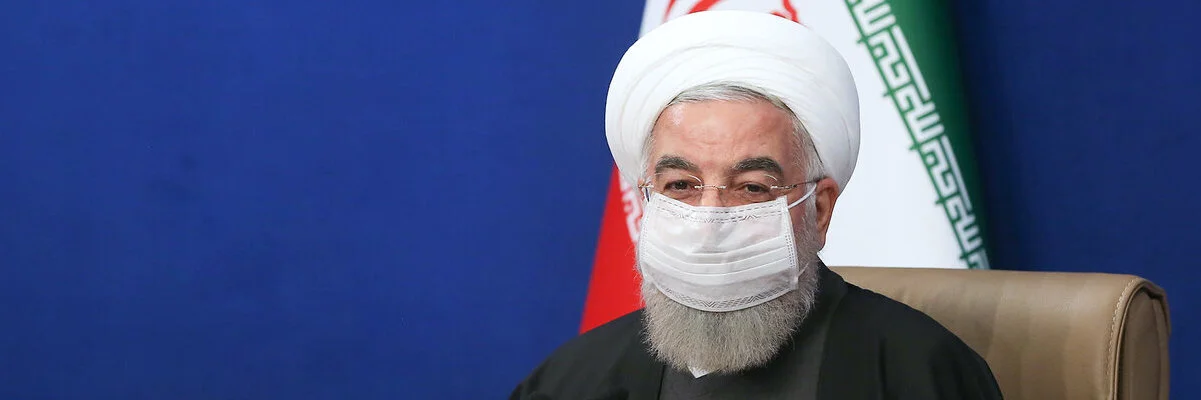
Iranian President Hassan Rouhani on Thursday voiced confidence that President-elect Joe Biden will resume US commitments under the nuclear deal which Donald Trump pulled out of.
Iranian President Hassan Rouhani on Thursday voiced confidence that President-elect Joe Biden will resume US commitments under the nuclear deal which Donald Trump pulled out of.
Tensions between Tehran and Washington soared during Trump's presidency, especially after 2018 when he withdrew Washington from the landmark nuclear deal and reimposed punishing unilateral sanctions on Iran.
Biden, who defeated Trump at the ballot box in November, has signalled a willingness to return to diplomacy with Iran
And Rouhani's government has repeatedly signalled its openness to the incoming US administration and called on Washington to return to the 2015 nuclear deal and lift sanctions.
"I have no doubt that the perseverance of the Iranian people during these past three years will force the new US government to succumb and resume its commitments," Rouhani said in televised remarks.
“The sanctions will be broken," he added.
His comments come a day after Iran's supreme leader Ayatollah Ali Khamenei said that Iran should bolster itself to "nullify" the effects of the sanctions imposed by the Trump administration, but should "not delay" in case they can be lifted.
Rouhani echoed Khamenei, saying time should not be wasted.
"We must act in order to nullify the effects of the sanctions... as the supreme leader has said."
"We should not wait, not even one hour, for the lifting of the sanctions. The government must do everything in its power to break the sanctions," Rouhani added.
He said Iran will do "everything possible to achieve" what he described as a "very important instruction" made by Khamenei.
Photo: IRNA
First Rail Network Opens Between Iran and Afghanistan
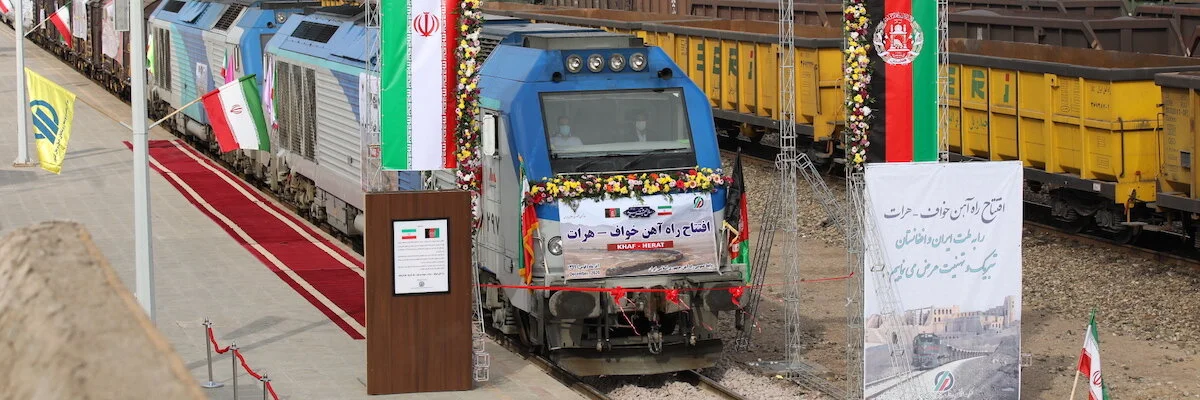
An Iranian goods train carrying tonnes of agricultural products chugged into a western Afghan province Thursday as the two countries marked the opening of their first shared railway network.
An Iranian goods train carrying tonnes of agricultural products chugged into a western Afghan province Thursday as the two countries marked the opening of their first shared railway network.
The train route so far links the Iranian city of Khaf with the Afghan town of Rozanak about 150 kilometres (95 miles) away, but is scheduled to be expanded to reach Herat, Afghanistan's third largest city.
Crowds of Afghans gathered at Rozanak station for the arrival of the first blue painted train.
Afghan President Ashraf Ghani, addressing the ceremony via video link, welcomed the move as an "important step for economic revival and development in both the countries".
The project was a gateway to Europe for Afghanistan, said Iranian President Hassan Rouhani.
"I see the prosperity of Iran and Afghanistan in this railway," he said, also speaking via video link from Tehran.
"The development, security and stability of Afghanistan (contributes to) development, security and stability in Iran and the entire region."
Residents of Rozanak welcomed the new link.
"It is going to change our villages, towns and cities into business hubs," said Arbab Ghulam Reza, a farmer from Rozanak.
"It was also very difficult for our young boys to go to Iran for work. Now they can simply buy a train ticket and go."
Once completed, the 225 kilometre network would help transport six million tonnes of goods and a million passengers annually, officials said.
The Khaf-Herat network would later be connected to Central Asian and Chinese rail networks, officials said.
Decades of war and neglect have destroyed Afghanistan's infrastructure, making its roads and bridges nearly impassable.
But despite the worsening security situation, efforts to rebuild roads and railway networks have always been a top priority of the Afghan government and the donor community.
In 2016, the first railway link between northern neighbour Turkmenistan and Afghanistan opened. That link is planned to eventually extend to Tajikistan.
Coronavirus entered Afghanistan in February, as thousands of migrants returned from neighbouring Iran, which at the time was the region's worst-hit nation.
Afghanistan briefly suspended land and air routes with Iran, before reopening all of its borders with the country.
Photo: YJC
European Powers 'Welcome' Biden's Aim to Re-Enter JCPOA
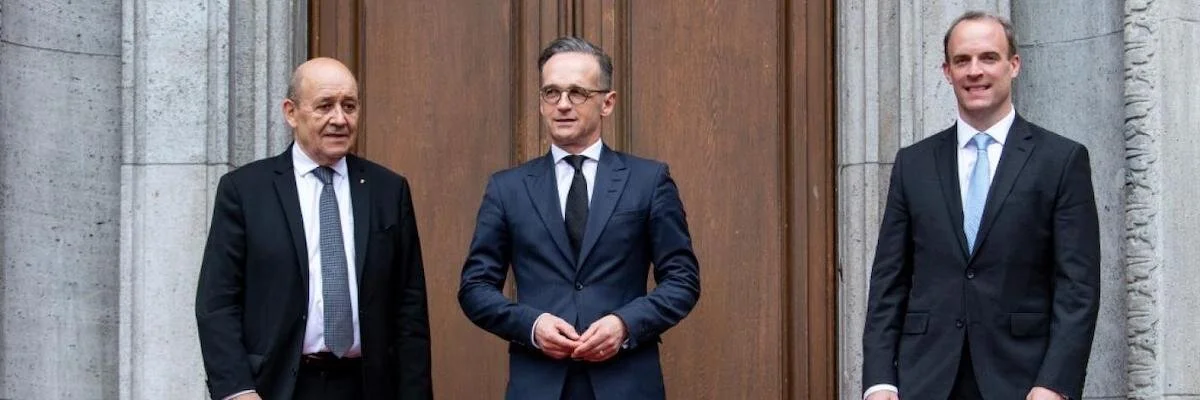
The governments of France, Germany, and the UK “welcome the statements by President-elect Biden on the JCPOA and a diplomatic path to address wider concerns with Iran,” the trio said in a statement on Monday.
The governments of France, Germany, and the UK “welcome the statements by President-elect Biden on the JCPOA and a diplomatic path to address wider concerns with Iran,” the trio said in a statement on Monday.
The three governments, dubbed the E3, also declared that they would “address Iran’s non-compliance within the framework of the JCPOA,” reiterating their support for Joint Comprehensive Plan of Action. The statement described the deal as "the best and currently the only way to monitor and constrain Iran's nuclear programme.”
The E3 also expressed concerns over plans by Iran to install advanced centrifuges at its main nuclear enrichment plant in Natanz.
The UN's nuclear watchdog, the International Atomic Energy Agency (IAEA) reported last month that Iran had installed and begun operating advanced centrifuges at an underground section at Natanz.
"Iran's recent announcement to the IAEA that it intends to install an additional three cascades of advanced centrifuges at the Fuel Enrichment Plant in Natanz is contrary to the JCPOA and deeply worrying," the E3 said.
Under the terms of Iran's 2015 deal it is only meant to enrich uranium with a less sophisticated variety of centrifuges.
Since May last year Iran has taken steps to violate that limit and several others laid down in the deal in retaliation for US President Donald Trump's withdrawal from the accord in 2018 and subsequent reimposition of sanctions.
The three European powers said they had noted, "with great concern" a law passed by the Iranian parliament that would expand Iran's nuclear programme and limit the IAEA's monitoring access, saying this too would be "incompatible with the JCPOA and Iran's wider nuclear commitments".
The bill "for the lifting of sanctions and protection of the Iranian people's interests" was approved by the powerful Guardian Council on Wednesday but has to be signed by President Hassan Rouhani to become law.
Rouhani, whose government has signalled a readiness to engage with US President-elect Joe Biden, called the bill "detrimental to the course of diplomatic activities.”
The three European governments said that if Iran was serious about wanting to return to diplomacy with the incoming US administration, it had to reverse the bill and the installation of the centrifuges.
Photo: IRNA
Iran Security Body Urges Unity on Nuclear Policy
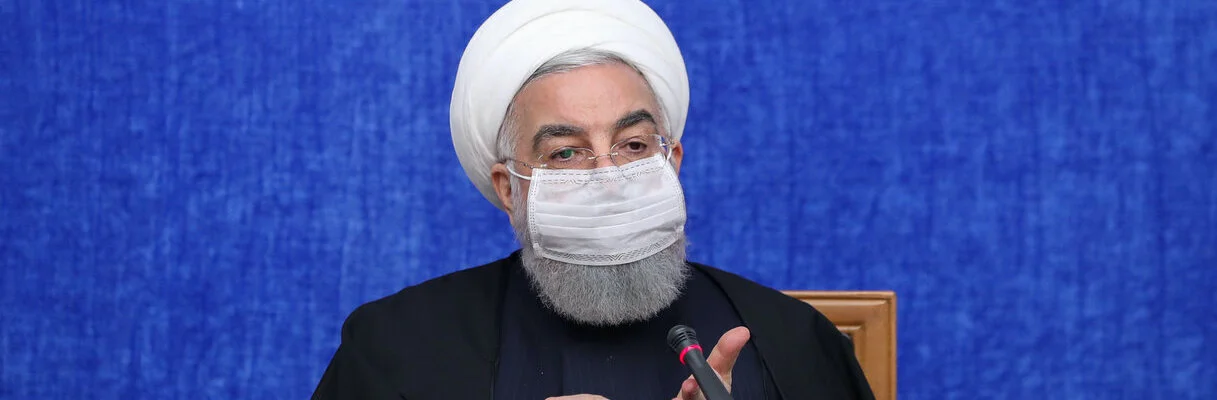
Iran's top security body called Saturday for unity on the country's nuclear policy following a public row between the government and parliament over a controversial bill.
Iran's top security body called Saturday for unity on the country's nuclear policy following a public row between the government and parliament over a controversial bill.
The bill "for the lifting of sanctions and protection of the Iranian people's interests" was approved by the powerful Guardian Council on Wednesday and has to be signed by President Hassan Rouhani to become law.
Having drawn heated opposition from the government, the bill calls on the administration to end UN inspections of Iran's nuclear facilities and to "produce and store 120 kilogrammes (265 pounds) per year of uranium enriched to 20 percent.”
Both steps would run counter to commitments made by Tehran in a landmark deal with major powers in 2015 and would likely complicate efforts to get Washington back on board after outgoing US President Donald Trump abandoned it in 2018.
In a statement published by Iranian media on Saturday, the supreme national security council said that the bill "does not produce any specific issue for national interests.”
“In contrast, what is against national interests and a cause for concern is this ruckus which has damaged the position and status of the country's legal bodies," it said.
The body condemned "recent remarks and attitudes" which have "sacrificed national for partisan interests, have no benefit for the country and send the wrong message" to Iran's foes.
It called on authorities to focus on "reinforcing national unity" and vowed to prevent Iran's interests becoming "a plaything in the hands of politicians".
Passage of the bill, which was first drafted in early November, was speeded up following the assassination of Iran's top nuclear scientist Mohsen Fakhrizadeh.
He was killed on a major road outside Tehran last week in a bomb and gun attack that Iran has blamed on its arch foe Israel.
The security council statement came after Rouhani and parliament speaker Mohammad-Bagher Ghalibaf exchanged sharp remarks in a public dispute in recent days.
On Wednesday, the president called the bill "detrimental to the course of diplomatic activities."
Rouhani's government has signaled a readiness to engage with US President-elect Joe Biden after four tense years under Trump, who reimposed sanctions after withdrawing the United States from the nuclear agreement.
Photo: IRNA
Iran Parliament's Bid to End Nuclear Inspections Hits Opposition
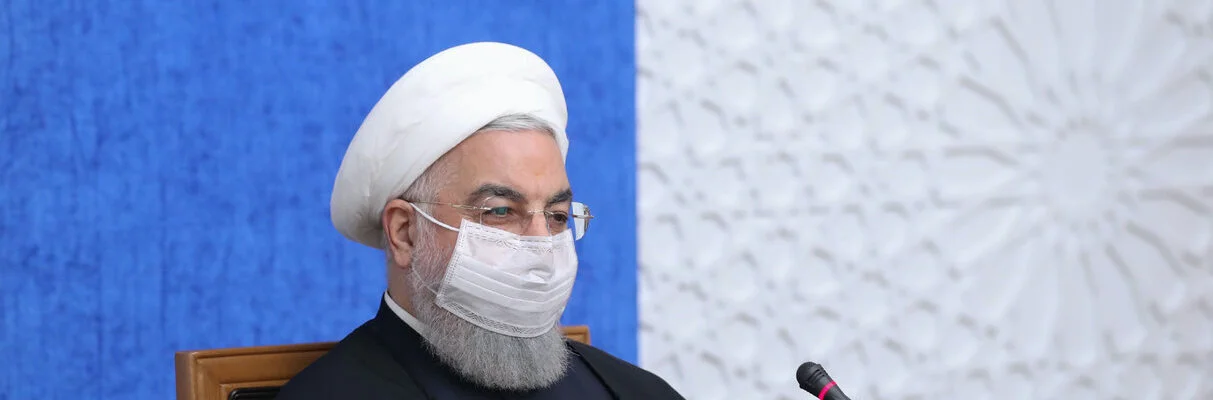
The Iranian parliament's backing on Tuesday of a plan to end nuclear inspections after the assassination of the country's top nuclear scientist has met immediate opposition from the government.
The Iranian parliament's backing on Tuesday of a plan to end nuclear inspections after the assassination of the country's top nuclear scientist has met immediate opposition from the government.
Deputies supported a draft bill "for the lifting of sanctions and protection of the Iranian people's interests", saying they wanted to achieve the objectives of "martyred" scientist Mohsen Fakhrizadeh.
Fakhrizadeh was assassinated on a major road outside Tehran on Friday in a bomb and gun attack that the Islamic republic has blamed on its arch foe Israel.
"The government has explicitly announced that it does not agree with (this) plan" which it considers "neither necessary nor useful", foreign ministry spokesman Saeed Khatibzadeh told a news conference Tuesday.
The draft bill calls on the government to end UN inspections of Iran's nuclear facilities and to "produce and store 120 kilogrammes per year of uranium enriched to 20 percent".
Such steps would run counter to commitments made by Iran as part of a landmark nuclear deal agreed with world powers in 2015.
The deal offers Iran relief from sanctions in exchange for curbs on its nuclear programme and UN-verified safeguards to prove it is not developing nuclear weapons.
The Islamic Republic has always denied it is seeking such weaponry.
Seemingly in response to Israel's characterisation of Fakhrizadeh as the father of a secret nuclear weapons programme, Khatibzadeh said that the scientist had been "one of the main assistants behind the scenes in discussions" that led to the 2015 accord.
State news agency IRNA on Tuesday released undated pictures of Fakhrizadeh being awarded a medal by Iran's President Hassan Rouhani for his "contribution" to the Vienna agreement.
The multilateral accord has been hanging by a thread since 2018, when President Donald Trump unilaterally withdrew the United States and reimposed sanctions that have battered Iran's economy.
Iran has retaliated by gradually rolling back most of its commitments under the nuclear deal.
In its latest report last month, the International Atomic Energy Agency (IAEA) said Iran had enriched uranium over the 3.67 percent limit set out in the 2015 accord.
The UN's nuclear watchdog said that Iran had not exceeded the threshold of 4.5 percent and that the country was still complying with its strict inspections regime.
Speaking to reporters on Tuesday, Iran's government spokesman Ali Rabiei emphasised that the only institution mandated to make decisions on the country's nuclear programme was the Supreme National Security Council.
He also noted that any decisions made by that body require approval by supreme leader Ayatollah Ali Khamenei.
In an interview with AFP on Monday, IAEA chief Rafael Grossi said Iran had nothing to gain from ending inspections of its nuclear facilities.
"We understand the distress but at the same time it is clear that no-one, starting with Iran, would have anything to win from a decrease, limitation or interruption of the work we do together with them," Grossi said.
Photo: IRNA
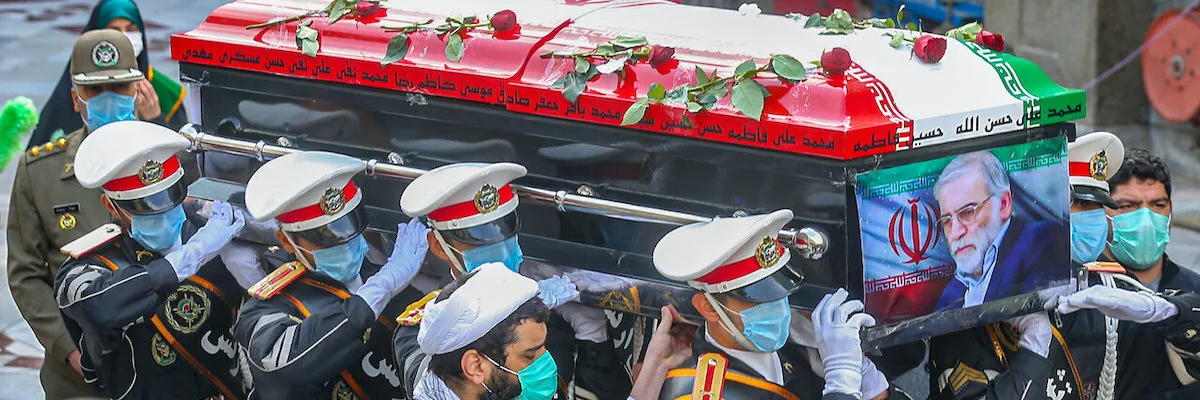
Iran Has Nothing to Gain From Halting Inspections: Grossi
Iran has nothing to gain from ending inspections of its nuclear facilities, the head of the UN's nuclear watchdog warned as tensions rise after a top Iranian nuclear scientist was assassinated.
By Jastinder Khera and Anne Beade
Iran has nothing to gain from ending inspections of its nuclear facilities, the head of the UN's nuclear watchdog warned as tensions rise after a top Iranian nuclear scientist was assassinated.
In an interview with AFP after a year in office, IAEA Director General Rafael Grossi issued the appeal in response to calls by Iranian MPs to end inspections following the killing.
"We understand the distress but at the same time it is clear that no-one, starting with Iran, would have anything to win from a decrease, limitation or interruption of the work we do together with them," Grossi said.
Grossi, 59, confirmed that so far the IAEA had not yet received any signal from Iranian authorities that anything would change regarding inspections in the wake of the killing of Mohsen Fakhrizadeh.
Iran's parliament on Sunday demanded a halt to those inspections, signalling another potential retreat from a key commitment in its 2015 nuclear deal with world powers.
This is not the first time that parliamentarians have expressed themselves in this way or in very similar ways," Grossi pointed out.
"We haven't received any indication of restriction or limitation of their cooperation with us," he said. "I do not see any reason to believe that this would be the case now."
Grossi emphasised that the IAEA's extensive inspections regime was "essential" if the outside world was to have assurances about the nature of Iran's nuclear programme.
Fakhrizadeh was laid to rest on Monday, three days after he was assassinated on a major road outside Tehran.
"Let me say that we abhor violence of any type, we are an international organisation for peace and security," Grossi said.
The killing could put yet more strain on diplomatic efforts to salvage Iran's 2015 nuclear deal with world powers, which has been disintegrating ever since the Trump administration withdrew from it two years ago.
High-Stakes Gamble
Iran has been one of the thorniest issues Grossi has had to tackle over an eventful year since taking office in early December 2019.
"They have a very large nuclear programme that requires as you know one of the biggest, if not the biggest efforts in terms of inspection. Without that... the instability in the region would be far higher," Grossi said.
A high point during his leadership was his trip to Tehran in August which ended in an agreement allowing IAEA inspectors access to two sites where undeclared nuclear activity may have taken place in the 2000s.
That had followed months where Tehran had denied access to the locations.
"I was served with a denial of access to two sites barely 40 days into the job, something that had never happened before in the history of the IAEA," Grossi recalls.
He admitted that some member states and analysts had thought his gambit of flying to Iran for talks was a risk.
However, it paid off and won him plaudits in Vienna's diplomatic circles.
'Sense of Urgency'
However, when it comes to another controversial undeclared site, in the Turquzabad district of Tehran, Grossi said there were still unanswered questions over the presence of nuclear material.
"I do not want to dramatise but it is important that we get clarification," he said.
While not setting a deadline for Iran to provide the necessary information, Grossi said "a sense of urgency is clear on my side" and recalled that the site has been under discussion for almost two years now.
Grossi said his proudest achievement was that the agency managed to keep going throughout the coronavirus despite the challenges.
"I had to argue my way with foreign ministers, I had to hire private planes to send my inspectors - it wasn't easy."
Looking to the year ahead, Grossi said he hoped the Agency would be a "priority" for the incoming administration of President-elect Joe Biden.
Photo: IRNA
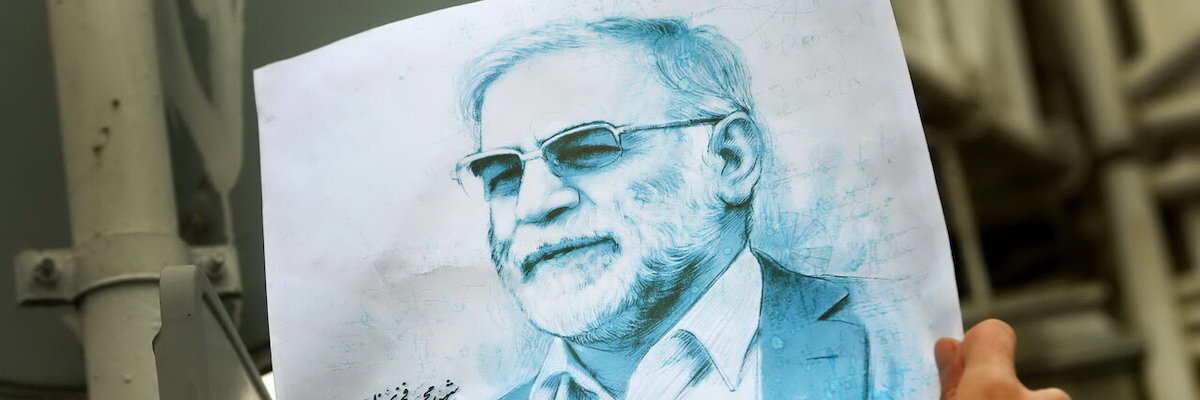
Iran Mulls Response as it Prepares to Bury Killed Nuclear Scientist
Debate raged in Iran on Sunday over how and when to respond to a top nuclear scientist's assassination, blamed on arch-foe Israel, as his body was honoured at Shiite shrines to prepare it for burial.
By Amir Havasi
Debate raged in Iran on Sunday over how and when to respond to a top nuclear scientist's assassination, blamed on arch-foe Israel, as his body was honoured at Shiite shrines to prepare it for burial.
Two days after Mohsen Fakhrizadeh died from wounds sustained in a firefight between his guards and unidentified gunmen near Tehran, parliament demanded a halt to international inspections of Iranian nuclear sites while a top official hinted Iran should leave the global non-proliferation treaty.
Iran's Supreme National Security Council usually handles decisions related to the country's nuclear programme, and parliamentary bills must be approved by the powerful Guardians Council.
President Hassan Rouhani has stressed the country will seek its revenge in "due time" and not be rushed into a "trap.”
Israel says Fakhrizadeh was the head of an Iranian military nuclear programme, the existence of which the Islamic republic has consistently denied, and Washington had sanctioned him in 2008 for activities linked to Iran's atomic activities.
The scientist's body was taken for a ceremony on Sunday at a major shrine in the holy city of Qom before being transported to the shrine of the Islamic republic's founder Imam Khomeini, according to Iranian media.Fakhrizadeh's funeral will be held Monday in the presence of senior military commanders and his family, the defence ministry said on its website, without specifying where.
Demands for 'Strong Reaction'
Israel has not officially commented on Fakhrizadeh's killing, less than two months before US President-elect Joe Biden is set to take office after four years of hawkish foreign policy under President Donald Trump. Trump withdrew the US from a multilateral nuclear agreement with Iran in 2018 and then reimposed and beefed up punishing sanctions as part of its "maximum pressure" campaign against Tehran.
Biden has signalled his administration may be prepared to rejoin the accord, but the nuclear scientist's assassination has revived opposition to the deal among Iranian conservatives.
The head of Iran's Expediency Council, a key advisory and arbitration body, said there was "no reason why (Iran) should not reconsider the Nuclear Proliferation Treaty".
Mohsen Rezaee said Tehran should also halt implementation of the additional protocol, a document prescribing intrusive inspections of Iran's nuclear facilitates.
Iran's supreme leader Ayatollah Ali Khamenei called Saturday for Fakhrizadeh's killers to be punished. Parliament speaker Mohammad-Bagher Ghalibaf called Sunday for "a strong reaction" that would "deter and take revenge" on those behind the killing of Fakhrizadeh, who was aged 59 according to Iranian media.
Call for Strikes
For Israeli newspaper Haaretz, Fakhrizadeh's killing was clearly tied to Biden's arrival in office.
"The timing of the assassination, even if it was determined by purely operational considerations, is a clear message to President-elect Joe Biden, intended to show Israel's criticism" of plans to revive the deal, it said.
The UAE, which in September normalised ties with Israel, condemned the killing and urged restraint.
The foreign ministry, quoted by the official Emirati news agency WAM, said Abu Dhabi "condemns the heinous assassination of Mohsen Fakhrizadeh, which could further fuel conflict in the region...
"The UAE calls upon all parties to exercise maximum degrees of self-restraint to avoid dragging the region into new levels of instability and threat to peace," it said.
Britain, a party to the nuclear accord, said Sunday it was "concerned" about possible escalation of tensions in the Middle East following the assassination, while Turkey called the killing an act of "terrorism" that "upsets peace in the region.”
In Iran, ultra-conservative Kayhan daily called for strikes on Israel if it were "proven" to be behind the assassination.
Kayhan called for the port city of Haifa to be targeted "in a way that would annihilate its infrastructure and leave a heavy human toll.”
Iran has responded to the US withdrawal from the 2015 deal by gradually abandoning most of its key nuclear commitments under the agreement.
'Revive Iran's Nuclear Industry
Rezaee called on Iran's atomic agency to take "minimum measures" such as "stopping the online broadcast of cameras, reducing or suspending inspectors and implementing restrictions in their access" to sites, ISNA news agency reported.
Iran's parliament said the "best response" to the assassination would be to "revive Iran's glorious nuclear industry.”
It called for International Atomic Energy Agency (IAEA) inspectors to be barred from the country's atomic sites, said the legislature's news agency ICANA.
Some MPs had earlier accused inspectors of acting as "spies" potentially responsible for Fakhrizadeh's death.
But the spokesman for Iran's atomic energy organisation, Behrouz Kamalvandi, told IRNA on Saturday that the issue of inspectors' access "must be decided on at high levels" of the Islamic republic's leadership.
Photo: IRNA
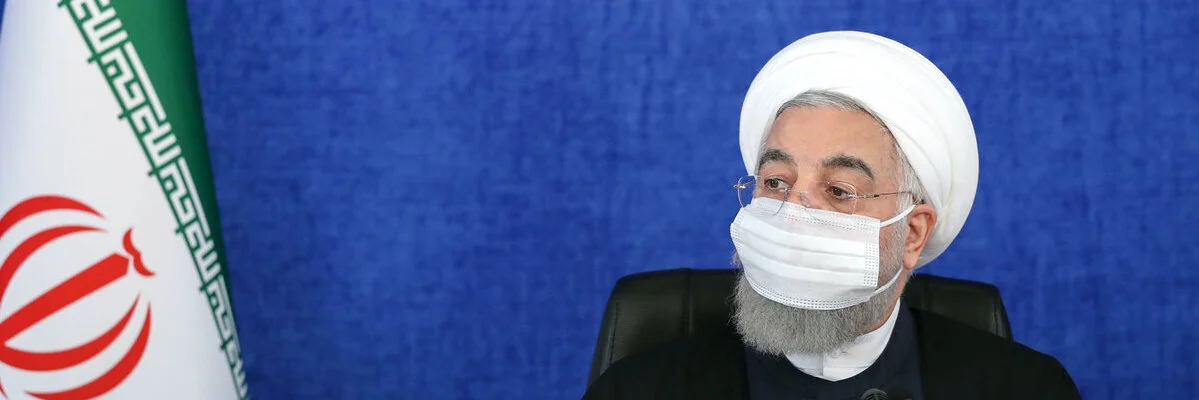
Rouhani Calls for Return to Pre-Trump US-Iran Situation
Iran's President Hassan Rouhani on Wednesday invited US President-elect Joe Biden's incoming administration to restore the "situation that prevailed" before Donald Trump came to power.
Iran's President Hassan Rouhani on Wednesday invited US President-elect Joe Biden's incoming administration to restore the "situation that prevailed" before Donald Trump came to power.
"Iran and the US can both decide and declare that they will return to the situation that prevailed until January 20, 2017," Rouhani told his cabinet, referring to the date when the outgoing US president assumed office.
“If there is such a will among the future American leaders, I think that it will be very easy to resolve" numerous problems, Rouhani said.
Iran and the US do not have direct diplomatic ties, but a nuclear deal agreed between Tehran, Washington and other world powers in 2015—negotiated when Barack Obama was in the White House, with Biden as his deputy—saw bilateral tensions dissipate to the lowest level in decades.
Trump unilaterally withdrew the US from that pact in May 2018 and launched a "maximum pressure" campaign against Iran with sanctions that plunged its economy into a deep recession.
The two countries have twice come to the brink of war since mid-2019.
The Iranian government's policy is based on "respect for commitments against respect for commitments... (and) respect in exchange for respect," Rouhani said, noting an opportunity to "completely change the course" of events of the last four years.
Since Biden's victory in the November 3 US presidential election, Rouhani has repeatedly signaled his openness to the incoming US administration, although Iran's supreme leader has cautioned against hopes of an opening with the West.
Photo: IRNA