
Iran Says INSTEX 'Good Omen' But Insufficient
Iran on Monday welcomed the launch of a European trade mechanism to bypass US sanctions as a "good omen" but said it was insufficient in light of the Europeans' commitments.
Iran on Monday welcomed the launch of a European trade mechanism to ease trade in the face of US sanctions as a "good omen" but said it was insufficient in light of the Europeans' commitments.
Britain, France and Germany said last week they had carried out the first transaction through the INSTEX mechanism to deliver medical supplies to Iran, which has been hit hard by the coronavirus pandemic.
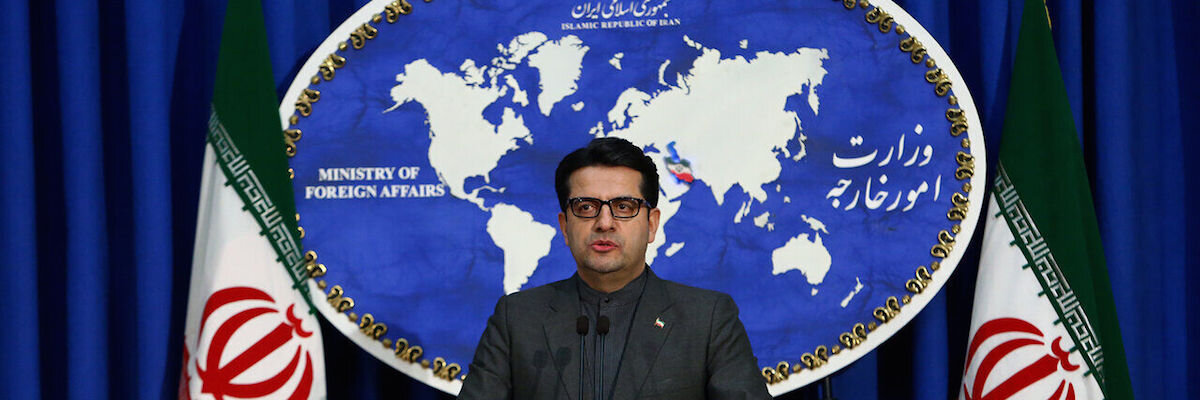
In the first official reaction to the development, Iran's foreign ministry spokesman Abbas Mousavi said the transaction had involved "a few hundred thousand euros.”
“We see the launch of INSTEX as a good omen," Mousavi said in a televised news conference.
But "what the Islamic Republic of Iran expects (from now on) is for the Europeans to fulfil the rest of their commitments in various fields (such as) banking, energy, insurance," he added.
Iran has struggled to stop the spread of the novel coronavirus which officials say has claimed over 3,600 lives and infected more than 58,000 in the country since February 19.
Calls have mounted for the United States to ease its sanctions on Iran so that the Islamic republic can adequately respond to the COVID-19 crisis.
Washington reimposed crippling sanctions on Tehran in May 2018 after withdrawing from an international deal that put curbs on its arch enemy's nuclear program.
In response, the three European countries party to the nuclear deal—Britain, France and Germany—announced the creation of INSTEX in January 2019.
But the implementation of the mechanism has been slow, with Iran and the Europeans blaming each other for the delay.
INSTEX functions as a clearing house and allows European companies to trade with Iran without exposing themselves to the consequences of US sanctions.
It is designed to be open to other companies, particularly from China or Russia, which are also party to the 2015 nuclear agreement.
Photo: IRNA
Iran Nuclear Deal Commission to Meet in Vienna
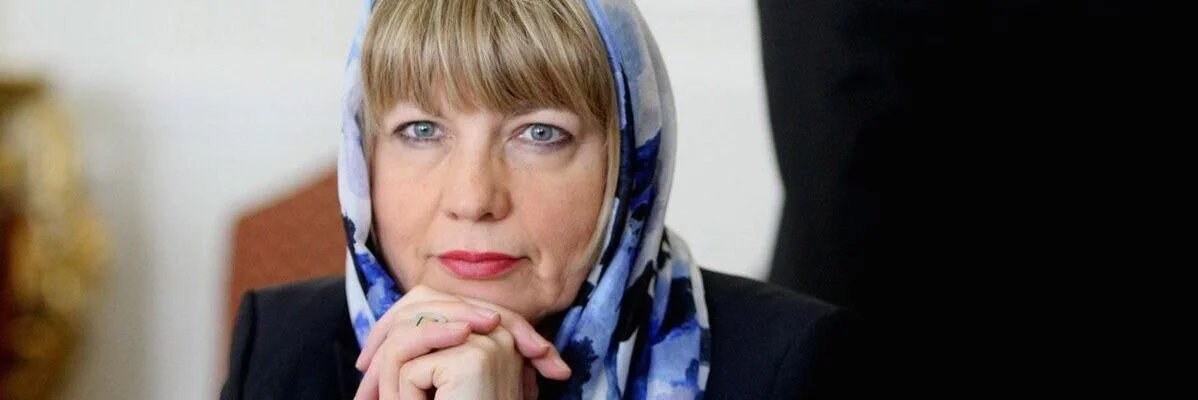
◢ The remaining parties to the Iran nuclear deal will meet in Vienna on Wednesday, the EU's diplomatic service announced, after Britain, France and Germany launched a dispute process over Iran's successive pullbacks. The meeting will be chaired by senior EU official Helga Schmid.
By Damon Wake
The remaining parties to the Iran nuclear deal will meet in Vienna on Wednesday, the EU's diplomatic service announced, after Britain, France and Germany launched a dispute process over Iran's successive pullbacks.
The office of EU diplomatic chief Josep Borrell—who is tasked with convening the commission under the dispute mechanism—said the get-together would be chaired on his behalf by senior official Helga Schmid.
The meeting comes as the European parties try to find a way to persuade Iran to come back into line with the deal after Tehran made a series of steps away in protest at the US pulling out and reimposing sanctions.
The 2015 agreement to curb Iran's nuclear program in return for sanctions relief has been slowly crumbling since US President Donald Trump unilaterally withdrew in 2018, describing the accord signed by his predecessor Barack Obama as a bad deal.
The EU has led efforts to try to save the deal, arguing that it is vital for international security, but after repeated warnings over Iran's moves, Germany, Britain and France triggered the dispute process on January 14.
In its last announcement, Tehran said it would no longer observe limits on the number of centrifuges used to enrich uranium. It was its fifth step away from the deal since Trump's pullout.
Borrell has said he believes all the countries still in the deal -- which also include Russia and China -- are determined to save the accord.
Iran Looking for Concessions
Western diplomats recognize it is highly unlikely Iran will heed calls to come back into full compliance without substantial concessions in return—such as an end to US sanctions or Europe taking measures to offset their economic impact.
Instead they hope to use the dispute process, which can be strung out for quite some time, to convince Iran not to take any more moves away from the deal, giving space for back-channel diplomacy aimed at bringing Washington and Tehran back into alignment.
At a major international security conference in Munich earlier this month, Iran's Foreign Minister Mohammad Javad Zarif said Tehran would be prepared to move back towards the deal if Europe provides "meaningful" economic benefits.
Crucially, Iran has said it will continue to cooperate with the Vienna-based International Atomic Energy Agency ( IAEA ) which carries out regular detailed inspections on the ground.
Europe has set up a special trading mechanism called INSTEX to try to enable legitimate humanitarian trade with Iran, but it has yet to complete any transactions and Tehran regards it as inadequate.
The renewed US sanctions have almost entirely isolated Iran from the international financial system, driven away oil buyers and plunged the country into a severe recession.
Photo: IRNA
Six European Countries Join INSTEX Mechanism for Iran Trade
◢ Paris, London and Berlin on Saturday welcomed six new European countries to the INSTEX mechanism, which is designed to mitigate the effects of US sanctions on European trade with Iran. They also insisted Iran must return to full compliance with its commitments under the deal "without delay.”
Paris, London and Berlin on Saturday welcomed six new European countries to the INSTEX mechanism, which is designed to mitigate the effects of US sanctions on European trade with Iran.
"As founding shareholders of the Instrument in Support of Trade Exchanges (INSTEX), France, Germany and the United Kingdom warmly welcome the decision taken by the governments of Belgium, Denmark, Finland, the Netherlands, Norway and Sweden, to join INSTEX as shareholders," the three said in a joint statement.
The Paris-based INSTEX offers a netting service enabling companies to avoid cross-border financial transactions between the European and Iranian financial systems.
The system has not yet enabled any transactions.
Washington in 2018 unilaterally withdrew from the international agreement governing Iran's nuclear programme and reinstated heavy sanctions against Tehran.
The accession of the six new members "further strengthens INSTEX and demonstrates European efforts to facilitate legitimate trade between Europe and Iran", France, Germany and Britain said.
It represents "a clear expression of our continuing commitment to the Joint Comprehensive Plan of Action"—the 2015 Iranian nuclear deal—the trio added.
They insisted Iran must return to full compliance with its commitments under the deal "without delay.”
"We remain fully committed to pursuing our efforts towards a diplomatic resolution within the framework of the JCPOA."
The 2015 deal set out the terms under which Iran would restrict its nuclear program to civilian use in exchange for the lifting of Western sanctions.
Since the US pullout, Iran has taken four steps back from the accord.
The latest was on November 4 when its engineers began feeding uranium hexafluoride gas into mothballed enrichment centrifuges at the underground Fordow plant south of Tehran.
Photo: IRNA
German Tapped to Head INSTEX Withdraws After Israel Controversy
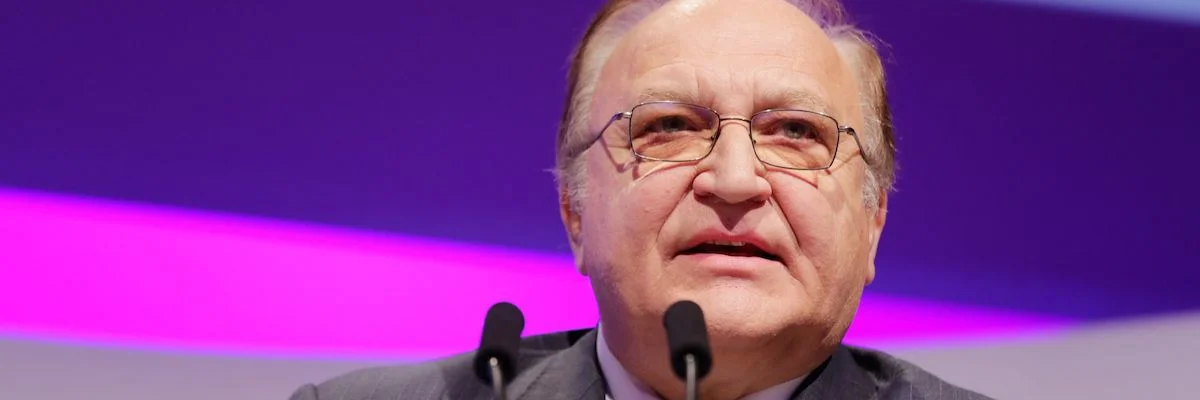
◢ A German senior diplomat who had been designated to run INSTEX, a mechanism to allow trade with Iran despite US sanctions, will not assume the post, it emerged Friday, following controversial comments he made on Israel. German's foreign office told AFP that Bernd Erbel, 71, had informed it "that he is not available for personal reasons.”
A German senior diplomat who had been designated to run INSTEX, a mechanism to allow trade with Iran despite US sanctions, will not assume the post, it emerged Friday, following controversial comments he made on Israel.
German's foreign office told AFP that Bernd Erbel, 71, had informed it "that he is not available for personal reasons".
Germany's top-selling newspaper Bild said Erbel's appointment was halted after it reported on controversial comments the ex-ambassador to Baghdad and Tehran had made in recent interviews.
Bild slammed "two scandalous appearances" in which Erbel had given long interviews to former public radio journalist Ken Jebsen, whom the tabloid-style paper accused of being "a conspiracy theorist and anti-Semite.”
Erbel had said that Israel represents "a foreign body in the region" and had been founded "at the expense of another people that lost their homeland".
He also said, according to the Bild article, that "the Palestinians are the victims of our victims. Quite simple.”
Bild also charged that Erbel had broadly shown a pro-Iran attitude and played down, for example, militancy by the Iranian Revolutionary Guards and their allies in the region.
he newspaper said in a rare English-language article on its website that "after Bild contacted Erbel regarding dubious interviews he had granted previously, he was forced to resign".
Germany, Britain and France in January founded the Instrument in Support of Trade Exchanges to facilitate barter trade with Iran to get around US sanctions that block financial transfers.
However, INSTEX is not yet operational.
Berlin remains in talks with London and Paris on filling the post of INSTEX managing director, which needs confirmation from the institution's supervisory board.
Photo: Anna McMaster
Iran Says Europe 'Obliged' to Let it Sell and Ship Oil
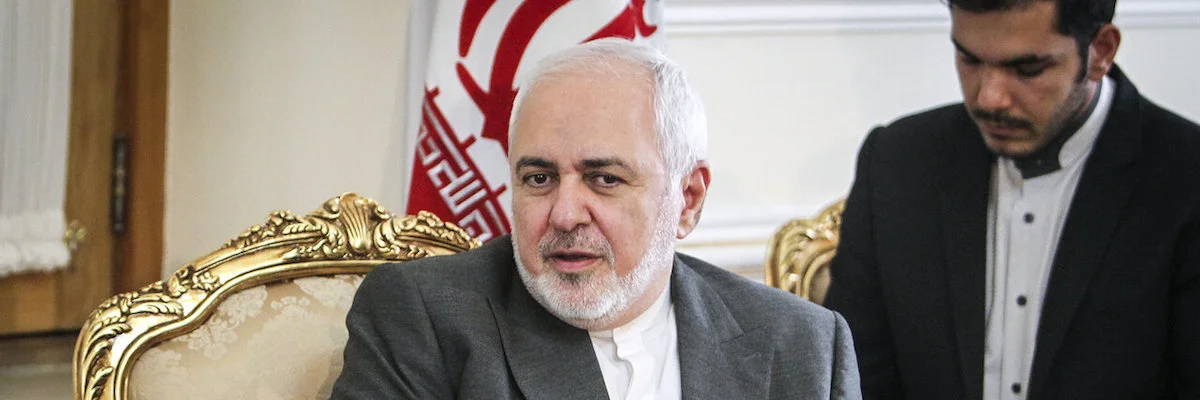
◢ Iran said Wednesday that European nations still party to the 2015 nuclear deal are "obliged" to allow it to sell and ship oil, amid a standoff with Britain over the seizure of tankers. "They (the European parties) have set out their commitments and announced them, they (include) the sale of Iran's oil, the transportation of Iran's oil, and the return of Iran's oil income," said Iranian Foreign Minister Mohammad Javad Zarif.
Iran said Wednesday that European nations still party to the 2015 nuclear deal are "obliged" to allow it to sell and ship oil, amid a standoff with Britain over the seizure of tankers.
The deal over Iran's nuclear programme has begun to unravel since President Donald Trump announced the United States was withdrawing from the agreement last year and reimposing sanctions.
Iran has been pushing the European parties to the deal—Britain, France and Germany—to adhere to their commitments under the agreement despite US pressure.
British authorities seized a tanker carrying Iranian oil off its territory Gibraltar on July 4, a move Spain's foreign minister said was carried out at the request of the United States.
"They (the European parties) have set out their commitments and announced them, they (include) the sale of Iran's oil, the transportation of Iran's oil, and the return of Iran's oil income," said Iranian Foreign Minister Mohammad Javad Zarif.
"It is clear that today's tensions and problems are due to America's economic terrorism and Europe's inability to fulfil its commitments which means going along with America's economic terrorism," he said, quoted by state media.
Zarif's remarks come after a meeting in Vienna on Sunday of the remaining parties to the nuclear deal -- the three European nations plus China and Russia.
In remarks broadcast on state television, the top Iranian diplomat described the talks as "challenging".
"We raised our stance and the importance of the fulfilment of the commitments of other parties to the JCPOA, in particular European countries," he said, referring to the deal by its formal name, the Joint Comprehensive Plan of Action.
Europeans 'Must Have Courage'
"We clearly explained to them that these commitments that have been raised have not been implemented and that INSTEX... still isn't fully operational," said Zarif.
INSTEX was a mechanism set up by Britain, France and Germany to facilitate trade with Iran in the face of US sanctions.
"It should not be the case that INSTEX becomes a tool for implementing America's orders," the foreign minister said.
"INSTEX must be considered as a European measure.
"They (the Europeans) must have the courage to act according to their commitments and not according to America's demands," he said.
One year after the US pullout, Iran said in May it would begin scaling back its commitments, and it has since started increasing its stockpile of enriched uranium and the level of enrichment beyond the deal's limits.
Zarif said Iran was ready to take a third step to reduce its commitments under the deal unless the remaining parties fulfil theirs, as they reiterated in Vienna.
"Now we'll have to see how they are going to act," he said.
"But in the current circumstances and as long as necessary measures are not taken, the Islamic Republic of Iran's third step will certainly be operational."
Photo: IRNA
Mnuchin Warns Europe Not to Breach U.S. Sanctions on Iran
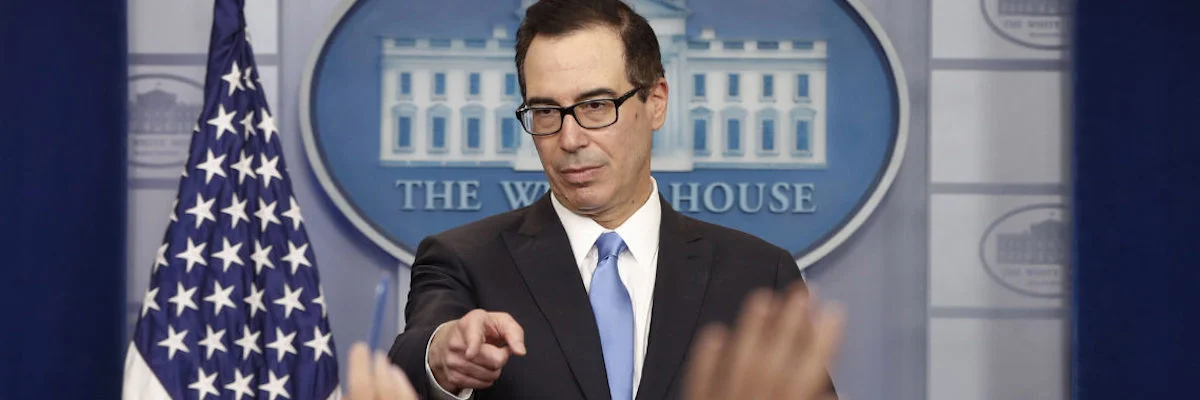
◢ Treasury Secretary Steven Mnuchin made clear that participating in the U.S. financial system means abiding by its sanctions amid a European effort to sidestep American economic pressure on Iran to continue trade. “We’ve been very clear that we expect U.S. sanctions to be adhered to,” Mnuchin said in response to questions from reporters on Thursday.
By Saleha Mohsin
Treasury Secretary Steven Mnuchin made clear that participating in the U.S. financial system means abiding by its sanctions amid a European effort to sidestep American economic pressure on Iran to continue trade.
Germany, France and the U.K. created a trade vehicle known as INSTEX in January to allow companies to do some trade with Iran without the use of U.S. dollars or American banks—thus allowing them to get around wide-ranging American sanctions that were imposed after the Trump administration abandoned the 2015 Iran nuclear deal last year.
“We’ve been very clear that we expect U.S. sanctions to be adhered to,” Mnuchin said in response to questions from reporters on Thursday in France where he met with Group of Seven counterparts. “Whether it’s Iran or anyone else, if people want to participate in the dollar system people will be obligated to follow the U.S. sanctions.”
He said that INSTEX should be “careful on diligence.”
Treasury’s top sanctions official, Sigal Mandelker, sent a letter in May warning European allies not to violate sanctions through Instex. Mnuchin confirmed that a letter was sent.
European countries broadly opposed Trump’s decision to withdraw from the nuclear accord but have struggled to deliver the economic benefits Iran expected from the deal, known as the Joint Comprehensive Plan of Action, since the U.S. quit. In the meantime, U.S. sanctions have delivered a blow to Iran’s economy, fueling inflation, reducing oil revenue and pressuring President Hassan Rouhani’s government. INSTEX was supposed to help address that, but so far it has largely failed to get up and running.
Frustrated at the U.S. withdrawal and stalled European efforts, Iran has already breached some of the limits on its nuclear program imposed under the deal, and has warned European governments that it will give up on the accord entirely unless they can find some way to work around the U.S. sanctions.
Photo: White House
EU Holds Iran Nuclear Crisis talks as Tehran Issues Fresh Threats
◢ European foreign ministers held crisis talks Monday on saving the beleaguered Iran nuclear deal as Britain warned the "small window" for success was closing and Tehran issued fresh threats of restarting its atomic program. British Foreign Secretary Jeremy Hunt—who held phone talks with his US and Iranian counterparts at the weekend—insisted "the deal isn't dead yet.”
By Damon Wake
European foreign ministers held crisis talks Monday on saving the beleaguered Iran nuclear deal as Britain warned the "small window" for success was closing and Tehran issued fresh threats of restarting its atomic program.
Tensions in the Gulf have soared since last year, when the United States pulled out of the 2015 deal and reimposed sanctions on Iran, hammering its economy and prompting Tehran to break limits on uranium enrichment and stockpiling.
The European Union is desperately trying to prevent the deal unravelling completely, seeing it as the best way to stop Tehran acquiring atomic weapons, and the issue was top of the agenda as ministers from the bloc met in Brussels.
But Iran piled fresh pressure on Europe, demanding concrete measures to give it relief from US sanctions and threatening to return its nuclear programme to where it was before the curbs imposed by the 2015 deal.
British Foreign Secretary Jeremy Hunt—who held phone talks with his US and Iranian counterparts at the weekend—insisted "the deal isn't dead yet.”
"Iran is still a good year away from developing a nuclear weapon. We think there is still some closing but small window to keep the deal alive," Hunt told reporters.
Britain, France and Germany—the three European parties to the deal—on Sunday issued a joint statement calling for dialogue to resolve the crisis.
Iran has repeatedly warned it could leave the deal unless the remaining parties bypass US sanctions to deliver the promised economic benefits and on Monday threatened to take its nuclear programme back to its pre-deal status.
"If the Europeans and the Americans don't want to carry out their duties... we will decrease our commitments and... reverse the conditions to four years ago," Iranian atomic energy agency spokesman Behrouz Kamalvandi said, quoted by IRNA state news agency.
The US has vowed to pursue its "maximum pressure" campaign against Iran, but Spanish Foreign Minister Josep Borrell—lined up to be the next EU diplomatic chief—warned its strategy is only "strengthening the most radical" elements in the Islamic republic.
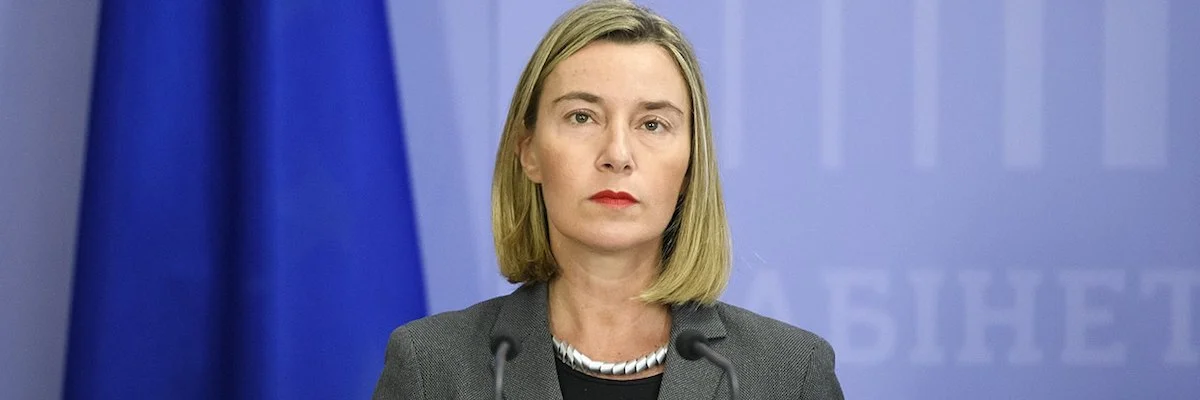
Current EU diplomatic chief Federica Mogherini said the steps taken by Iran so far—including enriching uranium above the 3.67 percent ceiling set by the deal—were reversible.
For now, none of the remaining parties have triggered the formal dispute mechanism, meaning that they did not regard Iran's breaches up to now as "significant non-compliance" under the terms of the deal, Mogherini said.
No 'Less for Less'
Europe hopes to use a special trading mechanism called INSTEX to enable businesses to deal with Iran without using the US dollar or financial system, thereby helping the Iranian economy while avoiding Washington's sanctions.
But the mechanism is complicated, no transactions have been finalised yet and it can for now only be used for humanitarian goods -- food and pharmaceuticals, for example -- though Mogherini said the shareholding countries were discussing extending it to Iran's crucial oil sector.
The sweeping nature of the US measures has scared many major European businesses out of Iran despite Brussels' insistence that American sanctions do not apply in Europe.
"Iran has taken bad decisions in response to the bad decision of the United States to pull out of the deal and reimpose sanctions, whose extraterritoriality strikes at the economic advantages the country got from the deal," French Foreign Minister Jacques-Yves Le Drian said as he arrived in Brussels.
The Iranian foreign ministry warned in a statement that its compliance with the deal was "rooted in the principle of reciprocity" and demanded Europe come up with "practical, effective and responsible decisions".
EU ministers insisted Iran must return to respecting its obligations under the deal in full, rejecting a suggestion by Iranian President Hassan Rouhani that both sides could reduce their commitments.
"This is a very, very serious situation. We must make it clear once again, in clear language, that there is only a chance if Iran commits itself unreservedly to what is contained in the treaty," Germany's junior foreign minister Michael Roth told reporters.
But the Iranian foreign ministry statement branded the European expectations "unrealistic", demanding a quid pro quo for undoing its recent breaches of the deal -- including exceeding a 300-kilo (660-pound) limit on enriched uranium stockpiles.
The joint commission overseeing the accord, made up of representatives from the countries still in the deal—the Europeans plus China, Russia and Iran—will meet "very soon" to discuss Tehran's breaches, Hunt said.
Photo: Wikicommons
Iran Says European Plan to Bypass US Sanctions Falls Short
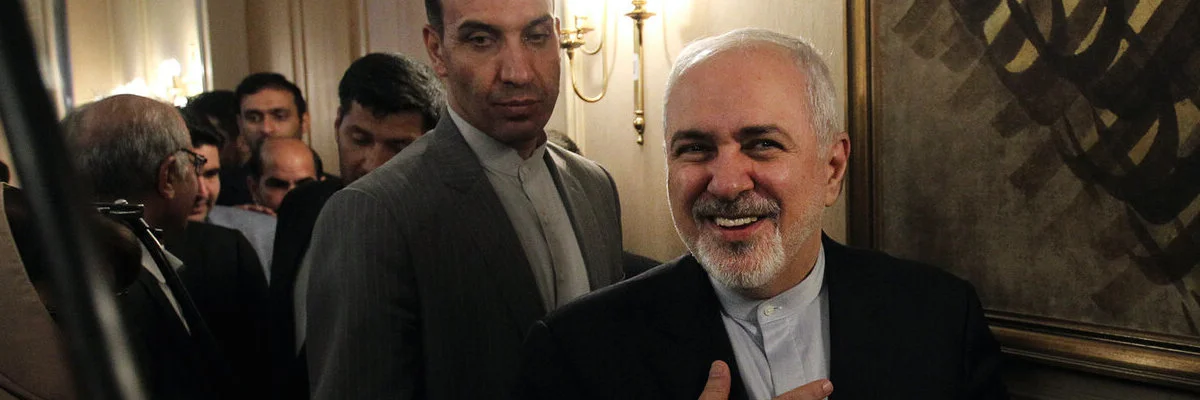
◢ The mechanism set up by European powers to help Iran skirt US sanctions will be of limited use but it has highlighted a welcome distance between Washington and its allies, Tehran's top diplomat said Monday. Britain, France and Germany launched the special payment system in late January after US President Donald Trump abruptly quit the nuclear deal last year and reimposed sweeping sanctions on Iran.
The mechanism set up by European powers to help Iran skirt US sanctions will be of limited use but it has highlighted a welcome distance between Washington and its allies, Tehran's top diplomat said Monday.
The EU said Friday after a crisis meeting aimed at salvaging a landmark 2015 nuclear deal between Tehran and world powers that the INSTEX payment mechanism was finally "operational" and that the first transactions were being processed.
"Although it does not meet the demands of the Islamic republic, (or) Europeans' obligations... it has a strategic value (in showing) that the closest allies of the United States are distancing themselves from America in their economic relations," Foreign Minister Mohammad Javad Zarif said.
"This will certainly have long-term effects," he added, during a speech broadcast on state television.
Britain, France and Germany launched the special payment system in late January after US President Donald Trump abruptly quit the nuclear deal last year and reimposed sweeping sanctions on Iran.
It is seen as key to EU efforts to preserve the deal but its promise of easing the bite of US sanctions, which have cut Iran off from the international financial system and decimated its oil exports, has been slow to materialize.
In response to the US measures, Tehran announced in May it would abandon some of the limits on its nuclear activities imposed under the deal, threatening to give up two others by July 7 if the other signatories to the accord do not help it break the US embargo.
INSTEX was designed to only support transactions in the pharmaceutical, medical and agricultural-food sectors.
Photo: IRNA
Iran to Abandon More Nuclear Deal Commitments on July 7
◢ Iran will "resolutely" abandon more commitments under a 2015 nuclear deal with world powers on July 7, Fars News Agency reported on Tuesday quoting a "note" from a top security official. Tehran had announced on May 8 that it was suspending two of its 2015 pledges and gave Europe, China and Russia a two-month ultimatum to help Iran circumvent US sanctions and sell its oil or it would abandon two more commitments.
Iran will "resolutely" abandon more commitments under a 2015 nuclear deal with world powers on July 7, Fars News Agency reported on Tuesday quoting a "note" from a top security official.
Tehran had announced on May 8 that it was suspending two of its 2015 pledges and gave Europe, China and Russia a two-month ultimatum to help Iran circumvent US sanctions and sell its oil or it would abandon two more commitments.
Last year Washington withdrew from the landmark nuclear deal and reimposed sanctions on Tehran, and Europe's efforts so far to help Iran economically benefit from the accord have been dismissed by Iran's supreme leader Ayatollah Ali Khamenei as a "bitter joke.”
"As of July 7, Iran will forcefully take the second step of reducing its commitments" to the nuclear deal, Rear Admiral Ali Shamkhani, secretary of Iran's Supreme National Security Council, was quoted as saying by Fars.
This was so "countries who interpreted Iran's 'patience' with weakness and inaction realize that Iran's answer to the American drone's violation of its airspace will be no different than its reaction to devious political efforts to limit Iranian people's absolute rights," he added.
Amid escalating tensions last week, Iran shot down a US spy drone it said had crossed into its territory, a claim denied by the United States.
Russia, a key ally of Iran, on Tuesday backed Iran's version of events.
US President Donald Trump said he ordered retaliatory air strikes against Iran but pulled back at the last minute.
Shamkhani slammed Europe's "political insolence" for expecting Iran to continue its commitments without them fulfilling their end of the deal and said it showed a "lack of will" to face the US.
France's Foreign Minister Jean-Yves Le Drian said Iran would be making a "serious mistake" if it violates the deal by through abandoning commitments.
In a joint statement on Monday, Britain, France and Germany said they were "committed to working hard for the full implementation of (the nuclear deal) and urge all sides to do the same."
Shamkhani in response said the E3 statement and "Trump's game of sanctions" were two sides of the same coin and that Europe has so far "paid no cost for saving" the deal.
In retaliation to the European inaction, Iran has begun to increase its enriched uranium and heavy water stockpile and is set to soon pass the limits set in the deal.
The second step would involve breaking past the 3.67 percent restriction on enriching uranium and restarting development of a heavy water reactor that was put on hold.
Photo:
Trump Vows New Iran Sanctions, Tehran Warns US Against Attack
◢ US President Donald Trump on Saturday pledged to hit Iran with "major" new sanctions as Tehran warned Washington that any attack would see its interests across the Middle East go up in flames. The war of words heated up after Trump had pulled back from military action against Iran in response to its downing of a US reconnaissance drone.
By Inčs Bel Aiba and Amir Havasi
US President Donald Trump on Saturday pledged to hit Iran with "major" new sanctions as Tehran warned Washington that any attack would see its interests across the Middle East go up in flames.
The war of words heated up after Trump had pulled back from military action against Iran in response to its downing of a US reconnaissance drone.
That incident, which came after a series of attacks on tankers in the congested shipping lanes out of the Gulf that the US has blamed on Iran, exacerbated already tense relations between the two countries.
Iran has denied responsibility for those attacks. Trump, who spent Saturday huddling with his advisors at Camp David, initially told reporters that he was keen to be Iran's "best friend"—if the country agreed to renounce nuclear weapons.
"When they agree to that, they're going to have a wealthy country. They're going to be so happy, and I'm going to be their best friend," he told reporters.
Iran has denied seeking a nuclear weapon and says its program is for civilian purposes.
A multinational accord reached by Tehran and world powers in 2015 sought to curb Iran's nuclear ambitions in exchange for sanctions relief. But Trump left that agreement more than a year ago and has imposed a robust slate of punitive economic sanctions designed to choke off Iranian oil sales and cripple its economy—one he now plans to expand.
"We are putting major additional Sanctions on Iran on Monday," tweeted Trump, who has also deployed additional troops to the Middle East.
"I look forward to the day that Sanctions come off Iran, and they become a productive and prosperous nation again - The sooner the better!"
Added Secretary of State Mike Pompeo: "When the Iranian regime decides to forgo violence and meet our diplomacy with diplomacy, it knows how to reach us. Until then, our diplomatic isolation and economic pressure campaign against the regime will intensify."
But lest anyone think he was entirely ruling out military action, Trump tweeted Saturday evening that "I never called the strike against Iran 'BACK,' as people are incorrectly reporting, I just stopped it from going forward at this time!"
'Powder Keg'
A top Iranian military official warned Washington against any strikes.
"Firing one bullet towards Iran will set fire to the interests of America and its allies" in the region, armed forces general staff spokesman Brigadier General Abolfazl Shekarchi told the Tasnim news agency.
"If the enemy—especially America and its allies in the region—make the military mistake of shooting the powder keg on which America's interests lie, the region will be set on fire," Shekarchi warned.
Following his comments, Iran said it had executed a man, a contractor for the defense ministry's aerospace organization, who had been convicted of spying for the United States.
'Trampling' International Law
After the downing Thursday of the Global Hawk surveillance aircraft, Trump said the United States had been "cocked & loaded" to strike Iran.
But at the last minute, he said he pulled back as the response would not have been "proportionate."
The US president subsequently said he did not want war with Iran, but if it came to pass, there would be "obliteration like you've never seen before," according to excerpts of an interview with NBC conducted on Friday.
Tehran insists that the drone violated its airspace—something Washington denies—but a commander of the elite Revolutionary Guards, Brigadier General Amir Ali Hajizadeh, told state news agency IRNA that the violation could have been an accident.
"Nonetheless, this was an act of trampling international aviation laws by a spy aircraft," Hajizadeh added.
The Pentagon released a map of the drone's flight path, indicating it avoided Iranian waters, but Iranian Foreign Minister Mohammad Javad Zarif on Saturday published maps showing the aircraft inside Iranian territory.
"There can be no doubt about where the vessel was when it was brought down," he wrote on Twitter.
After the drone was downed, Trump secretly authorized US Cyber Command to carry out a retaliatory cyber attack on Iran, The Washington Post reported Saturday.
It crippled computers used to control rocket and missile launches, according to the Post, while Yahoo News said a spying group responsible for tracking ships in the Gulf was targeted.
Iran's foreign ministry said it had summoned the charge d'affaires of the United Arab Emirates, from where the US drone launched, to protest its decision to "put its installations at the disposal of foreign forces for aggression."
The US Federal Aviation Administration has barred American civilian aircraft from the area "until further notice," and several major non-US airlines were altering flight paths to avoid the sensitive Strait of Hormuz.
Photo: IRNA
U.S. Weighs More Iran Sanctions Over Potential Trade With Europe
◢ The Trump administration is weighing sanctions against the Iranian financial body set up as a go-between for humanitarian trade with Europe, a move likely to sever the economic and humanitarian lifeline that France, Germany and the U.K. have sought to create for Tehran.
By Nick Wadhams
The Trump administration is weighing sanctions against the Iranian financial body set up as a go-between for humanitarian trade with Europe, a move likely to sever the economic and humanitarian lifeline that France, Germany and the U.K. have sought to create for Tehran.
The U.S. measures would target the Special Trade and Finance Institute, which Iran established as a counterpart to the European mechanism known as Instex, according to a senior administration official who asked not to be identified discussing internal deliberations.
The official said the STFI is essentially an extension of Iran’s central bank, which already is covered by U.S. sanctions and, according to the administration, hasn’t implemented minimum global safeguards against money laundering and terrorism financing.
European countries established Instex in January to help shield limited trade with Iran from U.S. sanctions imposed after President Donald Trump withdrew from the multinational Iran nuclear deal a year ago. The new sanctions, if they take effect, would probably derail faltering European efforts to sustain some trade with Iran by avoiding the use of U.S. dollars or the American financial system.
Such a move—still in the early planning stages—would exacerbate divisions with European nations that have chafed against the Trump administration’s “maximum pressure” campaign against Iran. It would be the latest effort meant to force the Islamic Republic back to the negotiating table to discuss a deal stronger than the Joint Comprehensive Plan of Action, the 2015 agreement that limited Iran’s nuclear program in exchange for sanctions relief.
“If they are looking at sanctioning STFI, you’re essentially trying to kill INSTEX through the back door,” said Ellie Geranmayeh, a senior policy fellow at the European Council on Foreign Relations, referring to the Iranian body. “If the U.S. were to take action that kills INSTEX on arrival, my sense is there will be even more political backing in Europe to oppose the U.S.”
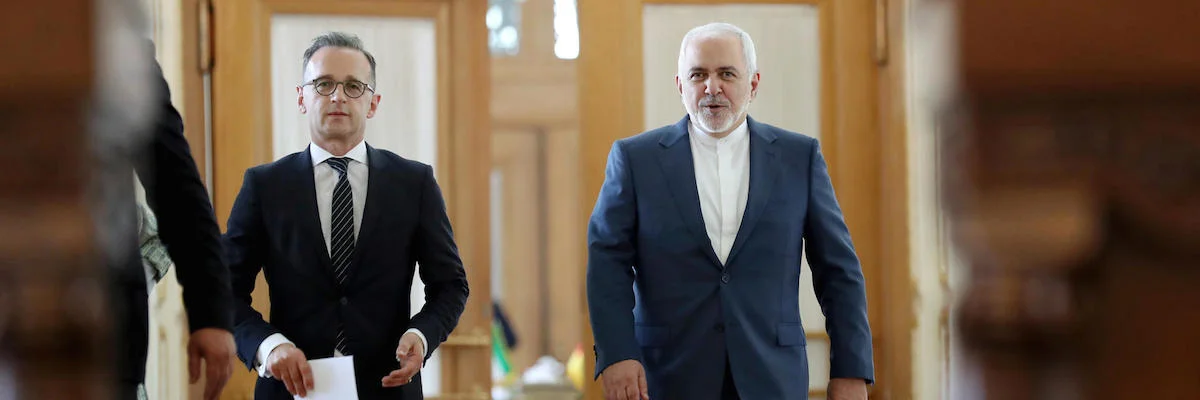
The sanctions deliberations come as German Foreign Minister Heiko Maas visits Tehran. Iranian Foreign Minister Javad Zarif said Monday the two were having “frank talks” about how Iran could still get the economic benefits it expected by agreeing to the nuclear accord.
Yet in a tacit acknowledgment of the effectiveness of U.S. sanctions, European nations have significantly scaled back their ambition for the mechanism, saying trade through it would be limited only to transactions covering humanitarian goods.
U.S. sanctions against Iran already include carve-outs for humanitarian transactions. But European nations argue that INSTEX is needed to provide European companies and banks stronger assurances that they won’t be hit by U.S. sanctions even if they limit themselves to humanitarian purposes.
While the INSTEX mechanism is relatively obscure and would probably be used in limited cases, its opponents say that letting it survive could create a powerful economic tool later that could deal a blow to the effectiveness of U.S. sanctions more broadly.
One possibility, they say, is that Trump could lose re-election in 2020 and a Democratic president could look the other way as European nations used INSTEX for a wider range of trade with Iran, even as sanctions remained in place.
Another possibility is that other nations, including American adversaries, could use INSTEX as a model in the future and avoid the U.S. financial system entirely.
“The development of INSTEX is really worrying for U.S. sanction policy in the long run,” said Emma Ashford, a research fellow at the Cato Institute in Washington. “INSTEX sets up a framework other countries can use in the future.”
Officials at the State Department and the National Security Council declined to comment on the possibility of new sanctions.
Nuclear Deal
Punishing the STFI could doom INSTEX because it raises the possibility of sanctions risk to anyone who’s a part of the European mechanism. The initiative drives home a letter sent by the U.S. Treasury Department in early May to Per Fischer, the president of INSTEX, arguing that the financial body could face sanctions.
European officials say that establishing INSTEX is imperative to keep Iran abiding by the nuclear deal, which they credit with restraining the Islamic Republic’s nuclear capabilities. They’re especially eager to get it up and running before early July, when Iran has threatened to abandon the accord unless it sees greater benefits from abiding by its terms.
Visa Restrictions
The U.S. has sent conflicting signals about its attitude toward INSTEX, with some officials taking a hard line and others saying it could be acceptable. During a stop in Berlin on May 31, Secretary of State Michael Pompeo said the vehicle was “unproblematic” as long as it’s used to facilitate trade in humanitarian goods and other transactions the U.S. has exempted from sanctions.
Yet Republican hawks in the administration and Congress disagree, saying that channels for humanitarian trade with Iran already exist. Senator Ted Cruz of Texas is considering a draft bill that threatens sanctions against the European and Iranian finance vehicles.
Skeptics point out that Iran’s Islamic Revolutionary Guard Corps, covered by existing sanctions, has used humanitarian front companies in the past.
The risk of crushing INSTEX now is that the U.S. could face an even greater backlash if it closes off an avenue for legitimate humanitarian trade, according to Suzanne Maloney, deputy director of the foreign policy program at the Brookings Institution.
“It does call into question what the long-term strategy here is,” Maloney said. “If there’s no room for humanitarian aid for Iran, literally no viable mechanisms for facilitating those transactions, then clearly this is purely a punitive strategy and one that is intended to wreak maximum havoc on the Iranian population.”
Photo: IRNA
U.S. Warns Europe That Its Iran Workaround Could Face Sanctions
◢ The Trump administration escalated its battle with European allies over the fate of the Iran nuclear accord. Sigal Mandelker, the Treasury Department’s undersecretary for terrorism and financial intelligence, signaled in a May 7 letter obtained by Bloomberg that INSTEX the European vehicle to sustain trade with Tehran, and anyone associated with it could be barred from the U.S. financial system if it goes into effect.
By Jonathan Stearns and Helene Fouquet
The Trump administration escalated its battle with European allies over the fate of the Iran nuclear accord, threatening penalties against the financial body created by Germany, the U.K. and France to shield trade with the Islamic Republic from U.S. sanctions.
Sigal Mandelker, the Treasury Department’s undersecretary for terrorism and financial intelligence, signaled in a May 7 letter obtained by Bloomberg that INSTEX the European vehicle to sustain trade with Tehran, and anyone associated with it could be barred from the U.S. financial system if it goes into effect.
“I urge you to carefully consider the potential sanctions exposure of INSTEX” Mandelker wrote in the letter to INSTEX President Per Fischer. “Engaging in activities that run afoul of U.S. sanctions can result in severe consequences, including a loss of access to the U.S. financial system.”
Germany, France and the U.K. created INSTEX in January to allow companies to trade with Iran without the use of U.S. dollars or American banks—thus allowing them to get around wide-ranging U.S. sanctions that were imposed after the Trump administration abandoned the 2015 Iran nuclear deal last year.
A senior official involved in the internal debate that led to the letter said the U.S. decided to issue the threat after concluding that European officials, who had earlier downplayed the significance of Instex in conversations with the Trump administration, were far more serious about it than they had initially let on.
The official, who asked not to be identified discussing internal deliberations, said the letter was intended to serve as a warning that the U.S. would punish anyone associated with INSTEX—including businesses, government officials and staff —if they were working to set up a program to help Iran evade U.S. sanctions.
“This is a shot across the bow of a European political establishment committed to using Instex and its sanctions-connected Iranian counterpart to circumvent U.S. measures,” said Mark Dubowitz, the chief executive officer of the Foundation for Defense of Democracies in Washington.
Deceptive Practices
Asked to comment on the letter, the Treasury Department issued a statement saying “entities that transact in trade with the Iranian regime through any means may expose themselves to considerable sanctions risk, and Treasury intends to aggressively enforce our authorities.”
The French Finance Ministry, which handles press queries for INSTEX, had no immediate comment.
European countries broadly opposed Trump’s decision to withdraw from the nuclear accord but have struggled to deliver the economic benefits Iran expected from the deal, known as the Joint Comprehensive Plan of Action, since the U.S. quit. In the meantime, U.S. sanctions have delivered a blow to Iran’s economy, fueling inflation, reducing oil revenue and pressuring President Hassan Rouhani’s government. Instex was supposed to help address that, but so far it has largely failed to get up and running.
Iranian leaders have rejected the U.S. moves while pressuring European nations to accelerate efforts to ensure Iran benefits from staying in the JCPOA. At the same time, Iran has said it will scale back some of its commitments under the accord, signaling it could surpass some limits on enriched-uranium in weeks.
At the heart of the latest U.S. move is the argument that Iran and its central bank use deceptive financial practices and haven’t implemented minimum global safeguards against money laundering and terrorism financing.
Pompeo Warning
Opponents of INSTEX, including Dubowitz’s Foundation for Defense of Democracies, argue that the mechanism is flawed because the Iranian institution designated to work with Instex, the Special Trade and Finance Instrument, has shareholders with links to entities already facing sanctions from the U.S.
During a visit to London on May 8, Secretary of State Michael Pompeo also warned that there was no need for Instex because the U.S. allows for humanitarian and medical products to get into Iran without sanction.
“When transactions move beyond that, it doesn’t matter what vehicle’s out there, if the transaction is sanctionable, we will evaluate it, review it, and if appropriate, levy sanctions against those that were involved in that transaction,” Pompeo said. “It’s very straightforward.”
Photo: House.gov
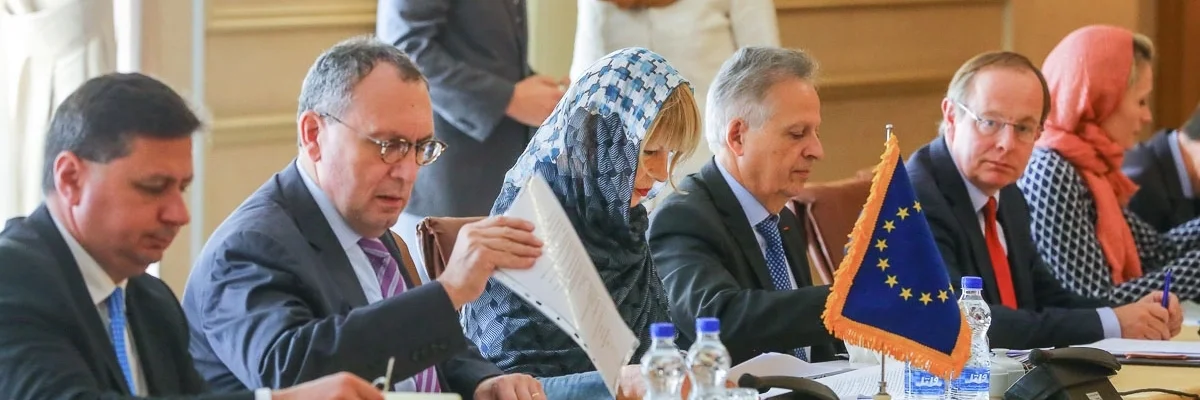
Stuck Between U.S. and Iran, EU Is Running Out of Options
◢ No one spelled out Europe’s predicament over the escalating stand-off between the U.S. and Iran quite as bluntly as Russia. It’s up to “the Europeans, who committed to find a solution to the problem created by the Americans, to fulfill their promise,’’ said Foreign Minister Sergei Lavrov, during a joint news conference in Moscow with his Iranian opposite, Mohammad Zarif.
No one spelled out Europe’s predicament over the escalating stand-off between the U.S. and Iran quite as bluntly as Russia.
It’s up to “the Europeans, who committed to find a solution to the problem created by the Americans, to fulfill their promise,’’ said Foreign Minister Sergei Lavrov, during a joint news conference in Moscow with his Iranian opposite, Mohammad Zarif.
That won’t be easy, because after a year of casting around for ways to enable companies to safely circumvent U.S. sanctions to trade with and invest in Iran, Europe has come up empty. That is unlikely to change in the next 60 days, in which case the 2015 nuclear deal with Iran could be headed for a slow death.
Europe again found itself squeezed between hostile governments in Washington and Tehran on Wednesday, when President Hassan Rouhani threatened to abandon some of the limits to its controversial nuclear fuel program that Iran agreed to in 2015, in exchange for the lifting of international sanctions.
‘Hasn’t Delivered’
Iran’s beef is with the U.S., which withdrew from the agreement last year. And it’s likely to continue getting support from Russia and China, which in the past have continued to do business in Iran and buy its oil, despite U.S. sanctions.
But it was to Europe that Rouhani delivered his ultimatum on Wednesday, demanding that it start countering the effects of mounting U.S. sanctions within 60 days, or see Iran start walking away from the deal, too.
“They’re giving the Europeans a last chance,’’ said Sir Richard Dalton, who served as Britain’s ambassador in Tehran from 2003 to 2006. “So far, Europe hasn’t delivered in a single one of the areas – transport, trade, investment, banking – where it promised Iran cooperation in 2018, when the U.S. pulled out.’’
Dalton described Rouhani’s announcement as carefully calibrated, so as not to immediately collapse the 2015 Joint Comprehensive Plan of Action, while at the same time persuading a domestic audience that the government was pushing back against U.S. economic pressure.
Iran’s economy contracted by 3.9 percent in 2018, and is forecast to shrink by a further 6 percent this year, according to the International Monetary Fund. The recent U.S. decision to end all waivers of sanctions against countries that buy Iranian oil exports is likely to exacerbate the country’s economic woes further.
‘Without Caveats’
France, Germany and Britain on Wednesday all recommitted to the 2015 deal, calling again for the U.S. to return to the agreement, while signaling that any Iranian backtracking would meet a response.
“We and our partners stand by this treaty, without any caveats — and we expect Iran to implement the treat in full as well, without caveats,’’ said Germany’s Foreign Minister Heiko Maas. The U.K.’s junior foreign minister, Mark Field, told Parliament the U.K. also stood by the deal, but said there would be “consequences” if Iran stopped meeting its nuclear commitments.
Europe’s thankless position isn’t new. It has been caught between hawkish policies in the U.S. and Iran ever since international inspectors first confirmed the existence of Iran’s secret nuclear fuel program, in 2003.
Uncomfortable Deja Vu
Still bruised from the U.S. decision to invade Iraq just months earlier, France, Germany and Britain took on the task of negotiating a solution with Tehran that the U.S. could accept. Their aim was to avoid a repeat of the Iraq war, and of the deep rifts that it caused within Europe as governments were forced to choose whether to back or oppose U.S. policy. Unlike the U.S., European nations also had significant economic interests to lose.
Iran’s ultimatum, together with the recent U.S. deployment of an aircraft carrier group and B-52 bombers to the Gulf, suggest those risks are back.
U.S. Secretary of State Michael Pompeo canceled a meeting with German Chancellor Angela Merkel to visit Baghdad on Tuesday where he told Iraqi leaders the threat from Iran is growing. He told the Daily Telegraph that he’d received intelligence “that suggested it was a good time for me to go."
Europe’s governments are probably in a weaker position to push back against U.S. foreign policy choices than they were in the lead-up to the Iraq war, when France, Germany and a number of others joined with Russia to forcefully oppose the Iraq invasion.
Secondary Sanctions
That’s in part because Washington has since developed the use of secondary sanctions against non-U.S. companies into a powerful deterrent. The U.S. fined France’s BNP Paribas SA USD 8.9 billion in 2015, for busting its sanctions on Iran, Cuba and Sudan. Last month, the German unit of UniCredit SpA agreed to pay USD 1.3 billion for busting U.S. sanctions on Iran. Companies, and governments, have become cautious.
The EU is setting up a special purpose vehicle to help European companies safely finance the export of goods to Iran. Even this limited vehicle, however, known as the Instrument in Support of Trade Exchanges, has yet to start work. It would in any case do little or nothing to aid investment or trade in the wider Iranian economy.
Europe’s troubles aren’t only with the U.S. In what could be seen as a veiled threat, Rouhani also talked Wednesday about the role Iran plays in reducing the flow of drugs and refugees to Europe. Iran hosts about 1 million registered refugees from Afghanistan, and as many as 1.5 million more who are unregistered.
At the same time, the non-financial stakes for Europe in defying the U.S. on Iran may also have risen in recent years. President Donald Trump has made it clear his government sees both support for Europe’s defense in the North Atlantic Treaty Organization, and trans-Atlantic trade as negotiable in ways that no U.S. president has before.
“The underlying issue,’’ said Dalton, the former U.K. ambassador, “is whether Europe remains a sovereign force.’’
Photo: Bloomberg
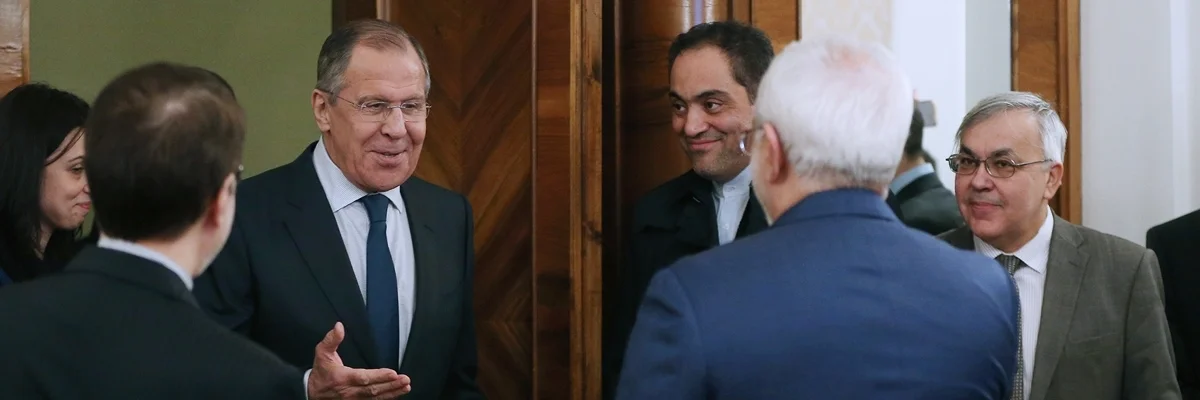
Moscow, Iran Urge Europe to 'Fulfil Obligations' Under Nuclear Deal
◢ Russian Foreign Minister Sergei Lavrov and Iranian counterpart Mohammad Javad Zarif on Wednesday called on European signatories to abide by the Iran nuclear deal, following a meeting in Moscow. Zarif's visit came as Tehran said it had stopped respecting limits on its nuclear activities agreed under the deal until other signatories find a way to bypass renewed US sanctions.
Russian Foreign Minister Sergei Lavrov and Iranian counterpart Mohammad Javad Zarif on Wednesday called on European signatories to abide by the Iran nuclear deal, following a meeting in Moscow.
Zarif's visit came as Tehran said it had stopped respecting limits on its nuclear activities agreed under the deal until other signatories find a way to bypass renewed US sanctions.
Lavrov said during a joint press conference that the 2015 agreement had been "fragile" since US President Donald Trump announced Washington would pull out a year ago.
European signatories of the deal, known as the Joint Comprehensive Plan of Action (JCPOA), were trying to "divert attention" from their inability to implement points of the agreement, Lavrov said.
"We will call on them, as we have done before, to concentrate on implementing everything that is enshrined in the JCPOA and approved by the UN Security Council."
Lavrov said European mechanisms to allow banking transactions with Iran despite US sanctions were inefficient.
"For Iran, it is important that this mechanism allows for the export of Iranian oil. We support the Iranians. This is a legal requirement and part of the JCPOA."
Zarif meanwhile said "our friends in Russia and China maintained very good relations with us in this year," since the US withdrawal.
"But the rest of the JCPOA participants did not meet any of their obligations," he said, referring to Britain, France and Germany.
“Yes, they issued good statements, but in practice nothing happened."
Lavrov also criticized Washington for sending aircraft carriers to the Persian Gulf, "suggesting a willingness to use force.”
Washington reimposed sanctions after it quit the agreement one year ago, dealing a severe blow to the Iranian economy.
Photo: IRNA
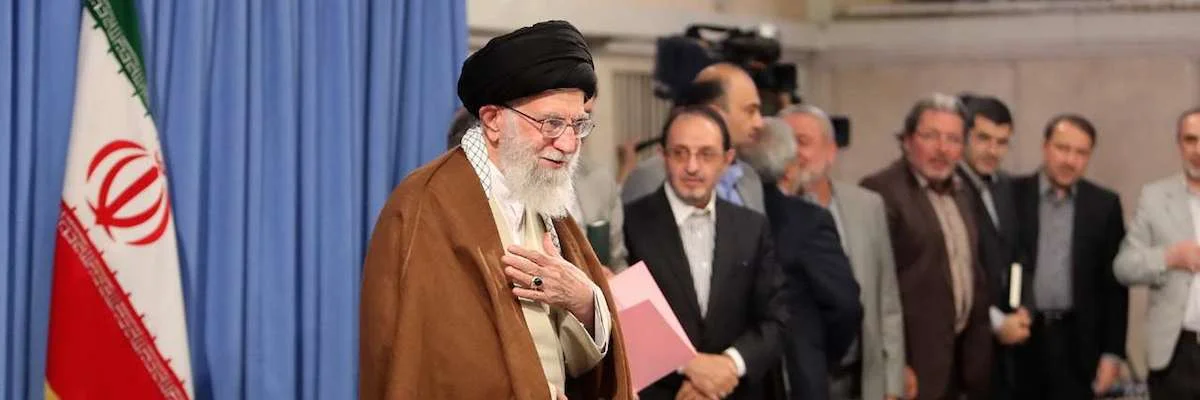
Iran Set to Scale Back Nuclear Commitments as U.S. Tensions Rise
◢ Iran signaled Monday that it may scale back some commitments made as part of the 2015 nuclear deal in response to tightening U.S. sanctions. Iran does not plan to follow Trump in abandoning the accord, which curbed its nuclear program in return for an end to some sanctions, but is set to make minor and general reductions to some of its commitments.
Iran signaled Monday that it may scale back some commitments made as part of the 2015 nuclear deal in response to tightening U.S. sanctions, a move that could escalate tensions after the Trump administration deployed an aircraft carrier to the Gulf.
Iran does not plan to follow Trump in abandoning the accord, which curbed its nuclear program in return for an end to some sanctions, but is set to make minor and general reductions to some of its commitments, an Iranian official involved with its implementation was cited as saying by the state-run Iranian Students News Agency.
President Hassan Rouhani is expected to make the announcement via state media on Wednesday and roll out the steps, the official said. The plans have been communicated informally to European Union officials, the official added without giving details.
The Wall Street Journal cited European diplomats as saying that Iran may step up research into centrifuges that could produce highly enriched uranium faster. It wasn’t clear if such a measure would represent a clear breach of the deal or be largely symbolic in its significance.
The nuclear accord, reached in 2015 after years of painstaking multi-lateral negotiations, put strict limits on Iran’s nuclear activities in return for an easing of years of sanctions.
President Donald Trump withdrew from the accord a year ago, reimposed measures against Iran and has made confronting the Islamic Republic a cornerstone of his foreign policy, designating its elite Revolutionary Guard Corps a terrorist entity and sending the USS Abraham Lincoln and a bomber force to the Gulf as a warning.
The Trump administration ratcheted up economic pressure early this month by letting waivers allowing eight governments to import Iranian oil expire. It has said its goal is to cut Iran’s oil exports to zero, part of a bid to force Tehran to change its policy in the Middle East, including its support for Houthi rebels in Yemen and Hezbollah, which the U.S. and some other nations consider a terrorist group.
European signatories of the nuclear deal have stuck with it and pledged to find ways to ease the impact of U.S. measures and ensure Iran gets some benefit from continuing to meet its commitments. Those efforts have proved inconclusive so far, however.
Representatives of the European Union, the French, German and British governments and Iran are scheduled to meet on Tuesday in Brussels to discuss their joint efforts and how to make operational a special purpose vehicle set up by the Europeans to facilitate trade with the country, according to an official from the bloc.
The official cited the need for mechanisms to be put in place for the EU-based Instrument for Supporting Trade Exchanges—or INSTEX—and its Iranian counterpart. It was not clear whether Iran’s plans to scale back on some of its commitments under the nuclear accord would be discussed or how they might affect European policy.
Photo: IRNA
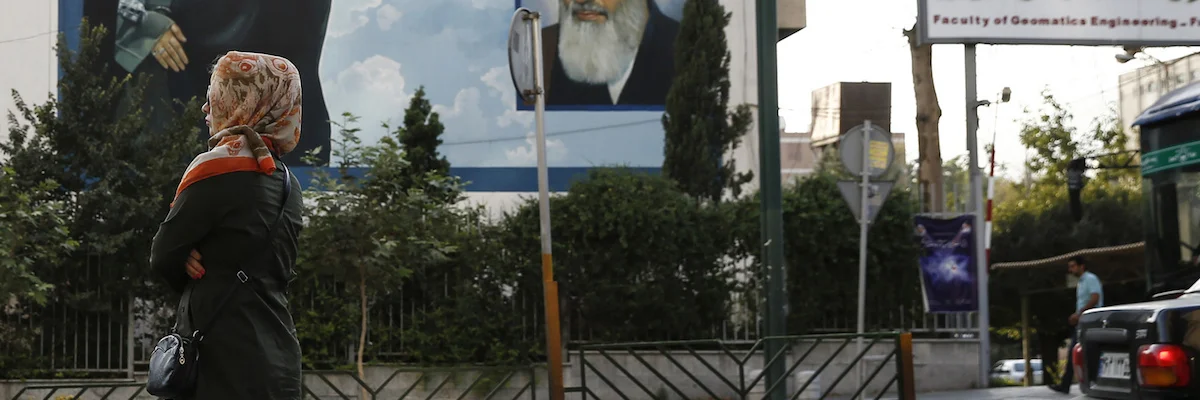
Europe Doubles Down on Iran Support as Trump Targets Oil Exports
◢ Europe pledged to keep afloat its efforts to aid Iran after the U.S. tightened the screw by targeting all exports of Iranian oil for sanctions. The French government and the European Union both said they will abide by the terms of the Iran nuclear accord with world powers even after the latest U.S. move.
Europe pledged to keep afloat its efforts to aid Iran after the U.S. tightened the screw by targeting all exports of Iranian oil for sanctions.
The French government and the European Union both said they will abide by the terms of the Iran nuclear accord with world powers even after the latest U.S. move. France and its European partners intend to continue efforts to ensure that Iran derives economic benefits as long as Tehran complies with its nuclear obligations, the Foreign Ministry in Paris said.
U.S. Secretary of State Michael Pompeo said Monday that the U.S. wouldn’t renew waivers granted to eight countries including South Korea, Japan and Turkey that allowed them to buy Iranian oil without facing sanctions. The non-renewal of waivers that were due to expire on May 2 roiled energy markets and risks upsetting major importers including China and India.
Europe’s insistence on standing by the Iran nuclear deal, known as the JCPOA, risks further inflaming tensions with the Trump administration as it seeks to force Tehran to renegotiate the terms of the accord to include Iran’s non-nuclear ballistic missiles and influence in the wider Middle East.
“We regret yesterday’s announcement by the U.S. not to renew oil waivers,” European Commission spokeswoman Maja Kocijancic told reporters in Brussels. “This further risks undermining the implementation of the JCPOA, which is a key element of the global nuclear non-proliferation architecture that was endorsed unanimously by the UN security council.”
Trade Spillover
European leaders such as French President Emmanuel Macron and German Chancellor Angela Merkel may have concerns at potential fallout for EU-U.S. trade talks aimed at averting more tit-for-tat tariffs, since President Donald Trump has previously shown willingness to conflate disparate policy matters in a bid to achieve his goals.
Germany, France and the U.K. have already created a special purpose vehicle for trade with Iran designed to get around U.S. sanctions. Work on the INSTEX mechanism to facilitate financial transactions for European companies trading with Iran is “progressing positively with a view to a near completion,” the French ministry said.
Iran should continue work on its mirror mechanism, the ministry said. Exchanges between the two sides are underway to ensure that both structures “operate in a manner consistent with international financial standards,” it said.
France said it is “determined” to persevere with the nuclear deal, while Kocijancic at the commission said the EU will abide by the accord “as long as Iran continues with the full and effective implementation of its nuclear-related commitments.”
Photo: Bloomberg
Iran FM Says Europe Incapable of Bypassing US Sanctions
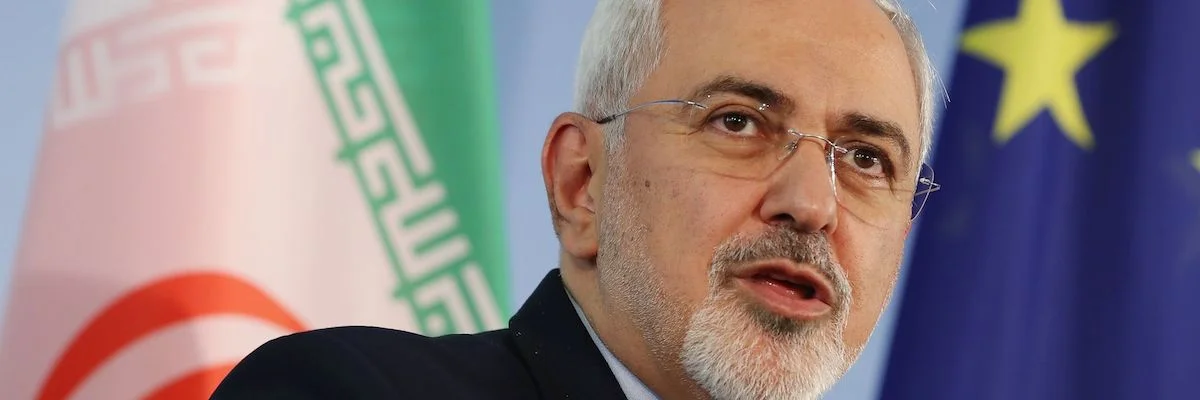
◢ Iranian Foreign Minister Javad Zarif said on Wednesday European powers were incapable of bypassing sanctions imposed on Tehran by the US after it withdrew from the Iran nuclear deal. Iran and six world powers agreed on a deal in 2015 that severely restricted Tehran's nuclear activities in return for sanctions relief and economic incentives.
Iranian Foreign Minister Javad Zarif said on Wednesday European powers were incapable of bypassing sanctions imposed on Tehran by the US after it withdrew from the Iran nuclear deal.
Iran and six world powers agreed on a deal in 2015 that severely restricted Tehran's nuclear activities in return for sanctions relief and economic incentives.
However President Donald Trump withdrew Washington from the deal—technically called the Joint Comprehensive Plan of Action (JCPOA)—last May, reimposing punishing sanctions on the Islamic republic.
The other parties to the nuclear deal—Britain, China, France, Germany and Russia along with the European Union—however insist they remain committed to making the deal work.
"The Europeans at first viewed the JCPOA (nuclear deal) as an achievement, but maybe they were not prepared to, and certainly they were not capable of standing up against U.S sanctions," Zarif said in an interview with Khamenei.ir, the official website of Iran's Supreme Leader Ayatollah Ali Khamenei.
“We will continue pressing the Europeans to implement their commitments. Europe must know that they cannot shy away from their responsibilities with a few statements and some unaccomplished plans," he added.
Zarif, who was his country's chief negotiator in the negotiations leading to the deal, said that Iran would continue to pressure the Europeans to act on their obligations within the deal but added that "we never had any hopes" in them.
Instead of the western powers the Islamic republic has turned to its traditional partners such as Russia and China, Zarif said, adding "the future of our foreign policy lies in that way."
Photo Credit: IRNA
Iran Supreme Leader Calls European Trade Mechanism 'Bitter Joke'
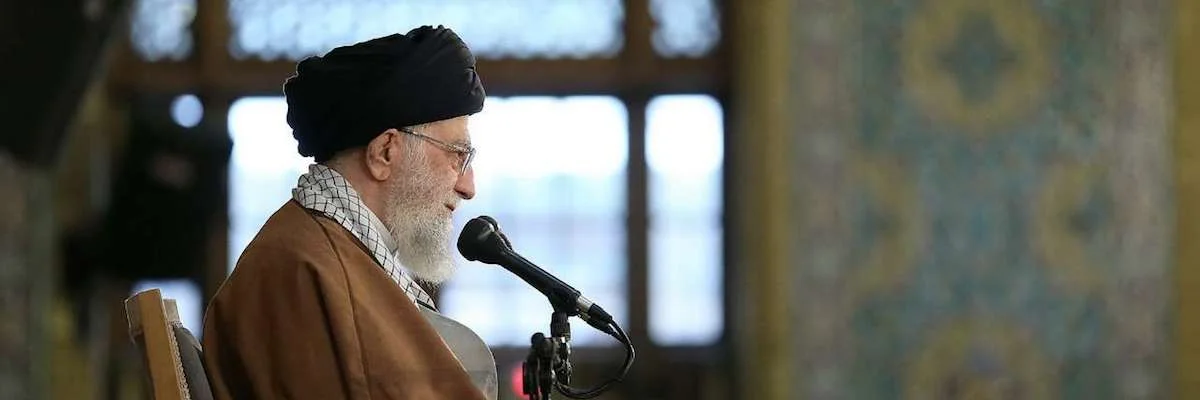
◢ Iran's Supreme Leader Ayatollah Ali Khamenei called a trade mechanism launched by European countries to bypass renewed US sanctions a "bitter joke" on Thursday, in a speech aired by state TV. "This financial channel they recently set up resembles a joke, a bitter joke," Khamenei told a thousands-strong congregation at a shrine in the northeastern city of Mashhad, where he speaks every year to mark Iranian new year.
Iran's supreme leader Ayatollah Ali Khamenei on Thursday dismissed a trade mechanism launched by European countries to bypass renewed US sanctions as a "bitter joke" and said Europe could not be trusted.
"This financial channel they recently set up resembles a joke, a bitter joke," Khamenei told a thousands-strong congregation in a televised address at a shrine in the northeastern city of Mashhad, where he speaks every year to mark the Iranian New Year.
Britain, France and Germany launched the special payment system called INSTEX—Instrument in Support of Trade Exchanges—in late January after President Donald Trump abruptly quit the 2015 nuclear deal between Iran and world powers in May last year.
The three countries were the European signatories to the deal, also signed by the US, Russia and China, that curbed Tehran's nuclear ambitions in return for sanctions relief.
London, Paris and Berlin launched the device in the hope it will help save the deal by allowing Tehran to keep trading with European companies despite Washington reimposing sanctions.
"The difference between what they are obligated to do and what they are proposing is as far as the earth is from the sky," Khamenei said.
"We should completely forego (any hope) of help or cooperation from Westerners in strengthening our economy, we shouldn't wait for them," he said.
"Once again the Europeans have stabbed us in the back, they have betrayed us," Khamenei said, cursing Western politicians as "savages.”
"They wear suits, they put on ties and eau de cologne and carry Samsonite briefcases but they are savages," Khamenei said.
"What I am saying does not mean (Iran) should cut Western ties, not at all... there is no problem in having relations with them, but trusting them is a mistake, don't trust them," he said.
Iran on Tuesday registered a parallel structure to INSTEX called the Special Trade and Finance Institute or STFI, the semi-official ISNA news agency reported.
"With the registration of STFI, we expect that, in cooperation with INSTEX, it would facilitate trade between Iran and Europe and be influential in countering limitations caused by US sanctions," said Iran's central bank governor Abdolnaser Hemmati.
Earlier on Thursday, Khamenei called the economic difficulties of Iranians the most urgent problem facing the country.
"Specially in recent months the difficulties for people's livelihoods have increased," Khamenei said in a prerecorded message to mark the March 21 start of the New Year.
“The economy is the country's urgent problem, it's the country's (most) serious and primary problem," he said, pointing to the rial's devaluation, decline in purchasing power and falling production.
Photo Credit: IRNA
Iran to Set Up its Part of Nuclear Deal Mechanism 'This Month'
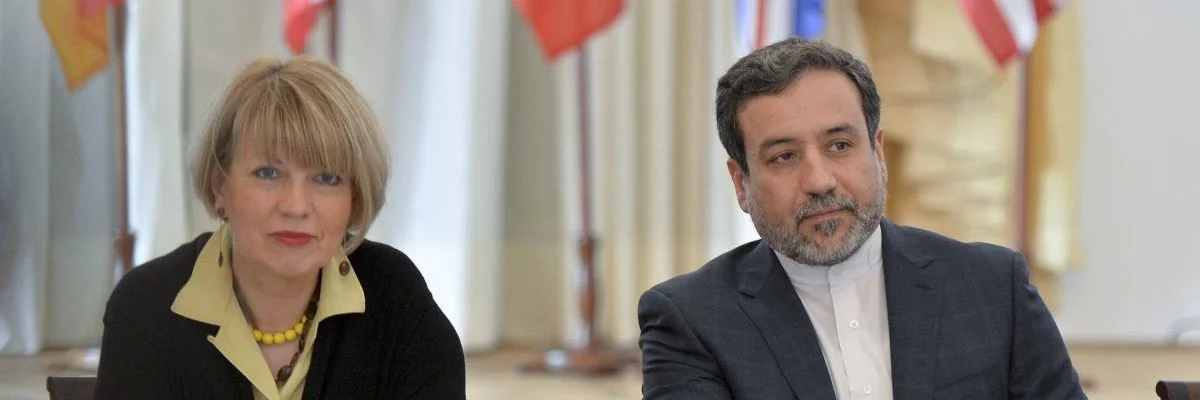
◢ Iran hopes to have its part of a new payments vehicle—devised to bypass US sanctions—ready within a fortnight, its Deputy Foreign Minister Abbas Araghchi said on Wednesday. "We hope it will be before the end of the Iranian calendar year," Araghchi told reporters in Vienna, referring to March 20 when the Iranian year ends.
Iran hopes to have its part of a new payments vehicle —devised to bypass US sanctions—ready within a fortnight, Deputy Foreign Minister Abbas Araghchi said on Wednesday.
"We hope it will be before the end of the Iranian calendar year," Araghchi told reporters in Vienna, referring to March 20.
He said that Iran now had a "clearer picture" of how the new vehicle, known as INSTEX, would work and that its managing director would visit Tehran for discussions "very soon.”
But he added that only when the mechanism was fully operational would Iran be able to assess whether it "can work properly and can produce results, (and) can do payments between Iran and European countries".
Araghchi was in the Austrian capital for a "joint commission" with representatives from China, Russia, Britain, Germany and France—all signatories of the international deal on Iran's nuclear programme.
INSTEX is seen as key to European Union efforts to preserve the deal struck in 2015 between world powers and Iran over its nuclear program, the Joint Comprehensive Plan of Action (JCPOA).
The US was also a signatory but last May President Donald Trump withdrew from the deal and in November imposed sweeping new sanctions on Iran.
Remaining Members 'United'
Araghchi said there was "very strong support" for the deal from all participants at the meeting.
He emphasized that Iran expected INSTEX to work "for all goods and commodities, not only humanitarian goods", but that it could start with humanitarian goods "in order to set the patterns for doing business with Iran.”
"Once the patterns are set, then other goods, including sanctioned goods—and oil of course—would be added to this mechanism," he added.
"It is late but still a move in the right direction," Araghchi said.
INSTEX was launched at the end of January by Britain, France and Germany, who sit on a supervisory board chaired by a UK national. It is registered in Paris.
Russia's ambassador to Vienna's UN organizations, Mikhail Ulyanov, who was also at the meeting, told AFP the remaining signatories to the deal were "united in the need to save the JCPOA.”
"There are some problems, particularly in the economic field but we are aimed at overcoming them as soon as possible," Ulyanov said.
He said the speed with which INSTEX became fully operational was up to Germany, France, Britain and Iran.
But Ulyanov added: "I believe it may take a rather long time, at least a few months; most likely even more."
In February the UN's International Atomic Energy Agency watchdog said Iran was adhering to the terms of the JCPOA, under which Tehran drastically scaled back its nuclear program in return for sanctions relief.
Washington has urged European signatories to the JCPOA to follow Trump's example and withdraw, but this has been rejected by the Europeans.
Photo Credit: IRNA
Europe Not to be Trusted: Iran Leader
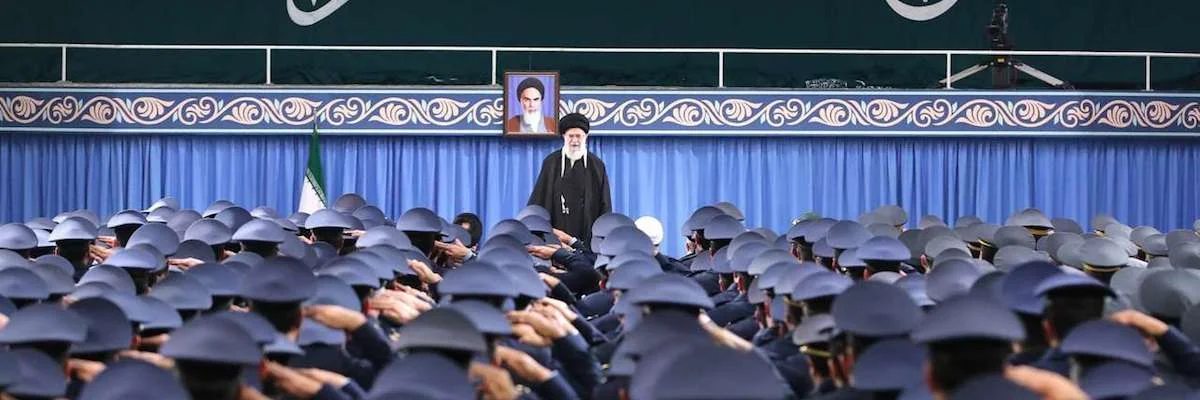
◢ Iran's supreme leader Ayatollah Ali Khamenei said Friday that Europe "cannot be trusted", a week after the EU launched a trade mechanism to bypass US sanctions on Tehran. “These days there's talk of the Europeans and their proposals. My advice is that they shouldn't be trusted, just like the Americans," he said at a meeting with air force officials, his website reported.
Iran's supreme leader Ayatollah Ali Khamenei said Friday that Europe "cannot be trusted", a week after the EU launched a trade mechanism to bypass US sanctions on Tehran.
“These days there's talk of the Europeans and their proposals. My advice is that they shouldn't be trusted, just like the Americans," he said at a meeting with air force officials, his website reported.
"I'm not saying we shouldn't have relations with them. This is about trust," he added.
Britain, France and Germany last week launched a special payment mechanism called INSTEX to help save the 2015 nuclear deal between Iran and world powers.
It would allow Tehran to keep trading with EU companies in spite of US sanctions renewed after Washington quit the accord last year.
Tehran has cautiously welcomed INSTEX as a "first step", but US officials said the new entity would not have any impact on efforts to exert economic pressure on Iran.
Khamenei also accused Europe of hypocrisy over human rights, criticizing France's treatment of protesters in Paris.
"They (anti-riot police) attack protesters in Paris streets and blind them, then they have the audacity to make human rights requests of us," he said.
Turning to the United States, Khamenei said Iranians would chant "death to America" as long as Washington kept up its hostile policies, but the slogan was not directed at the American people.
"Death to America means death to (President Donald) Trump, (National Security Advisor) John Bolton and (Secretary of State Mike) Pompeo. It means death to America's rulers... we have nothing against the American people," he said.
Photo Credit: IRNA