
Iran Nuclear Deal Commission to Meet in Vienna
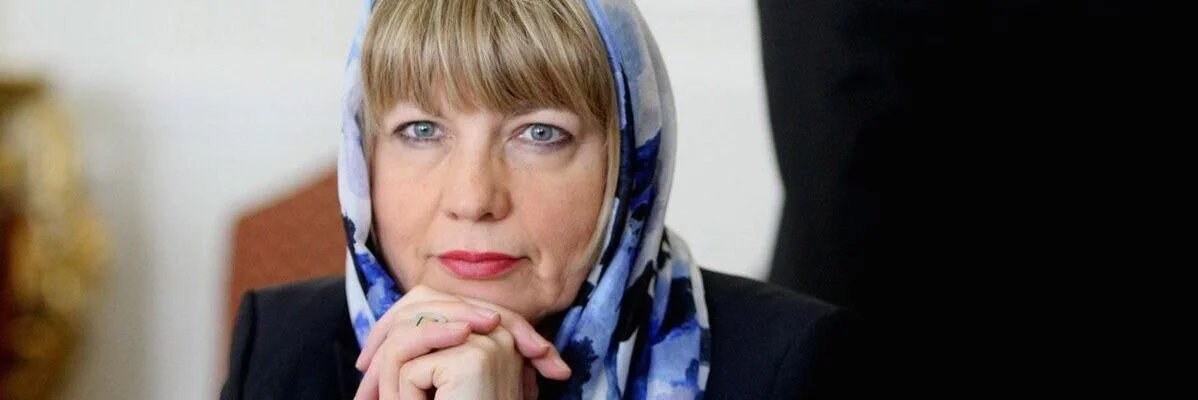
◢ The remaining parties to the Iran nuclear deal will meet in Vienna on Wednesday, the EU's diplomatic service announced, after Britain, France and Germany launched a dispute process over Iran's successive pullbacks. The meeting will be chaired by senior EU official Helga Schmid.
By Damon Wake
The remaining parties to the Iran nuclear deal will meet in Vienna on Wednesday, the EU's diplomatic service announced, after Britain, France and Germany launched a dispute process over Iran's successive pullbacks.
The office of EU diplomatic chief Josep Borrell—who is tasked with convening the commission under the dispute mechanism—said the get-together would be chaired on his behalf by senior official Helga Schmid.
The meeting comes as the European parties try to find a way to persuade Iran to come back into line with the deal after Tehran made a series of steps away in protest at the US pulling out and reimposing sanctions.
The 2015 agreement to curb Iran's nuclear program in return for sanctions relief has been slowly crumbling since US President Donald Trump unilaterally withdrew in 2018, describing the accord signed by his predecessor Barack Obama as a bad deal.
The EU has led efforts to try to save the deal, arguing that it is vital for international security, but after repeated warnings over Iran's moves, Germany, Britain and France triggered the dispute process on January 14.
In its last announcement, Tehran said it would no longer observe limits on the number of centrifuges used to enrich uranium. It was its fifth step away from the deal since Trump's pullout.
Borrell has said he believes all the countries still in the deal -- which also include Russia and China -- are determined to save the accord.
Iran Looking for Concessions
Western diplomats recognize it is highly unlikely Iran will heed calls to come back into full compliance without substantial concessions in return—such as an end to US sanctions or Europe taking measures to offset their economic impact.
Instead they hope to use the dispute process, which can be strung out for quite some time, to convince Iran not to take any more moves away from the deal, giving space for back-channel diplomacy aimed at bringing Washington and Tehran back into alignment.
At a major international security conference in Munich earlier this month, Iran's Foreign Minister Mohammad Javad Zarif said Tehran would be prepared to move back towards the deal if Europe provides "meaningful" economic benefits.
Crucially, Iran has said it will continue to cooperate with the Vienna-based International Atomic Energy Agency ( IAEA ) which carries out regular detailed inspections on the ground.
Europe has set up a special trading mechanism called INSTEX to try to enable legitimate humanitarian trade with Iran, but it has yet to complete any transactions and Tehran regards it as inadequate.
The renewed US sanctions have almost entirely isolated Iran from the international financial system, driven away oil buyers and plunged the country into a severe recession.
Photo: IRNA
Iran Links Tanker Row to Ailing Nuclear Deal
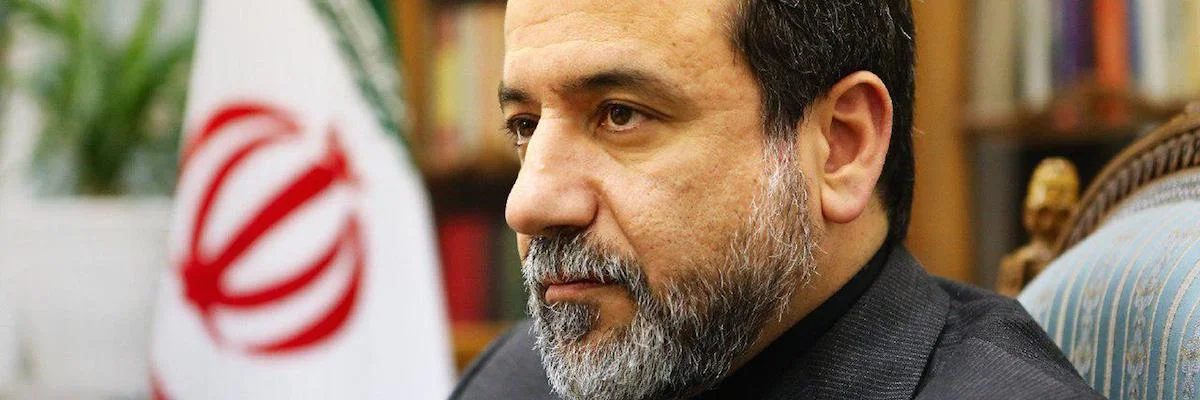
◢ Iran on Sunday called Britain's seizure of an Iranian oil tanker a breach of an ailing 2015 nuclear deal, after remaining parties to the accord met in Vienna in a bid to keep it alive. "Since Iran is entitled to export its oil according to the JCPOA, any impediment in the way of Iran's export of oil is actually against the JCPOA," Deputy Foreign Minister Abbas Araghchi said.
By Philippe Schwab and Jastinder Khera
Iran on Sunday called Britain's seizure of an Iranian oil tanker a breach of an ailing 2015 nuclear deal, after remaining parties to the accord met in Vienna in a bid to keep it alive.
British authorities detained an Iranian tanker off the UK overseas territory of Gibraltar in early July on allegations it was breaching EU sanctions on Syria.
A British-flagged tanker was then impounded by Iran's Revolutionary Guards with its 23 crew aboard in the Strait of Hormuz on July 19, which was seen by the UK as a tit-for-tat move.
In comments to journalists after the meeting in Vienna, Iranian Deputy Foreign Minister Abbas Araghchi linked the tanker row to discussions over the nuclear deal, formally known as the Joint Comprehensive Plan of Action (JCPOA). "Since Iran is entitled to export its oil according to the JCPOA, any impediment in the way of Iran's export of oil is actually against the JCPOA," Araghchi said.
He added that the issue of Iran's oil exports—including US attempts to prevent them completely—was raised at the meeting.
"I think the atmosphere was constructive and the discussions were good, I cannot say that we resolved everything," he said.
Envoys from Britain, France, Germany, China, Russia and Iran had gathered for talks in the Austrian capital, a month after a similar meeting failed to achieve a breakthrough.
Chair of the meeting secretary general of the European External Action Service Helga Schmid suggested in a statement that a stalemate still prevailed, saying only that "participants reaffirmed their continued commitment to preserving the JCPOA."
The statement added that Iranian nuclear projects in Arak and Fordow had the participants' "strong support", and said another meeting "would be convened in the near future."
'Tense Moments'
The head of the Chinese delegation, Fu Cong, said the talks had taken place in a "very good" and "professional" atmosphere but also admitted there had been some "tense moments" between the participants.
Tensions between Tehran and Washington have escalated since last year when US President Donald Trump pulled out of the accord that was aimed at curbing Iran's nuclear program, and imposed punishing sanctions. Iran said in May it would disregard certain limits the JCPOA set on its nuclear program and threatened to take further measures if remaining parties to the deal, especially European nations, did not help it circumvent US sanctions.
Even before the latest tanker seizures, pressure had been mounting in the region with a string of incidents involving tankers and drones.
The US has said it brought down one and possibly two Iranian drones last week.Iran shot down an unmanned US aircraft in June, after which Trump announced that he had called off retaliatory air strikes at the last minute because the resulting death toll would have been too high.
The US and Gulf powerhouse Saudi Arabia have accused Iran of being behind multiple mysterious attacks on tankers in the Gulf in June, which Iran denies.
Efforts by European powers, notably France's President Emmanuel Macron, to salvage the nuclear deal have so far come to nothing.
Araghchi repeated after Sunday's meeting that the remaining parties to the JCPOA wanted to meet "soon" at ministerial level. He said preparation for such a meeting was ongoing and that JCPOA partners were also convening "expert meetings on different areas to find practical solution for Iran to enjoy its benefits of sanctions lifting".
He admitted that INSTEX, a mechanism set up by the JCPOA's European partners to facilitate trade with Iran in the face of US sanctions, was "not functioning yet but it is in its final stages".
Photo: IRNA