
U.S. Sanctions Iranian Election Officials Who Bar Candidates
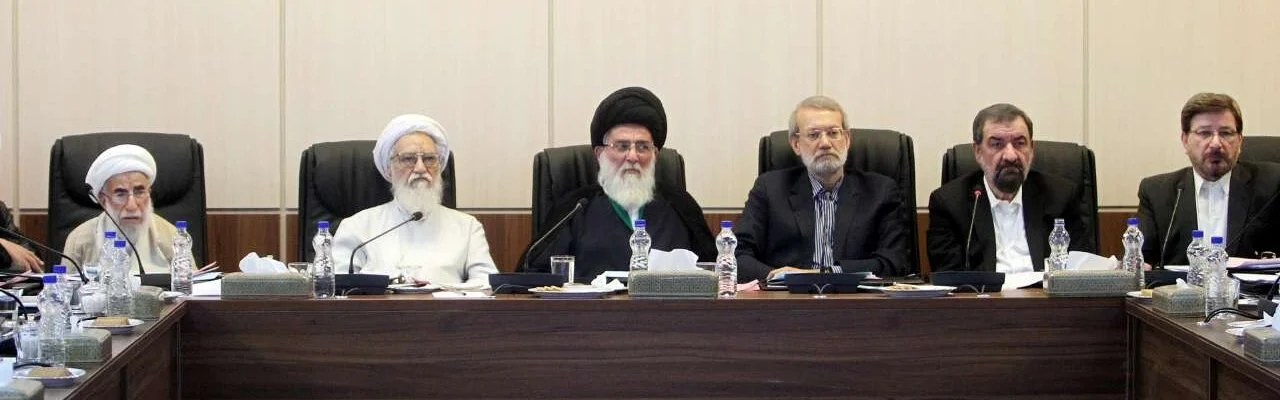
◢ The U.S. said it has sanctioned members of an Iranian government agency that it says rigs elections in the country by disqualifying candidates who don’t echo the political ideology of Ayatollah Ali Khamenei. Five members of Iran’s Guardian Council and its Elections Supervision Committee, who are appointed by Khamenei, were added to the U.S. sanctions list on Thursday.
By Alex Wayne and Golnar Motevalli
The U.S. said it has sanctioned members of an Iranian government agency that it says rigs elections in the country by disqualifying candidates who don’t echo the political ideology of Ayatollah Ali Khamenei.
Five members of Iran’s Guardian Council and its Elections Supervision Committee, who are appointed by Khamenei, were added to the U.S. sanctions list on Thursday, the Treasury Department said in a statement.
“The Trump administration will not tolerate the manipulation of elections to favor the regime’s malign agenda, and this action exposes those senior regime officials responsible for preventing the Iranian people from freely choosing their leaders,” Treasury Secretary Steven Mnuchin said in the statement. “The United States will continue to support the democratic aspirations of Iranians.”
The commander of Iran’s powerful Islamic Revolutionary Guard Corps, General Hossein Salami, urged Iranians to turn out for parliamentary elections on Friday in defiance of the U.S. and said “every vote by the people is a slap in the face of an enemy who is hoping for a low turnout,” the semi-official Tasnim news reported.
The government is concerned about low turnout for the election after the Guardian Council and its elections committee issued mass disqualifications of reformist and moderate candidates. Treasury said in its statement that “several thousand” candidates were ruled ineligible for the election, “including several incumbent legislators.”
Brian Hook, the State Department’s special representative for Iran, told reporters Thursday that the balloting is “political theater” because “the real election took place in secret long before any ballots were cast.”
Photo: IRNA
Iran Defends Barring of Candidates as Campaign Ends
◢ Iran's electoral watchdog on Wednesday defended its decision to disqualify thousands of candidates for a crucial parliamentary election in two days, as a lackluster campaign neared its end. Conservatives are expected to make an overwhelming resurgence in Friday's vote.
By David Vujanovic
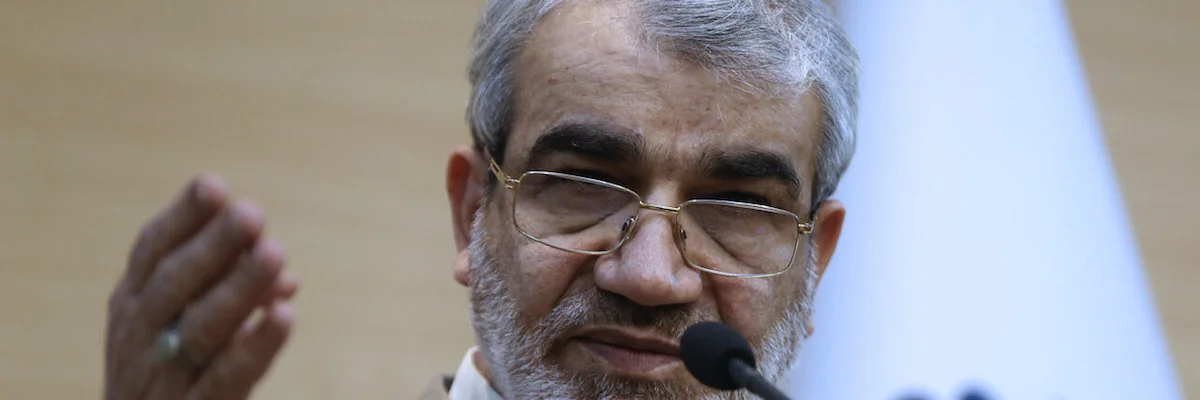
Iran's electoral watchdog on Wednesday defended its decision to disqualify thousands of candidates for a crucial parliamentary election in two days, as a lackluster campaign neared its end.
Conservatives are expected to make an overwhelming resurgence in Friday's vote, which comes after months of steeply escalating tensions between Iran and its decades-old arch foe the United States.
Their gains would be made at the expense of those who back President Hassan Rouhani, a moderate conservative who was re-elected in 2017 promising people more freedoms and the benefits of engagement with the West.
But many people in Iran feel their lives have been crippled by an economic slump exacerbated by harsh US sanctions since President Donald Trump pulled the United States out of a landmark nuclear deal with the Islamic republic in 2018.
A week of campaigning, which has seen posters go up but only a few low-key gatherings, comes to an end on Wednesday, before a day of silence on the eve of polling day.
The interior ministry said around half of the 16,033 hopefuls would contest the election after the Guardian Council barred thousands, most of them moderates and reformists.
But the Council said it was "neutral" in its dealings with all political camps and acted in accordance with the law when it blocked their candidacy.
"The Guardian Council follows the laws and regulations parliament has passed at different times," said its spokesman Abbas Ali Kadkhodaee.
Disillusionment
"This time, just like at previous (elections), we have tried to properly follow the law," he told a news conference.
"The Council has never had a political view... It approaches political factions with closed eyes.
"What it does judge is the evidence in the cases of the candidates and then it only acts in accordance with the law passed by parliament."
Commentators expect disillusionment among the 57 million-strong electorate in the sanctions-hit country to result in a low turnout.
Many people on the streets of Tehran have expressed dissatisfaction with politicians ahead of the election, saying they failed to keep their word or to raise living standards.
Supreme leader Ayatollah Ali Khamenei on Tuesday urged Iranians to vote, saying it was a "religious duty".
Rouhani issued a similar call on Wednesday, saying that taking part would give Iran the "strength and unity" needed in its stand against the United States.
"We are going to the polls to choose the best people for parliament, which is a very important institution," he said in televised remarks after a meeting of his cabinet.
"We are under severe sanctions and pressure by the global arrogance, and we have to break these sanctions and improve people's lives," he added, referring to the United States.
"Sanctions are a terrorist and tyrannical act against Iran.
"One cannot say sanctions have no effect and the government should be doing more... It's lies, it's supporting America."
Turnout at Iran's past 10 elections averaged 60.5 percent, said the interior ministry.
'Tyrannical' Sanctions
The Guardian Council said it expected at least 50 percent of registered voters to cast ballots in the election.
"Our forecast is that we will have a good turnout in the upcoming election, and the average turnout has usually not been under 50 percent, and we will witness a turnout of 50 percent turnout in this election too," its spokesman Kadkhodaee said.
Iranians have been feeling the strain after months of turmoil.
The economy has been battered since Trump abandoned the nuclear deal in 2018 and reimposed sanctions as part of a "maximum pressure" campaign.
In November, demonstrations over petrol price hikes spread across Iran and turned violent before being crushed in a deadly crackdown.
Tehran and Washington have nearly gone to war twice in the past seven months, most recently after the US killed prominent Iranian general Qasem Soleimani on January 3.
The "martyrdom" of the hugely popular general provoked an outpouring of grief in Iran.
Millions of people turned out to mourn his death, but that unity suffered a blow after Iran admitted it "accidentally" shot down a Ukrainian airliner, killing 176 people.
Voting for Iran's 290-seat parliament, or Majles, opens at 8:00 am (0430 GMT) on Friday and lasts 10 hours, but can be extended. The first results are expected on Sunday.
Photo: IRNA
Iran Supreme Leader Says Voting is 'Religious Duty'
◢ Iran's supreme leader said Tuesday it is a "religious duty" for people to vote in this week's general election and strengthen the Islamic republic against the "propaganda" of its enemies. "Participating in elections and voting... is a religious duty, not just a national or revolutionary duty," Ayatollah Ali Khamenei said in a speech, parts of which were aired on state television.
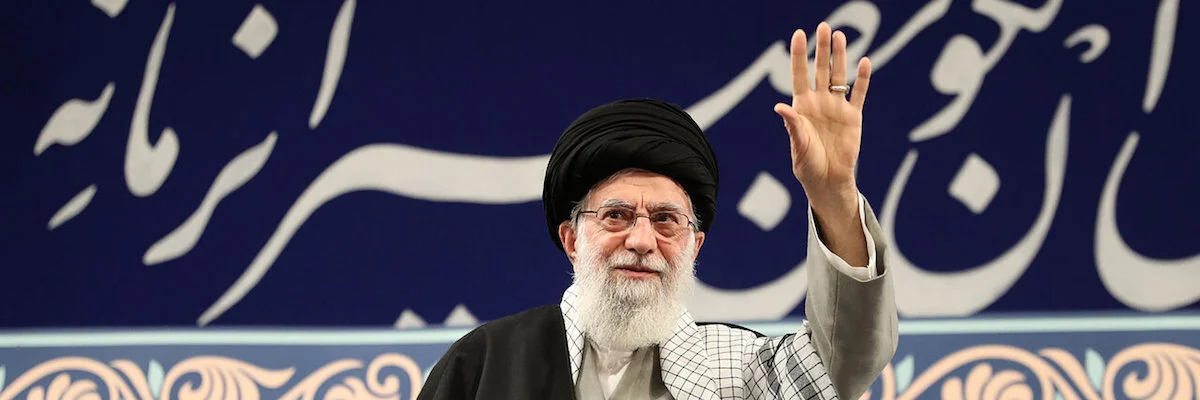
Iran's supreme leader said Tuesday it is a "religious duty" for people to vote in this week's general election and strengthen the Islamic republic against the "propaganda" of its enemies.
"Participating in elections and voting... is a religious duty, not just a national or revolutionary duty," Ayatollah Ali Khamenei said in a speech, parts of which were aired on state television.
"Elections nullify many of the vicious plots the Americans have in their minds and Zionists have in their hearts against the country," he said, referring to US ally Israel.
Iranians are set to elect a new parliament on Friday, with conservatives expected to make a resurgence.
Observers expect a low turnout as many reformist and moderate candidates have been barred from running by the Guardian Council.
The council, made up of six clerics appointed by the supreme leader and six lawyers selected by the judiciary, disqualified more than half of the 14,444 hopefuls.
The move threatens the thin majority of President Hassan Rouhani's alliance in parliament.
Friday's election comes after months of domestic turmoil and steeply escalating tensions between Iran and its arch enemy the United States.
In November, nationwide demonstrations over petrol price hikes turned violent before being crushed in a deadly crackdown.
Tensions with Washington have risen since 2018 when US President Donald Trump withdrew from a landmark nuclear agreement and reimposed crippling sanctions.
But they have never come as close to a direct confrontation as in the past seven months, when it has happened twice, most recently after the US killed prominent Iranian general Qasem Soleimani on January 3.
Iran hit back on January 8 by firing a barrage of missiles at US troops in Iraq.
It had been on high alert for US retaliation that day when they shot down a Ukrainian airliner in Tehran, killing all 176 people on board.
The downing of the Boeing 737, which the armed forces later admitted was accidental, sparked more protests that turned political.
Khamenei said the election would show that Iran's enemies had failed to divide the nation.
"Watch how the people favor the election despite the enemies' insistence on distancing the people from the system," the supreme leader said.
Photo: IRNA
Campaigning Begins in Iran Parliamentary Election
◢ Campaigning kicked off in Iran on Thursday ahead of next week's crucial parliamentary election at which conservatives are expected to win most seats after thousands of moderates and reformists were disqualified. The February 21 election comes after months of escalating tensions between Iran and its arch enemy the United States.
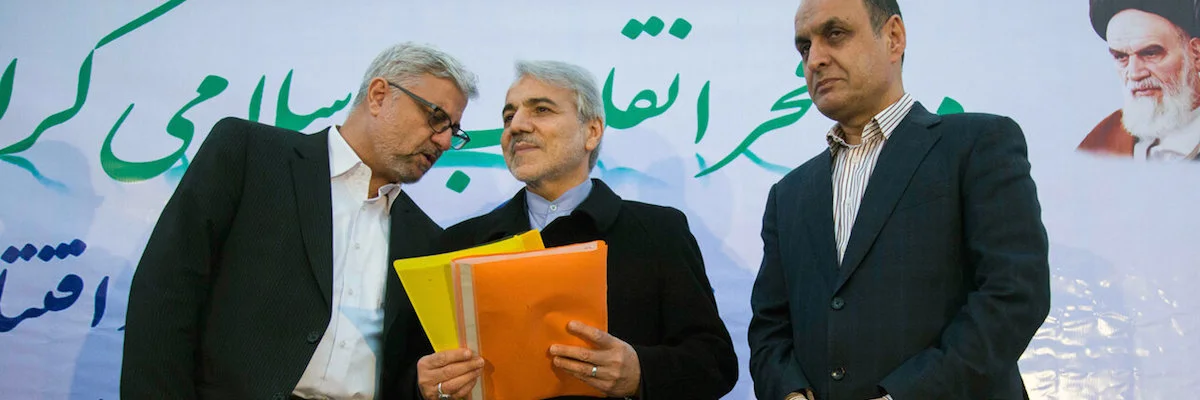
Campaigning kicked off in Iran on Thursday ahead of next week's crucial parliamentary election at which conservatives are expected to win most seats after thousands of moderates and reformists were disqualified.
The February 21 election comes after months of escalating tensions between Iran and its arch enemy the United States.
The Guardian Council, which vets candidates, said more than 7,000 qualified to stand in the election, but even more were disqualified, semi-official news agency ISNA reported.
"In this election 7,148 will compete for the parliament's 290 seats... and 7,296 have been disqualified," it quoted National Elections Commission chief Jamal Orf as saying.
Most of the barred candidates come from the ranks of moderate conservative President Hassan Rouhani's alliance with reformists.
There was not much fanfare seen on the streets of Tehran where posters went up for the first day of campaigning, an AFP correspondent reported.
State news agency IRNA said campaign posters and banners of candidates were also going up in other cities and towns in the country.
The purge of candidates is likely to discourage many Iranians from voting, but supporters of conservatives and ultra-conservatives are still expected to make a strong showing.
The parliament—or Majles—drafts legislation, ratifies international treaties and approves the country's budget.
But analysts say the election will be a rare opportunity to gauge sentiment of the Iranian public after months of turmoil.
Backing for Rouhani and the reformists has fallen away since US President Donald Trump withdrew from a nuclear deal that was supposed to give Iran relief from sanctions.
Since the withdrawal, Trump has slapped wave after wave of sanctions on Iran as part of a stated campaign of "maximum pressure".
The campaign has battered the economy of the Islamic republic, which saw nationwide protests against a fuel price hike turn violent in November before they were crushed by the security forces.
In January, Iran came to the brink of an all-out confrontation with the United States for the second time in seven months when it fired missiles at US troops in Iraq in retaliation for the killing of one of its top generals.
Photo: IRNA
Iran’s Rouhani Seeks Checks on Election-Vetting Body
◢ Iran’s President Hassan Rouhani asked his top aides and lawmakers to draft a bill revising the election-related powers of the Guardian Council, one of the Islamic Republic’s most powerful institutions. The move comes after swathes of candidates, including allies of Rouhani, were disqualified from standing in the February 21 parliamentary vote.
By Golnar Motevalli
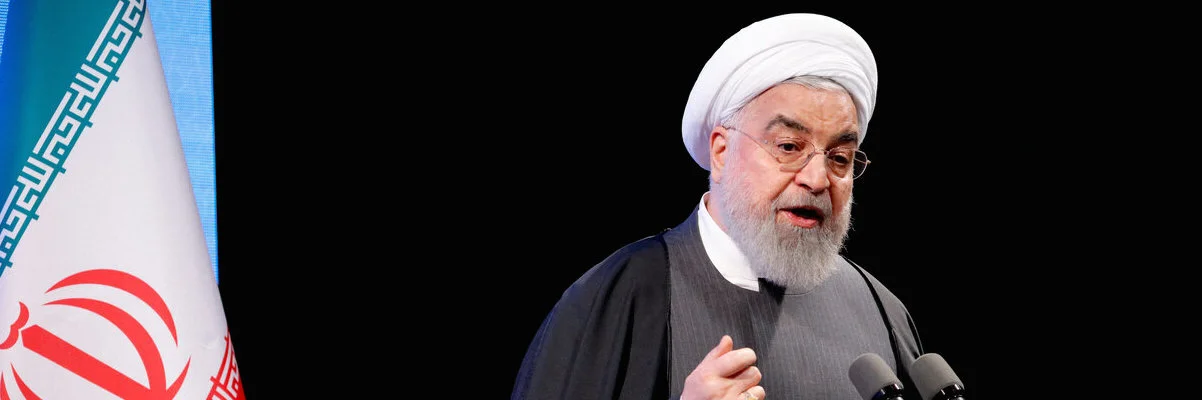
Iran’s President Hassan Rouhani asked his top aides and lawmakers to draft a bill revising the election-related powers of the Guardian Council, one of the Islamic Republic’s most powerful institutions, the state-run Islamic Republic News Agency reported.
Rouhani instructed his first vice president, Eshaq Jahangiri, to work with his top legal advisers and parliamentarians to review the ability of the council—a 12-member chamber of clerics and legal scholars—to vet and disqualify potential candidates for elections, IRNA reported.
The move, which is likely to face resistance from other political factions and from Supreme Leader Ayatollah Ali Khamenei, comes after swathes of candidates, including allies of Rouhani, were disqualified from standing in the Feb. 21 parliamentary vote. Khamenei appoints half of the council’s members.
Last month Rouhani said the scale of the disqualifications, which include 90 sitting reformist lawmakers, undermined the validity of the election and would result in a single-party race. Earlier Wednesday, Khamenei criticized those who challenged the Guardian Council’s vetting process and urged all Iranians to participate in the vote.
Photo: IRNA
Iran's Rouhani Sounds Alarm for 'Democracy' After Candidates Barred
◢ Iran's president warned Monday of threats to the Islamic republic's "democracy and national sovereignty", after a body dominated by his ultra-conservative rivals disqualified thousands of candidates, weeks before elections. Rouhani, whose alliance fears losing its majority in the February 21 polls, said the disqualifications risked appointments being made "elsewhere" than the ballot box.
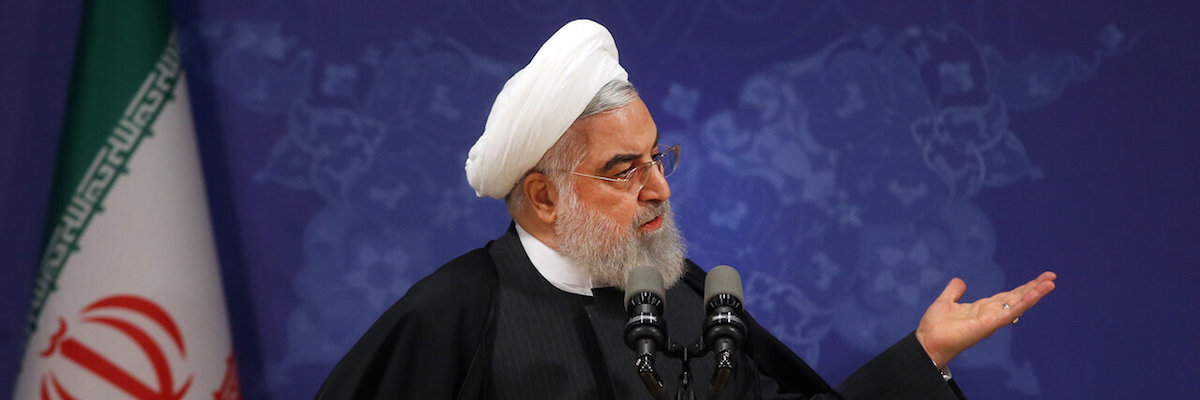
Iran's president warned Monday of threats to the Islamic republic's "democracy and national sovereignty", after a body dominated by his ultra-conservative rivals disqualified thousands of candidates, weeks before elections.
President Hassan Rouhani's moderate conservatives and their reformist allies are locked in a public quarrel with the Guardian Council over the disqualification of thousands of candidates—including 92 sitting MPs.
The council, which oversees Iran's elections, says it has barred some 9,500 potential candidates from standing, almost two thirds of the 14,500 hopefuls.
Rouhani, whose alliance fears losing its majority in the February 21 polls, said the disqualifications risked appointments being made "elsewhere" than the ballot box.
"The greatest danger for democracy and national sovereignty is the day when elections become a formality," the government's website quoted Rouhani as saying in a meeting with provincial governors.
"May God never bring this day," he added.
"Let us reassure the people and tell them our system is not a single-party system."
In an apparent reference to ultra-conservatives, he said "they should at least let there be competition and participation".
He called on Iranians of all stripes to vote, "even if... there are shortcomings in elections".
"Sometime I may not want to vote for some reason, but some other time I may not have enough trust to go to the ballot box; this is very dangerous," he said.
Candidates who are disqualified are allowed to appeal before the elections.
The polls come after a traumatic month for Iran, in which it approached the brink of war with the United States and mistakenly shot down a passenger jet.
A US drone strike in Iraq killed top Iranian general Qassem Soleimani on January 3, and Iran retaliated five days later by launching a wave of missiles at US troops stationed in Iraq.
Hours later, with Iranian forces on high alert, its air defences mistakenly shot down a Ukraine International Airlines passenger jet, killing all 176 people on board.
The disaster triggered scattered protests in Tehran and other cities, although they appeared smaller than nationwide demonstrations in November, sparked by a fuel price hike, in which Amnesty International said at least 300 people died.
Photo: IRNA
Victory for Iran’s Women as Breakthrough Citizenship Law Passed
◢ Iran will for the first time grant citizenship to children born to an Iranian mother and foreign father after a long-awaited bill was signed into law by the powerful Guardian Council in a significant victory for women’s rights. The law was passed by parliament with an overwhelming majority in May, and ratified on Wednesday.
By Yasna Haghdoost
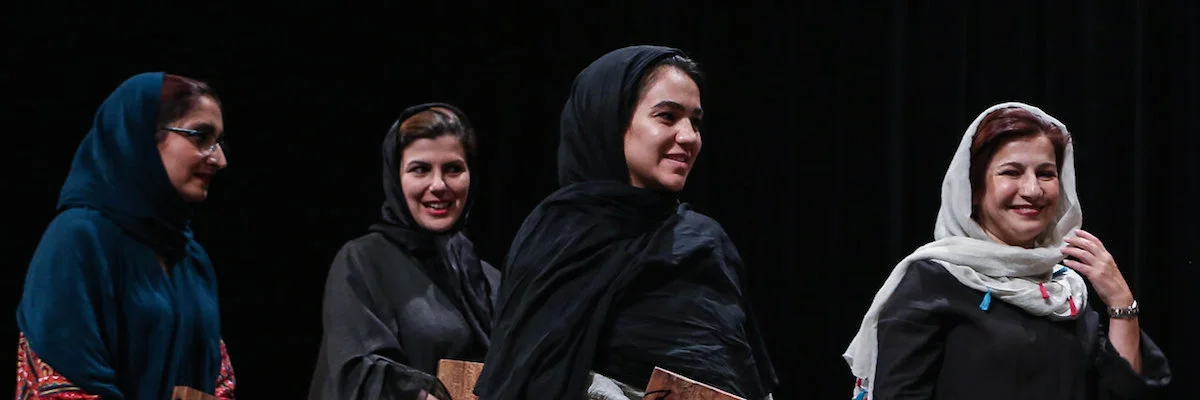
Iran will for the first time grant citizenship to children born to an Iranian mother and foreign father after a long-awaited bill was signed into law by the powerful Guardian Council in a significant victory for women’s rights.
The law was passed by parliament with an overwhelming majority in May, and ratified on Wednesday by the panel of senior clerics and judges, the state-run Islamic Republic News Agency reported, citing council spokesman Abbas Ali Kadkhodaee.
The measure is significant in the Middle East, where many countries don’t allow mothers to pass their nationality onto their children if the father is a foreign national. In Iran, the new law will give tens of thousands of children access to social and health-care services previously denied them on the basis that they were foreigners.
Photo: IRNA
Iran Judiciary Chief to Head Powerful Expediency Council
◢ Iran's supreme leader Ayatollah Ali Khamenei appointed the head of the judiciary, Sadegh Amoli Larijani, as chairman of the powerful Expediency Council on Sunday, according to his website. The Expediency Council is a key behind-the-scenes institution, settling disputes between different branches of government.
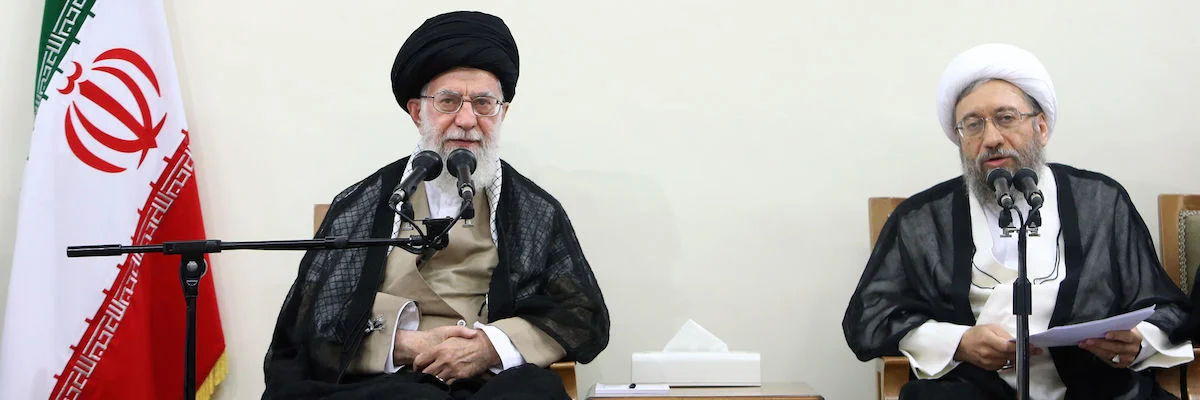
Iran's supreme leader Ayatollah Ali Khamenei appointed the head of the judiciary, Sadegh Amoli Larijani, as chairman of the powerful Expediency Council on Sunday, according to his website.
The Expediency Council is a key behind-the-scenes institution, settling disputes between different branches of government.
It was led for many years by one of the Islamic republic's founding figures, Akbar Hashemi Rafsanjani, until his death in early 2017.
Larijani, 58, was personally sanctioned by the United States in January 2018 for "human rights abuses" and "supporting Iranian weapons programs", according to the US Treasury.
He was also appointed to the 12-man Guardian Council—a post he previously held—that vets legislation and election candidates, according to a statement on Khamenei's website.
A new judiciary chief was expected to be named shortly.
Larijani takes over the Expediency and Guardian council posts from Ayatollah Hashemi Shahroudi, who died last week.
He is one of five Larijani brothers who all hold powerful positions within the establishment, most notably his eldest sibling Ali Larijani who is speaker of parliament.
Khamenei's statement said "critical changes" were expected within the Expediency Council in the near future, without giving details.
Photo Credit: IRNA
Iran Guardian Council Rejects Terror Financing Bill
◢ Iran's powerful Guardian Council on Sunday rejected a bill on joining the UN convention against terrorist financing seen as crucial to maintaining trade and banking ties with the world. The conservative-dominated council, which oversees legislation passed by the parliament, said aspects of the bill were against Islamic law and the constitution and sent it back to lawmakers for revision.
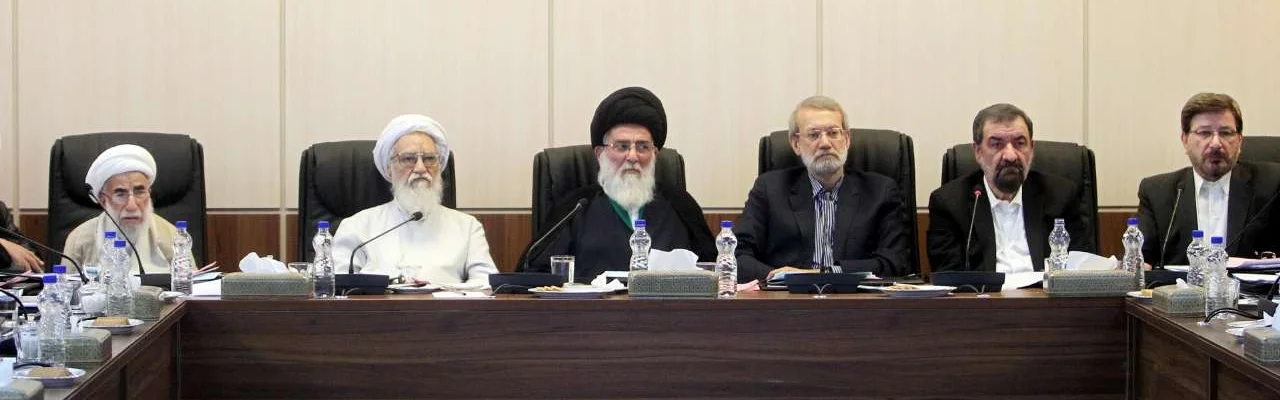
Iran's powerful Guardian Council on Sunday rejected a bill on joining the UN convention against terrorist financing seen as crucial to maintaining trade and banking ties with the world.
The conservative-dominated council, which oversees legislation passed by the parliament, said aspects of the bill were against Islamic law and the constitution and sent it back to lawmakers for revision.
"The Guardian Council has in several sessions reviewed the bill... and it has considered it to have flaws and ambiguities," wrote spokesman Abbas Ali Kadkhodaie on Twitter.
The bill, narrowly passed by parliament on October 7, is one of four put forward by the government of President Hassan Rouhani in order to meet demands set by the international Financial Action Task Force (FATF), which monitors countries' efforts to tackle money-laundering and terrorist financing.
Many hawks in Iran say the laws would limit the country's ability to support "resistance groups" such as Lebanon's Hezbollah and Palestinian Hamas by bringing greater transparency to its accounts.
But Rouhani's government argues it is particularly vital after the United States walked out of the 2015 nuclear deal and reimposed sanctions.
The other parties to the deal—Britain, France, Germany, China and Russia—have sought to salvage the agreement and maintain trade with Iran, but have demanded that it accede to the FATF.
Iran is alone with North Korea on the FATF, although the Paris-based organisation has suspended counter-measures since June 2017 while Iran works on reforms.
Last month, the FATF gave Iran another extension to February to update its laws.
"Neither I nor the president can guarantee that all problems will go away if we join (the UN convention), but I guarantee that not joining will provide the US with more excuses to increase our problems," said Iran's Foreign Minister Mohammad Javad Zarif during the parliament debate last month.
A previous bill on the mechanics of monitoring and preventing terrorist financing was signed into law in August.
But two others—on money-laundering and organized crime—have also been delayed by higher authorities, including the Guardian Council, after being approved by parliament.
The council is made up of six clerics appointed by supreme leader Ayatollah Ali Khamenei and six lawyers appointed by the judiciary.
Photo Credit: IRNA
Iran Overturns Ban on Religious Minority Councillor
◢ Iranian authorities ruled Saturday that a member of the minority Zoroastrian religion had been wrongly suspended from his post on a city council. Sepanta Niknam, a member of Iran's ancient Zoroastrian religion, was the only non-Muslim elected to the council in the central city of Yazd in May 2017, but he was suspended later in the year following a complaint by one of his fellow councillors.
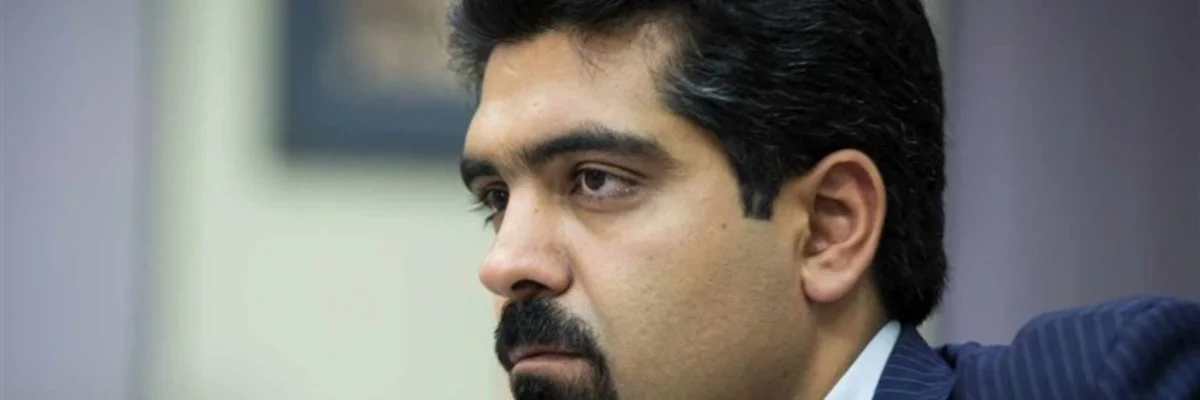
Iranian authorities ruled Saturday that a member of the minority Zoroastrian religion had been wrongly suspended from his post on a city council.
Sepanta Niknam, a member of Iran's ancient Zoroastrian religion, was the only non-Muslim elected to the council in the central city of Yazd in May 2017, but he was suspended later in the year following a complaint by one of his fellow councillors.
It had followed a ruling by the ultra-conservative head of Iran's Guardian Council, which oversees elections, barring religious minorities from standing in municipal polls.
Because the Guardian Council has power only over national elections, the ruling was rejected by parliament, but that did not prevent Niknam's suspension.
On Saturday, Majid Ansari, a member of the Expediency Council which is charged with resolving disputes between Iran's multiple centers of authority, said they had finally ruled in favor of Niknam.
"Today, the Expediency Council ruled that the 1996 law on religious minorities is applicable and they can participate in council elections in their town," Ansari told the reformist ILNA news agency.
He added that Niknam was now free to retake his post on Yazd city council. Iran officially recognizes "Iranian Zoroastrians, Jews and Christians" as religious minorities.
The national parliament has several religious minority members, including three Christians, a Zoroastrian and a Jew among its 290 deputies.
Zoroastrianism was the dominant religion in Persia, prior to the arrival of Islam, but only counts around 25,000 adherents today, according to government figures.
Photo Credit: Tasnim
Iran's Ahmadinejad Says Ally on Hunger Strike Since 'Unjust' Arrest
◢ Former Iranian president Mahmoud Ahmadinejad said Wednesday that his ally Hamid Baghaie was on hunger strike and in deteriorating health after being imprisoned on what he said were politically motivated charges. Ahmadinejad, who served as president from 2005 to 2013, made the claims in a letter to supreme leader Ayatollah Ali Khamenei, published on the Dolatebahar website run by his supporters.
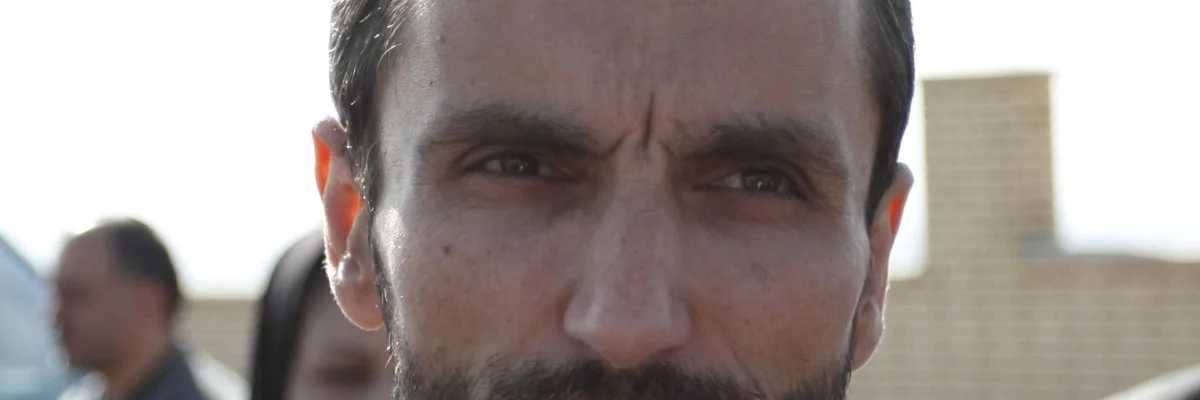
Former Iranian president Mahmoud Ahmadinejad said Wednesday that his ally Hamid Baghaie was on hunger strike and in deteriorating health after being imprisoned on what he said were politically motivated charges.
Ahmadinejad, who served as president from 2005 to 2013, made the claims in a letter to supreme leader Ayatollah Ali Khamenei, published on the Dolatebahar website run by his supporters.
It is the latest volley in a bitter feud with his former colleagues in the Iranian establishment—particularly the conservative-dominated judiciary—which has led him to demand wide-ranging reforms, including fully free elections.
"The judicial apparatus, without any documents or proof or legal citation... under the cover of financial accusations and in a closed trial—has condemned (Baghaie) to the severest possible punishment," Ahmadinejad wrote in his latest letter.
Baghaie, who served as his vice president, was jailed this month for 15 years for embezzling 3,766,000 euros and $590,000.
Prosecutors said the cash was given to him by General Ghasem Soleimani, feted head of the external operations arm of the Revolutionary Guards, the Qods Force, and earmarked for "affairs to do with African countries".
"Mr Baghaie has never accepted these accusations and he's been on hunger strike for 14 days in protest at this injustice by the judicial apparatus," Ahmadinejad said in the letter.
"It is heard that his physical situation is deteriorating. He's been kept in solitary confinement since the first day of his arrest," Ahmadinejad added, calling on Khamenei to step in to avoid a "big catastrophe and irreparable damage."
In an earlier report on the Dolatebahar website, Baghaie was quoted as saying: "Suppose this impossible, fabricated story is true—should I be blamed, or should it be General Ghasem Soleimani as the authorised official in the Qods Force who has delivered the said foreign currency?"
'No Proof'
Ahmadinejad and Baghaei claim no proof of the alleged transactions was presented at the trial in December. Another of their associates—Ahmadinejad's former chief of staff Rahim Mashaie —was arrested this month after burning a copy of Baghaei's verdict outside the British embassy.
A populist with close ties to the hardline religious elite and Revolutionary Guards during his time in office, Ahmadinejad's unruly style saw him fall out with the establishment and clash with Khamenei.
He has become a growing thorn in their side in recent years. Both he and Baghaie were barred from standing in last year's presidential election by the Guardian Council, which vets candidates.
In another letter to Khamenei last month, Ahmadinejad called for "the immediate holding of free presidential and parliamentary elections—of course without their being engineered by the Guardian Council and without interference by military or security bodies so that people have a free choice."
Ahmadinejad remains a hate figure for many reformists, who associate him with the bloody crackdown on mass protests in 2009 and 2010 that followed his contested re-election.
However, he remains popular particularly among poorer segments of society who recall the large-scale welfare schemes he implemented during his presidency.
Photo Credit: Wikicommons
Iran's Ahmadinejad Calls for Immediate Free Elections
◢ Iran's hardline former president Mahmoud Ahmadinejad called for the immediate holding of free presidential and parliamentary elections in a letter to supreme leader Ayatollah Ali Khamenei published on Thursday.
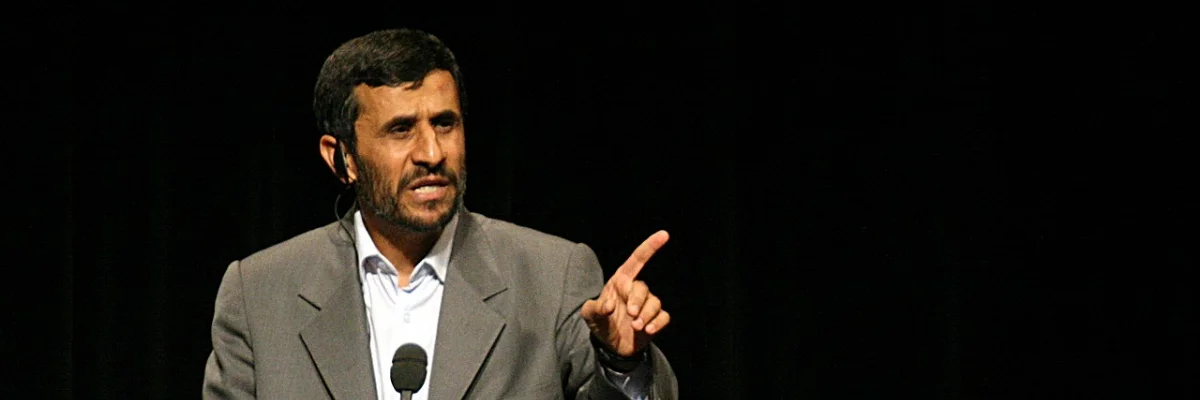
Iran's hardline former president Mahmoud Ahmadinejad called for the immediate holding of free presidential and parliamentary elections in a letter to supreme leader Ayatollah Ali Khamenei published on Thursday.
The call, from a man whose name is synonymous with the bloody repression of mass protests against his controversial 2009 re-election, marked a new act of defiance against a political establishment that has long since turned against him.
Ahmadinejad made no specific reference in his letter to a wave of unrest that swept Iran over the new year but it comes as the country's divided political factions argue over how to respond. "The immediate holding of free presidential and parliamentary elections—of course without their being engineered by the Guardian Council and without interference by military or security bodies so that people have a free choice—is an urgent necessity," he wrote.
The Guardian Council is a powerful vetting body which oversees all elections in Iran and which barred Ahmadinejad, among others, from running for president last May.
The council rejected Ahmadinejad's call for early elections and hit back at his criticism of its supervisory procedures. "The country has no need for... elections right now because all elections are conducted in a legal and sustainable manner," council spokesman Ali Kadkhodai said. Parliamentary elections are not due before 2020 and the next presidential election is due in 2021. Kadkhodai charged that Ahmadinejad had himself sought to get round the rules in the 2009 election by pressing it to publish the results before the legal time-limit.
Injustices
The former president referred directly in his letter to a speech Khamenei delivered on Sunday in which he said that progress was needed in "the field of justice", acknowledging widespread criticism of the system.
"These clear comments from the leader can of course be understood" as an appeal for "urgent and concrete reforms that meet the demands of the people," he said.
Ahmadinejad called for the dismissal of judiciary chief Ayatollah Sadeq Larijani, a rival hardliner, on the grounds that the "injustices" of the judiciary were "one of the main causes of public discontent."
He also called for the release of all people arrested for criticizing the regime and the halting of any proceedings under way.
Ahmadinejad remains popular, particularly among poorer segments of society who recall the large-scale welfare schemes he implemented during his 2005-2013 presidency.
But he has fallen out with the establishment, especially since he ran for
president last year against Khamenei's advice. A number of his senior aides have been arrested on financial and corruption charges, and his protege Hamid Baghaie was sentenced to 15 years in December.
The demonstrations over the new year, during which at least 25 people died,
initially focused on economic problems but swiftly escalated into protests
against corruption and the regime itself.
During the 2009 protests against Ahmadinejad's re-election, dozens of people were killed as the regime deployed militia to back up police. Thousands of people were detained and his two reformist challengers—Mehdi Karoubi and Mir Hossein Mousavi—remain under house arrest.
Photo Credit: Wikicommons