
Iran Sold Oil Wanted by U.S. But Doesn't Know Where It Is Going
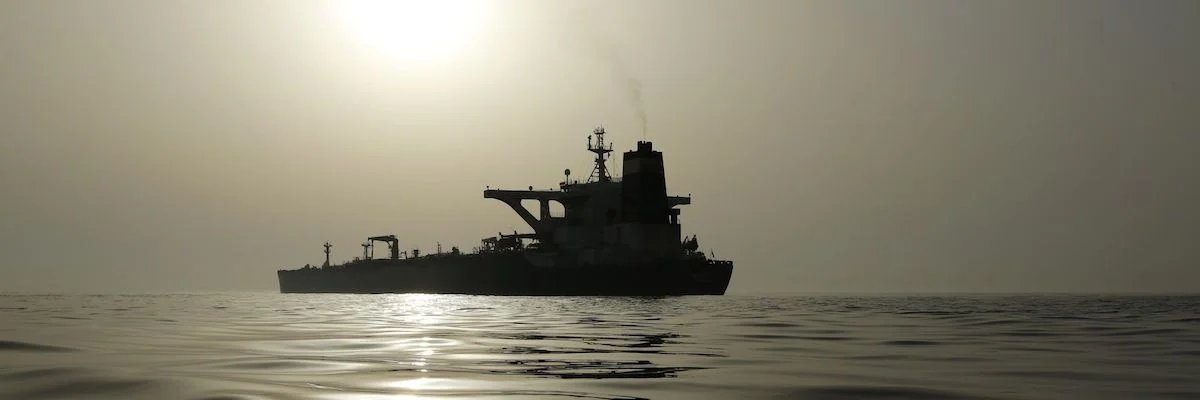
◢ Iran said it sold an oil cargo on board a contested tanker sailing the Mediterranean Sea but didn’t know where the vessel was going amid U.S. efforts to block delivery of the crude. The Adrian Darya 1, the tanker that the U.S. sought to seize in Gibraltar last week, was sailing more than halfway into the Mediterranean Sea on Monday without declaring any destination.
By Arsalan Shahla and Mahmoud Habboush
Iran said it sold an oil cargo on board a contested tanker sailing the Mediterranean Sea but didn’t know where the vessel was going amid U.S. efforts to block delivery of the crude.
The Adrian Darya 1, the tanker that the U.S. sought to seize in Gibraltar last week, was sailing more than halfway into the Mediterranean Sea on Monday without declaring any destination. Iran didn’t identify the buyer of the roughly 2 million-barrel cargo.
The buyer will determine where the oil is delivered, Iranian government spokesman Ali Rabiei said announcing the sale. He didn’t say when Iran sold the crude in comments carried by state-run IRNA news agency.
Iran’s tanker fleet is under intense scrutiny as the U.S. seeks to cut off the Islamic republic’s ability to sell crude, normally the country’s main export earner. Iran’s oil sales have tumbled under U.S. sanctions threatening to punish most interactions with the Iranian government over its nuclear program.
French President Emmanuel Macron renewed efforts over the weekend to save the 2015 nuclear agreement with the Islamic Republic. Both Iran and other signatories to the deal oppose the U.S. President Donald Trump’s tougher measures and Macron proposed allowing the Middle Eastern producer to sell more crude in exchange for returning to full compliance with the agreement. Macron discussed the idea in meetings with Trump and Iranian Foreign Minister Javad Zarif in Biarritz, the site of the Group of Seven summit.
Those discussions would likely do little to solve the immediate problem of the Adrian Darya 1. The Trump Administration is seeking to block the tanker’s voyage by threatening sanctions to stop the ship from being able to call in any port or offload any oil.
The tanker on Sunday changed the signal sent from the vessel’s satellite transponder to “For Order,” a designation meaning the ship isn’t disclosing any destination, according to Bloomberg tanker-tracking data. The Adrian Darya 1, which last week changed names from Grace 1, was sailing south of the Greek mainland, according to tanker-tracking data.
The ship had on Saturday signaled Turkey’s port of Mersin, switching from the previous target of Kalamata in Greece. Greek officials said the ship would be unwelcome after the U.S. threatened sanctions against anyone aiding the tanker, while a stop in Turkey would also pose complications in an already fraught relationship.
The vessel may seek to transfer the crude to smaller ships for delivery to Turkey or Syria and could “go dark,” turning off its satellite transponder to mask the location of any unloading. The vessel’s current trajectory could lead to any of the ports in the eastern Mediterranean or, potentially, to the Suez Canal.
The Aryan Darya 1 wouldn’t be able to transit Suez without offloading some of the oil on board since a fully laden tanker of that size would sit too deep in the water to make the passage. The Suez Canal leads to the Red Sea and from there the vessel could sail on to the Persian Gulf and Iran.
A U.S. attempt to seize the tanker before leaving Gibraltar was denied by a court in Gibraltar. A court in the territory refused the petition from the American government since, while European Union rules prohibit dealing with sanctioned entities in Syria, they are less comprehensive than U.S. sanctions law with regards to Iranian oil sales.
Photo: Bloomberg
Iran Warns U.S. Against Seizing Oil Tanker Headed to Greece
◢ Iran warned the U.S. against apprehending a supertanker carrying the Middle East country’s oil and said it couldn’t be clear on the ship’s ultimate destination, leaving the fate of the vessel uncertain as it sailed into the Mediterranean Sea from Gibraltar, where it had been detained.
By Arsalan Shahla, Verity Ratcliffe and Brian Wingfield
Iran warned the U.S. against apprehending a supertanker carrying the Middle East country’s oil and said it couldn’t be clear on the ship’s ultimate destination, leaving the fate of the vessel uncertain as it sailed into the Mediterranean Sea from Gibraltar, where it had been detained.
The tanker, formerly called the Grace 1 and re-named the Adrian Darya 1, was signaling Kalamata, Greece—at least for now—with an arrival date of Aug. 26, according to tanker-tracking data compiled by Bloomberg at 5:25 p.m. London time. It had previously been showing an arrival date of Aug. 25.
The vessel left Gibraltar Sunday night after being detained there since early July, when British forces seized it on suspicion of carrying oil to Syria in violation of European sanctions. The U.S., which has sanctions against Iran, is seeking to prevent anyone from doing business with the ship.
U.S. sanctions mean Iran cannot be “very transparent” about the destination of the tanker, Iranian Foreign Minister Javad Zarif said at a press conference in Helsinki. He said the U.S. is trying to “bully others from purchasing our oil” and that he hopes the release of the vessel will de-escalate tensions in the Persian Gulf.
A spokesman for the U.S. National Security Council didn’t immediately respond to a request for comment.
The incident is one of several in recent months that have strained relations between Iran and the West, following the U.S. reinstatement of sanctions on the Islamic Republic last year. Iran has maintained that the ship’s original detention on July 4 was unlawful. The Persian Gulf state continues to hold a U.K.-flagged tanker, the Stena Impero. Aggression in the region has threatened shipping in recent months in the Strait of Hormuz, the world’s most critical waterway for oil supplies.
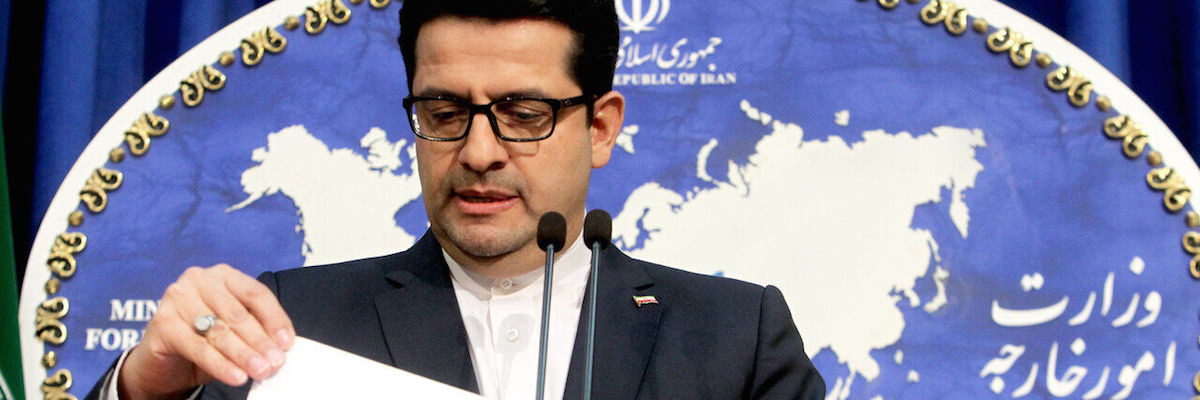
“The U.S. surely can’t seize the Iranian tanker and, if it does, it would pose a threat to international maritime security,” Iran’s Foreign Ministry spokesman Abbas Mousavi said. Iran warned the U.S. via “diplomatic channels,” including Switzerland, against interfering with the tanker, in international waters, Mousavi said at a news conference in Tehran. Swiss diplomats serve as interlocutors between the U.S. and Iran.
Destination Unclear
It’s not known where the Iranian vessel is ultimately headed. Greek authorities haven’t received formal notification that the vessel intends to head to a port in the country, according to a spokesman for Greece’s coast guard. Kalamata’s port usually serves pleasure craft like sailboats and cruise ships, data compiled by Bloomberg show.
The waters off Kalamata could be a possible location for ship-to-ship cargo transfers, according to two vessel brokers without specific information about the tanker’s plans. A ship’s destination is entered manually into its Automatic Identification System and is picked up by vessel-tracking. The destinations can be altered multiple times on the same journey.
Gibraltar rejected an attempt by the U.S. to block the Iranian supertanker, saying that EU regulations don’t allow it to seek a court order to detain the vessel.
U.S. Complaint
A complaint unsealed in Washington stated that “Oil Tanker ‘Grace 1,’ all petroleum aboard it and $995,000 are subject to forfeiture,” according to a Justice Department statement. The statement alleges a “scheme to unlawfully access the U.S. financial system to support illicit shipments” of oil from Iran to Syria in violation of U.S. sanctions, money laundering and terrorism statutes.
Gibraltar last week released the vessel, after the government said Iran had provided assurances that the ship would not sail to a destination sanctioned by the EU. In response, the U.S. said it was gravely disappointed with Britain, and it warned that ports, banks and anyone else who does business with the vessel or its crew might be subject to sanctions, according to two administration officials.
Photo: IRNA
US to Exempt China, India, Japan from Iran Oil Sanctions: Pompeo
◢ The United States will exempt China, India and Japan from oil sanctions on Iran, Secretary of State Mike Pompeo said Monday, while vowing to be "relentless" in pressuring Tehran. Hours after sweeping sanctions were reimposed following the US withdrawal from a denuclearization deal, Pompeo said eight countries would be at least temporarily exempt from the ban on buying Iranian oil due to special circumstances or so as not to disrupt energy markets.
The United States will exempt China, India and Japan from oil sanctions on Iran, Secretary of State Mike Pompeo said Monday, while vowing to be "relentless" in pressuring Tehran.
Hours after sweeping sanctions were reimposed following the US withdrawal from a denuclearization deal, Pompeo said eight countries would be at least temporarily exempt from the ban on buying Iranian oil due to special circumstances or so as not to disrupt energy markets.
The countries with the waivers will be China, India, Italy, Greece, Japan, South Korea, Taiwan and Turkey, Pompeo said.
“Our objective is to starve the Iranian regime of the funds it uses to fund violent activity throughout the Middle East and around the world. Our ultimate goal is to encourage them to abandon their revolutionary course," Pompeo told reporters.
A notable omission was Iraq. Had Iraq been granted a waiver, Iran might have been able to skirt sanctions by mixing its crude with its neighbor's output, analysts say.
President Donald Trump withdrew in May from the deal that his predecessor Barack Obama had reached with Iran, calling it a failure because it addressed only the clerical regime's nuclear program.
Pompeo reiterated demands for Iran to make a "180-degree turn" from its regional policies rooted in the 1979 Islamic revolution, such as support for the Lebanese militia Hezbollah.
“We hope a new agreement with Iran is possible, but until Iran makes changes in the 12 ways I listed in May, we will be relentless in exerting pressure on the regime," Pompeo said.
Pompeo said the eight countries exempted have "already demonstrated reduction of Iranian crude over the past six months and, indeed, two of those eight have already completely ended imports of Iranian crude and will not resume as long as the sanctions remain in place."
"We continue negotiations to get all of the nations to zero," he said.
Pompeo also said without specifying that the United States would exempt three non-proliferation projects underway in Iran from the sanctions.
European powers have strongly disagreed with Trump's decision, pointing out that Iran is abiding by the nuclear agreement, and have looked to create ways to allow its businesses to keep up commerce with the country.
Photo Credit: Deposit Photos