
Airlines Halt Hormuz Flights Amid US-Iran Crisis
◢ Some of the world's leading carriers including British Airways, Qantas and Singapore Airlines on Friday suspended flights over the Strait of Hormuz, as Iran-US tensions flare over the downing of a drone. The suspensions came after the Federal Aviation Administration issued a notice, "prohibiting US-registered aircraft from operating over the Persian Gulf and Gulf of Oman.”
By Jitendra Joshi
Some of the world's leading carriers including British Airways, Qantas and Singapore Airlines on Friday suspended flights over the Strait of Hormuz, as Iran-US tensions flare over the downing of a drone.
The suspensions will affect many thousands of passengers and came after the Federal Aviation Administration in the United States issued a Notice to Airmen (NOTAM), "prohibiting US-registered aircraft from operating over the Persian Gulf and Gulf of Oman".
The NOTAM was in response to "heightened military activities and increased political tensions that might place commercial flights at risk", an FAA statement said, as Tehran and Washington engaged in a war of words over Thursday's missile strike on the drone.
The FAA's notice applies only to US-registered airlines, and United Airlines said it was suspending its Newark-Mumbai service in response. But European and Asian operators were taking no chances.
"Our safety and security team are constantly liaising with authorities—including the likes of the FAA -- around the world as part of their comprehensive risk assessment into every route we operate," a BA spokeswoman said.
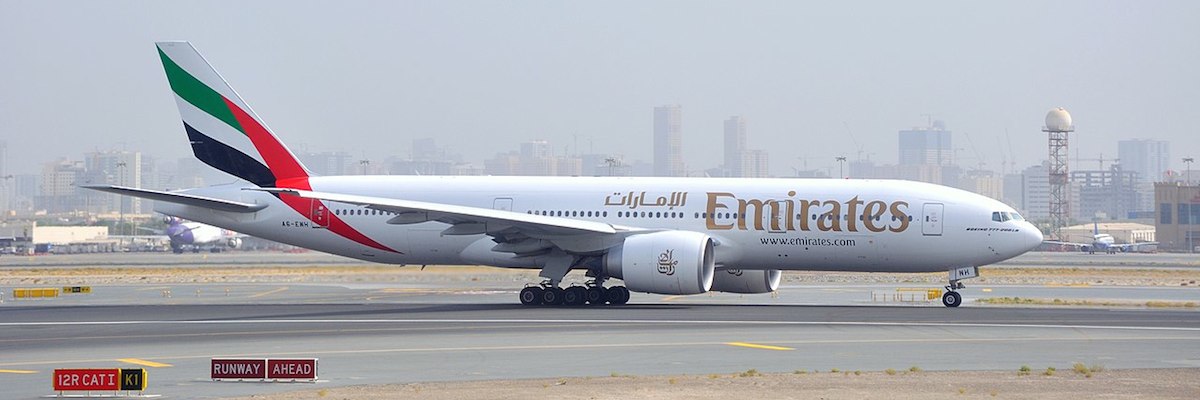
Germany's Lufthansa and Dutch airline KLM followed suit in bypassing the Hormuz area, although Air France said it was already flying further south. Dubai-based Emirates said it had rerouted flights to avoid "areas of possible conflict.”
Iran's downing of the drone—which Washington insists was above international waters but Iran says was within its airspace—has seen tensions between the two countries spike further after a series of attacks on tanker ships blamed by the US on Tehran.
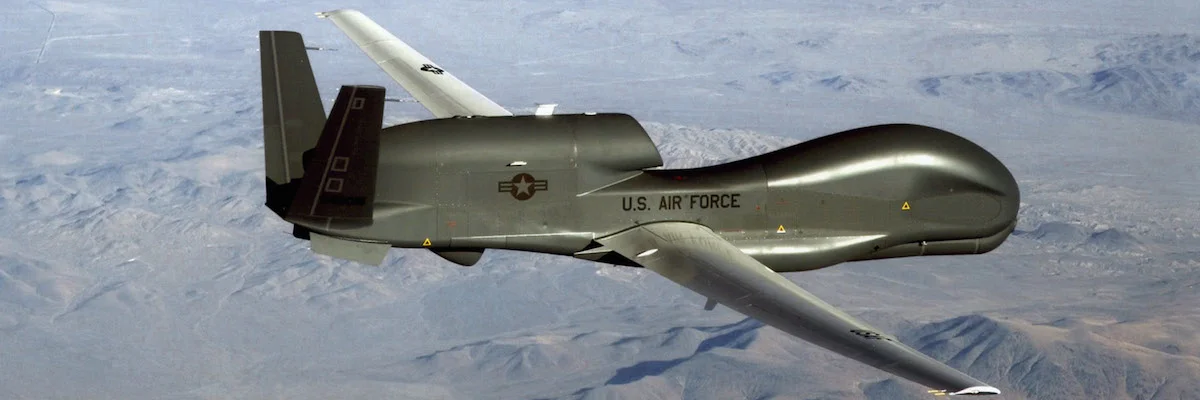
The Global Hawk surveillance aircraft can attain a maximum altitude of 60,000 feet (18.3 kilometres), nearly double the typical cruising height of a passenger plane.
KLM said: "The incident with the drone is reason not to fly over the Strait of Hormuz for the time being. This is a precautionary measure."
Pakistan Problem
The Netherlands is still reeling from the downing of Malaysia Airlines flight MH17 in 2014, which was hit a missile over eastern Ukraine's Donetsk region where pro-Russian separatist rebels are battling Ukraine government forces.
All 298 people on board were killed, 196 of them Dutch. International investigators on Wednesday charged three Russians and a Ukrainian with murder over the shooting down of the plane, which was
traveling between Amsterdam and Kuala Lumpur. The incident forced airlines on the busy Europe-Asia route to divert flights away from Ukraine airspace.
Responding to the latest tensions over Iran, Malaysia Airlines said it "is closely monitoring the situation and is guided by various assessments including security reports and NOTAMs by respective airspace control authorities".
Australia's flag carrier Qantas said it too was avoiding the Strait of Hormuz and Gulf of Oman "until further notice", while Singapore Airlines warned passengers that its flight times to Europe would likely take longer now. Europe-Asia flights have already faced disruption since February, when
Pakistan restricted large swathes of airspace near India due to cross-border air strikes which came close to all-out war between the nuclear-armed rivals.
"This (Pakistan's action) has also pushed much of the transiting traffic south, nearer to the area now prohibited to US carriers," the flight-tracking website Flightradar24 said in a blog.
Alex Macheras, an independent aviation analyst in London, said the Hormuz diversions were another image problem for Iran after the "mass exodus" of European airlines, which had to abandon their Tehran routes following the restoration of US sanctions.
Pointing back to the Ukraine downing, Pakistan's closure and other incidents, he told AFP that "more and more passengers have been affected by geopolitics", and that many travelers were avoiding stopovers in the Middle East altogether.
Photo: Wikicommons

Trump Ordered Military Strike Against Iran, Then Called It Off
◢ The U.S. called off military strikes against Iran on Thursday night that were approved by President Donald Trump, according to an administration official, abandoning a move that would have dramatically escalated tensions that are already running high between the two countries. The attack, ordered after Iranian forces shot down a U.S. Navy drone over the Strait of Hormuz, would have involved airstrikes and was close to being carried out when it was stopped.
By Tony Capaccio and John Harney
The U.S. called off military strikes against Iran on Thursday night that were approved by President Donald Trump, according to an administration official, abandoning a move that would have dramatically escalated tensions that are already running high between the two countries.
The attack, ordered after Iranian forces shot down a U.S. Navy drone over the Strait of Hormuz, would have involved airstrikes and was close to being carried out when it was stopped, said the official, who was granted anonymity to discuss a national security matter. The official would not discuss whether the plan might be revived.
Airstrikes would raise the specter of a far broader conflict in the volatile region, which supplies one-third of the world’s oil.
It was not immediately known what prompted the decision to hold off. But the move and its reversal underscore the wavering approach the president has shown at times regarding military force. He has repeatedly and fiercely lashed out at Iran and North Korea, but then cooled his rhetoric when hostilities threatened to erupt into open conflict. On two occasions since he took office, he has ordered military strikes on Syria.
Brent oil pared its biggest weekly gain in four months on the shifting developments. Futures erased gains in London on Friday, but are still up 4% for the week.
Iran’s Deputy Foreign Minister for Political Affairs Seyed Abbas Araghchi said the country had "indisputable" evidence the U.S. drone had violated Iranian air space, adding some wreckage was recovered from the country’s territorial waters. "The Islamic Republic of Iran would not hesitate for a moment to decisively defend its territory against any aggression," Araghchi said in a statement released by the Ministry of Foreign Affairs on Friday.
Earlier Thursday, as the attack was being planned, Trump downplayed Iran’s strike on the U.S. Navy drone in the Persian Gulf that escalated regional tensions and fueled a surge in oil prices, suggesting a “loose and stupid” individual may have been responsible for the strike.
“I would imagine it was a general or somebody who made a mistake by shooting that drone down,” Trump said during an Oval Office meeting Thursday with Canadian Prime Minister Justin Trudeau. “I find it hard to believe it was intentional. It could have been somebody who was loose and stupid.”
The operation was first reported by the New York Times, which said that Trump had pulled back as warplanes were in the air. The U.S. official disputed that part of the Times account.
The White House declined to comment on the reports and an official at the State Department didn’t immediately respond to a request for comment.
The president is in an increasingly difficult position on Iran. His administration has blamed the Islamic Republic for a series of attacks in the Gulf region since mid-May, including one last week on two oil tankers, but with little consequence for Tehran. He’s shown a desire to project American power, yet during the 2016 election he promised to extricate the U.S. from foreign conflicts, an issue that’s sure to come up as his re-election campaign begins.
The U.S. has directed additional forces to the Middle East in recent weeks, but the numbers—about 2,000 troops in total—have been modest and haven’t come with clear indications of where they would be sent or what their mission would be. In some cases, forces already planned for deployment to the region had their arrival accelerated, while troops scheduled to depart saw their tours extended.
A military assault by the U.S. could have immediate and far-reaching consequences. With proxy forces or allies in countries including Lebanon, Syria, Iraq and Yemen, among others, retaliation from Iran could come in many forms, targeting not just U.S. interests but Israel as well and raising the risk of disruptions to oil flows out of the wider Persian Gulf region.
The last time the U.S. launched a significant military effort against Iran was Operation Praying Mantis in 1988. In that operation, U.S. Navy ships sank two Iranian ships and destroyed two Iranian surveillance platforms.
The move came after the USS Samuel B. Roberts was damaged by a mine in the Persian Gulf.
Later that year, a U.S. Navy cruiser shot down an Iranian commercial aircraft on a scheduled flight in Iranian airspace, killing nearly 300 people. The U.S. expressed regret for the loss of life and said it mistakenly targeted the plane. Iran said it was a deliberate and illegal act.
During his time in office, Trump has ratcheted up economic sanctions on Iran as part of his “maximum pressure” campaign against the Islamic Republic. Yet he has also said he doesn’t want a war with Tehran and that he is hoping Iran will reach out to negotiate.
As tensions climbed on Thursday following the drone strike, regional analysts and lawmakers from both parties warned that the likelihood of a bigger confrontation could be looming, whether intentional or not.
“The president may not intend to go to war here but we’re worried that he and the administration may bumble into a war,” Senate Minority Leader Chuck Schumer, a New York Democrat, told reporters Thursday after a briefing at the White House.
The top Republicans in the Senate and House both called separately for Trump to take a “measured” response to the Iranian actions.
Saudi Vice Minister of Defense Khalid bin Salman said he met with Brian Hook, the U.S. special representative to Iran, to “explore the latest efforts to counter hostile Iranian acts and continuous escalation that threaten the region’s security and stability.” In a series of posts on Twitter, the minister affirmed Saudi Arabia’s support for the U.S. “maximum pressure campaign on Iran.”
The U.S. said the Global Hawk drone was flying in international airspace about 34 kilometers (20 miles) away from Iranian territory when it was shot down.
“This was an unprovoked attack on a U.S. surveillance asset in international airspace,” said Navy Captain Bill Urban, a spokesman for U.S. Central Command.
Photo: Wikicommons
Oil Prices Jump 6% as Trump Says Iran Made 'Very Big Mistake'
◢ Oil prices jumped Thursday on rising US-Iran tensions, with gains accelerating on a cryptic tweet by US President Donald Trump after Iranian forces shot down a US spy drone. President Donald Trump said Thursday that Tehran had made a "very big" error, after Iranian forces shot down a US spy drone near the strategic Strait of Hormuz.
Oil prices jumped Thursday on rising US-Iran tensions, with gains accelerating on a cryptic tweet by US President Donald Trump after Iranian forces shot down a US spy drone.
President Donald Trump said Thursday that Tehran had made a "very big" error, after Iranian forces shot down a US spy drone near the strategic Strait of Hormuz.
Near 1505 GMT, US benchmark West Texas Intermediate climbed 6.3 percent to $57.13 a barrel, while Brent futures in London gained 4.7 percent to $64.69 a barrel.
"Iran made a very big mistake!" he tweeted in his first public reaction to the strike.
Iran's Islamic Revolutionary Guard Corps earlier said it had brought down the surveillance drone after it entered its country's airspace. The Pentagon said the incident occurred in international airspace.
The drone shooting adds to growing tensions as Tehran pushes back against surging US diplomatic, economic and military pressure.
Trump has repeatedly said he does not favor war with Iran unless it is to stop the country getting a nuclear weapons—something Iranian leaders insist they are not pursuing.
Critics of the Trump administration say that his policy of "maximum pressure"—including crippling economic sanctions, abandonment of a complex international deal to regulate Iran's nuclear activities, and deployment of extra sea, air and land forces to the region—make war ever more likely.
The drone downing came as Iran was already accused by Washington of having carried out explosions on two oil tankers in the congested Hormuz area. Tehran denies having been behind the attacks but has frequently threatened in the past to block the sea-lanes used by shipping to move much of the world's oil exports.
Photo: Wikicommons
Iran Shoots Down US Drone as Tensions Soar
◢ Iran shot down a US spy drone Thursday near the strategic Strait of Hormuz, with the two sides at odds whether it was in Iranian or international airspace, in the latest incident stoking tensions between the arch-foes. The Islamic Revolutionary Guard Corps said the "US-made Global Hawk surveillance drone" was hit with a missile "after violating Iranian air space" over the waters of Hormozgan province.
By Marc Jourdier
Iran shot down a US spy drone Thursday near the strategic Strait of Hormuz, with the two sides at odds whether it was in Iranian or international airspace, in the latest incident stoking tensions between the arch-foes.
The Islamic Revolutionary Guard Corps said the "US-made Global Hawk surveillance drone" was hit with a missile "after violating Iranian air space" over the waters of Hormozgan province.
The Pentagon confirmed a US surveillance drone was shot down by Iranian forces, but it insisted the unmanned aircraft was in international airspace.
The incident comes at a time of growing antagonism between Iran and the United States following two waves of still unexplained attacks on Gulf shipping, which Washington has blamed on Tehran.
Iran has denied any involvement and hinted the US might have orchestrated them itself to provide a pretext for the use of force against the Islamic Republic.
Russian President Vladimir Putin said any use of force by the United States against Iran "would be a disaster for the region.”
The head of Iran's Revolutionary Guard said the downing of the drone was "a clear message" his country will defend its borders.
Iran will "respond to all foreign aggression and our reaction is, and will be, categorical and absolute", General Hossein Salami said, quoted by Tasnim news agency.
"We declare that we are not looking for war but we are ready to respond to any declaration of war," he added.
The Pentagon said later in a statement that an Iranian surface-to-air missile had brought down a US Gold Hawk high-altitude drone over the Strait of Hormuz.
"Iranian reports that the aircraft was over Iran are false," it said.
"This was an unprovoked attack on a US surveillance asset in international airspace."
World oil prices rebounded strongly on the news, with London's Brent North Sea crude up 2.78 percent to $63.54 per barrel in midday trading and New York's West Texas Intermediate up 3.42 percent to $55.60.
'Maximum pressure'
Tensions have been running high between Iran and the United States ever since President Donald Trump abandoned a landmark 2015 nuclear agreement in May last year.
The subsequent reimposition of crippling unilateral sanctions has dealt a heavy blow to Iran's already flagging economy.
Washington has also bolstered its military presence in the Middle East in a campaign of "maximum pressure" against Tehran.
Its deployment to the Gulf of an aircraft carrier task force as well as B-52 bombers, an amphibious assault ship and a missile defense battery has sparked fears of fresh conflict in the region.
One of the two tankers attacked in the Gulf of Oman last week was damaged by a limpet mine, the US military said Wednesday.
Commander Sean Kido of US Naval Forces Central Command, or NAVCENT, said the mine used in the attack "is distinguishable and it is also strikingly bearing a resemblance to Iranian mines that have already been publicly displayed in Iranian military parades.”
The Japanese-owned Kokuka Courageous, loaded with highly flammable methanol, came under attack on June 13 as it passed through the Gulf of Oman along with the Norwegian-operated Front Altair.
Fingerprints
It was the second attack in a month on ships in the strategic shipping lane.
On May 12, two Saudi oil tankers and two other vessels were damaged in mysterious "sabotage attacks" in the Gulf of Oman off the United Arab Emirates.
Kido told reporters in the UAE emirate of Fujairah that the US military had recovered "biometric information" of the assailants on the Kokuka Courageous including fingerprints.
This information "can be used to build a criminal case", Kido said as the US Navy took journalists to the damaged ship currently anchored some 14 kilometres (nine miles) off Fujairah.
Defence Minister Amir Hatami flatly rejected allegations Iran was behind the twin attacks.
"Accusations levelled against Iran's armed forces and the published film with regards to the incident (that) happened to the vessels... are unsubstantiated and we categorically reject these accusations," the official news agency IRNA quoted him as saying.
Washington has released images and a grainy black-and-white video it says shows Iranians on a patrol boat removing an unexploded limpet mine attached to the Kokuka Courageous.
The US commander Kido said there was an "ongoing joint and combined investigation with our regional partners into the attacks" on the two tankers.
Photo: US Air Force