
Iran Warns Against UN Nuclear Watchdog Resolution
Iran criticized on Tuesday a plan to put forward a resolution at a meeting of the UN's nuclear watchdog urging the country to allow access to two disputed sites.
Iran criticized on Tuesday a plan to put forward a resolution at a meeting of the UN's nuclear watchdog urging the country to allow access to two disputed sites.
European states are expected to submit the resolution at the Vienna-based International Atomic Energy Agency's (IAEA) board of governors' meeting this week.
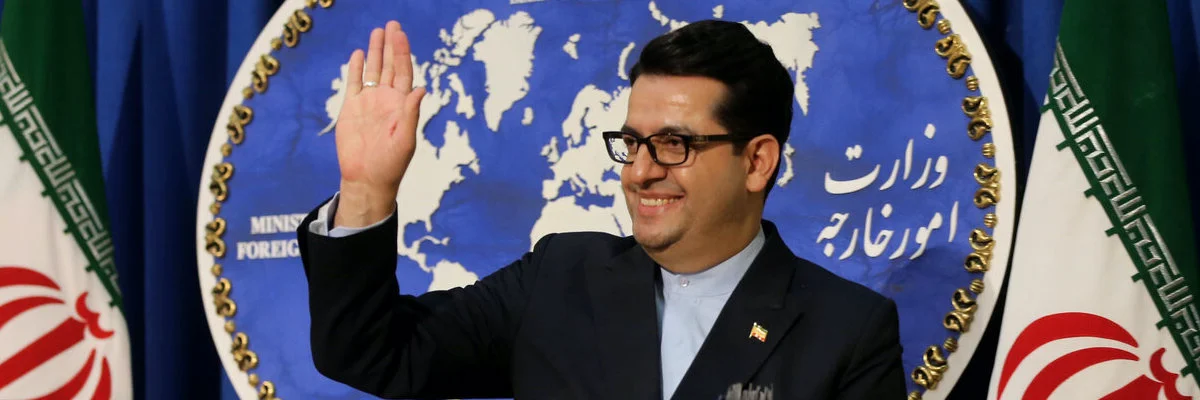
"Introduction of this resolution aiming to call on Iran to cooperate with the Agency... is disappointing and absolutely counterproductive," said Kazem Gharib Abadi, Iran's UN ambassador in Vienna.
Diplomats say the resolution will call on Iran to provide access to two locations where past nuclear activity may have occurred -- sites to which the IAEA has been trying to gain access for months.
At the start of this week's meeting on Monday, IAEA Director General Rafael Grossi repeated his appeal to Iran to "cooperate immediately and fully" and grant access.
Even though the sites in question are not thought to be directly relevant to Iran's current nuclear program, the agency says it needs to know if activities going back almost two decades have been properly declared and all materials accounted for.
But in Tuesday's statement, Gharib Abadi warned that if the resolution was adopted, "Iran would have no choice but to take appropriate measures, the consequences of which would be upon the sponsors of such political and destructive approaches".
He did not specify what these measures would be.
Gharib Abadi argued that the IAEA's access requests were based on allegations from Iran's arch-enemy Israel.
Additional information provided by the IAEA in support of its requests "were merely some commercial satellite imageries that contained no convincing underlying reason" to provide access, he added.
'Complication and Difficulties'
The IAEA's board of governors has not passed a resolution critical of Iran since 2012.
While a new resolution would be largely symbolic in character, it could be a prelude for the dispute being referred to the UN Security Council, the only UN body that can impose sanctions.
However, there is the added complication that due to the coronavirus pandemic the IAEA board of governors' meeting is taking place in a virtual format.
Russia has been particularly active in resisting the prospect of remote voting and on Monday it was decided that a physical meeting would be convened if a vote needs to be held.
It is not clear how quickly such a meeting could be organized.
Also on Tuesday Iranian Foreign Minister Mohammad Javad Zarif visited Moscow where his Russian opposite number Sergei Lavrov pledged to stand by Tehran, while referring to "developments taking place right now in Vienna" and "ideas our western friends are floating in New York".
"We will be very firmly opposing any attempts to use this situation in order to manipulate the Security Council and to promote an anti-Iranian agenda," Lavrov said.
Despite the row over the two sites, the IAEA says it still has the access it needs to Iran's nuclear facilities to monitor its current activities, as the agency is mandated to do under the landmark deal between Iran and world powers reached in 2015.
The deal has been unravelling since US President Donald Trump withdrew from it two years ago and went on to re-impose harsh economic sanctions on Iran.
In retaliation Iran has been slowly abandoning limits on its activities set out under the deal, including on the size and enrichment level of its uranium stockpile.
Iran has accused the European parties to the deal—France, the UK and Germany—of not doing enough to mitigate the impact of American sanctions.
In his statement, Gharib Abadi hinted that pressing ahead with the resolution could cause "complication and difficulties" for the future of the 2015 accord.
Photo: IRNA
Iran Nuclear Crisis Escalates With New Inspections Report
◢ Iran accused an international atomic monitor of setting off explosives detectors at its main enrichment plant, ratcheting up tensions that threaten to tip the nation into a new nuclear crisis. The IAEA inspector triggered alarms during routine screening on Oct. 28 at Iran’s Natanz enrichment facility, Ambassador Gharib Abadi said at a briefing in Vienna.
By Jonathan Tirone
Iran accused an international atomic monitor of setting off explosives detectors at its main enrichment plant, ratcheting up tensions that threaten to tip the nation into a new nuclear crisis.
The International Atomic Energy Agency inspector triggered alarms during routine screening on Oct. 28 at Iran’s Natanz enrichment facility, Ambassador Gharib Abadi said at a briefing in Vienna. The IAEA recalled the inspector after she was questioned by Iranian authorities over traces of explosives detected in her handbag.
The IAEA refuted the charge. “The agency does not agree with Iran’s characterization of the situation involving the inspector, who was carrying out official safeguards duties,” it said in an email. Iran shouldn’t have delayed her departure, the agency said.
The Iranian allegation was made shortly after IAEA officials said Iran had failed to cooperate with its probe into radioactive samples discovered at a site identified by Israel.
“There were suspicious materials involved in this incident,” Abadi said. “Iran expects the necessary level of cooperation during the investigation.” U.S. ambassador to the IAEA, Jackie Wolcott, called the detention of the monitor for questioning an “outrageous and unwarranted act of intimidation,” according to a statement.
The agency’s top inspector, Massimo Aparo, had told diplomats in a closed-door meeting in Vienna on Wednesday that Iran is evading attempts to discover the source of man-made and natural uranium particles detected at a warehouse in Tehran earlier this year, according to two officials familiar with the briefing who asked not to be identified.
New Front
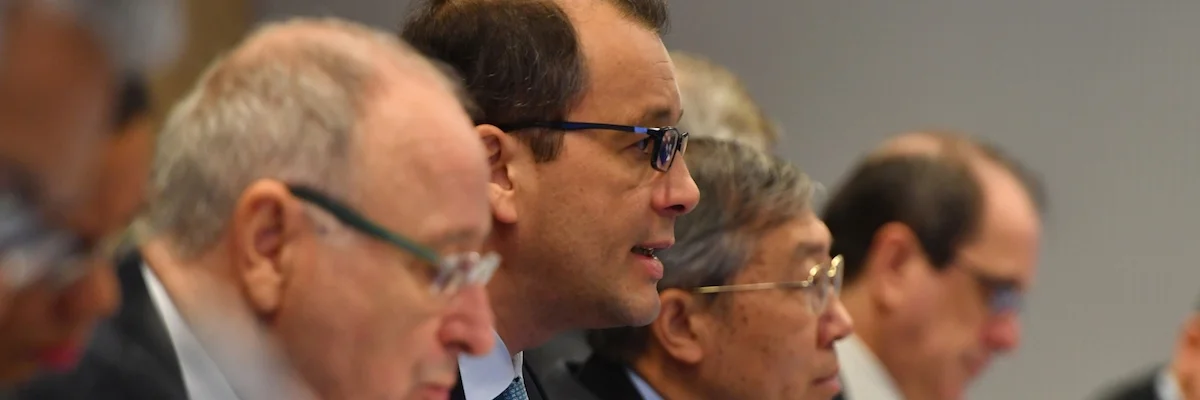
IAEA acting director General Cornel Feruta convened an extraordinary meeting of the 35-member board of governors Thursday to discuss the new concerns. The Romanian diplomat said only last month that Iran had taken “a step in the right direction” in attempting to clarify matters troubling inspectors.
“Iran should provide full and timely cooperation,” the IAEA said in an emailed statement. “The IAEA is ready to continue interactions with Iran with a view to resolving the matter as soon as possible.”
The findings threaten to open a new front in the tense confrontation that has erupted over Iran’s nuclear program since the U.S. withdrew from the multi-power nuclear deal with Tehran last year and reimposed punishing economic sanctions. Iran, which has vowed to return to the nuclear deal once the U.S. does the same, this week announced it would begin enriching uranium at Fordow, a fortified site built into the side of a mountain.
European signatories say they remain committed to the nuclear accord but have struggled to devise a mechanism that wouldn’t expose European companies to penalties if they trade with the Islamic Republic.
Secretary of State Mike Pompeo on Thursday urged the world to address what he called Iran’s nuclear “extortion.”
Safeguards Obligations
The IAEA has satellite images showing that the Turquz-Abad site where the particles were found was cleared out after Israeli Prime Minister Benjamin Netanyahu presented documents that Mossad spies smuggled out of a secret warehouse in Tehran. Those files allegedly show Iran lied about a weapons project that operated until 2003, and then intensified efforts to hide its atomic archive after agreeing to the 2015 nuclear accord. Iran denies its nuclear program is aimed at producing weapons.
The U.S. is expected to press European allies that remain committed to the pact to support authorizing IAEA inspectors to broaden their investigation, according to the diplomats. That effort would be led by Argentina’s Rafael Grossi, who’ll replace Feruta as director general next month.
The suggestion that Iran could be providing incomplete information has potentially serious consequences. The entire international apparatus of rules that the IAEA enforces is based on verifying the correctness and completeness of nations’ declared nuclear material and nuclear-related activities.
The IAEA’s board referred Iran to the United Nations Security Council in 2006 for failing to fulfill safeguards obligations. The council then imposed crippling international sanctions that were only lifted after the 2015 agreement was agreed.
Photo: IAEA