
Iran Says German Freed in Prisoner Swap
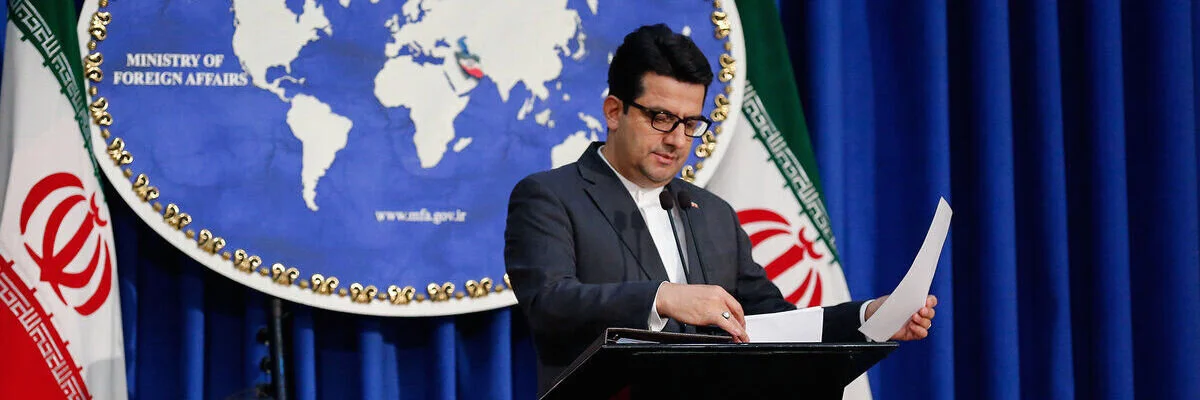
◢ An Iranian man arrested in Germany on suspicion of violating U.S. sanctions returned home Monday after being released, the foreign ministry said. Ahmad Khalili had been detained "on the pretext of violating the illegal and cruel sanctions of the United States,” ministry spokesman Abbas Mousavi said.
Iran said Tuesday that a German held in Iran has been released as part of a prisoner swap for an Iranian held in Germany on suspicion of violating US sanctions.
"We announced that we are ready to (release) this German national... on condition that they (the Germans) do not extradite our citizen to America," judiciary spokesman Gholamhossein Esmaili said.
"On Sunday... the Iranian national left Germany and entered Iran, and on Monday... we released the German national," he told a televised news conference.
According to the official, the unidentified German had been detained "for some time" for "taking photos and videos" in areas without authorisation and had been serving a three-year prison sentence.
The German was swapped for Iranian Ahmad Khalili, who according to Iran's foreign ministry was detained in Germany "on the pretext of violating the illegal and cruel sanctions of the United States".
Khalili was freed on Sunday night after "intensive diplomatic consultations" and cooperation involving the judiciary and the Revolutionary Guards' intelligence service, ministry spokesman Abbas Mousavi said in a statement.
He returned to Iran together with Foreign Minister Mohammad Javad Zarif, who last week attended a security conference in the German city of Munich, Mousavi added.
Iran said in December it was ready for more prisoner swaps with the US after it secured the return of scientist Massoud Soleimani in exchange for Xiyue Wang, a Chinese-born American held in the Islamic republic.
Decades-old tensions between Tehran and Washington have escalated steeply since 2018, when US President Donald Trump unilaterally withdrew from a landmark 2015 nuclear deal and reimposed sanctions on Iran.
Soleimani, a stem cell researcher at a Tehran university, on December 7, also flew back home from the United States with Zarif.
Photo: IRNA
German Minister Confirms US Threatened Tariffs on EU over Iran
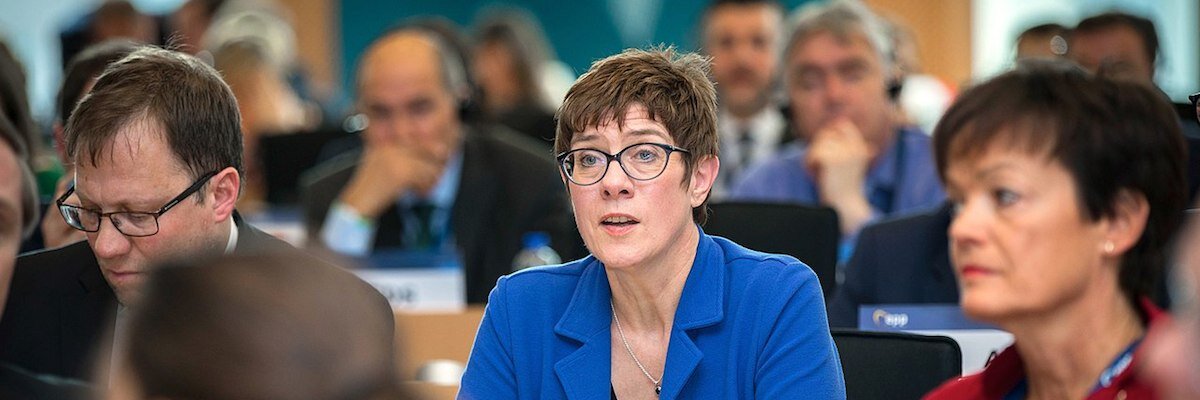
◢ Germany''s defense minister on Thursday confirmed a report that the United States was threatening to impose a 25 percent tariff on European car exports if it continued backing the Iran nuclear deal. "This expression or threat, as you will, does exist," Annegret Kramp-Karrenbauer told reporters.
Iran accused European governments Thursday of sacrificing a troubled 2015 nuclear deal to avoid trade reprisals from US President Donald Trump who has spent nearly two years trying to scupper it.
Foreign Minister Mohammad Javad Zarif said Trump was again behaving like a "high school bully" and the decision by Britain, France and Germany to heed his pressure to lodge a complaint over Iranian compliance deprived them of any right to claim the moral high ground.
The three governments "sold out remnants of #JCPOA (the nuclear deal) to avoid new Trump tariffs," Zarif charged.
"It won't work my friends. You only whet his appetite. Remember your high school bully?"
Germany's defence minister on Thursday confirmed a Washington Post report that the United States had threatened to impose a 25 percent tariff on imports of European cars if EU governments continued to back the nuclear deal.
"This expression or threat, as you will, does exist," Annegret Kramp-Karrenbauer told a news conference during a visit to London.
Zarif said Europe's unwillingness to antagonise the United States made a mockery of its stated determination to rescue the nuclear deal.
"If you want to sell your integrity, go ahead," Zarif tweeted. "But DO NOT assume high moral/legal ground."
The European states triggered a dispute mechanism established under the deal, which allows a party to claim significant non-compliance by another party before a joint commission, with appeals possible to an advisory board and ultimately to the UN Security Council.
Since Washington pulled out of the agreement and reimposed crippling unilateral sanctions in 2018, EU governments have sought to find a way to allow European businesses to continue trading with Iran without incurring huge US penalties.
As its economy has gone into reverse, an increasingly frustrated Iran has hit back with the step-by-step suspension of its own commitments under the deal.
The three European governments said they lodged their complaint in response to the latest step by Tehran suspending the limit on the number of centrifuges it uses to enrich uranium.
Speaking in India on Wednesday, Zarif already questioned how the European Union could allow itself to be "bullied" by Washington when it was the world's largest economy.
He warned the three EU governments party to the deal that their complaint could backfire, charging that they themselves were in violation because they had fallen in line with the US sanctions.
"They are not buying oil from us, all of their companies have withdrawn from Iran. So Europe is in violation," he said.
Zarif held talks in New Delhi on Thursday with EU foreign affairs chief Josep Borrell.
An EU statement said the two had "a frank dialogue" in which Borrell "underlined the continued interest of the European Union to preserve the agreement".
The cooling of Iran's relations with Europe comes at a time of red-hot tensions with the United States since a US drone strike in Iraq killed a top Iranian Revolutionary Guards commander earlier this month.
Photo: Wikicommons
US Says Has Asked Germany to 'Help Secure' Strait of Hormuz
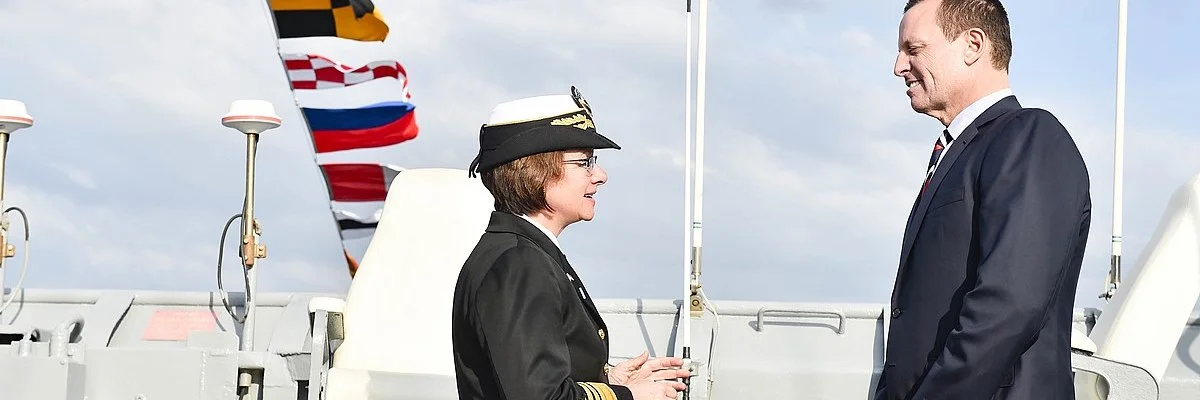
◢ The United States has asked Germany to join an international naval mission to help secure the strategic Strait of Hormuz, the US embassy in Berlin said on Tuesday. "We've formally asked Germany to join France and the UK to help secure the Strait of Hormuz and combat Iranian aggression," said a statement by embassy spokeswoman Tamara Sternberg-Greller.
The United States has asked Germany to join an international naval mission to help secure the strategic Strait of Hormuz, the US embassy in Berlin said on Tuesday, as tensions mount between Washington and Iran.
The request comes after Britain last week ordered its navy to escort UK-flagged ships in the world's busiest oil shipping lane in response to Iranian soldiers seizing a tanker in the flashpoint entrance to the Gulf.
"We've formally asked Germany to join France and the UK to help secure the Strait of Hormuz and combat Iranian aggression," said a statement by embassy spokeswoman Tamara Sternberg-Greller.
"Members of the German government have been clear that freedom of navigation should be protected... Our question is, protected by whom?"
Long-simmering tensions have spiked between Tehran and Washington since US President Donald Trump unilaterally withdrew from the Iran nuclear deal last year and reimposed biting sanctions on the Islamic republic.
The US and Gulf powerhouse Saudi Arabia have since accused Iran of being behind multiple mysterious attacks on tankers in the Gulf in June, which Iran denies.
Iran also shot down an unmanned US aircraft in June, after which Trump announced that he had called off retaliatory air strikes at the last minute because the resulting death toll would have been too high.
Since then a series of incidents involving oil tankers have heightened tensions.
The US request to NATO ally Germany is highly controversial in the country, where many politicians fear any naval mission, especially one led by the United States, could heighten the risk of conflict and drag European powers into a war.
Berlin has been clear it rejects Trump's strategy of "maximum pressure" on Iran.
Britain detained an Iranian tanker off its overseas territory of Gibraltar in early July on allegations it was breaching EU sanctions on Syria.
In what many read as a tit-for-tat move, Iran's Revolutionary Guards two weeks later impounded a British-flagged tanker in the Strait of Hormuz.
Britain said last week it was planning a European-led protection force there, but has since suggested such a mission should involve the United States.
Photo: Wikicommons
Europeans Plan Naval Mission to Protect Ships in Persian Gulf
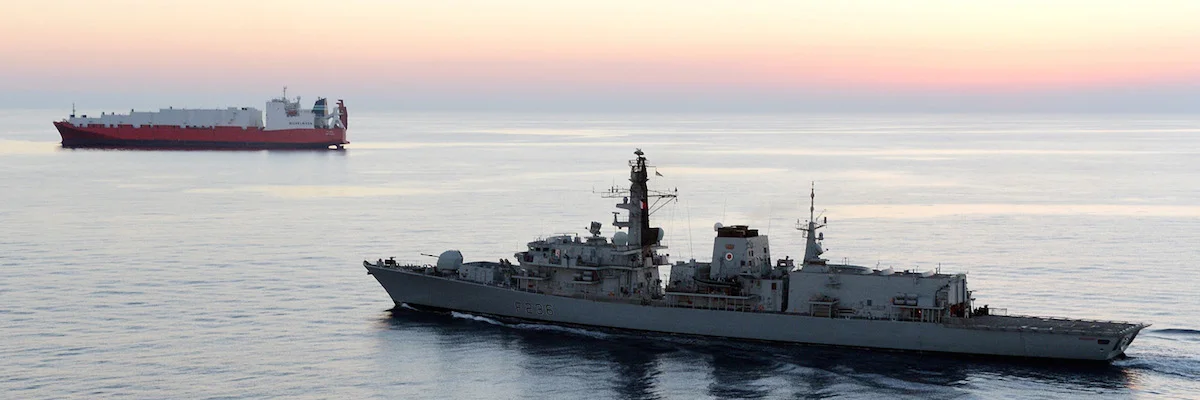
◢ European governments will assemble a naval mission to provide safe passage for ships through the Persian Gulf, after Iran seized a British oil tanker in the region last week, an act that U.K. Foreign Secretary Jeremy Hunt described as “state piracy.” Hunt announced a “European-led maritime protection mission to support safe passage of crew and cargo” in a statement to Britain’s Parliament in London on Monday.
By Alex Morales and Robert Hutton
European governments will assemble a naval mission to provide safe passage for ships through the Persian Gulf, after Iran seized a British oil tanker in the region last week, an act that U.K. Foreign Secretary Jeremy Hunt described as “state piracy.”
Hunt announced a “European-led maritime protection mission to support safe passage of crew and cargo” in a statement to Britain’s Parliament in London on Monday.
The U.K. demanded the immediate release of the Stena Impero, and summoned Iran’s charge d’affaires in London, Mohsen Omidzamani, following the incident in one of the world’s critical shipping chokepoints. The government threatened Iran with “serious consequences” and advised U.K. vessels to avoid the area, and to inform the government if they planned to travel there.
“Let us be clear, under international law Iran had no right to obstruct the ship’s passage, let alone board her,” Hunt told the House of Commons. “It was therefore an act of state piracy.”
The Foreign Secretary said the U.K. didn’t want to escalate tensions with Iran, which have been rising after the U.S. pulled out of the international nuclear deal and imposed new sanctions. Hunt said Britain won’t be taking part in the Trump administration’s “maximum pressure” policy, because the London government remains committed to the 2015 multi-nation pact to limit Iran’s nuclear program.
“If Iran continues on this dangerous path, they must accept the price will be a larger Western military presence in the waters along their coastline,” Hunt said. “Not because we wish to increase tensions but simply because freedom of navigation is a principle Britain and its allies will always defend.”
Tensions have flared in the Strait of Hormuz in recent weeks as Iran lashes out against U.S. sanctions that are crippling its oil exports and after the seizure of one of its tankers near Gibraltar. The Strait accounts for about a third of the world’s seaborne oil flows.
With Theresa May set to leave office on Wednesday, the latest clash with Iran presents a diplomatic headache for her successor, either Boris Johnson, the front-runner, or Hunt, his rival.
U.S. Central Command has announced a “multinational maritime effort” called Operation Sentinel to “increase surveillance of and security in key waterways in the Middle East to ensure freedom of navigation in light of recent events in the Arabian Gulf region.”
Iran’s Revolutionary Guards said on Saturday that the British ship entered the strait from the wrong direction, wasn’t paying heed to maritime regulations and could potentially have collided with other vessels. State television said the ship will be held until judicial assessments are complete.
On Sunday, the Iranian flag was seen flying over the bridge of the tanker in the Bandar Abbas port, according to images aired by state-run Press TV.
Iran has also suggested its actions are in retaliation for Britain’s seizure of the Grace 1 tanker off Gibraltar. A court in Gibraltar ordered the continued detention of the vessel for another 30 days, after it was held on suspicion of taking oil to Syria. Iran denies that was the destination.
In recent weeks the U.K. Navy has escorted some tankers out of the region, while the U.S. said it downed an Iranian drone just days ago. The latest incident cooled hopes that the U.S. and Iran would soothe tensions by entering into negotiations.
Photo: Royal Navy
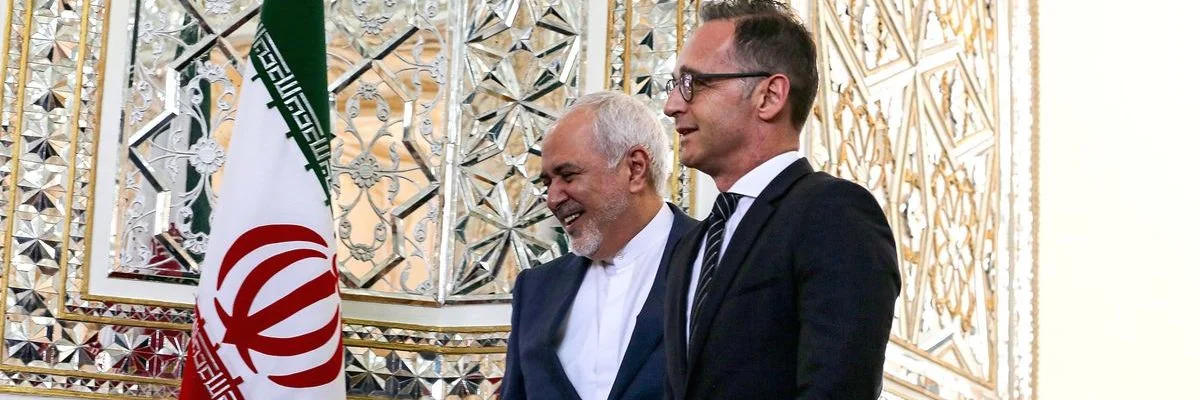
High-Stakes Iran Talks Try to Prevent Atomic Deal Unraveling
◢ Diplomacy intended to salvage the Iran nuclear deal goes into high gear this week after Tehran threatened to follow the U.S. in abandoning the accord. German Foreign Minister Heiko Maas landed in Iran’s capital to meet Monday with his counterpart Mohammad Javad Zarif. Japanese Prime Minister Shinzo Abe arrives in Tehran on Wednesday for more consultations.
By Golnar Motevalli, Jonathan Tirone and Patrick Donahue
Diplomacy intended to salvage the Iran nuclear deal goes into high gear this week after Tehran threatened to follow the U.S. in abandoning the accord.
German Foreign Minister Heiko Maas landed in Iran’s capital to meet Monday with his counterpart Mohammad Javad Zarif. Japanese Prime Minister Shinzo Abe arrives in Tehran on Wednesday for more consultations. In Vienna, the International Atomic Energy Agency will assess the state of the 2015 agreement that was supposed to rein in Iranian nuclear work in return for sanctions relief.
While European governments recognize Iran’s right to benefit from the nuclear accord and are striving to protect trade with it despite U.S. sanctions, they won’t accept the Islamic Republic’s “reneging” on its nuclear obligations because the U.S. has, Maas said.
The only way to reduce tensions is ending America’s “economic war” on Iran, and Germany and the European Union have a role to play in this, said Zarif, speaking alongside his German counterpart.
Iranian Ultimatum
The flurry of diplomacy kicked off after Iran’s president signaled May 8 that the country could soon violate terms of the agreement, known as the Joint Comprehensive Plan of Action. The declaration was made on the one-year anniversary of the U.S. decision to unilaterally exit the accord and reimpose sanctions, including on vital oil exports. With its economy plunging into recession, Iran gave European signatories 60 days to deliver the financial relief offered under the deal in return for moderating its nuclear output.
The European vehicle to sustain trade with Iran, Instex, will become operational this month, according to a senior European official with knowledge of the Maas-Zarif talks, who asked not to be identified to discuss the private consultations. A material Iranian violation of the nuclear agreement would force EU governments to end efforts to help Tehran mitigate U.S. sanctions.
Germany initially had hoped Maas would be accompanied to Tehran by officials from France and the U.K., the other EU signatories to the deal, according to another European official.
In Vienna, IAEA monitors convene to assess Iranian compliance. They reported last month in a 15th consecutive quarterly report that showed Iran has observed its obligations, amid growing concerns that the Trump administration’s campaign to counter Iranian influence in the Middle East could spill into war.
“I am worried about tensions over the Iran nuclear issue,” IAEA Director General Yukiya Amano said in a statement. “The nuclear-related commitments entered into by Iran under the Joint Comprehensive Plan of Action represent a significant gain. I therefore hope that ways can be found to reduce current tensions through dialogue.”
Iran has increased the rate at which it enriched uranium, although the amount stockpiled is still short of the 300 kilograms (661 pounds) allowed under the deal, Amano said at a press briefing. Any potential violation will be immediately reported and could trigger and emergency meeting in Vienna.
The country had about 180 kilograms of the material stockpiled last week—well short of the amount needed for a weapon, were the material to be further enriched, and if Iran were to make the decision to pursue a bomb. Tehran has always said its program is solely for civilian energy and industrial use, but world powers pursued the deal because they doubted that claim.
Tensions spiked after the U.S. accelerated the deployment of a carrier strike group to the Gulf to counter unspecified Iranian threats, and suggested without providing proof that Iran and its proxies were to blame for attacks on ships in the crucial waterway as well as a Saudi oil pipeline, and sent more troops to the region.
The visit by Abe, the first by a sitting Japanese prime minister in 41 years, was endorsed by President Donald Trump and is an effort to open a channel for mediation. But with the U.S. continuing to pile on new sanctions that target Iran’s petrochemical industry, the initiative has failed to gain traction.
“We are witnessing a treacherous policy” from the U.S., said Abbas Mousavi, the spokesman for Iran’s Ministry of Foreign Affairs. “They bring up negotiations and at the same time administrate maximum pressure. To Iran, this isn’t acceptable.”
High-level diplomacy could continue over the next month depending on the outcome of talks this week in Tehran. The remaining parties to the accord—China, France Germany, Russia and the U.K.—could convene a meeting of foreign ministers if that lends to the accord’s survival, according to one of the European officials.
Photo: Bloomberg
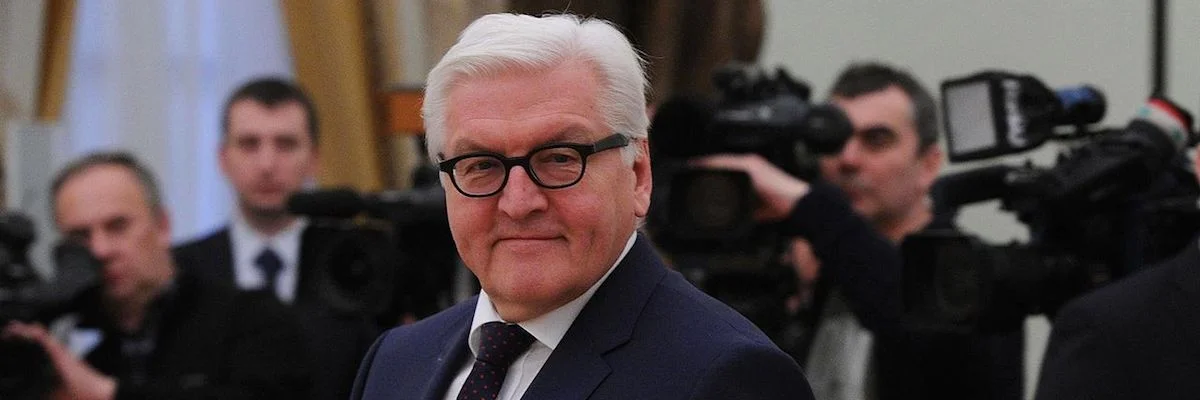
German President Under Fire Over Iran Telegram
◢ German President Frank-Walter Steinmeier came under fire for a congratulatory telegram sent to Iran for the Islamic revolution's 40th anniversary, with a Jewish leader on Monday joining a chorus of criticism. At the government's weekly briefing, foreign ministry spokesman Rainer Breul said there had been a "misunderstanding.”
German President Frank-Walter Steinmeier came under fire for a congratulatory telegram sent to Iran for the Islamic revolution's 40th anniversary, with a Jewish leader on Monday joining a chorus of criticism.
Taking aim at Steinmeier for failing to include criticisms of the Islamic regime in his message, Josef Schuster, who heads Germany's Central Council of Jews, said that "routine diplomacy appears to have overtaken critical thinking.”
"It is incomprehensible that sensitivity was missing," Schuster told the daily Bild.
"If it was necessary to send congratulations on this anniversary, then the president should have at least found some clear words criticizing the regime," he added.
Human Rights Watch's director for Germany, Wenzel Michalski, has called Steinmeier's message "shocking.”
For the foreign policy chief of the business-friendly FDP party, Frank Mueller-Rosentritt, the telegram must have felt like a "resounding slap in the face for our friends in Israel who are exposed to constant threats of annihilation by Iran.”
The telegram has not been made public by the president's office.
But Bild last week quoted excerpts of the message, which it said included Steinmeier's promise to do all he could to implement a nuclear deal on limiting Tehran's atomic programme.
The newspaper said there was no mention of Tehran's support for Hamas and Hezbollah in the message however.
Steinmeier defended his gesture during a telephone conversation with Schuster, but acknowledged in a statement to DPA news agency that "human rights are disregarded in Iran and Iran plays a destabilizing role in the region.
"The danger represented by an Iran armed with nuclear weapons is that much greater," he said.
At the government's weekly briefing, foreign ministry spokesman Rainer Breul said there had been a "misunderstanding.”
"To our knowledge, the president did not send congratulations for the anniversary of the Islamic revolution. His congratulations were on the occasion of Iran's national day celebrations.
They fall on the same day.
"It is common practice for states that have diplomatic relations to send congratulations on national day celebrations," Breul said Friday.
Photo Credit: Wikicommons
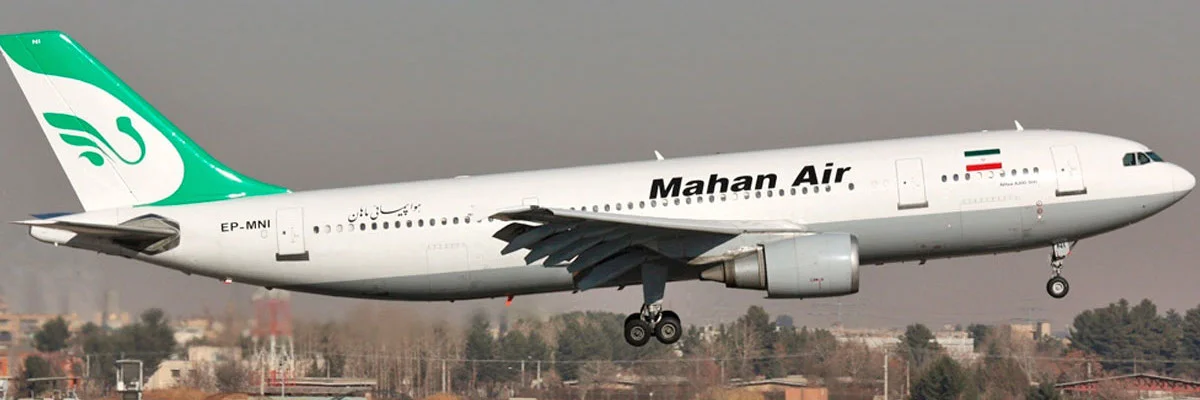
Iran Deplores 'Unjustifiable' German Banning of Mahan Air
◢ Iran's foreign ministry on Tuesday deplored Germany's decision to ban Iranian airline Mahan air from its airports describing the move as "hasty and unjustifiable.” Iran said it hope Germany will reconsider its decision. The rescinding of Mahan Air's flight permits to Germany is a hasty, unjustifiable act," the ministry said in a statement.
Iran's foreign ministry on Tuesday deplored Germany's decision to ban Iranian airline Mahan air from its airports describing the move as "hasty and unjustifiable.”
"The rescinding of Mahan Air's flight permits to Germany is a hasty, unjustifiable act," the ministry said in a statement.
"This action is in conflict with the spirit governing the long-standing relations between the Iranian and German nations," and "contrary to the interests of bilateral relations, it said.
Iran said it hope Germany will reconsider its decision.
Germany said on Monday it had banned Mahan Air from its airports.
Germany foreign ministry spokesman Christofer Burger told reporters in Berlin the move was necessary to protect Germany's "foreign and security policy interests".
A spokeswoman at Germany's transport ministry said Iran had been informed that the ban would take effect from Monday and involve Mahan Air flights from and to Germany.
Mahan Air, Iran's second-largest carrier after Iran Air, flies four services a week between Tehran and the German cities of Dusseldorf and Munich.
The ban caused confusion and chaos for Mahan Air passengers as the airline rushed to secure replacement flights for them.
"I've been in the aviation industry for decades, and I've never seen such a thing" a Mahan Air employee from the company's Dusseldorf office told AFP in Tehran on Tuesday.
"It borders on cruelty for all of these passengers," he said on condition of anonymity, adding that staff had been fielding calls from distraught passengers all day long.
Mahan air was blacklisted by the US in 2011, as Washington said the carrier was providing technical and material support to an elite unit of Iran's Revolutionary Guards known as the Quds Force.
Iran's aging air fleet has had a string of crashes in recent years mostly due to tough decades-long US sanctions hindering the purchase of new airplanes and critical spare parts for its civilian fleet.
Hopes for a change in the situation were dashed last May when Washington pulled out of a landmark 2015 deal over Iran's nuclear program, reimposing sanctions that had been lifted as part of the multilateral accord.
Photo Credit:
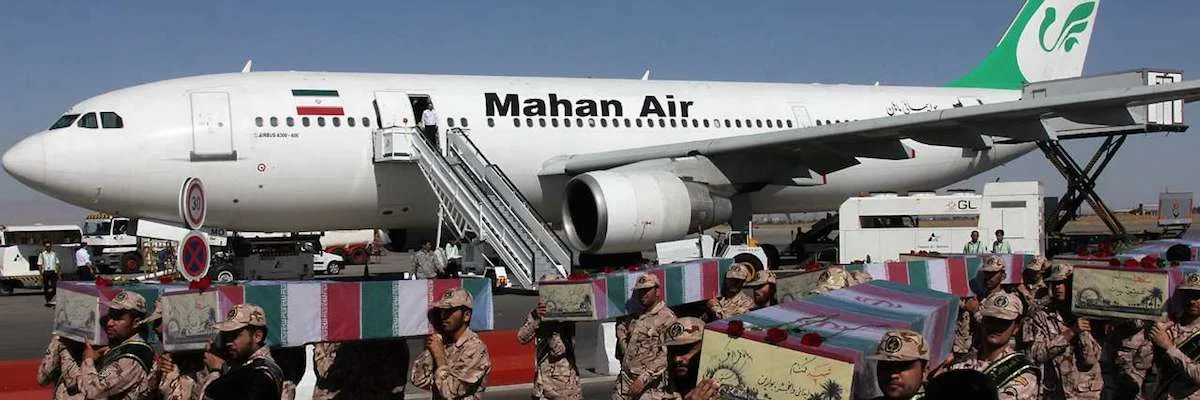
Germany Plans to Sanction Iran Airline
◢ Germany plans to ban Iranian airline Mahan Air from its airports, media reported Monday, in an escalation of sanctions adopted by the European Union against Iran over attacks on opponents in the bloc. "The Federal Aviation Office (LBA) will this week suspend the operating license of Iranian airline Mahan," reported Munich-based daily Sueddeutsche Zeitung.
Germany said Monday it had banned Iranian airline Mahan Air from its airports, in an escalation of sanctions adopted by the European Union against Tehran over attacks on opponents in the bloc.
The move was necessary to protect Germany's "foreign and security policy interests", foreign ministry spokesman Christofer Burger told reporters at a regular Berlin press conference.
Officials at the Federal Aviation Office (LBA) sent Tehran-based Mahan Air a notification "ordering the immediate suspension of its authorization to operate passenger flights from and to Germany" from Monday, a transport ministry spokeswoman added.
Mahan, Iran's second-largest carrier after Iran Air, flies four services a week between Tehran and the German cities of Duesseldorf and Munich.
It was blacklisted by the US in 2011, as Washington said the carrier was providing technical and material support to an elite unit of Iran's Revolutionary Guards known as the Quds Force.
The US treasury has threatened sanctions against countries and companies offering the airline's 31 aircraft landing rights or services such as on-board dining.
But Brussels and Washington have been at odds on how best to deal with Iran since President Donald Trump's decision to withdraw from a 2015 deal lifting some sanctions in exchange for Tehran suspending its nuclear program.
'Destabilizing Activity'
Foreign ministry spokesman Burger reiterated that Germany wished to "uphold" the agreement "and play our part in keeping economic exchange with Iran possible".
"But we have always said that destabilizing activity by Iran in the (Middle East) region as well as Iran's ballistic missile program are unacceptable," he added.
"On top of that, there are recent indications regarding the activities of Iran's secret services within EU states."
The EU earlier this month targeted sanctions at Iran's security services and two of their leaders, accused of involvement in a series of murders and planned attacks against Tehran critics in the Netherlands, Denmark and France.
Brussels' measures included freezing funds and financial assets belonging to Iran's intelligence ministry and individual officials, but did not target any companies.
US Ambassador to Germany Richard Grenell, a close Trump ally, welcomed Berlin's decision.
"Mahan Air has flown terrorists, weapons, equipment, and funds to international locations to support Iranian terrorist proxy groups," he said in a statement, adding that it had been used "to support the Assad regime in Syria."
Since his arrival, Grenell has exerted unusually intense pressure on German firms over Iran sanctions.
Rail operator Deutsche Bahn, Deutsche Telekom, Mercedes-Benz parent Daimler and industrial group Siemens have all said they will stop their operations in the country.
Last week German authorities said they had arrested a German-Afghan military advisor on suspicion of spying for Iran.
Photo Credit: IRNA
Germany Says Shares US Goals on Iran
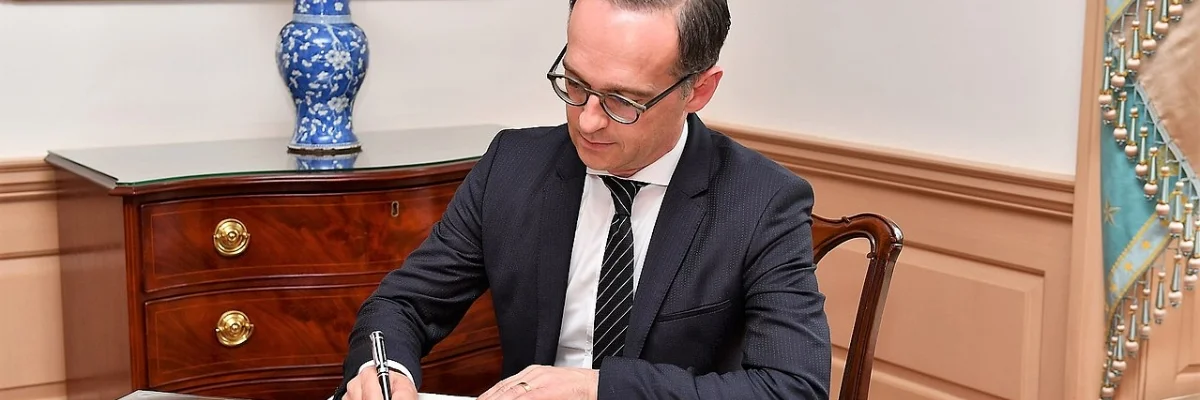
◢ Germany on Wednesday told the United States that it shared its goals on Iran even as the Europeans press ahead to save a denuclearization deal threatened by US sanctions. German Foreign Minister Heiko Maas met in Washington with US Secretary of State Mike Pompeo who has voiced outrage over European plans to preserve commercial ties with Iran.
Germany on Wednesday told the United States that it shared its goals on Iran even as the Europeans press ahead to save a denuclearization deal threatened by US sanctions.
German Foreign Minister Heiko Maas met in Washington with US Secretary of State Mike Pompeo who has voiced outrage over European plans to preserve commercial ties with Iran.
"In the end, we pursue the same goals with respect to Iran," Maas told
reporters after meeting Pompeo.
“We just have different paths that we want to follow," he said.
Maas said that Germany shared concerns about Iran's ballistic missile program and believed Tehran should withdraw from Syria, where the Shiite clerical regime is supporting President Bashar al-Assad.
But Maas said that the end of the 2015 agreement would lead Iran to pursue a nuclear program with military purposes.
“This would create the danger of a military conflict in the region," Maas said.
The United States under former president Barack Obama negotiated the deal with Iran alongside Britain, China, France, Germany and Russia.
UN inspectors say that Iran has complied with the agreement, under which it ceased sensitive nuclear work in exchange for sanctions relief.
President Donald Trump withdrew from the accord, vowing instead to target Iran aggressively and roll back its role in the region.
That European Union said last month that it was working on a legal entity through which businesses could trade with Iran and avoid US sanctions.
Photo Credit: Wikicommons
Germany Warns US Iran Sanctions Could Cause 'Chaos'
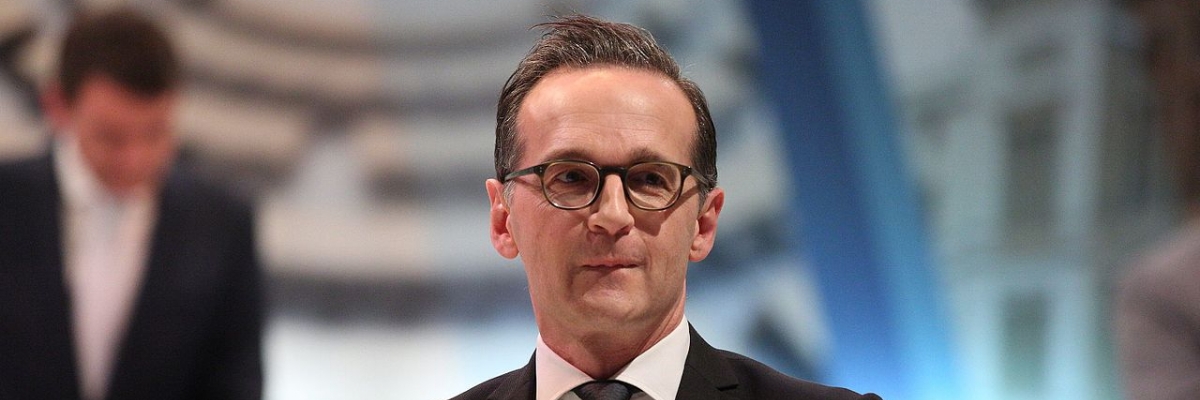
◢ German Foreign Minister Heiko Maas warned Wednesday that US President Donald Trump's decision to reimpose sanctions on Iran could further destabilize the Middle East and boost radical forces in the region. "We still think that it is a mistake to give up on the nuclear accord with
Iran," Maas said in an interview with the daily Passauer Neue Presse.
German Foreign Minister Heiko Maas warned Wednesday that US President Donald Trump's decision to reimpose sanctions on Iran could further destabilise the Middle East and boost radical forces in the region.
Trump brought back the punishing sanctions after unilaterally pulling out of a landmark 2015 deal between Tehran and Western powers to halt Iran's nuclear ambitions.
"We still think that it is a mistake to give up on the nuclear accord with
Iran," Maas said in an interview with the daily Passauer Neue Presse.
"We are fighting for the deal because it also serves our purpose by bringing about security and transparency in the region."
Noting Iran's geographic proximity to Europe, Maas warned that "anyone who's hoping for regime change must not forget that whatever follows could bring us much bigger problems."
"Isolating Iran could boost radical and fundamentalist forces," he said, adding that "chaos in Iran, as we have experienced in Iraq or Libya, would further destabilize an already troubled region."
In a desperate bid to save the nuclear accord, European governments have pledged to do what they can to keep business links with Tehran.
Despite the political will to hold firm, many large European firms such as German automaker Daimler are leaving Iran for fear of US penalties.
The US ambassador to Germany, Richard Grenell, welcomed the news.
"We are pleased to see German businesses stopping their trade with Iran, complying with U.S. sanctions, and helping pressure the Iranian regime back to the table," he tweeted.
"We stand together to stop Iran's malign activities."
Photo Credit: Wikicommons
Daimler Says Halting Iran Activities Over US Sanctions
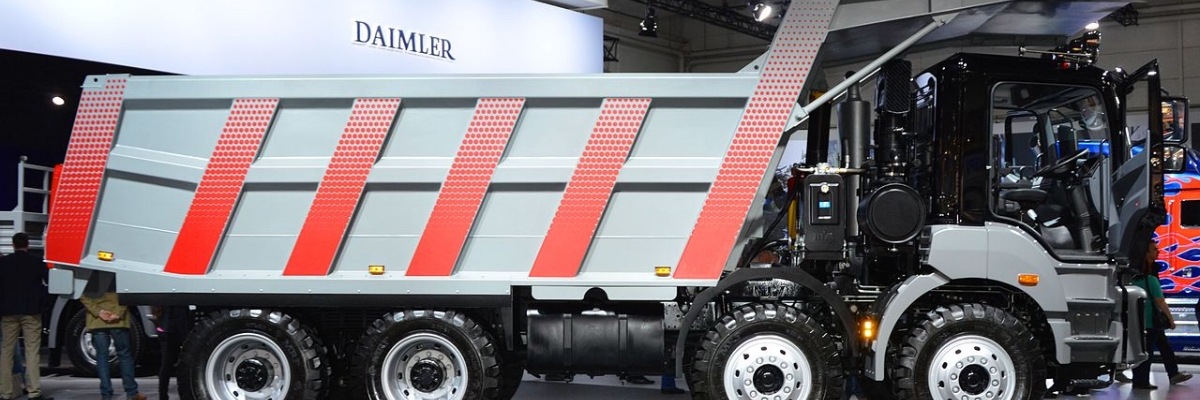
◢ German automaker Daimler on Tuesday said it was halting its business activities in Iran after the United States re-imposed sanctions on Tehran. "We have suspended our already limited activities in Iran in accordance with the applicable sanctions," a spokeswoman said in a statement sent to AFP, adding that Daimler was closely monitoring political developments.
German automaker Daimler on Tuesday said it was halting its business activities in Iran after the United States re-imposed sanctions on Tehran.
"We have suspended our already limited activities in Iran in accordance with the applicable sanctions," a spokeswoman said in a statement sent to AFP, adding that Daimler was closely monitoring political developments.
The move brings a sudden end to Daimler's expansion plans in Iran, where it was teaming up with two local firms to assemble Mercedes-Benz trucks.
It comes as a first round of renewed US sanctions on Iran came into effect after President Donald Trump unilaterally pulled out of the Iran nuclear deal.
The first sanctions targets access to US banknotes and key industries such as cars and carpets.
A second tranche coming into effect on November 5 is expected to be even more damaging, covering Iran's vital oil sector.
The European Union, which still adheres to the landmark 2015 nuclear pact, has promised to take steps to protect EU firms' dealings with Iran, but the uncertainty has already prompted many businesses to pull out of the country.
French carmaker Renault, which does not sell cars in the US, has said it will remain in Iran despite the sanctions.
But French oil group Total and carmaker PSA have already indicated they are likely to withdraw from Iran.
Trump ramped up the pressure again Tuesday, hailing the "most biting sanctions ever imposed".
"Anyone doing business with Iran will NOT be doing business with the United States. I am asking for WORLD PEACE, nothing less," he wrote.
Daimler had signed a letter of intent in 2016 to manufacture and sell Mercedes trucks in Iran in a joint venture with Iran Khodro Diesel (IKD) and the Mammut Group, in its first big step to return to the country after years of sanctions over its nuclear programme.
In its statement, Daimler stressed that it had not yet started making or selling any trucks in Iran, nor was it selling any passenger cars there.
"We continue to monitor closely the political developments, particularly with regard to the future of the nuclear agreement," Daimler added.
Photo Credit:
Iran Sanctions Shadow Falls on Smaller German Banks
◢ Germany's biggest lenders have shied away from business with Iran after past penalties for breaching US sanctions, but smaller banks have leapt on opportunities afforded by the nuclear deal rejected by Donald Trump. Officials at Germany’s central bank believe that much has so far changed for business with Iran.
Germany's biggest lenders have shied away from business with Iran after past penalties for breaching US sanctions, but smaller banks have leapt on opportunities afforded by the nuclear deal rejected by Donald Trump.
There are just months to go until a November deadline issued by Washington after the US president abandoned a hard-fought agreement that loosened business restrictions on the Islamic Republic in exchange for Tehran giving up its pursuit of nuclear weapons.
But some firms plan to press on in their dealings with Iran despite the looming threat of penalties.
"We will continue to serve our clients," for now, said Patrizia Melfi, a director at the "international competence centre" (KCI) founded by six cooperative savings banks in the small town of Tuttlingen in southwest Germany.
The centre, which supports companies operating in sensitive markets like Iran or Sudan, has seen demand "rising sharply in the last few years, from firms listed on the Dax (Germany's index of blue-chip firms), from all over Germany and from Switzerland," she added.
German exports to Iran have grown since the nuclear deal was signed in 2015, adding 15.5 percent last year to reach almost EUR 2.6 billion (USD 3.0 billion) after 22-percent growth in 2016.
Such figures remain vanishingly small compared with Germany's 111.5 billion euros in exports to the US—its top customer.
Nevertheless, the KCI will "wait and see what the sanctions look like" before turning away from Iran, Melfi said.
Walking on Eggshells
Already, firms dealing with Tehran must take great care not to fall foul of US restrictions.
Transactions are carried out in euros, and the KCI does not deal with businesses that have American citizens or green card resident holders on their boards.
What's more, products sold to Iran cannot contain more than 10 percent of parts manufactured in the US.
One of the most important inputs for the business is "courage among our managers" given the high risks involved, Melfi said.
Germany's two biggest banks, Deutsche Bank and Commerzbank, avoid Iran completely after being slapped with harsh fines in 2015 over their dealings there, with Deutsche alone paying USD 258 million in penalties.
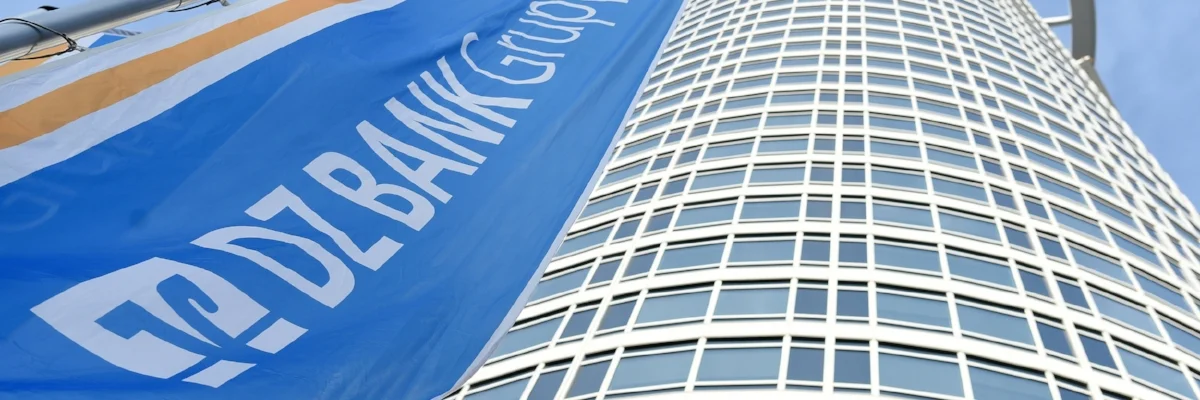
DZ Bank, which operates as a central bank for more than 1,000 local co-op lenders, is withdrawing completely from payment services there, a spokesman told AFP.
That left KCI to seek out the German branch of Iranian state-owned bank Melli in Hamburg.
Even that linkage could break if Iran's biggest business bank appears on a US list of barred businesses as it has before.
Meanwhile, among Germany's roughly 390 Sparkasse savings banks, business with the regime is mostly limited to producing documents linked to export contracts.
"We will be looking even more closely at those" in the future, a person familiar with the trade told AFP.
Elsewhere in the German economy, the European-Iranian Trade Bank (EIH) founded in 1971 is another conduit to Tehran.
Also based in Hamburg, it for now remains "fully available to you with our products and services", the bank assures clients on its website, although "business policy decisions by European banks may result in short term or medium term restrictions on payments".
'Effectively Protected'
Neither does the Bundesbank (German central bank) believe that much has so far changed for business with Iran.
"Only the European Union's sanctions regime will be decisive", if and when it is changed, the institution told AFP.
Any payment involving an Iranian party would have to be approved by the Bundesbank if things return to their pre-January 2016 state.
German banking lobby group Kreditwirtschaft has called on Berlin and other EU nations to clarify their stance—and to make sure banks and their clients are "effectively protected against possible American sanctions."
KCI's Melfi said time is running out for EU governments to act.
"Many firms just want to stop anything with Iran, since they can't calculate the risk of staying," she noted.
On Friday for the first time since the Iran nuclear deal came into force in 2015, China, Russia, France, Britain and Germany gathered in Vienna—at Iran's request—without the United States, to discuss how to save the agreement.
Photo Credit: DZ Bank

Germany's Merkel Says Existing Iran Deal 'Not Sufficient' to Curb Iran Ambitions
◢ German Chancellor Angela Merkel, standing alongside President Donald Trump at the White House, said Friday that the existing international accord on Iran is not enough to curb the Islamic republic's regional ambitions.
AFP Correction: Headline corrected to remove reference to 'nuclear program' to better reflect original German speech.
German Chancellor Angela Merkel, standing alongside President Donald Trump at the White House, said Friday that the existing international accord on Iran is not enough to curb the Islamic republic's regional ambitions.
The so-called Joint Comprehensive Plan of Action, signed by Tehran and six world powers including Germany and the United States, is "a first step that has contributed to slowing down their activities in this particular respect," Merkel told reporters.
"But we also think from a German perspective that this is not sufficient in order to see to it that Iran's ambitions are curbed and contained."
"Europe and the United States ought to be in lock step on this," she said.
Photo Credit: Wikicommons

Merkel Heads for Tough Trump Talks on Trade, Iran Nuclear Deal
◢ German Chancellor Angela Merkel visits US President Donald Trump on Friday for a last-ditch European effort to prevent a transatlantic trade war and save the Iran nuclear deal. Merkel's working trip is expected to be far more business-like than this week's pomp-filled state visit by French President Emmanuel Macron, who has built a warm rapport with Trump despite stark policy differences.
German Chancellor Angela Merkel visits US President Donald Trump on Friday for a last-ditch European effort to prevent a transatlantic trade war and save the Iran nuclear deal.
Merkel's working trip is expected to be far more business-like than this week's pomp-filled state visit by French President Emmanuel Macron, who has built a warm rapport with Trump despite stark policy differences.
Trump's lavish welcome for Macron, with hugs and much back-slapping, contrasted sharply with a tense White House event in March last year in which Trump appeared to ignore Merkel's offer of a handshake.
Despite Merkel's more sober style, her objective will be the same as Macron's—to persuade Trump to back off his dual threats of punitive measures that could spark a transatlantic trade war and scrapping the Iran nuclear deal.
Trump last month announced tariffs of 25 percent on steel and 10 percent on aluminum, claiming foreign imports were harming US national security by undermining the domestic production needed for military readiness.
After an outcry from US allies, Trump granted a temporary exemption to key partners including the EU—but this expires on May 1.
On the eve of Merkel's Washington visit, Berlin's hopes were dim that the EU may be spared the sweeping customs duties, to which it has vowed to retaliate, potentially setting off spiraling counter-measures.
"From today's perspective, we must assume that the tariffs will come on May 1," said a German government source." And then we will see how we will handle it."
'Juggling Act'
The next looming deadline is May 12, the date by which Trump has threatened to tear up the landmark 2015 agreement to stop Iran from developing nuclear weapons in return for relief from international sanctions.
Trump has called the agreement, which Germany helped negotiate, "insane" and the "worst deal ever," demanding that its "disastrous flaws" be fixed.
The EU and other signatory powers have sought to convince Trump not to abandon the pact, warning that it was the best defense against a regional nuclear arms race.
Macron pitched the idea of seeking a separate pact to curb Iran's ballistic missile program and support for militias in the Middle East.
The German foreign ministry has insisted that "the biggest priority is maintaining the existing nuclear accord," while Merkel has also called Iran's ballistic missile programme a "cause for concern."
The talks won't be helped by the rocky relations between Germany's veteran leader and the billionaire and former reality TV star Trump.
'Difficult Partner'
Trump has repeatedly berated the EU's top economy for its huge trade surplus with the US and spending too little on NATO joint defense.
He has criticized Merkel for opening German borders since 2015 to a mass influx of mostly Muslim refugees, while she has watched with dismay Trump's decision to withdraw from the Paris climate accord.
Merkel routinely praises the a rules-based international order to tackle global problems from conflict and terrorism to environmental destruction, in stark contrast to Trump's "America First" stance.
"Angela Merkel is on her third US president in her long tenure as chancellor of Germany," said think-tank the German Marshall Fund of the United States.
"It is no secret that she sees the current resident of the White House as a 'difficult partner.' Her return to Washington this week, by all accounts, will be a juggling act."
Merkel—who developed close relationships with Trump's predecessors Barack Obama and George W. Bush—this week stressed that, despite the differences, she wants to preserve the bedrock strategic partnership.
"The transatlantic alliance, given the many non-democratic developments in this world," she said, "is a great treasure that I certainly want to cherish and nurture."
The Berliner Zeitung daily looked ahead to Merkel's tough diplomatic mission just after Macron's charm offensive, saying that "she can hardly follow Macron's best-buddy act, but she does need a strategy."
Photo Credit: Wikicommons