
Qatar Calls for GCC Talks with Iran
Qatar has called for countries of the Gulf Cooperation Council to hold talks with Iran, the foreign minister said in an interview aired Tuesday, after Doha reconciled with its neighbors following a rift.
Qatar has called for countries of the Gulf Cooperation Council (GCC) to hold talks with Iran, the foreign minister said in an interview aired Tuesday, after Doha reconciled with its neighbors following a rift.
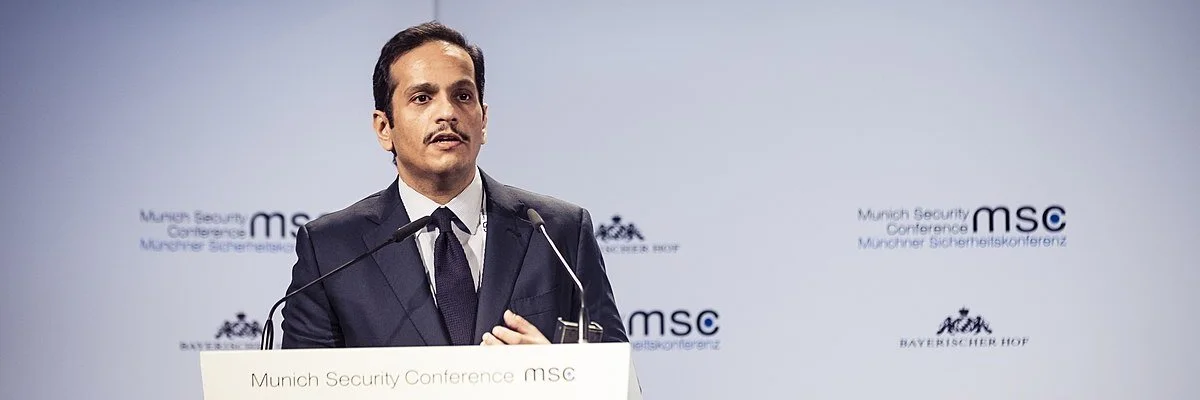
Foreign Minister Sheikh Mohammed bin Abdulrahman Al-Thani, who has previously called for dialogue with Iran, told Bloomberg TV he was "hopeful that this would happen and we still believe this should happen.”
"This is also a desire that's shared by other Gulf Cooperation Council countries," he said.
It comes weeks after GCC hawks Saudi Arabia, Bahrain and the UAE re-established ties with Qatar after breaking them off in June 2017 partly over allegations that Qatar was too close to Iran. Doha denied the accusations.
Qatar and Iran share one of the world's largest gas fields and Doha maintains cordial relations with Tehran.
Doha is a close ally of Washington and has previously mediated between the US and Iran suggesting that Sheikh Mohammed's intervention could be timed as a signal to the incoming administration of President-elect Joe Biden. Biden is due to take office on Wednesday.
The current occupant of the White House, President Donald Trump, has pursued a policy of "maximum pressure" on Iran and pulled the United States out of a multilateral nuclear deal with it in 2018.
Tehran's arch-rival Riyadh, the dominant GCC power, has not publicly indicated any willingness to engage with Iran.
Instead Saudi Arabia insisted that this month's rapprochement with Qatar meant the Gulf family would be better able to combat "the threats posed by the Iranian regime's nuclear and ballistic missile programme".
"Qatar will facilitate negotiations, if asked by stakeholders, and will support whoever is chosen to do so," added Sheikh Mohammed.
Photo: Wikicommons
Taken to Brink by Trump, GCC States Are Backpedaling on Iran
◢ Spooked by the prospect of a catastrophic war with Iran and its proxy militias across the region, Arab monarchies are in the midst of a strategic rethink regarding the Persian Gulf. The U.A.E., whose economic model relies in large part on its international links, quickly realized it had most to lose from a military escalation.
By Zainab Fattah
An expanded soccer tournament, a direct flight, clandestine meetings and a pledge to release prisoners of war; diplomacy is breaking out as Gulf Arab nations back away from a Donald Trump-inspired confrontation with Iran. And the signs are everywhere.
Last week, Saudi Arabia, the United Arab Emirates and Bahrain played their first games of the 2019 Arabian Gulf Cup in Qatar after a last-minute decision to take part—an apparent breakthrough in a 30-month feud that saw them halt trade and flights over Qatar’s links with Iran and support for Islamist groups.
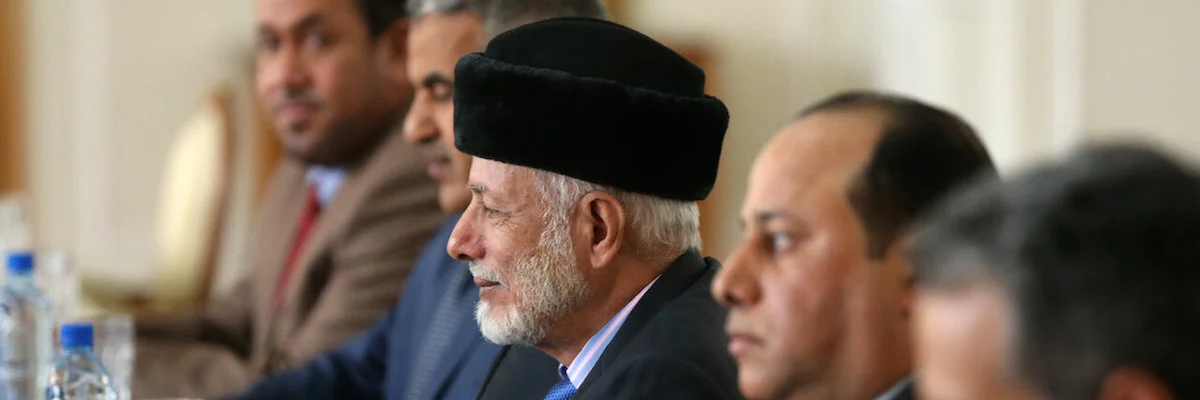
Meanwhile, the Saudi-led coalition that’s fought Iranian-backed Houthi rebels in Yemen since 2015 began releasing jailed Houthis, as efforts to end the conflict gather momentum. Oman is quietly hosting high-level meetings, according to people familiar with the matter, and even Iranian President Hassan Rouhani has hinted at direct channels with the U.A.E.
Spooked by the prospect of a catastrophic war with Iran and its proxy militias across the region, Gulf monarchies are in the midst of a strategic rethink. The U.A.E., whose economic model relies in large part on its international links, quickly realized it had most to lose from a military escalation. It had removed most of its troops from Yemen by the end of a turbulent summer that saw oil tankers targeted and a U.S. drone downed in the Gulf without significant American response.
While the humanitarian catastrophe unleashed by the Yemen war trained an unwelcome spotlight on Saudi Arabia, it took a brazen strike on Saudi oil installations—which knocked out half the country’s crude production—to ram home the risks and prove that Trump was not about to ride to his allies’ rescue.
“The attacks shattered any illusion of this magical U.S. security umbrella,” said David Roberts, an assistant professor at King’s College London who studies the Gulf. “It burst the bubble and showed that Iran had the willingness to both do something astonishing like the attack on Aramco facilities and the capability to carry it out.”
Iran denies U.S. and Saudi assertions it carried out the Sept. 14 strikes, pointing to Houthi claims of responsibility. But people familiar with investigations into the attacks say they were almost certainly launched from southwestern Iran -- an explosive escalation in Tehran’s pushback against an economic offensive unleashed by Trump and enthusiastically backed by the Saudis.
The Trump administration withdrew last year from the 2015 deal meant to prevent Iran from developing a nuclear bomb, and reimposed sanctions that have crippled its oil exports. But the “maximum pressure” policy is designed to coax Tehran into more concessions not to drag the U.S. into a new Middle East war just as it draws down troops in Syria.
Rolling back Shiite Muslim Iran’s power remains a priority for the Sunni Gulf Arab leadership. There’s an increasing recognition, however, that no one stands to gain from a military escalation in the world’s top oil-exporting region.
Saudi Arabia’s Center for International Communication didn’t respond to an email seeking comment. The U.A.E. declined to comment. But in a Nov. 10 speech, Minister of State for Foreign Affairs Anwar Gargash said he saw “a path to a deal with Iran that all parties might soon” be ready to embark on if Tehran demonstrated commitment.
War to ‘Cold Peace’
In search of a breakthrough, Pakistani Prime Minister Imran Khan, a former cricketer elected with the backing of a powerful army that provides extensive support for the Saudi military, shuttled between Tehran and Riyadh in October. He met Iran’s supreme leader, Ayatollah Ali Khamenei and Rouhani, as well as Saudi Arabia’s King Salman and Crown Prince Mohammad bin Salman, describing talks as “encouraging.”
Khan said he traveled at the request of Trump and Saudi Minister of State for Foreign Affairs Adel Al-Jubeir said the diplomacy wasn’t prompted by the kingdom. But deepening unease in the Persian Gulf catalyzed the effort.
Turning these overtures into lasting peace between countries that have grown further apart since the 1979 Iranian revolution remains far off.
The Gulf states resent Iran’s deep reach into Arab nations. While ongoing protests in Iraq and Lebanon suggest Iran has reached the limit of its regional influence, they are unlikely to reverse political and military advances decades in the making.
“Cold peace is possible but we are certainly far from a grand bargain,” said Afshin Molavi, senior fellow at the Foreign Policy Institute at Johns Hopkins. “For that, both Riyadh and Abu Dhabi would have to accept a role for Iran in Arab countries such as Iraq, Syria, Lebanon and Yemen.”
As they explore ways forward, Gulf states are moving at different speeds.
The U.A.E. broke with the U.S. and Saudi Arabia by not naming Iran as the culprit behind attacks in May and June on oil tankers as they sailed toward the Strait of Hormuz, the world’s foremost oil shipping chokepoint.
It sent coast guard officials to Iran for the first time in six years and Rouhani hinted at other meetings with senior U.A.E. officials. “We’re moving toward improved relations,” he said Oct. 14. Saudi Arabia is catching up.
Chokepoint
Washington built a multilateral naval operation to protect shipping in the Persian Gulf after the attacks and sent more troops to Saudi Arabia. Both actions resulted in a “down tick” in Iranian actions,” U.S. Defense Secretary Mark Esper said Nov. 13. “The Iranians should not mistake our restraint for weakness.”
Where the U.S. holds back, however, others are crowding in. Besides his role in saving Bashar al-Assad’s regime, Russian President Vladimir Putin has forged a partnership with Iran, created an oil alliance with Saudi Arabia and built ties with Egypt’s Abdel-Fattah El-Sisi, who was warned by the U.S. last month against plans to purchase Russian jets.
Putin traveled to Saudi Arabia and the U.A.E. in October after visits by the Saudi king and the U.A.E.’s de-facto leader Mohammad bin Zayed to Moscow. The two Gulf countries and Russia have signed deals valued at billions of dollars.
For Iran’s Rouhani, the case for regional engagement is obvious.
“Don’t you know that Iran is going to stay here and we will remain neighbors throughout history?” he has said, referring to Iran’s Arab neighbors. “Trump will only be around for a few years and will go back to whatever it was he was doing.”
Photo: IRNA
Iran Says Cooperation Plan Sent to Persian Gulf Neighbors
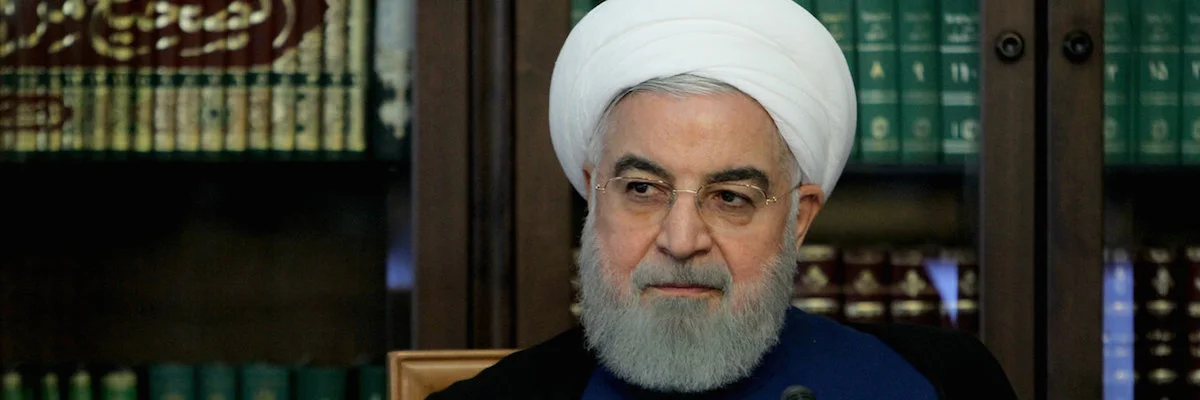
◢ Iran said Saturday it has sent Iraq and Arab states of the Persian Gulf the text of its security and cooperation project first unveiled by President Hassan Rouhani at the UN in September. Rouhani "sent the full text (of the initiative) to the heads" of the Gulf Cooperation Council and Iraq and "asked for their cooperation in processing and implementing it,” the foreign ministry said.
Iran said Saturday it has sent Iraq and Arab states of the Persian Gulf the text of its security and cooperation project first unveiled by President Hassan Rouhani at the UN in September.
Rouhani "sent the full text (of the initiative) to the heads" of the Gulf Cooperation Council and Iraq and "asked for their cooperation in processing and implementing it,” the foreign ministry said.
The GCC is a six-nation bloc that groups Saudi Arabia, the United Arab Emirates, Bahrain, Kuwait, Qatar and Oman.
Ties have been tense between Iran and GCC members Saudi Arabia and the UAEnited Arab Emirates, both allies of the United States and leading members of a military coalition battling Iran-backed Huthi rebels in Yemen.
In September, Rouhani proposed in a speech at the UN General Assembly a "Coalition for Hope" that would unite all regional countries in a pledge of non-aggression and non-interference in each others' affairs.
It came after a string of mysterious attacks on oil tankers in the Persian Gulf and Saudi oil installations, which the United States blamed on Tehran. Iran denied any involvement in the attacks.
"The security of the region shall be provided when American troops pull out," Rouhani said at the General Assembly.
"In the event of an incident, you and we shall not remain alone. We are neighbors with each other and not with the United States," he added.
Tensions between Tehran and Washington have escalated sharply since US President Donald Trump unilaterally withdrew last year from the 2015 Iran nuclear deal.
He has since reimposed unilateral sanctions as part of its "maximum pressure" campaign.
The arch-foes came to the brink of a military confrontation in June when Iran downed a US drone and Trump ordered retaliatory strikes before canceling them at the last minute.
Photo: IRNA
Iran Tells Oman Neighbors Have Made Talks Impossible
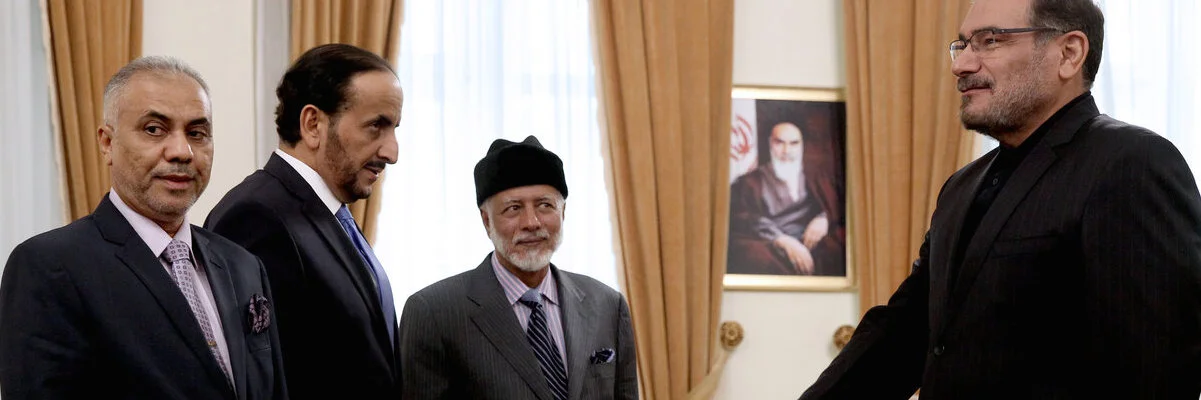
◢ Iran's neighbors have made talks impossible through their "hasty and arrogant moves", a top security official told Oman's foreign minister in Tehran on Saturday amid a tanker crisis. Oman, a past mediator between Iran and its foes, sent its top diplomat to the Islamic republic amid amplified tensions between Iran and the United States and its allies, including in the Persian Gulf.
Iran's neighbors have made talks impossible through their "hasty and arrogant moves", a top security official told Oman's foreign minister in Tehran on Saturday amid a tanker crisis.
Oman, a past mediator between Iran and its foes, sent its top diplomat to the Islamic republic amid amplified tensions between Iran and the United States and its allies, including in the Persian Gulf.
"Some of the region's countries have not only removed the possibility of talks because of hasty and arrogant moves and behavior, but have also made managing regional crises a serious challenge," said Rear Admiral Ali Shamkhani, secretary of Iran's Supreme National Security Council.
Shamkhani, who spoke after meeting with Omani Foreign Minister Yusuf Bin Alawi, also hit out at a British plan for a European coalition to escort tankers in the Gulf.
"Security measures for the region must use local capabilities and cooperation between regional countries, and foreign countries' interference will achieve nothing but increase problems", he said, quoted by the website of Iran's state television.
Tensions in the Gulf have soared since last year when President Donald Trump withdrew the United States from a landmark 2015 nuclear deal with Iran and reimposed sanctions on the country.
In retaliation, Iran said in May it would disregard certain limits the deal set on its nuclear programme and threatened to take further measures if remaining parties to the accord, especially European nations, did not help it circumvent US sanctions.
Tensions have escalated further in the region with a string of incidents involving tankers and drones.
The United States and Gulf powerhouse Saudi Arabia accused Iran of being behind multiple attacks on tankers in the Gulf in June, which Iran denies.
On July 19, a British-flagged tanker was impounded by Iran’s Revolutionary Guards with its 23 crew aboard in the Strait of Hormuz.
The seizure was seen by London as a tit-for-tat move for British authorities detaining an Iranian tanker off the UK overseas territory of Gibraltar in early July.
Shamkhani called on all countries to “respect international maritime law in order to maintain security”.
“In contrast to the British maritime piracy, who illegally detained an Iranian oil shipment in Gibraltar, Iran’s move was completely legal and was made in order to implement maritime rules and maintain maritime security,” he said.
Bin Alawi also held talks with Iran’s foreign minister, Mohammad Javad Zarif, in Tehran on Saturday.
Oman has called for the release of the UK-flagged Stena Impero and for London and Tehran to resolve their dispute diplomatically.
Photo: IRNA
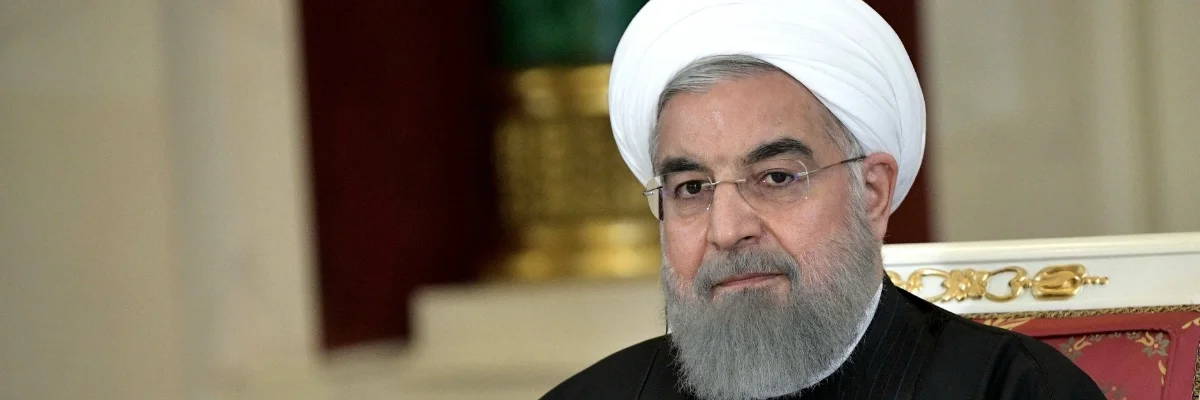
Rouhani Says Iran 'Ready' to Talk to Arab Neighbors
◢ President Hassan Rouhani on Wednesday said Iran is ready to discuss regional security issues with its Gulf Arab neighbors as long as foreign powers are kept out of any potential talks.
President Hassan Rouhani on Wednesday said Iran is ready to discuss regional security issues with its Gulf Arab neighbors as long as foreign powers are kept out of any potential talks.
"We don't need foreigners to guarantee the security of our region," Rouhani said in a speech broadcast on state television.
"When it comes to regional security arrangements, we are ready to talk to our neighbors and friends, without the presence of foreigners," he added.
"We are, have been and always will be good neighbors," Rouhani said, addressing Gulf Arab countries including Iran's regional rival Saudi Arabia.
Rouhani was speaking in the southern port city of Bandar Abbas overlooking the Gulf—a flashpoint of tensions between Iran and Saudi Arabia The two powers, who severed diplomatic ties in January 2016, have taken opposing sides in wars in Syria and Yemen.
Shiite-dominated Iran is the main regional backer of the government of Syrian President Bashar al-Assad against Sunni rebels supported by Saudi Arabia.
In Yemen, a Saudi-led coalition has been bombing since 2015 Iran-backed Shiite Huthi rebels opposed to the internationally recognized government.
Western powers and their Gulf Arab allies say Iran is a destabilizing influence in the Middle East. Tehran, however, has regularly called for dialogue with its neighbors free
of any foreign interference.
Rouhani's comments came a day after the United States and three European allies condemned Iran after the United Nations found Tehran had violated the arms embargo on Yemen by failing to block supplies of missiles and drones to Huthi rebels.
The condemnation came after Russia vetoed a British-drafted resolution renewing sanctions on Yemen and citing "particular concern" about a report's findings on Iran. Rouhani paid tribute to "Russia's just and intelligent stance".
Photo Credit: Russian MFA