
Iran President Makes Case for Talks as G7 Gambit Slammed
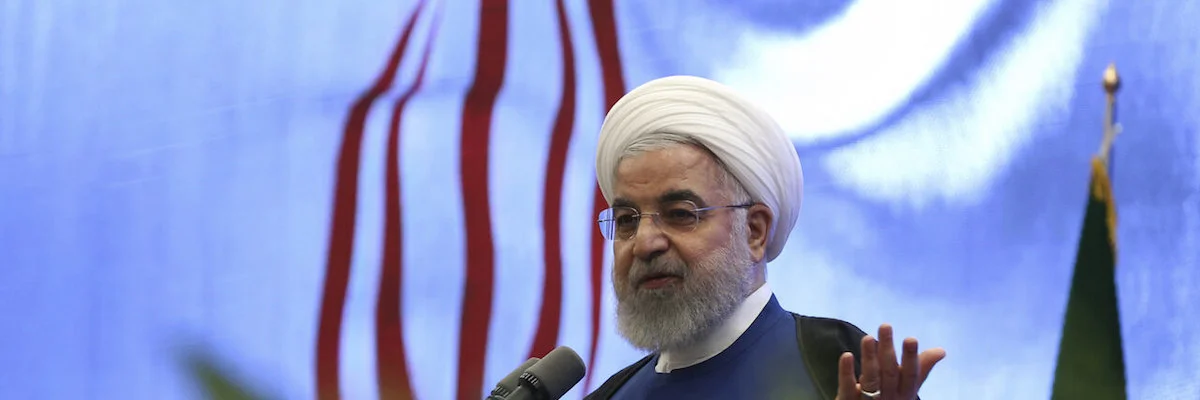
◢ Iran's President Hassan Rouhani came out strongly in favor of talks Monday as his top diplomat came under fire from ultra-conservative media for a surprise visit to a G7 summit. "I believe that for our country's national interests we must use any tool," Rouhani said in a speech aired live on state television.
By David Vujanovic
Iran's President Hassan Rouhani came out strongly in favor of talks Monday as his top diplomat came under fire from ultra-conservative media for a surprise visit to a G7 summit.
Foreign Minister Mohammad Javad Zarif flew in to the French seaside resort of Biarritz on Sunday for meetings on the sidelines of the G7 gathering.
"I believe that for our country's national interests we must use any tool," Rouhani said in a speech aired live on state television.
"And if I knew that I was going to have a meeting with someone that would (lead to) prosperity for my country and people's problems would be resolved, I would not hesitate.
"The main thing is our country's national interests," he said to a round of applause from those gathered at an event marking government achievements in rural areas.
Rouhani's remarks came as his government faced criticism over Zarif's visit to Biarritz at the invitation of French President Emmanuel Macron.
Macron has been leading diplomatic efforts to de-escalate tensions between Iran and its arch-enemy the United States.
Iran's economy has been battered by US sanctions imposed since last year when President Donald Trump unilaterally withdrew the United States from a landmark 2015 nuclear deal between the Islamic republic and world powers.
The ultra-conservative Kayhan newspaper strongly criticised Zarif's visit on Monday in an article that called the trip "improper".
Kayhan said the fact that the minister's visit was the second to France in a matter of days sent "a message of weakness and desperation".
"These improper measures are taken in the fantasy of an opening but it will definitely have no outcome other than more insolence and pressure," it added.
'Weakness and Desperation'
Supreme leader Ayatollah Ali Khamenei's representative in the Islamic Revolutionary Guards Corps also criticised engagement with Iran's foes.
Their "hostility and confrontation with the Islamic Revolution is endless and it cannot be resolved or reconciled through negotiation and dialogue," said Abdollah Haji-Sadeghi.
"We should not expect anything else but aggression, attacks, sedition and hostility" from the enemy, he was quoted as saying by the semi-official ISNA news agency.
The reformist Etemad newspaper, however, described Zarif's trip to France as "the most hopeful moment" for Iran in the 15 months since the US withdrew from the nuclear deal.
"Given Macron's attempts over the last two months, one can be hopeful that Trump's response to Macron's ideas has been the main reason for Zarif's... trip to Biarritz," it said.
The spike in tensions between Iran and the United States has threatened to spiral out of control in the past few weeks, with ships mysteriously attacked, drones downed and tankers seized.
Rouhani said his government was ready to use "both hands" of power and diplomacy.
"They may seize our ship somewhere... we will both negotiate... and we may seize their ship for legal reasons," he said, referring to an Iranian oil tanker seized off Gibraltar that has since been released and a British-flagged vessel still impounded by Iran in the Gulf.
"We can work with two hands... the hand of power and the hand of diplomacy," said the Iranian president.
"We must use both our power, our military and security power, economic and cultural power and our political power. We must negotiate. We must find solutions. We must reduce problems.
"Even if the probability of success... is 10 percent, we must endeavor and go ahead. We must not lose opportunities."
Photo: IRNA
Trump Switches Tone on Iran, Raising Hopes at G7
◢ US President Donald Trump said Monday that he had agreed to the Iranian foreign minister flying in for a G7 summit and insisted he was not seeking regime change in Tehran—a change of tone that could lower tensions. "I knew everything he (Macron) was doing and I approved everything he was doing," Trump said, adding that the French president "asked for my approval,”
By Sebastian Smith, Adam Plowright and Stuart Williams
US President Donald Trump said Monday that he had agreed to the Iranian foreign minister flying in for a G7 summit and insisted he was not seeking regime change in Tehran—a change of tone that could lower tensions.
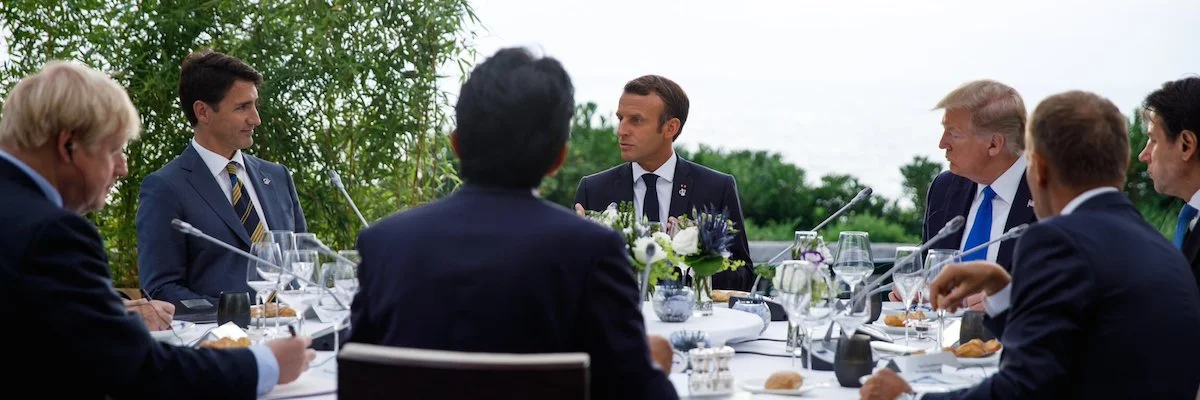
Mohammad Javad Zarif made a surprise appearance at the summit in Biarritz on Sunday for talks with French President Emmanuel Macron, who is seeking to broker a deal between Iran and the United States.
Zarif also met with French and other European diplomats, but Trump said it was "too soon" for him to meet Zarif.
"I knew everything he (Macron) was doing and I approved everything he was doing," Trump said, adding that the French president "asked for my approval.”
In early August, Trump lambasted Macron for sending "mixed signals" on Iran, and at the end of July the US administration imposed sanctions on Zarif.
Trump has put in place a policy of "maximum pressure" on Tehran over its disputed nuclear programme via crippling sanctions that are seen as raising the risk of conflict in the Middle East.
The US president unilaterally pulled out of a landmark 2015 international deal that placed limits on Tehran's nuclear activities in exchange for trade, investment and sanctions relief.
"I believe that for our country's national interests we must use any tool," Iran's President Hassan Rouhani said of his top diplomat's Biarritz visit in a speech aired live on state television on Monday.
But hardliners criticised the initiative, with the ultra-conservative Kayhan newspaper saying the trip was "improper" and sent "a message of weakness and desperation."
Some analysts also cautioned against optimism about Macron's mediation efforts.
"There is considerable room between what President Trump says and what he thinks one day, and what he says and thinks the next," Robert Malley, head of the International Crisis Group, told AFP.
Photo: Elysée
Europe Has Dug In Against Trump’s Iran ‘Maximum Pressure’ Campaign
◢ President Donald Trump wants America’s closest allies to ratchet up the pressure on Iran. But this weekend in France he’ll find they’re still reluctant to join him. Divisions over Iran will be on full display when Trump meets his European peers at a Group of Seven meeting starting Saturday in the coastal city of Biarritz.
By Nick Wadhams
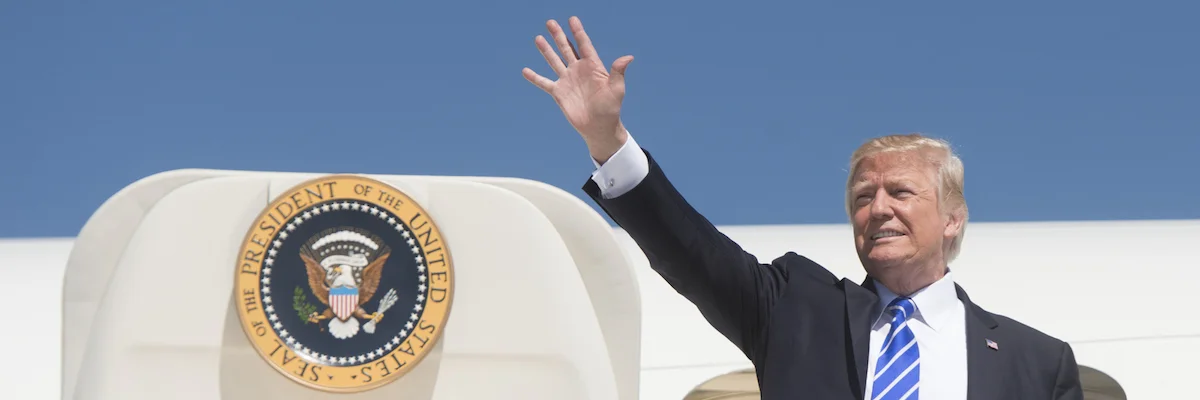
President Donald Trump wants America’s closest allies to ratchet up the pressure on Iran. But this weekend in France he’ll find they’re still reluctant to join him.
Divisions over Iran will be on full display when Trump meets his European peers at a Group of Seven meeting starting Saturday in the coastal city of Biarritz. While the agenda will focus on the global economy, the most pressing security challenge will be navigating the wreckage of Trump’s decision last year to abandon the 2015 deal constraining Tehran’s nuclear program.
Even with Iran downing an American drone and being accused of a spate of tanker attacks in the Persian Gulf, European nations want to preserve the Joint Comprehensive Plan of Action they say kept a rein on Iran’s nuclear program. But they’ve failed to find a way to help Tehran get the economic benefits promised under the deal. Iran is desperate to get its oil back on world markets, but that’s a non-starter for the U.S.
No compromise has emerged.
The Iran debate—and the distrust it has fueled—reflects the strains between the U.S. and Europe in the Trump era: displeasure over his maximalist approach, umbrage over his scorn for allies and, beneath it all, wariness about his intentions. In the case of Iran, allies can’t shake the suspicion that Trump, or his more hawkish advisers, want to provoke a war, no matter his insistence otherwise.
“I’ve heard several folks in Europe say, ‘Look, all of us were serving as diplomats during the Iraq War, so we’ve seen the beginnings of this movie before and we’re not going to get dragged into it again,”’ said Ellie Geranmayeh, a senior policy fellow at the European Council on Foreign Relations. “The Europeans will not want to side with the administration on issues that could lead to military conflict.”
The president hasn’t laid the groundwork for a productive summit. He’s arriving in France on the warpath over trade, allied contributions to NATO and a self-inflicted feud with Denmark over what appeared at first to be a joke: a suggestion the U.S. buy Greenland.
Trump’s best shot at winning some European support will come by working his personal rapport with U.K. Prime Minister Boris Johnson. The two unconventional leaders will meet for breakfast on Sunday, and Johnson may want to straddle European backing for the JCPOA with the need to keep Trump on his side for an eventual trade deal following Brexit.
A U.S. official, who asked not to be identified discussing internal deliberations, said the administration is “optimistic” that Johnson could bring the U.K. closer to the U.S. position on isolating Iran.
A U.K. official, speaking on condition of anonymity, pushed back on expectations that Johnson could be swayed. The new prime minister doesn’t want to rock the boat for French President Emmanuel Macron, who is the host of the G-7, the official said. The U.K. is sticking to its support for the nuclear deal.
But that too has its dangers. One person familiar with the White House thinking on the matter, who also asked not to be identified, said the administration realizes it needs to be careful calibrating its attitude toward Johnson, who may be wary of being seen as too close to Trump ahead of a possible election later this year.
“The president wants to give Boris Johnson a big boost -- he sees Johnson as Britain’s Trump, a like-minded model,” said Heather Conley, director of the Europe Program at the Center for Strategic and International Studies in Washington. “The challenge is Boris Johnson is winding up for an election and he’s got to walk a very fine line on what the domestic instinct is toward Trump.”
U.S. officials are playing down the disagreements between Washington and European capitals, arguing that all sides agree on the threat posed by Iran’s sponsorship of terrorist groups, its development of ballistic missiles and its attacks on tanker traffic around the Strait of Hormuz.
‘Tactical Disagreements’
“We have had tactical disagreements but there isn’t any disagreement on end states,” Brian Hook, the State Department’s Iran envoy, told Bloomberg TV on Aug. 21. “We share the same threat assessment. The Islamic Republic of Iran is the principle driver of instability in today’s Middle East.”
Anxiety is growing in Europe about a growing list of Iranian violations of the 2015 nuclear accord, which the Islamic Republic had obeyed until Trump quit the deal. Angry that the Europeans haven’t been able to deliver economic benefits in defiance of Trump’s sanctions, Iran now has exceeded enriched-uranium limits set by the agreement and is threatening further violations if Europe doesn’t find a way around the American restrictions.
Zarif’s Diplomacy
Iranian Foreign Minister Javad Zarif—who was recently sanctioned by the U.S.—will be in France ahead of the summit on Friday to urge the Europeans to stick to the nuclear deal.
According to press reports and a person familiar with Emmanuel Macron’s thinking, the French president is also circulating a proposal under which the U.S. would ease some restrictions on Iranian oil exports in exchange for the start of a diplomatic dialogue.
U.S. officials say Iran would need to make far bigger concessions for them to entertain such an offer. The idea flies in the face of the administration’s approach, which is to keep ramping up its “maximum pressure” campaign, under the belief that sanctions will so ruin Iran’s economy that its leaders will have no choice but to negotiate.
Two recent cases show just how different the U.S. and European approaches to Iran have become, and how wary U.S. allies are in being associated with the Trump administration’s stance.
Gibraltar Court
The U.K. rebuffed a demand from the White House to keep holding an Iranian oil tanker laden with $130 million in crude allegedly bound for Syria in Gibraltar. A court in the territory deemed it could no longer keep the ship after Iran offered assurances it wouldn’t go to Syria.
Senior U.S. officials had conveyed “grave disappointment” over the decision to let the tanker go, even raising the possibility that an eventual U.S.-U.K. trade deal might be in jeopardy. The Justice Department filed a complaint aimed at blocking the ruling. But the Grace 1—renamed the Adrian Darya 1—left as planned.
Even more embarrassing to the U.S. has been Europe’s shunning of the plan the Americans call Project Sentinel—a bid to protect ships passing through the Strait of Hormuz. In July, the U.K. signed up but was careful to portray its participation as a European-led initiative that was getting help from—and not being led by—the U.S. France and Germany flatly refused to join, leaving the U.S. with two partners: Australia and the U.A.E.
“It’s absolutely necessary to keep the Gulf open, but the fact that they won’t do it tells you something about how toxic President Trump is in European politics,” said Nicholas Burns, a former senior State Department official and professor at the Harvard Kennedy School. “The Europeans don’t trust that Trump will keep his word that he won’t attack Iran.”
Photo: White House
Macron Meets Iran FM to Push for G7 Detente
◢ French President Emmanuel Macron was to hold talks Friday with Iran's foreign minister ahead of a G7 meeting where he will attempt to soothe tensions between Tehran and Washington at what risks being a stormy summit. "We're at a critical moment," Macron warned on Wednesday, acknowledging that Iran is "laying out a strategy for exiting the JCPOA," the name of the 2015 accord reining in the country's nuclear ambitions.
By Valérie Leroux
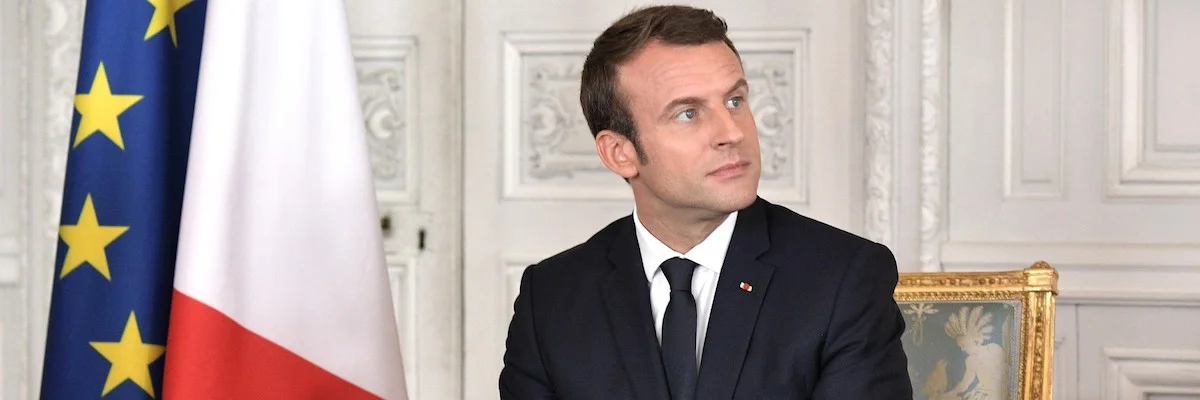
French President Emmanuel Macron was to hold talks Friday with Iran's foreign minister ahead of a G7 meeting where he will attempt to soothe tensions between Tehran and Washington at what risks being a stormy summit.
"We're at a critical moment," Macron warned on Wednesday, acknowledging that Iran is "laying out a strategy for exiting the JCPOA," the name of the 2015 accord reining in the country's nuclear ambitions.
He admitted this week there were "true disagreements" over Iran within the G7 club of rich nations, which are meeting in France this weekend.
But Macron said he would "try to propose things" in the talks with Foreign Minister Mohammad Javad Zarif at the Elysee Palace in Paris on Friday.
Tensions have soared in recent months over Iran's disputed nuclear programme, with both Tehran and Washington claiming to have shot down rival drones in the Mideast.
Iran has also locked horns with Britain, with Iran's Revolutionary Guards seizing a British tanker in July after Britain detained an Iranian tanker off Gibraltar.
France has stepped up its outreach to Iran's President Hassan Rouhani, with Macron twice dispatching his diplomatic advisor Emmanuel Bonne to Tehran in recent months.
"President Rouhani instructed me to go and meet with President Macron (to see) whether we can finalise some of these proposals in order to be able to have everybody comply with their obligations under the JCPOA," Zarif said in Norway on Thursday.
"It's an opportunity to review the proposal by President Macron and to present the views of President Rouhani and see if we can find more common ground. We already have some common ground."
But the nuclear deal has all but collapsed after US President Donald Trump pulled the US out unilaterally in May 2018 and re-imposed sanctions that have wreaked havoc on the Iranian economy.
The European signatories vowed to find a workaround and have implored Tehran to respect the deal nonetheless.
But in July, it announced its nuclear programme would no longer be bound by some of the deal's key restrictions.
"They can be reversed as soon as Europe comes into compliance with its own obligations under the JCPOA," Zarif said Thursday.
Maximum Pressure
Macron's diplomacy is a delicate task, with France seeking a rollback on some of the US measures imposed on Iran as part of Trump's "maximum pressure" policy towards the Islamic republic.
French diplomats have raised the idea of US waivers on sanctions affecting Iranian oil exports to India and China, or a new credit line for Tehran that could help the struggling economy.
US President Donald Trump has accused Macron of sending Tehran "mixed signals", a charge rejected by the French government, which says its role is "to make every effort to ensure that all parties agree to a break and open negotiations."
On a host of issues, G7 members France, the United States, Canada, Britain, Germany, Italy and Japan find themselves at loggerheads, upending what used to be a cosy club of rich nations.
Trump left the last summit in Quebec in June 2018 accusing his host, Canadian Prime Minister Justin Trudeau, of being "very dishonest and weak".
The US leader is set to arrive for the French summit in the town of Biarritz on Saturday already riled by a new French law that will increase taxes on US internet giants such as Google and Facebook.
Trump is also threatening tariffs on the European automobile sector, while the climate change sceptic is not expected to contribute to Macron's official agenda of fighting global warming.
The fierce fires devouring thousands of acres in the Brazil's Amazon rainforest could spark further disputes, with both Macron and German Chancellor Angela Merkel saying the crisis demands a collective G7 response.
That garnered a furious response from Brazilian President Jair Bolsonaro—often called "South America's Trump"—who denounced any such G7 talks on the fires a display as "colonialist mentality."
Faced with the multiple G7 divisions, French officials have scrapped the idea of a final joint statement -- seen as an admission of the summit's lowered ambitions.
Photo: Wikicommons