
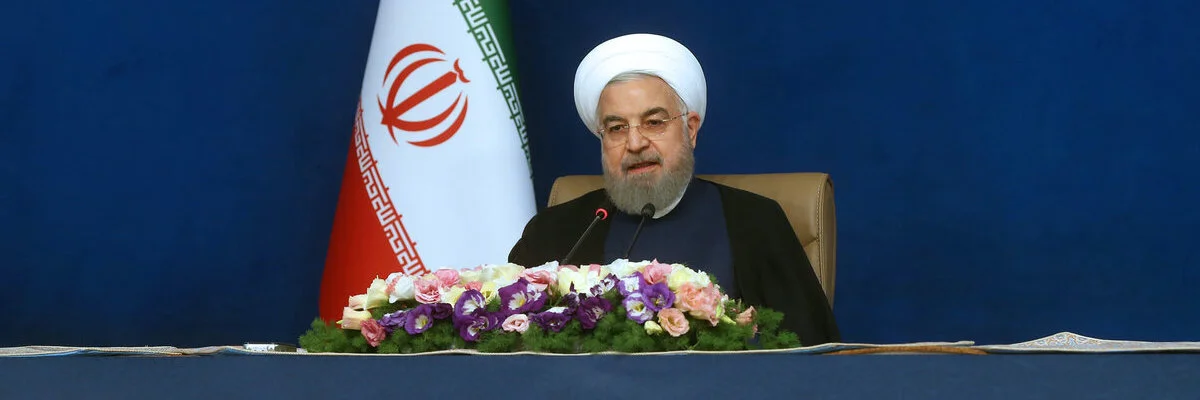
Iran Says 1,044 Centrifuges Active at Underground Plant
The head of Iran's atomic agency said Sunday that 1,044 centrifuges were active at the Fordow uranium enrichment plant, in line with steps to reduce its commitments to the nuclear deal.
The head of Iran's atomic agency said Sunday that 1,044 centrifuges were active at the Fordow uranium enrichment plant, in line with steps to reduce its commitments to the nuclear deal.
The suspension of all enrichment at the underground facility near the Shiite holy city of Qom was one of the restrictions on Iran's nuclear activities that it accepted in return for the lifting of international sanctions in the 2015 landmark accord.
Tehran first announced the resumption of enrichment at Fordow last November, the fourth phase of its push since May 2019 to progressively suspend commitments to the deal.
It was in retaliation to Washington's abandonment of the accord in May 2018 followed by its unilateral reimposition of sanctions.
“Currently 1,044 centrifuges are enriching at Fordow," Ali Akbar Salehi, the head of Iran's atomic agency, told the Iranian parliament's news agency ICANA.
"We were committed in the JCPOA that these 1,044 machines do not carry out enrichment, but it is being done per dropped commitments as much as needed and we will stockpile the enriched material, too," he added, referring to the accord's official name, the Joint Comprehensive Plan of Action.
Iran's other walk-back steps included exceeding the accord's restrictions on enriched uranium reserves and enrichment level, development of advanced centrifuges, and foregoing a limit on its number of centrifuges.
In a joint statement in November, Britain, France, Germany and the European Union said Iran's decision to restart activities at Fordow was "inconsistent" with the 2015 deal.
The parties to the accord have called on Iran to return to its commitments, but Tehran insists the steps can be reversed once its economic benefits from the deal are realized.
The United Nation's nuclear watchdog said on September 4 that Iran's stockpile of enriched uranium now stands at more than ten times the limit set down in the 2015 deal.
Photo: IRNA
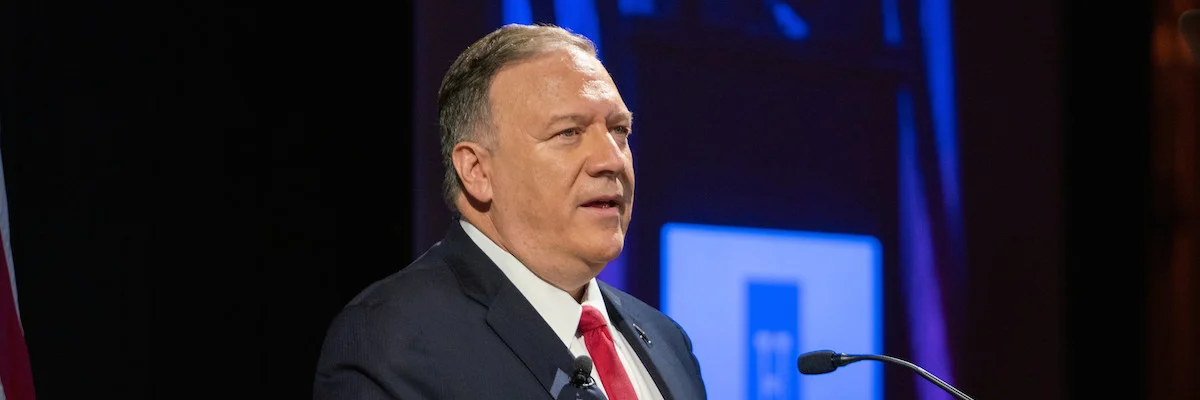
US Ends Sanction Waivers for Iran's Fordow Nuclear Plant
◢ The United States announced Monday it would halt sanctions waivers for Iran's Fordow plant, likely ending a key component of a landmark nuclear deal after Tehran said it had resumed enrichment activities. US waivers remain in place for other nuclear sites including Bushehr, a nuclear power plant off the Gulf coast being developed with Russia under safeguards.
By Shaun Tandon
The United States announced Monday it would halt sanctions waivers for Iran's Fordow plant, likely ending a key component of a landmark nuclear deal after Tehran said it had resumed enrichment activities.
Piling pressure as protests hit Iran, the move is intended to discourage work led by Russia's state-owned nuclear company Rosatom at the once-secret site, which was supposed to be transformed into a civilian research center under the 2015 agreement.
Secretary of State Mike Pompeo pointed to Iranian President Hassan Rouhani's announcement of renewed activity at Fordow—one of a series of steps taken by Tehran as it presses Europeans to make good on sanctions relief promised for compliance.
"Therefore the United States will terminate the sanctions waiver related to the nuclear facility at Fordow effective December 15, 2019," Pompeo told a news conference.
"The right amount of uranium enrichment for the world's largest state sponsor of terror is zero," Pompeo said.
"There is no legitimate reason for Iran to resume enrichment at this previously clandestine site. Iran should reverse its activity there immediately," he said.
President Donald Trump last year withdrew from the denuclearization accord and reimposed sweeping sanctions on Iran, aiming to inflict economic pain and reduce the Shiite clerical regime's influence in Arab countries.
But the Trump administration has still granted waivers to let other nations implement the nuclear deal, which was negotiated under former president Barack Obama, without facing penalties in the United States.
Critics of Trump have said that the waivers proved the administration saw the benefits of the deal, which sharply expanded access for international inspectors. Iran had been in compliance before the US withdrawal.
US waivers remain in place for other nuclear sites including Bushehr, a nuclear power plant off the Gulf coast being developed with Russia under safeguards.
Hawkish Republicans have been pressing on Pompeo to end the waivers. Senator Tom Cotton praised the decision as he pointed to the weekend protests in Iran over gas price hikes.
"The mullahs are playing with atoms in an underground bunker at Fordow instead of helping their own people, who are demonstrating in the street," he tweeted.
Latest Step by Iran
Iran, which insists its nuclear program is exclusively peaceful, has taken a series of measures that fall well short of developing a nuclear weapon but are meant to put pressure on European powers.
The UN's nuclear watchdog said Monday that Iran's stock of heavy water for reactors had crossed the level agreed upon in the 2015 accord for the first time.
Iran's stock of heavy water—which can be used to produce plutonium for nuclear weapons as an alternative to enriched uranium—was 131.5 tons, above the 130-ton limit, said a spokesperson for the agency in Vienna.
At Fordow, Iran said it began feeding uranium hexafluoride gas into mothballed enrichment centrifuges.
Britain, France, Germany and the European Union said Iran's decision was "inconsistent" with the nuclear deal.
Iran has accused European nations of hypocrisy over the nuclear deal and also attacked the United States for its statements of support for protesters.
Major roads have been blocked, banks torched and shops looted since Friday's abrupt hike in gas prices.
Pompeo again voiced solidarity with the protesters, saying: "The world's watching."
"The Iranian people will enjoy a better future when their government begins to respect basic human rights, abandons its revolutionary posture and its destabilizing foreign policy in the region, and behaves simply like a normal nation," he said.
Photo: State Department
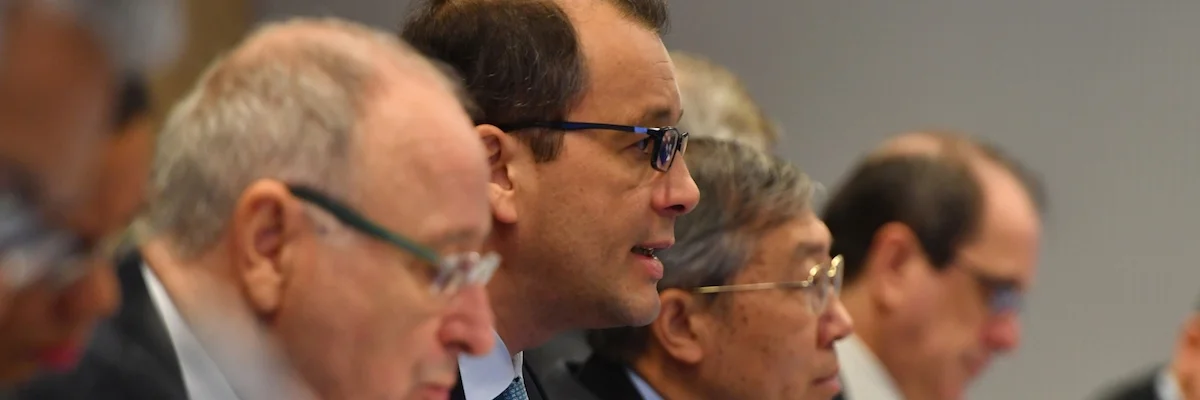
Iran Nuclear Crisis Escalates With New Inspections Report
◢ Iran accused an international atomic monitor of setting off explosives detectors at its main enrichment plant, ratcheting up tensions that threaten to tip the nation into a new nuclear crisis. The IAEA inspector triggered alarms during routine screening on Oct. 28 at Iran’s Natanz enrichment facility, Ambassador Gharib Abadi said at a briefing in Vienna.
By Jonathan Tirone
Iran accused an international atomic monitor of setting off explosives detectors at its main enrichment plant, ratcheting up tensions that threaten to tip the nation into a new nuclear crisis.
The International Atomic Energy Agency inspector triggered alarms during routine screening on Oct. 28 at Iran’s Natanz enrichment facility, Ambassador Gharib Abadi said at a briefing in Vienna. The IAEA recalled the inspector after she was questioned by Iranian authorities over traces of explosives detected in her handbag.
The IAEA refuted the charge. “The agency does not agree with Iran’s characterization of the situation involving the inspector, who was carrying out official safeguards duties,” it said in an email. Iran shouldn’t have delayed her departure, the agency said.
The Iranian allegation was made shortly after IAEA officials said Iran had failed to cooperate with its probe into radioactive samples discovered at a site identified by Israel.
“There were suspicious materials involved in this incident,” Abadi said. “Iran expects the necessary level of cooperation during the investigation.” U.S. ambassador to the IAEA, Jackie Wolcott, called the detention of the monitor for questioning an “outrageous and unwarranted act of intimidation,” according to a statement.
The agency’s top inspector, Massimo Aparo, had told diplomats in a closed-door meeting in Vienna on Wednesday that Iran is evading attempts to discover the source of man-made and natural uranium particles detected at a warehouse in Tehran earlier this year, according to two officials familiar with the briefing who asked not to be identified.
New Front
IAEA acting director General Cornel Feruta convened an extraordinary meeting of the 35-member board of governors Thursday to discuss the new concerns. The Romanian diplomat said only last month that Iran had taken “a step in the right direction” in attempting to clarify matters troubling inspectors.
“Iran should provide full and timely cooperation,” the IAEA said in an emailed statement. “The IAEA is ready to continue interactions with Iran with a view to resolving the matter as soon as possible.”
The findings threaten to open a new front in the tense confrontation that has erupted over Iran’s nuclear program since the U.S. withdrew from the multi-power nuclear deal with Tehran last year and reimposed punishing economic sanctions. Iran, which has vowed to return to the nuclear deal once the U.S. does the same, this week announced it would begin enriching uranium at Fordow, a fortified site built into the side of a mountain.
European signatories say they remain committed to the nuclear accord but have struggled to devise a mechanism that wouldn’t expose European companies to penalties if they trade with the Islamic Republic.
Secretary of State Mike Pompeo on Thursday urged the world to address what he called Iran’s nuclear “extortion.”
Safeguards Obligations
The IAEA has satellite images showing that the Turquz-Abad site where the particles were found was cleared out after Israeli Prime Minister Benjamin Netanyahu presented documents that Mossad spies smuggled out of a secret warehouse in Tehran. Those files allegedly show Iran lied about a weapons project that operated until 2003, and then intensified efforts to hide its atomic archive after agreeing to the 2015 nuclear accord. Iran denies its nuclear program is aimed at producing weapons.
The U.S. is expected to press European allies that remain committed to the pact to support authorizing IAEA inspectors to broaden their investigation, according to the diplomats. That effort would be led by Argentina’s Rafael Grossi, who’ll replace Feruta as director general next month.
The suggestion that Iran could be providing incomplete information has potentially serious consequences. The entire international apparatus of rules that the IAEA enforces is based on verifying the correctness and completeness of nations’ declared nuclear material and nuclear-related activities.
The IAEA’s board referred Iran to the United Nations Security Council in 2006 for failing to fulfill safeguards obligations. The council then imposed crippling international sanctions that were only lifted after the 2015 agreement was agreed.
Photo: IAEA
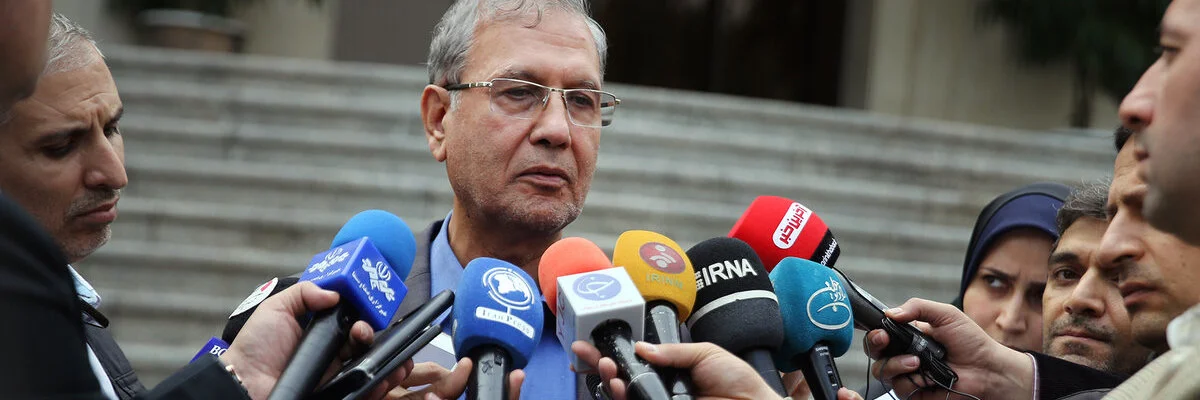
Iran Begins Fordow Enrichment in Major Nuclear Deal Rollback
◢ Iran has begun the process of enriching uranium at its Fordow research plant, in the most dramatic rollback of its commitments under its unraveling nuclear deal with world powers. About 2,000 kilograms of uranium hexafluoride gas were brought to the facility on Wednesday, under the watch of the IAEA.
By Yasna Haghdoost
Iran has begun the process of enriching uranium at its Fordow research plant, in the most dramatic rollback of its commitments under its unraveling nuclear deal with world powers.
About 2,000 kilograms (4,400 pounds) of uranium hexafluoride gas were brought to the facility on Wednesday, under the watch of the International Atomic Energy Agency, a United Nations watchdog, Iranian state news agencies reported.
By Saturday, the level of uranium enrichment will reach 4.5%, according to Behrouz Kamalvandi, the spokesperson for the Atomic Energy Organization of Iran. The organization also said that last week it prevented a UN inspector from entering the Natanz testing facility, another uranium enrichment site, because she was carrying “suspicious material” that had set off alarms.
The renewed activities at Fordow will add to a stockpile of enriched uranium that has already exceeded caps.
“The decision to expand nuclear activities at Fordow is Iran’s most serious violation of the nuclear deal to date,” Eurasia Group said in a report. “Iran’s latest violation represents a significant escalation, not a continuation of incremental steps away from its nuclear commitments.”
Even so, the work at Fordow doesn’t mark a qualitative leap because Iran has already been enriching to 4.5%. That’s above the 3.67% purity level set down in the deal, but far from the 90% needed for weapons, or the 20% level required for research reactors.
Tehran began gradually retreating from the 2015 accord after U.S. President Donald Trump unilaterally withdrew from the agreement last year and reimposed crippling sanctions, rendering the pact barely functional. European signatories say they remain committed, but have struggled to devise a mechanism that wouldn’t expose European companies to U.S. penalties if they trade with the Islamic Republic.
While Iran acknowledges it’s breached limits set under the pact, it rejects that it has violated the accord. That’s because the document allows participants to cease meeting commitments “in whole or in part” in the event of an unresolved dispute. Tehran argues that Europe has an obligation to help it avoid the new U.S. penalties.
The standoff over the deal has provoked tit-for-tat attacks on Gulf oil facilities, drones and shipping traffic that has raised fears of a new military confrontation in the Middle East.
Photo: IRNA
Iran Says to Resume Enrichment at Underground Plant
◢ President Hassan Rouhani said Tuesday that Iran would resume uranium enrichment at an underground plant south of Tehran in its latest step back from a troubled 2015 agreement with major powers. The suspension of all enrichment at the Fordow plant in the mountains near the Shiite holy city of Qom was one of the restrictions in the JCPOA.
President Hassan Rouhani said Tuesday that Iran would resume uranium enrichment at an underground plant south of Tehran in its latest step back from a troubled 2015 agreement with major powers.
The suspension of all enrichment at the Fordow plant in the mountains near the Shiite holy city of Qom was one of the restrictions on its nuclear activities that Iran accepted in return for the lifting of international sanctions.
But Washington's abandonment of the deal in May last year followed by its reimposition of crippling sanctions prompted Iran to begin a phased suspension of its own commitments in May this year.
Rouhani recalled that under the terms of the agreement Iran had retained more than 1,000 centrifuges at the plant which had been running empty since it went into effect.
"Starting from tomorrow (Wednesday), we will begin injecting (uranium hexafluoride) gas at Fordo," Rouhani said in a speech broadcast by state television.
His announcement came a day after tensions flared anew on the 40th anniversary of the US embassy siege and hostage crisis, with thousands in Tehran taking to the streets and Washington imposing fresh sanctions.
Iran said the resumption of enrichment at Fordow would be carried out transparently and witnessed by inspectors from the UN nuclear watchdog, the International Atomic Energy Agency.
But Russia, which has close ties with Iran, expressed concern about the latest move.
"We are monitoring the development of the situation with concern," President Vladimir Putin's spokesman Dmitry Peskov told reporters.
"We support the preservation of this deal."
At the same time, Peskov said Moscow understood Tehran's concerns over the "unprecedented and illegal sanctions" imposed by Washington.
The move is the fourth announced by Iran since it began responding to Washington's abandonment of its commitments.
'Committed to Negotiations'
Iran has repeatedly warned the remaining parties to the deal—Britain, China, France, Germany and Russia—that the agreement can only be rescued if they help it circumvent US sanctions.
European governments have strived to come up with a mechanism that would allow foreign firms to continue to do business with Iran without incurring US penalties.
But to Iran's mounting frustration, their efforts have so far failed to have any significant impact.
Rouhani stressed that Iran remained committed to efforts to save the 2015 agreement despite its phased suspension of some of its commitments.
"The fourth phase, like the three previous ones, is reversible," he said.
"We are committed to all the behind-the-scenes negotiations we have with some countries for a solution.
"Over the next two months, we will negotiate more."
Rouhani said Iran wanted to return to a situation in which "we can easily sell our oil, we can easily use our money in banks."
If that were achieved, "we will completely go back to the previous situation."
The European Union warned Monday that its continued support for the deal depended on Tehran fulfilling its commitments.
Maja Kocijancic, spokeswoman for EU diplomatic chief Federica Mogherini, said the bloc "remains committed" to the deal but "our commitment... depends on full compliance by Iran".
"We have continued to urge Iran to reverse such steps without delay and to refrain from other measures that would undermine the nuclear deal."
On July 1, Iran said it had increased its stockpile of enriched uranium to beyond a 300-kilo maximum set by the deal, and a week later, it announced it had exceeded a 3.67-percent cap on the purity of its uranium stocks.
On September 7, it fired up advanced centrifuges to boost its enriched uranium stockpiles.
On Monday, Iran announced a more than tenfold increase in enriched uranium production as a result of the steps back from the nuclear deal it had already undertaken.
Enriched uranium production has reached five kilogrammes per day, Ali Akbar Salehi, the head of Iran's Atomic Energy Organisation, told reporters.
That compares with the level of 450 grams two months ago.
Photo: IRNA
U.S. to Extend Most Key Waivers Linked to Iran's Nuclear Program
◢ The Trump administration will renew several key waivers that allow Iran to keep operating a limited civilian nuclear program. The U.S. is extending waivers that the administration had previously granted allowing nations that remain in the deal to engage in nonproliferation activities and nuclear research at three sites—Fordow, Bushehr and Arak.
The Trump administration will renew several key waivers that allow Iran to keep operating a limited civilian nuclear program, a move that heads off a clash with European allies and Tehran over the fate of a 2015 deal that Trump abandoned last year.
The U.S. is extending waivers that the administration had previously granted allowing nations that remain in the deal to engage in nonproliferation activities and nuclear research at three sites—Fordow, Bushehr and Arak—without facing sanctions, Assistant Secretary of State Christopher Ford said Friday. Instead of granting the waivers for 180 days, the administration will shorten their term to 90 days.
Two other waivers, allowing Iran to ship surplus heavy water to Oman and to ship out any enriched uranium that exceeds the 300 kilogram limit in exchange for natural, or “yellowcake” uranium, will be revoked. Those were allowed under the Joint Comprehensive Plan of Action, the 2015 accord that President Donald Trump withdrew from a year ago.
“We are tightening restrictions on Iran’s nuclear program as part of our pressure campaign,” Brian Hook, the State Department’s special representative for Iran, said in an interview. “Iran cannot have any path to a nuclear weapon."
Photo: IRNA
Fresh U.S. Divide on Iran Emerges Over Expiring Nuclear Waivers
◢ A fresh divide is emerging between some Trump administration officials and hard-line opponents of Iran in the Senate over how far to go in the White House’s “maximum pressure” campaign against the Islamic Republic. In a letter to President Donald Trump this week, a group of Republican senators demanded that Secretary of State Michael Pompeo stop letting Iran continue its limited civilian nuclear research program.
A fresh divide is emerging between some Trump administration officials and hard-line opponents of Iran in the Senate over how far to go in the White House’s “maximum pressure” campaign against the Islamic Republic.
In a letter to President Donald Trump this week, a group of Republican senators demanded that Secretary of State Michael Pompeo stop letting Iran continue its limited civilian nuclear research program.
At issue are three waivers the Trump administration granted after it withdrew from the 2015 nuclear deal last year. They allow Iran to work with nations that remain in the deal at three sites—Fordow, Bushehr and Arak—to ensure it doesn’t seek to enrich uranium to high levels. It’s part of an effort to limit the risk of nuclear weapons proliferation.
In their April 9 letter to Trump, six Republican senators including Ted Cruz of Texas, Tom Cotton of Arkansas and Marco Rubio of Florida argued that the administration shouldn’t extend the waivers when they expire in early May.
“There is extensive evidence Iran channeled its nuclear weapons program through civil nuclear projects after 2003,” the senators wrote in the letter seen by Bloomberg News. They urged the president to “finally end all U.S. implementation” of the 2015 deal, known as the Joint Comprehensive Plan of Action.
Bolton Versus Pompeo
The nuclear exceptions are up for renewal even as the administration must weigh extending waivers that allow a select group of governments to keep buying Iranian oil without facing sanctions.
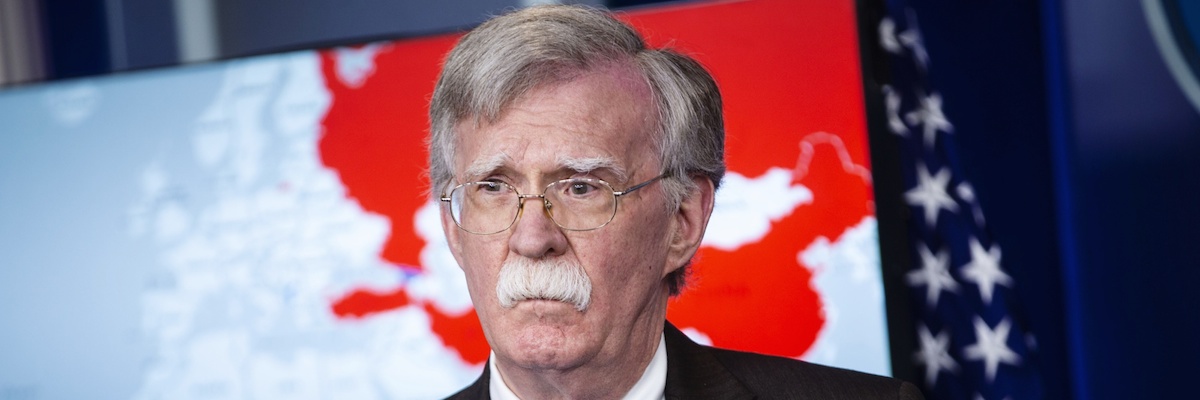
Some within the administration, including National Security Advisor John Bolton, have argued those waivers also should be revoked. On the other side is Pompeo -- normally seen as among the toughest Trump aides on Iran -- whose State Department advisers have argued that the exceptions fit broader U.S. interests including keeping oil markets stable.
The fight over both sets of waivers has exposed a rare division between hard-line and harder-line opponents of Tehran. This week the Trump administration designated the Islamic Revolutionary Guard Corps, an elite branch of Iran’s military, as a foreign terrorist organization.
But that move didn’t quell growing irritation among some of Trump’s allies that the president has continued to let Iran get limited benefits from the Obama-era nuclear agreement.
With the 2020 U.S. presidential election approaching, advocates of an even tougher approach are pushing for a complete collapse of the deal that allies including the U.K., Germany and France have struggled to keep alive.
Cruz pressed Pompeo on the issue at a hearing of the Senate Foreign Relations Committee on Wednesday, telling him that extending the waivers “could further Iran acquiring nuclear weapons.”
“‘Maximum pressure’ should be ‘maximum pressure,”’ Cruz said.
Pompeo demurred, saying the decision hadn’t been made yet. He left open the possibility that the waivers could be extended.
“I’d love to talk to you in a classified setting about it—it’s complicated,” Pompeo said. On Cruz’s contention that t people in the State Department continue to resist Trump’s desire to kill the nuclear deal, Pompeo said, “We’ve got 90,000 employees, probably that many opinions.”
‘End All’
Two people familiar with the administration’s thinking, who asked not to be identified discussing private deliberations, said they expect the nuclear waivers to be renewed. One of the people said Republican senators are still weighing how hard to fight Trump and Pompeo on the matter, including whether to hold up administration nominees unless the waivers are scrapped.
A spokesman for Cruz wouldn’t rule out the possibility.
“The Trump administration should end all implementation of the deal, including the nuclear and oil waivers the State Department has been issuing, and Senator Cruz will use all options available to him to push the administration to do so,” Billy Gribbin said.
Views on extending the nuclear waivers vary among experts on Iran’s nuclear program. David Albright, president of the Institute for Science and International Security, argues that the waiver governing the Bushehr nuclear complex on the Persian Gulf should be extended because it allows Iran to buy uranium to power its reactor rather than enriching it on its own.
Weapons-Grade Uranium
But Albright says the Fordow waiver is more complicated because of information that came out after Israel exposed Iran’s nuclear archive last year. That data showed Iran had built Fordow, near the holy city of Qom, solely to make weapons-grade uranium, he said.
“The U.S. position should be that Fordow be shut down,” Albright said in an interview. “It was part of nuclear weapons program and it’s being preserved for a nuclear weapons program.”
Former Obama administration officials who helped craft the Iran deal said revoking the nuclear waivers would do the opposite of what the administration seeks by only adding to risk that Iran could build a nuclear weapon.
“It’s insane from a nonproliferation perspective,” said Jarrett Blanc, a senior fellow at the Carnegie Endowment for International Peace and a former State Department coordinator for Iran nuclear implementation. “Deciding to throw that away because you need the next drumbeat of antagonism toward Iran is nuts.”
Photo Credit: Bloomberg
US Issues Waivers to Allow Iran Deal to Continue
◢ The United States said Monday it was issuing waivers to allow the continuation of a nuclear deal with Iran, after declaring the agreement a disaster and slapping sweeping sanctions. Hours after sanctions went into effect that ban most trade with Iran, the State Department said it was exempting projects set up through the 2015 nuclear deal negotiated under former president Barack Obama.
The United States said Monday it was issuing waivers to allow the continuation of a nuclear deal with Iran, after declaring the agreement a disaster and slapping sweeping sanctions.
Hours after sanctions went into effect that ban most trade with Iran, the State Department said it was exempting projects set up through the 2015 nuclear deal negotiated under former president Barack Obama.
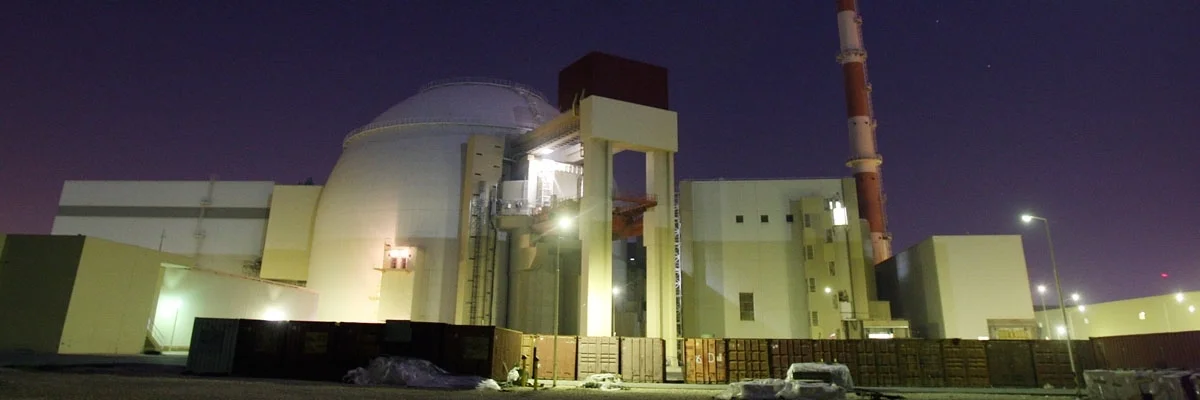
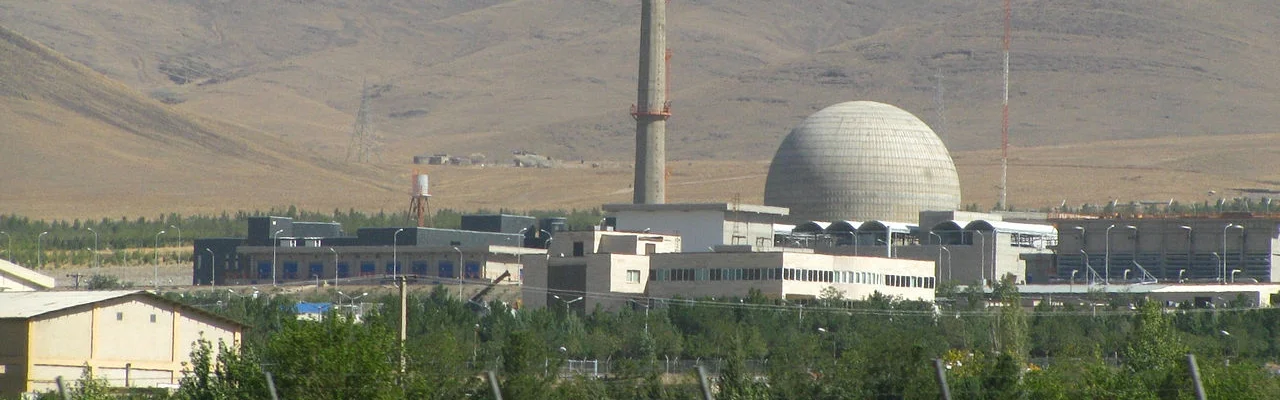
The international activities at Bushehr, Iran's only nuclear power station, as well as the Fordow enrichment plant and the Arak heavy water reactor will be allowed "to continue under the strictest scrutiny to ensure transparency and maintain constraints on Iran," the State Department said in a statement.
"This oversight enhances our ability to constrain Iran's program and keep pressure on the regime while we pursue a new, stronger deal," it said.
The State Department said the waivers were "temporary," without specifying a timeframe, and "conditional on the cooperation of the various stakeholders."
The 2015 agreement promised that world powers would assist Iran in developing civilian nuclear energy—the clerical regime's stated goal for its atomic program.
Russia has supplied fuel for the Bushehr reactor. The Arak site, which could eventually be used to produce plutonium, is being redesigned under the deal to ensure it does not, with spent fuel to be shipped out.
Russia is also working with Iran on isotope production at Fordow to ensure that the site works toward medical purposes rather than uranium enrichment.
The other parties to the deal—Britain, China, France, Germany and Russia along with the European Union—say that the accord remains in force and is working, noting that UN inspectors report that Iran has complied.
President Donald Trump has called the agreement a "disaster" and, as of Monday, the United States will sanction countries and companies that do business with Iran or buy its oil.
Secretary of State Mike Pompeo said Monday the United States wants Iran to undertake a "180-degree" change that includes cutting off support for regional proxies such as Hezbollah and ending missile tests.
Photo Credit: Wikicommons