
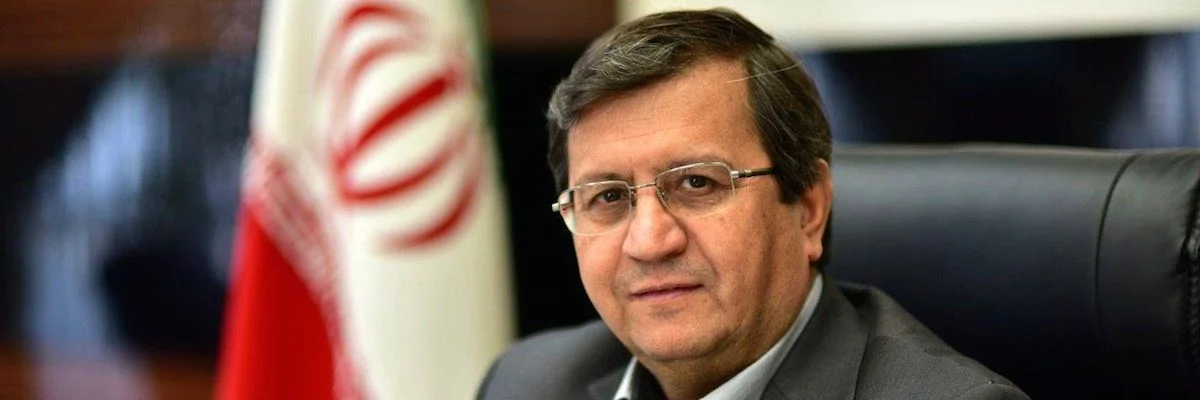
Iran to Merge Five Financial Lenders Linked With Military
◢ Iran will merge five lenders linked with military institutions into state-run Bank Sepah amid a wider push by President Hassan Rouhani for the armed forces to divest from businesses. The entities being consolidated include Ansar Bank, Ghavamin Bank, Hekmat Iranian Bank, Mehr Eqtesad and the Kowsar financial credit institution, the Central Bank of Iran said in a report on its website Saturday.
Iran is combining six local banks as President Hassan Rouhani looks to curb the military’s role in the economy and bolster the country’s financial industry.
State-run Bank Sepah will take over five lenders linked with the security forces—Ansar Bank, Ghavamin Bank, Hekmat Iranian Bank, Mehr Eqtesad and the Kowsar financial credit institution. This is “an important step with a view to maintaining stability and the health of the banking system,” Iran’s central bank said on its website Saturday.
With the economy under strain after the re-imposition of U.S. sanctions, the merger is a step forward for Rouhani in his efforts to reduce the security forces’ footprint. The Revolutionary Guard Corps, a powerful military organization, controls local businesses in industries ranging from energy and telecommunications to infrastructure.
“By consolidating these banks, it becomes easier for the central bank to enforce regulations on investment activities and financial transparency,” said Esfandyar Batmanghelidj, founder of Bourse & Bazaar, a news website that tracks Iran’s economy. It’s “a positive development that reflects the serious debate taking place in Iran about the perils of mixing money and politics.”
The central bank has also been calling for a number of lenders to merge with healthier ones to clean up the industry and help tackle a high ratio of bad loans.
Iran is making less headway on Rouhani’s efforts to implement legislation to counter terrorism funding and money laundering.
The measures are urgently needed to keep Iran off the Paris-based Financial Action Task Force’s blacklist. The European Union said it expected Iran to follow through on its plans when the bloc launched the INSTEX special investment vehicle. INSTEX is a new payments arrangement that the U.K., France and Germany opened on Jan. 31 to help continue trade with Iran without running afoul of U.S. sanctions.
Hardliners in Iran have been mounting a media campaign against the FATF measures, likening them to a capitulation to the West similar to the 2015 nuclear agreement.
Nuclear Deal
Rouhani championed Iran’s negotiations with world powers that culminated in the deal, which lifted some sanctions on the Islamic Republic in return for restrictions on its enrichment program. Domestic critics warned at the time that no good could come from engagement with the US, a view they say was vindicated by President Donald Trump’s decision to withdraw from the accord and reimpose sanctions last year.
On Saturday the Discernment and Expediency Council—a top consultative body that resolves political disputes and is appointed by Supreme Leader Ayatollah Ali Khamenei—said it had failed, for a fourth time, to reach an agreement over whether to approve the FATF legislation. Rouhani is himself a member of the council but wasn’t present at the meeting.
The council said there’s no plan to discuss the issue again until after the end of the Persian new year break in early April, keeping the law in limbo for at least another month, according to the state-run Islamic Republic News Agency.
‘10 or 20 People’
Rouhani has rebuked the council and other unelected legal bodies for holding back policy by monopolizing the decision-making process. According to the president, Khamenei has said repeatedly that he doesn’t oppose the legislation.
“The country can’t be in the hands of 10 or 20 people and then claim that every decision they make is ours,” Rouhani said in a speech last week. “The decision maker in this country is either the government, parliament or the supreme leader.”
Photo Credit: IRNA

Iran Foreign Minister Zarif Announces Resignation on Instagram
◢ Iranian Foreign Minister Mohammad Javad Zarif, who was the lead negotiator in the 2015 nuclear deal, announced his resignation on Instagram on Monday, which can only take effect once President Hassan Rouhani accepts it. "I apologize for my inability to continue serving and for all the shortcomings during my term in office," Zarif said in a message posted on his verified Instagram account.
Iranian Foreign Minister Mohammad Javad Zarif, who was the lead negotiator in the 2015 nuclear deal, announced his resignation on Instagram on Monday, which can only take effect once President Hassan Rouhani accepts it.
"I apologize for my inability to continue serving and for all the shortcomings during my term in office," Zarif said in a message posted on his verified Instagram account.
Zarif thanked Iranians and "respected officials" for their support "in the last 67 months".
The resignation of Iran's top diplomat was confirmed by an informed source, however Rouhani's chief of staff strongly denied reports that the president had accepted Zarif's resignation in a tweet.
The resignations happened hours after a surprise visit by Syrian President Bashar Al-Assad to Tehran. However, according to the semi-official ISNA News Agency, Zarif was not present at any of Assad's meetings with Iran's supreme leader Ayatollah Ali Khamanei and Rouhani.
Prominent members of parliaments immediately called for Rouhani not to accept the resignation.
"Undoubtedly the Iranian people, government and state will not benefit from this resignation," said Mostafa Kavakebian, a reformist MP.
“A great majority of MPs demand that the president never accept this resignation," he said in a tweet.
The head of parliament's influential national security and foreign policy commission told ISNA how a planned trip to Geneva with Zarif on Monday afternoon had been cancelled at the last minute with no explanation.
Under Pressure
"I suddenly got a text message saying the trip has been cancelled," Heshmatollah Falahatpisheh told ISNA, adding that this was not the first time Zarif had resigned but "that he has done so publicly this time means that he wants the president to accept it this time."
Zarif, 59, has served as Rouhani's foreign minister since August 2013 and has been under constant pressure and criticism by hardliners who opposed his policy of détente with the west.
His standing within Iran's political establishment took a hit when the US withdrew from the nuclear deal in May 2018 and the deal's achievements became less and less clear as Iran's economy nosedived.
Zarif was blamed by ultra-conservatives for negotiating a bad deal that had not gained anything meaningful for Iran for all the concessions it had made in its nuclear program.
The faceoff between the minister and his critics only intensified as time passed, with Zarif saying his main worry throughout the nuclear talks had been from pressure from inside Iran.
"We were more worried by the daggers that were struck from behind than the negotiations," he told a local newspaper on February 2.
"The other side never managed to wear me down during the negotiations... but internal pressure wore me down both during and after the talks," he said.
The latest point of contention between Zarif and hardliners was the implementation of the Financial Action Task Force's requirements regarding money laundering in Iran.
The rift on the issue pitched the government and the parliament against supervisory councils.
On Sunday, ISNA reported that Zarif had warned the Expediency Council, an arbitration body tasked with solving such impasses, that it should "understand the consequences of its decision."
He was immediately attacked by the ultra-conservatives who deemed what Zarif had said as a threat.
Photo Credit: Hadi Zand, ISNA
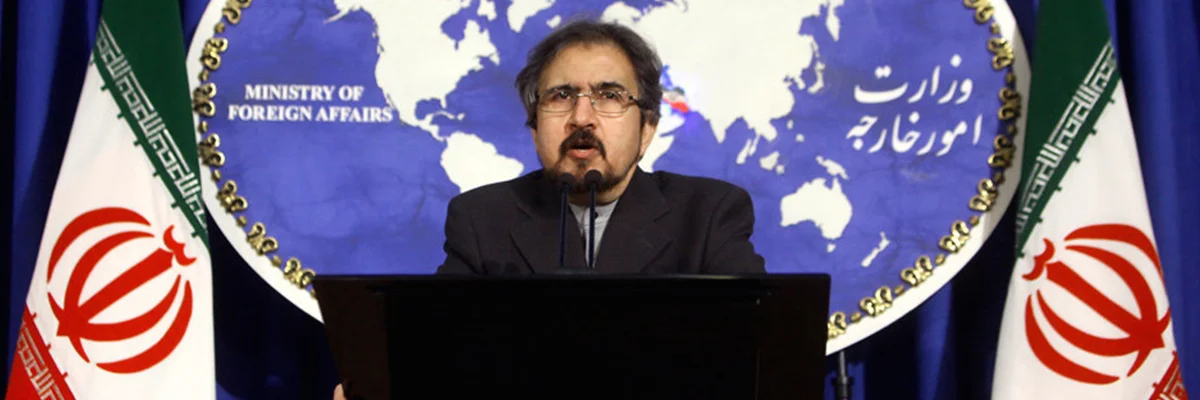
Iran Rejects EU Trade, Anti-Money Laundering Link
◢ Iran on Tuesday ruled out linkage between a new EU mechanism to trade with Tehran bypassing US sanctions and an anti-money laundering bill. “Linking implementation of this mechanism... with the requirements of institutions such as the FATF is unacceptable," the foreign ministry said, referring to the international Financial Action Task Force.
Iran on Tuesday ruled out linkage between a new EU mechanism to trade with Tehran bypassing US sanctions and an anti-money laundering bill.
“Linking implementation of this mechanism... with the requirements of institutions such as the FATF is unacceptable," the foreign ministry said, referring to the international Financial Action Task Force.
Iran is on an FATF blacklist drawn up to counter money laundering and the financing of terrorist groups, but the Paris-based organization has suspended counter-measures since 2017 while Tehran works on reforms.
EU leaders on Monday welcomed the bloc's new mechanism to trade with Iran but warned Tehran over its ballistic missile program and regional policies while calling for it to implement reforms to comply with FATF demands.
Britain, France and Germany created the system last week to allow firms to trade with Iran without falling foul of US sanctions.
The foreign ministry, in its statement, welcomed the EU's "positive stances" but also criticized the bloc's warnings on its missile program and its regional policies.
"Iran's defense activities... are merely defensive, deterrent and a domestic matter that has never been on the agenda of our negotiations with other countries," it said.
"Raising such issues under current regional circumstances and clear threats against the national security of the Islamic Republic of Iran is not constructive," the ministry said.
It urged European countries "to take a realistic look at regional incidents and issues and not to be influenced" by the United States.
Brussels, for its part, hopes the special payment mechanism for trade with Iran—registered under the name INSTEX—will help save the 2015 nuclear deal between Tehran and major powers.
Washington has reimposed sanctions after President Donald Trump last year quit the accord which lifted the measures in exchange for curbs on Iran's nuclear program.
Iran has welcomed INSTEX as a "first step", while US officials have said it would not affect its efforts to exert economic pressure on Tehran.
Photo Credit: IRNA
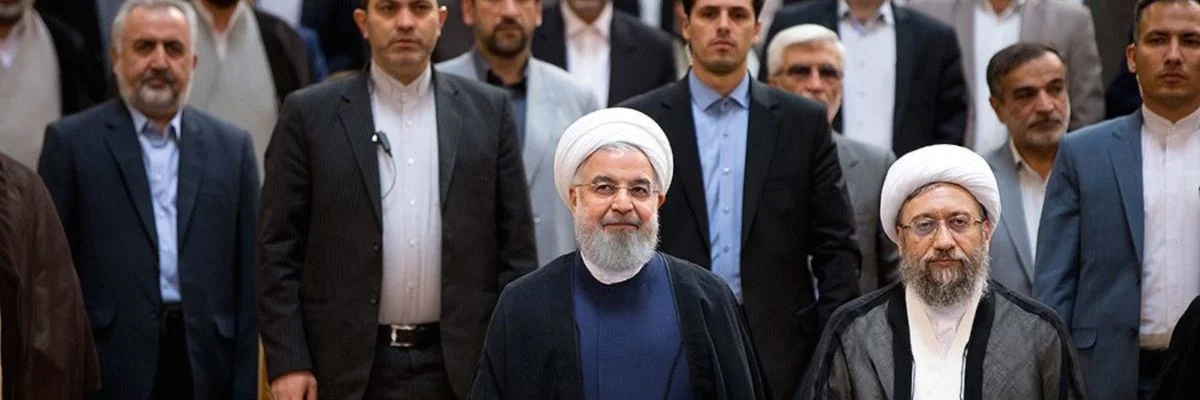
Iran Approves Anti-Money Laundering Bill
◢ An Iranian arbitration body gave its approval on Saturday to an anti-money laundering bill seen as crucial to maintaining international trade and banking ties, the official IRNA news agency reported. "The bill on amending the law to counter money laundering was approved with certain changes and will be sent to the parliament speaker to be communicated to the government," Expediency Council member Gholamreza Mesbahi-Moghadam told IRNA.
An Iranian arbitration body gave its approval on Saturday to an anti-money laundering bill seen as crucial to maintaining international trade and banking ties, the official IRNA news agency reported.
"The bill on amending the law to counter money laundering was approved with certain changes and will be sent to the parliament speaker to be communicated to the government," Expediency Council member Gholamreza Mesbahi-Moghadam told IRNA.
The Expediency Council settles disputes between parliament, which approved the bill last year, and the conservative-dominated Guardian Council, which vets all legislation and had rejected it.
Conservatives have argued that new legislation on money laundering and terrorist financing will provide Western powers with leverage over Iran's economy and how it funds regional allies such as Lebanon's Hezbollah.
But the government of President Hassan Rouhani says the laws are needed to meet demands set by by the international Financial Action Task Force (FATF), which monitors countries' efforts to tackle financial crime.
Iran is alone with North Korea on the FATF's blacklist—although the Paris-based organization has suspended counter-measures since June 2017 while Iran works on reforms.
The FATF will meet again in February to discuss Iran's progress.
The government is hoping to salvage banking and trade ties after the United States walked out of a landmark 2015 nuclear deal between major powers and Iran and reimposed crippling unilateral sanctions.
The other parties to the deal—Britain, France, Germany, China and Russia—have sought to salvage the agreement and maintain trade with Iran, but have called on Tehran to meet FATF requirements.
The anti-money laundering bill is one of four pieces of legislation put forward by the government to that end.
A previous bill on the mechanics of monitoring and preventing terrorist financing was signed into law in August.
Two others—allowing Iran to join UN conventions against terrorist-financing and organized crime—have been approved by parliament but are still being delayed by higher authorities, including the Guardian Council.
The Expediency Council currently has 38 members, all appointed by supreme leader Ayatollah Ali Khamenei.
Photo Credit: Fars

Iran Judiciary Criticizes Money Laundering Claims
◢ Iran's judiciary chief said Monday that government officials must not make accusations of vast money-laundering operations by powerful institutions, which could be exploited by the enemy. The criticism followed statements by Foreign Minister Mohammad Javad Zarif to the Khabar Online news agency last week in which he said: "Money laundering is a reality in our country, and a lot of people are benefitting from it."
Iran's judiciary chief said Monday that government officials must not make accusations of vast money-laundering operations by powerful institutions, which could be exploited by the enemy.
The criticism followed statements by Foreign Minister Mohammad Javad Zarif to the Khabar Online news agency last week in which he said: "Money laundering is a reality in our country, and a lot of people are benefitting from it."
Zarif said "thousands of billions" of rials were being laundered by unnamed organizations in Iran, and that these groups were behind efforts to block new laws against money laundering and terrorist financing.
"If there is huge money laundering in the country, why did you not report this to the judiciary?" said Sadegh Larijani, judiciary chief, in a speech on Monday, according to the semi-official ISNA news agency.
"The enemy's best tool is economic pressure... In such a situation officials are expected not to make two-sided statements that could be misused by the enemy," he added, without naming Zarif.
The government introduced four new laws this year aimed at meeting demands set by the Financial Action Task Force (FATF), which monitors global efforts to counter money laundering and terrorist financing.
Conservatives groups have attacked the bills, saying they would undermine Iran's ability to support allied militant groups in the region, such as Lebanon's Hezbollah.
But Zarif said wealthy groups were also involved because they opposed greater financial transparency.
"There are special interests behind some of these concerns and propaganda,"
he said.
"I don't aim to pin this to any certain organization, but those places that do launder thousands of billions are certainly financially capable of spending a few hundred billion on propaganda and psychological operations in the country," he added.
Larijani hit back on Monday, saying: "The authorities should not say things that drop like a dagger into the heart of the system."
Iran is alone with North Korea on the FATF blacklist, but the Paris-based organization has suspended counter-measures since June 2017 while it works on reforms.
One bill on the mechanics of monitoring and preventing terrorist financing was signed into law in August.
The remaining three have been approved by parliament but have been held up by higher authorities that oversee legislation.
Photo Credit: IRNA
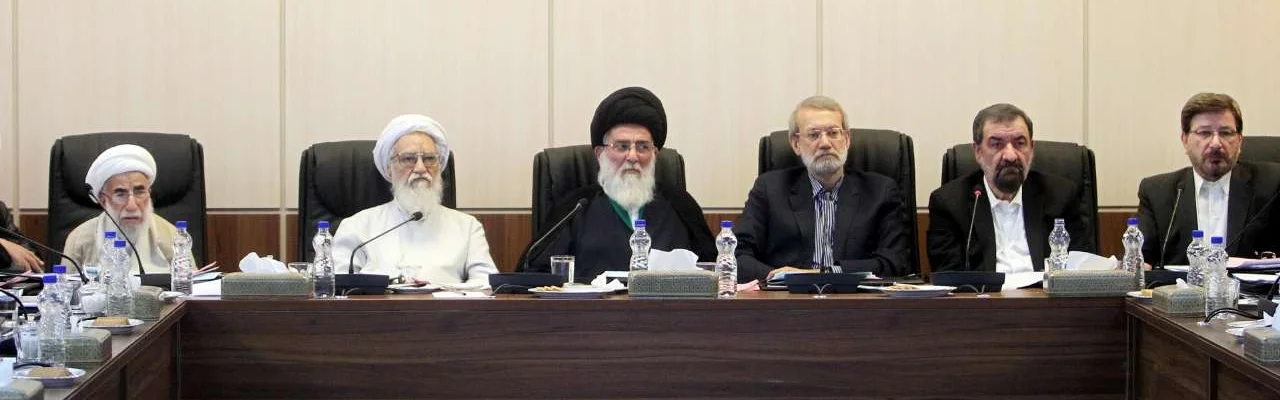
Iran Guardian Council Rejects Terror Financing Bill
◢ Iran's powerful Guardian Council on Sunday rejected a bill on joining the UN convention against terrorist financing seen as crucial to maintaining trade and banking ties with the world. The conservative-dominated council, which oversees legislation passed by the parliament, said aspects of the bill were against Islamic law and the constitution and sent it back to lawmakers for revision.
Iran's powerful Guardian Council on Sunday rejected a bill on joining the UN convention against terrorist financing seen as crucial to maintaining trade and banking ties with the world.
The conservative-dominated council, which oversees legislation passed by the parliament, said aspects of the bill were against Islamic law and the constitution and sent it back to lawmakers for revision.
"The Guardian Council has in several sessions reviewed the bill... and it has considered it to have flaws and ambiguities," wrote spokesman Abbas Ali Kadkhodaie on Twitter.
The bill, narrowly passed by parliament on October 7, is one of four put forward by the government of President Hassan Rouhani in order to meet demands set by the international Financial Action Task Force (FATF), which monitors countries' efforts to tackle money-laundering and terrorist financing.
Many hawks in Iran say the laws would limit the country's ability to support "resistance groups" such as Lebanon's Hezbollah and Palestinian Hamas by bringing greater transparency to its accounts.
But Rouhani's government argues it is particularly vital after the United States walked out of the 2015 nuclear deal and reimposed sanctions.
The other parties to the deal—Britain, France, Germany, China and Russia—have sought to salvage the agreement and maintain trade with Iran, but have demanded that it accede to the FATF.
Iran is alone with North Korea on the FATF, although the Paris-based organisation has suspended counter-measures since June 2017 while Iran works on reforms.
Last month, the FATF gave Iran another extension to February to update its laws.
"Neither I nor the president can guarantee that all problems will go away if we join (the UN convention), but I guarantee that not joining will provide the US with more excuses to increase our problems," said Iran's Foreign Minister Mohammad Javad Zarif during the parliament debate last month.
A previous bill on the mechanics of monitoring and preventing terrorist financing was signed into law in August.
But two others—on money-laundering and organized crime—have also been delayed by higher authorities, including the Guardian Council, after being approved by parliament.
The council is made up of six clerics appointed by supreme leader Ayatollah Ali Khamenei and six lawyers appointed by the judiciary.
Photo Credit: IRNA

FATF Grants Key Extension for Iran Financial Reforms
◢ The Financial Action Task Force has granted Iran until February to complete necessary reforms in the area of anti-money laundering and combating financing of terrorism. In a statement issued following the conclusion of the group’s plenary meeting in Paris, the FATF announced that it had “decided at its meeting this week to continue the suspension of counter-measures.”
The Financial Action Task Force has granted Iran until February to complete necessary reforms in the area of anti-money laundering and combating financing of terrorism. In a statement issued following the conclusion of the group’s plenary meeting in Paris, the FATF announced that it had “decided at its meeting this week to continue the suspension of counter-measures.”
The move will be seen as a victory by reform-minded bankers and politicians in Iran, who have battled fierce domestic opposition and foreign skepticism to push through critical legislation required by the FATF action plan.
The United States, which recently took over the presidency of the FATF, had been pushing aggressively for Iran to be returned to the so-called “blacklist.” Senior Republican lawmakers had recently written to President Trump to ask him to ensure Iran would not be able to earn a clean bill of health from the FATF.
But European resistance, motivated in part by a desire to avoid politicizing the evaluations of the global body, helped ensure a fairer assessment of Iran’s technical progress on its action plan.
Despite the extension, Iran will continue to face pressure to complete its reforms. In its statement, the FATF expressed, “its disappointment that the majority of the Action Plan remains outstanding and expects Iran to proceed swiftly in the reform path.”
The group’s statement identifies nine items that remain to be addressed. At a minimum, by February of next year, “the FATF expects Iran to have brought into force the necessary legislation in line with FATF standards” in order for counter-measures to remain suspended.
The full statement follows below:
In June 2016, the FATF welcomed Iran’s high-level political commitment to address its strategic AML/CFT deficiencies, and its decision to seek technical assistance in the implementation of the Action Plan. Given that Iran provided that political commitment and the relevant steps it has taken, the FATF decided in June 2018 to continue the suspension of counter-measures.
In December 2017, Iran established a cash declaration regime. Since June 2018, Iran has enacted amendments to its Counter-Terrorist Financing Act and Parliament has passed amendments to its AML law and bills to ratify the Palermo and TF Conventions. The FATF notes the progress of the legislative efforts. As with any country, the FATF can only consider fully enacted legislation. Once the remaining legislation is fully in force, the FATF will review this alongside existing enacted legislation to determine whether the measures contained therein address Iran’s Action Plan, in line with the FATF standards.
Iran’s action plan expired in January 2018. In October 2018, the FATF noted that the following items are still not completed and Iran should fully address its remaining items, including: (1) adequately criminalising terrorist financing, including by removing the exemption for designated groups “attempting to end foreign occupation, colonialism and racism”; (2) identifying and freezing terrorist assets in line with the relevant United Nations Security Council resolutions; (3) ensuring an adequate and enforceable customer due diligence regime; (4) ensuring the full independence of the Financial Intelligence Unit and requiring the submission of STRs for attempted transactions; (5) demonstrating how authorities are identifying and sanctioning unlicensed money/value transfer service providers; (6) ratifying and implementing the Palermo and TF Conventions and clarifying the capability to provide mutual legal assistance; (7) ensuring that financial institutions verify that wire transfers contain complete originator and beneficiary information; (8) establishing a broader range of penalties for violations of the ML offense; and (9) ensuring adequate legislation and procedures to provide for confiscation of property of corresponding value.
The FATF decided at its meeting this week to continue the suspension of counter-measures. However, the FATF expresses its disappointment that the majority of the Action Plan remains outstanding and expects Iran to proceed swiftly in the reform path to ensure that it addresses all of the remaining items by completing and implementing the necessary AML/CFT reforms. By February 2019, the FATF expects Iran to have brought into force the necessary legislation in line with FATF standards, or the FATF will take further steps to protect against the risks emanating from deficiencies in Iran’s AML/CFT regime. The FATF also expects Iran to continue to progress with enabling regulations and other amendments.
Iran will remain on the FATF Public Statement until the full Action Plan has been completed. Until Iran implements the measures required to address the deficiencies identified in the Action Plan, the FATF will remain concerned with the terrorist financing risk emanating from Iran and the threat this poses to the international financial system. The FATF, therefore, calls on its members and urges all jurisdictions to continue to advise their financial institutions to apply enhanced due diligence, including obtaining information on the reasons for intended transactions, to business relationships and transactions with natural and legal persons from Iran, consistent with FATF Recommendation 19.
Photo Credit: IRNA
Iran Parliament Passes Counter-Terror Finance Bill
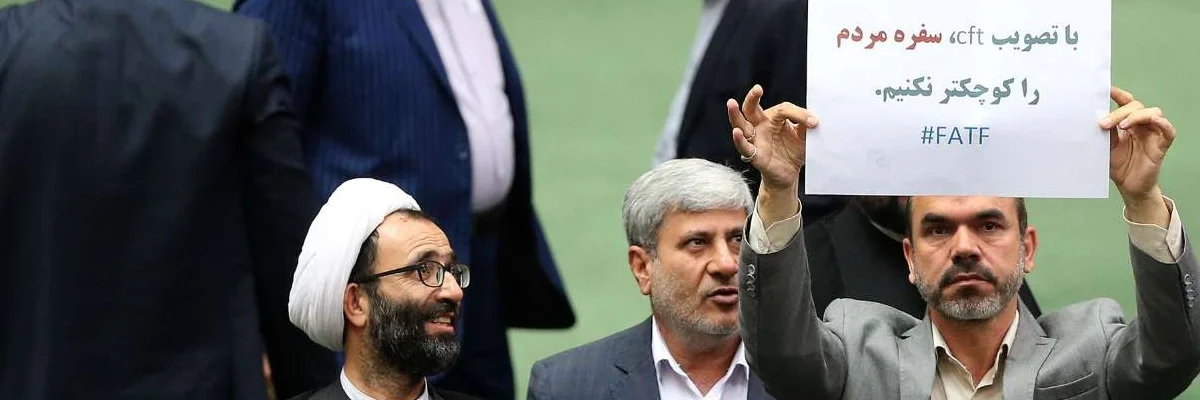
◢ Iran's parliament on Sunday approved a bill to counter terrorist financing that was strongly opposed by conservatives but seen as vital to salvaging the nuclear deal with European and Asian partners. The bill, one of four put forward by the government to meet demands set by the international Financial Action Task Force (FATF), was passed by 143 votes to 120.
Iran's parliament on Sunday approved a bill to counter terrorist financing that was strongly opposed by conservatives but seen as vital to salvaging the nuclear deal with European and Asian partners.
The bill, one of four put forward by the government in a bid to meet demands set by the international Financial Action Task Force (FATF), was passed by 143 votes to 120, according to the semi-official ISNA news agency.
It aims to bring Iran's laws in line with international standards and allow it to join the UN Terrorism Financing Convention.
A previous bill on the mechanics of monitoring and preventing terrorist financing was signed into law in August.
But joining the UN convention has been controversial because hardliners say it will limit Iran's ability to support armed groups in the region such as its Lebanese ally, Hezbollah.
Two other bills—on money-laundering and organised crime—have also been passed by parliament but are being held up by the Guardian Council, which vets all legislation.
Iran is alone with North Korea on the blacklist of the Paris-based FATF, which monitors global money laundering and terrorist financing.
The FATF suspended counter-measures against Iran in June 2017 and has set a final deadline of mid-October for it to amend its laws.
The issue has become particularly pressing since the United States walked out of the 2015 nuclear deal with Iran earlier this year and began reimposing sanctions.
The other parties to the deal—Britain, France, Germany, China and Russia—have sought to salvage the agreement and maintain trade with Iran, but have demanded that it accede to the FATF.
"Neither I nor the president can guarantee that all problems will go away if we join (the UN convention)," said Iran's Foreign Minister Mohammad Javad Zarif during the debate ahead of the vote.
"But I guarantee that not joining will provide the US with more excuses to increase our problems," he added.
He said Russia and China—two of Iran's "strategic allies"—have refused to maintain financial ties unless it joined the FATF.
'Death to Traitors'
Conservatives were furious with the vote on Sunday, with hardliners leading chants of "death to traitors" outside parliament.
In a heated debate ahead of the vote, opponents of the bill said it would not solve the country's financial problems, and would help its enemies.
"We did what (the FATF) demanded, we passed three bills but nothing happened. Our financial problems will not go away even if we join," said lawmaker Hossein Naghavi Hosseini.
Another hardliner, Mohammad Dehghan, warned the bill means "providing the enemy with intelligence during an economic war" and that passing it amounted to "treason".
Both sides have evoked supreme leader Ayatollah Ali Khamenei to support their position.
Conservatives pointed to Khamenei's statement in June that Iran has "no need to join" global conventions.
But parliament speaker Ali Larijani, who supports the government's position, said he had received a letter from Khamenei explaining that his remarks were about "conventions in general" and not meant to oppose any particular bills.
Reformist lawmaker Mohammad Feyzi told the session that Iran does not have "the luxury of choice" and will face negative consequences if it refuses to join the FATF.
Ali Najafi, spokesman for the parliament's commission which produced the bill, said Iran retained the right to walk away from the UN convention "wherever it acts against the Iranian constitution" and emphasized that it does not force Iran to recognize Israel.
Photo Credit: IRNA
Iran's Khamenei Says 'No Need' to Join Global Financial Crime Agreements, Supports Domestic Laws
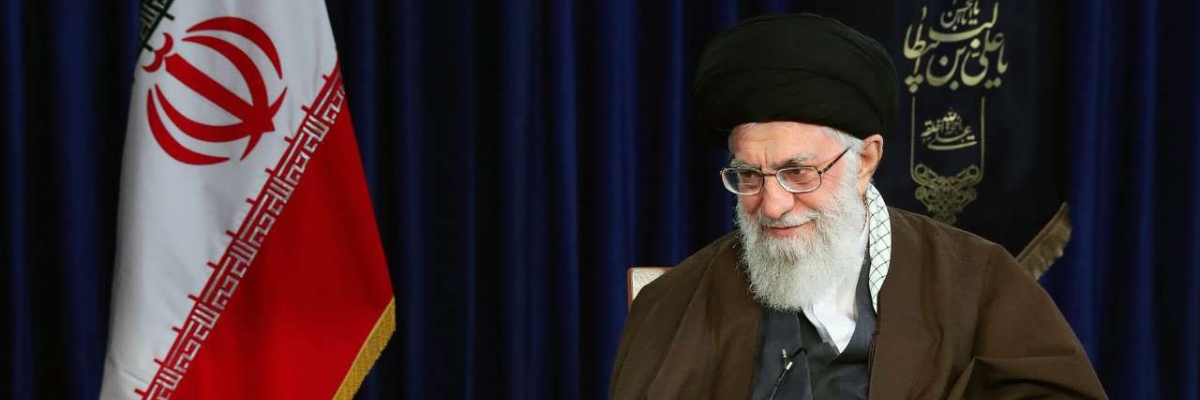
◢ Iran has "no need to join" global agreements on areas such as terrorism and money laundering, the country's supreme leader Ayatollah Ali Khamenei said Wednesday as the issue divides parliament. Describing parliament as "mature and wise", Khamenei said lawmakers "must independently make legislation on issues such as terrorism or combating money laundering."
Iran has "no need to join" global agreements on areas such as terrorism and money laundering, the country's supreme leader Ayatollah Ali Khamenei said Wednesday as the issue divides parliament.
Describing parliament as "mature and wise", Khamenei said lawmakers "must independently make legislation on issues such as terrorism or combating money laundering."
"Of course some of the provisions of international conventions may be good but there's no need to join these conventions, citing these provisions," the supreme leader told a gathering of MPs, according to his official website.
Khamenei cautioned against signing up to global conventions when "we are not aware of the depth of their aims or (when) we know that they have problems."
Earlier this month Iran's parliament voted to suspend discussion of joining the UN Terrorism Financing Convention for two months, as Tehran waits to see whether its nuclear deal with world powers survives after the US pulled out of the landmark accord.
Debate among Iranian lawmakers on joining such global agreements is often furious, with conservatives warning signing up to the terrorism financing accord would cut off Iranian support to key regional allies Hezbollah and Hamas.
The military wings of both groups are designated as terrorist organizations by the United States and European Union, among others.
But the government has argued international cooperation is essential to confront terrorist groups which have targeted the country.
Iran's commitment to the UN convention is a condition for being removed from the blacklist of the Financial Action Task Force (FATF), a spot shared with North Korea.
Being on the blacklist of the inter-governmental body has added to Iran's woes in accessing global banking.
Iran's struggle to access international markets has been further compounded by the US decision to withdraw from the nuclear deal.
The remaining parties to the accord—Britain, China, France, Germany and
Russia—have committed to staying in the deal.
But their companies risk falling foul of US sanctions if they continue to do business with Iran.
Photo Credit: IRNA