
Iran Approves Anti-Money Laundering Bill
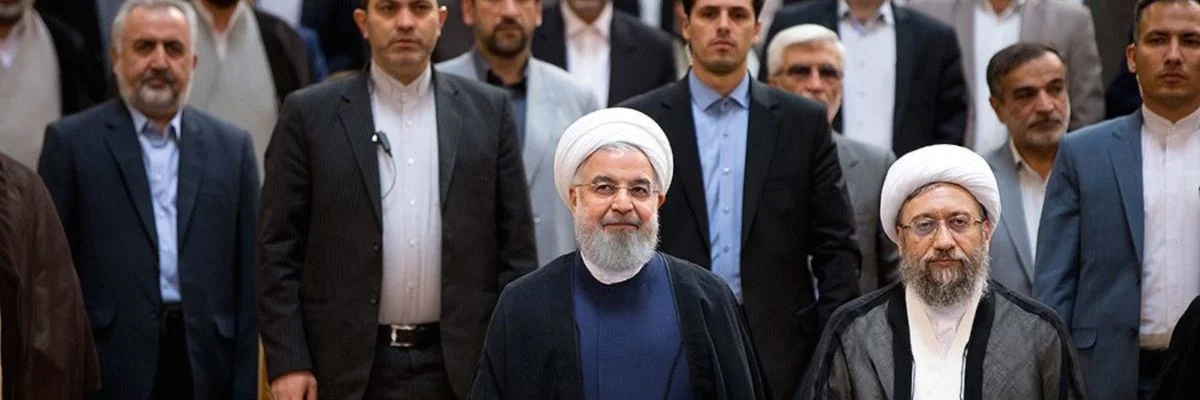
◢ An Iranian arbitration body gave its approval on Saturday to an anti-money laundering bill seen as crucial to maintaining international trade and banking ties, the official IRNA news agency reported. "The bill on amending the law to counter money laundering was approved with certain changes and will be sent to the parliament speaker to be communicated to the government," Expediency Council member Gholamreza Mesbahi-Moghadam told IRNA.
An Iranian arbitration body gave its approval on Saturday to an anti-money laundering bill seen as crucial to maintaining international trade and banking ties, the official IRNA news agency reported.
"The bill on amending the law to counter money laundering was approved with certain changes and will be sent to the parliament speaker to be communicated to the government," Expediency Council member Gholamreza Mesbahi-Moghadam told IRNA.
The Expediency Council settles disputes between parliament, which approved the bill last year, and the conservative-dominated Guardian Council, which vets all legislation and had rejected it.
Conservatives have argued that new legislation on money laundering and terrorist financing will provide Western powers with leverage over Iran's economy and how it funds regional allies such as Lebanon's Hezbollah.
But the government of President Hassan Rouhani says the laws are needed to meet demands set by by the international Financial Action Task Force (FATF), which monitors countries' efforts to tackle financial crime.
Iran is alone with North Korea on the FATF's blacklist—although the Paris-based organization has suspended counter-measures since June 2017 while Iran works on reforms.
The FATF will meet again in February to discuss Iran's progress.
The government is hoping to salvage banking and trade ties after the United States walked out of a landmark 2015 nuclear deal between major powers and Iran and reimposed crippling unilateral sanctions.
The other parties to the deal—Britain, France, Germany, China and Russia—have sought to salvage the agreement and maintain trade with Iran, but have called on Tehran to meet FATF requirements.
The anti-money laundering bill is one of four pieces of legislation put forward by the government to that end.
A previous bill on the mechanics of monitoring and preventing terrorist financing was signed into law in August.
Two others—allowing Iran to join UN conventions against terrorist-financing and organized crime—have been approved by parliament but are still being delayed by higher authorities, including the Guardian Council.
The Expediency Council currently has 38 members, all appointed by supreme leader Ayatollah Ali Khamenei.
Photo Credit: Fars
Iran Judiciary Chief to Head Powerful Expediency Council
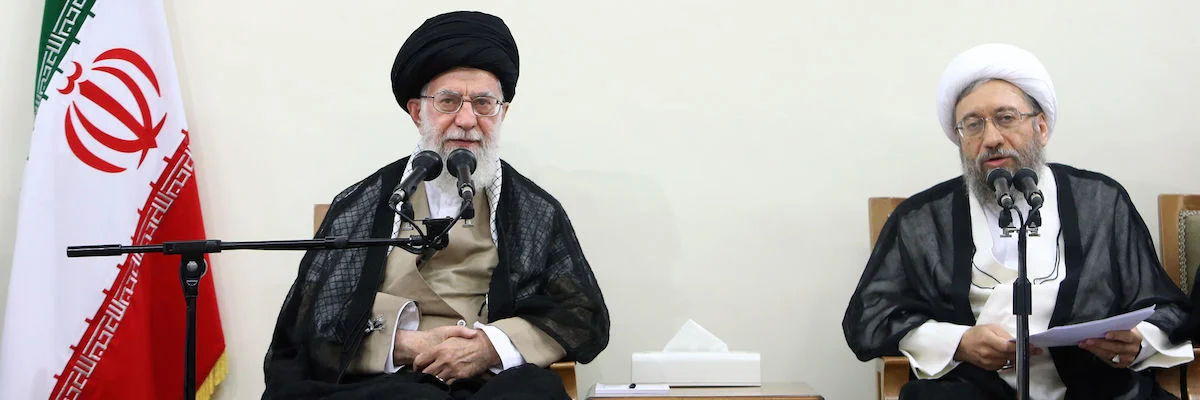
◢ Iran's supreme leader Ayatollah Ali Khamenei appointed the head of the judiciary, Sadegh Amoli Larijani, as chairman of the powerful Expediency Council on Sunday, according to his website. The Expediency Council is a key behind-the-scenes institution, settling disputes between different branches of government.
Iran's supreme leader Ayatollah Ali Khamenei appointed the head of the judiciary, Sadegh Amoli Larijani, as chairman of the powerful Expediency Council on Sunday, according to his website.
The Expediency Council is a key behind-the-scenes institution, settling disputes between different branches of government.
It was led for many years by one of the Islamic republic's founding figures, Akbar Hashemi Rafsanjani, until his death in early 2017.
Larijani, 58, was personally sanctioned by the United States in January 2018 for "human rights abuses" and "supporting Iranian weapons programs", according to the US Treasury.
He was also appointed to the 12-man Guardian Council—a post he previously held—that vets legislation and election candidates, according to a statement on Khamenei's website.
A new judiciary chief was expected to be named shortly.
Larijani takes over the Expediency and Guardian council posts from Ayatollah Hashemi Shahroudi, who died last week.
He is one of five Larijani brothers who all hold powerful positions within the establishment, most notably his eldest sibling Ali Larijani who is speaker of parliament.
Khamenei's statement said "critical changes" were expected within the Expediency Council in the near future, without giving details.
Photo Credit: IRNA
Shahroudi, Powerful Iran Cleric, Dies
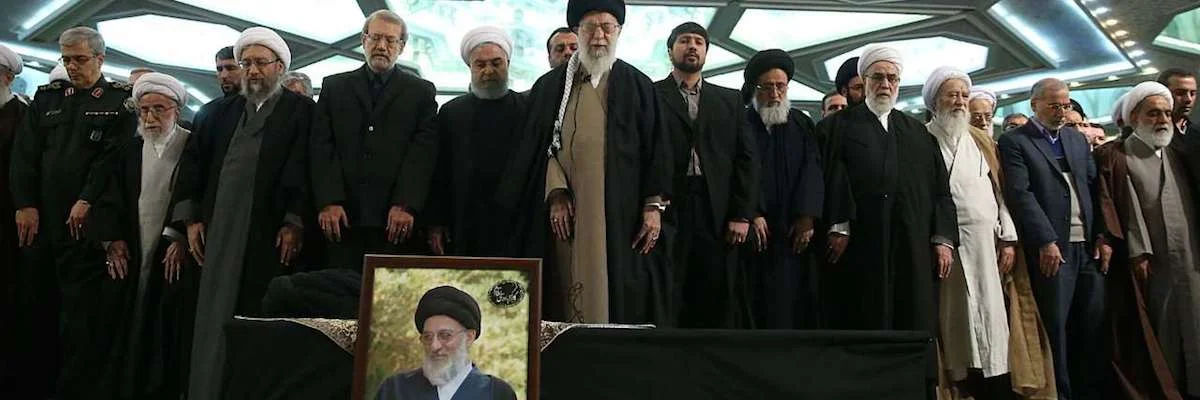
◢ Mahmoud Hashemi Shahroudi, a grand ayatollah who headed Iran's judiciary during fierce crackdowns on dissidents, journalists and activists, died on Monday at the age of 70 according to the state news agency IRNA. Shahroudi was a student of Iran's revolutionary founder Ruhollah Khomeini who went on to hold some of the most powerful positions in the Islamic republic.
Mahmoud Hashemi Shahroudi, a grand ayatollah who headed Iran's judiciary during fierce crackdowns on dissidents, journalists and activists, died on Monday at the age of 70 according to the state news agency IRNA.
Shahroudi was a student of Iran's revolutionary founder Ruhollah Khomeini who went on to hold some of the most powerful positions in the Islamic republic.
At the time of his death he was head of the Expediency Council and a member of the 12-man Guardian Council—two key institutions in shaping legislation and vetting election candidates.
He was also deputy head of the Assembly of Experts which has the power to choose the successor to supreme leader Ayatollah Ali Khamenei—a position to which Shahroudi himself was occasionally linked.
Shahroudi had not been seen in public for several months, and there were reports last year that he underwent surgery for an unspecified cancer in Germany.
A German lawmaker filed a complaint against Shahroudi during his stay, calling for him to be charged for crimes against humanity, but a judge found no grounds to hold him.
Shahroudi headed the judiciary between 1999 and 2009—a period that saw hundreds of executions and a concerted crackdown on activists, dissidents and the reformist media.
His tenure concluded with the mass protests over allegations of rigging in the 2009 presidential election, which led to thousands being arrested and allegations of severe prisoner abuse.
Some measures nonetheless marked him as a relative moderate within the judiciary, particularly his moratorium on stoning as a method of execution which other clerics saw as sanctioned under sharia law.
But the prosecution in 2001 of reformist lawmakers—despite their parliamentary immunity—was heavily critiized by the government of the time.
Shahroudi was born in Najaf in Iraq on August 18, 1948, and met Khomeini when the latter was exiled to Iraq in the 1960s.
He fled to Kuwait and then Iran after Iraqi dictator Saddam Hussein cracked down on Shiite clerics in the wake of the 1979 Iranian revolution, the conservative Tasnim news agency said in its obituary.
Photo Credit: IRNA
Iran Overturns Ban on Religious Minority Councillor
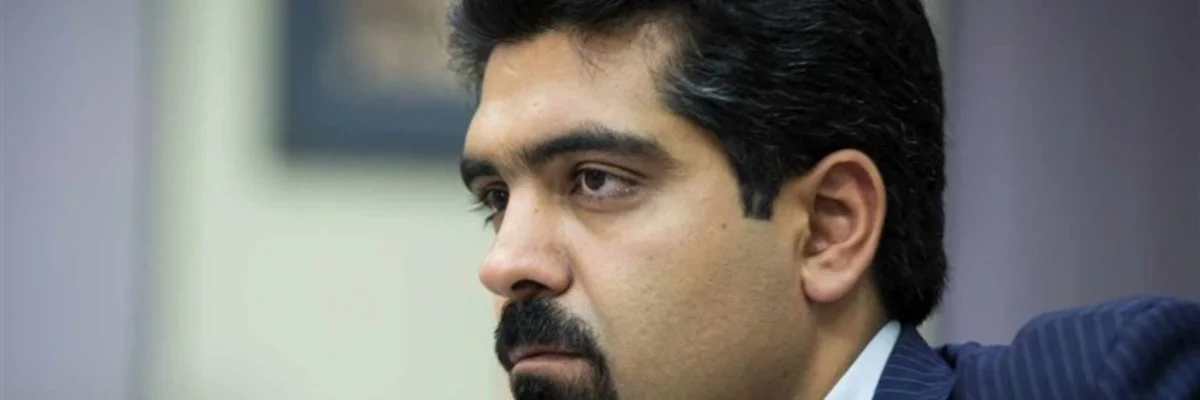
◢ Iranian authorities ruled Saturday that a member of the minority Zoroastrian religion had been wrongly suspended from his post on a city council. Sepanta Niknam, a member of Iran's ancient Zoroastrian religion, was the only non-Muslim elected to the council in the central city of Yazd in May 2017, but he was suspended later in the year following a complaint by one of his fellow councillors.
Iranian authorities ruled Saturday that a member of the minority Zoroastrian religion had been wrongly suspended from his post on a city council.
Sepanta Niknam, a member of Iran's ancient Zoroastrian religion, was the only non-Muslim elected to the council in the central city of Yazd in May 2017, but he was suspended later in the year following a complaint by one of his fellow councillors.
It had followed a ruling by the ultra-conservative head of Iran's Guardian Council, which oversees elections, barring religious minorities from standing in municipal polls.
Because the Guardian Council has power only over national elections, the ruling was rejected by parliament, but that did not prevent Niknam's suspension.
On Saturday, Majid Ansari, a member of the Expediency Council which is charged with resolving disputes between Iran's multiple centers of authority, said they had finally ruled in favor of Niknam.
"Today, the Expediency Council ruled that the 1996 law on religious minorities is applicable and they can participate in council elections in their town," Ansari told the reformist ILNA news agency.
He added that Niknam was now free to retake his post on Yazd city council. Iran officially recognizes "Iranian Zoroastrians, Jews and Christians" as religious minorities.
The national parliament has several religious minority members, including three Christians, a Zoroastrian and a Jew among its 290 deputies.
Zoroastrianism was the dominant religion in Persia, prior to the arrival of Islam, but only counts around 25,000 adherents today, according to government figures.
Photo Credit: Tasnim