
Iran Says INSTEX 'Good Omen' But Insufficient
Iran on Monday welcomed the launch of a European trade mechanism to bypass US sanctions as a "good omen" but said it was insufficient in light of the Europeans' commitments.
Iran on Monday welcomed the launch of a European trade mechanism to ease trade in the face of US sanctions as a "good omen" but said it was insufficient in light of the Europeans' commitments.
Britain, France and Germany said last week they had carried out the first transaction through the INSTEX mechanism to deliver medical supplies to Iran, which has been hit hard by the coronavirus pandemic.
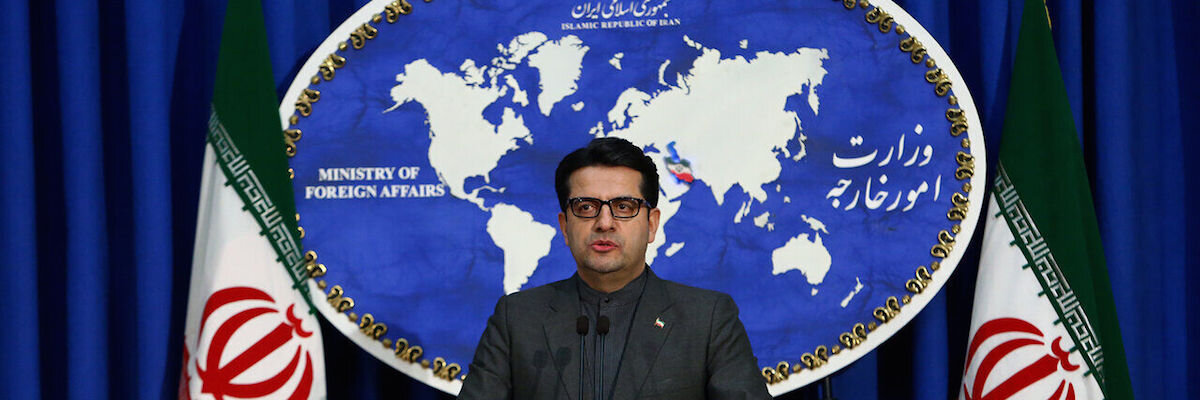
In the first official reaction to the development, Iran's foreign ministry spokesman Abbas Mousavi said the transaction had involved "a few hundred thousand euros.”
“We see the launch of INSTEX as a good omen," Mousavi said in a televised news conference.
But "what the Islamic Republic of Iran expects (from now on) is for the Europeans to fulfil the rest of their commitments in various fields (such as) banking, energy, insurance," he added.
Iran has struggled to stop the spread of the novel coronavirus which officials say has claimed over 3,600 lives and infected more than 58,000 in the country since February 19.
Calls have mounted for the United States to ease its sanctions on Iran so that the Islamic republic can adequately respond to the COVID-19 crisis.
Washington reimposed crippling sanctions on Tehran in May 2018 after withdrawing from an international deal that put curbs on its arch enemy's nuclear program.
In response, the three European countries party to the nuclear deal—Britain, France and Germany—announced the creation of INSTEX in January 2019.
But the implementation of the mechanism has been slow, with Iran and the Europeans blaming each other for the delay.
INSTEX functions as a clearing house and allows European companies to trade with Iran without exposing themselves to the consequences of US sanctions.
It is designed to be open to other companies, particularly from China or Russia, which are also party to the 2015 nuclear agreement.
Photo: IRNA
Iran Air Says Resuming Flights to Europe
◢ Iran Air said Tuesday it would resume flights to Europe, lifting a two-day suspension apparently linked to a ban on the carrier's planes entering European airspace. According to several specialized sites, the European Aviation Safety Agency (EASA) on February banned some Iran Air aircraft from European airspace.
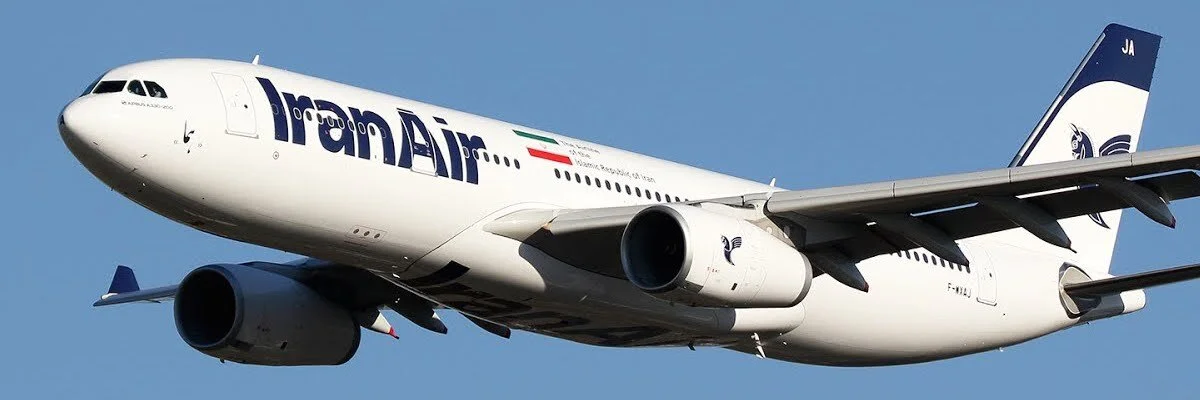
Iran Air said Tuesday it would resume flights to Europe, lifting a two-day suspension apparently linked to a ban on the carrier's planes entering European airspace.
"All flights will be resumed except to Vienna, Stockholm and Gothenburg, which have stopped flights due to the coronavirus outbreak," it said in a statement.
The national carrier had suspended flights to Europe on Sunday, citing European "restrictions" imposed for "unknown reasons", without mentioning the novel coronavirus epidemic.
The announcement came as Iran's health ministry reported 54 new deaths from COVID-19, the highest toll within 24 hours since the start of the outbreak in the country.
According to several specialized sites, the European Aviation Safety Agency (EASA) on February banned some Iran Air aircraft from European airspace.
The ban covered an Airbus A321-200 and two Airbus A330-200 planes that had not undergone necessary software upgrades for authorization to fly in Europe.
The flight resumption announcement came after talks by the Iran Civil Aviation Organisation and the foreign ministry with European officials, Iran Air's statement said.
The carrier, whose fleet was hit by US sanctions reimposed after Washington quit a nuclear deal with Iran, operates flights to multiple European destinations including Paris, London, Amsterdam, Stockholm, Frankfurt, Vienna and Rome.
Photo: IRNA
EU Calls Iran Nuclear Talks Next Month in Bid to Save Deal
◢ The Iran nuclear deal has been crumbling since President Donald Trump unilaterally withdrew and reimposed sanctions on Tehran, prompting the Islamic republic to announce a series of steps away from its commitments. "Notwithstanding differences on modalities, there is agreement that more time is needed due to the complexity of the issues involved. The timeline is therefore extended," the EU’s foreign policy chief said in a statement.
By Damon Wake
Brussels made a bid to buy more time to save the Iran nuclear deal Friday, calling a meeting for next month after Britain, France and Germany launched a dispute process.
The European capitals triggered the complaint mechanism last week after Tehran took a series of steps away from its commitments, in protest at the US pulling out of the accord in 2018.
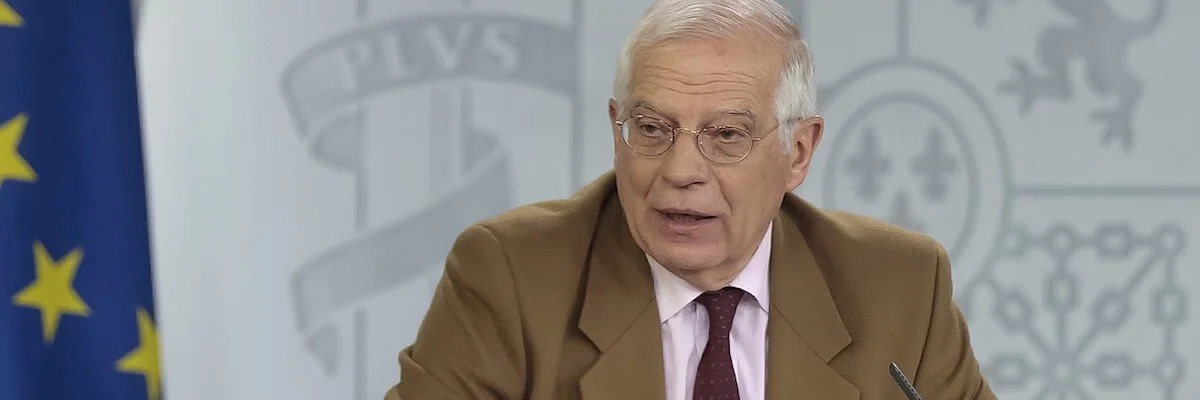
This could have shortened the deal's lifespan but Josep Borrell, the EU's diplomatic chief, who is tasked with convening meetings under the dispute mechanism, has called new talks.
Borrell said he had consulted the countries still in the deal -- which also include Russia and China -- and that all are determined to save the accord.
The Iran nuclear deal has been crumbling since President Donald Trump unilaterally withdrew and reimposed sanctions on Tehran, prompting the Islamic republic to announce a series of steps away from its commitments.
"Notwithstanding differences on modalities, there is agreement that more time is needed due to the complexity of the issues involved. The timeline is therefore extended," Borrell said in a statement.
"All agreed to pursue expert-level discussions addressing the concerns regarding nuclear implementation, as well as the wider impacts of the withdrawal of the United States from the JCPOA and its re-imposition of sanctions."
JCPOA is an acronym for the deal's formal title, the Joint Comprehensive Plan of Action.
Borrell said the so-called joint commission that oversees the deal and comprises representatives of all the countries involved will meet in February, though he did not give a precise date.
It usually meets in Vienna, though it can also meet in New York or Geneva.
Room for Maneuver
Under the terms of the dispute mechanism, senior officials have 15 days from the January 14 triggering of the complaint mechanism to find a solution before deciding whether to escalate the issue to foreign ministers level.
By calling the meeting in February, Borrell has extended that initial timeline -- which was conceived to solve technical complaints rather than the slow political collapse of the accord.
European officials say a certain amount of creative ambiguity was deliberately written into the text to allow room for manoeuvre in a crisis, and it now looks likely the dispute process could be prolonged for quite some time.
When they triggered the mechanism, the Europeans urged Iran to come back into full compliance with its obligations under the 2015 accord, which gave Tehran relief from sanctions in return for curbs on its nuclear programme aimed at preventing it from developing atomic weapons.
But, privately, diplomats recognise it is highly unlikely Iran will do this without substantial concessions in return -- such as an end to US sanctions or Europe taking measures to offset their economic impact.
Instead they will be content if talks manage to convince Iran not to take any more steps away from the deal, giving space for back-channel diplomacy aimed at an agreement that gets both Washington and Tehran back in the game.
"We want to get round a table to work out what is the fix to get us into a stable place where things won't get worse," one diplomat said.
"It might be possible to get informal agreement on restraint."
Bomb 'Not Around the Corner'
After repeated warnings, Germany, Britain and France triggered the dispute process on January 14 after Iran announced it would no longer observe limits on the number of centrifuges—used to enrich uranium—in its fifth step back from the deal.
But crucially Iran has said it will continue to cooperate with the International Atomic Energy Agency (IAEA) which carries out regular detailed inspections on the ground.
A western diplomat said that, for the Europeans, it was "critical that is maintained".
"The IAEA still has full access, which gives us reassurance about the activities the Iranians are doing. Agency access, verification and monitoring give us confidence that we would know if the Iranian activities are changing in nature," the diplomat said.
For now the Europeans are looking to get Iran back on board rather than reimposing sanctions, and they are keenly aware that they could lose control of the dispute process if it moves to the next stage—notifying the UN Security Council.
If this happens, UN sanctions automatically "snap back" after 30 days unless the Security Council votes to stop them—and here the US would be able to wield its veto.
"They've broken the limits, we're watching. A bomb is not around the corner but we don't want to get to that," a diplomat said.
Photo: Wikicommons
Europe Has Dug In Against Trump’s Iran ‘Maximum Pressure’ Campaign
◢ President Donald Trump wants America’s closest allies to ratchet up the pressure on Iran. But this weekend in France he’ll find they’re still reluctant to join him. Divisions over Iran will be on full display when Trump meets his European peers at a Group of Seven meeting starting Saturday in the coastal city of Biarritz.
By Nick Wadhams
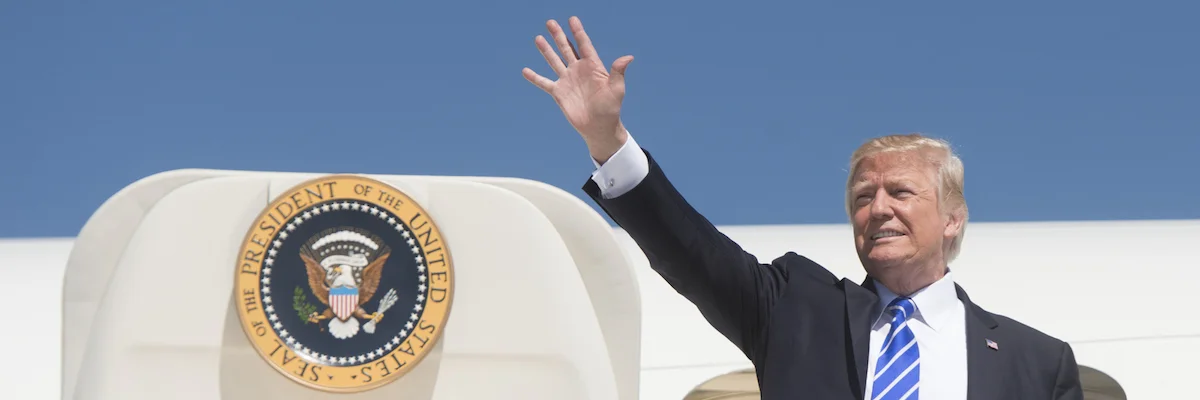
President Donald Trump wants America’s closest allies to ratchet up the pressure on Iran. But this weekend in France he’ll find they’re still reluctant to join him.
Divisions over Iran will be on full display when Trump meets his European peers at a Group of Seven meeting starting Saturday in the coastal city of Biarritz. While the agenda will focus on the global economy, the most pressing security challenge will be navigating the wreckage of Trump’s decision last year to abandon the 2015 deal constraining Tehran’s nuclear program.
Even with Iran downing an American drone and being accused of a spate of tanker attacks in the Persian Gulf, European nations want to preserve the Joint Comprehensive Plan of Action they say kept a rein on Iran’s nuclear program. But they’ve failed to find a way to help Tehran get the economic benefits promised under the deal. Iran is desperate to get its oil back on world markets, but that’s a non-starter for the U.S.
No compromise has emerged.
The Iran debate—and the distrust it has fueled—reflects the strains between the U.S. and Europe in the Trump era: displeasure over his maximalist approach, umbrage over his scorn for allies and, beneath it all, wariness about his intentions. In the case of Iran, allies can’t shake the suspicion that Trump, or his more hawkish advisers, want to provoke a war, no matter his insistence otherwise.
“I’ve heard several folks in Europe say, ‘Look, all of us were serving as diplomats during the Iraq War, so we’ve seen the beginnings of this movie before and we’re not going to get dragged into it again,”’ said Ellie Geranmayeh, a senior policy fellow at the European Council on Foreign Relations. “The Europeans will not want to side with the administration on issues that could lead to military conflict.”
The president hasn’t laid the groundwork for a productive summit. He’s arriving in France on the warpath over trade, allied contributions to NATO and a self-inflicted feud with Denmark over what appeared at first to be a joke: a suggestion the U.S. buy Greenland.
Trump’s best shot at winning some European support will come by working his personal rapport with U.K. Prime Minister Boris Johnson. The two unconventional leaders will meet for breakfast on Sunday, and Johnson may want to straddle European backing for the JCPOA with the need to keep Trump on his side for an eventual trade deal following Brexit.
A U.S. official, who asked not to be identified discussing internal deliberations, said the administration is “optimistic” that Johnson could bring the U.K. closer to the U.S. position on isolating Iran.
A U.K. official, speaking on condition of anonymity, pushed back on expectations that Johnson could be swayed. The new prime minister doesn’t want to rock the boat for French President Emmanuel Macron, who is the host of the G-7, the official said. The U.K. is sticking to its support for the nuclear deal.
But that too has its dangers. One person familiar with the White House thinking on the matter, who also asked not to be identified, said the administration realizes it needs to be careful calibrating its attitude toward Johnson, who may be wary of being seen as too close to Trump ahead of a possible election later this year.
“The president wants to give Boris Johnson a big boost -- he sees Johnson as Britain’s Trump, a like-minded model,” said Heather Conley, director of the Europe Program at the Center for Strategic and International Studies in Washington. “The challenge is Boris Johnson is winding up for an election and he’s got to walk a very fine line on what the domestic instinct is toward Trump.”
U.S. officials are playing down the disagreements between Washington and European capitals, arguing that all sides agree on the threat posed by Iran’s sponsorship of terrorist groups, its development of ballistic missiles and its attacks on tanker traffic around the Strait of Hormuz.
‘Tactical Disagreements’
“We have had tactical disagreements but there isn’t any disagreement on end states,” Brian Hook, the State Department’s Iran envoy, told Bloomberg TV on Aug. 21. “We share the same threat assessment. The Islamic Republic of Iran is the principle driver of instability in today’s Middle East.”
Anxiety is growing in Europe about a growing list of Iranian violations of the 2015 nuclear accord, which the Islamic Republic had obeyed until Trump quit the deal. Angry that the Europeans haven’t been able to deliver economic benefits in defiance of Trump’s sanctions, Iran now has exceeded enriched-uranium limits set by the agreement and is threatening further violations if Europe doesn’t find a way around the American restrictions.
Zarif’s Diplomacy
Iranian Foreign Minister Javad Zarif—who was recently sanctioned by the U.S.—will be in France ahead of the summit on Friday to urge the Europeans to stick to the nuclear deal.
According to press reports and a person familiar with Emmanuel Macron’s thinking, the French president is also circulating a proposal under which the U.S. would ease some restrictions on Iranian oil exports in exchange for the start of a diplomatic dialogue.
U.S. officials say Iran would need to make far bigger concessions for them to entertain such an offer. The idea flies in the face of the administration’s approach, which is to keep ramping up its “maximum pressure” campaign, under the belief that sanctions will so ruin Iran’s economy that its leaders will have no choice but to negotiate.
Two recent cases show just how different the U.S. and European approaches to Iran have become, and how wary U.S. allies are in being associated with the Trump administration’s stance.
Gibraltar Court
The U.K. rebuffed a demand from the White House to keep holding an Iranian oil tanker laden with $130 million in crude allegedly bound for Syria in Gibraltar. A court in the territory deemed it could no longer keep the ship after Iran offered assurances it wouldn’t go to Syria.
Senior U.S. officials had conveyed “grave disappointment” over the decision to let the tanker go, even raising the possibility that an eventual U.S.-U.K. trade deal might be in jeopardy. The Justice Department filed a complaint aimed at blocking the ruling. But the Grace 1—renamed the Adrian Darya 1—left as planned.
Even more embarrassing to the U.S. has been Europe’s shunning of the plan the Americans call Project Sentinel—a bid to protect ships passing through the Strait of Hormuz. In July, the U.K. signed up but was careful to portray its participation as a European-led initiative that was getting help from—and not being led by—the U.S. France and Germany flatly refused to join, leaving the U.S. with two partners: Australia and the U.A.E.
“It’s absolutely necessary to keep the Gulf open, but the fact that they won’t do it tells you something about how toxic President Trump is in European politics,” said Nicholas Burns, a former senior State Department official and professor at the Harvard Kennedy School. “The Europeans don’t trust that Trump will keep his word that he won’t attack Iran.”
Photo: White House
European Allies Spurn U.S. Effort to Protect Ships From Iran
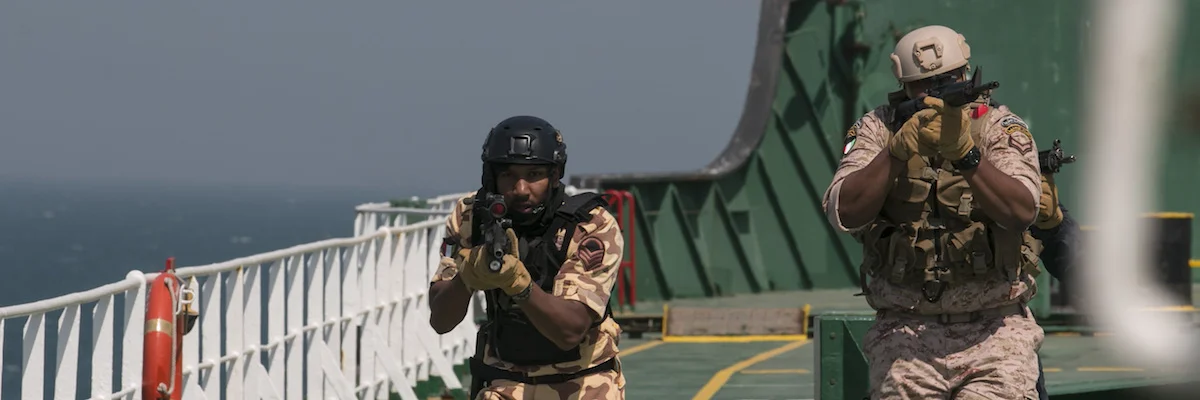
◢ Soaring tensions with Iran following attacks on tankers and drones prompted the Trump administration to call for a coalition of allies to protect ships passing through the Persian Gulf. This week, U.S. partners including the U.K. and France essentially asked to be counted out.
By Nick Wadhams
Soaring tensions with Iran following attacks on tankers and drones prompted the Trump administration to call for a coalition of allies to protect ships passing through the Persian Gulf.
This week, U.S. partners including the U.K. and France essentially asked to be counted out.
Rather than signing on to the Trump administration’s “Operation Sentinel,” those countries want to establish a European maritime security initiative nearly identical to -- but separate from -- the American project. The split reflects just how uneasy key allies have become about the U.S. “maximum pressure” campaign toward Iran.
“The move to establish a European initiative is a clear signal that Europe is bending over backwards to dissociate itself from U.S. policy toward Iran,” said Jonathan Alterman, director of the Middle East Program at the Center for Strategic and International Studies. “Europe wants some real daylight.”
That thinking was echoed by French Foreign Minister Jean-Yves Le Drian, who said Europe wanted to take measures to clear the way for de-escalation of tensions with Iran.
“On the diplomatic front we want to create the conditions for inclusive regional talks on maritime security,” Le Drian said. “This is the opposite of the U.S. policy of maximum pressure.”
Trump administration officials have privately downplayed the dueling initiatives. Defense Secretary Mark Esper said Wednesday he sees the efforts as “complementary.” But there is little question the European move presents new evidence of just how battered the so-called “special relationship” between the U.S. and the U.K., as well as Europe more broadly, has become.
Trump’s withdrawal from the 2015 nuclear accord with Iran has sparked frantic European efforts to keep that agreement alive. The U.S. continues tightening sanctions designed to choke off Iran’s economy in a bid to force it to the negotiating table and agree to what Trump says would be a stronger accord. Many countries see that approach -- not Iranian actions -- as the original source of rising tensions between the Tehran government and the West.
The biggest flashpoint has been over tanker traffic in the Persian Gulf, a critical passageway for global oil supplies.
Tanker Seizures
In May and June, a series of attacks on tankers were blamed by the U.S. and some allies on Iran, a charge officials in Tehran denied. In June, Iran shot down an American drone it said was over its territorial waters, prompting Trump to consider military strikes before ultimately backing down.
Then, following the U.K.’s seizure of a tanker carrying Iranian oil near Gibraltar, Iran last week seized the British ship Stena Impero. The U.K. has subsequently threatened “serious consequences” if the ship and its crew are not released.
In response, the U.S. deployed additional forces to the region and announced Operation Sentinel.
A senior State Department official, speaking to reporters on condition of anonymity when the initiative was announced last month, said the operation isn’t military in nature, but aimed at keeping track of Iran by equipping ships with more cameras and other observation equipment. It’s focused on observing ships, not escorting them, the person said.
Wary of Conflict
When European leaders announced their own proposal this week, they suggested they were wary of joining an American-led effort that could drag them into conflict, or associate them with a policy they don’t support.
Then-U.K. Foreign Secretary Jeremy Hunt said Monday that the European maritime initiative was intended to reduce tensions while also sending a strong message to Iran to stop harassing ships in the region. Hunt was replaced on Wednesday by Dominic Raab after Prime Minister Boris Johnson took office.
Read More: Champagne and Magic Complete Johnson’s Rebranding as U.K. Leader
An administration official, asking not to be identified, said the U.S. would work with its partners and allies to safeguard freedom of navigation. Secretary of State Michael Pompeo, speaking on Fox News before the announcement, made clear the U.S. wanted European nations to play a larger role protecting vessels.
“The responsibility in the first instance falls to the United Kingdom to take care of their ships,” he said.
Coordinating Efforts
Officials on both sides of the Atlantic say there will almost certainly be information sharing and other coordination and that the two initiatives could be merged. Yet for some European politicians, the irony of the split is too much to ignore. The U.K., where Johnson has vowed to press ahead with a split from the European Union, is so circumspect about American policy toward Iran that it would rather partner with other European nations than the Trump administration.
“Apparently a government that is attempting to exit the European Union is not willing to undertake military action with the U.S. but actually with the European Union, because they’re more comfortable with it,” German lawmaker Rolf Muetzenich said Wednesday.
Analysts argue that the separate efforts will only fuel confusion in an already volatile region even if the two maritime efforts eventually become one. They say it reflects a fear—which the U.S. denies—that the Trump administration is prepared to further escalate tensions with Iran.
“U.S. allies are increasingly concerned about participating in joint operations under American command,” said Adam Mount, director of the Defense Posture Project at the Federation of American Scientists. “If American allies lose faith that the U.S. is committed to peaceful resolution of the Iran issue, they won’t want to get caught up in an operation with an objective they don’t support.”
Photo: CENTCOM
Exasperated Europeans Face Surprise Pompeo Visit on Iran
◢ As European Union governments scramble to save the Iran nuclear accord from U.S. efforts to scuttle it, the mood in diplomatic circles has blackened. Then suddenly, U.S. Secretary of State Michael Pompeo lands in Brussels with little warning. After a cool initial reception to the unscheduled drop-in, Pompeo began meetings with European counterparts to address Iran’s “threatening actions and statements.”
By Patrick Donahue, Gregory Viscusi and Tim Ross
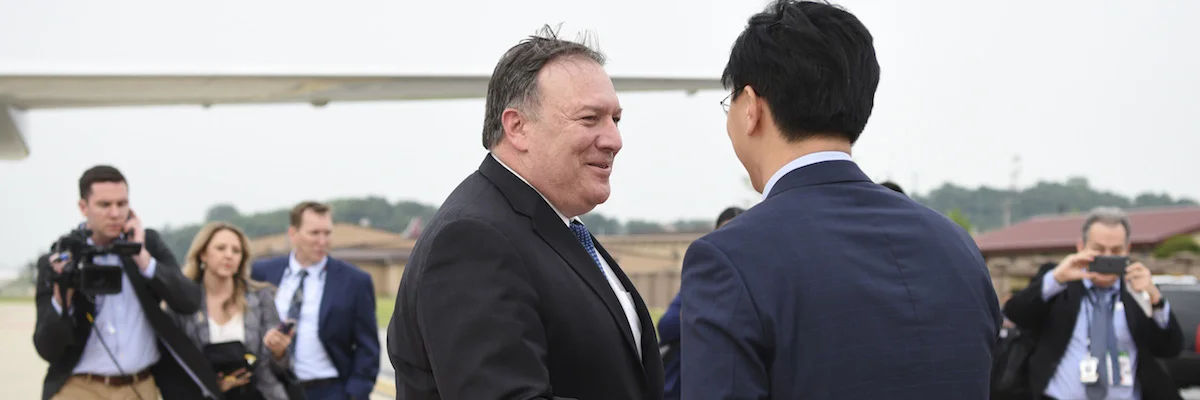
As European Union governments scramble to save the Iran nuclear accord from U.S. efforts to scuttle it, the mood in diplomatic circles has blackened. Then suddenly, U.S. Secretary of State Michael Pompeo lands in Brussels with little warning.
The top U.S. diplomat parachuted in as 28 European Union foreign ministers gathered to discuss Iran. After a cool initial reception to the unscheduled drop-in, Pompeo began meetings with European counterparts to address Iran’s “threatening actions and statements.”
“I made clear once again that we are worried in view of the developments and the tensions in the region,” German Foreign Minister Heiko Maas told reporters. “We don’t want a military escalation.”
The hard-line approach adopted by President Donald Trump has left European allies irritated at the lack of strategy and powerless to sway a U.S. administration that’s failed to provide answers on where it all leads, according to diplomats in Berlin, Paris and London.
On their minds is the risk of a return to a nuclear threat in the Middle East, they said on condition of anonymity as talks proceed behind closed doors. The Europeans are in a bind, with limited options to protect the deal. Their attempt to circumvent U.S. sanctions has fallen flat as companies do not want to run foul of the U.S. and risk trade with such a key partner.
Exasperation
Ministers from the U.K., France and Germany, the three EU signatories to the Iran accord, were expected to sit down with Pompeo, but plans were ad-hoc given the last-minute nature of the visit. Early reaction was lukewarm at best.
“He’s always welcome obviously, but there are no precise plans for the moment,” European Union foreign-policy chief Federica Mogherini said earlier in the day. Later she said she’d convene with him after the EU meeting was finished.
Behind the shuttle diplomacy lies a sense that more than 15 years of heavy lifting that culminated in the nuclear deal is slipping away, according to senior European diplomats. And even if few expect an open conflict in the near term, the fear is that Trump’s unpredictable approach could have unintended consequences.
What Next?
A tit-for-tat could easily ensue from an altercation, such as a hit on U.S. forces by the Islamic Revolutionary Guard Corps, two diplomats speculated. The U.S. squeezed Iran further by designating the IRGC as a terrorist organization last month.
Saudi Arabia said Monday two of its oil tankers were attacked while sailing toward the Persian Gulf. While it did not directly accuse Iran, the incident adds to a febrile atmosphere in the world’s most important chokepoint for oil shipments as Trump dials up the pressure. Crude rose as much as 2%.
It’s the latest turn between the U.S. and erstwhile European allies grappling with Trump’s hectoring on trade, defense spending and Chinese technology. Chancellor Angela Merkel’s government, which has drawn special scrutiny from Trump, has been particularly ruffled by the president’s hardball tactics over a gas pipeline to Russia.
Iran’s warning last week that it had begun to gradually abandon parts of the 2015 nuclear accord capped Trump’s yearlong effort to derail the treaty. The so-called EU-3 responded with a pledge to keep the Iran deal on life support, primarily with an investment vehicle aimed at circumventing U.S. sanctions that are crippling the Iranian economy.
The U.S., meanwhile, has dispatched an aircraft carrier strike group and bomber force to the region, cementing its confrontational stance—and leaving Europeans with few options. And even as they reject a 60-day ultimatum presented by Iran, European leaders are laying blame with the White House.
“First of all, Iran hasn’t left the deal,” French President Emmanuel Macron told reporters Thursday at an EU summit in Sibiu, Romania. “Second of all, if they do, it’ll be the responsibility of the U.S.”
The brinkmanship has left Europeans baffled.
One diplomat said Trump’s legacy may be raising the nuclear threat from Iran as well as North Korea, rather than stopping it. Another quipped that short of Iranian President Hassan Rouhani boarding a flight to Washington and signing Pompeo’s 12 conditions, tantamount to total capitulation, nothing was on the table.
Trump himself has said he’s open to talks with Iran, suggesting the 12 demands from Pompeo are an opening negotiating salvo.
Pompeo has demanded that Iran abandon nuclear ambitions, scrap its missile program and end support for allied groups in places like Syria and Yemen. And while Europeans have made similar demands, they’re convinced open confrontation won’t yield any such results.
The treaty’s other signatories, Russia and China, may not offer Europe much help. While China’s purchase of Iranian oil could go a long way in preserving the deal, the government in Beijing won’t risk baiting Trump while they’re in deadlocked trade talks, according to two European diplomats.
Photo: DOD
Stuck Between U.S. and Iran, EU Is Running Out of Options
◢ No one spelled out Europe’s predicament over the escalating stand-off between the U.S. and Iran quite as bluntly as Russia. It’s up to “the Europeans, who committed to find a solution to the problem created by the Americans, to fulfill their promise,’’ said Foreign Minister Sergei Lavrov, during a joint news conference in Moscow with his Iranian opposite, Mohammad Zarif.
No one spelled out Europe’s predicament over the escalating stand-off between the U.S. and Iran quite as bluntly as Russia.
It’s up to “the Europeans, who committed to find a solution to the problem created by the Americans, to fulfill their promise,’’ said Foreign Minister Sergei Lavrov, during a joint news conference in Moscow with his Iranian opposite, Mohammad Zarif.
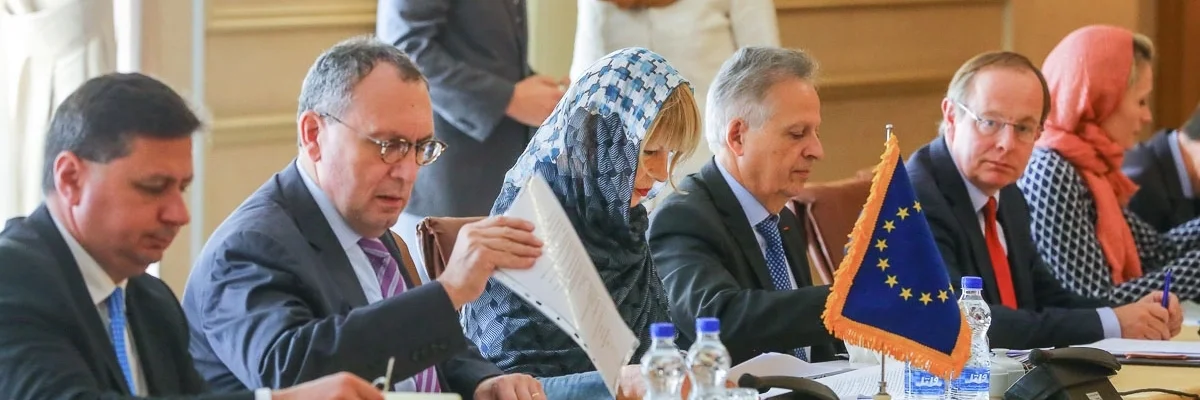
That won’t be easy, because after a year of casting around for ways to enable companies to safely circumvent U.S. sanctions to trade with and invest in Iran, Europe has come up empty. That is unlikely to change in the next 60 days, in which case the 2015 nuclear deal with Iran could be headed for a slow death.
Europe again found itself squeezed between hostile governments in Washington and Tehran on Wednesday, when President Hassan Rouhani threatened to abandon some of the limits to its controversial nuclear fuel program that Iran agreed to in 2015, in exchange for the lifting of international sanctions.
‘Hasn’t Delivered’
Iran’s beef is with the U.S., which withdrew from the agreement last year. And it’s likely to continue getting support from Russia and China, which in the past have continued to do business in Iran and buy its oil, despite U.S. sanctions.
But it was to Europe that Rouhani delivered his ultimatum on Wednesday, demanding that it start countering the effects of mounting U.S. sanctions within 60 days, or see Iran start walking away from the deal, too.
“They’re giving the Europeans a last chance,’’ said Sir Richard Dalton, who served as Britain’s ambassador in Tehran from 2003 to 2006. “So far, Europe hasn’t delivered in a single one of the areas – transport, trade, investment, banking – where it promised Iran cooperation in 2018, when the U.S. pulled out.’’
Dalton described Rouhani’s announcement as carefully calibrated, so as not to immediately collapse the 2015 Joint Comprehensive Plan of Action, while at the same time persuading a domestic audience that the government was pushing back against U.S. economic pressure.
Iran’s economy contracted by 3.9 percent in 2018, and is forecast to shrink by a further 6 percent this year, according to the International Monetary Fund. The recent U.S. decision to end all waivers of sanctions against countries that buy Iranian oil exports is likely to exacerbate the country’s economic woes further.
‘Without Caveats’
France, Germany and Britain on Wednesday all recommitted to the 2015 deal, calling again for the U.S. to return to the agreement, while signaling that any Iranian backtracking would meet a response.
“We and our partners stand by this treaty, without any caveats — and we expect Iran to implement the treat in full as well, without caveats,’’ said Germany’s Foreign Minister Heiko Maas. The U.K.’s junior foreign minister, Mark Field, told Parliament the U.K. also stood by the deal, but said there would be “consequences” if Iran stopped meeting its nuclear commitments.
Europe’s thankless position isn’t new. It has been caught between hawkish policies in the U.S. and Iran ever since international inspectors first confirmed the existence of Iran’s secret nuclear fuel program, in 2003.
Uncomfortable Deja Vu
Still bruised from the U.S. decision to invade Iraq just months earlier, France, Germany and Britain took on the task of negotiating a solution with Tehran that the U.S. could accept. Their aim was to avoid a repeat of the Iraq war, and of the deep rifts that it caused within Europe as governments were forced to choose whether to back or oppose U.S. policy. Unlike the U.S., European nations also had significant economic interests to lose.
Iran’s ultimatum, together with the recent U.S. deployment of an aircraft carrier group and B-52 bombers to the Gulf, suggest those risks are back.
U.S. Secretary of State Michael Pompeo canceled a meeting with German Chancellor Angela Merkel to visit Baghdad on Tuesday where he told Iraqi leaders the threat from Iran is growing. He told the Daily Telegraph that he’d received intelligence “that suggested it was a good time for me to go."
Europe’s governments are probably in a weaker position to push back against U.S. foreign policy choices than they were in the lead-up to the Iraq war, when France, Germany and a number of others joined with Russia to forcefully oppose the Iraq invasion.
Secondary Sanctions
That’s in part because Washington has since developed the use of secondary sanctions against non-U.S. companies into a powerful deterrent. The U.S. fined France’s BNP Paribas SA USD 8.9 billion in 2015, for busting its sanctions on Iran, Cuba and Sudan. Last month, the German unit of UniCredit SpA agreed to pay USD 1.3 billion for busting U.S. sanctions on Iran. Companies, and governments, have become cautious.
The EU is setting up a special purpose vehicle to help European companies safely finance the export of goods to Iran. Even this limited vehicle, however, known as the Instrument in Support of Trade Exchanges, has yet to start work. It would in any case do little or nothing to aid investment or trade in the wider Iranian economy.
Europe’s troubles aren’t only with the U.S. In what could be seen as a veiled threat, Rouhani also talked Wednesday about the role Iran plays in reducing the flow of drugs and refugees to Europe. Iran hosts about 1 million registered refugees from Afghanistan, and as many as 1.5 million more who are unregistered.
At the same time, the non-financial stakes for Europe in defying the U.S. on Iran may also have risen in recent years. President Donald Trump has made it clear his government sees both support for Europe’s defense in the North Atlantic Treaty Organization, and trans-Atlantic trade as negotiable in ways that no U.S. president has before.
“The underlying issue,’’ said Dalton, the former U.K. ambassador, “is whether Europe remains a sovereign force.’’
Photo: Bloomberg
EU Provides €1.2 Million in Emergency Support Following Iran Floods
◢ Responding to the devastating floods that have recently affected northern and south western parts of Iran, the European Commission has announced an initial amount of EUR 1.2 million of emergency funding to assist the most vulnerable communities.
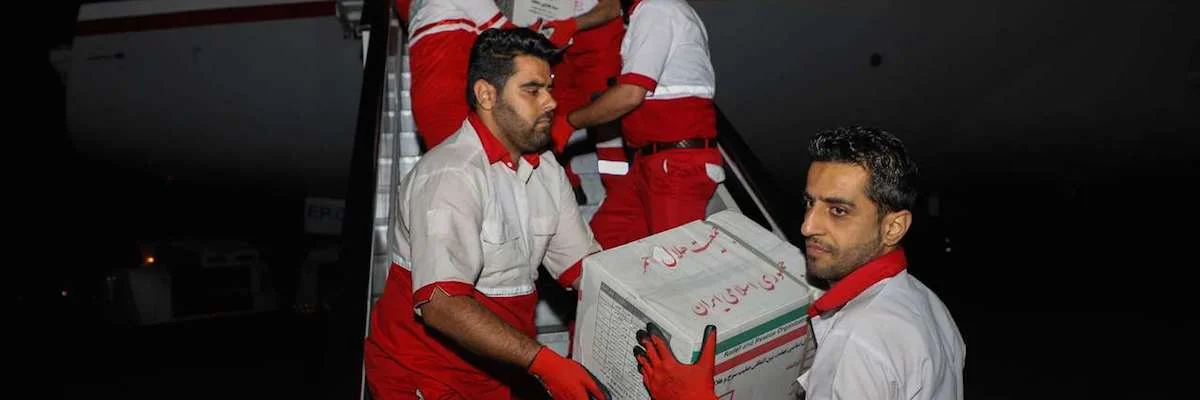
Responding to the devastating floods that have recently affected northern and south western parts of Iran, the European Commission has announced an initial amount of EUR 1.2 million of emergency funding to assist the most vulnerable communities.
In a statement released on Thursday, Commissioner for Humanitarian Aid and Crisis Management, Christos Stylianides declared, “We stand in full solidarity with the Iranian people at this difficult time. Our thoughts are with the thousands of families affected by the deadly floods as well as with the brave responders on the ground. The EU will help deliver essential support in the impacted areas.”
The commissioner added, “The new funding will support humanitarian partners, including the International Federation of Red Cross and Red Crescent Societies (IFRC) in delivering much needed relief assistance which will allow the most in need to cover their urgent needs. For over 20 years the EU has funded humanitarian operations in Iran, providing assistance to the most vulnerable refugees, including protection, shelter, water and sanitation, food security, and access to basic education and healthcare services.”
Photo Credit: IRNA
EU's Iran Payments Vehicle Ready - But Stuck
◢ A payment mechanism the EU hopes will save the Iran nuclear deal by bypassing US sanctions is ready, diplomats said Monday, but is held up by disagreements among European countries. The "Special Purpose Vehicle" is being put together by Germany, France and Britain, the European signatories to the 2015 accord that curbed Tehran's nuclear ambitions in return for sanctions reilef.
A payment mechanism the EU hopes will save the Iran nuclear deal by bypassing US sanctions is ready, diplomats said Monday, but is held up by disagreements among European countries.
The "Special Purpose Vehicle" is being put together by Germany, France and Britain, the European signatories to the 2015 accord that curbed Tehran's nuclear ambitions in return for sanctions reilef.
The entity, to be based in France with German governance and finance from all three countries, will allow Iran to receive payments despite Washington reimposing sanctions after ditching the deal.
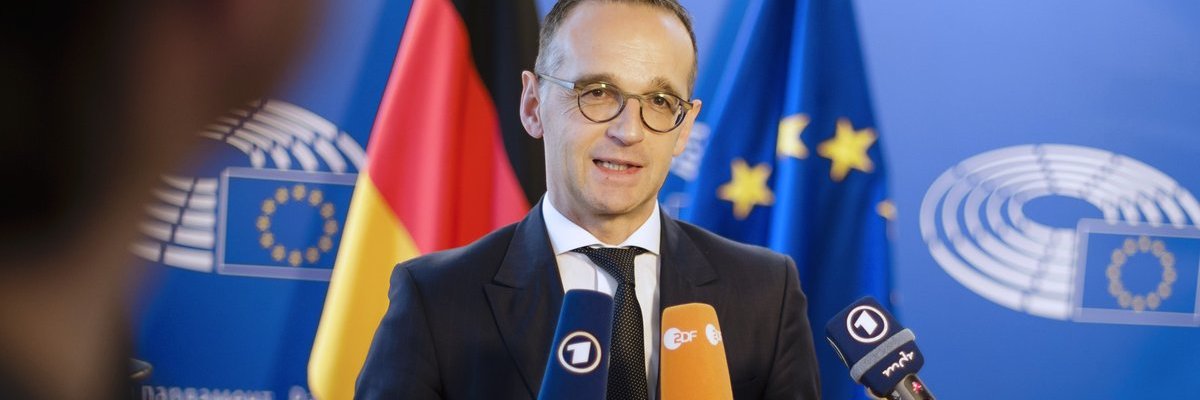
"It will be registered, it is not yet registered. I would say that we are immediately before the point of the implementation of our plan," German Foreign Minister Heiko Maas said at a meeting in Brussels organized by the Belgian government.
While the vehicle is the work of the three governments involved, the EU wants to launch it along with a formal statement on Iran endorsed by all 28 member states and addressing the whole spectrum of European concerns about the Islamic republic.
The EU has commended Iran for sticking to its commitments under the nuclear deal, but has growing concerns about Tehran's ballistic missile program, as well as its human rights record, its interference in Middle East conflicts and recent attempted attacks against opposition groups in Europe.
Diplomatic sources said that Italy and Spain have so far blocked the adoption of the statement, meaning it may have to wait until the next formal meeting of EU ministers on February 12.
It is not clear whether Germany, France and Britain will wait for consensus on the statement or go ahead and launch the vehicle without it.
Photo Credit: Phototek