

EU Invites Iranian Foreign Minister to Brussels
◢ Iran's foreign minister has been invited to Brussels, the European Union said Sunday, January 5, urging a "de-escalation of tensions" in the Persian Gulf after a US air strike that killed top general Qassem Soleimani. The EU's foreign policy chief Josep Borrell made the offer to Mohammad Javad Zarif during a telephone call this weekend.
Iran's foreign minister has been invited to Brussels, the European Union said Sunday, January 5, urging a "de-escalation of tensions" in the Persian Gulf after a US air strike that killed top general Qassem Soleimani.
The EU's foreign policy chief Josep Borrell made the offer to Mohammad Javad Zarif during a telephone call this weekend, a press release said.
"Borrell invited the Iranian Foreign Minister to Brussels to continue their engagement on these matters," it said.
A regional political solution was the "only way forward," Borrell said, underlining "the importance of preserving" the 2015 Iran nuclear deal.
He confirmed "his resolve to continue to fully play his role as coordinator and keep the unity of the remaining participants in support of the agreement and its full implementation by all parties".
US-Iran tensions have escalated since 2018 when President Donald Trump unilaterally withdrew the United States from the landmark accord that gave Tehran relief from sanctions in return for curbs on its nuclear program.
Iran has hit back by reducing its nuclear commitments with a series of steps every 60 days, the most recent deadline passing Saturday.
Trump warned Saturday night that the US would hit Iran harder than ever before if it retaliates over the assassination of Qassem Soleimani, the commander of the Revolutionary Guards' Quds Force foreign operations.
He was killed in a US drone strike Friday near Baghdad international airport ordered by Trump, who accused the general of planning an imminent attack on American diplomats and troops in Iraq
Photo: IRNA
EU Holds Iran Nuclear Crisis talks as Tehran Issues Fresh Threats
◢ European foreign ministers held crisis talks Monday on saving the beleaguered Iran nuclear deal as Britain warned the "small window" for success was closing and Tehran issued fresh threats of restarting its atomic program. British Foreign Secretary Jeremy Hunt—who held phone talks with his US and Iranian counterparts at the weekend—insisted "the deal isn't dead yet.”
By Damon Wake
European foreign ministers held crisis talks Monday on saving the beleaguered Iran nuclear deal as Britain warned the "small window" for success was closing and Tehran issued fresh threats of restarting its atomic program.
Tensions in the Gulf have soared since last year, when the United States pulled out of the 2015 deal and reimposed sanctions on Iran, hammering its economy and prompting Tehran to break limits on uranium enrichment and stockpiling.
The European Union is desperately trying to prevent the deal unravelling completely, seeing it as the best way to stop Tehran acquiring atomic weapons, and the issue was top of the agenda as ministers from the bloc met in Brussels.
But Iran piled fresh pressure on Europe, demanding concrete measures to give it relief from US sanctions and threatening to return its nuclear programme to where it was before the curbs imposed by the 2015 deal.
British Foreign Secretary Jeremy Hunt—who held phone talks with his US and Iranian counterparts at the weekend—insisted "the deal isn't dead yet.”
"Iran is still a good year away from developing a nuclear weapon. We think there is still some closing but small window to keep the deal alive," Hunt told reporters.
Britain, France and Germany—the three European parties to the deal—on Sunday issued a joint statement calling for dialogue to resolve the crisis.
Iran has repeatedly warned it could leave the deal unless the remaining parties bypass US sanctions to deliver the promised economic benefits and on Monday threatened to take its nuclear programme back to its pre-deal status.
"If the Europeans and the Americans don't want to carry out their duties... we will decrease our commitments and... reverse the conditions to four years ago," Iranian atomic energy agency spokesman Behrouz Kamalvandi said, quoted by IRNA state news agency.
The US has vowed to pursue its "maximum pressure" campaign against Iran, but Spanish Foreign Minister Josep Borrell—lined up to be the next EU diplomatic chief—warned its strategy is only "strengthening the most radical" elements in the Islamic republic.
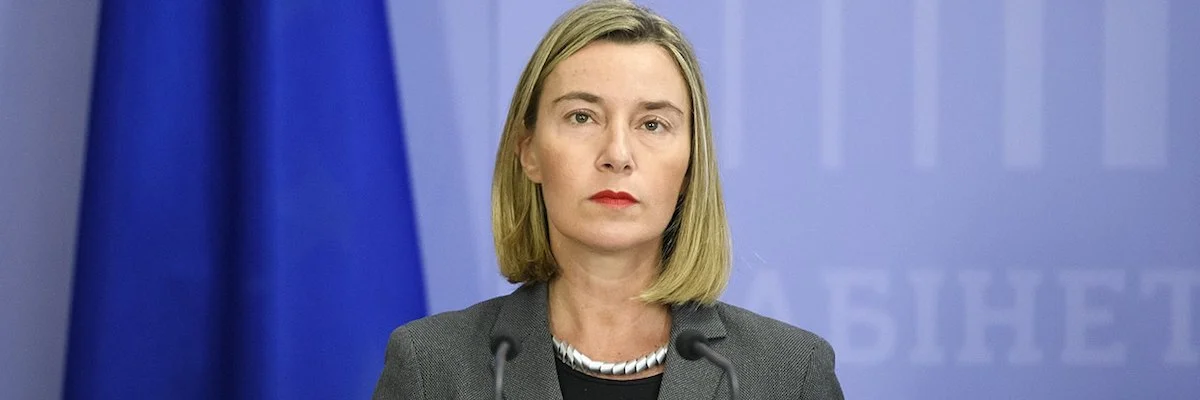
Current EU diplomatic chief Federica Mogherini said the steps taken by Iran so far—including enriching uranium above the 3.67 percent ceiling set by the deal—were reversible.
For now, none of the remaining parties have triggered the formal dispute mechanism, meaning that they did not regard Iran's breaches up to now as "significant non-compliance" under the terms of the deal, Mogherini said.
No 'Less for Less'
Europe hopes to use a special trading mechanism called INSTEX to enable businesses to deal with Iran without using the US dollar or financial system, thereby helping the Iranian economy while avoiding Washington's sanctions.
But the mechanism is complicated, no transactions have been finalised yet and it can for now only be used for humanitarian goods -- food and pharmaceuticals, for example -- though Mogherini said the shareholding countries were discussing extending it to Iran's crucial oil sector.
The sweeping nature of the US measures has scared many major European businesses out of Iran despite Brussels' insistence that American sanctions do not apply in Europe.
"Iran has taken bad decisions in response to the bad decision of the United States to pull out of the deal and reimpose sanctions, whose extraterritoriality strikes at the economic advantages the country got from the deal," French Foreign Minister Jacques-Yves Le Drian said as he arrived in Brussels.
The Iranian foreign ministry warned in a statement that its compliance with the deal was "rooted in the principle of reciprocity" and demanded Europe come up with "practical, effective and responsible decisions".
EU ministers insisted Iran must return to respecting its obligations under the deal in full, rejecting a suggestion by Iranian President Hassan Rouhani that both sides could reduce their commitments.
"This is a very, very serious situation. We must make it clear once again, in clear language, that there is only a chance if Iran commits itself unreservedly to what is contained in the treaty," Germany's junior foreign minister Michael Roth told reporters.
But the Iranian foreign ministry statement branded the European expectations "unrealistic", demanding a quid pro quo for undoing its recent breaches of the deal -- including exceeding a 300-kilo (660-pound) limit on enriched uranium stockpiles.
The joint commission overseeing the accord, made up of representatives from the countries still in the deal—the Europeans plus China, Russia and Iran—will meet "very soon" to discuss Tehran's breaches, Hunt said.
Photo: Wikicommons
Washington Criticizes European Aid Package for Iran
◢ A European Union aid plan for Iran sends "the wrong message at the wrong time" to the government in Tehran, the US State Department said Friday. The USD 20.7 million EU assistance package "perpetuates the regime's ability to neglect the needs of its people and stifles meaningful policy changes," read a statement Friday signed by US special representative for Iran Brian Hook.
A European Union aid plan for Iran sends "the wrong message at the wrong time" to the government in Tehran, the US State Department said Friday.
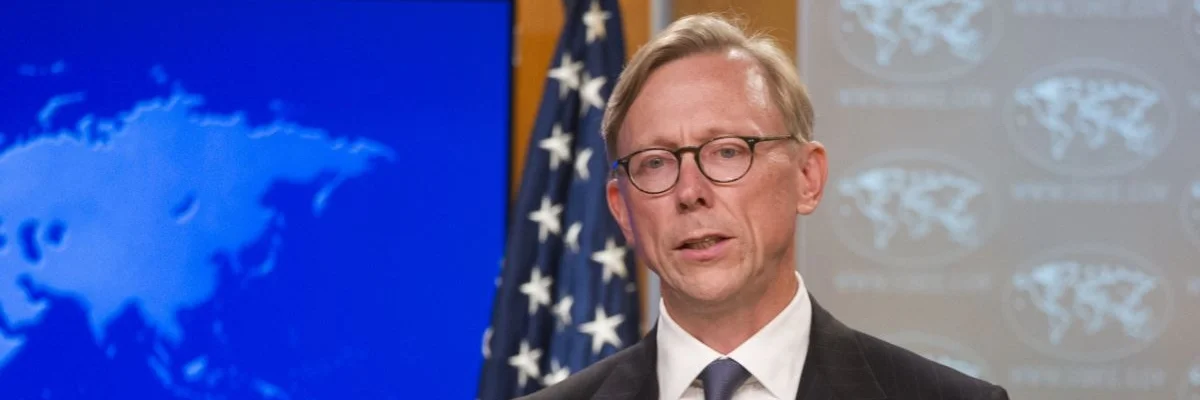
The USD 20.7 million EU assistance package "perpetuates the regime's ability to neglect the needs of its people and stifles meaningful policy changes," read a statement Friday signed by US special representative for Iran Brian Hook.
"More money in the hands of the Ayatollah means more money to conduct assassinations in those very European countries."
According to Hook, the Iranian people "face very real economic pressures caused by their government's corruption, mismanagement, and deep investment in terrorism and foreign conflicts."
He said that the United States and the European Union "should be working together... to find lasting solutions that truly support Iran's people and end the regime's threats to regional and global stability."
The package of assistance offered to Iran, announced on Thursday, is "for projects in support of sustainable economic and social development" in the Islamic Republic, and includes funds to help develop the private sector, according to a statement from the European Commission.
The funds "are the first of a wider package of 50 million euros for Iran, aiming to support the country to address key economic and social challenges," the statement read.
"They are part of the renewed cooperation and engagement between the European Union and Iran following the conclusion of the Joint Comprehensive Plan of Action (JCPOA)."
After withdrawing from the 2015 nuclear deal between Tehran and the major powers, Washington in early August reinstated sanctions against Tehran and issued a warning to countries that continued trading with Iran.
Photo Credit: VOA

EU Moves to Shield EU Firms From US Sanctions Against Iran
◢ The EU launched formal steps Friday aimed at sparing European firms fallout from US sanctions on Iran as part of efforts to preserve the nuclear deal with Tehran. The move to invoke the "blocking statute" had received the all-clear at a meeting of European Union leaders in Sofia on Thursday as the transatlantic rift deepened.
The EU launched formal steps Friday aimed at sparing European firms fallout from US sanctions on Iran as part of efforts to preserve the nuclear deal with Tehran.
The move to invoke the "blocking statute" had received the all-clear at a meeting of European Union leaders in Sofia on Thursday as the transatlantic rift deepened.
The European Commission, the EU executive, said Friday it "launched the formal process to activate the blocking statute by updating the list of US sanctions on Iran falling within its scope."
US President Donald Trump last week controversially pulled Washington out of the 2015 international deal with Iran that placed limits on its nuclear program in return for easing economic sanctions.
The "blocking statute," which EU member states and the European Parliament must still endorse, is aimed at easing the fears of European companies that invested in Iran after the deal.
"The blocking statute forbids EU companies from complying with the extraterritorial effects of US sanctions, allows companies to recover damages arising from such sanctions from the person causing them, and nullifies the effect in the EU of any foreign court judgements based on them," the commission said.
The commission said it hopes to have the measure in force before August 6 when the first batch of US sanctions take effect.
The commission also launched "the formal process to remove obstacles for the European Investment Bank (EIB) to decide under the EU budget guarantee to finance activities outside the European Union, in Iran," the executive said.
"This will allow the EIB to support EU investment in Iran," it added, noting the measure could help small and medium-sized companies.
The "blocking statute" is a 1996 regulation originally created to get around Washington's trade embargo on Cuba, which prohibits EU companies and courts from complying with specific foreign sanction laws, and says no foreign court judgments based on these laws have any effect in the European Union.
However, the Cuba row was settled politically, so the blocking regulation's effectiveness was never put to the test, and its value may lie more in becoming a bargaining chip with Washington.
Photo Credit: Wikicommons