

Macron’s Trump Hustle Shreds New Iran Adviser’s Nerves
◢ French President Macron tapped Emmanuel Bonne, an Arabic and Farsi speaker. to drive his foreign policy agenda in May, replacing Philippe Etienne, a European affairs specialist. The appointment symbolizes a change in foreign policy priorities for the French president after spending the first two years of his term trying to revamp the European Union.
By Helene Fouquet and Gregory Viscusi
The adviser to French President Emmanuel Macron stood on a terrace overlooking the Atlantic in Biarritz last month, puffing on one cigarette after another as the G-7 leaders huddled inside.
Emmanuel Bonne had kicked his university habit years before, but started up again when he was handed his first assignment for the Macron administration: get Iran and the U.S. back to the negotiating table.
To force the issue, he’d helped organize a surprise visit by Iranian Foreign Minister Javad Zarif to coincide with the talks. But U.S. officials were bristling at France’s handling of the summit and the fate of the initiative hung in the balance.
Macron tapped Bonne, an Arabic and Farsi speaker known for his Middle East expertise, to drive his foreign policy agenda in May, replacing Philippe Etienne, a European affairs specialist who’s now ambassador to the U.S. The appointment symbolizes a change in foreign policy priorities for the French president after spending the first two years of his term trying to revamp the European Union.
“It’s an admission that Macron will now be more active in the Middle East, where there’s a lot to do,” said Martin Quencez, the deputy director of the Paris office for the German Marshall Fund think tank. “It’s a definite shift in focus.”
‘Audacity’
Renewing the activist foreign policy Macron pledged in his 2017 election has been helped by a steady improvement in domestic approval ratings. And with German Chancellor Angela Merkel bogged down in coalition politics and Britain distracted by Brexit, Macron’s aides confirm his efforts in the coming months will be targeted more outside Europe.
In a speech to French ambassadors on Aug. 27, Macron described his government’s foreign policy as “influencing the world order with the cards it holds and not submitting to any sort of fatalism,” and over the course of nearly two hours he used the word “audacity” 18 times.
Inviting Zarif to Biarritz was certainly audacious but appears to have paid off. The conference opened Aug. 24 with European allies and the U.S. divided over how to handle Iran’s nuclear ambitions and closed three days later with signs differences could be narrowed.
According to Macron’s office, hawkish U.S. National Security Adviser John Bolton was nowhere to be seen during the G-7, which they took as a good sign. His firing on Sept. 10 now opens new opportunities for advances at the United Nations General Assembly in New York later this month.
Under a French plan, the Tehran government would be allowed to resume some oil exports if it joins formal talks and returns to compliance with the nuclear accord, which unraveled from mid-2018 when the U.S. pulled out. President Donald Trump is open to easing sanctions, something Bolton opposed, according to three people familiar with the matter.
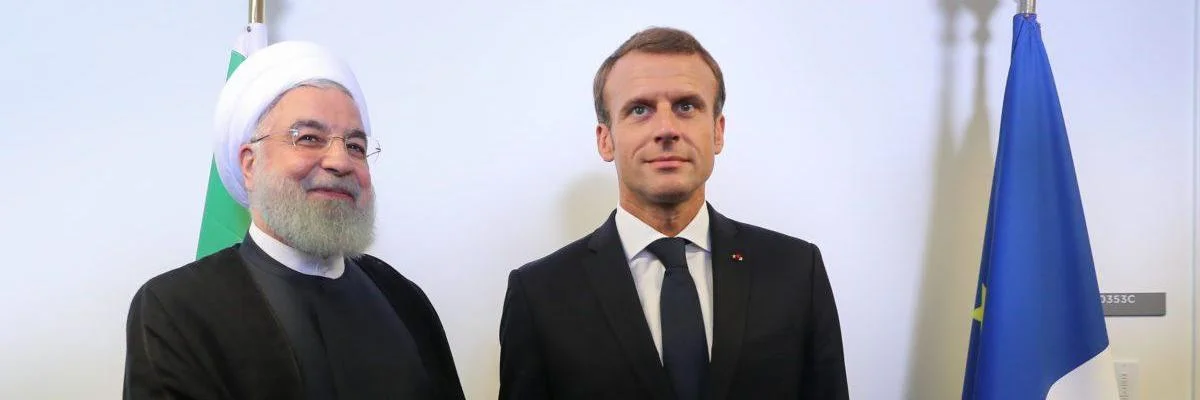
The first signs of ground being prepared came in June, when Bonne visited Tehran. The following month, after Iran said it breached its uranium enrichment cap, Macron sent the scholar-turned-diplomat again to the Iranian capital to speak directly with President Hassan Rouhani.
“Macron’s trying to figure out what’s the minimum Iran expects and the maximum the U.S. would give,” said Henry Rome, a research analyst at the Eurasia Group. “The French are being brokers.”
Taking Risks
Tehran was a familiar place for Bonne to be sent just a few weeks into his new job. It’s where he began his diplomatic career as an adviser to the French embassy in the early 2000s, before moving on to Saudi Arabia in the same role. He was later ambassador to Lebanon.
Apart from trying to salvage the nuclear deal, Macron’s aides say he’ll try to reset relations with Russia—something Bonne isn’t too keen on—with any eventual success there being leveraged to attempt advances in Syria and Libya. Macron has decried Russia’s cyber-meddling in other countries and its crackdowns on domestic opponents, but insists the world’s flash-points can’t be resolved without Moscow.
“We are in Europe, and so is Russia,” he told the French ambassadors. “If we can’t learn to do useful things with Russia, then we will be stuck in sterile tensions and frozen conflicts.”
Rising Stress Levels
So far, Macron can’t point to a major foreign policy success. He failed to keep Trump in the Paris climate accord and the Iran nuclear agreement. His attempts to seize control of talks between Libyan factions didn’t lead to any notable progress.
His next test comes on Sept. 24 when he and Trump address the General Assembly, with Rouhani speaking the following day.
France can open the door, but it can’t make Trump or Rouhani enter. Political considerations in both countries probably rule out a formal meeting between the two. But Macron, who talks regularly to both men, could try to engineer a seemingly serendipitous encounter.
“The UN building is a logistical puzzle or a nightmare, depending on how you look at it,” said Rome. “He might try to arrange some sort of bump-in.” While the chance of success may be low, so is the cost of failure since no one will blame Macron for trying.
Any sign of Bonne chain smoking outside the UN building may be a good indication the French president is up to something again.
Photo: IRNA
French Envoy in Iran Talks as Trump Threatens to Up Sanctions
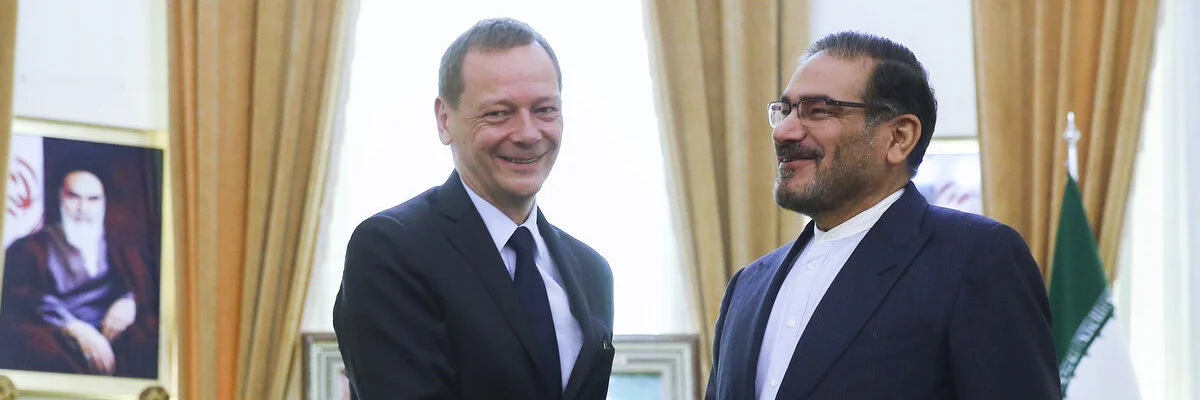
◢ A diplomatic adviser to French President Emmanuel Macron held talks in Tehran Wednesday aimed at saving the 2015 nuclear deal and easing tensions between Iran and the United States. Emmanuel Bonne met Rear-Admiral Ali Shamkhani, secretary of Iran's Supreme National Security Council, and was set to meet with Foreign Minister Mohammad Javad Zarif later on Wednesday.
By Kay Armin Serjoie
French President Emmanuel Macron's top diplomatic advisor met with Iran's president Wednesday winding up a day of talks in Tehran aimed at saving a landmark 2015 nuclear deal and easing tensions between Tehran and Washington.
But as Emmanuel Bonne pressed the high-level talks, President Donald Trump took to Twitter to warn that US sanctions against Iran would soon be "increased substantially", charging Tehran had "long been secretly 'enriching'" uranium.
The 2015 accord between Iran and world powers, the Joint Comprehensive Plan of Action (JCPOA), promised sanctions relief, economic benefits and an end to international isolation in return for stringent curbs on the Islamic republic's nuclear programme.
But Tehran says it has lost patience with perceived inaction by European countries more than a year after Trump unilaterally pulled the US out of the agreement and started to impose punishing sanctions.
In his meeting with Bonne, Iran's President Hassan Rouhani said Tehran had "completely kept the path of diplomacy and talks open", according to a statement from his office.
He called on other parties to the deal to "completely implement their commitments" to keep it alive.
Bonne also met Rear-Admiral Ali Shamkhani, the secretary of Iran's Supreme National Security Council, and Foreign Minister Mohammad Javad Zarif and his deputy Abbas Araghchi.
His mission was "to try and open the discussion space to avoid an uncontrolled escalation, or even an accident", according to French Foreign Minister Jean-Yves Le Drian.
Before meeting with Bonne, Zarif said "negotiations are never possible under pressure", in reference to US sanctions against Iran.
Pointing to the US withdrawal from the JCPOA, he added that the Europeans "must solve that problem."
‘Nuclear Extortion'
Bonne arrived in Tehran after Iran announced on Monday it had surpassed 4.5 percent uranium enrichment—above the 3.67 percent limit under the accord, though still far below the 90 percent necessary for military purposes.
Earlier this month, it was confirmed that Iran surpassed 300 kilogrammes of enriched uranium reserves, another limit that was imposed by the deal.
At Washington's request, the UN's nuclear watchdog held a special meeting Wednesday at its Vienna headquarters.
US delegate Jackie Wolcott told the gathering that Iran was engaged in "nuclear extortion".
Her Iranian counterpart Kazem Gharib Abadi hit back, calling it a "sad irony" that the meeting was convened at Washington's request and claiming the current standoff was a result of the US's "outlaw behaviour".
Russia's ambassador to the International Atomic Energy Agency, Mikhail Ulyanov, later tweeted that the US "was practically isolated on this issue".
In a joint statement, European parties to the deal Germany, France and Britain said their continued support for the accord "relies on Iran implementing its commitments".
But they added the "issues at hand should be addressed by participants to the JCPOA".
Ahead of the meeting, a source at the French presidency said "we are in a very critical phase. The Iranians are taking measures that are in violation (of the agreement) but (they) are very calibrated".
Iran Ends 'Strategic Patience'
After Washington withdrew from the JCPOA in May 2018, it reimposed stinging sanctions on Tehran, hitting the banking and oil sectors hard.
As the Iranian economy went into free fall, Iran demanded that the other parties—especially the Europeans—deliver promised economic benefits and help it bypass the US sanctions.
However, it became clear that this was no simple task, and Iran—whose economy depends heavily on oil exports—changed tack and indicated it would reshape its policy of "strategic patience".
In May, a year after Trump's withdrawal, Rouhani said Iran would roll back its commitments under the deal in stages every 60 days in an effort to force the other parties to deliver on their side of the bargain.
As tensions rose, the US dispatched a naval carrier, bombers and extra troops to the region to counter perceived threats from Iran.
Last month, Trump said he had called off a retaliatory military strike against Iran at the last minute after the Islamic republic shot down a US drone that it said had crossed into its airspace, a claim denied by Washington.
Trump re-upped the pressure Wednesday, claiming "Iran has long been secretly 'enriching'" uranium in violation of the accord.
"Remember, that deal was to expire in a short number of years. Sanctions will soon be increased, substantially!"
Photo: IRNA
Macron’s Top Diplomatic Adviser Looks to Save Iran Nuclear Deal
◢ French President Emmanuel Macron’s top diplomatic adviser heads to Iran on Tuesday, seeking to persuade the Islamic Republic to reverse breaches that have raised pressure on European nations struggling to save the landmark 2015 nuclear deal from collapse. Emmanuel Bonne will meet with Iranian leaders, including a representative of Supreme Leader Ayatollah Ali Khamenei.
By Ladane Nasseri
French President Emmanuel Macron’s top diplomatic adviser heads to Iran on Tuesday, seeking to persuade the Islamic Republic to reverse breaches that have raised pressure on European nations struggling to save the landmark 2015 nuclear deal from collapse.
Emmanuel Bonne will meet with Iranian leaders, including a representative of Supreme Leader Ayatollah Ali Khamenei, on Tuesday and Wednesday, according to French officials. His trip comes a day after Iran started enriching uranium to purity levels beyond the 3.67% cap set in the accord and pledged to further scale back its commitments in response to U.S. sanctions reimposed after President Donald Trump abandoned the agreement a year ago.
French officials say they see room for compromise as Iran’s infringements have been carefully calibrated and Trump has underlined his desire for new talks that seek to also limit the country’s missile program and support for proxy militias around the Middle East. Iran has held open the door to negotiations with Europe but has said it will not speak to the U.S. unless sanctions are eased first.
On Monday evening, Trump and Macron discussed by phone efforts to ensure that Iran doesn’t obtain a nuclear weapon and to curtail its role in the broader Middle East, according to an emailed White House statement.
The latest developments in Tehran have increased pressure on European nations who’ve urged Iran to stick with the multi-party deal even as they struggle to find a mechanism that would allow it to keep selling its oil, the main source of government revenue.
Iran is producing oil at the slowest clip since 1986, making U.S. sanctions as effective as the devastating Iraq-Iran war that ended more than 30 years ago. The measures have hit the currency, fueled inflation and set back economic growth.
U.S. officials say their policy of maximum pressure is designed to force the Iranian government to negotiate a broader deal. But the approach has weakened the hand of moderate President Hassan Rouhani and prompted Tehran to dig in.
The U.S. is “waging war in all areas simultaneously, and using all its power in military, economic and social sphere to confront Iran,” General Hossein Salami, the head of Iran’s Revolutionary Guard Corps, was quoted as saying Tuesday by the official Islamic Republic News Agency. “The more time passes, the more serious the enemy’s threats become.”
Iran’s latest violations of the accord are likely to stoke further friction with the U.S., which has accused the Islamic Republic of being behind a spate of attacks on oil tankers near the Strait of Hormuz shipping chokepoint. Iran denies any wrongdoing.
Ties with the U.K. have also been strained by its seizure of a supertanker off the coast of Gibraltar that it said was carrying Iranian oil to Syria in violation of European and U.S. sanctions against that war-torn country. Iran said the tanker was in international waters and not headed to Syria. It has vowed to retaliate, highlighting mounting risks to shipping in a region that exports about a third of all seaborne oil.
“It will be reciprocated, at a suitable time and in a suitable place,” Mohammad Bagheri, the chief of staff for Iran’s armed forces, was quoted as saying by the IRNA.
Though the rhetoric has continued to escalate, all sides have said they want to avoid war.
France, Germany and the U.K. have managed to deliver a financial channel known as INSTEX that aims to protect some trade with Iran—initially only food and medicine—from U.S. penalties. But Iran wants a trade vehicle that can also be used to buy its oil.
Bonne will meet on Wednesday with Ali Shamkhani, a representative of Khamenei and chairman of Iran’s Supreme National Security Council, to discuss the nuclear agreement and mechanisms to counter U.S. penalties, according to a Fars news agency report.
International Atomic Energy Agency inspectors, who are on the ground daily thanks to the existing deal, verified on Monday that Iran is enriching uranium above the agreed cap.
The IAEA will hold an extraordinary meeting on Wednesday, convened at the behest of the U.S., to discuss Iran’s breaches of the Joint Comprehensive Plan of Action, as the nuclear agreement is formally known.
“We continue to urge Iran not to take further measures that undermine the nuclear deal, to stop and reverse all activities that are inconsistent with its commitments,” European Commission spokeswoman Maja Kocijancic said. “We are currently in contact with the other JCPOA participants regarding the next steps under the terms of the agreement.’’
Photo: President.ir
France's Macron to Discuss Iran Tensions with Trump at G20
◢ French President Emmanuel Macron on Monday said he would discuss the current flare-up of tensions between Iran and the United States with President Donald Trump at this week's G20 summit in Japan. The tensions with Iran are set to loom large over the G20 meeting in Osaka later this week after the United States accused Iran of sabotaging ships.
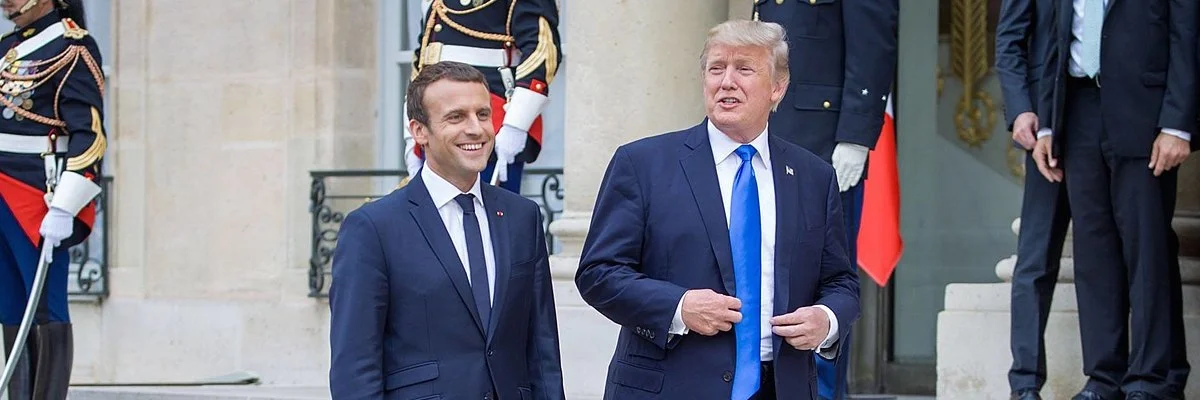
French President Emmanuel Macron on Monday said he would discuss the current flare-up of tensions between Iran and the United States with President Donald Trump at this week's G20 summit in Japan, saying a solution was needed through dialogue to ensure regional security.
The tensions with Iran are set to loom large over the G20 meeting in Osaka later this week after the United States accused Iran of sabotaging ships.
"We have to find a constructive solution with the aim of ensuring collective regional security," Macron told reporters, urging diplomacy rather than an escalation of tensions.
With the EU increasingly concerned over the risk of conflict, Macron pointed to a rare visit by his top diplomatic advisor Emmanuel Bonne to Tehran last week for talks.
"We have condemned very strongly all forms of escalation or aggression and what we will try to have is dialogue," he said.
Iran-US tensions have increased sharply since Trump last year abandoned a landmark 2015 nuclear agreement with Iran and reimposed sanctions, moves strongly opposed by Europe.
Last week Macron appealed to Iran to be "patient and responsible" after Tehran said it would soon surpass the uranium stockpile limit set under the nuclear accord.
Photo: Wikicommons
Macron Sends Senior Diplomat to Iran to Defuse US Tensions
◢ President Emmanuel Macron sent his top diplomatic adviser to Iran this week as part of European efforts to defuse tensions between Tehran and Washington, the French presidency said Thursday. The adviser, Emmanuel Bonne, held "high-level meetings" Wednesday in Tehran,” with the aim of contributing to the deescalation of tensions in the region,” Macron's office said.
President Emmanuel Macron sent his top diplomatic adviser to Iran this week as part of European efforts to defuse tensions between Tehran and Washington, the French presidency said Thursday.
The adviser, Emmanuel Bonne, held "high-level meetings" Wednesday in Tehran, "with the aim of contributing to the deescalation of tensions in the region,” Macron's office said.
The presidency refused to say whom Bonne met, adding only that he left Tehran on Wednesday evening.
The strains between Washington and Tehran increased Thursday with Iran's announcement that it had shot down a US "spy drone" that violated Iranian airspace near the Strait of Hormuz.
The United States has yet to respond.
The incident marks the latest escalation in tensions following last week's attacks on two oil tankers in the Strait of Hormuz, which the United States blamed on Iran.
Tehran has denied any involvement.
Tensions between the longtime foes, who have had no relations since the hostage crisis that followed the 1979 Islamic revolution, have increased sharply since US President Donald Trump last year abandoned a landmark 2015 nuclear agreement with Iran and reimposed sanctions.
Macron, who is traveling to a G20 summit in the Japanese city of Osaka on June 28-29, will "have contact with the main players" in the standoff, his office said.
Before that he will pay an official visit to Japan on June 26-27, during which he will hold talks with Prime Minister Shinzo Abe, who recently travelled to Iran to try mediate in the crisis.
Abe met with Iran's supreme leader, Ayatollah Ali Khamenei, who categorically refused to hold talks with Trump.
The EU is under pressure from Tehran to try salvage the 2015 deal, with Iran threatening to breach its nuclear enrichment limits.
On Tuesday, Macron urged Tehran to be "patient and responsible.”
Photo: Wikicommons