
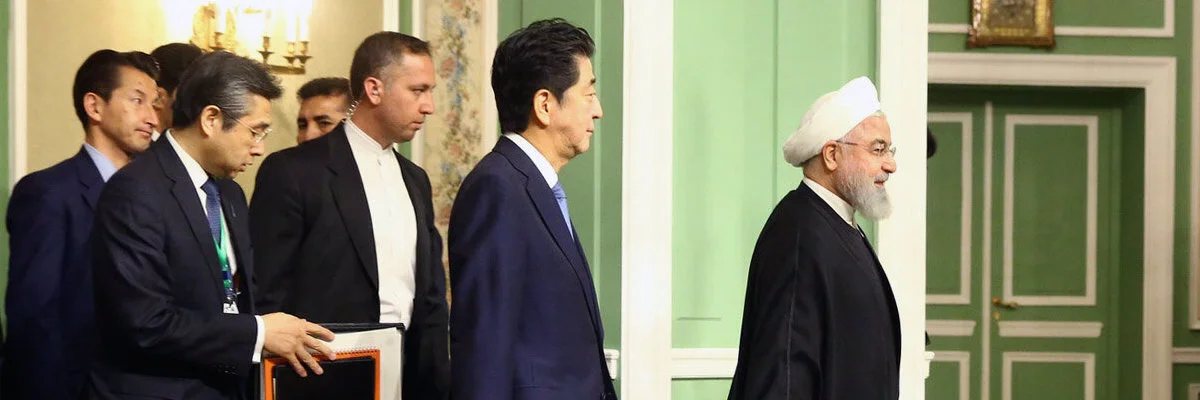
In Tehran, Japan's Abe Urges Iran to Play 'Constructive Role'
◢ Japanese Prime Minister Shinzo Abe urged Tehran to play a "constructive role" for Middle East peace Wednesday during a rare diplomatic mission to the Islamic republic aimed at defusing US-Iran tensions. Iran has been locked in a bitter standoff with the United States since US President Donald Trump withdrew from a landmark 2015 nuclear deal in May last year.
By Amir Havasi
Japanese Prime Minister Shinzo Abe urged Tehran to play a "constructive role" for Middle East peace Wednesday during a rare diplomatic mission to the Islamic republic aimed at defusing US-Iran tensions.
Iran has been locked in a bitter standoff with the United States since US President Donald Trump withdrew from a landmark 2015 nuclear deal in May last year.
Washington has since reimposed crippling unilateral sanctions—which have forced Tokyo to halt its once-substantial purchases of Iranian oil—and launched a military buildup in the Gulf.
"It is essential that Iran plays a constructive role in building solid peace and stability in the Middle East," Abe told a joint news conference in Tehran with Iran's President Hassan Rouhani.
"Today, tension is rising in the Middle East. Some experts point out that the conflict might be triggered accidentally," said Abe.
An armed clash "must be avoided by all means", the premier stressed.
He added that Japan "wishes to play an utmost role in its capacity to ease the tension. This is the one single thought that brought me to Iran."
Addressing the same news conference, Rouhani said he expected a "very positive change" in the Middle East and the world if the United States stops its economic pressure on Iran through sanctions.
"If there are some tensions, (their) roots stem from America's economic war against Iran. Whenever it stops we will witness a very positive change in the region and the world," Rouhani said.
"We will not initiate a conflict in the region, even against the US, but if a war starts against us we will then give a crushing response," the Iranian president added.
Lower the Temperature
Abe began his visit to Iran on Wednesday, the first by a Japanese prime minister in 41 years, with the stated aim of defusing tensions between Tehran and Washington.
Japan stopped importing Iranian crude oil in May to comply with US sanctions against the Islamic republic.
The Asian powerhouse has an interest in keeping the Middle East stable in order to ensure the flow of cheap hydrocarbons to fuel its economy.
Rouhani said he saw "Japan's interest in continuing to buy oil from Iran and fixing financial issues" as a "guarantee" for the ongoing development of bilateral ties.
The spokesman for Japan's foreign ministry, Takeshi Osuga, later said that, on the questions of Iranian oil sales to Japan, "our understanding is that this was the wish of the Iranian side."
But he added: "Oil purchase (from Iran) is the decision of private companies. I cannot predict their decision."
The Iranian president also underlined a convergence of views with his visitor on the issue of nuclear weapons, which he said "both of us are against.”
Abe, for his part, expressed his "deep respect to the fact that the supreme leader Ayatollah Khamenei reiterates the fatwa which says 'nuclear weapons and other weapons of mass destruction are against Islam.’”
The Japanese premier is expected to meet Khamenei on Thursday morning.
Abe discussed "the situation in Iran" in a telephone call with Trump on Tuesday, a Japanese government spokesman said.
The Japanese prime minister won Trump's blessing for the mediation mission when the US president visited Tokyo last month.
“We believe it is extremely important that, at the leadership level, we call on Iran as a major regional power to ease tension, to adhere to the nuclear agreement and to play a constructive role for the region's stability," Japanese Chief Cabinet Secretary Yoshihide Suga said.
Substantial Obstacles
Iranian newspapers were divided along conservative-reformist lines in their assessment of Abe's visit.
The reformist Sazandegi daily ran a front-page cartoon of Abe in full samurai armour, a rolled piece of paper in one hand and a shield on the other.
In an accompanying article headlined "A samurai in Tehran," the paper said everyone was waiting to see "Tehran's reaction to Japan's initiative to raise its international standing by mediating as both Washington's ally and Iran's friend."
The ultraconservative Javan daily warned that "Iran and Japan minus America" could be a winning formula for Abe, but "Japan as America's intermediary in Iran" would fail given the deep mistrust of the US.
Other Iranian commentators said Abe could pass messages between the two sides.
"Mr Abe's visit comes right after meeting Mr Trump in Japan, so the Americans are interested in using this channel," Ebrahim Rahimpour, a former deputy foreign minister, told Iran's Shargh daily.
But while Tokyo has longstanding trade ties with Tehran and a strategic alliance with Washington, experts say Abe has little leverage with either side and mediation will be an uphill struggle.
The trip by the Japanese premier "faces substantial obstacles and is unlikely to bear fruit," said Tobias Harris, an analyst at Teneo consultancy group.
"While Japan has good relationships with countries on both sides, these relationships do not necessarily translate into influence."
Photo: IRNA
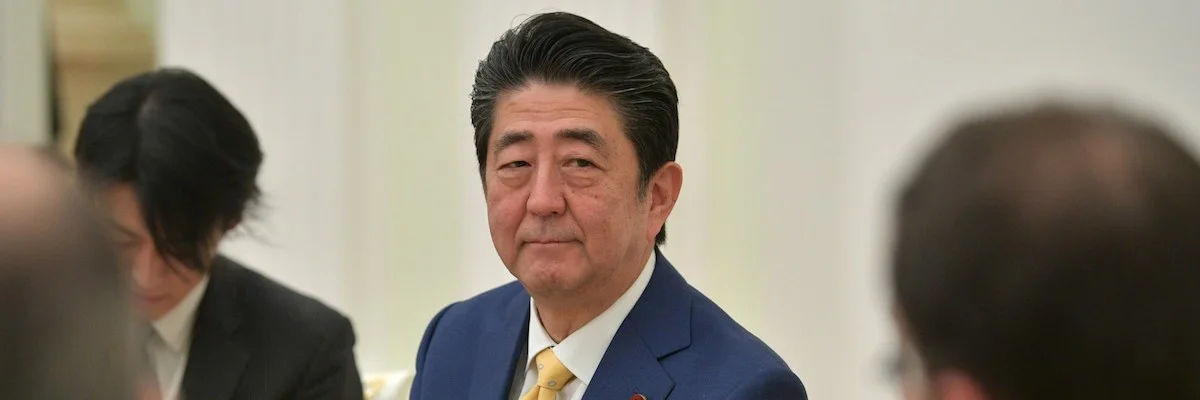
Man on a Mediation Mission: Japan's Abe Heads to Iran
◢ Japan's Prime Minister Shinzo Abe heads to Iran this week on a rare diplomatic mission, hoping to ease tensions between the Islamic Republic and Tokyo's key ally Washington. Japanese government officials say Abe will not present Tehran with a list of demands, or deliver a message from Washington, and instead want to position Japan as a neutral intermediary.
By Sarah Hussein
Japan's Prime Minister Shinzo Abe heads to Iran this week on a rare diplomatic mission, hoping to ease tensions between the Islamic Republic and Tokyo's key ally Washington.
Tehran is locked in a bitter standoff with the US after president Donald Trump withdrew from a landmark nuclear deal last year.
Washington has now reimposed sanctions and shifted troops to the region, putting military and economic pressure on Iran, including by forcing US allies like Japan to stop purchasing Iranian oil.
Japanese government officials say Abe will not present Tehran with a list of demands, or deliver a message from Washington, and instead want to position Japan as a neutral intermediary.
That could prove useful, said Michael Bosack, special adviser for government relations at the Yokosuka Council on Asia-Pacific Studies.
"Japan carries none of the historical or religious baggage of other potential mediators... (and) has demonstrated its willingness to go its own way on Middle East policy," he told AFP.
"These factors better position Abe for engagement with Ayatollah Khamenei and mean that Japanese-proposed options could allow hardliners in Iran to entertain proposed off-ramps, without the potential fallout that could come from accepting 'Western' solutions."
Abe will meet President Hassan Rouhani and the country's Supreme Leader Ayatollah Ali Khamenei on the June 12-14 trip—the first time a Japanese prime minister has visited Iran since 1978, a year before the country's revolution.
Against that backdrop, Japan is hoping to lower the temperature, officials say, with Abe winning Trump's blessing for the mediation trip when the US leader visited Tokyo last month.
"We believe it is extremely important that, at the leadership level, we call on Iran as a major regional power to ease tension, to adhere to the nuclear agreement and to play a constructive role for the region's stability," Chief Cabinet Secretary Yoshihide Suga said ahead of the trip.
Intermediary
Iranian commentators said Abe could ferry messages between the two sides.
"Mr. Abe's visit comes right after meeting Mr. Trump in Japan, therefore the Americans are interested to use this channel," Ebrahim Rahimpour, a former deputy foreign minister, told Iran's Shargh daily ahead of the trip.
Iran will "announce our rights and stances and the other side can announce the messages that could be the US president's message," he said.
But while Japan has long-standing ties with Tehran and warm relations with Washington, experts say Abe has little leverage with either side and mediation will be an uphill struggle.
The trip by the Japanese PM "faces substantial obstacles and is unlikely to bear fruit," said Tobias Harris, an analyst at Teneo consultancy group, in a note on the visit.
"While Japan has good relationships with countries on both sides, these relationships do not necessarily translate into influence," he added.
'Shuttle diplomacy'?
Japan is not just the messenger—its own interests are also at stake: before US sanctions were reimposed, Tokyo imported around five percent of its oil from Iran and it would suffer from rising crude prices.
The trip also offers Abe a rare role as international statesman, particularly given Tokyo's disappointing recent diplomatic track record.
Efforts this year to resolve a long-running standoff with Russia over a string of disputed islands have run aground.
And Japan has also found itself out of the loop on perhaps the most pressing diplomatic challenge in its backyard: North Korea.
Abe "needs a diplomatic stunt as he faces an impasse on Russia and North Korea," said Tetsuro Kato, political science professor at Tokyo's Waseda University.
But analysts cautioned that expectations would stay low for now.
"Japan has never played an active role in Middle Eastern problems," Kato told AFP. "I don't expect much in the way of results."
Bosack said it would be "unrealistic" to expect quick outcomes from the visit.
"Right now, the focus is mitigating military conflict, which means Abe can employ shuttle diplomacy to keep communication going," he said.
“That shuttle diplomacy alone may be enough to de-escalate tensions."
Photo: Wikicommons