
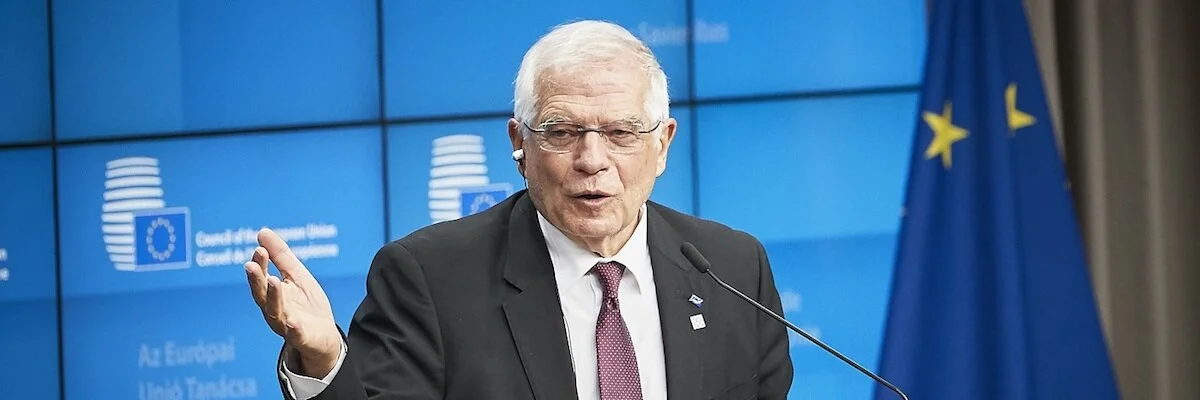
Top EU Diplomat to Visit Tehran Amid Nuclear Tensions
◢ Top EU diplomat Josep Borrell is Monday due to visit Iran, said officials in Tehran and Brussels, on his first trip there since taking office, aiming to reduce rising tensions over the Islamic Republic's nuclear program. Borrel is set to meet President Hassan Rouhani, Foreign Minister Javad Zarif and parliamentary speaker Ali Larijani on the two-day trip, his office said in a statement.
Top EU diplomat Josep Borrell is Monday due to visit Iran, said officials in Tehran and Brussels, on his first trip there since taking office, aiming to reduce rising tensions over the Islamic republic's nuclear program.
Borrel is set to meet President Hassan Rouhani, Foreign Minister Javad Zarif and parliamentary speaker Ali Larijani on the two-day trip, his office said in a statement.
The 2015 nuclear deal between Tehran and a group of world powers has been crumbling since US President Donald Trump withdrew from it in 2018, and Washington has since stepped up sanctions and a campaign of "maximum pressure" against Iran.
Tehran has gradually stepped back from its own commitments under the deal, while military tensions with the United States have brought the arch foes to the brink of full-blown confrontation in recent weeks.
Borrell's mission aims "to de-escalate tensions and seek opportunities for political solutions to the current crisis," said the office of the EU's high representative for foreign affairs and security policy.
The visit will allow Borrell "to convey the EU's strong commitment to preserve" the nuclear deal, known as the Joint Comprehensive Plan of Action, and to discuss cooperation between the EU and Iran, his office said.
Severe Recession
Washington accuses Tehran of seeking a nuclear weapon, which Iran has always denied.
The deal struck in Vienna between Iran and the five permanent members of the UN Security Council—Britain, China, France, the United States and Russia—plus Germany, offered Tehran a partial reprieve from crippling international sanctions.
In exchange, Iran agreed to drastically reduce its nuclear activities and to submit to a tailor-made inspection regime by the International Atomic Energy Agency (IAEA).
The US withdrawal from the deal and its reimposition of biting sanctions deprived Iran of anticipated economic benefits.
The renewed US sanctions have almost entirely isolated Iran from the international financial system, driven away oil buyers and plunged the country into a severe recession.
Since May 2019, Iran has progressively scaled back commitments under the agreement in response to the US sanctions and Europe's inability to circumvent them.
Iran is now producing uranium enriched beyond the 3.67 percent set by the agreement, and no longer adheres to the limit of 300 kilogrammes (660 pounds) imposed on its enriched uranium stocks.
It has also resumed research and development that was restricted under the deal.
‘Last Step'
On January 5, the Islamic republic announced the "last step" in its plan to roll back on its commitments, saying that it was no longer bound by limits on the number of centrifuges it could run to enrich uranium.
Iran accuses the European parties to the deal of not respecting their own commitments and of doing nothing to help circumvent the US sanctions.
Tehran has stressed, however, that the steps it has taken away from the deal can be reversed if Iran's interests are realised.
However, the European parties and experts question this pledge, saying research and development gains aren't reversible.
In an effort to bring Tehran back to full implementation of the deal, Paris, London and Berlin triggered a complaint mechanism in January.
The mechanism could lead to the reestablishment of all sanctions that were lifted by the UNSC, but, for now, the Europeans have been keen to get Iran back on board rather than reimpose sanctions.
Tehran has long said that if the Iran nuclear dossier were to be sent back to the UNSC, it would signal the definitive death of the 2015 deal.
Photo: EEAS
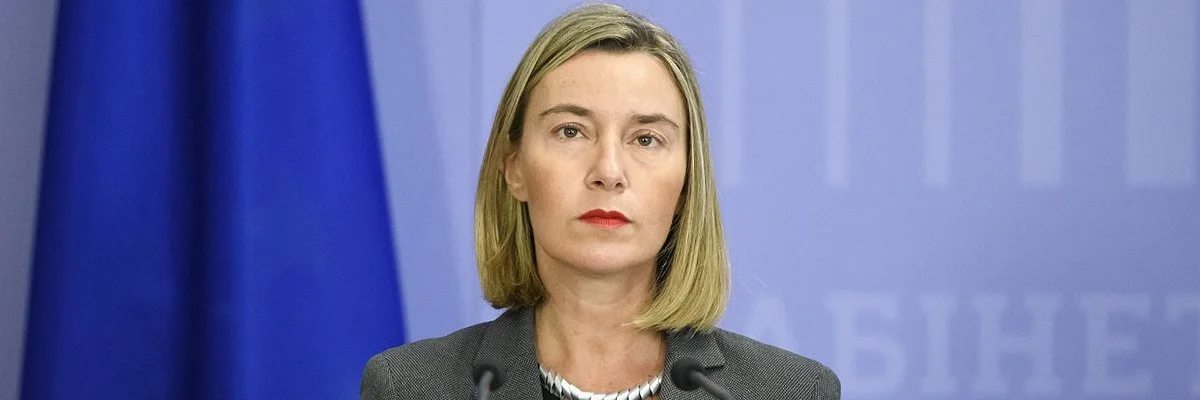
EU Backs US-Iran Talks But Says Nuclear Deal Must Stay
◢ EU diplomatic chief Federica Mogherini gave a cautious welcome to the idea of negotiations, after Trump said Monday he was ready to meet Iran's President Hassan Rouhani within weeks. "We are always in favor of talks, the more people talk, the more people understand each other better, on the basis of clarity and on the basis of respect," Mogherini said as she arrived for the Helsinki meeting.
By Damon Wake
The EU's diplomatic chief said Thursday the bloc would support talks between the United States and Iran, but only if the current nuclear deal with Tehran is preserved.
Washington and Tehran have been locked in a bitter standoff since last year when US President Donald Trump unilaterally pulled out of the 2015 deal that gave Iran relief from sanctions in return for curbs on its atomic programme.
Tensions have risen dramatically in the Gulf, where Iran has seized tankers, but EU countries are reluctant to join a US-led operation to protect commercial shipping.
Instead, EU foreign and defense ministers meeting in Helsinki discussed the possibility of launching their own observation mission in the Strait of Hormuz, a strategically important choke point at the entrance to the Gulf.
The idea of direct talks between Washington and Tehran as a way out of the crisis grew this week after Trump mooted the idea and the new US defence secretary urged Iran's leaders to engage.
The European Union has desperately sought to prevent the deal from collapsing completely, arguing it is the best way to stop Iran developing nuclear bombs.
EU diplomatic chief Federica Mogherini gave a cautious welcome to the idea of negotiations, after Trump said Monday he was ready to meet Iran's President Hassan Rouhani within weeks.
"We are always in favor of talks, the more people talk, the more people understand each other better, on the basis of clarity and on the basis of respect," Mogherini said as she arrived for the Helsinki meeting.
But she added that "first and foremost what is existing needs to be preserved"—referring to UN Security Council resolutions and specifically the 2015 deal known formally as the Joint Comprehensive Plan of Action or JCPOA.
"We will always advocate for the full respect by all sides of the UNSC resolutions and that includes the JCPOA," she said.
At the recent G7 summit in Biarritz, Trump showed openness to French President Emmanuel Macron's proposal of a summit with Rouhani.
US Defense Secretary Mark Esper followed up on Wednesday by urging Tehran to negotiate, but Iranian Foreign Minister Mohammad Javad Zarif insisted Washington must respect the deal and halt what he called "economic terrorism" against his country.
German Foreign Minister Heiko Maas welcomed the "greater willingness for dialogue" seen since the G7 and urged Iran to engage.
"It is now a matter of operationalizing this and ensuring that everyone makes a contribution -- including Iran—which leads to de-escalation in the region," Maas said.
Persian Gulf Missions
Maritime security and the Middle East are on the agenda in Helsinki, but apart from Britain, there has been little European enthusiasm for Washington's Operation Sentinel in the Gulf.
Esper said the effort to protect shipping on crucial oil trade routes was now "up and running" with help from Britain, Australia and Bahrain.
French Defence Minister Florence Parly said that up to five countries had signed up for a potential EU observation mission.
"We must guarantee free navigation and security in the Strait of Hormuz, a vital region for the transport of hydrocarbons," she told AFP.
"But there is no question of creating an escort force -- rather a dissuasive presence with an exchange of information."
France, which already has a warship in the region, is keen to avoid any perception that it is aligning itself to Trump's strategy of "maximum pressure" on Iran.
A report by the German Council on Foreign Relations think tank assessing the options for an observer mission suggested it could require significant resources: five frigates or destroyers with helicopters, three maritime reconnaissance aircraft and at least one supply ship.
Iran has said that sending a "European fleet" to the Gulf would be a provocative move and other EU countries struck a more cautious note.
"If we speak about whatever operation there we need to be careful to avoid any kind of military escalation," said Edgars Rinkevics, foreign minister of Latvia, which currently has one of its seamen in Iranian custody.
"In my own country we are very far away from any kind of position that would be supportive of any kind of engagement there."
In response to the US pulling out of the deal and reimposing sanctions, Tehran has breached certain limits on its nuclear production imposed by the accord.
An EU official said the focus now was on ensuring these breaches do not become irreversible.
An Iranian delegation is expected in Paris next week and a meeting between senior Iranian and EU officials is planned soon.
Photo: Wikicommons
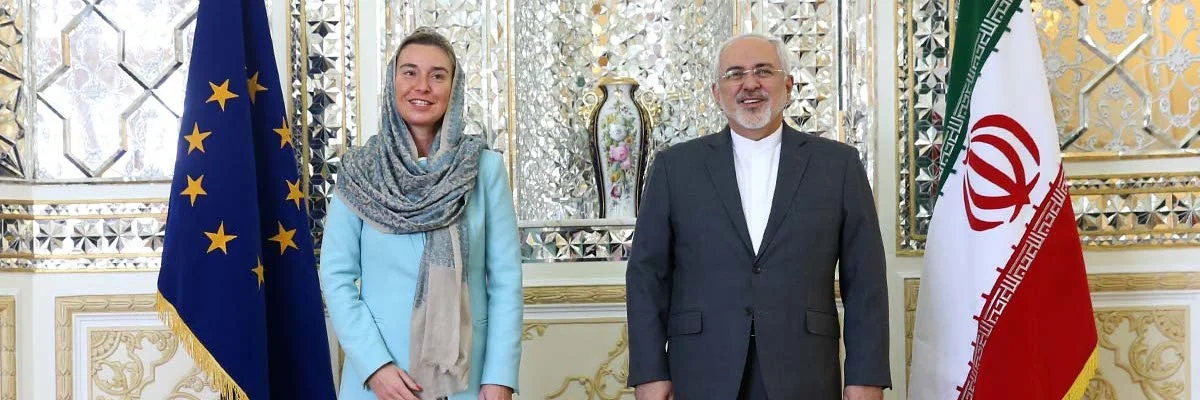
EU to Work With Top Iran Diplomat Despite US Sanctions
◢ The European Union said Thursday it regrets the US decision to impose sanctions against Iran’s foreign minister Mohammad Javad Zarif and vowed to continue working with him. “We regret this decision,” said Carlos Martin Ruiz De Gordejuela, a spokesman for EU diplomatic chief Federica Mogherini.
The European Union said Thursday it regrets the US decision to impose sanctions against Iran’s foreign minister Mohammad Javad Zarif and vowed to continue working with him.
The decision Wednesday was the latest blow by US President Donald Trump to the 2015 international deal to curb Iran’s nuclear program, which Brussels has been trying to salvage.
“We regret this decision,” said Carlos Martin Ruiz De Gordejuela, a spokesman for EU diplomatic chief Federica Mogherini.
“From our side, we will continue to work with Mr Zarif as Iran’s most senior diplomat and in view of the importance of maintaining diplomatic channels,” Martin said.
The US government announced Wednesday it was freezing any of Zarif’s assets that are in the United States or are controlled by US entities, adding it also will curtail his international travel.
Trump last year pulled out of a 2015 deal struck by his predecessor Barack Obama, EU powers, China and Russia aimed at curbing Iran’s nuclear program.
The EU has been trying to salvage the deal ever since.
Zarif has been at the heart of complex talks with foreign capitals over Iran’s nuclear power industry, which Tehran says is peaceful, but Washington and regional allies including Israel insist is cover for a secret weapons program.
But a senior Trump administration official said that Zarif’s diplomatic image—bolstered by his fluent English, self-effacing humor and background as a US-educated academic—was false.
Photo: IRNA
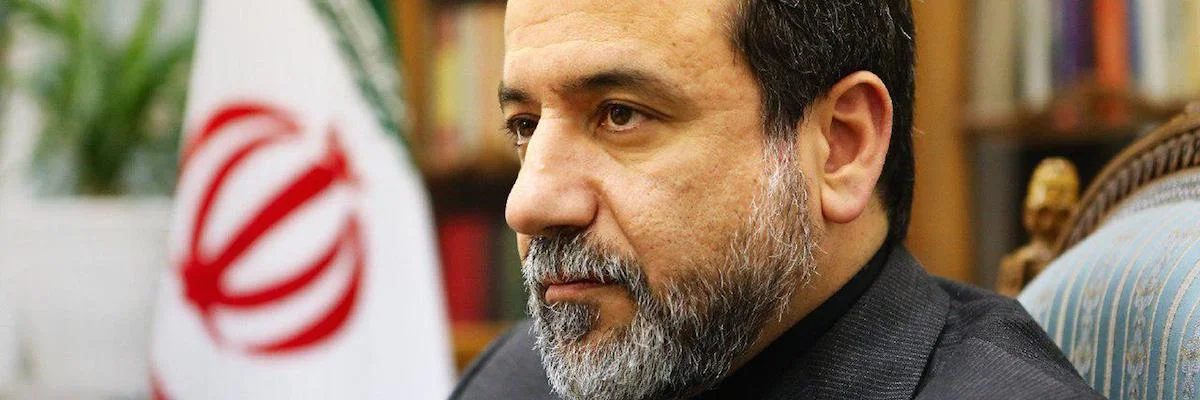
Iran Links Tanker Row to Ailing Nuclear Deal
◢ Iran on Sunday called Britain's seizure of an Iranian oil tanker a breach of an ailing 2015 nuclear deal, after remaining parties to the accord met in Vienna in a bid to keep it alive. "Since Iran is entitled to export its oil according to the JCPOA, any impediment in the way of Iran's export of oil is actually against the JCPOA," Deputy Foreign Minister Abbas Araghchi said.
By Philippe Schwab and Jastinder Khera
Iran on Sunday called Britain's seizure of an Iranian oil tanker a breach of an ailing 2015 nuclear deal, after remaining parties to the accord met in Vienna in a bid to keep it alive.
British authorities detained an Iranian tanker off the UK overseas territory of Gibraltar in early July on allegations it was breaching EU sanctions on Syria.
A British-flagged tanker was then impounded by Iran's Revolutionary Guards with its 23 crew aboard in the Strait of Hormuz on July 19, which was seen by the UK as a tit-for-tat move.
In comments to journalists after the meeting in Vienna, Iranian Deputy Foreign Minister Abbas Araghchi linked the tanker row to discussions over the nuclear deal, formally known as the Joint Comprehensive Plan of Action (JCPOA). "Since Iran is entitled to export its oil according to the JCPOA, any impediment in the way of Iran's export of oil is actually against the JCPOA," Araghchi said.
He added that the issue of Iran's oil exports—including US attempts to prevent them completely—was raised at the meeting.
"I think the atmosphere was constructive and the discussions were good, I cannot say that we resolved everything," he said.
Envoys from Britain, France, Germany, China, Russia and Iran had gathered for talks in the Austrian capital, a month after a similar meeting failed to achieve a breakthrough.
Chair of the meeting secretary general of the European External Action Service Helga Schmid suggested in a statement that a stalemate still prevailed, saying only that "participants reaffirmed their continued commitment to preserving the JCPOA."
The statement added that Iranian nuclear projects in Arak and Fordow had the participants' "strong support", and said another meeting "would be convened in the near future."
'Tense Moments'
The head of the Chinese delegation, Fu Cong, said the talks had taken place in a "very good" and "professional" atmosphere but also admitted there had been some "tense moments" between the participants.
Tensions between Tehran and Washington have escalated since last year when US President Donald Trump pulled out of the accord that was aimed at curbing Iran's nuclear program, and imposed punishing sanctions. Iran said in May it would disregard certain limits the JCPOA set on its nuclear program and threatened to take further measures if remaining parties to the deal, especially European nations, did not help it circumvent US sanctions.
Even before the latest tanker seizures, pressure had been mounting in the region with a string of incidents involving tankers and drones.
The US has said it brought down one and possibly two Iranian drones last week.Iran shot down an unmanned US aircraft in June, after which Trump announced that he had called off retaliatory air strikes at the last minute because the resulting death toll would have been too high.
The US and Gulf powerhouse Saudi Arabia have accused Iran of being behind multiple mysterious attacks on tankers in the Gulf in June, which Iran denies.
Efforts by European powers, notably France's President Emmanuel Macron, to salvage the nuclear deal have so far come to nothing.
Araghchi repeated after Sunday's meeting that the remaining parties to the JCPOA wanted to meet "soon" at ministerial level. He said preparation for such a meeting was ongoing and that JCPOA partners were also convening "expert meetings on different areas to find practical solution for Iran to enjoy its benefits of sanctions lifting".
He admitted that INSTEX, a mechanism set up by the JCPOA's European partners to facilitate trade with Iran in the face of US sanctions, was "not functioning yet but it is in its final stages".
Photo: IRNA
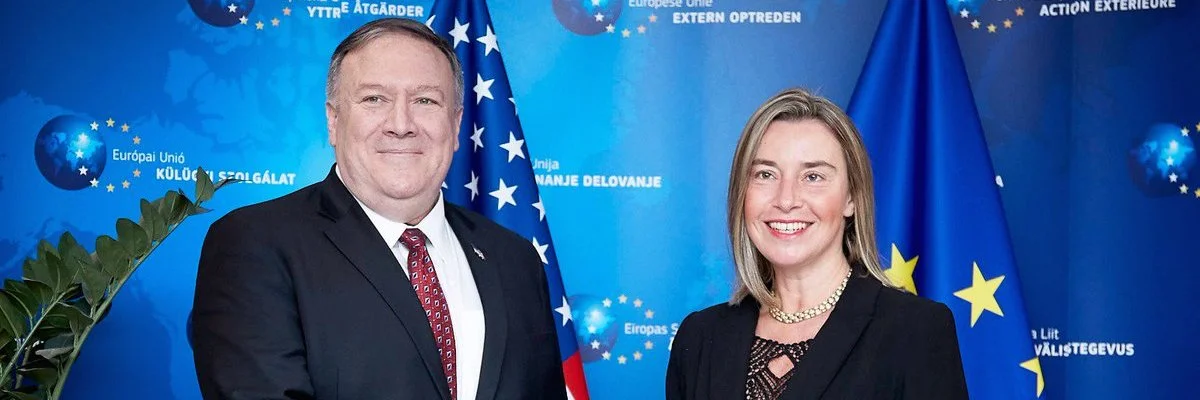
Pompeo to Visit Brussels as Europe Meets on Iran
◢ US Secretary of State Mike Pompeo will visit Brussels on Monday to discuss "pressing matters" including the Iran nuclear deal, as the European signatories to the accord meet for talks on how to prevent its collapse. The EU reiterated its determination to save the 2015 agreement to curb Tehran's nuclear ambitions in return for sanctions relief, as tensions between the US and Iran rack up.
By Damon Wake in Brussels
US Secretary of State Mike Pompeo will visit Brussels on Monday to discuss "pressing matters" including the Iran nuclear deal, as the European signatories to the accord meet for talks on how to prevent its collapse.
The EU reiterated its determination to save the 2015 agreement to curb Tehran's nuclear ambitions in return for sanctions relief, as tensions between the US and Iran rack up.
Iran last week announced it was suspending some of its commitments under the agreement, a year after US President Donald Trump withdrew from the accord and imposed swingeing sanctions on the Islamic republic—putting the deal in grave peril.
Adding a military dimension to the diplomatic tensions, Washington is sending an amphibious assault ship and a Patriot missile battery to the Gulf, having already deployed an aircraft carrier and B-52 bombers.
The European Union's diplomatic chief Federica Mogherini stressed the need for dialogue as "the only and the best way to address differences and avoid escalation" in the region, as she arrived for a scheduled meeting of the bloc's foreign ministers.
"We continue to fully support the nuclear deal with Iran, its full implementation," Mogherini said.
"It has been and continues to be for us a key element of the non-proliferation architecture both globally and in the region."
Alongside the meeting of all 28 foreign ministers, the representatives of Britain, France and Germany—the three European signatories—will meet Mogherini to discuss how to keep the deal going.
"We in Europe agree that this agreement is necessary for our security. No-one wants Iran to come into possession of a nuclear bomb," German Foreign Minister Heiko Maas said as he arrived.
"That is why we will continue to support the implementation of this agreement."
Few details of Pompeo's agenda in Brussels have been announced, beyond the State Department saying talks would be held with officials from France, the UK and Germany.
Mogherini gave a chilly response to news of Pompeo's visit, which she said was only communicated to Brussels at the last minute.
"We'll be here all day with a busy agenda so we'll see during the day how and if we manage to arrange a meeting," she told reporters.
President Hassan Rouhani issued an ultimatum to the Europeans last week, threatening that Iran would go further if they fail to deliver sanctions relief to counterbalance Trump's renewed assault on the Iranian economy within 60 days.
The European powers rejected that ultimatum.
The US has continued to build pressure on Iran, with Pompeo accusing Tehran of planning "imminent" attacks and bolstering the military presence in the Gulf.
Pompeo's visit to Brussels means he is scrapping a stop expected on Monday in Moscow.
But he will still head to the Russian Black Sea resort of Sochi on Tuesday to meet President Vladimir Putin and Foreign Minister Sergei Lavrov, a State Department official added just before Pompeo left Washington.
In recent days, Pompeo has already cancelled trips to Berlin and to Greenland to focus on the Iran issue.
Photo: EEAS
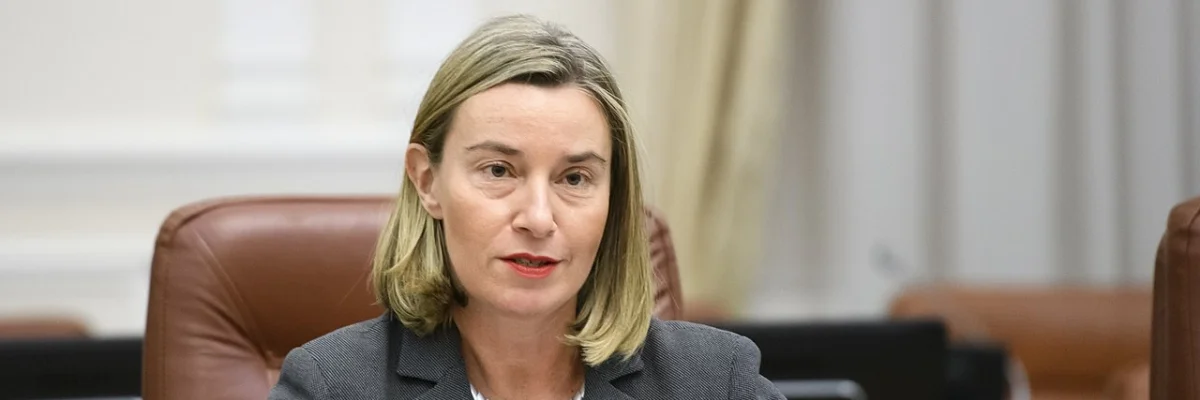
EU 'Deeply' Regrets Return of US Sanctions on Iran
◢ The EU said Monday it deeply regretted the US reimposition of sanctions on Iran after President Donald Trump pulled out of the 2015 nuclear pact, and vowed immediate steps to protect European companies. The statement by EU diplomatic chief Federica Mogherini and the foreign ministers of Britain, France and Germany said it would also work to keep "effective financial channels" open with Iran.
The EU said Monday it deeply regretted the US reimposition of sanctions on Iran after President Donald Trump pulled out of the 2015 nuclear pact, and vowed immediate steps to protect European companies.
The statement by EU diplomatic chief Federica Mogherini and the foreign ministers of Britain, France and Germany said it would also work to keep "effective financial channels" open with Iran.
"We deeply regret the re-imposition of sanctions by the US, due to the latter's withdrawal from the Joint Comprehensive Plan of Action (JCPOA)," the statement issued in Brussels said.
The EU said it would now swiftly bring in legal cover for firms in the 28-nation bloc to work with Iran, after the Trump administration rejected European calls for an exemption.
"We are determined to protect European economic operators engaged in legitimate business with Iran," the statement added.
"This is why the European Union's updated Blocking Statute enters into force on 7 August to protect EU companies doing legitimate business with Iran from the impact of US extra-territorial sanctions."
The "blocking statute" forbids EU firms from complying with US sanctions, allowing them to recover damages from such penalties and nullifying any foreign court rulings against them.
French carmaker Renault, which does not sell cars in the US, has said it will remain in Iran despite the sanctions. But French oil group Total and carmaker PSA have already indicated they are likely to pull out of Iran.
Despite the US move to restore the sanctions, which Secretary of State Mike Pompeo reaffirmed in Alaska late Sunday, the Europeans said they would continue to work with Iran to preserve the deal.
"The remaining parties to the JCPOA have committed to work on, inter alia, the preservation and maintenance of effective financial channels with Iran, and the continuation of Iran's export of oil and gas," it said.
Photo Credit: Wikicommons

EU Protects Firms as it Fights US Bid to Isolate Iran
◢ EU countries on Monday gave European firms legal cover to operate in Iran despite the US pullout from the nuclear deal, after a report that the Trump administration has rejected calls by Brussels for an exemption from sanctions. The bloc's foreign policy chief Federica Mogherini said the 28 countries were doing all they could to save the deal but conceded President Donald Trump's administration could still wreck it.
EU countries on Monday gave European firms legal cover to operate in Iran despite the US pullout from the nuclear deal, after a report that the Trump administration has rejected calls by Brussels for an exemption from sanctions.
The bloc's foreign policy chief Federica Mogherini said the 28 countries were doing all they could to save the deal but conceded President Donald Trump's administration could still wreck it.
US President Donald Trump withdrew from the Iran nuclear deal in May, and Washington now plans to reimpose sanctions on Tehran next month.
"Today, the (European) Council has endorsed the update of the blocking statute annex on the nuclear deal with Iran," Mogherini told reporters in Brussels at a meeting with EU foreign ministers.
She said the European Parliament gave its consent to the statute two weeks ago.
The "blocking statute" forbids EU firms from complying with US sanctions, allowing them to recover damages from such penalties and nullifying any foreign court rulings against them.
The EU vowed to fight to preserve the Iran nuclear deal after the US withdrawal, one of many points of US-European contention.
The blocking statute is due to enter force on August 6, when the first set of US sanctions are due. The second set is due November 4, just before US legislative elections.
The move came as the Financial Times reported that the Trump administration has rejected an EU call for an exemption from US sanctions on companies operating in Iran.
Mogherini conceded it will be tough battle to preserve the Iran nuclear agreement, which Trump's predecessor Barack Obama sealed with Iran along with Britain, France and Germany as well as Russia and China.
"It is a difficult exercise, because the weight of the US in the global economy and the financial system is obviously relevant," the former Italian foreign minister said.
French carmaker Renault, which does not sell cars in the US, has said it will remain in Iran despite the sanctions.
But French oil group Total and carmaker PSA have already indicated they are likely to pull out of Iran.
Mogherini said the EU and other parties were "determined to preserve this deal" she called vital to European, Middle Eastern and global security.
"We will continue to do all we can to try and prevent this deal from being dismantled because we believe the consequences of this would be catastrophic for all."
But she added she was not sure the "efforts are going to be enough."
Photo Credit: Wikicommons

France, Germany, Britain Formally Demand Exemptions from US Iran Sanctions
◢ France, Britain, Germany and the EU on Wednesday sent the United States a joint official request for their companies to be exempt from punitive measures resulting from fresh US sanctions on Iran. French Economy Minister Bruno Le Maire said the three countries and the EU were asking the US "to exempt European businesses doing legitimate trade in Iran from all extraterritorial American sanctions.”
France, Britain, Germany and the EU on Wednesday sent the United States a joint official request for their companies to be exempt from punitive measures resulting from fresh US sanctions on Iran.
"As allies, we expect that the United States will refrain from taking action to harm Europe's security interests," said the letter to US Treasury Secretary Steven Mnuchin and Secretary of State Mike Pompeo.
French Economy Minister Bruno Le Maire said the three countries and the EU were asking the US "to exempt European businesses doing legitimate trade in Iran from all extraterritorial American sanctions."
"Those businesses must be able to pursue their activities," he wrote on Twitter.
The plea comes as European leaders scramble to save the hard-fought deal signed between Iran and world powers in 2015 under which Tehran agreed to limits on its nuclear capacities in exchange for relief from crippling economic sanctions.
US President Donald Trump announced he was abandoning the deal last month—which will mean new sanctions on the Islamic republic and punitive measures
for those who trade with it.
Analysts say European firms which have rushed to invest in Iran after the lifting of sanctions over the past three years have the most to lose from the renewed sanctions.
Several major companies including France's Total and the Netherlands' Maersk have already said it will be impossible to stay in Iran once the sanctions are fully reimposed over the next six months, unless they receive explicit exemptions from Washington.
French automaker PSA said Monday that it would pull out of two joint ventures to sell its cars in Iran to avoid the risk of punishing fines.
Photo Credit: Wikimedia
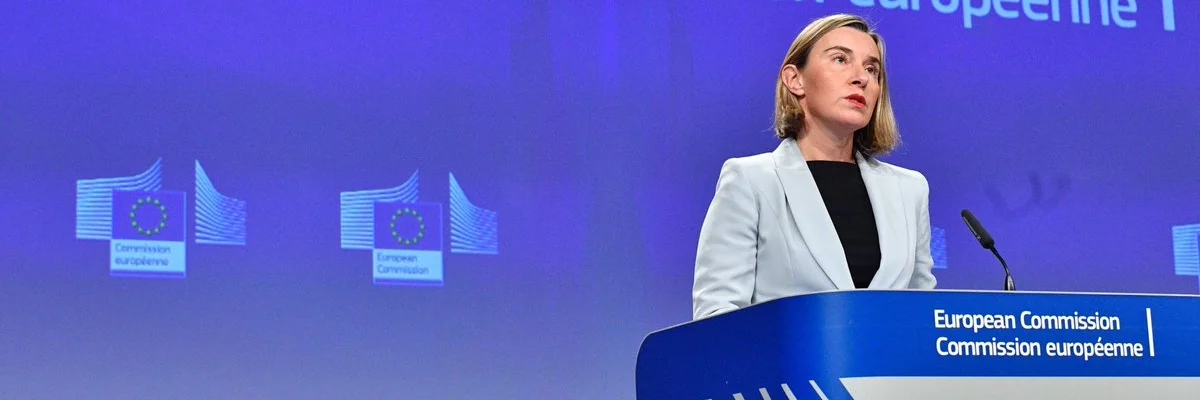
Iran Enrichment Plan Not in Breach of Nuclear Deal: EU
◢ The EU said Tuesday that a "first assessment" indicated that Iran's announcement that it has launched a plan to boost uranium enrichment capacity did not breach its commitments under the beleaguered 2015 nuclear deal. Iran has notified the International Atomic Energy Agency that it plans to open a centre for producing new centrifuges, the Islamic Republic's nuclear chief Ali Akbar Salehi said Tuesday, drawing an angry response from arch-foe Israel.
The EU said Tuesday that a "first assessment" indicated that Iran's announcement that it has launched a plan to boost uranium enrichment capacity did not breach its commitments under the beleaguered 2015 nuclear deal.
Iran has notified the International Atomic Energy Agency that it plans to open a centre for producing new centrifuges, the Islamic Republic's nuclear chief Ali Akbar Salehi said Tuesday, drawing an angry response from arch-foe Israel.
The European Union, which is working to save the 2015 agreement with Iran after the US pulled out, warned the Iranian announcement would not help build confidence in the Iranian program, but said it did not constitute a breach of the deal.
"Following a first assessment, the announced steps per se are not a violation of the JCPOA," Maja Kocijancic, spokeswoman for EU diplomatic chief Federica Mogherini, told AFP. The agreement is officially called the Joint Comprehensive Plan of Action (JCPOA).
"However, at this particularly critical juncture, they will not contribute to build confidence in the nature of the Iranian nuclear program."
Salehi stressed that his announcement was just the start of the production process and did not mean Iran was about to start assembling centrifuges.
Under the 2015 nuclear agreement that Iran signed with the US, China, Russia, Britain, France and Germany after years of difficult talks, Tehran can build and test parts for advanced centrifuges, but specific restrictions exist on what technology can be researched and in what quantity within the first decade of the deal.
European governments have been trying to salvage the nuclear deal since the United States last month withdrew and said it would reimpose sanctions on foreign companies working in the Islamic republic by November.
The remaining parties have vowed to stay in the accord but many of their companies have already started to wind down Iranian operations.
A European source told AFP that the Iranian enrichment announcement is being interpreted as a bid to step up the pressure on Brussels to deliver on these promises.
The EU is trying to come up with ways to persuade Iran to stick with the deal by protecting the economic benefits it gained when tough sanctions were lifted in return for it halting its nuclear program.
"As stated repeatedly, we expect Iran to stick to all its JCPOA commitments, to be monitored by the IAEA, as it has been doing so far and has been confirmed by the IAEA in 11 consecutive reports," Kocijancic told AFP.
"The IAEA is the only body in charge of the monitoring and verification of the implementation by Iran of its nuclear-related commitments under the JCPOA."
Photo Credit: EEAS

Iran Deal 'Needs To Be Preserved': EU's Mogherini
◢ The EU's diplomatic chief insisted Wednesday that the current Iran nuclear deal was working and "needs to be preserved", after US President Donald Trump and French counterpart Emmanuel Macron called for a new agreement with Tehran.
The EU's diplomatic chief insisted Wednesday that the current Iran nuclear deal was working and "needs to be preserved", after US President Donald Trump and French counterpart Emmanuel Macron called for a new agreement with Tehran.
The landmark 2015 deal to curb Iran's nuclear program is hanging in the balance, with Trump threatening to walk away from the accord unless it is expanded to include Iran's ballistic missile program and regional activities by a May 12 deadline.
Trump slammed the deal as "insane" at the White House with Macron on Tuesday but said there was a "great shot" at a new accord, while Macron said he wanted to work for a new arrangement.
The EU's Federica Mogherini, who has staunchly defended the deal, said Wednesday that it was working and was "essential for European security" but appeared to leave the door open for some new arrangement.
"On what can happen in the future we'll see in the future, but there is one deal existing, it's working, it needs to be preserved," the former Italian foreign minister said as she arrived for a donor conference on Syria in Brussels.
Europe, led by Britain, France and Germany, has repeatedly tried to persuade Trump not to abandon the 2015 deal, which gave Iran massive sanctions relief and the guarantee of a civilian nuclear program in return for limiting enrichment that could produce weapons grade fuel.
German Chancellor Angela Merkel will renew those calls when she follows Macron to Washington on Friday.
Photo Credit: Wikicommons